Home Blog Page 5531

Ukraine attacks occupied Melitopol; Russian side says two killed, 10 injured

FREEPIK

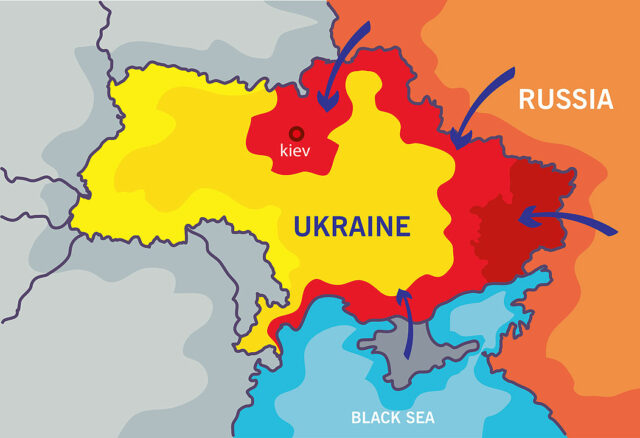
KYIV — Ukraine attacked occupied Melitopol in the country’s southeast on Saturday evening, the Russian-installed and exiled Ukrainian authorities of the strategically located city said.

The pro-Moscow authorities said a missile attack killed two people and injured 10, while the exiled mayor said scores of “invaders” were killed.

Reuters could not independently verify the reports of the attacks or deaths.

“Air defense systems destroyed two missiles, four reached their targets,” Yevgeny Balitsky, the Moscow-appointed governor of the occupied part of the Zaporizhzhia region, said on the Telegram messaging app.

He said a “recreation center” where people were dining was destroyed in the Ukrainian attack with HIMARS missiles.

The exiled mayor, Ivan Fedorov, said on his Telegram channel that the attack hit a church that Russians had turned into a gathering place.

Vladimir Rogov, another Moscow-installed official in the Russian-controlled part of Zaporizhzhia, said a big fire caused by the strike engulfed the recreation centre. He posted a video of a structure in flames.

HIMARS multiple rocket launchers have been among Ukraine’s most effective weapons in the war, delivering precision fire on hundreds of targets, including Russian command posts. On Friday, the United States said it was sending more aid to Kyiv to strengthen its air defenses and defeat drones.

An adviser to Ukrainian President Volodymyr Zelensky, Oleksiy Arestovych, said Melitopol, a major industrial and transport centre occupied by Russia since March, is key to the defence of the south.

“All logistics linking the Russian forces on the eastern part of the Kherson region and all the way to the Russian border near Mariupol is carried out through it,” Mr. Arestovych said in a video interview on social media.

“If Melitopol falls, the entire defense line all the way to Kherson collapses. Ukrainian forces gain a direct route to Crimea.”

There was no immediate comment from the Ukrainian army about the attacks. Earlier in the day, the central command of the Ukraine’s Armed Forces said it had been conducting strikes on Melitopol. Reuters

China’s capital Beijing swings from anger over past COVID policies to coping with infections

KIAN ZHANG-UNSPLASH

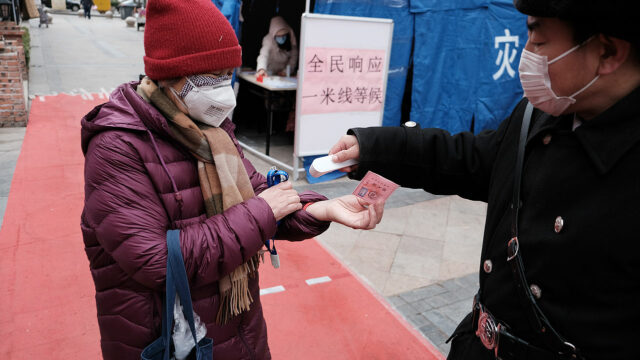
BEIJING — Beijing’s coronavirus disease 2019 (COVID-19) gloom deepened on Sunday with many shops and other businesses closed, and an expert warned of many thousands of new coronavirus cases as anger over China’s previous COVID policies gave way to worry about coping with infections.

China dropped most of its strict COVID curbs on Wednesday after unprecedented protests against them last month, but cities that were already battling with their most severe outbreaks, like Beijing, saw a sharp decrease in economic activity after rules such as regular testing were scrapped.

Anecdotal evidence suggests that many businesses have been forced to close as infected workers quarantine at home while many other people are deciding not to go out because of the higher risk of infection.

Zhong Nanshan, a prominent Chinese epidemiologist, told state media that the Omicron strain of the virus prevalent in China was highly transmissible and one infected person could spread it to as many as 18 others.

“We can see that hundreds of thousands or tens of thousands of people are infected in several major cities,” Mr. Zhong said.

With regular COVID testing of Beijing residents scrapped and reserved only for groups such as health workers, official tallies for new cases have plunged.

Health authorities reported 1,661 new infections for Beijing Saturday, down 42% from 3,974 on Dec. 6, a day before national policies were dramatically relaxed.

But evidence suggests there are many more cases in the city of nearly 22 million people where everyone seems to know someone who has caught COVID.

“In my company, the number of people who are COVID-negative is close to zero,” said one woman who works for a tourism and events firm in Beijing who asked to be identified as just Nancy.

“We realize this can’t be avoided — everyone will just have to work from home,” she said.

‘HIGHER RISK’
Sunday is a normal business day for shops in Beijing and it is usually bustling, particularly in spots like the historic Shichahai neighborhood packed with boutiques and cafes.

But few people were out and about on Sunday and malls in Chaoyang, Beijing’s most populous district, were practically deserted with many salons, restaurants and retailers shut.

Economists widely expect China’s road to economic health to be uneven as shocks such as labor crunches due to workers calling in sick delay a full-fledged recovery for some time yet.

“The transition out of zero-COVID will eventually allow consumer spending patterns to return to normal, but a higher risk of infection will keep in-person spending depressed for months after re-opening,” Mark Williams, chief Asia economist at Capital Economics, said in a note.

China’s economy may grow 1.6% in the first quarter of 2023 from a year earlier, and 4.9% in the second, according to Capital Economics.

Epidemiologist Mr. Zhong also said it would be some months before a return to normal.

“My opinion is in the first half of next year, after March,” he said.

While China has removed most of its domestic COVID curbs, its international borders are still largely closed to foreigners, including tourists.

Inbound travelers are subjected to five days of quarantine at centralized government facilities and three additional days of self-monitoring at home.

But there are even hints that that rule could change.

Staff at the main international airport in Chengdu city, asked if quarantine rules were being eased, said that as of Saturday whether or not one needed to do the three days of home quarantine would depend on a person’s neighborhood authorities. — Reuters

Japan lawmaker in Taiwan says China’s threat needs higher military spending

ROMEO A Z8JC-UNSPLASH

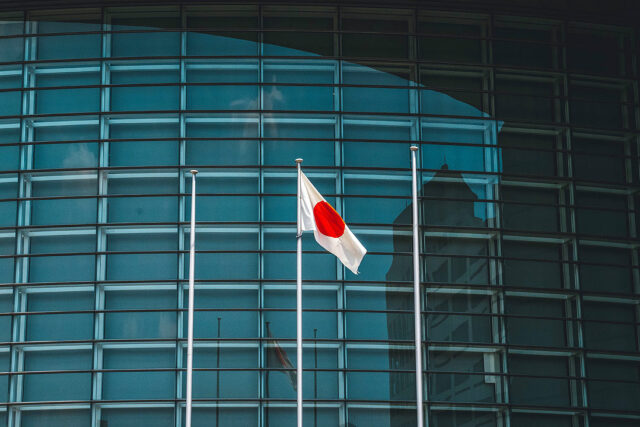
TAIPEI — Japan needs to increase its military spending in the face of the “grim reality” of the threat from China and North Korea, a senior member of Japan’s ruling Liberal Democratic Party (LDP) said on Sunday during a visit to Taiwan.

Although Chinese-claimed and democratically governed Taiwan and Japan do not have formal diplomatic ties, they have close unofficial relations and both share concerns about China, especially its increased military activities near the two.

Koichi Hagiuda, the LDP’s policy chief and a former industry minister, said during a visit to Taipei that since World War II Japan has “walked the path of peace” and that path will not change in the future.

“However just reciting the word peace is of course not enough for our peace to be protected,” he told a forum on Japan-Taiwan relations.

As Japan prepares next year’s budget Prime Minister Fumio Kishida has already announced plans to lift defense spending to an amount equivalent to 2% of gross domestic product within five years, from 1% now.

That would take Japan’s annual defense budget to more than Y11 trillion ($80.55 billion) from Y5.4 trillion currently, giving the country the world’s third-largest military budget after the United States and China at their current levels.

Mr. Hagiuda pointed to China’s massive increase in military spending, as well as North Korean missile tests, as reasons for Japan to raise its defense budget.

“In the face of such a grim reality, half measures have no meaning at all.”

Japan’s defense capabilities are necessary to protect lives and peace and must be developed immediately, not within five years, he added.

“It’s important to show clearly that we have sufficient capacity to make any would-be aggressor think twice.”

China staged military drills near Taiwan in August to express anger at a visit to Taipei by then-US House Speaker Nancy Pelosi, including launching five missiles into the sea close to Okinawa, within Japan’s exclusive economic zone.

Japan hosts major US military bases, including on Okinawa, a short flight from Taiwan, which would be crucial for any US support during a Chinese attack.

The United States is bound by law to provide Taiwan with the means to defend itself, though there is ambiguity about whether it would send forces to help Taiwan in a war with China.

Addressing a think-tank in Taiwan last December, the late former Japanese Prime Minister Shinzo Abe said Japan and the United States could not stand by if China attacked Taiwan, and Beijing needs to understand this. — Reuters

Former central bank economist named Peru’s new finance chief

FREEPIK

PERU’S new President Dina Boluarte named a US-educated economist who has spent most of his career at the central bank as economy minister, potentially soothing investor nerves after last week’s political chaos.

The new finance chief, Alex Contreras, served as deputy economy minister under former President Pedro Castillo, who was ousted on Dec. 7. Contreras worked at the central bank between 2007 and 2019, according to his resume on the ministry’s website. He has also taught macroeconomics, monetary theory, statistics and econometrics in local universities.

Ms. Boluarte is trying to seek allies in congress and establish her authority after the chaos triggered by Mr. Castillo’s downfall on Dec. 7. Peru’s stocks, bonds and currency initially slumped after Mr. Castillo attempted to dissolve congress, then rebounded when he was impeached and then arrested hours later.

Ms. Boluarte also named Oscar Vera as her Mining and Energy Minister. Vera is a chemical engineer who previously worked at the state oil company Petroperu, according to newspaper La Republica.

Pedro Angulo, a former prosecutor, takes over as the sixth prime minister since Mr. Castillo took office less than 18 months ago. 

Supporters of Mr. Castillo are still protesting in cities across the country and blocking some highways, demanding his release from detention and new elections. Roadblocks are affecting a strategically important route that links southern provinces where agro-industrial exports such as blueberries and grapes are produced, with Callao, Peru’s biggest port, as well as with the capital.

Two police officers were kidnapped by demonstrators in the southern city of Andahuaylas, and 20 people were injured on Saturday in a fourth day of disturbances, according to La Republica.

The demonstrations pose a challenge to Ms. Boluarte as she tries to restore order. Since the new president doesn’t have a party in congress, she is herself also at risk of being ousted before her term expires in 2026. Ms. Boluarte is the sixth leader of the politically volatile nation since the start of 2018.

Mr. Castillo’s approval ratings had fallen to about 25% by the time he was impeached, but he did still enjoy significant backing among the poorest farmers and some other groups such as teachers. Many of them resent Ms. Boluarte for having ditched Mr. Castillo when he attempted to dissolve congress. — Bloomberg

Senior US officials to visit China to follow up on Xi-Biden meet

FREEPIK

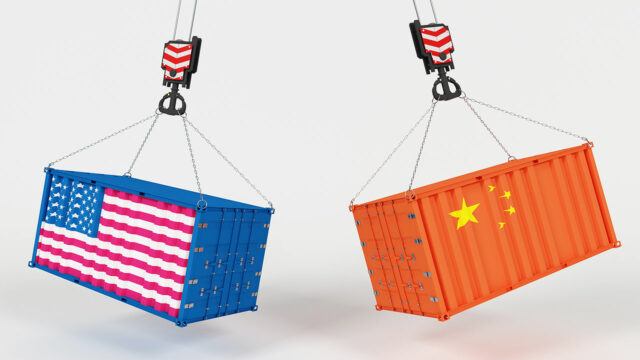
THE US will send a delegation to China in the coming days, following up on President Joseph R. Biden’s meeting with Chinese President Xi Jinping last month at the Group of 20 (G20( meeting in Indonesia.

The move is to continue “responsibly managing the competition” between the two countries and “explore potential areas of cooperation,” the US State department said in a statement on Saturday. The visit will also prepare for Secretary of State Antony Blinken’s planned early 2023 trip to China.

The delegation will comprise Assistant Secretary of State for East Asian and Pacific Affairs Daniel Kritenbrink and National Security Council Senior Director for China and Taiwan Laura Rosenberger.

The two officials also plan to visit South Korea and Japan as part of their Dec. 11-14 Asian trip, to hold consultations on a “range of regional and bilateral issues,” the release said, without elaborating.

Last month, Messrs. Biden and Xi held their first in-person meeting since the coronavirus pandemic rocked the world. Biden said both countries have a responsibility to “prevent competition from becoming anything ever near a conflict,” while Mr. Xi said the two sides “need to find the right direction” and “elevate the relationship.”

The two countries still have plenty of disagreements, including about Taiwan and over US moves to limit China’s economic and technological advancement. — Bloomberg

Japan to support construction of second Samar-Leyte bridge

PHILSTAR FILE PHOTO/ NB

By Arjay L. Balinbin, Senior Reporter

THE GOVERNMENT has obtained a commitment from Japan to support the construction of a second bridge linking Samar and Leyte, according to the Department of Public Works and Highways (DPWH).

The Japan International Cooperation Agency (JICA) committed its support for the project at the most recent high-level meeting between the Philippines and Japan, Public Works Senior Undersecretary Emil K. Sadain told BusinessWorld last week.

Nasa concept pa lang (It is still in the concept stage). It was committed to by JICA during the high-level discussions between the Philippines and Japan. It is going to be JICA-funded,” Mr. Sadain said.

The proposed project is a 1.24-kilometer bridge connecting Babatngon in northeastern Leyte to Sta. Rita, Samar, which is on the west coast of that island on the shoreline nearest Leyte.

The 2.16-kilometer San Juanico Bridge, which links Tacloban City, Leyte, and Santa Rita was completed in 1973 through Japanese official development assistance.

A Babatngon landing for the second bridge would place the crossing north of San Juanico bridge, which crosses the San Juanico Strait.

“Traffic cannot be properly addressed by one bridge; a second bridge has to be constructed to lessen the load,” Mr. Sadain said.

He said the second bridge, which has yet to undergo a full feasibility study, is among the priority projects of the Marcos administration.

JICA said in a report posted on its official website that it has conducted a pre-feasibility study with the DPWH on the project.

“Based on the result of the traffic demand forecast, the second San Juanico Bridge can accommodate 9,100 vehicles per day,” the report noted.

The existing bridge had daily traffic of 7,200 vehicles as of 2019, approaching its capacity of 10,000 vehicles, according to state-run Philippine News Agency.

A study is “suggested to explore the possibility of constructing a four-lane bridge, prioritizing a steel arch design, with a 50-year term and with the capability to carry a train load to serve as an alternate link to the San Juanico Bridge,” the National Economic and Development Authority (NEDA) Region VIII said on its website.

The agency noted that the existing San Juanico Bridge has issues such as “aging and high maintenance cost.”

 “We cannot repair the first one without building the second one,” DPWH’s Mr. Sadain said.

“We need to do some massive repairs, not just on the deck. I think we need to do some retrofitting work on the foundations all the way up to the superstructure,” he added.

Onion import decision imminent as DA assesses supply-demand situation

PHILSTAR FILE PHOTO

By Ashley Erika O. Jose

THE DEPARTMENT of Agriculture (DA) said it is assessing the state of the onion inventory ahead of a decision to import the commodity, which has seen a spike in prices.

“We will decide next week whether we need to import onions and other agricultural produce,” Rex C. Estoperez, DA deputy spokesperson, told BusinessWorld by phone Sunday.

In October, the DA set a suggested retail price of P170 per kilogram for red onion in the National Capital Region (NCR), Mr. Estoperez said this month prices of red onion sold in wet markets averaged P280 per kilo.

“Our projection of course is if more supply will come in, then the price will go down. Supposedly, we are anticipating more supply to come in by the last week of December,” Mr. Estoperez told reporters Friday.  

Mr. Estoperez said that based on Bureau of Plant Industry (BPI) projections, the current supply of onions can meet the holiday demand.

“Based on BPI’s inventory, we have at least 10,000 metric tons of onion in the markets. This is the latest inventory. The BPI said this is enough until the holiday season, but demand usually rises this month,” Mr. Estoperez said Friday.

Meanwhile, Mr. Estoperez said that the DA will  clamp down on smuggling of agricultural products.  

In a statement Friday, the DA said the Bureau of Customs (BoC) seized smuggled white and red onion mislabeled as frozen lobster balls and crab sticks. The combined value of seized agricultural products was estimated at P20.19 million.

“The department will intensify its campaign against (smuggling). We are in coordination with the BoC,” Mr. Estoperez told BusinessWorld.

He added that DA will also assess the sugar inventory ahead of any further import decision, with prices for the commodity also surging.

“We have imported 150,000 metric tons of sugar and the price is still high. We are determining the cause (and) whether or not we need (more imports),” he said.

South Korea expresses interest in renewables dev’t after PHL opens up foreign investment

REUTERS

THE DEPARTMENT of Energy (DoE) said South Korea is exploring “practical ways to cooperate” with the Philippines to help the latter achieve energy security via renewable energy, which was recently opened up to 100% foreign investment.

Soonchang Hong, Minister Counselor of the Korean Embassy, said during the 2022 Korea-Philippines Energy Forum Friday that the government of South Korea is deepening its understanding of Philippine energy policy and suitable technologies to further its participation in the energy industry’s development here.

In November, the DoE, citing a legal opinion from the Department of Justice (DoJ), announced that the renewable energy industry is open to full foreign ownership.

Energy Undersecretary Felix William B. Fuentebella said at the forum that the DoE is hoping that South Korea can help the Philippines achieve energy security through renewables.  

“Our collaboration in this opportunity is very important. We see more potential,” Mr. Fuentebella added.  

“The importance of energy has recently been highlighted due to the global supply chain disruption, climate change,” Mr. Hong added. In July, the Philippines and South Korea discussed possible cooperation in nuclear technology and renewables.

“Energy is emerging as a core factor in national security and carbon neutrality, and the Korean government is (hoping to come up with) a feasible and reasonable energy mix to include nuclear power and renewable energy and to secure strong resources and energy security,” said Sanglim Lee, Research Fellow of the Korea Energy Economics Institute (KEEI). 

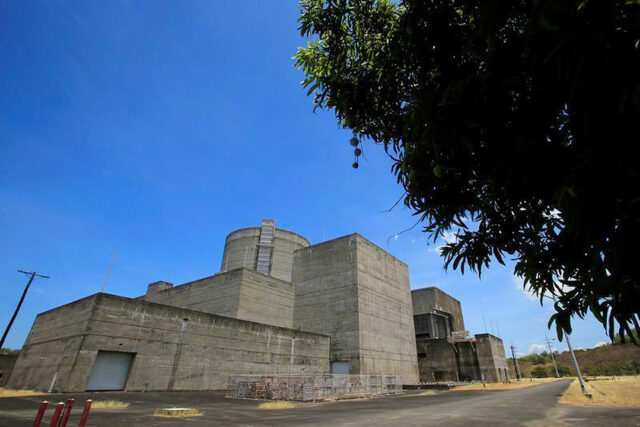
Regarding the Bataan Nuclear Power Plant, “almost everything is complete. Our recommendation is we would like to support Bataan’s rehabilitation and reinforce safety requirements,” Sebin Cheon, senior manager at Korea Hydro and Nuclear Power Corp. told reporters on the sidelines of the forum.  

President Ferdinand R. Marcos, Jr. has discussed the possibility of including nuclear power in the energy mix to enhance energy security.  

The DoE has estimated a timeline of 10 years before nuclear power can be integrated into the energy mix. — Ashley Erika O. Jose

SBCorp. approves P8.20 billion worth of loans to 50,003 applicants

THE SMALL Business Corp. (SBCorp.), has approved P8.20 billion worth of loans for micro, small, and medium enterprises (MSMEs) affected by the coronavirus disease 2019 (COVID-19) pandemic. 

“(As of December), P8.20 billion worth of loans have been approved to 50,003 MSMEs under the COVID-19 Assistance to Restart Enterprises (CARES) Program and for SBCorp.’s other lending programs targeted to assist MSMEs adversely affected by the COVID-19 pandemic,” the Department of Trade and Industry (DTI), which controls SBCorp.,  said in a statement over the weekend. 

“Given this, SBCorp. has in fact exceeded the P8.08 billion in funds downloaded to it under the Bayanihan II Act,” it added.

According to the DTI, the Bayanihan II Act provided a P10-billion capital infusion to SBCorp. to help finance pandemic-affected MSMEs. However, the Department of Budget and Management (DBM) only released P8.08 billion, of which P7.93 billion consisted of loanable funds. The remainder was meant to cover mobilization and operating expenses.  

“Of the P7.93 billion in loan funds, P4 billion was set aside for travel and tourism-related loans. The remaining P3.93 billion (was to be lent to) multi-sectoral MSMEs or businesses in the trading, manufacturing, services, agriculture, and other sectors,” the DTI said.

SBCorp., in partnership with Department of Tourism, also has a loan program for tourism enterprises known as CARES for Travel.  

As of Nov. 30, SBCorp. has disbursed P329 million worth of loans to 735 tourism enterprises.

“Unfortunately, uptake of tourism loans was and remains sluggish. As of December 2022, only the amount allotted for tourism MSMEs remains from the original DBM disbursement. Most established tourism related enterprises acquire loans from banks as they require bigger amounts,” the DTI said.

“SBCorp. looks forward to disbursing funds previously set aside for tourism MSMEs to multisectoral MSMES starting January 2023. It is worth noting that tourism MSMEs and other tourism-related establishments may still avail of loans under the terms for multisectoral MSMEs beginning January 2023,” it added. — Revin Mikhael D. Ochave

Clark, ready for takeoff as the Philippines’ city of the future

On Nov. 7, SGV Clark successfully launched the inaugural publication of Doing Business in Clark: 2023 Edition to key officers of Clark-based organizations, such as the Bases Conversion Development Authority (BCDA) and Clark Development Corp. (CDC), representatives of embassies, as well as the Clark business community. The publication is an iteration of SGV’s Doing Business in the Philippines brochure series, which highlights the excellent investment opportunities in the country and in various localities.

Clark, which rose from the ashes of the 1991 Mount Pinatubo eruption and became a prime investment destination in the Philippines, is composed of the Clark Special Economic Zone (CSEZ) and Clark Freeport Zone (CFZ). Clark is further subdivided into four main districts: the CFZ, Clark International Airport, Clark Global City, and New Clark City (NCC). Administered by the BCDA and CDC, Clark has registered more than a thousand export and domestic market enterprises in manufacturing, information technology and business process management (IT-BPM), aviation, logistics and tourism sectors, among others. The CDC has disclosed on its website that it is a home to key investors from South Korea, the US, Australia, and Japan.

The catchphrase coined by the BCDA and CDC, “Clark: It Works. Like a Dream” sums up what they say Clark stands for: efficiency, processes that actually work, convenience and ease of doing business. While locators continue to face challenges, mainly due to changes in tax rules and the pandemic, they say that Clark remains attractive to investors because of the ease of doing business, tax incentives, a rich talent pool, and infrastructure connectivity, to name a few.

To ensure ease of doing business, the CDC operates a one-stop shop that promotes efficiency in the registration process. It is currently working on automating and streamlining processes that promise application approvals in less than three weeks. Unlike in other locations, businesses have to deal with only the CDC to locate in Clark. This removes the need for dealing with a number of government agencies, which can delay permits and licenses.

From a tax perspective on fiscal incentives, the Corporate Recovery and Tax Incentives for Enterprises Act (CREATE Act) now allows the CDC to grant an income tax holiday (ITH) for a number of years depending on the project’s classification in the Strategic Investment Priority Plan (SIPP) subject to approval of the Fiscal Incentives Review Board for investments of more than P1 billion. The SIPP supports technological advancement, research, and innovation on top of the current SIPP-eligible activities in Clark. Existing locators continue to enjoy incentives under the 10-year transitory provision of the CREATE Act. Exporters can opt for a 5% special corporate income tax or enhanced deductions after the ITH period. Clark also ensures free flow of goods and grants duty and VAT exemption to qualified imports.  

To better attract local talent, the BCDA promotes a “Live, Work, Play” lifestyle in Clark that fosters innovation and inspiration. A number of Metro Manila businesses have recently expanded to Clark to cater to talent demand and take advantage of the talent pool in Central Luzon. Clark’s accessibility to nearby cities also makes it an excellent choice for hosting international and local athletic competitions.

The BCDA has also lauded Clark’s accessibility with its infrastructure network that promises a strategic international and domestic location for investors. On Sept. 28, President Ferdinand R. Marcos, Jr. formally inaugurated the new world-class and state-of-the-art terminal of the Clark International Airport (CRK). CRK can welcome eight million additional passengers annually and is equipped with the latest technologies to make travel easier. The Philippine National Railways Clark (PNR Clark), the northern section of the North-South Commuter Railway, is also expected to significantly reduce travel time from Clark to Metro Manila to less than an hour. 

The iconic Sacobia Bridge, the cover photo of Doing Business in Clark: 2023 Edition, connects the present CSEZ to the NCC. The NCC envisions itself as the future smart city in the Philippines. It is currently home to the National Government Administrative Center, Athletes’ Village, Aquatics Center, Athletics Stadium, and the Filinvest Innovation Park. The NCC has announced that it will soon have an integrated luxury mountain resort that will host golf courses, ultra-luxury hotels, premium villas, an international school, and a public park. It will also benefit from the Luzon Bypass Infrastructure Project, which will equip it with digital connectivity comparable to South Korea and Japan.

All of these developments support the CDC’s vision for Clark to become a modern sustainable aerotropolis and a premier business destination. As a haven for meetings, incentives, conferences and exhibitions (MICE) and home to major investors in the semiconductor, IT-BPM, and tourism sectors, Clark is developing to be the Philippines’ city of the future.

In fact, in September, the BCDA signed a Memorandum of Understanding with Enterprise Singapore to create a framework for affordable housing, estate management, transportation, solid waste management, waste-to-energy technology, smart cities, sustainability, green data centers, urban development and people-centric programs. Businesses in these sectors would benefit from the incentives of a future Clark registration. There are also pending bills in Congress that support Clark’s development as a priority investment destination in the Philippines, and in Asia.

The launch of Doing Business in Clark, therefore, supports the government’s efforts to promote Clark as Asia’s investment haven. Borrowing the words of Finance Secretary Benjamin E. Diokno in his message for Doing Business in Clark, “The best time to do business in the Philippines is now.” Indeed, and one of the best places to do this is in Clark.

The history of Clark, starting from a US military base and becoming a prime investment hub, demonstrates its resilience and high potential. It is, perhaps, best represented by the Sacobia bridge, which was somewhat whimsically described in one of the BCDA’s 2020 newsletters as connecting not just the old and the new Clark, but also linking the nation’s heritage to promising times ahead. 

Certainly, setting up new business operations, or moving existing ones, is a complex process. However, investors and businesses who can meet the requirements set out in the CREATE Law and other legislation would do well to consult with trusted business advisors on whether the advantages of doing business in Clark will make it worth their while and present long-term strategic opportunities for their enterprises.

This article is for general information only and is not a substitute for professional advice where the facts and circumstances warrant. The views and opinion expressed above are those of the authors and do not necessarily represent the views of SGV & Co.


Margaux A. Advincula is a lawyer and Tax Partner of SGV & Co. and the Head of the SGV Clark Office.

Preventing the next pandemic in East Asia and the Pacific

EDWIN HOOPER-UNSPLASH

THE unprecedented impact of COVID-19 has brought into alarming focus the risk posed by infectious diseases that can explode into full-blown global pandemics. The East Asia and Pacific region, with its expanding agriculture, urban sprawl, extensive animal trade, and large concentration of human and livestock population, is particularly susceptible to such outbreaks, which unfortunately are increasingly common. The possibility of another pandemic is not far-fetched. A shift is critically needed, away from reactive responses toward a comprehensive, integrated approach aimed at prevention and preparation.

Pandemics are preventable, if policymakers are willing to plan and finance an approach that recognizes that human health is inseparable from the health of the environment and animals, both wild and domesticated. This approach, which emphasizes prevention, is known as “One Health” because it rests on an understanding of the interdependence of humans and the natural environment and is designed as an integrated framework.

One Health is particularly relevant for the East Asia and Pacific region, which is undergoing large-scale and rapid landscape, trade, consumption, and demographic change, and is one of the global hotspots for emerging infectious diseases caused by transmission from animals to humans. SARS, the Nipah virus, and H5N1 viruses all emerged from East and Southeast Asia, not to mention COVID-19, and research suggests that the next global pandemic could begin again in this region.

Multilateral institutions including the World Bank, the Food and Agriculture Organization, the United Nations Environment Programme, the World Organization for Animal Health, and the World Health Organization as well as individual countries are renewing their commitments to the One Health approach, which mobilizes sectors and communities to work together and use interventions that cut across a range of sectors, including health, environmental, agriculture, and food to address the complex origins and breadth of emerging infectious diseases.

An early instance of this multisectoral strategy occurred after the emergence of the Nipah virus in Malaysia in 1998-99, when hog farms and fruit orchards were expanded to areas adjacent to forests that were fruit bat habitats, resulting in animal-to-human disease transmission and a serious epidemic. Detecting this chain required collaboration among experts from forestry, wildlife, veterinary, and human health sectors. Malaysia and Thailand ultimately required fruit orchards to be distanced from hog farms, and mandated increased surveillance of areas at high risk of disease spillover, followed by an expansion of agricultural extension services.

Vietnam is a country where climate change, an overstretched healthcare system, and limited infrastructure in rural areas, combined with rapid population growth and a prominent agricultural sector create vulnerabilities to infectious disease outbreaks. Concerns about antimicrobial resistance, stemming from widespread use of antibiotics in the healthcare system and in aquaculture and livestock production, have spurred Vietnam to approve a national action plan that includes an inter-ministerial surveillance strategy and upgrades to laboratory capacity to track and detect resistant bacteria. More broadly, several government agencies this year issued a five-year master plan for prevention and control of diseases transferred from animals to humans.

In recent years, countries in the region have updated legislation relating to animal health, diseases transferable from animals to humans, and food safety, but considerable gaps remain in policies and in the implementation of national action plans. Steps should be taken now to improve coordination and the exchange of critical data between human health, animal health, and environmental health sectors. Implementing One Health principles will require a shift from programs focused narrowly on specific diseases to ones that strengthen overall systems, including by going beyond the health sector to livestock keepers, park rangers, extractive industries, and communities responsible for environmental stewardship.

And while this approach requires investment, an ounce of prevention could be worth a pound of cure. The World Bank recently proposed an investment framework to incorporate One Health and prevention considerations into investment decision-making processes, which found that globally, prevention costs guided by One Health principles range from $10.3 billion to $11.5 billion per year — less than 1% of the cost of COVID-19 in 2020.

To be sure, the costs and benefits of this approach can be uneven: benefits will largely accrue at the national and global levels, while the costs of reducing deforestation, monitoring wildlife trade, and enhancing the safety of livestock farms are largely borne locally and in countries most susceptible to infectious disease outbreaks. Nevertheless, pandemic prevention is a global public good — no country can be excluded from benefiting and there is no limit to the number of countries that can benefit.

In addition, many of the activities associated with infectious disease prevention are important contributors to employment and economic growth. For example, in Vietnam agriculture represents 37% of total employment and the agriculture, aquaculture, and forestry sectors contributed almost 15% to the country’s GDP. However, the attendant benefits of climate change mitigation and adaptation, greater food safety, sustainable agriculture, and human health will pay economic dividends as well.

There is a clear opportunity for the East Asia and Pacific region to muster support for the global coordination of policy and financing required for successful implementation of One Health. In a world still recovering from the devastation of COVID-19, governments need to optimize scarce funding resources across a range of financial, fiscal, social, and health challenges. One Health is no panacea, but it offers a sustainable and cost-effective way to minimize the risk of a future pandemic.


Benoit Bosquet And Daniel Dulitzky are the East Asia Pacific Regional Directors for Sustainable Development and Human Development, respectively, at the World Bank. Martien Van Nieuwkoop is the Global Director for Agriculture and Food at the World Bank.

Statement on the Maharlika Wealth Fund

BW FILE PHOTO

The opposition to the contentious Maharlika Wealth Fund (MWF) intensifies despite government concessions. To allay the widespread anger of citizens, Congress, with the consent of the Executive, is withdrawing from its bill the participation of the Government Service Insurance System (GSIS) and Social Security System (SSS) in the MWF.

Representative Stella Quimbo, co-author of the MWF bill, conceded that government “got off on the wrong foot.” Apart from excluding the GSIS and SSS from taking part in the MWF, Representative Quimbo said that other changes to the bill are underway, including the removal of the national government’s contribution of a seed fund.

Government is hoping that such concessions will take the wind out of the opposition’s sails. But will it?

The terse answer: No.

It is in this light that I share the full statement signed by former Cabinet Secretaries including five former Economic Planning Secretaries, other former senior government officials, professors of economics and other disciplines from the country’s leading universities, civil society personalities, and the men and women of Action for Economic Reforms.

A full reading of this statement, issued before government announced the concessions, sheds light on why the bill must be fully discarded.

To illustrate, removing the GSIS and SSS from participation in the MWF does not change the fact that the MWF remains a “behest” transfer. The remaining entities — the Bangko Sentral ng Pilipinas, the Land Bank of the Philippines, and the Development Bank of the Philippines — are ordered “to participate by quota when there is no inherent reason for these to do so.”

The statement likewise points out how muddled the bill is. This is a point all the more reinforced by the later “Statement of Economic Managers on the Creation of the Maharlika Wealth Fund.” The “Statement of Economic Managers” reveals a spray gun approach. The managers say the MWF can be used to fund “the country’s big ticket infrastructure projects, high-return green and blue projects, and countryside development”; have investment gains; and secure intergenerational benefits “such as potential earnings from extracted natural resources.” So, which is which?

What Emmanuel Esguerra, former director-general of the National Economic and Development Authority, told me neatly summarizes the sentiments of those who signed the statement opposing the MWF. He said: “People in Congress are debating if there are enough safeguards against mismanagement and corruption. Instead the proponents should be first made to make the case for a Sovereign Wealth Fund. There is none.”

For a fuller understanding of why the case for MWF cannot be salvaged, read on.

STATEMENT ON THE MAHARLIKA WEALTH FUND
(Dec. 7, 2022)

We, concerned citizens from the civil society, academe, and private sector, ask the Executive and Congress to scrap the Maharlika Wealth Fund (MWF) bill or House Bill (HB) 6398.

Establishing a Sovereign Wealth Fund (SWF) is not novel. Given the right conditions, institutions, and governance, it is a relevant investment fund.

Unfortunately, HB 6398 distorts the core concept of a sovereign wealth fund, and it is an ineffective measure to address the bill’s stated intentions.

The MWF is a warped version of what the SWF should be. Sovereign wealth funds usually solve a problem of excess. Some examples: excess revenues in a situation of consistent large budget surpluses, windfall revenues from booming extractive industries, and excess foreign currency reserves from enduring balance of payments surpluses, which are invested abroad to help stem currency overvaluation. But the Philippines does not enjoy such excess. Instead, the country has a heightened fiscal deficit, has a so-so export performance, and has not enabled the major commodity exports to bolster foreign currency reserves.

Furthermore, the MWF’s stated intention to “create jobs, promote trade and investments, strengthen connectivity, expand infrastructure, achieve energy and food security” can be achieved more effectively through other established measures.

The administration’s goal of promoting infrastructure spending can be more efficiently facilitated through annual appropriations, concessional lending, or public-private partnerships (PPP).

House Bill 6398 establishes a Maharlika Investment Corporation and a corresponding Maharlika Investment Fund, but it fails to establish a clear operationalization of its principles; lacks proper safeguards and disciplining mechanisms; and only pays lip service to the “Santiago Principles.” It is also alarming that the Fund pulls primarily from the pension funds of the Government Service Insurance System (GSIS) and Social Security System (SSS), exposing contributors’ savings to unnecessary, unmitigated risk.

The Maharlika scheme is essentially a “behest” transfer by ordering entities like the GSIS, SSS, Development Bank of the Philippines (DBP), Land Bank of the Philippines (LBP), and the Bangko Sentral ng Pilipinas (BSP) to participate by quota when there is no inherent reason for these to do so. It undermines the autonomy of their investment decisions and preempts their portfolio choices, not necessarily in an optimal fashion. In other words, the Maharlika Wealth Fund Corporation usurps the investment decision-making of independent institutions, thus weakening them and undermining their credibility.

For instance, a provision in the MWF bill deprives the BSP of 50% of what it should be receiving in dividends to be counted as equity infusion, undermining its independence and ability to stabilize prices and the exchange rate.

A sovereign wealth fund should mitigate the impact of volatility and unpredictability while enabling a nation to achieve its long-term macroeconomic objectives. The rules of the game — the institutions, governance, and incentives — that define HB 6938 run counter to principles of prudential regulation and risk management, conflict-of-interest avoidance, transparency, and accountability. This muddled, inconsistent, and redundant bill is only setting the MWF up for failure, and will only enable cronyism, rent seeking, and corruption.

While the Philippines may someday see the windfall revenues to sustainably fund its sovereign investments, this current proposal misses the mark by far. We are better off pursuing the necessary fiscal reforms to achieve our socioeconomic objectives; enacting an inclusive and sustainable budget that prioritizes health, social protection, and infrastructure; reforming our pension system; and improving the country’s governance and institutions to enhance our prospects for investment.

Thus, we call for the scrapping of House Bill 6398.

Among those who signed the statement are former Cabinet Secretaries Solita Monsod, Cielito Habito, Dante Canlas, Emmanuel Esguerra, Ernesto Pernia, Florencio Abad, Alberto Aldaba Lim, former BSP Deputy Governor Diwa Guinigundo, Former Finance Undersecretary Milwida Guevara, former Education Undersecretary Nepomuceno Malaluan, former Finance Assistant Secretary Ma. Teresa Habitan, former President of the Philippine Institute for Development Studies Gilberto Llanto, Professor Emeriti and Professors from leading universities, namely Emmanuel de Dios, Maria Socorro Bautista, Edita Tan, Maria Serena Diokno, Michael Alba, Maria Joy Abrenica, Mario Lamberte, Toby Monsod, Renato Reside, Carlos Bautista, Cynthia Bautista, Dan Gatmaytan, Agustin Arcenas, Mary Racelis, Germelino Bautista, Cristina Montiel, Benjamin Tolosa, Fernando Aldaba, Randy Tuaño, Luis Dumlao, Carmel Abao, et al.


Filomeno S. Sta. Ana III coordinates the Action for Economic Reforms.

www.aer.ph