Home Blog Page 5428

Century Pacific eyes solar power for other manufacturing plants

YUE CHAN-UNSPLASH

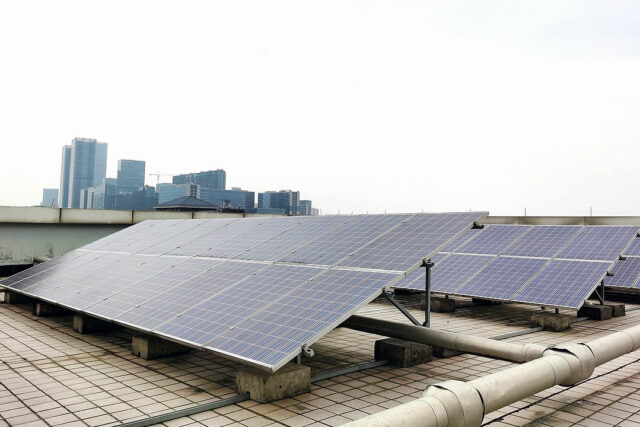
CENTURY Pacific Food, Inc. is planning to add solar facilities in its other manufacturing plants after it has completed the commissioning of a 5.2-megawatt solar photovoltaic (PV) facility last year.

“Yes, we are looking for opportunities to go solar or use renewable sources in other manufacturing plants,” Dappy Tecson of Century Pacific’s investor relations team told Businessworld through e-mail on Aug. 25.

Ms. Tecson said that Century Pacific’s solar facility supplies up to 15% of the company’s power requirements in its tuna and coconut manufacturing hubs in General Santos City.

According to the company’s website, the commissioning of the solar PV plant was completed in June 2021. Previously, the company used clean energy sourced from a hydroelectric power plant through the grid.

In terms of carbon footprint reduction, Ms. Tecson noted that the solar PV plant has helped the company in reducing its carbon footprint by 10% in 2021. She said: “apart from solar, our coconut division is also targeting to be carbon neutral by 2028.”

In Century Pacific’s disclosure on Aug. 22, the company said that it aims to minimize its ecological impact via its commitment to plastic neutrality.

Ms. Tecson said that Century Pacific will also explore other strategies as part of its sustainability commitment such as turning waste into energy, which she said will lessen the firm’s coal usage.

In the second quarter, Century Pacific’s attributable net income increased by 7.7% to P1.54 billion from P1.43 billion in the same period last year. Year to date, the company’s net profit increased by 8.5% to P2.95 billion from P2.72 billion in 2021. — Ashley Erika O. Jose

Why foreign banks exit the Philippines

ANDREA DE SANTIS-UNSPLASH

By Abigail Marie P. Yraola, Researcher

MORE than two years since the coronavirus pandemic struck, the country’s banking system has not been left unscathed. Amid the geopolitical uncertainties, surging commodity prices, and rising interest rates, a couple of foreign banks opted to leave the country.

In April last year, Citigroup, Inc. announced it will sell its consumer banking business in the Philippines as well as other Asia-Pacific markets, but will retain its corporate banking presence.

The Manila branch of Dutch bank ING Bank N.V. also made a similar announcement in June this year, saying it will leave the Philippine retail banking market amid uncertain global conditions that affected its operations. However, it will keep its wholesale banking unit and global shared services operations in the country.

John Paolo R. Rivera, Asian Institute of Management economist, said that foreign retail banks exiting the country is most likely a strategic decision.

“There are more productive (profit-generating) ventures that these banks can take using the resources allocated for Philippine operations by simply leaving. These ventures can cover the costs of leaving and its accompanying opportunity costs,” Mr. Rivera said in an e-mail.

These exits mean less competition, more mergers and acquisition of operations, change in user experience for clients who are left behind and who choose to stay, he said.

“There will be less exposure of the Philippine banking sector to changes in foreign banks downside risks, more transactions and opportunities for market growth for locally based banks,” Mr. Rivera said.

UNIONBANK BUYS CITI’S RETAIL ARM
The global banking giant came to an agreement to sell its consumer banking arm to UnionBank of the Philippines. The acquisition will cover Citi’s local credit card, unsecured lending, deposit, and investment businesses, as well as Citicorp Financial Services and Insurance Brokerage Philippines, Inc.

The Philippine Competition Commission approved the P55-billion takeover in April this year, while the Bangko Sentral ng Pilipinas gave its green light in July.

Beginning Aug. 1, Citi said that it successfully completed its sale of its consumer business to UnionBank.

This transaction is expected to result in capital benefit of approximately $700 million for Citi.

The largest foreign bank in the Philippines, Citi has set up its bank in the country way back in 1902. Its corporate and investment banking platform helped propel growth for institutional clients in the country and across the globe.

Citi is recognized as the pioneer in business process outsourcing (BPO), providing customer sales and service, and other client-based support services to various Citi operations.

“We now rank in the top three in terms of credit card spending or usage. More importantly, it has provided us with one of the most diversified loan portfolios in the banking industry,” UnionBank of the Philippines Senior Vice-President and Head of Corporate Planning and Investor Relations Carlo I. Eñanosa said in an e-mail.

Consumer-to-total loans portfolio of the bank increased to 49%, more than double the industry average, he said. Mr. Eñanosa added that the acquired consumer portfolio is very profitable and further improves our net interest margin.

“We will also increase our retail customer base by almost one million new-to-bank customers, which are mostly in the middle- to upper-income segment and expect to generate additional value from the synergies across the merged consumer business,” Mr. Eñanosa said.

He also highlighted that this meant continuity of business operations and deeper leadership bench within the organization.

For Mr. Rivera, this shows a greater market for UnionBank and opportunities to leverage on what Citi has left behind.

The total assets that will contribute to UnionBank is close to a hundred billion pesos, Mr. Eñanosa said. This will consist of P65 billion of net loans, largely in credit cards, about P30 billion of cash, as well as other assets like the real estate property that houses their operations.

“With the Citi consumer business, our recurring income will increase in a major way. Our current net interest margin is at 4.7% and this will increase to 5.5% because of the Citi consumer banking business,” Mr. Eñanosa said.

Central banks around the world, including the Philippines, continued tightening their policy rates to temper rising inflation. Should this continue, Mr. Eñanosa said, this could impact the consumers except for products where there is a rate cap.

“Having said that, we think that the rate cycle might be approaching its peak,” Mr. Eñanosa said.

“There are other factors that banks consider in their pricing — such as competitive landscape, regulations, and market liquidity. It does not mean that as rates rise, we automatically pass the same level of increase to the consumers,” he added.

Credit rating agency Fitch Ratings said in a report rising interest rates will put more pressure on consumers and small businesses.

In its report “Impact of Rising Interest Rates on APAC Banks,” Fitch Ratings said that most banks will benefit from higher interest rates and that lending rates are likely to adjust more quickly than deposit rates.

“In the most competitive markets, such as Indonesia, the Philippines, and Taiwan, banks will have a weaker scope to pass on higher rates to borrowers, limiting the upside,” it said.

Moving further, UnionBank recently launched UnionDigital Bank, Inc. which is among the six digital banks that has been given digital banking licenses by the central bank alongside Overseas Filipino Bank, Tonik Digital Bank, UNO Digital Bank, GOtyme Bank and Maya Bank, Inc. As per BSP’s regulation, digital banks in the country must have a minimum capitalization of P1 billion.

The launch of UnionDigital completes its strategy of becoming a Great Retail Bank, said Mr. Eñanosa.

“A large universal bank would probably have less than 10 million customers on average and most banks are servicing the same customers. So, there is a large segment that remains to be unbanked or underserved. With UnionDigital, we will be able to extend financial services to this segment because digital has no boundaries in terms of reach,” Mr. Eñanosa added.

UnionDigital provides ease in opening accounts and facilitating financial transactions. Its cost to serve its customer is lower compared with a universal bank. UnionDigital has no branch legacy cost, no relationship managers, lower reserve requirements, and lower license cost per account.

“This means that it is now viable for us to cast a wider net in serving the Filipino consumers. Not to mention that it is 100% owned by UnionBank which means it addresses the level of trust which is sometimes a concern of customers in choosing a bank,” added Mr. Eñanosa

ING BANK MANILA’S EXIT
On June 24, the Dutch banking giant ING Bank announced that it will exit the Philippine retail banking market before the year ends. Still, it will continue to invest in its wholesale banking business and global shared services operations in the Philippines.

In a statement, ING Bank said its exit is due to uncertain global macro situation in the last few years leading the bank not to expand the activities to other countries, which meant that the retail operations in the Philippines had to be re-assessed for its scalability as a standalone business.

The bank assured its retail customers that there is no change to their accounts. They can continue to access their funds and accounts anytime and their money remains safe and secure, the bank said.

This exit from the Philippine banking market also mirrored the same move ING made in European countries such as France, Austria, and Czech Republic in 2021.

ING was the first bank to go fully digital in the Philippines. It was also popular among savers due to its high-interest savings accounts.

Since 1990, ING Bank has been servicing corporate and institutional clients in the country. Its retail banking has begun operations in late 2018 which served more than 380,000 customers with savings accounts, current accounts, and consumer lending.

Since its launch, the bank has performed well, demonstrating good progress, commercial momentum, and growth potential. Currently, the bank has around 120 employees in both wholesale and retail banking.

ING is a Dutch member of the Inter-Alpha Group of Banks which is a cooperative consortium of 11 prominent European banks. They operate in more than 40 countries with its corporate headquarters in Amsterdam.

It also began its ING Business Shared Services, Inc. in 2013 which supports its banking operations across the world.

AIM’s Mr. Rivera assessed that the Dutch financial giant leaving the retail banking market is “strategic move in order for them to be able to harness their full revenue and profit potentials.”

“I believe ING will not leave their customers hanging behind. They are an established bank with a reputable track record. There are post departure systems in place to ensure consumer welfare,” he added.

UnionBank’s Mr. Eñanosa said the Philippine banking sector will benefit from the unique position in terms of growth prospects given the country’s demographics.

“Our country is composed of a young population at the beginning of their credit cycle and we have a large population that remains to be unbanked,” Mr. Eñanosa said.

“Our regulators also continue to support digitalization to promote financial inclusion and to accelerate distribution of financial services to the consumers.” he added.

Supermarkets: Lift use of SRP bulletin until year-end 

THE use of the suggested retail price (SRP) bulletin issued by the Department of Trade and Industry (DTI) should be lifted until year-end, according to a supermarket industry group.

Steven T. Cua, Philippine Amalgamated Supermarkets Association president, told BusinessWorld Live on One News Channel aired Monday that the group has been suggesting that the SRP is not needed unless there is a calamity or a state of national emergency.

“Maybe this is as good a time for the DTI to lift the use of the SRP until the end of the year and see what happens. If retailers, distributors, or manufacturers abuse this, I think it is the fall of these sectors and the retailers because people will not buy their products,” Mr. Cua said.

“We have always been suggesting that there is no need for SRP unless there’s a calamity or a state of national emergency. That is what the SRP is supposed to be for because it is a price-regulating mechanism. Let the manufacturers find the right place for their products, to be able to position their products and brands well,” he added.

On Aug. 12, the DTI issued a new SRP bulletin that reflected price increases for 67 out of 218 stock-keeping units (SKUs) under its jurisdiction on the back of higher production costs. The price increases vary from 3.29% to 10%.

Some of the basic necessities and prime commodities that were priced higher include canned sardines, coffee, noodles, bottled water, processed milk, detergent soap, candle, and condiments.

“Amid these adjustments, the DTI remains steadfast in its commitment [to] ensuring that consumers have access to reasonably priced goods in the market, hence increases were kept to a minimum,” Trade Undersecretary Ruth B. Castelo said in a previous statement.

Based on Republic Act No. 7581 or the Price Act, the DTI monitors the prices and supply of products such as canned fish and other marine products, processed milk, coffee, bread, salt, laundry soap, detergent, candles, flour, processed and canned pork, processed and canned beef, and poultry meat, noodles, vinegar, patis, soy sauce, toilet paper, soap, and school supplies.

“The main function of the SRP Bulletin is to inform and guide retailers and consumers, protect them from deceitful or unconscionable transactions, and give consumers the freedom to choose the product they prefer at a price they can afford,” Trade Secretary Alfredo E. Pascual said in a previous statement.

Meanwhile, Mr. Cua said that the group had been advised by a leading salt manufacturer of a price increase.

“We’ve been advised by one manufacturer at least — a leading local brand — which said that prices will go up by 33%. So far, we have not ordered yet. Our supermarkets have not really seen the price increases,” he said.

“Salt sales are not that strong in supermarkets. The sales are stronger in wet markets. But at the supermarket, sometimes people forget to buy salt,” he added. — Revin Mikhael D. Ochave

How can un(der)served Filipinos leverage debt

ANDRE TAISSIN-UNSPLASH

By Ana Olivia A. Tirona, Researcher

KAMILA O. PARAS, a 59-year-old local government unit employee, was one of the few Filipinos that got cold feet when it comes to credit.

About five years ago, Mrs. Paras was looking into buying a house and lot with her 61-year-old spouse but could not swallow the “hard pill” that is called credit score. The couple wanted to purchase their own home after years of renting, but the hardships of requirements and settlements overwhelmed the couple.

They were asked about their credit score after finding the perfect house. However, neither of them felt confident of their credit score.

“I think my credit card somehow helps me, which I only got later on in life. But I don’t use it often like some people do. I’ve had experiences where I didn’t pay on time. Sometimes I don’t push through with the purchase because it is quite expensive to pay off later,” Mrs. Paras said in an interview.

“The thought of utang to a bank is just scary. So, I don’t know how my credit is looking,” she said.

“It’s such a worry to take out loans, and so that time was a rough one for us. A lot needs to be considered. Borrowing rates and having steady income. We didn’t push through with that one house anymore, it just seemed like a lot of work and just the thought of credit score kind of discouraged us,” Mrs. Paras added.

With that in mind, how can the underserved and unserved Filipinos navigate through credit gain opportunities and leverage debt without fear?

UNDERSTANDING THE UN(DER)SERVED
In Bangko Sentral ng Pilipinas’ (BSP) National Strategy for Financial Inclusion 2022-2028, the underserved and unserved segments of the country are part of the financially excluded people that the central bank wishes to address in their seven-year plan.

The BSP identified that the underserved and unserved are senior citizens, migrant workers, persons with disabilities, indigenous peoples, forcibly displaced persons, those who are excluded due to religious beliefs. Most notably, those who are also financially excluded are those in agriculture, micro, small, and medium enterprises (MSMEs), startups, and informal workers.

In the 2021 Financial Inclusion Survey (FIS), the share of adults that hold a formal credit climbed to 25% from 19% in 2019. However, banks are still the least preferred source of formal credit but remain to be the main source of formal savings at 31% and second spot in account penetration at 23%.

Furthermore, the survey showed that half of the Filipinos believe that borrowing from formal institutions was challenging. Sadly, the common perception shows that the bigger the borrowing need is, the more reluctant they are.

It is vital for the BSP to continue to expand its financial inclusion for credit opportunities. Examples of their initiatives are to promote the use of alternative data (ex. data retrieved from social media, mobile data, utilities data, behavioral data, online transactions, geolocation data, and browser data, among others, usually not collected by the financial institutions, etc.,) and developing a better framework for harnessing data for credit evaluation for those in agriculture and MSMEs.

In a study by information solutions agency TransUnion titled “Empowering Credit Inclusion: A Deeper Perspective on Credit Underserved and Unserved Consumers” released last June 14, the results of the surveys aimed to shed light on the credit situation of the target segment.

The study described underserved as those that “have minimal credit participation, limited to a single type of credit product and no more than two open accounts of that type, and have been active in the credit market for at least two years. Furthermore, the unserved are consumers that have no history of an “open traditional credit product.”

Before diving into possible credit gain opportunities for Filipino consumers, what is credit and credit score?

In simpler terms, credit is  when a consumer buys a specific good or service without immediate payment. But will pay the lender — such as a bank — what is due at a later time.

Meanwhile, a credit score is a report of how well a borrower has been paying off their debt. Having good credit score will allow you to have more access to loans and financial services.

For consumers like Mrs. Paras and her husband, their journey with credit is unstable because they feel that debt equals bad. And so, when the time came for them to report a credit score, they felt discouraged.

In a written response to BusinessWorld, TransUnion Philippines Regional President and Chief Executive Officer Pia L. Arellano describes credit as an aid to help Filipino consumers access financial products and services.

“Good credit is essential, as it will allow Filipinos access to loans and credit cards to help them achieve their financial goals. Aside from this, Filipino consumers can also use credit for online shopping, protection for purchases, extra financial security, and even for maintaining their very own business,” Ms. Arellano said.

“Whether people realize it or not, credit score really does play a large part when it comes to your own personal finance. Credit scores are the lender’s basis for deciding whether you’re a good risk. They look into these as proof of how likely you are to pay back your debt,” Ms. Arellano added.

TransUnion’s study on credit, which surveyed 11,100 adults (ages 18 years and older), showed that unserved and underserved Filipinos “expect their need for credit” to increase in the next three to five years.

The most common reason why the surveyed population did not want credit or to have more credit is they “don’t want to go into debt.” About 40% of the underserved Filipinos surveyed said they are worried about not having control of finances. As such, 32% of the underserved explained how they would take advantage of credit if only it had lower weekly and monthly payments.

Likewise, when the opportunity arises for these consumers, they reject the credit offer because of high interest rates.

In truth, there is potential for these consumers. If only lenders would become more accommodative.

FINDING WAYS TO LEVERAGE DEBT
BDO Unibank, Inc.’s (BDO) primary goal for the unserved and underserved segments of the population is to have more access to credit.

In a written response to BusinessWorld, BDO assures that consumers can take advantage of debt in many ways:

• Augment cash to fund basic needs, spend for renovation or repair of house or vehicles; pay for unforeseen expenses; or fund working capital to start or expand a business.

• Manage cash flows for things like school tuition fee payments.

• Purchase of big-ticket items sooner such as house and lot or a vehicle.

• Pay off debts with new funds (refinancing) at terms that may be more favorable for them (e.g., longer payment terms or installment schemes).

To date, BDO offers loans such as for personal, auto, home, and MSMEs.

In fact, BDO Network Bank, Inc. (BDO NB) — a subsidiary of BDO — operates as a rural bank which targets consumers in far-flung areas of the Philippines.

“To serve the banking needs of the un(der)served markets especially in the rural areas, our rural bank subsidiary, BDO NB offers Salary Loans and Kabuhayan Loans,” the bank said.

BDO NB’s Salary Loan are categorized as personal loans which can be used for various needs. This offer entails a more convenient way of paying off debt through salary deductions.

Similarly, the Kabuhayan Loan is catered to MSMEs to give financial support to those expanding and growing their businesses. Specifically, this can be used for purposes such as working capital or fixed asset acquisition.

However, affordability may still come at a cost.

“The bank may face potential decline in asset quality or rise in nonperforming loans (NPL) on unsecured loans,” BDO said.

But a “robust credit process, constant account monitoring, and site-visit to clientele’s place of business” could ensure the bank’s corporate standard.

EASY, BREAZY, CREDIT
For people like Mrs. Paras that are struggling with credit, leveraging debt should be easy, affordable, and convenient.

Despite financial uncertainty and rising global prices, banks like BDO assure its consumers that access to credit is “more important to the un(der)served than rates.”

On the other hand, TransUnion also calls for better financial inclusion and financial literacy.

“Lenders can play a critical role in helping more consumers become actively engaged in the credit system and promoting greater financial inclusion. With this, it can be said that the consumer experience plays a large factor in the reasons why unserved and underserved consumers are hesitant or less likely to take up a credit offer,” Ms. Arellano said.

“It is important for banks and financial companies alike to develop and offer credit products and services that are more tailored to their lifestyles,” she added.

There will always be factors to be weighed in by both the borrower and lender just as long as access is not limited to those who are financially sound.

“Maybe in the long-term, we can finally present a good credit score to buy our dream house. If not, that’s fine,” Mrs. Paras said. “Wherever it’s simple and hopefully affordable, I’ll choose that.”

Globe installs 933 sites for 5G; DITO reaches 12M subscribers

BW FILE PHOTO

GLOBE Telecom, Inc. announced on Monday that it rolled out a total of 933 sites for its fifth-generation (5G) wireless technology in the first half of the year.

“Globe’s 5G network outdoor coverage has reached nearly 97% of the National Capital Region and 86% of key cities in Visayas and Mindanao,” Globe said in an e-mailed statement.

5G technology offers lower latency, higher bandwidth, and more reliable internet connections than 4G.

As of the end of June, about 2.7 million devices were connected to Globe’s 5G network, it noted.

“Globe is also accelerating its 5G roaming rollout to more countries in Asia, the Middle East, and Europe to bring seamless and world-class connectivity experience to travelers and overseas Filipino workers.”

Meanwhile, DITO Telecommunity Corp. said it had achieved its 12-million-subscriber target.

The third telco player “attained its 12 million subscriber base as of Aug. 26, 2022,” DITO said in a statement.

The company attributed its subscriber growth to the speed of its network rollout.

“With more than 5,500 cellular towers built, DITO Telecommunity has increased its coverage to over 600 cities and municipalities and has effectively breached its 70% population coverage target,” it said.

DITO is also developing its 5G network. “Since we started our roll-out in 2019, we have been developing our 5G network,” DITO Chief Technology Officer Rodolfo D. Santiago said.

At the same time, the company reported that its 5G Home Wifi continues to attract a growing number of users.

“As of August 2022, the service has expanded to over 600 municipalities and cities in the greater Metro Manila area, providing speeds of up to 500 Mbps,” it said. — Arjay L. Balinbin

Ease of finance with an all-in-one app: A Q&A with Maya Bank

By Bernadette Therese M. Gadon, Researcher

WITH THE EXITING of retail banks in the country that offers digital banking services, Filipinos have been looking for other banks to transfer to.

The rebranding of one of the largest digital wallets in the country to combine both e-wallet and banking all in one app, Maya Bank is a new addition to make finance easier and accessible to Filipinos around the world.

Maya, formerly called PayMaya, started in 2007 and was the financial and digital payments app used for ease of money remittance across the country under Smart Money.

The use of sending money via phone was an introduction to easier process compared with going to physical payment centers.

Over the past years, Maya has been improving in e-wallet services when the coronavirus disease 2019 (COVID-19) pandemic forced Filipinos to stay at home. This gave opportunity to rising digital banks and e-wallet apps to be introduced and for Filipinos to adapt to cashless transactions.

According to the Bangko Sentral ng Pilipinas (BSP), electronic payments have reached P8.45 billion and financial transactions have reached 1.4 million in the first half of 2022.

In the latest Financial Inclusions Survey, the number of banked Filipinos reached more than half of the population with 36% having digital wallet accounts, up from the 8% in 2019. Majority came from the low- to middle-income population putting 27.5 million Filipinos having digital wallet accounts.

Online financial transactions also surged by 60% in 2021 from 17% in 2019. According to the survey, the lack of awareness and weak mobile signal and slow internet connection were the main reasons for why other Filipinos are still not transacting online.

Last April 29, Maya announced its digital banking services via app. As one of the six digital bank licensees under the BSP, Maya’s edge against other banks is its all-in-one service from e-wallet, to banking, to investments via cryptocurrency with their upgraded app.

To know more about the new and improved Maya, BusinessWorld reached out to Shailesh Baidwan, PayMaya Group President and Maya Bank Co-founder, via e-mail interview.

Here’s the excerpt of the interview:

What are the new additions in the rebranding of PayMaya to Maya? How is the performance of the e-wallet and the banking of Maya since its reopening? How many users does Maya Bank have before and after its reopening?

Mr. Baidwan: Maya is the only all-in-one money app in the country and the response has been overwhelmingly positive. Today, Maya remains the highest-rated local finance app in both Google Play and App Store. As of end-June, Maya had over 50 million registered users across its consumer platforms. In less than three months after the new Maya app launched, more than 650,000 customers had opened a Maya Save account, making it the fastest-growing digital banking service in the country.

We seamlessly combined the power of our feature-rich wallet with digital banking services such as savings and credit powered by Maya Bank. Some of the features of Maya include:

Maya Savings is a high-yield savings account with a 6% introductory interest rate, one of the highest offered by a local bank today.

Personal Goals allows users to set up to 5 goals with a timeline while enjoying a 6% interest rate.

Maya Credit is an instant credit line that lets customers borrow up to P15,000 within the app.

Maya Crypto where customers can buy, hold, and sell 15 coins, including the most popular ones like Bitcoin, Ethereum, and many more, for as low as P1.

Maya Wallet, the most reliable payments wallet with a 99.94% uptime and a refreshed customer experience.

What specific services/promotions has Maya made to be an inclusive digital bank to Filipinos?

Mr. Baidwan: We’re significantly changing financial services for Filipinos. A key value we’re providing is easier access. In an instant, you can have an interest earning financial account. All you need to do is register to the Maya app and upgrade your account with just one government ID. You can open a savings account with just P1 and there is no maintaining balance.

On the credit side, we’re able to offer instant loans to both our consumers and MSME (micro, small, and medium enterprises) partners all within our apps because we have a view of their payment transaction history.

We also made the experience seamless. Because the Maya has banking, payments, and e-wallet all in one money app, we’re making it hassle-free for consumers to deposit, withdraw, and maximize their earnings for credit, payments, and crypto investment. Moreover, our savings and credit are powered by Maya Bank, our own digital bank, so you don’t need to submit new requirements to another third-party provider.

We’re also offering the best rates. The Maya Save is a high-yield savings account, with up to 6% interest rate that can be enjoyed until September 2022.

We introduce digital finance features through groundbreaking campaigns that are both rewarding and educational. We were the first to offer an Early Access Challenge with gamified missions, allowing customers to earn cashback as they discover and use the Maya app features. We are making investments more exciting, starting with easy and seamless crypto. We did the country’s first Bitcoin millionaire promo and we have embedded educational tutorials and how to’s in our Maya crypto feature. Today, our promos are not just rewarding, they also promote financial fitness and digital adoption.

As one of the six license holders of digital banking in the Philippines, what is the difference of Maya Bank compared with other digital banks? How many Filipinos have opened a bank account through Maya? And how does Maya make digital banking easier for its customers?

Mr. Baidwan: What makes Maya so powerful and unique is the all-in-one money experience we provide customers. Apart from offering progressive digital banking services like high-yield savings and credit, we also have a feature-rich wallet that they can use for convenient cashless payments, and even to start their crypto journey. No other fintech in the Philippines can offer all these services in one platform.

Another important key differentiator for Maya is our on-ground touchpoints, boosted by our agent network Maya Center (formerly known as Smart Padala), with over 65,000 touchpoints all over the country. With this, cashing in and out of Maya is as easy as going to your neighborhood sari-sari store, with Maya Center.

Because we’re also the leading payments processor for all types of businesses, customers can pay in over 760,000 registered merchants nationwide — whether via QR (quick response code), their Maya card at all Visa and Mastercard-accepting stores worldwide, or via their mobile number online. Even customers of other banks integrated with QR Ph, the national standard for QR payments, can pay merchants using our Maya QR as we lead in the deployment nationwide.

Maya has introduced cryptocurrency services. Given this, how is the performance and reception of customers to cryptocurrency for the past two months? Has cryptocurrency been booming for e-wallet consumers?

Mr. Baidwan: Three months since launching our crypto feature, we’ve registered an outstanding surge in crypto usage and volume, exceeding our initial goals. It’s because Maya Crypto offers an all-in-one experience with low barrier to entry. All you need is an upgraded account, and you can start buying crypto with just P1.00. We’re changing the game with exciting features and more coins soon.

How do you promote cryptocurrency for those who have no knowledge about it? Does your learning guides for cryptocurrency in the app been helpful for your customers? And what promotions do you currently have to convince your customers to try crypto?

Mr. Baidwan: While there is a lot of interest on crypto among Filipinos, it remains to be a daunting subject for many, so we made sure that Maya Crypto includes a Learn tab. Maya is the only app with this helpful guide. We also produce educational content via our own social media channels and via content partnerships with finance experts.

The pandemic has been tough to most businesses and banks, a few retail banks moved out of the country this year. How is Maya Bank handling pressures and the current economic landscape to avoid ending up like other digital banks stopping operations while also continuing to promote digital banking?

Mr. Baidwan: The opportunity for Maya is big as the Philippines still has a large population of underserved and unbanked consumers and MSMEs. We have moved beyond payments with digital banking. We pursued our own digital banking license because we have a deep understanding of the market that we want to serve. At the same time, Maya offers much more than digital banking because of our unique payment ecosystem.

We have set up Maya with customers at the front and center. Thanks to our digital payments business, we have a ready base of 50 million customers and over 760,000 merchant touchpoints ready to leap forward into digital banking. We are using insights and data from the payment transactions to create the next level of relevant products for the customers.

Second, we are a digital-first company, so this gives us a way to innovate very fast and roll out very quickly. For example, we do app releases every two to three weeks as our standard sprint. This gives us extraordinary agility, even among banks and other fintechs.

Third, we are used to a very high frequency of transactions, and our digital capability enables us to handle micro transactions on a broad scale.  Because we’re digital, it also gives us the ability to offer innovative products with higher margin and more extensive use cases.

Lastly, we’re leveraging on our existing nationwide ecosystem that we built over the years to sustain and accelerate our digital banking system. We’re bringing digital banking closer to our Maya app customers, Maya Business partner merchants, and Maya Center agents. On top of that, we are scaling our efforts faster as we leverage our key partnerships with various conglomerates, starting with the MVP group of companies and key large merchants.

What are your plans for the rest of the year, as well as the medium- and long-term goals of the rebranded Maya? Are there other products/services Maya is planning to make banking easier for its customers and to include other unbanked Filipinos in the digital banking landscape?

Mr. Baidwan: We’re extremely pleased with our fast growth and progress. Over the next months, expect more exciting services and a better experience from Maya. On the consumer side, we’re expanding the use cases for our wallet as we introduce new digital banking services, including more investment and lending products. On the enterprise side, we’re going heavy on new offers for MSMEs as we also strengthen our payment acceptance presence nationwide.

Maya has separate offers for businesses such as Maya Business and loaning through Maya Credit. How affordable is this? What specific offers do these have to help businesses and borrowers and how are you making the process easier compared with other banks?

Mr. Baidwan: Through our Maya Business, we’re making it much easier for all types of merchants to grow their businesses. We enable them to accept digital payments with our end-to-end omnichannel solutions. We offer the most competitive rates as we’re a direct acquirer of major payment schemes like Visa, Mastercard, JCB, Bancnet, and QR Ph.

We are also offering a fully digital business deposit account that offers free PESONet transfers and a 1.5% interest rate, four times higher than traditional banks. We’re already providing credit lines for MSMEs, starting with our agent networks and soon, we’re going to offer more lending products.

Businesses can also easily disburse employee payroll, settle taxes, and pay their suppliers with our platform. With our all-in-one platform, merchants can efficiently run their day-to-day operations so they can focus on growing their business.

Any advice you want to give to Filipinos using e-wallet and digital banks for the rest of the year and the coming years?

Mr. Baidwan: Choose a simple and seamless money experience. For instance, with Maya, you just need one app to save, spend, invest, and more.

Use it for everyday transactions. As you earn more rewards, you’re also building your digital credit footprint and providers like Maya can offer you the most relevant offers.

Safeguard your account. Securing your finances starts with basic principles — don’t share your account passwords with anyone else, be careful with sharing personal information, and review carefully any transactions.

Have a money maker mindset. Start saving money so you can earn from your interest, which you can maximize for savings, credit, insurance, and more.

What other products or services you are planning to launch in the near term? Anything else you would like to share with us?

Mr. Baidwan: We’re very excited about Maya and how we’re creating the end-to-end digital financials services platform of the Philippines. We’re going big on our ‘personalized finance’ thrust with game-changing offerings. We have our Dark Mode feature –— ideal to reduce eye strain that comes with prolonged screen time. We will also introduce a feature that will allow users to send or receive money just by typing a username, instead of a mobile number. We’re bringing more innovative lending and investment products to consumers and we’re changing the game for crypto with our retail payments ecosystem.

For Maya Business clients, we’re offering a business deposit account that offers free PESONet transfers and a 1.5% interest rate, four times higher than traditional banks. Soon, we will also introduce more credit products to our merchant partners and to their customers.


Rate hikes to boost PHL banks’ margins

REUTERS

BANKS in the Philippines and most of the Southeast Asian region will see better margins amid higher interest rates, but rising inflation could cause more borrowers to default on their loans, Moody’s Investors Service said on Monday.

“Relatively benign inflation in ASEAN (Association of Southeast Asian) countries has enabled central banks in the region to prioritize economic recovery over monetary tightening. Yet they will step up efforts to contain price appreciation as inflationary pressure grows,” the debt watcher said.

“Rises in interest rates will lead to a widening of banks’ net interest margins (NIMs). However, asset risks for banks also increase when interest rates rise. We expect increases in interest rates in the region will be gradual and growth in problem loans will be modest,” it said.

The report, which focuses on six ASEAN economies, namely Indonesia, Malaysia, Philippines, Singapore, Thailand, and Vietnam, said while banks in these economies may face pressure to keep lending rates low to support recovery from the impact of the coronavirus pandemic, those in the Philippines and Singapore will see the largest increases in margins as interest rates rise.

“The reason why margins will increase more for banks in the Philippines than the rest is that the former has larger shares of current and savings accounts (CASA) deposits in total deposits and modest proportions of market funds in total funding mixes,” Moody’s added.

It said the more a bank uses CASA deposits for funding, the smaller increases in interest expenses will be when rates rise, which will boost the bank’s NIM.

“In addition, we expect interest rates in the Philippines will rise the most among the six ASEAN economies,” Moody’s added.

The debt watcher said it expects credit demand to be stable in most parts of ASEAN in the coming year as these countries continue their recovery from the pandemic, but China’s slowdown could pose a risk to this outlook, as the world’s second-largest economy is a major trading partner for most of Southeast Asian countries.

“An acceleration of inflation and corresponding rate hikes can also hurt credit demand, limiting banks’ ability to grow lending at higher interest rates. Further, rise in inflation leads to increases in personnel and other operating costs for banks. Banks will also face mark-to-market losses on investments, though the impact on profitability will be lower because ASEAN banks do not rely heavily on trading and investment income,” Moody’s said.

Inflation’s impact on banks’ asset quality could also offset the expected improvement in margins, the debt watcher said, as the resulting slowdown in economic activity due to rising rates could increase repayment burdens among borrowers.

“There is a close correlation between inflation and NPL (nonperforming loan) growth across the ASEAN region. The link is the strongest in Indonesia and the Philippines because periods of high inflation rates in the two countries have been accompanied by economic slowdowns and volatility in foreign-exchange rates,” Moody’s said.

“However, we expect increases in NPLs will be modest across the ASEAN region because inflationary pressure will abate in all six economies in 2023 and the pace of rate hikes will be gradual, while the ASEAN economies will continue to recover. Banks will not have to increase loan-loss provisions substantially also because banks have made substantial forward-looking provisioning at the peak of the pandemic,” it added.

Inflation could also lead to an increase in credit costs, the debt watcher said.

“Banks’ credit costs are typically more prone to increases in economies where borrowers’ debt burdens are already heavy and interest rates rise sharply when inflation accelerates. In such countries, higher interest rates significantly reduce borrowers’ cash flow, which are also negatively impacted by weakening consumer demand and business sentiment,” it said.

The Bangko Sentral ng Pilipinas’ (BSP) policy-setting Monetary Board has increased benchmark rates by a total of 175 basis points (bps) so far this year as it battles rising inflation.

Headline inflation picked up to 6.4% year on year in July from 6.1% in June and 3.7% a year ago. This was the fastest in nearly four years and exceeded the central bank’s 2-4% target band for a fourth straight month.

This brought the seven-month average to 4.7%, still below the BSP’s full-year forecast of 5.4%.

Meanwhile, latest BSP data showed the gross NPL ratio of the Philippine banking industry dropped to 3.6% in June, from 4.48% a year ago and 3.75% in May. The June bad loan was the lowest since 3.5% in September 2020.

Bad loans dropped by 12.7% to P421.311 billion in June from P482.991 billion a year earlier. This was also 1.8% lower than P429.106 billion in May.

The Philippine central bank earlier said the NPL ratio of banks might peak at 8.2% this year. — K.B. Ta-asan

Film screenings, workshops, mark Philippine Film Industry Month

FREE film screenings, networking events, a book launch, and workshops will mark the second Philippine Film Industry Month (PFIM), a month-long celebration of the heritage and legacy of Philippine Cinema. The Film Development Council of the Philippines (FDCP) will be hosting local and international events in September.

With the theme “Tuloy Ang Kuwento: Ang Pagbabalik ng Pelikulang Pilipino (The Story Continues: The Return of Philippine Movies),” the celebration aims to gather the different stakeholders and rally behind the Philippine film industry as it regains its momentum upon the easing of pandemic-related restrictions and as cinemas and theaters become fully operational. Most of the events will be held in-person.

In honor of their significant contribution to the industry, films of National Artists for Film actor-director Fernando Poe, Jr., actress Nora Aunor, screenwriter Ricky Lee, and director Marilou Diaz-Abaya will be screened for free.

PPP will also be returning, featuring the finalists from Sine Kabataan Short Film Lab and Festival and Sine Isla: LuzViMinda Short Film Competition.

Former President Rodrigo Duterte proclaimed September as Philippine Film Industry Month through the Presidential Proclamation 1085, s. 2021.

FPJ FILMS AND KIDLAT TAHIMIK
In line with the celebration of the 83rd birthday of the late actor-director Fernando Poe, Jr. — often referred to as The King of Philippine Movies — the Philippine Film Archive (PFA) will hold free screenings of four of his films from Aug. 31 to Sept. 3 in FDCP Cinematheque Centres nationwide. The films are Ang Padrino, Ang Panday, Pagbabalik ng Lawin, and Asedillo (directed by Celso Ad Castillo).

Meanwhile, the FDCP will hold the “Tuloy Ang Kuwento: PFIM Opening Ceremony” at Cinema 6 of TriNoma Mall in Quezon City, to be hosted by Dianne Medina, with guests Dr. Nicanor Tiongson and Dik Trofeo. Part of the opening includes a special screening of the newly restored film, The Moises Padilla Story by National Artist Gerardo de Leon.

There will also be a Cinema Books Expo featuring books by Ricky Lee, Doy del Mundo, Nick Deocampo, and Nestor Cuartero in cooperation with DLSU Publishing House and UST Publishing House.

On Sept. 7, the FDCP will officially open National Artist Kidlat Tahimik’s exhibit Indio-Genius: 500 Taon Labanan Kontra Magellan, Marilyn, Mickey at Padre Damaso, at the Cinematheque Centre Manila. The exhibit features art installations and a special screening of Mr. Tahimik’s film Balikbayan #1: The Silent Movie.

The exhibit, which was shown for six months in Spain’s Palacio Cristal last year, will be fanned out across six venues: the National Museum of the Philippines, Museo Pambata, the Rizal Park Visitor’s Center, the Intramuros Administration, the headquarters of the National Commission for Culture and the Arts, and at the FDCP’s Cinematheque Centre Manila.

PISTA NG PELIKULANG PILIPINO
The FDCP’s flagship film festival, Pista ng Pelikulang Pilipino (PPP), officially opens on Sept. 9. Now on its 6th edition, the festival will screen restored films in its PPP Classics section and short films in its Sine Kabataan and Sine Isla: LuzViMinda sections.

The PPP Opening Ceremony will feature free screenings of restored classic films starring Nora Aunor: Atsay, directed by Eddie Garcia, and Tatlong Taong Walang Diyos, by Mario O’Hara, at the TriNoma Cinema in Quezon City.

After the opening ceremony in TriNoma, PPP Classics and Sine Kabataan and Sine Isla: LuzViMinda short films will be screened for free at Cinematheque Centres nationwide from Sept. 10 to 24.

Under PPP Classics, the feature films Atsay and Tatlong Taong Walang Diyos, will be shown on Sept. 10; Cain at Abel and Gumapang Ka Sa Lusak, both written by Ricky Lee, will be shown on Sept. 15; and Brutal and Karnal by the late director Marilou Diaz-Abaya will be shown on Sept. 16. These screenings are supported by Solar Films, ABS-CBN’s Sagip Pelikula, and Viva Films.

PPP Classics’ films will also be screened, together with Sine Kabataan and Sine Isla short films, from Sept. 17 to 24 in all Cinematheques Centers.

GALA NIGHT
Sept. 12 is a significant day for Philippine Cinema — it was the day the first Filipino-produced and directed film, Dalagang Bukid by Jose Nepomuceno, was released in 1919. In line with this, the FDCP will hold the Awit at Pelikula: Philippine Film Industry Month Gala at Teatrino in Promenade, Greenhills in San Juan City.

The gala will feature soundtrack songs from some of the great Filipino classic films, to be performed by some of the country’s top performers like Christopher de Leon, Anna Feleo, Jed Madela, and Bituin Escalante. There will also be a tribute to the actress Cherie Gil who passed away on Aug. 5. The event will be hosted by actor-singer Piolo Pascual.

The Gala will also feature a new original composition by National Artist of the Philippines for Music Ryan Cayabyab, and written by Jose Javier Reyes.

SINE KABATAAN AND SINE ISLA: LUZVIMINDA
On Sept. 16, PPP 6 will premiere the 10 short films from Sine Kabataan and the 10 short films from Sine Isla: LuzViMinda, to be followed by the Awards Night, and a special screening Martika Escobar’s Leonor Will Never Die at the TriNoma Cinema in Quezon City.

On Sept. 17 to 18, free screenings of the in-competition short films will be held, with a talkback session with the Sine Kabataan and Sine Isla filmmakers at TriNoma. The Sept. 18 schedule will include a free screening of the feature film John Denver Trending by Arden Rod Condez.

BOOK LAUNCH, QUIZ NIGHT
FDCP, in partnership with the South East Asia Pacific Audio-visual Archive Association (SEAPAVAA), will hold a book launch and a film archiving forum on Sept. 21 at the Cinematheque Centre Manila. The book Keeping Memories: Cinema and Archiving in the Asia-Pacific, edited by filmmaker and historian Nick Deocampo, is a joint publication of SEAPAVAA, FDCP, Ateneo Press, and the Vietnam Film Institute.

Meanwhile, on Sept. 24, the FDCP Channel will host the FDCP Channel Anibersaya Game Night, an online game night which the public can join and win prizes. This will be streamed live from 7 to 8 p.m. via FDCP Channel, and FDCP’s official Facebook and YouTube pages.

UFLIX RELAUNCH, WEBINAR
The FDCP will be relaunching UFlix — an exhibition platform for student filmmakers — on Sept. 24 by announcing an upcoming incentive program for student filmmakers. The UFlix inauguration will hold screenings for student films for the day at Cinematheque Centers nationwide.

To raise awareness about the film incentives and funding programs that filmmakers can apply for, on Sept. 28 the FDCP Film Philippines Office (FPO) will hold a Webinar In Film Incentives (WIFI) to discuss its Film Location Incentive Program (FLIP), International Co-Production Fund (ICOF), ASEAN Co-production Fund (ACOF), Film Location Engagement Desk (FLEX), and CreatePHFilm Funds for Development (Script Development and Project Development), Production (Small Budget and Large Budget), and Post-Production. FPO will also announce the opening of their new cycle for their incentive and funding programs.

CLOSING EVENT
Capping off the month-long festivities on Sept. 20 is the Filmmakers and Shakers Night: Closing Event of the Philippine Film Industry Month program, which will be hosted by Robi Domingo and feature tributes to the “Queen of Visayan Movies” Gloria Sevilla and “Queen of Philippine Movies” Susan Roces. The closing event also serves as an opportunity to honor and thank all the partners, stakeholders, and filmmakers who supported the Philippine film industry.

Beyond film month, the FDCP will hold the International Film Industry Conference (IFIC), an annual conference that brings together experts from the local and international film industries as panelists and speakers in a series of sessions and masterclasses. The hybrid conference will be held in October.

PHILIPPINE FILMS IN ITALY
Philippine films will also be celebrated in Italy in September.

To mark the 75th anniversary of the formal establishment of diplomatic relations between the Philippines in Italy, the Philippine Embassy in Rome and Sentro Rizal Rome, in partnership with the FDCP, will hold the third edition of the Festival del Cinema Filipino in Italia (Philippine Film Festival in Italy) on Sept. 10 and 11. Meant to promote Philippine culture, tourism, cinema, and creative industries in Italy, the festival carries the theme “Philippines-Italy: Rising Together.”

The Philippines will also be present on one of the most film festivals in the world, the Venice International Film Festival (VIFF). The country will present two Filipino co-produced films and one Out of Competition film. There will also be one FDCP-led panel discussion at the Venice Production Bridge, the networking side of the festival.

Autobiography by Makbul Mubarak – a co-production between Indonesia, France, Germany, Poland, Singapore, Qatar, and the Philippines which is an FDCP FPO ASEAN Co-production Fund grantee — will compete in the Orizzonti section of the Venice Film Festival. Meanwhile, the Romanian film To The North by Mihai Mincan, which stars Filipino actors Soliman Cruz and Bart Guingona, will also compete in the same section.

Filipino auteur Lav Diaz’s film, Kapag Wala Nang Mga Alon (When the Waves are Gone), an International Co-production Fund grantee of the FPO, will have its world premiere under the Out of Competition section of the festival.

The FDCP will host the panel discussion “Fostering Creative Collaborations — Common Strategies and Opportunities” at the Venice Production Bridge, in collaboration with Directorate General for Cinema and Audiovisual – Ministry of Culture of Italy, Philippine Embassy in Rome, and FDCP’s UniPhilippines Office.

Singapore mulls crypto leverage rules to reduce sector’s risks

THE MONETARY Authority of Singapore (MAS) is considering more ways to protect consumers who trade cryptocurrencies, joining a push by policy makers and financial regulators across the globe aimed at mitigating the risks of the sector, which remains largely unregulated.

The MAS’ new rules may include customer suitability tests and cutting the use of leverage and credit facilities by retail investors for trading these digital assets, Managing Director Ravi Menon said in a speech on Monday, elaborating on earlier remarks that authorities were planning to expand rules in the sector. It plans to publicly consult on the proposals by October, he said.

“Banning retail access to cryptocurrencies is not likely to work. The cryptocurrency world is borderless.” Menon said in front of a room of more than 50 industry players, with the event also streamed online. “There is greater impetus now among global regulators to enhance regulations in this space. MAS will also do so.”

The pitfalls of such lack of oversight globally have come sharply into focus over the past few months, with a series of high profile company failures triggering and exacerbating a $2-trillion market meltdown. Singapore’s regime for crypto companies has garnered particular attention, given that several entities including disgraced hedge fund Three Arrows Capital and platforms Vauld, Zipmex and Hodlnaut, operated out of the country.

Mr. Menon reiterated a stance that cryptocurrencies’ volatility makes them unsuitable for use as money and “highly hazardous” for retail investors. Tokenization and distributed ledgers, that record the ownership and transfer of ownership of digital assets, offers economic potential however, he said.

MAS had already started tightening crypto investments rules early this year when it required virtual-asset providers to be licensed locally even if they only do business overseas. The central bank further stepped up scrutiny of the sector in recent weeks, sending a questionnaire to some applicants and holders of its digital-payments license seeking highly granular information about their business activity and holdings.

Singapore was early to study blockchain technology and tout its ambitions as a crypto hub. It is now trying to achieve a delicate balance between encouraging blockchain innovation and protecting investors from some of the risks of participating in a nascent market. So far more than 10 entities have permits to operate as digital service token providers out of nearly 200 applicants. — Bloomberg

Tax court affirms geothermal firm’s refund claim

CTA.JUDICIARY.GOV.PH

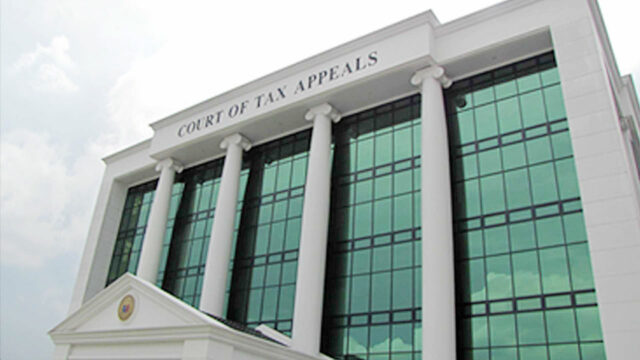
THE Court of Tax Appeals (CTA) has affirmed a division ruling which partially granted Philippine Geothermal Production Co., Inc.’s refund claim worth P4.24 million of its excess input value-added tax traced to zero-rated sales for the 2014 fiscal year.

In a 16-page decision on Aug. 17 and made public on Aug. 26, the CTA full court said it found no legal basis to overturn its decision granting the VAT refund.

“Based on the foregoing judicial pronouncements, the power of the CTA to exercise its appellate jurisdiction does not preclude it from considering evidence that was not presented in the administrative claim in the Bureau of Internal Revenue,” according to the ruling penned by Associate Justice Erlinda P. Uy.

“Accordingly, the court may give credence to all evidence presented by the taxpayer claimant, irrespective of whether or not they were submitted at the administrative level.”

The commissioner of internal revenue (CIR) argued the tribunal made an error in considering documents submitted by the company that were not submitted at the administrative level.

The CTA  partially granted the firm’s petition to refund P4.24 million out of its P5.26-million claim of excess input VAT.

The court asserted that it was within its discretion to grant a petition based on the evidence presented.

It also cited the country’s revenue code as it provides that it is not required for a taxpayer to directly attribute its claimed input tax to zero-rated sales to be creditable.

Under the law, zero-rated sales are transactions made by VAT-registered taxpayers that do not result in any output tax.

The tribunal ruled that the CIR failed to provide evidence to support its argument, as the court maintained it did not abuse its discretion in its ruling.

“The mere general averment of the CIR failed to convince this court en banc that a reversible error was committed by the court in division that would warrant the modification or reversal of the assailed decision and resolution,” said the tax court. — John Victor D. Ordoñez

Football field to be built in Bridgetowne

ROBINSONS Land Corp.’s (RLC) Bridgetowne Destination Estate will soon have a football field and sports lounge.

In a statement, RLC said the Bridgetowne football field is targeted to be launched by the second quarter of 2023.

The 105-meter x 650-meter football pitch will be installed with the highest-grade turf that complies with standards of the Federation Internationale de Football Association (FIFA).

The facility will be a collaboration among RLC, Miguel V. Gutierrez and partners, former University of the Philippines (UP) Diliman varsity players and members of the UP Football Alumni.

“We are very much excited and thankful to Robinsons Land and its Bridgetowne Destination Estate for giving us the opportunity to build an official size FIFA-preferred turf football field. This facility will not only afford more access to but also expand awareness of the sport and hopefully, incite passion among enthusiasts,” Mr. Gutierrez said in a statement.

Mr. Gutierrez, co-founder of Anytime Fitness Philippines and owner of Studio 300, noted there is a shortage of football venues in the country.

“With football’s growing popularity, we are looking forward to having a full calendar of activities and events in Bridgetowne: development camps, international games and tournaments, professional trainings, friendship cups and football clinics for children and youth among others,” Mybelle V. Aragon-GoBio, senior vice-president and general manager of Robinsons Integrated Developments, said in a statement.

Adjacent to the football field will be an enclosed sports lounge and entertainment venue. It will feature an indoor sports bar and restaurant with provision for al fresco dining and state-of-the-art game halls and equipment for billiards, a golf simulator, arcade games, bowling alley, a rehabilitation facility and gym.

The football field will be located across the Bridgetowne Obstacle Park, a 6,000-square meter park with 25 obstacles, scheduled to be launched in October.