Home Blog Page 5421

Pork supply exceeds demand, Senate panel finds, casting doubt on gov’t import policy

PORK meat products are sold at the Murphy Market in Cubao, Quezon City, Feb. 11, 2021. — PHILIPPINE STAR/ MICHAEL VARCAS

By Alyssa Nicole O. Tan, Reporter

THE Senate Agriculture, Food and Agrarian Reform Committee was told that the supply of pork exceeded demand in each of the years since 2019, raising questions about the government’s pork import policy.

Senator Cynthia A. Villar, who chairs the committee hearing, on Monday cited data indicating a pork surplus since 2019, suggesting a disconnect between the decision to import and the available pork inventory.

“We should know our local production (and) demand; the difference is what we should import,” she said.

According to Ms. Villar’s data, pork demand was 1.7 million tons in the 2019-2022 period, well below the estimated supply of 2.6 million tons.

“Why is it that production is larger than demand yet we import?,” she added.

One of the resource persons at the committee hearing, who represents the poultry industry, told the panel that the government’s policy over the last few years was to freely allow meat imports to all seeking permits.

“All these years, the private sector’s understanding of the DA’s (Department of Agriculture’s policy) is that imports can come in because we are fully liberalized. The importer just has to click on his computer and the permit will be issued electronically,” United Broiler Raisers Association President Elias Jose M. Inciong said.

“Pork and chicken are the products that don’t need a certificate of necessity to import. Our understanding is that all the rest need the certificate of necessity to import,” he added.

Bureau of Animal Industry Officer-in-Charge Director Paul C. Limson confirmed the lack of controls over imports. “The import application is lodged by the client, so we don’t have direct control over how frequently they do so,” he said.

Ms. Villar asked why the importer had the power to determine appropriate shipment volumes, adding that the government must impose “common sense” limits on permitted quantifies.

“Imports are fine with me if there’s a shortage, to solve temporary short-term problems,” she added. “Those giving the permits want imports because they benefit from it.”

Agricultural Sector Alliance of the Philippines Party-list Representative Nicanor M. Briones said that it was the DA’s responsibility to ensure that farmers do not face unfair competition from imports.

“We are agreeing to import to the extent that farmers lose out,” he said. “It’s the consumer who suffers because of what we are doing.”

He said the government needs to make import decisions with reference to the direction of farmgate prices, by which they can gauge the balance of supply and demand and plan for appropriate import volumes.

“It seems we no longer care about our farmers and consumers,” he added.

“Any industry in this situation will die,” Ms. Villar said, noting that farmers will eventually abandon agriculture because they cannot make a living competing with imports.

Ms. Villar said the Palace must take the initiative in balancing supply, demand, and imports.

Mr. Briones also said that temporary solutions should not be made permanent, such as a recent executive order extending the lower tariff regime for imports of pork, rice, corn and coal, which originally took effect as a measure to contain inflation in 2021.

 Signed by Mr. Marcos on Dec. 29 and released on Wednesday, Executive Order No. 10 extended until the end of 2023 the reduced tariffs for pork at 15% (for imports within the minimum access volume quota) and 25% (for those exceeding the quota). The corresponding tariffs were 5% for corn (within the quota) and 15% (beyond the quota), and 35% for rice from all sources, not just Southeast Asian grain.

Coal will remain at zero duty beyond the end of the year, subject to review every six months.

Reynaldo R. Cancio, the National Economic and Development Authority Policy and Planning Group supervising officer, said the extension of the reduced tariffs was meant to be a temporary measure to contain inflation.

“The recommendation to extend was only temporary… so it’s only up to the end of 2023,” he said.

“But then we assessed based on a petition from the public, from the private sector, that it needed to be extended in order to reduce inflation,” he said. “The forecast of the BSP (Bangko Sentral ng Pilipinas), at the time we were assessing, was that the target of 4% maximum inflation for 2022 would be exceeded again in 2023, so we needed to look for ways to manage inflation further.”

Ms. Villar noted however that prices have not fallen even with ample supply due to imports.

“That means (prices are) being controlled by the cartel, (which is) very powerful in the Philippines,” she said.

President Ferdinand R. Marcos, Jr., who is also Secretary of Agriculture, has called the extension of reduced tariffs necessary to “maintain affordable prices for the purpose of ensuring food security, help augment the supply of basic agricultural commodities, reduce the cost of electricity, and diversify the country’s market sources.”


PHL obtains $6M to fund rail feasibility studies

PHILIPPINE STAR/KRIZ JOHN ROSALES

THE GOVERNMENT has obtained access to more than $6 million in loans to fund feasibility studies for three railway projects outside the capital region, the Transportation department said on Monday.

The three proposed projects are the planned Panay Railway, the Bataan Railway, and the North Long Haul Interregional Railway, which will connect provinces to the north of Metro Manila, Transportation Secretary Jaime J. Bautista said.

“The technical studies for these railway projects will commence in the next few months,” he said during a ceremony to launch operations for the Metro Manila Subway Project (MMSP) tunnel boring machine in Valenzuela City.

Mr. Bautista said the government is also “on track” to secure funds for the feasibility studies for the San Mateo Railway Project, Northern Mindanao Railway Project, as well as the Philippine transport system master plan.

Mr. Bautista said the start of tunneling in Valenzuela City “signifies the point of no return” in the construction of the subway. “We are going full speed ahead to complete the country’s first subway.”

The subway project will cut across eight cities that between Valenzuela City and Parañaque City, with a spur line connecting to the Ninoy Aquino International Airport.

With a 33-kilometer route length and 17 stations, the subway targets travel time between Quezon City and NAIA in Pasay City to 35 minutes from over an hour. It is expected to accommodate up to 370,000 passengers daily.

“Many of big-ticket infrastructure projects require a lot of time to complete,” Mr. Bautista said. “We ask for patience and understanding as we pursue permanent solutions to our transportation problems.”

MMSP’s Contract Package 101 (CP101) is part of the project’s seven civil works contracts, the Department of Transportation (DoTr) said in a statement. It involves the construction of three underground stations in Quezon City and an additional semi-underground station in the northern Valenzuela City, where the depot is located.

The agency said six tunnel boring machines will be deployed for CP101.

“Around 1,200,000 cubic meters of soil using cut-cover and the TBMs are to be excavated for the partial operability (PO) section of the project or the equivalent of 500 Olympic-size swimming pools,” the DoTr said. “For the tunnels alone, the excavation will be around 711,000 cubic meters or an equivalent of 285 Olympic size swimming pools.”

“The entire alignment will have a total excavated soil of about 7,419,940 cubic meters or the equivalent of 2,500 Olympic size swimming pools,” it added.

The P488-billion subway project is supported by loans from the Japan International Cooperation Agency.

President Ferdinand R. Marcos, Jr. said he believes the Japanese government will “help us shape our railway infrastructure and keep them at par with the highest international standards,” noting that the tunnel boring machine shows “Japan’s expertise in technology and trailblazing contributions in the modern world.”

“The launching of this tunnel boring machine became a testament to this administration’s commitment to continue the projects of the previous administration and more importantly build better more,” he said at Monday’s event.

“We will continue to invest and improve on our transportation system as well as pursue more projects in the years to come so that Filipinos can gain greater access to places of work, commerce, recreation and other vital areas,” he added.

The contract package is expected to be finished by the end of 2027.

Mr. Marcos asked for more patience as “big-ticket projects such as this take years to be completed.”

“So, I ask not only for your continued patience but also for your continued trust and support for the government.” — Kyle Aristophere T. Atienza

PHL current account deficit forecast raised to 4.7% of GDP in 2023

ENERGY.AGPGLOBAL.COM

THE current account deficit as a proportion of gross domestic product (GDP) is now projected at 4.7% this year from 4.5% previously, with easing commodity prices offset by strong imports of capital goods, Fitch Solutions Country Risk & Industry Research said in a report.

The 2023 projection is lower than the expected percentage in 2022 due to cheaper oil, it said.

“As a net importer of energy, the Philippines will benefit from lower energy prices in 2023, and we expect remittance inflows to remain resilient,” Fitch Solutions said.

“That said, strong capital goods imports and a slowdown in export growth will keep the trade deficit elevated relatively to historical levels,” it added.

Fitch Solutions’ current account deficit forecast for 2022 is 5% of GDP, due to the continuing threat of weakening global demand.

The current account deficit was at $5.8 billion in the third quarter, against the $974-million year-earlier deficit, as the deficit in the trade in goods widened.

The third quarter 2022 deficit was equivalent to 6.2% of GDP, against a deficit of 1.1% a year earlier, the Bangko Sentral ng Pilipinas said last month.

The current account balance, a gauge of the balance of payments due over the short term, was in deficit by $17.8 billion in the nine months to September, much higher than the year-earlier deficit of $2.3 billion. 

The cumulative current account deficit “has likely widened to 5.2% of GDP for the whole of 2022 (versus our previous estimate of 5% of GDP),” Fitch Solutions said.

“While we still expect the current account deficit to narrow due to lower commodity prices and resilient remittance inflows, weakening global demand and sustained high imports of capital goods will keep the current account shortfall considerably larger compared to its historical five-year average of a 0.5% deficit (2017-2021),” it added.

Fitch Solutions expects goods export growth to slow to 5% this year from an estimated 6% in 2022, due to a broader slowdown in demand as a result of higher borrowing costs.

“Factoring in the lagged effects of tightening global monetary conditions across the world, our global team expects that global GDP growth will slow to 1.9% in 2023, versus 3.1% in 2022. In particular, we expect the US to enter a mild recession in 2023, which would bode poorly for Philippine exports,” Fitch Solutions said.

Philippine shipments to the US, its leading export market, accounted for about 15.4% of Philippine exports in 2021.

“Although we expect real GDP growth in China (which is the second largest export destination at 15.1% of total) to accelerate to 5% in 2023, from an estimated 3.3% in 2022, the recovery remains bumpy due to uncertainties around the COVID-19 (coronavirus disease 2019) situation,” it said. — Keisha B. Ta-asan

Airport authority sees 2023 revenue rising 36% to P11.5B

THE Manila International Airport Authority (MIAA), which manages the Ninoy Aquino International Airport, said it expects revenue to rise 36% to P11.46 billion this year, with a capital expenditure target of P2.69 billion, up 98%.

The budget for maintenance and other operating expenses has been raised by 18% to P5.42 billion. Operating expenses include water, light, power, repairs and maintenance, manpower services, and security services.

The MIAA Board approved in October a proposed operating budget for 2023 of P12.734 billion, implying a deficit of P1.084 billion, which will be funded from retained earnings, according to documents obtained by BusinessWorld.

The MIAA said revenue gains are expected to come on the back of a revival in travel activity.

Revenue from passenger service charges, both domestic and international, is expected to rise 51% to P4.17 billion this year, while revenue from aeronautical fees is expected to grow 16% to P3.55 billion.

Revenue from rentals is expected to rise 57% to P2.59 billion.

Concession fees, including terminal and other areas, are expected to increase 7% to P532.63 million.

Revenue from parking is expected to rise 30% to P366.73 million.

Passenger traffic — arrivals and departures — is expected to rise 34% to 39.87 million this year.

Flights, including international, domestic, and general aviation, are expected to increase by 18% to 289,396 this year.

Separately, the Governance Commission for GOCCs (GCG) on Monday inspected the air traffic management facility of the Civil Aviation Authority of the Philippines (CAAP) in Pasay City.

“This is to ensure that the Philippine Air Traffic Management System’s management is operating functionally, safely, and reliably,” the GCG, which regulates government-owned and -controlled corporations (GOCCs), said in a statement.

The GCG said it will compile a scorecard for CAAP in light of the technical faults that brought down the air traffic control system on New Year’s Day, leading to the cancellation, delay or diversion of hundreds of flights.

“We want to know what really transpired here because this affects many individuals. Around 75,000 people were affected,” GCG Commissioner Gideon D.V. Mortel said.

“As an agency under our coverage, they are transparent. We were led (through) the entire process. The facility was shown to us and (CAAP has been) cooperative and willing to share with us all the information we need. In fact, after this, we will be writing CAAP another memorandum to complete their submissions based on what transpired here today,” he added. — Arjay L. Balinbin

House panel to probe alleged food smuggling via Subic

ICTSI.COM

THE House committee on ways and means said it will investigate the alleged smuggling of pork, dressed chicken, and beef via the Port of Subic with charges levied on containers reportedly a fraction of the correct amounts, the committee’s chairman said.

Albay Rep. Jose Ma. Clemente S. Salceda said in a statement: “We are now in possession of credible information that the Subic port undercharges tariffs per container van by just as much as 1/8th of the actual tariff due, or in peso terms, some P100,000 per container van of imported meat instead of P800,000.”

 Mr. Salceda cited a statement from Subic Bay Metropolitan Authority (SBMA) Chairman and Administrator Rolen C. Paulino that smuggling in Subic is “not an issue nor a concern to the management.”

“We have strict policies that are implemented in close collaboration with the Bureau of Customs and we’re proud to say that we have apprehended any and all attempts that have intended to use Subic port as their receiving port, in particular with agricultural products, following the mandate of the President who is also the country’s agriculture secretary,” Mr. Salceda quoted the SBMA as saying.

Mr. Paulino also said that the agency “(remains) nonchalant because we know we can apprehend them yet always on our toes with the smuggling attempts using our port because the SBMA and the BoC will never allow such misdeeds to happen.”

Mr. Salceda called the response of the SBMA an instance of “institutional inertia that breeds corruption and kills local Philippine industries.”

“We are prepared to name names at the proper time. For now, we will protect our sources,” Mr. Salceda added.

The SBMA did not reply to an e-mail seeking comment.

Mr. Salceda said that he will propose recommendations to the impending rules and regulations of the Presidential Decree No. 1612 or the Anti-Fencing Law. — Beatriz Marie D. Cruz

Wholesale goods price growth eases in Oct.

PHILIPPINE STAR/ MICHAEL VARCAS

GROWTH in wholesale prices of general goods slowed in October, according to preliminary data from the Philippine Statistics Authority (PSA).

The general wholesale price index (GWPI) rose 7.6% year on year, against 8.2% growth posted in September and 3.9% a year earlier.

The October reading was the lowest since the 5.6% recorded in February 2022 and matched the 7.6% pace in August 2022.

In the year to date, the GWPI averaged 7.4%.

The GWPI tracks the wholesale trade sector and serves as a benchmark for price adjustments in business contracts and project costing.

The easing of price growth during the month was led by mineral fuels, lubricants and related materials, where prices grew 28.6%, against 38.9% in September.

This was followed by manufactured goods classified chiefly by materials with a 4.2% rise, easing from 4.3% in September, then chemicals including animal and vegetable oils and fats with a gain of 3.4% in October, compared with 5.1% in September.

Crude materials, inedible except fuels posted a decline in prices of 18.6%, accelerating from the 4.8% decline in the prior month.

“Meanwhile, a higher annual uptick was exhibited in the index of machinery and transport equipment at 1.2%,” the PSA said, after a reading of 1.1% in September.

Price growth in other commodity groups was flat.

Wholesale price growth in Luzon declined to 7.8% from 8.5% in September. A year earlier, price growth was 4.1%.

“The lower annual increment in GWPI in Luzon was largely brought about by the downtrend in mineral fuels, lubricants and related materials at 29.7% in October 2022,” the PSA said.

Price growth in the Visayas eased to 6.6% in October from 6.9% the month prior and 0.8% in October 2021.

The GWPI in Mindanao rose 4.9% from 4% in September and 4.8% in October 2021.

NOVEMBER BUILDING MATERIALS PRICE GROWTH
In a separate statement, wholesale and retail price growth in construction materials in Metro Manila slowed in November.

Preliminary results from the PSA indicated that the construction materials wholesale price index in the National Capital Region rose 10.4% in November, against the 11% reading in October and the 5.4% rise in November 2021.

Bulk building prices have risen 8.1% in the 11 months to November, against the 3% logged a year earlier.

The November reading was the lowest since the 7% reported in August 2022.

Retail price growth in construction materials in November eased to 6.2% from 6.6% in October 2022.

The November reading was the lowest since the 6.1% posted in April and matched the pace set in May 2022 of 6.2%.

In the year to date, retail building prices grew 5.8%, accelerating from 1.5% a year earlier. — Abigail Marie P. Yraola

Tax assessments: What to do and what can still be done

The Feast of the Epiphany and the celebration of the Baptism of the Lord ended the Christmas season on Jan. 8. This day also marked the end of the Bureau of Internal Revenue’s suspension of audit and field operations. Taxpayers must now face the sad reality of once more dealing with tax assessments.

Even with the hangover of the holidays, it is a good time to be reminded of the BIR’s tax assessment process, what taxpayers should do, and what can still be done to improve it.

The BIR’s tax assessment process starts with the issuance of a Letter of Authority (LoA). Revenue Memorandum Circular (RMC) No. 075-18 requires an LoA for a tax assessment to be valid. No assessments can be issued, and no assessment functions or proceedings can be carried out without the prior approval and authorization of the Commissioner of Internal Revenue (CIR) or his duly authorized representative, through an LoA. Any tax assessment issued without an LoA is a violation of the taxpayer’s right to due process, and is therefore, “inescapably void.” Thus, taxpayers must always ensure that a valid LoA has been duly issued and received before the BIR can proceed with its tax assessment. If only a Letter Notice (LN) was received, the revenue officer cannot proceed with further examination and assessment of taxpayer unless an LoA is also obtained.

Included in the LoA is a Checklist of Required Documents. To avoid issuance of subpoena duces tecum (SDT), taxpayers should ensure that they comply with the notices on the submission of required documents. Close coordination with the BIR examiner is needed to ensure that the correct documents are made available when the examination is conducted in the taxpayer’s business premises.

Once the BIR is done with its examination, the bureau will issue a Notice of Discrepancy (ND) if needed. Under RR No. 22-2020, a Notice of Discrepancy must be issued to the taxpayer upon a finding of liability for deficiency taxes during an investigation conducted by a revenue office. Based on the prescribed template for the ND, the taxpayer must be able to present and explain his side on the discrepancies noted by the BIR within five days from receipt of the ND. In case the taxpayer needs more time to present documents, he may submit such documents and explanations after the discussion but within 30 days from receipt of the ND.

If the taxpayer is still found to liable for deficiency taxes, the investigating officer may endorse the case for review and approval for the issuance of a Preliminary Assessment Notice (PAN). Upon receipt of the PAN, the taxpayer has 15 days to reply. Based on the BIR’s evaluation of the reply to the PAN, it may proceed to issue a Final Assessment Notice (FAN)/Formal Letter of Demand (FLD) if the taxpayer is still found to be liable for deficiency taxes. From the receipt of FAN/FLD, the taxpayer has a non-extendible 30-day period to submit a protest letter. Otherwise, the assessment becomes final and executory.

The protest letter must not be a pro-forma protest and should include the taxpayer’s argument and supporting legal arguments. The protest letter may be in the form of request for reinvestigation or request for reconsideration. A request for reinvestigation is recommended if there are still supporting documents which cannot be submitted within the 30-day period for the protest letter. For requests for reinvestigation, additional supporting documents may be submitted within 60 days from submission of protest letter.

Note that the PAN stage is specifically provided under the Tax Code. Under Section 228 of the Tax Code, when the Commissioner or his duly authorized representative finds that proper taxes should be assessed, he must first notify the taxpayer of his findings.

Arguments and evidence submitted in the reply to the PAN must be carefully evaluated by the BIR. An explanation of how the bureau considered or appreciated the taxpayer’s arguments and evidence must be included in the FAN/FLD. Thus, in several court cases, it has been ruled that the issuance of the FAN, without consideration and evaluation of the defenses contained in the reply to the PAN, violates the taxpayer’s right to due process. Also, in the recent CTA Case No. 10063, dated Nov. 29, 2022, the court ruled that an assessment which merely reiterated in the preliminary collection letter notices the deficiency taxes due as found in the PAN and the FAN/FLD is considered void.

While the current BIR tax assessment process provides due process, there are areas which I think can still be improved to make the assessment more efficient and effective for both the taxpayer and the BIR.

First, at the LoA stage, it is every taxpayer’s wish that copies of the documents which were previously submitted to the BIR, such as copies of tax returns, books of account, will no longer be requested in case of tax assessment. While we understand the BIR’s manpower limitations, an automated archiving system may certainly help in retrieving such documents. This will save time both for the taxpayer and the BIR.

Second, I wish that our Tax Code specifically prohibits the issuance of FANs with findings that are exactly the same as those in the PAN, except when the taxpayer fails to provide a reply to the PAN, or when  the PAN fails to properly address the findings, or when the reply to the PAN lacks legal basis. While there are court rulings voiding assessments which merely reiterate the deficiency taxes due as found in the PAN and the FAN/FLD, there are still cases of complete disregard of the reply to the PAN or the issuance of the FAN without clearly explaining the basis for denial of arguments in the reply. The FAN must explain clearly why the BIR is rejecting the documents/explanations in the PAN and not just by giving very general statements of denial. This will ensure that every taxpayer is accorded due process in tax assessments.

I also wish for a maximum period for the applicability of the penalty deficiency interest. This will avoid situations where taxpayers are put in a position of having to settle to avoid the interest charge. Also, having a maximum period for penalty interest may encourage the BIR to expedite the evaluation of cases.

The BIR’s current tax assessment process, together with the above proposals, will certainly help in improving the tax assessment experience. Taxpayers, on the other hand, must ensure compliance with the required submissions and replies to assessment notices for the speedy disposition of assessment cases. We also hope our tax bureau and legislators heed the call for an efficient and effective tax assessment process.

With all these in mind, here’s to a blessed and a prosperous 2023!

Let’s Talk Tax is a weekly newspaper column of P&A Grant Thornton that aims to keep the public informed of various developments in taxation. This article is not intended to be a substitute for competent professional advice.


Ma. Lourdes P. Aclan is a director from the Tax Advisory & Compliance division of P&A Grant Thornton, the Philippine member firm of Grant Thornton International Ltd.

pagrantthornton@ph.gt.com

More than 500 top Pinoy cops quit amid call to cleanse ranks

PHILSTAR FILE PHOTO

MORE than 500 top Philippine police officials have quit, heeding a call to cleanse their ranks of the “deep infection” of the illegal drug trade.

About 60% of these third-level officers have filed their resignation and more from the provinces are expected to follow, police spokesman Colonel Jean S. Fajardo told a news briefing on Monday.

The Philippine National Police (PNP) expect about a thousand senior cops to quit in response to a call by Interior and Local Government Secretary Benjamin C. Abalos Jr.’s quit call last week, she added. A five-man committee will review the resignations and evaluate each cop.

“We’re waiting for the five-man team to be completed so the evaluation and assessment can start so that once and for all, the ranks of our national police could be cleansed,” Ms. Fajardo said in Filipino.

The PNP wants the committee to judge fast and fairly. “The evaluation should be free of personal biases so that it will be acceptable not just to PNP officials but also to the Filipino public,” she added.

Among those who have resigned were national police chief General Rodolfo S. Azurin, Jr. and National Capital Region Police Office (NCRPO) Regional Director Jonnel C. Estomo.

Senior police officials in Metro Manila, Central and Eastern Visayas have also submitted their resignation letters.

“We started a crusade because we believe no PNP personnel should be involved in the use, possession, manufacturing, trade and sale of illegal drugs,” Mr. Azurin told a separate news briefing in Filipino that was streamed live on Facebook.

He said he had recommended to the president that the committee be composed of people outside the police and Department of Interior and Local Government to ensure fairness. Baguio City Mayor Benjamin B. Magalong will be part of the body that will scrutinize top cops, he added.

President Ferdinand R. Marcos, Jr. last week said the Interior secretary’s call was part of his plan to solve the country’s illegal drug problem.

“We have to identify who’s really involved and who are the cops who cannot render police service because they are associated with drug lords,” he told a press briefing streamed live on Facebook.

But human rights experts at the weekend said the Marcos government should enforce the law and prosecute top generals with illegal drug links instead of asking them to quit.

“Courtesy resignations will not solve anything,” Ephraim B. Cortez, president of the National Union of People’s Lawyers, said in a Viber message. “Those involved in drugs within the Philippine National Police’s (PNP) ranks should be investigated, publicly identified and prosecuted.”

‘IMPUNITY’
Fides M. Lim, a human rights advocate and convenor of the political prisoner group Kapatid, earlier said the quit call would probably foster impunity.

“Name names, suspend and investigate the top law enforcers who have become the most notorious lawbreakers,” she said in a Facebook Messenger chat.

Mr. Abalos on Wednesday said filing cases against ranking police officers would take too long and delay accountability.

Justice Secretary Jesus Crispin C. Remulla in November vowed to prosecute more top-level police officers responsible for drug war killings. 

He said he wanted to extend the Witness Protection Program to police officers who are willing to testify on extralegal killings committed under the anti-illegal drug campaign.

At least 25 policemen have been charged with murder in connection with Mr. Duterte’s anti-illegal drug campaign, Mr. Remulla told the UN Human Rights Council in November. An inter-agency task force on extralegal killings had investigated at least 17,000 cops.

Data released by the Philippine government in June 2021 showed that at least 6,117 suspected drug dealers had been killed in police operations. Human rights groups estimate that as many as 30,000 suspects died.

“Instead of enforcing the law, Mr. Abalos is in fact aggravating impunity by protecting these top hoodlums in uniform who are made to tender courtesy resignations while 12,000 to 30,000 victims of ex-President Rodrigo R. Duterte’s failed drug war still cry out for justice,” Ms. Lim said.

Mr. Abalos earlier said those who submit courtesy resignations could continue working while their records were assessed by the committee. The resignation of those found questionable would be accepted.

“If you’re not involved, there’s nothing to worry about,” he told a news briefing on Wednesday, adding that those who refuse to quit were deemed “questionable.” “This is the only way to cleanse the ranks in a fast manner.”

“It’s difficult to fight a war when it’s your ally that will shoot you in the back,” he added.

He said law enforcers had seized about P10 billion worth of illegal drugs in 24,000 drug operations last  year. About 30,000 drug suspects were arrested in the first 100 days of Mr. Marcos.

Police had killed 46 drug suspects during illegal drug operations under the new administration, Mr.  Azurin, who was appointed police chief in August, said in November.

Mr. Marcos told police in August to temper their use of force while enforcing the law. Mr. Abalos said in July the drug war would be “as intensive as before.”

The Philippines accepted more than 200 recommendations from the United Nations Human Rights Council in November, investigating extralegal killings during its deadly drug war.

More than 30 member-states of the UN body urged the Marcos administration to do something about the extralegal killings and rights abuses in its anti-illegal drug campaign. — John Victor D. Ordoñez and Norman P. Aquino

Marcos appoints new DND secretary amid coup rumors

PRESIDENT Marcos speaks with Carlito G. Galvez, Jr., whom he has appointed Defense secretary to replace Jose Faustino, Jr. — PCO

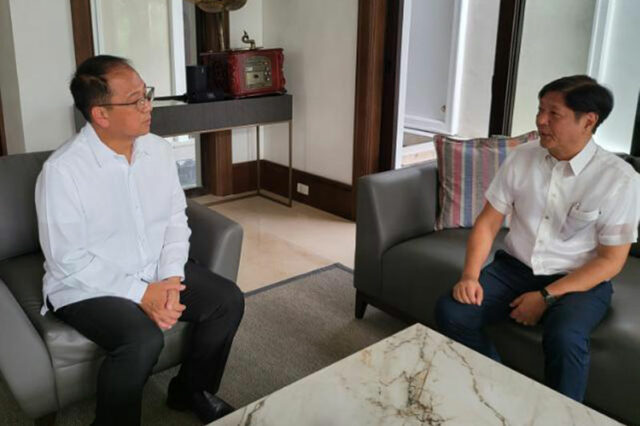
PHILIPPINE President Ferdinand R. Marcos, Jr. has appointed a new Department of National Defense (DND) secretary, the presidential palace said on Monday, amid rumors of destabilization plots.

Carlito G. Galvez, Jr., the presidential adviser on peace, will replace Jose Faustino, Jr., who quit. The palace did not say why.

Mr. Marcos in June appointed Mr. Faustino as temporary senior undersecretary and officer-in-charge of the Defense department, which supervises the country’s armed forces.

He was put under a one-year ban on the appointment of retired military officers after he retired in November 2021.

Mr. Galvez, a retired general of the Philippine Army, headed the Armed Forces of the Philippines (AFP) under former President Rodrigo R. Duterte, Mr. Marcos’ predecessor. He also served as vaccine czar and chief enforcer of the country’s coronavirus pandemic plan.

Mr. Faustino’s resignation came after an unexpected change of command in the military at the weekend with the reappointment of General Andres C. Centino as military chief of staff.

A few hours after the ceremony, reports of alleged destabilization moves by military officials circulated on messaging apps and social media platforms.

A supposed Philippine National Police (PNP) memo, which the PNP had disowned, placed all police units under a heightened alert status “in view of the resignation of all [Defense] personnel in Camp Aguinaldo.” The AFP has also dismissed reports of alleged destabilization attempts by its members.

“The military bloc is a major political bloc in the post-EDSA era,” Arjan P. Aguirre, who teaches politics at the Ateneo De Manila University, said in a Facebook Messenger chat, referring to the February 1986 uprising that ousted the late dictator Ferdinand E. Marcos, the current president’s father.

“They have learned to politicize their role that’s why they have remained to be one of the stable sources of personnel who can be appointed to important government posts,” he said. “These appointments are just the offshoot of their ability to negotiate and compromise with the new administration.”

Mr. Aguirre said the military bloc is “not homogenous and monolithic” since there are factions that have political loyalties and access to patronage networks.

“These factions have learned to coordinate and cooperate with other bigger military factions that have managed to get bigger shares and offers for political gains and positions,” he said.

Meanwhile, the Philippine military ruled out loyalty checks among its ranks.

“We do not need a loyalty check because the Armed Forces of the Philippines is professional,” military spokesman Medel Aguilar told Radyo 5. “We will support anyone appointed by the president as chief of staff.”

At a separate televised briefing, police spokesperson Jean S. Fajardo said the PNP’s cyber-crime unit was investigating the source of the destabilization rumors on social media.

“The PNP Anti-Cybercrime Group has started its probe and is determining who is the source of these social media posts spreading the destabilization rumor,” she said in Filipino. — Kyle Aristophere T. Atienza and John Victor D. Ordoñez

Angara calls for institutional reforms in CAAP after air traffic system mishap 

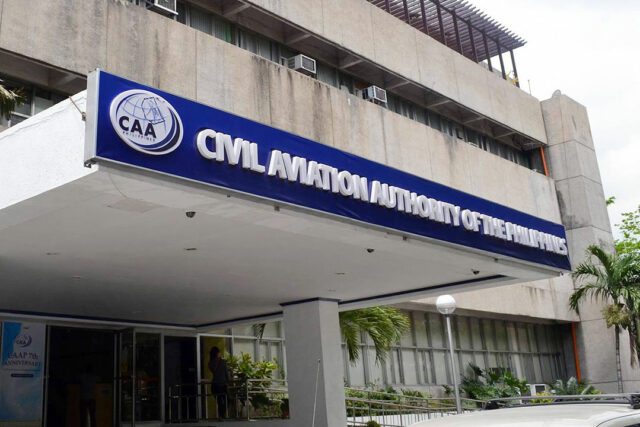
CIVIL AVIATION AUTHORITY OF THE PHILIPPINES

A SENATOR has called for institutional reforms in the Civil Aviation Authority of the Philippines (CAAP) after technical mishap on Jan. 1 that downed the countrys air traffic control system, causing flight cancellations and delays in all airports.  

The technical glitch that took place last January 1 was a wake-up call for all of us about the need to address the gaps in our air transport systems and the CAAP is front and center in all of this, which is why we have to institute the necessary reforms to provide the agency the tools necessary to effectively fulfill its mandate,Senator Juan Edgardo SonnyE. Angara said in a statement on Monday.  

He recommended the passage of Senate Bill 1003, which will mandate the inclusion of the secretaries of tourism and national defense as additional members of the CAAP board.  

Two representatives from the private sector, appointed by the President, will also sit in the CAAP board.  

Under the bill, the agencys fiscal autonomy will also be enhanced, as it will be exempted from Republic Act 7656 or the Dividend Law to maximize the use of its revenues. 

The bill will also exempt the CAAP from the coverage of the Governance Commission for state-owned corporations and the Salary Standardization Law in consideration of the highly technical nature of its functions.  

The Senate Committee on Public Services will investigate the incident that affected about 65,000 domestic and international passengers.   

Mr. Angara said the focus of the probe should be on pinpointing accountability and ensuring that the relevant systems and institutions are capacitated in preparation and response to sudden occurrences.  

Senator Mary Grace S. Poe-Llamanzares, who chairs the committee, on Monday said officials of the Department of Transportation, Manila International Airport Authority, and other concerned executives have been invited to attend the hearing.  

We want to know what the agencies plan to do so that this does not happen again,she said in a statement. We should find out who are responsible. If theres somebody whom we can call out, who may have been negligent, of course they have to be reprimanded if not fired.” “This did not happen overnight. Obviously, it stems from many years of transactions and maintenance upgrades,she added.  

Ms. Poe also said it is time to tap the private sector to modernize the country main gateway, the Ninoy Aquino International Airport.  

We have always pushed for privatization not just of the air traffic control system but of the airport itself,she said. Alyssa Nicole O. Tan

QC trial court acquits 10 human rights workers of perjury 

KARAPATAN FACEBOOK PAGE

By John Victor D. Ordoñez, Reporter 

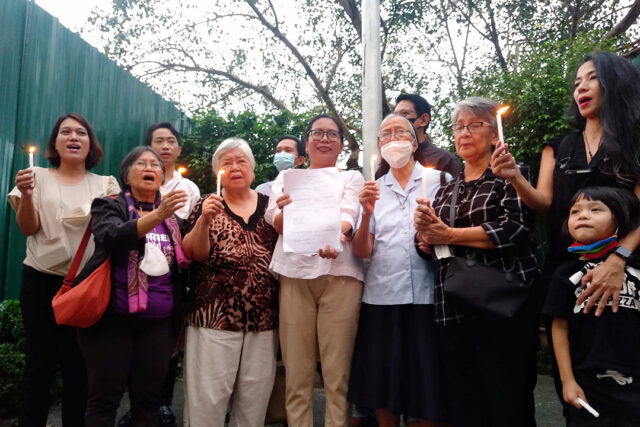
A QUEZON City trial court has acquitted 10 human rights workers from perjury charges filed by a former national security adviser in 2019.  

In a 45-page decision released on Monday, the court said government prosecutors failed to prove beyond reasonable doubt that the respondents deliberately lied in their petitions that named former National Security Adviser Hermogenes C. Esperon, Jr. 

“Conviction must rest no less than on hard evidence showing that the accused, with moral certainty, is guilty of the crime charged,” Associate Justice Aimee Marie B. Alcera said in the ruling.  

“The Supreme Court recognizes that perjury strikes at the very administration of laws that is the policy of the law that judicial proceedings and judgements shall be fair and free from fraud.” 

The human rights workers earlier filed a petition for a writ of amparo and habeas data before the Supreme Court, where they sought protection after attacks against rights officials were reported in 2019.   

The writs would grant members of the groups protection and would compel state actors to destroy information about them.  

The petition detailed the attacks and harassment against human rights workers by the military and other state officials.  

The writs of amparo and habeaus data are legal remedies available to anyone whose right to life, liberty, and security is violated by a public official or employee. 

Mr. Esperon filed the perjury charges against representatives from rights group Karapatan, the Rural Missionaries of the Philippines and the Gabriela Women’s Party after they included him in the list of respondents in the petition. 

The Supreme Court granted the petition and ordered the Court of Appeals to hear the petition, which the appellate court dismissed. The petition is still on appeal before the same court.  

Justice Secretary Jesus Crispin C. Remulla told the United Nations Human Rights Council in November that the government does not sanction attacks, harassment or intimidation of human rights defenders, lawyers and journalists.  

He also said the government should be able to respond to its detractors.  

“It is also at the heart of every criminal proceeding that every person is presumed innocent until proven guilty beyond reasonable doubt,” the Quezon City court said.  

In a statement reacting to the court decision, House Deputy Minority Leader France L. Castro said in Filipino, We are elated that our friends from Gabriela, Karapatan at Rural Missionaries of the Philippines were acquitted from the malicious case against them by General Esperon.”  

We are hopeful that other made-up cases against other human rights defenders will be junked, the ACT Teachers Party-list representative added.  

This decision serves as a reminder that the fight for human rights and justice must continue, and that those who stand up for these values should not be silenced or punished.” — with Beatriz Marie D. Cruz  

Ex-Leyte rep, TRC official found guilty of corruption over PDAF funds 

PHILSTAR FILE PHOTO

THE PHILIPPINES’ anti-graft court has convicted of graft a former representative of Leyte and an executive of the defunct Technology and Resource Center (TRC) over the release of P24.2 million for fictitious government projects.  

In a 52-page decision on Jan. 9, the Sandiganbayan First Division sentenced former Leyte 3rd District representative Eduardo K. Veloso and former TRC group manager Maria Rosalinda M. Lacsamana to six to 10 years for the two counts of graft and 12-18 years for two counts of malversation.  

“With the foregoing, the court arrives at the inevitable conclusion that the accused acted with unity of purpose and through manifest partiality and evident bad faith and caused undue injury to the government in the total amount of P24.20 million,” Associate Justice Efren N. Dela Cruz said in the ruling.  

The tribunal ordered them to pay a fine of P24.2 million, the same as the amount malversed. 

Mr. Veloso and Ms. Lacsamana could not be immediately reached for comment. 

The decision can still be appealed before the anti-graft court and the Supreme Court. 

The former congressman was accused of exclusively endorsing the TRC as the implementing agency for the proposed anomalous projects bankrolled through the Priority Development Assistance Fund (PDAF) given to lawmakers.     

The PDAF, also referred to as pork barrel funds, has been abolished after the Supreme Court declared it as unconstitutional in a 2013 ruling.    

The Sandiganbayan said the TRC official drafted and signed the memo that recommended the release of Mr. Veloso’s proposed funds to the Aaron Foundation Philippines, a partner non-government organization for the non-existent programs.  

OTHER TRC EXECS
Meanwhile, the court dropped the malversation and graft cases against former TRC executives Dennis L. Cunanan, Francisco B. Figura and Marivic V. Jover due to lack of evidence.  

In October, the anti-graft court junked graft charges against the TRC officials saying government prosecutors failed to prove their guilt over the release of more than P20 million to a group allegedly owned by a lawmaker.  

The court earlier rejected a plea by businesswoman Janet Lim-Napoles, the so-called mastermind of the PDAF scam, to suspend malversation cases against her.  

She is under trial in a separate graft case involving the release of congressional funds worth P15 million for a nonexistent livelihood project in Nueva Ecija province.  

The PDAF allowed legislators to fund small-scale projects in their districts that were not part of the national infrastructure program. John Victor D. Ordoñez

ADVERTISEMENT
ADVERTISEMENT