Home Blog Page 5402

Patrick Mahomes returns to lead Chiefs past Jags, into AFC championship

PATRICK Mahomes was badly limping around on his right ankle early in the second quarter and Kansas City Chiefs coach Andy Reid had a message for him: Either go to the locker room for examination or sit out the rest of the game.

Mr. Mahomes threw his helmet down to the ground in response, but it turned out the headgear slam wasn’t his last toss of the day.

Mr. Mahomes returned from the ankle injury for the second half and Travis Kelce caught two touchdown passes as the Chiefs recorded a 27-20 victory over the visiting Jacksonville Jaguars on Saturday to advance to the AFC Championship Game for the fifth straight season.

The top-seeded Chiefs will face either the second-seeded Buffalo Bills or third-seeded Cincinnati Bengals in the AFC title game. The Bills and Bengals meet Sunday.

Mr. Mahomes missed most of the second quarter due to the ankle injury but X-rays were negative. He completed 22 of 30 passes for 195 yards and two touchdowns, and backup quarterback Chad Henne also threw a scoring pass.

Mr. Kelce’s 14 receptions (for 98 yards) tied for third most in NFL postseason history and Marquez Valdes-Scantling added a touchdown catch for Kansas City. Nick Bolton (fumble recovery) and Jaylen Watson (interception) each had key takeaways in the fourth quarter.

The five straight visits to the conference championship game match the Oakland Raiders (1973-77) for the second-longest streak in AFC title game history. The New England Patriots hold the record of eight straight from 2011-18.

Trevor Lawrence was 24-of-39 passing for 217 yards, one touchdown and one interception for the fourth-seeded Jaguars. Travis Etienne rushed for a touchdown, Christian Kirk had a scoring reception and two-time NFL tackles leader Foyesade Oluokun had 14 stops.

Jacksonville was one of the final four AFC teams after being 4-29 over the previous two seasons. The Jaguars posted the third-largest postseason comeback in NFL history in last weekend’s wild-card round when they recovered from a 27-0 deficit to beat the Los Angeles Chargers 31-30.

Mr. Lawrence, in his second season, was balancing the pain of the setback with the team’s stunning rise.

Jacksonville trailed by 10 entering the final quarter but traveled 75 yards on seven plays to move within 20-17 on Etienne’s 4-yard run with 11:49 remaining.

Mr. Mahomes countered with his own 75-yard touchdown drive. On the 10th play, he tossed a 6-yard scoring pass to Valdes-Scantling to push the lead back to 10 with 7:08 left.

Mr. Lawrence guided the Jaguars on another drive but Jamal Agnew fumbled the ball at the Kansas City 4-yard line with Mr. Bolton recovering with 5:29 remaining.

On Jacksonville’s next drive, Mr. Lawrence was intercepted by Mr. Watson with 3:48 left. Riley Patterson later kicked a 48-yard field goal with 25 seconds remaining but his ensuing onside kick was recovered by Kansas City’s Kadarius Toney.

Mr. Mahomes was hurt late in the first quarter on a play in which he was tackled by Jacksonville’s Corey Peters and Arden Key. Mr. Mahomes fell awkwardly to the ground as Mr. Key landed on Mahomes’ right lower leg.

Mr. Henne replaced Mahomes with 9:59 left in the second quarter and drove the Chiefs 98 yards on 12 plays for a touchdown.

But Mr. Mahomes returned at the outset of the second half with the ankle heavily taped. He didn’t appear overly hindered. — Reuters

Top seed Swiatek knocked out by Wimbledon champ Rybakina

MELBOURNE — World number one Iga Swiatek crashed out of the Australian Open on Sunday with a 6-4 6-4 defeat by Wimbledon champion Elena Rybakina on Rod Laver Arena.

Kazakhstan’s Ms. Rybakina advanced to the quarter-finals of the season’s opening Grand Slam for the first time with an impressive display against the misfiring Pole.

Ms. Rybakina, seeded 22nd, will face Latvia’s Jelena Ostapenko in the quarter-finals. Jelena Ostapenko stunned Coco Gauff 7-5 6-3 to reach the quarter-finals of the Australian Open on Sunday after putting on a power-hitting clinic.

Latvian Ms. Ostapenko has struggled to reach the heights of her French Open-winning days but the 17th seed simply overpowered the American at Margaret Court Arena.

Ms. Swiatek, the reigning French Open and US Open champion, got off to a rough start, surrendering her opening service game after receiving a warning from the chair umpire over the time she took for her pre-match preparations.

She fought back to level the scores by the fourth game but Ms. Rybakina would break again, clinically punishing the Pole’s second serve to take the opening set.

Ms. Swiatek looked to have recovered after she rattled off three straight games at the start of the second set behind a more aggressive forehand, only for Ms. Rybakina to haul herself level with another break of serve.

The Russia-born right-hander broke Ms. Swiatek again at 4-4 in the second set before holding her own serve in convincing fashion to close out the match.

Ms. Rybakina’s win sees her progress to a third Grand Slam quarter-final having also reached the last eight at the 2021 French Open before winning Wimbledon last year. — Reuters

Boston Celtics run winning  streak to nine by edging Raptors, 106-104

JAYLEN Brown scored 27 points and the visiting Boston Celtics defeated the Toronto Raptors 106-104 on Saturday to extend their winning streak to nine games, matching their longest of the season.

Reserves Grant Williams added 25 points and Malcolm Brogdon scored 23 for the Celtics. Payton Pritchard scored all 12 of his points in the fourth quarter.

The Celtics were without Jayson Tatum (wrist), and the Raptors did not have Fred VanVleet (rib).

Boston lost two players during the game. Marcus Smart (sprained right ankle) was helped off the court with 9.7 seconds left in the first half and did not return; Robert Williams III (knee) did not return for the second half. Each had two points.

Toronto’s O.G. Anunoby (ankle) left the game during the third quarter and did not return. He scored 12 points.

Pascal Siakam had 29 points, nine rebounds and 10 assists for the Raptors, who have lost three straight. Gary Trent Jr. added 22 points, Precious Achiuwa had 17 points and 11 rebounds and Scottie Barnes scored 10 points.

Boston opened the fourth quarter with a 9-0 run for a 90-85 advantage.

Mr. Pritchard’s 3-pointer gave Boston a 101-93 lead with 5:53 to play in the fourth. Trent had a steal and a 3-pointer to trim the margin to three with 3:50 to play. Mr. Trent tied the game at 103 on a 3-pointer with 2:23 left. Pritchard hit a go-ahead 3-pointer with 1:30 to play. Reuters

For love of the game

Disappointment was evident in Andy Murray’s face as he went about dissecting his third-round exit from the Australian Open yesterday. He had no illusions about hoisting the Norman Brookes Challenge Cup, and not because of the lengths unseeded competitors typically face in major championships. That said, he looked forward to making the second week of the year’s first Grand Slam tournament. He figured the work he had put in as he prepped for his stint Down Under set him up for a fruitful outcome.

As things turned out, Murray did not have enough in his tank to meet his quarterfinal-round objective. Perhaps he was simply too bushed to be at his best against Roberto Bautista Agut, what with his previous two matches both going the full route and keeping him on the court for a combined 10 hours and change. Arguably, he had no business even being at the Margaret Court Arena; he was a match point down against Matteo Berrettini in his opener, and two sets and two games down with hometown favorite Thanasi Kokkinakis serving for the win. For a survivor of two hip operations, it may have been a stretch to expect him to once again snatch victory from the throws of defeat.

Four years ago, Murray was given a farewell video tribute by Australian Open organizers who believed him ready to put his racket to storage. And as he bid goodbye to spectators at the John Cain Arena, he himself deemed his one-and-done appearance to be his last. Ironically, Bautista Agut was also who sent him packing then. This time, around, though, there are no thoughts of retirement coming with the defeat. His metal covering has held up well: It was supposed to help him walk pain-free; instead, it has enabled him to compete at the highest levels of the grueling sport anew.

That said, it’s fair to contend that Murray is closer to the end of a storied career. He has long had nothing left to prove, and if he’s still around, still plodding on, it’s because of sheer love of the game. And for his first two contests of 2023, the game loved him back. As he said, “I have a big heart.” Fans can only hope it continues to beat proudly for some time to come.


Anthony L. Cuaycong has been writing Courtside since BusinessWorld introduced a Sports section in 1994. He is a consultant on strategic planning, operations and human resources management, corporate communications, and business development.

The political cost of the Maharlika Investment Fund

SASUN BUGHDARYAN-UNSPLASH

I was discussing the recently approved third reading version of House Bill No. 6088 “Establishing the Maharlika Investment Fund, Providing for the Management, Investment, and Use of the Proceeds of the Fund, and Appropriating Funds Therefor,” the supposedly revised, “clean,” and upgraded version of the bill submitted by the economic managers, with some friends from the Foundation for Economic Freedom.

My friends’ conclusion is that the revisions, such as removing the Social Security System and Government Service Insurance System (SSS and GSIS) as funding contributors and reinstating legal review by the Office of Government Corporate Counsel, don’t fundamentally alter our objections to the creation of the Fund on the principles of fiscal prudence, additionality, Bangko Sentral ng Pilipinas (BSP) independence, and role of government in the economy. In other words, there’s no fiscal surplus to manage and no need for another institution to do what the Land Bank of the Philippines (LANDBANK) and Development Bank of the Philippines (DBP) are doing now. It will also weaken and compromise the BSP and strengthen the role of government in the economy where it has a record of failures and mismanagement.

As one of them quaintly put it, those revisions are just like “putting lipstick on a pig.”

I told my friends, however, that no matter how solid are their arguments, the politicians won’t listen to them. Politicians never listen to economic arguments. They think politically.

Proof, I said, is that after widespread protests and objections, the Congressmen removed the SSS and GSIS as funding sources. Not only did they remove them from the proposal, but codified the prohibition in Section 11: “Under no circumstance shall the GOCCs (government-owned or -controlled corporations) providing the social security of government employees, private sectors, workers and employees, and other sectors and subsectors, such as but not limited to the Government Service Insurance System, Social Security System, and Home Development Mutual Fund, be requested or required to contribute to the MIF. To protect the retirement and other social security benefits of their members, no part of the funds of said GOCCs shall accrue to the MIF.”

However, if we are to believe the cheerleaders and authors of the Maharlika Investment Fund (MIF), the MIF will yield fantastic returns, whether invested in infrastructure projects or in bonds and equities abroad. These returns are practically guaranteed, according to its supporters.

If that is so, then what’s the logic of excluding the SSS and GSIS members from participating in the supposed bonanza?

The answer is simple. It was politically toxic to be using SSS and GSIS funds. The Congressional retreat was due to political reasons. Politicians acting and thinking politically.

Those bright boys who came up with the MIF idea didn’t do their homework when they included the SSS and GSIS as major contributors to the Fund. There’s a reason why former President Ferdinand Marcos, Sr., for all his omnipotence, never touched SSS funds during his dictatorship. It was politically toxic and politically radioactive for him to have done so.

How do I know this? My driver, who hardly speaks to me about political matters, suddenly blurted out to me: Bakit nila pinakailaman ang aming pondo sa SSS? Pang-retirement namin ’yan. (Why are they using our funds in SSS? That’s for our retirement.)

I smiled because the incident confirmed to me what I knew all along. If the SSS and GSIS aren’t removed, the administration would burn in political hell early. It won’t be just employees like my driver who will loudly protest but also employers like the thousands of owners of micro-, small- and medium-sized enterprises (MSMEs) who contribute to the pension fund.

SYSTEMIC RISK
Therefore, the Congressmen turned to the hapless LANDBANK, DBP, and BSP to be the major contributors to the Fund. The question is, will this version be easy-peasy politically for the administration?

I contend that there will be a serious political cost to passing the MIF bill, the magnitude of which is dependent on the final version that’s passed into law and on the performance of the fund.

Where will the political cost come from?

It will come from the systemic risk that the MIF poses to the banking system in general and to the degradation of the banking regulator, BSP, as an independent and professionally run monetary authority.

How does the MIF pose a systemic risk to the banking system?

First, the capital which will be contributed represents 25% of the capital of LANDBANK and 33% of the capital of DBP. Any devaluation of the Fund, either through mismanagement, corruption, or just plain market timing and bad luck, will send shockwaves through the DBP and LANDBANK to the entire banking system. Don’t expect the rest of the banking system to remain unaffected if the two government financial institutions (GFIs), LANDBANK and DBP, become wobbly.

As former BSP Deputy Governor Diwa Guinigundo wrote: “Those behind the Maharlika bill may not realize it but they are undermining the financial system. If the GFIs fail because their funds are earmarked for Maharlika, it is likely that the other banks in the system could also catch fire. That will trigger contagion among the banks, especially those with shaky balance sheets following the two-year pandemic crisis.”

We must remember that the banking industry is sensitive to contagion. Savers sometimes act irrationally due to asymmetric information (savers don’t know what banks are doing with their money). It will be easy to spread negative rumors, especially since the MIF is a politically conceived and organized entity. Negative rumors, partly politically driven but with some basis in the MIF’s malperformance, can spread financial panic to the financial system.

Since the banking industry plays a vital role in the economy, matching savers with investors, the tremors in the industry will undermine macroeconomic stability.

Even assuming that the MIF is professionally run, it can’t insulate itself from market volatility. Reports state that all Sovereign Wealth Funds (SWFs), including the mighty Norwegian SWF, suffered market losses last year. Moreover, no stock is insulated from market volatility. Even a blue chip and professionally run PLDT saw its stock plummet by more than 20% when overspending on its capital budget was revealed. Because the MIF is essentially funded by debt from the banking system, its performance can transmit tremors to the entire banking industry.

Moreover, under the MIF, the BSP is a weaker and compromised institution in ensuring price and financial system stability. First, Section 11 mandates the BSP to give the financial institutions DBP and LB “regulatory relief.” This means that the BSP is supposed to look the other way when it comes to regulating DBP and LANDBANK but be strict with private banks. This creates a moral hazard.

Second, while it’s true that the country’s forex reserves won’t be used, the BSP is mandated to declare 100% of its cash dividends in the first two years of the Act to fund the MIF, effectively delaying the increased capitalization of the BSP as mandated by RA 7653 and further amended by RA 11211. In the succeeding fiscal years, BSP is required to remit 50% of its declared dividends to the Fund.

That the BSP will be used as a regular funding source for the MIF will undermine the mission and integrity of the monetary regulator. Income objectives, rather than price and exchange rate stability, will dominate BSP policy and regulations. There may come a time when the BSP loses money to defend the peso from appreciating too much (as had happened in 2012 when it lost billions) or when it must incur interest expenses to sterilize pesos used to buy dollars or when it does open market operations. But now under its new mandate to fund the MIF from its dividends, will it?

THE ERAP EXAMPLE
So what if the banking industry is at risk and the BSP is compromised, you say? Politicians hardly care if their own money isn’t at risk.

The oligarchs will care. They are heavily invested in the banking industry. Also, their non-bank companies’ financing depends on a stable and healthy financial system.

Let us recall the Estrada presidency and EDSA Dos. The oligarchs didn’t care a whit when former President “Erap” Estrada was pocketing money from jueteng, the illegal numbers game. They started caring, however, when Erap started intervening in the financial markets, facilitating the takeover of PLDT with the assistance of Mark Jimenez, and, more importantly, intervening in the merger between Equitable and PCI Bank. Those interventions in the financial markets on top of creating a port monopoly, criminal extortion, and other shenanigans alarmed the oligarchs. Thereafter, they seized the opportunity provided by Chavit Singson’s revelations about jueteng to have Erap impeached and ultimately deposed by people power under EDSA Dos.

The threats posed to the oligarchs by the crony capitalism of Erap will pale in comparison with the MIF. With its funding and its tax-free privileges, the MIF will become a financial behemoth. It can be used to threaten the oligarchs with a takeover or take substantial positions in their companies. Because it’s owned by the government and doesn’t have to pay taxes, whomever it chooses to partner with or bestow its favors on will have an undue advantage over whatever project it is involved in. Or, it can bail out cronies at inflated prices, but this will infuriate the non-cronies. With its financial firepower, it can be used to bully oligarchs and bend them to the will of the powers that be.

Furthermore, the country may get a ratings downgrade with the MIF. Under the bill, all debts of the MIF from the GFIs will be guaranteed by the National Government. This will tremendously increase the government’s contingent liability and may lead to a ratings downgrade. This will lead to increased borrowing costs for the government and private sector.

The political cost of the MIF is a less stable, rockier presidency.

There are political forces just waiting for President Bongbong Marcos (PBBM) to stumble and he may stumble badly with the MIF. There are the Yellow-leftist anti-Marcos diehards, waiting to launch another People Power revolt. They can still mobilize the urban professionals and the elite, as shown in the crowds that showed up at opposition candidate Leni Robredo’s rallies. There’s former President Rodrigo Roa Duterte, who is still extremely popular and who has never been comfortable with the candidacy of PBBM. With the MIF, PBBM will be tying his political fate to factors that will be beyond his control.

PBBM can’t rest easy just because he won handily. Campaigning is one thing, governing is another. His continuing failure to tackle food inflation will surely erode his lofty poll numbers. His handling of the police and military may seed discontent that can be used to destabilize him. More troubles may lie ahead but this will all pale in comparison should the MIF be misused or cause instability in the banking system.

His team isn’t thinking strategically. They could have conceptualized a different investment fund, perhaps funded by the privatization of the Philippine Amusement and Gaming Corp. (PAGCOR) or the sale of government prime properties such as the national penitentiary site in Muntinlupa or the land occupied by the NAIA 2 (Ninoy Aquino International Airport Terminal 2), with none of the risks to the financial system that the MIF will bring and with more flexibility for the political powers that control the fund.

The fall of former President Erap Estrada should serve as a cautionary tale to PBBM. Before PBBM, Erap enjoyed the largest electoral mandate and got afflicted with hubris. Like PBBM, Erap surrounded himself with technocrats but nobody dared speak truth to power. In the end, Erap behaved badly and made gross political miscalculations that eventually led to his downfall.

About the only presidential adviser speaking truth to power now is Presidential Legal Counsel Juan Ponce Enrile (JPE). He is a wizened and experienced politician-technocrat (He was Secretary of Finance and Commissioner of Customs at one time). He cautioned the President to review the MIF carefully. He says he does not want Marcos to be historically damaged, and even suggested that it is “safer” for the MIF to be created out of the general fund.

Yes, please, Mr. JPE, tell the President the MIF is not worth it politically.

(Note: Last Saturday, Rep. Joey Salceda indicated that Malacañang will endorse a radically different version of the MIF bill in the Senate, perhaps in recognition of the fundamental flaws of HB 6608. This, we must see.)


Calixto V. Chikiamco is a member of the board of IDEA (Institute for Development and Econometric Analysis).

totivchiki@yahoo.com

Hidden casualties: The impact of  COVID-19 on marginalized Filipinos

PHILIPPINE STAR/RUSSELL PALMA

As we approach three years since COVID-19 was declared an international emergency, we ought to examine how the pandemic has affected those at the margins, for whom the pandemic has taken a different toll than those at the center.

The past three years have taught us that no one experiences a global health crisis the same way. It’s by now a general agreement that while the virus itself may not discriminate, it has had a disproportionate effect on minoritized people.

An example of this is the alarming statistic which circulated early in the pandemic that Filipino nurses constitute only 4% of registered nurses in the US but accounted for nearly a third of COVID-related deaths among them.

Here in the Philippines, the uneven outcome, with the marginalized people being burdened most, is stark. The World Bank said that based on community surveys conducted in 2020 and 2021, “COVID-19 has taken a heavy toll on rural livelihoods. Loss of income and job opportunities were overarching challenges in poor communities in the Philippines.”

In mid-2022, I embarked on a year-long joint study sponsored by Action for Economic Reforms and the Samdhana Institute (a regional non-profit developmental organization based in Indonesia) to evaluate how the pandemic has affected marginalized people. The project involves two case studies of far-flung coastal local government units in disaster-prone Eastern Samar.

One insight I gained from the ongoing study is that for some Filipinos, the measures taken to curb the pandemic have been more devastating than the virus itself.

The coastal municipalities of Guiuan and Arteche, two of the most remote areas on Samar Island with populations of 53,000 and 16,000, respectively, had some of the lowest rates of infection in the country, with some barangays recording no cases at all. Despite this, local governments imposed many of the same protocols that were imposed in densely populated urban areas like Metro Manila, resulting in hunger and loss of livelihood for the farmers and fisherfolk of these towns.

Some protocols, such as only being allowed to fish at night, were confusing or disorienting to the fisherfolk. The local people found other pandemic measures, such as being forbidden by police to step outside their homes, oppressive.

But perhaps no pandemic measure has caused such long-term harm as distance learning has had on the young people of Guiuan and Arteche. Arguably, the children and youth from similarly situated municipalities across the country went through the same experience. Effective distance learning presupposes the presence of appropriate technologies like strong and consistent internet connectivity.

Guiuan, a second-class coastal municipality in the southernmost tip of Samar Island, suffers from a particularly weak cell signal. Internet connectivity is rare and expensive for the people of this town. Unlike Metro Manila, there are no online classes in Guiuan. Instead, “modular learning” was accomplished by teachers distributing worksheets for parents to take home to their children. Elementary and high school students would then accomplish these on their own (though some mothers reported accomplishing these for their children) by searching the answers online or sharing answers among themselves.

Parents reported higher costs since they had to pay for their children’s schooling as well as the added cost of internet and school supplies. Mothers, who bore the burden of care work, were affected by having to divide their time between their work and their children’s lessons. The lack of instruction caused by two years of distance learning has been particularly disadvantageous for younger children, some of whom still cannot read at grade four.

Meanwhile, in Arteche, a third-class coastal municipality in the northern end of Samar, students who attended university in Borongan (nearly three hours from Arteche) dropped out of college due to the difficulty of distance learning, compounded by the limited cell signal and internet connectivity. Some students found it impossible to learn without instruction and left their hometown to find work in Manila instead. Some older students received failing grades for being unable to turn in submissions on time.

Younger students devised a method around this: One student would buy mobile data, search for answers to their homework online, and share their answers with the rest of the class. As one barangay captain said, in his native Waray-Waray, “no one learned a thing.”

While distance learning was necessary and suitable for densely populated urban areas, it is difficult to say whether this was the correct course for geographically isolated rural towns like Guiuan and Arteche. Because of the peculiarities of their situation, such as the absence of cell signal in some barangays, the pandemic measures imposed on them have permanently altered the lives of many and worse, significantly set back the lives of others.

The conditions in these remote rural municipalities might be outliers, but they serve as a reminder that a one-size-fits-all approach to policymaking can impede the very same people it aims to serve.

It is easy to understand how leaders or policymakers, amid pandemic panic and unprecedented circumstances, are drawn to drastic options and general solutions without considering the peculiarities of the local situation. Our policymakers, national and local, have to imagine better ways for better outcomes especially for those at the margins.


Isabel Rodrigo is a Manila-based researcher working for Action for Economic Reforms.

The Game of the Generals

PHILIPPINE STAR/KRIZ JOHN ROSALES

Much has happened that has changed the Philippine military since Ferdinand E. Marcos, Sr. declared martial law in September 1972. One of the first things that Marcos Sr. did was to revise the order of battle for the military in the Bagong Lipunan (New Society) that was to be the gameboard of autocratic rule. (Ominously, Game of the Generals was a strategy board game designed and made popular during Martial Law.)

In 1972, the Armed Forces of the Philippines (AFP) was reduced by the retirement of the World War II-era officers and soldiers, and even the last 1942 graduates of the Philippine Military Academy who had completed their mandatory 30 years of service. It was a natural mandate to reorganize and expand the armed forces, from a force of 57,100 in 1971 to 113,000 personnel in 1976 — a significant 97.89% increase over a five-year period.1

“Marcos (Sr.) carried out the ‘largest reshuffle in the history of the armed forces’ when he forcibly retired 14 of the AFP’s 25 flag officers, including the AFP Chief of Staff, the AFP Vice-Chief of Staff, the commanding general of the Philippine Army, the Chief of the Philippine Constabulary (PC), the commanders of all four Constabulary Zones, and one third of all Provincial Commanders of the PC. Generals loyal to Marcos were allowed to stay in their positions past their supposed retirement age or were rewarded with civilian government posts.” Since the declaration of martial law until 1980, there were 349 officers and 830 enlisted personnel, or a total of 1,179 detailed outside the AFP.2

“This led to a loss of morale among the middle-ranks of the AFP, because it meant a significant slowdown in promotions and caused many officers to retire with ranks much lower than they would otherwise have earned.”3

“The abolition of civilian institutions like Congress, the weakening of the judiciary, and the outlawing of political parties, left the military as the only other instrumentality of the National Government outside of the Presidency. The military had been called to save the Republic and restore confidence in the ‘democratic traditions’ cherished by the Filipinos. In a country with no militaristic tradition — and where the military was traditionally low key — the AFP became very visible, performing a more expanded mission, such as security, law and order, administration of justice, greater management and administrative functions, and developmental, political and miscellaneous roles.”4

The system of patronage born of the dictator which seduced the top echelon of the armed forces was an unwanted child in the erstwhile close-knit military organization. Low morale festered, especially among the young officers who perhaps felt confused that the principles of Courage, Loyalty, and Integrity drilled into their brains and hearts at military school did not quite match and fit into the reality that they were experiencing in Martial Law.

“During the traditional PMA Alumni Parade at graduation time on 21 March (1985), some 300 young officers, mostly from Classes 1971 to 1984, broke away from the long line at the parade ground to display a banner marked ‘Unity Through Reforms.’ They wore T-shirts that said ‘We Belong.’ It was the day before the customary Commander-in-Chief’s address to the graduating class, thus marking the first public protest of the military during the Marcos regime.”5

“We Belong” (together, in democratic love and service to the country) versus “We bulong” (literally translated as “We whisper” and kowtow to the dictator-leader) divided the military like broken glass, never to be repaired. “We Belong” was formally organized as the “Reform the Armed Forces Movement” (RAM) that spearheaded the ousting of Ferdinand E. Marco, Sr. in the EDSA Revolution in February 1986. Defense Minister Juan Ponce Enrile, who sought refuge at Camp Aguinaldo because of an alleged assassination plot by a rival Marcos bigwig, and Chief of Staff Gen. Fidel Ramos then called on the people (through Cardinal Sin) to converge at EDSA, and history wrote the awesome victory of the return of democracy in the country.

It is utterly devastating to the collective consciousness that the EDSA Revolution seems to be losing its importance in history, as attempts are observed at revising history and decimating the passionate heroism of the people for freedom and rights. In succeeding leaderships after EDSA I, the military seems to still be considered as the key support for being in full control, and this is reinforced by the executive prerogative of the president to choose the Chief of Staff of the AFP.

But what might be a benign administrative act has degenerated into some sort of an unashamed reward system where retired generals are appointed by the president to top positions in the civilian government. The administrations of Corazon Aquino, Fidel Ramos, Joseph Estrada, Gloria Macapagal-Arroyo, and Benigno Aquino III named former men in uniform to key government agencies.

But the undisputed champion is Rodrigo Duterte, who appointed 59 retired military generals, police directors, admirals, and colonels to the Cabinet and other agencies, including government-owned corporations.6 Duterte also appointed 11 Chiefs of Staff who retired successively within months of each other, serving an average 202.5 days each among them. Before the end of Duterte’s term, Republic Act 11709 was enacted, directing that the AFP chief of staff, vice-chief of staff, deputy chief of staff, heads of the major services (Army, Navy, and Air Force), unified command commanders and inspector general will have a three-year term of office “unless sooner terminated by the President.”7

Some military men might bristle at insinuations that the “point system” of appointments (tongue-in cheek for “the lucky guy that the political power points his finger at… and chooses”) is instantly branded as unqualified and incompetent for the civilian position. Observers might caution not to judge unfairly and instead give the appointee a chance to prove himself. But there’s significant and exclusive work experience in the military which sets retired officers and soldiers apart from the ordinary citizen who understandably has self-centered priorities of survival and quality of life through the facility of a career. Soldiery has the mental set of altruistic service towards country and fellowmen — that working philosophy might be tested when the terms of engagement, as in a civilian appointment by a benefactor who would expect loyalty above all. To be more direct — should a retired general accept a position of power and influence, with generous compensation, and risk losing his independence and principles to pay for his debt of gratitude (utang na loob) towards his benefactor? For that is the quid pro quo of patronage.

What for must a retired officer further involve himself in politics? A retired (full) General can get lifetime pension of up to P190,975.88 per month, computed on 85% of highest base pay plus longevity pay for the maximum number of years served. (The pension lowers as the rank lowers, with the lowest, Brigadier General, still getting about P100,000 per month pension or close to this. The AFP retirement pension rates for all military ranks down to Private [who get close to P20,000 per month] are publicly displayed at the AFP Finance Center bulletin board in Camp Aguinaldo.) A military retiree does not have to forfeit or suspend receipt of pension if he/she would accept employment and compensation in another government office or agency. Perhaps the double compensation from government can be too tempting to refuse.

The pension paid to more than 137,000 eligible military retirees is P14,025,351,666 per quarter, or P4,675,117,222 per month.8 Because the AFP pension plan is unfunded (insufficient capital funding ab initio), this is taken directly from the 2023 General Appropriations Act, as it is funded from the national budget yearly, and shouldered directly from the current year revenues (from taxes and borrowings). The annual military pension of P56 billion is roughly 1% of the P5.268-trillion National Budget for Fiscal Year (FY) 2023.

Comes now the thought: might the retired generals co-opted to continue in high civilian government positions think of the country, and inhibit themselves from availing of more economic benefits and the indubitable opportunities of extended power and influence in government? In the US and other countries like France and Japan, there are ethical codes prohibiting certain retired government officials from working for civilian government offices or private enterprises for some years after government service.

Perhaps it can be inserted in the amended RA 11709 or a new law can be made that a retirement waiver is to be signed by those top brass who have been endowed with secured three- or four-year tenures, that they cannot accept civilian positions in government for at least two years after retirement from the military.

That should weaken the patronage culture in the military. A good move for all in the Game of the Generals.

1 Official Gazette of the Republic of the Philippines, Oct. 3, 1990

2 Ibid.

3 “The Davide Report: Political Change and Military Transition in the Philippines, 1966-1989: From the Barracks to the Corridors of Power.” Official Gazette of the Republic of the Philippines via the Republic of the Philippines National Government Portal (gov.ph)

4 Ibid.

5 Official Gazette citing Col. Hector M. Tarrazona, After EDSA, Vol. 1

6 newsinfo.inquirer.net, June 27, 2017

7 pna.gov.ph, May 17, 2022

8 pna.gov.ph, Jan. 13, 2023


Amelia H. C. Ylagan is a doctor of Business Administration from the University of the Philippines.

ahcylagan@yahoo.com

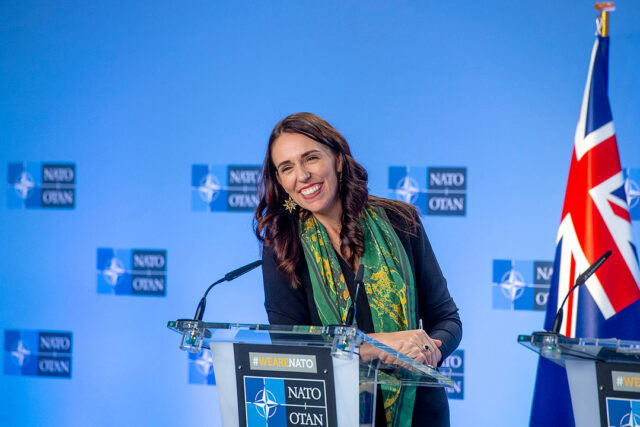
Jacinda Ardern’s resignation is the ultimate flex

NATO-FLICKR

THE corridors of power in both business and politics were designed by, and for, a very specific kind of leader: men.

That’s why it can feel particularly devastating when we see a woman like New Zealand Prime Minister Jacinda Ardern — who has managed to successfully navigate through what often seems like an impenetrable boys’ club — decide that she’s had it.

Ardern’s announcement that she just didn’t have “enough in the tank” to keep doing the job could be read as a concession that those unbalanced power dynamics had finally gotten to her. Not only did she face sagging opinion polls and a tough election battle ahead of her, but one in which she would likely have to endure the kind of misogynistic slights and outright attacks that have marked her time in the office.

And yet in the aftermath of her announcement, I keep returning to something former Xerox Corp. CEO Ursula Burns said to me for a 2021 article I wrote for Fortune about the ways the pandemic was altering the landscape for working women. Burns, who was the first Black woman to run a Fortune 500 company, was ready to see a world where women play by their own rules rather than follow ones that had been forced upon them. “I want them to actually have the chance to articulate out loud, ‘I don’t want to do this. Thank you for offering,’” she told me. “That’s true equity, that’s true equality — when you get the chance to turn the goddamn thing down.”

I prefer to think about Ardern’s departure through this lens. Stepping away from the big job, or adjusting your ambitions because the old ones don’t work with the life you want for yourself, is the ultimate power flex. And for Ardern, it really is not that surprising a move considering she has always seemed comfortable defying the mold of what we expect a leader to look and sound like: the youngest female head of government at age 37, only the second ever to give birth while holding office, and even now in how she’s framing her departure. It is difficult to picture a man in the same position admitting to some level of burnout.

Ardern’s decision feels different than the kind of “opting out” we used to talk about in the past. It’s also in keeping with some of the trends we’re seeing in the business world. Increasingly women are choosing to leave their jobs in order to create a new path, rather than just endure their current environment or disappear from the workplace altogether. McKinsey & Co.’s annual Women in the Workplace report from late last year found that “women are demanding more from work, and they’re leaving their companies in unprecedented numbers to get it.” Those in leadership roles were switching jobs at the highest rate in the history of the survey, and at higher rates than men.

New Zealand’s political climate may very well have made Ardern’s future as prime minister impossible and her departure inevitable. But by stepping down on her own terms, she’s rebelling against the status quo rather than simply falling victim to it. As Burns said, true equity and equality may be as simple as having the option and privilege of saying no to what’s expected of us. In a barrier-breaking run as prime minister, she may as well topple this last one on her way out the door.

BLOOMBERG OPINION

The gold paradigm vs crypto’s fresh ‘new wave’: OctaFX does both

Many have wondered how the domains of gold and crypto might intersect with each other. Is there any common ground? Does it have to be one over the other? Not necessarily if you take a closer look.

There appears to be regular competition between gold maximalists and their blockchain counterparts. The one side has its impenetrable record of history to its name. The other has technological innovation, progress, and huge gains to offer.

But with great gains comes great responsibility. If you lack the latter, you are in for a grim surprise, even permanent loss.

The industry’s experts always considered gold a safe haven asset that withstood the test of time and rightly so. It is the usual pick for conservative investors who are patient and resilient towards the emotionality of the financial markets.

While glancing at the bitcoin-initiated blockchain industry, it shows a sheer endless potential for novel application and invention. The booming NFT market alone is a potential ‘gold mine’ (pun intended). But with gold, there simply can’t be quite as steep and hefty changes, extensions, and surprises, for better and for worse.

Why not do both?

Exactly. Why, indeed? You can trade both gold and crypto on Foreign Exchange.

Reliable platforms like the international Forex broker OctaFX allow you to participate in several markets, staying in touch with national fiat currencies and the famous yellow metal or the most established cryptocurrencies on the market.

The currency pair XAUUSD (gold and U.S. dollar) is a popular option for traders who want to apply their know-how of market dynamics and specifically have gold involved in the profit equation.

As already mentioned, gold as a store of value is quite resilient, but it can be like a sponge concerning the market’s trust in fiat currencies. If it goes down, capital flows into gold, weakening fiat in turn. When fiat regains market trust, gold is usually squeezed again.

Nonetheless, sweeping gold off its feet by a government’s regulatory onslaught was never a lasting move. Gold consistently outlived all governments for millennia—the latter always displaying a fundamental dependency. So there’s that.

The synergy of both worlds: Gold existing on the blockchain

Some might be unaware that companies use the blockchain to make gold accessible to crypto investors while simultaneously providing an entry point for traditional investors to access the blockchain.

One such company is Paxos Gold which issues special stablecoins on the Ethereum network called PAXG. One PAXG equals one fine ounce of gold, which the token holder can physically redeem in many places worldwide. You can even earn interest on your ‘blockchain gold’, so to speak. Many platforms offer this as an incentive to keep your gold stablecoins as liquidity on their networks. It is one of the alternatives to people choosing cold storage options, like a privacy-oriented wallet.

An anecdote from the golden cryptosphere

Peter Schiff would have to be the most prominent ‘fudder’ (definition of spreading ‘FUD’, or ‘fear, uncertainty, and doubt’: one who is excessively bearish on a particular financial instrument) of bitcoin and the cryptosphere as a whole. The American stockbroker and gold enthusiast has yet to believe or trust in bitcoin as a credible asset. His attitude is steadfast, decisive and somewhat admirable since even the fact that his eldest son became a bitcoin investor hasn’t shaken the experienced financial expert of his position. Schiff still upholds the ultimate unreliability of bitcoin as a store of value and regularly calls people to abstain from investing.

Schiff even owned a bitcoin wallet with actual bitcoin on it at one point but claimed that the app storing his cryptocurrency got corrupted and led to permanent loss. Other sources that assisted Schiff in setting up his bitcoin wallet affirmed the opposite—he simply lost his keys.

Vast options

Don’t get caught up in this unnecessary, even illusionary stand-off between these two asset classes and their communities. Both have their glaring strengths and should be part of a wisely diversified portfolio. If you settle on one monolithic asset, you restrict your mobility to act as an investor. Gold proved its use case and keeps storing value long-term as an inflation hedge. It’s just the way it is. On the other hand, cryptocurrencies allow multiplying initial investments, draw significant profits, and move the new capital to more static and resilient assets, like, for instance—there it is again—gold or its stablecoin equivalents. Another approach is buying back those cryptocurrencies once they hit a substantial low again.

In any case, stay educated and widen your horizon on these markets. Remain flexible and open-minded. As always, calculate your cost-benefit ratio to be as balanced as it gets without missing opportunities.


Spotlight is BusinessWorld’s sponsored section that allows advertisers to amplify their brand and connect with BusinessWorld’s audience by enabling them to publish their stories directly on the BusinessWorld Web site. For more information, send an email to online@bworldonline.com.

Join us on Viber to get more updates from BusinessWorld: https://bit.ly/3hv6bLA.

Find excitement at work in TELUS International Philippines

Most employees are looking for the same basic things at work: growth opportunities, personal empowerment, and the elusive work-life balance. It may be a bit much to expect to have fun while at work, as we tend to compartmentalize the two from each other.

But there are workplaces out there that exceed the expectations of their employees. One such company is TELUS International Philippines (TIP).

TELUS International Philippines (TIP), a leading provider of digitally-enabled customer service and business process solutions, started with only 50 members in 2005. Today in its 12 years of service in the country, it boasts over 27,000 team members.

It has nine sites all around the Philippines, seven in Metro Manila and two in Iloilo, which all give support in the customer experience and digital IT outsourcing of top brands around the world.

What sets TIP apart is its caring culture, which has resulted in a 50% lower attrition, or employee departure, compared against industry standards. It also has an award-winning team member engagement.

Want to know more about the company culture of TIP? Read on and see why this company may very well be where you can continue your career, and carve a path toward success.

Workspaces geared toward a young workforce

TIP is known for nurturing a fun environment, as well as having a caring and diverse company culture. When it comes to their employees, they believe in pushing creative thinkers while embracing spirited teamwork. Moreover, they encourage their employees to influence innovation and have passion for growth.

To do this, TIP creates a working environment that keeps its employees engaged. Having a belief that inspired workspaces inspire the workforce, the company offers rooms with innovative, fun designs where employees can be creative, as well as relax and have fun after a tiring day of working.

From themed meeting rooms to game rooms to café-style eating areas, the surroundings can easily inspire all employees to not just continue doing work, but to think out of the box and simply have fun.

TIP also encourages its employees to not just do work all the time. They also deserve a proper break from time to time, so its offices have their own set of game rooms—all of which include billiards tables, gaming consoles, videoke, hockey, darts, and other activities where employees can just chill when stress starts seeping in during their work.

For those who have no time to sustain or improve their health or fitness, TIP offices have in-house gyms and trainers who facilitate regular classes for kickboxing, yoga, dance, and many more.

A place to develop one’s abilities

It has always been the goal of TIP to make quality education accessible to everyone in the country. That is why they have set up TELUS International University (TIU), an avenue where employees can develop their skills and talents, as well as pursue further education.

It all started in 2011 as a learning program that offers degree courses to employees who dream of having a college diploma.

The program has evolved over time, which pushed TIU to partner with various universities and learning institutions in the country to provide short courses for employees who want to develop their skills and talents.

Throughout the years, TIU has had 167 degree course graduates and almost 7,000 short-course graduates.

TIU further extends its advocacy of providing quality education by allowing family members of employees to enroll in degree and short courses. Both employees and their loved ones can enjoy a variety of learning opportunities from TIU, including webinar series, art workshops, culinary classes, certificate courses, degree courses, and many more.

Finding belongingness in your community

TIP has always been an ally of women and the LGBTQIA+ community in their fight for equality and equity in society.

The company has always had the vision to be a global leader in diversity and inclusion, growing a pool of talents that foster inclusivity. They recognize individuality and celebrate everyone’s uniqueness within their team, company, and community.

To achieve that, TIP also has a number of special interest groups that cater to the promotion of inclusivity and individual empowerment.

TIP is a safe space for the LGBTQIA+ community, addressing their concerns and needs, whether work-related or not. Through the group Spectrum, TIP has been able to influence and promote positive change among its LGBTQIA+ employees since 2014.

In eight years, Spectrum has been able to champion employee support systems within the company, including the extension of health maintenance organization (HMO) coverage to dependents, domestic partners, and same-sex partners of employees, availability of gender-neutral, self-identified male & female washrooms in all offices, and the use of preferred first names and pronouns in company communication and events, as well as non-binary clothing policies.

TIP empowers women with Connections Women’s Network, a group that promotes inclusivity and helps being the voice for the needs and interests of their female employees while supporting their professional and personal development.

TIP also supports their foreign national employees with Mosaic, a multi-cultural team member resource group.

So, if you ever feel like yearning for excitement and a caring culture at work, check out TIP. It is there where you can not only carve a path toward a better future, but even find your own tribe, develop some new skills, and have a fun environment that can inspire you to work even better.

For more information on TIP, visit https://www.telusinternational.com/locations/philippines.


Spotlight is BusinessWorld’s sponsored section that allows advertisers to amplify their brand and connect with BusinessWorld’s audience by enabling them to publish their stories directly on the BusinessWorld Web site. For more information, send an email to online@bworldonline.com.

Join us on Viber to get more updates from BusinessWorld: https://bit.ly/3hv6bLA.

Under Anwar, Malaysia can ‘do better’ on climate, using global funds

Malaysia’s Prime Minister Anwar Ibrahim — REUTERS

 – To help Malaysia head off frequent floods and choking air pollution caused by forest fires, new Prime Minister Anwar Ibrahim should tap more global green funding to protect nature and tackle the effects of warming, climate change experts say.

Ending a decades-long wait to lead the Southeast Asian nation, largely ruled by one coalition since independence, Mr. Anwar, 75, formed a government with rival political blocs after last November’s election, hampered by flooding, produced a hung parliament.

So far, Mr. Anwar has focused on corruption and the rising cost of living but has said little on how he will bolster Malaysia‘s green credentials – aside from merging the energy and natural resources ministry with the environment and water ministry.

“It’s still early days … (but) I am hopeful the Anwar government can be much more proactive on the climate and biodiversity agenda,” said Meena Raman, president of Friends of the Earth Malaysia.

“Recognizing the climate emergency, recognizing the importance of adaptation and loss and damage – there is a lot that can be done,” she said in an interview.

She urged the new government, for example, to curb flooding not just by building grey infrastructure like drainage tunnels, but also by channeling money into conservation and restoration of upstream forest and wetlands.

Like many countries in the region, Malaysia is hit regularly by the impacts of extreme weather and rising temperatures – whether choking haze linked to regional forest fires, water shortages, droughts or severe floods.

Flooding that started in late 2021 caused nearly $1.5 billion in losses and displaced more than 120,000 people.

Meanwhile, despite being one of the world’s 17 countries with mega-rich biodiversity, Malaysia is also a major producer of palm oil, timber and timber products – which many environmentalists have blamed for high deforestation rates.

While chalking up a fifth year of declines in forest losses in 2021, Malaysia still ranked ninth among the top nations for tropical deforestation, according to Global Forest Watch.

Henry Chan, head of conservation at WWF-Malaysia, said the government should seek to develop the country’s natural resources sustainably – or risk losing them.

“Let’s strengthen current political resolve and commit to meet our net-zero and other climate and biodiversity targets,” he urged.


INTERNATIONAL FUNDS

Although Malaysia often suffers monsoon-season flooding – which forests can help mitigate – climate change and the environment were largely absent in last year’s election.

Voters were more concerned with the economy, healthcare, political stability, corruption and the cost of living.

Yet, despite COVID-19 and recent political turmoil, Malaysia was among more than 140 nations pledging to halt deforestation by 2030 at the 2021 UN climate summit in Glasgow.

It also endorsed a landmark global deal to boost nature protection agreed last December.

Friends of the Earth’s Raman said budget pressures from the economic impacts of the pandemic and inflation meant Malaysia should make a bigger push to access international green funding to help bankroll its climate action.

After the severe floods in late 2021, for example, Malaysia sought $3 million from the donor-backed Green Climate Fund to develop a national plan to adapt to climate change.

Malaysia has a goal of reaching net-zero emissions by 2050, and the previous government’s 2022 budget earmarked 100 million ringgit ($23 million) to help states protect forests and marine areas, up from 70 million ringgit previously.

Ms. Raman said greater financial incentives were needed for states whose economies largely rely on plantations of crops like durian, to help them stem forest loss.

Malaysia needs to do much more – it can do better in many (climate) fields,” she added.

The prime minister’s office did not respond to a request for comment.


CLIMATE CHANGE ACT?

Renard Siew, a climate change advisor at the Centre for Governance and Political Studies, a Malaysian think-tank, said many local green groups welcomed the quick decision to merge the natural resources and environment ministries.

The move will consolidate work and make handling environmental issues easier, he noted.

Many environmentalists also now hope the government will bring in a “Climate Change Act” along with a national strategy for climate adaptation, first proposed in 2018 but sidelined amid political turmoil after 2020.

“(An act) would be a game-changer as it reaffirms the country’s steadfast commitment to delivering on climate action,” Siew said.

Nur Sakeenah Omar, a campaigner at Greenpeace Malaysia, said Anwar, who this month visited neighboring Indonesia on his first overseas trip as leader, should also introduce a clean air or transboundary haze pollution act.

As an opposition leader since the 1990s, Anwar had a record of highlighting issues linked to climate change – including flooding, deforestation and air pollution – in both the media and parliament, according to Greenpeace Malaysia.

In mid-2021, he pointed to illegal logging in protected areas as a factor contributing to flooding in rural Kedah state, calling for better monitoring, after a government minister described the floods as an “act of God”.

WWF-Malaysia‘s Chan urged the new government to focus on protecting nature and implementing commitments made at international climate and biodiversity summits.

The coalition’s political parties must also fulfil their election promises on the environment, he said.

“The new government provides us with an opportunity to reset our broken relationship with the natural world,” he added.

“We have an opportunity now to course-correct for the sake of people and the planet.” – Reuters

Brazil launches first anti-deforestation raids under Lula bid to protect Amazon

STOCK PHOTO | Image by luis deltreehd from Pixabay

 – Brazilian environmental agents cut through the rainforest with machetes on Thursday in search of criminals in the first antideforestation raids under President Luiz Inacio Lula da Silva, who has pledged to end surging destruction inherited from his predecessor, Jair Bolsonaro.

Reuters exclusively accompanied raids led by environmental agency Ibama in the rainforest state of Para to stop loggers and ranchers illegally clearing the forest.

The agency also launched raids this week in the states of Roraima and Acre, Ibama environmental enforcement coordinator Tatiane Leite said.

About 10 Ibama agents set out in pickup trucks on Thursday from their base in the municipality of Uruara, Pará, along with a dozen federal police, heading toward a cluster of points where satellite images showed loggers and ranchers recently at work clearing the forest illegally.

In 12 hours driving on dirt roads illegally crisscrossing an indigenous reserve, the convoy reached five areas that were deforested and burned around the time of last October’s election that pitted Lula against Bolsonaro.

The areas all lay within the Cachoeira Seca indigenous reserve, where deforestation is strictly prohibited.

Four of the tracts appeared to be subsequently abandoned, with no signs people were living nearby or in the process of turning them into ranches. Agents said it could be a sign that illegal ranchers gave up on investing time and money in turning illegal land into productive pasture, knowing that Lula campaigned on a pledge to crack down on deforestation.

“People know that in this government enforcement will tighten and won’t let them use an area they deforested illegally,” said Givanildo dos Santos Lima, the agent leading Ibama’s Uruara mission.

“If the other government had won, you would have found people here, well-maintained pastures and cattle.”

The government under Bolsonaro had gutted staff and funding for environmental enforcement by Ibama in his four years in office, while the former president criticized Ibama for issuing fines to farmers and miners.

Bolsonaro gave the military and later the Justice Ministry authority over operations to fight deforestationsidelining Ibama despite the agency’s extensive experience and success in fighting the destruction of the Amazon.

An area larger than Denmark was deforested under Bolsonaro, a 60% increase from the prior four years.

In another area of the reserve, agents found a newly built house with several chainsaws and stocked with weeks of food, indicating the occupants had likely fled just before Ibama’s arrival.

Flanked by police with semiautomatic weapons, Ibama agents hacked a path through the adjacent jungle to reach an area the size of 57 football fields strewn with downed trees and charged trunks.

Some messily planted corn sprouted up to knee-level in what appeared to be an attempt to lay claim to the area to eventually turn it into cattle pasture, the agents said.

“We’ll come back with a helicopter and catch them by surprise,” Lima said.

He was optimistic that Ibama would be able to conduct more raids under Lula, aimed at fining deforesters and spooking criminals from attempting to clear more areas.

Lula on the campaign trail last year pledged to put Ibama back in charge of combating deforestation with beefed-up funding and personnel. He took office on Jan. 1, so additional money and staff have yet to reach the front-line enforcers.

Bolsonaro’s government denied several requests by Reuters to accompany Ibama missions during his 2019-2022 administration. His government instituted a gag order forbidding Ibama agents from speaking to the press, which agents say has already been reversed.

Lula took office for the first time in 2003 when Amazon deforestation was near all-time highs, and through strict enforcement of environmental laws reduced it by 72% to a near record low when he left office in 2010. – Reuters

ADVERTISEMENT
ADVERTISEMENT