Home Blog Page 5315

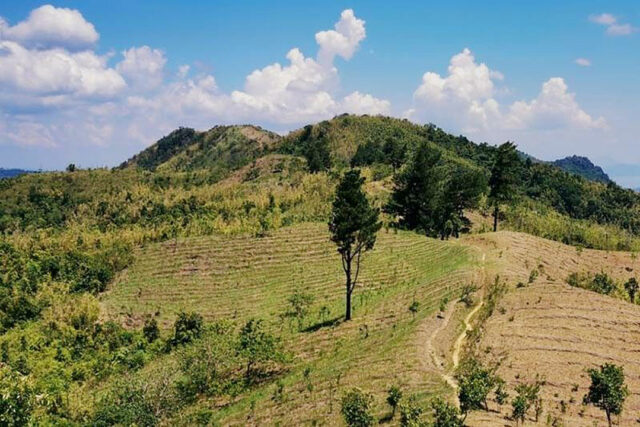
DENR cancels quarrying permits in Upper Marikina watershed

MASUNGI GEORESERVE FOUNDATION, HANDOUT

THE Department of Environment and Natural Resources (DENR) ordered the cancellation of three mineral production sharing agreements (MPSAs) held by quarry operators in the Upper Marikina watershed towns of Baras and Tanay, Rizal province.

In separate orders dated Dec. 19, and made public this week, Environment Undersecretary Juan Miguel T. Cuna signed the orders revoking the MPSAs of Rapid City Realty and Development Corp., Quarry Rock Group, Inc. and Quimson Limestone, Inc.

MPSAs give concession holders exclusive rights to mine a defined area.

The revoked MPSAs cover 1,343 hectares within the barangays of Pinugay, Baras; and Cuyambay and Tandang Kutyo, Tanay.

Rapid City was found to have failed to file for an extension of its exploration period, which had lapsed for more than 22 years. It also failed to submit the corresponding work program as required by the MPSA.

Meanwhile, both Quarry Rock and Quimson were ruled to have violated their MPSAs by conducting non-quarrying operations; failing to submit and secure approval of development work programs; and failuring to establish mine rehabilitation funds.

In a statement on Thursday, Upper Marikina Watershed Coalition said it obtained the copies of the orders it requested last month.

“After three years of campaigning, we look forward to seeing these cancellations enforced and reflected on the ground,” the coalition said in a statement on Thursday.

The coalition brings together over 60 groups seeking to protect the Upper Marikina River Basin Protected Landscape (UMRBPL).

“Once more, we call on the DENR Secretary to directly dialogue with the Masungi Georeserve Foundation to settle mutual concerns on its joint reforestation project, which is located in the UMRBPL,” the coalition said.

The Marikina Watershed is a 26,126-hectare basin, which was declared a protected area in 2018 for the ecosystem services it provides, such as protection from floods and landslides. — Sheldeen Joy Talavera

PEZA sets launch target of 1-3 ecozones a year 

SCIENCEPARK.COM.PH

THE Philippine Economic Zone Authority (PEZA) said it has set an “aspirational” target of one to three new economic zone launches each year.

“We actually expect to operationalize one to three new ecozones (each year). That is our aspiration,” PEZA Deputy Director General for Operations Vivian S. Santos said in an ABS-CBN News Channel television interview on Thursday.

“These ecozones, before they can be operationalized, have to be issued a proclamation by the Office of the President (OP),” she added.

According to Ms. Santos, there are 29 ecozones approved by the PEZA Board that are awaiting the Presidential proclamation.

She said the 29 consist of 13 information technology parks and centers, 12 manufacturing ecozones, two related to tourism, one agro-industrial, and one mixed-use manufacturing and tourism ecozone.

In January, PEZA said that the 29 pending ecozones will require combined investments of P96.21 billion. Of the 29 projects, eight are to be located in the Calabarzon region.

“The largest investment among these projects is a mixed-used special economic zone for manufacturing and tourism to be located in Pangasinan, with a project cost of about P81.648 billion,” PEZA said in an earlier statement.

Currently, PEZA oversees 421 ecozones hosting 4,346 locators. The ecozones have generated a total of 1.8 million direct jobs.

Ms. Santos said PEZA is confident it will achieve its 10% investment growth target for 2023.

PEZA approved P6.4 billion worth of investments in January, up 83.7% from a year earlier.

The approved projects consist of 19 new and expansion projects. These include 11 export manufacturing enterprises.

“This is just the first month of the year. We are confident that we will be able to reach our 10% increase of investment compared to that P140 billion worth of investment recorded last year,” Ms. Santos said.

“Hopefully, with our increased promotion…. and possible ecozone development in the countryside opening doors for other types of ecozones the likes of agro-forestry ecozones, aquamarine parks, knowledge, innovation, science, and technology parks, halal and food production hubs, pharmaceutical ecozones, biotechnology parks, defense industrial complexes, renewable energy parks, and mineral processing zones, we hope to achieve the target investment,” she added.

PEZA Officer-in-Charge Tereso O. Panga has said that more ecozones are expected to be approved following the addition of the ecozone development program in the Philippine Development Plan 2023-2028 launched last month.

“Ecozones can be shields (against) headwinds… ecozones can (also be) economic drivers to accelerate recovery and growth,” Mr. Panga said. — Revin Mikhael D. Ochave

ADB touts potential of cloud for expanding countryside banking coverage

PHILSTAR FILE PHOTO

CLOUD-BASED services can help expand the reach of banks and financial institutions in remote areas, the Asian Development Bank (ADB) said.

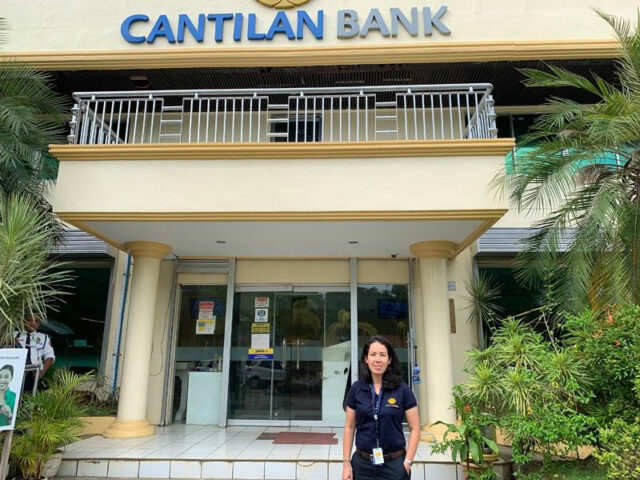
“This is already being done in several countries. South Africa’s Tymebank and the Philippines’ Cantilan Bank, both first in their respective countries to operate fully off a secure cloud-based infrastructure network, have passed on cost savings to consumers and enhanced the customer experience,” the ADB said in a blog post on Thursday.

“Without access to financial services, individuals and small businesses are unlikely to achieve prosperity and upward mobility. To reach those who remain unbanked and underserved, financial solutions must be delivered at low cost and be scalable, sustainable, and responsible,” it added.

The ADB said that cloud-based services can allow financial institutions to provide more affordable and accessible financial services.

“By adopting cloud computing solutions, they are now using shared computing and data storage resources, hosted and run on remote servers in the cloud instead of investing in their own on-premise servers. This provides flexibility to scale capacity up or down to accommodate peak periods,” it said.

Modern digital banking solutions make the processes of online banking, mobile apps, ATMs, and cash-accept machines more seamless.

“Features like these make cloud computing a scalable, elastic, and on-demand service providing access to servers, storage, networks, software, and analytics over the internet. This is particularly useful for new digital banks and fintech startups still testing their technology and business models and serving a large, diverse customer base, including underbanked and unbanked populations who may not have access to physical branches,” the bank added.

The ADB said that implementing cloud computing will require reliable internet access.

“This remains a challenge in some areas, particularly remote or rural locations, but improvements in digital connectivity have been rapid. Remote locations can benefit from off-grid energy and connectivity innovations, such as satellite connectivity and community networks,” it added.

It also said that digitalizing banking operations introduces other risks that can be costly unless well managed.

“With data growing exponentially and customer data being one of the most critical assets, banks risk losing revenue, reputation, and business continuity if data is compromised. The IT system design and security protocols must ensure that they are robust and that cloud computing providers have solid security certification,” the ADB said.

Cloud providers also have built-in disaster recovery and business continuity capabilities, which can help businesses avoid costly downtime during an outage. 

“As data is stored in a secure, off-site location, it is not affected by disasters that may occur on-premises,” it added.

It cited Cantilan Bank, which was able to re-establish connections immediately after Typhoon Odette (international name: Rai) in Surigao del Sur and the rest of the Caraga region in 2021.

“Additionally, cloud data centers can help to decarbonize data processing if powered by renewable energy, can use energy more efficiently than dispersed on-premise servers, and may reduce e-waste by lowering the consumption of IT hardware,” it added. — Luisa Maria Jacinta C. Jocson

BIR clarifies automobile excise tax computation

REUTERS

THE Bureau of Internal Revenue (BIR) has issued a clarification of the method for computing the excise tax on automobiles imported for resale.

In a memorandum circular issued on Wednesday, the BIR said the clarification covers cases where an import’s selling price is “lower than the cost of importation and expenses as defined in Revenue Memorandum Circular (RMC) No. 63-22.”

The prescribed method of computing the tax in such cases is the so-called “third taxable base,” which is “the total cost of importation and expenses divided by 90%.”

Under RMC No. 63-22, the BIR said that the importer’s selling price will not be less than the cost of manufacture, assembly, or import plus the industry profit margin of 10% and other expenses incurred before the automobiles are sold to the market, provided that the suggested retail price is not less than the actual selling price. — Luisa Maria Jacinta C. Jocson

New growth drivers seen needed after pandemic economic scarring

PHILIPPINE STAR/ MICHAEL VARCAS

THE GOVERNMENT must find new sources of growth following the economic scarring inflicted by the pandemic, the Philippine Institute for Development Studies (PIDS) said.

“The biggest challenge is economic scarring from the pandemic. It (needs to be reversed). Many sectors of the economy have suffered, enduring losses due to closure… there must be new areas of growth to bring the economy to its pre-pandemic path” PIDS Senior Research fellow Margarita D. Gonzales said in a briefing on Thursday.

“There may have been diminished capital, both business and human. In the industrial sector, you can see that in construction, manufacturing, services, accommodation and food, transport and storage, and real estate. Growth has to come from new areas in order for the economy to be propelled to a higher growth path,” she added.

In a report, PIDS projected that growth will slow to 4.5-5.5% this year, below the government’s 6-7% target.

Gross domestic product (GDP) expanded 7.6% last year, surpassing the government’s 6.5-7.5% target band.

“We are forecasting 4.5-5.5% based on the themes, the external headwinds and inflation story. We are sort of now on the pessimistic end. The reason we have a lower target than the government is they were penciling an investment surge which they anticipate because of the Corporate Recovery and Tax Incentives for Enterprises (CREATE) Law and lowering of taxes. That’s where we differ,” she added.

Ms. Gonzales said that the growth this year will be impacted by continued elevated inflation, a challenging business environment, and limited fiscal space this year.

“Higher consumer prices have reduced the purchasing power of households, while higher input costs are pressuring businesses, especially those with already thin margins and low net worth. This may continue to dampen private consumption and investment appetite,” she said.

Inflation accelerated to a 14-year high of 8.7% in January from 8.1% in December, marking the 10th consecutive month that inflation was above the central bank’s 2-4% target range.

PIDS expects inflation to ease to 3.5-4.5% this year. The government sees inflation averaging 4.5% in 2023.

“We are also looking at the business environment, which has become more challenging due to higher financing and business costs and economic uncertainty. Businesses are still recovering from the pandemic and may be more cautious given a new political leadership. Recent reforms to liberalize investment may take time to bear fruit,” she said.

“The final limiting factor is the policy space to counter an economic slowdown. The central bank is constrained to keep monetary policy tight to fight inflation. Meanwhile, the rise in fiscal deficits and public debt due to the pandemic has pressured the government to pursue fiscal consolidation,” she added.

The National Government’s outstanding debt stood at P13.42 trillion at the end of 2022, bringing the debt-to-GDP ratio to 60.9%.

In the 11 months to November, the government’s budget deficit contracted 7.2% from a year earlier to P1.24 trillion.

She also noted other risks such as the deterioration in global financial conditions, the looming recession in the US and the continuing conflict between Russia and Ukraine.

On the other hand, bright spots this year are resilient remittances, business process outsourcing (BPO) receipts, and a boost from tourism and investment.

“Remittances may remain strong because of the demand for healthcare workers due to the pandemic and BPO receipts may similarly remain strong given the need for digital workers in a post-pandemic world.”

Ms. Gonzales recommended policies that “control inflation without harming growth. inflation must be controlled as it creates instability and worsens poverty, but this should be done without stifling the economic recovery.” She cited targeted support to cushion the effects of inflation and supply-side reforms to raise productivity.

“Another thing we want to highlight is smoothening exchange rate volatility. Sharp peso depreciation must be avoided as it makes the fight against inflation more difficult, may harm balance sheets of firms, and heightens business uncertainty,” she said.

“Given external headwinds, there’s a need to prepare for financial tightening and uncertainty.  Financial tightening in advanced economies can spill over to emerging markets like the Philippines and can multiply financial risks. Financial regulators should stay vigilant of threats to financial stability through close monitoring of banks through various asset quality and capital adequacy indicators,” she added.

Fiscal sustainability must also be pursued while being mindful of the most vulnerable members of society, Ms. Gonzales said.

“While fiscal space must be rebuilt, the government should protect those suffering from elevated inflation and the pandemic’s lingering effects,” she added.

Philippine Chamber of Commerce and Industry (PCCI) Secretary General Ruben J. Pascual said infrastructure development could be key to boosting growth.

“It cannot be overstated that the productivity losses from the pandemic have to be reversed. An immediate way to do this is to continue the prioritization of infrastructure spending, which helps address scarring by enhancing the country’s physical capital, boosting long-term growth, while also having short-run multiplier effects,” Ms. Gonzales said.

“High potential areas include infrastructure for more efficient trade, better digital connectivity, and clean energy, especially where private sector participation is viable,” she added.

Bank of the Philippine Islands (BPI) economist Rafael Alfonso Q. Manalili said that improved infrastructure will attract more investment.

“We need to reduce the cost of producing goods, and to do that, we need to improve infrastructure. Especially in energy; we have among the highest interest rates (and transport costs) in the region. It’s feasible for us to improve on that,” he said.

“Infrastructure is one of the main reasons foreign investments are not entering the country. There’s still a lot to do particularly in energy. Internet connection is also quite low. If we are banking on BPO outsourcing, we need to invest and improve in internet connectivity, particularly as the market is going towards digitalization. Infrastructure development is the main solution,” Marites B. Oliva, Department of Finance assistant chief economic counselor, said.

“Becoming a first world country is not far-fetched. Economies like Dubai and Vietnam liberalized foreign investment, constructed critical infrastructure and lowered the cost of power. These countries also invested in soft infrastructure to create a highly productive labor force. Becoming a first world economy is doable if only we can get our act together. As a country, we have to decide we want to be a first world economy,” the PCCI’s Mr. Pascual added.

PIDS also said there needs to be continued policy momentum to attract foreign direct investment (FDIs).

“The Philippines had perennially lagged in attracting FDI.  The government should continue to remove impediments to FDI by addressing the country’s inadequate infrastructure, expensive power, slow internet,” Ms. Gonzales said.

BPI’s Mr. Manalili concurred in the need to diversify growth drivers.

“We need to go beyond household consumption and services for us to recover much faster and survive another pandemic, if that happens. The economy has been driven by remittances, consumption and services. It’s good because these are strong sources of growth, but the pandemic has taught us we need to diversify so we can have additional cushions in case another shock happens,” he said.

Mr. Pascual also called for more support for micro, small, and medium enterprises (MSMEs).

“One of the most heavily affected sectors is the MSMEs, which suffered from shutdowns and business closures. The MSMEs were among the hardest hit during the pandemic. They comprise 99% of businesses and 70% of total employment. The government should prioritize the recovery of MSMEs to ensure long-term growth potential. MSMEs are not on the consciousness of many policymakers in the country,” he said. — Luisa Maria Jacinta C. Jocson


PHL sought limited tariff reductions in negotiating RCEP, DTI says

PHILSTAR FILE PHOTO

THE PHILIPPINES negotiated limited tariff reductions when it sought to join the Regional Comprehensive Economic Partnership (RCEP), ensuring that the trade deal will have only a muted impact on industries like agriculture, the Department of Trade and Industry (DTI) said.

“First of all, in the course of the negotiation, we ensured that our agriculture sector is protected. Protected in the sense that we are not giving a large improvement when it comes to tariff reductions or tariff eliminations compared to our existing free trade agreement (FTA),” Trade Assistant Secretary Allan B. Gepty said in a Laging Handa briefing on Thursday.

According to Mr. Gepty, only 33 tariff lines within the agriculture sector will have lower or zero tariffs if the Philippines joins RCEP.

“These 33 tariff lines are equivalent to 1.9% of the total agriculture tariff lines. And the only ones to benefit from this, if you are going to be technical about it, basically are Australia, New Zealand, China and South Korea,” Mr. Gepty said.

“The products with lower or no tariffs are those that the country does not produce or does not trade. So if we are talking about the effect or harm to the agriculture sector, I would say it is remote,” he added.

The Philippines is the lone RCEP signatory that has yet to finalize its participation to the FTA. The RCEP deal was signed by Former President Rodrigo R. Duterte in September 2021, but the previous Senate was unable to give its concurrence due to concerns over the free trade deal’s impact on agriculture.

RCEP started taking effect for Australia, Brunei Darussalam, Cambodia, China, Japan, Laos, New Zealand, Singapore, Thailand and Vietnam on Jan. 1, 2022. South Korea, Malaysia and Indonesia also have ratified the trade deal.

The agriculture industry has said the Philippines is unprepared to join RCEP, citing the lack of cold storage and inadequate irrigation that could help increase farm competitiveness.

Mr. Gepty said RCEP has safeguard measures to protect Philippine industry in the event of a surge in imports deemed damaging to domestic producers.

“In addition to these trade remedies, we have a provision on the modification of concession wherein you can ask for the adjustments of your commitment in the tariff rates that you have made within the RCEP agreement,” Mr. Gepty said.

“Other flexibilities like the general exceptions, security exceptions that are existing in FTAs where in the Philippines is a party to. In other words, we have plenty safety nets,” he added. — Revin Mikhael D. Ochave

Filipinos ‘most interested’ in metaverse — global study

PHILIPPINE STAR/ MICHAEL VARCAS

People in the Philippines are most interested in the metaverse, or an immersive online world supported by virtual reality technology, according to a study by crypto education website Coin Kickoff.

Filipinos also placed second (at 56.20%) to the Vietnamese (at 56.80%) in terms of who had the greatest number of positive tweets about the metaverse.

Coin Kickoff analyzed 1.6 million metaverse-related tweets in Sept. 2022 and found that the Philippines had 2,421 Google searches on the topic per 1000 people. The number was about 40% higher than the next highest searches from Grenada (1,472 per 1,000 people) and Peru (1,375).

Gaming has always been a mini-metaverse, and Filipinos already excel in mobile games such as DOTA 2, said Ferdinand M. Gutierrez, chief executive officer of esports company Ampverse.  

“As interactivity levels grow, you’re going to see a lot of people escaping into these worlds,” he said in a Sept. 9 interview for a B-Side episode.

The other countries that round out the top 10 countries that most love metaverses are Ukraine (54.90%), Nigeria (51.40%), Indonesia (49.90%), Taiwan (47.30%), Sri Lanka (47.20%), Turkey (46.60%), Singapore (46.50%), and Portugal (46.30%).

The term “metaverse” is what companies use nowadays to refer to many different types of enhanced online environments. Because customers expect instant gratification from services, all sectors will be moving towards a 24/7 service delivery model that includes the metaverse, BusinessWorld heard in an IBM forum on June 2022

Philippine companies have taken notice. Telecommunications provider Globe Telecom, Inc., for instance, announced in Nov. 2022 that it will offer virtual masterclasses in music, film, entrepreneurship, e-sports, and fashion in the metaverse. Art in the Park, an annual art event, also showcased a metaverse marketplace in its 2022 iteration.  

The different metaverses being developed offer other use cases for Web3 (known as the decentralized version of the Internet), according to Peter Ing, chief executive officer and founder of BlockchainSpace, a data aggregator and tooling provider for Web3 gaming guilds. He said that digital assets can also be applied to virtual land that offers customized experiences.   

“Let’s say you have a rollercoaster experience on that land. You can now charge for the experience to be able to use that roller coaster,” he told BusinessWorld in an Oct. 2022 interview. — Patricia B. Mirasol 

Manila’s Dangwa florists are busy again, but flowers cost more

By Patricia B. Mirasol, Reporter

The flower trade in Dangwa, known for being the go-to place for inexpensive flowers, is thriving despite stiff competition.

During the height of the pandemic, daily sales were sometimes nil. At one point, flower shops had to resort to selling vegetables, according to one of Dangwa’s oldest establishments.

“Ngayon lang ulit bumamalik ang mga tao (It’s only now that people have started coming back),” said John Michael E. Nocidal, operations manager of Nene’s Flower Shop. “Naniniwala kami na babalik siya sa dati. Actually, bumabalik sa siya (We believe that things will go back to normal. Actually, it already has).”

“Medyo mahirap kasi tight ang competition sa Dangwa (It’s a bit hard because competition in Dangwa is tough),” he told BusinessWorld in a Feb. 8 interview.

Dangwa is in the Sampaloc district of Manila. It encompasses the streets of Dos Castillas, Dapitan, Laong Laan, Dimasalang, Maria Clara, and Don Quixote. 

The area is named after the Dangwa Tranco bus station in Sampaloc, where bus liners from Benguet would unload not only people but also produce from the province like vegetables and flowers. 

Quiapo vendors would buy flowers from this station to sell in their stalls, Mr. Nocidal shared. Over time, the flower market became known as its present monicker.

Mr. Nocidal also shared that prices have gone higher since the pandemic.  

“Nagmahal kami sa iilang products, pero may iba naman na tumaas lang ng konti … kung magi-import ka dati ng $3, ngayon nasa $5-6 na (We’ve had to raise the prices of some products … whereas before you’d import flowers at $3, now you’d have to shell out $5-6),” he said.

At the time of the interview, prices at the shop retailed at P1,800 for every 20 roses from China. Ecuadorian roses were P200 a piece. Thailand orchids, meanwhile, were at P950 per bundle.  

Flower shops had to obtain their supplies from growers in Baguio when ties with overseas suppliers were temporarily cut during the height of the pandemic. 

Quality is one difference between local and foreign flowers, Mr. Nocidal said, adding that other countries like the Netherlands are good at genetic breeding. 

“Nai-improve nila yung mga factors ng bulaklak na kailangan i-improve para maging aesthetic sa mata ng tao (They’re able to improve the factors that make flowers aesthetically pleasing to people).”

Lady Bulldogs open UAAP S85 against Blue Eagles on Feb. 25

REIGNING champion National University Lady Bulldogs. — THE UAAP

REIGNING champion National University begins its quest for a back-to-back title bid against Ateneo de Manila University to open the highly-anticipated women’s volleyball tournament of the UAAP Season 85 on Feb. 25 at the Mall of Asia Arena.

The Lady Bulldogs and the Blue Eagles cross paths at 2 p.m. before the clash of their men’s counterparts at 4 p.m. In the morning card, University of the East and Adamson University collide in the men’s and women’s division at 10 a.m. and 12 p.m., respectively.

Fellow contenders De La Salle University and University of Santo Tomas follow suit the next day at 2 p.m., still at the same venue before the duel of men’s teams at 4 p.m.

The men’s and women’s teams of Far Eastern University and University of the Philippines also lock horns at 10 a.m. and 12 p.m., respectively.

But the spotlight will be on National University, which wiped the floor with all its counterparts in Season 84 to cap a perfect 16-0 championship run for its first volleyball crown in 65 years.

The Lady Bulldogs then swept runner-up De La Salle in the finale of the stepladder Final Four that also featured University Santo Tomas and De La Salle University.

In a repeat bid, the Lady Bulldogs will have an intact starting core made up of by Rookie-Most Valuable Player Mhicaela Belen, Alyssa Solomon (Best Opposite Spiker), Jen Nierva (Best Libero) Lams Lamina (Best Setter), Sheena Toring (Second Best Middle Blocker) and Princess Robles (Finals MVP).

The Lady Bulldogs geared up for UAAP title defense by also sweeping the inaugural Shakey’s Super League Collegiate Pre-Season Championship last November with Ms. Solomon this time as the MVP.

Meanwhile, other notable matches this season will be on March 5 featuring the iconic Ateneo-De La Salle rivalry at the MOA Arena and the finals rematch between Lady Bulldogs and Lady Spikers on March 18 at the Filoil EcoOil Centre. — John Bryan Ulanday

EJ Obiena rules the Orlen Copernicus Cup in Poland

EJ OBIENA — REUTERS

FILIPINO pole-vault star EJ Obiena vented all his pent-up energy from missing the prestigious Asian Indoor Athletics Championship in Astana, Kazakhstan by topping the Orlen Copernicus Cup in Torun, Poland on Wednesday.

The World No. 3 and World Championship bronze medalist vaulted his way to glory with a clearance of 5.87 meters for his third gold medal and fifth straight podium finish overall to start the season.

The Asian record-holder bested Dutchman Rutger Koppelaar and Belgian Ben Broeders, who settled for the silver and bronze, respectively, after the two wound up with identical 5.82ms.

“Making it through one day at a time,” said Mr. Obiena, who went on a social media tirade the day before over the alleged one-year, unpaid money owed to him by government due to red tape and his inability to join the Astana meet due to logistical problems concerning his poles.

Philippines Sports Commission Chair Richard Bachmann has since talked to Mr. Obiena that same day and vowed to fix the problem.

But for now, Mr. Obiena vowed to continue to plod on.

“Now time to recover and try to get the much-needed rest. Thank you everyone who has supported me. We still fighting,” he added. — Joey Villar

Pinay booters kick off global slate in Spain’s Pinatar Cup

THE PHILIPPINE lady booters will pit skills with higher-ranked and more established European sides Wales, Scotland and Iceland in Spain. — AFC

THE FIFA Women’s World Cup-bound Filipinas will kick off a busy slate in 2023 with a stint in the tough Pinatar Cup next week in Spain, where they will also unveil their new jerseys.

The Philippine lady booters will pit skills with higher-ranked and more established European sides Wales, Scotland and Iceland in the Feb. 15 to 21 meet in San Pedro de Pinatar in Murcia, Spain.

It will be the Filipinas’ first competition in Europe, which will be essential in their overall buildup for their World Cup debut against Switzerland, New Zealand and Norway in July.

The Pinatar gig will also mark the debut of the Filipinas’ new kits from adidas.

The team welcomed the German sportswear company as kit sponsor for the World Cup and beyond in a formal signing yesterday before the local-based players left for Spain.

“It’s such a big year for Philippine football and we’re excited to showcase what we got and wear adidas,” said defender Hali Long, who joined goalkeeper Inna Palacios in attending the contract signing by Philippine Football Federation (PFF) general secretary Edwin Gastanes and adidas Philippines general manager Anthony Frangos.

The PFF and adidas inked a four-year deal for the latter to outfit not only the Filipinas but the women’s U-20 side as well.

Co-captain Ms. Long noted how the team resonated with adidas’ tagline “Impossible is Nothing.”

“I think the Filipinas achieved the impossible by qualifying for the World Cup. So technically, it is possible. So whatever else is impossible, just believe that this group of girls and Philippine women’s football can achieve it,” she said.

PFF President Nonong Araneta, team manager Jeff Cheng and players Sarina Bolden and Olivia McDaniel joined the signing ceremonies via zoom. — Olmin Leyba

PCA unveils Manila Tennis Open

THE PHILIPPINE Columbian Association (PCA) launched the Metro Manila Tennis Open Wednesday with around P1.1 million to be staked in the event slated in May at the PCA’s Plaza Dilao indoor shell courts in Paco, Manila.

Jess Burahan, who chairs the organizing committee, said the tournament will last for three weeks from May 6 to 28 with a goal of drawing players from across the country.

Mr. Burahan said they will have several categories — men’s and women’s singles, age group levels, men’s and women’s team age brackets, mixed doubles, inter-collegiate and men’s and women’s doubles.

“The goal of this tournament is to discover those with tennis potentials in the country,” said Mr. Burahan during a recent briefer.

The event is the second their group is organizing as they are the same people who staged the 39th PCA Open in November last year.

And just like the PCA Open, it boasts big prizes as the men’s singles winner and runner up pocket P200,000 and P100,000, respectively, and the women’s champion and runner-up snag P100,000 and P50,000, respectively. — Joey Villar

ADVERTISEMENT
ADVERTISEMENT