Home Blog Page 5245

Gatchalian calls for immediate termination of contract between PAGCOR, third-party auditor 

A SENATOR has called for the termination of the contract between the Philippine Amusement and Gaming Corp. (PAGCOR) and its third-party auditor after a New York-based bank denied issuing a certificate to the latter that supposedly qualified it for the P6-billion government engagement.   

Senator Sherwin T. Gatchalian, chair of the Senate ways and means committee, called for the immediatetermination of the contract following a letter from Soleil Chartered Bank (SCB) that categorically denied providing any certification.   

SCB would like to make record that it did not issue the questioned bank certification dated June 15, 2017, it said in the letter.   

The Senate committees recent hearings on PAGCOR showed the government-owned corporation failed to comply with existing procurement rules when it awarded a 10-year contract to the auditor despite its inability to meet the operating capital requirement.    

The bank also said that it does not have a record of any account of the auditing consortium, certifying that it was not a client of SCB.  

The bank added that it did not engage in banking operations nor maintain an office in the Philippines, and its supposed address in the country, as claimed by the auditor, is spurious.  

The bank guarantee submitted by the third-party contractor to PAGCOR is clearly fake,Mr. Gatchalian said.   

Because of this, the declared income of POGOs is questionable because it appears that the audit process has no credibility, he said, referring to Philippine Offshore Gaming Operators. 

The auditor was supposed to review the income declaration of PAGCOR-licensed POGOs. 

In the same letter, the bank also noted that those involved in the issuance of the fake bank guarantee will be brought to court.  

“We trust that this matter has been clarified and hope that whoever may have committed this forgery will be dealt with accordingly in the proper court of law,” the SCB said.  

Offices declared by the consortium to PAGCOR were also found to be fictitious and inappropriate venues of operation. Alyssa Nicole O. Tan 

Possible Cessna crash site in Albay found 

MEMBERS of the Camalig disaster response teams were immediately deployed on Feb. 18 for search and rescue operations on the Cessna 340 aircraft, with four people on board, that went missing shortly after taking off from the Bicol International Airport. — BUREAU OF FIRE PROTECTION-CAMALIG

THE POSSIBLE crash site of the Cessna plane that went down early Saturday morning in the town of Camalig has been found based on a photo taken by a foreign search and rescue volunteer, according to the mayor.   

The camera revealed debris hanging from a tree, along with some broken branches,Camalig Mayor Carlos Irwin G. Baldo, Jr. said in post on his Facebook page around noon Sunday.   

He said responders were already on their way to the area.   

As of 11:42 AM, 256 responders, 12 drones, and 4 K9 dogs are presently deployed in Anoling and Quirangay,the mayor said.   

A Cessna 340 aircraft went missing in Camalig, Albay at 6:46 a.m. on Feb. 18, just three minutes after taking off from the Bicol International Airport, according to the Civil Aviation Authority of the Philippines (CAAP).  

The flight, bound for Manila, had four people on board a pilot, a crew member and two passengers, CAAP said in a statement on Saturday.   

The incident comes after another Cessna 206 type aircraft crashed in Isabela on Jan. 24 and has yet to be found.   

It had six persons on board, including the pilot.   

It left Cauayan Airport and was bound for Maconacon, Isabela on a 30-minute flight.

Solon pushes for appointment of an ‘air traffic czar’

PHILIPPINE STAR/ MIGUEL DE GUZMAN

A HOUSE minority leader is pushing for more government control of commercial flight operations to decongest the main gateway in Manila by appointing an administrator who will coordinate with airlines.    

We would urge Malacañang to look for an air traffic czar who can manage commercial flight activity, compel airlines to reschedule flights if necessary, and to oversee the shift to Clark, 4Ps Party-list Rep. Marcelino C. Libanan said in a statement on Sunday.  

He earlier recommended that government should force airlines to transfer about half of their flights from the Ninoy Aquino International Airport (NAIA) in Manila to the Clark International Airport located about 115 kilometers north of the capital.   

He added that the government must provide subsidies for the airlines relocation costs.   

Theres really no point in overloading NAIA with more flights, considering that we have Clark nearby that is four times larger, has unused capacity, and is ready to handle more aircraft and passengers at any given time,Mr. Libanan said. Beatriz Marie D. Cruz 

CHR backs bill on higher compensation for victims of violent crimes, rights violations 

THE AUTHOR of a bill that will increase the compensation for victims of rape, other violent crimes, and rights violations vowed to push for its speedy passage after the Commission on Human Rights (CHR) backed the measure.    

In a statement on Sunday, Quezon City Rep. Marvin C. Rillo said he will lobby to expedite the bills approval by Congress.  

The CHR, in a statement on Wednesday last week, expressed support to House Bill No. 5029, which aims to increase the financial compensation given to rape victims, those unjustly accused and imprisoned, arbitrarily or illegally detained, and other violent crimes.  

Through the VCP (Victims Compensation Program), victims or their surviving next of kin can claim monetary reparation for grave human rights violations,the commission said.  

CHR said that reparations acknowledge that violations were committed against victims and that redress measures are needed, especially if the violation was committed by state authorities.  

Financial compensation likewise empowers victims to pursue legal action or allows them to receive reimbursement for any other losses they may have incurred,CHR said.  

Under House Bill No. 5029, victims of unjust imprisonment or detention will be provided financial assistance of up to P5,000 per month. The compensation will be based on the number of months of imprisonment or detention and every fraction thereof shall be considered one month.  

In special cases, the victims could be given up to P50,000 or the amount needed to reimburse the claimant for expenses on medical treatment, loss of wage, loss of support, or other costs related to the injury.  

If enacted into law, the measure would be allocated P10 million yearly from the national budget, 3% from the Philippine Amusement and Gaming Corp., and another 3% from the proceeds, sales, and other disposition of military camps in Metro Manila by the Bases Conversion and Development Authority.  

The bill will amend Republic Act. No. 7309, which created the Board of Claims of the Justice department. Beatriz Marie D. Cruz 

1,500 farmers in Western Visayas receive e-titles 

A TOTAL of 1,500 agrarian reform beneficiaries in Western Visayas received their electronic land titles (e-titles) and land ownership certificate, according to the Department of Agrarian Reform (DAR).  

In a statement on Saturday, the DAR said it distributed the documents covering 1,649.58 hectares of agricultural land under the agencys Support to Parcelization of Land for Individual Titling (SPLIT) project.  

We will provide you with more lands and necessary support services to help you improve your economic lives,said DAR Secretary Conrado M. Estrella III during the ceremony held in Passi City, Iloilo on Friday.   

The department also turned over farm-to-market roads worth P100 million, and farm machineries and equipment worth P14.36 million agrarian reform beneficiary organizations. Sheldeen Joy Talavera

Letran Lady Knights sweep San Beda Lady Red Spikers in 3 sets

LETRAN LADY KNIGHTS bared its fangs early as it downed San Beda Lady Red Lions, 25-20, 25-23, 28-26. — NCAA/SYNERGY-GMA

Games Tuesday
(San Andres Complex)
9 a.m. — Mapua vs LPU (M/W)
12 p.m. — UPHSD vs JRU (W/M)

FROM languishing in the NCAA volleyball cellar a season ago, the Letran Lady Knights knew they have nowhere to go but up.

Making a crucial tweak in the roster and picking up a valuable rookie from out of nowhere, Letran bared its fangs early as it downed San Beda, 25-20, 25-23, 28-26, yesterday to seize an early share of the lead in NCAA Season 98 at the San Andres Complex.

Daisy Melendres led all hitters with 15 points including eight on kills and five on blocks to help the Lady Knights launch their ambitious campaign of making the Final Four and, perhaps, advance farther to the finals where they hope to earn a shot at their first title in 25 years.

“We have a good chance this year. Goal is top four, then whatever happens after, will just be a bonus,” said head coach Mike Inoferio, whose charges finished 10th and dead last a year ago with a 2-7 record.

Two of the reasons Letran got off to a great start were Lea Rizel Tapang’s return as spiker from being libero a season ago and the acquisition of neophyte Judiel Nitura.

The brave Ms. Tapang chipped in seven hits while Ms. Nitura, who was from Adamson high school, scattered in limited action eight points including a pair of booming kills late in the third and final set that sealed the hardworking girls from Muralla, Intramuros the win.

“She wanted to play as a libero and learn to play defense because she dreams of playing in the commercial leagues,” said Mr. Inoferio referring to Ms. Tapang’s change of roles.

“And since I punished my libero back then for having low grades, I agreed to it,” he added.

It was a heartbreaking loss for San Beda Lady Red Spikers, which blew big leads in the opening set and two set points in the third that could have kept it in the game and possibly change its outcome.

Meanwhile, in the other game, Perpetual Help Lady Altas turned back Emilio Aguinaldo College Lady Generals , 25-21, 26-24, 25-16, to open its season on a bright note. — Joey Villar

Absent Robert ‘The Big J’ Jaworski represented by son Dodot Jaworski in Toyota’s golden anniversary

SERVING as representative of his father, Dodot (Jaworski) who’s also the vice mayor in Pasig City, recollected accounts of Sonny to his Toyota brothers fifty years after they started in 1973 what shaped up to be one of the country’s most iconic basketball franchises. — PHILIPPINE STAR/JOHN BRYAN ULANDAY

ROBERT Jaworski may have been understandably absent due to illness in Toyota’s golden anniversary but his son, Dodot Jaworski made sure to make his presence felt — as if “The Big J” was also in the nostalgic air with the Tamaraws in their rare journey back in time like yesterday.

Serving as representation of his father, Dodot (Jaworski) who’s also the vice mayor in Pasig City, recollected accounts of Sonny to his Toyota brothers fifty years after they started in 1973 what shaped up to be one of the country’s most iconic basketball franchises.

Dodot said his father, one of the pioneer members of the great Toyota squad with Ramon Fernandez and Francis Arnaiz, and the owner of the PBA’s first-ever three-point shot, is now doing okay after being released from the hospital.

But with his unavailability for now, Sonny assured his message would reach each and every one of his teammates-turned-brothers through Dodot — who went on to become an extension of the Toyota family as a companion of his dad during his playing days.

“Toyota is like immediate family. So, this reunion is something very special…,” beamed Dodot, who also brought his son Renzo, clad in a retro Toyota No. 7 jersey as a tribute to his grandfather.

The head of that family is team owner, manager and coach Dante Silverio, fondly called by his players “OssBok” (Boss Ko). Through the years, Mr. Silverio kept his players intact before Gil Cortez, the PBA’s first Rookie of the Year, organized a grand reunion for their golden year.

“We’re the same Toyota family,” said Mr. Silverio as Toyota, winner of nine PBA crowns, offered prayers to the fast recovery of Sonny, who’s turning 77 on March 8, before the nostalgic get-together. — John Bryan Ulanday

J&T Express edges TNT to snatch Leg 6 of PBA 3×3 3rd Conference

J&T banked P100,000 and joined previous leg rulers San Miguel Beer (Leg 1), TNT (Leg 2), Barangay Ginebra (Leg 3), Cavitex (Leg 4) and Platinum (Leg 5) in the honor roll of season-ending tournament. — PBA MEDIA

J&T EXPRESS delivered an epic 21-20 come-from-behind victory over TNT to win Leg 6 of the PBA 3×3 Season 2 Third Conference yesterday at Robinsons Place Manila.

Showing no quit despite the Tropang Giga getting on the hill at 20-13, J&T’s Joseph Sedurifa, Keith Datu, Marvin Hayes and Robin Rono unleashed a strong 8-0 closing barrage to steal it from their stunned rivals.

Mr. Sedurifa sparked that fortune-reversing final charge with a bucket and back-to-back booming two-balls as he posted a game-high 10 markers for the victors.

Mr. Datu shot five while Messrs.  Rono and Hayes added three apiece in sending J&T to the top again after a nine-leg slump. The guest team last tasted triumph in Leg 2 of the Second Conference.

Mr. Rono whose crucial two-pointer pulled J&T to within 20-17 and eventually set the stage for Mr. Sedurifa’s closing bombs.

J&T banked P100,000 and joined previous leg rulers San Miguel Beer (Leg 1), TNT (Leg 2), Barangay Ginebra (Leg 3), Cavitex (Leg 4) and Platinum (Leg 5) in the honor roll of season-ending tournament, which will culminate with the Grand Finals on Sunday at Robinsons Las Piñas.

TNT’s Almond Vosotros, Lervin Flores, Luis Villegas and Ping Exciminiano settled for runner-up honors and P50,000.

Meanwhile, Meralco beat Cavitex, 20-17, for the bronze and P30,000. — Olmin Leyba

Race for PL Manchester United gathers steam with Jim Ratcliffe’s INEOS, US hedge fund Elliott interest

THE RACE to buy Manchester United heated up on Saturday with Jim Ratcliffe’s company INEOS confirming it had bid for the club and a source telling Reuters that US hedge fund Elliott Investment Management was also prepared to finance a takeover.

British billionaire Mr. Ratcliffe, a life-long United fan and founder of chemicals producer INEOS, has previously openly expressed his interest in buying the Old Trafford club, and INEOS formally entered the bidding process earlier this year.

INEOS said in its statement on Saturday that it would look to implement a fan-centred approach, something that has been largely absent under the current owners, the Glazer family.

Elliott has ruled itself out of a full takeover but is planning to offer financing for a bid, though it is unclear which bid the hedge-fund giant and previous owner of Serie A champions AC Milan will be involved in, a source told Reuters.

INEOS has long been involved in sport, with the company acting as principal partners to eight-times Formula One champions Mercedes, owning the INEOS Grenadiers cycling team and serving as performance partner to the New Zealand rugby team.

The company also bought French Ligue 1 club Nice in 2019.

The Glazers began looking at options for record 20-time English champions United, including new investment or a potential sale, in November, 17 years after they bought the Old Trafford club.

They bought United for £790 million ($951 million) as part of a highly leveraged deal and any sale of the Premier League giant would likely exceed the biggest sports deal so far — the $5.2 billion including debt and investments paid for Chelsea, sources have told Reuters previously.

United fans have been clamoring for a change of ownership and the Glazers, who also own the National Football League’s Tampa Bay Buccaneers, have been criticized as the team has not won trophies since 2017, when they lifted the Europa League and League Cup.

The Manchester United Supporters Trust (MUST) said in November that the club needed new owners and fresh investment to halt years of decline and fans should be given a real say in how it is run in future.

INEOS said it wants to make United a beacon for a “modern, progressive, fan-centred approach to ownership.”

The initial deadline for bids expired on Friday, with Sheikh Jassim Bin Hamad Al Thani, a son of Qatar’s former prime minister, confirming a bid. On Thursday, the Daily Telegraph reported that Saudi Arabia has also submitted a bid.

United are the fourth-richest soccer club in the world, according to analysis by Deloitte. They are widely seen as one of the most prized assets in all of sport.

The team, managed by Erik ten Hag, are third in the league standings on 46 points after 23 games. They next welcome Leicester City on Sunday. — Reuters

Gravity-defying feats

You’d be forgiven for not having known Mac McClung — or even about Mac McClung until yesterday. A certifiable journeyman who played for Georgetown and Texas Tech and twice declared for the draft, he found himself naturally drifting to the G League after failing to land a home in the National Basketball Association. He bounced around in the minors, during which time he latched on to 10-day contracts with the Bulls, Lakers, and, currently, the Sixers. To argue that he’s on the fringes of casual fans’ interests would be an understatement.

Not anymore. On All-Star Weekend, McClung made such an impact that he’s now liberally viewed as the player who saved the Slam Dunk Contest. And, what’s more, it’s not as if he doesn’t deserve the distinction — not after the show he put on to effectively relegate the other three participants as his supporting cast. He didn’t just make very attempt off the bat; each of his four tries and makes carried a degree of difficulty only the best of the best ever have succeeded in meeting. Why was all and sundry at the Vivint Arena had mouths agape after his gravity-defying feats. Social media exploded, and with ample reason.

To be sure, NBA officials knew McClung to be as good as advertised. It’s why they invited him to spice up the Contest, the first G League player to do so in its annals. His slam-dunking exploits date back to high school, readily available on the Net for those with the initiative to do some research. In doing so, however, they gave away their desperation. When the battlesmoke cleared, however, there can be no discounting the soundness of their decision. Heck, even Sixers general manager Daryl Morey could not help but celebrate his achievement with a tweeted GIF.

Only time can tell where McClung’s brush with celebrity will take him. In any case, he deserves to be feted for rising to the occasion. If he was at all nervous, he didn’t display it. He stood tall, literally and figuratively, at 6’2” — and to a point where Lisa Leslie was being taken to task as the only judge who dared take away a point to ultimately deny him of a perfect score through all four rounds. He even wound up making rightfully indignant followers of the pro hoops scene forget — if for a moment — that disgraced Karl Malone sat as an adjudicator. He deserves his spot under the klieg lights, and no eyebrows will be raised if, no matter the circumstance, he’ll be back next year to liven up the festivities anew.


Anthony L. Cuaycong has been writing Courtside since BusinessWorld introduced a Sports section in 1994. He is a consultant on strategic planning, operations and human resources management, corporate communications, and business development.

Debt Condonation bill condemns farmers to poverty

EDUARDO PRIM-UNSPLASH

The Senate and Congress, and by extension, the administration of President Bongbong Marcos, Jr., which had certified the bill as urgent, is foregoing an opportunity to solve the single-biggest problem in agriculture and to modernize it.

I’m referring to the Debt Condonation bill (House Bill 6636), which congressmen have passed on third reading and is now being heard by the Senate committee on agriculture. The bill calls for the condonation of all debts of agrarian reform beneficiaries to the government.  These debts stem from the compulsory acquisition of private lands for the Comprehensive Agrarian Reform Program (CARP).  Under CARP, the government acquired private lands and transferred these to farmer beneficiaries who had 30 years to pay the debt.

Under CARP, farmer-beneficiaries weren’t allowed to sell or lease them for 10 years from the date of award and until such time their amortizations were fully paid.

Most, however, haven’t been able to pay these amortizations. Almost 80% of the beneficiaries are unable to pay their debts that totaled P52 billion. It’s not surprising why.  According to a study by Cristina David in 2003, the restrictions imposed by CARP eroded the collateral value of the land and limited access to credit; constrained the transfer of land from less productive to more productive uses; limited the choice of more efficient contractual arrangements; and lowered the value of the awarded land.  In other words, the government is to blame for the farmer beneficiaries’ failure to pay their debt.

A number of economists including national scientist Raul Fabella and I had been arguing way before and during the pandemic for a debt condonation program for agrarian reform beneficiaries. We saw debt condonation as a way to free the rural land market because if the debts are condoned, agrarian reform beneficiaries would now be able to sell or lease their lands.  The rural land leasing market would at least expand and farmland consolidation by leasing would happen.  At the same time, if it was possible to do so, the state should raise the land retention limits under the debt condonation program from the present five hectares to at least a more viable 25 hectares.

Unfortunately, the Debt Condonation bill makes the situation even worse. The bill specifically prohibits condoned farmers from selling or leasing their land for 10 years, except through hereditary succession.  This means that these farms will be frozen out of the rural land market for 10 years and prevent any form of farmland consolidation through leasing.  More efficient farmers cannot expand through leasing.

These lands are some of the country’s most productive lands since they were the subject of compulsory land transfer, unlike the less productive state-owned lands that were distributed under CARP.  Those state lands, mostly nonirrigated, have a different problem — only collective certificates of land ownership award were given, not individual titles, but that’s a different story.

If passed into law, this Debt Condonation bill effectively chains the farmer-beneficiaries to the land and condemns them into poverty.  The average farm size is one hectare or less and therefore just too small to be modernized through the application of capital, management and scientific know-how to increase yield and productivity.

The bill robs the farmer of his freedom to do with the land as he sees fit.  If he wants to lease the land to a more productive farmer because he’s getting old — the average age of farmers is about 55 — or because he doesn’t earn enough from farming (most farmers are now part-time farmers because the income from farming isn’t enough), the government won’t allow him to do so under the bill.

The single-biggest problem in Philippine agriculture is land fragmentation.  It’s not the lack of budget or smuggling or agricultural imports.  It’s that our farms are just too small.  No amount of increased government budget will fix this structural problem.

The only way to fix this is to remove some of the restrictions imposed on rural land under the CARP.  We were hoping that the Debt Condonation bill would have been an opportunity to remove these restrictions and free the rural land market with provisions such as converting the certificates of land ownership award into fee simple titles; removing Department of Agrarian Reform clearances on transfers of ownership of land; doing away with the landholding ceiling and allowing leasing on awarded lands; and limiting the existing notice of coverage to one year.

Alas, this bill, if passed into law, would make the situation even worse since even paid amortizations, by way of condonation, will not free the farmer from selling or leasing his land. Instead of this administration beginning to address the single-biggest problem in agriculture, it would be taking a step backward because no amount of increased budget or agricultural protection will fix this problem. The only way to fix this problem is by freeing the rural land market.

The internationally renowned Japanese agricultural economist Keijiro Otsuka, the former chairman of the Board of Trustees of the International Rice Research Institute in Los Baños, Laguna, warned: “The decrease in farm size is particularly pronounced in the Philippines partly because of rapid population growth and partly because of the failure of growth of nonfarm sectors, which can absorb rural labor. If this trend in farm size reduction continues and the economy sustains a fairly high growth rate, the agricultural sector’s inefficiency can be a major constraint to further economic growth.”

We are already seeing how the problem of low agricultural productivity is weighing down the entire Philippine economy.  Because of food shortages caused by low domestic agricultural output and restricted agricultural imports, inflation had been riding high on the back of high food inflation.  In January, inflation breached the Bangko Sentral ng Pilipinas’ (BSP) forecast at 8.7%, mostly due to food inflation.

As a result, the BSP had to increase interest rates again by another 50 basis points to 6%. The higher interest rates will weigh down on the growth of the economy, particularly on interest rate-sensitive sectors like real estate, appliances and automobiles as the cost of borrowing rises.  Labor will seek higher wages due to the rise in food costs, which further drive away labor-intensive industries.  Analysts expect GDP growth to slow to 5.5% this year, way below the government’s target of 6.5%.

Higher food prices will have a bigger and longer toll on the economy arising from more people experiencing hunger and more children becoming malnourished and unable to learn.

The Marcos administration’s agriculture program will end up in total failure unless and until land fragmentation is tackled. By allowing Congress to pass the Debt Condonation bill as is, without removing the restrictions on the rural land market, the government will just be doing cosmetic surgery on the problem of low agricultural productivity and in the process, forego a historic opportunity to transform and modernize agriculture.


Calixto V. Chikiamco is a member of the board of IDEA (Institute for Development and Econometric Analysis).

totivchiki@yahoo.com

Science makes the case for higher alcohol taxes

PAOLO BENDANDI-UNSPLASH

It seems to be a popular opinion that a glass of wine a day can be “good for the heart.” However, it’s high time we challenged this notion as nothing more than an unfounded belief.

As recently as the 1950’s, cigarettes were considered safe, and menthol cigarettes were often thought of as a means to soothe one’s throat. Science refuted this, however, and long-term evidence now shows that smoking or tobacco use is directly responsible for illnesses such as cancer, heart disease, stroke, lung diseases, diabetes and chronic obstructive pulmonary disease.

Alcohol is in a similar place now. For a very long time, many of us have believed that some level of alcohol consumption is not bad and that, provided one “drinks responsibly,” some alcohol use may even be beneficial. But science is now catching up, and new evidence is damning.

On Jan. 4, 2023, the World Health Organization (WHO) stated definitively that there is no “safe level” of alcohol use. To quote the WHO’s statement directly: “It doesn’t matter how much you drink — the risk to the drinker’s health starts from the first drop of any alcoholic beverage. The only thing that we can say for sure is that the more you drink, the more harmful it is — or, in other words, the less you drink, the safer it is.”

Further reading or study shows that the WHO statement on this complex issue is nuanced. It’s important to understand how exactly alcohol use adversely impacts people, as individuals and on a societal level.
Alcoholic beverages are known to be a human carcinogen. This means that alcohol use has been found to be a direct cause of various cancers, including cancer of the mouth, pharynx, larynx, esophagus, liver, colorectum and female breast.

Some recent studies have also shown that consuming alcohol can accelerate genetic aging, reduce brain size, and increase the risk of cardiovascular diseases such as hypertension, coronary artery disease, myocardial infarction, stroke, heart failure and atrial fibrillation.

We know that alcohol, being a psychoactive substance, tends to intoxicate the user. This means that alcohol use can lead to impaired judgment and coordination. Alcohol use is associated with the risk of developing mental and behavioral disorders as well. Thus, the larger societal impact of alcohol includes the unintentional and intentional injuries due to road traffic crashes; violence against women and children; and suicide.

All in all, the WHO has identified the harmful use of alcohol as being a causal factor in more than 200 disease and injury conditions. The estimated global death toll attributable to harmful alcohol use is 3 million deaths every year, or about 5.3% of all deaths.

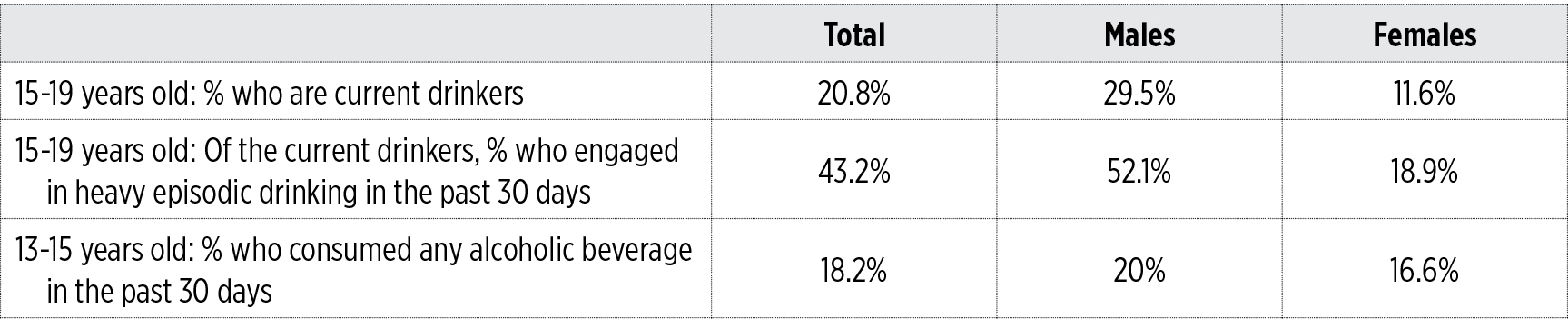
While the aggregate figures should be compelling enough, we ought to consider the distributional impact as well. Harmful use of alcohol tends to adversely affect vulnerable groups to a much greater degree. Groups such as young or low-income individuals tend to be less informed about the harmful effects of alcohol consumption while also being less financially capable of coping with the detrimental health costs.

Given the social and cultural norms surrounding alcohol in the Philippines, a significant proportion of Filipinos starts consuming alcohol at a young age. This is exacerbated by the fact that the alcohol industry has begun marketing products such as alcopops and alcomixes towards younger consumers.

Given the large economic and social toll, how should policymakers respond?

The WHO has recommended several policies including regulating the marketing/advertising of alcoholic beverages; regulating or restricting the availability of alcohol; enacting and enforcing drink-driving policies; and providing accessible and affordable treatment for people with alcohol-use disorders.

By far, however, the most effective measure to address these alcohol-related issues would be to reduce demand through taxation. While higher taxes may not bring consumption down to zero, even inducing the behavior change of one less glass of alcohol a day would represent large gains on the aggregate.

The Philippines has just celebrated the 10th anniversary of the Sin Tax Reform of 2012. This law led to further increases in alcohol and tobacco tax rates in succeeding years. The biggest gains are from tobacco taxes. Tobacco tax rate increases have been significantly higher than those for alcohol products. The result of increasing tobacco taxes over the last decade is that the price of cigarettes has nearly quadrupled, and consequently the prevalence of tobacco smoking in the country has fallen by a third — from 29.7% in 2009 to 19.5% in 2021. This demonstrates the effectiveness of tax policy as a driver of health outcomes.

The price of alcoholic beverages has not risen as dramatically as has tobacco.  According to a policy brief by the Congressional Policy and Budget Research Department in 2022, beer prices, for example, grew by 72% to 78% over the past decade, with 2012 as baseline.

The increased alcohol taxes have raised significant revenues, to be sure. Annual alcohol excise collections have risen from P23.9 billion in 2012 to over P90.1 billion in 2021. But this amount still pales in comparison to what tobacco tax rates have generated — from P33 billion in 2012 to P174 billion in 2021. Further, the comparatively smaller increase has led to less-than-great progress in terms of curbing alcohol consumption.

We must now enact an alcohol tax policy to address both our health and fiscal objectives. Alcohol taxes are a surefire way to improve health and save lives as well as broaden fiscal space and reduce the economic burden of alcohol.


Aj Montesa is a program officer for research and heads the tax policy team of Action for Economic Reforms.


ADVERTISEMENT
ADVERTISEMENT