Home Blog Page 519

ACEN pours P1.9B into 133-MW solar venture in Cagayan

ACENRENEWABLES.COM

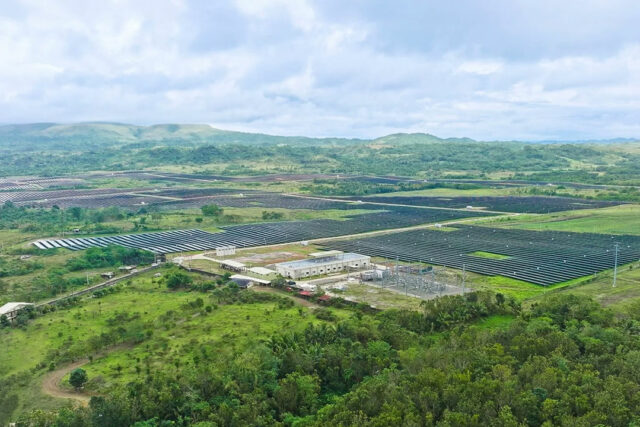
AYALA-LED ACEN Corp. has infused an additional P1.9 billion into its subsidiary operating a 133-megawatt (MW) solar farm in Cagayan to fund its expenses.

In a regulatory filing on Wednesday, ACEN said it had subscribed to 419,690 redeemable preferred shares of Natures Renewable Energy Development Corp. (NAREDCO) at P4,527.16 per share, representing 22% of the company.

NAREDCO is a joint venture between ACEN (60%) and Cleantech Renewable Energy 4 Corp. (40%) engaged in the development and operation of the Cagayan Solar Power Plant, which began commercial operations in October 2024.

“ACEN’s infusion of cash to NAREDCO will enable NAREDCO, its subsidiary, to have funds to service its loans and operating expenses,” ACEN said.

Spanning 115 hectares, the Cagayan solar farm generates an estimated 188 gigawatt-hours of clean electricity annually — enough to energize around 45,000 homes.

“Cagayan North Solar is the first renewable energy project in Cagayan supplying clean power to the Luzon grid. As demand for electricity continues to grow, this project plays a vital role in strengthening the country’s energy supply through reliable and sustainable generation,” ACEN President and Chief Executive Officer Eric T. Francia said.

Last week, ACEN extended P900 million in fresh funds to its subsidiary Giga Ace 6, Inc., which is developing a 553-MW wind farm in Quezon province.

ACEN, the listed energy platform of the Ayala group, holds 7 gigawatts (GW) of attributable renewable energy capacity across operational, under-construction, and committed projects. It operates in the Philippines, Australia, Vietnam, India, Indonesia, Laos, and the United States.

The company aims to operationalize power projects within and outside the Philippines with a combined capacity of about 1.2 GW by the end of next year.

On Wednesday, shares of ACEN Corp. fell by 1.2% or three centavos to close at P2.47 apiece. — Sheldeen Joy Talavera

SMC extends bondholder consent period for NAIA financing plan

NEWNAIA.COM.PH

SAN MIGUEL CORP. (SMC) has extended until Oct. 22 the deadline for bondholders to give their consent to proposed amendments to several bond terms, which would allow the conglomerate to use its shares in New NAIA Infra Corp. as collateral for project financing.

In a disclosure to the Philippine Stock Exchange on Wednesday, SMC said the expiration date for its consent solicitation covering multiple fixed-rate bonds has been moved from Oct. 8 to Oct. 22 at noon, giving record bondholders additional time to review the consent solicitation statement and compile the necessary documents.

“Record bondholders who have previously delivered consents do not need to redeliver such consents nor take any other action in response to this announcement,” the company said.

The consent solicitation involves several outstanding bonds maturing between 2027 and 2034, including the 5.7613% Series C bonds due 2027, 7.1250% Series G bonds due 2028, 7.4650% Series I bonds due 2027, 5.2704% Series J bonds due 2027, 5.8434% Series K bonds due 2029, 7.4458% Series L bonds due 2028, 7.8467% Series M bonds due 2029, 8.4890% Series N bonds due 2032, 7.2584% Series O bonds due 2033, and 7.7197% Series P bonds due 2034.

The initiative, first disclosed on Sept. 8, seeks bondholder approval to waive certain negative covenants and amend trust agreements, enabling SMC’s infrastructure arm, San Miguel Holdings Corp., to pledge its equity in New NAIA Infra Corp. for a loan related to the Ninoy Aquino International Airport (NAIA) rehabilitation project.

The proposed amendments also include raising the ownership threshold in the definition of “material subsidiary” from 25% to 30% and expanding the definition of “permitted liens” to accommodate project financing arrangements.

SMC said the revisions aim to align its bond terms with standard project finance structures while maintaining non-recourse debt at the parent level.

On Wednesday, shares of San Miguel Corp. fell by 0.44% or 25 centavos to close at P56.75 each. — A.G.C. Magno

Stories and drinks all the way from Albania

DRINKS by Sofokli Cali. — SCREENSHOT FROM THE PENINSULA MANILA FACEBOOK PAGE

QUICK — how many Albanians do you know? Thanks to its unstable politics and its history of isolation, probably not many. During a bar takeover at The Peninsula Manila’s The Bar on Oct. 3, we met an Albanian bartender who taught us not only the finer points of a drink, but also a little bit about karma and open borders.

Sofokli Cali is the owner and bartender at Nouvelle Vague in the Albanian Capital of Tirana. The bar was No. 95 on the World’s 50 Best Bars List, and was No. 86 the year before. He took four drink recipes to The Pen, quite good, but all of them telling a story.

For example, there was the English Climber, made with Eden Mill Original Gin, mountain tea, barley, honey, lemon, and sparkling water. Mr. Cali told BusinessWorld, “We have many ingredients which represent us. We have herbs, we have fruits — but mostly I would say that we have heritage.”

The drink, with a hint of bread from the barley and a bittersweet character, stems from food Albanians ate during the Communist Regime which began in 1946, falling only in 1992. “Because they were very poor, for breakfast and for dinner, they would have a piece of bread, mountain tea, with a little bit of sugar and lemon,” he said.

“For us, it’s important to translate this into a fine drink concept,” he said. “We want to not forget the past. We want to represent our country, for the tourists that come — but also for the new generations. It’s not good to forget where we came from and what our parents and grandparents have suffered.”

Through this lens, we began to see the drink menu quite differently. He had the Barbie (Eden Mill White Wine Cask Gin, forest fruits, coconut oils, rue berry, and sparkling water). The drink, deviating from the Pornstar Martini, removes the passionfruit and its accompanying tropical notes and replaces them with fruits found in Albania — this then reads as aspirational, as if the fruits of Albania are at par with whatever else the globe can produce. It was still delightfully fruity though, and we can imagine sipping this on the beach.

He had the Nou Fashion (Eden Mill Bourbon Cask Single Malt Scotch, ginger, lime, blended vermouth, bitters) the name deriving from their bar in Albania. It’s one of their signatures and derives from the Old Fashioned — it tastes like a photorealistic bitter orange.

His final drink, the Deviated Negroni (Eden Mill Red Wine Cask Gin, fortified Kallmet, bitters) once again takes from Albania’s history: it’s symbolic of their relationship with Italy, one that is bittersweet. In various stages of history, Italy has both provided and withdrawn support for Albania, and at one point they even shared a king — after Albania’s was deposed. Albania asserts itself here with local grape variety Kallmet, resulting in a lighter, more refreshing take on the Negroni.

Mr. Cali talked about the increasing number of tourists in Albania, and how that is changing the country’s landscape. “Karma never forgets. We suffered for 46 years. We were isolated, we suffered the civil war, immigration, poverty. Now, karma is paying us off. The world has started to know about Albania.”

More than the economic gains from tourism, he said, “Also for the people, for interaction. Due to isolation, for us, it’s very important to interact with foreigners, of different races. We need that to develop our brain and our fantasy.”

He himself was a migrant, growing up in Greece, which took in many Albanians in several waves of migration; only going back to Albania to finish university. He studied interior and furniture design, but, “The hospitality industry was grabbing me by my long hair.” To him, hospitality is more than service: “Hospitality is making other people happy.”

And stories make other people happy, we suppose. “As much as taste in the drink is important, as much important is the storytelling,” he said.

“You create a fantasy. It’s like watching a movie.” — Joseph L. Garcia

Alfamart launches MSME-focused franchising program

BW FILE PHOTO

ALFAMART PHILIPPINES, the minimart chain of the SM group, has rolled out its franchising program targeting micro, small, and medium enterprises (MSMEs) seeking to scale their operations.

“By allowing tenants to evolve into franchisees, Alfamart is enabling MSMEs to scale alongside its own expansion, strengthening local communities and livelihoods,” Alfamart Philippines Chief Operating Officer Harvey T. Ong said in a statement on Wednesday.

Alfamart began its franchising pilot in Laguna with two franchise-owned stores.

The first franchise store opened in October last year with Alfamart lessor Leovino C. Datario. The second store opened in August through a partnership with AAU Corp. President and Chief Executive Officer Arles A. Uy, Jr.

AAU Corp. operates 15 Express Clean laundromat branches beside Alfamart stores.

“Alfamart blends the convenience of a neighborhood store with the breadth of a supermarket — a format gaining strong traction across Southeast Asia, particularly among families and communities that value accessibility and affordability,” it said.

Mr. Ong earlier said the company plans to open about 300 new stores this year as part of its nationwide expansion.

As of end-September, Alfamart had 2,337 stores across the country.

The minimart chain operates under a joint venture between SM and Indonesia-based retail company PT Sumber Alfaria Trijaya Tbk.

Alfamart is part of the SM Group’s retail food business. Its products include basic groceries, SM Bonus items, fresh and frozen goods, snacks, and personal care products.

SM Retail, Inc. posted a 10% increase in first-half net income to P8.4 billion from P7.6 billion a year ago. Revenue for the period rose by 8% to P211.8 billion, while food retail revenue grew by 8% to P127.1 billion on the back of store expansions and higher volumes.

On Wednesday, shares of SM Investments Corp. closed flat at P735 apiece. — Beatriz Marie D. Cruz

Gordon Ramsay’s Knife Edge spotlights culinary world’s chase for Michelin glory

A CHEF prepares a dish in Knife Edge: Chasing Michelin Stars. — APPLE.COM

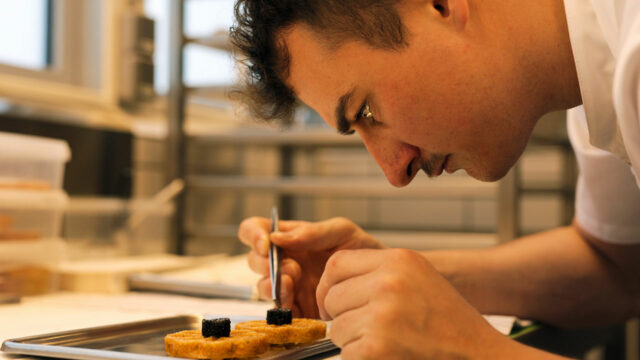
LONDON — Celebrity chef Gordon Ramsay goes behind the camera for a new series, Knife Edge: Chasing Michelin Stars, that shines the spotlight on restaurants working to attain the coveted culinary accolade. The multi-starred restaurateur and TV personality is an executive producer of the eight-part Apple TV+ series premiering on Friday, which visits eateries in the United States, Britain, Italy, the Nordic countries, and Mexico seeking to gain, or retain, stars.

“(It) is a sort of a real reflection on what goes on in these businesses: what’s at stake, what kind of jeopardy is up for grabs and then the emotions,” Mr. Ramsay told Reuters.

“This is (an)… unscripted, real version of life in the culinary world and the extent you go to for the badge of honor … Actors want Oscars, football players want F.A. Cup winners’ medals, chefs want Michelin stars.”

Episodes show host Jesse Burgess meeting chefs as they compose menus, primp up dishes, and seek to impress that lone diner who may be a secret Michelin inspector. There is also input from the anonymous Michelin inspectors, voiced by actors.

“We ask them questions and they answer. In reality, it was all… very secretive so that none of the producers or nobody actually saw the real-life inspectors,” Mr. Burgess said.

“They just judge the food on the plate.”

The first Michelin Guide was published by the French tire company in 1900, with the restaurant star rating introduced in the 1920s. The annual guides award up to three stars.

Mr. Ramsay received his first Michelin star when he was head chef at London restaurant Aubergine. His own Restaurant Gordon Ramsay has held three stars since 2001.

“You become an overnight sensation and then you’ve got the fight and the slug to maintain it… you need to understand the word delegation, teaching, creating, and most importantly, passing the baton on,” he said.

“I have one foot in the kitchen and one foot in the media world and am I there 16 hours a day? No, of course I’m not. I am there like a conductor and I’ll sign things off, but I want to hear from them… And so maintaining it is where the real work starts.”

Asked if he still gets nervous when Michelin issues new editions of the guide, Mr. Ramsay said:

“I do get nervous… no one likes losing… (going) down to even two stars is unique, but… it’s major headlines if you do. I’m often asked, ‘What would you do if you did lose a star?’ Then, I’d fight and win it back.” — Reuters

The inaugural Michelin Guide Ceremony: Manila and Environs & Cebu 2026 will be announced on Oct. 30 at the Marriott Manila Hotel, Newport World Resorts. The Philippines’ very first Michelin restaurant selection, Bib Gourmand awards, Michelin Stars, and Special Awards will be given during the occasion. The ceremony will also be live-streamed on the Michelin Guide Asia YouTube channel.

MGEN opens research hub in Iloilo City

MERALCO POWERGEN CORP.

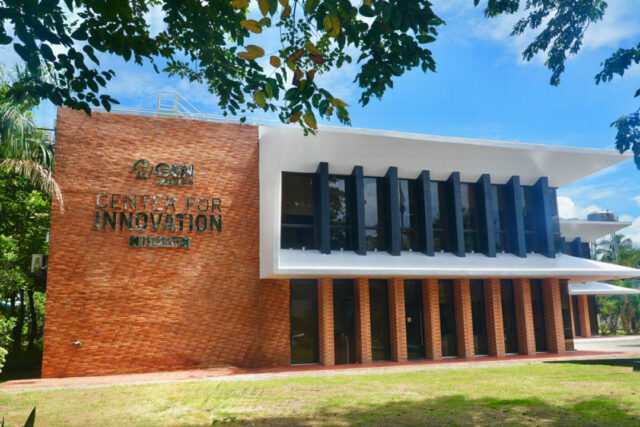
MERALCO POWERGEN CORP. (MGEN), in partnership with the Meralco Power Academy (MPA), has established a learning and research hub in Iloilo City aimed at providing training and research programs related to the power industry.

The first MGEN Center for Innovation (MCI) seeks to empower communities, build local talent, and develop future leaders in the power sector, MGEN said in a statement on Wednesday.

Through the MCI, MGEN and MPA aim to strengthen regional energy innovation, promote technical excellence, and inspire the next generation of energy professionals, it added.

MGEN President and Chief Executive Officer Emmanuel V. Rubio said the facility was designed to meet the evolving needs of the industry and nearby communities.

“Now, MCI will serve a wider audience and aim to become a leading hub for energy education, research and innovation — the first of many Centers for Innovation we plan to establish across our sites in the Philippines,” he said.

MGEN is a subsidiary of power distributor Manila Electric Co. (Meralco), which operates a portfolio of power generation assets equipped with advanced technologies.

Meralco’s controlling stakeholder, Beacon Electric Asset Holdings, Inc., is partly owned by PLDT Inc. Hastings Holdings, Inc., a unit of the PLDT Beneficial Trust Fund subsidiary MediaQuest Holdings, Inc., has an interest in BusinessWorld through the Philippine Star Group, which it controls. — Sheldeen Joy Talavera

Lucky Me-rch: Pancit hops from plates to T-shirts

FOR THIS month’s National Noodle Day — which fell on Oct. 6 — noodle giant Lucky Me! has released a line of T-shirts and tote bags with Linya Linya, a social media and T-shirt company co-founded by Ali Sangalang.

The line was announced on Oct. 2 at the Monde Nissin offices in Pasig, along with a fashion show and standup comedy sets from James Caraan and Nonong Ballinan. The shirts, which come with the slogans “Pang-shirt Canton” and “Pancituationship” appeared on the runway along with the noodle brand’s mascot, Lucky M. Lucky M himself bore a tote bag, also from the collaboration, that said “Carry On Pancit Canton.”

Mr. Sangalang said in a statement, “At Linya Linya, our mission has always been to capture everyday Pinoy wit and experiences in ways that connect with people. This collab with Lucky Me! is natural and exciting — as noodles and Linya are both deeply woven into our lives. Now, you can literally wear what you’re feeling.”

Gen dela Peña, integrated marketing communications head of Monde Nissin, which owns the Lucky Me! brand, told BusinessWorld, “Lucky Me! is not just on their tables, in their pantries. It’s also a wearable item for them. They can take it wherever they go.

“That’s really our goal: to ensure that Lucky Me! is not just part of kain (eating) culture, but really embracing lifestyle and pop culture,” she said.

Alongside the merch, they also have a lineup of social media content with Linya Linya that will come out the entire month.

Fashion is not something new for Lucky Me!. The noodle brand collaborated with clothing brand Uniqlo in the past. “It’s nice to wear what you eat. Sometimes what we eat represents us also,” said Ms. Dela Peña. “Wear what you eat and be proud of it.”

On another note, we also talked nutrition with Lucky Me!: in a world that’s beginning to wise up to nutritional labels, will instant food still have a place at the table? “Lucky Me! noodles are actually a very, very good source of carbohydrates. We know that’s good for the body, for energy,” she said. “Even sodium, for example, the body also benefits from sodium.”

She also noted that some of their customers add vegetables or eggs to their product, increasing its nutritional value. She added, however: “We always promote eating in moderation. Lahat naman ng sobra, masama (everything in excess is bad).”

The limited-edition shirts (P650) and tote bag (P650) are available on Linya Linya’s online store. — J.L. Garcia

SM Prime’s Hans Sy named MAP Management Person of the Year

HANS T. SY

THE Management Association of the Philippines (MAP) has named Hans T. Sy, chairman of the executive committee of listed property giant SM Prime Holdings, Inc., as its Management Person of the Year 2025.

Mr. Sy, the fourth child of SM Group founder Henry Sy, Sr., is the 49th recipient of the award, MAP said in a statement on Wednesday.

MAP recognized Mr. Sy for his lifelong commitment to environmental stewardship, social inclusion, good governance, and resilience (ESG+R).

It also cited his people-centered leadership, promotion of diversity, and initiatives supporting the growth of micro, small, and medium enterprises, local government units, and communities near SM malls.

The organization commended Mr. Sy for advancing programs on disaster risk reduction, education, and children’s healthcare, and for “raising the Philippine flag with pride in other countries like China, and proving that Filipino companies can compete successfully with global big brands.”

Mr. Sy also chairs China Banking Corp.

MAP grants the Management Person of the Year award to individuals in business or government “who have attained unquestioned distinction in the practice of management and have made valuable contributions to the progress of the country and in reshaping national values.”

The group said the award honors exceptional leaders who demonstrate integrity, effective stewardship, and a strong record of achievement in management.

MAP will confer the award on Mr. Sy on Nov. 24. — Beatriz Marie D. Cruz

Hubris at the top could start a major war

STOCK PHOTO | Image by Jcomp from Freepik

By Andreas Klutch

AS THE WORLD (including the self-styled peacemaker-in-chief in the White House) holds its breath for the announcement of this year’s Nobel Peace Prize, spare a moment to ponder the growing risk of war, including world war.

Even a cursory scan of today’s major military powers suggests that both their leaders and policy elites are dangerously overconfident, and could — as in 1914, say — sleepwalk into disaster out of what international-relations scholars call mutual optimism.

If you’re not worried yet, consider a study, the largest and most international of its kind, that comes to exactly this conclusion. Jeffrey Friedman at Dartmouth College just published the findings of surveys he’s been giving (between roughly 2016 and 2022) to about 2,000 national-security officials from more than 40 Western countries — men and women, North Americans and Europeans, civilians and service members.

Friedman’s questions took the form of statements to which the officials had to attach probabilities. A few samples: The United States is the only country in the world that has stealth aircraft. (The correct answer is no.) There are more active-duty military personnel in the European Union than in Russia (yes). Jihadi terrorists in the preceding years killed more people in France than in the US (yes). There are more refugees from Syria than from Venezuela (at the time, yes).

Starting in 2020, Friedman told me, he started asking every question in two versions. For example, half of the participants received this variant: “What are the chances that Boko Haram has killed more civilians than ISIS since 2010?” The other half got: “What are the chances that ISIS has killed more civilians than Boko Haram since 2010?”

As you’ve guessed, Friedman wasn’t after quizzing the officials’ knowledge, but after gauging what I think of as their “intellectual humility” (or its absence, hubris). And the data were clear: Participants were wildly overconfident.

When participants estimated that statements had a 90% chance of being true, those statements were true just 58% of the time — basically, a coin flip. Even when participants felt completely certain — assigning a zero or 100% chance — they were wrong more than 25% of the time. There was no difference between men and women, Americans and Europeans, brass and civilians.

Moreover, the participants weren’t just wrong randomly, but prone to false positives in particular — that was the point of flipping the questions. You’d think that if you ask a large number of rational experts to assign probabilities to either ISIS or Boko Haram being more lethal than the other, the averages should sum to 100%. But they consistently (for 244 of the 280 questions in the experiment) added up to much more.

In other contexts, such bias toward false positives suggests that people are more likely, say, to send an innocent person to prison than to set a guilty person free.

In international relations it helps explain, for example, why advisers in the White House in 2002 felt certain that Saddam Hussein was trying to build nuclear weapons (when he wasn’t) and were confident that they could not only topple his regime but also stabilize and democratize Iraq quickly (when they couldn’t).

In venturing hypotheses for this perilous cognitive asymmetry, Friedman points to the work of psychologists such as the late Amos Tversky and Daniel Kahneman, the world champions of exposing cognitive biases. One is the availability heuristic, our human tendency to exaggerate the probability of whatever comes readily to mind, and to brush aside other possibilities.

In 2002, for example, it was much easier to imagine that Saddam was importing aluminum tubes to build centrifuges for enriching uranium than to consider that he just wanted the metal to make conventional rockets (which turned out to be the case) or something else entirely.

Another trap is the so-called acquiescence bias, our tendency to say yes before even considering the content of a proposition. This gets worse by multiples when you add groupthink, peer pressure, or outright fear. That’s why authoritarian regimes tend to err more disastrously than open societies do. Think of Vladimir Putin’s invasion of Ukraine in 2022, which his counsellors and generals assured him would take a matter of days.

The bad news that follows from Friedman’s research is twofold. First, memories of the last world war have faded, and the current generation of leaders and experts — from China and Russia to the US and elsewhere — is showing signs of waning humility and growing hubris, similar to European leaders in the summer of 1914.

Second, the mightiest military power on the planet, the United States, is moving away from a culture of open and objective analysis and toward groupthink and motivated reasoning based on loyalty tests to the leader — what one might call a war on expertise.

There’s also good news, though. Friedman discovered in his surveys that you can dramatically boost humility and improve results by giving officials just two minutes of training, in effect priming them to be aware of their biases.

The stakes in international relations are often war and peace, life and death. Consider some of the questions that the White House currently has to grapple with. Did the US in fact “obliterate” Iran’s nuclear program, or merely set it back for a while? Is Russia waging hybrid war against European NATO countries only to harass the alliance, or to test its vulnerabilities for a full-bore attack? Does North Korea have plans to attack the South, or China to seize Taiwan? If it comes to war, who would be more likely to win?

Here are my suggested lessons from Friedman’s research to leaders of all countries: First, value expertise and recognize that its job is to tell truth to power, not to flatter you. Second, don’t allow advisers to present single scenarios, but insist on alternative hypotheses — then flip them, so that positives become negatives.

Above all, don’t reward confidence (and certainly not showmanship) among your officials, but humility. And always, always, always stay humble yourself.

BLOOMBERG OPINION

The tipping point

ANTI-GRAFT advocates converge at Luneta Park in Manila on Sept. 21 for the Baha sa Luneta Rally. — PHILIPPINE STAR/NOEL B. PABALATE

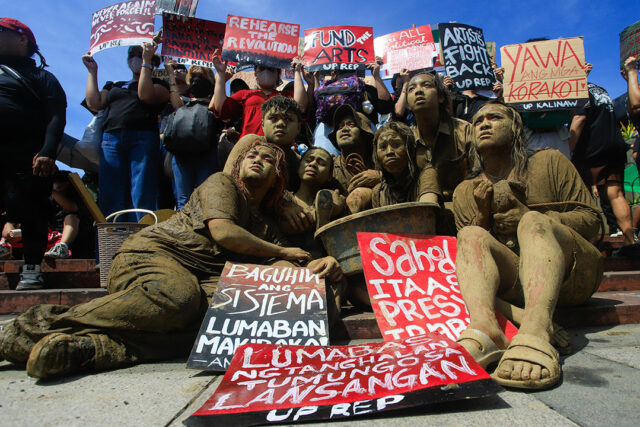
As the flood control telenovela drags on, each new revelation widens the circle of suspicion. The instinct is to rage; the wiser course is restraint. Protest, but peacefully. Organizers are already calling for a “louder” anti-corruption mobilization on Nov. 30. One can only hope the anger does not spill over.

Otherwise, the cause risks being discredited by those intent on making trouble. An incident like the container burning on Mendiola on Sept. 21 shows how a legitimate grievance can turn into a law-and-order problem. It is also how a reform movement can lose support from citizens wary of chaos.

The chief of the Armed Forces of the Philippines (AFP) has urged troops to uphold the code of conduct and ignore the political noise amid fresh coup rumors. He even confirmed being approached to mount a coup. His message is that soldiers should remain professional. To reciprocate, the public must keep protests peaceful as well.

In the Senate, Senator Ping Lacson has resigned as Blue Ribbon chair in the middle of the corruption probe, fueling speculation of leadership change again, even as the chamber insists it’s “stable.” Any attempted leadership shake-up before or after recess will be read through the prism of the flood control mess.

Catholic bishops have already warned that a leadership coup would only heighten suspicion of a cover-up. The calendar doesn’t help. The Senate adjourns this week and resumes on Nov. 10. A month may be too long for rumor to outpace facts. The status quo may not appease the madding crowd.

Destabilizers now hover at the edges of the crisis, intending to ride outrage for private gain. This is why the line between anger and violence must not be crossed. When turmoil is labeled an “imminent threat,” police lines harden, the military is put on standby, and a just cause is reduced to a security problem.

The burden is now squarely on the state to keep investigations credible, free of interference, and quickly moving toward publicly acceptable resolutions. Instability is cancer to an economy already breathing second-hand smoke from global conflicts. Investors price risk faster than courts produce verdicts.

Before the Senate’s Nov. 10 return, and well ahead of the Nov. 30 protest, there should be visible case movement. Citizens, for their part, should keep pressure high and protests peaceful. People must not conclude that the campaign is selective, or stalls at the edge of the real culprits.

Cooler heads, not unfettered adventurism, must prevail and keep the country in the right direction. There will be short-term political volatility, but institutional fracture remains low with the AFP signaling discipline and the Senate leadership projecting stability. Extra-constitutional change remains at bay.

That is, unless violence escalates or the ongoing probe begins to look like a political purge instead of a cleanup. Peace without progress will not hold. The cure is the same as the promise: strong action against the guilty, level-headedness in the streets, and reforms that outlast the news cycle.

Discontent rarely arises from a single trigger. It builds when multiple pressures converge: economic hardship, political distrust, and social anxiety feeding off one another until the atmosphere turns combustible. We must guard against this convergence of discontent.

With food inflation, families already grapple with shrinking grocery baskets. Transport woes compound the misery with commuters grinding through long lines and enduring bad service. More households face skipped meals and unpaid bills. Add to this the drag of global uncertainty.

Each is a stress point. Together, they create an undercurrent of grievance too powerful to ignore. But the economy alone does not explain the current mood. Political anger has also been supercharged by corruption scandals that name senators, congressmen, and Public Works officials.

When economic distress and political discontent intersect, the tipping point becomes closer. Protests are no longer just about one project or one scandal. They are about a system seen as exploitative, self-serving, and tone-deaf to the people’s struggles. Each rally, each viral exposé, adds heat to the tinder. Without careful leadership, the flame could spread.

We have seen convergence before. In 1972, President Ferdinand Marcos, Sr. declared martial law, citing bombings, insurgency, and political paralysis. But underneath the rhetoric was a society strained by inflation, student unrest, and elite feuds. Economic anxiety and political unrest led to an authoritarian “cure.”

In 1983, the assassination of Ninoy Aquino ignited a long fuse. By 1986, economic hardship, a debt crisis, unemployment, and bread-and-butter discontent met the fury of a stolen snap election. This convergence fueled People Power at EDSA. The armed forces fractured, and the dictatorship fell.

In 2001, President Joseph Estrada’s impeachment trial was aborted amidst public disgust at corruption. People went to EDSA once more. The Cabinet resigned. The business elite and Church called for his ouster. The military and police defected and shifted allegiance to the vice-president. Once the political establishment walked away, his presidency collapsed.

Today’s climate bears echoes of all three: economic strain and political unrest like 1972; economic hardship and political outrage like 1986; and disgust at corruption and frustration at elite impunity like 2001. The difference is that the armed forces remain disciplined, and the President himself exposed the anomalies.

The country cannot afford a repeat. Instability is poison to an economy already weakened. Investors flee uncertainty faster than they flee high interest rates. Ordinary workers suffer more than public officials accused. The nation pays in lost jobs, in higher prices, in slower growth.

The antidote is political will, evidenced by strong, credible action against the guilty, anchored in due process. No sacred cows, no selective justice. The guilty must be punished, but in a manner that strengthens, not undermines, institutions. The government must assure the public that anger is valid, but violence is self-defeating. Protest, yes. Pressure, yes. But always within the bounds of law.

Convergence may occur, as economic discontent and political rage feed one another. For now, the fire can still be contained, but only if the government matches bold words with visible action. Justice delivered firmly and fairly can cool tempers, restore faith, and turn a moment of peril into a chance for reform.

The threat of extra-constitutional regime change may be low, but it is not negligible. The convergence of economic distress and political anger is combustible, but still containable at this point. Leaders need to show will, transparency, and, most of all, restraint to keep to what is in the best interest of the country.


Marvin Tort is a former managing editor of BusinessWorld, and a former chairman of the Philippine Press Council.

matort@yahoo.com

Siemens Healthineers to bring more helium-free MRI devices to PHL hospitals

SIEMENS-HEALTHINEERS.COM

By Beatriz Marie D. Cruz, Reporter

SIEMENS Healthineers, a Germany-based medical technology company, is looking to install more helium-free magnetic resonance imaging (MRI) devices to underserved hospitals in the Philippines next year.

“Looking ahead, additional installations of MRI systems powered with DryCool virtually helium-free technology are currently underway, with more planned through 2026,” Michael Schmermer, president and managing director of Siemens Healthineers in the Philippines, said in an e-mail.

The company is planning to roll out helium-free MRI systems in select provinces in Northern Luzon, Visayas, and Mindanao, he said.

“Several installations are in the pipeline, particularly in regions where access to advanced imaging remains limited due to geographic and infrastructural challenges,” Mr. Schmermer said.

The MAGNETOM Flow. Platform, the first helium-free MRI technology from Siemens Healthineers in the Philippines, uses artificial intelligence to provide enhanced diagnostic imaging in a shorter amount of time.

It is also powered by Siemens’ DryCool technology, reducing its dependence on helium, an increasingly scarce and costly natural source.

“The country’s archipelagic geography adds complexity to healthcare delivery, especially in transporting and maintaining conventional MRI systems that rely on helium and a stable power supply,” Mr. Schmermer said.

MAGNETOM Flow technologies are also designed with compact footprints and quench pipe-free architecture, helping simplify installation logistics and infrastructure requirements, he added.

Since last year, about 10 virtually helium-free MRI systems have been deployed in hospitals across the country.

The MAGNETOM Free.Star systems have been installed in hospitals in Benguet, Batanes, Aklan, and Davao del Norte, while the MAGNETOM Flow 1.5T (Tesla) are operational in hospitals in Mandaluyong and General Santos City.

Access to advanced imaging technologies like MRI remains a challenge in the Philippines, Mr. Schmermer said, citing high costs and infrastructure limitations, especially in many rural and remote areas underserved.

“With compact designs, reduced infrastructure requirements, and resilience to power interruptions, our systems are well-suited for healthcare facilities in geographically isolated and resource-constrained settings,” he said.

Pricing for Siemens Healthineers’ helium-free MRI systems vary depending on specific clinical and technological configurations, and site requirements, among others.

The rise of chronic illnesses such as cancer, neurological disorders, and cardiovascular diseases is also driving demand for advanced diagnostic imaging, Mr. Schmermer added.

Noncommunicable diseases like ischemic heart disease, neoplasms, and cerebrovascular disease, are the top causes of death among Filipinos last year, data from the Philippine Statistics Authority showed. This highlights the growing demand for accessible and reliable diagnostic tools in the country, Mr. Schmermer said.

“By enabling earlier diagnosis and improving patient outcomes, these efforts contribute to a more inclusive and equitable healthcare system,” he added.

TDF yields go down as benign inflation supports easing bets

BW FILE PHOTO

YIELDS on the Bangko Sentral ng Pilipinas’ (BSP) term deposits continued to edge down on Wednesday amid strong demand and on expectations of another rate cut as inflation remains benign.

Bids for the central bank’s term deposit facility (TDF) amounted to P140.077 billion, well above the P100 billion auctioned off and the P125.644 billion in bids for the same offer volume last week. The BSP fully awarded both tenors.

Broken down, the seven-day papers fetched P56.8 billion in bids, higher than the P50 billion placed on the auction block and the P53.122 billion seen for the same volume offered a week ago.

Banks asked for rates ranging from 5.03% to 5.08%, narrower than the 5% to 5.09% logged the previous week. This caused the weighted average accepted yield to slip by 0.44 basis point (bp) to 5.059% from 5.0634% previously.

Meanwhile, tenders for the 14-day papers hit P83.277 billion, well above the P50-billion offer and the P72.522 billion in demand for the same volume auctioned off last week.

Accepted yields were from 5.06% to 5.09%, a narrower band compared with the 4.98% to 5.1125% seen a week earlier. With this, the average rate dropped by 1.19 bps to 5.0799% from 5.0918%.

The BSP has not auctioned off 28-day term deposits for nearly five years to give way to its weekly offerings of securities with the same tenor.

Both the TDF and BSP bills are used by the central bank to mop up excess liquidity in the financial system and better guide market rates towards the policy rate.

“BSP TDF average auction yields were again slightly lower week on week after still relatively benign inflation of 1.7% in September 2025, again below the BSP’s inflation target of 2%-4% for the seventh straight month,” Rizal Commercial Banking Corp. Chief Economist Michael L. Ricafort said in a Viber message.

This bolstered expectations of another 25-bp cut from the central bank at this week’s Monetary Board meeting or in December, he said.

Inflation picked up to 1.7% in September from 1.5% in August, the government reported on Tuesday. This was the fastest pace in six months or since 1.8% in March, but was within the BSP’s 1.5-2.3% forecast and below the 1.9% median estimate in a BusinessWorld poll of 12 analysts.

For the first nine months, inflation averaged 1.7%, matching the BSP’s forecast for the year and still below its 2-4% annual target.

The Monetary Board is holding its second to the last policy meeting for this year on Thursday (Oct. 9). Ten of the 16 analysts in a BusinessWorld poll expect the central bank to pause anew this week after it delivered three straight cuts, while the remaining six said it could make a fourth consecutive 25-bp reduction to help support domestic demand and boost the economy.

The central bank has lowered benchmark borrowing costs by a total of 150 bps since it kicked off its rate cut cycle in August 2024, with the policy rate now at 5%.

BSP Governor Eli M. Remolona, Jr. has left the door open to one more cut this year that could mark the end of this easing round.

Mr. Ricafort added that expectations that the Philippines would soon be included in JPMorgan Chase & Co.’s Government Bond Index for Emerging Markets (GBI-EM) series also helped drive term deposit yields lower.

The global bank last month placed Philippine bonds on “Index Watch Positive,” marking the final review stage for their inclusion.

The Philippines would have a weight of about 1% of the GBI-EM Global Diversified Index if included, according to the bank.

National Treasurer Sharon P. Almanza earlier said the government expects foreign fund inflows to rise by about one percentage point or around P100 billion if the country successfully reenters the index. — Katherine K. Chan