



Home Blog Page 5152

Style (02/27/23)

THE REDESIGNED Montblanc Sartorial Collection features bags and smaller accessories

Montblanc collection ripe for customization

MONTBLANC adds a new dimension to its signature business collection. The redesigned Montblanc Sartorial Collection features bags and smaller accessories in softer leather with a deep two-tone effect, new colors, and the introduction of a modularity system that allows small pieces to be attached to larger bags — creating new functionalities, styling options, and many customization possibilities. Inspired by the beauty and experience of handwriting, the design codes for Montblanc Sartorial are rooted in the Maison’s writing culture heritage. Recognizable ink bottles from the Montblanc archive have inspired the triangular design of the handles, while the construction of the sides of the bags evoke the opening of an envelope with two overlapping pieces of leather. The extensive assortment of large, medium and small leather pieces includes: Document Cases (large, medium, thin) and Backpacks (large, medium, small), with space for technical devices, A4 documents and other business essentials, including writing instruments in dedicated pockets. Open Totes for a more casual approach to work feature a classic vertical design and a new trapeze silhouette offering multi-wearable options with short handles in leather and longer handles in fabric. The capacity of the new tote can also be enlarged thanks to press buttons on the sides. A Bowling Bag with zip closure can be carried by hand, or on the shoulder thanks to the adjustable and detachable shoulder strap.  Compact bags include envelope-shaped Pouches, a Mini Bag, and a Mini Messenger featuring a back side leather band that fits the handles of document cases and totes, adding functionality to the larger pieces. Business companions include a laptop case with front handle, a notebook, and a notepad holder. wallets, card holders, pen pouches and key fobs make up the small accessory assortment, in a variety of colors as well as a new phone pouch that can be attached to document cases and totes so to have tech devices always at hands. The Montblanc Summit 3 Smartwatch also gets a Sartorial edit with the addition of leather straps in two new colors and a new watch face featuring customizable initials. While black and forged iron are the main colors for the bags, small accessories are also offered in red, blue, british green, mosto (a tone of burgundy) and ivory, creating a bold contrast when attached to larger pieces using the modular system created for the collection. The leather used throughout the collection has undergone a CO2 neutral tanning process. The Montblanc Sartorial Collection is available starting this month at Montblanc boutiques and online. For more information, visit www.montblanc.


Chapter 02 of Adidas Basketball 2023 collection out

CHAPTER 02 of Adidas Basketball’s The 2023 Collection is now available. The collection of shoes, hoodies, tops, shorts, and bottoms have had the excess stripped away to reveal a refreshing new palette and versatile assortment crafted for the modern athlete. Chapter 02 offers a new color refresh featuring Alumina, Black, and Heather Gray, supplementing the Halo Green, Metal Grey, and Cloud White colors previously introduced in Chapter 01. Chapter 02 also serves as a reintroduction to heritage silhouettes like the Forum and Rivalry. The 2023 Collection: Chapter 02, debuted at the 2023 NBA All Star Weekend, and is now available for purchase on the adidas App and at https://www.adidas.com.ph/chapters-basketball retailing from P1,700 to P7,500.


Havaianas releases UAAP flipflops

HAVAIANAS has released exclusive UAAP team flipflops and pins which are now available in selected branches. They are available at the following Metro Manila shops: Bonifacion High Street, Glorietta, Lucky Chinatown, Robinsons Ermita, SM Fairview, SM Grand Central, SM Mall of Asia, SM Manila, SM North EDSA Annex, SM San Lazaro, and SM Trinoma. Outside Metro Manila, they are available at branches at SM Batangas, SM Cabanatuan, SM Naga, SM Pampanga, and SM Sta. Rosa, SM Cebu and SM Iloilo, SM Davao, SM Mindpro, and Abreeza Mall. They are also available at All Flipflop stores at SM Bacolod and SM Lanang.
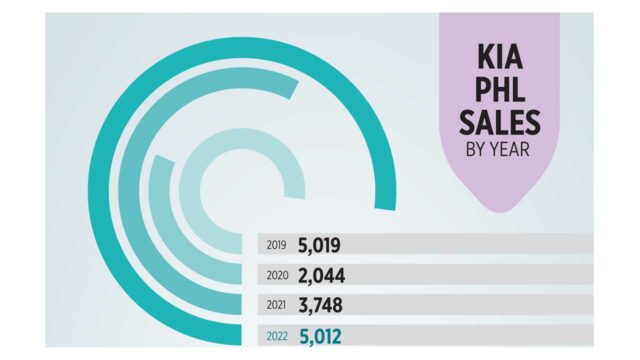
KIA PHL sales

KIA PHL sales

Shares may decline on rate concerns, rebalancing

BW FILE PHOTO

PHILIPPINE STOCKS are expected to drop this week on monetary policy concerns and ahead of the MSCI rebalancing.

The Philippine Stock Exchange index (PSEi) declined by 13.33 points or 0.19% to close at 6,685.90 on Thursday, while the broader all shares index dropped by 7.16 points or 0.2% to end at 3,572.20.

Philippine financial markets were closed on Friday for a special non-working day.

Week on week, the PSEi lost 93.12 points or 1.37% from its close of 6,779.02 on Feb. 17.

“The market’s decline last Thursday was likely due to a prevalent ‘no interest’ environment, leading to muted buying appetite, coupled with continuing selling pressure due to higher terminal rate worries,” China Bank Securities Corp. Research Director Rastine Mackie D. Mercado said in an e-mail.

Minutes from the US Federal Reserve’s Jan. 31-Feb. 1 meeting said that “almost all” Fed officials agreed to slow the pace of increases in interest rates to a quarter of a percentage point.

Its next policy review is on March 21-22.

For this week, First Metro Investment Corp. (FMIC) Head of Research Cristina S. Ulang said in an e-mail that a technical bounce is expected this week, but the market’s downward trend could be sustained.

“The market is expected to move sideways to lower as the pressures from high interest rates will dampen investors’ enthusiasm. Corporate earnings can provide some relief but the lag effect of the high cost of money is a concern for investors,” AB Capital Securities, Inc. Vice-President Jovis L. Vistan said in a Viber message.

Rizal Commercial Banking Corp. Chief Economist Michael L. Ricafort in a Viber message that Philippine stocks are expected to drop and track US stocks’ decline.

On Friday, the Dow Jones Industrial Average declined by 336.99 points or 1.02% to 32,816.92; the S&P 500 lost 42.28 points or 1.05% to 3,970.04; and the Nasdaq Composite dropped 195.46 points or 1.69% to 11,394.94.

“We may see volatility come Monday following the sudden holiday, as investors are likely to react to two days’ worth of price action in offshore markets. We are also set to see possible sharp movements in index issues given the conclusion of the MSCI rebalancing on Tuesday,” China Bank Securities’ Mr. Mercado added.

“For [this] week, we may see episodes of bargain hunting. Still, the local market is not expected to pose a strong rally amid weighing monetary policy concerns and lack of a strong catalyst. The hawkish outlook of the Bangko Sentral ng Pilipinas and the Federal Reserve are still expected to cloud sentiment,” Philstocks Financial, Inc. Senior Research Analyst Japhet Louis O. Tantiangco said in a Viber message.

Mr. Tantiangco put the PSEi’s support at 6,600 and resistance at 6,800, while China Bank Securities’ Mr. Mercado placed support at 6,600-6,640 and resistance at 6,850. FMIC’s Ms. Ulang pegged support at 6,500 and resistance at 6,800. — Ashley Erika O. Jose

Peso to move sideways amid rate worries

PHILIPPINE STAR/ WALTER BOLLOZOS

THE PESO is expected to move sideways against the dollar this week as strong US consumer spending data fueled expectations of more rate hikes from the US Federal Reserve.

The local currency closed at P54.87 versus the greenback on Thursday, appreciating by 31 centavos from Wednesday’s P55.18 finish, Bankers Association of the Philippines data showed.

Philippine financial markets were closed on Friday for a special non-working day.

Week on week, the peso strengthened by 37 centavos from the previous week’s P55.24 close.

For this week, a trader said in a Viber message that the peso might depreciate against the dollar as US consumer spending increased by the most in nearly two years or since March 2021 to 1.8% last month.

Also, the personal consumption expenditures price index, the Fed’s preferred inflation measure, accelerated by 0.6% last month, the biggest increase in six months, bringing the index to 5.4% for the 12 months through January.

The strong data stoked worries the Fed will prolong its tightening cycle.

“The peso so far has been performing better, thanks to the recent BSP (Bangko Sentral ng Pilipinas) hike and BoP (balance of payments) data. But the US rate remains to be a threat as it will continue to strengthen the dollar,” the trader said.

Meanwhile, Union Bank of the Philippines, Inc. Chief Economist Ruben Carlo O. Asuncion said in a report that the dollar could weaken in the short term as the market prices in the “higher for longer US rates narrative.”

He said the BSP’s hawkish stance could also boost peso sentiment.

The US central bank hiked its target interest rate by 25 basis points (bps) in its Jan. 31 to Feb. 1 meeting to a range between 4.5% and 4.75%. This brought cumulative increases since March 2022 to 450 bps.

The Fed’s next policy meeting is on March 21-22.

Meanwhile, BSP Governor Felipe M. Medalla last week said the Monetary Board will likely hike benchmark interest rates again next month, with a smaller 25-bp move possible amid expectations of slower inflation in February.

The BSP hiked borrowing costs by 50 bps for a second straight meeting on Feb. 16, and hinted at further tightening to help bring down elevated inflation.

This brought the central bank’s policy rate to 6%, the highest in nearly 16 years or since May 2007 when it stood at 7.5%.

It has now raised borrowing costs by 400 bps since May 2022.

The Monetary Board’s next policy review is on March 23.

For this week, the trader expects the peso to move between P54.50 and P55.50 against the dollar, while Mr. Asuncion sees the local unit trading at P54.50 to P55.25.

Rizal Commercial Banking Corp. Chief Economist Michael L. Ricafort said in a Viber message that the peso could close at P54.70 to P55.20 against the dollar this week. — A.M.C. Sy

Drug firms say stable regulation key to encouraging investment

PHILIPPINE STAR/ MICHAEL VARCAS

THE pharmaceutical industry said further initiatives to streamline permit and approval processes and make regulation predictable will be key to inducing the industry to expand or attract investment.

Diana M. Edralin, Pharmaceutical and Healthcare Association of the Philippines (PHAP) said the industry is looking to the government to further improve the investment climate.

“One of the requests is some predictability in terms of the regulatory approval process. How do you (issue) licenses here? The tax incentivizes are only one aspect. Can I set up a site like in two weeks? Will I get my permit in two weeks’ time? The regulatory process is also critical,” Ms. Edralin said in a chance encounter with BusinessWorld.

Ms. Edralin said upgrades to the workforce are also needed ahead of any expansion or new investment.  

“When you talk about ease of doing business, it has to be expansive, going beyond the taxes. We need to prepare what the capabilities are needed so that when they invest in us, it is actually something that we can sustain,” Ms. Edralin said.

While tax incentives are “super helpful… how do we ensure that (when investors manufacture here at scale) that we have the manpower and technical expertise here?” she added.

According to Ms. Edralin, the Philippines has improved the process of drug approvals with the reliance pathway used by the Food and Drug Administration (FDA), which takes into account drug approvals by other countries.

“The average (time) used to be two to three years; that’s long. But now, the FDA has made very significant progress. The FDA learned a lot during the pandemic with the approval of the vaccines. We managed to get a drug approval in 48 days with the reliance pathway,” Ms. Edralin said.

Ms. Edralin said that the group is not expecting logistics issues to disrupt the medicine supply this year.

“I don’t think we are anticipating any for this year. But as a country, we need to be prepared in terms of what did we learn from the pandemic,” Ms. Edralin said.

Ms. Edralin said PHAP members have been monitoring the Russia-Ukraine war for its potential to affect the supply of pharmaceuticals.

“All of our companies have a very strong global supply chain team… With these global organizations, we have the ability to anticipate and we’re doing our best,” Ms. Edralin said.

“Should (supply issues) happen, we will inform ahead of time but right now that has not happened because we heavily invest in ensuring continuity of supply of life-saving medications,” she added. — Revin Mikhael D. Ochave

PHL preparing for surge in FDI with skills upgrade initiatives

REUTERS

THE PALACE said the expected surge in investment will be met with programs to upskill the workforce.

“The Department of Labor and Employment (DoLE) is preparing for the entry of more foreign investors, particularly by ensuring that the Philippines has a pool of well-educated and highly-skilled workers,” the Presidential Communications Office said in a statement.

The DoLE is focusing on narrowing the gap between worker skills and employer needs, the Palace said, citing Labor Secretary Bienvenido E. Laguesma.

Mr. Laguesma said upskilling workers must be industry-led and market-driven “so that workers can find employment that suits their skills.”

Skills mismatch issues can be addressed via targeted job fairs, “with the DoLE focusing on knowing the requirements of every industry to effectively address them,” the Palace said.

The Philippines ranked 80th out of 133 countries in the Global Talent Competitiveness Index 2022, which assessed the ability of the various countries to attract and retain a skilled workforce.

The Philippines’ ranking was down 10 places, from 70th out of 134 countries in the 2021 index.

“Another focus of the Marcos administration is ensuring that the Philippines has a cheap and stable energy supply that can sustain manufacturing industries that create jobs with the expected influx of foreign investors,” the Palace said.

The Department of Energy hopes to hit a 35% share for renewable energy in the overall energy mix by 2030. The target is 50% by 2040.

The underlying plan is to lower electricity prices by diversifying sources of energy, it added.

The government has firmed up $4.349 billion worth of investments which have now entered the implementation stage, according to a separate Palace statement, citing Trade Secretary Alfredo E. Pascual.

Investment commitments worth $29.712 billion “are in the form of memoranda of understanding and letters of intent,” it said.

“On the other hand, a total of $28.863 billion or P1.5 trillion worth of investment projects are now in the planning stages.” — Kyle Aristophere T. Atienza

Ecozones expected to reap FDI unlocked by RCEP

ANFLOINDUSTRIALESTATE.COM

ECONOMIC ZONES are expected to reap the benefits of the recently approved Regional Comprehensive Economic Partnership (RCEP) in the form of more diverse sources of foreign direct investment (FDI), according to the Philippine Economic Zone Authority (PEZA).

“As the chief implementer of the ecozone program, PEZA hopes to attract more FDI from the RCEP member economies and especially from non-traditional trading and investment country sources such as China, Australia, and New Zealand,” PEZA Officer-in-Charge Tereso O. Panga said in a social media post on Sunday.  

“In the process, this will expand the ecozone FDI sources, diversify export products and markets, and contribute to infrastructure development that will address the gaps in the supply chain — all these will ultimately enhance the competitiveness of the ecozones and the Philippines as an investment destination in the region,” he added.

The RCEP, billed as the world’s biggest free trade agreement, will take effect for the Philippines around May after the Senate ratified it on Feb. 21. The RCEP will lead to minimal to zero tariffs, bringing about an expected expansion in trade.

The RCEP members are the 10 countries of the Association of Southeast Asian Nations (ASEAN), Australia, China, Japan, South Korea, and New Zealand.

“Given the right ecosystem and enabling laws, the Philippine economy could be boosted if economic activities flourish in the ecozones as well as their linkage in the domestic market,” Mr. Panga said.

Mr. Panga said PEZA is hoping to develop the pharmaceutical ecosystem with a dedicated technology park to help multinational companies searching for ways to produce medicines more rapidly and at low cost.  

He added that PEZA is also targeting investment in the design and production of electric vehicles and semiconductor manufacturing, to harness the Philippines’ mineral resources. — Revin Mikhael D. Ochave

EU GSP+ renewal pitched as also beneficial to foreign investors

REUTERS

THE Department of Trade and Industry (DTI) said foreign investors also stand to benefit from the renewal of Philippine privileges under the European Union’s (EU) Generalized Scheme of Preferences Plus (GSP+).

“This preferential scheme benefited not just local industries but even foreign investors doing business in the country. This scheme helped us in transforming lives and communities in the Philippines consistent with our efforts to promote socio-economic development,” Trade Secretary Alfredo E. Pascual said in a statement.

Mr. Pascual met with members of the European Parliament Sub-Committee on Human Rights on Feb. 22 to discuss GSP+ and a potential free trade agreement.

The EU makes GSP+ preferences and trade relations subject to Philippine adherence to a number of international conventions on human rights, labor rights, environmental protection, and illegal fishing, among others.

Philippine participation in the GSP+ scheme is set to expire at the end of the year.

According to Mr. Pascual, 26% of Philippine exports to Europe were admitted under the terms of the GSP+, calling the preferences vital to the economic relations of the Philippines and EU. The Philippines is the sole country in the Association of Southeast Asian Nations region that benefits from GSP+.

GSP+ offers zero tariffs on 6,274 products, equivalent to 66% of all EU tariff lines.

“For 2021, total exports to the EU amounted to 7.77 billion euros. In terms of eligible exports, 2.68 billion euros worth of Philippine exports are covered by GSP+, of which 2.03 billion euros availed of GSP+ preferences (or 26% of PH’s total exports),” the DTI said.

“GSP+ utilization grew by 7 percentage points from 68.3% in 2015 to an all-time high of 76% in 2021,” it added.

Top GSP+ exports are crude coconut oil, vacuum cleaners, hairdressing equipment, prepared/preserved tuna, eyeglass lenses, lead-acid accumulators, electric hair dryers, and new pneumatic tires. — Revin Mikhael D. Ochave

Airport bus services seen benefiting from special lanes

OFFICIALGAZETTE.GOV.PH

THE use of airport bus services could expand with the provision of special lanes, which would encourage broader use and reduce vehicle congestion along the main gateways, a transportation industry analyst said.

Rene S. Santiago, former president of the Transportation Science Society of the Philippines, noted that there are already privately-funded buses that transport passengers to the Ninoy Aquino International Airport (NAIA), but these lack dedicated lanes and are not adequately promoted to the public.

“More passengers taking buses to/from airports can reduce car usage, and lead to traffic improvement,” he said in a chat message. “My observation (is that) there is little demand, maybe due to lack of promotion.”

Passengers often rely on taxis and vehicles-for-hire, which charge high fares.

House Deputy Speaker and Batangas Rep. Ralph G. Recto said that the airport will need more bus services from pick-up points in malls, and a carousel system linking its terminals, as more and more people engage in “revenge travel,” unlocking pent-up demand that had been suppressed by the pandemic.

“If we can incur a P356-billion debt and dig up the roads to construct a subway, deploying lots of buses would be easy,” Mr. Recto said in a statement on Saturday, referring to the Metro Manila Subway Project.

In 2016, the Department of Transportation and the Land Transportation Franchising and Regulatory Board launched a premium airport bus service that transports passengers to and from NAIA, with pick up points mostly in Manila and Makati.

According to Mr. Santiago, airport buses would need support from the government “to enhance patronage (by adding) priority lanes, or a motorcycle-escorted service initially to ensure adherence to timetable.”

Mr. Santiago added that countries like Singapore, Hongkong, and Kuala Lumpur have effective airport bus services that the Philippines could study.

The travel experience should go beyond airport services, Mr. Recto said. — Beatriz Marie D. Cruz

Gov’t urged to encourage more women to form MSMEs focused on international e-commerce

THE GOVERNMENT needs to better track and encourage more women-led micro, small, and medium enterprises (MSMEs) engaging in cross border e-commerce, the Philippine Institute for Development Studies (PIDS) said.

“Policy gaps must be addressed, especially concerning public-private sector coordination and women-led MSMEs’ lack of access to finance and capacity-building programs, low awareness of government policies and programs due to informality, and inability to scale up and sustain their e-commerce businesses,” PIDS said in a study.

The government think tank said cross-border e-commerce has gained “increasing recognition” as a critical strategy for MSMEs to survive after the coronavirus disease 2019 (COVID-19) pandemic.

In 2022, it was estimated that cross-border activities accounted for 20% of all e-commerce transactions.

“However, women-led MSMEs face disproportionate and unnecessary challenges that prevent them from participating fully in the digital economy and cross-border e-commerce,” it said.

The study found that government agencies collect and store sex-disaggregated data to formulate reports and design their respective interventions. However, they have yet to “address and mitigate the challenges of collecting and processing data on women-led MSMEs and cross-border e-commerce trade effectively and accurately.”

“This has made aggregating data for devising policies and programs for women-led MSMEs on a wider scale more challenging. Hence, policies concerning data on women in e-commerce would benefit from enhanced coordination and information-sharing across agencies and between public and private sectors,” PIDS said.

The study also noted shortcomings in trade finance for women-led MSMEs, such as the lack of equal access to government financial institutions and microfinance institutions.

“Thus, private sector players such as e-commerce platforms and financial technology companies play an increasingly important role in bolstering government programs for women-led MSMEs through their own trade financing schemes and modalities,” it added.

PIDS said that the Philippine policy landscape exhibits strengths in two primary fields: networks, representation, and visibility, as well as in digital literacy, e-payments, e-commerce, and digital trade regulations.

“Conversely, the current national framework reveals weaknesses in areas such as online discrimination, trade facilitation, and logistics and customs duties,” it added.

The study recommended improving coordination within and across government agencies, between government agencies and business organizations, and among government agencies and their stakeholders.

“Vibrant partnerships exist between and among government agencies, leading e-commerce platforms, women in business-centered organizations, and fintech and other digital platforms. These partnerships may be more effective if institutionalized through a board that convenes quarterly and serves as a platform for information dissemination, dialogue, and collaboration,” it added. — Luisa Maria Jacinta C. Jocson

Deepening the strategic value of the CHRO

(Second of two parts)

Chief Human Resources Officers (CHROs) have always been crucial to the success of an organization. However, as a result of current events, they may now be just as valuable to CEOs as the Chief Financial Officer (CFO). As such, it is imperative to deepen their strategic value.

In order to better understand why the connection between the board and the CHRO is becoming more crucial, insights from EY thought leaders and clients were gathered to fuel strategies to improve the board and CHRO dynamic along with the ways of working. Instead of merely reducing potential risks, organizations can find opportunities in current, unheard-of labor trends to gain a competitive advantage.

The first part of this article discussed challenges in talent, perception gaps identified with employees, and considerations for boards to make. This second part will discuss three strategies that boards and CHROs can implement to help each other succeed: strengthening and enabling the CHRO role, re-examining the risk framework to support the talent agenda, and supporting CHROs in developing a human-centric strategy and employee value proposition.

STRENGTHEN, SUPPORT, AND ENABLE THE CHRO ROLE
Organizational culture, which includes purpose, well-being, and social inclusion, has emerged as a critical factor in motivating present employees and attracting potential hires. Therefore, choosing who oversees this crucial sector is the first step for the board and the executive team.

Once roles are defined, the board should challenge the CHRO (or an equivalent role) on matters that are now within their purview. These include corporate activism and reputational talent risks. Boards must also communicate the significant financial value of having a strong employer brand to investors and other external stakeholders to support the CHRO role.

In addition, boards should inquire about whether the HR team has the right qualifications, experience, and support of top management. The CHRO should be subject to the same accountability standards as the other C-Suite members. The CHRO is responsible for engaging the board in important discussions about important issues that include the external market environment and an internal perspective that covers determining what talent the organization has, how to retain key personnel, understanding critical current and future skills, and how to address gaps in talent.

They should also draw attention to and thoroughly evaluate the significant developments that have an impact on the firm, and they should exhort the board to adopt fresh and unusual perspectives. In order to accomplish this, the CHRO needs early access to the board so they can establish and show their credibility, trust, and transparency. They will then be able to present innovative, game-changing ideas with assurance when the time is right.

And last, the board and the CHRO should keep putting first-class oversight of executive remuneration and C-suite succession planning at the top of their list of priorities. When properly implemented, the former ensures that rewards correspond to the cultural practices the organization wants to promote. Additionally, debates in boardrooms are showcasing the latter more prominently than ever due to evolving talent dynamics.

RE-EXAMINE THE RISK FRAMEWORK TO SUPPORT THE TALENT AGENDA
Talent is frequently at the top of risk agendas for organizations worldwide. However, because risk profiles vary by industry, organization size, and various other criteria, each organization handles its talent differently. In order to determine what is best for them, boards should consult with their respective CEOs and CHROs. These conversations do not have to wait until board meetings; they can take place during routine check-ins with other board members.

To avoid the temptation to micromanage, the board should discuss and decide what role it should play in supervising talent concerns as well as determine the best governance structure to support the CHRO. The board will also have to think about how to include the voice of the employees in the governance structure. They must pay attention to what employees want, even if not all requests can be granted.

Executive learning is also a key area. Historically, board members tended to have extensive backgrounds in more traditional fields such as law and finance. However, the board will need to supplement these skills with new perspectives in light of new risks and difficulties. By ensuring that the board has access to and is learning from industry best practices, the CHRO can support these initiatives, helping the organization become more performance-driven and purpose-led as a result.

SUPPORT CHROS IN DEVELOPING A HUMAN-CENTRIC STRATEGY AND EMPLOYEE VALUE PROPOSITION
In order to balance the demands of the people strategy and the business strategy, as well as to create and sustain the culture of the organization, boards must narrow their focus on their people, and look more closely into what the employees need from their organization as well as what the organization needs from them.

These discussions must be incorporated into the broader strategic talent plan to attract, nurture, and retain the talent required to carry out the organization strategy. The board can help the CHRO carry out this strategy by ensuring that each individual feels heard, appreciated, and supported.

Board members do not need to know the specifics of employee insights, but they should be made aware of any potential risks, opportunities, and impact. They can then ensure that the organizational employee value proposition, culture, and overarching strategy all take into account the needs of various employee groups while allowing for customization where appropriate. Culture is a particularly significant factor as well; research shares that businesses which thoroughly understand and reflect their cultures outperform their competitors by a factor of three, while those with serious cultural problems falter or even fail.

Boards should ensure that the cultures of their particular organization are in sync with their talent and retention strategies as they assume increased responsibility in managing this vital area. In exchange, the CHRO must thoroughly assess the organization’s employee value proposition with the board and assist in filling in any knowledge gaps.

All of these discussions should be supplemented by an effective use of data. It will be easier to engage the board and win their support if they are presented with clear, succinct, and well-researched recommendations.

COLLABORATING TO NAVIGATE THE TALENT LANDSCAPE
The constant disruption in recent years has only exacerbated the war for talent, requiring the CHRO role to be even more strategic as people-related risks rise to the top board agendas across the globe. In order to overcome challenges in talent, CHROs and boards must collaborate to enhance the CHRO role, supporting as well as challenging each other to navigate the talent landscape and remain competitive.

This article is for general information only and is not a substitute for professional advice where the facts and circumstances warrant. The views and opinions expressed above are those of the author and do not necessarily represent the views of SGV & Co.


Lisa Marie T. Escaler is the People Advisory Services Workforce Advisory (PAS WFA) leader of SGV & Co.

Gilas Pilipinas braces for Jordan to end the qualifier with a bang

PHILIPPINE STAR/JUN MENDOZA

Game Monday
(Philippine Arena, Bocaue)
6 p.m. — Philippines vs Jordan

THERE’S something visiting Jordan is carrying into today’s FIFA World Cup Asian Qualifiers’ sixth window windup match that Gilas Pilipinas finds all too familiar and to an extent, worrisome.

It’s that burning desire to exact revenge on an old tormentor.

Having used this very motivation to get back at fourth-window conqueror Lebanon, 107-96, last Friday, the Filipinos (15 points on a 6-3 record) know perfectly well how driven the Falcons (14 points on 5-4) will be to make this a “payback game” for themselves.

Gilas beat Jordan in Amman in their Window 5 faceoff back in November, 74-66.

“Obviously Jordan’s going to come in with a lot of energy and motivation to bounce back, because we beat them in their home court,” Gilas guard Kiefer Ravena said.

Then there’s the importance of ending the Qualifiers with a bang for the two World Cup-bound sides and building momentum for the actual campaign in August.

Against Lebanon, Gilas was at its finest in terms of offense. Not only have coach Chot Reyes’ undersized troops scored their highest output of the Qualifiers, they also matched the single-game high of 17 three-pointers.

For the 6 p.m. home duel with Jordan at the Philippine Arena, the Pinoy dribblers want to crank it up in defense, too.

“Very good performance on the offensive end (versus Lebanon). However, there’s still a lot of things left to be desired on our defense,” noted Mr. Reyes.

“We gave up almost 100 points to a team without (Wael) Arakji, (Ali) Haidar, and even their naturalized player (Jonathan Alredge)…It’s a learning experience for us, We need to be able to play better defense to come out and have a better performance against Jordan,” he added.

On the heels of his rousing debut, Justin Brownlee is expected to lead the veteran-youth combo of June Mar Fajardo, Scottie Thompson, Jamie Malonzo and Mason Amos, among others.

“Offensively, everyone is clicking and the chemistry seems really well. But defensively, we got to get better. I think we could come out and defend better next game after we see things to adjust and do better,” said the newly-minted Pinoy Mr. Brownlee. — Olmin Leyba