Home Blog Page 5131

Responding to gray zone operations with real transparency, public engagement, and all-out cooperation
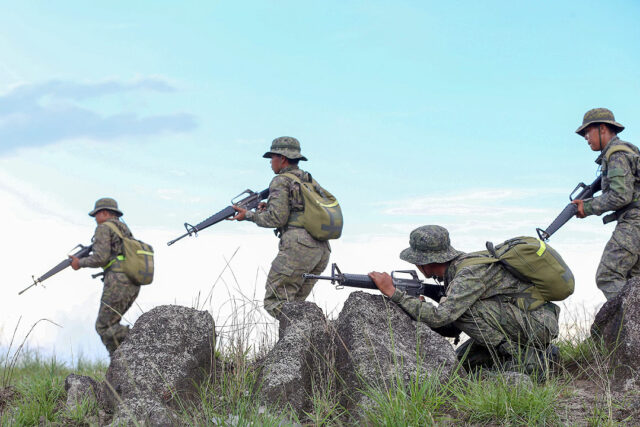
PHILIPPINE STAR/KRIZ JOHN ROSALES

When one state sends dozens of vessels into another country’s territory or points a military-grade laser at the other country’s coast guard, these are definitely not acts of peace. Still, they fall below the threshold of what would be deemed acts of war. They are, instead, within the realm of the gray zone.

The grayness is exactly why responding to these actions is complex and tricky. How does a state, which itself has professed to abide by a rules-based international order, calibrate an appropriate, commensurate, and effective response to such actions?

Indeed, gray zone operations have continued to elevate risks in the region due to their ambiguity and ability to circumvent international law. Specifically, China’s activities within Philippine territory, driven by its expansionist ambitions and militarization, have created much concern.

To expound on this complex issue, we at the Stratbase ADR Institute, in pursuit of our advocacy for the Philippines’ defense of its territorial and sovereign rights, recently organized a forum — “Countering Gray Zone Operations in the Maritime Indo-Pacific” — in partnership with Konrad Adenauer Stiftung.

Her Excellency Ambassador Anke Reiffenstuel of the Federal Republic of Germany delivered the keynote address and talked about the all-encompassing nature of security policy. “Security policy is more than military plus diplomacy. If investments in infrastructure, trade policy, and climate change form part of our security, then this means that decisions on security are not taken just in the Foreign Office or the Defense Ministry but [also] in business, in municipalities, in civil society, and university. What it needs is a comprehensive approach,” she said.

Aside from increasing and promoting economic engagement with other countries and regions, there is a need to counter propaganda and disinformation. “These are aimed at shaping public opinion and undermining regional stability,” she said. “Countering these efforts through accurate and timely information can help reduce the effectiveness of gray zone operations.”

According to Dr. Daniel Schmücking of Konrad Adenauer Stiftung, Southeast Asia is becoming the new battleground for strategic competition. “The world is shifting. It is important to call out oppressors. With a big power rising, it is important that we all learn from each other how to deal with that and cooperate with each other.”

“The best way to address Chinese gray zone activities is to expose them,” said Commodore Jay Tarriela, Adviser to the Commandant for Maritime Security and Spokesperson for the Philippine Coast Guard (PCG). “Let us not allow ourselves to suffer silently because of their hostile actions,” he said.

The PCG’s recent roles have been to remove shades of gray, expose the black and white or what China is really doing, and create public and global awareness about what is happening in the West Philippine Sea.

Retired Air Force Col. Raymond Powell of the Gordian Knot Center for Security Innovation, through his team’s project, Project Myoushu, showed how technology can be an ally in exposing gray zone activities that would not otherwise be known by the public.

“By bringing those things into the light, it builds support from the public, so the governments can make the hard decisions, and also over the long term, this should deter those activities. When China knows that the activities that it makes or whether the activities that it does in the West Philippine Sea will end up on the news, that is going to make them think twice.”

Our institute’s Trustee and Program Director, Dr. Renato de Castro, said we should show greater political will and not allow ourselves to always be the victim. We should leverage the value of alliances, he said, because these can create a sharp collective deterrent by undermining the other’s sense of initiative.

Dr. Charmain Willoughby, Associate Professor at De La Salle University, says we should call gray zone operations what they really are: China’s use of coercion to establish a reputation for resolve. “We need to demystify it. We should call a spade a spade.”

She believes transparency is important in drawing attention to China’s coercive activities as they happen. A good security strategy for the Philippines should also highlight deterrence capabilities through armed forces modernization and partnerships with like-minded countries, and a whole of government approach for clear and consistent messaging of our national interest.

Retired Rear Admiral Rommel Jude Ong, Professor of Praxis at the Ateneo School of Government, was emphatic: “We need to stop talking about gray zones,” he said. “We need to start acting on it.” He supports countering gray zone operations with a holistic approach backed by the population of ASEAN nations to thwart China’s alliance-breaking strategy.

The Philippines and other Indo-Pacific states must engage in strategies that will ultimately change China’s behavior to be in-line with the internationally established rules-based order. States must strengthen cooperation in bilateral, multilateral, and minilateral means. Acts of coercion will only create distrust and upset the sensitively interlinked global ecosystem which already burdened by the economic shocks of the pandemic and the war in Ukraine.

For years, the previous administration foisted upon our people the false dichotomy of keeping quiet and not asserting our rights on one hand and going into a full-blown war on the other. Former President Rodrigo Duterte even set aside our legal victory at the Permanent Court of Arbitration.

Today, many Filipinos are aware of what is happening in the West Philippine Sea. Eighty percent of Filipinos agree that the military capability of the Philippine Navy must be strengthened and that joint maritime patrols and military exercises with allied countries should be conducted. Once reserved for military and diplomatic communities, discourses on national security and foreign policy exposing China’s acts are now made available to the public, and rightly so.

We live in a democracy, and the public needs to be engaged in these high-stakes issues so that our leaders would have the political support to act as they should. The Institute is hopeful that the current administration will continue to reinforce cooperation with like-minded states in defense of the rules-based order. We Filipinos deserve no less.


Victor Andres “Dindo” C. Manhit is the president of the Stratbase ADR Institute.

Getting more Filipinos into data literacy is an economic imperative

ADAM NOWAKOWSKI-UNSPLASH

FILIPINOS are present in the more than 100 countries that the branchless, digital-only bank Overseas Filipino Bank (OFBank) — a wholly owned subsidiary of the Land Bank of the Philippines — gets its clients. It had a presence in 113 countries and territories as of May 31, 2021. There were an estimated 1.83 million Overseas Filipino Workers (OFWs) in these countries during the period of April to September 2021.

But descriptions of the overseas jobs showed that about four in every 10 (43.2%) OFWs in 2021 were engaged in elementary occupations involving simple and routine tasks which may require the use of hand-held tools and considerable physical effort. While these elementary occupations require basic data literacy, local and overseas jobs now require higher data literacy skills for work with better pay.

There is therefore a need for Filipinos to capture jobs higher than the elementary occupations, and opportunities abound in the data world. Local and international companies are experiencing rapid digital transformation such that data skills are no longer confined to the IT field. Advancement in artificial intelligence, cloud-based services, and, most of all, the use of mobile devices, opened the way for non-IT people with data and ICT skills in using sophisticated data analysis tools.

Filipinos should acquire the right set of data skills, beginning at the basic education level for learning and workforce readiness as well as to be exposed early to data literacy. Like other competencies, data literacy should start at school and be integrated into the curriculum.

Realizing the need for a data literate citizenry and the increasing demand for data analysts, the Department of Science and Technology (DoST) and Technical Education and Skills Development Authority (TESDA) offer free online training courses for data analysts. Project SPARTA, a joint project between the DoST, the Development Academy of the Philippines (DAP), the Analytics Association of the Philippines (AAP), and Coursebank, has already trained 40,000 Filipinos in their six learning pathways in data analytics. Their new micro specialization program will further attract more Filipinos in the field of data analysis.

In the private sector, Eskwelabs and the AAP are in the forefront of data upskilling courses and helping Filipinos get access to the latest trends and developments in the data analytics ecosystem.

But how can more Filipinos get the opportunity to be data literate when the Philippines placed 53rd out of 100 countries in the 2022 Inclusive Internet Index, commissioned by Meta and developed by Economist Impact? The country obtained an overall score of 72.3 out of the possible 100, landing as the eighth least inclusive internet environment in Asia.

It is therefore the role of the government to engage the private sector in offering internet access and making the internet affordable by revisiting the existing postpaid tariff and fixed-line monthly broadband costs. Affordable internet access will expand data literacy skills and climb the ladder in the ICT skills rubrics endorsed by the International Telecommunication Union.

President Ferdinand Marcos, Jr. said that improving bureaucratic efficiency is part of his administration’s Eight-Point Socioeconomic Agenda in the near-term, putting a premium on digitizing, harmonizing, and standardizing government data. He is also pushing for the swift passage of the proposed e-Governance Act to allow the country to catch up with other nations in the digital economy. These are noble goals that need to be supported.

But he cannot do it alone. The preparation of the future workforce, and preparing the youth for employment, requires all hands on deck. To grow the national economy, the country should explore, among many others, the use of Microsoft’s Digital Literacy currently used by TESDA, Google’s Applied Digital Skills Program, Oracle Academy, Coursera for Campus, and Tableau for Education. Funds and scholarships should be given in Project SPARTA. Setting a target on the percentage of Filipino youth that have basic data literacy skills by 2024, and partnering with the World Bank in their “Digital Development Global Practice,” will prepare the country for the transition to a digital economy.

We look forward to a future economy where the adoption of electronic invoices and receipts, and digitizing government transactions are handled by a data literate citizenry, and which will see the flowering of homegrown digital transformation accelerators such as Stratpoint Technologies. These spearhead the acceleration to the digital transformation of businesses and government offices using agile software, cloud, data, artificial intelligence and quality assurance.


Arnel Lopez Cadeliña is a professor of Business Analytics at Sacred Heart College. Opinions expressed are solely his own and are the views or opinions of his employer.

Central bankers need to dial down their rhetoric

FREEPIK

THE recent firehose of opinions spilling forth from officials at the Federal Reserve, European Central Bank (ECB), and Bank of England (BoE) has been as unedifying as it is unhelpful. Given the febrile state of financial markets and the collective failure of the economic community to clear even its own low bar when it comes to pretending to see the future, policymakers would be advised to pipe down.

Following the post-pandemic surge in inflation, there’s been a collective consensus to move away from explicit forward guidance on monetary policy, replaced by a meeting-by-meeting data-dependent outlook. That’s a practical approach to a highly uncertain economic backdrop, and is to be welcomed. But it is falling apart, and is having the unwelcome side-effect of making fixed-income markets more volatile (albeit exacerbated in recent days after the collapse of Silicon Valley Bank), something policymakers should know to avoid.

My colleague Mohamed El-Erian took direct aim at Fed Chair Jerome Powell on Wednesday for the bluntness in his opening statement at the semiannual congressional testimony. Powell revived the prospect of a 50 basis-point hike at the next Federal Open Market Committee (FOMC) meeting on March 22. That’s a head-spinning shift after the US central bank downscaled to just a quarter-point raise at its last meeting on Jan. 31. Powell was forced to add a big “if” at Thursday’s repeat testimony, emphasizing that nothing is decided until February’s inflation and payroll reports are scrutinized. That’s as it should be; data, not Fed testimony, should set the tone.

Moreover, the FOMC makes a collective decision on policy, and while individual views are part of the process, regional Fed presidents should not dominate. Instead, vocal hawks such as St. Louis Fed President James Bullard (a non-voter this year) and Minneapolis Fed President Neel Kashkari (voter) are stealing much of the oxygen in airing their particular opinions. If policymakers have new insights to add on a specific economic approach, then let’s hear from them — but not if it is to bang the drum of their latest hot take on where interest rates should be. That is for the collective decision-making forum of the central bank, not for mass broadcast.

This is far from just a Fed problem. Following calls for an additional 200 basis points of tightening from Austrian central bank chief Robert Holzmann last week, Bank of Italy Governor Ignazio Visco made his displeasure clear. “Uncertainty is so high that the Governing Council of the ECB has agreed to decide ‘meeting by meeting,’ without ‘forward guidance,’” he said. “I therefore don’t appreciate statements by my colleagues about future and prolonged interest rate hikes.”

We hear from President Christine Lagarde at the post-meeting press conferences, and from Chief Economist Philip Lane if there is an important qualification on ECB policy. While national central bank chiefs should be free to opine on the state of the economy in their respective countries, and occasionally on the broader picture, setting interest-rate policy across 20 nations is all about the art of the compromise. What might seem necessary for Austria might not be the case elsewhere across the euro zone. Persistent calls for higher and longer rate hikes from such influential ECB policymakers as Bundesbank President Joachim Nagel make an already difficult task almost impossible.

The BoE is also struggling with policymakers having wildly divergent views. Two external members of the nine-person Monetary Policy Committee, Swati Dhingra and Silvana Tenreyro, voted for no change at the last two meetings when rates were raised by 50 basis points. A third outside member, Catherine Mann, has been calling for even faster hikes. Her comments on the risks posed by the potential for further weakness of the pound stray into an area which central bankers normally avoid, for good reason: Discussing currency values opens a political can of worms.

By contrast, we hear only infrequently from the Bank of Japan policy board — limited to just a four speeches last month — so when the governor does speak it carries more weight. Moreover, comments are usually couched in language designed to reveal little, as central banking should not be all revealing. Steering the economy requires subtlety and nuance.

The current torrent of rhetoric is enough to make me yearn for the opaqueness of former Fed Chair Alan Greenspan. Discretion is a useful tool in the central bank armory; it should be more valued. Some things are better kept within a committee which makes collective decisions, rather than aired for all to dissect. Less really is more sometimes.

BLOOMBERG OPINION

PSC links up SBP with gov’t agencies for FIBA hosting

EXECUTIVES from the Philippine Sports Commission and the Samahang Basketbol ng Pilipinas pose with FBWC 2023 mascot ‘Jip’ during the Inter-agency Coordination meeting held at the Philippine International Convention Center in Pasay City on March 14, 2023.

THE PHILIPPINE Sports Commission (PSC) hosted an inter-agency coordination meeting for the upcoming FIBA Basketball World Cup 2023 on Tuesday, March 14, 2023 at the Philippine International Convention Center (PICC) in Pasay City.

PSC Chairman Richard Bachmann started by thanking everyone, particularly the sports leaders, local sports executives, government officials, representatives and stakeholders for responding to the call for a comprehensive plan and unified movement in making the best World Cup hosting possible.

A total of 37 national government agencies (NGAs), local government units (LGUs), private organizations and stakeholders were present during the three-hour discussion organized by the PSC, resting on its mandate to get full assistance from other government entities to perform its functions as stated in Section 24 of Republic Act 6847.

“Since basketball is the No. 1 sport in the Philippines, this hosting is vital not only in showcasing the best quality of the game to our kababayans and the world, but also in using sports as a universal opportunity to bond, connect and make impossibilities happen,” said Mr. Bachmann.

The Philippine government will be one of the hosts for the global event which is expected to further strengthen sports tourism in the country as observed from previous hostings of the World Cup.

Samahang Basketbol ng Pilipinas (SBP) President Al Panlilio also extended his gratitude to the PSC for making the inter-agency meeting possible.

“Thank you, Chairman Dickie [Bachmann] for organizing this event. Thank you for coming. This is not for SBP alone, this is for the Philippines,” said Mr. Panlilio.

The FIBA World Cup hosting will be another check in history for the country since this will be the first time in 45 years of the prestigious tournament since its last hosting in 1978.

Thirty-two teams will compete in a total of 92 games across five venues in three different countries.

The group phase of the competition will be simultaneously played on Aug. 25-30, 2023 in Indonesia, Japan and the Philippines where the games will be held at the Smart Araneta Coliseum and SM MOA Arena.

The final phase of the competition is slated from Sept. 5-10 at the 55,000-seater Philippine Arena in Bocaue, Bulacan.

Mr. Panlilio shared that one of the goals of the SBP is to put the Philippines on the map for the biggest attendance in the FIBA WC, by beating the long-standing World Cup final attendance record of 35,000 established when the US played Brazil at the Maracanazinho Stadium in Rio de Janeiro in 1954.

“May all our resolutions and agreements in this meeting be in accordance with the objective of creating an amazing basketball environment that unites people and encourages them to “Win for All,” declared Mr. Bachmann in closing his speech.

“This is it! We’ve been waiting for this for five years. This is the proper time that we put the Philippines back on the world map in this very crucial event. I encourage everyone to go out of their way to make this event a success,” expressed Senior Deputy Executive Secretary Hubert Guevara who spoke on behalf of the government and the Office of Executive Secretary Lucas Bersamin.

24 teams join returning Smart-NBTC National Finals today at MOA Arena

LED by reigning champion National University-Nazareth School (NUNS), 24 squads featuring eight international teams duke it out in the anticipated return of the Smart-NBTC National Finals presented by SM today (March 15) at the Mall of Asia (MOA) Arena.

With the third-ranked high school player Rein Jumamoy at helm, the Bullpups march into battle as the No. 1 seed in the stacked field for the comeback of the country’s largest tourney for the first time amid the pandemic.

Heavy favorites are the Bullpups, despite falling short in the semifinals of the ongoing UAAP Season 85 boys basketball, as they seek a three peat in the staple HS tourney powered by Smart Communications, SM, Strong Realty and Development Corp., Under Armour and Molten.

NUNS’ first test is No. 24 seed PCU-Dasmariñas, champion from Cavite zone, tomorrow in the seeding phase of the Super 24 that includes UAAP and NCAA bets, eight overseas squads and 12 representatives from the local qualifiers.

Taking the first crack in NBTC’s return is No. 6 Sacred Heart School-Ateneo de Cebu, led by No. 1 ranked player and Gilas Pilipinas youth ace Jared Bahay, against European champion Rome Elite at 9 a.m. today.

Mr. Bahay’s fellow Gilas players in Caelum Harris, Jacob Bayla and Zain Mahmood, meanwhile, banner the Fil-Nation Select from the United States as among the perennial contenders expected to give NSNU a run for its own money. All games will be livestreamed on Facebook via the NBTC, Smart Sports, and Puso Pilipinas pages. — John Bryan Ulanday

UST aims to stay inside the magic four against skidding Blue Eagles

Games Today
(Filoil EcoOil Center, San Juan)
9 a.m. — UE vs FEU (men’s)
11 a.m. — UE vs FEU (women’s)
3 p.m. — UST vs ADMU (women’s)
5 p.m. — UST vs ADMU (men’s)

UNIVERSITY of Santo Tomas (UST) aims to stay inside the magic four while Ateneo de Manila University (ADMU) is out to snap its rare skid as they collide in a crucial UAAP Season 85 women’s volleyball tournament tussle at the Filoil EcoOil Center in San Juan.

Tip-off is at 3 p.m. with the Golden Tigresses eyeing to add to the piling woes of the Blue Eagles, who are in a three-game skid to fall way out of the Final Four picture nearing the close of the first round.

UST is clinging to fourth spot at 3-2 next to leaders De La Salle University (5-0), Adamson University  (4-1) and reigning champion National University (4-1) while perennial contender Ateneo lags behind with a lone win in four matches.

Odds are on the Eya Laure-led Growling Tigresses to clip the Blue Eagles’ wings following a sweet rebound against University of the Philippines, 25-17, 25-23, 25-20, after bowing to the Lady Falcons.

UST absorbed a shocking 25-15, 25-17, 25-19, sweep against Adamson, which also blanked Ateneo in a 25-18, 25-23- 25-19 win to loom as a sudden contender along with Season 84 finalists NU and De La Salle.

Against the Golden Tigresses, whom they beat for the Season 81 championship before the pandemic, the Faith Nispero-backed Blue Eagles are bent on finally rediscovering their fiery form to get back on contention.

Meanwhile, Far Eastern University or FEU (2-3) likewise seeks to stay in the running for a Final Four spot when it takes on winless University of the East or UE (0-5) at 11 a.m.

Santo Tomas and Ateneo with FEU and UE also lock horns in the men’s division at 9 a.m. and 5 p.m., respectively. — John Bryan Ulanday

Upset

To argue that the Rockets were heavy underdogs heading into their match against the Celtics yesterday would be to highlight the obvious. It didn’t matter that they were scheduled to do battle at the Toyota Center. As holders of the worst record in the National Basketball Association, they had just 10 wins to show in 34 outings at home. Meanwhile, they faced competition that continually rubbed elbows with the best of the best in the pro ranks.

As things turned out, the Rockets had enough to post one of the biggest upsets in the league after the All-Star break. They did battle from the get-go, and for all their supposed lack of competitiveness, they managed to stay ahead in the last 27 minutes and 41 seconds of the set-to. It wasn’t as if they put up a cushion early on to coast to triumph. Rather, they needed to keep staving off repeated rallies by the Celtics, and they did so with a relentless effort that overcame their intrinsic frailties.

Notably, the Rockets likewise benefited from no small measure of good fortune. In the game’s last sequence, the Celtics had a chance to force overtime, only to see top dog Jayson Tatum flub a seemingly open layup. Given their exertions, it would have been fair to wonder if they could last another five minutes under extreme pressure. As much as they were hungry for victory, they would not have been receptive to the psychic benefit of simply coming close.

Under the circumstances, the Rockets could be forgiven for celebrating in the aftermath as if they had just claimed the Larry O’Brien Trophy. They lingered on the court, exchanging hugs and high fives while the Celtics headed to the locker room with an unmistakable air of dejection. They took on giants and won, in the process providing proof that nothing in sports is etched in stone. Pride kept them fighting, and, if only for a day, their best prevailed.


Anthony L. Cuaycong has been writing Courtside since BusinessWorld introduced a Sports section in 1994. He is a consultant on strategic planning, operations and human resources management, corporate communications, and business development.

China to fully reopen borders to foreign tourists

REUTERS

BEIJING — China will reopen its borders to foreign tourists for the first time in the three years since the COVID-19 pandemic erupted by allowing all categories of visas to be issued from Wednesday.

The removal of this last cross-border control measure imposed to guard against COVID-19 comes after authorities last month declared victory over the virus.

Tourist industry insiders do not expect a massive influx of visitors in the short run or significant boost to the economy. In 2019, international tourism receipts accounted for just 0.9% of China’s gross domestic product.

But the resumption of visa issuance for tourist marks a broader push by Beijing to normalize two-way travel between China and the world, having withdrawn its advisory to citizens against foreign travel in January.

Areas in China that required no visas before the pandemic will revert to visa-free entry, the foreign ministry said on Tuesday. This will include the southern tourist island of Hainan, a long-time favorite destination among Russians, as well as cruise ships passing through Shanghai port.

Visa-free entry for foreigners from Hong Kong and Macau to China’s most prosperous province, Guangdong, will also resume, a boon particularly to high-end hotels popular among international business travelers.

“The announcement that China will resume issuing nearly all type of visas for foreigners from tomorrow is positive for Australian businesses whose executives would like to travel to here to visit their China-based teams, customers and suppliers and to explore new business opportunities in the mainland market,” said Vaughn Barber, chairman of the Australian Chamber of Commerce in China.

Chinese events open to foreign visitors — such as the China Development Forum in Beijing later this month and the Shanghai Autoshow in April — are gradually resuming. The once-every-four-years Asian Games will also take place in the eastern city of Hangzhou in September after being postponed last year due to China’s COVID concerns.

But prospective visitors might not immediately arrive in droves.

Unfavorable views of China among western democracies have hardened due to concerns over human rights and Beijing’s aggressive foreign policy, as well as suspicions surrounding handling of COVID-19, a global survey by the Pew Research Center in September showed.

“In terms of tourism, China is no longer a hotspot destination,” said an executive at China International Travel Services in Beijing, declining to be named due to the sensitivity of the matter.

“Commercially, the wish of foreigners to run events in China also decreased after COVID, because too many things here are impacted by politics which has scared them off.”

GEOPOLITICS
In a further relaxation of controls on outbound tourism, China added another 40 countries to its list for which group tours are allowed, bringing the total number of countries to 60.

But the list still excludes Japan, South Korea, Australia and the United States. Ties between those countries deepened as Washington faced off with Beijing over issues from Russia and Ukraine to Chinese military presence in the South China Sea.

“It’s common to use tourist visas to come to China on business, but I don’t know how enthusiastic institutional investors will be to do so, after all the drumbeat of scary news,” said Duncan Clark, founder of BDA, a Beijing-based investment consultancy.

In 2022, just 115.7 million cross-border trips were made in and out of China, with foreigners accounting for around 4.5 million.

By contrast, China logged 670 million overall trips in 2019 before the arrival of COVID, with foreigners accounting for 97.7 million. — Reuters

Doctors quit Britain’s NHS for a career in business

BLOOMBERG

THOUSANDS of junior doctors are on strike this week, complaining of low pay and poor working conditions in Britain’s National Health Service (NHS).

Many of the medics on picket lines are also thinking of walking out of their careers entirely — and the world of finance and business offers an unexpected but increasingly attractive option.

Jae-Young Park spent six years studying to be a doctor at the University of Oxford but after five months as a newly-qualified medic, he left the NHS to work in investment banking. His salary more than tripled overnight.

“I think the NHS was certainly what drove me out of it,” Mr. Park says.

It’s not an isolated case. A poll published by the British Medical Association at the end of last year found that 2-in-5 junior doctors plan to leave the NHS once they’re offered another job, while 79% “often think about leaving the NHS.” Pay, deteriorating conditions and increasing workloads were the main gripes, according to the survey.

Of those actively planning a new career, the most popular option was management consulting, with the pharmaceutical sector also a key destination.

Health unions have accused the government of imposing years of real-terms pay cuts on NHS staff, creating a demoralized workforce and high levels of vacancies.

Following a series of alarming strikes by nurses, ambulance workers and other employees since December, health unions recently called off further action in order to pursue a pay deal with ministers — but junior doctors are not part of the talks.

“Thanks to this government you can make more serving coffee than saving patients,” the BMA argues in a new campaign. Its poll showed that a majority of junior doctors found it difficult to pay their utility bills last year.

Jobs website Indeed says that doctors are 20% more likely to explore options outside their field compared to the average job-seeker, adding that interest in banking and finance has increased.

PRESSURE, NOT STRESS
The emotional toll of working in the NHS is also pushing doctors away, according to Mark Jenkins who quit medicine to become a management consultant at Boston Consulting Group.

“As a doctor, there is the personal anxiety about: is someone going to die because I made the wrong choice and I don’t have enough resources,” says Mr. Jenkins, who has since moved jobs again to become a director at health app Oviva.

“In consulting, yes, a client is going to be really annoyed at you if you don’t deliver a presentation by 9 a.m. the next day but ultimately, you’re worried about your personal success. I call that pressure, not stress.”

BCG and other management consulting firms such as McKinsey are offering medical students a taste of work outside the health sector, with an internship that can form part of their training.

The proportion of applicants from medical backgrounds to entry level positions at Carnall Farrar, a boutique management consultancy specializing in health care and life sciences, almost doubled from in the year to 2022. The firm says many medics want to be fairly rewarded for their work.

WAR FOR TALENT
The UK economy is suffering from a tight labor market and a war for talent, with firms keen to hire bright graduates. Medics have many desirable skills like the ability to absorb and apply new knowledge, according to Ian Dougal, dean of academic affairs at Hult International Business School.

“I think very few professions will teach you to be able to work under pressure, like a front-line medic,” says Mr. Dougal, who keeps a special eye out for doctors wanting to join his MBA program.

Medics often lack knowledge of the financial system, but they can quickly catch up and compete in the City, according to Park, who joked that he didn’t understand the term Ebitda when he first arrived at the bank.

Maura Jarvis, the UK lead for workforce transformation at consultancy Mercer International, Inc., says that ultimately, financial reality bites. A lot of junior doctors “went into those roles because it was a calling and a purpose,” she says. “But if you’re not paying the bills, that creates very different choices.” — Bloomberg

Hate crimes in United States surged 11.6% in 2021

FREEPIK

WASHINGTON — Hate crimes in the United States surged 11.6% in 2021, with the largest number motivated by bias against Black people, followed by crimes targeting victims for ethnicity, sexuality and religion, the FBI said in a report released on Monday.

The FBI said reported hate crime incidents rose to 9,065 in 2021 from 8,120 in 2020.

The bureau said 64.5% of hate crime victims in 2021 were targeted because of their race, ethnicity or ancestry bias, while 15.9% were targeted because of sexual-orientation and 14.1% due to religion.

The largest number, some 2,233 incidents, were motivated by anti-African American bias, the report found.

Of the religion-based hate crimes in 2021 cited in the report, a little more than half targeted Jewish people.

Some 948 of the reported crimes were motivated by anti-white bias, while there were 543 incidents targeting gay males and another 415 incidents involving members of the broader LGBTQ community.

Bias against Hispanics totaled 433 incidents, while the FBI reported 305 such incidents targeting Asians.

Attorney General Merrick Garland has made enforcement against hate crimes a top priority for the Justice Department.

In 2021, he expanded funding and other resources to states and municipalities to help track and investigate hate crimes, and ordered prosecutors to step up both criminal and civil investigations into such incidents.

“We are continuing to work with state and local law enforcement agencies across the country to increase the reporting of hate crime statistics to the FBI,” said Associate Attorney General Vanita Gupta, the No. 3 official at the department.

“Hate crimes and the devastation they cause communities have no place in this country. The Justice Department is committed to every tool and resource at our disposal to combat bias-motivated violence in all its forms,” Ms. Gupta said.

The FBI’s new analysis marks the first time the bureau has been able to confidently report national hate crimes trends since it transitioned to a new data collection system.

Uniform crime data released by the FBI in October 2022 contained gaps, with only 52% of US law enforcement agencies reporting a full 12 months of 2021 information.

For its supplemental report, FBI officials said they were able to retroactively include crime data from some of the country’s largest cities that had not yet made the switch to the new reporting format.

The nation’s two largest cities — New York and Los Angeles — are now included in the hate crimes analysis reported on Monday, while Chicago was able to provide two quarters worth of data for the report.

FBI officials said they typically track the 130 most populous cities across 16 states to identify statistically significant trends. Of those, 96 cities were able to provide data for the new report.

Jonathan Greenblatt, chief executive of the Anti-Defamation League (ADL), said the report confirms that hate crimes reached “record high levels” in 2021.

The group, which collects its own criminal and non-criminal data on acts of hate against Jewish people, counted a total of 2,717 antisemitic incidents in 2021 — the highest figure since the ADL began tracking such data in 1979.

“With antisemitic incidents up across the board in nearly every category we track,” said Mr. Greenblatt, “a whole-of-government, whole-of-society approach will be needed to address these extremely disturbing trends.” — Reuters

Travel sector mulls green future but tourists reluctant to pay

Tourists look over the French capital from the third floor of the Eiffel Tower on an overcast day in Paris, France, Nov. 4, 2015. — REUTERS/PHILIPPE WOJAZER

BERLIN — Tourists around the world and especially in Europe are supportive of more eco-friendly trips but reluctant to carry the extra cost, according to studies and industry executives.

In the European Union’s economic powerhouse Germany, for example, 24% of travelers believe ecological sustainability is an important criterion when booking a holiday, according to a survey by motor vehicle association ADAC released this month.

But only 5-10% would be willing to pay even a moderate sustainability surcharge, according to the poll of 5,000 people.

“The rub is people don’t want to necessarily pay more for sustainability,” said Charuta Fadnis, head of research and product strategy at travel research company Phocuswright.

That has left the industry questioning how to become greener as it faces thin margins and a post-pandemic recovery still hampered by global travel restrictions, like the slow rebound of visas available to Chinese tourists.

Carbon offsets have been available on the market for years, with many airlines offering voluntary investment programs. But the uptake has been limited and there are questions over how effective offsets actually are.

Thomas Fowler, the director of sustainability for Irish budget airline Ryanair told Reuters earlier this year that few are willing to pay the few euros needed to take part in their carbon offset program.

“Less than 3% of our customers use it,” he said.

Germany’s flagship airline Lufthansa in February began offering more expensive “green fares” on some flights, said to offset their burden on the climate by 20% through the use of sustainable aviation fuel (SAF) and 80% through the financing of climate protection projects.

This is integrated into the price, unlike Lufthansa’s existing opt-in charges, for which uptake has been very low at 0.1%, according to the company. A trial run for the new integrated offer in Scandinavia showed a modest but improved uptake rate of 2%.

GREEN ON A BUDGET
The younger generation is more committed to sustainability, said Fadnis. But without willingness to pay slightly more upfront, businesses have to become more creative.

Many hotels, for example, ask those who stay there to reuse their towels, while other travel services encourage tourists to adjust their habits by renting hybrid cars.

Some travel operators insist that climate-friendly tourism need not cost the world and can sometimes even be the cheaper option, encouraging habits such as reusable water bottles and use of bikes or public transportation.

Time-slot bookings, made ubiquitous during the pandemic, have become a tool to prevent overcrowding and minimize visitors’ footprint locally.

GetYourGuide, a Berlin-based platform for booking travel experiences, said this was one way it was reducing its impact, for example with queue management at the Vatican.

“That is much better than people … waiting for four hours … at the Vatican, you know, trashing the place” GetYourGuide CEO Johannes Reck said.

Demand for greener offers is helping some businesses, but there are certain demographics that will remain stubbornly opposed to even marginal price hikes – particularly those over 55.

“They’re averse to pain,” Fadnis said. — Reuters

Global bank stock rout deepens as SVB collapse fans crisis fears

REUTERS

Shockwaves from the collapse of Silicon Valley Bank further pounded global bank stocks on Tuesday as assurances from President Joe Biden and other policymakers did little to calm markets and prompted a rethink on the interest rate outlook.

Biden’s efforts to reassure markets and depositors came after emergency US measures to shore up banks by giving them access to additional funding failed to dispel investor worries about potential contagion to other lenders worldwide.

Banking stocks in Asia extended declines on Tuesday, with Japanese firms hit particularly hard and anxiety about systemic risk leading the wider market lower.

“Bank runs have started (and) interbank markets have become stressed,” said Damien Boey, chief equity strategist at Sydney-based investment bank Barrenjoey. “Arguably, liquidity measures should have stopped these dynamics but Main Street has been watching news and queues – not financial plumbing.”

A furious race to reprice interest rate expectations also sent waves through markets as investors bet the Federal Reserve will be reluctant to hike next week.

Traders currently see a 50% chance of no rate hike at that meeting, with rate cuts priced in for the second half of the year. Early last week, a 25 basis-point hike was fully priced in, with a 70% chance seen of 50 basis points.

Analysts say uncertainty continues to dog the sector with investors still extremely worried about the health of smaller global banks, the prospect of tighter regulation and a preference to protect depositors at the expense of shareholders should other banks fail.

Major  US banks lost around $90 billion in stock market value on Monday, bringing their loss over the past three trading sessions to nearly $190 billion.

Regional  US banks were hit the hardest. Shares of First Republic Bank tumbled more than 60% as news of fresh financing failed to reassure investors and rating’s agency Moody’s reviewed it for a downgrade.

Europe’s STOXX banking index closed 5.7% lower. Germany’s Commerzbank fell 12.7% and Credit Suisse slid 9.6% to a record low.

Biden said his administration’s actions meant “Americans can have confidence that the banking system is safe,” while also promising stiffer regulation after the biggest  US bank failure since the 2008 financial crisis.

“Your deposits will be there when you need them,” he said.

ACCESS TO DEPOSITS
SVB’s customers were given access to all their deposits on Monday and regulators set up a new facility to give banks access to emergency funds. The Fed made it easier for banks to borrow from it in emergencies.

In a letter to clients, SVB’s new CEO Tim Mayopoulos said the bank was open and conducting business as usual within the United States and expected to resume cross-border transactions in coming days.

“I recognize the past few days have been an extremely challenging time for our clients and our employees, and we are grateful for the support of the amazing community we serve,” said Mayopoulos, a former CEO of federal mortgage finance firm Fannie Mae who was appointed by the FDIC to run SVB.

 US bank regulators sought to reassure nervous customers on Monday who lined up outside SVB’s Santa Clara, California, headquarters, offering coffee and donuts.

“Feel free to transact business as usual. We just ask for a little bit of time because of the volume,” FDIC employee Luis Mayorga told waiting customers.

Regulators also moved swiftly to close New York’s Signature Bank, which had come under pressure in recent days.

“A serious investigation needs to be undertaken on why the regulators missed red flags … and what needs to be overhauled,” said Mark Sobel, a former senior Treasury official and  US chair of Official Monetary and Financial Institutions Forum, a think tank.

Canada’s banking regulator took steps to begin daily check-ins with banks that will enable it to monitor their liquidity, The Globe and Mail reported on Monday.

FALLOUT
In the money markets, indicators of credit risk in the  US and euro zone banking systems edged up.

Emboldened by bets the Fed may have to slow its rate hikes, the price of gold, a popular safe-haven raced above the key $1,900 level.

Those expectations also weighed on Japan’s banking stocks , which tumbled 6.7% in early Asian trade to their lowest since December.

Yunosuke Ikeda, chief equity strategist at Nomura Securities, said the shift to much less aggressive Fed hike expectations has also tempered the outlook for an eventual pivot in Japan away from ultra-low interest rates.

“The pressure to unwind positions is extremely big here,” said Ikeda. The prospect of higher interest rates had been “the reason investors have been really excited about Japan bank stocks.”

Companies around the globe with SVB accounts rushed to assess the impact on their finances. In Germany, the central bank convened its crisis team to assess any fallout.

After marathon weekend talks, HSBC said it was buying the British arm of SVB for one pound ($1.21). HSBC’s Hong Kong listed shares fell more than 6% on Tuesday.

While SVB UK is small, its sudden demise prompted calls for government help for Britain’s startup industry, and its heavily exposed biotech sector in particular. — Reuters

ADVERTISEMENT
ADVERTISEMENT