Home Blog Page 5081

S.Korea, Japan drop trade dispute as leaders seek common ground

A view of South Korean and Japanese national flags on the airplane carrying South Korea’s President Yoon Suk Yeol and his wife Kim Keon-hee, at Tokyo International Airport (Haneda Airport) in Tokyo, Japan March 16, 2023. — REUTERS/ISSEI KATO

TOKYO — Japan and South Korea agreed to drop an almost four-year-old trade dispute on high-tech materials on Thursday, an emphatic sign they aim to rebuild a relationship strained by history and work together against deepening security threats.

The announcement came during Yoon Suk Yeol’s visit to Japan on Thursday, the first for a South Korean president 12 years, as the two neighbors look for common ground in the face of frequent North Korean missile launches.

Japan will remove curbs on its exports to South Korea of critical materials for smartphone displays and chips while Seoul will drop a World Trade Organization (WTO) complaint against Tokyo, South Korea’s trade ministry said.

Tokyo imposed the curbs in 2019 as tensions over a decades-old row with Seoul deepened. Thursday’s announcement is likely to be seen as a sign of Mr. Yoon and Japanese Prime Minister Fumio Kishida’s desire to present a united front against growing regional tension and cooperate on supply chains. In doing so, they look to leave behind years of animosity sparked by Japan’s 1910-1945 occupation of the Korean peninsula.

The urgency of regional security and the threat posed by North Korea were underscored in the hours before Mr. Yoon’s arrival, when the North fired a long-range ballistic missile that landed in the sea between the Korean peninsula and Japan.

Mr. Yoon has said that he expects to “invigorate” security cooperation and the two leaders are preparing to confirm the restart of a bilateral security dialogue which has been suspended since 2018, according to Japanese broadcaster NHK.

Tokyo and Seoul are also expected to revive “shuttle diplomacy” of regular visits between the leaders, according to a Yomiuri daily report citing Japanese government sources.

Still, Japan remains cautious about immediate improvements in relations, with a Japanese government official who requested anonymity saying that “Japan and South Korea relations are looking up, but it’s still a step-by-step process”.

Mr. Yoon also faces skepticism at home. In a poll by Gallup Korea published Friday, 64% of respondents said there was no need to rush to improve ties with Japan if there was no change in its attitude, and 85% said they thought the current Japanese government was not apologetic about Japan’s colonial history.

Despite the strain, economic ties are strong. The two were each other’s fourth-largest export markets in 2021, according to the International Monetary Fund. Japanese exports to South Korea totalled $52 billion, while South Korean exports totalled $30 billion, the data showed.

FRESH REMINDER
In a fresh reminder of the long-running tensions, two South Korean victims of wartime forced labour filed a lawsuit, seeking compensation from Japanese company Mitsubishi Heavy Industries, their representatives said on Thursday.

Relations between the two countries have been strained over the wartime labor issue as well as disputed islands, and Korean girls and women forced to work in Japanese wartime brothels, made headway last week when Seoul announced a plan for its companies to compensate former forced labourers. The victims who filed the lawsuit reject that plan.

Mr. Kishida has welcomed the labor compensation move and spoke of hopes of “bolstering relations” with Mr. Yoon’s visit.

Japan’s biggest business lobby, Keidanren, said it and its South Korean counterpart, the Federation of Korean Industries, agreed to launch foundations aimed at “future-oriented” bilateral relations.

Park Hong-keun, floor leader of South Korea’s main opposition Democratic Party, said Mr. Yoon’s visit should not stop at “his trip down memory lane” and asked Mr. Yoon to earn a true apology and resolution from Japan on forced labour issues during his trip.

The two leaders also met in November on the sidelines of the summit of the Association of Southeast Asian Nations in Cambodia.

South Korea and Japan at the time agreed to exchange real-time intelligence on North Korea’s missile launches, which experts say will help both countries better track potential threats.

Japan said the “strategic challenge posed by China is the biggest Japan has ever faced” in a defense strategy paper released in December. Tokyo worries that Russia’s invasion of Ukraine has set a precedent that will encourage China to attack self-ruled Taiwan.

China’s coast guard entered waters around disputed East China Sea islets on Wednesday to counter what it called the incursion of Japanese vessels into Chinese territorial waters. — Reuters

‘Omurice,’ comfort food for Japanese and Koreans, a symbol of warmer ties

MAXPIXEL

TOKYO — Nearly everything about South Korean President Yoon Suk Yeol’s first summit with Japanese Prime Minister Fumio Kishida in Tokyo will be scrutinized for signs of warmer bilateral ties, including a shared meal of a Tokyo classic called “omurice”.

The dish, whose name is a mash-up of omelette and rice, has become the talk of the town since Japan’s Fuji TV reported on Monday of a hushed plan for Mr. Kishida to treat Mr. Yoon at Rengatei, the storied but no-frills restaurant that invented it.

Mr. Yoon, a self-described foodie and avid cook, reportedly had “unforgettable” memories of the omurice he ate in his youth at the 128-year-old establishment in Tokyo’s Ginza district. He made frequent trips to the Japanese capital in 1966 while his father, a university professor, spent a year there, he told the Yomiuri daily.

Japanese and South Korean officials have declined to confirm the plan or venue, while Rengatei, famed as the birthplace of omurice in 1900, declined to comment.

Although many foreigners might associate Japanese cuisine with sushi or tempura, “yoshoku,” or Western-influenced dishes such as “omurice” and tonkatsu (deep-fried pork cutlet), are more common fare on Japanese dinner tables.

Yoshoku is a genre of Japanese cuisine established more than a century ago, and some made its way to South Korea in the 1960s as ethnic Koreans traveled between the two countries, said Motoo Kawabata, a professor at Kwansei Gakuin University who specializes in Japanese restaurants’ global strategy.

Mr. Kishida and Mr. Yoon will reportedly share a more formal dinner of sukiyaki beforehand, but the real ice-breaker could be when they sit down for omurice, Kawabata said. Japan and South Korea are holding a summit for the first time in 12 years, seeking to mend relations that had deteriorated severely.

“It could be an effort to foster a laid-back mood, through a casual dish that both Japanese and Koreans consider comfort food,” he said. Rengatei’s price for its omurice: 2,600 yen ($19.57).

Kawabata said the omurice in South Korea typically has a thinner and firmer layer of eggs, while the image of a perfectly crafted one in Japan has a fluffy, runny, almond-shaped covering of eggs that blanket the ketchup-fried rice.

“Yoon may have been impressed with the softness of Japanese-style omurice,” Kawabata said.

Although Rengatei’s original dish mixed the egg batter in with the rice, the omurice as Japanese people know it today was conceived for and popularized in the 1985 Juzo Itami film Tampopo, a critically acclaimed meditation on food and one of Japan’s best known movies.

Hiroshi Modegi, the third-generation owner chef of Taimeiken, which appears in the film, said he was disappointed that his restaurant was not the president’s choice, but welcomed the renewed attention on omurice.

“I hope the world discovers that Japanese food culture also has a dish like this,” he said. — Reuters

Asian crops face El Niño threat, deepens food inflation worries

PHILIPPINE STAR/KRIZ JOHN ROSALES

SINGAPORE/BANGALURU — Cereal and oilseed crops across Asia are forecast to face hot, dry weather, with meteorologists expecting the El Niño weather pattern to develop in the second half of the year, threatening supplies and heightening concerns over food inflation.

Vast swathes of farmland in Australia, Southeast Asia and India are expected to face higher temperatures, while some growing regions in North and South America are likely to see more crop-friendly weather as there is more than a 50% chance of the El Niño phenomenon occurring, meteorologists said.

The threat from dry weather to food production in Asia comes after grain and edible oil prices climbed to historic highs in 2022 as the Russia-Ukraine war and COVID-19 disrupted world supplies.

“At present, the global grain market is historically tight and thus liable to sudden upward price movements on negative supply-side developments,” Charles Hart, a commodities analyst at Fitch Solutions in London, told Reuters.

“The strains of the COVID era and the poor harvests of 2022 will be felt beyond 2023 as inventories are replenished over time.”

La Niña weather, characterized by unusually cold temperatures in the equatorial Pacific Ocean, has ended and El Niño, a warming of ocean surface temperatures in the eastern and central Pacific, is expected to form during the northern summer, according to US and Japanese weather forecasters.

While La Niña brings cool and wet weather to parts of Asia, El Niño is typically associated with heat and dryness in the region. In North and South America, the weather tends to be favorable for crops during El Niño, although there are likely to still be pockets of adverse weather lingering.

HOT, DRY WEATHER
A dry winter in central and western parts of Australia could stress the wheat crop in the world’s second largest exporter of grain.

Australia produced record wheat crops for the last three years, thanks to higher-than-normal rainfall brought by the La Niña weather.

“There is a forecast of warm and dry winter in the central and western parts of Australia,” said Chris Hyde, a meteorologist at US-based Maxar. “If El Niño develops faster than what we are forecasting now, it could get much drier and warmer.”

In Southeast Asia, crucial for palm oil and rice exports, forecasters are expecting slightly below normal precipitation in June-August, although the region has ample soil moisture after heavy rains in recent months. “It will take a while for dry weather in Southeast Asia to have an impact on palm oil and rice production,” Mr. Hyde said.

However, northern and central parts of India, which are already reporting a lack of moisture, are set for below normal rains in the second half of the year, meteorologists said, leaving the most-populous nation vulnerable to lower food output and higher prices.

“In central and northern parts on India, stretching right up to Pakistan, the issue is that the current conditions are opposite to that of Southeast Asia,”

“The region is facing drought, so even slightly below normal precipitation is likely to pose risk to crops.”

Typically, China sees dryness in its corn growing northern region and more precipitation in the soybean producing northeast during El Niño.

For the United States, weather is expected to be favorable for the wheat crop.

“In the southern Plains, parts of Kansas, Oklahoma and Texas in particular, those areas do tend to do a lot better, when it comes to rainfall, in an El Niño year,” Illinois state climatologist Trent Ford said.

Argentina, which is facing a historic drought, could also see improved weather. — Reuters

Wall Street analysts see direct growth hit from SVB fallout

REUTERS

THE CRISIS in small and mid-sized banks in the United States after the swift downfall of SVB Financial Group SIVB.O could further slow down the struggling economy and raises the probability of a recession this year, according to Wall Street analysts.

J.P.Morgan said the slower loan growth at mid-size banks could trim a half to one percentage point off the level of gross domestic product or GDP over the next year or more. Goldman Sachs raised its probability of the US economy entering a recession in the next 12 months by 10 percentage points to 35%, citing the stress on the small banks.  Reuters

Computer breakdown resolved at HK airport

MAN CHUNG-UNSPLASH

HONG KONG — Check-in services at Hong Kong’s international airport resumed for hundreds of travelers on Thursday with computer systems restored, after local television footage showed scores of people stuck in queues with their luggage.

The Airport Authority said the check-in system had fully resumed normal operation after a regular test found an “abnormality” in the network’s computer system. Registration for check-in at several rows in the city’s normally efficient airport were shut during the outage.

“Five departure flights were delayed for around less than 30 minutes during the period,” the authority said in a statement. Cathay Pacific Airways, the city’s flagship carrier, was one of the most affected, the South China Morning Post reported. Cathay did not immediately respond to requests for comment.

Hong Kong’s airport was one of the busiest international hubs before the COVID-19 pandemic, with more than 71 million passengers in 2019.

The city’s government unveiled a promotional campaign dubbed “Hello Hong Kong” beginning in March to lure travelers and business people back to the special Chinese administrative region hit in the past three years by COVID restrictions.

Hong Kong’s Tourism Board (HKTB) said this week provisional visitor arrivals tripled in February from the previous month to a three-year high of 1.4 million. — Reuters

Australia’s LNG exports may have to be diverted to fend off winter gas shortage

 – Australia’s east coast liquefied natural gas (LNG) exporters may need to divert excess gas supply for domestic customers to stave off any potential supply shortages this winter in the country’s south, the energy market operator said on Thursday.

Despite increased production commitments from the industry since last year, the supply in southern Australia is declining rapidly, raising risks of near-term shortages and long-term supply gaps, the Australian Energy Market Operator (AEMO) said.

“To minimize shortfall risks, committed infrastructure and supply projects must be completed on time … additional gas storage and pipeline development and LNG import terminals could potentially play a role,” Chief Executive Daniel Westerman said in a statement accompanying AEMO’s closely watched outlook.

“The risk of gas shortfalls each year from winter 2023 to 2026 in all southern jurisdictions remains under extreme weather conditions … with those risks further exacerbated if gas storage levels are insufficient,” Mr. Westerman said.

From 2026, Australia must require additional commitments to expand its gas supply or have enough renewable projects to offset the demand for gas, AEMO said.

Gas producers said they are reluctant to invest in new supply after government interventions in the market, including proposals to impose a “reasonable pricing” regime on gas and expand the government’s ability to divert gas exports to the domestic market.

We need a clear strategy from governments to promote new supply to avoid shortfalls ... rather than ad hoc interventions that do the opposite and undermine investment confidence,” said Australian Petroleum Production & Exploration Association head Samantha McCulloch on Thursday.

AEMO said investment uncertainty over the development of Australia’s first LNG import terminal – Squadron Energy’s Port Kembla in New South Wales – could also impact supply shortfall.

Energy minister Chris Bowen on Thursday rejected the link between government intervention, including a 12-month price cap on gas, and investment uncertainty, saying almost all gas prior to 2022 was sold at prices below the cap.

Like many countries, Australia has been hit by soaring power and gas prices after Russia invaded Ukraine and also from planned and unplanned outages at several coal-fired plants.

Though Australia produces more gas than it needs to meet its domestic demands, most supply is contracted for export. – Reuters

Fear of the dark: Taiwan sees wartime frailty in communication links with world

REUTERS

 – Taiwan is scrambling to secure its communications with the outside world against an attack by China, but even in peacetime cannot quickly repair critical undersea internet cables and lacks suitable satellite backups, experts and officials say.

China, which has never renounced the use of force to bring Taiwan under its control, has ramped up military and political efforts to force the democratically governed island to accept its sovereignty.

The Ukraine war has lent new urgency to Taiwan‘s efforts to bolster its security, especially against Chinese cyber attacks or attempts to sever any of 14 cables that connect it to the global internet.

“Strategic communications, internally and externally, is what keeps us up at night, particularly in the aftermath of Ukraine,” said Tzeng Yisuo, an analyst at Taiwan‘s top military think tank, the Institute for National Defense and Security Research.

Taiwan has zeroed in on low-Earth orbit satellites as a solution, and has launched a two-year trial program to boost internet services by leaning on international satellite providers.

Taiwan‘s total satellite bandwidth is about 0.02% of what its undersea cables provide, according to Kenny Huang, chief executive at Taiwan Network Information Center, the island’s internet domain manager.

Huang said Taiwan has struggled to attract interest from international satellite companies because of strict regulations on ownership, which limit foreign shares to a maximum of 49%, and a lack of financial sweeteners.

“There’s little incentive for them (foreign companies),” he said. “Regulations must be changed.”

Defense experts say that although Taiwan can draw lessons from Ukraine’s use of Starlink, a satellite network developed by Elon Musk’s US-based space exploration company SpaceX, they worry about relying on a commercial actor with business interests in China.

“Elon Musk, we are not certain if he cares more about China’s market,” Tzeng said, referring to Tesla’s sales in China. “We won’t put all our eggs in one basket.”

Taiwan does not own any Starlink terminals. SpaceX did not respond to a request for comment.

Taiwan is also strengthening the resilience of wartime communication channels for top commanders, including the president, according to one senior government official and another person familiar with government efforts.

“We are taking notes from Zelenskiy,” a senior Taiwan security official said, referring to Ukrainian President Volodymyr Zelenskiy’s strong presence on social media.

Taiwan‘s Ministry of Digital Affairs said in a statement that it would prioritize Taiwan‘s offshore islands for the satellite trial program and would further increase the bandwidth for microwave communications with outlying islands by year-end. The ministry did not comment on sea cables or repairing them.


SECURING UNDERSEA CABLES

Taiwan‘s vulnerability was thrown into focus last month when the two undersea cables connecting the Taiwan-controlled Matsu islands, which sit close to the Chinese coast, were cut, disconnecting the 14,000 people who live there from the internet.

Authorities said that their initial findings show a Chinese fishing vessel and a Chinese freighter caused the disruption, but that there was no evidence Beijing deliberately tampered with the cables. China’s Taiwan Affairs Office did not immediately respond to a request for comment.

Chunghwa Telecom switched on a backup microwave system that transmits signals from the top of a mountain in Taipei to Matsu, but that only restored about 5% of the bandwidth that the cables had provided.

This month, the government upgraded the system and internet speed significantly improved. But because there are few cable repair ships in the region, residents must wait until late April for internet access to be fully restored.

A senior Taiwan official familiar with security matters said that sea cable vulnerability has long been a national security concern, and that it was “ridiculous” so little progress had been made to address the issue. The person declined to be named because of the sensitivity of the matter.

“We can’t even fix sea cables on our own,” the official said.

Lii Wen, who leads the Matsu branch of the ruling Democratic Progressive Party, described the February outage as a “warning” to Taiwan.

“Today, it’s Matsu’s sea cables that broke,” he said. “What if one day all 14 of Taiwan‘s undersea cables connecting us to the outside world break? Will we be adequately prepared?”

China will probably take aim at Taiwan‘s sea cables or the cable landing stations before an all-out attack, experts say, a move that would cause panic, paralyze commercial activity, and help Beijing gain control over the international narrative.

China’s Taiwan Affairs Office did not respond to a request for comment.

Taiwan‘s military has long prepared back-up plans, including a fiber-optic network for communications within Taiwan, satellites, high-frequency radio, and microwave systems.

The impact on civilians would be severe regardless, and authorities are reinforcing Taiwan‘s four entry points for international sea cables and running more frequent war simulations involving them, Huang said.

“In a state of emergency, people will want to get information,” said Chieh Chung, a military researcher at the National Policy Foundation, a Taipei-based think tank. “If they can’t get information, people’s panic will spread.”

Cutting off communications and causing chaos would not be the only military effects of severing the cables, Huang said. Taiwan might find it difficult to calibrate a response to such a move that an aggressor couldn’t use to justify an all-out attack.

“So the first step (for China) – with about 99 percent likelihood – is to cut our sea cables,” Huang said. – Reuters

LinkedIn urges Filipino professionals to boost AI skills

INDUSTRY.GOV.PH

Filipino business leaders and professionals need to enhance their skills in artificial intelligence (AI) to adapt to the rapidly changing world of work where AI has a broad range of applications, according to LinkedIn.

“The fastest-growing AI-related skills among professionals in 2022 all hint at the emergence of generative AI, which is a form of AI that has a wide range of applications, including creating text, images, and audio as well as writing code,” the business and employment-focused social media platform said in an e-mailed statement on Thursday, citing its own study.

“We are now in an era driven by rapid advances in automation and artificial intelligence (AI), with new promises and accompanying challenges,” LinkedIn added.

This implies that the necessary skills for professional growth will also have to evolve.

LinkedIn said that it will be offering 100 learning courses on generative AI for free. 

These courses will be available in various languages and will be released over the next three months, starting March 16.

Courses cover the following topics:

  • Responsible AI: Principles and Practical Applications and Foundations of Responsible AI; Hands-On PyTorch Machine Learning and Advanced AI: Transformers for NLP using Large Language Models
  • Next Generation AI: An Intro to GPT-3, Power BI: Integrating AI and Machine Learning, and Artificial Intelligence for Cybersecurity
  • Applied AI for Human Resources, Tech On the Go: Ethics in A, and Artificial Intelligence for Project Managers
  • Artificial Intelligence for Marketing, Nano Tips for Using Generative AI Tools for Better Marketing Outcomes, and Artificial Intelligence and Business Strategy
  • Artificial Intelligence for Business Leaders, Mistakes to Avoid in Machine Learning, and Artificial Intelligence and Business Strategy: Case Studies.

LinkedIn also said that it will be testing AI-powered job descriptions to help job posters find qualified candidates more quickly. 

[EXPLAINER] India’s role in bringing down healthcare, medicine costs in PHL

India and the Philippines share a common interest in improving healthcare services and advancing the development of health technologies, according to Indian Ambassador to the Philippines Shambhu S. Kumaran.

In this explainer video, Mr. Kumaran tells BusinessWorld how India has made significant strides in improving access to affordable healthcare services and developing technologies to address public health challenges, especially in the Philippines.

He says that the Philippines has the potential to gain from improving its regulatory processes to facilitate the entry of Indian drug companies and their products into the market.

A partnership between regulatory bodies in the Philippines and India could lead to more efficient processes for approving new medicines, he noted.

Interview: Arjay L. Balinbin
Video editing: Earl State R. Lagundino
Videography: Joseph Emmanuel L. Garcia

Philippine firm planning IPO targets new gas wells, solar investment

MANILA – Philippine holding firm Prime Infrastructure Capital Inc aims to put new wells at the country’s only major natural gas project into commercial operation in 2026, and is seeking other fields to ensure long-term output, its CEO told Reuters on Wednesday.

Prime Infrastructure has also lined up other energy projects including an investment of at least P200 billion ($3.7 billion) in solar power and battery energy storage systems ahead of its planned initial public offering (IPO) this year.

“The first step is to continue extracting as much gas as possible from the existing source. To that end, we will be drilling new wells,” Prime Infrastructure Chief Executive Guillaume Lucci said in an interview.

It is also looking for additional gas fields within its existing Malampaya concession and other areas, Lucci said.

The Malampaya gas project, located offshore Palawan province, started commercial operations in 2001, supplying power plants that deliver about a fifth of the country’s electricity requirements.

Prime Infrastructure is seeking a 15-year extension of the project contract, which is set to expire in 2024, and is exploring for more gas with output expected to run dry by 2027.

The holding firm owned by ports and gaming tycoon Enrique Razon plans to go public this year, after postponing a planned IPO aiming to raise up to 28 billion pesos ($511 million) last October because of market volatility.

The Philippines’ broader stock market index .PSI is down 1.5% so far this year, though still outperforming some regional peers.

The company has interests that span energy, water distribution and waste management.

“We certainly need the capital to support our projects but IPO is only one of many ways to raise capital,” Lucci said.

Prime Infrastructure’s unit, Terra Renewables, plans to build the world’s largest solar power facility with a capacity of 2,500-3,500 megawatts combined with a battery energy storage system. — Reuters

Philippine treasurer says Credit Suisse has ‘no significant exposure’ to local bonds

The logo of Swiss bank Credit Suisse is seen at an office building during heavy snowfall in Zurich, Switzerland April 26, 2017. -- REUTERS/Arnd Wiegmann

MANILA – The Philippines’ national treasurer, Rosalia De Leon, said on Thursday that Credit Suisse had “no significant exposure” to local bonds.The Southeast Asian country’s largest lender, BDO Unibank, separately said it had no exposure to the embattled lender. — Reuters

To hike or not to hike? Fed’s next move in question as bank crisis feared

REUTERS

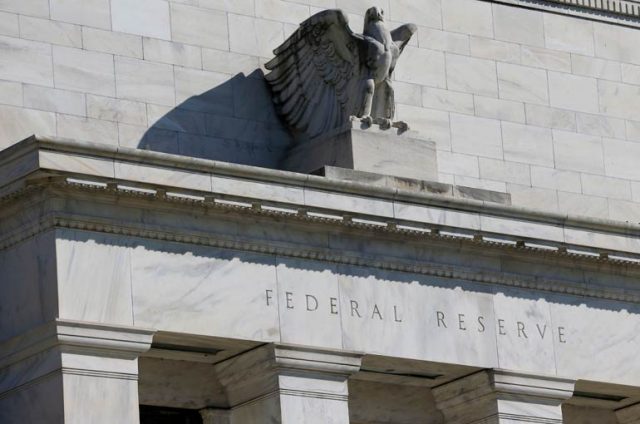
With just six days to go before Federal Reserve policymakers sit down in Washington, exactly what decision they’ll make on interest rates now and in coming months has become pretty much anyone’s guess, and investors and Wall Street economists are doing just that.

Over the past year, Fed leadership has gone out of its way to signal its intentions on interest rate hikes aimed at quashing hot inflation, relying on a steady stream of economic data inputs to guide its actions.

But now Fed Chair Jerome Powell and his colleagues find themselves needing to respond in real time to turmoil in the banking system after the collapse of two large regional US banks and Swiss regulators having to pledge assistance to Credit Suisse, developments that are reshaping domestic and international financial conditions on a daily – or even hourly – basis.

In one of the most vivid – and relevant – examples, on Monday the yield on the 2-year Treasury note US2YT=RR, among the top traded securities in the world that also stands as a proxy for Fed policy expectations, plummeted by more than half a percentage point, the most since the day after Black Monday in October 1987. It then recovered roughly half that on Tuesday only to drop by another third of a point on Wednesday.

And it is all unfolding during the central bank’s premeeting blackout period that prevents officials from offering public clarity on their assessment of the situation, and its effect on monetary policy decisions

It was only last week that Mr. Powell signaled the central bank might accelerate its interest-rate-hike campaign in the face of persistent inflation. Traders moved to price in a half-point hike in the benchmark interest rate at the Fed’s March 21-22 meeting, from its current 4.5%-4.75% range, and further rate hikes beyond.

Traders now see next week as a tossup between a smaller quarter-point hike and a pause, with rate cuts seen likely in following months as the turbulence at Credit Suisse renewed fears of a banking crisis that could cripple the US economy.

Analysts also sought to make sense of fast-moving events, including Friday’s failure of Silicon Valley Bank, the creation over the weekend of an emergency Fed backstop for the banking sector, fresh data showing slow progress in the inflation fight, and a renewed banking stock swoon on Wednesday.

“I think they do indeed hike 25 bps next week,” said Jefferies’ Thomas Simmons. “They need to keep up the fight on inflation to maintain credibility, and a pause here at these levels isn’t going to stop the bleeding in the markets.”

A pause, he argued, risks undoing the work of the Fed’s 4.5 percentage points of rate hikes since last March.

“They’d also risk sending a signal to the market that the macroeconomic impact of these microeconomic phenomena is worse than we think,” he said.

Former Boston Fed President Eric Rosengren took the opposite view.

“Financial crises create demand destruction,” Mr. Rosengren said on Twitter. “Banks reduce credit availability, consumers hold off large purchases, businesses defer spending. Interest rates should pause until the degree of demand destruction can be evaluated.”

WILD SWINGS

At heart, the uncertainty over the Fed’s next move comes down to difficulty knowing how swiftly and deeply the current turmoil in the banking sector will filter through to the real economy.

After all, the Fed’s rate hikes are designed to slow the economy, and for months some policymaker have expressed puzzlement over why after such aggressive policy tightening there was so little of that to see beyond the sharply-hit housing sector.

After the bank failures in recent days, “We’re getting a better sense of who’s suffered due to the Fed’s aggressive tightening,” JPMorgan’s Michael Feroli wrote. Slower growth in lending by mid-size banks will sheer off a half to a percentage point of economic growth overall, he predicted, “broadly consistent” with the view that higher interest rates will trigger a US recession that will in turn slow inflation.

But the Fed’s work in Feroli’s view is not yet done.

A key inflation report earlier this week showed a 6% rise in the consumer price index last month from a year earlier.

“A pause now would send the wrong signal about the seriousness of the Fed’s inflation resolve,” Feroli said.

The Fed next week will publish new projections for the future path of the U.S. benchmark rate. In December policymakers had seen it topping out at 5.1%, and as recently as last week traders expected it to rise above 5.5%.

Now, they are looking for one more Fed rate hike if that, and then a string of reductions to bring the target range down below 4% by year end.

“The Fed has a very difficult policy decision to make at next week’s meeting,” said Paul Ashworth, chief North America economist at Capital Economics, which for now still leans towards the Fed raising interest rates by a quarter percentage point. “It is a very close call… the risk of a full-blown contagion remains, and a lot can happen in the week until the announcement.” — Reuters