Home Blog Page 5071

Marcos calls for flexibility in devolving functions to LGUs

OPS/ROBERTSON NINAL

PRESIDENT Ferdinand R. Marcos, Jr. called on Wednesday for a review of a 2021 executive order (EO) farming out National Government (NG) functions to local government units (LGUs), saying his government will not be bound by a timetable that proposes to complete the transfers by 2024.

“We have to re-examine Executive Order 138 of President (Rodrigo R.) Duterte. We are looking at it… to make it fair,” he told reporters on the sidelines of a Philippine Army event, noting that some poorer municipalities are not capable to taking over NG functions that require project planning and expertise.

Citing a Tuesday meeting with local officials as well as Cabinet secretaries, Mr. Marcos said the participants decided against a one-size-fits-all approach to the devolution program.

He said poorer municipalities would be at a disadvantage because of their low absorptive capacity for taking on NG functions.

LGUs are classified as highly-urbanized cities and provinces on the high end of the revenue-generating scale, and 5th and 6th class municipalities on the low end.

The President said that for the moment, functions that “require planning on a national scale” should be left to the NG.

He said the administration is also looking to pass a law seeking to revamp the LGU classification system. 

Last year, the House Committee on Local Government, then chaired by former Valenzuela Rep. and now Social Welfare Secretary Rexlon T. Gatchalian, approved a bill governing the income classifications of provinces, cities and municipalities.

At the time, Mr. Gatchalian proposed that reclassification takes place every two years to “accurately capture the economic activities in the LGUs.”

Mr. Marcos on Tuesday ordered government agencies to study EO 138 for possible amendment, and to determine what NG functions should be devolved to LGUs in a manner that complies with a 2018 Supreme Court ruling.

The Mandanas ruling had awarded LGUs a larger share of NG revenue. In response, the Duterte administration sought to shed NG functions commensurate with the LGUs’ newfound spending power.

The EO had given LGUs until 2024 to fully assume some NG functions.

The mechanism in the Mandanas ruling for expanding LGU revenue was the Supreme Court’s interpretation of the Local Government Code (Republic Act 7160), which had originally granted LGUs a 40% share of NG “internal revenue” in an annual payment then known as the “Internal Revenue Allotment (IRA).”

Over the years, the NG had interpreted this clause to mean 40% of Bureau of Internal Revenue (BIR) collections, and paid out the IRA accordingly, based on BIR collections from three years prior.

The Supreme Court declared this interpretation unconstitutional, ordered that annual payment to LGUs be based on 40% of all national taxes, changed the name of the IRA to the National Tax Allocation, and amended the Local Government Code accordingly.

Mr. Marcos also described EO No. 138, which grants more responsibility and autonomy to LGUs, as no substitute for the Charter change measures being considered by Congress.

“The Charter change efforts are directed at the economic provisions of the Constitution, as far as I understand. And so that’s what that is about,” he said.

“And the reason given by the proponents in the House and those in the Senate is that they need to be changed because the conditions have changed,” he added. “And for us to take full advantage of the new economy, we have to amend the Constitution. So that’s not the same thing.” — Kyle Aristophere T. Atienza
Geothermal, hydro, wind sites on offer in 4th auction round

THE Department of Energy (DoE) said it has selected 19 sites to be offered this year for the fourth round of the open and competitive selection process (OCSP-4).

Energy Undersecretary Rowena Cristina L. Guevara said at an energy forum that some of these sites will be suitable for geothermal, hydropower, and wind projects.

“We will host a public consultation on OCSP-4, publish the Department Circular in May, undertake the bidding process from June to August and have the contracts awarded in September,” Ms. Guevara said during the Philippine Electric Power Industry Forum 2023.

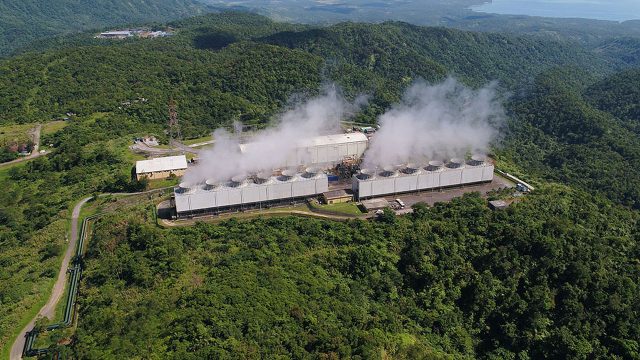
For geothermal, the DoE has identified three sites with potential capacity of about 160 megawatts (MW).

The first site, with potential output of 100 MW, straddles the municipalities of Buguias, Benguet and Tinoc, Ifugao. A second site with potential output of 40 MW is in Mabini, Batangas. The third site with potential output of 20 MW straddles Pililla and Jala-Jala, Rizal, and Pangil and Pakil, Laguna.

For hydropower, the DoE has identified 13 predetermined areas at 86.25 MW. It identified three sites for wind but it did not disclose the target potential capacity.

The proposed hydropower sites are in Tinoc, Ifugao (5 MW); Alilem, Ilocos Sur (16.2 MW); San Remigio, Antique (4.2 MW); Libacao, Aklan (15 MW); Badian, Cebu (0.5 MW); two sites in Malaybalay, Bukidnon (4.5 and 5.65 MW); Dingalan, Aurora (1.0 MW); Surigao del Sur (16.3 MW); Digos City, Davao del Sur (4.0 MW); Manabo, Abra (7 MW); Naujan, Oriental, Mindoro (3.3 MW); and Calamba, Misamis Occidental (3.6 MW).

The proposed wind sites are in San Jose City, Nueva Ecija; Pantabangan, Nueva, Ecija; and Bagac, Bataan.

Separately, Ms. Guevara said that to date, the Department of Energy has awarded a total of 57 offshore wind energy service contracts with potential capacity of 42.22 gigawatts.

The DoE is projecting 11,160 MW worth of renewable energy available in the next few years through its green energy auction program. — Ashley Erika O. Jose

Oil spill clouds prospects of resorts, marine parks along Verde Island Passage

PHILIPPINE COAST GUARD FACEBOOK PAGE

By Brontë H. Lacsamana, Reporter

RESORTS and marine parks along the Verde Island Passage, an area of rich biodiversity between Luzon and Mindoro, could see the long-term damage from the oil spill to their southeast, marine experts said.

The oil spill, caused by the loss of the tanker Princess Empress in February off Naujan, Oriental Mindoro, has reached Verde Island, which is to the northwest of the tanker’s underwater resting place.

The 1.4-million hectare strait between Batangas and Mindoro has been placed under continuous watch by the Philippine Coast Guard (PCG), according to Mary dela Cruz, manager of the Surface Interval Resort in San Agapito, which in the southeast of Verde Island.

“So far we’re not affected by the oil spill but the PCG has been roaming the area every day,” she told BusinessWorld. “If the waves aren’t big, people can still swim.”

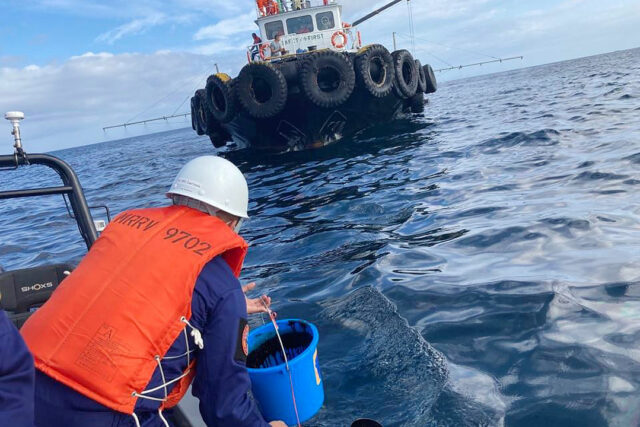
The three barangays being monitored in Verde Island are San Antonio, San Agustin, and San Agapito, after traces of the spill were found there early Monday, according to PCG spokesperson Armand Balilo. The cleanup effort removed 230 liters of oil-contaminated material on the beaches of the three barangays that day.

The oil spill response team put up booms in those waters, with the spill reported to be receding as of late Monday, according to aerial surveillance reports.

On Tuesday, the authorities located the tanker using a remotely operated vehicle from Japan. It captured underwater images at nearly 400 meters’ depth off Balingawan Point, Naujan.

The vessel was reported to be carrying 800,000 liters of industrial oil to Iloilo.

“We’ve had 10 major oil spills since early 2000s but still, as you can see, there’s not enough infrastructure. We should have a national oil spill response but even LGUs are left in the dark on how to deal with oil spills,” Oceana Philippines senior campaign manager Daniel Ocampo told One News PH on Tuesday.

He cited the need to shield the area’s marine protected areas from the effects of the spill.

He added that the four-month cleanup period estimated by the President may not be enough to stem the long-term effects of the spill on livelihoods, displaced communities, and marine life.

The University of the Philippines Marine Science Institute (MSI) warned in a forum on Sunday that the Verde Island Passage, Puerto Galera, and coastal towns in Batangas may be affected by the spill depending on the direction of the winds.

“The Amihan winds, which confined most of the oil to the coasts of Naujan and (the neighboring town of) Pola in previous weeks, are now more variable, allowing the oil to spread northwards,” according to an advisory issued by the MSI.

If the oil seeping from the hull of the vessel is not contained before Amihan season ends, the MSI said, more critical biodiversity areas along the passage may be affected.

The Amihan is a northeast wind that runs until May or June. It gives way to the Habagat or southwest monsoon.

UPS projects PHL trade with Asia tripling to $393B by 2030

REUTERS

PHILIPPINE TRADE with the rest of Asia is expected to triple by 2030 to $393 billion, logistics company UPS Philippines said.

Citing the results of a company study, UPS said expanded Philippine trade with 11 other Asian countries that it services will be driven by efforts to develop more domestic manufacturing.

“There are also significant opportunities for Filipino businesses in areas such as digitalization, building supply chain resilience and multilateral cooperation in international trade,” UPS said.

UPS said that retail, industrial manufacturing and automotive (IM&A), tech, and healthcare accounted for 75% of the Philippine’s intra-Asia trade in 2020, and is assuming the same segments will fuel growth until 2030.

In its study, UPS said that the IM&A segment will be the largest in value in 2030 as the country aims to be a global and a regional hub for automotive and electronics sectors.

It said tech could more than double in value by 2030, driven by significant demand for digitalization across Asia.

“Philippine-based businesses can plan for both headwinds and opportunities by diversifying supply chains into resilient trade routes and targeting high-value and high-growth trade routes, such as IM&A, healthcare, and retail trade with economies like Japan, as well in the high-tech segment with Hong Kong and Vietnam,” UPS said. 

UPS said, however, that despite the positive outlook, barriers remain that could dampen trade growth within the 12 Asian countries.

“Filipino businesses surveyed indicated tariffs and other punitive measures as the top barrier, followed by shortages of labor and skills in the logistics industry, and lack of harmonization of standards,” UPS said.

It added that the Philippine logistics network needs to digitalize as it still relies on costly and time-consuming paper-based processes.

“While the COVID-19 (coronavirus disease 2019) pandemic has accelerated adoption of digital technologies within the Philippines, adoption of digital payments and digital supply chain tools have fallen behind,” it said. — Justine Irish D. Tabile

ERC asked to review VAT treatment of system losses

A LEGISLATOR representing power cooperatives asked the Energy Regulatory Commission (ERC) on Wednesday to review its value-added tax (VAT) policy governing system losses, disputing this item’s classification as a good or service subject to VAT.

At a House ways and means committee hearing, Association of Philippine Electric Cooperatives Party-list Representative Sergio C. Dagooc questioned the VAT on the two charges.

According to a breakdown of distribution charges presented by the ERC, the system loss charge rate is P0.4509.

System loss refers to the difference between the energy delivered to the distribution system and the energy delivered to end-users and other entities connected to the system.

“How will it fall under the definition of services and goods? Are losses considered goods and services? It (is) considered a loss, why is a VAT still imposed?” Mr. Dagooc said.

Leila O. Cilio, ERC chief energy regulation officer with the agency’s Investigation and Enforcement Division for Generation Companies, told the panel that system loss charges qualify for VAT because they form part of gross receipts.

Mr. Dagooc also questioned whether consumers should subsidize “lifeline rates” charged to marginalized power consumers.

Manila Electric Co. Vice-President and Head of Utility Economics Lawrence S. Fernandez told the committee that power users who consume 20 kilowatt-hours (kWh) or less receive a 100% discount on their electricity rates.

Under the Implementing Rules and Regulations of Republic Act No. 11552 or “An Act Extending and Enhancing the Implementation of the Lifeline Rate, Amending for the Purpose Section 73 of Republic Act No. 9136 (Electric Power Industry Reform Act of 2021),” poor Filipino families or those who consume less than 100 kWh qualify for such aid on their monthly electricity bill.

Ms. Cilio said “non-lifeliners,” or those who consume 101 kWh or more, subsidize the lifeline. VAT is also imposed on lifeline rates.

“I should be the government who will subsidize that,” Mr. Dagooc said. “(We are already) soliciting from consumers, but we still apply VAT on their subsidy.”

Energy Undersecretary Sharon S. Garin told the committee, “We want the electricity cost to be lower, but we do not want the revenue impact to cripple government services.” — Beatriz Marie D. Cruz

House resolves to extend travel tax exemption for EAGA-bound travelers

THE House of Representatives passed a resolution to renew a travel tax exemption for passengers departing from Mindanao and Palawan headed for any destination within the special economic group encompassing Brunei Darussalam and parts of Indonesia, Malaysia, and the Philippines.

Lawmakers late Tuesday adopted House Resolution No. 454, which seeks to extend by five years the tax exemption that is set to expire in May.

The government collects travel tax, ranging from P400 to P2,700, from Filipinos and resident aliens for foreign travel, except overseas workers, Filipino permanent residents overseas, and children below two years old.

The travel tax exemption will promote tourism and trade activity in Mindanao and Palawan, the parts of the Philippines which lie within the BIMP-EAGA sub-region, according to the resolution.

The exemption has also “produced economic benefits in terms of increased business activities, remarkable growth in tourism development, additional and sea services in the transportation sector, and heightened sociocultural ties among people in the growth area,” Association of Southeast Asian Nations (ASEAN) Growth Area special committee and Sultan Kudarat Rep. Princess Rihan M. Sakularan said in the resolution.

In 2018, former President Rodrigo R. Duterte issued Memorandum Order No. 23 granting the tax exemption. 

BIMP-EAGA — or the Brunei Darussalam, Indonesia, Malaysia, Philippines-East ASEAN Growth Area — includes Brunei; the provinces of Kalimantan, Sulawesi, Maluku, and West Papua, Indonesia; the states of Sabah and Sarawak and the federal territory of Labuan, Malaysia; as well as Mindanao and Palawan. — Beatriz Marie D. Cruz

Gov’t urged to stockpile food in event of Taiwan-related logistics disruptions

REUTERS

THE Philippine Chamber of Agriculture and Food, Inc. (PCAFI) on Wednesday urged the government to stockpile food in the event of supply chain disruptions if China ever makes good on its long-running threat to invade Taiwan.

PCAFI President Danilo V. Fausto said the resulting embargoes or blockades are likely to disrupt commercial shipping and in turn the delivery of agricultural goods.

“What we are expecting here is a commercial shipping blockade or possible trade embargo, he said, noting that the US may retaliate by intercepting shipping at the Strait of Malacca, through which much China’s trade passes,” Mr. Fausto said in a forum.

“We have to expect the worst and be self-sufficient,” he said.

Mr. Fausto called on the government to subsidize farm inputs while maintaining reserves of grain and other staples.

“At the moment, because this is immediate, we are recommending that those vacant warehouses at (National Food Authority) compounds all over the country, be utilized for buffer stocking,” he said.

Meanwhile, Alberto D. Lina, founding chairman of logistics company Air21 and former customs commissioner, said the gaps in the food supply chain include cold storage faculties, silos, driers, and mills.

Addressing these gaps will involve the creation of cooperatives to consolidate farmers’ purchasing power, marketing, and distribution capacity, he said.

Mr. Fausto said a Taiwan crisis is only “a matter of time.”

“The Philippines will have to be prepared. We have to prepare our people for possible shortages of food; therefore, we have to increase productivity and (build up) buffers for food security,” he added. — Sheldeen Joy Talavera

Durian growers see top-5 export potential for their crop

BW FILE PHOTO

DURIAN has the potential to become a top-five food export for the Philippines, growers said, as the industry undertakes preparations to supply the China trade.

Emmanuel Belviz, president of the Durian Industry Association of Davao City, said that the group is working with the Department of Agriculture (DA) in laying the groundwork for the China export trade, including the preparation of documents and safety protocols.

“I think the Philippines has huge potential in the export market, especially with our Puyat and Duyaya varieties,” he said.

He added that durian could be “one of the country’s top export products in the next five years.”

The Philippines and China sealed an agreement for the export to the mainland of at least 54,000 metric tons of fresh durian, according to the DA.

Mr. Belviz said that the DA should provide more training for farmers to learn how to produce globally competitive durian fruit.

“We need to produce better durian fruit and (improve) food safety, as there are many certifications needed. I hope the association, together with the DA, can help farmers reach that market,” he said.

John Tan, chief executive officer of Eng Seng Food Products, said his company has a target to export 300-500 container vans of durian of the Puyat, Duyaya, and D101 varieties.

According to the DA, its regional field office in Davao is working on a five-year development plan aiming to strengthen technical support, provide inputs such as fertilizer, pesticide, and post-harvest facilities.

Federation of Free Farmers National Manager Raul Q. Montemayor said much needs to be done to improve the durian industry’s competitiveness.

“A lot of things have to be done from production to marketing. We also face competition from Thailand, Vietnam, maybe Indonesia and Malaysia, too. Can we compete? They are ahead of us,” he told BusinessWorld in a Viber message.

He said the Philippines needs to study the long-term prospects for the durian market and prepare for adverse conditions like a possible glut.

The current annual harvest volume of durian is about 75,000 tons, suggesting that the export target could take more than two-thirds of the crop out of the domestic market, he said.

According to Mr. Montemayor, the farmgate price of durian in Davao was P60 per kilo. It retails for about P90 per kilo.

He warned of scenarios like more expensive durian or the reservation of the best-quality durian for the China market.

The farmgate price is expected to fall to P20-P25 per kilo at the peak of the harvest season starting July. — Sheldeen Joy Talavera

Plastics industry seeks review to correct tariff ‘distortions’

PHILSTAR FILE PHOTO

THE plastics industry said it wants a review to correct tariff “distortions” which render it uncompetitive against foreign-made finished products, which pay zero tariffs.

Aaron Timothy Lao, Philippine Plastic Industry Association, Inc. (PPIA) president, said during a Tariff Commission (TC) virtual hearing on Wednesday that the distortions are hindering domestic manufacturers of plastics, preventing them from engaging in local manufacturing because of the tariffs on their imported raw materials.

The PPIA represents small- and medium-sized plastics and plastic product manufacturers.

“We have always encountered the tariff distortion because finished products… are imported at zero duty,” he said, noting that imported raw materials pay 10% duty, Mr. Lao said.

“The industry is suffering (and prevented from) creating jobs and paying taxes to the government,” he added.

Correcting the distortion could serve as a first step in making the industry export-ready, Mr. Lao said.

The hearing on Wednesday is the second of the five to be conducted by the TC in the course of the comprehensive tariff review program (CTRP) for the most-favored nation (MFN) tariff schedule between 2024 and 2028, in compliance with Republic Act No. 10863, or the Customs Modernization and Tariff Act.

The second hearing covers the tariffs on chemicals and chemical products.

Association of Petrochemical Manufacturers of the Philippines Executive Director Homer Maranan also urged the TC to act on the multiple tariff lines for linear low-density polyethylene (LLDPE) imports.

“Because of the multiple lines, there are lines (charged) 10%, other lines 3%. We believe that this presents a loophole where imports can avail of the lower tariff rate, although they are technically the same products as the LLDPE imported at 10%,” Mr. Maranan said.

The TC said it plans to merge some tariff lines for chemicals and chemical products to simplify the nomenclature and facilitate customs implementation.

The next hearing of the TC is on March 24 covering textile, paper, and leather products.

The CTRP is conducted every five years to adjust the MFN tariff schedule. — Revin Mikhael D. Ochave

ELSE you are not forgotten

Less than a week after the mass “transfer” of Information Technology-business process management firms from the Philippine Economic Zone Authority (PEZA) to the Board of Investments (BoI), following the expiry of the application period on Jan. 31), the BoI and the Bureau of Internal Revenue (BIR) issued circulars to clarify that Ecozone Logistics Service Enterprises (ELSEs) are to be included in the new Strategic Investment Priority Plan (SIPP) but may also be classified as Export Enterprises. This turn of events was brought about by the diligent efforts of PEZA to actively lobby for the industry’s inclusion with the BoI and Fiscal Incentives Review Board (FIRB).

WHAT DO ELSEs DO EXACTLY?
As defined under Revenue Memorandum Circular (RMC) No. 24-2023, an ELSE is a registered business enterprise supplying production-related raw materials and equipment catering exclusively to the requirements of ecozone locators. They provide critical support particularly to export manufacturing companies with their requirements for logistics to facilitate their import and export shipments, sourcing of raw materials, inventory management, just-in-time delivery, localization and process customization.

Prior to the effectivity of the Corporate Recovery and Tax Incentives for Enterprises (CREATE) Act, Ecozones and Freeport zones were, by legal fiction regarded as foreign territory. Thus, following the “cross-border doctrine,” the sale of goods and services by a VAT-registered seller to registered enterprises in these ecozones and freeports were treated as constructive exports subject to zero-percent VAT.

With the passage of CREATE, the VAT exemption on imports and VAT zero rating on local purchases were limited to only: (1) those goods and services directly attributable to and exclusively used in the registered activity of the enterprise; and (2) those goods and services sold to entities that are registered “export enterprises.”

As defined under the Implementing Rules and Regulations of CREATE, an export enterprise refers to any individual, partnership, corporation, Philippine branch of a foreign corporation, or other entity organized and existing under Philippine laws, and registered with an incentive promotion agency to engage in manufacturing, assembling or processing activity, and services such as information technology (IT) and business process outsourcing (BPO), and resulting in the direct export and/or sale of its manufactured, assembled or processed product or IT/BPO services to another registered export enterprise that will form part of the final export product or export service of the latter, of at least 70% of its total production or output.

From the definition, there is nothing which would indicate that ELSEs may also be classified as export enterprises. Thus, although the majority of services rendered by ELSE are provided to export enterprises, they are unable to avail of the VAT zero rating incentive on their local purchases of goods and services. This would have a big impact not only in terms of their cash flow (input VAT on purchases) but also may increase the price of their services. They may also suffer the burden of the administrative costs of filing for an eventual VAT refund with the tax authorities since services rendered by ELSEs to PEZA operators will likewise be VAT zero-rated.

BOI: ‘WE HEARD YOU!’
Given the relentless efforts of PEZA to file position papers with the BoI and the FIRB, the BoI issued Memorandum Circular No. 2023-001 to clarify that Logistics services (warehousing, inventory management and transport of goods except mere trucking and forwarding services) indeed qualify as “activities in support of exporters” under the 2022 SIPP, and thus, are entitled to the VAT zero rating incentive.

In line with the BoI Memorandum Circular, the BIR also issued RMC No. 24-2023 to provide further guidance on the eligibility of ELSEs to utilize the VAT zero rating incentive. For easy reference, I have enumerated some of the key points as follows:

1. To qualify as an export enterprise, at least 70% of the ELSE’s output/services should be provided to another registered export enterprise.

2. Qualified ELSEs should be undertaking both of the following:

a. Establishment of a warehouse storage facility; and

b. Importation or procurement from local sources and/or from other registered enterprises of goods for resale, or for packing/covering (including marking, labeling), cutting or altering to customers’ specifications, mounting and/or packaging into kits or marketable lots thereof for subsequent sale, transfer or disposition for export.

3. Same rules on documentation as enumerated under Q&A No. 32 to 37 of RMC 24-2022 shall be required to avail of the VAT zero rating incentive. Meanwhile, processing of applications for VAT zero-rating are still to be governed by Revenue Memorandum Order No. 7-2006 and any subsequent amendments.

Upon comparison with the BoI Memorandum Circular, however, one would note that the BoI did not require ELSEs to engage in both activities at the same time. The BoI anchored its definition on PEZA Board Resolution No. 97-366, which allows ELSEs to conduct either of the above activities or a combination of both. Hopefully the BIR will issue a clarification to resolve the apparent misalignment.

With the classification of ELSEs as export enterprises by virtue of carrying out “activities in support of exporters” under the 2022 SIPP, I also wonder if the same treatment can be extended to other ecozone locators in similar situations, such as ecozone developers, utilities and environmental management facilities which were still not included in the SIPP. Hopefully both the BoI and BIR would also issue a similar clarification for these entities soon since they also provide critical support to direct exporters, and their classification, similar to ELSEs, will have a significant impact on their operations.

Nevertheless, considering the various changes in tax rules/guidelines brought on by new tax laws (e.g., TRAIN, CREATE) and new initiatives (e.g., digitalization), I am ecstatic that our regulators were able to provide clarity on this issue. This development, at the very least, is proof that every industry, not only the major ones, will be heard and not merely “forgotten” until the clamor eventually dies down.

The views or opinions expressed in this article are solely those of the author and do not necessarily represent those of Isla Lipana & Co. The content is for general information purposes only, and should not be used as a substitute for specific advice.


Steven Lloyd Co is a manager at the Tax Services department of Isla Lipana & Co., the Philippine member firm of the PwC network.

+63 (2) 8845-2728

steven.lloyd.co@pwc.com

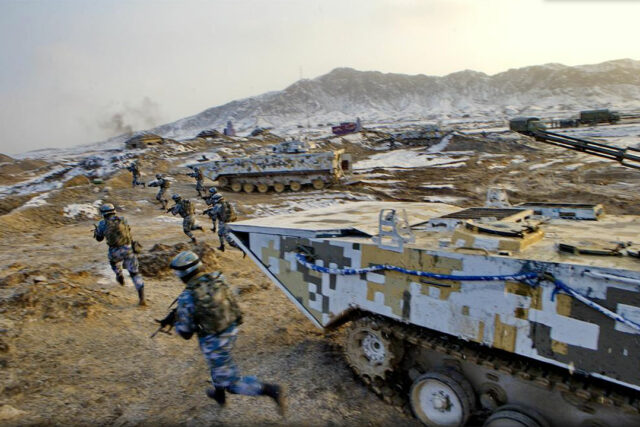
Marcos tells army to prepare for contingencies as last defense line

PCO

By Kyle Aristophere T. Atienza, Reporter

PRESIDENT Ferdinand R. Marcos, Jr. on Wednesday asked the Philippine Army to boost relations with its foreign counterparts, highlighting the importance of international ties amid common security challenges.

External security threats to the Philippine have become more complex and unpredictable, the president said at the army’s 126th anniversary celebration.

“Continue to improve your relations with your counterparts overseas,” he told the troops. “Common security challenges necessitate a more concerted approach among like-minded nations.”

“Share information, learn from the best practices in the region to make our military better,” he added. 

His remarks come amid increasing Chinese assertiveness in Philippine-claimed areas in the South China Sea.

Local foreign policy think tanks and experts have been urging the Philippine government to partner with as many countries as possible to deter China’s expansive activities at sea.

In February, the Philippines gave the United States access to four more military bases under their 2014 Enhanced Defense Cooperation Agreement (EDCA) — a move that has angered Beijing.

Lawmakers critical of Washington have also questioned the real intent of the EDCA expansion, fearing that the Philippines would be used as a staging ground for US military activities in the region.

Aside from the South China Sea dispute, the Indo-Pacific region has also been beset by tensions between China and the US over self-ruled Taiwan.

“To the army leadership, I am aware that the emerging threat to our territory and our emphasis on addressing this threat requires adjustments in our strategies,” Mr. Marcos said. “But I am confident that the Philippine Army, which has more than a century of experience, will be able to rise up to the task as it has always done.”

The Philippine leader said the army should always be fully prepared for any contingencies, “especially considering you are the country’s last line of defense against any external security threat.” “Be vigilant against elements that will undermine our hard-earned peace, our hard-earned stability,” he added.

“Working with like-minded states will ensure the country’s territorial integrity and national sovereignty, while also contributing to a rules-based international order,” Victor Andres C. Manhit, president of think tank Stratbase ADR, said in a Facebook Messenger chat.

“As we continue to pursue cooperation, we must always remain guided by our national interests, which include protecting our maritime rights, territorial integrity and the Filipino people,” he added.

‘DROP IN THE BUCKET’
Meanwhile, Mr. Marcos told reporters on the sidelines of the army event the four new EDCA sites would be scattered around the country.

“There are some in the north, there are some around Palawan, there are some further south,” he said. “There are various locations.”

The government would announce the specific locations soon, he said.

A former military official said last year the US had sought access to bases on the northern land mass of Luzon, the closest part of the Philippines to Taiwan, and on the island of Palawan, facing the disputed Spratlys Islands in the South China Sea.

Some foreign policy experts have urged the Marcos government to seek bigger compensation from the US for the risks that the EDCA expansion entails.

“Washington can provide and marshal investments from allies and partners such as Taiwan, Japan, Korea, Australia and Europe to compensate Philippine provinces hosting EDCA and offset possible losses from Chinese investments,” Lucio Blanco Pitlo III, a research fellow at the Asia-Pacific Pathways to Progress Foundation, told BusinessWorld.

He said the possibility of the Philippines getting dragged into the China-Taiwan conflict due to the EDCA expansion is a “serious risk that Manila has to bear in mind.”

While it might not alleviate the risk, a bigger reward from the US could lighten the opposition to EDCA especially from frontline provinces, the analyst said, citing concerns of some local officials who fear that the EDCA expansion might drive away Chinese investments.

Other countries where the US is trying to renew military access like the central Pacific island states of Palau, Marshall Islands and Federated States of Micronesia are “negotiating hard,” according to Mr. Pitlo.

He cited the case of Marshall Islands, which hosts the Ronald Reagan Ballistic Missile Defense Test Site at the US Army Garrison-Kwajalein Atoll and is rumored to get about $4 billion for the 20-year extension of its Compact of Free Association Agreement with the US.

So far, what is being reported on EDCA is an $82-million outlay for the existing five original locations — a drop in the bucket compared with what tiny Pacific atoll nations will be getting, he added.

Senator backs proposal to strip Pagcor of role as state casino operator

PHILSTAR FILE PHOTO

THE HEAD of the Senate committee on public services on Wednesday backed a proposal to strip the Philippine Amusement and Gaming Corp. (Pagcor) of its role as an operator of state-owned casinos and making it function as a regulator.

“It’s high time for Pagcor to break up its dual role as operator and regulator of the gaming sector,”  Senator Mary Grace Poe-Llamanzares said in a statement.

“Pagcor can train its sights to guarantee a level playing field among industry players, prevent illegal activities and ensure the people’s welfare is protected from potential social harm,” she added.

Pagcor Chairman and Chief Executive Officer Alejandro H. Tengco on Tuesday said they were seriously considering to focus solely on regulating gaming operations, citing a plan to create a regulatory framework for online poker and enhancing slot machine operations.

The agency is also looking at destroying outdated gaming merchandise and equipment and creating and updating regulatory manuals.

It is also tying up with other agencies including the Justice and Interior and Local Government departments, as well as the police and National Bureau of Investigation to better combat illegal gambling.

“While there is no disputing the fact that the government needs revenues, generating and maximizing profits are better left to a separate agency, if not the private sector,” Ms. Poe said.

Pagcor expects to generate about P80 billion ($1.47 billion) from the sale of its 41 casinos.

The Philippines’ gross gaming revenue hit P214.3 billion in 2022, up from P113.1 billion in 2021, according to Pagcor data.  

The proposal seeks to resolve the state company’s conflicting functions that the senator said have resulted in its failure to do due diligence in the operations of Philippine offshore gaming companies and electronic cockfighting.

Lawmakers have sought to ban mostly Chinese gaming companies that operate online casinos, which proliferated during the term of ex-President Rodrigo R. Duterte, saying these have become breeding grounds for illegal activities including kidnapping and money laundering.

Lawmakers have also flagged Pagcor’s failure to regulate them and stem abductions involving mostly Chinese workers in the Philippines. — Alyssa Nicole O. Tan