Home Blog Page 5042

CTA affirms Manulife Data Services’ partial VAT refund 

CTA.JUDICIARY.GOV.PH

THE Court of Tax Appeals (CTA) has affirmed its ruling partially granting Manulife Data Services Inc. P1.31 million in excess value-added tax (VAT) traced to zero-rated sales for the calendar year 2013.  

In a decision dated March 31 and made public on April 3, the CTA full court said the company sufficiently proved that the refunded amount was not applied against any output tax for the quarters after 2013. 

“Although the claimed input VAT was carried over by the firm in its succeeding quarter VAT returns, the same remained unutilized until it was deducted as VAT refund in its quarter return for the first quarter of 2015,” according to the ruling penned by Associate Justice Lanee S. Cui-David.  

The firm initially claimed P60.48 million excess VAT for the year 2013.  

Manulife Data Services is engaged in corporate finance advisory services, training and personnel management. 

Under the countrys tax code, zero-rated sales are transactions made by VAT-registered taxpayers with foreign clients not doing business in the Philippines. These sales do not translate to output tax.  

The court denied the companys motion for reconsideration for a full refund, citing the companys failure to submit a Securities and Exchange Commission (SEC) certificate of non-registration of its client Manufacturers Life Insurance Company (MLIC), which would have proven that it did business outside the Philippines.   

“The said basic documents are necessary because the Philippine SEC’s negative certification establishes that the recipient of the service has no registered business in the Philippines,” it said. 

The petitioner argued that MLIC had filed with the Insurance Commission for the authority to close its Philippine business and withdraw its license in 2013. The CTA disagreed saying it did not submit proof to support the claim.  

“We find that MDSI failed to raise any new or substantial matter persuasive enough to disturb the Court in Division’s findings in the assailed decision and resolution,” the tax tribunal said. John Victor D. Ordonez

Bar 2022 results out on April 14 

PHILIPPINE STAR/RUSSELL PALMA

THE Supreme Court (SC) will release the results of the 2021/2022 bar examinations on April 14. 

In an advisory on Wednesday, Associate Justice and chairperson of the bar exams Alfredo Benjamin S. Caguioa said the results will also include examinees with the 30 highest total averages and the top five law schools with the highest percentage of bar passers.  

He said bar passers should wait for more announcements on getting clearance for the oath-taking and roll-signing on May 2. 

In the 202/21 exams, 8,241 takers passed, representing a 72.8% passing rate.  

The 2020/21 bar was the first to be administered digitally and with multiple testing sites.  

For this year, the tribunal has raised the bar admission fee to P5,000 from P3,750 to cover the operating costs of the oath-taking ceremonies for bar passers.  

It scheduled this year’s exams in September, earlier than the usual November to allow for an earlier release of results.  

Associate Justice and 2023 bar exams chairperson Ramon Paul L. Hernando said holding the exams in September would allow passers to seek employment earlier.  

The court had also condensed the coverage of the exams to combine similar topics.  

Chief Justice Alexander G. Gesmundo had said the bar exams would continue the digital format to take full advantage of new technology. John Victor D. Ordonez

Japan plans to fund defense projects of friendly nations such as Philippines 

A person holds Japan’s national flag at the Imperial Palace in Tokyo, Japan, Jan. 2, 2020. — REUTERS

TOKYO — Japan on Wednesday said it plans to offer friendly nations financial assistance to help them bolster their defenses, marking Tokyo’s first unambiguous departure from rules that forbid using international aid for military purposes. 

Japan’s Overseas Security Assistance (OSA) will be operated separately from the Overseas Development Assistance (ODA) program that for decades has funded roads, dams and other civilian infrastructure projects, Chief Cabinet Secretary Hirokazu Matsuno said at a regular news conference. 

“By enhancing their security and deterrence capabilities, OSA aims to deepen our security cooperation with the countries, to create a desirable security environment for Japan,” a statement released by the Ministry of Foreign Affairs on Wednesday said.  

The aid will not be used to buy lethal weapons that recipient countries could use in conflicts with other nations in accordance with the three principles that govern arms exports, according to the statement. 

Specific projects are expected to include satellite communication and radio systems for maritime surveillance, and preparations are underway for the first aid to be finalized within this fiscal year, the foreign ministry said. 

The Philippines and Bangladesh are likely to be included as the first recipients of the aid, a government source involved in talks said to Reuters. 

Japan is considering providing radars to the Philippines to help it monitor Chinese activity in the contested South China Sea, and also weighing Fiji and Malaysia as potential recipients of the aid, the Yomiuri newspaper reported on Monday.  

In principle, only developing countries will be eligible to receive the aid given it will be provided as grants, according to the foreign ministry. 

The decision to expand the scope of international aid to military-related projects follows Japan’s announcement in December of a military buildup that will double defence spending within five years as it looks to counter China’s growing military might in Asia.  

Following on from the overhaul of its military strategy, there is growing momentum over the easing of Japan’s arms export ban. The ruling coalition is looking to start working-level discussions in late April over loosening the current arms export restrictions, according to broadcaster TBS, in line with similar suggestions made in the new strategy. 

Japan has also been ramping up its outreach to developing nations in an effort to counter China. Prime Minister Fumio Kishida announced a $75 billion investment across the Indo-Pacific in March as he seeks to forge stronger ties with countries in South and Southeast Asia. — Reuters

Foodpanda partners with online vendors cooperative to support MSMEs 

ONLINE delivery platform foodpanda Philippines has partnered with the Online Food Vendors Marketing Cooperative (OFVMC) as part of its efforts to boost its assistance for local businesses.   

The company said the collaboration seeks to increase the assistance given to local entrepreneurs by expanding their market and establishing a name in the online marketplace.   

“Even beyond the new normal, there are still plenty of benefits that micro, small, and medium enterprises (MSMEs) can enjoy by getting access to digital platforms, including increased productivity, improved profitability, and reduced operational costs,” foodpanda Philippines Finance Director Leopoldo De Castro, Jr. said in a statement on Tuesday.   

“However, transitioning to digital platforms might be challenging for them. But with the combined assistance between us and OFVMC, they can navigate through this transition,” he added.   

OFVMC aims to help micro and small entrepreneurs in reaching a wider market. The cooperative also provides seminars in business operations.   

“For businesses which are just start-ups, joining the OFVMC will encourage member contribution and shared responsibility, not to mention the opportunity to earn interest in their share capital and expand their network in the industry as businesses,” Mr. De Castro said.   

foodpanda Philippines said the digital transformation of MSMEs is important to boosting economic growth.   

“Several factors can hold them back, which can make them more risk-averse in scaling up and officially start onboarding with an online food delivery digital platform,” Mr. De Castro said.   

“While challenges are ever-present, partnering with us also brings numerous benefits. The fees they pay to be on the platform are commensurate with the benefits they receive, including promotional programs, delivery subsidies, and platform development, which aims to help MSMEs increase their revenue or boost their sales,” he added.   

foodpanda Philippines operates across 150 cities and municipalities in the country. — R.M.D. Ochave 

Public warned versus travel-related scams

Passengers are seen at the Ninoy Aquino International Airport Terminal 3 in Pasay City, June 23, 2022. — PHILIPPINE STAR/KRIZ JOHN ROSALES

THE PUBLIC should remain vigilant against scammers posting on social media websites about discounted travel and staycation offers, according to digital advocacy and cybersecurity groups.

This Holy Week, the Civil Aviation Authority expects two million passengers to fly domestically, with fierce competition for tickets and bookings increasing the number of scammers that seek to exploit individuals and groups looking to travel at affordable rates.

“In all Facebook groups specifically for vacation destinations, we have observed that there is always a report of a scammer victimizing accommodation seekers,” said Digital Pinoys national campaigner Ronald Gustilo in an e-mailed statement.

Scammers usually steal photos from actual resorts and vacation homes and post them as if they own or are connected to these places. Victims are enticed because the stays are offered at very low prices.

Using fake accounts and identification, travelers then trust scammers enough to send a deposit to the given e-wallet account details.

Palo Alto Networks, a global cybersecurity firm, provided a list of common approaches by travel-related scammers:

– The use of malicious domains and URLs that impersonate well-known brands and websites; 

– Phishing emails/SMS/WhatsApp texts tricking users into either downloading malicious attachments or clicking on links that lead to malicious website pages or attachments; and

– “Shadow travel agency” services offering travel-related bookings at discounted prices via social media platforms.

Security awareness training is important so that the public can easily identify fraudulent e-mails and posts, according to Steven Scheurmann, Palo Alto Networks’ regional vice president for ASEAN.

“The travel industry is attractive for scammers as it is a huge source of sensitive and personal data, including stolen usernames, e-mails, and passwords, as well as customer data such as identity, payment, and contact information,” he said in an e-mailed statement.

Both travelers and travel companies must also learn to regularly back up data to defend against ransomware attacks via phishing and enforce multi-factor authentication, added. Mr. Scheurmann.

Digital Pinoys’ Mr. Gustilo emphasized that vacationers stick to legitimate booking platforms, which vet all their listings and provide a higher level of security for their users.

“Transactions with legitimate and reputable online booking platforms are safer and more secured as they employ a stringent vetting process before onboarding accommodations. They also allow visitor reviews and usually have 24/7 live customer support,” he said.

He called on the Department of Tourism (DoT) to investigate and take steps to stop the rise of travel-related scammers, which dent the government’s efforts to market the Philippines as a safe destination.

In March, DoT Secretary Christina G. Frasco said they will protect tourists through “zero tolerance” of scams and colorum tour operators.

“That is an issue that we hope to be able to address as far as the Tourist Assistance Call Center is concerned,” she said at an event.

Due to the need for a centralized platform to hear feedback and common issues from local and foreign tourists, Ms. Frasco previously announced the DoT’s plans to launch a tourist assistance call center.

However, she noted that prosecution has to be strengthened as well: “It always requires initiation of a complaint, and a person willing to lodge a complaint against the person that is a colorum operator.” — Brontë H. Lacsamana

South American chefs celebrate Amazon cooking with worm chili and tree bark 

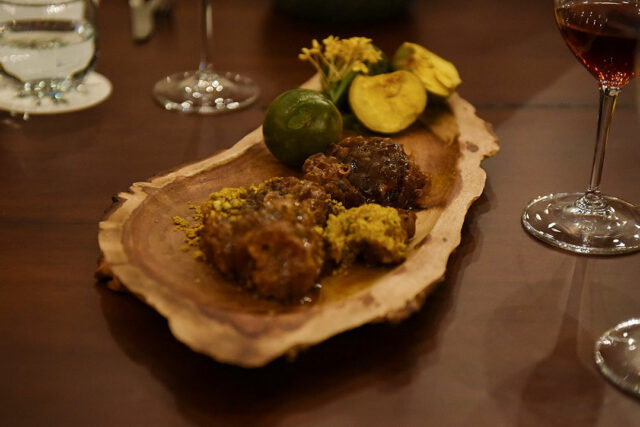
One of the dishes created by Bolivian chef Marsia Taha and Peruvian chef Virgilio Martinez with ingredients from the Amazon, gets served at Gustu restaurant, in La Paz, Bolivia, March 31, 2023. — REUTERS/CLAUDIA MORALES 

In the high altitudes of Bolivia’s La Paz, some of South America’s top chefs are paying homage to regional Amazonian culinary ingredients including gusanillo, or worm chili, tree bark that tastes like garlic, and honey from stingless bees. 

The new collaboration between Bolivian chef Marsia Taha and Peruvian chef Virgilio Martinez is seeking to raise awareness of the region’s incredible – and at times unusual – foods, and the indigenous communities at the forefront of collecting them. 

At Taha’s restaurant Gustu in La Paz, a feast of colors and flavors was carefully spread out on wooden tables decorated with large leaves to celebrate the gastronomic diversity of the Peruvian and Bolivian Amazon. 

“This is not only a celebration of the Amazon and its biodiversity but of our producers as well. They are the ones who make it possible for these products to arrive to our homes or our restaurants,” said Taha. 

Indigenous communities in the countries’ huge areas of tropical rainforest capture feet-long fish, use bows and arrows to hunt, and harvest green and yellow peppers, and maize, transporting the products often hundreds of miles to big cities. 

Martinez said there had been a growing movement to preserve regional culinary products and flavors. 

“Over the last five years, we have seen a strong Latin American culture that wants to preserve its identity, that wants to preserve its ancestral culture,” he told Reuters.  

“As Latin-Americans and South Americans, we have understood that our advantage is that we have the capacity to translate this environment, these products and flavors into something simple. We can bring it to the table with simplicity and grace.” 

The chefs sourced ingredients from almost 200 indigenous communities in the Amazon through Gustu’s project Sabores Silvestres, or Wild Flavors, which has collected information on hundreds of ingredients through 15 years of research.  

“We have worked with close to 200 indigenous communities and over 600 registered products – we have also used them at our restaurant. This brings us great pride,” Taha said. — Reuters

Crypto bros ditched NFTs along with Rolexes 

A NON-FUNGIBLE TOKEN (NFT) is displayed on the website of NFT marketplace OpenSea in this illustration picture taken on Feb. 28, 2022. — REUTERS

By Andrea Felsted, Bloomberg Opinion 

The rich are living in a different economic world. You can see that from all the Dior handbags and Cartier watches they’re buying — but it becomes even clearer when you look at all the art they’re collecting.  

Global art sales rose to $67.8 billion in 2022, according to art economist Clare McAndrew’s latest state-of-the-industry report for Art Basel and UBS Group AG. That marked a 3% increase from 2021, which saw a 31% rebound in sales from the pandemic-induced low point in 2020. 

 As in the global luxury sector, it was the US market that drove the art industry last year. Andy Warhol’s Shot Sage Blue Marilyn, which sold for $195 million in New York in May, became the second most expensive work ever to sell at auction behind Leonardo Da Vinci’s Salvator Mundi, which sold for $450 million in New York in 2017.  

Although the US retained its premier position in the global ranks, it’s notable that the UK also strengthened. The British art market hasn’t quite recovered to pre-pandemic levels, but it is still attracting international buyers post-Brexit. The slump in sterling last autumn didn’t hurt either. 

Across all regions, the most expensive artworks were the strongest sellers, according to McAndrew’s Arts Economics. Pieces selling for more than $10 million were the only segment to increase the value of sales last year. This category includes Georges Seurat’s Les Poseuses, Ensemble (Petite Version), which sold for $149.2 million, and Paul Cezanne’s La Montagne Sainte-Victoire, which fetched $137.8 million. This top-end surge reflects increasing stores of wealth among the very richest collectors. 

In contrast, stalled demand for lower-end works suggests that fear of recession, sky-high inflation and rising interest rates crimped the style of those merely affluent. The market began to cool in the final quarter of 2022. 

What’s happening in art echoes what’s happening in the luxury sector more broadly. 

After soaring stock markets and cryptocurrencies boosted wealth in 2021, more people, particularly in the US, discovered the joys of upmarket shopping. But with the slump in tech stocks and Bitcoin, as well as higher borrowing costs, luxury companies including Britain’s Burberry Group Plc and Gucci-owner Kering SA have noted that some younger, more aspirational buyers, are reining in their extravagant purchases. 

In art, this is glaringly evident when it comes to non-fungible tokens, digital certificates of authenticity that run on blockchain technology. With crypto bros spending their gains on NFTs alongside Audemars Piguet watches, sales of art-related tokens surged to $2.9 billion in in 2021, from $20 million in the year earlier, according to Arts Economics, with data from Nonfungible.com. The boom was best exemplified by Beeple’s “Everydays: the First 5000 Days,” which sold for $69.3 million two years ago. 

After peaking in August 2021, demand for art-related NFTs cooled as the price of Ethereum — the cryptocurrency of choice for trading the tokens — fell. Art-related NFT sales roughly halved in 2022 from the year earlier, though sales of collectibles NFTs have continued to expand. 

Some young people are buying art as much as ever, but a separate report from McAndrew for Art Basel and UBS found that they were high-net-worth individuals, with more than $1 million of assets excluding real estate and private businesses, and they had spent at least $10,000 on art in each of the past three years. So these millennial and Gen Z buyers look a bit different from the crypto bros. 

The question now is: How will the recent banking turmoil affect the art market? In troubled times, art can be seen as a tangible store of value. But stock market volatility and layoffs in the tech sector and beyond can hurt demand. External crises can also deter sellers of valuable works from bringing them to market, another important factor in determining the strength of art sales. 

Either way, with the US cooling, China now holds the key to transforming both art and luxury. 

Arts Economics notes that after the 2008 crisis, a booming market in China was one of the key factors behind the recovery, with sales rebounding in 2010. Already the signs there are promising. Art Basel Hong Kong last month was busy, indicating that there is significant pent-up demand for art. This adds to positive signals from brands including Prada SpA and Moncler SpA that luxury shoppers are back in force too. Analysts at Bernstein even noted that some Chinese fashionistas had begun to travel abroad again. 

For sellers of creations by Balenciaga and Basquiat, Chinese shoppers unleashing another wave of revenge spending can’t come too soon.


L’Oreal buys luxury brand Aesop with eye on China

SAO PAULO/PARIS — France’s L’Oreal has agreed to buy Australian luxury brand Aesop from Natura & Co  for an enterprise value of $2.53 billion, growing its presence in high-end cosmetics with an eye to international expansion, including in China.  

For L’Oreal, which owns labels ranging from Maybelline to Lancome, and has been moving upmarket where consumers are less affected by an economic downturn, the deal is its largest brand acquisition to date, according to Dealogic data.  

It provides Brazil’s Natura, owner of Avon and The Body Shop, with some financial relief from shrinking margins and heavy debt.  

It was L’Oreal that sold The Body Shop to Natura in 2017, and with Aesop’s acquisition the French giant – which has a market capitalization of 223 billion euros ($243.45 billion) – is again the owner of a retail-based beauty and personal-hygiene brand. 

“The acquisition will strengthen L’Oreal’s leadership in the natural cosmetics market,” said Jie Zhang, analyst at Alphavalue, adding that deal-making activity by major groups was moving to the fast-growing beauty industry.  

L’Oreal CEO Nicolas Hieronimus said in a statement the group saw “massive growth potential” in Aesop, notably in China – where the Australian brand made its debut with two stores in the last quarter of 2022 – and travel retail. 

The French cosmetics group is known for buying emerging labels, and scaling them up through its global distribution network, Ian Simpson, analyst with Barclays, said, estimating Aesop will add around 1.2% to L’Oreal’s organic sales this year.  

“Given L’Oreal’s strong track record of creating value from recent acquisitions, we expect this transaction to be helpful to sentiment, despite its limited size relative to L’Oreal,” he said. 

The brand, Natura’s most profitable, operates almost 400 stores and posted sales of $537 million in 2022, up 21% in constant currency from a year earlier.  

It also reported double-digit growth across all its regions last year, and said it had entered the Chinese market – one of the fastest growing for cosmetics – “with strong performance that exceeded expectations”. 

For Natura, the deal is part of a broader organizational shake-up that saw former chief executive and executive chairman Roberto Marques step down last June to make way for Fabio Barbosa.  

Subject to regulatory approvals, the acquisition will be paid in cash, expected in the third quarter of 2023, Natura said.  

Established in 1987, Melbourne-headquartered Aesop offers skin, hair and body care products. — Reuters  

No more rummaging in your bag: London City Airport scraps 100ml liquid rule

LONDON — There will be no more rummaging in the bottom of your bag for a forgotten hand cream or water bottle at London City Airport after it became the first of the capital’s hubs to scrap the 100ml liquid limit rule. 

Thanks to new high tech scanners, travellers going through security at City will be able to carry up to two liters of liquid, will not have to put toiletries in a separate bag and can leave laptops and other electronics in their hand luggage.  

Britain wants the new scanners installed at all airports by June 2024, helping ease security queues as passengers will no longer have to take multiple items out of their bags.  

London City, 10 miles east of central London and mainly serving European destinations, is the busiest British airport to introduce the technology so far, following smaller operator Teesside in north east England earlier this year. 

London City’s Chief Operating Officer Alison FitzGerald said the passenger journey would be much less stressful without the hassle of unloading different items from hand luggage.  

“The new process delivers a much more efficient security operation with enhanced security screening,” she said in a statement on Tuesday.  

Britain introduced the 100ml liquid rule at airports in 2006 when police foiled an attack plot involving liquid explosives at Heathrow. 

A handful of airports in the United States plus Amsterdam’s Schipol hub have already installed the high-tech scanners. Britain’s biggest airport Heathrow has tested them. —  Reuters

Coronation roles for Prince George, Camilla’s grandchildren, says Buckingham Palace 

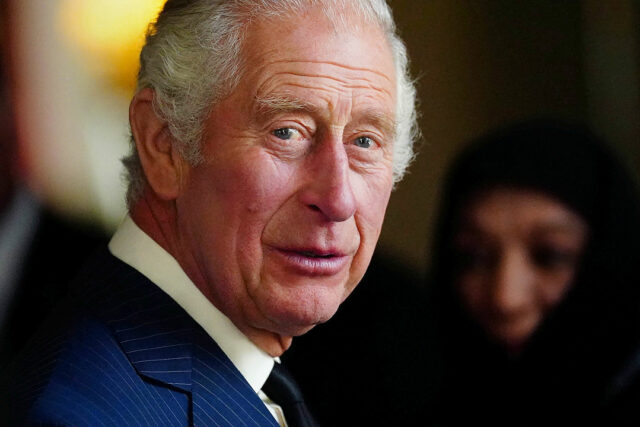
KING CHARLES — REUTERS

LONDON — King Charles’s grandson Prince George and the grandchildren of the Queen Consort Camilla will play major roles in the coronation of the British monarch next month, Buckingham Palace confirmed on Tuesday. 

George, 9, the eldest son of heir to the throne Prince William, will be one of the king’s four pages of honor who will accompany him at the grand ceremony on May 6, and join the procession through the nave of London’s Westminster Abbey. 

Camilla’s four pages will be made up of her grandchildren Freddy Parker Bowles, and Gus and Louis Lopes, as well as her great-nephew Arthur Elliot. 

British newspapers had previously reported that the queen consort wanted her grandchildren to play significant roles, even though their parents are the children from her marriage to her first husband, Andrew Parker Bowles. 

The announcement comes as the Palace also released a new official photograph of Charles and Camilla, and details of the invitation which will be sent out to the more than 2,000 coronation guests. 

The artwork for this, designed by heraldic artist Andrew Jamieson, was handpainted in watercolor and gouache, and features a motif of the Green Man – an ancient figure from British folklore. 

Flowers on the invitation, which will be made from recycled card, will appear in groupings of three – a nod to the king being the third monarch to be called Charles – and it will also feature a lion, a unicorn and a boar, taken from the royal couple’s coats of arms. — Reuters  


Fish be with you

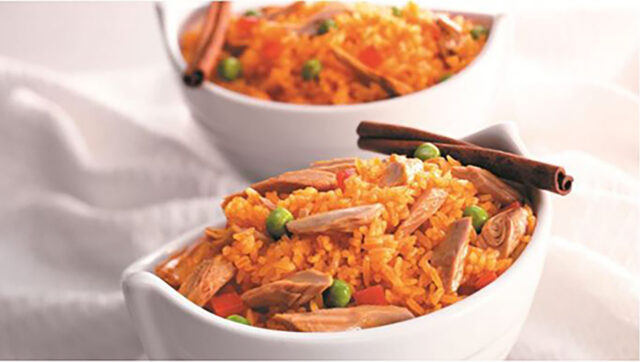
Century Tuna Java Rice

OBSERVANT Catholics abstain from eating meat during Lent as a form of penance, seen as it as an indulgence. These days, the fasting period has been reduced to just during Holy Week (beginning on Palm Sunday); or even just during Good Friday. Here are some fish-based recipes from canned fish giants Century Tuna and Mega Prime Foods that one can easily make during Holy Week (or all-year round, if you happen to like fish).

Century Tuna Java Rice

3 tablespoons atsuete oil*
2 tablespoons chopped onions
1 teaspoon chopped garlic
3 tablespoons diced red bell peppers
3 tablespoons green peas
2 teaspoons hot sauce
2 tablespoons tomato ketchup
1/4 teaspoon ground cinnamon
1-180 grams Century Tuna Flakes in Vegetable Oil, drained
4 cups cooked rice
3/4 teaspoon salt, or according to taste

Procedure:

*To make atsuete oil: Heat 1/4 cup cooking oil in a pan. Add a tablespoon of atsuete seeds and fry for a few seconds until oil turns bright orange in color. Strain seeds and discard. Use the oil for Tuna Java Rice.

Heat the atsuete oil in a non-stick stir frying pan. Sauté the garlic, onions, bell peppers, and green peas. Add hot sauce, ketchup, cinnamon, and tuna. Add rice then stir fry until color is even. Season with salt. Serve hot.

Makes three to four servings.


Century Tuna Hawaiian Burger

Ingredients:

1-184 grams Century Tuna Chunks in Vegetable Oil, drained
1/2 cup finely chopped onions
1 1/2 cups breadcrumbs
3 eggs, lightly beaten
1/2 teaspoon salt
1/4 teaspoon pepper
1/4 cup cooking oil
5 hamburger buns
1/4 cup mayonnaise
1 cup shredded lettuce
4 slices pineapple rings

Procedure:

In a bowl, combine Century Tuna, onions, breadcrumbs and eggs. Mix well until combined, then season with salt and pepper. Form the mixture into round patties. Stack the patties in between sheets of aluminum foil. Let stand in the chiller for 30 minutes. Heat some oil in a grill pan and fry the patties until brown on both sides.

Meanwhile, warm the burger buns in a toaster oven. Spread the mayonnaise on bun then top with the grilled tuna patty, lettuce, and pineapple ring.

Makes five servings.


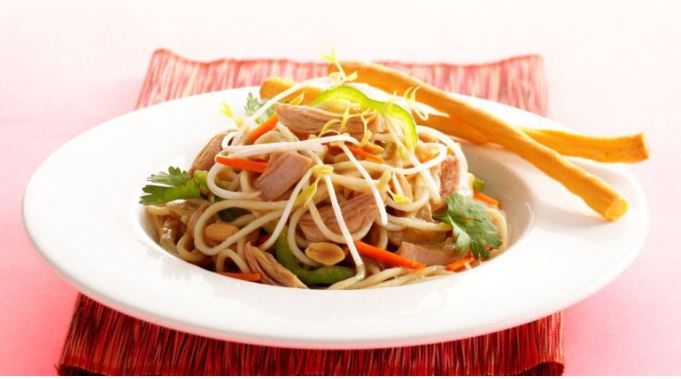
Stir Fried Century Tuna and Spaghetti in Peanut Sauce

Ingredients:

1 – 184 grams Century Tuna Chunks in Vegetable Oil, drained,
reserve oil for sautéing
1/2 cup sliced onion
2 teaspoons chopped garlic
1/2 cup carrot strips
1/4 cup green bell pepper strips
1 cup bean sprouts
1/4 cup rice wine
2 teaspoons chili garlic paste
1/4 cup peanut butter
2 tablespoons soy sauce
2 tablespoons oyster sauce
1/2 teaspoon salt
1/8 teaspoon pepper
1 tablespoon sugar
1/4 cup chicken broth or water
600 grams cooked spaghetti noodles (from 300 grams uncooked)
1/4 cup coarsely shopped peanuts
1/4 cup chopped wansuy (cilantro)

Procedure:

Heat a large stir-fry pan or wok. Add oil from the can of  tuna. Stir-fry the onion, garlic, carrot, bell pepper, bean sprouts, and tuna. Pour in rice wine. Cover and allow to cook to 2 minutes. Strain the vegetables and tuna from the pan, and set aside. In the same pan, add the chili-garlic paste, peanut butter, soy sauce, salt, pepper, and sugar. Add chicken broth then allow it to boil. Stir in the cooked spaghetti. Add the stir-fried tuna and vegetables. Toss until heated through. Stir in peanuts and wansuy before removing from heat. Serve immediately.

Makes five to six servings.


Greek Salad with Mega Spanish Sardines

Ingredients:

3 tablespoons lemon juice
2 tablespoons extra-virgin olive oil
1 clove garlic (minced)
2 teaspoons dried oregano
½ teaspoons freshly ground pepper
3 medium-sized tomatoes (cut into large chunks)
1 large-sized English cucumber (cut into large chunks)
1 (15 oz.) can of rinsed chickpeas
1/3 cup of crumbled feta cheese
¼ cup of red onion (thinly sliced)
2 tbsp. Kalamata olives (sliced)
2 (4 oz.) cans of sardines packed in olive oil or water

Whisk the lemon juice, oil, garlic, pepper, and oregano in a large-sized bowl until finely mixed.
Add the tomatoes, cucumber, chickpeas, feta cheese, olives, and onion.
Gently toss until fully combined.
Add the sardines over the salad mixtures then serve.

Makes four servings.


Mega Tuna BLT

1 can Mega Tuna Hot & Spicy
1 egg
Bread crumbs
Chives
Salt and pepper to taste

For the tuna burger patties, mix together the drained Mega Tuna Hot & Spicy, bread crumbs, beaten egg, chives, salt and pepper.
Mix them well then form the mixture in to 2 large patties.
Pan-fry the patties in a large saute pan with some oil over medium heat until it becomes golden brown.
Drain the excess oil on some paper towels. Assemble the burger with mayonnaise, lettuce, and tomatoes.
Serve with chips on the side.

Sacramento Kings pound Pelicans, seal Pacific Division title

Domantas Sabonis had a triple-double, Keegan Murray produced a barrage of 3-pointers and the visiting Sacramento Kings overcame a slow offensive start to rout the New Orleans Pelicans 121-103 on Tuesday night. 

Sabonis finished with 16 points, 12 rebounds and 11 assists and De’Aaron Fox added 23 points and nine assists as the Kings (48-31) won the Pacific Division for their first division title in 20 years. 

Murray made 7 of 10 3-point attempts and Sacramento finished 17 of 42 (40.5 percent) from beyond the arc. Malik Monk scored 17 points off the bench, Harrison Barnes added 16 and Kevin Huerter had 11 for the Kings. 

Brandon Ingram scored 22 points, but committed a career-high seven turnovers for the Pelicans (40-39), who lost for just the second time in nine games and missed an opportunity to clinch a spot in the Western Conference play-in tournament. 

Trey Murphy III scored 17, Jonas Valanciunas had 13, CJ McCollum and Dyson Daniels had 12 each and Herbert Jones 11 for New Orleans, which made just 7 of 20 3-point tries (35 percent). 

Sacramento took control by scoring 40 points in the second quarter, but McCollum’s basket pulled New Orleans within 80-71 midway through the third quarter. 

Murray made three consecutive 3-pointers and Sacramento opened a 96-80 lead at the end of the third quarter. He made 5 of 6 3-point tries and the Kings finished 6 of 9 in the period. 

Barnes converted a three-point play to start the fourth-quarter scoring, and the Kings’ lead didn’t shrink below 14 points the rest of the way. Sacramento won the season series 2-1. 

Ingram scored nine straight Pelicans points as the hosts took a 14-4 lead after four minutes. However, New Orleans scored just eight points in the next eight minutes. 

Huerter and Sabonis each scored eight points and Monk beat the buzzer with a 3-pointer that gave the Kings a 25-22 lead at the end of the first quarter. 

Fox scored 10 points and Monk and Barnes had nine each during the second quarter as Sacramento established a 65-54 halftime lead. — Field Level Media