Home Blog Page 5035

Bulls rally past Raptors, earn shot at Heat for playoff bid

ZACH LaVine scored a game-high 39 points and DeMar DeRozan added 23 to boost the visiting Chicago Bulls to a come-from-behind, 109-105 victory against the Toronto Raptors in an Eastern Conference play-in game on Wednesday night.

Chicago advances to face the Miami Heat on Friday. The winner of the game, to be played in Miami, will move on to meet the Milwaukee Bucks, the East’s top seed, in the first round of the playoffs.

The Bulls overcame a 19-point, third-quarter deficit against the Raptors. A 29-28 lead early in the second quarter, which lasted all of 19 seconds, was Chicago’s only advantage until the stretch run.

Patrick Beverley’s trey with 5:07 remaining put the Bulls ahead 96-93, a lead they didn’t relinquish.

Still, it wasn’t easy. A Pascal Siakam dunk with 19.7 seconds left brought the Raptors within 105-104. Mr. LaVine followed with a pair of free throws, and Siakam hit 1 of 3 at the line before Nikola Vucevic hit two free throws for the Bulls with 11.1 seconds left for a 109-105 lead.

An 18-for-36 effort from the free-throw line took a toll on Toronto, which shot 43.7 percent from the floor compared to 48.8 percent for Chicago.

Mr. Siakam had 32 points for the Raptors, who got double-doubles from Fred VanVleet (26 points, 12 rebounds) and Scottie Barnes (19 points, 10 rebounds).

O.G. Anunoby chipped in 13 points.

Mr. Vucevic posted 14 points and 13 rebounds for Chicago. Patrick Williams chipped in 10 points and Coby White had nine points and five assists.

Chicago went 3-0 against Miami, with each game decided by at least eight points. — Reuters

Mark Llemit, Jun Melecio the new recruits of UST

UNIVERSITY of Santo Tomas (UST) is not to be left behind in the collegiate recruitment wars ahead of the UAAP Season 86 by securing two promising rookies in Mark Llemit and Jun Melecio.

The 6-foot-3 Mr. Llemit, who anchored the Tiger Cubs’ Final Four finish in the UAAP juniors, committed to climb to the seniors level while dazzling guard Mr. Melecio took a jump from De La Salle-Zobel.

Mr. Llemit, from Laak, Davao de Oro, also led UST to the semifinals of the Smart-NBTC National Finals Division I as the 19th ranked high school player in the country with averages of 16.27 points, 8.27 rebounds, 2.73 assists, and 2.53 steals.

The Valencia City, Bukidnon pride Mr. Melecio, brother of Converge FiberXers guard Aljun who’s also from Taft, for his part averaged 8.46 points, 2.85 rebounds, 2.15 assists, and 1.23 steals in 20 minutes for De La Salle-Zobel last season.

The two guards straight from high school are eligible to play in Season 86 later this year with five full playing years.

They will join SJ Moore from Arellano, Fil-Canadian shooter Gabriel Obusan, and Season 87 recruits Rhayyan Amsali and James Una as the Growling Tigers seek to climb the UAAP ladder from a dismal 1-13 finish last season. — John Bryan Ulanday

Tabuena a stroke off leader in International Series Vietnam

FILIPINO star Miguel Tabuena fired a bogey-free six-under 66 to go within striking distance of the clubhouse leaders in the opening round of the International Series Vietnam at the KN Golf Links in Cam Ranh yesterday.

Mr. Tabuena gunned down consecutive birdies from Nos. 14 to 18 then added two more on the fourth and eighth to complete a fiery start that put him a stroke off

Korean Taehee Lee, Indian Honey Baisoya and Taiwanese Lee Chieh-po.

Mr. Lee shot two eagles in the last five holes for a 65 and a share of the early pace with Mr. Baisoya and Lee after the morning sessions of the $2-million Asian Tour event.

Mr. Tabuena, who came off a stirring victory in The DGC Open in India last month and joint fourth in the World City Championship in Hong Kong, shared No. 4 with South African Jaco Ahlers.

One shot adrift Mr. Tabuena was Justin Quiban, who mixed eight birdies against a bogey and a double bogey for 67 while two back was Lloyd Jefferson Go, who also had a fine start at 68.

Meanwhile, Pinay ace Bianca Pagdanganan opened her bid in the LPGA Tour’s Lotte Championship with a two-over 74 Wednesday at the Hoakalei Country Club in Honolulu.

Ms. Pagdanganan had three late bogeys to find herself in a tie for 76th place, eight off Thai rookie Natthakritta Vongtaveelap and Swedish Frida Kinhult’s leading 66.

Dottie Ardina struggled with a 79 in a birdie-less round marred by five bogeys and a double bogey. — Olmin Leyba

Eala exits early in W60 Chiasso singles

ALEX Eala absorbed a similar fate in the W60 Chiasso singles tournament after a first-round exit at the hands of Romania’s Alexandra Ignatik, 6-0, 6-2, late Wednesday night in Switzerland.

Just hours after her elimination in the opening round of the doubles tourney, Ms. Eala played flat and off target in a lackluster straight-sets defeat against the 32-year-old Romanian, who’s No. 217 in the WTA rankings.

The 17-year-old Filipina prodigy is slightly ranked ahead at No. 215 but it hardly mattered against Ms. Ignatik as the seasoned Romanian only needed one hour and 12 minutes to score the victory behind her crisp service game.

Ms. Ignatik, winner of 11 pro titles compared to Ms. Eala’s two in her budding career, will face Ukraine’s Elina Svtolina in the Round of 16.

Ms. Eala and Czech partner Barbora Palicova the other day also bowed out early in the Swiss doubles tourney against the pair of Indonesian Beatrice Gumulya and another Czech bet Anna Siskova, 3-6, 6-4, 11-13.

The W60 Chiasso is part of Ms. Eala’s preparations in a bid to qualify for the prestigious French Open next month.

Ms. Eala is fresh from a brief stint in the Miami Open last month after winning the US Open junior championships to become the first Filipina junior singles Grand Slam champion. — John Bryan Ulanday

Best and worst of times

In terms of style, the Lakers-Timberwolves set-to the other day was ridiculously lacking. The big picture was muddled by the high number of missed open shots, flubbed assignments, unforced turnovers, and poor decision making that turned it into a needlessly protracted slugfest. Even as the outcome had to be settled in overtime, the manner in which the protagonists battled for the right to play the Grizzlies as the seventh seed in the first round of the playoffs was hardly the stuff of highlight reels.

That said, there can be no doubting the level of effort put forth by every single player who stepped on the court. To a man, they left nothing in the tank. For instance, nineteen-time All-Star LeBron James, at 38 by far the oldest player who saw action, burned rubber for 45 minutes to pace the proceedings — in scoring and leadership, but likewise in fouls, turnovers, and negative rating. And, somehow, in the grand scheme of things, the seeming dichotomy made sense. The Lakers and Timberwolves gave everything they had in trying to carve a path to victory.

To be sure, the play-in contest was as much a battle for triumph as for survival. Regardless of the journey, the destination remains the same: A win is a win, and one gained by determination proves to be no less sweet than another claimed by talent. Which is not to say National Basketball Association-level skills were not on display. If anything, the fact that the Lakers and Timberwolves combined to miss a whopping 101 of 175 field goal attempts served to make the sterling moments stand out even more.

So, yes, the show was still spectacular. And, yes, the final score remained reflective of the exertions of the Lakers and Timberwolves. Perhaps it was only proper for the game to wind up the way it did. To quote from Charles Darwin’s A Tale of Two Cities, “It was the best of times, it was the worst of times, it was the age of wisdom, it was the age of foolishness, it was the epoch of belief, it was the epoch of incredulity, it was the season of light, it was the season of darkness, it was the spring of hope, it was the winter of despair.” All in one match. Imagine that.


Anthony L. Cuaycong has been writing Courtside since BusinessWorld introduced a Sports section in 1994. He is a consultant on strategic planning, operations and human resources management, corporate communications, and business development.

How technical analysis can help you make smarter cryptocurrency trades

KANCHANARA-UNSPLASH

Cryptocurrency trading can be an exciting and potentially lucrative activity, but it also involves a significant amount of risk. The value of digital currencies such as Bitcoin, Ethereum, and Litecoin can be highly volatile and subject to sudden price swings, making it difficult for traders to make profitable trades without proper analysis. I have purposely not engaged with it for the past years, only because I believe I should not be going into something I do not totally understand.

True enough, for reasons only a few really know, the price of Bitcoin has surged to its highest level since June 2022, approaching $30,000. This recent price rally may be due to several factors, including renewed interest from retail investors, positive news from institutional investors, and increased adoption by merchants.

And although there are some challenges that Bitcoin is facing, including regulatory scrutiny and concerns about its environmental impact, the recent price surge may be a sign that the cryptocurrency is continuing to gain acceptance and popularity amidst the issues faced by banks in the US.

But how do you read these trends and decide your next steps in terms of your own investments? A seasoned crypto trader friend mentioned that it is no different from analyzing forex trading and employs a simple method that many experienced traders practice, which is technical analysis.

So, he had always been interested in cryptocurrency but never knew how to make a profit from it. He would buy and sell, hoping to make money, but never seemed to get ahead. That’s when he discovered technical analysis.

Defined, technical analysis is a method of analyzing data to predict market trends. By using charts and technical indicators, traders can identify buying and selling opportunities that they wouldn’t have seen otherwise, just like in the case of Bitcoin.

This friend of mine started studying charts and looking for patterns in the data. He learned how to read candlestick charts. He also studied technical indicators. We will talk about these in detail later.

At first, my friend made a few mistakes. He misread a chart or misunderstood an indicator and ended up losing money on a trade. But he didn’t give up. Instead, he learned from his mistakes and kept analyzing the data to find new opportunities.

Eventually, my friend started making profitable trades based on his technical analysis. He was able to identify trends and patterns that he wouldn’t have seen without this type of analysis. And best of all, he found it to be a really fun and rewarding activity.

Now, let’s dive a little deeper and take a closer look at some of the key concepts and tools used by technical analysts.

CHARTS AND GRAPHS
The first step in technical analysis is to study charts and graphs of past market data. In cryptocurrency, this usually means looking at candlestick charts, which show the opening, closing, high, and low prices of a cryptocurrency over a certain time period. By analyzing these charts, traders can identify trends and patterns that may indicate future price movements.

Candlestick charts can be used to identify key levels of support and resistance, which are price points where buying or selling pressure is strong enough to prevent the price from moving beyond that level. Support levels are areas where buying pressure is strong enough to hold the price up, while resistance levels are areas where selling pressure is strong enough to push the price down.

TECHNICAL INDICATORS
In addition to studying charts and graphs, technical analysts use various technical indicators to help them identify trends and predict future price movements. These indicators are based on mathematical calculations of market data, such as price and volume.

Some common technical indicators used in cryptocurrency trading include moving averages, relative strength index (RSI), and Bollinger Bands.

Moving averages are used to identify trends and smooth out price data. By calculating the average price of a cryptocurrency over a certain period of time, traders can plot the data on a chart and use different types of moving averages to suit their trading strategies.

Another technical indicator used in cryptocurrency trading is the Relative Strength Index (RSI), which is a momentum indicator that measures the speed and change of price movements. It compares the average gain and loss of a cryptocurrency over a certain period of time and plots the result on a scale of 0 to 100. Traders use the RSI to identify overbought or oversold conditions, which can indicate potential buying or selling opportunities.

Bollinger Bands measure the volatility of a cryptocurrency. It consists of three lines on a chart: a simple moving average, an upper band, and a lower band. The upper and lower bands are usually two standard deviations above and below the moving average, respectively. By analyzing how the price of a cryptocurrency interacts with the upper and lower bands, traders can identify potential entry and exit points for trades.

SUPPORT AND RESISTANCE LEVELS
As mentioned earlier, support and resistance levels are key concepts in technical analysis. Traders use support and resistance levels to identify potential entry and exit points for trades.

For example, if a cryptocurrency is trading within a range between two key support and resistance levels, a trader may look to buy when the price approaches the support level and sell when it approaches the resistance level.

TRENDS
Trends are one of the most important concepts in technical analysis. Traders use trend lines to identify the direction of the market, whether it’s up, down, or sideways. By identifying trends, traders can make more informed trading decisions and potentially profit from price movements.

Technical analysis can help traders make more informed trading decisions and potentially minimize risk, thus increasing their chances of making profitable trades.

While technical analysis can be a powerful tool for cryptocurrency traders, it is important to remember that the value of these digital currencies can be volatile and unpredictable. Amidst all these analyses, in the end, no one really has a crystal ball. For me, trade not to earn, but to learn.


Dr. Donald Lim is the founding president of the Blockchain Association of the Philippines and the lead convenor of the Philippine Blockchain Week. He is also the Asian anchor of FintechTV.

Rocky road for the global economy in 2023, and beyond?

FREEPIK

Yes, the International Monetary Fund (IMF) declared that the collapse of the two big American banks and the contagion in Europe exacerbated the global economic outlook this year and the next. What could have been a soft landing for the world economy this year might not materialize, as its tentative signs have dissipated given “stubbornly high inflation and recent financial sector turmoil,” in addition to the protracted Russian invasion of Ukraine and three years of COVID.

Reuters shared this emphasis as it chose to describe the financial component as adding layer of uncertainty to what is unfolding as assessed by the Fund in the World Economic Outlook (WEO), but the odds are stacked against global economic recovery. As its Global Financial Stability Report pointed out, financial conditions have become more volatile as market sentiment sinks.

The Fund was as frank as admitting that this year, the recovery could be “rocky.” We should know that when the ground is rocky, the ride is riddled with jolts and irregular movements. It could be as bumpy as a turbulent flight which is expected to be up to three times as violent in the next few decades because of global warming. The so-called clear-air turbulence (CAT) becomes more unpredictable because the jet stream is modified, and the aircraft’s altitude and motion are correspondingly altered. Unlike storms and atmospheric pressures which can be detected using radar and other equipment, CAT seems to just appear with no visible cause. The pilots have no time to warn the passengers to fasten their seatbelts.

Fortunately, the world economy is now forewarned that the ride this year could be jolty.

The baseline forecast for global growth is now a decline from 3.4% in 2022 to 2.8% in 2023 before stabilizing at 3% in 2024. If the emerging market and developing economies (EMDEs) are building up their hope in external trade with their big trading partners, the IMF could be a dampener. Growth in advanced economies may slow down from 2.7% to less than half at 1.4% next year. If the financial sector stress continues, which to the Fund is quite plausible, global growth may further slide down to only 2.5% and the advanced economies may show further deterioration to less than 1%.

Thus, the prospects for the EMDEs derive from their own domestic resiliency and the impact of external forces. The US is leading what may be described as a great growth moderation, restrained at 1.6% this year from last year’s 2.1%. The Euro area is expected to show a sharp hesitation, from 3.5% in 2022 to only 0.8% in 2023, with Germany probably going into a mild recession, just like the UK. While Canada and the rest of the advanced economies are also moderating this year, Japan is forecast to improve from 1.1% last year to 1.3% this year.

The WEO places the growth of EMDEs at 3.9% this year versus last year’s 4%. Even with China and Russia’s strong recovery, aided by stronger performance of EMD Asia as well as EMD Europe, India’s unfavorable prospects and those in Latin America and the Caribbean as well as in the Middle East and Central Asia kept the EMDEs’ contribution to global growth rather moderate.

This much could be said of the implications of geopolitical fragmentation based on the Fund’s recent research. Geopolitical fragmentation is everything we see and hear, that which causes tension in both political and economic dynamics including the US-China trade dispute and the Russian invasion of Ukraine. Such tensions have triggered a reallocation of foreign direct investment away from countries that are geographically close to those that are geopolitically close.

What is sad about this reallocation is the possible harm to EMDEs as they are more dependent on investment flows from more geopolitically distant countries. As the IMF posted: “In general, a fragmented world is likely to be a poorer one.”

On top of its investment impact, geopolitical fragmentation imposes cost to the banking sector. “Cross-border banking and portfolio debt flows to Russia and its allies — those which rejected the motion in the United Nations in March 2022 to condemn Russia’s invasion of Ukraine — have reversed sharply, with allocations falling by about 20% and 60% relative to pre-war levels.” Thus, the Fund reported that the rising anxiety between investing and recipient countries such as the US and China had trimmed bilateral cross-border allocation of portfolio investment and bank claims by about 15%.

All in, geopolitical fragmentation could restrain global growth by some 2% over the long run.

This is where the Fund is coming from when it recognized the retreating prospects for stronger recovery. It is definitely rockier because even as the recovery appears to be continuing with help from China’s rebound, unwinding supply chain disruptions and receding dislocations to both food and energy, the risks including from geopolitical fragmentation have intensified.

Inflation remains stubborn. Any moderation observed recently is due more to significant stabilization in energy and food prices. But even these are subject to higher risks with the cutback in OPEC+ oil production and the implications of El Niño on agriculture and food prices.

Labor markets could sustain their tightness as economic activity is expected to remain strong especially in advanced economies. Since output and inflation estimates turned out stronger than recent estimates, the Fund considers it necessary to sustain the pace of monetary policy tightening. Wage gains continue to lag behind price increases.

If potential bank difficulty is introduced into the baseline scenario, we should be seeing rising funding costs and lower bank lending. Prudence, as in implementing tight monetary policy and exercising it, is expected to slice global output by some 0.3% in 2023. But over time, prudence should pay off because it makes country authorities and regulators more aware of the risks of excess leverage, credit or interest rate exposure and higher short-term funding.

We read the Fund’s WEO with great interest because it assigns probabilities to cases when certain risks materialize. For instance, if a “risk-off” event should happen, or a sharp tightening of global conditions, this would suggest significant capital outflows, a rise in risk premia, domestic currency depreciation and lower economic activities, global growth could retreat by 1% with a probability of 15%.

WEO’s proposed policy actions to safeguard global recovery and address those identified risks, may be summed up in this phrase: “a steady hand and clear communication.”

Steady hand to the Fund means a number of policy thrusts. Monetary policy should sustain cautiousness but should be easily adaptable to unfolding financial sector developments. A tight fiscal policy can help cool off economic and business activities, support monetary policy and enable real interest rates to stabilize to a lower natural level. Fiscal space should be restored.

Financial sector regulation and supervision should focus on rectifying any remaining fragilities to avoid any possible break out of a crisis. Access to Fund financial safety nets, the US Federal Reserve repo facility or to central bank swap lines should be maintained. As expected, the Fund reiterated the need for continued flexibility in the exchange rates unless it should impinge on financial stability or price stability.

It would be desirable to share US Treasury Secretary Janet Yellen’s rejection of growing pessimism about the direction of the global economy. She said: “I wouldn’t overdo the negativism.” She referred to the lower inflation projections, easing commodity prices and supply disruptions and a resilient financial system. The IMF’s “heavily skewed to the downside” and a possible “hard landing” were virtually dismissed by Yellen who used to chair the US Fed. She called for more positive messaging.

But Yellen’s idea is anchored only on the initial signs of global recovery. The Fund, as clearly communicated by the Fund’s economic counsellor Pierre-Olivier Gourinchas, looks beyond those initial signs: “Below the surface… turbulence is building, and the situation is quite fragile, as the recent bout of banking instability reminds us.”

As in chess, we should be several moves ahead if we are to avoid any future blunders.

It would be useful therefore to refer to the remarks of the IMF’s managing director, Kristalina Georgieva, delivered as usual on the week before each spring or fall meeting of the Fund and the World Bank group. She identified three priority actions to attain robust growth given today’s “rough and foggy” situation and perhaps weaker ropes that hold us together in this journey.

Borrowing from Nelson Mandela’s famous line about climbing hills only to find there are more hills to climb, Georgieva’s three hills are: one, fighting inflation and safeguarding financial stability; two, improving medium-term prospects for growth; and three, fostering solidarity to reduce global disparities. What adds more challenge to these hills is that the road is rocky.

To be sure, climbing these hills will never be a breeze, but as Mandela also advised us, “a winner is a dreamer who never gives up.”


Diwa C. Guinigundo is the former deputy governor for the Monetary and Economics Sector, the Bangko Sentral ng Pilipinas (BSP). He served the BSP for 41 years. In 2001-2003, he was alternate executive director at the International Monetary Fund in Washington, DC. He is the senior pastor of the Fullness of Christ International Ministries in Mandaluyong.


Ang galing mo, Pinoy Drayber!

PHILIPPINE STAR/ MIGUEL DE GUZMAN

AFTER 30 YEARS of intense yearning to revisit my roots, my two siblings and I embarked on a complicated journey to Iloilo City. I was born in Roxas City, Capiz, while my older brother was born in Estancia, Iloilo. We all grew up in Manila, but as kids, we spent the most wonderful summer vacations in these Visayan cities and beach towns.

We took the RoRo (Roll On/Roll Off) route. Bus and ferry boat rides starting from Manila to Batangas Port, to Calapan, Mindoro, to Caticlan, Aklan, plus another six-hour bus ride to Iloilo City.

During the 20+ hour arduous but exhilarating journey, I witnessed the most masterful skills of the Pinoy driver. He maneuvered seamlessly through treacherous, jaw-dropping zigzag roads in the wee hours, through rain, sleet, heavy winds in Mindoro and the National Highway to Aklan. My heart pounded (while my two siblings snored) as he effortlessly encountered heart stopping near misses with six-wheeler trucks, tricycles filled with students, pedicabs with about 10 farmers hanging on to dear lives, stray dogs, goats, cats, and many pedestrians. And still made many stops to fetch students, workers, nurses, from town to town and brought them safely to their destinations.

It’s not only people with power or positions of influence who can make a difference in society. Our Pinoy drivers, though underappreciated, are truly the unsung heroes in a country that’s so densely populated and divided by islands.

A dissertation (Lacson, 2004) I recently read states that the Filipino identity is “refracted and unfocused” — surely not the Filipino drivers who push the limits of space, skill, and street smarts!! (Trust me, I’ve been to Rome, New York City, Paris, Mexico City and Tijuana!) They are among the best in the world! If not arguably the BEST.

The true identity of a Filipino and the Pinoy driver is in our persevering soul.

Thank you for your heart, PINOY DRIVERS! You are the tour de force, the movers and shakers that steer the Philippine economy.

Mabuhay!


Beth Cobarrubias is a senior research specialist in a legal practice in Los Angeles, California.

Letter to the editor

Response to Bienvenido S. Oplas, Jr.’s April 3 ‘My Cup of Liberty’ piece, “Low power supply and Meralco distribution cost”

THE ERC (Energy Regulatory Commission) is a quasi-judicial body and, decisions are made by a group of five commissioners (a chairman and four members). No single commissioner or member can act on his own or set his own pace and, decisions are always made “en banc.” A member can express dissent, but final actions are based on majority decision. In this set up, no investigations or any kind of work can be done on a previous decision or issue by individual commissioners. The work is normally initiated based on third party complaints or a directive from the commission itself (motu proprio). The treatment, however, could be different for regulatory and accounting purposes. Regulatory wise, corrections are done prospectively. For accounting purposes, it will be retroactive if it involves an error.

The issue with Meralco could not have been tackled during my time as Commissioner for the simple reason that the rate reset for Third Regulatory Period (RP) covering 2012 to 2015 was decided by the ERC on June 6, 2011 — a few months before my appointment as Commissioner. My term covered the period August 2012 to July 2018.

The final Maximum Average Price (MAP) for the 3rd Regulatory Period (RP) which should have been the basis for the final distribution rates by customer segment was not done even up to this time because of a Motion for Reconsideration (MR) filed by a consumer group (NASECORE) which was elevated to the Supreme Court. This affected and delayed even the start of the reset for 4th RP (2016 to 2019). As a result, Meralco applied with the ERC to allow it to use an Interim Rate from 2016 until the regular reset process is completed to which ERC agreed. Thus, the use of provisional or interim rates has been going on since 2012 up to the present.

The case was resolved by the SC in October 2019 when I was no longer with the Commission. However, Meralco and ERC both filed an MR which remained unresolved even up to this date.

My retirement in July 2018 gave me the time and opportunity to re-visit the pending Meralco rate reset without any restrictions. My investigation indicated several findings, the more significant of which was an error in the calculation of rates for 2012 to 2015. These findings were included in several reports to ERC, the Senate and House Committees on Energy and, even to the Office of the President. I felt sad, angry, and disappointed because my reports seemed to fall on deaf ears and even the media shied away from the issues except TV Patrol of ABS-CBN which covered the news at least three times during the past two years. Copies of my reports were also furnished to the external auditors of Meralco.

With what I have done on my own time and expense, I do not think that anybody could accuse me of inaction or procrastination. I have done all I can to investigate and made the issues and findings known to people and entities who have the ability to do something about it. All I can do now is follow up and force a decision on the issues. I cannot decide for them. The ball is now in their courts.

Without the coverage by ABS-CBN, I would probably be the only person who would know of the over-billing issue up to this time. Of the over P100 billion I estimated as over-billing, ERC has ordered and Meralco has settled cash refunds totaling P48 billion over the past two years. All consumers have benefitted from this.

ANY FEEDBACK FROM MERALCO?
Meralco executives (particularly Zaldarriaga and Atty. Valles) have always denied that there was over-billing and, that ERC has validated their rates as final. This is a misrepresentation because even the ERC Chairperson herself denied this over the same TV program where the executive appeared. It is clear from the statement by the ERC Chair that the distribution rates from 2012 up to the present were all based on interim or provisional decisions only by ERC and, are subject to adjustment based on the resolution of the MR filed with ERC and the results of the on-going reset process.

The facts are:

1. In its 2022 decision on the 3rd RP, the ERC confirmed that there was an error in the previous decision. However, only a partial adjustment was made resulting in an Order for Meralco to pay a refund of P7.8 billion. After the resolution of the MR with the Supreme Court and, after full adjustment of the error, I expect an additional cash refund to consumers for the period 2012 to 2015.

2. For the period after 2016, ERC also attempted to make corrections which resulted in three refund orders to Meralco totaling P40 billion. Since the basis for the calculation came from the partially adjusted rates from the 3rd RP, ERC has to resolve an MR filed by Intervenors. After resolution, I expect ERC to order Meralco to pay additional refunds to consumers for the period 2016 to the present.

3. In this regard, maybe Meralco should be asked — if they claim there were no over-billings, why did it not oppose any of the above refund orders from ERC? In fact, as of March 2023, Meralco has fully settled all the refund orders totaling P48 billion by way of deduction from monthly bills to consumers.

A FINANCIAL ANALYSIS
Any financial analysis should be done on an apples-to-apples basis to provide meaningful results. Transmission, Distribution and Generation are three distinct operations whose profitability can be affected by many factors not common to all segments. Meralco, as a distribution company, reports the value of power distributed and supplied to them by generators as part of revenues. The same value is reported as the cost of power supplied. Remember that the power supplied by Meralco to consumers is a pass-through cost only — meaning Meralco does not earn any profit from it. Therefore, by including the value of power supplied as part of revenues, this dilutes the relationship of net income to total revenues.

If Meralco’s operations will be viewed in substance as a distribution business (where revenues are earned from allowing consumers the use of its distribution network), the DU income statement would appear as follows:

Meralco executives have consistently denied any overbilling. However, in one of the disclosures to Meralco audited financial statements, the following was stated:

“Meralco recognized provisions for any resulting over-recoveries. The movements in and the balance of the ‘Other noncurrent liabilities’ account in the consolidated statements of financial position substantially represent these provisions…”

This indicates that contrary to declarations by Meralco, it was aware that the use of provisional rates since 2012 could result in over-recoveries. A provision was made instead of an adjustment because the final amount can only be determined from ERC’s final decision on the matter. However, considering that the principal reason was an error, the amount of adjustment should be easily determinable.

For regulatory purposes, Meralco may be justified not to adjust its rates without any final decision by ERC. However, for accounting purposes, the issue is — should the expected amount of over-recoveries be treated as a mere provision, a contingent liability or, immediately adjusted with due consideration to the financial accounting requirements as to whether to treat this as a prospective or prior-period adjustments.

In the meantime, Meralco recognized annual deductions from revenues representing provisions for any claims resulting from over-recoveries and other losses amounting to P10,119 in 2019, P15,526 in 2020, and P10,175 in 2021 (all in Million Pesos). The net cumulative balance of these provisions as reflected in the Noncurrent liabilities section of the balance sheet amounted to P69,971 in 2019, P82,942 in 2020, and P97,981 in 2021 (all in Million Pesos).

Considering that separate liability account was maintained for specific Provisions for Other losses (Note 18), the total amount of possible over-recoveries and claims may be broken down as:

If Meralco maintains its declaration to the public that there was no over-billings or over-recovery, then it should not have recognized any liability or provision for over-recoveries. Then, the amounts reported as net income would change significantly as follows:

In this particular scenario, Meralco would be the most profitable among the several Companies in Mr. Oplas’ article.


ALFREDO J. NON
Consumer and former ERC Commissioner

N. Korea fires missile; South slams ‘provocation’

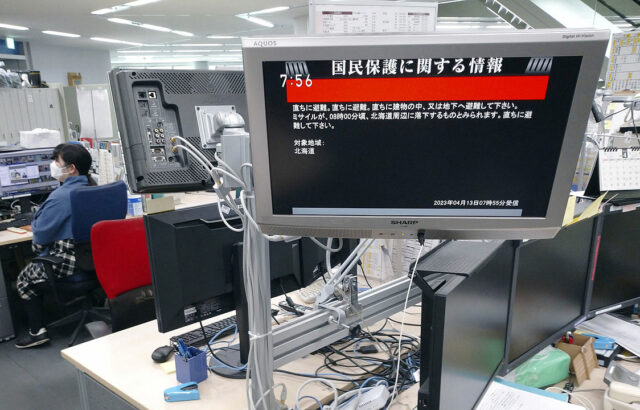
A TV SCREEN in Tokyo displays a warning message after the Japanese government issued an alert, following a ballistic missile launch by North Korea on April 13, 2023. — KYODO VIA REUTERS

SEOUL/TOKYO — North Korea fired what might be a new model of ballistic missile on Thursday, South Korea said, triggering a scare in northern Japan, where residents were told to take cover, though there turned out to be no danger.

The missile flew about 1,000 kilometers (620 miles), South Korea’s military said, calling it a “grave provocation.”

The missiles’ apogee, or maximum altitude, has not been officially disclosed, though South Korea’s Yonhap news agency said it appeared to have been less than 3,000km — far below the height of some tests last year, which topped 6,000 km.

The South Korean military said it was on high alert and coordinating closely with its main ally, the United States, which “strongly condemned” what the White House said in a statement was a long-range ballistic missile test.

A South Korean military official said the test apparently involved a new weapon system displayed at a recent North Korean military parade.

The military was analyzing the projectile’s trajectory and range, and the Defense ministry said it could have been a solid-fuel missile.

North Korea has been working to build more solid-fuel missiles, which are easier to store and transport, and can be launched with almost no warning or preparation time.

While North Korea has tested short-range solid-fuel missiles, it has not tested a long-range missile of that type, said Bruce Bennett, a senior defense analyst at the US-based RAND Corp.

The missile was fired at 7:23 a.m. (10:23 p.m. GMT on Wednesday) from near Pyongyang, South Korea’s joint chiefs of staff said, meaning it could have been launched from an international airport close to the capital, a major site for test-firing large missiles since 2017.

BRIEF PANIC
Japanese Prime Minister Fumio Kishida called a National Security Council meeting in response to the launch.

Japan’s Defense minister, Yasukazu Hamada, said the missile appeared to have been fired eastward at a high angle and it did not fall in Japanese territory.

Japan’s coast guard said the projectile had fallen in the sea to the east of North Korea. Mr. Hamada said he could not confirm whether the missile flew over Japan’s exclusive economic zone.

Japanese authorities retracted the alert for Hokkaido island when they determined that the missile would not fall nearby.

A student there told Japanese broadcaster NHK that the alert caused momentary alarm at a train station. “For a second in the train there was panic, but a station worker said to calm down, and people did,” the unidentified man told NHK.

The launch came days after North Korean leader Kim Jong Un called for strengthening war deterrence in a “more practical and offensive” manner to counter what North Korea called moves of aggression by the United States.

While condemning the latest in a string of North Korean missile tests, the United States renewed its offer to open talks.

“The door has not closed on diplomacy, but Pyongyang must immediately cease its destabilizing actions and instead choose diplomatic engagement,” US National Security Council spokesperson Adrienne Watson said in a statement.

North Korea has criticized recent joint military exercises between US and South Korean forces as escalating tensions, stepping up its weapons tests in recent months. — Reuters

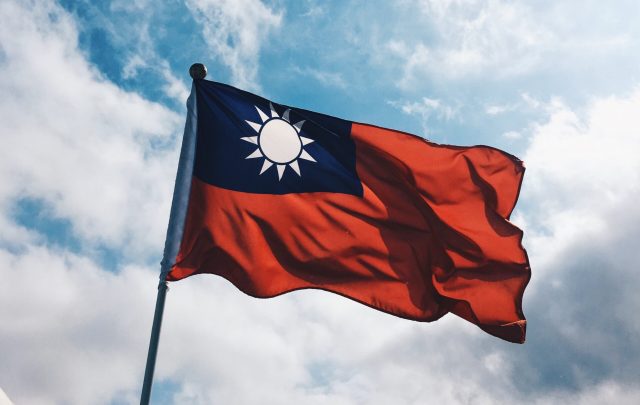
Taiwan says China’s no-fly zone will affect about 33 flights

XANDREASWORK-UNSPLASH

TAIPEI — China’s plan to set up a no-fly zone to the north of Taiwan on April 16 would affect about 33 flights, Taiwan’s official Central News Agency (CNA) reported, citing the island’s transport minister, Wang Kwo-tsai.

The impact on flights was greatly reduced after Taiwan said it had successfully urged China to drastically narrow its plan to close air space north of the island, Mr. Wang was reported as saying.

Reuters first reported that Beijing had initially notified Taipei it would impose a no-fly zone on April 16 and 18, but Taiwan’s Transport ministry said this was later reduced to just 27 minutes on Sunday morning after it protested.

Mr. Wang said the ministry had discussed with Japanese aviation authorities who will issue notices later on Thursday to boats and planes to avoid the area for that specific period on Sunday morning, the CNA said.

Mr. Wang said the ban could add “less than one hour” of extra travel time to the affected flights as they will have to divert further south from their original routes.

Taiwan’s Transport ministry on Wednesday published a map showing what it labeled China’s “aerospace activity zone” to the northeast of Taiwan and near a group of disputed islets called Diaoyu by China and Senkaku by Japan.

The development follows days of intense military drills that China has staged around Taiwan in response to President Tsai Ing-wen’s meeting with US House Speaker Kevin McCarthy in California last week.

When China imposed air space restrictions during military drills in August, there were significant disruptions to flights in the region, with some aircraft required to carry extra fuel, according to OPSGROUP, an aviation industry cooperative that advises on flight risks. — Reuters

US sanctions hit more than 120 targets supporting Russia’s invasion of Ukraine

US CAPITOL — IAN HUTCHINSON-UNSPLASH

WASHINGTON — The United States on Wednesday imposed sanctions on more than 120 targets to squeeze Russia for its war in Ukraine, pursuing entities linked to state-held energy company Rosatom and companies based in partner nations like Turkey in a sign of stepped-up enforcement.

The sanctions, imposed by the Treasury and State departments in concert with Britain, hit entities and individuals in more than 20 nations and jurisdictions, including a Russian private military company, a China-based company and a Russian-owned bank in Hungary.

The Treasury said it had imposed sanctions on Russian financial facilitators and sanction evaders around the world, including in the United Arab Emirates and China-based people and companies.

The actions reflect an effort by the US government both to broaden the web of US sanctions placed on Moscow since Russian President Vladimir Putin’s February 2022 invasion of Ukraine and to squelch efforts to circumvent them.

One of the main targets was Russian billionaire businessman Alisher Usmanov, whom the Treasury described as having “at his disposal a wide network of businesses in financial safe havens and family members through which to conduct financial transactions, enabling him to potentially circumvent sanctions.”

The State Department said it had targeted the businessman’s company, USM Holdings, and a number of companies under it.

The company said it regarded the actions as “unjust and unfounded,” saying Mr. Usmanov, who has been subject to US sanctions, had stepped down from business activity long ago and did not take part in management.

“The United States will continue to take action against Russia and those supporting its war in Ukraine,” Secretary of State Antony Blinken said in a statement, adding that it was in keeping with the Group of 7’s “commitment to impose severe consequences on third country actors who support Russia’s war in Ukraine.”

In addition to trying to choke the Russian economy, the United States and its allies have provided extensive weaponry to Ukraine in its 13-month effort to fend off the Russian invasion.

MILITARY COMPANY
Among Wednesday’s targets was the Patriot private military company, which the State Department said was associated with Russian Defense Minister Sergei Shoigu and competed with the Wagner mercenary group.

Also targeted was China HEAD Aerospace Technology Co., a China-based satellite image reseller that the State Department said supplied satellite imagery of locations in Ukraine to entities affiliated with Wagner and its head, Yevgeny Prigozhin.

The Treasury also targeted King-Pai Technology HK Co. Ltd., which it said is a China-based supplier for multiple entities in Russia’s military-industrial complex.

Five entities and an individual that are part of Russian state-owned nuclear energy company Rosatom were also targeted in an effort to constrain the company, the State Department said, accusing Rosatom of using energy exports to exert political and economic pressure on its customers.

Washington has not imposed sanctions on Rosatom itself.

The United States also imposed sanctions on at least four Turkey-based entities it said violated American export controls and helped Russia’s war effort, in the biggest US enforcement action in Turkey since the invasion.

Eurasia Group analyst Clayton Allen said sanctioning Turkish firms signaled US partner nations were not immune from US action.

“Crossing this threshold is an important development,” he said, saying the commitment to enforcement even if it causes friction with partners signals a US “expectation that the current sanctions structure will endure for the long term.”

Among the companies organized under Mr. Usmanov’s USM Holdings that Washington targeted were Russian mobile operator Megafon; Russia’s biggest iron ore producer, Metalloinvest, including Metalloinvest’s Swiss-based and UAE-based subsidiaries; the operator of the Russia-based Udokan copper project; and Mr. Usmanov’s Uzbekistan-based cement producer Akhangarancement.

The inclusion of Megafon, one of Russia’s big four telecommunication operators, marks a shift as Western sanctions have so far stopped short of targeting Russia’s telecoms infrastructure.

Megafon’s press office said it viewed the sanctions as “an unfair and illegal step that has no basis,” adding it intended to challenge them.

The US Treasury also said it imposed sanctions on Budapest-based International Investment Bank (IIB), a bank with majority-Russian ownership that some European countries have already cut ties with, and three current or former executives.

“IIB’s presence in Budapest enables Russia to increase its intelligence presence in Europe, opens the door for the Kremlin’s malign influence activities in Central Europe and the Western Balkans, and could serve as a mechanism for corruption and illicit finance, including sanctions violations,” it said.

The Treasury also targeted Sequoia Treuhand Trust Reg, a Liechtenstein-based trust services company, saying its clients include Russian elites such as Gennady Nikolayevich Timchenko. — Reuters