Home Blog Page 50

Nueva Ecija rice output under threat from irrigation fault; munggo eyed as stopgap

UPRIIS.NIA.GOV

THE Department of Agriculture (DA) said it is hoping to convert as much as 37,000 hectares of rice land in Nueva Ecija for planting to mung bean (munggo), as the National Irrigation Administration (NIA) races to repair damage to the Upper Pampanga River Integrated Irrigation System (UPRIIS).

The DA said in a statement that the disruption to irrigation threatens to slash the summer rice harvest in Nueva Ecija, the top rice producing province, leaving thousands of farmers without a major source of income for months.

Agriculture Secretary Francisco P. Tiu Laurel, Jr. was quoted as saying that the irrigation damage is expected to cut the rice crop by up to 120,000 metric tons (MT) next year.

Mr. Laurel said the DA and the NIA will support the expansion of mung bean production to provide income to affected farmers.

According to the DA, the Philippines imports nearly 50,000 MT of mung beans annually.

“Considering that munggo is a basic necessity, the local demand for processing, such as munggo  hopia, ready-to-eat munggo soup, lumpiang togue, shall also be addressed and serves as an opportunity for farmers to diversify their income from this cash crop, which is harvested in a shorter time than rice,“ Mr. Laurel said.

The DA said mung beans mature in about 60 days, roughly half the growing time of rice, allowing farmers to earn some income while irrigation repairs continue.

With mung bean having an average yield of roughly 0.7 MT per hectare in Nueva Ecija, farmers can earn about P22,600 per hectare at current selling prices of around P70 per kilo, according to the DA.

Mr. Laurel said the DA will manage the mung bean planting cycle and import controls to keep farmgate prices profitable. “Since 37,000 hectares in UPRIIS are down, planting munggo makes sense. When harvest season comes, we must time imports so our farmers profit,” he said.

The DA said its High-Value Crops Development Program and the NIA will work together to develop the mung bean industry, targeting an additional 21,000 hectares of land served by the NIA. — Vonn Andrei E. Villamiel

‘Minimally disruptive’ EDSA rehabilitation to start Dec. 24

PHILIPPINE STAR/MIGUEL DE GUZMAN

THE Department of Public Works and Highways (DPWH) said it will begin rehabilitating Epifanio de los Santos Avenue (EDSA) on Dec. 24.

“This new plan is entirely different from the original plan. We have worked to find a better way for the (EDSA rehabilitation) project. It is important to begin this project; we can assure the public that this will only cause minimal disruption,” Public Works Secretary Vivencio B. Dizon said at a briefing on Wednesday. 

The DPWH, together with the Metropolitan Manila Development Authority (MMDA), and the Department of Transportation (DoTr) presented the revised plan for the EDSA rebuild, featuring a project timetable of eight months from the original target of two years.

The revised plan is divided into two phases and is expected to be completed by May 31, 2026, Mr. Dizon said, adding that the project cost is now estimated at P6 billion from the earlier P17-billion quote. 

The first phase of the project covers all reblocking works and asphalt overlay of subway lanes both for northbound and southbound. This will be a round-the-clock construction work beginning Dec. 24 and ending on Jan. 5, 2026.

The construction work for the second phase will only be during 10 p.m. to 4 a.m. starting Jan. 5, 2026 until May 31, 2025, Mr. Dizon said.

During the second phase of the project, DPWH will carry out asphalt overlay lane by lane for both northbound and southbound sections during the working week, with Friday to Sunday devoted to asphalt overlay and reblocking of one lane per direction.

Mr. Dizon said the DPWH will use stone mastic asphalt, which he said is more durable and involves less maintenance than traditional asphalt.

“We will be using new asphalt technology. (In the original) plan, we were supposed to use traditional asphalt. I think this new technology has not been used on our national roads yet,” Mr. Dizon said.

The original EDSA rehabilitation plan had been scheduled to begin in June 2025, for completion by 2027. 

President Ferdinand R. Marcos, Jr. had rejected the original timeline as too disruptive, citing the outsized impact of the repairs on commuters, motorists, and the broader economy.

This rehabilitation will be the highway’s first major rehabilitation since 1980. Around 437,000 vehicles use EDSA every day.

“I am confident DPWH can do this well within their timeline. They have more than enough experience in scheduling these kinds of repair activities which should include all possible unforeseen kinks that might happen,” Nigel Paul C. Villarete, senior adviser on public-private partnerships at the technical advisory group Libra Konsult, Inc. said via Viber.

“There are days (in December) when there is no work or classes, which the DPWH can maximize especially the preliminary preparation works,” Mr. Villarete said, noting that such work can be undertaken gradually to ensure commuters are not presented with drastic changes to driving conditions.

“It is the abrupt shift which affects commuters; most traffic congestion usually eases out as it tries to redistribute over time and space,” he said.

MMDA Chairman Romando S. Artes said the agency will retain the current number coding scheme, abandoning an earlier plan to implement a 24‑hour odd-even scheme for private vehicles along EDSA.

Under the previous EDSA rehabilitation plan, the Department of Transportation had requested tollway operators to waive their tolls for some segments.

Transportation Acting Secretary Giovanni Z. Lopez said there is no need to seek a waiver of tolls, noting that roads will remain passable because no disruptions are expected during the EDSA rebuild.

“The good thing is we are expecting to deploy Dalian trains (on the MRT-3 commuter rail line) by December,” he said.

A 2018 Japan International Cooperation Agency study estimated the economic cost of road congestion in Metro Manila at around P3.5 billion a day.

Metro Manila roads were ranked the 14th most congested in the world, with an average travel time of 32 minutes for an average 10-kilometer distance, according to the latest edition of the TomTom Traffic Index.

Globalinks Securities and Stocks, Inc. Head of Sales Trading Toby Allan C. Arce said the EDSA rehabilitation is likely to have short-term disruptive impact on businesses along the avenue, particularly malls, restaurants, and entertainment venues that depend heavily on foot traffic and ease of access.

“Even if construction activity is scaled down during the holidays, the signaling effect alone — lane closures, rerouting, and traffic advisories — could deter casual shoppers and diners, especially those coming from outside immediate catchment areas,” Mr. Arce said via Viber.

The rehabilitation of EDSA is ultimately expected to be positive for EDSA-facing businesses, he said.

“If execution is disciplined and timelines are credible, improved road quality, smoother traffic flow, and safer pedestrian conditions would enhance accessibility and dwell time once works are completed,” Mr. Arce said.

Meanwhile, Mr. Dizon said the DPWH is also fine-tuning the plan for the Guadalupe bridge rehabilitation, which he said “will not happen until we have a detour bridge. The detour bridge will start early 2026; once it is completed, we can rehabilitate the Guadalupe bridge,” Mr. Dizon said. — Ashley Erika O. Jose

ARTA launches platform consolidating complaints against gov’t agencies

THE Anti-Red Tape Authority (ARTA) said it launched the Anti-Red Tape (ART) Dashboard, which it hopes will deter corruption and inefficiency in delivering government services.

“Our country is facing a serious challenge in terms of corruption … (The dashboard) is our way of contributing to addressing issues of transparency and accountability in government services,” ARTA Secretary and Director General Ernesto V. Perez said.

“In the fight against red tape and corruption, the most effective way, and we have proven this in the last six or seven years, is for government processes and services to be streamlined and digitalized,” he added.

The dashboard is a centralized data and analytics platform that consolidates, monitors, and evaluates the performance of all ARTA digital systems.

“By consolidating these systems under one platform, the ART Dashboard ensures interoperability, data accuracy, and real-time monitoring of government service efficiency nationwide,” he said.

Mr. Perez urged stakeholders not to be discouraged or diverted by the political turmoil roiling the government.

“At the end of the day, we must really work together to improve our image so that we can attract more investors and businessmen that will provide more livelihood opportunities for our people,” he said. 

“We have to continue to trust the system … Let the constitutional process take its course … Let’s leave it to them and contribute on our part wherever we are situated,” he added.

Among the systems that will be integrated in the dashboard are the Anti-Red Tape Electronic Management Information System, the Philippine Business Regulations Information System, the Electronic Complaints Management System (eCMS), the Report Card Survey, and the Competitiveness Dashboard.

The dashboard showed that 902 complaints were filed between July 30 and Dec. 17, of which 637 were tagged as closed and 265 active.

“These are the complaints that came in for a specific period only,” said ARTA Undersecretary Geneses R. Abot.

“Definitely by 2026, lahat ng complaints kailangan nandoon na sa eCMS para mas madali na siyang i-analyze (all complaints should be on the eCMS for ease of analysis),” he added.

He also said that ARTA is in the process of onboarding government agencies in using the eCMS.

Ang aming plan for next year, we will be targeting those na may mga complaints muna (We will start with the agencies that have outstanding complaints) and then later on shift to the other agencies,” he added.

The dashboard indicated that the Food and Drug Administration was the most complained-about agency, followed by Pag-IBIG or Home Development Mutual Fund, the Quezon City government, the Land Transportation Office, and the Bureau of Internal Revenue.

To support these programs, ARTA is hoping to receive proposed additional funding of P132 million next year. — Justine Irish D. Tabile

Rice retail price down, meat up in early December

PHILIPPINE STAR/EDD GUMBAN

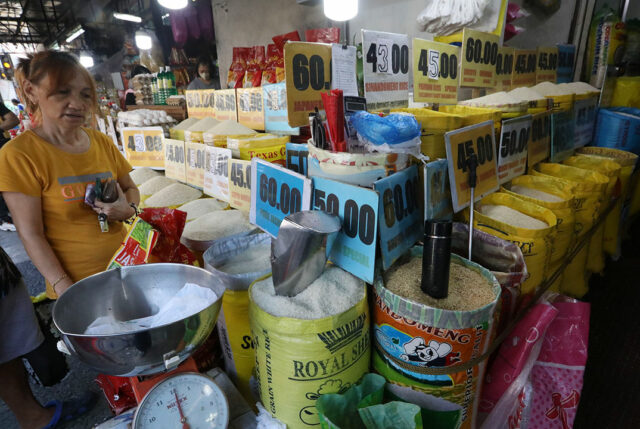
THE retail price of rice declined year on year in early December, while meat and galunggong (round scad) prices increased, according to the Philippine Statistics Authority (PSA).

During the Dec. 1-5 period, which the PSA calls the first phase of December, the national average retail price of well-milled rice declined 10.6% from a year earlier to P48.91 per kilo. It rose from the P47.90 average during the second phase of November (Nov. 15-17) and P47.63 a month earlier.

The highest average retail price of well-milled rice in the first phase of December was recorded in the Davao Region at P55.45 per kilo, slightly lower than the P55.75 reported in the same period last year.

The lowest retail price of well-milled rice in early December was reported in the Cagayan Valley at P41.33 per kilo, falling from P51.16 a year earlier.

Meanwhile, the retail price of bone-in fresh pork averaged P314.41 per kilo in the first phase of December, up 4.66% from a year earlier. The national average is slightly lower than the P316.05 recorded in the second phase of November and P316.02 a month earlier.

The retail price of dressed chicken averaged P210.67 per kilo in the first phase of December, up 2.92% from a year earlier. The average retail price for the period is also higher than the P208.42 during the second phase of November and P208.44 a month earlier.

Galunggong prices rose 12.55% year on year to P244.90 per kilo in the first phase of December. The average price of the staple fish declined from P247.86 in the second phase of November and increased from P242.83 a month earlier. — Vonn Andrei E. Villamiel

Dec. power bills to reflect lower transmission rates

NGCP.PH

POWER CONSUMERS will be charged lower transmission rates in their December electricity bills, reflecting the decline in the cost of ancillary services, which are tapped when standby power needs to be fed into the system, the National Grid Corp. of the Philippines (NGCP) said.

In a briefing on Tuesday, NGCP head of revenue management Julius Ryan D. Datingaling said transmission rates for the November supply period declined 10.3% month on month to P1.3547 per kilowatt-hour (kWh).

Ancillary services (AS) declined 17.6% to P0.6217 per kWh.

Transmission wheeling rates, on the other hand, decreased 0.99% from a month earlier to P0.5894 per kWh. This reflects the cost of delivering electricity from power generators to the distribution system.

Meanwhile, the feed-in tariff allowance declined 10.8% to P0.1436 per kWh.

Rates dipped 15.27% in Luzon, rose 2.17% in the Visayas, and rose 3.21% in Mindanao.

NGCP Spokesperson Cynthia P. Alabanza said the company is pushing for the unbundling of AS rates to enhance transparency.

“Over the last year, nakita natin na ang movement talaga ang lakas ng palo doon sa ancillary services prices, which is a pass-through cost at hindi napupunta sa NGCP. Para lang malaman ng tao na kung meron man pagtaas ng presyo, hindi ’yan solely because of NGCP (We’ve seen how significant the impact is of ancillary services prices, which is a pass-through cost and does not go to NGCP. This is just so people understand that if there is any price increase, it is not solely because of NGCP) she said.

Ms. Alabanza added that the NGCP is expecting to complete several projects next year, including the P8.1-billion Tuy-Dasmariñas 500-kilovolt (kV) line and the P4.2-billion Nabas-Caticlan-Boracay 500-kV line.

Tuy-Dasmariñas involves the construction of a 49-kilometer double-circuit overhead transmission line, to be energized at the 230-kV voltage level initially.

It is expected to service the additional 5,215.55 megawatts of proposed generation capacity installed near Calaca, Batangas.

Meanwhile, the Nabas-Caticlan-Boracay transmission project will address the overloading issues in the existing Nabas-Caticlan 69-kV transmission line, Caticlan-Boracay transmission line, and Manoc-Manoc 69-kV load end substation.

The project is expected to enhance the reliability of power supply in islands off Panay.

“We have several substation upgrading projects in the Visayas also slated for completion next year,” Ms. Alabanza said.

In 2024, the NGCP completed three transmission projects, including the Mindanao-Visayas Interconnection, the Cebu-Negros-Panay 230-kV Interconnection, and the Mariveles-Hermosa-San Jose 500-kV line.

The NGCP officially started operations as a power transmission service provider in 2009. — Sheldeen Joy Talavera

Beyond routine: Strengthening year-end tax compliance

As the year draws to a close, many business owners and finance teams find themselves balancing wrapping up operations with the essential task of preparing for tax season. December sets the tone for the upcoming year’s regulatory requirements. A well-managed year-end close does more than satisfy administrative expectations — it prevents unnecessary penalties, simplifies audits, and strengthens the accuracy and transparency of financial reporting.

For taxpayers, year-end compliance extends beyond the filing of annual income tax returns. It includes reviewing books of account, preparing payroll reconciliations, completing information returns, and ensuring that both national and local tax obligations are addressed on time. These activities form the backbone of a smooth transition into the new year, allowing businesses to focus on growth rather than correcting past compliance lapses.

A central aspect of year-end preparation is ensuring that books of account are updated, accurate, and maintained in accordance with Bureau of Internal Revenue (BIR) requirements.

Taxpayers who use manual books must ensure that entries for the year are complete and that the books remain properly registered; partially used books may continue to be utilized in the succeeding year, but any new sets require registration before use. For those using loose-leaf books, the previous requirement to submit bound hard copies has been replaced by an online validation process through the BIR’s Online Registration and Update System (ORUS), where taxpayers generate a QR code to authenticate the use of loose-leaf formats. However, they still need to keep their records available for inspection when requested. Similarly, computerized books must be submitted to the BIR in digital form and accompanied by a QR code generated through ORUS as proof of authorization. Maintaining complete, accurate, and properly validated records ensures audit readiness and supports the integrity of the company’s financial statements.

Closely connected to bookkeeping obligations is the preparation of annual information returns and alphalists, which summarize taxes withheld during the year. These reports — covering compensation, expanded withholding taxes, and final withholding taxes — require careful reconciliation with accounting and payroll records for consistency. Inaccurate alphalists or mismatches between tax returns and internal books can trigger BIR inquiries, making early attention to these filings a valuable part of year-end compliance work.

Payroll itself becomes a focal point in December. Employers must ensure the proper release of the 13th month pay and determine whether any portion exceeds the allowable tax-exempt threshold. Beyond this, employers must do compensation annualization, a process that consolidates an employee’s earnings and tax withheld for the year to compute the final tax due. Any necessary adjustments are usually applied in the December payroll. Employers must also prepare BIR Forms 2316, documenting each employee’s compensation and taxes withheld, with distribution and submission deadlines falling early in the following year. Proper payroll reconciliation not only satisfies legal obligations but also ensures transparency and accuracy in employee tax reporting.

For businesses holding goods, materials, or real estate inventory, the preparation of the Annual Inventory List should not be overlooked. This list, reflecting inventory levels as of Dec. 31, must reconcile with accounting records and financial statements. Physical counts and verification activities conducted near the year-end ensure the reliability of this submission. Timely preparation of inventory information helps establish accuracy in cost of sales, gross income computations, and other tax-related disclosures.

In addition to national tax requirements, local government compliance plays a vital role in year-end readiness. Businesses must renew their mayor’s or business permits, file local business tax returns, and settle regulatory fees early in the new year. Figures declared to local government units must align with amounts reported to the BIR to avoid inconsistencies and scrutiny from the authorities. Neglecting local deadlines can result in penalties or administrative challenges that disrupt business operations.

Another dimension of year-end planning involves staying updated on regulatory changes and digital filing systems. Philippine tax administration continues to transition toward electronic platforms for registration, filing, and submission of attachments. Rules regarding allowable submission methods and system availability evolve over time, and taxpayers must stay informed to avoid following outdated procedures. Reviewing updates before year’s end ensures that your compliance checklist reflects current requirements and not former practices.

Ultimately, year-end tax compliance benefits greatly from structured planning and a clear internal timeline. For businesses, creating a tax calendar that outlines key deadlines for bookkeeping, payroll adjustments, inventory procedures, information returns, and permit renewals allows them to pace their work and helps teams anticipate challenges arising from system downtimes, approval cycles, or documentation issues.

Year-end tax compliance is not simply a series of obligations — it is an opportunity to assess the completeness and accuracy of your records, strengthen financial discipline, and enter the new year with clarity and confidence. Businesses that pay careful attention to their books, payroll, information returns, inventory, and local filings, lay the groundwork for a smoother tax season ahead.

The views or opinions expressed in this article are solely those of the author and do not necessarily represent those of Isla Lipana & Co. The content is for general information purposes only, and should not be used as a substitute for specific advice.


Christian D. Grimaldo is a senior manager at the Tax Services department of Isla Lipana & Co. the Philippine member firm of the PwC network.

+63 (2) 8845-2728

christian.d.grimaldo@pwc.com

Lazada Philippines shoppers shift towards trusted brands 

LAZADA.COM.PH

ECOMMERCE platform Lazada Philippines said more Filipino shoppers have purchased items from trusted household brands during the platform’s 12.12 sale, aligning with the global consumer behavior shift. 

“This 12.12 All Out Pasko Sale clearly showed how Filipino consumers are evolving,” Lazada Philippines Chief Executive Officer Carlos Barrera said in a press release. 

“They are becoming more intentional with their purchases and placing greater importance on quality, authenticity, and long-term value,” he added. 

Samsung, Dyson, JBL, Nike, BLK Cosmetics, and Colgate, among others, are the top-performing brands during the double-digit promotional sale. 

Product listings from electronics have topped the overall category, with 11x gross merchandise value uplift versus business-as-usual (BAU), as more shoppers invest in technological devices and tools. 
 
Meanwhile, the beauty and home category on LazMall had a “robust growth” in sales. 

“This strong performance reflects how middle-class households are increasingly turning to e-commerce to improve their home environments,” the e-commerce platform said. 

“Reliability, quality, and long-term value have become central to holiday shopping decisions,” it added. 

Lazada noted that the shift in consumer behavior is evident across Southeast Asia, citing a recent study by data and insights firm Cube Asia. 

Data from the firm found that 90% of buyers engage with authenticated online stores in e-commerce platforms, and the majority are willing to spend on quality and authenticity. 

The report also flagged the rise of “showrooming” behavior where customers often scout items from globally trusted brands in physical stores before purchasing online. 

In the Philippines, 77% of shoppers are showrooming, often due to better prices, exclusive promotions, voucher offers, and a wider range of products. 

Beauty (76%), electronics (74%), and lifestyle and home (71%) are the most common categories sought after for showrooming. 

To meet the demands caused by the growing consumer trend, LazMall houses over 170,000 local and international brands that connect customers to guaranteed authentic and quality products. 

“The strong performance of key categories like electronics, beauty, and home reflects how Filipino families now rely on eCommerce as a trusted channel for high-quality products,” Mr. Barrera said. 

“We are proud to deliver an elevated, reliable, and rewarding shopping experience for Filipino consumers nationwide,” he added. 

The LazMall, which was launched in 2018, is the biggest virtual mall in Southeast Asia. — Almira Louise S. Martinez 

Australian state to pass gun and protest laws after Bondi attack

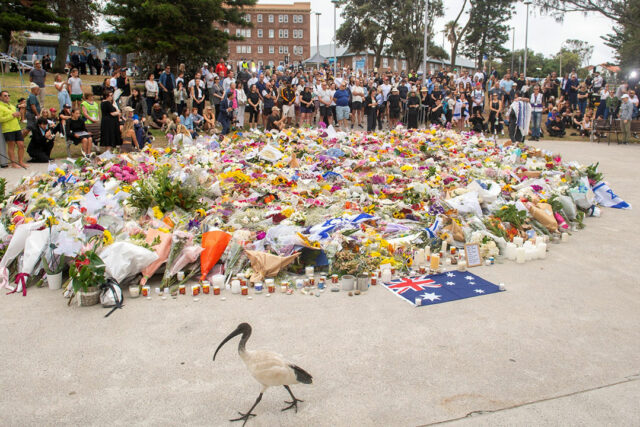
People gather at the floral tribute at Bondi Beach to honor the victims of a mass shooting targeting a Hanukkah celebration on Sunday at Bondi Beach in Sydney, Australia. — REUTERS

SYDNEY — The leader of the Australian state of New South Wales said on Wednesday he will recall parliament next week to pass wide-ranging reforms of gun and protest laws, days after the country’s deadliest mass shooting in three decades.

The alleged father-and-son perpetrators opened fire on a Jewish Hanukkah celebration on Sydney’s famed Bondi Beach on Sunday, in an attack that shook the nation and intensified fears of rising antisemitism and violent extremism.

Funerals of the Jewish victims of Sunday’s attack began on Wednesday, amid anger over how the gunmen — one of whom was briefly investigated for links to extremists — were allowed access to powerful firearms.

Chris Minns, the Premier of New South Wales state where the attack took place, told a news conference parliament would return on Dec. 22 to hear “urgent” reforms, including capping the number of firearms allowed by a single person and making certain types of shotguns harder to access. 

The state government will also look at reforms making it harder to hold large street protests after terror events, in order to prevent further tensions.

“We’ve got a monumental task in front of us. It’s huge,” he said.

“It’s a huge responsibility to pull the community together. I think we need a summer of calm and togetherness, not division.”

SURVIVING ALLEGED SHOOTER TO BE CHARGED SOON
Sajid Akram, 50, was shot dead by police at the scene, while his 24-year-old son Naveed Akram emerged from a coma on Tuesday afternoon after also being shot by police.

Prime Minister Anthony Albanese said earlier on Wednesday the surviving gunman would be charged within hours, but New South Wales Police Commissioner Mal Lanyon told a news conference the force was still waiting for medication to wear off before formally questioning him.

The younger Akram remains in a Sydney hospital under heavy police guard.

The men accused of carrying out Sunday’s attack had traveled to the southern Philippines, a region long plagued by Islamist militancy, weeks before the shooting that Australian police said appeared to be inspired by Islamic State.

US President Donald J. Trump told a Hanukkah event at the White House late on Tuesday that he was thinking of the victims of the “horrific and antisemitic terrorist attack.”

“We join in mourning all of those who were killed, and we’re praying for the swift recovery of the wounded,” he said.

FUNERALS FOR JEWISH VICTIMS BEGIN
A funeral for Rabbi Eli Schlanger, an assistant rabbi at Chabad Bondi Synagogue and a father of five, was held on Wednesday.

He was known for his work for Sydney’s Jewish community through Chabad, a global organization fostering Jewish identity and connection. Mr. Schlanger would travel to prisons and meet with Jewish people living in Sydney’s public housing communities, Jewish leader Alex Ryvchin said on Monday.

Mr. Albanese is facing criticism that his center-left government did not do enough to prevent the spread of antisemitism in Australia during the two-year Israel-Gaza war.

“We will work with the Jewish community, we want to stamp out and eradicate antisemitism from our society,” Mr. Albanese told reporters.

The government and intelligence services are also under pressure to explain why Sajid Akram was allowed to legally acquire the high-powered rifles and shotguns used in the attack. The government has already promised sweeping reforms to gun laws.

Mr. Akram’s son, meanwhile, was briefly investigated by Australia’s domestic intelligence agency in 2019 over alleged links to Islamic State, but there was no evidence at the time he posed a threat, Mr. Albanese said.

MAN PRAISED AS HERO TO UNDERGO SURGERY
Mr. Albanese said Ahmed al-Ahmed, 43, the man who tackled one of the shooters to disarm his rifle and suffered gunshot wounds, was due to undergo surgery on Wednesday.

Mr. Al-Ahmed’s uncle, Mohammed al-Ahmed in Syria, said his nephew left his hometown in Syria’s northwest province of Idlib nearly 20 years ago to seek work in Australia.

“We learned through social media. I called his father and he told me that it was Ahmed. Ahmed is a hero, we’re proud of him. Syria in general is proud of him,” the uncle told Reuters.

The family of 22-year-old police officer Jack Hibbert, who was shot twice on Sunday and had been on the force for just four months, said in a statement on Wednesday he had lost vision in one eye and faced a “long and challenging recovery” ahead.

“In the face of a violent and tragic incident, he responded with courage, instinct, and selflessness, continuing to protect and help others whilst injured, until he was physically no longer able to,” the family said.

Health authorities said 22 people were still in several Sydney hospitals.

HOLOCAUST SURVIVOR AMONG VICTIMS
Other shooting victims included a Holocaust survivor, a husband and wife who first approached the gunmen before they started firing, and a 10-year-old girl named Matilda, according to interviews, officials and media reports.

Matilda’s father told a Bondi vigil on Tuesday night he did not want his daughter’s legacy to be forgotten.

“We came here from Ukraine… and I thought that Matilda is the most Australian name that can ever exist. So just remember the name, remember her,” local media reported him as saying.

In Bondi on Wednesday, swimmers gathered on Sydney’s most popular beach and held a minute’s silence.

“This week has obviously been very profound, and this morning, I definitely feel a sense of the community getting together, and a sense of everyone sitting together,” Archie Kalaf, a 24-year-old Bondi man, told Reuters. “Everyone’s grieving, everyone’s understanding and processing it in their own way.” — Reuters

Myanmar junta says Suu Kyi ‘in good health’ after son raises alarm

MYANMAR’s former leader Aung San Suu Kyi — REUTERS

MYANMAR’S junta has said that detained former leader Aung San Suu Kyi is “in good health,” a day after her son told Reuters he has received little information about the 80-year-old’s condition and fears she could die without him knowing.

In an interview in Tokyo earlier this week, Kim Aris said he had not heard from his mother in years and believes she is being held incommunicado in Myanmar’s capital, Naypyidaw.

Ms. Suu Kyi, a Nobel Peace Prize laureate, was detained after a 2021 military coup that ousted her elected civilian government and sparked a civil war. She is serving a 27-year sentence on charges including incitement, corruption and election fraud — all of which she denies.

“Daw Aung San Suu Kyi is in good health,” a statement posted on junta-run Myanmar Digital News said on Tuesday, using an honorific for the former leader. The statement offered no evidence or details about her condition.

“The military claims she is in good health, yet they refuse to provide any independent proof, no recent photograph, no medical verification, and no access by family, doctors, or international observers. If she is truly well, they can prove it,” Mr. Aris told Reuters on Wednesday in response to the statement.

A Myanmar junta spokesman did not respond to calls seeking comment.

FEARING THE WORST
In the interview earlier this week, Mr. Aris had said he hopes an upcoming multiphase election in Myanmar, starting Dec. 28, might offer an opportunity for the military to release Ms. Suu Kyi or move her to house arrest.

Myanmar’s military has a history of releasing prisoners to mark holidays or important events. Ms. Suu Kyi was freed in 2010 days after an election, ending a previous long period of detention.

Mr. Aris has joined a chorus of critics, including several foreign governments, dismissing the polls as a sham aimed at legitimizing military rule. 

The junta accused Mr. Aris of trying to disrupt the election — the first general poll since 2020, when the military accused Ms. Suu Kyi of committing fraud.

“This is merely a fabrication, timed and distributed to disrupt the free and fair multi-party democratic general election that will be held in Myanmar in the near future,” the junta statement said.

Ms. Suu Kyi’s National League for Democracy, Myanmar’s largest political party, remains dissolved and several other anti-junta political groups are boycotting the polls.

“I have no intention of interfering in Burma’s politics. But after years of total isolation, secrecy, and silence, any son would begin to fear the worst,” Mr. Aris added in response to the junta’s statement, using the country’s former name.

“My concern is growing because my mother has been hidden for so long that I now have to ask the most painful question: is she still alive?” Reuters

Coupang CEO fails to appear at South Korean parliamentary hearing on data breach

A MAN walks along a nearly empty street in Seoul, South Korea, July 12, 2022. — REUTERS

SEOUL — The founder of South Korea’s Coupang failed to appear before a Wednesday parliamentary hearing about the massive data breach at the e-commerce giant, angering lawmakers who said they would hold him responsible.

Coupang, Inc. Chief Executive Officer (CEO) and Chairman Bom Kim declined to attend the hearing, citing his overseas residence and commitments as head of a global company operating in more than 170 countries.

“Chairman Bom Kim’s claim that he cannot attend because he is traveling abroad and is a global CEO is, in my view, an act that truly mocks the public and delivers despair to global investors,” said lawmaker Choi Hyung-du.

“Even Meta’s Mark Zuckerberg and Amazon’s Jeff Bezos —heads of companies larger than Coupang — did not refuse to appear before Congress hearings,” he said.

Lawmakers said they will be filing a complaint against Mr. Kim, accusing him of breaking a law that compels witnesses to attend hearings and make themselves available for investigations. Under the law, people can be fined or imprisoned for refusing testimony.

The personal data of more than 33 million Coupang customers was leaked in a breach believed to have started on June 24 through overseas servers, though the company did not learn of the problem until Nov. 18.

New York-listed Coupang’s shares have slumped some 17% since the company revealed the leak at its South Korean unit late last month.

Standing in for Mr. Kim at the hearings was Harold Rogers, the interim CEO of Coupang Corp. — the company’s South Korean unit which accounts for the vast majority of its revenue.

“I’m in communication with our board of directors, including with our chairman,” Mr. Rogers said, but added “I am the decision maker in Korea.”

Mr. Rogers said that under US SEC rules, the breach did not count as a material breach as the information leaked is not considered highly sensitive. The breach would not violate US privacy law, he added.

South Korean President Lee Jae Myung has since called for increased penalties for corporate negligence in data breaches. Under current South Korean law, companies that fail to implement adequate data protection measures can be fined up to 3% of revenue. 

That could mean a fine of more than 1 trillion won ($680 million) for Coupang, which reported 38.3 trillion won in revenue in 2024. Reuters

Brazil Senator Flavio Bolsonaro woos business leaders ahead of presidential run

EN.WIKIPEDIA.ORG

BRASILIA/SAO PAULO — Brazilian Senator Flavio Bolsonaro, the son of jailed former President Jair Bolsonaro, is meeting this week with business and finance leaders to address skepticism over his economic policies as he prepares to run for president next year, people familiar with his plans said.

After a lunch last Thursday at UBS offices in Sao Paulo where attendees questioned the seriousness of his bid, the senator is meeting this week with banks, investment funds, business leaders and a market-focused podcast, two of the sources told Reuters.

Another of the sources close to the senator said he is unlikely to define an economic program before February. Until then, he plans an intense schedule of private-sector meetings and international travel including a visit to the United States, the same source said.

Flavio Bolsonaro did not respond to a request for comment. The people declined to be named because of the sensitivity of the issue.

The goal, according to the first two sources, is to present his candidacy as credible to business leaders who helped propel his father to the presidency in 2018. The former president, serving time for a coup plot after his 2022 electoral defeat, said this month he wanted his eldest son to run for Brazil’s highest office in 2026.

The elder Mr. Bolsonaro’s endorsement of his son sent Brazil’s currency and stock market sliding. Many investors had bet on Mr. Bolsonaro backing a more seasoned candidate with executive experience, such as Sao Paulo Governor Tarcisio de Freitas, his former minister, to challenge leftist President Luiz Inacio Lula da Silva next year.

Mr. Lula is polling 10 percentage points ahead of both Mr. de Freitas and Flavio Bolsonaro in simulated run-off scenarios, according to a survey by pollster Quaest released on Tuesday.

The younger Mr. Bolsonaro added to skepticism last Sunday by saying he could withdraw his candidacy although that would come “at a price,” while his allies pushed in Congress to shorten his father’s prison sentence. The senator has since vowed to stay in the race, pledging to present a market-friendly agenda as “a more centrist Bolsonaro.”

The elder Mr. Bolsonaro deferred economic policy questions throughout his 2018 campaign to University of Chicago-trained economist Paulo Guedes, his eventual economy minister, but his son has not named a point person to coordinate his policy proposals.

At the UBS lunch, Flavio Bolsonaro said his agenda would mirror his father’s pro-market policies, such as privatizations and fiscal discipline, according to attendees. They said the senator suggested his economic policies would be led by Mr. Guedes, former central bank chief Roberto Campos Neto, former development bank head Gustavo Montezano, or someone similar.

Mr. Guedes and Mr. Campos Neto have not been invited to take a role in Mr. Bolsonaro’s nascent campaign, nor are they interested in one, according to people close to the former officials.

Mr. Guedes has told acquaintances he is reluctant to return to frontline politics given the deep polarization in Latin America’s largest economy, the same sources said. Mr. Campos Neto in July became vice-chairman of Nubank, Latin America’s biggest digital lender.

Mr. Montezano, chief executive of investment firm YvY Capital, was at the UBS luncheon but said through his press office that he attended strictly as a guest at the organizers’ invitation.

“The person chosen will be someone who worked with Guedes, is close to him, or aligns with the same agenda – that is guaranteed,” one of the sources close to the senator said, adding that it would be too early to settle on a single name.

Two of the sources close to the former economic officials said Flavio Bolsonaro recently reached out to Adolfo Sachsida, who headed Brazil’s economic policy secretariat under Mr. Guedes and later served as energy minister.

Their conversation was broadly focused on political support rather than any specific role in the campaign, one of them said. — Reuters

Abbott shares strategies for a diabetes-friendly holiday 

Philippine Yuletide food staples such as puto bumbong are usually available near churches for attendees of the dawn mass or simbang gabi. — PHILIPPINE STAR/MIGUEL DE GUZMAN 

Global healthcare company Abbott shared several strategies to help people with diabetes enjoy holiday feasts while keeping their sugar intake in check. 

In a statement on Tuesday, Abbott recommended simple measures such as controlling food portions and choosing healthier alternatives. 

“These everyday decisions allow people with diabetes to fully embrace the season, protect their health, and step into the new year with confidence and hope,” Dr. Gamaliel Tayao, Abbott’s head of medical affairs in the Philippines, said in the statement. 

Abbott suggested that, instead of white rice, brown rice can serve as a nutritious alternative, as it retains more essential vitamins, minerals, and antioxidants, while having a gentler effect on blood sugar levels. 

For other festive staples, the company recommended opting for grilled dishes over fried ones to reduce trans-fat intake, which is linked to heart disease and obesity. It also advised using leaner cuts, such as chicken breast or pork loin, for Filipino favorites like adobo and menudo to maintain flavor without excess fat. 

To further aid digestion and support healthy cholesterol levels, Abbott recommended boosting dishes like pancit and lumpia with fiber-rich vegetables such as carrots, squash, and bell peppers. 

For dessert, the company suggested prioritizing fresh fruits, which offer natural sweetness and fiber, over heavy, sugar-laden sweets. 

According to the International Diabetes Federation, the Philippines has 4.7 million adults with diabetes, representing 7.5% of the country’s nearly 72 million adult population. 

Beyond dietary changes, Abbott emphasized the importance of physical activity, noting that movement, like walking with loved ones or dancing, helps support glucose regulation. 

The company also highlighted the value of continuous glucose monitoring (CGM) devices for tracking real-time body responses, as well as the use of diabetes-specific nutritional drinks to prevent sugar spikes when schedules become busy. 

Abbott, a US-based global healthcare company, develops diagnostics, medical devices, nutrition products, and medicines. — Edg Adrian A. Eva