Home Blog Page 4988

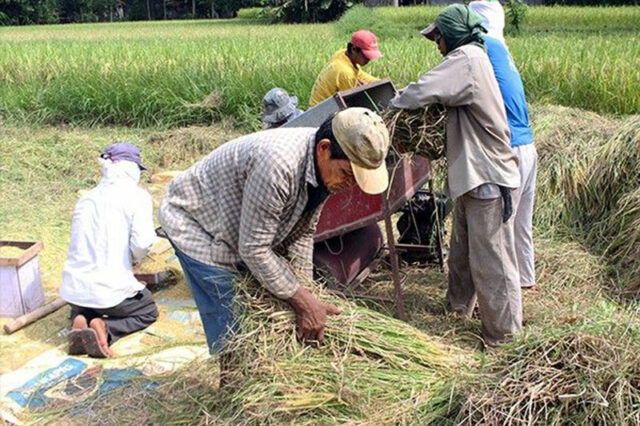
Farmers call on NFA to procure palay at P20/kilo to build emergency stocks

PHILSTAR FILE PHOTO

FARMERS called on the National Food Authority (NFA) to raise its procurement price for palay (unmilled rice) to P20 per kilogram, saying it should build its buffer stock from domestic rice rather than imports.

“The buffer stock can be built up even without importing through local procurement. What is needed is for the NFA to have the political will to buy palay from farmers,” Kilusang Magbubukid ng Pilipinas Chairperson Rafael V. Mariano said in a Viber message.

The Palace recently announced a proposal to import 330,000 metric tons (MT) of rice to meet the NFA’s buffer stock mandate.

Under Republic Act No. 11203 or the Rice Tariffication Law, the NFA has been stripped of its power to import rice and has been reduced to maintaining an emergency inventory from domestically-grown rice. The government has instead made separate import arrangements through selected trading companies to build up the NFA’s inventory.

Agriculture Undersecretary Mercedita A. Sombilla confirmed yesterday that the NFA no longer imports rice to build up a buffer stock and advised the agency to source more grain from farmers.

Mr. Mariano said that the NFA should increase its buying price for palay to a minimum of P20, and receive funding sufficient to procure between 20% and 25% of the domestic harvest.

He said the NFA can generate volumes equivalent to the proposed rice imports by buying 520,000 MT of palay from farmers and mill it at an assumed recovery rate of 65%.

In a briefing, Agriculture Deputy Spokesman Rex C. Estoperez said any decision to increase the procurement price lies with the NFA Council.

Mr. Estoperez said there are no current proposals to increase the NFA’s procurement funding, adding that the NFA can maximize its haul by seeking out growing areas with low farmgate prices.

“To increase the procurement price of the National Food Authority, (Sen. Cynthia A. Villar) has said there is funding, so it’s up to the NFA and the NFA Council to recommend,” he said.

The NFA Council is headed by President Ferdinand R. Marcos, Jr., who is also the Secretary of Agriculture. NFA Administrator Roderico R. Bioco is the vice-chairman.

Mr. Estoperez said that the NFA intends to make offers competitive with those of private traders to build its buffer stock.

“For now, farmgate prices are high because of the dry cropping season; therefore (the NFA) should concentrate on areas with lower farmgate prices,” he said.

Samahang Industriya ng Agrikultura Executive Director Jayson H. Cainglet said that the government should go beyond offering competitive prices to build up inventories.

He proposed more purchasing of wet palay, which commands between P17 and P18 per kilo, as against dry palay priced at P21-P22 per kilo. He added that drying facilities can then be engaged from local government units and private millers.

He added that DA agencies can regulate imports by slowing the issue of sanitary and phytosanitary import clearances during critical periods of the growing cycle.

According to the Bureau of Plant Industry, the Philippines imported over 3.82 MT of rice in 2022, against 2.77 MT a year earlier.

In a statement on Monday, the DA said it expects the rice supply to remain stable even with El Niño looming.

The DA said that the Philippines had an ending palay inventory in the first quarter of about 5.66 million MT, equivalent to 51 days’ consumption.

This will increase following the inflows of rice from the March and April harvests, it said.

As of Tuesday, DA price monitors reported that imported well-milled rice sells for P40-P46 per kilo at public markets with the domestic equivalent selling for P39-P40.

Imported regular-milled rice fetched between P37 and P44 per kilo while domestic regular-milled rice sold for between P34 and P40 per kilo. — Sheldeen Joy Talavera
Philippines targets rice self-sufficiency by 2027

PHILSTAR FILE PHOTO

THE PHILIPPINES, the world’s second-biggest rice buyer behind China, aims to be fully self-sufficient in production of the staple crop by 2027, the Agriculture department said on Tuesday.

The pledge comes after previous administrations have failed to achieve the target due to policy missteps and the impact of more destructive weather dampening local productivity.

The Philippines currently imports more than 3 million tons of rice annually, mainly from Vietnam, to supplement local supply and keep prices stable.

Under a revamped five-year program, President Ferdinand R. Marcos, Jr.’s administration has identified “key strategies” to enhance production, including climate change adaptation and using digital technology.

The Department of Agriculture (DA) said in a statement it was seeking full rice self-sufficiency by 2027, or a year before the end of the President’s six-year term. Mr. Marcos is also the agriculture secretary.

The domestic rice supply is expected to stabilize at 24.99 to 26.86 million tons under the program.

The plan also aims for annual rice price increases to be limited to less than 1%, a 54% increase in the income of farmers and the maintenance of sufficient buffer stocks.

The DA said domestic rice supply currently remains sufficient and sought to allay concerns about a looming El Niño weather event, which can cause a severe dry spell.

With inflation remaining high, driven mainly by food costs, the government is looking to ensure that rice availability in particular is not hampered.

The National Food Authority, which maintains the grain stockpile, has proposed importing 330,000 tons of rice to cover an expected deficit in its buffer stock. Mr. Marcos has yet to approve the proposal. — Reuters

Capacity-building seen as main bottleneck to digitalizing agriculture

REUTERS

THE major bottleneck to digitalizing agriculture is capacity-building in the communities where new technology is targeted for adoption, analysts said.

“Capacity-building is always a challenge, especially when it comes to digital,” Henry James M. Sison, founder and chief farming officer of startup Agro-DigitalPH, said on Tuesday in a webinar organized by the Bangko Sentral ng Pilipinas (BSP) and the Southeast Asian Regional Center for Graduate Study and Research in Agriculture.

“Digital, in this context, needs to match the target locations. Adoption is on the basis of them being able to monetize what they have. You need to shepherd these communities,” he added.

Noppadon Khiripet, principal researcher at the National Electronics and Computer Technology Center in Thailand, said that “every technology that we build needs to have a specific user in mind.”

Jose Ildefonso U. Rubrico, professor at the Department of Mathematics, Physics and Computer Science at the University of the Philippines Mindanao, also noted the importance of capacitating cooperatives and partner institutions on how to use specific tools and technology.

Mr. Sison said that Agro-DigitalPH “starts by organizing communities into an association and cooperative; once this is done, it’s easier to leverage existing extension services in place. We don’t want to do something from scratch. We see the industry as an entire ecosystem, so if there are entities that provide production intervention and other types of programs, we usually partner with line agencies of the government to get these communities up to speed,” he said.

Some effort must also be expended in persuading the target communities to adopt technology, he added.

“How do you tell farmers and fishers that digital is the direction? It’s a hard sell. It’s a matter of working with community developers and training the trainers so they are the ones who talk on our behalf. We believe in building enterprises in the localities,” Mr. Sison said.

“Sometimes, some people in these communities have suspicions. It’s unavoidable that these things happen. That’s why it’s helpful to have people they know like someone from the Provincial Agriculture Office (PAGRO) to help out,” Mr. Rubrico added.

Mr. Sison also recommended the creation of a national, regional, or community database to monitor planting schedules and monitor prices.

“Farmers have to let the government understand what they’re planting for the season so that the governing body can say if we’ve planted too much of this thing, so we avoid peaks of supply or if we don’t have any at all. If this information is made public, we can stabilize prices,” he added.

Technology such as drones, satellites, and remote-sensing can help farmers make better data-driven decisions.

“For smallholder farms, just getting a bird’s eye view of their farm is a big deal. It makes it easier for them to visualize what’s happening and to identify the boundaries between cooperative members. It can also be useful in asking for assistance from government agencies; it can be used as proof (of farming activity),” Mr. Rubrico said.

In Thailand, Mr. Noppadon said that farmers use satellite images to monitor major crops like sugarcane or cassava with a high degree of accuracy.

Mr. Sison said the Agro-DigitalPH platform offers production management modules to integrate and record crops.

“What’s been a challenging experience for us is translating what a value chain is and telling your smallholder farmer how to consolidate and coordinate planning schedules and giving them the background on post-harvesting, to make sure the goods coming out can be easily bought,” he said.

“Without even technology, increasing productivity was already an alien concept to them. This is the reality on the ground,” he added. — Luisa Maria Jacinta C. Jocson

Impact of China reopening seen limited for Asia-Pacific banks

REUTERS

THE reopening of China’s economy is expected to benefit only a few banking systems in the Asia-Pacific (APAC), Moody’s Investor Service said.

“Benefits will be smaller for banks in other parts of the region because China’s economic recovery will be led by domestically oriented services and consumption, while the global economic slowdown and the effects of elevated inflation and higher interest rates in most APAC economies will loom large,” it said in a report on Tuesday.

Among the banking systems that will see only “small” benefits from China’s reopening are those of the Philippines, Bangladesh, India, Japan, South Korea, Malaysia, Pakistan, Taiwan, Vietnam, Indonesia, China, Australia, and New Zealand.

“These economies are also less reliant on exports to mainland China for overall expansion,” Moody’s said.

“A broader recovery of domestic consumption in China that can lead to greater demand for imports from other economies will be more gradual. This is because the Chinese consumers remain cautious on spending due to concerns on their income stability and the country’s weakening exports,” it added.

With spending remaining moderated, Moody’s also noted that there will likely be no significant increase in demand from China, which would not benefit commodity-producing economies such as Australia, Indonesia and New Zealand. 

“This means China’s reopening will provide little upside for banks in those countries, which have already benefited from sharp rises in commodity prices,” it said.

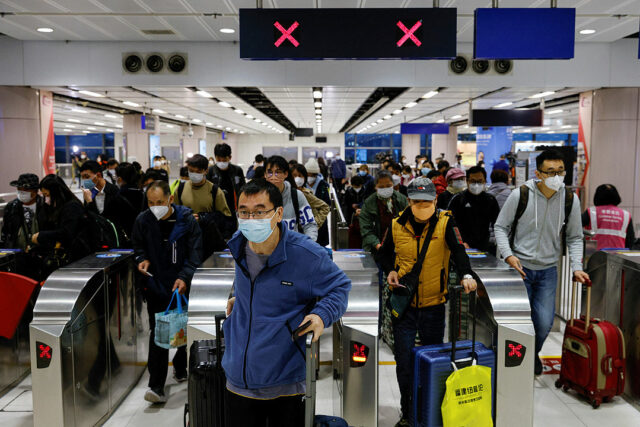
It also highlighted the lack of significant impact from easing travel restrictions in China.

“Positive effects of the end to travel restrictions by the Chinese government will also be modest for Asia-Pacific economies and their banking systems in general because apart from Hong Kong, Macau and Thailand, the region as a whole does not rely on Chinese visitors or tourism significantly for economic growth,” it added.

However, the report noted that the reopening will benefit the banking systems of Hong Kong, Macau, Mongolia, and Thailand, given their “close economic ties to China through shared borders or tourism.”

“Multinational banks with sizable operations in Hong Kong and mainland China will also benefit,” it added.

Moody’s said that banks in Hong Kong, Macau, Mongolia and Thailand will benefit most from the normalized movement of goods and travelers.

“Hong Kong’s exports will improve as restrictions on truck movements between Hong Kong and mainland China are lifted, while tourism in Hong Kong will rebound when Chinese visitors return. Mongolia’s exports to China will recover after the latter relaxed border controls,” it said.

“Thailand and Macau will get relief from the return of Chinese tourists, who were key to tourism prior to the pandemic. This will ease pressure on the banks’ asset quality,” it added. — Luisa Maria Jacinta C. Jocson

Trade department offers assistance to companies seeking to leverage RCEP

REUTERS

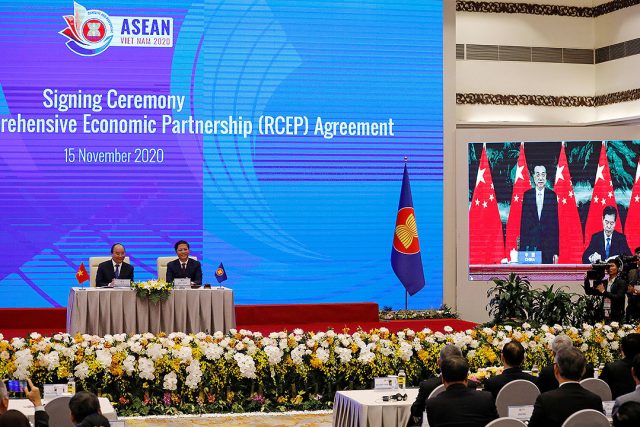
THE Department of Trade and Industry (DTI) said it will offer assistance to companies seeking to maximize the benefits from the Regional Comprehensive Economic Partnership (RCEP).

Trade Assistant Secretary Allan B. Gepty, the Philippines’ lead RCEP negotiator, said the DTI will organize an international trade forum to help “empower Philippine industries not just through RCEP but the other preferential trade arrangements we have entered into,” he said, referring to the European Union’s Generalized Scheme of Preferences Plus.

The DTI is also set to launch its export development plan for 2023 to 2028 in June.

The sessions the DTI plans to conduct with potential users of RCEP include briefings on how to find export markets, business matching, and joining value chain networks, which will give enterprises “an opportunity to tie up with companies who are linked to the global value chain,” Mr. Gepty told the Senate special oversight committee on RCEP.

“The campaign will be designed to be more strategic and precise depending on the competencies of our regions and provinces,” he told the committee.

The DTI will also launch an international trade relations assistance center and an import monitoring system that will give early warning of surging imports.

The Senate gave its concurrence to RCEP on Feb. 21, making the Philippines the last to ratify the trade deal following delays caused by worries about the impact on the agriculture sector.

RCEP members represent a third of the global economy. The participating countries are Australia, China, Japan, New Zealand, South Korea, and the Association of Southeast Asian Nations (ASEAN).

RCEP is expected to take effect in the Philippines on June 2.

Agriculture Undersecretary Mercedita A. Sombilla said the department plans to expand the Bureau of Animal Industry’s livestock price and volume watch operation to all agricultural commodities to provide “real time updates of the supply and demand situation (and) prices of agricultural products.”

Ms. Sombilla added that the private sector, through the Philippine Council for Agriculture and Fisheries, will “help in the participatory, monitoring and tracking of Department of Agriculture (DA)-funded programs and projects and their interventions in the regional and local levels.”

Its committees focus on rice, high-value crops, livestock, fisheries, and corn products.

Raul Q. Montemayor, chairman of the Federation of Free Farmers (FFF) said the agriculture sector’s RCEP preparations still require more “dedicated, in-depth discussion.”

“Most of these are old programs and frankly they do not work, because our deficit is just increasing,” Mr. Montemayor told the panel. The Philippines’ agricultural trade deficit widened to $3.22 billion in the fourth quarter of 2022.

United Broiler Raisers’ Association President Elias Jose M. Inciong called for a revival of a market information system, making it open to farmers, fisherfolk, cooperatives, traders, processors, the DA, and local governments.

“We have been asking for its resurrection in this administration since July 2022,” Mr. Inciong told BusinessWorld, referring to the National Information Network (NIN), as authorized by Republic Act No. 8435 or the Agriculture Fisheries Modernization Act of 1997.

The NIN is expected to address inconsistencies in agencies’ agricultural data. “When you plan and decide, you base it on data that everybody agrees on,” he said.

Anthony Aguirre, Foreign Affairs undersecretary for Multilateral Affairs and International Economic Relations, said the RCEP instrument of ratification was submitted to the ASEAN on April 3.

The DTI has completed a draft executive order and a customs memorandum order which will take effect on the same day as RCEP.

The schedule of tariff commitments has been transposed to the current tariff lines and is set for approval by the National Economic and Development Authority, according to Mr. Gepty.

FFF National Manager Leonardo Q. Montemayor told the committee that groups opposing RCEP will launch on May 8 the Bantay RCEP, a watchdog that will monitor its implementation as well as campaign for support for local products.

RCEP is “not a magic pill but it’s important to have a roadmap done immediately,” Senate President Pro-Tempore Lorna Regina B. Legarda, who heads the oversight committee, said.

RCEP is projected to generate 1.4 million jobs for the country by 2031, Senate President Juan Miguel F. Zubiri said. — Beatriz Marie D. Cruz

UK’s DCTS trade scheme kicks off in June

REUTERS

THE United Kingdom’s (UK) Developing Countries Trading Scheme (DCTS) comes into force in June, promising increased trade with the Philippines, the British Chamber of Commerce Philippines (BCCP) said.

BCCP Executive Director Chris Nelson said in a statement on Tuesday: “(The DCTS) will actually mean that over 90% of all Philippine products to the UK will be tariff-free… Philippine-UK trade relations are already very good — and this (DCTS) will further increase the close cooperation between the two countries,” Mr. Nelson said.

Announced in August, the DCTS is designed to replace the UK’s Generalized System of Preferences trading scheme. The DCTS will benefit 65 developing countries, including the Philippines.

Mr. Nelson added that the DCTS will also simplify the trade process between the two countries, smoothing the flow of goods.

“Some Philippine products that are being exported to the UK include agricultural products, electrical goods, and eyewear accessories. What we’re going to see (will be) more exports with the DCTS,” Mr. Nelson said.

“We work closely with the Philippine Embassy in London. We work together for UK companies (and) we also want to see Philippine companies doing well,” he added.

Mr. Nelson said that the BCCP will organize the “Breaking Economic Barriers 2023: Making the Philippines an Investment Destination” event on April 20 in Makati City.

“The (Philippine) market is progressively liberalized, thanks to recent economic regulations like the 100% foreign ownership of renewable energy. Furthermore, the Philippines’ young and energetic workforce makes it a desirable location for international companies,” Mr. Nelson said. — Revin Mikhael D. Ochave

Philippine police employee records leaked in data breach 

A DATABASE containing more than 1.2 million police records and 800 gigabytes of information on people who work or applied for employment in law enforcement in the Philippines appears to have been breached, according to a cyber-security researcher. 

In a report posted on vpnMentor, cyber-security researcher Jeremiah Fowler said Philippine authorities should look into the data breach and find out who is behind it. 

“Any data breach that exposes personal information belonging to police and members of law enforcement or other officials can be dangerous,” he said. 

“Individuals whose data are exposed could be potential victims of identity theft, phishing attacks and a range of other malicious activities.” 

“There is a common assumption that a data breach is usually caused by an outside hacker,” Yeo Siang Tiong, Kaspersky general manager for Southeast Asia, said in an e-mailed reply to questions. “But this is not always the case. Sometimes, it can be traced back to intentional attacks. Or it can be the result of a simple oversight or an innocent mistake by individuals or flaws in a company’s infrastructure.”
“A data breach, which exposes confidential, sensitive or protected information to an unauthorized person, generally happens because of weaknesses in human behavior and technology,” he added. 

Mr. Fowler said government agencies should conduct a comprehensive forensic audit on the exposed data. 

The Philippine National Police Criminal Investigation and Detection Group (CIDG) did not immediately reply to a Viber message seeking comment. 

Mr. Fowler said other highly sensitive information such as passports, birth and marriage certificates, academic transcripts and security clearance documents were also on the database. 

There were also documents on tax identification numbers of law enforcers. He said the said data were available for public access for at least six weeks. 

The cyber-security expert added that letters addressed to police officers that might be confidential were also available on the database. 

“The availability of government records in an unsecured database raises concerns about a potential national security issue,” he said.  

Mr. Fowler added that he had sent more than 15 notices about the data breach to several government agencies. 

Only the Philippine National Computer Emergency Response Team responded, saying it would look into the issue. 

In a report on April 17, global cyber-security firm Kaspersky said web attacks targeting entities in the Philippines rose to 492,567 in 2022 from 382,940 a year earlier. 

“Last year was a period of reopening for most businesses in Southeast Asia and, unfortunately, so too for cyber-criminals,” Mr. Tiong said in an April 17 report. 

The firm said human and technical errors were the main weaknesses of entities vulnerable to online attacks. 

The Philippines ranked 23rd out of 250 countries that were most affected by data breaches, with a total of 523,684 leaked accounts in the third quarter of 2022, virtual private network service provider Surfshark said in a report on Oct. 28.  

The country placed third worldwide in ransomware payments in 2021, with local organizations spending an average of P1.6 million, according to cyber-security firm Sophos.   

The Banker’s Association of the Philippines (BAP) has said unauthorized withdrawals and transfers reached more than P1 billion in 2021 due to an uptick in cyber-crime incidents amid a coronavirus pandemic. 

Interior and Local Government Secretary Benjamin C. Abalos, Jr. has said he would prioritize enhancing the Philippine police’s capabilities against cyber-crime. 

He said he would seek new equipment and hire more technical experts for the police’s anti-cybercrime division. 

The National Privacy Commission in December said it would work with the Cybercrime Investigation and Coordinating Center to come up with countermeasures to combat cyber-crime and data breaches. 

“The exposed records could also potentially allow criminals to target members of law enforcement for blackmail or other schemes,” Mr. Fowler said. 

“It is crucial to emphasize that the information in question was readily accessible to individuals with an internet connection.” — John Victor D. Ordoñez 

Former top Philippine envoy Del Rosario dies 

ALBERT F. DEL ROSARIO — US OFFICE OF THE SECRETARY OF DEFENSE PUBLIC AFFAIRS

ALBERT F. DEL ROSARIO, the former top Philippine envoy who led a key role in getting a United Nations-based tribunal to void China’s claim to more than 80% of the South China Sea in 2016, has died. He was 83.

The Management Association of the Philippines (MAP), where he was a member for 45 years, announced his passing on Tuesday.

“Ambassador Del Rosario will forever be remembered for being a paragon of statesmanship and management excellence for nation-building, and for his overwhelming love of country,” it said in a statement. “​We indeed lost an extraordinary leader, an exemplary public servant and a genuine patriot.”

“I join the entire nation in mourning the passing of former Foreign Affairs Secretary Albert del Rosario, an honorable diplomat and an esteemed public servant,” President Ferdinand R. Marcos, Jr. said in a statement.

“I extend my deepest sympathies to the family and loved ones of Secretary Del Rosario, who was known for his patriotism and integrity. We thank his deep commitment to our national interest and his unwavering devotion to our shared values,” he added.

Foreign Affairs Secretary Enrique A. Manalo also extended his condolences to Mr. Del Rosario’s family.

“He was a consummate diplomat and an inspiring leader who led the Department of Foreign Affairs (DFA) with integrity and unwavering commitment to public service,” he said on social media. “You will be missed, Mr. Secretary.”

Mr. Del Rosario was born in Manila on Nov. 14, 1939 to Luis del Rosario and Amparo Ferreros. His great grandmother Teresa Sempio was a sister of Felipa Sempio, the mother of Filipino hero Gregorio del Pilar.

He graduated from Xavier High School in New York and later attended college at New York University, graduating with a degree in Economics.

Mr. Del Rosario served as Philippine ambassador to the US under then-President Gloria Macapagal-Arroyo from 2001 to 2006 before being appointed Foreign Affairs secretary by ex-President Benigno S.C. Aquino III.

In May 2012, he called on the US to supply the Philippines with naval patrol vessels, aircraft, advanced radar systems and coastal surveillance facilities to keep the country’s sovereignty against Chinese claims in the South China Sea. 

On March 30, 2014, the Philippines submitted its memorial to the arbitral court in the Hague seeking to void China’s expansive claim in the South China Sea. It was the first time an international court ruled on China’s claim, which was based on a 1940s nine-dash line map.

“With firm conviction, the ultimate purpose of the memorial is our national interest,” Mr. del Rosario once said, referring to the Philippine pleading.

“It is about defending what is legitimately ours. It is about securing our children’s future. It is about guaranteeing freedom of navigation for all nations. It is about helping to preserve regional peace, security and stability. And finally, it is about seeking not just any kind of resolution but a just and durable solution grounded in International Law.”

The former top envoy on July 7, 2015 appeared before the tribunal to present “why the Philippines brought this case to arbitration and its importance to the region and the world.”

Mr. Del Rosario stepped down as Foreign Affairs secretary in March 2016, almost four months before the end of Mr. Aquino’s term, citing health reasons.

“We were privileged to have him as a Cabinet colleague who always challenged us to be tireless in the fulfillment of duty, unyielding in the defense of the national interest, gentlemanly in all aspects of private and public conduct, and unflinching in seeking to bring aid and assistance to our fellow citizens in danger areas,” his fellow Cabinet members under the Aquino government said in a statement.

“He was much older than most of us but acted younger than most in his zest for life and tirelessness in his official duties… The West Philippine Sea always being Filipino is his legacy; one we are committed to uphold with the same patriotic spirit Albert demonstrated in his years as secretary of Foreign Affairs,” they added. — Norman P. Aquino

Taiwan scores Chinese ambassador for migrant worker remarks

PHILIPPINE STAR/WALTER BOLLOZOS

TAIWAN’S Ministry of Foreign Affairs (MOFA) on Monday took to task China’s ambassador in Manila for his remark on overseas Filipino workers (OFW) in Taiwan, calling it “brazen threats [that] are unacceptable to the civilized world.”

The ministry said Chinese Ambassador to the Philippines Huang Xilian had used the safety of OFWs in Taiwan as a pretext to threaten the Philippine government, “manipulate the Taiwan issue, create panic and attempt to disguise the fact that it is China which is undermining regional peace and stability.”

This was after Mr. Huang asked Manila to oppose Taiwan’s independence if the country “cares genuinely” about the more than 150,000 OFWs living there.

“Protecting their nationals is one of the most important tasks of all foreign missions in Taiwan,” according to the Taiwan Ministry’s statement read, referring to Filipinos and Indonesians who live there.

“The MOFA maintains close communication and engages in frequent exchanges of opinions on regional developments with foreign representative offices in Taiwan,” it said. “When appropriate, MOFA also provides necessary assistance to countries to protect their citizens.”

It added that it recognizes the importance that Indonesia and the Philippines attach to their migrant workers in Taiwan and affirms the concrete steps of the two countries in promoting peace and stability in the region.

President Ferdinand R. Marcos, Jr. on Tuesday asked the Department of Foreign Affairs to ensure the safety and welfare of OFWs in Taiwan.

 “Taiwan is willing to continue discussions with Indonesia, the Philippines and other countries on protecting their nationals in Taiwan and other issues of bilateral cooperation so as to deepen friendly ties and jointly contribute to maintaining a free, open, peaceful and prosperous Indo-Pacific,” the Taiwan Ministry said.

National Security Council spokesman Jonathan E. Malaya last week said the Philippines adheres to the One China Policy, which recognizes Taiwan as part of China and “subscribes to the Association of Southeast Asian Nations principle of noninterference in approaching regional issues.”

 Mr. Marcos Jr. in February gave the US access to four more military bases on top of five existing sites under the Philippines’ Enhanced Defense Cooperation Agreement (EDCA) with the US.

Three of the four new EDCA locations are in northern Philippines — Naval Base Camilo Osias in Sta Ana, Cagayan; Lal-lo Airport, also in Cagayan; and Camp Melchor dela Cruz in Gamu, Isabela.

Cagayan is about 1,000 kilometers away from self-ruled Taiwan, which China claims as part of its territory.

Mr. Huang told a forum in Manila last week Washington seeks to take advantage of the new EDCA sites to interfere with the Taiwan situation “to serve its geopolitical goals and advance its anti-China agenda at the expense of peace and development of the Philippines and the region at large.” — Beatriz Marie D. Cruz

Puerto Galera stays open for tourism despite poor water quality in some parts 

DOT PHOTO

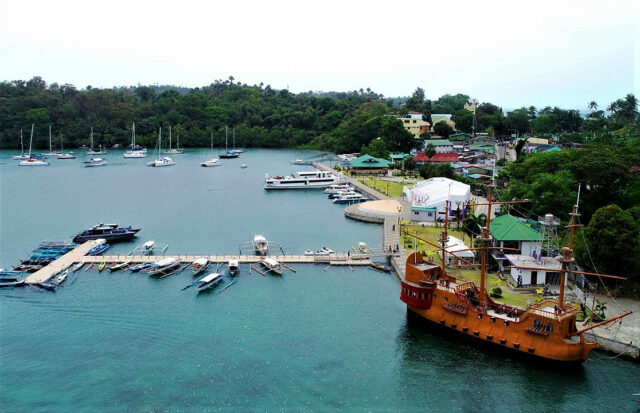
PUERTO Galera will remain open for visitors, the tourism secretary said on Monday, but environment and health officials cautioned that water quality monitoring will continue as majority of samples taken from the coastal town failed standards following a February oil spill.  

“The most important thing is to ensure the continued viability of Puerto Galera as a tourist destination,Tourism Secretary Christina Garcia-Frasco said at a livestreamed Palace briefing on Tuesday.  

She cited that Puerto Galeras international tourism receipts in 2022 reached P500 million, and the industry accounts for 85% of the local economy. 

She added that for domestic tourists, Puerto Galera, plus our other regional destinations, have reported in excess of their targets.”  

9 AREAS
The Department of Environment and Natural Resources (DENR) and Department of Health (DoH), meanwhile, issued a joint statement Tuesday saying only nine out of 35 sampling stations in Puerto Galera passed the standards on water quality testing.  

The nine areas that passed the water quality guidelines were: Small Lalaguna and Big Lalaguna Shoreline, Balete, Central Sabang Shoreline, Coco Beach, Batangas Channel, Paniquian, Balatero, and West San Isidro Bay.  

The remaining over and above the nine, means failure in our parameters. If we will average out, this means the areas are really contaminated,Environment Undersecretary Jonas R. Leones said in a separate media briefing.  

He clarified, however, that recent data are not conclusive whether the contaminants can be attributedto the oil spill as past testings also showed contamination in the water.   

Mr. Leones said national agencies, along with the Philippine Coast Guard and local government units, should undertake fingerprintingto determine if the contaminated areas were in fact caused by the oil spill.  

Despite coastal waters that seemed to be clear, he stressed that the visual appearance of the water does not necessarily mean that it is safe for recreational activities such as swimming.  

DENR Secretary Maria. Antonia Yulo-Loyzaga told a separate Palace briefing that President Ferdinand R. Marcos, Jr. ordered the department to continue monitoring the water and air quality levels in areas affected by the oil spill.  

The DoH also said that government agencies will continue monitoring the water contamination levels to warn residents if the water is unsafe for drinking.    

“The DoH and the DeNR remind the public to be cautious and seek support from local authorities for concerns and assistance,” it said. 

Ms. Frasco said the joint statement implies that Puerto Galera tourism continues to be open as there has been no direct attribution in terms of the direct source of the findings, considering the presence of human and economic activities in Puerto Galera.”  

She said 11,000 tourism workers could lose their jobs if Puerto Galera is closed to visitors.    

The industry could lose P5.4 million per day if water activities are banned in affected areas, she added.   

In a separate briefing, Oriental Mindoro Governor Humerlito A. Dolor said he has not imposed swimming and fishing bans on Puerto Galera despite the poor results of recent water quality tests. 

Ms. Frasco said the provincial office has reported that Oriental Mindoro has incurred over P900 million in losses due to the oil spill.  

The tanker MT Princess Empress, which was carrying 800,000 liters of fuel, sank off the waters of Naujan, Oriental Mindoro in late February.    

The impact of the spill on marine resources is still being analyzed, Mr. Leones said.   

At the moment, we are definitely undermanned and definitely we need support in terms of technology,said Ms. Yulo-Loyzaga. John Victor D. Ordoñez and Sheldeen Joy Talavera

Senate sought probe on LANDBANK-DBP merger 

A SENATOR has filed a resolution seeking to investigate the proposed merger of state-run lenders Land Bank of the Philippines (LANDBANK) and the Development Bank of the Philippines (DBP), citing potential risks on the welfare of employees and coconut levy beneficiaries.  

Senator Ana Theresia “RisaN. Hontiveros-Baraquel said the planned merger raises concerns on the potential risks and benefits it may bring to the economy, the stability of the financial system, and various stakeholders, including the employees of both institutions.”  

The LANDBANK and DBP also carry out separate, distinct, perhaps incompatible mandates,she said in Senate Resolution No. 570.   

While the DBP serves industry by financing infrastructure, logistics and commerce, the LBP has served as the primary institution mandated by the State to finance the agricultural development of the country.”  

She cited still unresolved issuesarising from the recent merging of LANDBANK and the United Coconut PlantersBank, with coconut farmer beneficiaries saying it will be more difficult to access support from the coco levy fund.  

Ms. Hontiveros-Baraquel added that the Land Bank of the Philippines Employees Association and the DBP EmployeesUnion said the LBP violated the terms of their Collective Negotiations Agreementsby failing to consult the unions on the merger. 

She also said that banks set up through legislation could only be merged by a law, citing remarks of former Finance Secretary Carlos G. Dominguez III. 

The Governance Commission for Government-owned and Controlled Corporations said on Monday that the President can proceed with a merger without waiting for Congress to file and pass related bills.” 

President Ferdinand R. Marcos, Jr. supports the LANDBANK-DBP merger.  

Finance Secretary Benjamin E. Diokno said last month that the merger will result in government savings of about P5.3 billion per year or at least P20 billion for the next four years.  

However, Ms. Hontiveros-Baraquel said, There is a need for the government to proceed cautiously and prudently vis-à-vis the contemplated merger, as well as clarify all legal issues involved.Beatriz Marie D. Cruz

Marcos orders peace councils to step up efforts vs political violence, illegal drugs 

PHILIPPINE STAR/KRIZ JOHN ROSALES

PRESIDENT Ferdinand R. Marcos, Jr. on Tuesday ordered the country’s national and regional peace and order councils to focus on addressing cases of political violence and illegal drugs, the presidential palace said in a statement.  

At a meeting on Tuesday with the councils, which are composed of representatives from different agencies and local government leaders, Mr. Marcos Jr. said they should stop the spread of illegal firearms to deter violence.  

The joint meeting sought to update the president on peace and order issues and provide policy recommendations, the Presidential Communications Office said. 

Mr. Marcos said recent cases of political violence after the May 2022 national and local elections showed that these threats to peace and order persist.  

He said law enforcement agencies should also do something about drug syndicates fighting over territory. 

“These quarrels stem from the territorial fights over areas where drugs are distributed, who controls the drug trade in that area,” the president said. “We really need to monitor these closely and dismantle these activities.”  

A total of 261,642 anti-illegal drug operations conducted from 2016 to 2022 resulted in the arrests of 376,582 drug personalities, the Palace said.  

At the same event, Mr. Marcos said the five-man advisory group tasked to determine the possible drug links of third-level police officers would probably finish their review in two weeks.  

“It’s a very complicated system, and it’s a very complicated situation,” he said. “We cannot move on the basis of gossip.”   

In January, Interior and Local Government Secretary Benjamin C. Abalos, Jr. called on all senior cops to resign after a probe found many high-ranking police officers were involved in the illegal drug trade. 

“The police have to be with us,” Mr. Marcos said. “We need to have a good, functioning police force.” John Victor D. Ordoñez