Home Blog Page 489

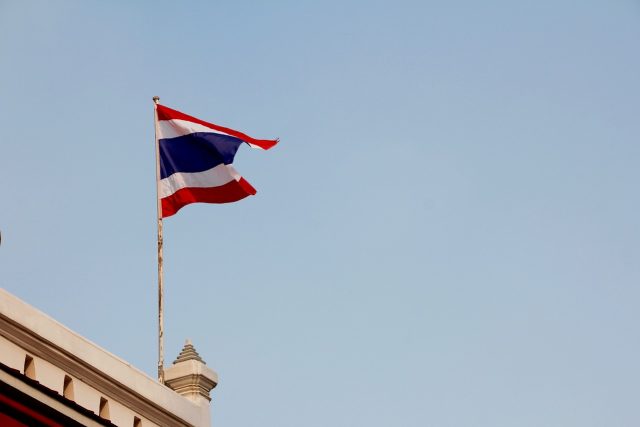
Thailand’s liberal opposition tops polls as election looms

PIXABAY

BANGKOK — Thailand’s progressive opposition People’s Party and its leader are most favored among voters for next month’s general election, two surveys showed, underlining the stiff challenge facing Prime Minister Anutin Charnvirakul’s bid to stay in power.

Thailand’s February 8 election could usher in a new round of turmoil in Thailand, and will be a showdown between the anti-establishment People’s Party, Mr. Anutin’s conservative Bhumjaithai and the former ruling party Pheu Thai, with bitter histories of betrayal that could complicate efforts to form a government.

The People’s Party was backed by 34.2% of respondents in a January 6-9 poll by Suan Dusit released on Sunday, with Bhumjaithai second on 16.2% and the once-dominant Pheu Thai on 16.0%.

People’s Party head and opposition leader Natthaphong Ruengpanyawut was the top choice for prime minister among 32% of the 2,682 people surveyed, followed by Pheu Thai’s Yodchanan Wongsawat on 17.4% and Mr. Anutin third on 15.1%.

With huge support among young and urban Thais for its bold reform agenda, the People’s Party’s predecessor Move Forward won the most votes in the 2023 election but was blocked from power by lawmakers allied with the royalist military.

Move Forward was later dissolved by a court, one of a series of dramatic twists in an unrelenting cycle of upheaval that has seen three Thai premiers in less than three years.

Mr. Anutin called a snap election on December 12 after less than 100 days in office during a turbulent parliamentary session that could have led to a no-confidence vote and the collapse of his fragile minority government. It came also as Thailand’s military was embroiled in a fierce three-week border conflict with Cambodia.

A poll released on Sunday by the National Institute for Development Administration also showed Mr. Natthaphong as the top choice for premier, backed by 24.7% of the people surveyed, followed closely by Mr. Anutin with 20.8% and Mr. Yodchanan fifth on 9.6%.

NIDA’s January 5-8 survey of 2,500 people showed the People’s Party as the most popular with about 30.5% of support, followed by Bhumjaithai at 22.3%.

The billionaire Shinawatra family’s Pheu Thai was third, picked by 15.4% of respondents, indicating declining support for the populist outfit following the collapse of its government in September after Paetongtarn Shinawatra’s sacking by a court and the jailing its influential founder, Thaksin Shinawatra. — Reuters

South Korea’s Lee to head for Japan summit a week after meeting China’s Xi

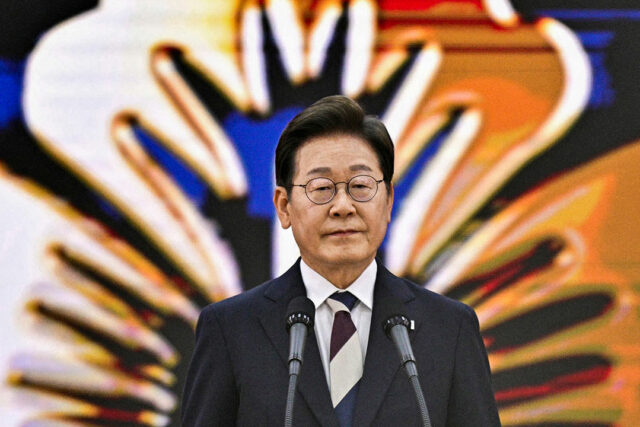
SOUTH KOREA’S President Lee Jae-myung delivers a speech after taking his oath during his inauguration ceremony at the National Assembly in Seoul on June 4, 2025. — REUTERS

SEOUL — South Korean President Lee Jae Myung is set for a summit with Japanese Prime Minister Sanae Takaichi on Tuesday, a week after one with Chinese President Xi Jinping, as Seoul seeks to balance ties with both neighbors.

The summit in Japan’s Nara City comes amid a growing diplomatic dispute between Beijing and Tokyo, and analysts expect Ms. Takaichi to highlight the stability of three-way ties between the United States, Japan, and South Korea.

Mr. Lee has taken an approach of “pragmatic diplomacy” in seeking to balance ties with China and Japan, which could making it easier to reach pacts in business fields such as artificial intelligence (AI).

“Historically, disputes between China and Japan go on for a long time,” said Yang Kee-ho, a Japanese studies professor at South Korea’s Sungkonghoe University.

“It is very likely that the Sino-Japanese relationship will deteriorate throughout (Takaichi’s) term in office.”

Beijing was infuriated after Ms. Takaichi said in November a Chinese attack on democratically governed Taiwan could be deemed an existential threat to Japan, which could trigger a military response from Tokyo.

China regards Taiwan as part of its territory, a claim the island’s government rejects.

In the face of the tension with China, Japan may seek to bolster diplomatic ties with South Korea, possibly through a strategic partnership, said Lee Chang-min, another Japan expert at Hankuk University of Foreign Studies.

“Not only has Japan’s relationship with China deteriorated, the United States has also put a little distance from Japan in its (Taiwan) stance,” said Mr. Lee.

South Korea’s Mr. Lee and Ms. Takaichi may discuss the Japan-China dispute during their meeting, a security adviser to Lee, Wi Sung-lac said on Friday. However, South Korea is unlikely to take sides, analysts said.

“Our relationship with Japan is as important as our relationship with China,” Mr. Lee told reporters during his state visit to China last week.

NORTH KOREA ISSUES
Perennial concerns, such as the denuclearization of the Korean peninsula and the fate of Japanese nationals abducted by neighboring North Korea are also expected to figure on the agenda.

However, analysts said the areas offering the easiest scope for concrete agreements may lie in business, such as cooperation in artificial intelligence and chips, and easing travel for business executives between the countries.

The two leaders are expected to extensively discuss “areas directly related to people’s livelihoods … such as intellectual property and AI,” Mr. Wi said.

The summit in Ms. Takaichi’s home prefecture of Nara also offers Mr. Lee an opportunity to take up issues of regional cooperation, as part of a pledge to spur development in areas outside Seoul.

Ties are still plagued by longstanding tension on topics such as Japan’s colonization of Korea, including the treatment of Korean women forced to work in its wartime military brothels.

Such historical issues have moved from the center stage of relations for now, analysts said, though some in South Korea still want them to stay high on the agenda.

Mr. Lee’s two-day visit to Japan, shorter than his four-day trip to China, is part of “shuttle diplomacy” efforts that the two countries agreed last year.

Even if the trip has no tangible outcome, said Mr. Yang, “The most important thing is to keep the shuttle meetings going … and eventually reaching concrete results.” — Reuters

Over 1,000 families inside evacuation center amid Mayon Volcano’s unrest

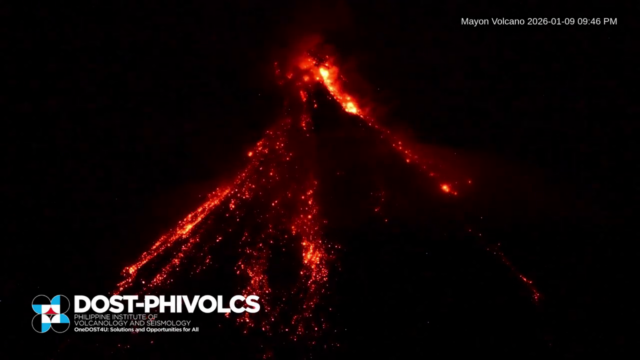
Incandescent pyroclastic density currents (PDC) or “uson” and rockfall being shed from the summit lava dome of Mayon Volcano on Jan. 9, 2026.—PHIVOLCS-DOST FB PAGE

The ongoing unrest of Mayon Volcano in Albay has caused 1,116 families to take shelter in 14 evacuation centers across the province, according to the National Disaster Risk Reduction and Management Council (NDRRMC) on Monday.

Another 15 families are staying outside the evacuation centers, bringing the total number of affected families to 1,131, the NDRRMC said in its 11:00 a.m. report.
All families sheltered in evacuation centers are from Albay, mostly from the municipality of Malilipot and Tabaco City.

The NDRRMC said that food and relief assistance were provided to 1,127 families in need, with a total cost of over P8.6 million.

Mayon Volcano has remained at Alert Level 3 since Jan. 6 due to its heightened unrest, during which magmatic eruptions on its lava dome and other volcanic activities were observed.— Edg Adrian A. Eva

Fed’s Powell says Trump administration has threatened him with a criminal indictment

US FEDERAL RESERVE Chairman Jerome Powell — REUTERS/KEVIN LAMARQUE/FILE PHOTO

WASHINGTON — The Trump administration has threatened to indict Federal Reserve Chair Jerome Powell over Congressional testimony he gave last summer about a Fed building project, an action Powell called a “pretext” to gain more influence over the central bank and monetary policy.

The development in the long-simmering effort by President Donald Trump for greater control over the Fed had immediate fallout, with Republican Senator Thom Tillis, a member of the Senate Banking Committee that vets Presidential nominees for the Fed, saying in a statement on X that the threatened indictment puts the Department of Justice’s “independence and credibility” in question. Tillis said he would oppose any Trump nominees to the Fed, including the president’s coming choice of a new chair, “until this legal matter is fully resolved.”

Powell revealed the subpoenas and threats in a Sunday night statement.

“On Friday, the Department of Justice served the Federal Reserve with grand jury subpoenas, threatening a criminal indictment related to my testimony before the Senate Banking Committee last June,” Powell said. “I have deep respect for the rule of law and for accountability in our democracy. No one — certainly not the chair of the Federal Reserve — is above the law.”

“But this unprecedented action should be seen in the broader context of the administration’s threats and ongoing pressure” for lower interest rates and more broadly for greater say over the Fed, he said.

“This new threat is not about my testimony last June or about the renovation of the Federal Reserve buildings. It is not about Congress’s oversight role…Those are pretexts. The threat of criminal charges is a consequence of the Federal Reserve setting interest rates based on our best assessment of what will serve the public, rather than following the preferences of the President.”

Trump told NBC News Sunday that he had no knowledge of the Justice Department’s actions. “I don’t know anything about it, but he’s certainly not very good at the Fed, and he’s not very good at building buildings,” Trump said.

A Justice Department spokesperson declined to comment on the case but added: “The Attorney General has instructed her US Attorneys to prioritize investigating any abuse of taxpayer dollars.”

POWELL INQUIRY A ‘LOW POINT’ IN TRUMP PRESIDENCY
Trump has demanded the Fed cut rates sharply since resuming office in January, blaming its policy for holding back the economy and musing about firing Powell despite the legal protections ostensibly covering the Fed chair from removal. He is also trying to fire Fed Governor Lisa Cook in a case that is now pending before the Supreme Court.

The independence of central banks, at least in setting interest rates in order to control inflation, is considered a central tenet of robust economic policy, insulating monetary policymakers from short-term political considerations and allowing them to focus on longer-term efforts to keep prices relatively stable.

The inquiry into Powell “is a low point in Trump’s presidency and a low point in the history of central banking in America,” said Peter Conti-Brown, a Fed historian at the University of Pennsylvania. “Congress did not design the Fed to reflect the president’s daily fluctuations, and because the Fed has rebuffed President Trump’s efforts to take the Fed down, he is launching the full weight of American criminal law against its Chair.”

Financial markets reflected little change in near-term expectations for Fed policy even after Powell’s term as chair ends in May, with rate-futures continuing to price in two rate cuts for the year.

The dollar fell and US equity futures slid on the latest news, but the moves were relatively modest so far.

LATEST TRUMP ADMINISTRATION MOVES MARK TURNING POINT?
The subpoenas and statement by Powell mark a stark shift in the now longstanding battle between Trump and Powell. Trump elevated Powell to the chair’s job during his first term but quickly soured on him and made his opinions clear in a series of rebukes and threats.

Powell, for his part, had largely eschewed comment on the president’s actions or statements, instead acknowledging that chief executives often express opinions about a variety of issues, and pledging, as he did in the Sunday statement, to “continue to do the job the Senate confirmed me to do.”

However, the Trump administration’s latest moves, coming within months of the end of Powell’s term as chair in May, appear to have marked a turning point, with Powell directly accusing the administration of using the legal system to try to achieve its goal of getting the Fed to lower interest rates further and faster than the central bank’s body of 19 policymakers feels is appropriate.

While Powell’s term as chair ends in May, he has the right to continue on the Fed board until January 31, 2028, depriving the president of an additional Fed appointment — what would be Trump’s fourth on the seven-member board — until near the end of his term.

The White House began early last year criticizing the Fed’s $2.5-billion renovation of two of its buildings in Washington, describing it as overly costly and ostentatious.

Some analysts at the time did call it a pretext for the Trump administration’s pressure campaign for lower interest rates, but Powell did not. The Fed chair instead posted detailed explanations of the work on the central bank’s website and sent letters to members of the Trump administration providing background.

In June, when Powell gave his usual twice-yearly testimony on monetary policy to Congress, he was asked repeatedly about the work, which he explained as being necessary updates to outdated infrastructure. In July Trump made a rare presidential visit to the site, and Powell gave him a tour. — Reuters

Mayon Volcano logs 133 rockfalls, 30 pyroclastic density currents, says PHIVOLCS

Mayon Volcano shedding a pyroclastic density current (PDC) or "uson" on the Miisi Gully on the southern upper slopes on Jan. 8, 2026. — NDRRMC FB PAGE

A total of 133 rockfall events and 30 pyroclastic density currents (PDC), locally known as “uson,” were recorded at Mayon Volcano in Albay over the past 24 hours, the Philippine Institute of Volcanology and Seismology (PHIVOLCS) reported on Monday.

Lava dome formation and lava flow effusion were also observed during the same monitoring period, PHIVOLCS said. This indicates a slow extrusion of thick molten lava that accumulates near the crater before moving down the volcano’s slopes.

Meanwhile, the volcano emitted 526 tons of sulfur dioxide and a moderate volcanic plume rising about 800 meters above the crater.

Ground deformation measurements also indicate swelling of the volcano, PHIVOLCS added.

Mayon, the country’s most active volcano, remains at Alert Level 3 since January 6 due to heightened activity, notably the magmatic eruptions on its lava dome.

The state volcanologist continues to caution nearby residents to avoid the six-kilometer Permanent Danger Zone amid hazards such as rockfalls, PDCs, and ballistic fragments. — Edg Adrian A. Eva

DPWH to start Maharlika, C5 rehab this year

THE PHILIPPINE STAR

The Department of Public Works and Highways (DPWH) said it targets to start the P16‑billion rehabilitation of the Maharlika Highway this year, part of its broader infrastructure upgrade program for 2026.

“For this year, we will start the construction and completion of the Maharlika Highway. There will be massive rehabilitation starting this year,” Public Works and Highways Secretary Vivencio B. Dizon said during a media briefing on Monday.

He did not provide a specific timeline for the Maharlika Highway upgrade, saying the planned rehabilitation is still under assessment.

The Maharlika Highway, also known as the Pan-Philippine Highway, is a road and bridge network linking Luzon, Visayas, and Mindanao.

DPWH is also targeting the rehabilitation of six additional key highways, including Circumferential Road 5 (C5) in Metro Manila, Andaya Highway, MacArthur Highway in Apalit, Pampanga, Buot-Taop Bridge in Cebu City, Oyungan Bridge in Iloilo, and Tubod-Nabuna Bridge in Aloran, Misamis Occidental.

The agency is also implementing the ongoing rehabilitation of Epifanio de los Santos Avenue (EDSA), which is expected to be fully completed by May.– Ashley Erika O. Jose

Landmark Myanmar Rohingya genocide case to open at UN’s top court

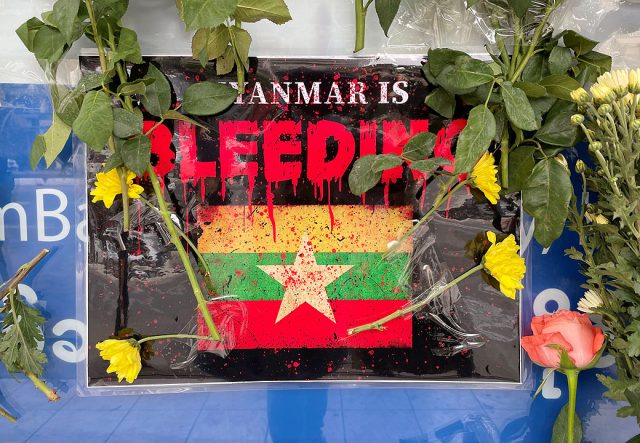
FLOWERS hang during a nationwide flower campaign against the military coup in Yangon, Myanmar, April 2, 2021. — REUTERS

THE HAGUE — A landmark case accusing Myanmar of committing genocide against minority Muslim Rohingya will open at the United Nations’ top court on Monday.

It will be the first genocide case the International Court of Justice (ICJ) will hear in full in over a decade. The outcome will have repercussions beyond Myanmar, likely affecting South Africa’s genocide case at the ICJ against Israel over the war in Gaza.

Myanmar has denied accusations of genocide.

“The case is likely to set critical precedents for how genocide is defined and how it can be proven, and how violations can be remedied,” Nicholas Koumjian, head of the UN’s Independent Investigative Mechanism for Myanmar, told Reuters.

The predominantly Muslim West African country of Gambia filed the case at the ICJ – also known as the World Court – in 2019, accusing Myanmar of committing genocide against the Rohingya, a mainly Muslim minority in the remote western Rakhine state.

Myanmar’s armed forces launched an offensive in 2017 that forced at least 730,000 Rohingya from their homes and into neighboring Bangladesh, where they recounted killings, mass rape, and arson.

A UN fact-finding mission concluded the 2017 military offensive had included “genocidal acts”.

Myanmar authorities rejected that report, saying its military offensive was a legitimate counter-terrorism campaign in response to attacks by Muslim militants.

In 2019 preliminary hearings in the ICJ case, Myanmar’s then leader, Aung San Suu Kyi, rejected Gambia’s accusations of genocide as “incomplete and misleading”.

The hearings at the ICJ will mark the first time that Rohingya victims of the alleged atrocities will be heard by an international court although those sessions will be closed to the public and the media for sensitivity and privacy reasons.

The hearings start at 10 a.m. (0900 GMT) on Monday and will span three weeks.

Myanmar has been in further turmoil since 2021, when the military toppled the elected civilian government and violently suppressed pro-democracy protests, sparking a nationwide armed rebellion.

The country is currently holding phased elections that have been criticized by the United Nations, some Western countries and human rights groups as not free or fair.— Reuters

Malaysia restricts access to Grok AI as backlash over sexualized images widens

REUTERS

KUALA LUMPUR — Malaysia on Sunday temporarily blocked access to Grok, joining a growing list of countries taking action after the generative artificial intelligence chatbot sparked a global backlash by allowing users to create and publish sexualized images.

xAI, the Elon Musk-led firm behind Grok, on Thursday said it would restrict image generation and editing to paying subscribers as it addressed lapses that allowed users on X to produce sexualized content of others, often without consent.

On Saturday, Indonesia became the first country to temporarily deny access to the bot.

In a statement on Sunday, the Malaysian Communications and Multimedia Commission (MCMC) said it would restrict access to Grok following repeated misuse of the tool “to generate obscene, sexually explicit, indecent, grossly offensive, and non-consensual manipulated images, including content involving women and minors.”

MCMC said it issued notices to X and xAI this month to demand the implementation of effective technical and moderation safeguards, but the received responses relied primarily on user-initiated reporting mechanisms and failed to address the risks posed by the design and operation of the AI tools.

“MCMC considers this insufficient to prevent harm or ensure legal compliance,” it said.

xAI replied to a Reuters email seeking comment with what seemed to be an automated response: “Legacy Media Lies.” X did not immediately respond to a request for comment.

MCMC said access to Grok would be restricted until effective safeguards were implemented, adding that it was open to engaging with the firms.

Muslim-majority Malaysia has strict laws governing online content, including a ban on obscene and pornographic materials. It has put internet companies under greater scrutiny in recent years in response to what it calls a rise in harmful content. Malaysia is considering barring users younger than 16 from accessing social media.— Reuters

Deaths from Iran protests reach more than 500, rights group says

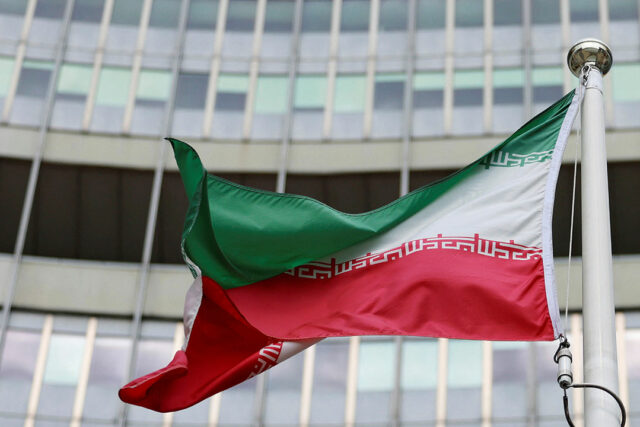
THE Iranian flag flutters outside the IAEA headquarters in Vienna, Austria, June 9, 2025. — REUTERS/LISA LEUTNER

DUBAI/JERUSALEM — Unrest in Iran has killed more than 500 people, a rights group said on Sunday, as Tehran threatened to target US military bases if President Donald Trump carries out his renewed threats to intervene on behalf of protesters.

With the Islamic Republic’s clerical establishment facing the biggest demonstrations since 2022, Mr. Trump has repeatedly threatened to intervene if force is used on protesters.

According to its latest figures – from activists inside and outside Iran – US-based rights group HRANA said it had verified the deaths of 490 protesters and 48 security personnel, with more than 10,600 people arrested in two weeks of unrest.

Iran has not given an official toll and Reuters was unable to independently verify the tolls.

Mr. Trump was to meet with senior advisers on Tuesday to discuss options for Iran, a US official told Reuters on Sunday. The Wall Street Journal had reported that options included military strikes, using secret cyber weapons, widening sanctions and providing online help to anti-government sources.

“The military is looking at it, and we’re looking at some very strong options,” Mr. Trump told reporters travelling on Air Force One on Sunday night.

Iranian Parliament Speaker Mohammad Baqer Qalibaf warned Washington against “a miscalculation.”

“Let us be clear: in the case of an attack on Iran, the occupied territories (Israel) as well as all US bases and ships will be our legitimate target,” said Mr. Qalibaf, a former commander in Iran’s elite Revolutionary Guards.

AUTHORITIES INTENSIFY CRACKDOWN
The protests began on December 28 in response to soaring prices, before turning against the clerical rulers who have governed since the 1979 Islamic Revolution.

Iranian authorities accused the US and Israel of fomenting trouble and called for a nationwide rally on Monday to condemn “terrorist actions led by the United States and Israel,” state media reported.

The flow of information from Iran has been hampered by an internet blackout since Thursday. Mr. Trump said on Sunday he would talk to Elon Musk about restoring internet access in Iran through his Starlink satellite service.

Footage posted on social media on Saturday from Tehran showed large crowds marching at night, clapping and chanting. The crowd “has no end nor beginning,” a man is heard saying.

Footage from the northeastern city of Mashhad showed smoke billowing into the night sky from fires in the street, masked protesters and a road strewn with debris, another video posted on Saturday showed. Explosions could be heard.

Reuters verified the locations.

State TV showed dozens of body bags on the ground at the Tehran coroner’s office, saying the dead were victims of events caused by “armed terrorists”, as well as footage of loved ones gathered outside the Kahrizak Forensic Medical Centre in Tehran waiting to identify bodies.

UN Secretary-General Antonio Guterres said he was shocked by reports of violence by the Iranian authorities and urged maximum restraint. “The rights to freedom of expression, association & peaceful assembly must be fully respected & protected,” he said on X.

Authorities on Sunday declared three days of national mourning “in honor of martyrs killed in resistance against the United States and the Zionist regime,” according to state media.

Three Israeli sources, who were present for Israeli security consultations over the weekend, said Israel was on a high-alert footing for the possibility of any US intervention.

Israel and Iran fought a 12-day war in June 2025, which the United States briefly joined by attacking nuclear installations. Iran retaliated by firing missiles at Israel and an American air base in Qatar.

‘RIOTERS AND TERRORISTS’
While the Iranian authorities have weathered previous protests, the latest have unfolded with Tehran still recovering from last year’s war and with its regional position weakened by blows to allies such as Lebanon’s Hezbollah since the October 7, 2023 Hamas-led attacks against Israel.

Iran’s unrest comes as Mr. Trump flexes US muscles internationally, having ousted Venezuelan President Nicolas Maduro, and discussing acquiring Greenland by purchase or force.

Iranian President Masoud Pezeshkian said Israel and the US were masterminding destabilization and that Iran’s enemies had brought in “terrorists … who set mosques on fire … attack banks, and public properties”.

“Families, I ask you: do not allow your young children to join rioters and terrorists who behead people and kill others,” he said in a TV interview, adding that the government was ready to listen to the people and to resolve economic problems.

Iran summoned Britain’s ambassador on Sunday to the foreign ministry over “interventionist comments” attributed to the British foreign minister and a protester removing the Iranian flag from the London Embassy building and replacing it with a style of flag used prior to the 1979 Islamic Revolution.

Britain’s foreign office did not immediately reply to a request for comment.

Alan Eyre, a former US diplomat and Iran expert, thought it unlikely the protests would topple the establishment.

“I think it more likely that it puts these protests down eventually, but emerges from the process far weaker,” he told Reuters, noting that Iran’s elite still appeared cohesive and there was no organized opposition.

Iranian state TV broadcast funeral processions in western cities such as Gachsaran and Yasuj for security personnel killed in protests.

State TV said 30 members of the security forces would be buried in the central city of Isfahan and that six more were killed by “rioters” in Kermanshah in the west.

US READY TO HELP, SAYS TRUMP
Mr. Trump, posting on social media on Saturday, said: “Iran is looking at FREEDOM, perhaps like never before. The USA stands ready to help!!!”

In a phone call on Saturday, Israeli Prime Minister Benjamin Netanyahu and US Secretary of State Marco Rubio discussed the possibility of US intervention in Iran, according to an Israeli source present for the conversation.

Some protesters in the United States took to the streets in support of the demonstrators in Iran. In the Los Angeles neighborhood of Westwood, a rental truck drove into a crowd of a few hundred people who were holding a rally in support of the Iranian protesters, the KNBC news outlet reported on Sunday.

Los Angeles Police officer Sean Murray said that, based on video news accounts, the driver was escorted away by police. Mr. Murray said it was not clear how many people were injured, but that all of the injured were treated at the scene.

Reza Pahlavi, the exiled son of Iran’s last shah and a prominent voice in the fragmented opposition, said Mr. Trump had observed Iranians’ “indescribable bravery”. “Do not abandon the streets,” Mr. Pahlavi, who is based in the US, wrote on X.— Reuters

PSE chief eyes four IPOs this year

BW FILE PHOTO

THE Philippine Stock Exchange (PSE) is setting a modest target of about four initial public offerings (IPOs) this year, underscoring the cautious pipeline for equity fundraising after listings fell short of expectations last year.

“We only targeted four (IPOs) for this year,” PSE President and Chief Executive Officer Ramon S. Monzon told reporters on Friday.

Mr. Monzon said the local bourse is targeting to raise around P170 billion to P175 billion in capital this year. This would be higher than the P144.14 billion in total capital raised in 2025.

The goal follows a weak IPO turnout in 2025, when only two companies listed despite a target of six.

Cebu-based fuel distributor and retailer Top Line Business Development Corp. debuted in April, while West Zone water concessionaire Maynilad Water Services, Inc. completed its offering in November.

Mr. Monzon said that among the IPOs they are anticipating this year are electronic wallet platform GCash and PNB Holdings Corp.’s (PHC) listing by way of introduction.

“I don’t know if the PNB will go first, (or) maybe Globe will go first,” he said. “I think GCash will file soon. Maybe not in the first quarter, [maybe] when the revised float is passed,” Mr. Monzon added.

The Securities and Exchange Commission (SEC) is set to ease the minimum public ownership requirement for IPOs, which will pave the way for the long-awaited debut of GCash. Under the proposed rules, companies with a market value of over P150 billion like Mynt would need a public float of at least 12%.

Globe Fintech Innovations, Inc. (Mynt), which operates GCash, has been pushing the SEC to lower the minimum public ownership requirement as the current 20% public float may be too large for the stock market to absorb.

There were plans for a GCash IPO last year, but a stock market slump forced the company to push back its planned IPO to this year.

Bloomberg News previously reported that the company is looking to raise $1 billion (P59.3 billion) to $1.5 billion (P89 billion) from the IPO.

On the other hand, PHC, a subsidiary of the LT Group, Inc., filed an application for the registration of its shares with the SEC, in preparation for the planned listing by introduction.

Listing by introduction lets a company list its shares on the stock exchange without immediate capital raising. This method suits cases where a listed issuer distributes an unlisted issuer’s securities as a property dividend to its shareholders.

Last year, several companies shelved their IPO plans including Hann Holdings, Inc., SM Prime Holdings’ real estate investment trust and Razon-led Prime Infrastructure Capital, Inc.

CONFIDENCE ISSUE
Meanwhile, Mr. Monzon said the stock market’s slump in 2025 can be attributed to “confidence issues,” as a corruption scandal involving flood control projects has shaken public and investor confidence.

“The corruption issue has to be resolved,” the PSE chief said.

The PSE index (PSEi) closed 2025 at 6,052.92, down 7.29% from end-2024. On Nov. 14, the PSEi plunged to 5,584.35, its weakest close in nearly five and a half years or since the 5,570.22 close on May 28, 2020.

Mr. Monzon said there should be high-profile arrests related to the flood control scandal.

“They just have to… jail some people as they indicated to really deliver a strong message about improved governance, improved transparency,” he said.

The Independent Commission for Infrastructure is investigating claims that government officials, lawmakers, and contractors pocketed billions in kickbacks from anomalous flood control projects. — A.G.C.Magno

BSP easing may continue as weak growth drags

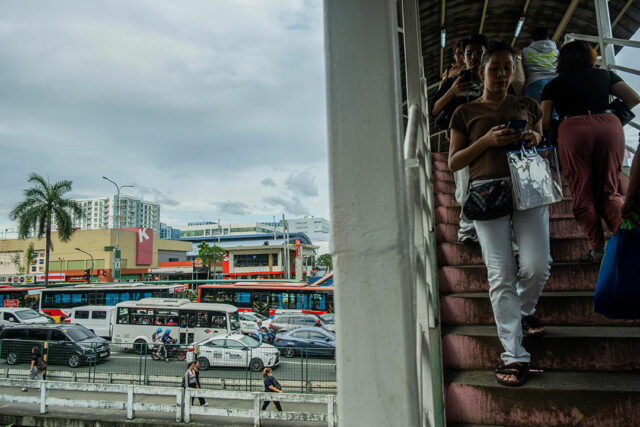
Vehicles are stuck in traffic along EDSA, Dec. 27, 2025. — PHILIPPINE STAR/RYAN BALDEMOR

THE BANGKO SENTRAL ng Pilipinas (BSP) may further ease this year as the corruption scandal may continue to dampen government spending and economic growth, Nomura Global Markets Research said.

In a report dated Jan. 9, Nomura Chief ASEAN (Association of Southeast Asian Nations) Economist Euben Paracuelles and Macroeconomic Research Analyst Yiru Chen said the BSP could deliver one 25 basis points (bps) each at its February and April meetings.

“Our forecast is underpinned by our more cautious view on the growth outlook, which is the overriding policy consideration for BSP,” they said. “The negative output gap has widened sharply, adding to a benign inflation outlook.”

The Nomura analysts see Philippine gross domestic product (GDP) growing below 4% in the last quarter of 2025 to bring the full-year print to 4.7%, falling short of the government’s 5.5%-6.5% goal.

If realized, this would mark a sharp slowdown from the 5.7% growth posted in 2024.

“We believe the ‘bad scenario’ continues to play out regarding the impact on growth of the ongoing government corruption scandal via a sharp drop in public sector spending amid increased scrutiny,” Mr. Paracuelles and Ms. Chen said.   

Government spending fell for the fourth consecutive month in November after slipping by 9.61% year on year to P498.3 billion.

Expenditures have declined since August following the corruption scandal that embroiled government officials and private contractors in kickback allegations from anomalous flood control projects.

Household spending likewise eased to 4.1% in the third quarter from 5.2% last year, marking the slowest clip seen in over four years.

Nomura noted that the ongoing flood control mess could also hit private investment spending in the near term.

For this year, the think tank expects the economy to expand around the lower end of the administration’s recently revised 5%-6% target at 5.3%.

“We expect a rebound in growth only in (the second half), helped by base effects and the government implementing catch-up spending plans,” Mr. Paracuelles and Ms. Chen said, adding that the local economy may face risks if global growth weakens and public spending remains slow.

The BSP earlier said that they are approaching the end of their easing cycle even as their growth outlook remains clouded.

BSP Governor Eli M. Remolona, Jr. has left the door open for one more cut at its Feb. 19 review, though noted it could be “unlikely” considering existing economic data and as the current policy rate is already near their neutral rate.

The Monetary Board has lowered key borrowing costs by a total of 200 bps since the start of its easing cycle in August 2024, bringing it to an over three-year low of 4.5%.

Still, Mr. Remolona said a weaker-than-expected growth could prompt them to deliver two reductions this year.

The BSP projects the economy to have grown by 4.6% by end-2025. It sees growth to pick up to 5.4% in 2026 and 6.3% in 2027.

NARROWER DEFICIT
Meanwhile, Nomura said the government’s budget gap may narrow to 5.1% of its GDP this year amid ongoing fiscal tightening.

Latest Treasury data showed that the budget deficit fell by an annual 26.02% in November to P157.6 billion, reversing from the P11.2-billion surplus in October.

“Given the fiscal tightening, we forecast a narrowing of the fiscal deficit to 5.1% of GDP in 2026 from 5.5%, slightly outperforming the 5.3% target in the medium-term fiscal consolidation framework but still well above the pre-COVID average of 2.4%,” Mr. Paracuelles and Ms. Chen said.

On the other hand, Nomura said the Philippines could earn a credit rating upgrade if the government manages to resolve the flood control corruption issue in the next 12 months.

In November, S&P Global affirmed the Philippines’ long-term “BBB+” and short-term “A-2” credit ratings with a “positive” outlook, as it expects growth recovery despite the impact of the corruption scandal on the economy. 

The government seeks to achieve the “A”-level credit rating.

Meanwhile, a “positive” outlook means the Philippines’ credit rating could be raised within 24 months if improvements are sustained.

However, Nomura noted that failure to address the issue could prompt S&P to revert its outlook on the Philippines to “stable” or even downgrade it to “negative.” — Katherine K. Chan

Philippine remittances seen to keep momentum despite new US tax

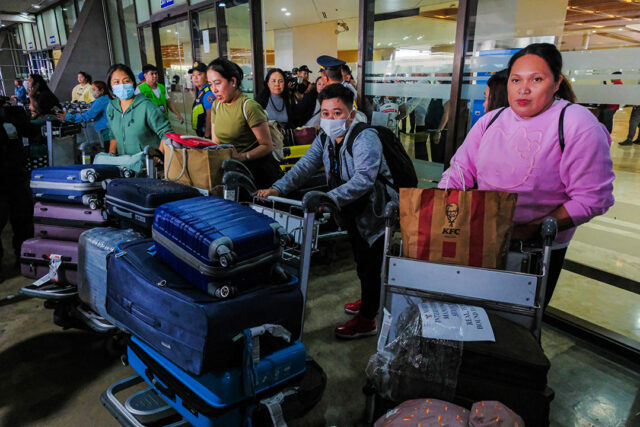
Overseas Filipino workers (OFWs) arrive at the Ninoy Aquino International Airport (NAIA) Terminal 1, June 16, 2025. — PHILIPPINE STAR/RYAN BALDEMOR

By Katherine K. Chan and Aaron Michael C. Sy, Reporters

OVERSEAS Filipino workers’ (OFW) remittances are expected to remain stable this year despite the United States’ move to charge a 1% tax on cash transfers to foreign countries, analysts said.

Analysts see the new duty having a muted impact on remittance growth in the Philippines.

“The proposed 1% tax on OFW remittances in the US could be a drag, though minimal or negligible, on OFW remittances growth and on the overall local economy,” Rizal Commercial Banking Corp. Chief Economist Michael L. Ricafort told BusinessWorld in a Viber message.

On Jan. 1, the US government began to impose a 1% tax on remittances from US-based senders, regardless of citizenship status, made via cash payments, money orders and cashier’s checks.

However, the regulation exempts money wired via US banks or US-issued debit and credit cards, as well as hand-carried cash.

Union Bank of the Philippines Chief Economist Ruben Carlo O. Asuncion noted that steady global demand for Filipino workers and better labor conditions in major host countries should support continued growth in remittances this year.

“Regarding the newly implemented 1% US remittance tax, its macroeconomic impact is likely minimal, as it applies only to cash-based transfers while digital and bank channels remain exempt,” he added via Viber.

Mr. Ricafort estimated the Philippines may lose around P8 billion to P9 billion annually due to the tax, although noted that remittances could still grow by around 3% this year.

“About 3% OFW remittances growth (is) still possible for 2026 since the 1% tax would be relatively affordable for many OFWs in the US,” he said.

A 1% tax means the US government gets a dollar for every $100 remitted from the US to other countries.

In October, Filipinos abroad sent home $3.171 billion, up 3% year on year from $3.079 billion, latest data from the Bangko Sentral ng Pilipinas (BSP) showed.

This was the slowest growth since May when remittances rose by 2.9% but matched the 3% growth in July.

The US remained the top source of remittances to the country in the first 10 months of the year, accounting for 40.3% of total remittances during the period.

“The new US remittance tax will put mild pressure on the peso in the short term as inflows dip slightly,” Reyes Tacandong & Co. Senior Adviser Jonathan L. Ravelas likewise said in a Viber message.

Philippine Institute for Development Studies Senior Research Fellow John Paolo R. Rivera said in a Viber message that the new remittance tax could slightly dampen support for the peso as the US is a major source of inflows.

“In the near term, any impact on the Philippine peso is likely to be modest, as remittances are relatively resilient and driven more by labor demand and migrant incomes than taxes alone. For the medium to long term, the effect will depend on whether tax meaningfully changes remittance behavior,” Mr. Rivera said.

In addition to reduced inflows, Mr. Rivera said the added tax could weaken key buffers for the local unit as it could encourage the use of informal channels.

Meanwhile, a trader said OFWs would likely adapt by sending more money home to offset the tax costs.

“Since there will be 1% excise tax, there will be changes in behavior. But if the remittances are intended for their families, I think the remittances will adjust rather than result (in) a reduction,” the trader said in a Viber message.

“Those in the US who will send money here will just work harder to compensate for the excise tax rather than send something smaller,” the trader added.

Mr. Asuncion also noted that the levy might drive OFWs to switch from traditional or physical remittance service providers to digital platforms to cut costs.

“(I)t could influence remittance practices by encouraging OFWs to shift toward formal, digital platforms to avoid additional costs, potentially reducing reliance on informal channels and improving financial inclusion,” he said. “While some households may adjust transfer frequency or consolidate remittances to manage costs, overall inflows should remain broadly stable.”

In the long term, Mr. Ravelas said the peso could be kept broadly stable by OFWs’ shift to cheaper digital channels to send money home.

He said this could prompt policymakers to strengthen monitoring and promote low-cost formal channels.

BDO Capital & Investment Corp., President Eduardo V. Francisco said he is hopeful the additional tax would not dampen remittances, given that the bulk of remittances sent to the Philippines are for families.

“I guess we have to see if the remittance businesses will just absorb the new excise tax or pass it to their customers. I hope it is not the latter,” he said in a Viber message.

The BSP projects cash remittances to grow by 3% to $36.6 billion this year.

ADVERTISEMENT
ADVERTISEMENT