Home Blog Page 4723

The dawn of a new era in Philippine Immigration Law

PHILSTAR

Since its passage on Aug. 26, 1940, Commonwealth Act No. 613, or the “Philippine Immigration Act of 1940,” has been the definitive guide on the issuance of Philippine visas, exclusion and deportation proceedings, the powers and structure of the Bureau of Immigration (BI), and other reportorial requirements that a foreign national must comply with to legally stay in the Philippines.

Over the past 80 years, the BI passed various issuances to complement the Philippine Immigration Act. However, it cannot be doubted that these amendments, notably made on a piecemeal basis, must necessarily be woven together to form a comprehensive and updated national immigration policy.

Thus, the 19th Congress of the Philippines, through the House of Representatives, proposed and approved on final reading House Bill (HB) No. 8203, also known as the “Immigration Modernization Act,” which aims to update the seemingly outdated law, and revamp and modernize the existing legal framework for immigration policies in the country. As the bill has now been passed at the House of Representatives, a counterpart bill shall also be proposed and approved by the Senate. Once approved, these bills shall be consolidated and endorsed to the Office of the President for final approval.

Under HB No. 8203, the BI Commissioner and his Deputy Commissioners must now be holders of a college degree, with proven capacity for administration; that at least one of them must be a member of the Philippine Bar in good standing for at least five years prior to the appointment; and that at least one member must come from the ranks of the BI. Under the current law, the Commissioner and Deputy Commissioners must only be natural-born citizens and be at least 30 years of age.

HB No. 8203 also defined the functions of the various divisions of the BI which include the Administrative Division, the Alien Registration Division, the Finance and Logistics Division, the Human Resource Management and Development Division, the Immigration Regulation Division, the Information and Communications Technology Division, the Immigration Intelligence Division, the Immigration Law Enforcement Division, the Legal Affairs Division, and the Planning and Research Division.

The proposed legislation also provided more clarity on the various visas which are available to foreign nationals. Under HB No. 8203, the current 9(a)/Temporary Visitor Visas are now classified as “A Visas,” which are further subdivided into three categories, namely: the “A-1 Visa,” which is available to aliens who come to the Philippines for temporary business activities, the “A-2 Visa,” which is granted to aliens coming for leisure, and the “A-3 Visa” which is for foreign nationals seeking entry for medical and health purposes.

HB No. 8203 also reintroduced the current 9(g) visas as “G Visas” which are available to foreign nationals coming to the Philippines on pre-arranged employment, intra-corporate assignments, and to professionals, performing artists, athletes, and cultural exchange workers. The bill also creates a separate visa category for missionaries, religious ministers, and their dependents, who may now be issued with an “H Visa.” There are also new types of visas such as the “J Visa” which is available to foreign media workers, the “K Visa” which is available to foreign exchange visitors, and the “L-1” and “L-2 Visas” which are available to refugees and stateless persons, respectively.

On immigrant visas, HB No. 8203 notably increased the allotment for quota immigrants per nationality from 50 to 200.

The proposed legislation also introduced a process called “Adjustment of Status,” whereby a non-immigrant foreign national may be granted permanent resident status if: a.) the foreign national makes an application for such an adjustment; b.) the foreign national is eligible to receive a quota or non-quota immigrant visa and is admissible to the Philippines as a permanent resident; and, c.) a quota immigrant visa is immediately available to the foreign national at the time of application, without need of departing from the Philippines.

HB No. 8203 also updated the grounds for a foreign national’s deportation from the Philippines. Aliens may now be deported from the country if they engage, abet, aid, or finance any terrorist activity; if they are charged with a crime involving acts or omissions punishable under Philippine penal laws cognizable by the Regional Trial Courts and the Sandiganbayan; if they violated Philippine labor and taxation laws, rules, and regulations; if they are found to be undesirable such that their further stay in the Philippines is inimical to public welfare or the dignity of Filipinos or the Republic of the Philippines as a sovereign nation; and, if their presence or activities in the country may result in adverse consequences to Philippine foreign policies as determined by the Secretary of Foreign Affairs.

In summary, the prospect of passing HB No. 8203 into law is indeed a welcome development. Initiatives to update the Philippine Immigration Act are necessary to reform and streamline our local immigration policies. We must nonetheless ensure that the implementation of the new law, once passed, will strike a balance between strict regulations on entry and a welcoming framework for foreign nationals to stay in the Philippines. Ultimately, the eventual passage of the proposed law must also translate to a more efficient and transparent immigration bureau.

This article is for general information and educational purposes only and not offered as legal advice or opinion.


Christianna Manami Y. Salud is an associate of the Immigration department of Angara Abello Concepcion Regala & Cruz Law Offices (ACCRALAW).

(632) 8830-8000

cysalud@accralaw.com

Sun Life Philippines targets Gen Z customers to boost growth

SUN LIFE of Canada (Philippines), Inc. is targeting to attract more Generation Z customers to boost its growth, its top official said.

“It’s really a growing market. Just start with their number of advisors. Majority of our advisors used to be the baby boomers, but it has gone down to the millennials. Now we’re having Gen Zs as financial advisors,” Sun Life Philippines Chief Executive Officer and Country Head Benedict C. Sison told reporters on the sidelines of an event on Monday.

Mr. Sison said Sun Life Philippines is looking to craft products that address the needs of Gen Zs.

“This is a good way to connect with Gen Zs. We want to be relevant,” he said.

He added that members of the younger generation are more digitally savvy and financially literate, making them more aware of the benefits of getting insurance policies. Getting more Gen Z customers could also help in increasing awareness about their products among the older generation, he said.

“They’re more educated compared to their parents. I know of some parents that would really rely on their millennial [or] Gen Z children for education,” he said.

Mr. Sison expects Gen Z to make up for a significant portion of insurance purchases, especially as the coronavirus pandemic increased awareness about the need for insurance protection.

This will continue even after the pandemic due to the low insurance penetration rate in the country, he said.

The insurance penetration rate was at 1.72% of gross domestic product in 2022, Insurance Commission data showed.

Sun Life Philippines was the top life insurer in terms of premium income in 2022 with P52.61 billion. It posted a net income of P11.73 billion last year. — AMCS

German cosmetics, wellness firms keen on PHL opportunities

GERMAN cosmetics and wellness firms are eyeing business opportunities in the Philippines, the German-Philippine Chamber of Commerce and Industry (GPCCI) said.

Five German companies are in the Philippines as part of a business mission from June 19 to 23, organized in cooperation with the German Association of Personal Care and Detergents, under the market development program for German small and medium enterprises of the German government, the GPCCI said in a statement on Tuesday.

These companies are Nobis, Estatira Organic, MedSkin Solutions, Medical Beauty Research, and Skin Care Manufaktur.

“The participation of these German companies highlights a charming potential in the cosmetics and wellness sectors in the Philippines,” GPCCI Executive Director Christopher Zimmer said.

Nobis specializes in the production of natural dietary supplements and cosmetics.

Estatira Organic manufactures essential cosmetic and healthcare products made from natural ingredients, while MedSkin Solutions focuses on biotech solutions for tissue regeneration and skin health.

Moreover, Medical Beauty Research specializes in luxury and premium skin and hair care products, while Skin Care Manufaktur produces skin care products.

As part of the business mission, the GPCCI conducted a conference on Tuesday, featuring talks on the retail and beauty sectors by various retail industry leaders.

During his presentation, SM Supermalls President Steven T. Tan said that the country’s health and beauty industry is continuously evolving and holds immense potential.

“We recommend that the players explore the Philippine market by exploring its local shopping mall culture,” Mr. Tan said.

Etaily Fast Moving Consumer Goods and Beauty Director Alexandra Garcia said that German investors should look into developing microtrends.

“For the e-commerce sector, we propose that investors capitalize on developing microtrends. Filipinos also are heavily concentrated on community/familial ties — recommendations help consumers decide purchase,” Ms. Garcia said.

The GPCCI said the business delegation will also look at potential partnerships with Philippine counterparts via business-to-business meetings and other networking activities. — Revin Mikhael D. Ochave 

Kaya Founders plans to invest in up to 70 early-stage startups

KAYAFOUNDERS.COM

VENTURE capital firm Kaya Founders is planning to invest in 50 to 70 early-stage startups in the Philippines and other Southeast Asian countries, its managing general director said.

The firm has raised $12 million in a recent funding round.

“We will essentially be continuing what we have been doing over the past two years, but just on a larger scale, with more dry powder to deploy,” Kaya Founders Managing General-Director Paulo Campos III said in an e-mailed reply to questions on June 16.

Kaya Founders was founded in 2021 by Mr. Campos, the former chief executive officer (CEO) of ZALORA Philippines, along with Lisa Gokongwei-Cheng, the president of Summit Media and senior vice-president of JG Summit, and Constantin Robertz, the CEO of Locad and former CEO of Entrego.

It prioritizes startups that leverage technology to address significant issues in the country, added Mr. Campos.

Recent investments have included companies digitizing the food value chain, healthcare solutions that address unmet needs, and solutions that enable the future of work.

The firm, according to Mr. Campos, is sector-agnostic.

“Instead of focusing on a particular sector, we develop strong beliefs based on trends we observe and gaps we identify,” he said.

The company has two upcoming funds aimed at advancing its mission of helping founders achieve scale and impact: the Zero to One Fund, which will focus on accelerating ventures from Day 0, and the One to Ten Fund, which will invest in more mature opportunities showing signs of product-market fit and a path to profitability.

The investment range is expected to be $150,000 to $500,000.

In addition to providing capital, the company offers support in terms of legal services, educational materials, and product development. It also provides startup founders with advice from its partners.

As a venture capital firm, Kaya tracks metrics related to company performance and portfolio value to deliver favorable returns to investors, Mr. Campos said.

However, the firm’s success is determined by evaluating the value it brings to its founders, he told BusinessWorld. “[H]ow we are able to enrich and contribute to the broader tech ecosystem, and whether we are able to advance the goals and values we ultimately stand for — including the digitalization of critical services, job creation, and the economic development of the country at large.” — Patricia B. Mirasol

Philippines: Balance of payments (BoP) position

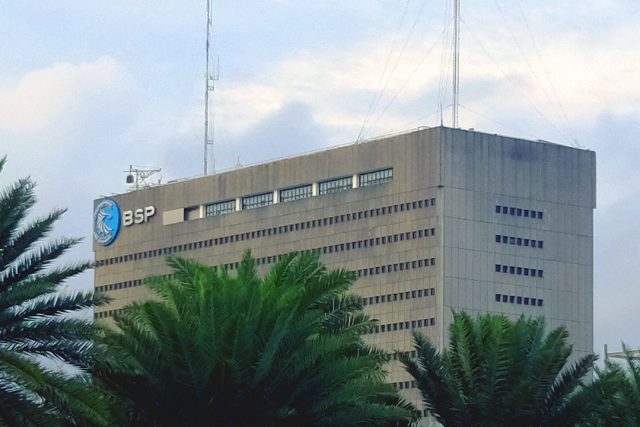
THE COUNTRY’S balance of payment (BoP) position stood at a deficit of $439 million in May, narrower than the $1.61-billion gap a year earlier, the Bangko Sentral ng Pilipinas (BSP) said. Read the full story.

Philippines: Balance of payments (BoP) position

Yamato: Passion, high energy, and good feeling

YAMATO THE DRUMMERS OF JAPAN

THEATER REVIEW
Yamato: The Drummers of Japan LIVE! Philippine Tour 2023

EVEN AFTER over 4,000 performances in 54 countries, a world-famous taiko drum group from Japan does not resort to making less of an effort. If anything, there’s much, much more to give.

Such is the mindset of the Yamato drummers.

“Taiko is an instrument that has accompanied the Japanese people since ancient times,” Masa Ogawa, Yamato’s artistic director, said before the troupe’s gala night performance in Manila (it had three performances last weekend in Manila and Davao). “Its deep reverberations are meant to inspire.”

A SHOW TO REMEMBER
Founded in Nara prefecture in Japan in 1993, Yamato has consistently toured the world for six to 10 months every year, showcasing unique choreography that fuses upbeat and complex drumming compositions, traditional dance, comedic flair, and pure passion.

This has cemented their legacy as thrilling performers that one must watch if they’re in town. For Filipinos, the 2023 tour came just in time for the 50th Year of ASEAN-Japan relations.

“The live sound of Japanese drums will provide an authentic cultural experience that has been missed due to the pandemic,” said Ben Suzuki, president of The Japan Foundation, Manila, in a speech during the gala on June 10 at the Theater at Solaire.

“We hope it encourages people and celebrates this memorable anniversary of the relationship between Japan and the Philippines.”

With this motivation, the Yamato drummers gave Filipinos a show to remember.

The exhilarating production was driven by the iconic, gigantic taiko drums being struck repeatedly in rhythms that get the heart pumping. But it’s the drums with lighter tones like the okedo, and even smaller ones, the shime-daiko, that are used to kick up waves of excitement.

Whether the scene or piece is impressive and solemn, or easygoing and fun, the dynamic movements, facial expressions, and lighting reflect the pure energy injected into the performance by all involved.

Each member is totally in sync and in harmony. The power of every individual, male and female, adds up to the intense power of the group — even amid the hilarious comedic bits where they try to one-up each other.

FOR FILIPINO FANS
In conversations prior to the performances, Mr. Ogawa said that everyone is “energized and excited” to play for Filipinos.

“Our mission is to share the beauty of taiko with the world and make it resonate more,” he later said to audiences.

This year’s version at Solaire Theater, which was packed with Filipinos who braved the rain to be there, ended with the Yamato performers’ version of the Philippine national anthem on Japanese instruments — the three-stringed shamisen, and the shinobuen flute.

After an adrenaline-filled show, the Yamato drummers ended on a heartwarming note.

The English-speaking (and yes, some Filipino-speaking!) members reiterated their gratitude to the crowd and expressed the infectious joy of sharing their passion with others such that it was impossible to leave the theater feeling anything else.

While it’s unclear if or when the troupe will come back to spread warmth and good feeling in the Philippines again, it’s clear that many are hoping they’ll return. — Bronte H. Lacsamana

Manila falls 11 places in the costliest city list for expats

The Philippine capital city was tagged the 133rd most expensive city out of 227 localities, down 11 spots from the previous year’s ranking of 122nd out of 227. The cost of living in Metro Manila became relatively cheaper for employees working abroad, based on Mercer’s 2023 Cost of Living Survey.

Manila falls 11 places in the costliest city list for expats

How PSEi member stocks performed — June 20, 2023

Here’s a quick glance at how PSEi stocks fared on Tuesday, June 20, 2023.


Peso strengthens further versus dollar

THE PESO strengthened further against the dollar on Tuesday ahead of the Bangko Sentral ng Pilipinas’ (BSP) rate-setting meeting this week.

The local currency closed at P55.52 versus the dollar on Tuesday, climbing by 22 centavos from Monday’s P55.74 finish, data from the Bankers Association of the Philippines’ website showed.

This was the peso’s strongest close since its P55.25-per-dollar finish on May 8.

The local unit opened Tuesday’s session at P55.75 per dollar. Its weakest showing was at P55.84, while its intraday best was at P55.52 against the greenback.

Dollars traded rose to $1.21 billion on Tuesday from the $1.11 billion seen on Monday.

“The peso appreciated amid likely hawkish signals from the BSP despite expectations of maintaining local policy rates unchanged this week,” a trader said in an e-mail.

All 15 economists in a BusinessWorld poll last week expected the Monetary Board to keep the key rate at a near 16-year high of 6.25% at its meeting on Thursday.

If realized, this would be the second straight meeting the BSP will leave interest rates untouched. The central bank raised borrowing costs by 425 basis points from May last year to March this year before pausing at its May 18 meeting.

The peso was also supported by the dollar’s decline on Tuesday, Rizal Commercial Banking Corp. Chief Economist Michael L. Ricafort said in a Viber message.

The dollar index went down by 0.1% to 102.34 on Tuesday.

Mr. Ricafort added that the peso strengthened amid the seasonal increase in remittances from overseas Filipinos ahead of the start of a new school year.

For Wednesday, the trader said the peso could weaken anew against the dollar amid potentially hawkish remarks from St. Louis Federal Reserve President James B. Bullard overnight.

The trader sees the peso moving between P55.45 and P55.70 a dollar on Wednesday, while Mr. Ricafort sees it trading from P55.45 to P55.65. — AMCS

Local stocks slip as investors look for fresh leads

BW FILE PHOTO

PHILIPPINE HARES nded nearly flat on Tuesday as investors stayed on the sidelines amid a lack of fresh leads and ahead of the Bangko Sentral ng Pilipinas’ (BSP) policy meeting this week.

The Philippine Stock Exchange index (PSEi) slipped by 1.44 points or 0.02% to end at 6,448.90 on Tuesday, while the broader all shares index inched down by 1.70 points or 0.04% to close at 3,439.54.

“Philippine shares traded flat before the US reopened as investors are trying to gauge how last week’s strong market sentiment will hold up in a shortened trading week that is light on economic data,” Regina Capital Development Corp. Head of Sales Luis A. Limlingan said in a Viber message.

“On the other hand, local shares are still on the sidelines before the next central bank meeting, wherein many widely expect that the Monetary Board will keep the benchmark rate untouched,” he added.

Papa Securities Equity Strategist Manny P. Cruz said in a Viber message that stocks ended only slightly lower as last-minute buying trimmed intraday losses.

“For most of the day, the bourse has been trading in the red territory due to weakness in European equities amid renewed inflation worries in England due to sticky inflation and a tight labor market… Investors remained apprehensive ahead of the latest Monetary Board meeting,” Mr. Cruz said.

The BSP is expected to keep benchmark interest rates steady for a second straight meeting on Thursday after inflation eased further last month and the US Federal Reserve likewise paused its tightening cycle last week.

All 15 economists in a BusinessWorld poll held last week expect the Monetary Board to maintain the overnight repurchase rate at 6.25% during its June 22 meeting.

If realized, this would be the second straight meeting the BSP will leave interest rates untouched. The central bank had raised borrowing costs by 425 basis points from May 2022 to March 2023 to help bring elevated inflation down.

Headline inflation slowed to 6.1% in May from 6.6% in April. Still, this marked the 14th straight month that inflation breached the central bank’s 2-4% target.

For the first five months, inflation averaged 7.5%, well above the BSP’s 5.5% forecast for the year.

Most sectoral indices went up on Tuesday except for property, which dropped by 31.74 points or 1.2% to 2,607.61, and financials, which declined by 5.54 points or 0.3% to 1,830.04.

Meanwhile, services rose by 14.14 points or 0.92% to 1,536.71; mining and oil increased by 77.73 points or 0.78% to 9,997.45; holding firms went up by 22.91 points or 0.36% to 6,387.30; and industrials climbed by 10.52 points or 0.11% to end at 9,164.12.

Value turnover went up to P4.75 billion on Tuesday with 715.78 million shares changing hands from the P4.22 billion with 483.71 million issues traded on Monday.

Advancers outnumbered decliners, 92 versus 81, while 47 names closed unchanged.

Net foreign selling dropped to P302.71 million on Tuesday from the P496.22 million recorded on Monday. — A.H. Halili

Marcos warns of ‘modest’ agri gains being upended by El Niño

A farmer guides his carabao on dry and cracked farmland in San Juan town, Batangas, April 18, 2010. — REUTERS

PRESIDENT Ferdinand R. Marcos, Jr. said on Tuesday that the upcoming El Niño dry spell is threatening to upend “modest gains” made in agriculture in recent months.

In a speech at the 125th anniversary of the Department of Agriculture (DA), Mr. Marcos also promised to address the challenges agriculture continues to face, like “decreasing productivity, climate change (and) diminishing natural resources.”

The El Niño event, projected to emerge sometime between July and September, is expected to drag down growth in agriculture, which expanded 2.1% in the first quarter, a turnaround from the 0.3% decline posted a year earlier and a 1% contraction in the fourth quarter of 2022.

The last El Niño took place in 2019, causing as much as P8 billion worth of damage to agriculture.

Agriculture accounts for about a 10th of the Philippines’ gross domestic product.

Mr. Marcos, in his speech, said the DA must “continue to adopt and utilize the latest technologies and practices” to enhance agricultural productivity and attract foreign investment.

He said climate-mitigation practices and technology can make agriculture sector resilient to future shocks.

“Moving forward, the DA will continue to devise interventions to advance our agri-fishery practices, improve the competitiveness of our agri-fishery products, (and) further boost the income of our farmers and fisherfolk,” he said.

Mr. Marcos, who is also Secretary of Agriculture, promised to expand market reach for farmers “by enhancing our physical and our digital infrastructure (and) leveraging private sector investment.”

He said the DA should continue to engage in collaborative dialogue with experts, researchers, and rural workers to “solve the root causes of the lingering problems.”

The Philippines imports much of its food and farm inputs, making it vulnerable to imported inflation.

In a recent World Bank report, the Philippines ranked first in a group of 16 countries in terms of regressive output subsidies, followed by Mexico, Canada, Japan, and Vietnam.

“We have all heard the issues of food supply, of food prices, of supply chain problems. And these are all of the things that we have to overcome if we are going to be able to say that the DA has achieved its ultimate goal and that we are able to provide to Filipinos all of the food supply,” Mr. Marcos said, adding that the industry’s contribution to nutrition should be considered in assessing the DA’s success.

Mr. Marcos has been urged by opposition legislators to appoint his replacement as Secretary of Agriculture.

In a statement on Tuesday, ACT Teachers Party-list Rep. France L. Castro said the DA needs a full-time Secretary “who truly understands and knows the solutions to the agricultural as well as agrarian problems of the country.” 

“Unfortunately, the remedies being implemented by the DA under Marcos are mostly band-aid solutions and entail the importation of key agricultural products like rice, sugar, onions, and the like,” she said.

“Instead of helping farmers, such measures further mire them deeper into poverty but at the same time make agricultural importers richer,” Ms. Castro said. “Unless genuine agrarian reform coupled with full support of the government to farmers is implemented, (alongside the suspension of) land conversion, our agricultural sector will die even if President Marcos stays there up to 2028.”

The DA has addressed food inflation by, among other things, organizing subsidized stores allowing farmers to sell directly to consumers.

The Kadiwa stores allow sellers to offer low prices because the government pays for transport costs and other expenses.

Kadiwa stores have been accused of seizing markets from small- and medium-sized traders who had been weakened by the pandemic, with economists saying that any discussion of the program needs to consider the level of public funding it is receiving.

“It may still be fairly early to tell whether we are now realizing the benefits of prices saved vs. investment spent,” agroforestry researcher Ayn G. Torres told BusinessWorld earlier. — Kyle Aristophere T. Atienza

Trade dep’t considering development of ‘green’ aviation fuel from biomass

REUTERS

THE Department of Trade and Industry (DTI) said the Philippines could develop a sustainable aviation fuel (SAF) industry by tapping its biomass resources.

Trade Secretary Alfredo E. Pascual said he discussed the country’s SAF potential in talks with aerospace companies at the Paris Air Show on June 19.

The International Air Transport Association (IATA) defines SAF as liquid fuel that reduces carbon emissions by up to 80%.

The Paris Air Show was conducted for the first time after four years. The DTI did not reveal which companies Mr. Pascual met with, saying only that discussions with them are ongoing.

To the air show participants, he also touted reforms that have made the Philippines more investment-friendly, such as the amendments to the Public Service Act, Foreign Investment Act, and Retail Trade Liberalization Act; the passage of the Electric Vehicle Industry Development Act; and Executive Order No. 18, which created a green lane for expedited processing of strategic investments.

The DTI’s participation at the air show was part of an investment roadshow due to run until July 6. The roadshow seeks to promote the Philippines as a “viable investment destination” for companies from France, the UK, Belgium, the Netherlands, and Germany. — Revin Mikhael D. Ochave