Home Blog Page 4663

Gov’t asked to go beyond condonation of ARB debt

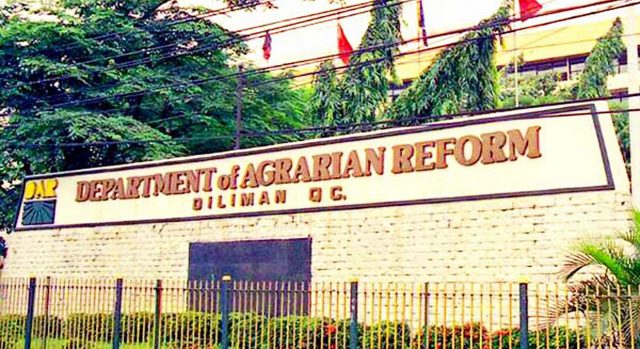
THE GOVERNMENT has been asked to do more to help agrarian reform beneficiaries (ARBs) beyond debt condonation, with a peasant organization calling for continuing land distribution.

“While these may offer some relief to around 610,000 (ARBs), this is no substitute for a new, thoroughgoing, and redistributive agrarian reform program,” Danilo H. Ramos, national chairman of Kilusang Magbubukid ng Pilipinas, said in a Viber message.

Agrarian Reform Secretary Conrado M. Estrella III has said that President Ferdinand R. Marcos, Jr. — who is also the Secretary of Agriculture — will sign the New Agrarian Emancipation Act on July 7.

The House of Representatives passed House Bill No. 6336, its version of the measure, in December while the Senate approved Senate Bill No. 1850 in March.

Both chambers separately ratified the measures in bicameral conference and sent the report to the President before the legislative recess on March 25.

“The loans to be condoned are unpaid amortization, interest payments, surcharges, and penalties of existing loans of ARBs secured under CARP (Comprehensive Agrarian Reform Program) or other agrarian reform programs or laws,” he said on June 25.

Mr. Ramos said the government can “resolve the land problem” by pushing free land distribution, breaking monopolies, providing support services to ARBs, and building rural industry.

“Such a program addresses the peasantry’s historical plight for social justice, provide rural jobs and livelihoods, build food self-sufficiency, and protects the environment, among others,” he said.

Sonny A. Africa, executive director of think tank Ibon Foundation, said the pending measure is “long overdue.”

“The bill is important in partially correcting the long-standing problem that agrarian reform beneficiaries are burdened with amortization, but its benefits shouldn’t be overstated,” he told BusinessWorld in a Viber chat.

Mr. Africa said that most ARBs that are making debt payments may “not feel any practical difference” when the law passes as they are unable to pay to begin with.

“We recall how some 70-80% of ARBs on (Land Bank of the Philippines)-compensable land are considered non-paying or without payment yet with only the balance roughly equally distributed between partially paid and fully paid ARBs,” Mr. Africa said.

“For the fraction of farmers relieved of amortization but also for the many others who haven’t been able to pay anyway, the question remains what government support there really is in terms of making the land they till productive and food affordable for Filipinos,” he said.

He noted that the increase in the agriculture budget for 2023 “doesn’t seem to have been reflected in increased earnings for farmers nor cheaper food for consumers.”

Leonardo Q. Montemayor, a former agriculture secretary and chairman of the Federation of Free Farmers, said that the measure also needs to condone realty taxes.

“It’s good legislation for ARBs, who will each save an average of about P95,000 in payments of principal and interest/charges,” he said in a Viber message.

“I hope that a companion measure/law that will condone unpaid realty taxes and charges on land awarded to ARBs will also be forthcoming,” he added. — Sheldeen Joy Talavera

Simplified requirements and policies for VAT refund applications

Value-added tax (VAT) refund administration presents many challenges. Taxpayers often face frustration due to inefficient procedures and strict requirements even for legitimate refund claims.

In the Philippines, VAT is imposed on the value added at each production stage using an invoice-based method, i.e., VAT on output or sales less the VAT paid on goods and services consumed during production. If a taxpayer, for instance, is engaged in sales transactions subject to VAT at 0% (like export transactions and sales to entities enjoying fiscal incentives) but is paying the 12% on its production inputs, the taxpayer will normally be in excess input VAT credit position. The excess input VAT credits should be refunded to the taxpayer lest the VAT become a tax paid on production and investment, which can be discouraging for taxpayers and investors. Hence, VAT refund policies and processes should be efficient.

Fortunately, conscious efforts are being undertaken by the Bureau of Internal Revenue (BIR) to simplify the requirements and procedures for VAT refunds. Recently, the BIR issued Revenue Memorandum Circular (RMC) No. 71-2023 and Revenue Memorandum Order (RMO) No. 23-2023 which streamline the rules and requirements for VAT refund claims. The simpler procedures apply to VAT refund applications filed starting July 1, 2023.

Here are the updates introduced by the BIR in the new RMC and RMO, specifically for VAT refund applications of excess input taxes attributable to zero-rated sales.

VENUE FOR FILING VAT REFUND CLAIMS
Claims for VAT refund of direct exporters, regardless of the percentage of export sales to total sales and whose claims are anchored under Section 112 (A) of the Tax Code of 1997, may still be filed with the VAT Credit Audit Division (VCAD) at the BIR National Office.

However, claims of other taxpayers like indirect exporters or those engaged in other VAT zero-rated activities, other than direct exports, may now be filed with the Large Taxpayers VAT Audit Unit (LTVAU) of the Large Taxpayers Service (LTS) for large taxpayers or the VAT Audit Section (VATAS) in the Regional Assessment Division or respective Revenue District Office (RDO) where the taxpayer is registered, if without VATAS, for non-large taxpayers.

Previously, these VAT refund applications had been filed with the LT Audit Division in the LTS or RDO where the taxpayer is registered, for large taxpayers and non-large taxpayers, respectively.

REDUCED REQUIREMENTS
One of the most welcome changes is the significant reduction of the number of documentary requirements needed tfor submission in a VAT refund application. The previous checklist of documentary requirements had 30 documents, which have been reduced to 22 under the new rules. Some of the requirements included in the checklist may not be applicable depending on the types of transactions the claimant is engaged in.

The revised checklist notably excludes some documents already available in the BIR’s records and database. For example, Quarterly VAT returns and Annual Income Tax Returns covering the period of the claim are no longer part of the checklist, as well as a copy of Audited Financial Statements (AFS), together with the complete notes to AFS, if the AFS was already submitted by the taxpayer via the BIR’s eAFS facility. However, taxpayers can still submit copies of these documents to help the BIR officers in the timely processing of the claim.

The Delinquency Verification Certificate (DVC) issued by Collection Division of the BIR’s Regional Office for non-large taxpayers or by the Large Taxpayers (LT) Collection Enforcement Division/LT Division Cebu/Davao for large taxpayers are no longer required for submission. Only the DVC issued by the Accounts Receivable Monitoring Division (ARMD) of the BIR National Office must be secured by the taxpayer and submitted during the application for VAT refund.

For claims with input VAT on imports, a certification from DoF-OSS Center that the claimant has not filed a similar claim/s covering the same period has been deleted from the checklist due to the abolition of the DoF-OSS Center. Moreover, proof of payment of input VAT on imports, like the Statement of Settlement of Duties and Taxes (SSDT) is no longer required as the VAT Payment Certification to be issued by the BoC Revenue Accounting Division (RAD) is deemed sufficient.

ORIGINAL COPIES OF DOCUMENTS
In the latest RMC and RMO, the BIR now requires only the original of the duplicate copies of sales invoices or official receipts issued for sales transactions, and the original copies of suppliers’ sales invoices or official receipts and other supporting documents for the input VAT from purchases. Under the previous policy of the BIR, soft copies of the documents stored in a separate memory device should also be submitted, in addition to the original copies.

However, would it have been more practical for taxpayers to submit soft copies only or at least give the taxpayers a choice whether they would like to submit either the original copies or the soft copies of the documents?

One concern on the submission of original copies of the documents is the adequacy of storage space in the BIR offices in anticipation of the volume of documents to be stored. It should also be ensured that the original documents remain intact and complete while in BIR custody, since taxpayers will still most likely be requiring the documents in the future. For instance, the taxpayer may be subjected to a BIR audit which will require the submission of proof of sales and expense transactions to refute any BIR findings, or, in case of denial of the VAT refund claim by the BIR, the taxpayer will also have to present the same documents to the courts if the claim is elevated to the judiciary.

OTHER POLICIES
The old policy of the BIR that only applications with complete documentary requirements are to be accepted remains has been retained in the new RMC and RMO. Thus, taxpayers should plan their applications accordingly and ensure that all applicable documents on the checklist are secured and available for submission to the BIR.

The new RMO provides that in cases where a taxpayer files VAT refund claims beyond the two-year prescriptive period, the application will be accepted but will be for outright denial, for the claimant to avail of judicial remedy. Previously, claims that are not filed within the prescriptive period were not accepted by the BIR.

However, I think that it is prudent for taxpayers to still strictly observe the two-year prescriptive period to apply for the administrative claim for VAT refund. It is worth noting that the two-year prescriptive period is expressly provided for in our Tax Code. Moreover, the Court of Tax Appeals and Supreme Court have consistently ruled that the filing of the VAT refund claim within two years after the close of the taxable quarter when the sales were made is one of the requisites in order to validly claim a refund of unutilized input VAT.

Regarding taxpayers with tax delinquencies, the previous policy of the BIR was to not receive VAT refund applications where the Delinquency Verification Certificate (DVC) submitted shows delinquent accounts other than VAT. The claimant must first settle the tax liabilities so that a DVC with no tax liabilities can be issued by the DVC-issuing office.

In the latest RMO, the BIR allows such claims to be accepted. However, the tax liability will be offset against any approved VAT refund, to allow the collection, either fully or partially, of the outstanding delinquent tax liability, subject to existing tax laws and issuances on the enforcement and settlement of delinquent accounts.

I laud our tax authorities for taking another step towards ease of doing business through these new issuances. Admittedly, VAT refund administration can be a tricky exercise. Strategies and processes must be in place to ensure that only legitimate VAT refund claims are granted. At the same time, these strategies and processes should not erode taxpayer confidence in the VAT refund system. When the right balance is struck, it’s a win for both the government and the taxpayers.

Let’s Talk Tax is a weekly newspaper column of P&A Grant Thornton that aims to keep the public informed of various developments in taxation. This article is not intended to be a substitute for competent professional advice.


John Paulo D. Garcia is a senior manager from the Tax Advisory & Compliance division of P&A Grant Thornton, the Philippine member firm of Grant Thornton International Ltd.

pagrantthornton@ph.gt.com

Peso weakens anew against the dollar on BSP rate bets

BW FILE PHOTO

THE PESO weakened anew against the dollar on Monday as the Bangko Sentral ng Pilipinas (BSP) is expected to keep its key rate steady amid easing inflation, even as the US Federal Reserve remains hawkish.

The local currency closed at P55.32 versus the dollar on Monday, down by 12 centavos from Friday’s finish of P55.20, data from the Bankers Association of the Philippines’ website showed.

The local unit opened Monday’s session lower at P55.25 per dollar. Its weakest showing was at P55.35, while its intraday best was at P55.04 against the greenback.

Dollars traded rose to $1.26 billion on Monday from the $1.05 billion seen on Friday.

“The peso weakened as the potentially weaker Philippine inflation for June 2023 will likely support a continued pause in BSP policy rates despite the expected US rate hike this month,” a trader said in an e-mail.

A BusinessWorld poll of 17 analysts held last week yielded a median estimate of 5.5% for June inflation, within the 5.3% to 6.1% forecast given by the BSP on Friday. If realized, the median estimate will be slower than the 6.1% print in May 2023 and June 2022. It would also be the slowest since the 5.4% in May 2022.

The BSP last month kept borrowing costs unchanged for a second straight meeting. It raised benchmark rates by 425 basis points (bps) from May 2022 to March 2023, bringing the policy rate to a near 16-year high of 6.25%.

Its next review is on Aug. 17.

Meanwhile, the Fed likewise paused its tightening cycle last month after hiking its target interest rate by a total of 500 bps for 10 straight meetings to a range between 5% and 5.25%.

Fed Chair Jerome H. Powell said in remarks last week the US central bank will likely hike rates by 25 bps twice more this year. Their next meeting is on July 25-26.

For Tuesday, Rizal Commercial Banking Corp. Chief Economist Michael L. Ricafort and the trader expect the peso to move between P55.20 and P55.40 against the dollar. — AMCS

Shares up on expectations of slower June inflation

BW FILE PHOTO

LOCAL SHARES closed higher on Monday amid expectations that inflation eased further last month.

The Philippine Stock Exchange index (PSEi) rose by 40.14 points or 0.62% to end at 6,508.21 on Monday, while the broader all shares index went up by 14.46 points or 0.41% to close at 3,467.42.

“The local bourse gained by 40.14 points (0.62%) to 6,508.21, driven by the anticipation of slower headline inflation in June. The positive cues from overseas, particularly in Asia, where most markets were trading in the green, further influenced the sentiment at home. Investors were particularly focused on digesting the manufacturing PMI (purchasing managers’ index) data, especially in China,” Philstocks Financial, Inc. Research Analyst Claire T. Alviar said in a Viber message.

“The index started the second half of the trading year in the green, climbing more than 40 points on market-on-close buying to end the session just above the 6,500 level. Investors took their cue from analysts’ estimates that Philippine June inflation will further decelerate to 5.5%,” China Bank Capital Corp. Managing Director Juan Paolo E. Colet likewise said in a Viber message.

Mr. Colet however noted that trading volume was weak as investors remained on the sidelines ahead of the data release.

Value turnover fell to P2.45 billion on Monday with 1.54 billion shares changing hands from the P4.73 billion with 784 million issues traded on Friday.

A BusinessWorld poll of 17 analysts yielded a median estimate of 5.5% for June inflation, within the 5.3% to 6.1% forecast given by the Bangko Sentral ng Pilipinas (BSP) on Friday.

If realized, the median estimate will be slower than the 6.1% print in May 2023 and June 2022. It would also be the slowest since the 5.4% in May 2022.

June would mark the fifth consecutive month of slower inflation, and the 15th straight month that inflation surpassed the BSP’s 2-4% target range.

The Philippine Statistics Authority will report June consumer price index data on Wednesday.

Meanwhile, China’s factory activity slowed in June as the Caixin manufacturing survey showed a dip to 50.5, from 50.9 in May, Reuters reported. That slightly beat market forecasts of 50.2.

Most sectoral indices went up on Monday, except for industrials, which declined by 74.77 points or 0.81% to 9,153.23, and services, which fell by 3.23 points or 0.2% to 1,561.95.

Meanwhile, property increased by 46.56 points or 1.78% to 2,654.57; holding firms climbed by 52.61 points or 0.82% to 6,439.15; mining and oil gained 59.47 points or 0.6% to end at 9,969.16; and financials rose by 8.99 points or 0.48% to 1,856.12.

Advancers slightly outnumbered decliners, 98 versus 91, while 45 names closed unchanged.

Net foreign buying stood at P222.3 million on Monday versus the P271.77 million in net selling recorded on Friday. — A.H. Halili with Reuters

Marcos: Air Force maritime patrols needed amid geopolitical tensions

PNA

PRESIDENT Ferdinand R. Marcos, Jr. on Monday underscored the importance of the Philippine Air Force’s patrols amid geopolitical tensions in the Asia-Pacific region.

“The days ahead will not be easy and will demand every ounce of our strength and our resilience,” he said at an event marking the Philippine Air Force’s 76th anniversary in Tarlac province.

“The winds of change signal geopolitical challenges around our region and other parts of the world that affect us,” he added.

The president said the Philippine Air Force’s maritime air patrol missions are needed to uphold the country’s territorial integrity and safeguard Philippine maritime zones.

Mr. Marcos Jr. said the government would continue modernizing the Armed Forces, including the Philippine Air Force.

The modernization program, which started in 2013 under the late President Benigno S.C. Aquino III, is now on its last phase and will run until 2028.

The military will buy multi-role fighters, frigates, radars, missile systems and rescue helicopters worth about P500 billion under this phase.

India, which is part of the United States-led quadrilateral security dialogue, in late June reiterated its offer to help the Philippines fund the defense modernization program.

It was floated anew during a meeting between Foreign Affairs Secretary Enrique A. Manalo and Indian Minister of External Affairs S. Jaishankar in New Delhi.

In a joint statement after the fifth India-Philippines Joint Commission on Bilateral Cooperation on June 29, the two officials said they “expressed a keen interest” in continuing to work together “including through the regular or upgraded official level interaction among defense agencies.”

They also cited India’s deployment of a defense attaché at its embassy in Manila, the consideration of India’s offer for a concessional credit line to meet the Philippines’ defense requirements, acquisition of naval assets and expansion of training and joint exercises on maritime security and disaster response.

The credit line is a soft loan provided to developing countries based on their national priorities.

Foreign policy experts have said the Philippines would likely pursue more security partnerships with the US and its allies in the Indo-Pacific region, citing the Association of Southeast Asian Nations’ (ASEAN) failure to deter China’s aggression at sea.

Mr. Marcos, 65, assumed office in June last year amid tensions in the South China Sea and an intensifying power competition between Beijing and Washington.

The Philippine Coast Guard has pursued a transparency campaign that seeks to expose China’s aggression in Philippine waters in the South China Sea.

The Philippines’ sea dispute with China has gained the attention of the international community, with the US and its allies in the region coming in Manila’s defense.

China has also gained international backlash for harassing self-ruled Taiwan.

In February, Mr. Marcos gave Washington access to four military bases on top of the five existing sites under their 2014 Enhanced Defense Cooperation Agreement (EDCA).

China has criticized the EDCA expansion, saying it’s an attempt by the US to meddle in the conflict between China and Taiwan, which Washington has vowed to defend in case of a Chinese invasion.

The Philippine government has repeatedly said the EDCA expansion is aimed at boosting the country’s defense capabilities. — Kyle Aristophere T. Atienza

Philippines to end tourism contract after video gaffe

THE DEPARTMENT of Tourism (DoT) on Monday said it would terminate its contact with the ad agency that designed its global campaign after it was found to have used stock footage of destinations in other countries for its “Love the Philippines” promotional video.

In a statement, DoT noted that DDB Philippines, the contractor, has publicly apologized and taken full responsibility for using nonoriginal materials in its audio-video presentation, which drew flak when it was launched on June 27.

This was “a direct contravention of DoT’s objectives for the enhanced tourism branding,” it said.

DDB did not immediately reply to a Viber message seeking comment.

DoT said it had not paid DBB for the project, adding that it would exercise its “right to forfeit” the performance security.

It said its contract with DDB provides that “materials produced by the winning bidder should be original and aligned with the DoT’s advocacies.”

“The DoT remains fully committed to developing and promoting the Philippines as a powerhouse of natural wonders, culture and heritage, and a fount of warmth and hospitality which is a source of great love and pride for all Filipinos,” it added.   

In a statement on Sunday, the DDB apologized for the use of stock footage in the video, saying it was intended to be a “mood video to excite internal stakeholders about the campaign.”   

It said it produced the video “at its own expense.” “This was a DDB initiative to help pitch the slogan.”

“While the use of stock footage in mood videos is standard practice in the industry, the use of foreign stock footage was an unfortunate oversight on our agency’s part,” DDB said.

“Proper screening and approval processes should have been strictly followed. The use of foreign stock footage in a campaign promoting the Philippines is highly inappropriate, and contradictory to the DoT’s objectives,” it added.

Brand experts at the weekend said the new tourism slogan has failed to capture some of the country’s best qualities and does not give tourists compelling reasons to come.

“Love the Philippines,” which replaced “It’s More Fun in the Philippines,” sounds like a command and lacks flexibility in terms of brand execution, they said.

The Tourism department has been drawing flak since it launched the campaign, which cost P49 million.

The slogan replaced “It’s more fun in the Philippines,” which was launched in 2012 under the late President Benigno S.C. Aquino III and which Filipinos loved instantly. The 2012 campaign also won international awards during its lifetime.

It replaced “Wow Philippines,” which was launched in 2002 under then President Gloria Macapagal Arroyo and which also easily got the thumbs up of many Filipinos.

Aside from sounding like a command, the new slogan is also being criticized for its lack of creativity. — Revin Mikhael D. Ochave

CoA flags health allowances, OVP confidential funds

PHILIPPINE STAR/MICHAEL VARCAS

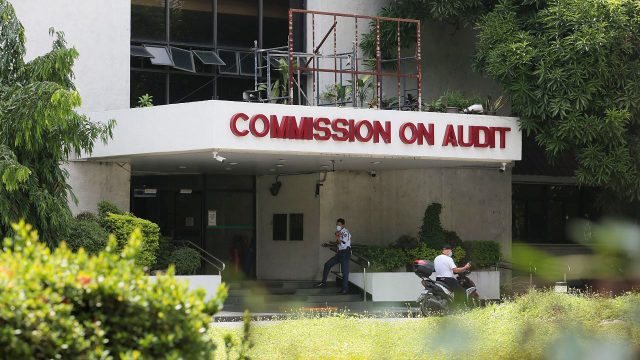
PHILIPPINE state auditors have flagged the National Nutrition Council, which is under the Department of Health (DoH), for spending P22.58 million in travel allowances for village health volunteers.

The spending, which happened on Jan. 1 to Oct. 31 last year, violated Section 6 of Presidential Decree (PD) 1569, the Commission on Audit (CoA) said in its 2022 audit report posted on its website on June 30.

Under the law, village nutrition scholars will receive a training stipend, kit and travel allowance of at least P120 a year, as well as other allowances that the municipality may grant, which can only be up to P150 a month.

The council did not immediately reply to an e-mail seeking comment.

During the audit process, the council said that it had been giving travel allowances of as much as P1,200 yearly to each beneficiary. “They were not able to provide a legal basis for the aforementioned increase,” CoA said.

“The head and staff of the office of the Nutrition Policy and Planning Division explained that the amount of P120 a year is not reasonable now, since said PD was created many years ago,” it added.

The audit team said the council should ask Congress to amend the law. CoA also urged the council to update its database of village nutrition scholars.

A village nutrition scholar is a volunteer worker assigned in each village to deliver nutrition services including community health, environmental sanitation and family planning, among other things.

The council was created in 1974 to address the country’s hunger and malnutrition problem in line with Millennium Development Goals.

Meanwhile, a separate CoA audit showed that the Office of the Vice President (OVP) spent confidential funds worth P125 million in 2022.

CoA cited an increase in maintenance and other operating expenses after the release of additional funding for medical assistance worth P96.42 million and confidential expenses worth P125 million under Vice-President Sara Duterte-Carpio.

Her predecessor Maria Leonor “Leni” G. Robredo had zero budget for confidential funds, it added.

State auditors also said the office violated the Government Procurement Reform Act when it built satellite offices in July last year. 

CoA said the immediate establishment of the satellite offices without enough equipment to operate led to the purchases of plant, property and equipment and semi-expendable property worth P668,197, which did not fully comply with the law.

State auditors further noted that based on the receipts, the purchases were reported to the Property Unit three months after, raising accountability concerns.

Though a quotation was attached, ensuring that the lowest price was obtained, the office’s failure to follow procurement guidelines “defeats the purpose of the law, which is to standardize and to improve transparency in the procurement process.”

The Office of the Vice President opened satellite offices in Cebu, Tacloban, Dagupan, Davao, Zamboanga and Tandag in Surigao Del Sur a year ago.

During the audit process, the office said time constraints under the law had pushed it to make transactions through reimbursement.

It also said its Property Unit did not have the needed office equipment at the time of the opening. It assured CoA it would follow the procurements law.

The office last year said the satellite offices would improve public access to better services. — Beatriz Marie D. Cruz

Senate to push legislated wage hike after NCR hike

A worker carries a bale of used clothing (ukay-ukay) along Bangbang Street in Sta. Cruz, Manila, Aug. 17, 2022. — PHILIPPINE STAR/EDD GUMBAN

PHILIPPINE Senate President Juan Miguel “Migz” F. Zubiri on Monday said he would continue pushing a legislated wage hike, saying the P40 increase approved by a wage board for Metro Manila last week is not enough. 

“We thank the wage boards for the increase, but definitely that’s not enough,” he told the ABS-CBN News Channel. He added that P40 would not buy you a kilo of rice. 

Mr. Zubiri said he wants to talk to President Ferdinand R. Marcos, Jr.  about his bill seeking a P150 across-the-board wage hike that the labor committee has approved. 

The Senate could lower it to P100 as a compromise, he said. “We could amend it and come up with the committee report, propose a P100 minimum wage increase — an additional minimum wage increase — for our workers,” he added. 

The Senate chief also said foreign companies were being dissuaded from giving more than the minimum wage because of the possibility of losing incentives given to economic zone locators. 

“They were advised not to do that because it would look like you can afford it and therefore, you will not get the incentives,” he said in Filipino, citing a prospective foreign investor at Clark ecozone in Pampanga province. He declined to elaborate. — Jan Jiminel Cacdac 

Only 10% of 1M housing units ready in 2024 

PRESIDENT Ferdinand R. Marcos, Jr. (2nd from left) looks at the model of a housing project in San Fernando City, Pampanga on July 3, 2023. — PHILIPPINE STAR/KRIZ JOHN ROSALES

THE MARCOS administration might be able to distribute only 100,000 housing units next year under the governments housing program, which has a target of building a million units per year, according to the Department of Human Settlements and Urban Development (DHSUD).  

I think we can already deliver more than a hundred thousand by next year because some are still being constructed,DHSUD Secretary Jose Rizalino Acuzar told reporters on the sidelines of an inspection of a housing project site in San Ferdinando City, Pampanga on Monday.  

He said construction work is taking more time as vertical housing units are more difficult to build than horizontal row houses. Some are 12-storey, the others are 25-storey. If it’s 25-storey, the construction could last for almost two years and if it is 12-storey, it’s one year and a half.  

President Marcos, Jr. has set a goal of building six million housing units during his six-year term under the so-called Pambansang Pabahay Para sa Pilipino Housing (4PH) Project, listed as one of his governments flagship programs.  

Mr. Acuzar said searching for idle lands is among the major difficulties facing the department in implementing the program.   

He also cited delays in the bidding process.  

We could probably achieve one million [houses] in the pipeline,he said. It’s not that fast to accomplish projects. We will still plan it, look for lands, and there’s this bidding process especially if it is a local government property.  

If you bid that, it might take six months for the documentation,he added. That’s why our government is looking for ways to fast-track the bidding process.  

Still, the goal of having six million houses by the end of Mr. Marcossix-year term is achievable, Mr. Acuzar said.

He said at least 20 housing projects are already being constructed in different parts of the country. In a years time, we might construct 50 projects.Kyle Aristophere T. Atienza

CA affirms Ombudsman ruling vs immigration officials linked to scam

By John Victor D. Ordoñez, Reporter  

THE COURT of Appeals (CA) has upheld an Ombudsman ruling that found immigration officers guilty of grave misconduct over their involvement in a scheme that extorted money from Chinese nationals in exchange for seamless entry to the country.  

In a 28-page decision dated June 29 and made public on July 3, the CA Fifth Division agreed with the Ombudsman’s findings of evidence that showed an elaborate plan to extort money from the Chinese citizens, and testimonies implicating four of the officers.  

The accused in the case are five of the 45 immigration officers who were dismissed due to grave neglect of duty and misconduct.  

“The testimonies that were based on the immigration officer’s personal knowledge and experience, to the court, constitute reasonable and substantial grounds to believe that they were part of and involved in the pastillas scheme,” the tribunal said. 

The rolls of money received by the agents were made to look like a Filipino treat called pastillas, from which the scheme got its name.  

One of the officers was found guilty of simple neglect of duty and was sentenced to a six-month suspension without pay.

The court said that while the officer’s participation was not directly mentioned in the testimonies, he failed to perform his duty as his lackadaisical attitude fell short of the reasonable diligence, due care, and prudence required of him. 

Last year, the Justice department dismissed 18 immigration officers based on its own investigation of the scam. 

In 2020, Senator Risa N. Hontiveros-Baraquel led a Senate investigation of the scam. A whistleblower from the Immigration bureau testified at a hearing that the Chinese nationals involved in the scheme had been blacklisted from the country and entered through a special arrangement.   

MRT-3 fare hike petition refiled

PHILIPPINE STAR/MICHAEL VARCAS

A FARE hike petition for the Metro Rail Transit Line 3 (MRT-3) has been refiled after a technical lapse in a previous filing, Transportation Undersecretary for Railways Cesar B. Chavez said on Monday.  

The Department of Transportation (DoTr) denied the previous proposal after the MRT-3 management failed to issue a notice of public hearing on time.  

It can be recalled that MRT-3s fare hike petition was deferred due to infirmities in complying with the requirements and procedure,the DoTr said in a press release. 

According to DoTr Assistant Secretary for Railways and MRT-3 Officer-in-Charge Jorjette B. Aquino, the MRT-3 management petitioned for a P2.29 increase in boarding fare, or a 21-centavo increase per kilometer.  

The proposed fare hike is similar to what was approved for Light Rail Transit (LRT) Lines 1 and 2.  

Like the LRT-1 and LRT-2, no fare adjustment was approved for the MRT-3 for the last eight years,Mr. Chavez said in a statement.  

The current boarding fare at the MRT is P11, while the distance fare is a peso per kilometer. If the proposal is approved, the boarding fare will become P13.29, while the distance fare will be P1.21 per kilometer.  

Last month, the DoTr approved a fare hike for LRT Lines 1 and 2, which will take effect by Aug. 2.    

Ms. Aquino previously said that the fare adjustment will go towards enhancing services, amenities, and technical capabilities of the two commuter lines.  

The Light Rail Transit Authority (LRTA), operator of LRT lines 1 and 2, plans to allocate about P110 million, or about 97% of the projected P114 million in additional rail revenue, for maintenance, operating expenses, and repair and upkeep of crucial rail systems and facilities. Justine Irish D. Tabile 

Bill seeks to create railway agency

JOHANNES PLENIO-UNSPLASH

A LAWMAKER has filed a bill that would create a regulating authority for railways nationwide.  

House Bill No. 8510 aims to “rationalize and streamline the regulatory functions over railways by creating a single and unified regulatory body,” Bagong Henerasyon Party-list Rep. Bernadette Herrera-Dy said in the bills explanatory note.  

The proposed agency will be called the Railways Industry Authority of the Philippines.  

Ms. Herrera-Dy cited the Philippine Development Plan, which identifies key challenges to transport connectivity and safety including poor infrastructure, inconsistent regulation, and inefficient operations.  

The bill also proposes to create the Railways Industry Board, with the Transportation secretary as chair. The board will also have a representative from the private sector.   

The proposed body will be in charge of issuing and revoking certificates and franchises for railway infrastructure.   

If enacted into law, the regulatory body would take in the powers and functions of the Light Rail Transit Authority and the Philippine National Railways. It will be an agency attached under the Transportation department.    

Funding will come from the national budget. Beatriz Marie D. Cruz