Home Blog Page 4562

Triple Giga scores its record 12th leg title in three-a-side league

TNT TRIPLE GIGA — PHILSTAR FILE PHOTO/ RED BULL HALF COURT 2023

TNT accomplished its return-to-the-top mission in the PBA 3×3 Season 3 First Conference Leg 3, sealing the deal with a 17-13 victory over Pioneer Elastoseal yesterday (July 18) at the Ayala Malls Manila Bay.

Determined to bounce back from disappointing sixth and ninth place finishes in the young season, the Triple Giga swept all six matches of the two-day leg to strike gold for the first time since scoring a grand slam in Season 2.

Comebacking sniper Almond Vosotros, Lervin Flores, Samboy de Leon and Gryann Mendoza delivered the TNT franchise’s record-extending 12th leg title in the three-a-side league.

After going 3-0 in Pool C Monday, the Triple Giga switched to high gear in the KO rounds. Behind the eight points of Mr. Vosotros, TNT ended the hat trick bid of Leg 1 and 2 winner Ginebra in the quarterfinals, 21-19, then leaned on Mr. Flores’ winning layup to secure a finals slot at the expense of San Miguel, 20-19.

Mr. Vosotros, who missed the action last week when his three teammates failed to get past pool play, scattered six points in the clincher. He highlighted his heroics with two two-pointers, the last of which gave TNT a 13-5 tear, and a clutch layup that restored a 17-11 cushion.

Messrs. Flores and De Leon added four apiece and Mr. Mendoza chipped in three in the Triple Giga’s disposal of Pioneer’s Gian Abrigo, Wilson Baltazar, Reggie Morido and Ken Mocon, The Katibays settled for the P50,000 runner-up purse.

Meanwhile, Cavitex posted a third straight podium after nipping San Miguel Beer in the battle for bronze, 20-19.

The Braves’ Jorey Napoles, Ken Ighalo, Tonino Gonzaga and Dominick Fajardo went home with P30,000. — Olmin Leyba

Field-chasing Rory McIlroy, Scottie Sheffler at the 151st Open

MATT Fitzpatrick of England was candid when asked about his chances ahead of The 151st Open Championship this week.

“I think everyone would like to be playing golf like Rory McIlroy and Scottie Scheffler right now, but that’s pretty rare for the rest of us,” the 2022 US Open champion said Monday.

Mr. McIlroy and Mr. Scheffler enter the week as the two hottest players on the planet, and they’re understandably the pre-tournament favorites.

Mr. McIlroy — whose victory at the Scottish Open on Sunday was his sixth consecutive finish of T9 or better — also won his lone Open title to date at Royal Liverpool, the site of this week’s championship. He’s the +650 favorite at DraftKings and +700 at BetMGM.

Not far behind at +700 and +750, respectively, is Mr. Scheffler. His T3 in Scotland was Mr. Scheffler’s 18th consecutive finish of T12 or better. He also has a pair of victories this season and remains No. 1 in the world — with McIlroy in hot pursuit after moving up to No. 2 this week.

Mr. McIlroy has been backed by the most total outright winner bets at BetMGM with 8.5 percent. Mr. Scheffler leads the field with 16.2 percent of the money backing him to claim a second major title. Mr. McIlroy leads both markets at DraftKings, with Mr. Scheffler second.

Mr. Scheffler is BetMGM’s second-biggest liability as of Monday, behind only Rickie Fowler.

Mr. Fowler is coming off a T42 in Scotland, breaking a streak of five consecutive results of T13 or better that was highlighted by a win at the Rocket Mortgage Classic. He also tied for fifth at last month’s US Open. That run helped Mr. Fowler’s odds to win The Open shift from +15000 to +2200 at BetMGM, where he is third in both total bets (6.3 percent) and money (8.1 percent) backing him.

Another popular player at the book has been Viktor Hovland, who was in the chase down the stretch at the PGA Championship won by Brooks Koepka. Mr. Hovland won the Memorial four starts ago, but has cooled off a bit with a 19th, T29 and T25 in his past three events.

The young Norwegian star has seen his odds shorten from +2800 to +2000 while being backed by 6.0 percent of the bets and 7.1 percent of the money — fourth most at BetMGM. He’s third in both markets at DraftKings. — Reuters

Saudi league is better than MLS, says Portuguese forward Ronaldo

THE RIVALRY between Cristiano Ronaldo and Lionel Messi remains intact even with the soccer stars now plying their trade in different continents.

One day after Mr. Messi, the 36-year-old Argentinian forward, was officially signed by Major League Soccer’s (MLS) Inter Miami, Mr. Ronaldo took a verbal shot at his longtime foe, maintaining that his new league in Saudi Arabia is better than MLS.

Mr. Ronaldo, the veteran Portuguese forward, joined Saudi Arabian club Al Nassr earlier this year.

Mr. Ronaldo said Monday, according to Lisbon sports newspaper A Bola, “Returning to Europe, for me, is a closed possibility, I’m already 38 1/2 years old and … it’s not worth it. — Reuters

Still a lot left in tank

Novak Djokovic remained confident heading into the fifth set of the men’s singles final over the weekend. He had ample reason to be, of course. He hitherto claimed 45 consecutive set-tos on Centre Court, a remarkable record built over 10 years and reflective of his command of the sport’s premier tournament. Moreover, he brought with him 34-match win streaks on grass surfaces and at Wimbledon, in particular, not to mention 27 straight in Grand Slam events. In other words, he was all but invincible with the hardware on the line. Which was why he stayed as the odds-on favorite to take home the Gentlemen Single’s Trophy despite being taken to the limit.

There was just one problem with Djokovic’s assessment, however. Carlos Alvarez was in the way. It didn’t matter that the World Number One favored clay and hard courts, or that he was far less familiar with the intricacies of playing on grass. And forget his relative lack of experience at 20. Given his extraordinary ascent to the top of the tennis world over the last year, his status as the underdog seemed to undervalue his accomplishments. For not a few quarters, he was, at the very least, the equal of the holder of 23 major championship titles, the most in the sport’s annals.

Indeed, Alcaraz would go on to prove his worth, prevailing in the deciding set 6-4. Thusly, he gave rise to arguments that he is the best of the best in tennis. Whereas he wilted under pressure with the Coupe des Mousquetaires at stake in Roland Garros, he kept his poise — and showed unshakable confidence — in the crunch at the All England Club. It’s how he was able to force Djokovic into a couple of uncharacteristic errors in the second set tiebreak, and into giving up a critical service break in the fifth.

Which is not to say fans witnessed a changing of the guard. In the aftermath, Djokovic would rue the aforementioned lapses, admitting that the loss stung, and would hurt for a while, because he came so close. And he did; so tightly fought was the encounter that Alcaraz, with 168 points won all told, proved to be only two better than him. His advancing age notwithstanding, he has kept motivated and fit to the point of ensuring contention in Grand Slam stops. He still has a lot left in the tank, and his fate continues to be his to carve.


Anthony L. Cuaycong has been writing Courtside since BusinessWorld introduced a Sports section in 1994. He is a consultant on strategic planning, operations and human resources management, corporate communications, and business development.

Russia halts UN-brokered Black Sea grain deal

UNSPLASH

KYIV — Russia halted participation on Monday in the year-old United Nations (UN)-brokered deal that lets Ukraine export grain through the Black Sea, causing concern in poorer countries that price rises will put food out of reach.

Hours earlier, a blast knocked out Russia’s bridge to Crimea in what Moscow called a strike by Ukrainian sea drones, killing two people. Moscow said it was a terrorist attack on the road bridge, a major artery for Russian troops fighting in Ukraine.

The Kremlin said there was no link between the attack and its decision to suspend the grain deal, over what it called a failure to meet its demands to implement a parallel agreement easing rules for its own food and fertilizer exports.

“Unfortunately, the part of these Black Sea agreements concerning Russia has not been implemented so far, so its effect is terminated,” Kremlin spokesman Dmitry Peskov told reporters.

UN Secretary-General Antonio Guterres signaled that Russia’s withdrawal meant that the related pact to assist Russia’s grain and fertilizer exports was also terminated.

“Today’s decision by the Russian Federation will strike a blow to people in need everywhere,” he told reporters.

Moscow said it would consider rejoining the grain deal if it saw “concrete results” on its demands but that its guarantees for the safety of navigation would meanwhile be revoked.

In Washington, the White House said Russia’s suspension of the pact “will worsen food security and harm millions” and US Secretary of State Antony Blinken called it unconscionable.

IMPACT COULD BE PROFOUND IN AFRICA
Ukraine and Russia are some of the world’s biggest exporters of grain and other foodstuffs and any interruption could drive up food prices across the globe.

Shashwat Saraf, the emergency director in East Africa for the International Rescue Committee (IRC), said the impact would be profound in Somalia, Ethiopia and Kenya, which have been facing the Horn of Africa’s worst drought in decades.

“I don’t know how we will survive,” said Halima Hussein, a mother of five living in a crowded camp in Somalia’s capital Mogadishu for people displaced by years of failed rains and violence.

Ukraine’s President Volodymyr Zelensky raised the prospect of resuming grain exports without Russia’s participation, suggesting Kyiv would seek Turkey’s support to effectively negate the Russian de facto blockade imposed last year.

“Ukraine, the UN and Turkey together can ensure the operation of a food corridor and vessel inspections, Mr. Zelensky said in his nightly video message, said the world “has the opportunity to show that blackmail is not allowed … We must all ensure security, protection from Russian madness.”

RUSSIAN OFFENSIVE
Ukrainian forces have been striking Russian supply lines as it pursues a counteroffensive to drive Russian forces out of its south and east. On Monday it reported two more civilians killed by Russian forces, which it said had begun a major push in the northeast.

“For two days running, the enemy has been actively on the offensive in the Kupiansk sector in Kharkiv region. We are defending. Heavy fighting is going on and the positions of both sides change dynamically several times a day,” Deputy Defense Minister Hanna Maliar, wrote on Telegram.

The armed forces said Russia had amassed a huge array of forces.

“In the Lyman-Kupiansk sector the enemy has concentrated a very powerful grouping. More than 100,000 personnel, more than 900 tanks, more than 555 artillery systems, and 370 multiple launch rocket systems,” Serhiy Cherevatyi, spokesperson for the Ukrainian Armed Forces East group, said on national TV.

Reuters was not able to verify the accounts and there was no immediate comment from Russia.

The blast on the road bridge to Crimea could limit Moscow’s ability to supply its troops in southern Ukraine, although Russian President Vladimir Putin said the bridge had not been used for military transports for a long time. Partial road traffic had been restored, Russian Deputy Prime Minister Marat Khusnullin said on Telegram.

Earlier, images showed part of the road bridge had come down and traffic halted in both directions, although a parallel railway bridge was still operational. Blasts were reported before dawn on the 19-km (12-mile) bridge, which Mr. Putin ordered built after seizing and annexing Crimea from Ukraine in 2014.

Mr. Putin told officials Russia would respond to the “senseless” attack.

Ukrainian media quoted unidentified officials as saying Ukraine’s Security Service (SBU) had deployed maritime drones against the bridge. SBU spokesperson Artem Dekhtyarenko alluded to the idea that the agency would reveal details after Ukraine won the war, without directly claiming responsibility.

Ukraine says the bridge is illegal. It was hit by a massive explosion and fire in October.

The grain deal was hailed as preventing a global food emergency when brokered by the United Nations and Turkey last year.

Global commodity food prices rose on Monday, though the increase was limited, suggesting traders did not yet anticipate a severe supply crisis.

Western countries say Russia is trying to use its leverage over the grain deal to weaken financial sanctions, which do not apply to Russia’s agricultural exports.

Russia has extended the Black Sea deal three times, despite repeated threats to quit. It suspended participation after an attack on its fleet by seaborne Ukrainian drones in October, leading to a few days when Ukraine, Turkey and the United Nations kept exports going without Moscow.

Any resumption of shipments without Russia’s blessing would probably depend on insurers. Industry sources told Reuters they were studying whether to freeze their coverage.

“The (key) question is whether Russia mines the area which would effectively cease any form of cover being offered,” one insurance industry source said. — Reuters

Typhoon Talim hits southern China

BEIJING — Trees fell on moving vehicles, a whale washed ashore and a freezer full of ice cream floated off in floods as Typhoon Talim made its way across China’s southern provinces on Tuesday.

On Chinese social media, videos showed pedestrians falling over and struggling against the winds, flooded roads and onlookers gathering around the beached whale in the dark.

Talim, the first typhoon to make landfall in China this year, struck the coast late on Monday night in Guangdong province, quickly weakening into a tropical storm. Overnight it moved into Beibu Gulf, and by early Tuesday, it had made a second landfall and moved into southern Guangxi region.

Wind speeds had fallen to a maximum 25 m/s (90 kmh or 56 mph) near Talim’s center, as of 8 a.m. (0000 GMT), China’s Meteorological Administration said. The storm is expected to further weaken and dissipate as it moves northwesterly into northern Vietnam later on Tuesday, it said.

In Guangdong, after Talim’s passing, firefighters rescued passengers pinned in vehicles by fallen tree branches as they cleared roadblocks and assisted other motorists to safety, according to state media.

Nearly 230,000 people in Guangdong were evacuated on Monday before the storm struck, state-run Xinhua news agency reported.

In Guangxi’s Nanning city, state media reported 35 passenger train services have been disrupted and 26 flights canceled since Monday. In Hainan, an island province to the south of Guangdong, railway services were gradually being restored on Tuesday morning after being suspended the previous day.

The effects of the typhoon were felt more then 1,000 km to the northeast in Fuzhou city in Fujian province. Residents there spoke of counting their blessings for being safe after vehicles, furniture and household appliances were washed away or damaged by flash floods, according to a video shared on social media. — Reuters

Childhood vaccination rates begin to recover post-pandemic

PHILIPPINE STAR/ VICTOR MARTIN

LONDON — Efforts to vaccinate children worldwide against deadly diseases such as measles and diptheria began to recover in 2022 after a historic backslide caused by the COVID-19 pandemic, according to new figures from the World Health Organization (WHO) and the United Nations Children’s Fund (UNICEF).

But the recovery remains uneven, with strong bouncebacks in large lower-middle income countries such as India and Indonesia masking ongoing problems in many smaller and poorer countries, the agencies said in a statement released on Tuesday.

In 2022, 20.5 million children missed out on one or more routine childhood vaccines, down from 24.4 million children in 2021. Despite the progress, the numbers are still higher than in 2019, when 18.4 million children were not fully protected.

The numbers are estimated from 183 countries, using data based on the take-up of the three-dose diptheria, tetanus and pertussis (whooping cough) jab, and include children who got no vaccines at all as well as those who missed any of the doses necessary for protection.

Globally, coverage rates were at 86% pre-pandemic, and 84% in 2022.

WHO Director-General Tedros Adhanom Ghebreyesus said the numbers were “encouraging,” but there were concerns the most vulnerable were being left behind.

“When countries and regions lag, children pay the price,” he said.

Of the 73 countries that saw substantial declines in routine coverage during the pandemic, 34– including countries such as Angola to Syria — have seen no improvement since or even got worse. Fifteen have recovered to pre-pandemic levels, and 24 were on the route to recovery, the WHO and UNICEF said.

The agencies also warned that measles vaccinations have not recovered as quickly, with 21.9 million children globally missing their first dose in 2022 — 2.7 million more than in 2019 — and 13.3 million their second. In low-income countries, coverage rates for measles actually continued to decline last year, to 66% compared with 67% in 2021, said Kate O’Brien, WHO head of immunization. Measles outbreaks are already on the rise.

“When children are not vaccinated, that means they are not immune to life-threatening diseases,” Ms. O’Brien told Reuters in an interview. “Children are going to die.

Only rates of the HPV vaccination, which prevents cervical cancer, have recovered to pre-pandemic levels. But they remain below the 90% target, at 67% in the high-income countries and 55% in the low and middle-income countries where the shot has been introduced.

Alongside Gavi, the Bill and Melinda Gates Foundation and other partners, the WHO and UNICEF launched a push earlier this year to help countries catch-up on childhood vaccination. — Reuters

US, South Korean officials huddle for new nuclear war planning talks

 – South Korean President Yoon Suk Yeol said on Tuesday a new nuclear consultative group between South Korea and the United States would be a “starting point” to build a strong and effective deterrence against North Korea.

Officials from the United States and South Korea are meeting on Tuesday in Seoul for the first Nuclear Consultative Group discussion, aimed at better coordinating allied nuclear response in the event of a war with North Korea.

“Through a South Korea-US alliance upgraded to a new nuclear-based paradigm, we will make substantial efforts to fundamentally block North Korea’s nuclear and missile threats,” Mr. Yoon told a briefing.

The NCG was first announced during the bilateral summit in Washington in April amid growing calls in South Korea for its own nuclear weapons, a step Washington opposes.

China and North Korea have criticized the group’s formation as further raising tensions on the Korean peninsula.

On Monday North Korea, which test fired an intercontinental ballistic missile (ICBM) last week, condemned the NCG for “openly discussing the use of nukes” and warned against allied plans to increase displays of military force, including so-called “strategic assets” such as US aircraft carriers, bomber aircraft, and submarines.

When asked whether South Korea will have a role in U.S. nuclear war planning, a senior U.S. administration official told Reuters the group was more about sharing information.

“A lot of the objective here is to make sure that our South Korean allies have more transparency, more access, more direct connection with planning, so that they can understand how government officials have long been thinking about what goes into defense and deterrence for South Korea,” the official said, speaking on condition of anonymity to discuss the talks.

The inaugural meeting will be co-chaired by South Korea’s Principal Deputy National Security Adviser Kim Tae-hyo and U.S. National Security Council Coordinator for Indo-Pacific Affairs Kurt Campbell.

“We will discuss information sharing, consultation system, steps for joint planning and implementation to strengthen nuclear deterrence against North Korea,” Mr. Yoon’s spokesperson, Lee Do-woon, told reporters on Monday.

US Brigadier General John Weidner, who will represent US Forces Korea at the talks, told a defense forum in Seoul last week he expected the discussions to establish a framework for new, bilateral table-top military exercises that will strengthen planning between the allies. – Reuters

Coinbase CEO to meet US House Democrats on Wednesday

Coinbase logo | https://www.coinbase.com/

Coinbase Chief Executive Brian Armstrong will meet privately with a group of US House of Representatives Democrats on Wednesday morning and plans to make remarks on the future of digital asset legislation.

The meeting comes as Coinbase and Binance – two of the world’s largest crypto exchanges – are grappling with lawsuits brought by the US Securities and Exchange Commission for allegedly failing to register their operations with the agency.

At the meeting, Mr. Armstrong will also touch upon related issues, such as tax, national security, privacy, and climate, a New Democrat Coalition spokesperson said in an emailed statement.

Coinbase did not immediately respond to a request for comment outside business hours.

If the SEC lawsuits are successful, they could transform the crypto market by successfully asserting the SEC’s jurisdiction over the industry which for years has argued that tokens do not constitute securities and should not be regulated by the commission.

Both Coinbase and Binance deny the SEC’s allegations and have pledged to vigorously defend themselves in court.

Mr. Armstrong is an outspoken SEC critic who has called SEC Chair Gary Gensler an “outlier” among Washington policymakers. – Reuters

Will China ever get rich? A new era of much slower growth dawns

REUTERS

 – China is entering an era of much slower economic growth, raising a daunting prospect: it may never get rich.

Whether the world’s second-largest economy chugs ahead at 3-4% annually or flirts, as some economists expect, with Japan-like “lost decades” of stagnation, it looks set to disappoint its leaders, its youth, and much of the world.

Policymakers hoped to narrow China’s development gap with the United States. Young Chinese went to universities to study for advanced-economy jobs. Africa and Latin America count on China buying their commodities.

“It is unlikely that the Chinese economy will surpass that of the United States within the next decade or two,” said Desmond Lachman, a senior fellow at the American Enterprise Institute.

He expects growth to slow to 3%, which “will feel like an economic recession” when youth unemployment is already above 20%. “This is not good for the rest of the world economy” either, he added.

When Japan began to stagnate in the 1990s, it had already exceeded the average GDP per capita of high-income economies and was nearing US levels. China, however, is only just above the middle-income point.

Second-quarter growth of 6.3% underwhelmed, considering the low base caused by last year’s COVID-19 lockdowns, raising pressure on Chinese leaders who are expected to meet this month to discuss a short-term boost and longer-term fixes. The April-June data puts 2023 growth on track for roughly 5%, with slower rates thereafter.

But China’s annual growth averaged around 7% last decade, and more than 10% in the 2000s.

Prompted by such loss in momentum, economists no longer ascribe weak household consumption and private-sector investment to the pandemic’s effects, blaming structural ills instead.

These include the burst of a bubble in the property sector, which accounts for a quarter of output; one of the deepest imbalances between investment and consumption; a mountain of local government debt; and the Communist Party’s tight grip over society, including private businesses.

And China’s workforce and consumer base are shrinking while the cohort of retirees is expanding.

“The demographic problem, hard landing of the property sector, heavy local government debt burden, pessimism of the private sector as well as China-U.S. tensions do not allow us to hold an optimistic view towards mid- to long-term growth,” said Wang Jun, chief economist at Huatai Asset Management.

China’s National Development and Reform Commission (NDRC) did not reply to Reuters questions on growth prospects, structural weaknesses and reform plans.


WAYS OUT

NDRC head Zheng Shanjie, in a July 4 article in the official “Qiushi” magazine, made a rare reference to the middle-income trap, saying China needed to “accelerate the construction of a modern industrial system” to avoid it.

Zheng was referring to developing nations’ struggle to transition from mid- to high-income levels due to rising costs and declining competitiveness.

Economists cite China’s electric vehicle boom as evidence of progress, but much of its industrial complex is not upgrading at the same speed. Overseas car sales account for only 1.7% of exports.

“Many observers will look at some of the companies and say, wow, China can come up with all these fantastic products, so the future should be bright. My question is: Do we have enough of those companies?” said Richard Koo, chief economist at the Nomura Research Institute.

Policymakers have said they want household consumption to drive growth, without hinting at concrete steps.

Juan Orts, China economist at Fathom Consulting, said boosting consumer demand might redirect resources away from supporting manufacturing exporters, which partly explains hesitance towards such reforms.

We don’t think authorities will commit to that path,” said Orts, describing it as “the way out” of economic doldrums.

Rather, China took steps the other way.

President Xi Jinping’s “common prosperity” drive against inequality has encouraged salary reductions in finance and other sectors. Deteriorating city finances prompted pay cuts for civil servants, feeding a deflationary spiral.

Ms. Zhao, a manager at a Beijing-based bank, feels she will never get rich, her salary remaining unchanged through several promotions. Instead of working hard, she said, she plans to retire in her 40s to a smaller, cheaper city.

“I missed the golden era for banks,” Ms. Zhao said on the condition of partial anonymity as she was not authorized to speak to the media.

Many economists have called for better public healthcare, higher pensions and unemployment benefits, and other building blocks for a social safety net to give consumers confidence to save less.

Central bank adviser Cai Fang called this month for consumption stimulus, including changes to China’s residence permits, or hukou, which deny public services to millions of rural migrants in the cities they work in.

Zhu Ning, deputy dean at the Shanghai Advanced Institute of Finance, said improving social welfare could make growth rates of 3-4% more sustainable.


‘LAST CHANCE’

Mr. Koo said China’s problems are more challenging than Japan’s a generation ago, giving policymakers room for error should they seize the “last chance” to reach developed-world living standards.

China, in his assessment, has a “balance sheet recession”, with consumers and businesses repaying debt instead of borrowing and investing.

This, he said, is how depressions start and the only cure is “speedy, substantial and sustained” fiscal stimulus, which he did not see as forthcoming given China’s debt concerns.

Beyond that, he said stimulus must be productive, and complemented by changes that allow the private sector to emerge from under the shadow of the state, including through better relations with source countries of foreign investment.

But China would need to reverse course.

Infrastructure investment in recent years has generated more debt than growth.

As major economies try to reduce dependence on China, Beijing remains locked in tit-for-tat trade battles, the latest over metals used in semiconductors.

“Every time the US announces some anti-China policy, the Chinese government comes up with an equivalent one. But the Americans are not in the middle income trap. China is,” Mr. Koo said.

“If Chinese people do not reach their Chinese dreams, perhaps you will have 1.4 billion not very happy people over there, which might be rather destabilizing.” – Reuters


Xi tells ex-Philippine president Duterte to promote ties with China

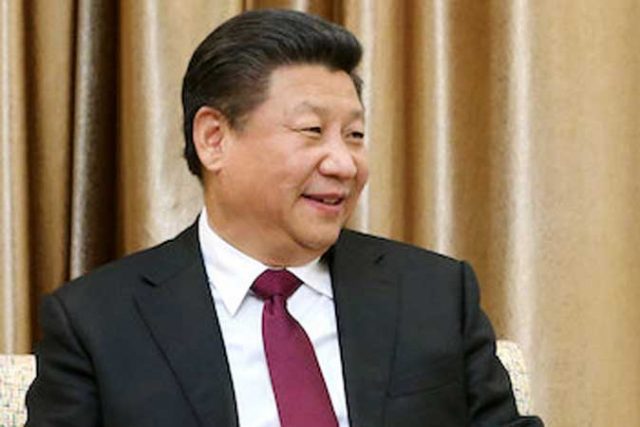
Chinese President Xi Jinping. — WIKIPEDIA.ORG
China’s President Xi Jinping told former Philippine President Rodrigo R. Duterte to continue to promote cooperation between the two countries, after bilateral relations cooled with Mr. Duterte’s successor seeking closer ties with Washington.
Ferdinand R. Marcos, Jr. was elected as president for a six-year term in 2022, taking over from Mr. Duterte who had adopted a more pro-China stance.
“I hope you will continue to play an important role in the friendly cooperation (between China and the Philippines),” state media cited Mr. Xi as saying during a meeting at the Diaoyutai state guest-house in Beijing on Monday.
Under Mr. Marcos, relations between China and the Philippines have grown tense, with Manila pivoting back to its traditional ally, the United States.
The Philippines and the US reaffirmed a decades-old security alliance during a trip by Mr. Marcos to the US in May, where he met with President Joe Biden, who said the US commitment to defending its ally was “ironclad”.
Washington has pledged to defend the Philippines, which allowed the US access to four additional military bases this year, angering Beijing.
Mr. Marcos also said granting US access to the bases was a defensive step that would be “useful” if China attacked democratically governed Taiwan, which China claims as part of its territory.
China has always insisted on being friendly with its neighbors, which it sees as its partners, Mr. Xi said, without commenting on the state of current bilateral ties.
“During your tenure as president of the Philippines, you had resolutely made the strategic choice to improve relations with China in an attitude of being responsible to the people and to history,” Mr. Xi told Mr. Duterte.
Last month, Mr. Duterte told domestic media that the Philippines could become a “graveyard” if it gets caught up in US-China tensions. – Reuters

Cash remittances up 2.8% in May

A recovery in the global cruise market is expected to increase demand for sea-based workers, and boost remittances in the coming months. Photo shows chefs undergoing culinary training for newly hired crew members in Manila, March 25, 2022. — PHILIPPINE STAR/KRIZ JOHN ROSALES

CASH SENT HOME by overseas Filipino workers (OFWs) rose to a two-month high in May, data from the Bangko Sentral ng Pilipinas (BSP) showed.

The BSP in a statement on Monday said cash remittances coursed through banks jumped by 2.8% to $2.49 billion in May from $2.43 billion a year ago.

The amount of cash sent home by OFWs in May was the highest since March when remittances hit $2.67 billion.

Overseas Filipinos’ cash remittances (May 2023)However, the 2.8% growth in remittances was the slowest in three months or since 2.4% in February.

“The expansion in cash remittances in May 2023 was due to the growth in receipts from land- and sea-based workers,” the BSP said.

Land-based OFWs sent $1.99 billion in remittances in May, up by 2.9% from $1.93 billion in the same month last year.

Remittances from sea-based workers, on the other hand, rose by 2.4% to $506 million from $494 million a year ago.

“We think that continued growth in remittances was helped by slowing inflation in host countries, which gave overseas Filipinos more disposable income to send home,” China Banking Corp. Domini S. Velasquez said in a Viber message.

She also noted improvements in digital banking services and platforms likely encouraged OFWs to send more money home.

For the first five months of the year, cash remittances grew by 3.1% year on year to $12.98 billion.

The expansion in cash remittances during the January-to-May period was mainly driven by inflows from the United States, Singapore, and Saudi Arabia.

Nearly half or 41% of the overall remittances came from workers in the United States, followed by Singapore, Saudi Arabia, Japan, the United Kingdom, the United Arab Emirates, Canada, South Korea, Qatar, and Taiwan.

Remittances from the top 10 countries accounted for 79.5% of the total during the five-month period.

Meanwhile, personal remittances, which include inflows in kind, went up by 2.9% year on year to $2.78 billion in May.

In the first five months of the year, personal remittances jumped by 3.1% to $14.46 billion.

ING Bank N.V. Manila Senior Economist Nicholas Antonio T. Mapa said he expects remittances to grow close to 3% for the rest of the year.

“The sustained and consistent flow of foreign exchange should remain a stable support for the Philippine peso in the months to come,” he said.

Mr. Mapa noted that a global economic slowdown has never resulted in a contraction in remittances, adding that it was only during the global lockdowns that remittances dipped.

“Barring any adverse developments that would comment such a situation, we believe remittances will continue to flow and support growth on the demand side all the while proving a stable source of foreign exchange,” he said.

For her part, Ms. Velasquez said remittance growth may remain modest in the coming months.

“Resilient labor markets in advanced economies will continue to support inflows, but an economic slowdown remains a key risk. However, continued recovery in sectors such as tourism will ensure a stable source of income from OFWs,” she said.

She noted a growing demand for cruise tourism could boost remittances from some sea-based OFWs.

The BSP expects remittances to grow by 3% this year. — Keisha B. Ta-asan