Home Blog Page 4528

Co’s listed firms post first-half profit growth

TWO of Lucio L. Co’s listed businesses — Puregold Price Club, Inc. and The Keepers Holdings, Inc. — reported higher earnings during the first half of the year as they booked higher sales during the period.

In a disclosure on Tuesday, retailer Puregold recorded a net income of P4.4 billion, up 4.8% from the P4.2 billion posted in the same period last year, due to an increase in sales.

In the six months ending June, the company reported a 10.9% rise in its top line to P91.23 billion from P82.24 billion the previous year.

During the first half, its same-store sales went up 7% as its establishments saw a 6.7% rise in traffic, while “baskets were flattish at 0.2% year on year.”

The company saw positive same-store sales growth of 5.9% from Puregold stores and 9.5% from S&R warehouse clubs for the period.

During the first half, it booked a 7.5% jump in gross profits to P16.85 billion from P15.68 billion in the same period last year.

“Double-digit top line growth was partially offset by compressed margins and higher operating expenses. The company increased its business activities and is gearing up to increase its store counts,” it said.

Puregold’s operating expenses went up by 12.8% to P11.69 billion from P10.37 billion the prior year.

The company announced earlier that it had acquired 14 DiviMart stores from their previous owners.

As of end-June, the company opened 16 new Puregold stores, one S&R Membership Shopping Warehouse, and one S&R New York Style quick service restaurant.

The group has a total of 543 stores nationwide, which include 467 Puregold stores, 23 S&R Membership Shopping Warehouses, and 52 S&R New York Style restaurants.

Meanwhile, liquor distribution company The Keepers reported an 18% increase in net income for the first half to P1.16 billion from P980.75 million in the same period last year due to stronger sales volume from its imported brandy, wines and specialty beverages.

The company’s consolidated revenue for the period rose by 19% to P6.5 billion from P5.48 billion the previous year driven by a 10% growth in sales volume.

“This was driven principally by Alfonso, the leading imported brandy in the market, which has already surpassed its pre-pandemic levels, premiumizing market and on-premise channel rebound,” The Keepers said in a separate disclosure.

Also, a factor in the rise of its top line was the price increases implemented during the two quarters ranging from 4% to 10%.

The company’s operating expenses, likewise, climbed by 27% to P P457.17 million from P358.92 million due to an 18% increase in distribution costs and advertising and promotional expenses.

Other operating expenses such as taxes, transportation and travel, professional fees, and insurance covering inventory also posted an increase during the period, the company said.

The Keepers is a leading importer and distributor of spirits, wines, and related products in the Philippines.

On the local bourse on Tuesday, The Keepers jumped by 5.49% higher to P1.73 per share while Puregold fell by 2% to P29.40 a share. — Adrian H. Halili

PLDT seen to reduce average spending by over 10%, raise P58B from more tower sales

BW FILE PHOTO

PLDT Inc. is expected to lower its average capital expenditures (capex) by more than 10% from 2023 to 2025, according to a report by Singapore’s S&P Global Ratings.

The report — S&P’s Asia-Pacific 5G: Telcos Face A Billion-Dollar Balancing Act — said telecommunication companies’ investments in 5G technology “remains more credit risk than reward.”

However, it said that average capex intensity, or capital spending as a proportion of revenue, among rated Asia-Pacific telcos will ease but will remain high from 2023 to 2025.

“We expect average capex intensity for the same population to be close to 19% in 2023 before easing slightly from 2024. This compares with the average of about 20% in 2019-2022, the period during which most telcos rolled out 5G,” S&P said.

“Some telcos will face less pressure than others. For rated telcos in Korea, Taiwan, and Philippines, we expect average capex to fall by more than 10% for 2023-2025,” it said.

According to the report, the Philippines has 60%-80% of 5G population coverage since the first rollout in 2020.

“In contrast, we anticipate average capex will rise more than 10% for rated telcos in Singapore, Japan, and India for the same comparative periods. Bharti Airtel only started rolling out 5G in late 2022,” it added.

The report has rated 14 telcos from different countries within the Asia-Pacific region, with PLDT rated for the Philippines.

S&P projects that telcos will continue to improve their 5G networks based on adoption rates and that tower building or leases will rise because 5G demands more towers and small cells.

Telcos are also seen to still benefit in its average revenue per user or unit and earnings from 5G services, said S&P.

“This is because data use typically rises with migration to 5G. For now, telcos use 5G to offer consumers faster mobile and fixed-wireless access. Not all telcos are charging a premium for 5G services,” it said.

MONETIZED CELL TOWERS
In a separate report, credit rater Moody’s Investor Services said PLDT would still have 4,430 towers or 37% of its tower portfolio to monetize.

“Based on average valuations for precedent transactions, PLDT’s towers could fetch about P58 billion, which is a substantial source of funding for the company. We do not rule out that PLDT may classify some of the remaining towers as strategic and not available for sale,” it said.

Since April 2022, PLDT has been monetizing its tower assets by entering sale-and-leaseback transactions for 7,569 towers valued at P98.3 billion.

“As of May 16, PLDT closed around 70% of its total announced tower sales and received P69.5 billion in cash consideration. We expect the remaining tower sales transactions to be completed in tranches by the end of 2023,” Moody’s said

PLDT shares rose 1.46% or P19 to close at P1,319 each on Tuesday.

Hastings Holdings, Inc., a unit of PLDT Beneficial Trust Fund subsidiary MediaQuest Holdings, Inc., has a majority stake in BusinessWorld through the Philippine Star Group, which it controls. — Justine Irish D. Tabile

Edwin Wilwayco’s unique view of the jeepney

JEEPNEY UNICUS # 21 (2023) Oil and Acrylic on Canvas 24 x 30 inches (60.96 x 76.20 cm)

By Giselle P. Kasilag

ARGUABLY the most iconic symbol of the country, the jeepney has been depicted by every significant Filipino artist in poetry, film, stage, song, and canvas. Visual artist Edwin Wilwayco is no exception. Ongoing until July 31 at Artes Orientes gallery is “Jeepney Unicus,” his third exhibition that focuses on what has been dubbed as the “King of the Road.”

His first crack at the theme was in 1978 with an exhibit at the Ayala Museum entitled “Jeepney Fantasia.” The approach was jazzy in style with the elements deconstructed — from the fender to the ubiquitous sampaguita lei hanging on the mirror.

It took 40 years before he revisited the theme with an exhibit entitled “Jeepney Sinfonia.” The show stemmed from his interest in the Disney full-length animated film, Cars, which featured various vehicles ranging from cars to tow trucks. It tickled his imagination and made him wonder what it would look like if a garage of jeepneys would come to life at night when humans are asleep.

Returning to the theme five years later, his jeepneys still contain the fantasy elements that people have come to know and love. But this time, he introduced a twist. Rather than just focusing on the form, he makes a commentary on the government’s efforts to modernize the beloved vehicle.

JEEPNEY UNICUS # 21 (2023) Oil and Acrylic on Canvas
24 x 30 inches (60.96 x 76.20 cm)

For “Jeepney Unicus,” the vehicle is turned sideways and depicted in motion. Thus, the colorful elements such as stickers and painted designs become a blur and serve as the speed lines. The outline of the jeepneys are recognizable but represented in movement, it appears to be fading into the distance. His signature swirls, drips, and thick layers of paint, reined in by stark, straight geometric elements, dominate the canvas.

“The signature of the jeep is the sideview,’ Mr. Wilwayco told BusinessWorld. “Kahit bali-baliin mo (Even if you manipulate it)! Together with the ornaments, even if you crop the jeepney, it will still be recognizable as a jeepney.”

He likened it to classic cars such as the Ford Mustang and the Volkswagen Beetle. Succeeding iterations may have modifications in terms of size and features but the design elements that make them unique and recognizable are always retained. That, he noted, is what appears to be lacking in the design of the supposedly modernized versions of the jeepney which look more like mini buses.

Para bang (It’s like) they don’t read history,” he said. “To modernize, I think they should still retain iyung look ng kinalakihan nating jeepney (the look of the jeepney that we grew up with). The only thing they can modernize is the engine. Then make it comfortable for commuters like adding an aircon. And it needs to be proportionately done.”

Admittedly, it has been over 20 years since he last rode a jeep. His daughter was so fascinated with the colorful vehicle that he decided to take her for a ride and experience it herself. He did so without telling his wife whom he knew would be worried about the pair riding the open vehicle that has very few safety features.

But the jeepney was a staple in his youth. As a Fine Arts student at the University of the Philippines, he would ride the iconic ikot jeeps to get around the campus.

Malayo pa lang, tinitingnan ko if I can hear the sounds. Led Zepellin iyung mga boom-boom ng jeep noong araw! Tapos makikita mo iyung naka-stack iyung eight-track sa harap! Palalampasin ko iyung jeepney kung alam kong walang music. Kahit ma-late ako ng konti, pero gusto ko talaga iyung may sounds. Led Zeppelin, The Who, Beatles, nararamdaman mo iyung bass sa upuan (Even from afar, I’d try to see if I could hear the sounds. The jeeps would be booming Led Zeppelin back then! Then you would see the stack of eight-tracks in front! I would really let jeepneys pass if they didn’t have sounds. Even if I’m late, I’d really wait for the ones with sounds. Led Zeppelin, The Who, Beatles, you can feel the bass on the seats,”) he reminisced.

The fear that the jeepney of his youth will completely disappear is real. Having spent the better part of the global lockdown due to the pandemic in the US, he came home to the streets of Manila devoid of jeepneys. The King of the Road was sidelined and routes were suspended to discourage people from leaving their homes and spreading the COVID virus.

With the country now fully opened, the jeepneys have returned, along with the traffic they are often associated with. While the final decision regarding the modernization is still being debated over, Mr. Wilwayco will continue to enjoy the traditional jeepney’s colors and draw inspiration from its unique features to create masterpieces worthy to be described as unicus or one of a kind.

AbaCore to acquire 22.5-hectare property in Cavite for residences

ABACORE Capital Holdings, Inc. said on Tuesday that it is set to acquire a 22.5-hectare property in Silang, Cavite to for residential development.

In a regulatory filing at the local bourse, the company said its board of directors approved and authorized the investment into and acquisition of a property Cavite to replenish its land inventory and investments.

The company added that the final contract price is subject to the appraisal of an independent appraiser.

AbaCore said the property has a floor price of P5,000 per square meter (sq.m.) and a ceiling price of P7,000 per sq.m.

The company added that the purpose of the acquisition was to develop the site into an “income-generating residential development.”

Its board also authorized its President Raul B. De Mesa and/or the Chief Operations Officer Arturo V. Magtibay, to sign any relevant documents for the investment into the property.

The company has yet to disclose further details on the acquisition.

During the first quarter, the company reported an attributable net income of P308.16 million, a reversal of the P12.65-million net loss it reported in the same period last year, due to a gain from the disposal of investment properties.

It booked a top line of P325.72 million during the three-month period from P4.57 million previously, while its expenses rose 62.3% to P21.12 million from P13.01 million.

AbaCore owns a controlling interest in companies engaged in financial services, real estate, gold mining, and coal mining. Its shares were unchanged at P2.63 each on Tuesday. — Adrian H. Halili

Bees have appeared on coins for millennia, hinting at an age-old link between sweetness and value

RAMINT.GOV.AU

IN 2022, THE ROYAL AUSTRALIAN MINT issued a $2 coin decorated with honeybees. Around 2,400 years earlier, a mint in the kingdom of Macedon had the same idea, creating a silver obol coin with a bee stamped on one side.

Over the centuries between these two events, currency demonstrating a symbolic link between honey and money is surprisingly common.

In a recent study in Australian Coin Review, I trace the bee through numismatic history — and suggest a scientific reason why our brains might naturally draw a connection between the melliferous insects and the abstract idea of value.

WHAT IS CURRENCY AND WHY IS IT IMPORTANT?
Money is a store of value and can act as a medium of exchange for goods or services. Currency is a physical manifestation of money, so coins are a durable representation of value.

Coins have had a central role in many communities to enable efficient trade since ancient times. Their durability makes them important time capsules.

Ancient Malta was famous for its honey. The modern 3 Mils coin (1972-81) celebrates this history with images of a bee and honeycomb. According to the information card issued with the coin set, “A bee and honeycomb are shown on the 3 Mils coin, symbolizing the fact that honey was used as currency in Ancient Malta.”

In ancient Greece, bees were used on some of the earliest coins made in Europe. A silver Greek obol coin minted in Macedon between 412 BCE and 350 BCE, now housed in the British Museum, shows a bee on one side of the coin.

Bees also feature on coins minted elsewhere in the ancient Greek world, such as a bronze coin minted in Ephesus dated between 202 BCE and 133 BCE.

The use of bees on ancient coins extended for many centuries including widely circulated bronze coins, and new varieties continue to be discovered.

WHY WE MIGHT LIKE BEES ON COINS
Why have bees appeared so often on coins? One approach to this question comes from the field of neuro-aesthetics, which seeks to understand our tastes by understanding the basic brain processes that underpin aesthetic appreciation.

From this perspective, it seems likely the sweet taste of honey — which indicates the large amount of sugar it delivers — promotes positive neural activity associated with bees and honey.

Indeed, primatologist Jane Goodall once proposed that obtaining high-calorie nutrition from bee honey may have been an important step in the cognitive development of primates.

Our brain may thus be pre-adapted to liking bees due to their association with the sweet taste of honey. Early usage of bees on coins may have been a functional illustration of the link between a known value (honey) and a new form of currency: coins as money.

THE BEE ON MODERN COINS
The use of bees as a design feature has persisted from ancient to modern times. A honeybee visiting a flower is shown on a series of ten-centesimi bronze coins issued in Italy from 1919 to 1937.

(As an aside, the world’s last stock of pure Italian honeybees is found in Australia, on Kangaroo Island, which was declared a sanctuary for Ligurian bees by an act of parliament in 1885.)

More recently, a 20-seniti coin from the Pacific nation of Tonga shows 20 honeybees flying out of a hive. This coin was part of a series initiated by the Food and Agriculture Organization of the United Nations to promote sustainable agricultural and cultural development around the world.

Bees are relevant here because their pollinating efforts contribute to about one-third of the food required to feed the world, with a value in excess of US$200 billion per year, and they are threatened by climate change and other environmental factors.

BEES ON COINS, TODAY AND TOMORROW
Public awareness of bees and environmental sustainability may well be factors in the current interest in bee coins. The diversity of countries using bees as a design feature over the entire history of coins suggests people have valued the relationship with bees as essential to our own prosperity for a long time.

In Australia, the 2022 honeybee $2 coin is part of a series developed by the Royal Australian Mint. In 2019, the Perth Mint in Western Australia also released coins and stamps celebrating native bees.

Despite the decline of cash, bee coins still appear to be going strong. The buzzing companions of human society are likely to be an important subject for coin design for as long as coins continue to be used. — The Conversation via Reuters Connect

Adrian Dyer is an Associate Professor at Monash University, Australia. He receives funding from the Australian Research Council and the Alexander von Humboldt Foundation.

Prime Energy says Malampaya target output exceeded

PRIME ENERGY Resources Development B.V. exceeded its target gas output in the second quarter, the gas exploration and development company announced on Tuesday.

In the second quarter, the company recorded its gas sales at 280 million standard cubic feet per day (MMSCFD), up by 2.2% against its initial target of about 274 MMSCFD.

“We intend to maintain a reliable supply of indigenous gas to our customers while we continue the hard work of exploring for new sources to address the natural decline of the Malampaya gas field,” Donnabel Kuizon Cruz, general manager of Prime Energy, said in a media release.

Prime Energy, a subsidiary of Prime Infrastructure Capital, Inc., is a member of a consortium that operates the Malampaya gas field. The other members are UC38 LLC and PNOC Exploration Corp., which own a 45% and 10% interest, respectively.

The Malampaya gas field is considered vital to the country’s energy sector because it supplies about 20% of Luzon’s electricity requirements.

“We remain committed to being the partner of choice in providing energy sufficiency and security to the country,” Ms. Cruz said.

To date, Malampaya is fully contracted to the four power plants of First Gen Corp., to which it supplies a combined capacity of 2,011 megawatts.

Service Contract 38, which covers the Malampaya gas field, was renewed until 2039, paving the way for the further development of indigenous energy sources.

Under the renewal agreement, the consortium has committed to drill at least two wells and to further explore and develop the fields within its service contract, which is also expected to yield about 210 billion cubic feet of additional reserves. — Ashley Erika O. Jose

Arts&Culture (07/26/23)


WanderManila holds dark history tour of Intramuros

WANDERMANILA has organized “One Night in Intramuros,” a tour that explores the Walled City’s dark past and includes details of violent stories that have shaped its history. Though it will paint Intramuros in a more sinister light, it will focus on the bloody aspects of its past which does not include ghost stories. The tour will be held on July 29, from 5 to 8 p.m. The fee is P800 per head. Register via https://forms.gle/CnkBVP6ATUQpnL4c7 and visit https://www.facebook.com/WanderManila for more details.


Free workshop on learning PHL literature in Spanish

“OLD WINE, New Skin: Digital Humanities, Distance Learning, and Philippine Literature in Spanish,” a free, one-day multidisciplinary workshop open to the public, is slated for July 27. It will show the intersection of literature, language, and online learning. Philippine literature in Spanish, a field of literary study that has been in decline, is also facing the complexities of the digital age. “Old Wine, New Skin” presents the tools and resources available in the learning of literature, including a work-in-progress massive open online course (MOOC) tailored for digital humanities topics. It is hosted by the Ateneo de Manila University and will be led by professors Jorge Mojarro of the University of Santo Tomas and Emmanuelle Sinardet of Université Paris Nanterre. The workshop will be conducted at the ADMU Loyola Heights campus, in the JJ Atencio Lighthouse at Areté, on July 27, 9 a.m. Interested participants may register through bit.ly/digiphilitmooc.


Halili-Cruz School of Dance presents Diversifiera

THE HALILI-CRUZ School of Dance (HCSD) will be performing Diversifiera 2023: Pagdiriwang ng Sariling Atin on July 30, at the Newport Performing Arts Theater. The show will celebrate Halili-Cruz School of Dance’s 38th anniversary and Quezon City Ballet’s 35th anniversary. The HCSD dancers will be accompanied by the 47-piece Manila Philharmonic Orchestra and the Philippine Madrigal Singers. The show is directed by Shirley Halili-Cruz. Tickets are available at the Halili-Cruz School of Dance Main Studio located on Quezon Avenue. For more information, send a message to https://www.facebook.com/halilicruzballet or e-mail halilicruzballet@gmail.com.


9 Works Theatrical restages tick, tick…BOOM!

JEF FLORES reprises his role as Jon, a struggling musical composer, in Jonathan Larson’s rock monologue called tick, tick…BOOM! The 9 Works Theatrical production, which is a restaging of the play’s successful run in 2016, revolves around Jon (a role that will alternate between Mr. Flores and TV actor Khalil Ramos), who is turning 30 and has yet to see his artistic ambitions come to fruition. It also follows his girlfriend, Susan, a ballet teacher who also longs for a more stable and secure future (to be played by Tanya Manalang and Kayla Rivera), and Michael, Jon’s best friend, who was once an aspiring actor but now has a stable job as a marketing executive (Vien King and Reb Atadero alternating). There will be performances at 3 and 7:30 p.m. on all Saturdays and Sundays of August, at the Carlos P. Romulo Auditorium, RCBC Plaza in Makati. Tickets are available at ticket2me.net.


Chekhov adaptation Uncle Jane returns

UNCLE JANE, an English adaptation of the 1899 play Uncle Vanya by Russian playwright Anton Chekhov, will be brought back on the Philippine stage beginning Sept. 2 at The Mirror Studios. Produced by the Company of Actors in Streamlined Theatre (CAST) and adapted and directed by Nelsito Gomez, the production is a rerun of sold-out performances in February. Uncle Jane features Missy Maramara as Jane, Topper Fabregas as Michael, Justine Peña as Elaine, Justine Narciso as Sofia, Audie Gemora as Alexander, Jay Glorioso as Ms. Marie, and Jaime Del Mundo as Ian. There will be shows on Sept. 2, 3, 8, and 10. Tickets are available for P700 via https://forms.gle/X8Dp5qNpcwA4u4mq8?_imcp=1.


Art Lounge presents ‘Flux’

“FLUX” is Kankan Ramos’ latest exhibition at Art Lounge Manila in Molito, Alabang. The artworks represent a compilation of Ramos’ recent works, showcasing her profound exploration of the state of flux — the dynamic, ever-changing nature of thoughts, actions, and creativity Flux is on view until July 30. For more information visit the Art Lounge Manila website www.artloungemanila.com.


5 shows at West Gallery

SEVERAL shows are on view at West Gallery until Aug. 5. First is Gene Paul Martin’s “Psychotropic Ego Death Grip” in which the artist weaves representational elements with vestiges of modernist designs, to create a hybrid expression of indigenous fantasy. Then there are Kelli Maeshiro’s “oh my joy we’re leaving tonight”; Audrey Lukban’s “If These Walls Could See” in which she transforms ordinary articles of life (mattress, pillows, sheets) into personal expressions of the uncanny and the surreal; and Is Jumalon’s “many further worlds.” The gallery is at 48 West Ave., Quezon City.


Imahica presents IIonggo artists in group show

IMAHICA Art delves deep into the essence of Ilonggo culture, with a group show called “Matahom,” which will run from July 29 to Aug. 19. The participating artists are: Allain Hablo, Arel Zambarrano, Ed Defensor, Ed Uygongco, Frank Alexi Ymalay Nobleza, Jo Uygongco, Margaux Blas, Renwil Jake Portodo, and Sheila Molato. Imahica is at 2-A Lee Gardens, Shaw Blvd., Mandaluyong City.


Forced eviction focused in one-act play

LIMBO, a one-act play that sheds light on the plight of those forced into eviction, will be staged from July 27 to Aug. 2 at the DLS-CSB Design + Arts Campus. Written by Elrod Chris P. Cuesta, the senior writer and creative director of New Era University’s Dulaang Asilaw and directed by Kiefer Sison of The INK Project and inspired by the 2016 i-Witness documentary “Pobreng Mayaman,” Limbo follows the journey of residents of the humble village of Waka-Waka as they fight for their rights to keep their homes. Limbo will be staged by Odd One Out Productions, made up of students of the Theater Arts Program of the De La Salle-College of Saint Benilde (DLS-CSB) School of Arts, Culture, and Performance. There will be performances on July 27, 28, 29, and Aug 1 and 2, at 11 a.m. and 3 p.m., at the 6F Black Box Theater at the DLS-CSB Design + Arts Campus, 950 Pablo Ocampo St., Malate Manila. Tickets — available at https://tinyurl.com/LimboTix — are P250 for regular seats and P275 for VIP. Tickets to the Gala Show start at P350.


Lecture on curating, art writing, and Southeast Asian Art

RUSSEL STORER, Head Curator for International Art of the National Gallery of Australia, highlights the role of the community in fostering the growth of Southeast Asian art in a hybrid lecture that is free and open to the public. In his talk, Storer will share the rich history of contemporary Southeast Asian art and the role of society in developing and strengthening the scene. With professional experiences from Singapore and Australia, he will provide the attendees with a comprehensive overview and understanding of the discipline of curating and writing and its invaluable contribution to the industry. The expert will also provide glimpses of some of his ongoing and future projects. The talk will be held on July 29, 1:30 p.m. The public discussion is hosted by the Museum of Contemporary Art and Design (MCAD) of the De La Salle-College of Saint Benilde (DLS-CSB). Interested participants may register through bit.ly/MCADplatform. For more information, email mcad@benilde.edu.ph or visit https://www.facebook.com/MCADManil

How to be a CEO: Continuous education

STANDRET-FREEPIK

(Part 4)

As mentioned in the last column, the IESE Business School in Barcelona is the paragon of an educational institution that makes available to practicing managers and executives a wide variety of courses, seminars, and workshops which will enable them to retool, reskill, and upskill themselves in the new areas of knowledge and competencies to which they were not exposed even in some of the most rigorous MBA programs that some of them completed in the past. Such topics as sustainable development and climate change, good governance, digitalization, remote learning, data science and data analytics, leadership, restructuring linked to the COVID epidemic, and diversity and inclusion were most probably not included in the curricula of even the most rigorous MBA programs in the past. These are some of the areas that are contained in the typical executive education curriculum of the leading business schools today. These programs are either customized to the needs of individual corporations or are open to the public.

Last May, the Financial Times (FT) came out with an issue on Executive Education. It ranked business schools in Europe and the US on the quality of their executive education programs. Once again, IESE Business School was No. 1 in the Open Executive Education category, and No. 4 in the Custom category. Duke Corporate Education of the US was No. 1 in the Custom category. European business schools dominate the FT’s 2023 rankings of executive education programs. The top six are IESE, HEC Paris, Esade Business School, INSEAD, the University of Oxford: Said, and the London Business School.

According to Andrew Jack, the global education editor of FT, competition in the field of executive education is intense. While there is significant common ground between degrees such as MBAs and Masters in Management, the format of executive education varies much more wildly within and between schools.

As expected, executive education offered by the business schools faces competition from a multiplicity of non-academic institutions providing training — from individual mentoring or coaching, consultancies to corporate universities. A very good example in the Philippines is the Institute for Corporate Directors (ICD) which offers some of the best workshops and short courses on good governance (both for public and private institutions) that have long been around even before the leading universities started to offer similar programs on governance. These non-academic institutions can offer greater flexibility and a greater focus on applied skills rather than theory as compared to the more traditional approaches found in universities.

FT interviewed people who participated in some of these continuing executive education programs. According to them they benefited from their courses, including honing soft skills such as listening; developing leadership capacity; thinking strategically; brainstorming effectively with colleagues; and keeping up to date with digital trends.

The fields in which there is high demand for upskilling opportunities are sustainability and climate change. Predictably, there were topical dilemmas for classroom discussion in the latest “instant case study” which focuses on how to divest from Russia following the launch of its war against Ukraine. Then there is the omnipresent issue of rapid technical change, which is transforming both business and business education itself. Today, it is impossible not to hear requests for enlightenment on such topics as the effects of ChatGPT and generative artificial intelligence.

And, as in the case of the leading retooling and upskilling program of the School of Economics of the University of Asia and the Pacific, even the graduates of the best business schools here or abroad have a great need for understanding better the language used by the Governor of the Central Bank, the Secretary of Finance, and other members of the Cabinet of the President as they propound on solutions to hyperinflation, rising fiscal imbalance, unsustainable balance of payments deficits, increasing agricultural productivity and other complex macroeconomic problems.

The Strategic Business Economics Program (SBEP) is an executive education course that has catered to CEOs and other members of top management of the leading Philippine firms for the last 40 years. More than 1,000 top executives and managers from business, the military, government agencies (including the present President himself), legislators, and NGO heads reskilled and upskilled themselves in understanding complex global, regional, and economic issues that impact on their respective businesses.

In a survey conducted by researcher Lisa Sira of the Business School of UA&P, all over the world the topic of leadership seems to be a strong executive development need, given current trends, the challenges faced by Human Resource Development globally, and how leaders across the world perceive their own leadership skills. Among the four Philippine universities surveyed (Ateneo, De La Salle-CSB, Mapua, and UA&P), the most common topics covered in executive education programs (whether customized or open) are leadership and management; financial management and accounting; human capital development/HRM and education/training; marketing management; diplomacy and governance; data analytics; and sustainability management.

Each of the universities has some programs unique to it. For example, Mapua had engineering (construction, design, and safety), IT Networking and software courses, and IT project management. De La Salle-CSB has food, restaurant and hotel management; design, arts, and fashion; blockchain technology; and mental health and well-being. Ateneo has sales management, quality management; health management; retail management; business continuity management; family business; and the ADMU-BAP Institute of Banking and Family Business. UA&P has business economics (SBEP), brand analytics, bond investing, family life education, data privacy, sustainability reporting, and agribusiness.

It is notable that continuing or professional education among the universities surveyed is dominated by short programs in keeping with the deemphasis on degree-granting programs and the greater importance given to providing knowledge and skills in the shortest time possible so that the participants can immediately apply what they learn to their work and responsibilities at hand. Customized, corporate-wide programs are a minority among Philippine business schools. UA&P has the greatest number of such types. Leadership and Management, Financial Management and Accounting, Human Capital Management, and HRM and Education Training are the most common areas of offerings among the universities surveyed. Diplomacy and governance and Sustainable Management are the least common areas among the universities surveyed.

In FT Business Education issue of May 2023, there is a list of the most frequently taught business school topics in the Executive Education curriculums of the leading business schools in the world, most of them located in Europe. These topics could serve as a guide to Philippine business schools who should devote more of their resources to upskilling and reskilling Filipino managers as the Philippines moves from the upper-middle income category to high-income in the next 20 years. These topics (in descending degree of importance) are leadership, strategy, finance, innovation, sustainability, change management, digital transformation, negotiation, decision making, marketing, entrepreneurship, diversity and inclusion, human resources, resilience, digital skills, operations, analytics/data science, wellbeing, remote/online collaboration, AI machine learning, and organizational restructuring linked to COVID. Philippine business schools and other non-academic training institutes should take their cue from the above-mentioned list. There should be less emphasis on degree-giving courses (especially the MBA) and more efforts to upgrade the knowledge and skills of existing managers who are the ones who will take the Philippine economy to the next level of development.

As a parting comment, let me say that one does not have to be a corporate person to aim at becoming a CEO. There are those who become CEOs by starting their own businesses such as the famous self-built entrepreneurs in Philippine business history as Henry Sy, Jose Y. Campos, John Gokongwei, Manny Villar, Andrew Gotianun, and David Consunji, among many others. Forty years ago, the CRC College of Arts and Sciences (now the University of Asia and the Pacific) started the B.S. in Entrepreneurial Management (EM) addressed to high school graduates who manifested entrepreneurial talents.

From the very first year of college, they were guided to choose a “New Business Venture” which they progressively developed into a successful small business enterprise throughout their four years of the undergraduate program, under the tutelage of a group of professors with a great deal of business experience. This program has produced hundreds of owners of SMEs. Others decided to join the corporate world.

Among those who continued to be their own employers, some are now CEOs of leading big enterprises like North Star Meat, one of the largest meat retailing companies today. Anthony Ng is the founder of this business that is about to issue an IPO. Another is Summa Water Resources that was started by Jose (Che) Soler as his New Business Venture project as a college student. It was so successful in the water business in the Philippines that the company has ventured into investing in an African country, Sierra Leone. A third example is Leechiu Property Consultants, a top property consultant and real estate company, headed by one of our EM graduates, David Leechiu.


Bernardo M. Villegas has a Ph.D. in Economics from Harvard, is professor emeritus at the University of Asia and the Pacific, and a visiting professor at the IESE Business School in Barcelona, Spain. He was a member of the 1986 Constitutional Commission.

bernardo.villegas@uap.asia

Arab art celebrated with largest London exhibition

HEAD by Marwan (1934, Damascus - 2016, Berlin) — CHRISTIES.COM

LONDON — More than 150 works of art have been brought together for what auction house Christie’s says is the largest exhibition of Arab art to take place in London.

Titled “Modern and Contemporary Art of the Arab World,” the show is divided into two sections and features items from across the region, spanning 80 years and various mediums. (For a virtual tour of the exhibit, go here: Modern and Contemporary Art of the Arab World | Christie’s London (christies.com)

The non-selling “Kawkaba: Highlights from the Barjeel Art Foundation” is a gender-balanced collection featuring some 100 pieces. “Emirati Art Reimagined: Hassan Sharif and the Contemporary Voices” centers around the pioneering artist and includes items on loan and for sale.

Both sections offer paintings, sculptures, and installations from celebrated and lesser-known names.

“This is special because we try to reflect on the collecting practice of Barjeel Art Foundation, 50% are male, 50% are female, from different geographies in the Arab world,” Ridha Moumni, the exhibition’s curator and Christie’s Middle East and North Africa deputy chairman, said on the show’s opening day.

HEAD by Marwan (1934, Damascus – 2016, Berlin) —CHRISTIES.COM

Key pieces of “Kawkaba” include Syrian painter Marwan’s Head from the mid-1970s, Lebanese artist Samia Osseiran Joumblatt’s Formative Radiation, painted in the late 1960s, and Egyptian painter and activist Inji Efflatoun’s Dreams of the Detainee from 1961.

The “Emirati” section is woven around Sharif’s multi-disciplinary body of work and also introduces younger talent.

The aim of the double billing is to wow and to educate, Mr. Moumni said.

“It’s usually the quiet season for us because we don’t have sales, so we decided to organize this exhibition to bring people to discover Arab art and culture,” he said.

The exhibition, with free entry, runs through Aug. 23 at Christie’s London headquarters.  Reuters

PH1 expects more possibilities after its acquisition by Megawide

PH1 WORLD Developers, Inc. said on Tuesday that it sees more possibilities with its residential development projects after it was acquired by listed infrastructure company Megawide Construction Corp.

“We are very excited to officially be part of Megawide and believe that this is a strategic move for us, especially in terms of unlocking more possibilities — in the areas of design, engineering, and technological advances — that will further strengthen our offerings in the vertical and horizontal residential segments,” PH1 President Ma. Gigi G. Alcantara said in a statement.

Megawide acquired 100% of PH1’s capital stock or 579.46 million shares for P5.2 billion or P8.97 per share based on the fairness opinion report of FTI Consulting Philippines, Inc. It forged a share purchase agreement with Citicore Holdings Investment, Inc.

The deal was in line with Megawide’s effort to tap the properties market, it aims to target affordable housing for below-middle-income or middle-income levels.

“Innovation unites our companies… [our] disruptive mindset, coupled with Megawide’s innovative solutions approach to its developments, are expected to challenge existing norms and raise standards in the highly competitive local property scene,” Ms. Alcantara said.

Meanwhile, the company said it is set to introduce two vertical developments in its pipeline that will be located in Pasig City and Clark, Pampanga.

Its other vertical projects are the My Enso Lofts and Modan Lofts Ortigas Hills, which offer residents the freedom to customize their living spaces and maximize functionality through its unique Add-Loft technology.

For its horizontal development, the company will also launch a project in Bulacan: the Northscapes San Jose Del Monte, which will highlight energy-efficient solutions.

“The plans include various technologies such as solar panels, tinted windows, insulated walls, E-shuttle, and solar-powered streetlights that will be incorporated in the units and the entire development to provide residents a more convenient, sustainable, and green lifestyle – with no extra cost,” Ms. Alcantara said.

PH1 is a real estate company that aims to disrupt property development conventions through innovation and engineering technology. — Adrian H. Halili

Gov’t fully awards T-bills at lower rates

BW FILE PHOTO

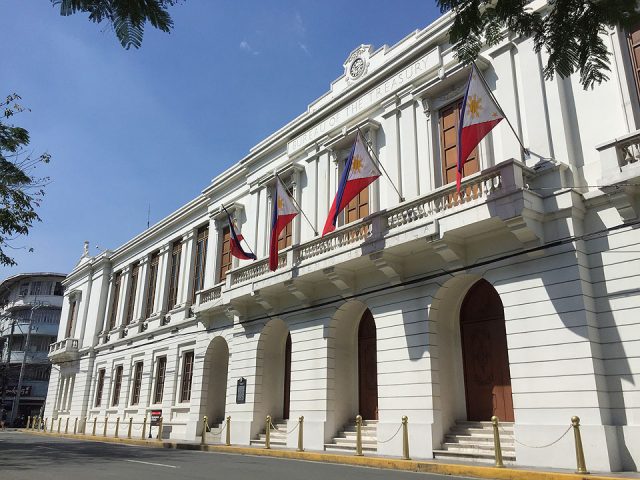
THE GOVERNMENT made a full award of the Treasury bills (T-bills) it offered on Tuesday as rates went down across the board on strong demand and bets of policy easing here and in the United States by next year amid slowing inflation.

The Bureau of the Treasury (BTr) raised P15 billion as planned via the T-bills it auctioned off on Tuesday, with total bids reaching P66.695 billion or more than four times the amount on the auction block.

Broken down, the Treasury made a full P5-billion award of the 91-day T-bills as tenders for the tenor reached P29.775 billion. The three-month papers were quoted at an average rate of 5.611%, 27.3 basis points (bps) lower than the 5.884% seen for the tenor last week, with accepted rates ranging from 5.608% to 5.618%.

The government also raised P5 billion as planned from the 182-day securities as bids stood at P22.815 billion. The average rate for the six-month T-bill was at 5.823%, falling by 27.2 bps from the 6.095% fetched last week, with accepted rates from 5.818% to 5.838%.

Lastly, the BTr borrowed P5 billion as programmed via the 364-day debt papers as demand reached P14.105 billion. The average rate of the one-year T-bill inched down by 4.2 bps to 6.184% from the 6.226% quoted for the tenor last week. Accepted yields were from 6.1% to 6.275%.

At the secondary market before Tuesday’s auction, the 91-, 182- and 364-day T-bills were quoted at 5.8080%, 5.9565%, and 6.1451%, respectively, based on PHP Bloomberg Valuation Reference Rates data provided by the Treasury.

“The Auction Committee fully awarded bids for Treasury bills (T-bills) at today’s auction. The 91-, 182-, and 364-day T-bills fetched average rates of 5.611%, 5.823% and 6.184%, respectively, all lower than previous auction rates,” the BTr said in a statement on Tuesday.

“The auction was 4.4 times oversubscribed with total bids reaching P66.7 billion. With its decision, the Committee raised the full program of P15 billion for the auction,” it added.

The Treasury made a full award of its T-bill offer at lower rates amid strong investor demand, a trader said by phone.

T-bill yields dropped across the board on expectations of rate cuts by the Bangko Sentral ng Pilipinas (BSP) and the US Federal Reserve in 2024 “amid the easing trend in US and local inflation data moving towards the inflation target,” Rizal Commercial Banking Corp. Chief Economist Michael L. Ricafort said in a Viber message.

Philippine headline inflation eased to 5.4% in June from 6.1% in May. It was the slowest in 14 months or since the 4.9% clip in April last year.

For the first six months, inflation averaged 7.2%, still well above the BSP’s  2-4% target for the year.

Easing inflation has prompted the Monetary Board to extend its policy pause for a second straight meeting last month, keeping the key interest rate at a near 16-year high of 6.25%.

The BSP will meet to discuss policy anew on Aug. 17.

Meanwhile, the US consumer price index (CPI) rose by 0.2% last month after climbing by 0.1% in May.

In the 12 months through June, the CPI climbed by 3% after the 4% increase seen in May.

The Fed on Tuesday began a two-day policy meeting, where it is expected to hike rates anew.

The US central bank raised its target interest rate by a total of 500 bps to a range between 5% and 5.25% before pausing its tightening cycle last month.

Tuesday’s T-bill auction was the last one for July. The Treasury raised P53.636 billion via T-bills this month out of the P60-billion program as it made a full award in just two of its four auctions.

On Wednesday, the BTr will auction off P30 billion in fresh seven-year Treasury bonds.

The government borrows from local and foreign sources to help fund its budget deficit, which is capped at 6.1% of gross domestic product this year. — A.M.C. Sy

Confronting illicit trade to boost legitimate commerce

PAT WHELEN-UNSPLASH

International trade is key to mutual prosperity among nations across the globe. Through the steady exchange of goods, services, knowledge, and capital, trade stimulates economic growth and development, creates job opportunities, increases productivity, and encourages innovation.

As no single country possesses all the resources in the world, international trade enables countries to capitalize on their comparative advantages, allowing the efficient production of specific goods or services. It is a two-way street that offers a wide range of economic, social, and political advantages to participating economies.

Illicit trade, however, undermines the expected benefits gained from international trade. Illicit trade, which involves smuggling and counterfeiting, poses enormous challenges as it leads to revenue losses for governments, undermines legitimate markets and results in job losses, poses health and safety risks to the public, and erodes confidence and trust — not just in brands but also in institutions’ efforts to combat corruption. Worse, as the geopolitical landscape changes, illicit trade can lead to other illegal activities like money laundering and organized crime.

During the COVID-19 pandemic, consumers and regular businesses that turned to e-commerce because of its broadened market reach were confronted with increased challenges regarding which products were genuine and which sellers were legitimate. Indeed, counterfeit and substandard goods do not only compromise the health and safety of consumers. They also damage the reputation of legitimate businesses.

A 2019 report by the Organization for Economic Co-operation and Development (OECD) and the European Union’s Intellectual Property Office highlighted that trade in counterfeit and pirated goods has been continuously increasing and, in fact, accounted for 3.3% of global trade. That figure is enormous in absolute terms.

The products that are the most susceptible to illicit trade are those with high demand and can be easily transported and concealed, such as tobacco products, alcohol, luxury goods, and medicines. Goods that are subject to high taxes are also vulnerable to illicit trade as some consumers may opt to turn to the black market in search of cheaper alternatives.

The Philippines is no stranger to this kind of unlawful act.

The Bureau of Customs (BoC) reported that its anti-smuggling operations during the first half of 2023 led to 603 seizures worth P23.851 billion. Specifically, counterfeit products, agricultural products, tobacco products, illegal drugs, and general merchandise were the top commodities seized.

In May, Bureau of Internal Revenue (BIR) Commissioner Romeo Lumagui, Jr. also stated that tobacco products are regarded as a major category of smuggled goods in the country. He added that due to the huge revenue losses for tobacco, the BIR has not been able to attain its collection target for excise taxes. Mr. Lumagui noted that for the first four months 2023, the BIR registered a 20% shortfall in the collection of excise tax, a large part of which is attributable to tobacco.

In this case, the tobacco industry is an important sector in the Philippines as it provides employment opportunities for Filipinos, particularly farmers in rural areas where agriculture is a vital source of livelihood. Moreover, as the sector generates jobs and livelihood opportunities, it can contribute to providing income security and enabling business growth.

However, as a result of the elusive nature of illicit trade, it is equally challenging to determine its actual extent in terms of volume and value, as well as the exact tax revenues evaded from government. In the end, those at the losing end are governments, legitimate businesses, and consumers alike.

Jesus L. Arranza, who chairs the groups Fight Illicit Trade and Federation of Philippine Industries, noted in 2022 that “smuggling is creating unfair competition for locally produced goods because it erodes the local market [with] cheaper, no value-added tax or undervalued and substandard imported goods displacing the locally produced commodities.”

This worsening situation calls for persistent efforts by all stakeholders involved — from governments and international organizations to businesses and civil society organizations — in effectively enforcing the law, strengthening legal and regulatory frameworks, and promoting public awareness. At the end of the day, the main objective is to protect the welfare of both consumers and legitimate businesses from unlawful and unfair economic activities.

However, the imposition of higher taxes on goods and services, which is the conventional route of the government, does not by itself automatically solve the persistent problem and may, in fact, even intensify the growth of illicit trade in the country as prices go higher. Taxation is formula-driven but confronting the problem of illicit trade may depend more heavily on law enforcement.

By effectively formulating, implementing, and improving measures to address illicit trade while promoting legitimate trade, countries can harness the full potential of their inherent strengths for the benefit not only of their constituents, but also the global economy as a whole.

Trade remains a vital driver of economic growth and development that in turn provides legitimate opportunities for employment, poverty reduction, food security, and innovation. To protect trade, the government and the general public need to be vigilant about the sinister forces operating behind the shadows of corruption, smuggling, counterfeiting, and other underground transactions. These activities undermine our efforts toward good governance. Our collective future depends on how effectively the government and the people jointly keep a watchful eye on, and curb, illicit trade.


Venice Isabelle Rañosa is a research manager at Stratbase ADR Institute.