Home Blog Page 4452

US says stolen COVID relief funds seized so far top $1.4 bln

WASHINGTON – The US Justice Department said on Wednesday it has seized over $1.4 billion in COVID-19 relief funds that criminals had stolen, and charged over 3,000 defendants with crimes in federal districts across the country.

The Justice Department disclosed the results of a nationwide enforcement action to combat coronavirus fraud, including federal criminal charges against 371 defendants for offenses related to over $836 million in alleged COVID fraud.

“This latest action, involving over 300 defendants and over $830 million in alleged COVID-19 fraud, should send a clear message: the COVID-19 public health emergency may have ended, but the Justice Department’s work to identify and prosecute those who stole pandemic relief funds is far from over,” US Attorney General Merrick Garland said in a statement.

A total of 119 defendants pleaded guilty or were convicted at trial during the sweep, according to the Justice Department.

The United States is probing many fraud cases pegged to US government assistance programs. In May 2021, Mr. Garland launched a COVID fraud enforcement task force.

Last year, the US Justice Department tapped federal prosecutor Kevin Chambers to lead its efforts to investigate alleged fraud schemes targeting pandemic assistance programs.

Over $200 billion from the US government’s COVID-19 relief programs were potentially stolen, a federal watchdog said in late June, adding that the U.S. Small Business Administration (SBA) had weakened its controls in a rush to disburse the funds.

In September 2022, the inspector general for the US Labor Department said fraudsters likely stole $45.6 billion from the United States’ unemployment insurance program during the coronavirus outbreak by applying tactics like using Social Security numbers of deceased individuals.

Earlier this year, a separate watchdog report said the US government likely awarded about $5.4 billion in COVID-19 aid to people with questionable Social Security numbers. — Reuters

Policy easing not on BSP’s radar yet

Commuters use their umbrellas during a downpour along Taft Avenue, Manila, July 13, 2023. — PHILIPPINE STAR/EDD GUMBAN

BANGKO SENTRAL ng Pilipinas (BSP) Governor Eli M. Remolona, Jr. maintained his “hawkish stance,” saying that monetary policy easing is not on the “radar” given still-above target inflation.

Mr. Remolona on Tuesday said sudden reversals in monetary policy confuse the market and create uncertainties.

“We’re in a hawkish stance, which means either we pause or we raise. We’re still not comfortably within the target range… A cut is not on our radar screen,” he said during a gathering with newspaper editors at the BSP.

Last week, the BSP extended its policy pause for a third straight meeting, keeping the benchmark interest rate at a near 16-year high of 6.25% amid upside risks to inflation.

The BSP has raised borrowing costs by 425 basis points (bps) from May 2022 to March 2023 to tame inflation.

Headline inflation slowed for a sixth straight month to 4.7% in July, which also marked the 16th straight month of inflation exceeding the BSP’s 2-4% target band.

Inflation averaged 6.8% in the first seven months of the year, which is still above the central bank’s revised 5.6% forecast.

Former BSP Deputy Governor Diwa C. Guinigundo said the BSP’s hawkish monetary policy stance is “most appropriate” as both headline and core inflation remain elevated. 

“With these inflation dynamics it would be counterintuitive for BSP to even consider cutting the policy rate or reducing the required reserves. That would indeed confuse the market, or upset inflation expectations,” he said.

Core inflation, which excludes volatile food and fuel prices, slowed to 6.7% in July from 7.4% in June. For the first seven months of the year, core inflation averaged 7.6%.

Mr. Guinigundo said that a pause is consistent with cautious monetary policy.

“The next meeting of the Monetary Board (on Sept. 21) is critical because that would validate whether the upside risks (to inflation) would materialize. Then the econometricians in the research department would be able to incorporate the outcome in their next run and see how the forecasts would work out,” he said.

At its Aug. 17 meeting, the Monetary Board identified potential price pressures linked to the “impact of possible higher transport charges, higher minimum wage adjustments, persistent supply constraints on key food items, and the effects of El Niño weather conditions on food prices and power rates.”

In deciding to extend the pause, the BSP also recognized the “challenging outlook” for the economy, as the slower-than-expected 4.3% second-quarter gross domestic product (GDP) expansion reflected a broad-based slowdown in domestic demand.

“A slowdown in growth is something that we should expect from this fight against inflation. Monetary policy is the right tool for stabilizing inflation,” Mr. Guinigundo said.

He noted that fiscal policy and non-monetary measures by the Trade and Agriculture departments should “provide the counterweight to weakening growth momentum.”

“We don’t use monetary policy to address government underspending or weak investments, the major reasons behind the 4.3% (growth) in the second quarter,” he added.

HSBC economist for Association of Southeast Asian Nations (ASEAN) Aris Dacanay in a note on Wednesday said the BSP is unlikely to cut policy rates even with slowing economic and easing inflation, mainly because of the US Federal Reserve

“Across ASEAN, the Philippine economy has the least monetary policy freedom from the Fed. The current account deficit is still wider than pre-pandemic levels and cutting ahead of the Fed risks putting downward pressure on the peso,” he said.

Based on the latest central bank data, the current account deficit was at $4.3 billion or equivalent to -4.3% of GDP in the first quarter, up from $4 billion a year ago.

The current account deficit is projected to reach $15.1 billion or -3.4% of GDP this year.

The peso closed at P56.73 on Wednesday, falling by 35 centavos from P56.38 previously. Year to date, the peso depreciated by 1.7% or 97.50 centavos from its P55.755 close on Dec. 29.

RRR CUT IN Q4?
Meanwhile, Mr. Remolona reiterated the BSP is taking a cautious approach in cutting banks’ reserve requirement ratios (RRR).

“If we’re tightening, we should not cut RRR. But my target is to lower it eventually,” he said.

HSBC’s Mr. Dacanay said he expects the BSP to cut the RRR of big banks by 100 bps to 8.5% in the fourth quarter this year, when inflation reaches the 2-4% target and economic growth continues to slow. He noted the Philippines still has the highest RRR level in the Southeast Asian region.

“We estimate the cut to inject P127 billion of liquidity in the system, of which the BSP will likely neutralize using its constantly improving array of monetary tools; this is to ensure that the central bank’s monetary stance does not change even with a cut in the RRR,” he said. 

Earlier in June, the BSP cut the RRR for big banks and nonbank financial institutions with quasi-banking functions by 250 bps to 9.5%. It has also reduced the ratio for digital banks by 200 bps to 6% and by 100 bps for thrift banks, and rural and cooperative banks to 2% and 1%, respectively.

Although the cut in RRR does not imply a change in monetary stance, the liquidity injected can be absorbed easily by the BSP’s monetary toolkit, Mr. Dacanay said.

“The central bank, nonetheless, wants the RRR cut to be consistent with monetary policy to limit confusion in the market. This means inflation needs to be well within the central bank’s target range before a cut is announced,” he said.

However, Mr. Dacanay said that if the peso weakens further against the dollar in the fourth quarter, the BSP may not cut the RRR.

“HSBC Foreign Exchange (FX) Research team’s base case is for the peso to strengthen to P54.50 against the dollar by the end of 2023. This should provide the BSP room to cut the RRR without the peso breaching P57. Without this buffer, however, the BSP may opt to delay the RRR cut to a later date,” he said.

HSBC Global FX Strategist Lenny Jin in the same note said Philippine markets tend to reward good RRR cuts and penalize the bad cuts.

“When RRR cuts help to ease growth constraints while inflation and currency pressure is relatively contained, the peso will likely react positively,” she said.

“The risk is that, should the dollar downtrend not be established by yearend or if inflation remains too close to the upper-band target, a RRR cut may see similar negative reactions in 2018.” — Keisha B. Ta-asan

Public bidding for NAIA rehabilitation now open

The government on Wednesday opened the bidding for the Ninoy Aquino International Airport public-private partnership project. — PHILIPPINE STAR/MIGUEL DE GUZMAN

THE PHILIPPINE government on Wednesday invited local and foreign investors to bid for the P170.6-billion public-private partnership (PPP) project to upgrade and operate the aging Ninoy Aquino International Airport (NAIA).

The Department of Transportation (DoTr) and the Manila International Airport Authority issued on Wednesday the invitation to bid for the contract to rehabilitate, operate, optimize and maintain the NAIA.

The contract will initially cover 15 years but can be extended by another 10 years.

This project will be under a rehabilitate-operate-expand-transfer arrangement, as provided for under the Build-Operate-and-Transfer Law.

“With a total project cost of P170.6 billion, the NAIA PPP project will cover all facilities of the airport, including its runways, four terminals, and associated facilities,” the PPP Center said in a separate statement.

The NAIA PPP project, which was approved by the National Economic and Development Authority (NEDA) Board in July, aims to increase the current annual passenger capacity of the airport from 35 million to at least 62 million.

Under the indicative schedule, bids for the NAIA PPP project should be submitted on Dec. 27.

A draft concession agreement will be out on Sept. 8, while the final version will be released on Dec. 4.

A pre-bid conference is scheduled on Sept. 22, while one-on-one meetings with prospective bidders will be held in October and November.

Bidders can participate in the bidding once they have paid a non-refundable participation fee of P2.75 million or $50,000.

The bidding is open to local and foreign parties who comply with legal, technical and financial capability qualification requirements.

To qualify, a bidder must have been the owner or concessionaire of an airport for which capital costs reached at least P10 billion.

It must also have expertise and experience in operating and maintaining an international airport for at least three consecutive calendar years. The international airport should have handled at least 25 million passengers per annum, of which at least 10 million should have been international passengers.

The bidder must also have a net worth of at least P20 billion (or foreign currency equivalent) as of its latest audited financial statement. For consortiums, the net worth of members who have an equity share of at least 25% each in the consortium may be added to meet the required net worth.

Bidders should also be registered with the Securities and Exchange Commission, while foreign parties should be registered with the appropriate government agency in the foreign country where it was registered.

Bidders are also required to secure a letter testimonial from a domestic universal/commercial bank or an international bank in the Philippines attesting that the bidder or consortium members are “in good financial standing and are qualified to obtain credit accommodations from such banks to finance the project.”

The government had opted to bid out the NAIA PPP project under a solicited proposal scheme, effectively rejecting the unsolicited bid of the Manila International Airport Consortium (MIAC).

The MIAC’s proposal involved P267 billion worth of investment, which included a P57-billion upfront payment and around P211 billion in development costs over a 25-year concession period. — Revin Mikhael D. Ochave

3 more added to list of flagship infrastructure projects

ARSENIO M. BALISACAN — PHILIPPINE STAR/KRIZ JOHN ROSALES

THE NATIONAL Economic and Development Authority (NEDA) Board has approved the inclusion of three more projects under its infrastructure flagship project (IFP) program, bringing the total list to 197 projects worth P8.71 trillion.

NEDA Secretary Arsenio M. Balisacan identified the three projects as the Tarlac-Pangasinan-La Union Expressway (TPLEX) extension; the Philippine Rural Development Project (PRDP) Scale Up; and the upgrade, expansion, operation, and maintenance of the Laguindingan International Airport in Misamis Oriental.

“With their inclusion in the list, these projects will be prioritized in the government’s annual budget preparation and will benefit from the expedited issuance of applicable permits and licenses, in accordance with current legal frameworks,” he said during a Palace briefing on Wednesday.

Mr. Balisacan said this would also help the government avoid the possibility that project costs would increase and financing charges would be imposed due to delays.

The P23.947-billion TPLEX extension project will be financed through a public-private partnership (PPP) scheme. The 59.4-kilometer, four-lane toll road will start from the last exit of the TPLEX in Rosario, La Union and end at San Juan, La Union.

The $818.4-million PRDP Scale-Up project aims to improve farmers and fisherfolk’s access to markets and profitability in value chains. It is jointly funded by the World Bank, which has committed $600 million or around P34 billion for the project.

The Laguindingan airport upgrade is a PPP project with a total cost of P45.75 billion. It aims to improve and expand the terminal facilities and operations of the airport.

The three projects were included after the NEDA Board revised guidelines for the formulation, prioritization, and monitoring of the IFPs.

“Particularly, projects approved by the Investment Coordination Committee and confirmed by the NEDA Board, which are not in the current IFP list, but meet the criteria indicated in the IFPs guidelines, shall be included in the IFP list, subject to the endorsement from the concerned implementing agencies,” Mr. Balisacan said.

At the same time, Mr. Balisacan said there are now 71 ongoing IFPs worth P4.11 trillion as of July, from 68 projects reported in the first quarter.

“The three additional projects that have advanced to the ‘ongoing’ phase are the Metro Cebu Expressway, the Nautical Highway Network Improvement, and the Daang Maharlika Improvement projects,” he said

These connectivity projects are implemented by the Department of Public Works and Highways.

Of the remaining 123 IFPs, Mr. Balisacan said that 27 have been approved for implementation, eight are awaiting government approval, 52 are in the preparation phase, while 36 are under the pre-project preparation phase.

By the end of the year, 12 of the 197 IFPs are expected to be completed.

“Four are on schedule, one is ahead of schedule, the rest have some challenges, but we are speeding up addressing those challenges,” Mr. Balisacan said.

“Next year, we are expecting about 16 of those projects to be completed. We are also making sure we are starting new ones, so our progress is continuous. Many of the projects starting now will be completed by the next administration,” he added.

The IFPs cover physical and digital connectivity, water resources, agriculture, health, power and energy, and other infrastructure.

Mr. Balisacan said the NEDA Board also approved the request for the change in the cost, scope, and implementation timeline of the Flood Risk Management Project for the Cagayan de Oro River. The project aims to reduce flooding in high-risk areas and strengthen the resilience of communities in flood-prone areas.

The NEDA Board also approved the provision of six fire trucks for Marawi City to support the city’s rehabilitation efforts. It will be funded through an official development assistance grant from China worth P72.5 million.

“By ensuring the efficient implementation of high-impact infrastructure projects, the Marcos administration aims to get the job done: we will enhance connectivity, reduce the cost of doing business, promote the creation of high-quality jobs, and ultimately reduce poverty sustainably to improve the lives of every Filipino,” Mr. Balisacan added. — Luisa Maria Jacinta C. Jocson

‘Sizable’ outstanding checks from 2 departments drag June infrastructure spending lower

The construction of a railway is seen in Balagtas, Bulacan, June 14, 2021. — PHILIPPINE STAR/ MICHAEL VARCAS

INFRASTRUCTURE SPENDING slumped by 16.4% in June, reflecting the high base effect and a significantly higher number of outstanding checks by some departments, the Department of Budget and Management (DBM) said.

Data from the DBM showed infrastructure and other capital outlays fell by P23.5 billion to P119.4 billion in June, from P142.9 billion in the same month a year ago.

The DBM attributed this to the “combined effects of high base, timing of releases to the Department of National Defense (DND) for its Revised Armed Forces of the Philippines Modernization Program (RAFPMP) and outstanding checks recorded for capital outlay-heavy departments.”

It noted that infrastructure expenditures in June last year were higher compared with this year after disbursements spiked after the lifting of the election ban.

“Capital expenditures by the DND in June last year were also significant, covering defense modernization projects. In contrast this year, most of the payables related to the RAFPMP are scheduled for this second semester,” the DBM said.

The DBM also noted “sizable” outstanding checks as of end-June from the Department of Public Works and Highways (DPWH) amounting to P24.4 billion, and Department of Transportation (DoTr) amounting to P11.6 billion.

“These compared to only P18.5 billion and P0.3 billion for the same period in 2022. The huge outstanding checks recorded may be attributed to billing/payment concerns encountered by line agencies, such as late/incomplete submission of documentary requirements to facilitate release of checks/payments, and contractors’ non-encashment of checks issued,” it added.

For the first six months of the year, expenditure for infrastructure and other capital outlays rose by 7.8% year on year to P507.2 billion. This was also 5% higher than its P483.1-billion program during the period. 

The DBM said that improved infrastructure spending during the period was due to the “faster implementation of construction activities and payments for completed infrastructure projects of the DPWH.”

“These offset the lower-than-expected capital outlay disbursements recorded in the DND and DoTr mainly due to the ongoing implementation and procurement of their respective projects,” it said.

“More specifically, the DoTr cited the ongoing right-of-way and site acquisition and utility relocation which affected the implementation of its various land and rail transport infrastructure projects,” it added

Meanwhile, the overall infrastructure disbursements in the first half were equivalent to 5.3% of gross domestic product (GDP).

“When infrastructure components of transfers to local government units (LGUs) and subsidy and equity to government-owned and -controlled corporations (GOCCs) are accounted for, the overall infrastructure disbursements for the first semester of the year reached P608.7 billion, up by P15.5 billion or 2.6%,” the DBM said.

The government expects overall infrastructure disbursements to be equivalent to 5.3% of GDP this year, equivalent to about P1.29 trillion.

The government is planning to spend 5-6% of GDP on infrastructure annually until 2028.

However, the DBM noted that the growth of total infrastructure spending during the period was “weakened by the lower National Tax Allotments (NTAs) of LGUs.”

NTAs are the share given by the National Government (NG) to LGUs out of the take from all national taxes. The size of the NTA varies each year because it represents a 40% share of the NG revenue total from three years prior.

“The tax revenue base, from which the NTA shares of LGUs in 2023 is determined, was the actual tax collections in 2020. Due to the impact of the economic and mobility restrictions at the height of the pandemic, tax revenue collections in 2020 contracted by P323.4 billion or 11.4% from the actual outturns in 2019. Hence, resulting in lower NTA shares of LGUs for 2023,” the DBM said. — Luisa Maria Jacinta C. Jocson

Proudly Philippine-made

MATTHEW and LAURIE WESTFALL, founders of Full Circle Craft Distillers Co.

ARC Botanical Gin reflects the country’s terroir

WHEN people talk about terroir (the conditions that give wine its flavor; from soil quality to climate), it’s easy to dismiss the idea that distilled spirits have any sort of terroir, processed and filtered as they are. But what if gin does have terroir, imbued by hard work, a good story, and great water? More importantly, what if you can find all that in the Philippines?

On Aug. 15, Full Circle Craft Distillers (the makers of ARC Botanical Gin) gave a tour of their distillery in Calamba, Laguna. While media guests oohed and aahed at the star of the show, a 415-liter copper still custom-made for them by German firm CARL, Full Circle Distillers co-founders Matthew and Laurie Westfall were just as eager to show off their botanicals, sourced from all over the Philippines.

Gin is a spirit made from juniper — its base — and Mr. Westfall admits that they import it from Tuscany, because juniper trees take 60 years to mature. However, he showed off basins and basins of Philippine citrus fruits like dalandan and calamansi, vying for space with ylang-ylang and sampaguita flowers, various herbs, and even pine from Benguet. The various botanicals they use number to about 28, with 22 of them sourced from the Philippines. “We have everything here,” he said about the flora of this country. All of these go into ARC Botanical Gin.

HITTING THE GROUND RUNNING
While the distillery was founded just in 2018, the gin already won the Gold Medal at the World Gin Awards 2019 in London, as well as the World Spirits Awards 2019 in Austria. In the year of their founding, they won Philippines Distillery of the Year at the Asia International Spirits Competition. Their Navy Strength and Barrel Reserve Gin won the Global Asian Spirits Masters Awards just this year, and they have pocketed many other awards besides.

Mr. Westfall calls Full Circle Distillery so because of his grandfather, an emigré who, having fled the Russian Revolution, landed in the Philippines and worked for a beverage company (he went on to invent Royal Tru Orange, according to Mr. Westfall). After their family migrated to the United States, Mr. Westfall, in the third generation, found his way back to the Philippines through the Peace Corps, and he has stayed here since, doing development work with the US Agency for International Development (USAID) and the Asian Development Bank (ADB).

He said that he first drew up his business plan in the 1990s, but life got in the way of opening up his dream distillery. “To get out of this suit, and actually go and be an entrepreneur, to work in the Philippines, and give something back,” he said about his dreams back then. For the past 15 years, his wife and he studied about gin from Kentucky to Stuttgart.

But why gin?

“Gin is a blank canvas. You can do anything and work with any botanicals, as long as you have juniper in them. You can play around with hundreds and hundreds of botanicals, coming up with a unique flavor profile. That allowed us to tell the story of the archipelago and bring flavors from all around the islands,” he said.

KEEPING THINGS LOCAL
Seeing their awards and their facility, we look back to a Filipino-branded spirit that also made it internationally: Don Papa Rum. Earlier this year, Don Papa Rum was acquired by spirits conglomerate Diageo for a multi-billion-peso deal. “Don Papa did an amazing job,” said Mr. Westfall, saying that Don Papa was the first mover in the Philippine craft spirits category that was able to offer their product to the world. He also cites the multiple artisanal brands around the world that have been acquired by giants (Sipsmith gin, for example, being acquired by Suntory Beam).

“For us, we’re a very different animal. This is anchored on our family narrative… the challenge you have when you get bigger and bigger is you start losing some of the artisanal techniques. You have to go industrial. That’s not in our DNA in any way whatsoever. We have no intention of ever flipping this company. We’re going to grow to a certain point where we can adhere to our principles, and our techniques and traditions,” he said.

That certain point is around 200,000 cases per year (they’re currently at 5,000 cases; targeting 12,000 next year). “That’s where you tap out. And you can tap out as a very successful company where everyone’s profitable, and you’re having fun,” he said.

Right now, they can be found in 18 countries, including in the US and the European Union, and are targeting four more countries next year (including Australia).

CALAMBA WATER
Back to terroir. On the question of distilled spirits having little to no terroir, cleaned out as they are by the distillation process, he says: “I don’t think that’s fair to say.”

“We deal with Philippine botanicals that come from out of the soil and we deal with water that comes out of these ancient volcanic aquifers here in Laguna. That’s terroir.”

What makes Calamba water special? According to Mr. Westfall, when his German master distillers and mentors tasted their water, they said, “That is the sweetest water we’ve ever tasted,” and even compared it to water from the French Alps.

He explains how that happened.

“We’re at the foothills of Mt. Makiling.” The water from the triple canopy forest has been trickling down the mountain, and going down into volcanic aquifers, filtered through layers and layers of volcanic rock. “That water has never been touched in centuries. It’s been mostly filtered, through the forest, through the soil, the volcanic rock. For centuries. Hundreds and hundreds. Thousands. Millennia of this water, going down. No one has extracted that water for any purpose except in the last 30, 40 years,” he said.

That goes into gin that’s been helping to fund wildlife conservation efforts in Palawan, not to mention helping small-scale farms all over the country, and providing jobs and education in their own Laguna community. The Westfalls are also targeting to go net-zero, and they’ve started by going zero-waste in the distillery, where all the used-up botanicals become compost.

PROUDLY PHILIPPINE MADE
The gin does taste good. Smelling tantalizingly like a great perfume, it runs down the throat cleanly and has a mildly floral flavor. They made us taste another variety, made with black bamboo, that smelled mildly mysterious, and had a very prim taste punctuated by a sharp, piquant kick when you swallow.

Mr. Westfall talks about the importance of letting everyone know that the product is made in the Philippines, with Philippine produce, by Philippine hands. But he decries the image the “local” has here — “We’re our own worst enemies. If it’s ‘local,’ there has to be a shortcut, there’s some sort of scam.”

This image has been changing of late. Mr. Westfall noted the strides Filipino skill has taken its people, from fashion to the culinary arts, not to mention every other field where there’s (probably) a Filipino. “What we’re trying to do is to turn that narrative on its head, and actually surprise people.

“It’s our time. It’s long overdue.”

The Full Circle Distillery is open for tours on Saturdays from 2 to 4 p.m. It costs P1,800 per person, and discounted gins are up for sale. — Joseph L. Garcia

Collabs, collabs, collabs

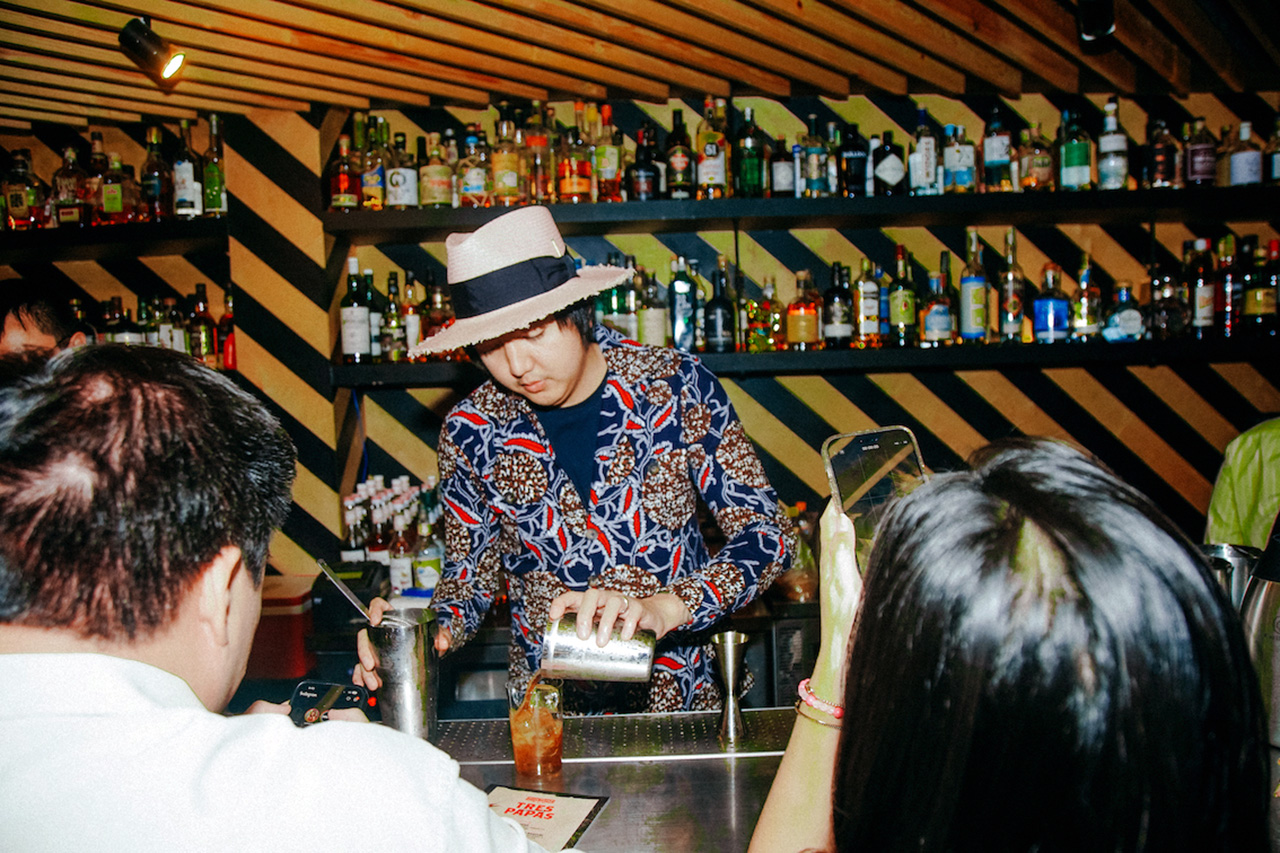
DAVID ONG, Co-Founder and Managing Partner of The Curator Coffee & Cocktails, present their Don Papa cocktails at the Tres Papas: Homecoming event at OTO.

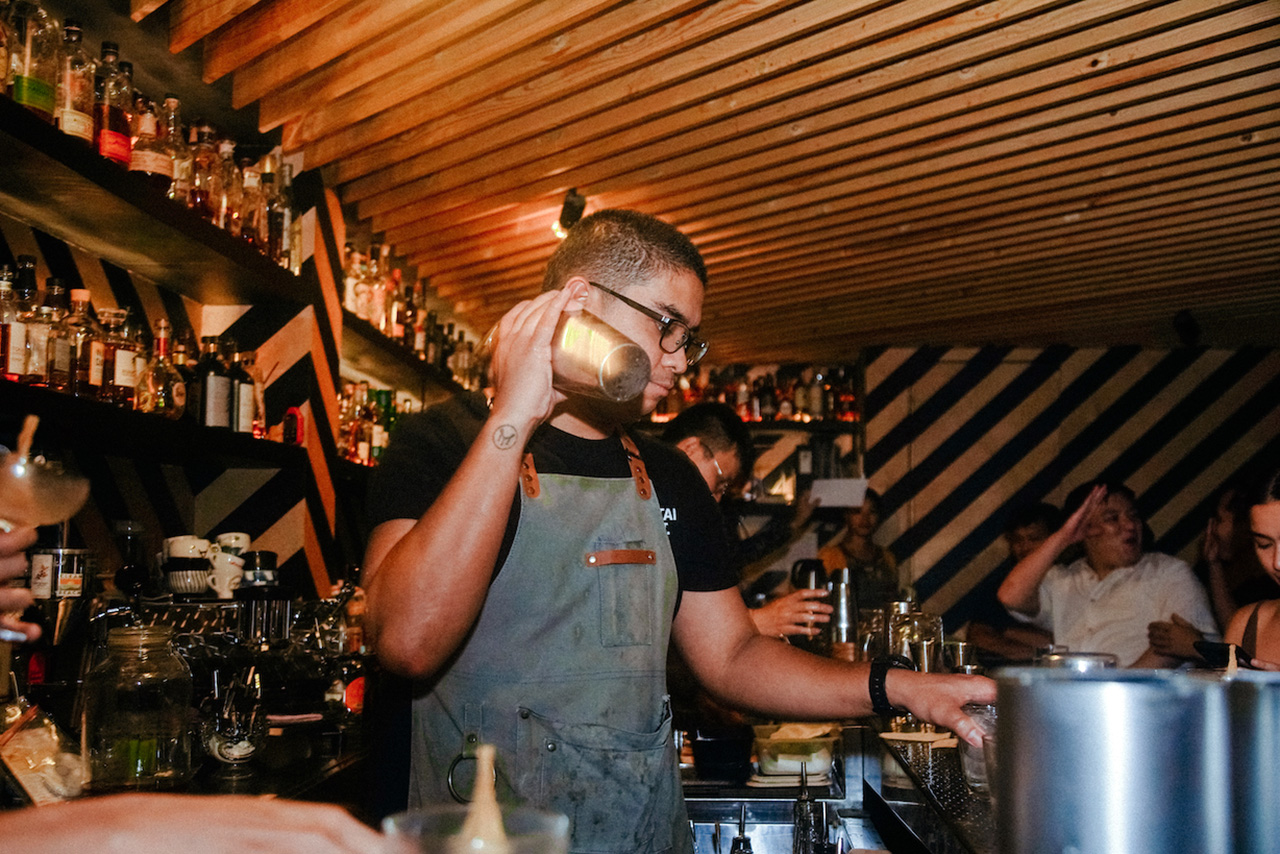
THE BAR scene has been fizzing up this month — and will keep fizzing the next — as bars collaborate with special bartenders for one-night-only cocktails.

DON PAPA
On Aug. 9, Don Papa Rum brought together the original Tres Papas, which includes David Ong, Cedric Mendoza, and Joma Rivera. They first got together in Singapore back in 2017 but were back in Poblacion’s OTO this month for Tres Papas: Homecoming.

Mr. Ong is the co-founder and managing partner of The Curator Coffee & Cocktails, currently ranked No. 34 in Asia’s 50 Best Bars. He is also co-founder and managing partner of other coffee and cocktail concepts in Manila such as OTO, EDSA Beverage Design Group, #YKWRoasters at The Grid, and PourHouse Hospitality. Mr. Mendoza had been the head bartender at Manhattan Bar, helping keep the bar at the No. 1 slot for two consecutive years on the Asia’s 50 Best Bars lists in 2017 and 2018, and helping it climb to No. 3 on the World’s 50 Best Bars 2018. He is now a managing partner of Pourhouse Hospitality and ReCraft. Mr. Rivera is the Diageo World Class Bartender of the Year in 2014 – Philippines, the Campari Bartender Competition Asia – 2018 Singapore Champion, and the Angostura Global Cocktail Challenge 2020 – Singapore Champion. He is currently bar manager at Kafe UTU and Tamba in Singapore.

One of Mr. Ong’s cocktails is called “Enriquez,” the name of the street OTO is on. This recipe is a riff on one of their original signature cocktails, modeled after a childhood favorite frozen treat, Twin Popsies, made with tablea-infused Don Papa Rum, sweet vermouth, orange bitters, and sugar.

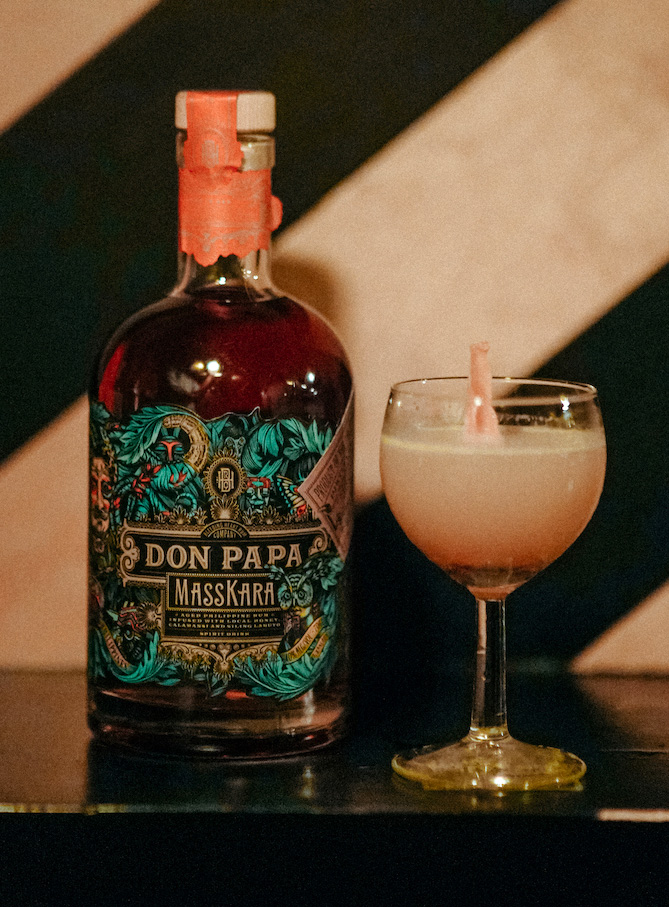
Mr. Mendoza created a cocktail named “Dong Papa,” playfully named after Mr. Ong’s industry nickname, “Dong.” It is a nutty riff on the classic daquiri. Hazelnut and spiced syrup bring out the caramel notes and vibrancy in Don Papa Masskara. This was delivered to this writer’s home, and it tasted suave and sophisticated, like a cocktail from a period film. It gets some depth from some Islay, and a hazelnut ending note leaves the mouth feeling wholesome.

Finally, Mr. Rivera created the cocktail called “Hey-A-Ron,” a tribute to Don Papa Rum’s Global Brand Ambassador, Aaron Goodall. Inspired by a drink from Australia (one part of Mr. Goodall’s heritage), this highball-style drink mixes fresh granny smith apple, manuka honey, and bee pollen. This was also delivered to this writer’s home, and it distilled the suggestion of an apple waiting to be bitten into.

There are two more Tres Papas guest shifts coming this September, to be announced on Don Papa’s Instagram, @donpaparum.

SINGAPOB
The Singapore Tourism Board (STB) is bringing some of Singapore’s most well-known bars to Makati’s Poblacion. While the first leg already began last week, the second leg on Aug. 24 to 26 is set to make mouths water. The guest bar’s drinks will be served from 8 to 11 p.m.

At The Spirits Library, they’re bringing cocktails from Sago House. Sago House is 51st among The World’s Best Bars 2023, 10th among Asia’s 50 Best Bars 2023, and bagged the 2023 Michter’s Art of Hospitality Award — a special award given to bars with memorable hospitality experiences. Opened during the 2020 lockdown in Singapore by three industry veterans, Sago House is a cocktail bar for those with adventurous tastes. The Spirits Library is in Guerrero St. in Poblacion.

Over at OTO, The Tippling Club will be pouring. Recognized for its innovative and progressive cuisine and cocktails since it first opened in 2008, Tippling Club is currently rated 63rd among Asia’s Best Bars 2023. Occupying three massive shophouses in Singapore’s Tanjong Pagar district, Tippling Club is a boundary-pushing gastro-cocktail destination where chef-owner Ryan Clift brings a touch of theater to the dining and drinking experience. Oto is in Enriquez St. in Poblacion.

Run Rabbit Run will be hosting Night Hawk, a bar inspired by Edward Hopper’s painting, Nighthawks. The retro-futuristic speakeasy was named as Campari’s One to Watch and currently holds the 73rd spot among Asia’s Best Bars 2023 list. Their cocktail menu features signature cocktails such as the Night Hawks (of course), combining cold coffee infused with rum, vodka, and amaro, with coconut and palm sugar foam. Run Rabbit Run is down P. Guanzon St.

Bar55 (on Matilde St.) will be the temporary home of Employees Only Singapore, currently 30th among Asia’s Best Bars 2023. Banter & Jive (on Don Pedro St.) is hosting No. 64 on Asia’s 100 Best Bars list this year, The Elephant Room, while Buccaneers Rum & Kitchen (also down Don Pedro St.) will host Papa Doble.

Ruby Liu, STB Philippines Area Director said in a statement, “With the recognition and accolades Singapore’s bars have received both in the country and abroad, Singapore can truly claim to be a world-class nightlife destination. STB is excited to bring a diverse lineup of world-class Singapore bars to Manila. With SingaPob, we can’t wait for Filipinos to discover the creativity and diversity of Singapore’s cocktail scene and we hope to welcome them to Singapore in search of more unique dining and cocktail adventures.” — Joseph L. Garcia

Toyota readies production of new Tamaraw next year, invests P4.4B

PHILSTAR FILE PHOTO

By Revin Mikhael D. Ochave, Reporter

JAPANESE automaker Toyota Motor Corp. is investing an additional P4.4 billion in the Philippines for the local production of the next-generation Tamaraw, which could start by the third quarter of next year.   

“I’m very pleased to say, that in 2024, for the first time ever, innovative international multi-purpose vehicles (IMVs) such as the next-generation Tamaraw, will be produced as completely built-up units (CBUs) right here in the Philippines at our Santa Rosa plant,” Toyota Motor Corp. Chairman Akio Toyoda said on Tuesday.

“This will present an additional investment by Toyota of P4.4 billion,” he added.   

He made the announcement during his speech at the 35th anniversary of its domestic unit Toyota Motor Philippines Corp. (TMP) in Taguig City as he presented the Tamaraw concept vehicle.

The next-generation Tamaraw is described as a light commercial vehicle (LCV) that is aimed to provide a more affordable vehicle option for entrepreneurs.   

“The introduction of the LCV line will help sustain TMP’s production operations, while localization of the model will also allow TMP to respond to the specific conversion requirements and specialized needs of Philippine customers,” TMP said in a separate statement.   

Separately, TMP First Vice-President for Corporate Affairs Rommel R. Gutierrez told reporters on the sidelines of the event that the local production for the Tamaraw, also called IMV-0, could begin by the third quarter of next year.    

However, Mr. Gutierrez said the company does not have final details yet on the name, pricing, and production volume.   

“It will begin local production around third quarter next year. It is just a concept car. We don’t have the details yet, even the name, even the [planned] volume. But it certainly will be produced here,” Mr. Gutierrez said.   

“As early as now, we are already preparing the production line, and even the parts makers, they have the design. They are also sourcing already,” he added.   

The next-generation Tamaraw is the third completely knocked-down model to be produced at TMP’s Sta. Rosa plant, alongside the Vios and the Innova.   

According to Mr. Gutierrez, the new Tamaraw could be used for the businesses of micro, small, and medium enterprises (MSMEs), or as an ambulance, patrol car, and modernized jeepney.   

“It is going to be very affordable for MSMEs. We want to support the MSMEs,” he said.

Mr. Gutierrez also hinted at the possibility that the next-generation Tamaraw could have a hybrid or electric-powered variant.   

“It is a matter of time. As you know, the current models that we have, there are already hybrid variants. So in the future, [it’s] possible,” he said.    

Meanwhile, Mr. Gutierrez said the P4.4 billion investment will be used for the vehicle’s parts localization, among others.     

He added that TMP is looking at including the production of the Tamaraw in the government’s Comprehensive Automotive Resurgence Strategy (CARS) program, which was recently extended for five years.   

“It depends. Of course, we need the support of the government. Any form of support would really be crucial to this,” Mr. Gutierrez said.   

The CARS program, introduced in 2015 under Executive Order No. 182, mandated participating car manufacturers to produce at least 200,000 units of their enrolled model to avail of incentives. The enrolled model is eligible for P9 billion worth of fiscal support.   

The program participants are TMP and Mitsubishi Motors Philippines Corp. (MMPC).

Under the program, MMPC produces the Mirage hatchback and G4 sedan, while TMP manufactures the Vios sedan.    

Before the five-year extension, MMPC had until this year to meet the required production while TMP had until next year.     

As of mid-2023, TMP locally manufactured 1.03 million units, delivered a total of 2.24 million units to Filipinos, and received over 16 million units for servicing across dealer workshops in the country.   

“TMP and the Toyota Group have cumulatively invested P73.7 billion since 2000. The Group has paid duties and taxes of P448 billion and exported P18.76-billion worth of auto parts and components since 1997,” the company said.   

A cookbook devotee offers praise for the cooking video

I AM a cookbook obsessive. From a cold start around 20 years ago, when I first started cooking in earnest, I’ve amassed more than 100 books of recipes for cuisines from all over the world, from Armenian to Xian — I’m giving serious thought to ordering a Zanzibari cookbook, not least for alphabetical symmetry.

On my heaving shelves are books that specialize in a single technique, such as grilling; a single appliance, such as the slow cooker; a single animal, like the pig; a specific part of an animal, like bacon; a single fish, such as salmon; even a single condiment, salt. Also on my shelves are books about things most people won’t allow into their kitchen, like organs. And that’s not counting chefs’ autobiographies or books about food culture, food history, and the food business.

Here’s my dirty secret: It’s been at least a couple of years since I last used any of my books to actually cook something. That’s because during the COVID-19 lockdowns, I joined the legions who were turned on to cooking videos.

At the time, I felt a twinge of remorse at abandoning my first culinary love. There was shame, too, of opting for free rather than paid content, a variation of the trend that was destroying my own profession. If longtime devotees like me stopped adding to our collections, I wondered guiltily, might the art of writing cookbooks fade away?

I needn’t have worried. Cookbook sales spiked during the lockdowns as people with lots of time on their hands expanded their gastronomic range from sourdough to progressively more complex culinary experiments. More important, both trends have persisted past the pandemic: Cookbooks are still selling like, um, hotcakes, even as cooking videos are spawning a generation of influencers on TikTok and Instagram. There’s also a crossover both ways: Some influencers have parlayed their newfound fame to secure book rights, and well-established cookbook writers are producing videos on social media platforms to engage and expand their audiences. TikTok phenom B. Dyllan Hollis’ Baking Yesteryear  is on course to be this summer’s top cookbook.

For the publishing industry, which seems in perpetual crisis, cookbooks are a rare bright spot. Francis Lam, editor-in-chief at Clarkson Potter, the Penguin Random House division that is a leader in the field, points out that cookbook sales have been climbing for several years, in tandem with the rise of food into the higher echelons of pop culture. “Food has a cachet now that used to belong exclusively to other art forms,” he tells me. “And as the emphasis in food culture grows, all forms of media around it grow too.”

Conceivably, then, cookbooks and videos could combine in a virtuous, mutually sustaining circle.

In some respects, that’s already happening. More and more cookbook writers are using online videos as a research resource. For her James Beard award-winning Feast: Food of the Islamic World, Anissa Helou says she watched four or five videos to refine each of her recipes. “I always cross-reference on YouTube,” she tells me. “It was very much part of my process for Feast.” Although she publishes beautiful photographs of her creations on Instagram, she hasn’t yet produced her own videos but intends to do so for her next book.

Anya von Bremzen, whose latest book is a meditation on national dishes from around the world, says watching cooking videos for 30 minutes is part of her bedtime routine: “I get 90% of my recipes from YouTube.”

When I first started collecting cookbooks, it was to try and catch up with my wife, Bipasha, a brilliant expert of the culinary arts who has been cooking since her early teens. Lacking her well-honed gifts of invention and inspiration, I needed information and instruction. Like many new cooks, I sought the safety net of detailed recipes, down to the specific measures for every ingredient and the number of minutes for every stage of the process.

But from the outset, there were frustrations. Some measurements were simply not specific enough: What is a “pinch” of salt? Some timings were too vague: When do you know your onions have “sweated” enough? Some recipes required cooking tools I’d never heard of: Mellon baller?! And many things were much harder to do than is suggested by the simplicity of the words — “slice onions fine” being only the most egregious example.

Cooking videos have helped allay these anxieties. Watching someone work through a recipe demystifies the process. I now have a pretty good idea when my onions have sweated enough, even if I may never muster the skill to slice them fine.

For a time, I binge-watched TV cooking shows of famous chefs whose books I had enjoyed — at the height of the lockdown in 2020, I gave up two full weeks to Nigella Lawson and Jamie Oliver. Then I discovered YouTube stars, people like Andrew Rea (of the Babish Culinary Universe) and Emily Kim (aka Maangchi), who built a huge following online and, in some instances, followed up their video success with more conventional cookbooks.

As my consumption of cooking videos has evolved, I find myself drawn to YouTube videos of regular people making their favorite dishes. They have not, and may never, acquire online fame or real-world book deals. Their lighting, sound, and editing skills may never be more than rudimentary. But they make up for this in approachability.

There is something profoundly reassuring in someone cooking in a kitchen very much like my own, using tools I have and displaying skills only slightly ahead of mine. I can see when they confront and overcome problems that have confounded me.

When trying something new, I now make a habit of watching five or six videos online, most of them by people I’ve never heard of, before trying my hand at it.

As videos proliferate from the millions to the tens and hundreds of millions, will cookbooks die out? Von Bremzen reckons they won’t. “A cookbook operates in a different cultural space from a video; it appeals to a different part of your brain,” she argues. “Why do people buy so many cookbooks when videos are around? They want a different kind of connection to the same thing.”

The sales figures suggest cookbooks are going to be around awhile yet. Some buyers want them to decorate a shelf or a kitchen. Others want them for inspiration. Many will continue to use them the way I used to: To actually cook from a printed recipe.

But will I ever add to my collection beyond the Zanzibari cookbook? Probably, as much out of habit as anything else. But when the mood takes me, I’m much more likely to reach for the iPad than for my bookshelves. — Bloomberg Opinion

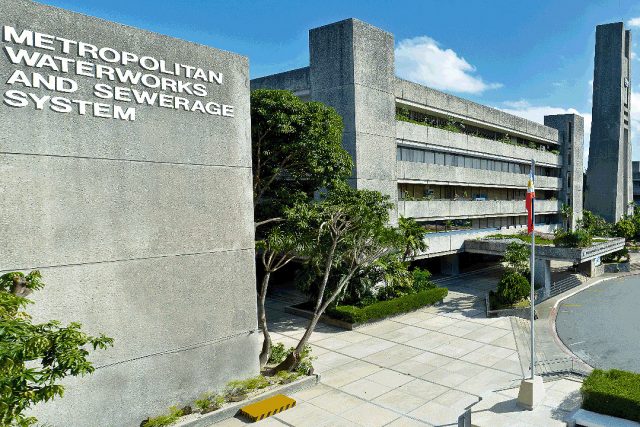
MWSS seeks increased water allocation of 50 cms for Sept.

THE Metropolitan Waterworks and Sewerage System (MWSS) is seeking an increased allocation to 50 cubic meters per second (cms) from the Angat-Ipo-La Mesa water system for September.

Patrick James B. Dizon, head of the MWSS Angat-Ipo operations management division, said in a Viber message that the agency requested the increase from the National Water Resources Board (NWRB) earlier this month.

“We had a meeting with the interagency TWG (technical working group) on Angat Dam operations and management chaired by NWRB on 10 Aug. 2023 and during that meeting, we already presented our request of 50 cms,” he said.

Mr. Dizon said the agency would send a letter to the NWRB by Thursday to reiterate the request.

Last month, the NWRB said it was considering further cutting the allocation to the MWSS as the Angat dam’s water level continued to decline.

The water level in Angat fell below its minimum operating level of 180 meters as it reached 178 meters on July 14.

It went back to its normal operating level later that month amid the heavy rains from Typhoon Egay (international name: Doksuri) and the enhanced southwest monsoon.

As of Wednesday morning, the water level in Angat Dam is at 198.08 meters, lower by 0.4 meters from the 198.12 meters seen on Tuesday.

Mr. Dizon said the water elevation may increase for the coming weeks and months, citing a projection from the state weather bureau Philippine Atmospheric, Geophysical and Astronomical Services Administration (PAGASA).

“That was based from the projected rainfall by PAGASA for the next months and the historical watershed inflows from the river tributaries of Angat Dam during the El Niño year,” he said.

The MWSS official said the NWRB will have a board meeting on Aug. 31 to discuss the water allocation for September. — Sheldeen Joy Talavera

The long road to fixing NAIA

PHILIPPINE STAR/MIGUEL DE GUZMAN

My first trip out of the country in the late 1970s was out of the old Manila International Airport, which sat at the site currently occupied by what is now known as NAIA Terminal 2. My second trip in the early 1980s was out of what is now known as NAIA Terminal 1. Since then, succeeding international trips were out of either NAIA Terminals 1, 2, or 3.

My travels in the last 45 years have allowed me to witness first-hand the many changes and developments in air travel locally and abroad. But I am, by no means, an expert on airline and airport operations. However, I would like to believe that as a frequent traveler, I am in some position to rate whether an airport is efficient, comfortable, safe, and convenient. NAIA, despite all the government’s efforts to date, is far from being such.

This is unsurprising considering that NAIA’s Runway 06/24 and taxiways are 69 years old, while its Terminal 1 is 42 years old. The control tower is also around 60 years old. Terminal 3, the newest terminal, was opened 15 years ago. Runway 13/31 is even older than 06/24, having been part of Nichols Airfield since World War II.

The original airport started operations in 1935 in Grace Park in Caloocan. In 1937, Nielson Airport opened in Makati, with what is now Ayala Avenue and Paseo De Roxas as parts of its runways. Nielson was closed in 1948, after the war, and airport operations were moved to a site adjacent to Nichols Air Base (now Villamor) and made use of the base runway (13/31).

A longer international runway (06/24) was built in 1954, while the construction of a control tower and international terminal did not start until 1956. The international terminal was opened in 1961 but was closed after a fire in 1972. A smaller terminal was built beside it, and this was used until Terminal 1 was opened in 1981. Terminal 2 was built in the 1990s.

So, when Terminal 3 partially opened 15 years ago, I deemed it a welcome relief. With three international terminals in operation, the experience of flying in and out of NAIA improved significantly. That was in 2008, when the airport was running relatively smoothly and flights delays were minimized.

Nowadays, the airport terminals have become congested and uncomfortable once more. Lots of flight delays have also been reported, in part due to aircraft maintenance issues, also the fact that NAIA has only two runways, leading to long lines of aircraft waiting to take off or land. The airport had suffered power and communication outages as well.

It is obvious that NAIA is operating beyond capacity and is in desperate need of expansion and modernization. I used to think that rehabilitation would do little to improve capacity unless new runways were added. But I have been recently made to believe that even with just two runways, NAIA can still be made efficient and comfortable with some changes.

The thing is, NAIA’s planned rehabilitation appears to have been in limbo for the last five years. Five years have gone by — with the COVID-19 pandemic happening in between — and NAIA continues to degrade as it waits for the government to implement a much-needed upgrade. A timeline prepared by CNN Philippines showed that a modernization proposal was first submitted in 2018.

In a report, CNN Philippines noted that in 2018 a consortium formally submitted to the Department of Transportation an “unsolicited” proposal to rehabilitate NAIA. The consortium was composed of Aboitiz InfraCapital, Inc.; AC Infrastructure Holdings Corp.; Alliance Global Group, Inc.; Asia’s Emerging Dragon Corp.; Filinvest Development Corp.; JG Summit Holdings, Inc.; and Metro Pacific Investments Corp.

Around the same time, interest in the rehabilitation project was also expressed by San Miguel Corp., which has since been given the go-ahead to build a new international airport in Bulacan; and the pair of Megawide Construction Corp. and India-based GMR Infrastructure (Megawide-GMR), which undertook the rehabilitation of the Clark International Airport and the Mactan-Cebu International Airport.

In late 2019, the National Economic and Development Authority (NEDA) Board approved the NAIA rehabilitation plan, but scaled down the project from P350 billion with a 35-year concession period, to P102 billion under a 15-year deal. In 2020, San Miguel Corp. and Philippine Airport Ground Support Solutions, Inc. also reportedly offered to undertake the NAIA project.

To date, four years since the NEDA Board approval, the Department of Transportation is still to implement NAIA’s rehabilitation plan. In June, the “new” Manila International Airport Consortium (MIAC) officially submitted to Transport officials an updated unsolicited proposal for NAIA’s redevelopment. It offered to invest P267 billion over a 25-year concession period.

MIAC is composed of Aboitiz InfraCapital, Inc., AC Infrastructure Holdings Corp., Asia’s Emerging Dragon Corp., Alliance Global-Infracorp Development, Inc., Filinvest Development Corp., and JG Summit Infrastructure Holdings Corp. From the original group of seven in 2018, Metro Pacific Investments Corp. opted out. Meantime, Global Infrastructure Partners (GIP), an airport operator in the UK, came in as MIAC’s technical partner.

In June, MIAC went all-out in publicly announcing their offer to the government to upgrade NAIA. It proposed to increase NAIA’s capacity to 54 million passengers per annum by 2025, from 32 million at present, and to address queuing and bottlenecks. Capacity will be raised to 62.5 million passengers by 2028 by increasing terminal floor area, adding airfield facilities, and improving cross-terminal transportation.

Passenger capacity will be further raised to 70 million passengers by 2048 by further expanding terminal space and airfield capacity. Over 25 years, MIAC will make P211 billion in capital investments, with P57 billion to be invested in the first five years of the proposed 25-year concession period. There will also be a P57-billion concession fee to paid upfront to the government.

I guess MIAC thought that by publicly announcing its unsolicited offer, it could gain wider public support for its proposal. And that maybe Transport officials could be swayed by public opinion to quickly act on the matter. I do not blame MIAC for being zealous. After all, it has been offering to fix NAIA since 2018, and the airport urgently needs upgrading, but nothing has been happening.

Round 2 for MIAC does not look any better than Round 1. Two months have passed since it submitted its unsolicited proposal, and Transport officials have been relatively quiet on the proposal’s prospects. One issue is the concession period, with MIAC asking for 25 years vs the government offer of 15 years. Moreover, the government appears to now prefer to bid out the project.

MIAC’s proposal was “unsolicited” and was not sought by the government. And while MIAC can always resubmit its proposal as a solicited bid, to date it does not seem like the Transport department has published a call for bids. In short, the government is still to start the official process of soliciting bids for the NAIA project.

In this line, MIAC may have shown its cards too early by making public its revised unsolicited proposal in June. It may have revealed too much to other prospective bidders for the project. On the other hand, what is more important are the terms of reference for the bidding. MIAC’s proposal may have to substantially change anyway to comply with the government’s terms. Anything made public to date may just be immaterial.

Unfortunately for the suffering public, a pushback is expected. With the solicitation route, it will maybe take another 12 to 24 months before the project gets awarded, and then perhaps an additional 12 to 24 months before any work starts. In short, improved service may not be expected until 2028, at the earliest. Five years have gone by since 2018, and we are back at square one.


Marvin Tort is a former managing editor of BusinessWorld, and a former chairman of the Philippine Press Council

matort@yahoo.com

Dining In/Out (08/24/23)


Grand Hyatt releases mooncake collection

THE GRAND Hyatt Manila will celebrate the 2023 Mid-Autumn Festival from Sept. 1 to 29 with its mooncake collection. Handcrafted by the Chinese chefs of No. 8 China House, this year’s mooncakes include a combination of classic and contemporary flavors. Options range from the staples White Lotus with Salted Egg Yolk and Red Bean to the more modern ube (purple yam), chestnut, pandan, and black sesame. The price for a single mooncake is P488 and a box of four is P2,488 net. The hotel will also have a selection of hampers for gifting. Guests can choose from the following: a box of two mooncakes with Don Papa Rum 7 Years Old for P2,988 net; a box of four mooncakes with a bottle of wine for P3,588 net; a mooncake hamper with a bottle of wine and signature retail items for P8,888 net; and, a box of four mooncakes with Johnnie Walker Black and signature retail items for P9,888 net. The Mid-Autumn Festival collection is available at Florentine, located in the hotel lobby. Guests have the option to pre-order in bulk and receive special discounts, starting at 10% for 10-19 boxes and up to 25% discount for 100 boxes and above. Orders of 20 boxes and above require a 48-hour lead time. Receive complimentary delivery to a single location for orders of 50 boxes and above. For inquiries and orders, call 8838-1234, e-mail manila.grand@hyatt.com, or pre-order online through bit.ly/DineAtHomeGHM.


The Spirits Library turns four

OVER the past four years, The Spirits Library in Makati’s Poblacion district has hosted live music, performances, cocktail masterclasses and expert bartenders from all over the world. Known for its floor-to-ceiling selection of rare liquors and its eclectic vintage interiors, The Spirits Library will celebrate its fourth anniversary on Aug. 26. For the occasion — entitled “Crazy Rich Libations” — patrons will be treated to an after-hours celebration inspired by East Asian lounges of decades past, with jazz music by Tin Virtucio, performances by Burlesque PH, and the bar’s bespoke cocktails. During the anniversary weekend, The Spirits Library will also be hosting Singapore’s Sago House, in partnership with The Singapore Tourism Board and its SingaPob initiative. Founded during the 2020 lockdown, Sago House is now ranked No. 10 in Asia’s 50 Best Bars 2023 and No. 51 in the World’s Best 50 Bars 2022. For the occasion, Sago House co-founder Desiree Jane Silva and head bartender Naz Zurmi (Lil Naz) will be serving up cocktails inspired by fresh hip-hop tunes and ingredients, debuting a drink inspired by the Filipino staple adobo, called No Chickity. The whiskey-based libation infuses the flavors of chicken stock, soy syrup, green apple, and is topped with burnt rice bubbles. Crazy Rich Libations, The Spirits Library’s Fourth Anniversary Event will be held on Aug. 26, while The Spirits Library x Sago House Guest Shifts will take place from Aug. 24 to 26. Reservations are highly encouraged and can be made through 0917-160-1162. The Spirits Library is located at 4963 Guerrero St., Barangay Poblacion, Makati, and is open every day from 6 p.m. until 3 a.m.


Mercato Centrale opens Festival Mall Water Garden food fest

THE GRAND opening of the Food Festival by Mercato Centrale at Festival Mall Water Garden in Alabang will be held on Aug. 25, Friday. The food fest will feature a selection of food stalls offering everything from Korean street food to cheesecakes and classic Filipino grill. Designed to be a family-friendly destination, the food festival will feature picnic tables and live music by local bands and artists. The Food Festival by Mercato Centrale at the Festival Mall Water Garden will be open every Thursday to Sunday from 4 to 10 p.m. Admission is free.


SuperSam opens in BGC

SUPERSAM, a full-service casual dining restaurant in Scout Tobias St., in Quezon City, has now opened its second branch at BGC in Taguig. The new restaurant is spacious, offering both indoor and outdoor dining options and can seat about 60-80 customers indoor and about 30 people in the al fresco dining area. SuperSam serves international dinners infused with Filipino flare and flavors. Among its menu items are burgers, pasta, fried chicken, sandwiches (a best seller is the chori burger), Filipino dishes (think angus salpicao and crispy pork binagoongan), and milkshakes. “We also have a craft bar that serves assorted coffee, liquor, draft beer and wine,” said Gerry Sy, one of the restaurant’s four owners along with his wife, Jinky, and Arnold and Sharon Carlos. Diners can sign up for the Supersamahan membership card to avail themselves of the 10-20% off on food and drinks (some terms and conditions apply). On weekends, the restaurants host the SuperSam Live Sessions featuring live music performances from well-known OPM artists including True Faith, Free Style, South Border, The Dawn, Joey G, Paolo Santos, Nina, Luke Mijares, Sitti, and Nyoy Volante. For reservations and performance schedules, call 0917-894-8889. SuperSam BGC is open on Sundays to Thursdays from 7 a.m. to 10 p.m., and Fridays to Saturdays from 7 a.m. to 1 a.m. SuperSam BGC is located at High Street South Corporate.


Jollibee offers free burgers to FIBA opening game goers

THE FIBA Basketball World Cup 2023 is all set to kick off at the Philippine Arena on Aug. 25, and Jollibee celebrates the occasion by giving away free Cheesy Yumburger coupons to all of those who attend the Opening Game. The FIBA Basketball World Cup 2023 Opening Game attendees at the Philippine Arena will be handed a free Jollibee Cheesy Yumburger coupon when they present their ticket at the entrance. They can visit the Jollibee-on-Wheels booth at the Philippine Arena grounds on the same day (Aug. 25), or at any Jollibee store within Mega Manila and Bulacan until Aug. 31, and present the Jollibee coupon and their Opening Game ticket (whether physical or e-ticket) to claim their free Cheesy Yumburgers.


Filippo Berio releases new Italian red sauces

FILIPPO Berio has unveiled its new Basilico and Arrabbiata red sauces. Both variants are lactose-free and vegan-friendly, perfect for a variety of recipes including pasta, dips, soups, and more. The Basilico red sauce bursts with the natural sweetness of ripe tomatoes and aromatic basil, a celebration of simplicity and pure taste. For a fiery kick, the Arrabbiata red sauce is a balance of tangy tomatoes and the heat of red chili peppers. Both variants are created without the use of preservatives and artificial ingredients. Filippo Berio’s Basilico and Arrabbiata red sauces are now available via Benby’s official store at https://shopee.ph/benbymart or https://www.lazada.com.ph/shop/benbymart/ for a more convenient grocery experience.


URC opens TikTok shop

THE UNIVERSAL Robina Corp. (URC) has expanded its e-commerce availability with the opening of its TikTok Shop @urcphilippines. Products of the food and beverage manufacturer are also widely available in other leading online shopping platforms. The followers of URC’s TikTok Shop can expect to find a wide range of products at affordable prices, like Piattos, Nova, Cream-O, and Great Taste Coffee. Plus, they have access to exclusive deals and promos during URC’s regular live selling. The e-commerce store will also offer fast shipment of orders (within 48 hours). URC is the maker of familiar Pinoy brands such as Payless, C2 Cool and Clean, Chippy, Maxx, Cloud 9 and Magic Flakes. To learn more about URC, visit www.urc.com.ph.


Dairy Queen’s Blizzard of the Month

Dairy Queen’s (DQ) latest Blizzard of the Month is Red Velvet Delights, featuring seven different treats focusing on the flavor. First are three new Blizzard flavors: the Red Velvet Cheesecake Blizzard, made with chunky bits of red velvet cake and bite-sized pieces of cheesecake all blended into DQ’s signature vanilla soft serve; Red Velvet Dream Blizzard, made with vanilla soft serve, chunky bits of red velvet cake, and marshmallow bits; and, the Red Velvet Nutty Chip Blizzard, made with vanilla soft serve mixed with chunky bits of red velvet cake, crushed peanuts, and chocolate chip bits. Also in the list are Red Velvet Shake, a red velvet chocolate shake topped with whipped cream, and the Red Velvet Nutty Chip Blizzard Cake, a 100% ice cream cake made with vanilla soft serve, red velvet cake bits, a cake crunch center, and chocolate fudge, finished with frosting and topped with crushed peanuts and chocolate chips bits. Finally, there’s the Red Velvet Dream Tin Cake, which comes in a reusable tin can. It is made with vanilla soft serve and bits of marshmallows, and then topped with red velvet cake bits and frosting. The new Red Velvet Blizzard flavors are available in four sizes starting at P89, while the Red Velvet Shake is priced at P169 (12oz) and P189 (16oz). Finally, the Red Velvet Nutty Chip Blizzard Cake is priced at P749 (six-inch) and P1,199 (eight-inch), while the Red Velvet Dream Tin Cake is priced at P439. DQ’s Red Velvet Delights are available for dine-in, take-out, and delivery (call the 8911-1111 hotline, log to www.dairyqueen.com.ph, or go via Dairy Queen’s official delivery partners GrabFood, foodpanda, and Pick.A.Roo).


Krispy Kreme turns decadent desserts into doughnuts

THIS AUGUST, Krispy Kreme is serving their Decadent Chocolate Bliss, a new collection of doughnuts inspired by indulgent chocolate treats. There is the Ring-filled Chocolate Truffle, an unglazed chocolate ring doughnut filled and dipped in premium dark chocolate and dusted with dark chocolate powder. The Broughnut — a combination of brownies and doughnuts — is a dark chocolate cake doughnut dipped in premium dark chocolate coating, sprinkled with peanut fines, swirled with chocolate kreme icing then topped with chopped peanuts. Then there is the Broughut Chiller, a blended drink made with Krispy Kreme’s signature base, dark chocolate sauce, topped with whipped cream, roasted peanuts, Broughnut pieces and chocolate syrup. These chocolatey treats are available in all Krispy Kreme stores nationwide starting at P70 for the doughnuts and P160 for the chiller.


Jollibee offers Super Meals

FASTFOOD chain Jollibee now offers the Jollibee Super Meal, an all-in-one meal which features its best hits in combinations. Customers can enjoy set combinations of popular menu items like Chickenjoy, Jolly Spaghetti, the Yumburger, Burger Steak, and more. Customers can choose from a variety of set combinations: Chickenjoy, half-Jolly Spaghetti, Jolly Crispy Fries, rice, and a drink; Chickenjoy, half-Jolly Spaghetti, Jolly Crispy Fries, rice, and a drink; Chickenjoy, half-Jolly Spaghetti, Burger Steak, rice, and a drink; and, a half-Jolly Spaghetti, Yumburger, Jolly Crispy Fries, and a drink. The Jollibee Super Meals start at P125 in all Jollibee stores nationwide.


FairPrice Group brings Singapore snacks to PHL

THE FAIRPRICE Group (FPG), Singapore’s largest grocery retailer, will be introducing its popular and award-winning range of potato chips and nuts and other food items into the Philippines in the fourth quarter of this year. The snacks will be sold at leading supermarkets in Metro Manila. In the meantime, attendees of the ongoing Singaporium 2023 at SM Aura will be the first to get a taste of the snacks, from Truffle Potato Chips to roasted nuts, at the FairPrice booth. Singaporium 2023 runs until Aug. 27. FairPrice Potato Chips, made from 100% fresh potatoes, comes in seven flavors: classic salted Original, Truffle, Sour Cream, Black Pepper, Hot & Spicy, Cheese, and BBQ. The FairPrice Truffle Chips received the Retail Product of the Year at the 2023 Retail Asia Awards. FairPrice also has a range of baked and roasted nuts including almonds, cashews, and pistachios.