Home Blog Page 426

Patriots defeat Texans to reach AFC title game

MARCUS JONES is paid to shut down receivers but the 27-year-old cornerback is proving to have a nose for the end zone when he records an interception.

Jones notched his seventh interception in four NFL seasons on Sunday and the third pick-six of his career was one of the biggest plays as the New England Patriots qualified for the AFC Championship Game with a 28-16 victory over the Houston Texans at Foxborough, Massachusetts.

New England will play at the top-seeded Denver Broncos next Sunday for a berth in Super Bowl LX.

The Patriots intercepted Houston’s CJ Stroud four times in the first half of the divisional-round matchup, and Jones’ 26-yard interception return in the second quarter put the Patriots in the lead for good in a contest played in cold and snowy conditions.

Stroud was under pressure on the play and threw the ball up for grabs. Jones intercepted it and returned it for a score to give New England a 14-10 lead.

“Just trying to be in the right place at the right time,” Jones said. “We put in a lot of work. We know what we invested in and all the work and preparation stuff so we had a situation of confidence.”

Drake Maye threw three touchdown passes while Carlton Davis III picked off two passes and Craig Woodson had one. The Patriots forced five turnovers while advancing to their 16th AFC title game and their first since the 2018 season.

Kayshon Boutte made a stellar touchdown grab, and DeMario Douglas and Stefon Diggs also had scoring receptions for second-seeded New England. Maye completed 16 of 27 passes for 179 yards while also throwing one interception and losing two fumbles.

“Everybody is stepping up,” Patriots coach Mike Vrabel said. “Everybody is making plays, everybody is helping us win. Also, they’re not satisfied and I can tell that.”

Stroud committed seven turnovers (five picks, two fumbles) in fifth-seeded Houston’s two postseason games. He completed 20 of 47 passes for 212 yards and one touchdown on Sunday.

Adding three more fumbles his team recovered, Stroud became the first player in NFL history with five fumbles and five interceptions in a single postseason.

“I look back and I feel like I let people down, and I’m not happy about it, that hurts,” Stroud said. “I didn’t play my best this year.

“I was too loose with the football (in the playoffs). My whole team trusts me. They believe in me. I take full responsibility. Ball security is everything.”

Christian Kirk had a scoring catch for the Texans, who are 0-7 all-time in the divisional round of the playoffs. Will Anderson, Jr. recorded three sacks and forced two fumbles, and Danielle Hunter had two sacks and one forced fumble.

The Texans played without three-time 1,000-yard receiver Nico Collins (concussion). They also lost standout tight end Dalton Schultz (calf) in the first quarter and second-string tight end Cade Stover (knee) in the fourth quarter.

“Things don’t go your way, you have bad performances, it’s not a time to point fingers or say it’s on one person,” Houston coach DeMeco Ryans said. “It all starts with me. As the head coach of this team, we didn’t perform well. Obviously, I didn’t have our guys ready to go in this moment. So that starts with me.”

The Patriots figure to be slight road favorites in the AFC title game after the Broncos lost standout quarterback Bo Nix to a broken ankle.

“It’s heartbreaking for the guy he is and the player he is,” Maye said of Nix’s injury. “They have a good team and it will be a tough one next week.”

Houston trailed by 11 at halftime but moved within 21-16 late in the third quarter on Ka’imi Fairbairn field goals of 25 and 51 yards just as the snow picked up.

But New England regained momentum when Boutte made a one-handed 32-yard touchdown grab from Maye to give the Patriots a 12-point lead with 12:58 to play. Boutte beat Texans standout cornerback Derek Stingley, Jr. on the play. — Reuters


Overtime field goal kick puts Rams in NFC title game

HARRISON MEVIS kicked a game-ending 42-yard field goal with 3:19 left in overtime and Kyren Williams rushed for two touchdowns to lift the visiting Los Angeles (LA) Rams to a 20-17 victory against the Chicago Bears in an NFC divisional playoff on Sunday.

The Rams advanced to face the host Seattle Seahawks in the NFC championship game on Jan. 25. Chicago finished a resurgent season under first-year coach Ben Johnson.

Los Angeles drove for the winning field goal after Kamren Curl intercepted Bears quarterback Caleb Williams, who threw three picks, including two to Cobie Durant.

Los Angeles took a 17-10 lead on Kyren Williams’ 5-yard touchdown run with 8:50 remaining in regulation. After gaining just 89 yards on six drives following its opening possession, the Rams marched 91 yards in 14 plays. Puka Nacua’s 2-yard run on 4th and 1 from the Chicago 5 set up the Williams score.

Chicago drove to the Los Angeles 2 on its ensuing possession but Omar Speights thwarted the threat by breaking up Caleb Williams’ fourth-down pass intended for Luther Burden with 3:03 remaining.

The Bears forced a Rams punt, which set up the latest display of Chicago’s late-game heroics. The Bears, who set an NFL record this season with seven comebacks while trailing in the final two minutes, tied the game on a 14-yard touchdown pass from Caleb Williams to Cole Kmet with 18 seconds to play. Williams released the pass from around the LA 40 amid a heavy Rams pass rush.

Rams quarterback Matthew Stafford was 20-for-42 for 258 yards while Kyren Williams gained 87 yards on 21 carries. Nacua had five catches for 56 yards and Colby Parkinson had three receptions for 56 yards.

Caleb Williams was 23-of-42 for 257 yards and two scores. D’Andre Swift rushed 19 times for 76 yards and Colston Loveland caught four passes for 56 yards.

The teams played to a 10-all tie in the first half. Los Angeles opened the scoring when Kyren Williams rushed for a 4-yard touchdown with 6:20 remaining in the first quarter, punctuating a 14-play, 85-yard opening drive.

The Bears attempted three fourth-down conversions in the first half and capitalized on just one — a 3-yard touchdown pass from Williams to DJ Moore on the first play of the second quarter.

Cairo Santos connected on a 48-yard field goal with 1:10 to go in the quarter to give the Bears their first lead at 10-7. Los Angeles responded with a Melvis 32-yarder on the last play of the half. — Reuters

Trump says ‘it will be done’ on getting ‘Russian threat’ away from Greenland

US PRESIDENT-ELECT Donald J. Trump is set to assume office on Jan. 20, 2025. — REUTERS

US PRESIDENT Donald J. Trump said on Sunday that Denmark has not been able to do anything to get the “Russian threat” away from Greenland, and said, “Now it is time, and it will be done!!!”

“NATO (North Atlantic Treaty Organization) has been telling Denmark, for 20 years, that ‘you have to get Russian threat away from Greenland.’ Unfortunately, Denmark has been unable to do anything about it,” Mr. Trump wrote in a post on the social media website he owns called Truth Social.

The White House and Denmark’s foreign affairs ministry did not immediately respond to a Reuters’ request for comment.

Mr. Trump has repeatedly insisted he will settle for nothing less than ownership of Greenland, an autonomous territory of Denmark.

Leaders of both Denmark and Greenland have insisted the island is not for sale and does not want to be part of the United States.

Mr. Trump on Saturday vowed to implement a wave of increasing tariffs on European allies until the United States is allowed to buy Greenland.

The encroaching presence of China and Russia makes Greenland vital to US security interests, Mr. Trump has said. Danish and other European officials have pointed out that Greenland is already covered by NATO’s collective security pact. — Reuters

South Korea’s Lee, Italy’s Meloni agree to strengthen cooperation in AI, chips

Semiconductor chips are seen on a circuit board of a computer in this illustration picture taken on Feb. 25, 2022. — REUTERS

SEOUL — South Korean President Lee Jae Myung and Italian Prime Minister Giorgia Meloni agreed on Monday to expand cooperation in sectors such as artificial intelligence (AI), aerospace, chips and critical minerals, according to the Blue House.

Ms. Meloni is visiting South Korea for summit talks with Mr. Lee.

South Korea is a global leader in semiconductors and the countries signed a memorandum of understanding for chip industry cooperation, including those related to AI, Seoul’s presidential Blue House said in a statement.

The two leaders also agreed to intensify joint efforts to develop resilient and reliable critical mineral supply chains, the statement said.

Ms. Meloni and Mr. Lee also discussed collaboration in joint research projects and exchanges, tourism and culture cooperation, and reaffirmed their commitment to the denuclearization of the Korean Peninsula.

Italy is one of South Korea’s four largest trading partners in the European Union, the Blue House said.

Ms. Meloni, who is on an Asian tour also taking in Japan and Oman, is on the first state visit by an Italian leader to South Korea in 19 years, it said.

The Italian Prime Minister renewed expectations that Mr. Lee may pay a state visit to Italy this year. — Reuters

China’s wedding dress sellers pin hopes on rise in marriages

UNSPLASH

SUZHOU, China — Wedding vendors at Huqiu Bridal City in Suzhou, one of China’s largest wedding dress markets, are hopeful the country’s positive marriage trends will continue this year.

The rise in marriages in the first nine months of 2025 is a bright spot in China’s otherwise grim population landscape. Official data on Monday showed the country’s birth rate hit a record low last year and its total population fell for the fourth straight year.

Marriage rates rose 8.5% for the first nine months of 2025, according to Ministry of Civil Affairs data earlier this month, buoyed by policy changes and favorable cultural factors.

That increases the likelihood that overall marriage numbers in 2025 will halt a downtrend in annual nuptials that have gone almost uninterrupted for more than a decade.

Chen Juan, the co-owner of Luoyi Bridal, where dresses are priced from 1,000 yuan ($143.51, $1 = 6.9681 Chinese yuan) to around 4,000 yuan for more ornate styles, said marriage rates dropped significantly in 2024 as it was considered an inauspicious year to tie the knot, with many couples delaying weddings to 2025.

The sprawling Huqiu Bridal City is home to more than 800 stores filled with frothy white taffeta, silk and lace dresses.

A nationwide policy change in May 2025, allowing couples to marry anywhere in China rather than in their place of residence, also contributed to the rebound, Ms. Chen and other vendors said.

In response, local governments scrambled to attract a new wave of marriage tourists, setting up registration offices around scenic spots, at music festivals — and even in subway stations, shopping malls and parks.

Ms. Chen expects growth to continue due to this year’s favorable zodiac, Year of the Horse, which is considered a time of success. However, Ms. Chen emphasized the need for further government incentives to make even more of a difference.

“If the government can introduce some relevant incentive policies, this would be very good, because young people’s attitudes (to marriage) have changed,” she said.

A declining interest in marriage and family among young Chinese is widely blamed on the high cost of childcare and education. Some cities and regions have introduced cash vouchers for newlyweds to help convince citizens to tie the knot.

Zhu Jiaomei, 31, who sells made-to-measure gowns at the market, said the overall economy plays an even more important role than specific wedding-related policies in people’s willingness to marry, and the price they are willing to spend when they say “Yes” to the dress.

“The most important thing is that the economy improves, and everyone has confidence in the future. Now, jobs are less stable, so people are tightening their belts,” she said, adding that budgets are commonly half of those seen before the COVID-19 pandemic.

For 48-year-old wedding shoe seller Cheng Yonggui, the prospect of more marriages in the future holds personal significance.

With two sons approaching marriageable age, Ms. Cheng said she and her husband are “very anxious” about the prospect of their boys attracting a bride in a country where men heavily outnumber women due to a traditional cultural preference for male children.

In China, it is customary for parents of the groom to help their sons pay for an apartment and car, as well as a kind of dowry in some cases, before any marriage. Ms. Cheng estimates this will cost her and her husband “at least a million” yuan per son.

“For us, the pressure is immense, but we’re trying our best,” she said. “I hope more and more people get married, I hope our business gets better and better, and I hope our children live happier and happier lives.” — Reuters

Japan opposition to propose issuing ‘education bonds,’ draft platform shows

STOCK PHOTO | Image from Freepik

TOKYO — Japan’s opposition Democratic Party for the People (DPP) will propose issuing five trillion yen ($32 billion, $1 = 157.8800 yen) in “education bonds” annually to double the spending on childcare, education and scientific research, a draft campaign platform obtained by Reuters showed on Monday.

The DPP will also propose lowering the consumption tax rate to 5% from 10% until the pace of wage gains exceeds the rate of inflation by 2%, the draft showed.

To fund various spending measures, Japan should use proceeds from investing 180 trillion yen worth of reserves set aside for currency intervention, another 280 trillion yen in pension reserves, as well as 90 trillion yen worth of exchange-traded funds held by the central bank, the platform showed.

Prime Minister Sanae Takaichi is widely expected to dissolve parliament’s lower house and call a snap election in February in her first major election test since taking office in October.

DPP currently holds the third-largest number of seats among opposition parties and enjoys popularity among younger voters with its focus on expanding tax breaks and increasing pay.

Depending on the election outcome, the party could influence government policies with its decision on whether to support parliament’s passage of the fiscal 2026 budget and a bill to allow government issuance of deficit-covering bonds, analysts say. — Reuters

Japan PM Takaichi calls Feb 8 election seeking mandate for spending plans, defense build-up

Sanae Takaichi, the newly elected leader of Japan’s ruling party, the Liberal Democratic Party (LDP), attends a press conference after the LDP presidential election in Tokyo on October 4, 2025. — YUICHI YAMAZAKI/POOL VIA REUTERS

TOKYO — Japan’s Prime Minister Sanae Takaichi said she will call a national election for February 8 to seek voter backing for increased spending, tax cuts, and a new security strategy expected to accelerate Japan’s defense build-up.

“I am staking my own political future as prime minister on this election. I want the public to judge directly whether they will entrust me with the management of the nation,” Ms. Takaichi said in a press conference.

She promised a two-year halt to an 8% consumption tax on food and said her spending plans would create jobs, boost household spending, and increase other tax revenues.

The prospect of consumption tax cut, which would reduce government revenue by 5 trillion yen ($32 billion) a year, according to government estimates, sent the yield on Japan’s 10-year government bonds to a 27-year high earlier on Monday.

The snap vote will decide all 465 seats in parliament’s lower house and mark Ms. Takaichi’s first electoral test since becoming Japan’s first female premier in October.

Calling an early election would allow her to capitalize on strong public support to tighten her grip on the ruling Liberal Democratic Party and shore up her coalition’s fragile majority.

The election will test voter appetite for higher spending at a time when the rising cost of living is the public’s top concern. A poll released by public broadcaster NHK last week found 45% of respondents cited prices as their main worry, followed by diplomacy and national security at 16%. — Reuters

South Korea’s Lee, Italy’s Meloni agree to strengthen cooperation in AI, chips

REUTERS FILE PHOTO

SEOUL — South Korean President Lee Jae Myung and Italian Prime Minister Giorgia Meloni agreed on Monday to expand cooperation in sectors such as artificial intelligence, aerospace, chips, and critical minerals, according to the Blue House.

Ms. Meloni is visiting South Korea for summit talks with Mr. Lee.

South Korea is a global leader in semiconductors and the countries signed a memorandum of understanding for chip industry cooperation, including those related to AI, Seoul’s presidential Blue House said in a statement.

The two leaders also agreed to intensify joint efforts to develop resilient and reliable critical mineral supply chains, the statement said.

Ms. Meloni and Mr. Lee also discussed collaboration in joint research projects and exchanges, tourism and culture cooperation, and reaffirmed their commitment to the denuclearization of the Korean Peninsula.

Italy is one of South Korea’s four largest trading partners in the European Union, the Blue House said.

Ms. Meloni, who is on an Asian tour also taking in Japan and Oman, is on the first state visit by an Italian leader to South Korea in 19 years, it said.

The Italian Prime Minister renewed expectations that Mr. Lee may pay a state visit to Italy this year. — Reuters

India’s central bank proposes linking BRICS’ digital currencies, sources say

A token of the virtual currency Bitcoin is seen placed on a monitor that displays binary digits in this illustration picture, December 8, 2017. — REUTERS

MUMBAI/NEW DELHI — India’s central bank has proposed that BRICS countries link their official digital currencies to make cross-border trade and tourism payments easier, two sources said, which could reduce reliance on the US dollar as geopolitical tensions rise.

The Reserve Bank of India (RBI) has recommended to the government that a proposal connecting the central bank digital currencies (CBDCs) be included on the agenda for the 2026 BRICS summit, the sources said. They requested anonymity because they were not authorized to speak publicly.

India will host the summit, which will be held later this year. If the recommendation is accepted, a proposal to link the digital currencies of BRICS members would be put forward for the first time. The BRICS organization includes Brazil, Russia, India, China and South Africa, among others.

The initiative could irritate the US, which has warned against any moves to bypass the dollar.

US President Donald Trump has previously said the BRICS alliance is “anti-American” and he threatened to impose tariffs on its members.

The RBI, India’s central government and the central banks of Brazil and Russia did not respond to emails seeking comment. The People’s Bank of China said it had no information to share on the subject in response to a Reuters request for comment; the South African central bank declined to comment.

The RBI’s proposal to link BRICS’ CBDCs for cross-border trade finance and tourism has not been previously reported.

BUILDING BRIDGES
The RBI’s proposal builds on a 2025 declaration at a BRICS summit in Rio de Janeiro, which pushed for interoperability between members’ payment systems to make cross-border transactions more efficient.

The RBI has publicly expressed interest in linking India’s digital rupee with other nations’ CBDCs to expedite cross-border transactions and bolster its currency’s global usage. It has, however, said its efforts to promote the rupee’s global use are not aimed at promoting de-dollarization.

While none of the BRICS members have fully launched their digital currencies, all five main members have been running pilot projects.

India’s digital currency — called the e-rupee — has attracted a total of 7 million retail users since its launch in December 2022, while China has pledged to boost the international use of the digital yuan.

The RBI has encouraged the adoption of the e-rupee by enabling offline payments, providing programmability for government subsidy transfers and by allowing fintech firms to offer digital currency wallets.

For the BRICS digital currency linkages to be successful, elements like interoperable technology, governance rules and ways to settle imbalanced trade volumes would be among the discussion topics, one of the sources said.

The source cautioned that hesitation among members to adopt technological platforms from other countries could delay work on the proposal and concrete progress would require consensus on tech and regulation.

One idea that is being explored to manage potential trade imbalances is the use of bilateral foreign exchange swap arrangements between central banks, both the sources said.

Previous attempts by Russia and India to conduct more trade in their local currencies hit roadblocks. Russia accumulated large balances of the Indian rupee for which it found limited use, prompting India’s central bank to permit the investment of such balances in local bonds.

Weekly or monthly settlements for transactions are being proposed to be made via the swaps, the second source said.

LONG ROAD
Founded in 2009 by Brazil, Russia, India and China, BRICS later expanded to include South Africa and has since broadened further, adding newer members like the United Arab Emirates, Iran and Indonesia.

The bloc has returned to the limelight thanks to Trump’s revived trade-war rhetoric and tariff threats, including warnings aimed at countries aligning with BRICS. At the same time, India has edged closer to Russia and China as it faced trade friction with the US.

Past efforts to turn BRICS into a major economic counterweight have run into hurdles, including an ambition to create a common BRICS currency, an idea that was floated by Brazil but was subsequently nixed.

While interest in CBDCs has been dampened globally by rising stablecoin adoption, India continues to position its e-rupee as a safer, more regulated alternative.

CBDCs “do not pose many of the risks associated with stablecoins,” RBI Deputy Governor T Rabi Sankar said last month.

“Beyond the facilitation of illicit payments and circumvention of control measures, stablecoins raise significant concerns for monetary stability, fiscal policy, banking intermediation and systemic resilience,” Sankar said.

India fears widespread stablecoin use could fragment national payments and weaken its digital payments ecosystem, Reuters reported in September. — Reuters

Iranian official says verified deaths in Iran protests reaches at least 5,000

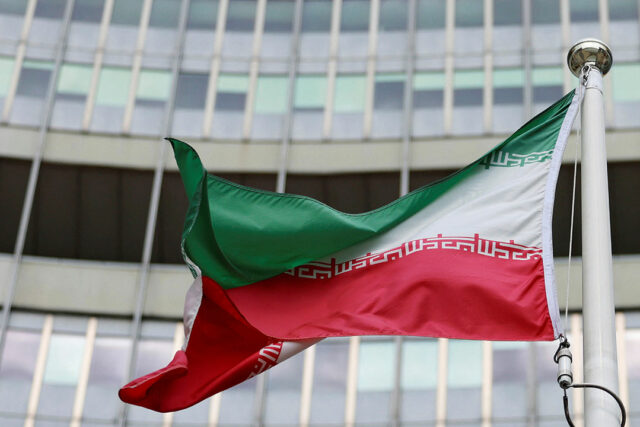
THE Iranian flag flutters outside the IAEA headquarters in Vienna, Austria, June 9, 2025. — REUTERS/LISA LEUTNER

AN IRANIAN official in the region said on Sunday the authorities had verified at least 5,000 people had been killed in protests in Iran, including about 500 security personnel, blaming “terrorists and armed rioters” for killing “innocent Iranians”.

The official, who declined to be named due to the sensitivity of the issue, also told Reuters some of the heaviest clashes and highest number of deaths were in the Iranian Kurdish areas in northwest Iran, a region where Kurdish separatists have been active and where flare-ups have been among the most violent in past periods of unrest.

“The final toll is not expected to increase sharply,” the official said, adding that “Israel and armed groups abroad” had supported and equipped those taking to the streets.

The Iranian authorities regularly blame unrest on foreign enemies, including Israel, an arch foe of the Islamic Republic which launched military strikes on Iran in June.

The US-based HRANA rights group said on Saturday the death toll had reached 3,308, with another 4,382 cases under review. The group said it had confirmed more than 24,000 arrests.

The Iranian Kurdish rights group Hengaw, based in Norway, has said that among regions where there were heavy security measures during protests in late December were Kurdish areas in the northwest. — Reuters

France edges towards budget deal with Socialists welcoming PM’s concessions

Members of Parliament during a discussion before the final vote on the Social Security Financing Bill (PLFSS) for 2026 at the National Assembly in Paris, France, December 16, 2025. — REUTERS

PARIS — France was moving closer to a 2026 budget deal on Monday after the government presented a last-ditch proposal that made concessions to most political parties, senior Socialist lawmaker Boris Vallaud told daily newspaper Le Parisien.

President Emmanuel Macron’s government lacks a majority in parliament and 2026 budget negotiations in the fragmented legislature have dragged on for months, forcing a rollover budget in the meantime to keep the country afloat.

Needing to win support from the Socialists without alienating conservatives, Prime Minister Sebastien Lecornu on Friday said he would no longer cut a tax rebate on pensions, and that a monthly income supplement benefit for low‑income workers would rise by some 50 euros per month for 3 million households.

Cheap meals for students in university canteens would be extended, and steps would also be taken to boost affordable housing. To help finance these measures, a corporate surtax on large companies, which was supposed to last only one year, would be extended through 2026 and raise 8 billion euros.

“The Prime Minister’s announcements allow us to imagine that we will not need to vote no-confidence,” Mr. Vallaud, who leads the Socialists in the National Assembly, told Le Parisien in comments published on Monday.

Mr. Lecornu’s office said late last week that it was impossible to adopt a budget by a vote in parliament, meaning he will have no choice but to bypass parliament either by invoking special constitutional powers or adopting the budget by executive order.

Both options would mean a no-confidence vote against the centrist government, making the Socialists’ support critical for its survival.

Mr. Vallaud said “assurances” were still needed on the reintroduction of a property wealth tax and the taxation of holding companies to improve the country’s deficit levels.

Mr. Lecornu repeated on Friday the budget deficit would be no higher than 5% of GDP, and possibly lower.

Cabinet ministers will meet on Monday to discuss options for pushing the budget through without a vote in parliament, government spokeswoman Maud Bregeon told Franceinfo on Sunday.

Budget Minister Amelie de Montchalin told BFM TV on Monday it was necessary to avoid the collapse of the government which would leave the country without a budget.

“Article 49.3 is a very dangerous path. Guarantees are needed”, she said, referring to an article in the constitution allowing the budget to be pushed through without a vote.

“The good news is that the prospect of early legislative elections is receding, and the government should remain in place for the moment,” ING analysts said in a note on Sunday.

“However, the final budget is far from business‑friendly, and the tax increases are likely to weigh on investment and hiring in 2026, with a negative impact on economic growth.” — Reuters

Death toll from high-speed train collision in Spain rises to 39, RTVE reports

STOCK PHOTO | Image by Hands off my tags! Michael Gaida from Pixabay

MADRID — The death toll from Sunday’s collision between a derailing high-speed train and a second oncoming train in southern Spain has risen to 39, with 152 people injured, state broadcaster RTVE reported on Monday, citing police sources.

The accident happened at 7.45 p.m. local time (1845 GMT) on Sunday near Adamuz in the province of Cordoba, about 360 kilometers (223 miles) south of the capital Madrid.

Over 200 trains between Madrid and the southern Andalucia region – including major cities Cordoba, Seville and Granada – have been cancelled throughout Monday, according to RTVE.

Prime Minister Pedro Sanchez has cleared out his agenda for the day, his office said in a statement on Monday.

Video from the scene shared on social media on Sunday showed rescuers pulling passengers from twisted carriages lying on their side under the glare of floodlights. Some passengers climbed out of smashed windows, while others were wheeled away on stretchers.

There were around 400 passengers on the two trains, most of them Spaniards traveling back to and from Madrid after the weekend. It was unclear how many tourists could be onboard as January is not holiday season in Spain.

The cause for the crash is not yet known, Spanish Transport Minister Oscar Puente told reporters at a press conference at Atocha station in Madrid on Sunday. — Reuters

ADVERTISEMENT
ADVERTISEMENT