SYDNEY – Fiji and Australia will cooperate on cyber security, with Australia also boosting aid to its Pacific Islands neighbor under an enhanced partnership, Australian Prime Minister Anthony Albanese said after meeting his Fijian counterpart on Wednesday.
Fiji Prime Minister Sitiveni Rabuka, on his first three-day official visit to Australia since becoming leader in December, said the relationship with Australia was warm.
Under Rabuka’s government, Fiji has put a decade-old policing agreement with China on hold, and sought to increase defence ties with Australia.
“We are more comfortable dealing with traditional friends. We have similar systems of government, our democracies are the same brand of democracy,” Mr. Rabuka told reporters in Canberra.
Fiji wanted the Pacific to be a “zone of peace”, he added.
In a speech on Tuesday evening to the Lowy Institute, Mr. Rabuka noted rivalry between the United States and China was intensifying, and the Pacific Islands countries, which span more than 30 million square kilometers (11.5 million square miles) of ocean, had a duty to carry the banner of peace.
“Pacific unity is central to the relationship in our region and Fiji plays a critical leadership role,” said Mr. Albanese.
Mr. Albanese said Australia had agreed to provide more budget support to Fiji “to help economic recovery and to boost growth”, and would sell it 14 Bushmaster protected vehicles to support the Fiji military’s peacekeeping operations around the world.
Fiji will also be included in a pilot of streamlined visa processing to make it easier for Fijians to travel to Australia. – Reuters
A view shows houses and buildings destroyed by Israeli strikes in Gaza City, Oct. 10, 2023. — REUTERS
GAZA – A Gaza health ministry spokesman said hundreds were killed in a blast at a Gaza City hospital on Tuesday that Israeli and Palestinian officials blamed on each other and that ignited protests in the West Bank and around the Middle East.
Health authorities in the Hamas-ruled Gaza Strip said an Israeli air strike caused the blast while Israel’s military attributed it to a failed rocket launch by the Palestinian Islamic Jihad militant group.
The health ministry spokesman, Ashraf Al-Qudra, said early on Wednesday that hundreds were killed and rescue workers were still removing bodies from the rubble. In the first hours after the blast, a Gaza civil defence chief said 300 people were killed, while health ministry sources put the figure at 500.
Reuters could not independently verify who was responsible for the blast or how many people were killed.
Before Tuesday’s blast, health authorities in Gaza said at least 3,000 people had died in Israel’s 11-day bombardment that began after a Hamas Oct. 7 rampage on southern Israeli communities in which 1,300 people were killed and around 200 were taken into Gaza as hostages.
Gaza, a 45 km-long (25-mile) enclave home to 2.3 million people, has been ruled since 2006 by Hamas, an Islamist group that is a U.S.-designated foreign terrorist organization.
The blast took place on the eve of a visit by U.S. President Joe Biden to Israel to show support for the country in its war with Hamas and to hear how Israel plans to minimize civilian casualties. One U.S. aim is to keep the conflict from spreading.
Regardless of who is found responsible for the explosion, which Hamas said had killed patients and others left homeless by Israeli bombardment, it will complicate efforts to contain the crisis.
In one sign of this, Jordan’s foreign minister, Ayman Safadi, cancelled a summit his country was to host in Amman with Biden and the Egyptian and Palestinian leaders.
In another, Palestinian security forces fired tear gas and stun grenades to disperse protesters in the occupied West Bank city of Ramallah who were throwing rocks and chanting against Palestinian President Mahmoud Abbas as popular anger boiled.
The blast drew condemnation across the Arab world, and protests were staged at Israel’s embassies in Turkey and Jordan and near the U.S. embassy in Lebanon, where security forces fired tear gas toward demonstrators.
Television footage showed protests in Yemen’s southwestern city of Taz, as well as in the Moroccan and Iraqi capitals.
Lebanon’s Iran-backed Hezbollah militant group denounced what it said was Israel’s deadly attack on the Al-Ahli al-Arabi hospital in Gaza, run by the Anglican church, and called for “a day of unprecedented anger” against Israel and Biden’s visit.
CLAIMS AND COUNTER CLAIMS
There were competing claims and denials from Israeli and Palestinian officials over who was responsible.
Abbas said that targeting the hospital was a “hideous war massacre,” adding that “Israel has crossed all red lines.”
Israeli Prime Minister Benjamin Netanyahu blamed Palestinian militants for the explosion.
“The entire world should know: It was barbaric terrorists in Gaza that attacked the hospital in Gaza, and not the IDF,” he said, referring to the Israel Defense Forces. “Those who brutally murdered our children also murder their own children.”
Briefing reporters early on Wednesday, Israeli military spokesperson Rear Admiral Daniel Hagari cast doubt on the Palestinian death count, asserted that there was no direct hit on the hospital, and said Israel had intelligence proving its claim that Gaza militants were responsible.
The IDF blamed Palestinian Islamic Jihad which, like Hamas, is viewed by the United States as a foreign terrorist organization.
“The IDF did not strike the hospital in Gaza,” Hagari said in a video statement. “The hospital was hit as a result of a failed rocket launched by the Islamic Jihad terrorist organization.”
Another IDF spokesman, Lieutenant Colonel Jonathan Conricus, told CNN Israel had intercepted conversations among militants showing “they understand that it was a rocket that misfired.”
He said the Israeli government would share its intelligence with Biden and would make the intercepts public.
Speaking earlier, Daoud Shehab, a spokesman for Islamic Jihad, denied his group was responsible.
“This is a lie and fabrication, it is completely incorrect. The occupation is trying to cover for the horrifying crime and massacre they committed against civilians,” he told Reuters.
Clashes with Palestinian security forces broke out in a number of other cities in the West Bank, which is ruled by Abbas’ Palestinian Authority, late on Tuesday, witnesses said.
After Hamas officials initially blamed Tuesday’s hospital blast on an Israeli air strike, Arab countries, Iran and Turkey swiftly condemned it. – Reuters
STANFORD, California – The Five Eyes countries’ intelligence chiefs came together on Tuesday to accuse China of intellectual property theft and using artificial intelligence for hacking and spying against the nations, in a rare joint statement by the allies.
The officials from the United States, Britain, Canada, Australia and New Zealand – known as the Five Eyes intelligence sharing network – made the comments following meetings with private companies in the US innovation hub Silicon Valley.
US FBI Director Christopher Wray said the “unprecedented” joint call was meant to confront the “unprecedented threat” China poses to innovation across the world.
From quantum technology and robotics to biotechnology and artificial intelligence, China was stealing secrets in various sectors, the officials said.
“China has long targeted businesses with a web of techniques all at once: cyber intrusions, human intelligence operations, seemingly innocuous corporate investments and transactions,” Mr. Wray said. “Every strand of that web had become more brazen, and more dangerous.”
In response, Chinese government spokesman Liu Pengyu said the country was committed to intellectual property protection.
“We firmly oppose to the groundless allegations and smears towards China and hope the relevant parties can view China’s development objectively and fairly,” the spokesperson for China’s embassy in Washington said in a statement to Reuters.
The US has long accused China of intellectual property theft and the issue has been a key sore point in US-China relations. But this is the first time the Five Eyes members have joined publicly to call out China on it.
“The Chinese government is engaged in the most sustained scaled and sophisticated theft of intellectual property and expertise in human history,” said Mike Burgess, the Australian Security Intelligence Organisation’s director-general.
While China’s intention to innovate for its own national interest was “fine and entirely appropriate”, Burgess said “the behaviour we’re talking about here goes well beyond traditional espionage.”
Last month, his department busted a Chinese plot to infiltrate a prestigious Australian research institution that involved planting an academic there to steal secrets, he said.
“This sort of thing is happening every day in Australia, as it is in the countries here,” Mr. Burgess said.
The Five Eyes statement follows the group’s warning in May of a widespread Chinese spy operation it said was targeting critical infrastructure and various other sectors.
Mr. Wray said China had “a bigger hacking program than that of every other major nation combined” that together with Beijing’s physical spies and stealing of trade secrets from private businesses and research institutions gave the country enormous power.
“Part of what makes it so challenging is all of those tools deployed in tandem, at a scale the likes of which we’ve never seen,” Mr. Wray said.
The officials called for private industry and academia to help in countering those threats, chief among which they said were artificial intelligence tools.
“We worry about AI as an amplifier for all sorts of misconduct,” Mr. Wray said, accusing China of stealing more personal and corporate data than any other nation by orders of magnitude.
“If you think about what AI can do to help leverage that data to take what’s already the largest hacking program in the world by a country mile, and make it that much more effective – that’s what we’re worried about,” he said. – Reuters
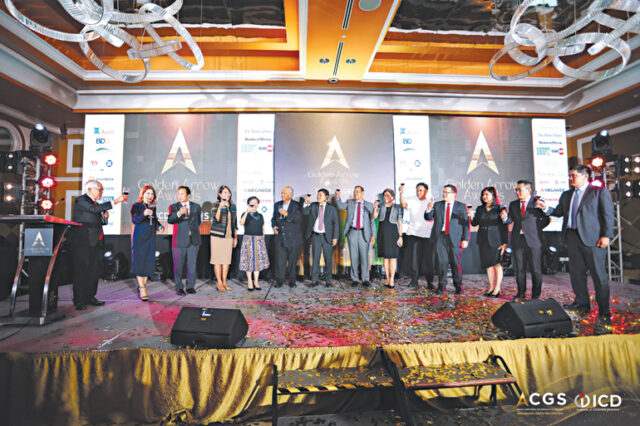
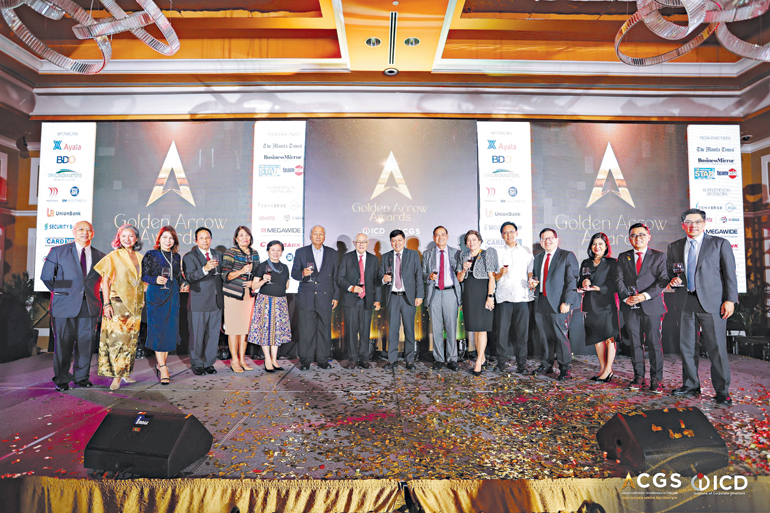
Board of trustees of the Institute of Corporate Directors and esteemed guests gather for a toast during the Golden Arrow awarding ceremony. — Photo from facebook.com/ICDPh
2023 Golden Arrow Recognition honors Philippines’ exemplary PLCs, insurers
By Chelsey Keith P. Ignacio, Special Features and Content Senior Writer
Instituting good corporate governance, which concerns practices to manage an organization and relations with its stakeholders, is valuable in establishing a company’s trust and reputation. Organizations with exemplary corporate governance were honored in the 2023 ACGS and CGS Golden Arrow Recognition, carried out by the Institute of Corporate Directors (ICD) at Okada Manila Hotel in Pasay City last Sept. 28.
Golden Arrow is awarded to publicly listed companies (PLCs) in the country with good corporate governance performance based on the 2022 ASEAN Corporate Governance Scorecard (ACGS) as well as to insurance firms based on Corporate Governance Scorecard (CGS) Assessment Results.
1 of 6
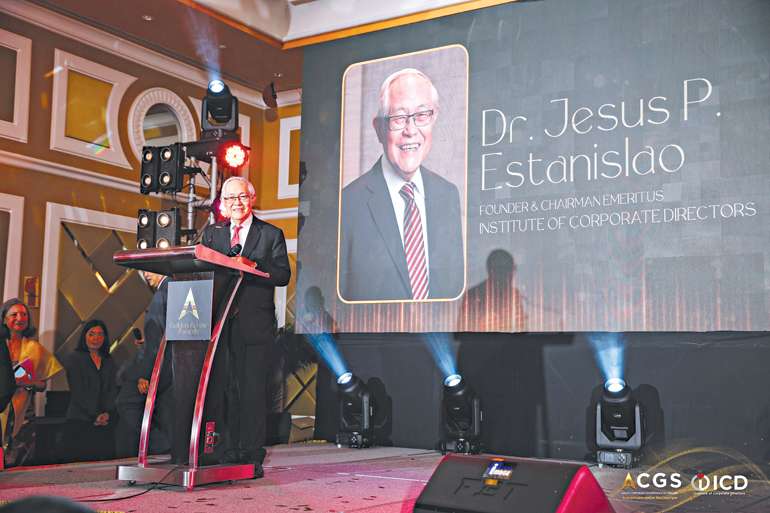
ICD Founder and Chairman Emeritus Dr. Jesus P. Estanislao — Photo from facebook.com/ICDPh
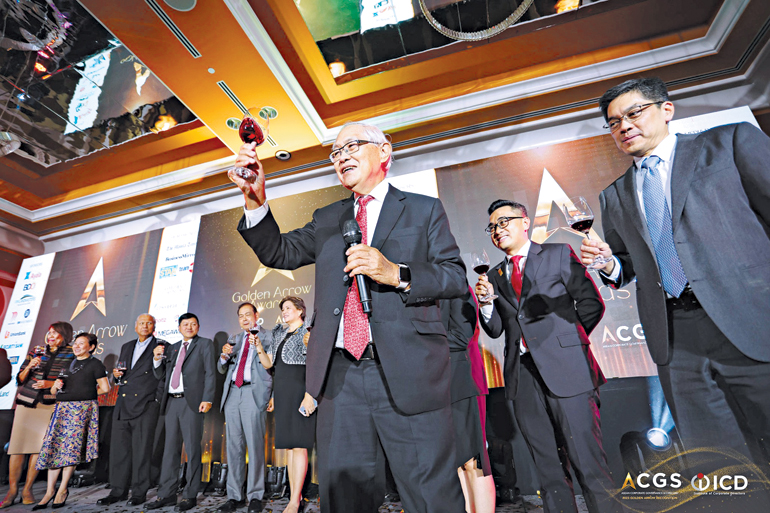
ICD Founder and Chairman Emeritus Dr. Jesus P. Estanislao lead the toast during the ceremony. — Photo from facebook.com/ICDPh
SEC Commissioner Atty. Emilio B. Aquino — Photo from facebook.com/ICDPh
This year’s ACGS and CGS Golden Arrow Recognition was held at Okada Manila Hotel last Sept. 28. — Photo from facebook.com/ICDPh
More than a hundred recognitions were awarded in this year’s Golden Arrow Recognition. — Photo from facebook.com/ICDPh
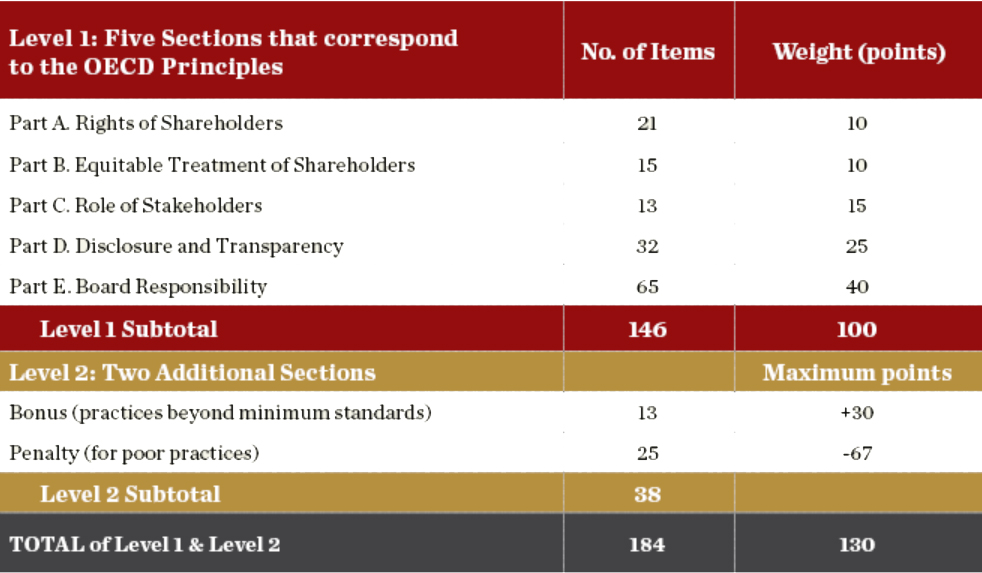
Companies garnering at least 80 points in these assessments would receive recognition. A 5-arrow recognition would be given to companies that achieved a score of 120 to 130 points; a 4-arrow recognition for those with 110 to 119 points; a 3-arrow recognition for 100 to 109 points; a 2-arrow recognition for 90 to 99 points; and a 1-arrow recognition for companies that reached 80 to 89 points.
With the ACGS and CGS assessments, a firm’s corporate governance is examined on enabling the rights and equitable treatment of shareholders; its relation to various stakeholders; ensuring transparency and accountability by disclosing material information at the right time; as well as the board’s guidance to the company, supervision of the management, and accountability to shareholders and the firm.
Weight allocated to each area of the ASEAN Corporate Governance Scorecard for the Golden Arrow Awards
By looking at the country’s publicly listed companies and insurance companies through these areas, it seeks to improve corporate governance standards and practices in the Philippines and draw investors toward well-governed organizations.
The value of good governance
Such a Golden Arrow recognition from ICD could further give corroboration for these companies’ reputation and their governance.
InLife Executive Chair Nina D. Aguas — Photo from facebook.com/ICDPh
“The award is an affirmation of our good reputation and the quality of our engagement with our various stakeholders,” Insular Life (InLife) Executive Chair Nina D. Aguas told BusinessWorld.
“Since 2018, InLife has received consistent recognition from the ICD, a testament to our unwavering commitment to corporate governance principles and practices. These accolades not only bolster our reputation as a reliable institution but also foster trust among our stakeholders,” she expressed.
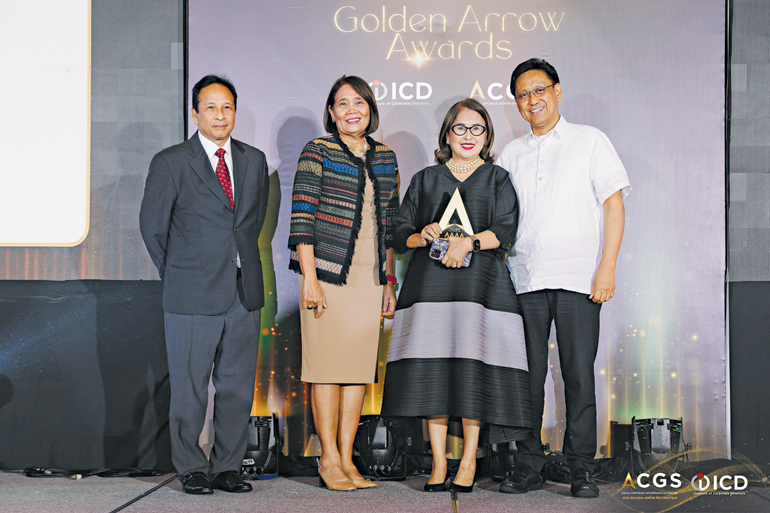
InLife Executive Chair Nina D. Aguas (third from left) receives InLife’s 4-Golden Arrow Award for good corporate governance during the ASEAN ACGS and CGS Golden Arrow Recognition Ceremony by the Institute of Corporate Directors (ICD). With her are (from left) ICD Chairman Atty. Cesar A. Villanueva, ICD Vice-Chair and President Ma. Aurora Geotina-Garcia, and Deputy Insurance Commissioner Ferdinand George A. Florendo. — Photo from facebook.com/ICDPh
InLife is one of the two insurance companies that recieved a 4-Golden Arrow Award in this year’s recognition.
With the company garnering such regard, Ms. Aguas said that it boosted InLife employees’ and agents’ motivation to do their work and “take pride” in belonging to the recognized organization.
“This newfound sense of value in their work results in a higher quality of performance both within and outside the workplace,” she said.
But aside from establishing a reputation upheld by the Golden Arrow award, ensuring good governance itself could already have an impact on the organization’s performance.
“Our dedication to strong corporate governance not only enhances stakeholder confidence but also contributes to our financial performance and long-term sustainability,” said Ms. Aguas.
Given such contributions to a company, it can be valuable to commit to promoting upright corporate governance. And commitment to good governance is significant for InLife’s competitiveness in the insurance industry, said Ms. Aguas.
“Good corporate governance for InLife represents the bedrock of our commitment. It is not just about compliance; it is a way of life. It encompasses the principles of transparency, accountability, and ethical behavior. At its core, it’s about fostering a culture where trust is paramount,” she said.
Best practices
Various practices are established and implemented to ensure good governance within an organization. But while a large part of this seemingly depends on the leadership, its implementation would also hinge on employees’ support.
At InLife, the board of trustees and senior management are playing a crucial role in setting the tone for the company, said Ms. Aguas. The executive chair also gives credit to InLife employees who observe the firm’s policies and procedures, as well as InLife’s agency force members for their support to driving the business.
“Most importantly, our policyholders are at the core of all our efforts. We continually adapt and innovate to better serve them, reinforcing our commitment, nurturing long-term relationships, and building their trust,” she added.
Ms. Aguas also said that equality, diversity, and inclusion are promoted in InLife, as well as highlighting the company’s furthering adoption of ESG (environmental, social, governance) sustainability.
“We firmly believe that corporations that act responsibly will continually garner the trust and confidence of customers, stakeholders, and the public, thus underpinning the business’ sustainability,” she said.
Also stating its commitment to promoting exemplary corporate governance, Cebu Landmasters, Inc. (CLI), the leading developer in VisMin which received a 2-Golden Arrow Recognition this year, shared several efforts it has undertaken to substantiate such a commitment.
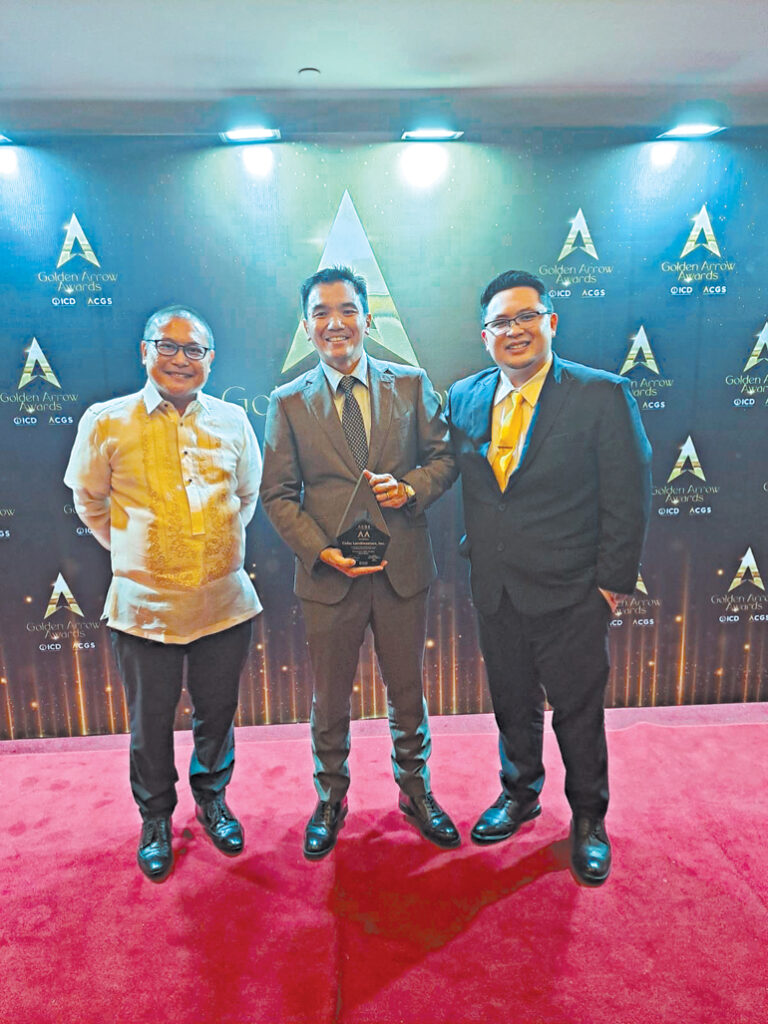
Cebu Landmasters’ Corporate Governance Team, composed of Chief Finance Officer Grant Cheng, First Vice-President for Legal & Strategic Landbanking Atty. Larri-Nil Veloso, and Legal Counsel and Compliance Officer Atty. John Edmar Garde, received the developer’s 2-Golden Arrow Recognition given by the ICD. — Photo from facebook.com/ICDPh
“Cebu Landmasters, Inc. has always approached corporate governance as an integral component and a cornerstone program in doing business. It is viewed and considered in CLI as an organizational responsibility and commitment, hence, the established corporate governance principles and programs are embedded in the core and fabric of the CLI Way,” Atty. John Edmar Garde, legal counsel & compliance officer of CLI, told BusinessWorld.
While CLI’s board of directors institute and oversee the implementation of corporate governance practices and initiatives, the organization also established its Corporate Governance Committee to provide assistance to the board. The management team, meanwhile, also supported the board and the committee for the implementation through collaborative efforts with the departments, offices, and employees.
Among the efforts made by CLI concerning its corporate governance is to improve its reporting and disclosures, such as through its Integrated Annual Corporate Governance Reports (I-ACGRs).
“The improvement of the disclosures in CLI’s I-ACGRs was cited by ICD as among the key factors in the improved corporate governance rating of CLI over the past couple of years, culminating in the conferment of the organization’s first-ever Golden Arrows,” Atty. Garde shared.
The property developer has also sought to enhance corporate governance by putting in place policies and programs including its Whistle-Blowing Policy, updated Executive Committee Charter and Limits of Authority, updated Handbook on Employee Discipline, and Code of Business Conduct and Ethical Standards, among many others.
And to maintain an effective performance among those in leadership, CLI also conducts annual performance evaluation and assessment on the board, individual directors, board committees, and the management team.
Meanwhile, to ensure transparency and accountability, the developer assured public and timely disclosure of all material information that could affect the viability or interests of its stakeholders.
Possessing knowledge of the best practices and learning from experts could also help organizations in improving their corporate governance.
“It is also important that organizations have a keen interest and understanding of the recommended best practices and principles in corporate governance. As the saying goes, ‘Gaining knowledge is the first step to wisdom,’” Atty. Garde shared.
“The best practices established and publicly disclosed by other PLCs can also serve as [a] guide, as well as collaboration and learning from esteemed practitioners in corporate governance, which includes — among others — the ICD, are very helpful tools as the organization progresses in its corporate governance journey,” he added.
The Golden Arrow recognition also inspires SM Investments Corp. (SMIC), which received a 4-Golden Arrow recognition, to excel in corporate governance.
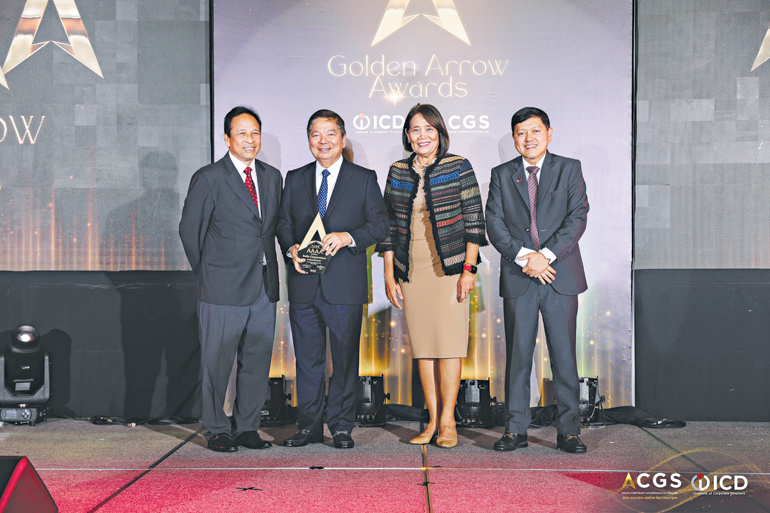
From L-R: ICD Chairman Atty. Cesar L. Villanueva; SM Investments Corp. Chairman of the Board Amando M. Tetangco, Jr.; ICD Vice-Chair & President Ma. Aurora D. Geotina-Garcia; and Securities and Exchange Commission Chairperson Atty. Emilio B. Aquino. — Photo from facebook.com/ICDPh
“This honor inspires us to continue advocating best practices in corporate governance in serving our stakeholders and communities,” said SMIC Chairman of the Board Amando M. Tetangco, Jr. was quoted as saying in a statement.
Photos from facebook.com/ICDPh
Alongside SMIC, several companies from the SM Group were also accorded Golden Arrow recognitions. These are: 2GO Group, Inc., APC Group, Inc., Atlas Consolidated Mining and Development Corp., China Banking Corp., BDO Unibank, Inc., Belle Corp., Pacific Online Systems Corp., Premium Leisure Corp., and SM Prime Holdings, Inc.
Effective and transparent corporate governance is necessary for fostering investor confidence and driving sustainable economic growth. It is the foundation of a strong business climate, promoting ethical practices and upholding accountability across the globe.
The Association of Southeast Asian Nations (ASEAN) recognizes the importance of corporate governance, introducing the ASEAN Corporate Governance Scorecard (ACGS) as a framework to enhance corporate governance practices in its member countries.
Established by the ASEAN Capital Markets Forum (ACMF) and the Asian Development Bank (ADB) in 2011 to raise corporate governance standards, ACGS serves as an instrument for assessing and ranking publicly listed companies (PLCs) in six participating ASEAN countries, namely Indonesia, Malaysia, the Philippines, Singapore, Thailand, and Vietnam.
The scorecard system is based on international best practices, encouraging publicly listed companies to go beyond national legislative requirements, giving greater global visibility to well-governed ASEAN PLCs and promoting ASEAN as an asset class.
The 2015 revised Principles of Corporate Governance by the Organization of Economic Cooperation and Development (OECD) has brought the ACGS in line with the latest developments and emerging corporate governance standards. Hence, the revised ACGS comprises five parts: rights of shareholders, equitable treatment of shareholders, role of stakeholders, disclosure and transparency, and responsibilities of the board.
Philippine corporate governance at a glance
In the Philippines, the Securities and Exchange Commission (SEC) is the primary regulatory agency responsible for enforcing corporate governance standards. SEC, along with the Philippine Stock Exchange (PSE) and Insurance Commission (IC), has implemented various initiatives to promote good corporate governance standards and practices, including the adoption of the ACGS in 2012.
In the 2022 ACGS assessment published on Institute of Corporate Directors (ICD) Philippines’ website, the ICD reported an average score of 76.64 for 272 publicly listed companies in the Philippines, which is higher than the country’s average score during the 2021 assessment. With this increasing growth, the corporate governance performance of the PLCs in the Philippines has continued to improve steadily.
Moreover, the Top 100 PLCs by Market Capitalization scored an average of 90.68, compared to 2021’s 87.55 points. Most PLCs score above 70 points, with 60 companies rating between 70 and 79.99.
According to the report published by the ASEAN, the Philippines needs to significantly improve its commitment to upholding shareholder and stakeholder rights. The report advises that Philippine PLCs should comply with all mandatory disclosures set by regulators and work towards protecting internal and external stakeholders for sustainable development.
Meanwhile, the 2022 ACGS Assessment on the insurance industry assessed 111 insurance companies in the Philippines, with an overall result of 55.13 points, an increase of 3.57 points from the 2021 assessment.
Among the 111 insurance companies, 22 scored 80 points and above, and 80 companies were able to improve their overall score.
The Golden Arrow Awards
To recognize the outstanding Philippine publicly listed companies in corporate governance based on the ACGS, ICD holds the annual ACGS Golden Arrow Awards.
To be eligible for the award, companies must score a minimum of 80 points in the ACGS Assessment. This indicates that the company has demonstrated adherence to the Philippine Code of Corporate Governance and internationally recognized corporate governance practices endorsed by the ACGS.
Moreover, five levels of performance in corporate governance will be conferred, with each ascending level depicted by an increasing number of golden arrows.
This year, 130 companies were awarded golden arrows at the ACGS and CGS Golden Arrow Recognition, which brought together the corporate governance community and advocacy champions in the regulatory and business sectors.
Four PLCs received the highest award of 5-arrow recognition for achieving a score range of 120 to 130 points. The awardees are Ayala Land, China Banking Corp., Globe Telecom, and SM Prime Holdings.
Meanwhile, two insurance companies bagged the 4-arrow recognition for scoring 110 to 119 points. Included in the awardees are Insular Life Assurance Company, Ltd. and Pru Life Insurance Corp. of UK.
With these initiatives, the ICD actively promotes the adoption of good corporate governance not only to enhance the global competitiveness of the Philippines but also to strengthen the profitability and development of local companies.
Furthermore, the ACGS and the Golden Arrow Awards serve as a benchmark for companies to improve their corporate governance practices and attract investors.
Future of Philippine corporate governance
Corporate governance in ASEAN countries is collectively improving, with international best practices being incorporated into national corporate governance blueprints and strategies.
The implementation of the ACGS provides a rigorous methodology for assessing corporate governance practices, which can help companies identify areas for improvement and attract more investors.
The Asian Development Bank has continued to emphasize the importance of good corporate governance practices since these standards reduce vulnerability to financial crises, reinforce property rights, lower capital costs, and promote greater capital market development. Investors will also have greater confidence in companies with good governance and in markets that are backed by sound legal and regulatory regimes.
The implementation of the ACGS can also help improve the investment climate in the Philippines by promoting transparency, accountability, and good governance among publicly listed companies. This way, the Philippines can attract more investors and increase the visibility of the country as a wise investment destination.
As suggested by the ASEAN in their recent report on corporate governance, Philippine companies can enhance their competitiveness and attract foreign investment to fund their growth, which can help to build a vibrant private sector and lead to sustainable economic development in the Philippines.
Furthermore, the active promotion and adoption of good corporate governance practices in the government and private companies can enhance the country’s competitiveness and attract more foreign investment to fund growth.
For instance, amendments to the Public Services Act and Foreign Investment Act have opened up the market, making foreign direct investment simpler and more rewarding. Foreign investors can now own 100% of their ventures in certain critical industries in the Philippines, including infrastructure such as telecoms, airports, seaports, rail, and renewable energy projects.
In addition to good corporate governance standards and practices, these major changes can help build a strong and sustainable economy in the country. — Mhicole A. Moral
Boxes of fake cigarettes are seen at a police station in Manila. — PHILIPPINE STAR/MIGUEL DE GUZMAN
THE PHILIPPINE government could lose at least P60 billion in revenue this year due to illegal tobacco trade, which has severely undermined gains from the sin tax reform passed almost a decade ago, a lawmaker said.
Authorities are now doubling efforts to curtail the illegal trade of tobacco products, which are also being manufactured inside industrial hubs and openly sold in online stores.
House of Representatives Ways and Means Chairman Jose Maria Clemente S. Salceda said excise tax collections from cigarettes fell by 7.8% to P160.4 billion in 2022 from P173.9 billion in 2021, describing the downward trend as deeply alarming.
He noted the decline in excise tax collections was the biggest since the enactment of the sin tax reform law in 2012, which increased the taxes imposed on cigarettes and alcohol.
Despite the higher taxes, smoking prevalence only slipped to 23% in 2020 from 23.4% in 2019, which means “something else happened,” Mr. Salceda said at a forum on illicit tobacco trade on Tuesday.
“A decline of one billion sticks could not have been accounted for by an incidence decline of just 0.4 percentage point alone,” he said.
“It is more logical to suspect that illicit trade accounted for much of the decline in licit removals. The 2022 figures stare us in the face, with the problem becoming more undeniable,” he said, noting the illicit trade would likely hit 2.026 billion sticks by end-2023.
Mr. Salceda estimated the government revenue losses due to illicit trade in cigarettes at P60.6 billion this year if the trend persists.
The illicit cigarette trade will further worsen the smoking prevalence among Filipinos, he said, with the health costs of smoking-related diseases possibly swelling to P217 billion this year.
“The [government’s] revenue base will continue to shrink and there is a chance that prevalence might actually increase as a result of cheaper illicit alternatives,” Mr. Salceda said. “This is a serious national crisis.”
Bureau of Internal Revenue Commissioner Romeo D. Lumagui, Jr. said the illicit tobacco trade was estimated to have reduced the Philippines’ gross domestic product (GDP) by an average of 0.39% and cut employment by 4.9% between 2018 and 2022, citing a recent study by University of Asia and the Pacific and Federation of Philippine Industries, Inc.
He said the government stands to lose about P30.57 billion in revenues this year, 16.7% more than P26.19 billion in foregone revenue last year.
“This will also mark the fourth consecutive year that lost revenues have increased in volume,” Mr. Lumagui said.
He said foregone revenues are estimated to increase to P33.7 billion next year, P36.8 billion by 2025, P39.8 billion by 2026, and jump to P42.54 billion in 2027.
“To give an idea of the impact of these revenue losses on the country, just consider that the P26.19 billion in lost revenues in 2022 could have funded the construction of 57,000 socialized housing units, 8,642 classrooms and 75 hospitals,” he said.
Mr. Lumagui said the illicit tobacco trade happens in many forms, citing illegal manufacturing, counterfeit production, smuggling and bootlegging, which refers to the practice of buying cigarettes in large quantities from countries where taxes are low and selling them in countries where taxes are high.
The BIR has been conducting major raids to address the illicit trade, confiscating about P5.8 billion worth of fake cigarettes.
Mr. Lumagui said the Philippines’ location as a “gateway” to the Asia-Pacific region is both a boon and a burden because perpetrators have exploited the country’s “strategic location.”
“Our location makes it a considerable challenge to monitor — much less control — the movement of illicit ‘whites,’” he said. “For this reason, it is imperative that the Philippine government improve its border defenses, to support the tax administration in its efforts to control the illegal trade of cigarettes.”
Mr. Lumagui noted that a significant number of illicit cigarettes come from Malaysia and other neighboring countries. Industrial parks and economic and freeport zones have also been used in the illicit tobacco trade.
Many online stores are also illegally selling tobacco products.
Mr. Salceda said online stores have been selling unstamped cigarettes “at prices less than half those of their licit counterparts” — placing them under unrelated categories such as “Asian herbs” and “T-shirts.”
“On the review page, buyers indicated that they bought these cigarettes for their sari-sari stores, indicating that the purchase of these cigarettes online is meant for resale to the retail market,” he said.
In Facebook marketplaces, brands like San Marino, Casablanca, Cannon, Fort and Bravo sell for as low as P350 per ream, which is way lower than their mainstream counterparts, like the brand Marlboro, which sells for P1,750 a ream.
Illicit trade also happens at the high-end market, he added. For example, cigarettes by Chunghwa, a luxury tobacco brand in China, are available without tax stamps in Binondo for P350 a pack, Mr. Salceda said.
“There is no challenge to buying these brands. And they sell at as low as one-fifth the price of illicit cigarettes. Even fakes of premium brands are becoming easier to come by,” he added.
The BIR chief said they would intensify the monitoring of supply chains and distribution channels of tobacco products and enhance the track and trace system as well as the security features of the Internal Revenue Stamp Integrated System (IRSIS), which covers the internal revenue stamps that are currently in use.
The agency also plans to coordinate with local government units and various law enforcement agencies.
“We shall also endeavor to coordinate with our Asian neighbors, and work to form alliances with our counterparts in Malaysia, Indonesia, Vietnam, Taiwan and China,” he added.
Mr. Lumagui said the government would review and update rules and explore the possibility of imposing stiffer penalties.
“We will soon issue a Revenue Memorandum Circular updating the schedule of penalties and fines for violations of the excise tax provisions of the National Internal Revenue Code of 1997.”
Meanwhile, Mr. Salceda said he is looking to file a comprehensive anti-illicit tobacco trade bill, which would also authorize the blocking of all e-commerce platforms that allow the sale of tobacco products.
“We must attack the problem in its complete form — in every stage of the value chain,” he said. “That is why I am considering a comprehensive tobacco illicit trade bill that addresses everything from smuggling through the de minimis loophole and through our ecozones, to leakage of tobacco declared for export or transshipment, to the manufacture of fake cigarettes.”
At the same forum, advocacy group HealthJustice called for the implementation of a track and trace system that would record the movement of tobacco products throughout the entire value chain.
“This system should provide real-time monitoring and should be maintained by the BIR and the Bureau of Customs,” it said. “The need for a funding mechanism for this should be prioritized in a separate bill.” — Kyle Aristophere T. Atienza
An artist’s rendering of DHL’s planned logistics hub in Sta. Rosa, Laguna. — COURTESY OF DHL
By Luisa Maria Jacinta C. Jocson, Reporter
PENANG, Malaysia — DHL Supply Chain is committing €80 million (P4.8 billion) for its Philippine expansion, as it plans to invest €350 million in Southeast Asia in the next five years.
DHL Supply Chain Southeast Asia Chief Executive Officer Andries Retief said the company would put up two new facilities in the Philippines.
“The Sta. Rosa facility of approximately 50,000-square meters (sq.m.) will be the biggest investment we’ve made in the country in our history in DHL Supply Chain,” he said at a media briefing here.
The Sta. Rosa Logistics Hub will serve as a built-to-suit warehousing storage.
DHL is also planning to develop another 20,000 sq.m. facility, likely to be located within the Greater Manila Area, in 2025.
“It helps us to leverage both the retail markets (and) the semiconductor or technology markets in the Philippines, and that helps us drive our footprint in these markets and deliver our service to these customers at a high quality,” Mr. Retief said.
DHL’s investment is also expected to generate 1,000 jobs in 2024, mainly related to warehousing and transportation.
The contract logistics solution company said all of its facilities in the Philippines would be fitted with environmentally friendly features. DHL has 20 locations with a total of 280,000 sq.m. in the Philippines.
“It will also be fitted, as with every one of our facilities, in such a way that ultimately the facility achieves carbon neutrality,” Mr. Retief said.
For example, the Sta. Rosa Logistics Hub will include rainwater harvesting, solar panels, and built-in electric vehicle charging stations.
“We see many growth opportunities in the Philippines, especially in its strong retail market. Our investments in warehousing and transport capabilities are tailored to support this sector’s growth,” he said.
DHL said it has partnered with Gokongwei-led JG Summit Holdings for its joint venture, DHL Summit Solutions, Inc. (DSSI).
“In the Philippines, we also have a joint venture where we are working on transportation with a local company where they bring us the market knowledge and we bring them the logistics expertise and that way we have the best of both worlds and we are able to expand our footprint around transportation in the Philippines,” Mr. Retief said.
DSSI also aims to increase its transport fleet to more than 2,000 trucks, or more than 25%, to expand its coverage of delivery networks.
Meanwhile, DHL said it plans to increase its 1.6 million sq.m. warehouse space in Southeast Asia by 25% to 2 million sq.m. in the next five years.
Malaysia will receive the biggest investment from DHL with €131 million. DHL will add four new facilities, including two in Penang. It has 23 locations in Malaysia.
DHL will invest €104 million to add two new facilities in Singapore, where it has 17 locations.
The company is allocating €35 million for its expansion in Indonesia, where it has 72 facilities.
DHL said 10% of its global locations are in Southeast Asia.
THE CASH utilization rate of government agencies hit 97% at the end of September, the Department of Budget and Management (DBM) said.
Data from the DBM showed that the National Government, local governments, and state-owned companies used P3.09 trillion of the P3.18 trillion worth of notices of cash allocation (NCA) issued as of the end of the third quarter. This left P83.5 billion in unused allocations.
The budget utilization rate was slightly behind the 98% rate a year earlier.
NCAs are a quarterly disbursement authority that the DBM issues to agencies, allowing them to withdraw funds from the Treasury to support their spending needs.
At the end of September, line departments used P2.25 trillion or 97% of their allotments, leaving P81.36 billion unused.
The agencies that posted a 100% budget usage rate at the end of the third quarter were the Department of Interior and Local Government, Department of Public Works and Highways, Judiciary, Civil Service Commission, Commission on Audit, the Commission on Elections, Office of the Ombudsman, and Commission on Human Rights.
On the other hand, the Department of Information and Communications Technology and the Department of Migrant Workers posted the lowest use rate at 40%.
Budgetary support to government-owned companies was 99% used, while allotments to local government units (LGU) had a 100% utilization rate.
ING Bank N.V. Manila Senior Economist Nicholas Antonio T. Mapa said the use rate at the end of the third quarter was slightly lower than a year ago.
“The government continues to experience growing pains with regard to new regulations with spending. Hopefully this reverses soon, given that we will be needing more support for growth from government spending,” he said in a Viber message.
Rizal Commercial Banking Corp. Chief Economist Michael L. Ricafort said the utilization was slightly lower than last year, which included election-related spending.
“Higher prices and interest rates increased financing costs, which bloated some of the government’s expenditures that may require higher budget allocation,” he said in a Viber message.
In the first nine months, inflation averaged 6.6%, still above the Bangko Sentral ng Pilipinas’ (BSP) revised 5.8% full-year forecast.
The BSP has kept the key interest rate at a near 16-year high of 6.25% for four straight meetings.
Finance Secretary Benjamin E. Diokno earlier said he expects growth to be “much better” in the second half due to improved government spending.
In the second quarter, state spending contracted by 7.1%, a reversal of the 6.2% growth in the first quarter and 10.9% a year ago.
Earlier this month, several departments presented their catch-up plans for spending to the Economic Development Group. — Luisa Maria Jacinta C. Jocson
A view of Makati skyline seen from EDSA, Sept. 24, 2022. — PHILIPPINE STAR/MICHAEL VARCAS
THE TOTAL RESOURCES of the Philippine financial system further expanded at the end of August, the Bangko Sentral ng Pilipinas (BSP) said.
Preliminary data from the BSP showed that resources of banks and nonbank financial institutions increased by 6.98% to P29.079 trillion in the eight-month period from a year earlier.
The growth in total resources was also faster than 6.61% a month ago.
These resources are held by banks and nonbank financial institutions, including funds and assets such as deposits, capital, as well as bonds or debt securities.
Data from the BSP showed that banking resources rose by 7.94% to P24.046 trillion at end-August from a year earlier. These include universal and commercial banks, thrift banks, as well as rural and cooperative banks.
The total banking resources held by universal and commercial banks increased by 7.8% to P22.593 trillion as of end-August from P20.958 trillion a year ago.
Thrift banks’ resources went up by 11.98% year on year to P1.056 trillion, while rural and cooperative banks’ resources rose by 5.87% to P397 billion.
Meanwhile, resources of nonbanking financial institutions inched up by 2.59% to P5.033 trillion from P4.906 trillion a year ago.
Nonbank institutions include investment houses, finance companies, security dealers, pawnshops and lending companies. Institutions such as nonstock savings and loan associations, credit card companies, private insurance firms, the Social Security System and Government Service Insurance System are also considered nonbanks.
Rizal Commercial Banking Corp. Chief Economist Michael L. Ricafort said the growth in financial resources was due to the “continued profitability of banks and other financial institutions, leading to more capital, more funds for lending that supported further loan growth, and other investment activities.”
“This also reflects the continued growth in banks’ loans and deposits as the economy reopened further towards greater normalcy. Capital-raising activities also supported further growth and expansion of loans, investments, and overall resources,” he added.
Last year, the financial system’s total resources stood at P28.806 trillion, up by 9.3% from a year ago. — Luisa Maria Jacinta C. Jocson
HALLYU (the Korean Wave) has undoubtedly swept the Philippines. The hours Filipinos spend watching K-dramas and the multiple sold-out K-pop concerts say it all. The ubiquity of Samgyup places and Korean marts are cast-iron proof.
Now the Korean Cultural Center (KCC) ups this game by introducing Korean Literature or “K-Lit” to Filipinos. They started off by bringing in one of Korea’s best-selling crime and mystery authors, Youjeong Jeong.
At a media forum held last Thursday, Ms. Jeong walked in looking like an antithesis of her thriller novels — clad in a crisp white polo shirt, face graced with a warm, radiant smile. Not what one would expect after reading her book, The Good Son, which is so vividly narrated it almost makes you smell the pungent scent of blood and bleach as you flip each page.
The Seven Years of Darkness author’s graphic familiarity with eeriness and death came from her years of experience as a nurse.
“In my 20s, I was able to work in the ER and ICU, the two places in the hospital (that) would be the closest place to death for people. Every day people would be dying,” she said in Korean through a translator. “At that point, I really developed my own world that would be used as my source in writing stories later on as a writer.”
However, it is not her only source of inspiration. Ms. Jeong adheres to a writing regimen consisting of an active lifestyle: going to the gym, running marathons, climbing mountains, doing martial arts. In fact, after one of the lowest times of her life following a cancer diagnosis and many sessions of chemotherapy, she climbed through the Himalayas for 21 days and joined a walking tour in Spain for 50.
“That’s the time I was ready to write the story again, since all my body and my heart were ragged in all the shattered pieces,” she said.
Her work has been translated into Chinese, Japanese, French, German, Thai, and Vietnamese. According to the Digital Library of Korean Literature, The Good Son was the first of her books to be translated into English (Penguin Books). Also available in English is Seven Years of Darkness (Penguin Books and Little Brown editions).
ON BEING ‘SOUTH KOREA’S STEPHEN KING’ Ms. Jeong said she was inspired by literary greats like Stephen King and Ernest Hemingway.
“We know that Stephen King focused on the darkness of humanity, that evil side we have as a human. And we also have Hemmingway (who) tried to show humanity, facing death, and how humans will react while facing death,” she said.
Based on her writing portfolio, it is obvious which of the two she took the most liking to. Despite not having a formal writing education, she learned by poring over King’s novels.
“I would even transcribe actual lines from the book itself. That’s how I study. And I also look at the cause-and-effect relationship of the different cases that were tackled by Stephen King’s novels,” she said.
It is not surprising then that she has been dubbed by readers as the “Stephen King of South Korea,” but Ms. Jeong expressed that she’s keen on forging her own path.
“Recently, our readers commented that now, they can see my own color, rather than those that will be coming from Stephen King. And that it has become stronger than before,” she said.
After writing seven novels, four of which are thrillers, Ms. Jeong said that her writing focus lies particularly in humans’ free will and its relation to our “inner beast.”
“Everyone has that in our hearts, in our minds. The inner beast would suddenly come out, hiding inside, going to the outside.
“In my stories, I would focus on those people taking the wrong path, making mistakes, and how it would ruin their lives eventually,” she said.
In the page-turner The Good Son, Ms. Jeong takes readers into the mind of a psychopath whose stream of consciousness is drawn in a constant tug-of-war between lies and truth. These emerge from his mother’s murder, and, as the story unravels, his very own life. She does not condemn him nor justify his wrongdoing, only telling his story which ends in a way that is painfully real for the times we live in.
This brand of storytelling is the product of her meticulous process of planning and organization.
“Not even a fly can fly around a certain area inside my world that I’m building without my control,” she said.
THE PHILIPPINE EXPERIENCE While this may have been her first trip to the Philippines, but in one of her novels, she chose Cebu as the residence of the main character’s grandparents.
“We all know that the Philippines is a beautiful country… So, this paradise-like, beautiful island in the Philippines would be the best selection for that main character to elope and also dream to live the rest of their life together peacefully,” she said.
Now, however, she has more of the Philippines to take with her. The Korean novelist admitted that San Miguel beer was one of her favorite drinks. She also said that as a picky eater, she isn’t a huge fan of the fragrant and spicy flair of most Southeast Asian cuisine but found Filipino food delicious.
“I really enjoyed lechon. During one luncheon I said, ‘That lechon is all mine! Thou shall not eat!’” she said.
POP-UP EXHIBITION Alongside Ms. Jeong’s visit, and as part of its cultural exchange initiatives focusing on Hangul (the Korean alphabet) this year, the KCC launched the “K-Lit: Turning Pages of Korea” pop-up exhibition.
“We’re just trying to break that wall first (by) introducing (Korean) literature, starting with Jeong Youjeong,” KCC Public Relations Officer Reya Buenaventura said. “K-pop and K-drama are common, but we want to dive (into literature) because it’s also part of Korean culture.”
The exhibit features Korean works from different genres that have been lauded by different award-giving bodies. Among these are Ms. Jeong’s Seven Years of Darkness and other novels like Whale by Myeongkwan Cheon and Almond by Wonpyung Son.
The exhibit is open to the public Mondays to Saturdays (excluding holidays) until Nov. 18, from 9 a.m. to 4 p.m. at the 5F Multipurpose Hall of the KCC, which is located in Taguig City. No registration is required. — Myara Janae B. Poliarco
THE Securities and Exchange Commission (SEC) has warned the investing public against engaging with three more entities that are deemed unauthorized to solicit investments.
In three separate advisories on its website, the corporate regulator flagged Grind O’Clock Corp., Upsolution Online Shop International, and Bonnie Mall, which are said to be soliciting investments from the public without the necessary documentary requirements.
The SEC said Grind O’Clock claims to be a talent and entertainment company engaged in developing talents and connecting brands and businesses to their audience via media properties.
The entity also claims that it helps local talents such as streamers, content creators, hosts, and shout casters. It promises a return of 5% to 10% monthly interest for an investment of P50,000 and P100,000, respectively, for a six-month lock-in period.
“As posted online, the company is looking for silent investors to finance their initial expenses such as compensation, office infrastructure, and boot camps,” the SEC said.
“They also provide internal trainings and programs to help their talents to boost their potential in their chosen path,” it added.
Meanwhile, Upsolution Online Shop is said to urge the public to invest by buying shares of stock with a promise of high profits.
The entity promises investors a return ranging from P6,000 to P204,000 after 37 days depending on their investment.
Upsolution Online Shop investors are mandated to reinvest their minimum prior investment within three days or they would be blacklisted from further investing in the entity.
“The investment scheme of Upsolution Online Shop International has the characteristics of a Ponzi scheme promising exorbitant rates of return with little to no risk at all to the investors,” the SEC said.
Bonnie Mall is engaged in the tasking and recharging scheme where individuals are offered online jobs by accomplishing certain tasks with a promise of monetary rewards, the SEC said.
The individuals will be given another task with the same promise of receiving higher commissions where additional funding is necessary to withdraw their earnings.
The corporate regulator added that Bonnie Mall is using a fake certificate of incorporation to make it appear that it is legitimate.
“An investment contract exists in tasking and recharging scheme as there is an investment or placement of money in a common enterprise with a reasonable expectation of profits to be derived from the efforts of others,” the SEC said.
“As such, the Securities Regulation Code requires that said offer and sale of securities must be duly registered with the commission and that the concerned entity and/or its agents should have the appropriate registration and/or license to sell such securities to the public,” it added. — Revin Mikhael D. Ochave
HARU performs at the Philippines’ National Museum of Fine Arts. —BRONTË H. LACSAMANA
THE 3rd OF OCTOBER was a significant day for cultural collaboration, taking the form of a mini concert that combined traditional Korean and Philippine music to celebrate the good relations between the two countries.
At the center of this was Haru, a four-piece traditional Korean music group that performs pansori, or storytelling through narrative song.
“Even traditions undergo changes,” said Choi Bola, the group’s singer, in an interview with BusinessWorld. “The process of incorporating modern elements to old music will become what the next generations perceive as tradition.”
The Korean Cultural Center in the Philippines (KCC) and the National Museum of the Philippines organized the event that showcased this evolved form of music. It took place at the historic Old Senate Session Hall at the National Museum of Fine Arts.
Cultural Crescendo: Phil-Kor Mini Concert celebrated both Museum and Galleries Month in the Philippines and the National Foundation Day of Korea.
Ms. Choi said that their main goal is to spread the beauty of the integrated art of pansori, where a vocalist and drummers tell a story by engaging the crowd with a lively performance.
Aside from the vocalist, each of the remaining three members of Haru plays an instrument — the gayageum, the ajeang, and percussion or drum (the gayageum and ajeang are traditional string instruments of Korea).
The group performed the old fable, “The Emperor’s New Clothes,” that day in October, believing that the tale is relevant anywhere in the world today.
“People now are biased towards information available on social media, which is similar to this story where the king is influenced by the opinions given to him by others,” said Choi Minseon, Haru’s ajeang player.
While the mainly Filipino crowd couldn’t understand Choi Bola’s narration and vocal performance in Korean, her expressions and gestures along with the other three’s impeccable playing on their respective instruments gave a fascinating, entertaining spin on the story.
According to Choi Minseon, the original pansori uses difficult Chinese words and Korean vocabulary not used in present day. Haru changes this by using more up-to-date language for their lyrics.
“Pansori is an art form that is all-encompassing. The singer doesn’t just sing; she uses the fan, sits down, makes big hand gestures. The whole group, from the instrumentalists to the drum accompaniment, also acts,” she said.
Indeed, this all-encompassing performance makes Haru’s shows interesting to watch, even with the language barrier.
POWER OF CULTURE It was in 2018 that the four got together to form their group.
“We all came from the same school, Korea National University of Arts. We had been collaborating for years and gathered to create a play,” said Jang Jihoon, the percussionist.
Since then, Haru continued with the goal to bring traditional music closer to modern audiences both Korean and foreign, he said. Now in their thirties, they’ve performed self-written songs for busking, adapted from folk music.
This challenge of preserving traditional culture through music is something they shared with their co-performer at the National Museum that day.
Tugtugang Music Aystatika, or TUGMA, also started with students — this time from the University of the Philippines-Diliman — who want to showcase the rich cultural heritage of their country through ensemble performances.
While Haru has the gayageum and ajeang, TUGMA uses the kulintang (bronze gongs) and tongatong (bamboo percussion). Both groups had their individual performances that evening, then collaborated in a casual jamming session right after.
“Art and culture allow people to feel things and share it with others as well,” said Lee Danbi, Haru’s gayageum player.
Quoting Korean revolutionary Kim Gu, she explained that culture is stronger than any other physical power. “The only thing that I desire is the power of a developed culture,” he once said.
With performances such as the one they put on that day, the group hopes they can show people that the challenge of preserving tradition is achievable. — Brontë H. Lacsamana