





Home Blog Page 4147

Style (10/23/23)


AdiClub Members Week is back

THE MEMBERS of adiClub can take advantage of daily drops and more as its Members Week runs until Oct. 25. Since Members Week started on Oct. 19, adiClub member have access to the adidas Rivalry Yeo Kaa, the brand’s latest hyperlocal collaboration for a new Rivalry 86 Low “Strong Girl” and a capsule collection of limited-edition Yeo Kaa-designed shirts and tote bags; to the adidas Response CL and adidas Campus 80s in collaboration with Song for the Mute; the limited edition adidas by BAPE Golf collection, consisting of Stan Smith sneakers, apparel, and accessories, all featuring BAPE’s iconic ABC CAMO pattern (available in adidas Brand Center  in Glorietta 3, adidas.com.ph, and the adidas app); and the adidas Pro Model, Rivalry Low, and Rivalry High in new colorways made in collaboration with The Simpsons. Today, the Samba OG will be available again through a Member-exclusive restock on adidas.com.ph and the adidas app. Tomorrow, Oct. 24, the Yohji Stan, the iconic Stan Smith shoes reconceptualized by Y-3, in two colorways, will be exclusively available for members purchase via adidas.com.ph and the adidas app. And on Oct. 25 is the restock of the Samba OG in-stores and the release of the metaverse-inspired adiFOM Superstar. Aside from daily drops, members will also gain access to exclusive experiences and opportunities. Until Oct. 25, new and existing members can stake their claim to win an exclusive pair of adidas Superstar signed by BLACKPINK Jennie and a pair of adidas Samba OG signed by actor and model Hoyeon Jung. Additionally, following the launch of the adidas Rivalry Yeo Kaa, adiClub will be giving its members the chance to win a pair of Yeo Kaa-customized Rivalry. Both promotions will be available for members to join through the adidas.com.ph, the adidas app, and in-store. Winners will be announced on Nov. 3. Meanwhile, for every purchase made in-store during Members Week with a minimum spend of P5,000, members can pick-a-prize from a selection of duffel bags, socks, and adilette aqua slides. On Oct. 28 and 29, adidas Brand Center in Glorietta 3 (Makati) will treat its members to a free cup of coffee from 1C Coffee. For information on how to become an adiClub member, visit https://www.adidas.com.ph/membersweek and adidas Philippines on Instagram and Facebook.


Coach’s all-watches store opens in SM North EDSA

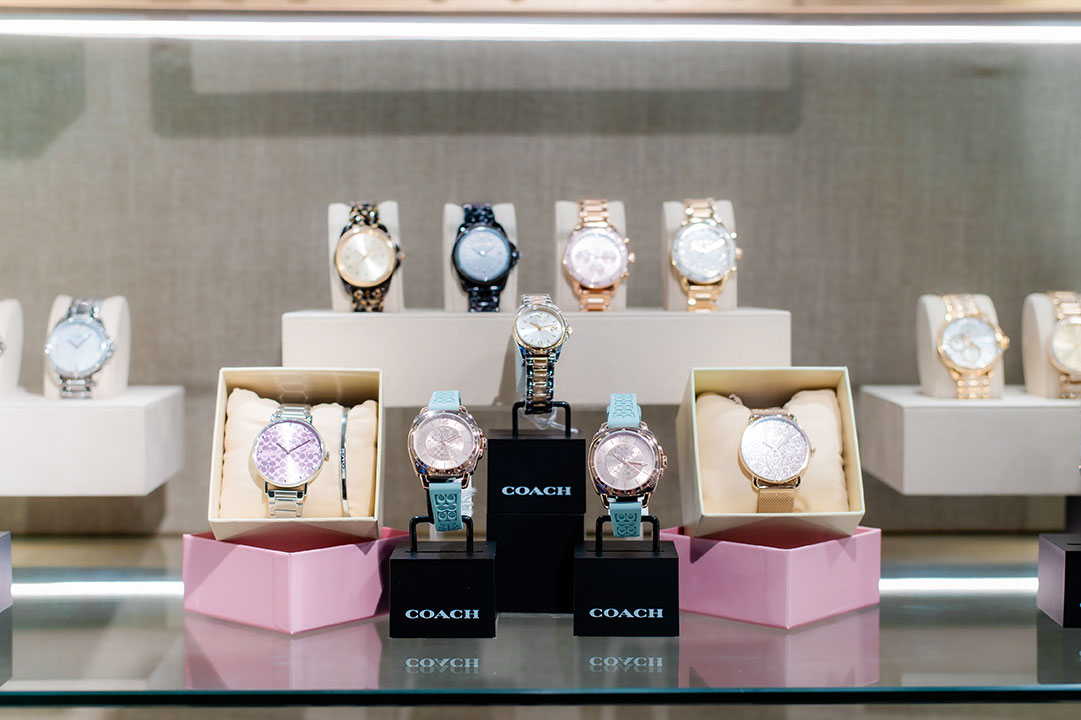
AMERICAN luxury fashion purveyor Coach recently opened its store at SM North EDSA, bringing a touch of Vintage Manhattan glamor to the heart of the Philippines.  This new store exclusively offers timepieces and is the first Coach watch mono-brand shell store in the world.  Among the Coach watches to look out for are the gems Elliot, Greyson, and Cass, each representing unique expressions of Coach’s design DNA. The Elliot watch is a modern minimalist classic, characterized by its clean lines and an understated sunray dial. The Greyson model features an acetate strap adorned with the iconic Coach Signature and a black sunray dial enhanced by sleek stick markers. On top of that, this watch was endorsed by Jennifer Lopez, and is exclusively available for offline purchases at the new Coach SM North EDSA store. The Cass has a striking square shape, topstitched leather strap, and a lacquer dial featuring the iconic Coach Horse and Carriage motif. Originally founded in New York City in 1941, Coach has since become a symbol of timeless American style and craftsmanship. The official distributor of Coach in the Philippines is Styleright Global Corp.


Uniqlo, White Mountaineering launches 2nd collaboration

GLOBAL apparel retailer Uniqlo has launched a second collaboration collection with Japanese outdoor clothing brand White Mountaineering. This new LifeWear features recycled materials in two outerwear styles for people of all ages. The Recycled Hybrid Down Jacket (P4,990, three colors available) is filled with recycled down and feathers, sourced from used garments that customers have donated to stores. The sleeves and upper back employ padding to ensure warmth and ease of movement, while the wave quilting design enables stylish layering. The garment also features excellent water repellency and heat retention properties. The Fleece Full-Zip Long Sleeve Hoodie (P2,990, four colors available) includes a fleece component made from 100% recycled polyester, combining long-layered boa fleece and a smooth-surface fleece material. The garment’s convenient features include pockets on the left chest and waist, size adjusters at the hem, and binder cuffs that make rolling up the sleeves easy. The two jackets are now available in select Uniqlo stores and uniqlo.com, and at the special site: https://www.uniqlo.com/ph/en/special-feature/special-collaboration/white-mountaineering/23fw. The percentage of recycled material used in products can be seen in the product details column on the product purchase page.


Timberland PH launches limited edition watch

TIMBERLAND, the global outdoor lifestyle brand, recently introduced its limited-edition Mt. Pulag Watch and Interchangeable Strap Set. It was exclusively crafted for the Philippines, with only 100 sets available worldwide. This set features a 46mm multifunction watch accompanied by two eco-conscious straps: a brown Better Leather strap and a vibrant green ReBOTL strap.  Earlier this year, Timberland began incorporating Better Leather watch straps which are high-quality leather  sourced from tanneries that have earned silver and gold star ratings from The Leather Working Group which promotes environmentally responsible practices in water management, energy conservation, and waste reduction. In addition, ReBOTL fabric is an eco-innovation made from at least 40% recycled plastic and Recycled Polyethylene Terephthalate (RPET), a durable yarn made from billions of shredded plastic bottles gathered worldwide. The Mt. Pulag Watch and Interchangeable Strap Set retails for P14,580 per set and can be purchased solely on Urban Time’s official website and on Zalora. For more information about Timberland and the Mt. Pulag watch, visit www.urbantime.ph.


Montblanc releases Maria Callas Special Edition

THE MONTBLANC Muses writing instrument collection is dedicated to the women who have left an indelible mark on culture and society, one that can still be felt today. The design details of each edition reflect each muse’s unique characteristics and her legacy. The latest Montblanc Muses honors opera star Maria Callas, one of the greatest sopranos in the history of music. The precious turquoise resin of the cap and barrel of the Montblanc Muses Maria Callas Special Edition highlights one of her favorite colors, while the overall shape of the writing instrument reflects Maria Callas’ graceful beauty with its slender, elegant silhouette. A costume detail from one of her most recognizable bel canto roles, Bellini’s Norma, is reflected in a pattern of laurel leaves surrounding the platinum-coated cone of the edition along with the embossed signature of the soprano. The handcrafted, rhodium-coated solid Au 585 gold nib is embossed with the kohl-outlined cat eyes and dark brows so typical of her image. The writing instrument’s clip, particularly the clip stone, is an homage to Callas’ great love of jewelry and flowers. The stone’s petal shape recalls the leaf of a new rose that was named after Callas in 1965, while the stone’s deep turquoise shade pays tribute to the color of the Aegean Sea, honoring Callas’ Greek roots. The Montblanc Muses Maria Callas Special Edition is available from Montblanc boutiques worldwide and online starting this month. For more information, visit www.montblanc.com.


Fendi Winter 2023-2024 Collection features Fendi friends

“FRIENDS OF FENDI” is a diverse series of projects and collections instigated by Kim Jones and Silvia Venturini Fendi, crossing the “party lines” of the fashion industry and distinguished by a belief in sincerity over strategy, with a true notion of friendship at their heart. Exploring both the traditional womenswear and menswear sides of Fendi, the collection curated with Stefano Pilati, reaches a new conclusion for the house, going beyond gender to something essentially more character-driven and iconoclastic. Reflecting on the 1920s as well as the 2020s, Pilati explores the idea of “the flapper” for today, proposing answers as to whom might fulfil that role now both through clothing and casting. The rigor and construction of a masculine world are combined with a feminine linear curve, particularly in the tailoring which features a softer, more voluminous construction. Men’s tailoring might be worn with silk or leather camisoles by men. Women’s tailoring is casually worn by both sexes. The season is in a way a “greatest hits” of Fendi bags — from iconic shapes to new classics — reapproached with a new eye by Silvia Venturini Fendi curated with Pilati. The FF buckle is applied to the sides — as opposed to the fastening — of the new Baguette Twist, which is crafted from color blocking smooth nappa leather. The new Fendi Boston 365 bag appears in a modern and sleek design with a magnetic opening and hammered leather. An idea of duality runs throughout, from the concept and construction of the Origami bag to the dual pocketed Peekaboo in a range of startling exotics. A new, pillowy, softly constructed leather Baguette also makes a debut, featuring a bold Fendi metallic logo script, the handle can also be worn as an ornament attached to the shoulder strap. There is also a further uniting of the masculine and the feminine in accessories, particularly in the shoes and jewelry. Shoes are constructed and sized with both sexes in mind and also often feature a hybridized style. For example, loafers present a classically rigorous masculine construction and weight in calf — yet with the addition of a distinctly feminine kitten heel. While ballerinas are toughened both literally and figuratively with the use of constructed, binding ankle straps. Jewelry, designed by Delfina Delettrez Fendi, also plays with the masculine and feminine, the bourgeois and the aristocratic, hard and soft. A watch strap aesthetic runs throughout with this typically masculine decoration utilized for each gender through patterning traditionally seen on watches and lighters. While there is a heaviness in the contrast of aristocratic rings, particularly sought in the symbol of the signet ring and how it is worn by an individual.


Textiles on show at ASEAN Techno-Fashion Expo

THE DEPARTMENT of Science and Technology (DoST), through the DoST Philippine Textile Research Institute (DoST-PTRI) hosted the ASEAN Techno-Fashion Exposition on Oct. 19 in Bohol. The DoST showcased various research and development output collections of textile materials, weaves, traditional wear, and innovative textiles from the ASEAN delegation. On view were textiles from Brunei Darussalam, Indonesia, Malaysia, Myanmar, the Philippines, and Thailand. The event brought together designers, scientists, and tech innovators who made a fusion of aesthetics and cutting-edge technology in textile and fashion. The Philippines featured eco-friendly fashion solutions that use sustainable materials and production methods such as fibers from pineapple, banana, abaca, silk, and bamboo that align the country with global sustainability goals and promote responsible fashion practices. Local brands that adopted DoST-PTRI technologies were also featured; Bayo Dyes, a homegrown brand which adopted DoST PTRI’s Natural Dyes technology; Aire, a brand that adopted technologies that convert the natural fibers into wearable yarns and is now available in online retail market; the BAYO x SEDA Pilipinas collection of wearable pieces made of Philippine silk; and the KatHABI Haute Culture Collection of handlooms weaving textile products made by Philippine indigenous communities.


Gabbi Garcia is Aldo’s 1st Filipina Global Ambassador

ON OCT. 15, shoe and bad brand Aldo announced its first Filipina Global Brand Ambassador, actress Gabbi Garcia. “Like Aldo’s wide array of shoes that look as good as they feel, Ms. Garcia is very versatile,” says a company press release, which noted that not only is she an actress, but also a global endorser, a recording artist, a social media celebrity, a vlogger, a podcast host, and an advocate. “Truly a multi-hyphenated Filipina, who shows us that it’s possible to be confident and take on the world in style and comfort.”


Where do we go from here?

CDD20-UNSPLASH

Last week, the IMF and the World Bank held their annual meetings in Marrakesh, Morocco. The normally high-profile gathering took place in the shadow of two major conflicts, the political dysfunction in several Western democracies and the continued drawing of geopolitical lines by Washington and Beijing. China’s economy, for a long time one of the world’s key dynamos, is slowing down. As World Bank Group president Anjay Banga described in his speech at Marrakesh, we live “in a world with alarming challenges but at a time of intensifying polarization and extremes.” At the same time, the IMF released its World Economic Outlook, with the subtitle “Navigating Global Divergence.”

The mood around the IMF-WB meetings was an era away, both figuratively and literally, from another meeting held in Marrakesh three decades ago, in 1993. After eight years, negotiators submitted that year the final draft of the Marrakesh Agreement establishing the World Trade Organization (WTO). It would be signed four months later, in April 1994. Slightly more than year before, Chinese leader Deng Xiaoping boarded a train in Beijing to start a month-long tour of southern China in which he kicked off the country’s economic reforms. Arguably, these two events were the most consequential in shaping the global economy as it exists today.

But the changes were not economic alone. Also in 1993, at the National Center for Supercomputing Applications at the University of Illinois Urbana-Champaign, version 1.0 of Mosaic, the first modern Internet browser, was launched. The first commercial search engine, Architext (later to become Excite), became available. In August that year, IBM announced Simon, the first smart phone. Although these products did not survive the 1990s, they were the first commercial implementations of the core technologies that pervade our work and our lives today.

The world had its problems in the early 1990s, but there was a general sense of optimism that the geopolitical fragmentation writ large was receding, and that technology would supercharge the expansion of trade and the spread of capitalism and liberal democracy. Convergence, not divergence, seemed to be the global economy’s direction of travel.

In the Philippines, President Fidel Ramos, in his 1993 state of the nation speech, launched “Philippines 2000.” Few Filipinos understood what it meant, especially since the lights still flickered on and off. The Philippines connected to the world wide web the year after, in 1994. By 1996, at the Philippine independence centenary, there was genuine optimism that with the power crisis having been solved and significant economic liberalization having been achieved, maybe the country would have its best shot at real, felt economic growth, including joining the emergent global value chains (GVCs) in manufacturing.

We missed that boat, however.

Philippine export of goods and services as a percentage of GDP peaked at roughly 42% in 2003; in 2021 it was 26%. Thailand reached 71% in 2007, now down to 58%, but still higher than what we ever achieved. Vietnam was at 57% in 2002, and it is currently at 93%. In short, we failed to keep up with the countries that were once our peers. Philippine manufacturing’s value-added in GDP is among the lowest in the region, below even Indonesia.

The effect is not simply optical, i.e., the paucity of “Made in the Philippines” when compared to “Made in Thailand” or “Made in Vietnam.” Manufacturing is an escape route out of poverty for many of our farmers, low-wage agricultural and rural workers. Participation in GVCs not only generates jobs, but also leads to the creation of new industries and capabilities, and the growth of small- and medium-sized enterprises. It raises incomes and the consuming power in the countryside. Done properly, it eases the pressure on the large cities.

What we have instead seen are the social and economic effects of the sector’s stunted growth. Lacking opportunities in their home communities, members of lower income households continue to seek employment abroad or in the larger cities; the former is lucrative but splits families and drains our communities of their skills, while the latter not only creates the same problems but adds to the stresses of the big city, where underinvestment in infrastructure and housing stress Metro Manila’s residents and business every day. In the meantime, the low incomes in agriculture for those stuck there make reforming the sector difficult. The potential displacement of farmers, many of whom lack the education or skills to quickly transfer to other industries, is a real social concern; they need alternative opportunities lest we enlarge the number of dispossessed who then become targets for populists and demagogues.

WHERE DID WE GO WRONG?
Having an “English-speaking” workforce, the mantra often used to highlight the Philippines’ manufacturing potential, is one advantage, but clearly an insufficient one as Thailand and Vietnam’s successes have shown. Our other immediate disadvantages have been widely discussed, including expensive energy costs, weak transport and logistics infrastructure, and the misalignment between our education system or skills training and the capabilities needed by foreign manufacturing investors.

But if we dig a little deeper, we will find that these to be proximate causes, but not the ultimate ones. What the Philippines has suffered from is weak government coordination, inconsistency in the formulation and implementation of policy at both the national and local government levels, and lack of capacity whether in terms of people or systems. Recognizing these institutional shortcomings requires that we go beyond the easy cop-out of blaming one administration, or hoping for a silver bullet, with the “if only we had a Lee Kuan Yew” mantra. The Singaporean leader was as rare as they come and hoping for a Philippine incarnation of him is not a strategy.

We also regularly blame Philippine “culture,” that seemingly impenetrable and unquantifiable weakness that holds us back every time. But as my friend and former colleague Ross Schaap once told me, “culture” is the repository of our ignorance. We sweep things that we do not, or are unwilling to, understand beneath it, and then shrug our shoulders.

But there is hope. There is always hope.

The worsening geopolitical situation today may be creating the best opportunity in a generation for Philippine leaders to correct what we failed to achieve earlier this millennium. Unlike in the 1990s, when low costs, productive capacity, the ability to scale and gain access to new markets gave countries such as China and Thailand clear economic advantages over the Philippines, the wrangling between Washington and Beijing, and the fear that it could eventually break out in open conflict over any of several issues, has resulted in material changes in the calculus of investment decisions.

Over-reliance on the concentration of supply chains in one geography is now considered a serious business risk — a problem highlighted even more by the COVID-19 pandemic. Firms that are sensitive to these risks have moved some of their production to third countries. ASEAN now accounts for 30% of US electrical and electronics imports, equal to that provided by China, compared to 43% from China and 20% from ASEAN in 2016. The US is actively encouraging technology manufacturers to shift some of their operations, whether to US soil or to a friendly country, in the process passing two monumental pieces of legislation in the Inflation Reduction Act (2022) and the CHIPS and Science Act (2022). Call it de-risking, de-coupling and just-in-case.

The Philippines has an opportunity to attract western manufacturers seeking to diversify their production bases for electronics, semiconductors and equipment components, and maybe even automobile and renewable energy parts and components.

What we must do, however, is convince foreign investors that: a.) the geopolitical risks of production are lower here, and, b.) it is economically feasible to manufacture here even if the country is not the lowest-cost producer. In their trips abroad, government officials often highlight the policies and available resources that they believe make the country attractive to investors.

But that is not enough. There must be better predictability and stability of policy across administrations. Investors who decide to move forward based on the investment promotion trips of the Philippine president or in their meetings with our diplomats and senior officials abroad should not find uncoordinated, recalcitrant, or obdurate bureaucracies whether in the central or local governments when they arrive here and start kicking the tires. We should have clear and reasonably implemented standards of governance for the environment and labor if we are to effectively entice western manufacturers. Our education and training systems should be nimble enough to build up a capable workforce.

These prescriptions are incomplete, and they are not new, but they are often the main complaint from investors, so we must tackle them now. There is a lot of blame to pass around for our failings: vested interests, malicious or negligent government officials, even bad luck. There is also the valid question of whether globalization, trade, and growth have failed to benefit a disproportionate number of our people, and which has therefore discredited these ideas in their eyes. Moving forward institutionally to address these problems will require political leadership, pressure from the people, some sense of shared goals and responsibility between government, businesses and their communities. Local businesses will have to see that a much bigger pie works out best for them, eventually.

We will never be able to offer the same efficiencies as China; it will take us years to even achieve what Thailand has been offering FDI investors for decades, or what Vietnam has been putting forward for the Koreans and Japanese the past 10 years. But we must seize the opportunities that have been created by the geopolitical jostling of China and the United States and the reconfiguration of global value chains. Otherwise, we risk missing the boat. Again.


Bob Herrera-Lim is a managing director at Teneo, a New-York based consulting firm that advises companies and investors globally. He covers all of Southeast Asia for the firm’s clients. He is also a fellow of the Foundation for Economic Freedom.

Bostic says Fed could lower rates in late 2024

REUTERS

NEW YORK — Federal Reserve Bank of Atlanta President Raphael Bostic said on CNBC Friday that while inflation remains too high it is coming down amid mounting evidence of an economic slowing, and that could open the door to easier monetary policy late next year.

“We have to get a lot closer to 2% before we’re going to consider it, before I would consider any kind of relaxation of our posture. Inflation is job one, we have to get that under control,” Mr. Bostic said.

But that’s possible next year, and “I would say late 2024” is on the table for an easing, Mr. Bostic said.

The policy maker, who does not hold a vote on the rate setting Federal Open Market Committee this year but will next year, has said in recent remarks he believes the Fed is done raising rates. The central bank is broadly expected to hold the federal funds target rate range steady at between 5.25% and 5.5% at the Oct. 31-Nov. 1 meeting.

Mr. Bostic said in the television appearance that information he’s picking up points to an economy which, while still possessing forward momentum, is losing speed.

“When I talk to businesses, they all tell me the slowdown is coming,” Mr. Bostic said. “They expect that where we are today is a lot stronger than we will be six months from now,” he said, adding, “I’ve really taken that on board” when thinking about the current stance of monetary policy and how it will play out over coming months.

Mr. Bostic also said in his appearance that he’s not expecting a recession. — Reuters

Globe unit expands loan offerings to SMEs

A UNIT of Globe Telecom, Inc.’s 917Ventures has partnered with Esquire Financing, Inc. to expand its loan offerings for small- and medium-sized enterprises (SMEs).

In a statement on Sunday, the listed telecommunications company said FundSpace has partnered with Esquire Financing for a loan offering of up to P100 million.

FundSpace is the loan aggregator under 917Ventures, the corporate venture builder of Globe.

Martin Luchangco, entrepreneur-in-residence at 917Ventures, said that with its newest partner, FundSpace “continues to offer additional and flexible loan options, empowering SMEs in the Philippines to realize their full potential.”

“Our platform’s competitive interest rates and efficient application process ensure local businesses have a more accessible avenue to secure funding,” he said.

Through the partnership, Esquire Financing will integrate its platform into FundSpace, allowing the latter to extend “substantial loanable amounts available for local SMEs, ranging from P50,000 up to as big as P100 million.”

FundSpace will also provide customers with an accessible and easy-to-navigate financial resource platform, said Alisa Bermudez, venture builder at 917Ventures.

The company is a loan platform that offers financing options for SMEs by collaborating with financing institutions.

Globe, through 917Ventures, is set to build generative artificial intelligence products for its telco-to-techno ambition, which will allow the company to expand and explore the progress of technologies such as venturing into financial technology. — Ashley Erika O. Jose

El Niño to continue into mid-2024 — FAO

REUTERS

SANTIAGO — The El Niño weather phenomenon will last at least through the first half of 2024, according to the latest United Nations forecasts, with abnormal rainfall due across Latin America raising fears for the agricultural sector.

Pacific sea surface temperatures soared in recent months, “with stronger warming along the South American coast,” said the report from the Food and Agriculture Organization of the United Nations (FAO) accessed by Reuters.

Forecasts for the first quarter of 2024 show more rain than usual in southern cone countries such as Peru and Ecuador, as well as Mexico, alongside ongoing dry conditions in Brazil, Guyana and Suriname.

The current dry spell in Central America, however, is set to last only until the end of this year. The report also stresses that agriculture, which includes crops, livestock, forests and fishing, is particularly vulnerable given the sector can absorb 26% of economic losses during extreme weather conditions and up to 82% during drought.

Key fish species like anchovies and tuna on the northern coast of Peru and southern Ecuador are particularly at risk, it said.

Ecuadorian fishermen reported a 30% decrease in tuna catching since February, it said. The El Niño and its opposing La Niña weather patterns have impacted the production of key crops such as wheat, rice and corn in Latin America, which are highly dependent on raw materials.

Extreme conditions brought by El Niño are hitting the region, which is also simultaneously facing climate change effects such as heat waves, the report said.

The FAO said it has launched a plan to mobilize financial resources for vulnerable communities in several countries affected by the extreme weather. — Reuters

Inditex strives to make fashion faster with more Zara deliveries

UNSPLASH

INDITEX SA has increased the frequency of truck deliveries to some Zara stores in its home market, as part of a trial that could signal a further acceleration in the retailer’s supply chain.

Zara has increased truck deliveries to a handful of stores in Madrid to four times per week from the traditional two, according to two people familiar with the matter, who asked not to be identified because the information isn’t public. The Arteixo, Spain-based fashion company already carried out a first test in the spring, according to the people.

More frequent deliveries allow companies such as Zara to cut the number of so-called lost sales due to unavailable stock, as it allows to make more products available to clients.

Inditex’s unique logistics set-up is one of the pillars on which it has become the world’s largest fashion retailer by value. While most big apparel and sportswear companies rely on distribution centers in different parts of the world to ship items to nearby markets, most of Inditex’s products are centralized in Spain for distribution and then sent in small packages to stores across the globe twice a week, allowing it to replace stocks faster than its rivals.

To optimize stock allocation according to the needs of each of its 5,745 shops, Inditex uses past sales data and current stock availability as well as daily orders from store managers. Last year the company developed a new model that calculates the optimal number of units for every initial shipment of a new product, according to the company’s latest annual report.

A spokesperson for Inditex declined to comment.

To be sure, just running the trials doesn’t mean that the company will necessarily make the new delivery system permanent or expand it more broadly. In the past, other initiatives, such as same-day deliveries, weren’t widely rolled-out or have been shelved.

Depending on product type, Zara shops in Madrid are stocked from logistics platforms in the cities of Arteixo, Zaragoza, and Meco. Zara accounted for about 32% of Inditex stores globally, and 73% of sales. There are 13 Zara stores in Madrid, including the brand’s largest. — Bloomberg

Do tobacco taxes cause illicit trade?

SVKLIMKIN -PIXABAY

On Oct. 12, media outlets publicized the launch of a study by the University of Asia and the Pacific (UA&P) and the Federation of Philippine Industries (FPI), which claimed that “there is a direct correlation in the imposition of higher taxes on cigarettes to smuggling.” The group behind the study noted that “we cannot impose new taxes on the cigarette industry because it only hurts the industry itself as well as consumers.” This is a misguided and reductive argument.

First, basic statistics tells us that correlation does not imply causation. It is crucial to establish whether the higher tax rates actually caused an increase in smuggling or illicit trade.

Higher taxes are not the only factor that may lead to an increase in illicit trade. Global evidence shows that illicit trade is more of a function of poor tax administration rather than tobacco tax rate increases. Illicit trade can thus be neutralized by good governance and good institutions.

A 2019 study by Nguyen and Nguyen found that in Vietnam, the volume of illicit cigarettes has decreased over time, even as tobacco taxes increased, suggesting that cigarette prices are not a key determinant of illicit trade. According to the World Bank, the “overall level of smuggling is generally higher in countries that have lower cigarette prices (generally also countries with a lower tax rate) than in countries that have high prices.”1

Examining the Philippine context, we can refer to Monica Lavares, Ariza Francisco, Hana Ross, and Nadia Doytch’s 2020 study published by the Ateneo School of Government, which, using a gap analysis, concluded that: “In spite of the large tax increases by the Philippine government through the Sin Tax Law starting from 2013 until 2018, the illicit share in 2018 remains similar to its 1998 level of 16% of the total market. Hence, our study finds no evidence of a positive relationship between tobacco taxes and size of illicit cigarette market in the Philippines.”

Smuggling can occur even if prices are low. A prime example is the rampant smuggling of rice and other agricultural commodities even if tariffs on these products have been decreasing. If a smuggler believes they have a high probability of smuggling without getting caught, the likelihood is they will continue to smuggle.

The issue of illicit trade and smuggling has perennially been brought up by the tobacco industry to argue against raising tobacco taxes. But the idea of doing away with tobacco taxes because of illicit trade is dangerous. The benefits of tobacco taxes are monumental not only for revenue, as evidenced by the tripling of our Health budget since 2012, but also for public health. Tobacco tax reforms contributed to the sharp decline in smoking prevalence, in spite of illicit trade. Consumer surveys (the Global Adult Tobacco Survey and the National Nutrition Survey of the Department of Science and Technology’s Food and Nutrition Research Institute) measuring smoking prevalence include both licit and illicit cigarettes, and the 2021 GATS shows that smoking prevalence has been cut by a third since 2009. The NNS shows us that tobacco taxes cut consumption mainly by preventing first-time smokers from starting the addictive habit.

Health advocates are also keen on addressing illicit tobacco trade because it undermines the health and revenue gains of tobacco taxes. We must prevent the availability of cheap and unregulated cigarettes to the vulnerable and price-sensitive youth and poor. Thus, the UA&P paper’s call for stronger enforcement is one that is echoed by civil society.

However, to quote Myrna Austria and Alyssa Villanueva’s 2021 paper on illicit cigarette trade in the Philippines published by the De La Salle University School of Economics: “The increase in illicit cigarette trade should not be an excuse not to increase the excise tax on cigarettes. Instead, the ongoing tax policy reforms should be taken as part of a comprehensive program to lower cigarette consumption in the country.” The World Bank has also noted that “the strengthening of tax administration and tobacco tax reform should be viewed as complementary.”2

Tobacco products are price inelastic, therefore the increase in taxes will still result in earning net revenues. In fact, the Department of Finance’s estimation of optimal tax rates was P75 in 2018, which is still higher than the current rate of P60. Based on history, performance, and the economic concept of price elasticity, there is still room to increase tobacco taxes in the near future, especially if coupled with stronger tax administration efforts.

It is also crucial to note that the UA&P study “Illicit Cigarette Trade in the Philippines: Economic and Social Impacts of Weak Regulatory Enforcement” was commissioned by FPI. A quick Google search will show that Japan Tobacco International (JTI) has posted FPI’s positions on illicit trade policy in the Philippines on its website on several occasions. This link suggests a possible conflict of interest.

Further, although the study was publicly launched through an event with the media, it has yet to be made available to the public in its full form and its methodology lacks transparency. Civil society has requested access to the paper but has not received a copy as of this writing.

That the tobacco industry does research on illicit trade is nothing new, but our journalists should be more discerning and probe deeper into methodology and possible conflicts of interest when writing about illicit tobacco trade studies.

We must resist the industry’s use of illicit trade as an argument to erode the gains of sin taxes. If the tobacco industry wants to protect revenues, diluting tobacco tax reforms is not the solution.

The way forward is to enact reforms to curb illicit trade while simultaneously defending tobacco taxes. The insertion of tobacco in the Anti-Agricultural Smuggling Bill, which raises penalties for large-scale smuggling, hoarding, profiteering, and cartelizing, and was supported by the tobacco industry, is insufficient in countering illicit tobacco trade.

Representative Joey Salceda, Chairman of the Ways and Means Committee in the House, announced in an Oct. 17 press conference held by the Sin Tax Coalition that he will propose a separate bill on the illicit trade of tobacco, with key provisions such as a tracking and tracing system and stricter regulation for online marketplaces. The Bureau of Internal Revenue (BIR), for its part, has also committed to strengthening its tax stamp system and turning it into a tracking and tracing system to counter illicit tobacco trade. These efforts are commendable, and hopefully will lead to recouping revenues and even lower tobacco consumption, especially among the vulnerable poor and the youth.

1 https://www.emro.who.int/noncommunicable-diseases/highlights/illicit-trade-increases-tobacco-use.html

2 https://blogs.worldbank.org/health/confronting-tobacco-illicit-trade-global-review-country-experiences


Pia Rodrigo heads the health policy team of Action for Economic Reforms.

Swiss banks push for self-regulation as government tackles greenwashing

ZURICH — Switzerland’s banking sector, accused by critics of not doing enough to prevent so called “greenwashing,” is pushing to keep regulating itself ahead of a decision that could lead to government oversight of sustainable finance.

Greenwashing involves an organization making misleading sustainability-related claims to investors or consumers, usually to boost its reputation and bottom line. However, there is no legal definition of the term in Switzerland.

“The cabinet will give information this autumn on the further procedure in the matter of greenwashing,” a spokesman for the Swiss Ministry of International Financial Affairs told Reuters ahead of a decision on whether to introduce state regulation.

The Swiss Bankers Association (SBA), which represents lenders like UBS and Julius Baer as well as the country’s smaller banks, wants to continue with self-regulation rather than be subject to tighter government rules.

But some say self-regulation does not go far enough.

“The financial industry argues that self-regulation is effective because it can be implemented and adapted quickly,” said Stephan Kellenberger of the World Wide Fund for Nature, Switzerland.

But he said self-regulation often lacked tough targets and did not prevent greenwashing. “It is indispensable that sustainable products, for example, meet the requirements of the Paris climate targets.”

Regulators say greenwashing undermines the credibility of efforts to tackle climate change and other environmental problems.

The number of instances of greenwashing by banks and financial services companies around the world rose 70% in the past 12 months, according to RepRisk, a Swiss environmental, social and corporate governance data provider.

Switzerland, a huge centre for asset and wealth management, accounted for sustainable investments totaling around 1.6 trillion Swiss francs ($1.79 trillion) in 2022, according to Swiss Sustainable Finance (SSF), an industry association.

There are no figures on Swiss cases of greenwashing.

Hans-Ruedi Mosberger, head of asset management and sustainable finance at the SBA, does not think there are any cases of “deliberate deception.”

“This is more a case of misunderstanding, a communication problem,” he said.

The SBA issued rules earlier this year on what advice can be given to clients around sustainable investments.

UBS, the country’s biggest bank with $5.5 trillion in invested assets, also supports self-regulation, saying it sets a “minimum standard.”

For now, Switzerland’s approach runs counter to that taken by the European Union, Britain and Singapore where government enforcement has been adopted, experts have said.

“There is a wave of regulation coming to Swiss banks… it will really hit (them),” said Daniel Schmid Perez of banking consultancy ZEB, who estimates the total cost for lenders to adjust their processes would be around 100 million to 200 million francs. — Reuters

Coffee to go, and more

PHOTO BY DYLAN AFUANG

Shell Mobility EDSA Balintawak reopens with a drive-thru Shell Café

By Dylan Afuang

BEFORE TRAVELERS from Metro Manila embark on a road trip to North Luzon, they can receive sustenance and service for their vehicles at the recently renovated and reopened Shell Mobility EDSA Balintawak in Quezon City.

Located along the northbound side of EDSA, a few blocks before the Balintawak entrance of the North Luzon Expressway (NLEX), the stopover caters to motorists in the area — and most especially northbound travelers due to its proximity from the NLEX — with the services offered by Shell Pilipinas Corp.

Aside from offering Shell fuels, the station, operating in the area for decades, now carries a renovated Shell Select convenience store and two Shell Helix Oilchange+ service bays.

Chief among the amenities, integrated around and above the Select store, is a branch of the fuel manufacturer’s brand of coffee shops called Shell Café.

Combining a gas station, vehicle service bays, and café in one place is part of the fuel company’s current rebranding to name all stopovers as Shell Mobility sites.

At the Shell Mobility EDSA Balintawak, the two-storey Shell Café is the first in Metro Manila. It follows the shop’s opening in Tagaytay, Cavite, and is also among the first of its kind in the country to feature a drive-through option, allowing drivers to receive their caffeine fix without alighting from their vehicles.

“We fuel for the road and the soul,” stated Engr. Jan Vincent Fernandez, the operations manager of CFAL Oasis, the company that handles several franchise Shell stations, in his message at the opening of the station. “At its core, a gas station is a place where you fuel your vehicle, but it’s also where you fuel yourself. (Shell Café offers) a wide range of food and beverages, from freshly brewed coffee to tasty snacks. These offerings can provide sustenance needed for long drives and serve as a culinary pit stop for exploring local flavors.”

Drink options at Shell Café include fruit teas, coffee, and chocolate drinks. Complementing these is a range of delicious treats such breads, cronuts, pizza, and donuts.

Inside the shop, guests can enjoy the delicacies while relaxing on recliners, on the tables and chairs, while viewing their vehicles being serviced in the garage.

Food and drink options also extend to the Chatime and Binalot tea and restaurant chains whose kiosks share the space with the Café and the Select store.

“Shell Mobility aims to serve everyone who moves,” Shell Pilipinas Head of Mobility Marketing Arvin Obmerga announced during his message. These are people on two- or four-wheels and so forth, he explained.

Explaining the rationale behind transforming simple Shell gas stations to Shell Mobility sites replete with amenities, he added, “We evolve stations to give reasons for people to stop and to stay, and to stay long with Shell.”

With the reopening of the EDSA Balintawak site, Mr. Obmerga revealed that the fuel company has rebranded more than 100 hundred stations to Mobility sites around the country.

The outlet could offer car wash services by the end of the year, and could see more car wash bays adding to the one already built should demand call for it, the executive added.

MORE Power links expansion to demand

EXPANDING to more areas will depend on the demand for electricity from consumers in Iloilo province, according to the top official of MORE Electric and Power Corp. or MORE Power.

Roel Z. Castro, president and chief executive officer of MORE Power, said the expansion of the company’s coverage area was led by the “clamor of the consumers.”

“Initially, what we’ve actually set aside [is] about P1.5 billion for private and secondary [connections],” Mr. Castro said when asked about the amount of investments allocated for expansion.

“I could say that could already connect us with the 15 areas. But it will really depend on the take up of demand,” he added.

Republic Act No. 11918, which lapsed into law in 2022, allowed MORE Power to expand its coverage to the second and fourth districts of Iloilo, which cover 15 municipalities and one city.

These are the municipalities of Alimodian, Leganes, Leon, New Lucena, Pavia, San Miguel, Santa Barbara, Zarraga, Anilao, Banate, Barotac Nuevo, Dingle, Dueñas, Dumangas and San Enrique, and the component city of Passi.

Mr. Castro said that the power distribution utility is waiting for the issuance of the certificate of public convenience and necessity from the Energy Regulatory Commission to start electric service to the consumers in the areas.

“Right now, we are not yet looking to other expansion yet because we will first finish Bacolod,” Mr. Castro said.

Primelectric Holdings, Inc., a sister company of MORE Power, has a proposed joint venture with the Central Negros Electric Cooperative or Ceneco, which has more than 214,000 member-consumers in its franchise area.

Mr. Castro has said the joint venture called Negros Electric and Power Co. (NEPC) is targeting to invest P2.1 billion as capital expenditure to put up “cutting-edge” and “top-of-the-line systems” for better consumer experience.

He also said that NEPC is committed to achieving 100% electrification in the franchise area by 2028, in line with the government’s agenda of achieving sustainable and inclusive economic growth. — Sheldeen Joy Talavera

Ukraine’s grain sector losses could exceed $3.2 billion in 2023

REUTERS

KYIV — Ukrainian grain and oilseeds crop sector losses could exceed $3.2 billion in 2023 due to the high cost of logistics as well as fuel and fertilizer price hikes, which threaten to reduce sown areas in the next and coming years, farmers unions said.

Ukraine is one of the leading global producers and exporters of food and its agrarian sector has been traditionally profitable.

Ukrainian authorities and farmers did not report financial results in 2022. Before the Russian invasion, Ukraine shipped the bulk of its exports through deep-water ports in the Black Sea, which have been fully or partially blocked since February 2022.

Limited export opportunities, now centered on the small ports of the Danube River and the railway to Eastern Europe, have multiplied the logistics component and consequently reduced the price traders can offer farmers.

The port closures have also led to a sharp rise in the price of imported fuel, seeds, fertilizers and spare parts for agricultural machinery.

The Agrarian Council, Ukraine’s largest agribusiness group, said the cost of wheat production in 2023 was about $146 a metric ton, with an average selling price of $102.

Farmers spend $149 to grow maize and they can sell it for $94. The Council said that in 2023, even sunflower and rapeseed production would be unprofitable and only soybeans would give some profit to farmers.

Producers said the large losses have already led to reduced plantings for the 2024 crop.

“We planned to sow 2,000 hectares of winter wheat, but sowed only 1,000 hectares,” said Ruslan Holub, director of the Tak farm, which has more than 10,000 hectares in central and southern Ukraine.

“Farmers will determine the area they can sow based primarily on their financial capacity,” said Oleh Khomenko, the head of Ukrainian Agribusiness Club, a business association.

Farmers unions declined to forecast the area to be sown for the 2024 wheat harvest, while the Ukrainian agriculture ministry is still keeping its winter wheat sowing forecast at around 4.4 million hectares.

Not only financial difficulties, but also the unfavorable weather may significantly reduce the sowing area this autumn.

Ukraine is a traditional grower of winter wheat, barley and rapeseed. State weather forecasters said this week that prolonged absence of rain across most Ukrainian regions had created unfavorable conditions both for the ongoing sowing of winter crops and for the plants already sown.

They said the worst situation in terms of soil moisture was in the Odesa, Kherson, Mykolaiv, Kirovohrad, Vinnytsia, Cherkasy, Kharkiv regions where up to 20 cm of upper soil layers were completely dry.

Farmers have sown 3.02 million hectares of winter wheat as of Oct. 16 compared with 2.5 million hectares at the same date a year ago, agriculture ministry data showed. — Reuters

Talks between studios, striking US actors to restart Tuesday

GABE-UNSPLASH

NEGOTIATIONS between media companies and the union representing striking US actors will restart on Tuesday, the two sides said in a joint statement on Saturday.

Talks broke down the week before as the sides clashed over streaming revenue and the use of artificial intelligence. The strike has disrupted film and television production, leaving thousands of crew members without work as well as the actors.

Members of SAG-AFTRA, which represents 160,000 actors and other media professionals, have been on strike since July. The union is seeking a deal with the Alliance for Motion Picture and Television Producers (AMPTP), which negotiates on behalf of studios.

“SAG-AFTRA and the AMPTP will meet for bargaining on Tuesday, October 24th at SAG-AFTRA Plaza. Several executives from AMPTP member companies will be in attendance,” said the joint statement. It gave no further details.

Hollywood’s film and television writers ratified a new, three-year contract earlier this month, ending their 148-day work stoppage.

HOPE MIXES WITH FINANCIAL ANGST
As the actors strike hit the 100-day mark on Saturday, performers on the picket line offered a mix of worry over financial difficulties and hopes of getting a good deal out of studios after talks broke down.

On the picket line outside Netflix on Friday, striking actors were grateful for a proposal by A-list Hollywood actors like George Clooney to pitch in $150 million to the SAG-AFTRA union over three years to help end the strike.

“It shows that they’re paying attention and it shows that we’re having an impact because A-listers can’t work without the B and C-Listers underneath them supporting the rest of the show,” said Richard Speight, 54.

“So thrilled that they’re involved, thrilled that they’re emotionally committed and even willing to get financially committed on what’s going on.”

Vincenza Blank, 36, who is both an actor and a writer, said the labor solidarity has been impressive but the financial toll was hard, noting “I’ve had to do things financially to cover expenses that I wouldn’t normally have to do.”

The strike has disrupted film and television production, leaving thousands of crew members without work as well as the actors. Hollywood’s film and television writers ratified a new, three-year contract earlier this month, ending their 148-day work stoppage.

Several actors expressed hope that the union would reach the kind of deal that actors deserve and that helps them cover the high cost of living in a place like Los Angeles.

“The feeling is that we’re going to keep strong, we’re going to keep going,” said Kevin Grossman, adding “I certainly don’t feel like we should stop. If you get this far, you might as well keep going.” — Reuters