Home Blog Page 4107

Early explosion moves Rangers to verge of World Series title

PHOENIX — The Texas Rangers exploded for back-to-back five-run innings, turning a Halloween Game 4 of the World Series into a nightmare for the Arizona Diamondbacks and their fans Tuesday night.

The Rangers rolled to an 11-7 win to take a 3-1 lead in the best-of-seven series. They are one victory away from their first World Series championship.

Marcus Semien, who entered the game batting .197 in the postseason, hit a two-run triple in the second inning and a three-run homer in the third. Corey Seager struck again with his third two-run homer of the World Series, his sixth postseason long ball. Jonah Heim added a solo home run in the eighth, his third blast of the postseason.

Texas won its 10th consecutive postseason road game, the longest winning streak of its kind in baseball playoff history. Another road win in Game 5 Wednesday would seal the title.

In a bullpen game for Arizona, the Rangers knocked around relievers Miguel Castro, Kyle Nelson and Luis Frias, all of whom allowed three runs without lasting one full inning.

Mr. Frias was the only one of the three not charged with an earned run, but he gave up Travis Jankowski’s two-run double and Mr. Semien’s home run in the third.

Rangers starter Andrew Heaney (1-0) went five innings and allowed a run on four hits. He walked two and struck out three, leaving with a 10-1 lead.

Mr. Heaney’s effort helped the Texas bullpen get extra rest. The Rangers lost two key players to injuries from Game 3, after right fielder Adolis Garcia was diagnosed with a strained oblique muscle and Game 3 starting pitcher Max Scherzer was removed from the World Series roster due to back spasms.

But Texas didn’t miss the power-hitting Mr. Garcia, who had 20 hits, eight home runs and 22 RBIs in the postseason.

The Diamondbacks scored their first run in the fourth on a sacrifice fly from Lourdes Gurriel, Jr. They added four in the eighth on a sacrifice fly from Tommy Pham and Mr. Gurriel’s three-run home run, and they didn’t go quietly in the ninth, when Gabriel Moreno hit a two-run single off Texas closer Jose Leclerc.

Ketel Marte, the Diamondbacks’ best hitter in the postseason, had two hits to increase his postseason hitting streak to 20 games, the longest such streak in major league history. — Field Level Media

Saudi Arabia likely to host 2034 World Cup after Australia drops out

MELBOURNE — Saudi Arabia was left as a shoo-in to host the 2034 World Cup after Australia confirmed it would not make a bid for soccer’s global showpiece on Tuesday’s deadline day.

Governing body FIFA had invited bids from Asia and Oceania for the tournament by Oct. 31.

Football Australia (FA) boss James Johnson had said the country was “exploring the possibility” of 2034, but on Tuesday the domestic governing body said it would instead focus on bids for the 2026 Women’s Asian Cup and the 2029 Club World Cup.

Australia’s decision not to proceed with 2034 leaves Saudi Arabia as the only confirmed bidder.

Saudi Arabia announced it would bid only minutes after FIFA called for Asia and Oceania bids on Oct. 4.

The president of the Asian Football Confederation (AFC), the sport’s continental governing body to which Australia belongs, said “the entire Asian football family” would stand united in support of the Saudi bid.

A week after FIFA’s invitation, Indonesia said it was in discussions with Australia about a possible joint bid along with Malaysia and Singapore before saying a week later that it backed Saudi Arabia’s bid.

Australia hosted a successful Women’s World Cup this year but has never hosted a men’s World Cup.

“We believe we are in a strong position to host the oldest women’s international competition in the world — the AFC Women’s Asian Cup 2026 — and then welcome the greatest teams in world football for the 2029 FIFA Club World Cup,” the FA said. “Achieving this … would represent a truly golden decade for Australian football.”

FIFA awarded the 2030 World Cup to Morocco, Portugal and Spain, also adding World Cup centenary games in Uruguay, Argentina and Paraguay.

The Sport & Rights Alliance and Amnesty International say FIFA needs to secure clear and binding commitments to improve human rights in countries likely to host the 2030 and 2034 men’s World Cup tournaments to prevent serious potential abuses.

“With only a single bid for each tournament on the table, FIFA may have scored an own goal,” Steve Cockburn, Amnesty International’s Head of Economic and Social Justice said in a statement. “FIFA must now make clear how it expects hosts to comply with its human rights policies. It must also be prepared to halt the bidding process if serious human rights risks are not credibly addressed.” — Reuters

Hamas attack will inspire greatest US terror threat since ISIS — FBI

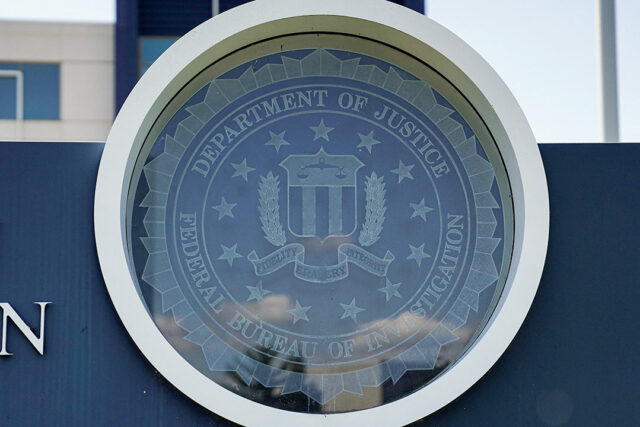
A VIEW shows the seal of the Federal Bureau of Investigation (FBI) outside of the FBI’s Cincinnati Field Office in Cincinnati, Ohio, US, Aug. 11, 2022. — REUTERS

WASHINGTON — The attack by Hamas on Israel will inspire the most significant terror threat to the United States since the rise of ISIS nearly a decade ago, Federal Bureau of Investigation (FBI) Director Christopher Wray said at a congressional hearing on Tuesday.

Wray said that since the start of the Israeli-Palestinian conflict in Gaza earlier this month, multiple foreign terrorist organizations have called for attacks against Americans and the West, raising the threat posed by homegrown US violent extremists.

“The actions of Hamas and its allies will serve as an inspiration the likes of which we haven’t seen since ISIS launched its so-called caliphate several years ago,” Mr. Wray said.

The remarks came during a hearing before the US Senate Homeland Security and Governmental Affairs Committee focused on threats to the United States. The US government has seen an increase in threats against Jews, Muslims and Arab Americans since fighting broke out in Gaza, officials have said.

The number of attacks on US military bases overseas by Iran-backed militia groups have risen this month, Mr. Wray said. Cyberattacks against the United States by Iran and non-state actors will likely worsen if the conflict expands, he said.

Iran’s mission to the United Nations did not immediately respond to a request for comment.

During the hearing, Homeland Security Secretary Alejandro Mayorkas said that hate directed at Jewish students in the United States following the start of the Israeli-Palestinian conflict in Gaza had added to an increase in anti-Semitism.

The White House expressed alarm this week at reports of anti-Jewish incidents at US universities as tensions have prompted university officials to tighten security.

Senator Josh Hawley, a Republican, grilled Mayorkas about why a US asylum officer who reportedly made anti-Israel social media posts had been placed on leave but not fired, saying the employee was “celebrating genocide.”

Mr. Mayorkas said it was “despicable” to suggest the posts reflected the view of US Department of Homeland Security (DHS) employees, noting that his own mother was a Holocaust survivor.

At a ransomware summit organized by the White House on Tuesday, Attorney General Merrick Garland said he had directed the Justice Department to assist Israeli investigators probing financial flows to Hamas, including those involving cryptocurrency. — Reuters

Open hatred of Jews surges globally, inflamed by Gaza war

REUTERS

LONDON — In Los Angeles, a man screaming “kill Jews” attempts to break into a family’s home. In London, girls in a playground are told they are “stinking Jews” and should stay off the slide. In China, posts likening Jews to parasites, vampires or snakes proliferate on social media, attracting thousands of “likes.”

These are examples of incidents of anti-Semitism, which have surged globally since the attack by Hamas gunmen on southern Israel on Oct. 7 and subsequent war on the Islamist group launched by Israel in the Gaza Strip.

“This is the scariest time to be Jewish since World War II. We have had problems before, but things have never been this bad in my lifetime,” said Anthony Adler, 62, speaking outside a synagogue where he had gone to pray in Golders Green, a London neighborhood with a large Jewish community.

Mr. Adler, who runs three Jewish schools, temporarily closed two of them after Oct. 7 because of fears of attacks on pupils and has beefed up security at all three.

“The biggest fear is that there will be a random attack on our community, on our families and our children,” he said.

In countries where figures are available from police or civil society groups, including the United States, Britain, France, Germany and South Africa, the pattern is clear: the number of anti-Semitic incidents has gone up since Oct. 7 by several hundred percent compared with the same period last year.

In some countries, such as the United States and Britain, Islamophobic incidents have also increased since Oct. 7.

In the case of the anti-Semitic incidents, most consist of verbal abuse, online slurs or threats, graffiti, and defacing of Jewish properties, businesses or sites of religious significance. Physical assaults represent a significant proportion.

One common thread is that anger over the deaths of thousands of Palestinians as a result of Israel’s bombardment of Gaza is invoked as justification for verbal or physical aggression towards Jews in general, often accompanied by the use of slurs and tropes rooted in the long history of anti-Semitism.

“Whatever their opinion on the conflict, even if they are extremely critical of the Israeli government’s policy, Jew is for them equal to Israel, equal to killing Palestinian children,” said political scientist Nonna Mayer, a member of France’s CNCDH, an independent human rights commission. She was describing what was in the minds of those behind anti-Semitic incidents.

‘ANY EXCUSE’
The climate of fear is worse for many Jews than in previous rises in anti-Semitism linked to flare-ups of violence in the Middle East, partly because of the intensity of the Gaza conflict and partly because of the trauma of Oct. 7.

“The idea that Israel was the ultimate shelter, that idea is totally shattered by what happened on Oct. 7,” said Mayer.

The most chilling anti-Semitic incident globally was the storming of an airport in Russia’s Dagestan region on Sunday by an enraged crowd looking for Jews to harm after a flight arrived from Tel Aviv.

Rabbi Alexander Boroda, president of Russia’s Federation of Jewish Communities, said in response that anti-Israeli sentiment had morphed into open aggression towards Russian Jews.

Shneor Segal, the chief Ashkenazi rabbi of Azerbaijan, said the incident showed that “anti-Semites will use any excuse — the current Middle East crisis being just the latest — to terrorize the dwindling numbers of us that still remain” in the Caucasus. 

“And where do they think they are chasing these Jews away to? The very country whose existence is such an abomination to them!” he said, referring to Israel.

But without reaching such extremes, a string of incidents all over the world show the fears and tensions affecting Jewish communities.

In Buenos Aires, pupils at a well-known Jewish school were asked not to wear their usual uniforms to be less easily identifiable, parents said. Other schools cancelled planned camping trips and activities outside their premises.

At Cornell University in upstate New York, security was increased around the Center for Jewish Living after online threats, including a call for it to be bombed.

In Johannesburg, pro-Palestinian protesters marched to an area with a large Jewish community on Saturday, tearing off pictures of Israeli hostages in Gaza from the perimeter walls of a community center while a Shabbat service was being held at a nearby synagogue.

“I feel rage towards the people who are trying to curtail my freedom of religion and my freedom of movement, for the most part based on their anti-Semitism,” said Akiva Carr, who was in the synagogue when the incident took place.

Official responses to the surge in anti-Semitism have varied from country to country.

In the United States and Western Europe, authorities have mostly been quick to express strong support for Jewish communities, denounce anti-Semitism and in some cases reinforce security at relevant locations.

In Israel, the government said after the Dagestan incident that Israeli citizens should “review the necessity to travel abroad at this time” and urged Israelis residing abroad to be vigilant and stay away from demonstrations.

In China, where the government routinely censors words or phrases it considers sensitive on social media, there was no indication that it had taken any steps to curtail a torrent of anti-Semitic vitriol on social media.

A Chinese foreign ministry spokesperson said Chinese law prohibits the use of the internet to propagate extremism, ethnic hatred or discrimination. — Reuters


King Charles expresses ‘deepest regret’ for Kenya colonial wrongdoings

NAIROBI — King Charles said on Tuesday he felt the “greatest sorrow and deepest regret” for atrocities suffered by Kenyans during their struggle for independence from British colonial rule.

But in a speech at the start of a four-day state visit to Kenya, he stopped short of making a full apology called for by survivors of that period and local rights groups who are pressing for reparations from the British government.

“The wrongdoings of the past are a cause of the greatest sorrow and the deepest regret,” King Charles said during a state banquet.

“There were abhorrent and unjustifiable acts of violence committed against Kenyans as they waged… a painful struggle for independence and sovereignty — and for that, there can be no excuse.”

Many citizens of former British colonies, including leaders of Kenya’s Nandi people, want King Charles to directly apologize and endorse reparations for colonial-era abuses, including torture, killings and expropriation of land, much of which remains in British hands.

During the 1952-1960 Mau Mau revolt in central Kenya, some 90,000 Kenyans were killed or maimed and 160,000 detained, the Kenya Human Rights Commission (KHRC) has estimated.

Britain has previously expressed regret for those abuses and agreed a 20 million pound ($24 million) settlement in 2013.

President William Ruto praised Charles for his courage and readiness “to shed light on uncomfortable truths that reside in the darker regions of our shared experience.”

“The colonial reaction to African struggles for sovereignty, and self rule was monstrous in its cruelty,” Mr. Ruto said.

But he added: “While there has been efforts to atone for the death, injury, and suffering inflicted on Africans by colonial government, much remains to be done in order to achieve full reparations.”

Charles said he wanted during his trip to deepen his understanding of the wrongs and to meet some of those affected.

While still heir to the throne, Charles surprised many at last year’s summit of the Commonwealth — a voluntary association of countries that evolved from the British Empire — by acknowledging slavery’s role in the organization’s roots.

Mwangi Macharia, the head of the African Centre for Corrective and Preventive Action, a human rights group, said Britain should follow the example set by Germany, which has apologized for its abuses in Namibia, and agreed to fund projects worth over a billion euros.

Nandi King Koitalel Arap Samoei led a decade-long rebellion until he was killed by a British colonel in 1905. In the ensuing years, the British confiscated most of his people’s land and cattle.

Mr. Samoei’s great-grandson Kipchoge araap Chomu credited the British with contributions to Kenya like education and public health systems but said historical injustices must be remedied.

“We have to demand public apology from the government of the British,” he told Reuters. “After apologies, we also expect a reparation.”

Accompanied by Queen Camilla on his first visit as monarch to a former colony, Charles was earlier in the day welcomed to the Presidential Palace in the capital Nairobi by a 21-gun salute and a guard of honor.

President Ruto and the royal couple planted trees in the palace grounds, before laying a wreath at the Tomb of the Unknown Warrior and visiting a tree planted at the spot in Uhuru Gardens where Kenya declared independence in December 1963. — Reuters

US climate envoy demands ‘public responsibility’ from fossil fuel firms

REUTERS

ABU DHABI — Fossil fuel companies must face up to their responsibilities to cut the CO2 emissions fueling climate change, the U.S. Climate Envoy John Kerry said on Tuesday, as countries prepared to debate the future of fossil fuels at this year’s U.N. COP28 climate summit.

The oil and gas industry is expected to be in focus at the COP28 summit from Nov. 30 to Dec. 12 in the United Arab Emirates, a major oil producer. Dozens of countries plan to push for the world’s first deal to phase out CO2-emitting coal, oil and gas.

Kerry, U.S. special envoy on climate change, said the onus was on fossil fuel companies to prove they can be part of global efforts to cut CO2 emissions.

“My message to the oil and gas companies is very simple. There’s only one reason that we’re in this crisis and it is principally the way we provide our energy,” Kerry told Reuters.

“We are demanding public responsibility. And we are looking at those companies and feeling that they could do so much to help us win this battle.”

The United Arab Emirates’ incoming COP28 President Sultan Al Jaber – who is also the head of the country’s state oil firm ADNOC – has defended the inclusion of industry in the event, and is asking oil and gas firms to make CO2-cutting pledges there.

Major oil and gas companies have touted investments in carbon removal and carbon capture and storage technologies as part of their net-zero emissions plans, as well as some renewable energy and hydrogen. Yet some like Shell and BP have rolled back their commitments in recent months even as they reported record earnings.

Daniel Westlén, Sweden’s state secretary for climate, told Reuters that while U.N. climate negotiations are strictly between governments, fossil fuel companies must also be involved.

“Replacing 80% of the primary energy in the world with something else – it’s like replacing the blood veins and vessels when the patient is up and running. It’s going to be hard to do it without them,” he said.

“You need a plan, to plan ahead. And most probably that plan has to involve the fossil fuel companies somehow – but the end goal is phasing out the fossil fuels,” he added.

Kerry said oil and gas’ company investments in nascent technologies like direct air capture and carbon capture in storage is welcome but it is too early to say whether it will have any impact on global greenhouse gas emissions.

“Their investment is crucial, but we don’t know yet whether it’s a fig leaf or not. There are a lot of questions about whether or not they can ever produce at scale. That’s yet to be tested,” he said.

Jennifer Morgan, Germany’s special envoy for climate action, said credible oil company plans must address greenhouse gas emissions from operations as well as their use by consumers. Morgan said the companies also must eliminate methane emissions and ramp up spending on renewable energy.

“They need to be shifting their investments because … it’s something around 5% right now that’s going into renewables … and it needs to be more around 50%,” she told Reuters. — Reuters

Japan, Philippines in final stages of talks on security aid

REUTERS

TOKYO — Japan’s top government spokesperson said on Wednesday that Japan is in the final stages of negotiations with the Philippines on what equipment to offer to Manila and when to sign an agreement under Tokyo’s official security assistance program.

The program is aimed at helping boost deterrence capabilities of Tokyo’s partner countries.

Chief Cabinet Secretary Hirokazu Matsuno made the comment to reporters ahead of Prime Minister Fumio Kishida’s visit to the Philippines on Friday. — Reuters

India braces for 8% sugar output dip as cane crop suffers- trade body

ALEXANDER GREY-UNSPLASH

 – India’s sugar production is likely to fall 8% to 33.7 million metric tons in the 2023/24 marketing year, which starts on Oct. 1, a leading trade body said on Tuesday, as lower rainfall in key producing states could dent yields.

Lower sugar production could lead the world’s second-largest producer of sweetener to refrain from allocating export quotas and support global prices SBc1LSUc1 that are trading near multi-year highs.

“Sugar production for 2023/24 without considering diversion towards ethanol has been estimated at around 33.7 million tons, against 36.6 tons estimated for 2022/23,” the Indian Sugar Mills Association (ISMA) said in a statement.

In August, ISMA had forecast sugar production of 36.2 million tons in the current season.

The trade body did not provide an estimate for net sugar production after the diversion of sucrose for ethanol production, but it stated that the output would exceed the country’s annual consumption of 27.85 million tons.

The diversion of sugar towards ethanol will be estimated only after the government declares the annual ethanol procurement price, the ISMA said.

Sugar mills diverted 4.1 million tons of sugar for ethanol production in the last marketing year and the similar allocation could bring down the new season’s output to 29.6 million tons, said a Mumbai-based dealer with a global trade house.

“The impact of the dry weather in Maharashtra and Karnataka is quite evident now. There won’t be enough surplus for exports, and the government is unlikely to allocate export quotas,” the dealer said.

Government sources told Reuters in August that the South Asian country would ban mills from exporting sugar in the season beginning in October, halting shipments for the first time in seven years, as a lack of rain had cut cane yields.

In the last season that ended on Sept. 30, India allowed mills to export only 6.2 million metric tons of sugar, after permitting them to sell a record 11.1 million tonnes in 2021/22. – Reuters

North Korea closes multiple embassies around the world

FREEPIK

 – North Korea is poised to close as many as a dozen embassies including in Spain, Hong Kong, and multiple countries in Africa, according to media reports and analysts, in a move that could see nearly 25 percent of Pyongyang’s missions close worldwide.

North Korea’s recent closing of its diplomatic missions was a sign that the reclusive country is struggling to make money overseas because of international sanctions, South Korea’s unification ministry said on Tuesday.

On Monday, North Korean state media outlet KCNA said the country’s ambassadors paid “farewell” visits to Angolan and Ugandan leaders last week, and local media in both African countries reported the shutdown of the North’s embassies there.

Both Angola and Uganda have forged friendly ties with North Korea since the 1970s, maintaining military cooperation and providing rare sources of foreign currency such as statue-building projects.

The embassy closings set the stage for what could be “one of the country’s biggest foreign policy shakeups in decades”, with implications for diplomatic engagement, humanitarian work in the isolated country, as well as the ability to generate illicit revenue, wrote Chad O’Carroll, founder of the North Korea-focused website NK Pro.

More than a dozen missions may close, likely because of international sanctions, a trend of Pyongyang’s disengaging globally and the probable weakening of the North Korean economy, he said in a report on Wednesday.

Seoul’s unification ministry, which handles inter-Korean affairs, said the pullout reflected the impact of international sanctions aimed at curbing funding for the North’s nuclear and missile programs.

“They appear to be withdrawing as their foreign currency earning business has stumbled due to the international community’s strengthening of sanctions, making it difficult to maintain the embassies any longer,” the ministry said in a statement. “This can be a sign of North Korea’s difficult economic situation, where it is difficult to maintain even minimal diplomatic relations with traditionally friendly countries.”

North Korea has formal relations with 159 countries, but had 53 diplomatic missions overseas, including three consulates and three representative offices, until it pulled out of Angola and Uganda, according to the ministry.

North Korea will also shut down its embassy in Spain, with its mission in Italy handling affairs in the neighboring country, South Korea’s Yonhap news agency reported.

Correspondence with the Spanish Communist Party released on the party’s website showed the North Korean embassy announcing the closing in a letter dated Oct. 26.

The North’s embassy in Madrid was in the spotlight after members of a group seeking the overthrow of North Korean leader Kim Jong Un staged a break-in in 2019, during which they bound and gagged staff before driving off with computers and other devices.

Pyongyang denounced the incident as a “grave breach of sovereignty and terrorist attack,” and accused the United States of not investigating the group thoroughly and refusing to extradite its leader. – Reuters

Carlsberg CEO: Russia has ‘stolen our business’

STOCK PHOTO | Image by tookapic from Pixabay

 – Carlsberg has cut all ties with its Russian business and refuses to enter a deal with Russia’s government that would make its seizure of the assets look legitimate, the brewer’s new CEO said on Tuesday.

The Danish group has since last year been trying to sell its Baltika subsidiary in Russia, following in the footsteps of many other Western companies exiting Russia since its invasion of Ukraine.

However, after the company announced in June it had found a buyer for its business, Russian President Vladimir Putin the following month ordered the temporary seizure of Carlsberg’s stake in the local brewer.

“There is no way around the fact that they have stolen our business in Russia, and we are not going to help them make that look legitimate,” said Jacob Aarup-Andersen, who took over as CEO in September.

Carlsberg had eight breweries and about 8,400 employees in Russia, and took a 9.9 billion Danish crown ($1.41 billion) write-down on Baltika last year.

Mr. Aarup-Andersen said that from the limited interactions with Baltika’s management and Russian authorities since July, Carlsberg had not been able to find any acceptable solution.

“We’re not going to enter into a transaction with the Russian government that somehow justifies them taking over our business illegally,” he said on a call with journalists following the company’s quarterly earnings statement.

This month, Carlsberg retaliated by ending license agreements for its brands in Russia that have enabled Baltika to produce, market and sell Carlsberg products in the country.

“When these licenses run out with the grace period, they’re not allowed to produce any of our products any more. Of course, I cannot guarantee that happens, but that is our expectation,” Mr. Aarup-Andersen said.

Russia’s finance ministry said that Rosimushchestvo, the federal government property agency, has been appointed as a temporary manager, exercising the powers of the owner with the exception of the powers to dispose of property.

“At the same time, the introduction of temporary management does not entail a change in the ownership structure,” the finance ministry’s media service said in a statement. – Reuters

Orsted records $4 bln in impairments, ceases development of some US offshore wind projects

REUTERS

Denmark’s Orsted said on Wednesday it had recorded a 28.4 billion Danish crowns ($4.03 billion) impairment charge for the first nine months of 2023, and that it will cease work on its US offshore wind projects Ocean Wind 1 and 2.

The world’s largest offshore wind farm developer has made a final investment decision on Revolution Wind, Orsted said in a statement, adding that it is expected to be completed by 2025.

Development of the wind projects had been adversely affected by supply chain issues, increased interest rates and a lack of an OREC (offshore renewable energy certificate) adjustment on it’s Sunrise Wind project, the company said.

Orsted said there would be a provision related to it ceasing the development of Ocean Wind 1, which would have negatively impact its fourth quarter 2023 earnings before interest, taxes, depreciation and amortization (EBITDA).

Orsted said it anticipates 8 billion to 11 billion Danish crowns in the provision that accounts for potential contract cancellation fees not already covered by the impairments but excludes any potential reuse value of existing contracted equipment.

“Significant adverse developments from supply chain challenges, leading to delays in the project schedule, and rising interest rates have led us to this decision,” Orsted chief executive officer Mads Nipper said.

As a result of this, Orsted said its gross investment for 2023 is reduced by DKK 4 billion and is now expected to amount to 40 to 44 billion Danish crowns.

In August, Orsted said it may see US impariments of $2.3 billion due to supply chain problems, soaring interest rates and a lack of new tax credits.

Soaring costs from rising inflation, interest rate hikes and supply chain delays have cast doubt on plans by US President Joe Biden and several states to use offshore wind to replace fossil fuels in energy production and reduce carbon emissions. – Reuters

Bayer ordered to pay $332 mln in Roundup cancer trial

BAYER.COM

A California jury on Tuesday found Bayer liable in a case brought by a man who claimed his cancer was due to exposure to the company’s Roundup weed killer, and ordered it to pay $332 million in damages.

The verdict includes $7 million in compensatory damages and $325 million in punitive damages awarded to plaintiff Mike Dennis, who was diagnosed at age 51 with a form of non-Hodgkin lymphoma, according to a spokesperson for the company.

The punitive damage award is almost certain to be reduced sharply, as the US Supreme Court has found that punitive damages should be less than 10 times the compensatory damages in virtually all cases.

The jury sided with Bayer on two of four legal claims in the case, the spokesperson said, finding that while the company had failed to warn of Roundup’s risks, it had not been negligent and the product was not defectively designed.

The company said in a statement that it has “strong arguments on appeal to get this unfounded verdict overturned and the unconstitutionally excessive damage award eliminated or reduced, given that there were significant and reversible legal and evidentiary errors made during this trial.

A lawyer for Dennis did not immediately respond to a request for comment.

This marks the third trial loss for Bayer this month, after being hit by a $175 million verdict and a $1.25 million verdict in two separate Roundup trials. Before that, it had won nine consecutive trials over similar claims.

Roundup-related lawsuits have dogged Bayer since it acquired the brand as part of its $63 billion purchase of Monsanto in 2018. The company settled most Roundup claims against it in 2020 for up to $10.9 billion, but still faces close to 40,000 Roundup-related cases. – Reuters

ADVERTISEMENT
ADVERTISEMENT