Home Blog Page 4105

New laws to regulate AI would be premature

FREEPIK

ALL OF A SUDDEN there is a flurry of activity around artificial intelligence (AI) policy. President Joe Biden is scheduled to issue an executive order on the topic today. An AI safety summit is being held in the UK later this week. And last week, the US Senate held a closed-door forum on research and development in AI.

I spoke at the Senate forum, convened by Majority Leader Chuck Schumer. Here’s an outline of what I told the panel about how the US can boost progress in AI and improve its national security.

First, the US should allow in many more high-skilled foreign citizens, most of all those who work in AI and related fields. As you might expect, many of the key contributors to AI progress, such as Geoffrey Hinton (British-Canadian) and Mira Murati (Albanian), come from abroad. Perhaps the US will never be able to compete with China when it comes to assembling raw computing power, but many of the world’s best and brightest would prefer to live in America. The government should make their path as easy as possible.

Artificial intelligence also means that science probably is going to move faster in the future. That applies not only to AI itself, but also to the sciences and practices that will benefit, such as computational biology and green energy. The US cannot afford the luxury of its current slow procurement and funding cycles. Biomedical science funding should be more like the nimble National Science Foundation and less like the bureaucratic National Institutes of Health. Better yet, Darpa models could be applied more broadly to give program managers greater authority to take risks with their grants.

Those changes would make it more likely that new and forthcoming AI tools will translate into better outcomes for ordinary Americans.

The US should also speed up permitting reform. Construction of more and better semiconductor plants is a priority, both for national security and for AI progress more generally, as recognized by the CHIPS Act. Yet the need for multiple layers of permits and environmental review slows down this process and raises costs. There is a general recognition that permitting reform is needed, but it hasn’t happened.

As the rate of scientific progress increases, regulation may need to adapt. Many critics have charged that FDA approval processes are too slow and conservative. That problem could become much worse if the number of new candidate drugs were to increase by two or three times. It is unrealistic to expect the government to become as fast as the AIs, but it can certainly be faster than it is now.

What about the need for more regulation?

In the short run, the US can beef up, reform and reconsider what is sometimes called “modular regulation.” If an AI were to issue health or diagnostic advice, for example, it would be covered by current regulatory bodies — federal, state and local. At all levels, those institutions need to make significant changes. Sometimes that will involve more regulation and sometimes less, but now is the time to start those reappraisals.

What if an AI gives diagnostic advice that is better than that of human doctors — but is still not perfect? Should the AI company be subject to medical malpractice law? I would prefer a “user beware” approach, as currently exists for googling medical advice. But obviously this issue requires deeper consideration. The same concern applies to AI legal advice: Plenty of current laws apply, but they need to be revised to match new technologies.

The US should not, at the moment, regulate or license AI services as entities unto themselves. Obviously current AI services fall under extant laws, including laws against violence and fraud.

Over time, I am confident that people will figure out what exactly AIs, including large language models, are best used for. Industry structure may become relatively stable, and risks will be better known. It will be clear whether the American AI service providers have kept their leads over China’s.

At that point — but not until then — the US might consider more general regulations for AI. Market experimentation has the highest return now, when we are debating the best and most appropriate use cases for AI. It is unrealistic to expect bureaucrats, few of whom have any AI expertise, to figure out answers to these questions.

In the meantime, it does not work to work license AIs on the condition that they prove they will not cause any harm, or are very unlikely to. The technology is very general, its future uses are hard to predict, and some harms could be the fault of the users, not the company behind the service. In similar fashion, it would not have been wise to make similar demands of the printing press, or of automation, in their early days. And licensing regimes have an unfortunate tendency to devolve into bureaucratic or political squabbling.

In any case: The time to act is now. The US needs to get on with it.

BLOOMBERG OPINION

Semirara Mining and Power’s net income falls 66% to P3.4 billion in third quarter

SEMIRARA MINING and Power Corp. (SMPC) on Tuesday reported a 66% plunge in attributable net income to P3.4 billion for the third quarter, dragged down by weak coal selling prices, fewer shipments, and lower foreign exchange gains.

“The third quarter is always a slow period for us in terms of production and demand because of the rainy season,” Maria Cristina C. Gotianun, president and chief operating officer of SMPC, said in a media release. “Last year was an outlier because of high index prices,” she added.

“Our power business really stepped up this year. Their all-time high results offset the sharp earnings drop in our coal business,” she also said.

The Consuji-led company reported that higher power sales, financial income, and lower royalty expenses and income taxes partly offset the decline in net income.

In the July-to-September period, the company saw a 45% revenue decrease, falling to P11.63 billion from P21.16 billion the previous year, due to slower coal sales and weaker selling prices in both coal and power segments.

Coal revenues dropped by 58% to P6.27 billion from the previous P15.04 billion, while the cost of sales decreased by 12% to P4.17 billion.

The average selling price of Semirara coal went down by 36% to P3,315 per metric ton (MT) due to “stabilizing market indices and lower shipments of commercial grade coal.”

Total shipments in the third quarter decreased by 22% to 2.5 million MT amid sluggish exports and limited beginning commercial grade inventory of 1.6 million MT.

Net foreign exchange gain for the third quarter fell by 68% to P246 million on lower export sales and less favorable foreign exchange rates.

Power revenues, on the other hand, sank by 12% to P5.36 billion from P6.12 billion posted in the third quarter of 2022 due to lower spot prices. Overall average selling price went down by 23% to P4.81 per kilowatt hour.

The company’s gross power generation went up by 15% to 1,167 gigawatt hours (GWh) as higher output in its SEM-Calaca Power Corp. offset the weaker performance of Southwest Luzon Power Generation Corp.

Power sales grew by 13% to 1,099 GWh from 970 GWh, the majority of which, or about 68%, was sold to the spot market.

Finance income increased fourfold to P245 million on higher base and prudent treasury management, the company said.

Meanwhile, the company’s operating expenses dropped to P1.78 billion during the period from P4.40 billion previously.

For the first nine months, SMPC recorded an attributable net income of P22.62 billion, down by 37% from P35.95 billion previously, mainly due to “high base effect and stabilizing global coal market.”

Revenues for the January-to-September period fell by 23% to P56.20 billion from P73.17 billion in the same period last year.

Year-to-date operating expenses decreased to P10.34 billion from P16.08 billion a year ago.

At the stock exchange on Wednesday, shares in the company closed 3.49% lower at P29 apiece. — Sheldeen Joy Talavera

How PSEi member stocks performed — October 31, 2023

Here’s a quick glance at how PSEi stocks fared on Tuesday, October 31, 2023.


Peso strengthens on rate hike bets

BW FILE PHOTO

THE PESO rose against the dollar on Tuesday due to expectations of another rate hike by the Bangko Sentral ng Pilipinas (BSP) at their meeting this month.

The local unit closed at P56.73 per dollar on Tuesday, strengthening by 22.5 centavos from its P56.955 finish on Friday, based on Bankers Association of the Philippines data.

The peso opened Tuesday’s session stronger at P56.80 against the dollar. Its weakest showing was at P56.855, while its intraday best was at P56.725.

Dollars exchanged dropped to $860.9 million on Tuesday from $1.65 billion on Friday.

The peso strengthened against the dollar on Tuesday amid hawkish signals from the central bank, Rizal Commercial Banking Corp. Chief Economist Michael L. Ricafort said in a Viber message.

“The peso appreciated from lingering prospects of a BSP policy rate hike during the Nov. 16 regular meeting,” a trader likewise said in an e-mail.

The BSP last week raised benchmark interest rates by 25 basis points in an off-cycle move as it seeks to anchor inflation expectations, bringing its policy rate to 6.5%.

The hike came ahead of the Monetary Board’s scheduled meeting on Nov. 16. BSP Governor Eli M. Remolona, Jr. said this month’s review will push through and another rate increase could be on the table as they will have new data to consider by then.

The peso strengthened due to the seasonal increase in remittances due to holidays on Oct. 30, Nov. 1 and Nov. 2, Mr. Ricafort said.

For Friday, the trader said the peso could weaken ahead of potentially robust US labor reports.

The trader sees the peso moving between P56.65 and P56.90 per dollar on Friday, while Mr. Ricafort expects it to range from P56.65 to P56.85. — AMCS

PHL shares rebound as investors pick up bargains

PHILIPPINE SHARES rebounded on Tuesday as bargain hunting prevailed ahead of the US Federal Reserve’s policy meeting.

The Philippine Stock Exchange index (PSEi) went up by 11.79 points or 0.19% to close at 5,973.78 on Tuesday, while the broader all shares index rose by 7.70 points or 0.23% to end at 3,254.17.

“Shares on the Philippine Stock Exchange recouped earlier losses to close slightly higher as investors picked up bargains following the market’s recent declines, despite lingering concerns over interest rates and geopolitics,” Globalinks Securities and Stocks, Inc. Head of Sales Trading Toby Allan C. Arce said in a Viber message.

Still, bargain hunting was not enough to lift the PSEi above the 6,000 mark again as many investors stayed on the sidelines as the market is open for trading for only two days this week, Philstocks Financial, Inc. Research Analyst Claire T. Alviar said in a Viber message.

Philippine financial markets were closed on Monday for a public holiday. Trading will also be suspended on Nov. 1 and Nov. 2 in observance of All Saints’ Day and All Souls’ Day.

Shares tracked “the rebound in US market sentiment” ahead of the Fed’s two-day monetary policy meeting, which was set to start overnight, Unicapital Securities, Inc. Senior Equity Research Analyst Carlos Angelo O. Temporal said in a Viber message.

The US central bank is expected to keep its target rate unchanged at 5.25-5.5% at the review but reiterate its “higher for longer” policy stance.

“The Fed’s meeting comes after a slew of data showed the US economy remains resilient and comments from Fed Chair Jerome Powell will be scrutinized to gauge how long the interest rates are likely to stay elevated,” Mr. Arce said.

“While the Fed may not make any rate adjustments this week, the possibility of a rate hike in the following meeting is certainly on the table,” he added.

The majority of sectoral indices went up on Tuesday. Property rose by 27.26 points or 1.08% to 2,540.67; financials climbed by 6.65 points or 0.39% to 1,712.36; services increased by 1.75 points or 0.12% to 1,453.07; and holding firms went up by 4.50 points or 0.07% to 5,726.65.

Meanwhile, industrials fell by 56.73 points or 0.66% to 8,477.16 and mining and oil went down by 63.17 points or 0.64% to 9,782.95.

Value turnover went up to P4.09 billion on Tuesday with 416.56 million shares changing hands from the P3.76 billion with 349.83 million issues seen on Friday.

Advancers outnumbered decliners, 94 versus 85, while 50 shares closed unchanged.

Net foreign selling went up to P415.89 million on Tuesday from P328.95 million on Friday. — SJT

China says Philippines trespassed on Scarborough Shoal with patrol boat

A LANDSAT 7 image of Scarborough Shoal in the West Philippine Sea. — WIKIPEDIA

CHINA’S military on Monday said a Philippine military ship “illegally entered” waters near Scarborough Shoal in the South China Sea and urged the Philippines to immediately stop its provocations.

The statement marks a rare warning from the Chinese military towards the Philippines over its moves in disputed waters in the South China Sea. The military had mostly directed its warnings against US warships in the region.

Philippine National Security Adviser Eduardo M. Año in a statement on Tuesday accused China of “overhyping” the incident and “creating unnecessary tensions between our two nations.”

The Philippine vessel, which conducted the patrol operations, did not illegally enter any space under Chinese sovereignty, he said, calling on China to stop “its aggressive action in Philippine waters.”

China and the Philippines have had several confrontations in the South China Sea, recently trading accusations about a collision between a Chinese coastguard vessel and a boat from the Philippines.

“We are urging the Philippine side to immediately stop its infringement and provocations, and earnestly avoid further escalation,” said Senior Colonel Tian Junli, a spokesman for the People’s Liberation Army Southern Theater Command.

The Scarborough Shoal is claimed by China, the Philippines and Taiwan.

“The Philippine side’s actions have seriously violated China’s sovereignty and international law and basic norms governing international relations, and are prone to misunderstanding and miscalculation,” he said in a Chinese military article.

He added that China had followed, monitored, warned and blocked the ship in accordance with the law.

Beijing claims sovereignty over almost the entire South China Sea, including parts of the exclusive economic zones of Brunei, Indonesia, Malaysia, the Philippines and Vietnam.

This has caused escalating maritime friction and territorial disputes.

“We urge China to act responsibly, respect UNCLOS, adhere to the 2016 arbitral ruling, promote the rules-based international order and stop its aggressive and illegal actions in Philippine waters,” Mr. Año said.

Mr. Año was referring to the UN Convention on the Law of the Sea and the ruling, handed down by the Permanent Court of Arbitration in the Hague in 2016 that voided China’s claim to almost the entire South China Sea.

Manila has “every right to patrol the length and breadth of the West Philippine Sea,” which necessarily includes the shoal that falls within its 200-nautical mile exclusive economic zone (EEZ), Mr. Año said in the statement.

The Philippine military and coast guard “will not be deterred by the aggressive and illegal activities” of the Chinese navy, coast guard and maritime militia vessels, he added.

‘NOT AFRAID’
Contrary to China’s claim, the Philippine vessel PS39 completed its routine patrol operations “without any untoward incident,” Mr. Año said.

Chinese vessels, “as usual,” shadowed the Navy vessel, he said.

“While China’s complaint didn’t specify how close the Philippine ship came to Scarborough Shoal, it appears to have approached the shoal within 12 nautical miles,” Raymond M. Powell, a fellow at the Gordian Knot Center for National Security Innovation, said in an X message.

He said the move is important because Manila “needs to keep asserting its position that China has unlawfully seized control of the shoal from the Philippines.”

“Were it to stop visiting Scarborough Shoal, China could say that Manila has acquiesced to its own claim of sovereignty.”

The Chinese narrative is but a parcel of Beijing’s comprehensive strategy to solidify its claims in the South China Sea, Joshua Bernard B. Espeña, who teaches foreign relations at the Polytechnic University of the Philippines, said in a Facebook Messenger chat.

“Beijing has been adept in keeping that narrative to get away with the costs of a Philippine-US countermove while reaping territorial benefits,” he said as he urged Manila to never back down and “keep pushing China’s limits.”

He said China’s neighbors have learned how to get away with the costs of its “aging” grey zone tactics, with the Philippine Coast Guard actively documenting its aggression at sea.

Manila has demonstrated that it’s not afraid of the costs of boosting its activities at sea with allies, he added.

Party-list Rep. France L. Castro urged the government of President Ferdinand R. Marcos, Jr. to assert Philippine sovereignty and defend the rights of Filipino fisherfolk at Scarborough Shoal.

“We must stand firm against China’s attempts to undermine our sovereignty,” she said in a statement. “The Philippine government must prioritize the welfare and interests of our people, especially our fisherfolk who heavily rely on the resources at Scarborough Shoal.”

She accused China of intruding, noting that it should be aware that other countries exist in Asia and have their own territories.

“China should wake up from its delusion and face reality,” she said. “The Philippines has every right to protect its territorial integrity and ensure the welfare of its people. China has no right to dictate our actions within our own territory.”

Scarborough Shoal is about 120 nautical miles west of the Philippine island of Luzon, according to the Asia Maritime Transparency Initiative.

China has effectively controlled the shoal after it has maintained “constant coast guard presence at the feature since 2012,” it said.

In September, the Chinese Coast Guard installed floating barriers at Scarborough Shoal to drive away a Philippine government vessel, denying Filipino fishermen access to their traditional fishing ground.

The Philippine Coast Guard said at the time that China typically installs floating barriers when they monitor many Filipino fishing boats in the area, citing accounts from fishermen. — Kyle Aristophere T. Atienza and Beatriz Marie D. Cruz with Reuters

Japanese PM to pursue economic and security ties in Philippine visit

JAPAN’s Prime Minister Fumio Kishida stands next to Japan’s national flag at a news conference in Tokyo, Japan, March 3, 2022. — REUTERS

By Kyle Aristophere T. Atienza, Reporter

JAPANESE Prime Minister (PM) Fumio Kishida will visit the Philippines this week to hold talks on economic and security cooperation, the Philippine presidential palace said on Tuesday, amid increasing tensions between Manila and Beijing.

The Japanese leader will meet with President Ferdinand R. Marcos, Jr. on Nov. 3 during his two-day visit, it said in a statement.

“The two leaders will hold a bilateral meeting to discuss areas of mutual concern such as political, security, economic and development cooperation, as well as people-to-people ties,” the Philippine Foreign Affairs department said in the statement.

They are also expected to “exchange views on regional and international issues.”

“Through this visit, Prime Minister Kishida will confirm cooperation in maintaining and strengthening a free and open international order based on the rule of law as well as in ensuring a world where human dignity is protected,” Japan’s Foreign Ministry said in a website post.

“He will also affirm collaboration for the Commemorative Summit for the 50th Year of ASEAN-Japan Friendship and Cooperation in December this year,” it added.

The ministry said Mr. Kishida would fly to Malaysia on Nov. 4.

Mr. Kishida’s Nov. 3 visit will be the first under the term of Mr. Marcos, who visited Japan in February.

The two leaders also met on the sidelines of the Association of Southeast Asian Nations Summit in Jakarta in September, along with US Vice President Kamala Harris.

A trilateral relationship among the Philippines, Japan and the US has emerged amid China’s increasing assertiveness in the South China Sea.

Tokyo-based Kyodo News earlier said the two countries were expected to begin formal talks in November for a reciprocal military access agreement that is aimed at facilitating the presence of visiting forces.

During his visit to Japan in February, Mr. Marcos said he was open to such deal if it would help defend Filipino fishermen in Philippine waters. “I don’t see why we should not adopt it,” he said at that time.

Mr. Kishida’s Philippine visit “comes at a time when Japan has been more overt in its desire to play a larger role as a security and development partner in the Indo-Pacific region,” Don Mclain Gill, an international studies lecturer at De La Salle University, said in a Facebook Messenger chat.

“Manila’s intent to not only strengthen ties with Japan but also narrow the functional gap in the US hub-and-spoke system opens up new opportunities for both countries to work closer bilaterally and multilaterally as well amid the increasing geopolitical turbulence in the region,” he said.

Mr. Kishida’s visit to the Philippines is part of a broad effort by Japan, the US and the European Union to boost presence in Southeast Asia, Hansley A. Juliano, a political science lecturer at the Ateneo de Manila University, said via Messenger chat.

“Kishida’s visit is not just to us, he is also visiting Malaysia immediately after. There’s enough to argue that this is less about just the Philippines and more about keeping tabs on allies in ASEAN — an avenue Japan, the US and European Union need to keep on board if they want to contain Chinese encroachment,” he added.

The Philippine government recently dropped funding deals with China for three major railway projects worth P2.8 trillion amid rising tensions between the two countries at sea and days after China’s blocking maneuvers led to collisions with Philippine vessels.

China’s exit in key Philippine infrastructure projects is an opportunity for the Philippines to leverage its growing ties with “materially powerful democratic Indo-Pacific powers” like Japan, Mr. Gill said. He also cited the US, Australia, South Korea and India.

“Economically speaking, Japan’s importance to Philippines development and growth is historical, well-acknowledged and consistent,” he said, noting that Japan is the Philippines’ second-largest trade partner and the largest source of official development assistance (ODA).

Japan has also been active in “initiating trilateral maritime cooperation” with Australia, which is seen as a key player in the Indo-Pacific region amid perceived threats from authoritarian powers, Chester B. Cabalza, founder of Manila-based International Development and Security Cooperation, said via Messenger chat.

“The visit of Prime Minister Kishida bolsters Japan’s primordial idea of a free and open Indo-Pacific region where Japan and the Philippines are two active actors,” he added.

19 killed in village, youth polls

STOCK PHOTO | Image by kjpargeter from Freepik

By Jomel R. Paguian

A TOTAL of 19 deaths linked to election-related violence were recorded throughout seven regions of the country amid a generally peaceful and orderly conduct of the village and youth council elections, police and poll officials said on Tuesday.

Out of the 19 people killed, 11 were reported in the Bangsamoro Autonomous Region in Muslim Mindanao (BARMM), a tally released by the Philippine National Police (PNP) showed. The same region also logged 13 separate election-related incidents in which 14 people were injured.

The PNP figures were recorded during the election period from Aug. 28 to Oct. 31.

Two of the reported deaths were in Region 5 (Bicol) while two more were in Region 7 (Central Visayas). One death each was recorded in Regions 9 (Zamboanga Peninsula), 4-A (Calabarzon), 1 (Ilocos), and the Cordillera Administrative Region (CAR).

In a press briefing, Commission on Elections (Comelec) Chairman George Erwin M. Garcia confirmed that during the election period, 244 violent incidents have been reported nationwide. He said 29 of these have already been verified to be related to the elections, while 111 are still being investigated.

“When you look at it, it [the election] is generally peaceful, unfortunately, some people died,” said Mr. Garcia in Filipino.

He warned those who caused delays in the delivery of election paraphernalia and the voting process in some precincts. “After the election, we will deal with you,” Mr. Garcia said. “We cannot forgive you because that is not forgivable.”

The remark was made concerning the postponed delivery of poll materials in five villages in Lanao del Sur. Likewise, two villages in Calbayog City, Samar experienced delays after armed insurgents fired at the officials delivering election paraphernalia.

The Comelec will also deal with teachers and police officers who suddenly withdrew from their duties as election officer or substitutes during the voting.

“We got their names earlier, all of them, personnel from DepEd (Department of Education), personnel from PNP, even personnel from the Commission on Elections, we will not overlook those infractions,” Mr. Garcia warned, noting that their actions were a form of sabotaging the elections.

“Election day service is not mandatory… But then on the day of the election, you withdraw, and even worse, the replacement we have prepared also withdraws. You can’t just back out casually,” he said.

More than 2,500 teachers serving as election officers — the majority of whom were in BARMM — opted out on Election Day and some of their police-substitutes also did not step in their place.

BI: Beware of China job traffickers

PHILSTAR FILE PHOTO

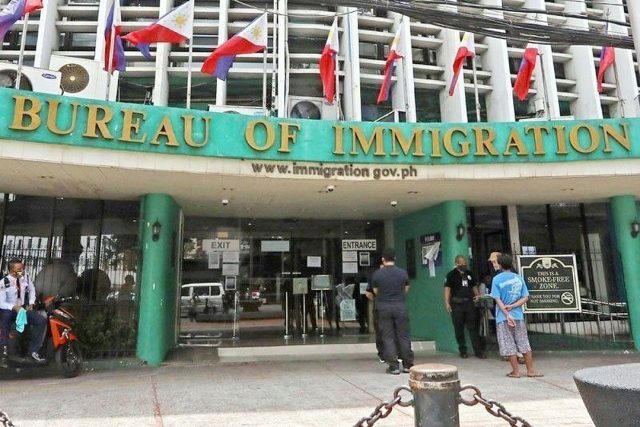
THE BUREAU of Immigration (BI) issued a warning to the public on Tuesday against human traffickers recruiting workers for China, following the recent repatriation of five Filipinos who fell prey to overseas employment scams.

The bureau said the five overseas Filipino workers (OFWs) were enticed by their recruiters to work in China even without securing required overseas employment visas.

The experience of the repatriates should serve as a warning to other Filipinos not to be enticed by promises of high-paying jobs from strangers and foreigners, said Immigration Commissioner Norman G. Tansingco.

“The best way to avoid these sad experiences is for you to go through the legal process that migrant workers should follow in applying for overseas jobs,” he said.

According to the BI, the victims were promised such jobs as hotel housekeepers, caretakers, private tutors, and household service workers.

The BI said that one of the female victims was made to pose as a housemaid by her recruiter to facilitate her departure to China.

“She was overworked and not properly compensated upon arrival in China. She ended up being imprisoned for 70 days after being arrested by Chinese authorities,” the BI said.

The repatriates arrived at the Ninoy Aquino International Airport, three of them arrived on Oct. 20 while the other two arrived on the following day. — Jomel R. Paguian

CHR looks into prison reform

PHILIPPINE STAR/ MIGUEL DE GUZMAN

THE PHILIPPINE Commission on Human Rights (CHR) and the Human Rights Commission of Malaysia engaged in dialogue on prison reform and how both countries prevent the torture of inmates in jails, the CHR said on Tuesday.

In a statement, the Philippine CHR said its Malaysian counterpart visited the Philippines to exchange expertise on mechanisms and targets to uphold the human rights of inmates. The rights commission’s visit took place on Oct. 16-20.

The Malaysian human rights body also visited the Philippine jails to learn about the government’s efforts to improve conditions for Filipino inmates.

The CHR said it had pitched to the Malaysian rights commissioners the government’s plan to establish a National Preventive Mechanism, which will ensure inmates are safe from torture, cruelty and other degrading conditions while serving their respective sentences.

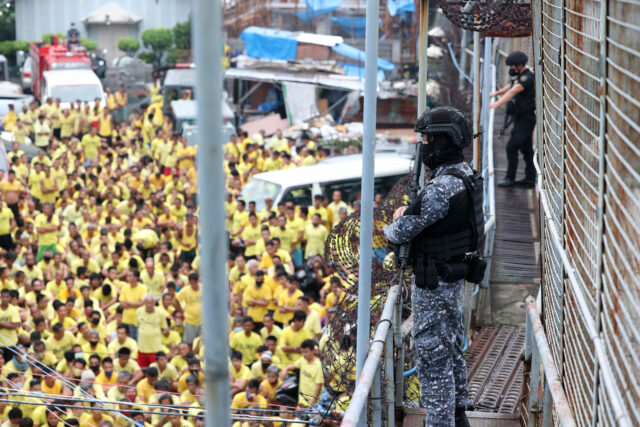
Many of the country’s jails fail to meet the United Nations’ minimum standards given inadequate food, poor nutrition and unsanitary conditions, according to Human Rights Watch.

Justice Secretary Jesus Crispin C. Remulla earlier said the government was working on accelerating legal proceedings for inmates still in jail due to pending criminal cases.

The Philippine justice department earlier raised the requirement for filing criminal cases, requiring government prosecutors to ensure cases lead to a “reasonable certainty of conviction” to ease jail congestion. It also halved the bail for poor Filipinos.

300 MNLF bets win in BARMM

PHILIPPINE STAR/EDD GUMBAN

COTABATO CITY — About 300 candidates identified with the Moro National Liberation Front (MNLF) got elected in Monday’s village and youth council elections, raising confidence in the positioning of peace advocates working for the furtherance of the southern peace process.

In this city alone, a senior member of the MNLF, Datun S. Diocolono, was elected uncontested as chairman of Barangay Tamontaka 5 while four others, who are closely related to leaders of the front, conveniently got to the helm of the barangay governments in Poblacion 8, Rosary Heights 7, Rosary Heights 11 and Mother Tamontaka via landslide victories.

It is expected that in the next 36 hours, no fewer than 200 more winning candidates who are either children or relatives of MNLF leaders on the island provinces of Basilan, Sulu and Tawi-Tawi would be proclaimed, Bangsamoro Autonomous Region in Muslim Mindanao (BARMM) officials said.

Mohammad Ali Jawawi A. Sema, son of MNLF chairman Muslimin G. Sema, who is labor and employment secretary of the BARMM, had been proclaimed winner in the two-cornered race for barangay chairman of Mother Tamontaka, this city.

“The election of candidates who are either from the MNLF, or who are close to us and understand the peace and development goals of our group is a blessing. It augurs well with our efforts to expand our peace initiatives down into the barangays,” a member of the MNLF’s central committee, Hatimil E. Hassan, deputy speaker in the 80-seat Bangsamoro regional parliament, said.

Mr. Hassan said a number of candidates in Basilan who are actively supporting the peace efforts of the MNLF and the national government were also elected.

In a statement Tuesday, Gerry A. Salapuddin, the administrator of the Southern Philippines Development Authority, called on elected barangay and SK officials who are either members or supporters of the MNLF to cooperate in protecting the dividends of Malacañang’s peace overtures with the Moro communities that aims to address poverty and underdevelopment in southern provinces caused by decades of secessionist strife.

“Cooperation among us towards that goal will hasten the attainment of lasting peace in our homeland,” Mr. Salapuddin said.

MNLF officials in Sulu who are also members of the regional parliament told reporters here Tuesday that more than a hundred candidates in the province from clans whose leaders are members of the front had won the positions they aspired for.

The BARMM covers the provinces of Maguindanao del Norte, Maguindanao del Sur, Basilan, Sulu and Tawi-Tawi and the cities of Lamitan, Marawi and Cotabato, where there is a strong MNLF presence, besides the Moro Islamic Liberation Front, whose chairman, Ahod Balawag Ebrahim, is BARMM’s chief minister. — John Felix M. Unson

Over 12K centenarians get cash

FREEPIK

BAGUIO CITY — From 2017 to September of this year, a total of 12,186 Filipino centenarians have each been awarded P100,000 cash and other benefits, the Department of Social Welfare and Development (DSWD) said on Tuesday as it eyes collaborations with local government units (LGUs) to enhance the country’s Centenarian Program.

“This achievement serves as a testament to the nation’s unwavering commitment to honoring its elderly citizens,” DSWD Assistant Secretary Romel Lopez in a statement, noting the department’s implementation of the program as mandated by Republic Act No. 10868 (Centenarian Act).

Filipino centenarians who live in the country or abroad are given a cash incentive of P100,000, as well as a letter of felicitation signed by the President of the Philippines, congratulating them on their reaching the age of 100 years old.

At present, the DSWD is eyeing collaborations with local government units and the National Commission on Senior Citizens to enhance planning and budgeting for the project, said Mr. Lopez.

In addition to the cash gift, the DSWD provides a posthumous plaque of recognition for a deceased centenarian, which may be received by the centenarian’s nearest surviving relative.

“The Centenarian Program represents our respect for our elderly and acknowledges the invaluable contributions they have made to society over the decades,” said Mr. Lopez.

He further pointed out that in order to receive benefits under the law, relatives of centenarians must submit primary documents, such as birth certificates and Philippine passports to their local City or Municipal Social Welfare Office and/or the Office for Senior Citizens Affairs (OSCA).

If the two documents are not available, any of the primary identification cards issued by OSCA, Government Service Insurance System (GSIS), and Social Security System (SSS); a driver’s license; a Professional Regulations Commission (PRC) license; or a Commission on Elections (Comelec) Voter’s ID will suffice.

“In cases that the said identification documents are not available, the centenarian or their family members can submit any secondary documents such as marriage certificate, birth certificate of a child borne by the centenarian, among others,” he said. — Artemio A. Dumlao