Home Blog Page 3942

As India’s election nears, Hindu-Muslim tensions play out online
REUTERS

Hours after Hamas attacked southern Israel on Oct. 7, a WhatsApp message purporting to list the names of 17 Indian Hindus killed or wounded in the assault went viral in India, drawing horrified reactions. But the list was fake – none were hurt.

In the following weeks, hundreds of messages referencing the conflict between Israel and the Palestinian Islamist group spread rapidly on Indian social media accounts, said fact-checkers and researchers documenting online disinformation about India’s Muslim minority.

Many of those messages warned Hindus that their safety could be at risk from Muslims if the Hindu nationalist Bharatiya Janata Party (BJP) loses power in next year’s election.

“Every local and global incident is used to convey the message that Muslims are evil, that Hindus need to be afraid,” said Bharat Nayak, an independent fact-checker in the east Indian state of Jharkhand.

“When there isn’t a current incident, past incidents are recycled with doctored images and videos, to say: if Hindus are to stay safe, vote for BJP,” Nayak, who tracks disinformation and hate speech on viral WhatsApp messages, told the Thomson Reuters Foundation.

Islamophobic and antisemitic hate speech have surged worldwide since Oct. 7, with millions of abusive posts on Facebook, Instagram, TikTok and X – formerly Twitter, according to the Institute for Strategic Dialogue think-tank, and the Anti-Defamation League, a nonprofit.

In India, Muslims make up about 14% of the nation’s 1.4 billion Hindu-majority population. With a general election due by May 2024, and several state elections this month, disinformation and hate speech targeting them are on the rise, fact-checkers and tech experts said.

“Conflicts, elections will always spawn these kinds of narratives (and) the nature of this conflict is an opportunity to grind a Hindu versus Muslim axe,” said Marc Owen Jones, an associate professor at Hamad bin Khalifa University in Qatar.

“It is being weaponized by state actors to rally the bases with divisive rhetoric and sensationalist misinformation,” said Jones, who studies misinformation.

Asked to comment, Tom Vadakkan, a national spokesperson for the BJP, said: “The BJP and the government do not encourage any hate speech against any community or person.”

Speaking during a visit to the White House in June, Prime Minister Narendra Modi said “there is no space for any discrimination”.

RELIGIOUS STRIFE
India has a long history of communal clashes. During the BJP’s rule over the past decade, party members and allies have been accused by human rights groups of inflammatory speech against Muslims that incites violence on the ground.

Hashtags including #coronajihad and #lovejihad have gone viral in recent years, and been used to falsely accuse Muslims of deliberately spreading the coronavirus and forcefully converting and marrying Hindu women.

Deadly clashes have broken out over false rumors on WhatsApp and Facebook of Muslim gangs kidnapping children.

The BJP, which is widely forecast to win a third term in 2024, has launched a national campaign to woo Muslim voters. A senior Muslim party leader told Reuters this month that Hindu-Muslim violence only makes headlines now because political rivals use it to target the party.

Elections often lead to an increase in anti-Muslim hate speech, researchers have found, with such incidents averaging more than one a day in the first half of 2023, mostly in states with upcoming elections, according to Hindutva Watch, a Washington-based group monitoring attacks on minorities.

Fact-checking organization BOOM Live showed there was a surge in misinformation before polls in southern Karnataka state in May, which the opposition Congress party went on to win.

“Disinformation targeting Muslims has become more vitriolic and aggressive, with most of the false claims reinforcing negative stereotypes,” said Karen Rebelo, deputy editor at Boom.

Meta Platforms, owner of Facebook and Instagram, has said it has added more fact-checkers in India, “making it the country with the most third-party fact-checking partners globally across Meta.”

“We have a comprehensive strategy in place for elections, which includes detecting and removing hate speech and content that incites violence, reducing the spread of misinformation … (and) partnering with election authorities to action content that violates local law,” a Meta spokesperson said.

Video sharing platform YouTube removes “violative content as quickly as possible when flagged to our attention,” the company said, adding that its team monitors trends in “risky forms of content” and addresses them before they become larger issues.

The X social media platform did not respond to a request for comment.

TAKEDOWN REQUESTS
With its young population, India is among the biggest markets for social media platforms, with more than 300 million users on Facebook, and about 500 million each on YouTube and on WhatsApp

Social media firms have frequently clashed with Indian authorities over content moderation.

Modi’s government banned the short-form video app TikTok in 2020 over security concerns, and has tightened social media regulation, requiring the swift removal of posts deemed to be harmful, and demanding traceability of information.

Meta received nearly 64,000 content removal requests from the Indian government in the second half of 2022, its data shows, more than a quarter of all requests.

Google’s YouTube removed more than 2 million videos in India in April-June of this year, more than in any other country.

But government officials mainly target posts by dissidents and human rights campaigners including Muslim activists, not harmful content spread by BJP leaders or their allies, said Jayshree Bajoria, associate director for Asia at Human Rights Watch, a global non-profit.

“BJP leaders or BJP supporters who make hateful comments against Muslims or other minorities, inciting violence, are not held accountable,” Bajoria said.

The information technology ministry and the home affairs ministry did not respond to requests for comment.

After Facebook whistleblower Frances Haugen leaked internal documents in 2019 showing the platform’s struggles monitoring hate speech in countries including India, Meta agreed to conduct an independent human rights impact assessment.

Meta has not released the full report, despite calls from human rights groups to do so.

Meta has “clear policies against hate speech and removes hateful content that targets anyone based on their religion, nationality, ethnicity or caste,” the spokesperson said.

‘AMPLIFYING BIAS’
It is not just in India: social media companies failed to act on 89% of posts containing anti-Muslim hatred and Islamophobic content reported to them, the Center for Countering Digital Hatred (CCDH), a British non-profit, said in a report last year.

Platforms similarly failed to act on anti-Semitism, anti-Black racism, and misogynist abuse, CCDH found.

“The platforms seem more intent on shutting down Muslim users than shutting down hate speech,” said S.Q. Masood, a minority rights activist in the Indian city of Hyderabad, who has filed two complaints about hate speech on social media.

When nearly 300 people were killed in a train accident in eastern Odisha state in June, Boom and Alt News documented at least a dozen false allegations about the incident – from the station master being Muslim and in hiding, to there being a mosque near the track.

“These messages go viral because there is support for these narratives in society,” said Kiran Garimella, an assistant professor at the Rutgers School of Communication and Information in New Jersey, who studies misinformation on WhatsApp.

“These platforms just make it easy to amplify the biases.” — Thomson Reuters Foundation

China turns to households in fight to slash carbon emissions

REUTERS

SHENZHEN — At a gleaming new metro station on the edge of Shenzhen, the local government is promoting “carbon coins” to commuters to earn and trade for shopping vouchers and travel cards in a push to get households to join China’s fight against climate change.

The southeastern city’s “Carbon Road for Everyone” scheme, which rewards people for logging their use of public transport, is one of dozens around China encouraging citizens to ditch cars, plant trees and cut energy use.

The so-called “carbon inclusion” programs are part of the ruling Communist Party’s campaign to mobilize the whole of society, not just industry, to transform the world’s biggest greenhouse gas emitter into a carbon-neutral country by 2060.

China’s efforts to tackle climate change will come under intense scrutiny as negotiators from around the world gather for the COP28 meetings in Dubai next week.

While the country’s emissions reduction task is massive, potential cuts by individuals could be huge. A 2021 study by the China Academy of Sciences said households contribute more than half of China’s total emissions of over 10 billion metric tons per year.

“Carbon inclusion is a huge platform and an effective way to mobilize the public to practice low-carbon, zero-carbon and negative-carbon activities,” said Xie Zhenhua, China’s top climate envoy, during the launch of a government carbon inclusion committee in August.

Eventually, China wants the schemes to be integrated into national emissions trading and generate credits that can offset emissions by industrial polluters, government plans show.

PERSONAL CARBON TRADING

China’s carbon inclusion ambitions have been in gestation since 2015, when the southeastern province of Guangdong published rules on how to convert low-carbon activity into credits.

Since then, dozens of schemes have emerged across the country, accessing personal data like step counts, the use of transport, and the purchase of efficient or environmentally friendly products to generate carbon coins.

Banks have also been testing “personal carbon account” systems. The People’s Bank of China set up a pilot “carbon to gold loan” scheme in the city of Quzhou, allowing customers to earn carbon points that could improve credit ratings.

Other countries have toyed with the idea of personal carbon trading, with pilot schemes set up in Finland and Australia’s Norfolk Island. The British environment ministry also commissioned a study into the possibility in 2006 but concluded it was not yet politically or economically feasible.

Singapore is currently running a scheme that rewards efficient electricity users with “leaf” tokens that can be exchanged for shopping vouchers.

“Various actors have tried voluntary schemes that do things like visualizations or the sharing of energy or emissions data at a smaller scale,” said Benjamin Sovacool, a professor of Earth and Environment at Boston University.

“But they lack the scale and sheer scope of what the Chinese are conceiving, and they were not integrated into carbon coins, which is a clever idea.”

QUANTIFICATION, TRADING HURDLES
A major challenge is how to commodify carbon dioxide emissions reductions from a wide range of human behavior – including the way people go to work, heat their household or put out the trash.

“It’s all about verification,” said Yifei Li, professor of Environmental Studies at New York University’s Shanghai campus. “When it comes to the level of variability, how people conduct their lives is so wildly different. That is a big problem.”

Zhang Xin, vice-chairman of the environment ministry’s carbon inclusion committee, said better standards were needed to quantify low-carbon behavior, warning in comments published this year that the proliferation of schemes “has resulted in confusion and inconsistency.”

Scholars also say it is unclear whether the schemes generate new cuts in carbon dioxide emissions or merely record those that happen anyway.

Shanghai said in regulations that came into effect this month its schemes would eventually be “fully connected” to the local carbon market, with enterprises allowed to apply to use household carbon cuts to meet targets.

Guangdong also allows enterprises to meet 10% of carbon reduction obligations through carbon inclusion credits.

China is still a long way from fulfilling such emissions trading ambitions. Most users remain passive participants: one Beijing-based scheme claims more than 30 million users, but only 1.4% are active, according to research published this year.

And there are worries the carbon inclusion schemes could let industrial polluters off the hook by shifting the burden of emission cuts to households.

“The direction they’re going in at the moment is indeed to transfer climate responsibilities from these big firms and more towards individuals,” said Li.

“That is extremely dangerous,” he added, as it can “alienate individuals from climate action.”

VOLUNTARY VS COMPULSORY
While tens of millions of people have already signed up to schemes around the country, some experts fear it will give the state more powers to interfere with people’s lives and punish those who fail to make the right low-carbon choices.

“While the scheme currently is voluntary, the lack of transparency, the unaccountable nature of the Chinese government and the government’s track record of using big data for social control are all reasons for concern,” said Yaqiu Wang, research director for China at the Freedom House think tank.

Critics point to China’s handling of environmental problems with controversial measures such as shutting thousands of businesses to cut pollution, relocating homes to make way for national parks and banning poor households from using coal for heating.

China climate official Su Wei told local media the green transformation of China would “inevitably involve profound changes in people’s daily habits and consumption patterns”, but he said carbon inclusion schemes would remain voluntary.

The carbon coin promotion at the Shenzhen station drew little interest among commuters on a busy working day in October. However, the local government was upbeat about the project, saying last month it had registered 14.6 million users since its launch in August 2022, cutting emissions by 720,000 metric tons. — Reuters

Philippine Startup Week returns, puts spotlight on homegrown heroes of thriving startup community

In celebration of the growing Filipino startup ecosystem, homegrown startup heroes and enablers gathered in the annual staging of the Philippine Startup Week (PHSW23) last Nov. 20-24. The annual event is hosted by the Department of Science and Technology (DoST), Department of Trade and Industry (DTI), and the Department of Information and Communications Technology (DICT), and is supported by QBO Innovation Hub, a public-private sector partnership and startup enabler, and other startup ecosystem stakeholders such as Bossjob and Uniquecorn Strategies.

With the theme, “Investing in Filipino Homegrown Heroes as Global Game Changers,” the week-long event showcased a series of programs held in person at multiple venues nationwide, bringing together the local startup community to discuss key issues among startup founders, investors, corporates, academia, and government agencies. Some of the discussions included the investment landscape for Filipino startups, the role of women-led businesses in the current funding climate, the use of AI and other emerging technologies, as well as regional and international expansion opportunities for Filipino entrepreneurs.

“This year’s Philippine Startup Week aims to highlight and strategically position the Philippines as an emerging investment hub for startups in Southeast Asia while facilitating actionable insights and nurturing collaborative efforts and learning among the local startup community,” Katrina Rausa Chan, executive director of QBO Innovation Hub, shared in a statement. “While the tech startup community is facing headwinds in the global ‘funding winter,’ the conference acts as a nexus for innovation and growth, providing a platform for thought leaders, entrepreneurs, and investors to collectively navigate and shape the future trajectory of the local startup ecosystem.”

Moreover, PHSW23 featured the first-ever “Sinigang Valley Conference” organized by QBO, alongside AHG Lab, Foxmont Capital Partners, and Kaya Founders, founding members of the country’s premier private-sector-led startup organization Sinigang Valley Association (SVA).

Meanwhile, the most promising Filipino startups of the year were unveiled during the “Top 100 Startups SHOWQASE by QBO” and the inaugural “KMC Startup Awards.”

PHSW23 also featured government-led summits, including the “Slingshot Conference x Venture Pilipinas” by DTI in Metro Manila on Nov. 20, the “Technology Business Incubator (TBI) Summit” by DoST in Iloilo on Nov. 21, and “Geeks On A Beach” by the DICT and Geeks PH in Bohol from Nov. 22-24.

PHSW23 also covered over 50 community events spearheaded by various partners from all over the Philippines, including Gobi Partners, Amazon Web Services, 917Ventures, Manila Angel Investors Network, Google Cloud, Maya Philippines, Investree Philippines, FEU Tech Innovation Center, MindanowJuana, Greyhound Innovations, Bukidnon ICT & Innovation Council, Cebu City Cybersecurity Center, FHMoms, The Final Pitch, and Brainsparks. These events showcase the collaborative spirit and diversity of the Filipino startup ecosystem, enabling attendees to learn, interact, network and collaborate through five tracks: Discover, Develop, Collaborate, Invest, and Showcase.

PHSW23 presented an illustrious lineup of leaders from the startup community, both from the Philippines and internationally. Esteemed founders leading the charge include Ron Baetiong of Podcast Network Asia, Dean Bernales of Uniquecorn Strategies, Kim Yao of CloudEats, Dennis Ng of Mober, Kimberly Chen of Bossjob, Nichel Gaba of PDAX, Mel Nava of 1Export, King Alandy Dy of Expedock, and Josef Werker of Humble Sustainability.

Joining them are notable investors and ecosystem enablers, including Franco Varona of Foxmont Capital, Melvin Chan of PLDT Enterprise, Uriah Velunta of Multisys, Puiyan Leung of Vertex Ventures, Dylan Keota of A2D Ventures, Paulo Campos of Kaya Founders, Lisa Gokongwei-Cheng of Summit Media, Niña Terol of Imaginable Impact, Tina Nepomuceno-Di Cicco of Manila Angel Investors Network, Jojo Malolos of PayMongo, Rene Cuartero of AHG Lab, Mike Maté of Kickstart Ventures, Natasha Bautista of 917Ventures, Carlo Delantar of Gobi-Core Philippines, as well as Rene “Butch” Meily and Ms. Chan of QBO Innovation Hub and IdeaSpace Investments.

The five-day conference was expected to draw over 3,000 in-person attendees across the country, over 150 speakers, and over 100 startups.

QC government names 2nd batch of StartUp QC finalists vying for P1-million capital grant

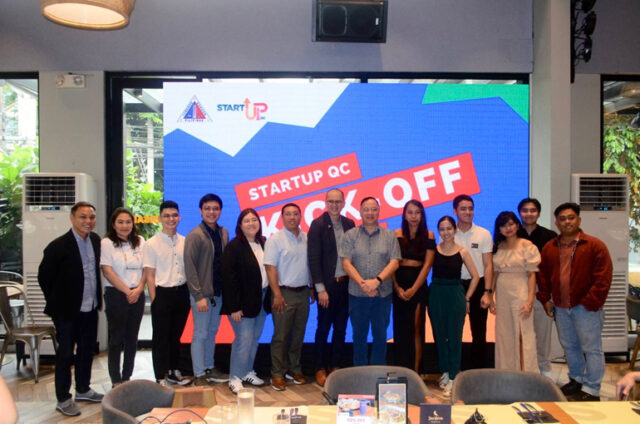
The Quezon City government has formally introduced the six finalists from its second cohort under its StartUp QC program.

After going through a rigorous selection and screening process, Eco-Uling by Project Lily, Forent, Hibla PH, Kippap Learning, Likhaan, and Zaxxun’s Boxmatic were selected from a significant number of applicants.

The finalists represent a diverse set of industries from e-commerce, sustainable products to digital platforms.

Eco-Uling by Project Lily produces eco-friendly charcoal briquettes from coconut waste, while Forent is a peer-to-peer car rental platform.

Hibla PH bridges the gap between traditional craftsmanship and modern technology through immersive and interactive product visualization, personalization, and customization features of locally-made woven garments.

Kippap Learning, meanwhile, is a unique e-learning platform that combines top-notch lecture videos, personalized mentorship, and a gamified learning management system.

Likhaan is an online platform and social commerce app connecting a diverse range of Filipino creators.

Lastly, Zaxxun’s Boxmatic automated lockers provide micro and small businesses with more cost-effective storage and logistic solutions.

“Our startup initiative aims to create new jobs and opportunities, stimulate the entrepreneurial spirit, promote innovation, and strengthen the startup ecosystem in Quezon City,” Mayor Joy Belmonte said in a statement.

“This is the kind of business environment we want to foster in the city. With the special focus of these startup finalists towards sustainability and social impact, they also support our commitment to deliver on the UN’s Sustainable Development Goals,” she added.

The six finalists are proceeding to the coaching and mentoring phase of the program, which covers a wide range of business and technical training through linkages with the startup community.

This strategic collaboration has provided startups in Quezon City with a comprehensive ecosystem of support composed of members of the government, academe and private sector, thus equipping them with the knowledge and skills necessary to hone their business models and positioning them towards long-term success.

Ms. Belmonte stressed the significance of a city being both innovative and supportive of businesses, stating that local governments should create an inclusive environment that promotes growth and progress for all types of businesses.

“With funding, mentorship, learning sessions, incentives, and business assistance from the local government, StartUp QC seeks to establish a city with a robust entrepreneurial and innovative ecosystem involving the academe and private sector located in the metropolis,” she added.

StartUp QC Program partners include the Department of Information and Communications Technology, the Department of Trade and Industry, Quezon City University, Ateneo De Manila University, Miriam College, Thames International, Technological Institute of the Philippines, and the University of the Philippines Diliman, along with StartUp Village and Launchgarage.

Climate-oriented Farmvocacy wins this year’s Shell LiveWIRE acceleration program

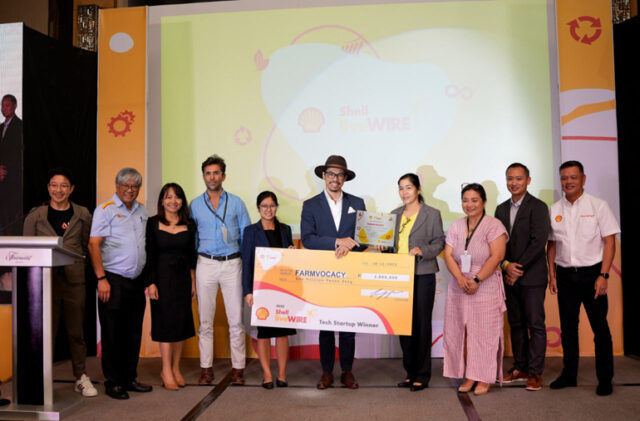
Tech startup Farmvocacy was awarded the grand prize of P1 million at the Shell LiveWIRE 2023 Final Pitch Day last October. Founded in 2019, Farmvocacy develops innovative solutions for rice farmers.

Shell LiveWIRE, Shell’s flagship development program, once again recognized tech startups and community enterprises during the Final Pitch Day last Oct. 12 in Makati City, with tech startup Farmvocacy winning a funding grant worth P1 million.

Farmvocacy is a Mindoro Island-based social climate fintech startup running a circular inclusive business model to support climate-smart rice farming, environment-friendly, and high-yielding farming system.

Vincent Roy Mendoza, the chief executive officer of Farmvocacy, shares how their advocacy of ensuring a sustainable future has been empowered by Shell LiveWIRE.

“Shell LiveWIRE became a validation that what you’re thinking and what you’re trying to innovate can actually contribute to creating better lives for us and specifically more to the future generations,” Mr. Mendoza said.

Tech startups are at the forefront of innovation, developing new products and services that can help to improve the lives of Filipinos. By providing them with support, this can help to drive innovation and boost the competitiveness of the Philippine economy.

The other two finalists include LITHOS Manufacturing OPC, a producer, trader of industrial and feed-grade minerals, such as calcium carbonate, zeolite, and bentonite; and Lycan Motorcycles, a Filipino motorcycle and technology startup that is developing two-wheeled electric motorcycles and smart products.

Banking on the goals of empowering communities, six community enterprises who became part of the Acceleration Program were also recognized during the Final Pitch Day.

The community enterprises selected this year for their work to strengthen local economies by promoting entrepreneurship, innovation and meaningful employment are: Samahang Mangingisda ng Dalupaon (SAMADA), a group of fisherfolk who ventured into an agri-enterprise, related to fish processing; Tagbilaran Young Workers Association, a local organization that produces bags and other souvenir items from upcycled plastic waste; PHILIA Variety Store, a direct market conduit for smallholder community farmers of coffee, cacao, coconut, and other agricultural products; DLR Foods Supply Trading, a company that provides ready-to-eat meals in halal-certified retort pouches; Odicon Small Coconut Farmers’ Organization (OSCFO), an agricultural enterprise that specializes in the sustainable processing of coconut byproducts; and Agri-VINO Enterprises, a chicken poultry business that provides egg incubation service to the community, reducing travel costs for fellow growers.

All of the community enterprises who became part of the Acceleration Program received a P100,000 funding grant.

Present during the Final Pitch Day, Department of Trade and Industry Undersecretary for the Competitiveness and Innovation Group Rafelita Aldaba, Ph.D. applauded the works of the startups and community enterprises.

“Today’s presentations showcase a dedication to sustainability, covering a wide range of innovations from industries like transportation and innovations for climate and smart agriculture — leading us on into our future without limits,” she said. “Let’s all rally behind innovation that really inspires.”

Also, one of the judges during the Final Pitch Day, Pilipinas Shell Foundation, Inc. Executive Director Sebastian Quiniones, Jr. posed a challenge to the innovators of this year’s Shell LiveWIRE.

“Try to find out ways where you can collaborate with all of these enterprises that we have been putting forward so that we can all succeed as a nation,” Mr. Quiniones said.

Among those who joined Mr. Quiniones in judging the Final Pitch Day were Geraldine Samson, real estate facilities manager of Shell Pilipinas Corp. (SPC); Rui Bom, a resident mentor of 500 Startups; Emmy Lou Versoza-Delfin, director for ICT Development Bureau of the Department of Information and Communications Technology; and Liezl Sueño, senior technology transfer officer of Department of Science and Technology.

Shell LiveWIRE supports the continuous growth in the local business landscape by strengthening the country’s economy, by promoting entrepreneurship, innovation, and meaningful employment.

“At its very core, Shell LiveWIRE remains committed in its vision of promoting local growth by empowering individuals and communities. This is why it remains our flagship development program,” said Serge Bernal, vice-president for corporate relations at Shell Pilipinas Corp.

Since it launched in 2020, Shell LiveWIRE has helped 42 innovators and business owners through the Acceleration Program. 12 of these enterprises have entered the SPC’s supply chain. By equipping tech startups and community enterprises, this has led to creating more than 500 local jobs for Filipinos.

TIP study on reusing waste rubber wins at Advanced Materials and Sustainable Energy Technologies conference in Malaysia

An experimental research that seeks to address the problem of waste rubber disposal earned recognition for a team of junior Technological Institute of the Philippines (TIP) Quezon City civil engineering students following a recent gathering of experts in Selangor, Malaysia.

The study explored the “effects of waste rubber as an additive substitute for coarse aggregates” in concrete mix. It was among the “Best Papers” submitted in the 2023 Advanced Materials and Sustainable Energy Technologies (AMSET) international conference hosted by Sunway University.

Grant Onell Villojan presented their findings in-person on behalf of his classmates and co-authors, namely John Aaron Abejo, Rainiel Engelhart Antipuesto, June Hernan Basiya, Nathaniel Delos Santos, Kim Lloyd Lura, Krishel Usi, and research adviser Engr. Juland Padilla.

Their investigation revealed that using rubber as a coarse aggregate in concrete reduces its “compressive strength,” or the capacity of the building material to withstand loads. “Our conclusion is that rubber does not mix well with cement,” Mr. Villojan said.

“This is because rubber has distinct properties and does not chemically react with cementitious components during the hydration process. As a result, the rubber-concrete mixture has low adhesion and bonding,” the team noted in their abstract.

Mr. Villojan said they appreciate the citation they received from AMSET and took note of the advice of the panelists who evaluated their research, one of them is a concrete specialist. The team is now hoping to improve their study within the same framework.

“We are thinking of the ideal ratio for the rubber mixture, so the pavement will not break down easily once the materials are applied to increase its coefficient of friction,” Mr. Villojan said. This will enable their experiment to pass a skid resistance evaluation once it is tested for human activity.

Sunway University received a total of 146 paper submissions for the 2023 AMSET held last Oct. 30-31, 2023 in its Kuala Lumpur campus. Of this figure, 84 was short-listed for presentations, including 14 from TIP Manila and Quezon City.

According to Dr. Therese May G. Alejandrino, director of the Technopreneurship and Collaborative Applied Research (TechnoCoRe) thrust, TIP is engaging in these international conferences to ramp up its overall research agenda in the area of sustainable development.

The School of Engineering and Research Center for Nanomaterials and Energy Technology (RCNMET) of Sunway University spearheaded the two-day conference with TIP as one of its co-organizers.

The event was part of the ongoing partnership between the two higher education institutions following the 2021 signing of a memorandum of understanding for the International Research Networks grant scheme.

‘Higher-for-longer’ era seen to dampen growth   

Motorists pass through the Tiendesitas Christmas Street Light Musical Tunnel in Pasig City, Nov. 25, 2023. — PHILIPPINE STAR/MIGUEL DE GUZMAN

By Keisha B. Ta-asan, Reporter

THE BANGKO SENTRAL ng Pilipinas’ (BSP) higher-for-longer monetary policy stance may be needed to anchor inflation expectations, but analysts warned high borrowing costs will continue to weigh on growth momentum.

National Economic and Development Authority (NEDA) Secretary Arsenio M. Balisacan said the BSP’s view is that without high interest rates inflation will continue to be a problem.

“Inflation, if it persists, will also kill the economy. Inflation spills to other sectors if it persists, even though it initially started from the supply side,” he told reporters over the weekend in mixed English and Filipino.

“This is also the concern that I see, so for us at the Executive branch, we need to be quick in addressing the supply-side issues,” he said.

A Bloomberg report quoted BSP Governor Eli M. Remolona, Jr. as saying the central bank will remain “hawkish for a while.” This means the Monetary Board is “not about to ease… (but) might even hike,” he added.

“If the inflation rate doesn’t go down as projected, we have no choice,” he said on Thursday. “But what we are watching more than the inflation rate itself is the expectations; if they get de-anchored, we’ll have to do something.” 

At its Nov. 16 policy meeting, the BSP kept its target reverse repurchase rate at a 16-year high of 6.5%. The BSP raised borrowing costs by a total of 450 basis points (bps) from May 2022 to October 2023 to tame inflation.

ING Bank N.V. Manila Senior Economist Nicholas Antonio T. Mapa in an e-mail said the higher-for-longer stance is an example of forward guidance by the BSP, reflecting its commitment to bring down inflation.

“However, there are intended consequences to policy tightening and rate hikes if past and present will continue to weigh on growth momentum, ensuring growth will slow to limit demand-side pressure,” he said.

Mr. Mapa said higher-for-longer policy rates can tame inflation amid easing demand-side pressures, but it could also lead to slower gross domestic product (GDP) growth.

“If cost-side pressures persist then we could still see inflation,” he said. “Monetary policy is not a panacea for all types of inflation after all,” he added. 

Headline inflation slowed to 4.9% in October from 6.1% in September, marking its slowest pace in three months. Still, inflation remained above the 2-4% target for the 19th straight month.

During the 10-month period, inflation averaged 6.4%. This is still above the central bank’s 6% full-year baseline forecast.

Security Bank Corp. Chief Economist Robert Dan J. Roces said keeping a hawkish monetary policy for two quarters straight can be seen as a way to maintain price stability and fight against inflationary pressures. 

“On the other hand, cutting interest rates can stimulate economic growth by reducing the cost of borrowing for businesses and consumers. This approach may be considered when the economy needs a boost in activity or is facing significant downward pressures,” he said.

Philippine GDP expanded by 5.9% in the July-to-September period, faster than the 4.3% growth in the second quarter but slower than the 7.7% expansion in the same quarter in 2022.

For the first nine months of the year, economic growth averaged 5.5%, still below the government’s 6-7% full-year target.

“Thus, the BSP’s decision to either tighten or loosen monetary policy will depend on a thorough assessment of economic indicators and future projections,” Mr. Roces said. “Right now, the future projection is for inflation to remain elevated given upside risks. Therefore, a good chance of elevated for long.”

Earlier this month, the BSP raised its baseline inflation forecast to 6% in 2023 (from 5.8% in September) and to 3.7% in 2024 (from 3.5%) but cut its 2025 inflation estimate to 3.2% (from 3.4%).

The BSP also gave a risk-adjusted inflation forecast at 6.1% for 2023, 4.4% for 2024 and 3.4% for 2025.

Mr. Roces said the central bank must balance managing inflation and supporting economic growth.

“The central bank will likely make decisions based on careful analysis. Growth is not expected to tank but it will slow given elevated rates and inflation,” he said.

China Banking Corp. Chief Economist Domini S. Velasquez said risks are still on the upside amid tighter food supply due to El Niño, higher electricity rates, and likely wage increases in the coming months.

“We expected BSP to remain hawkish all throughout the first half of next year as there are still some months next year that inflation is expected to overshoot the 2-4% target,” she said.

“Although economic growth is moderating, we do not think that BSP would cut policy rates any time soon given inflationary pressures still,” she added. 

The BSP will have its last policy review this year on Dec. 14.

SEC hike in fees, charges ‘still in the pipeline’

SEC.GOV.PH

By Revin Mikhael D. Ochave, Reporter

THE SECURITIES and Exchange Commission (SEC) said it is still planning to push through with the hike in fees and charges despite a recent meeting with business groups that opposed the proposal.

SEC Commissioner McJill Bryant T. Fernandez said the corporate regulator met with representatives of business groups about two or three weeks ago, adding it was a “very productive and positive” meeting.

“There will still be a revised schedule of fees and charges. I cannot say the timeline yet, but the issuance of the revised fees and charges is still in the pipeline,” he told reporters on the sidelines of a forum in Makati City last week.   

However, Mr. Fernandez said the SEC and business groups did not have any “specific discussion on specific revisions” during the meeting.

“We will be coming up with a joint statement on the matter. I’d like again to describe that the meeting was very positive in terms of moving forward on the topic of the proposed fees and charges,” he added.   

Asked about the timeline for the issuance of the revised schedule of fees and charges, Mr. Fernandez said that it would still be deliberated by the SEC’s commission en banc.   

“In terms of fees and charges, while we have secured the necessary approvals, it will still be deliberated by the en banc, including the timeline of the launch,” he said.   

The SEC released the proposed schedule of new fees and charges for stakeholders’ comments on Aug. 2.

In October, various business groups, led by the Philippine Chamber of Commerce and Industry (PCCI) and Philippine Exporters Confederation, Inc., sent a letter to the SEC objecting to the proposed hike in fees and charges which they described as “obscene” and “unconscionable.”

The business groups urged the regulator to review, “if not totally scrap” the proposal which it described as “anti-business.” Among others, they opposed the SEC’s proposal to charge corporate issuers one-fourth of 1% of total indebtedness when creating bonded indebtedness.

During the meeting with the business groups, Mr. Fernandez said the SEC is committed to coordinating with the Anti-Red Tape Authority (ARTA).

The business groups had recommended the SEC submit the proposed policy to the ARTA for a “regulatory impact assessment to check against harmful impacts to business and the economy.”

Philexport President Sergio R. Ortiz-Luis, Jr. said on Sunday the two sides decided to seek ARTA’s intervention on issue.

“ARTA will do an impact assessment and determine if the SEC’s proposal is justified and if the opposition from the business groups has basis. We agreed that ARTA should determine that,” he told BusinessWorld via phone interview.   

Mr. Ortiz-Luis, who is also a director of the PCCI, said the business groups are still urging the SEC to lower the proposed hike in fees and charges.

“Definitely, we’re pushing that it should be lowered. We will see if the proposal is justified or not. It has to pass ARTA’s impact assessment,” he said.   

Previously, the SEC said the current rates have not been tweaked since 2017.

“The schedule of fees and charges was last updated in 2017, based on a proposal from 2014. This means that the current rates are based on operational and administrative costs prevailing almost 10 years ago,” the SEC said.

To sustain the development of IT-related systems and the delivery of its services, the SEC said that “fees and charges must sufficiently cover the cost of maintaining and upgrading them continuously for the benefit of the transacting public.”

NEDA eyes solicited proposal for MRT-3, LRT-2 privatization

PHILIPPINE STAR/MIGUEL DE GUZMAN

THE NATIONAL Economic and Development Authority (NEDA) said it would prefer a solicited proposal for the privatization of the Metro Rail Transit Line 3 (MRT-3) with Light Rail Transit Line 2 (LRT-2)

“We’ll see the pros and cons of the proposal. But of course, we prefer solicited versus unsolicited, because with solicited you tend to get better chances of getting a good winner. You really don’t know what’s a good proposal until you see all the proposals on the table. You miss that when it is unsolicited,” NEDA Secretary Arsenio M. Balisacan told reporters on the sidelines of an event over the weekend.

“I think our direction is to get the operations and maintenance (O&M) done by the private sector. So, we are studying that,” he added.

Earlier this year, the Department of Transportation (DoTr) said it was studying the privatization of the O&M of the MRT-3 and LRT-2. It was considering putting the contract in a bundled option.

This comes ahead of the expiry of the Sobrepeña-led MRT-3 operator Metro Rail Transit Corp.’s (MRTC) build, lease and transfer agreement in 2025.

MRT-3 is a 16.9-kilometer railway system that traverses Epifanio de los Santos Avenue (EDSA). The MRT-3 trains can carry 23,000 passengers per hour per direction daily.

Meanwhile, LRT-2 links the City of Manila to eastern Metro Manila.

Mr. Balisacan clarified that the DoTr has yet to submit a proposal to the NEDA Board as its studies are still ongoing.

“First, they would have to present their proposal to NEDA so we can also study it. That’s the DoTr, and then we will present it to the NEDA Board or NEDA secretariat,” he added.

In September, the DoTr said it was consulting with the Public-Private Partnership (PPP) Center on how to handle multiple unsolicited proposals after receiving a second bid for the O&M of MRT-3 from Metro Pacific Investments Corp.

Last year, San Miguel Corp. was declared the original proponent for the contract.

The DoTr also earlier said it is working with the Asian Development Bank and International Finance Corp. on the terms of reference for the proposals. — Luisa Maria Jacinta C. Jocson

Philippines could reach upper middle-income status by 2025 or 2026

Passengers wait for jeepneys along Taft Avenue in Manila. — PHILIPPINE STAR/EDD GUMBAN

By Aaron Michael C. Sy, Reporter

THE PHILIPPINES is projected to be an upper middle-income economy by 2025 or 2026, a World Bank official said.

“If you look at where the Philippines is in terms of the level of income per capita, and you project the increase in the income per capita over the next few years, our projection is showing the Philippines will [reach] that threshold of an upper middle-income country by 2025 to 2026 depending on how much the economy will grow in the period,” World Bank Country Director for the Philippines Ndiamé Diop said in an interview on the sidelines of the BusinessWorld Forecast 2024 economic forum on Nov. 22.

“So it’s a matter of a few years. I think the Philippines will get there.”

The World Bank’s forecast is in line with the Marcos administration’s target for the Philippines to reach upper middle-income status by 2025. An upper middle-income country means having a gross national income (GNI) per capita income range of $4,466 to $13,845.

The World Bank currently classifies the Philippines as a lower middle-income country with a GNI per capita of $3,950.

The Philippines has been classified as a lower middle-income country since 1987, which is the earliest available data from the World Bank.

Once the Philippines becomes an upper middle-income economy, Mr. Diop said the challenge is to “look good in terms of all your development indicators.”

“(This includes improving) access to clean water and sanitation, lowering stunting rate and poverty declining quite significantly. Development is not just about income. It’s income plus all the other factors that are important to the well-being of the population,” he said.

Mr. Diop noted the implementation of the Philippine Development Plan (PDP) would also support the country’s efforts to reach upper middle-income status.

In October, the World Bank cut its gross domestic product (GDP) growth forecast for the Philippines to 5.6%, from the 6% projection given in June.

It also trimmed its growth forecast for the Philippines to 5.8% for 2024 from 5.9% previously. These are below the government’s 6-7% target for this year and 6.5-8% in 2024.

Over the medium term, the World Bank has said the Philippine outlook will be supported by “strong domestic demand, driven by a robust labor market, continued public investments, and the positive effects of recent investment policy reforms which could boost private investment.”

The multilateral lender will continue to expand its lending program for the Philippines.

To date, total approved commitments from International Bank for Reconstruction and Development, the World Bank’s lending arm, to the Philippines for the fiscal year 2024 amount to $1.1 billion.

Mr. Diop said the World Bank is looking to finance projects that will focus on “reducing the digital divide, improving the quality of education, reducing malnutrition and stunting, and helping some of the lagging areas of the Philippines.”

“Look at the World Bank program, much of it is really based on that. It’s about nutrition, agriculture, it is really critical to achieve those goals. It’s about social protection, connectivity, and supporting education,” he said.

In 2022, the World Bank was the Philippines’ third-largest source of official development assistance (ODA). It accounted for 21.18% of the ODA portfolio, equivalent to $6.86 billion, through 29 projects and programs.

UN aviation meeting agrees to interim goal of 5% lower emissions by 2030

STOCK PHOTO | Image from Pixabay

A MEETING of more than 100 countries on Friday agreed to an interim goal for emissions reductions from global aviation by 2030 by using less-polluting fuels, but China, Russia and some others aired concerns about the impact on their economies.

The goal, which came after five days of United Nations (UN)-led talks in Dubai, called for 5% lower carbon emissions through the use of cleaner energies like sustainable aviation fuel (SAF) by 2030, the International Civil Aviation Organization (ICAO) said. An earlier draft had a target of 5-8%.

The United States told the closing session of the meeting, which was held ahead of next week’s Conference of the Parties (COP28) climate summit, that the goal sent a “clear and positive signal” to the financial community, which must invest in new clean energy projects.

Aviation accounts for an estimated 2-3% of global carbon emissions. SAF is key toward reducing those emissions, but it is costly and amounts to less than 1% of total global jet fuel.

Mauricio Ramirez Koppel, ICAO representative from Colombia, which is looking to produce SAF from materials like palm oil, said the 5% target “will kick-start and speed up SAF projects” by providing investors a clear objective.

“Now it is up to the finance community and energy sector to support the necessary infrastructure and start delivering SAF in ever increasing quantities,” said Haldane Dodd, executive director of the Air Transport Action Group, which represents airframe and engine makers, among others.

Aviation is not directly covered by the Paris Agreement on combating climate change, but the air transport sector has previously pledged to align itself with global goals by setting an “aspirational” target of net zero emissions by 2050.

By bringing together broadly the same countries that are involved in COP28, analysts have said that this week’s aviation talks offered an early glimpse of the scope for further cooperation.

The deal followed wrangling over wording, particularly the transfer of technology that African and other emerging economies want to allow them to ramp up SAF production capacity.

RESERVATIONS
Some countries made clear their reservations.

China, which has agreed to aim for carbon neutrality by 2060 rather than 2050, said the goal would “enormously increase” airline operating costs and discriminate against developing countries by posing a threat to energy and food security.

Saudi Arabia and Iraq, two major Middle East oil producers and the Organization of the Petroleum Exporting Countries members, objected to both the target and the date. 

Environmentalists said agreement lacks teeth as it is not binding and would allow airlines to use lower-carbon fossil fuel.

“ICAO has no mandate to enforce this target so it will likely end up in smoke,” said Jo Dardenne, aviation director at the Brussels-based group Transport & Environment. “It is unclear how much and what type of fuels will need to be produced to reach this 5% target globally.”

The aviation industry estimates it will take between $1.45 trillion and $3.2 trillion for SAF capital development to achieve the sector’s net zero emissions goal.

Making access to financing more readily available to developing countries, another conference goal, is needed to bolster SAF output outside regions like the U.S. and Europe. — Reuters

AboitizPower allots P50-B capex next year largely for renewables

ABOITIZPOWER is set to build a second solar power venture on a site in Brgy. Laoag in Aguilar, Pangasinan located 14 kilometers from the Cayanga-Bugallon solar power project. — ABOITIZPOWER.COM

ABOITIZ Power Corp. (AboitizPower) is setting aside P50 billion as capital expenditure (capex) budget next year mostly for the expansion and construction of its renewable energy (RE) projects.

“Ballpark of about P50 billion for all our capex. A lot of that is for the growth,” AboitizPower Senior Vice-President for Commercial Operations Juan Alejandro A. Aboitiz told reporters last week.

“A big part of our capex is for new projects primarily for renewables. Fundraising is always a critical component of growth so we’re looking at all of our options to raise more debt to fund our new projects,” he said.

The company has yet to disclose the number of projects next year, but Mr. Aboitiz noted that most of the expansion and new projects are in renewables such as solar and wind energy.

AboitizPower has allotted P32 billion for capex this year, primarily for “the development and construction of various solar, geothermal, hydro, and wind power projects.”

This year’s capex also covers the continuous improvement of the reliability of baseload plants and various land acquisitions, new substations, and new meters for its power distribution business.

The company is currently completing the 159-megawatt peak (MWp) Laoag solar project in Pangasinan which is expected to be fully energized by the second quarter of 2024.

It is also targeting to energize a 17-megawatt (MW) binary geothermal power project in Tiwi, Albay by the first quarter of next year.

In the third quarter, AboitizPower reported an attributable net income of P8.92 billion, 6.4% lower than the P9.53 billion posted in the same quarter last year.

Gross revenues went down by 9% to P48.37 billion from P53.17 billion a year ago.

The company aims to expand its power generation capacity to 9.2 gigawatts (GW), of which half or 4,600 MW will come from various RE sources.

To date, the company has RE projects with a combined capacity of about 1,000  MW that are in the pipeline through its development of wind, solar, and geothermal projects. — Sheldeen Joy Talavera