Home Blog Page 394

South Korea to ease criminal punishments for businesses, finance minister says

JÖRG HUSEMANN DA PIXABAY

SEOUL — South Korean Finance Minister Koo Yun-cheol said on Tuesday the government and the ruling party would ease some criminal punishments for businesses to allow more leeway for corporate activities.

“Concerns have consistently been raised that excessive economic punishment restricts creative human economic activity,” Koo said at a meeting with leaders of the ruling Democratic Party.

Democratic Party floor leader Kim Byung-kee said the party planned to abolish breach of trust in criminal charges to reduce excessive punishments that stifle business activities.

President Lee Jae Myung in July had ordered officials to review and restructure the criminal punishment system for businesses to promote corporate investment, citing abuse of breach of trust charges.

While easing criminal penalties, Finance Minister Koo said, the government would first impose administrative punitive actions against minor misconduct. — Reuters

US SEC chair fast-tracks Trump push to end quarterly earnings reports

The Wall Street sign is pictured at the New York Stock exchange (NYSE) in the Manhattan borough of New York City, March 9, 2020. — REUTERS/CARLO ALLEGRI/FILE PHOTO

Paul Atkins, chair of the US markets watchdog, said on Monday the regulator is fast-tracking President Donald Trump’s push to scrap quarterly earnings reports, raising transparency concerns around the potentially major shift for US companies.

Trump’s desired change to the reporting standard would require listed companies to publish results semi-annually instead of the current SEC mandate for the releaseof financial statements every 90 days.

The agency could release a proposal by the end of this year or in early 2026, Atkins said. In 2018, the SEC had solicited public comment on possible changes but ultimately left the current regime in place.

“The president’s call was timely, and so we are, you know, working to fast track it,” Atkins said, speaking to reporters at the US Securities and Exchange Commission headquarters on the sidelines of a joint roundtable with the Commodity Futures Trading Commission on policy harmonization.

“I’m hoping this sometime end of the year, early next year, to be able to have a proposal out and then be able to collect comment from people,” he added.

Trump has argued that the move, first proposed by him in 2018, would cut costs and discourage shortsightedness among publicly traded companies. The US SEC at the time had said it was making his proposal a priority.

This time, the agency appears fully on board, giving the proposal a better chance of succeeding as the White House takes greater control of the commission’s agenda.

Atkins did not lay out a timeline for the change.

Some investors have cautioned that delaying financial disclosures could reduce transparency and increase market volatility, making US stocks less attractive, though several have recently supported the idea.

Transparency advocates also warn that it could give companies more opportunity to hide or postpone bad news. Meanwhile, investors argue that one reason US stocks trade at a premium, compared with equities elsewhere, is their stricter financial reporting requirements.

US-listed companies did not always report financial results quarterly. The shift from semiannual to quarterly reporting was mandated by the US regulator in 1970.

Atkins first outlined the move in an editorial in the Financial Times earlier on Monday. — Reuters

UK plans to tighten residency rules: English proficiency and civic conduct now key

People look out to Canary Wharf financial district from Greenwich Park in London, Britain, August 28, 2024. REUTERS/Hannah McKay

LIVERPOOL, England – Britain plans to tighten the rules over how migrants can settle permanently by making applicants prove their value to society, including being able to speak a “high standard” of English, interior minister Shabana Mahmood said on Monday.

The plan is the latest government effort to dent the rising popularity of the populist Reform UK party, which has led the debate on tackling immigration and forced Prime Minister Keir Starmer’s Labour Party to toughen its policies.

Most migrants can currently apply for “indefinite leave to remain” after five years of living in Britain, a status that gives them the right to live permanently in the country.

In her first speech to the Labour Party conference as interior minister, Mahmood said the government is considering making changes so people will only qualify for this status if they pay social security contributions, have a clean criminal record, do not claim benefits, can speak English, and have a record of volunteering in their communities.

RIGHT TO SETTLE MUST BE EARNED
“Time spent in this country alone is not enough,” Mahmood said. “You must earn the right to live in this country.”

A consultation on the proposals will be launched later this year, she said, and this builds on the government’s earlier announcement that this standard qualifying period would be changed to a baseline of 10 years.

Mahmood said her plans mean some people who live in Britain for more than a decade could still be denied permission to permanently remain if they fail to meet new standards.

Nigel Farage’s anti-immigration Reform UK, which is leading in opinion polls, said last week it was considering scrapping “indefinite leave to remain”, and replacing it with a five-year renewable work visa.

Starmer accused Reform on Sunday of planning a “racist policy” of mass deportations, although he clarified he did not think Reform supporters were racist.

Lawyers said the new requirements may discourage some people moving to Britain, and requiring people to volunteer would be hard to assess.

Mahmood told the conference she was willing to be unpopular to stop the arrival of tens of thousands of people on small boats from Europe.

“We will have to question some of the assumptions and legal constraints that have lasted for a generation and more,” she said. “Without control, we simply do not have the conditions in which our country can be open, tolerant and generous.”

Immigration has long been one of the most important issues for voters in Britain. Controlling the number of arrivals was a key factor in the 2016 vote to leave the European Union, yet net arrivals hit record levels after Britain left the bloc. — Reuters

PEZA greenlights nearly P49 billion worth of investments in September

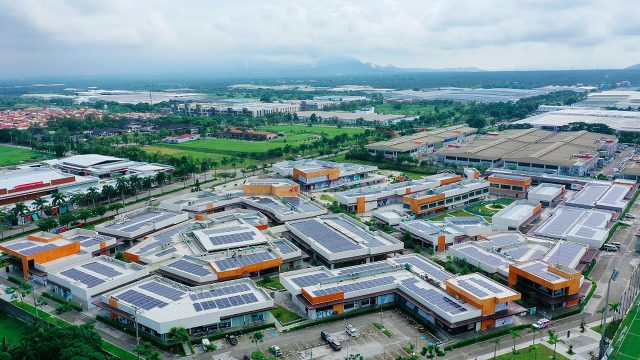
LIMA Estate’s 30-hectare commercial area in Batangas. — BW FILE PHOTO

The Philippine Economic Zone Authority (PEZA) has already achieved over 60% of its target approvals this year after greenlighting P48.87 billion worth of investment pledges in September.

The approvals consisted of 36 projects, which are expected to create 10,312 jobs and generate $1.113 billion in exports.

“These approvals demonstrate enduring investor confidence in the Philippines,” PEZA Director General Tereso O. Panga said in a statement on Tuesday.

“Backed by sustained momentum and robust investment activity, we are on track to attain our P250 billion goal and strengthen our standing as a leading investment destination in Asia,” he added.

For the first nine months, PEZA approved P154.7 billion worth of investment commitments, up 33.5% from P115.89 billion in the same period last year.

The 215 projects are expected to create 50,430 jobs and generate $4.49 billion in exports. — Justine Irish D. Tabile

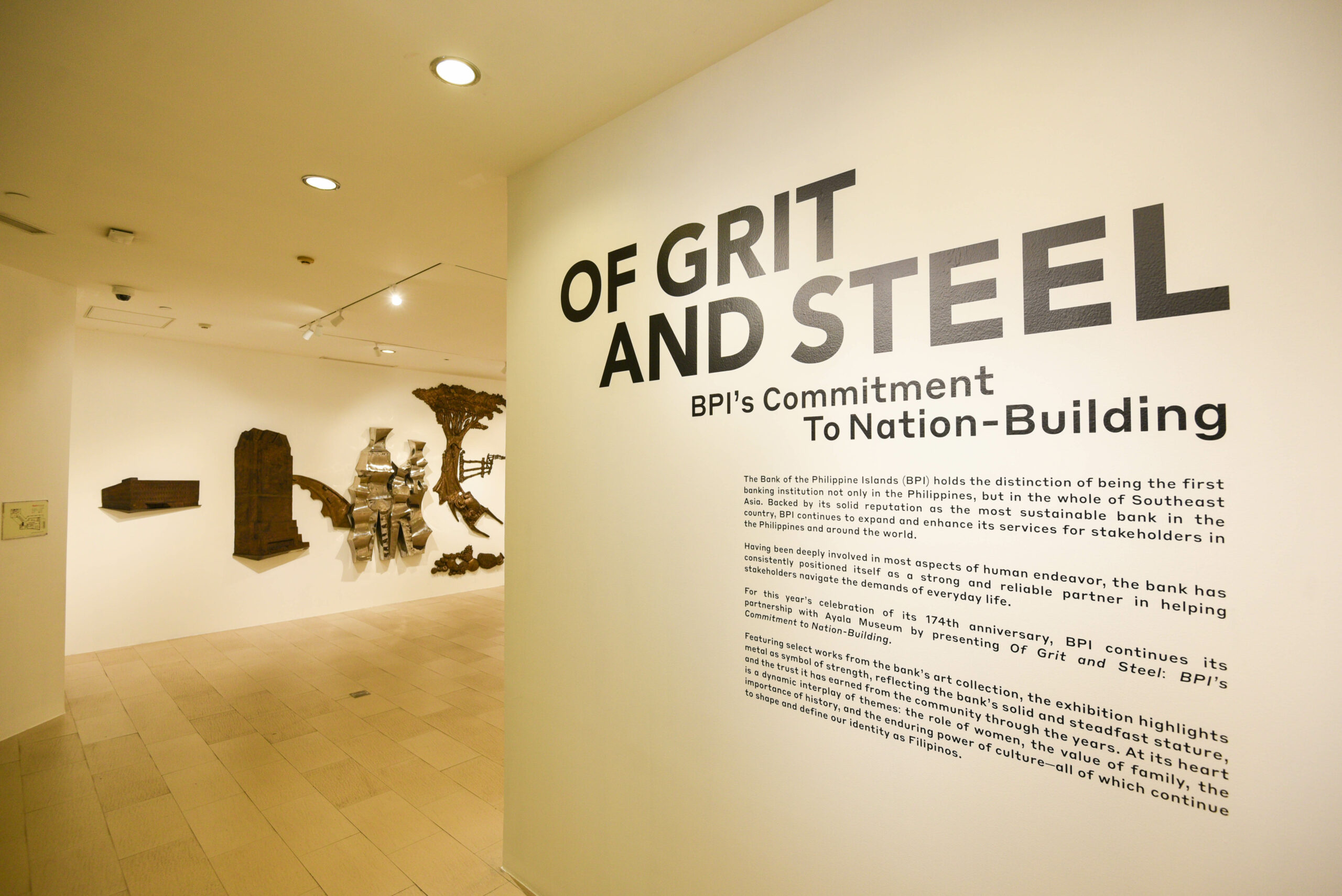
BPI showcases enduring legacy in Of Grit and Steel: BPI’s Commitment to Nation-Building exhibit at Ayala Museum

In photo (L-R): Carmina Marquez, BPI Foundation (BPIF) Executive Director; Cathy Santamaria, BPIF Trustee and BPI Chief Customer and Marketing Officer; Mercedita Nolledo, BPIF Trustee; TG Limcaoco, BPI President and CEO, and BPIF Vice-Chairman; Tony Lambino, President of Ayala Foundation; Aprille Tijam, Associate Director and Head of Exhibitions and Collections of Ayala Museum; and Kenneth Esguerra, Senior Curator and Head of Conservation of Ayala Museum.

BPI Foundation (BPIF), the social development arm of the Bank of the Philippine Islands (BPI), has unveiled Of Grit and Steel: BPI’s Commitment to Nation-Building, a showcase of art and history that reflects the resilience of the Filipino people and the Bank’s unwavering role in shaping the nation’s story.

In partnership with the Ayala Museum, the exhibit serves as a prelude to BPI’s 175th anniversary in 2026. Established in 1851, BPI is the first bank in the Philippines and the oldest in Southeast Asia. For more than a century, it has solidified its role as a trusted partner to Filipino communities not only by promoting financial inclusion but also by enriching culture and the arts.

Of Grit and Steel: BPI’s Commitment to Nation-Building, showcased at the Ayala Museum from Sept. 11 to Nov. 16, 2025, features a curated selection of metal artworks from the BPI Art Collection, offering a compelling exploration of themes such as the role of women, the value of family, and the enduring power of history and culture. Admission to the exhibit is free.

Through art and history, Of Grit and Steel: BPI’s Commitment to Nation-Building exhibit tells the story of resilience and heritage.

At the opening reception held on Sept. 22, 2025 at the Ayala Museum, Curator Kenneth Esguerra noted that the exhibit underscores the strength and resilience symbolized by metal — a material that mirrors BPI’s own steadfastness over its 174-year history.

“More than just an exhibit, Of Grit and Steel: BPI’s Commitment to Nation-Building is a reflection of the Bank’s unwavering commitment to nation-building and its mission to uplift and inspire Filipinos,” said Carmina Marquez, BPIF Executive Director.

“This annual exhibit, held in partnership with the Ayala Museum, continues to be a platform for BPI’s cultural initiatives, encouraging public engagement and celebrating the richness of Philippine art,” Marquez added.

At the heart of these initiatives is BPIF’s Arts Management Program, which actively promotes the development of local arts and culture. The program provides resources and activities that help conserve and preserve Filipino heritage — reinforcing BPI’s broader vision of cultural stewardship and community empowerment.


Spotlight is BusinessWorld’s sponsored section that allows advertisers to amplify their brand and connect with BusinessWorld’s audience by publishing their stories on the BusinessWorld Web site. For more information, send an email to online@bworldonline.com.

Join us on Viber at https://bit.ly/3hv6bLA to get more updates and subscribe to BusinessWorld’s titles and get exclusive content through www.bworld-x.com.

Philippines trade deficit at $3.5 billion in August

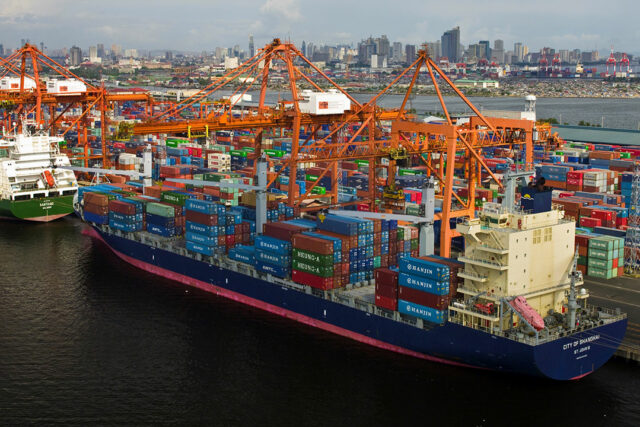
A view of the Manila International Container Terminal. — COURTESY OF ICTSI

The Philippines posted a trade deficit of $3.5 billion for August, the lowest in six months, preliminary official data showed on Tuesday.

Preliminary data from the Philippine Statistics Authority (PSA) showed the country’s trade-in-goods balance — the difference between exports and imports — narrowed to a $3.54 billion gap in August from the $4.40-billion deficit in the same month last year.

Month on month, the trade gap also shrank from the revised $4.42 billion in July.

August saw the narrowest trade deficit since the $2.97-billion gap in February 2025.

Imports in August fell by 4.9% from a year earlier to $10.6 billion, a reversal of the 2.9% growth in August 2024.

Exports rose by 4.6% to $7.06 billion in August, slowing from the 17.6% growth in July but faster than the 0.4% growth in August 2024.

Year to date, the trade deficit narrowed to $32.38 billion, from the $34.33-billion deficit a year ago.

The country’s trade balance has been in deficit for over a decade or since
the $64.95-million surplus recorded in May 2015. — Lourdes O. Pilar

Beyond borders: How OFWs are reaching their dreams through online education

For many overseas Filipino workers (OFWs), the dream of earning a degree often takes a back seat to the demands of providing for their families abroad. But thanks to Online Education (OEd), the Philippines’ first full, flexible and personalized online learning, that dream is no longer out of reach. With its guiding philosophy of “Flexible Education That Adapts to You,” OEd has become a lifeline for OFWs, offering an education model that transcends borders, schedules, and circumstances.

Education Without Borders

Distance and time zone differences once posed insurmountable challenges to pursuing higher education. Today, OEd has erased those barriers. Its fully online, CHEd-accredited programs on Bachelor of Science in Computer Science and Information Technology, and other flexible undergraduate degree and post-graduate programs, DepEd-accepted Online Basic Education to Senior High School — allow OFWs to log in from anywhere in the world. Whether in between shifts, on rest days, or after work, learners can access courses, submit requirements, and attend virtual classes at their own pace.

“OEd understands the realities faced by OFWs,” said its leadership team. “By adapting to their schedules and needs, we are giving them more than just an education — we are giving them the opportunity to fulfill lifelong goals and create brighter futures for their families.”

Why Flexibility is the Future of Education

Flexible Education That Adapts to You

As the world rapidly evolves, traditional classroom models are struggling to keep pace with the needs of modern learners. OEd has redefined education in the Philippines by offering a system that is truly learner-first — adaptive, accessible, and future-ready.

Meeting Learners Where They Are

Whether you are a high school graduate entering college, a call center agent maximizing study breaks, a mother juggling family responsibilities, or an OFW working thousands of miles away, OEd proves that education should bend to fit the learner — not the other way around.

Its asynchronous and synchronous learning platforms give students the freedom to choose when and how to study, while ensuring they receive quality, DepEd- and CHEd-accredited instruction

Powered by Technology, Driven by Purpose

OEd’s innovation lies not just in its digital delivery, but in its philosophy of inclusivity. By leveraging advanced learning management systems, video lectures, interactive modules, and 24/7 support, it ensures that every learner — regardless of background or circumstance — can succeed.

This model aligns with global trends where flexibility, accessibility, and lifelong learning are becoming the hallmarks of future-ready education. In this landscape, OEd stands as a Philippine trailblazer, proving that flexibility is not just a feature — it is the future.

A Decade of Transformation, A Lifetime of Possibilities

Having marked its 10th year in 2025, OEd is more committed than ever to expanding its programs and building stronger industry linkages. Its vision is clear: empower Filipinos at home and abroad to thrive in an ever-changing world through education that adapts, endures, and transforms.

For learners everywhere, OEd’s message resonates powerfully: education should be without borders, without limits, and always within reach.


Spotlight is BusinessWorld’s sponsored section that allows advertisers to amplify their brand and connect with BusinessWorld’s audience by publishing their stories on the BusinessWorld Web site. For more information, send an email to online@bworldonline.com.

Join us on Viber at https://bit.ly/3hv6bLA to get more updates and subscribe to BusinessWorld’s titles and get exclusive content through www.bworld-x.com.

Kabul’s wells run dry, driving children out of class and into water queues

RENZO D SOUZA—UNSPLASH

KABUL – Eight-year-old Noorullah and his twin, Sanaullah, spend their days hauling yellow jerrycans on a wheelbarrow through Kabul’s dusty alleys instead of going to school – an ordeal for one family that reflects Afghanistan’s deepening water crisis.

Once supplied with water from their own well, the family of 13 has had to queue at communal taps or pool money for costly water tankers since their supply dried up four years ago.

With climate change increasing the frequency of droughts and erratic rainfall in Afghanistan, aid agencies say Kabul is among the most water-stressed cities in Asia, with shortages fuelling disease, malnutrition and school dropouts.

The Afghanistan Analysts Network, an independent Kabul-based research group, in a report this month warned the city’s groundwater could run out by 2030, with other Afghan cities also running dry. The crisis is deepening inequality, as poor families spend up to 30% of their income on tanker water while the wealthy dig ever-deeper private wells.

The twin boys queue with dozens of children at a communal tap, where shoving and shouting often flare into fights as the heat builds.

STANDING IN LINE FOR HOURS
Noorullah, who has epilepsy, said he once collapsed with a seizure while fetching water. His brother added, “Sometimes we stand in line for three hours. When the heat is too much, we feel dizzy.”

Their father, 42-year-old shopkeeper Assadullah, feels there is no choice. Sitting outside his small shop with empty water barrels stacked nearby, he said, “From morning until evening, my children go for water six or seven times a day.”

“Sometimes they cry and say they cannot fetch more, but what else can we do?”

The shortages have gutted his income too. On a good day, he earns $2–$3, however, he often closes the shop to help his sons push their loads.

“Before, we used to receive water through a company. It lasted us three or four days. Now even that option is gone,” he said.

In the family’s yard, his wife, Speray, washes dishes in a plastic basin, measuring out each jug. She said her husband has developed a stomach ulcer and she contracted H. pylori, a bacterial infection linked to unsafe water. “I boil water twice before giving it to our children, but it is still a struggle,” she said.

SNOWMELT ONCE REPLENISHED KABUL’S WATER BASIN
Kabul’s population has surged past six million in two decades, but investment in water infrastructure has lagged. War wrecked much of the supply network, leaving residents dependent on wells or costly tankers, and those are failing.

Just a few streets from Assadullah, 52-year-old community representative Mohammad Asif Ayubi said more than 380 households in the neighbourhood faced the same plight. “Even wells 120 metres (nearly 400 feet) deep have dried up,” he said, a depth once considered certain to reach water.

Droughts and erratic rainfall patterns have limited the snowmelt that once replenished Kabul’s water basin and left the riverbed dry for much of the year. “Kabul is among the most water-stressed areas,” said Najibullah Sadid, a water researcher based in Germany.

UN envoy Roza Otunbayeva warned the UN Security Council earlier this month that droughts, climate shocks and migration risk turning Kabul into the first modern capital to run out of water “within years, not decades”.

For Assadullah, the wish is simple. “If we had enough water, my children wouldn’t have to run around all day,” he said. “They could go to school. Our whole life would change.” — Reuters

ADB keeps Philippine growth forecast for 2025

Philippine economic growth may have slowed in the fourth quarter of 2023. — PHILIPPINE STAR/WALTER BOLLOZOS

The Asian Development Bank (ADB) maintained its gross domestic product (GDP) growth forecast for the Philippines this year, while trimming its projection for 2026, amid heightened global uncertainty.

However, ADB said the country remains a “bright spot” as it is seen to be the second fastest-growing economy in Southeast Asia until 2026.

In its latest Asian Development Outlook (ADO), the multilateral lender maintained its growth forecast for the country at 5.6% this year, unchanged from its July projection.

For 2026, the ADB cut its Philippine GDP growth forecast to 5.7% from 5.8% previously.

This would still be within the Philippine government’s 5.5 to 6.5% target for this year, but below the 6-7% goal for 2026.

“The Philippines’ growth outlook remains resilient amid a global environment of shifting trade and investment policies and heightened geopolitical uncertainties,” ADB Country Director for the Philippines Andrew Jeffries said in a statement on Tuesday.

“Though these uncertainties pose increased risk, we see strong domestic demand anchoring growth, with sustained investments and an accommodative monetary policy supporting the economy’s expansion.”

The Manila-based lender said strong domestic demand amid weaker inflation will support economic growth this year and in 2026.

The ADB lowered its inflation forecast for the Philippines to 1.8% from 2.2% for 2025. This is slightly higher than the Bangko Sentral ng Pilipinas’ (BSP) 1.7% average forecast for this year.

For the first eight months, headline inflation averaged 1.7% due to an uptick in August.

The ADB kept its inflation projection for 2026 at 3.2%, unchanged from its July forecast. This is below the central bank’s 3.3% target forecast for 2026.

The subdued inflation outlook will give more room and support for an accommodative monetary policy, the ADB said. — Aubrey Rose A. Inosante

Climate change and pollution threaten Europe’s resources, EU warns

STOCK PHOTO | Image by Hermann Traub from Pixabay

AMSTERDAM – Climate change and environmental degradation pose a direct threat to the natural resources that Europe needs for its economic security, the EU’s environmental agency said on Monday.

The European Environment Agency said biodiversity in Europe is declining due to unsustainable production and consumption, especially in the food system.

Due to over-exploitation of natural resources, pollution and invasive alien species, more than 80% of protected habitats are in a poor or bad state, it said, while water resources are also under severe pressure.

EUROPE’S FASTEST-WARMING CONTINENT
“The degradation of our natural world jeopardises the European way of life,” the agency said in its report: “Europe’s environment 2025”.

“Europe is critically dependent on natural resources for economic security, to which climate change and environmental degradation pose a direct threat.”

Europe is the world’s fastest-warming continent and is experiencing worsening droughts and other extreme weather events.

But governments are grappling with other priorities including industrial competitiveness, and negotiations on EU climate targets have stoked divisions between richer and poorer countries.

EU countries last week confirmed that the bloc will miss a global deadline to set new emissions-cutting targets due to divisions over the plans among EU governments.

“The window for meaningful action is narrowing, and the consequences of delay are becoming more tangible,” executive director Leena Yla-Mononen said.

“We are approaching tipping points – not only in ecosystems, but also in the social and economic systems that underpin our societies.” — Reuters

Viber strengthens Philippine team toward ‘glocalization’

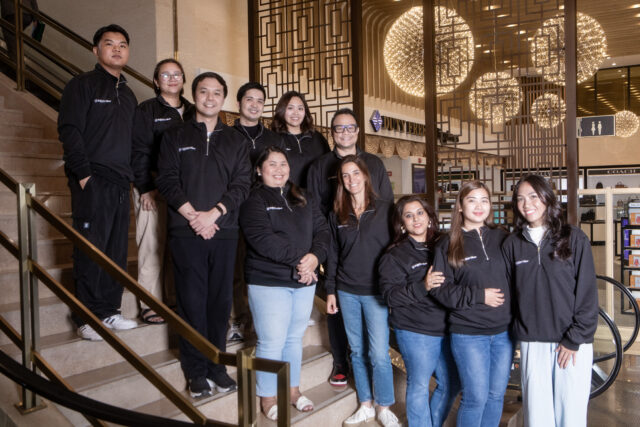
Rakuten Viber has found a strong base in the Philippines, where millions of people use the app for daily messaging and calls. While the company has been around in the country for more than ten years, it is now taking another step to show how serious they value its foothold locally.

In 2024, Viber opened a new office in Bonifacio Global City to strengthen its engagement with Filipino users. The new hub also signals a deeper investment in local operations, ensuring that the platform remains close to the people who use it every day.

In an interview, Michal Perry, vice-president for human resources at Viber, said the Philippines has long been considered a “purple nation”—a phrase they used to describe places where its platform is deeply embraced by the public.

“It is important for us to make sure that we have the right people on ground. They give us the inputs about what is happening and what is relevant [locally]. We are growing along with them as a business, while making sure that we have the right balance,” Ms. Perry told BusinessWorld.

Their successful operations in the Philippines required more than remote management. Local insights, she added, drive decisions on product updates, partnerships, and customer engagement.

Michal Perry, vice-president for Human Resources at Viber

Continuous growth with Filipinos

Viber’s local team now plays an important part in its global operations. What started as a small presence has grown into a workforce large enough to support the platform in one of its strongest markets.

Unlike a single-function office, local staff are directly connected with colleagues abroad in areas such as data analysts, design, and product development. At the same time, they provide feedback on Filipino culture, language, and behavior, which helps the international teams understand how the app is used in the country.

In return, the setup allowed the company to test and refine its products before they expand to other countries.

“We are really open to hearing what users have to tell us. It is easy to adapt these inputs and make the right changes in the product to align globally,” Ms. Perry explained.

Meanwhile, Viber is moving beyond its identity as a messaging service. In February 2025, it launched Viber Dating first in the Philippines, a feature aimed at verified users who want a safe and private way to build connections within the app.

Local adaptability for global strategy

Viber’s cultural strategy is creating an environment where people have space to contribute ideas, give feedback, and advance in their careers. According to Ms. Perry, many leaders within the company are proof of this system.

“Many of Viber’s executive leaders built their careers within the company, which is why the management places importance on creating opportunities for employees. The goal is to help staff grow in their current roles or explore other fields within the organization, ensuring that no one remains stagnant in their professional development,” she shared.

Ms. Perry also said the strategy supports mobility across different fields and responsibilities. Such a method allows workers to gain new skills and opens opportunities for innovation.

Meanwhile, Viber’s teams are often spread across countries, giving employees the chance to gain international exposure without leaving their home base. At the same time, Philippine-based staff are encouraged to collaborate on projects within the country to build stronger connections with each other.

The company is adopting to what it calls a “glocalization” model, a strategy combining global operations with local perspectives. In practice, employees in the Philippines can report to international managers or lead projects that reach beyond national borders.

“Our acquisition teams are trained to search globally, but we also adjust to the local market to reach the full audience,” Ms. Perry explained. “It is the same process we use in all our locations.”

Ms. Perry said Filipino professionals bring adaptability and flexibility that makes them effective in a workplace where coordination happens across continents. Viber also sees the Philippine hub as a source of ideas and practices that can help shape global strategies.

“We gain from having so many locations connected, and the Philippines is one of the places where we see the most potential to keep growing our teams,” she added.


Spotlight is BusinessWorld’s sponsored section that allows advertisers to amplify their brand and connect with BusinessWorld’s audience by publishing their stories on the BusinessWorld Web site. For more information, send an email to online@bworldonline.com.

Join us on Viber at https://bit.ly/3hv6bLA to get more updates and subscribe to BusinessWorld’s titles and get exclusive content through www.bworld-x.com.

DA eyes extending rice import ban

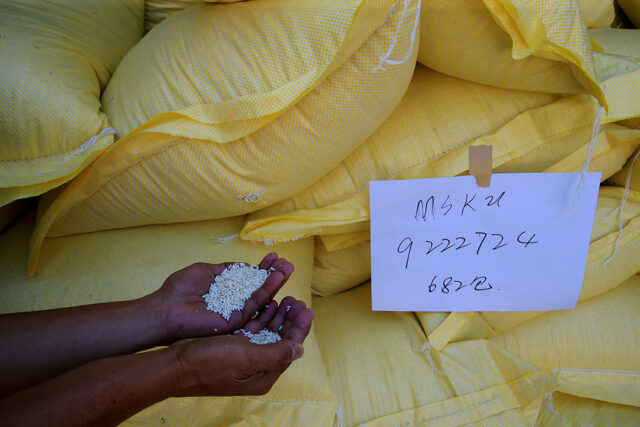
A sample of rice is seen in this file photo. — REUTERS

By Adrian H. Halili, Reporter

THE Department of Agriculture (DA) is considering extending the ban on rice imports until the end of the year, as farmgate prices of palay or unmilled rice continue to fall.

“I met with the President last week and we decided to extend the import ban by a minimum of 30 days,” Agriculture Secretary Francisco P. Tiu Laurel, Jr. told reporters in mixed English and Filipino at the House of Representatives on Monday.

“It is possible that it will be extended until the end of the year depending on the situation. The problem is that palay prices have dropped,” he added.   

President Ferdinand R. Marcos, Jr. had earlier ordered a 60-day suspension of rice imports starting Sept. 1 to protect Filipino farmers during harvest season and to stabilize rice prices. The suspension was originally supposed to end on Nov. 2 and applies only to regular milled and well-milled rice.

Last Friday, Presidential Communications Office Undersecretary Clarissa A. Castro said the President ordered the extension of the import ban but did not give details.

Under Republic Act No. 12078, the President is allowed to suspend or prohibit the importation of rice during a specific period, when there are excess of local or imported supply resulting in a drop in local prices.

“I also talked to our rice millers and traders last week. They are actually requesting the import ban be extended until the end of this year,” Mr. Tiu Laurel said.

Mr. Tiu Laurel said there is “a big possibility” that tariffs on imported rice would be hiked before the import ban ends.

“We are running the numbers now from 20%, 25%, or 35%, and hopefully, we can make a decision before the closure of the (import) ban,” he added.

Tariffs on foreign rice are currently at 15% until 2028.

Mr. Tiu Laurel said the import ban extension was aimed at propping up farmgate prices of unmilled rice, which had dropped to P8 to P10 per kilo in some areas. “This is a loss to farmers,” he added.

The farmgate price for palay fell by 27.8% to P17.11 per kilo in August, from the P23.71 per kilo last year, data from the Philippine Statistics Authority showed.

EMERGENCY PROCUREMENT
The Agriculture chief also said that the President will also issue an executive order for emergency government procurement of palay.

“The DA also asked, and it is already approved in principle, for the President to issue an order for the emergency procurement of palay and the emergency procurement for additional lease and rent of warehouses,” he added.

Mr. Tiu Laurel said that this would allow the agency to procure more palay stocks from Filipino farmers in “depressed price areas.”

He added that the National Food Authority will purchase palay from farmers at a minimum of P17 per kilo under the emergency plan.

“Hopefully, that will help. We are acting fast and we are deploying additional people so that if we get additional warehouses, they will be available for us to buy and help our farmers,” he said.

The Philippines is the biggest importer of rice in the world, according to the US Department of Agriculture. It is projected to import about 4.9 million metric tons this year.

Federation of Free Farmers National Manager Raul Q. Montemayor said that extension of the rice import ban to protect farmers would not have any effect on inflation, as local harvest is expected to offset any slowdown in rice shipments.

“Rice prices and inflation should not go up since whatever imported stocks are in the market now were bought at cheap prices before the ban, and local stocks are coming from fresh harvest that were bought at low prices,” Mr. Montemayor said in a Viber message.

He added that rice traders will continue to purchase palay from farmers at low prices “for fear that cheap imports will flood the market again when the ban is lifted.”

“We believe that the ban should be complemented by a reversion of the import tariff to 35% which will provide the leeway for local traders to buy at higher prices from farmers,” he said.

On the other hand, Roehlano M. Briones, a senior research fellow at the Philippine Institute for Development Studies, said that an extended rice import freeze would only raise retail prices.

“An extended ban will work if the intended effect is supporting palay prices. However, it will also prop up retail prices, forfeiting gains from lower retail prices for poor consumers,” he said in a Viber message.

Former Agriculture Undersecretary Fermin D. Adriano said in a Viber message that the extension will further irk rice exporters from Vietnam, the country largest rice trading partner.

The Philippines is Vietnam’s top rice export market, shipping about 2.47 million metric tons in the first nine months of 2025, according to the Bureau of Plant Industry as of Sept. 11.