Home Blog Page 3805

Peso strengthens before Dec. inflation data release

BW FILE PHOTO

THE PESO rose further against the dollar on Thursday as Philippine inflation likely eased last month.

The local unit closed at P55.50 per dollar on Thursday, strengthening by seven centavos from its P55.57 finish on Wednesday, based on Bankers Association of the Philippines data.

The peso opened Thursday’s session steady at P55.75 against the dollar. Its intraday best was at P55.465, while it dropped to as low as P55.78 versus the greenback during the session.

Dollars exchanged dropped to $1.72 billion on Thursday from $1.88 billion on Wednesday.

The peso gained against the dollar on market expectations that headline inflation eased further in December, Rizal Commercial Banking Corp. Chief Economist Michael L. Ricafort said in a Viber message.

The Philippine Statistics Authority will release December consumer price index data on Friday.

A BusinessWorld poll conducted last week yielded a median estimate of 4% for December headline inflation, within the central bank’s 3.6-4.4% forecast and slower than 4.1% in November and 8.1% in December 2022.

If realized, December would be the first time that inflation was within the central bank’s 2-4% target and the slowest since the 3% print in February 2022.

This would bring the 2023 inflation average to 6%, matching the Bangko Sentral ng Pilipinas’ (BSP) baseline forecast.

The continued easing of inflation could prompt the BSP to cut rates within this year, Mr. Ricafort added.

BSP Governor Eli M. Remolona, Jr. said last month that the central bank will likely keep rates elevated until inflation is comfortably within its 2-4% goal.

The Monetary Board has raised borrowing costs by a cumulative 450 basis points (bps) from May 2022 to October 2023, bringing the policy rate to a 16-year high of 6.5%.

For Friday, Mr. Ricafort expects the peso to range from P56.40 to P55.60 per dollar. — AMCS

PSEi rebounds before December inflation data

BW FILE PHOTO

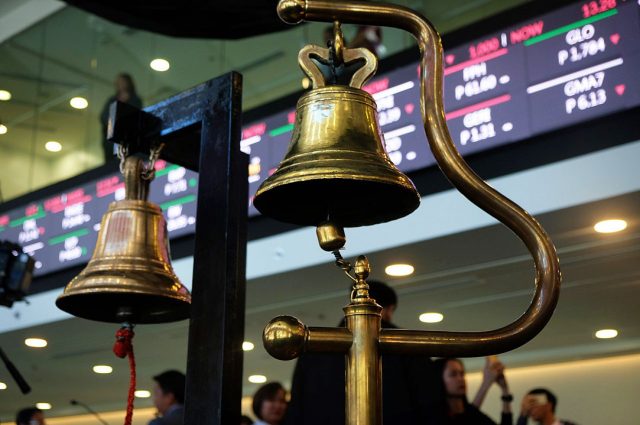
PHILIPPINE SHARES rebounded on Thursday amid expectations of better inflation data for December.

The Philippine Stock Exchange index (PSEi) gained 103.64 points or 1.59% to end at 6,602.52 on Thursday, while the broader all shares index rose 35.52 points or 1.02% to close at 3,485.76.

“This Thursday, the local market rose by 103.64 points to 6,602.52 on the back of hopes that headline inflation in the Philippines had further declined last December. Supporting the said hopes is the midpoint of the Bangko Sentral ng Pilipinas’ (BSP) 3.6-4.4% range forecast which is below the preceding month’s 4.1%,” Philstocks Financial, Inc. Research and Engagement Officer Mikhail Philippe Q. Plopenio said in a Viber message.

The Philippine Statistics Authority will release December consumer price index data on Friday.

A BusinessWorld poll last week yielded a median estimate of 4% for December headline inflation, within the BSP’s 3.6-4.4% forecast for the month. This is slightly slower than the 4.1% in November but significantly below the 8.1% in December 2022.

If realized, December could mark the first time that inflation met the central bank’s 2-4% target after 20 straight months. It would also be the slowest since the 3% print in February 2022.

This would bring the 2023 inflation average to 6%, matching the BSP’s baseline forecast.

“The index surged above the 6,600 level and reached its highest close in more than five months as investors positioned ahead of the release of the Philippine December inflation print on Friday,” China Bank Capital Corp. Managing Director Juan Paolo E. Colet likewise said in a Viber message.

“The PSEi bucked the fall of most Asian markets as traders bought up local stocks on expectations that domestic headline inflation last month cooled to 4%, which is within the BSP’s target inflation range,” Mr. Colet added.

Asian shares fell on Thursday as traders dialed back bets of steep and early rate cuts this year, with the minutes of the US Federal Reserve’s last meeting providing few clues on when US cuts might start, Reuters reported.

MSCI’s broadest index of Asia-Pacific shares outside Japan fell 0.17% and was headed for the third straight day of losses.

Back home, almost all sectoral indices ended higher on Thursday. Property increased by 78.36 points or 2.77% to 2,907.31; financials climbed by 30.76 points or 1.78% to 1,754.47; services rose by 25.86 points or 1.59% to 1,651.63; holding firms went up by 71.46 points or 1.13% to 6,360.48; and industrials added 33.14 points or 0.36% to end at 9,137.63. 

Meanwhile, mining and oil dropped by 77.40 points or 0.78% to 9,777.89. 

Value turnover climbed to P5.18 billion on Thursday with 461.64 million issues changing hands from the P3.11 billion with 182.7 million shares seen on Wednesday.

Advancers outnumbered decliners, 110 to 85, while 46 issues ended unchanged. 

Net foreign buying stood at P768.3 million on Thursday versus the P260.5 million in net selling seen the prior day. — R.M.D. Ochave with Reuters

ERC: Committee looking into Panay Island power outage

Line men fix an electric line in Payatas, Quezon City, March 13, 2022. Manila Electric Co. is implementing lower power rates this month. — PHILIPPINE STAR /MICHAEL VARCAS

THE Energy Regulatory Commission (ERC) said the Panay power outage has been referred to an interim grid management committee for investigation, adding that appropriate penalties will be imposed after the panel delivers its findings.

“After the investigation, if penalties are called for, then we will commence proper proceedings to allow the relevant parties to answer and, if answers are not acceptable, impose penalties,” ERC Chairperson Monalisa C. Dimalanta said in a Viber message.

The National Grid Corp. of the Philippines (NGCP) reported on Tuesday that multiple power plants tripped, including units of Panay Energy Development Corp. and Palm Concepcion Power Corp. (PCPC).

Due to the plant outages, some 452 megawatts (MW) became unavailable, causing the NGCP to raise a yellow alert on the Visayas grid.

The yellow alert was lifted at 9:01 p.m. on Tuesday.

According to an NGCP update on Thursday, some 244.6 MW of electricity is currently being generated by Panay power plants.

The Visayas grid will need about 300 MW to stabilize, and is awaiting the return of a 135-MW PCPC facility.

The plant is targeted to be synchronized with the grid between 10 p.m. and 12 midnight on Jan. 4.

Citing an initial report, Ms. Dimalanta said equipment failure at PCPC caused the plant to trip. Operators are waiting for the unit to cool down before it can be restarted.

MORE Electric and Power Corp., the sole electric distribution utility in Iloilo City, has been affected by the power disruption, as well as seven electric cooperatives on the island.

As of 2:30 p.m. on Thursday, almost 50% of MORE’s customers were still not receiving power, it said. The company has imposed rotational outages every three hours due to the insufficient power supply.

“We need to investigate this further because it is impossible that all plants just decided to go offline all at the same time, or that they all failed on their own at the same time,” Ms. Dimalanta said.

“There must be something that led to those serial consequences among the generation plants,” she added.

Ms. Dimalanta said there should have been systems in place to prevent such occurrences.

She said that NGCP can direct distribution utilities to drop load to reduce demand to the level of available supply, thereby stabilizing the system.

“The system operator also controls the dispatch of plants so it could have initiated measures also on that end,” she said.

“We are reviewing whether these measures were undertaken and whether they were enough, or if anything else can be improved,” she added.

The NGCP has said that load restoration will be done “conservatively, by matching loads to restored generation, to prevent repeated voltage failure.”

“The people must understand that we can only transmit power, we do not generate power,” it said in a statement on Wednesday.

Legislators have called on the NGCP and the Department of Energy (DoE) to look into the Western Visayas outages.

“The DoE and the NGCP must understand the gravity of this situation and act decisively to resolve it,” Senate President Juan Miguel F. Zubiri said in a statement. “They should get their acts together immediately.”

He said constant power interruptions hamper the livelihoods and the delivery of basic services to the region’s citizens.

Mr. Zubiri called on the DoE and NGCP to be transparent in implementing measures to address the outages.

Party-list Rep. France L. Castro called on the NGCP to take accountability for the blackouts that have left some parts of Panay without electricity since Jan. 2.

In a statement, she also called on MORE Electric and Power Corp., which supplies power to Iloilo City, to improve its coordination with the electric system grid operators.

“Does (MORE Power) even have a system to help protect the grid from collapsing, like a load dropping mechanism?” Ms. Castro said.

Senate Majority Floor Leader Joel J. Villanueva said the government needs a short-term and long-term strategy for dealing with power disruptions, include ensuring that power plants are properly maintained.

“We also need to continue exploring other sources of renewable energy such as wind and solar to keep up with the DoE’s goal of a power generation mix target of 35% by 2030,” he said in a statement.

Citing DoE data, Mr. Villanueva said about half of the power plants in the Philippines are at least 20 years old.

“The situation is no longer tolerable, and the DoE and the NGCP must urgently address this issue before irreparable damage is done to our communities,” Mr. Zubiri said. — Sheldeen Joy Talavera and John Victor D. Ordoñez


Rice imports hit 3.48 million MT as of late December

BW FILE PHOTO

THE PHILIPPINES imported 3.48 million metric tons (MT) of rice in 2023 as of late December, according to the Bureau of Plant Industry (BPI).

Rice imports in December up to the 28th of the month totaled 387.21 thousand MT, up 29.19% from a year earlier.

The Department of Agriculture (DA) said for the entirety of 2023, imports are expected to total 3.65 million MT, or below the 3.8 million MT projected by the US Department of Agriculture.

The DA has said that about 500,000 MT of rice are expected to arrive in December and January as the government seeks to build reserves for the peak of El Niño.

El Niño is expected to intensify between January and May, affecting about 63 provinces with droughts and dry spells, according to the government weather service, known as PAGASA (Philippine Atmospheric, Geophysical and Astronomical Services Administration).

The BPI reported that Vietnam remained the Philippines’ top supplier of rice with 84.27% of total imports. Shipments from Vietnam are expected to hit 2.94 million MT.

Thailand supplied 297.2 thousand MT and Myanmar 143.92 thousand MT.

The DA said that 75 thousand MT of rice was set to arrive from India by early January, part of a 295,00 MT rice allocation India granted the Philippines in October.

The Indian government issued the quota for non-basmati white rice to the Philippines. It had earlier banned all exports of non-basmati white rice to stabilize its domestic supply.

Arrivals from India have amounted to 13,758 MT, as of Dec. 28.

Meanwhile, the BPI has issued 824 sanitary and phytosanitary import clearances (SPSICs) for December covering the import of about 660.01 thousand MT of rice.

Agriculture Secretary Francisco Tiu Laurel, Jr. said he has instructed traders to use up their SPSICs for an additional 1 million MT of rice. The DA has imposed a 30-day deadline for traders to use their permits. — Adrian H. Halili

Agri export growth hindered by funding, capacity constraints

BW FILE PHOTO

By Adrian H. Halili, Reporter

AGRICULTURAL EXPORT growth will continue to be constrained by limited output and funding to develop the high-value crop sector, farmers said.

“Our problem with exports goes back to our problems in producing high-quality and competitively priced products on a consistent and sustainable basis, and in a way that is profitable for our farmers and market players,” Federation of Free Farmers National Manager Raul Q. Montemayor said in a Viber message.

Former Agriculture Undersecretary Fermin D. Adriano blamed the lack of funds allocated for high-value crops, as against the attention paid to rice production.

The Department of Agriculture (DA) has set aside about P31 billion in 2024 to improve rice production.

“For as long as research and development and extension services receive a pittance, and the DA does not properly play its role of training our agri-exporters on (sanitary and phytosanitary) standards of the various rich importing countries, export growth potential will be constrained,” Mr. Adriano said in a Viber message.

The DA has announced the preparation of a Philippine Agricultural Export Development Plan to increase exports of agriculture and fisheries products.

“Despite all the supposed concessions we gained from trade negotiations, our agricultural trade deficit has continued to increase, especially since our competitors are racing far ahead of us,” Mr. Montemayor added.

Agricultural exports declined 13.3% to $1.61 billion during the third quarter, accounting for 8.2% of total exports, according to the Philippine Statistics Authority.

The leading exports were edible fruit and nuts as well as peel of citrus fruit and melons, valued at $492.09 million, or 30.5% of the total.

He said that the DA needs to identify products to focus on for export while setting up a support system covering the process from production to domestic and international markets.

Malaking trabaho (It’s a big job) but there are many success stories, which we just need to promote and expand,” Mr. Montemayor added.

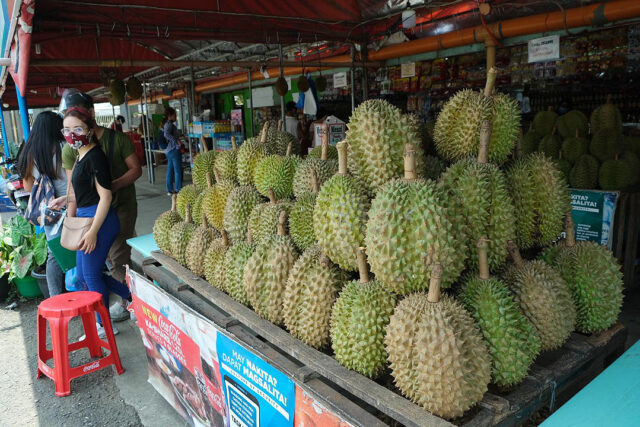
Meanwhile, Roy S. Kempis, a retired Pampanga State Agricultural University professor, said that agriculture products like mango, avocado, and durian are on demand in global markets but can benefit from further support.

“Philippine mango is preferred for its sweetness, texture and appropriate amount of fiber both in the export and domestic markets,” Mr. Kempis said in a Viber message, citing the potential for expanding the crop.

He added that the government could increase farmland dedicated to avocado and durian.

Mr. Kempis said technical and management training is needed by producers and exporters.

He said increasing the planting area, improving pest management and irrigation systems, and building community processing areas, will support the growth of such exportable crops, as will more access to credit.

“Exporting and financial literacy are two other areas that agriculture and food producers and exporters could be trained in,” he added.

Upskilling, streamlined gov’t seen improving business performance in 2024, PCCI says

PHILSTAR FILE PHOTO

THE Philippine Chamber of Commerce and Industry (PCCI) said that 2024 could be a better year for business as the government and private sector seek to address ease of doing business (EoDB), power, and upskilling issues.

“With all these efforts… and all those good individuals who were recently appointed to help us address the issues (of) EoDB, power and upskilling and reskilling of our labor, we are optimistic that 2024 will be a better year,” said PCCI President Enunina Mangio in a television interview.

She said foreign business organizations’ own forecasts are signaling that the Philippines could be the fastest growing economy in Southeast Asia.

“PCCI assumes that this growth will be driven by resilient domestic consumption, increased government spending, infrastructure projects and a gradual recovery in some sectors. We see the economy gradually and moderately growing,” she added.

She cited the need to strengthen its foreign relations and work on achieving remittance targets from overseas Filipino workers.

The reliance on remittances “is why reskilling of our laborers is very important,” she added.

Ms. Mangio said that the PCCI recognizes that the business sector has the responsibility to help the government in reviving the economy.

“That is why we are taking a more proactive role in helping the national and local governments champion initiatives that will make our enterprises more competitive and our important sectors more attractive to local and foreign investors,” she said. — Justine Irish D. Tabile

FEF proposes relaxing foreign ownership restrictions in Constitution

ELECNOR

THE Foundation for Economic Freedom, Inc. (FEF) is proposing amending the Constitution’s economic provisions to allow 100% foreign ownership of land, utilities, educational institutions, and mass media.

“We believe that the removal of restrictive economic provisions sends a clear and compelling message to foreign investors, signaling a warm welcome to investment and business operations in the Philippines,” the FEF said in a statement on Thursday.

“The restrictions in the 1987 Constitution serve as constraints to developing areas of the economy where the Philippines has great promise such as mass media and renewable energy. The existing constitutional restrictions limit investments that we need to develop our creative industries,” it added.

The FEF proposed to amend the following sections of the Constitution to allow 100% foreign ownership: Section 2, Article XII (National Patrimony and Economy); Section 3, Article XII (National Economy and Patrimony); Section 7, Article XII (National Patrimony and Economy); Section 10, Article XII (National Patrimony and Economy); Section 11, Article XII (National Patrimony and Economy); Section 4, Article XIV (Education, Science and Technology, Arts, Culture, and Sports); and Section 11, Article XVI (General Provisions).

The FEF also proposed the following amendments to the Filipino First provisions of the Constitution:

Section 19, Article II (Declaration of Principles and State Policies): From “The State shall develop a self-reliant and independent national economy effectively controlled by Filipinos” to “The State shall develop a self-reliant and independent national economy for the benefit of all Filipinos.”

Section 10, Article XII (National Economy and Patrimony): From “…In the grant of rights, privileges, and concessions covering the national economy and patrimony, the State shall give preference to qualified Filipinos…” to “…in the grants of rights privileges, and concessions covering the national economy and patrimony, the State shall give preference to qualified investors.”

Removing such restrictions in the Constitution could help policymakers respond more effectively to both global and domestic economic changes, the FEF said.

Congress may still install safety nets within the constitution to ensure economic and social development, it added.

“We strongly emphasize that constitutional amendments should be limited exclusively to economic provisions. This focused approach reduces the risk of political controversy and division, ensuring the swift passage of crucial amendments to the economic provisions of the Constitution,” the FEF said.

However, the FEF noted that amending the constitution alone won’t sufficiently attract foreign investors as the government still needs to improve on upholding the rule of law, improving infrastructure, and ensuring ease of doing business.

Policy analyst and lawyer Michael Henry L. Yusingco said allowing 100% foreign ownership is not expected to boost foreign direct investments (FDI) significantly.

“But if we also fix our power issues, labor productivity issues, and transportation issues, then the amendment of the economic provisions can lead to a boost in FDI specifically in the sectors concerned like education, mass media and power generation,” he said via messenger.

“To boost our FDI, we also need to solve basic problems like power costs, labor costs and other costs of doing business,” he added.

Meanwhile, University of the Philippines-Los Baños Economics Senior Lecturer Enrico P. Villanueva said there is a risk politicians will take advantage of the amendment process to advance their interests.

“Government should focus its energies and resources instead on making the domestic business climate attractive. Costs of doing business should be lower (energy, transport, fees, bureaucracy, etc.), he said in a social media message.

Mr. Villanueva noted that the definition of public services was eased under the Duterte administration to attract foreign investors, but FDI did not increase significantly.

Mr. Yusingco also cited the Retail Trade Liberalization Act and the New Public Service Act as instances of the government seeking to remove obstacles to foreign ownership. — Aaron Michael C. Sy

Shopee to offer halal products

THE Department of Trade and Industry (DTI) and e-commerce site Shopee have entered a partnership to feature halal food sellers on the platform.

“This initiative aims to support micro, small, and medium enterprises (MSMEs) and make halal products accessible online for sellers and consumers,” Shopee said in a statement.

“It also helps Shopee’s goals to empower niche businesses to grow their online presence and broaden their market,” it added.

Under the partnership, Shopee will train potential sellers on selling on the e-commerce platform.

Shopee’s onboarding sessions will cover product listing guidelines, user interface navigation, and taking advantage of business insights generated from sales data.

“Our collaboration with the DTI to onboard halal food sellers aligns with our commitment to supporting MSMEs and providing diverse options for our users,” according to Vincent Lee, head of Shopee Philippines.

The DTI’s National Halal Strategy is counting on P230 billion in investment from the industry while generating 120,000 jobs over the next five years. The industry as defined in the plan encompasses halal-friendly travel and tourism, and halal fashion, pharmaceuticals and cosmetics.

The National Halal Strategy assumes a global halal ecosystem with a market value of $7.7 trillion by 2025. — Justine Irish D. Tabile

Indonesian leader in Manila next week

INDONESIAN President Joko Widodo walks with Philippine President Ferdinand ‘Bongbong’ Marcos, Jr. — REUTERS FILE PHOTO

By Kyle Aristophere T. Atienza and John Victor D. Ordoñez, Reporters

INDONESIAN President Joko Widodo will make a three-day visit to the Philippines starting Jan. 9, according to Malacañang.

The visit coincides with the meeting in Manila between foreign affairs officials of both countries, who the Department of Foreign Affairs (DFA) said on Thursday are expected to discuss enhancing cooperation on regional and international issues.

According to the Presidential Communications Office (PCO), Mr. Widodo is set to meet with President Ferdinand R. Marcos, Jr. on Jan. 10 to discuss ways to deepen bilateral ties.

The two leaders will “take stock of the progress in Philippines-Indonesia relations,” it said, citing Mr. Marcos’ official visit to Indonesia in September last year.

“The two leaders are also expected to reaffirm their commitment to deepening and expanding Philippines-Indonesia ties, especially as the two countries will celebrate their 75th anniversary of formal diplomatic relations in November 2024,” the PCO added.

Meanwhile, the DFA said Philippine Foreign Affairs Enrique A. Manalo and Indonesian Minister for Foreign Affairs Retno L.P. Marsudi will meet for the 7th Philippines-Indonesia Joint Commission for Bilateral Cooperation (JCBC), a venue for exchanging views on boosting bilateral relations.

“The JCBC is the primary dialogue mechanism between the Philippines and Indonesia to review accomplishments on mutual collaboration initiatives,” the agency said.

Envoys on both sides are expected to tackle issues of “mutual interest” and avenues for enhancing cooperation.

When asked what agreements are expected to be signed at the dialogue, DFA Spokesperson Ma. Teresita C. Daza told reporters in a WhatsApp message that “preparations for the meeting are ongoing.”

Indonesian President Joko Widodo is set to visit Manila on Jan. 10 to meet with Philippine President Ferdinand R. Marcos, Jr.

In Sept. last year, the Philippine President secured $22 million (P1.3 billion) in investment pledges from Indonesian companies on the sidelines of the Association of Southeast Asian Nations (ASEAN) Summit in Jakarta.

The deals were related to animal health, artificial intelligence and digital sectors, the Presidential Palace earlier said. A month later, Indonesia assured the Philippines of continued access to its coal-fired power plants.

Chinese military patrols held amid joint US-PHL drills in disputed sea

Philippine Navy vessel BRP Gregorio Del Pilar participates in the second iteration of a joint maritime cooperative activity between the Armed Forces of the Philippines (AFP) and the US Indo-Pacific Command in the West Philippine Sea.— PHOTO FROM AFP

By Kyle Aristophere T. Atienza, Reporter

THE Chinese military began a two-day patrol in the South China Sea on Wednesday in an apparent response to the joint drills of the Philippines and its treaty ally, the United States, in the same region.

The Chinese People’s Liberation Army’s (PLA) Southern Theatre Command said it had sent its navy and air force to the waterway for routine patrols to monitor activities that “disrupt” the region.

Any military activities that “cause disturbances and create hot spots in the South China Sea are fully under control,” it said in a statement posted on the website of China’s defense ministry.

It said its troops remain on high alert at all times, “resolutely defending national sovereignty, security, and maritime rights and interests.”

The Chinese patrols, which were set to end on Thursday, Jan. 4, coincide with the joint drills of the Philippines and the United States, the second in two months in the same area as the treaty allies boost their partnerships amid an increasingly belligerent China. During their joint drills, the Philippine military sent three ships while the US Indo-Pacific Command deployed the Carl Vinson Carrier Strike Group, which is composed of several missile destroyer ships and aircraft.

“Sailing and operating together demonstrates our commitment to improving our interoperability and information sharing with the Armed Forces of the Philippines, to enhance our ability to coordinate on maritime domain awareness and other shared security interests,” Rear Adm. Carlos Sardiello, commander of the Carrier Strike Group 1, said in a release.

The two allies conducted passing exercises, joint patrols, cross-deck exercises, and fixed-wing flight operations, among other activities at sea.

Justin Keith Baquisal, an analyst at Future Trends, ASEAN Matters, Current Affairs, Technology and Security (FACTS), said China was likely alarmed by the Washington’s deployment of an aircraft carrier.

“[It’s] definitely a very strong statement from the US which China felt it needed to respond to,” he said in a Twitter message.

He said China is “signaling displeasure” at the return of the Philippines’ joint patrols with the US, which had been discontinued in recent years and are being revived under the Marcos administration. 

The last joint sail between the two countries in the South China Sea under Maritime Cooperative Activity occurred in late November.

Reports showed that China’s Type 052D guided-missile destroyer and Type 054A frigate shadowed the Philippine and American navies on Wednesday, triggering one of the Philippine patrol vessels to issue warnings that the Chinese side did not respond to.

China’s two-day patrol was “a clear show of force by China at a time when efforts are being made among like-minded democracies to keep the seas safe, open, and free,” Don Mclain Gill, who teaches international relations at De La Salle University, said in a Facebook Messenger chat.

He noted that China also conducted naval exercises close to Taiwan in the past to demonstrate its power projection amid its tension with the self-ruled island, which is being supported by the US in its push for autonomy.

Victor Andres C. Manhit, president of think tank Stratbase ADR Institute, said the Philippines is expected to continue sailing within its exclusive economic zone in the South China Sea with the help of its allies.

“As it demonstrated last year, the Philippines has not deterred against acts of aggression in the West Philippine Sea, and it will continue to defend its territory,” he said via Messenger chat.

“This may be in the form of assertive transparency through the regular reporting of developments in the area and, in the form of multilateral cooperation with like-minded states.”

Despite the tensions, Mr. Baquisal said shipping lanes in the South China Sea will likely remain stable.

“Both Philippine and Chinese actions are largely routine operations consistent with the defense postures they have vowed to maintain to defend their national interests,” he said.

“Neither the Philippines nor China have systematically threatened shipping lanes in the South China Sea, so the patrols don’t really have an immediate-term impact on businesses and their cargo passing through the waterway, where vital global trade passes through,” he added.

Lawmakers concerned as CHED discontinues SHS

PHILIPPINE STAR/ WALTER BOLLOZOS

By John Victor D. Ordoñez, Reporter

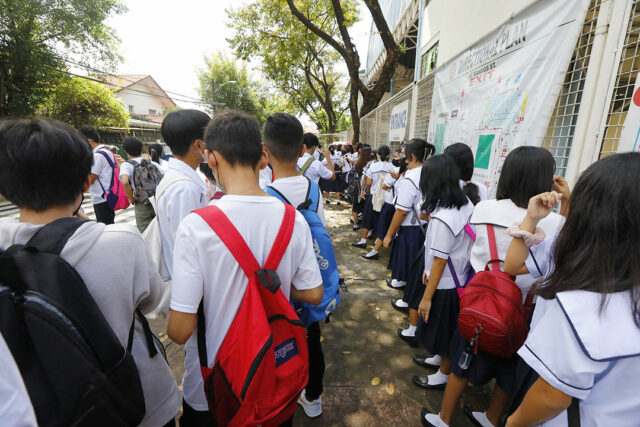
THE COMMISSION on Higher Education (CHED) and the Department and Education (DepEd) must come up with a plan to ensure students affected by the discontinuation of senior high school (SHS) programs in state universities and colleges (SUCs) are not left behind, lawmakers said on Thursday.

“To prevent any disruption in learners’ education, DepEd should proactively explore options such as admitting these learners in public schools or facilitating their transfer to the private sector where they can benefit from the voucher program,” Senator Sherwin T. Gatchalian, who chairs Senate committee on basic education, said in a statement.

In a memo dated Dec. 18, CHED said it is discontinuing the senior high school program in SUCs and local universities and colleges (LUCs).

Based on data from the DepEd, there are about 17,751 grade 11 students currently rolled in SUCs and LUCs. At present, there are 2,030,451 Grade 12 students enrolled in state colleges.

Senator Francis “Chiz” G. Escudero, who heads the Senate Committee on Higher, Technical and Vocational education, said the DepEd should closely monitor its regional offices to check on students in danger of being left behind by the program phaseout.

“Even though this is within CHED’s legal authority, it is still important to ensure the welfare of our senior high school students and that no one is left behind,” he said in a statement in Filipino.

In a public briefing on Wednesday, CHED Chairman Prospero E. de Vera III said his agency in the past two years has been instructing public state colleges to “wind down” senior high school enrollments since there was no more legal basis for their offering of high school education.

“The transition period (from K to 12) is over,” he said. “State colleges and universities are full, and they need to use the classrooms and teachers.”

The transition period for K to 12 was from school year 2016-2017 to school year 2020-2021.

In a separate memo, CHED also cut off financial aid for Grades 11 and 12 students in SUCs and LUCs.

Mr. De Vera earlier said he was prompted to release the memo after discovering that some SUCs and LUCs were still accepting senior high enrollees even after the transition period.

DepEd spokesman Michael T. Poa said students affected may opt to enroll in public schools and avail of the voucher program.

For her part, Sen. Mary Grace N. Poe-Llamanzares said: “There should be an assessment to know if public schools nationwide have the facilities and personnel to accept to influx of student.”

ACT Teachers Party-List Rep. France L. Castro said CHED and DepEd should have consulted teachers, students and other stakeholders before cutting off financial aid for senior high school students.

She said students risk studying in overcrowded public high schools and teachers may have irregular workloads due to a lack of cash aid.

“The senior high school program should hold its promise of employability and more competitive graduates, not as burden to Filipino learners,” Ms. Poe-Llamanzares said.

Sandigan denies bids to dismiss Malampaya cases

PHILSTAR FILE PHOTO

By Jomel R. Paguian

THE SANDIGANBAYAN has rejected the motions to dismiss the criminal charges against former Palawan Governor Mario Joel T. Reyes and other co-accused officials in the 2008 Malampaya fund scam.

In a 15-page resolution promulgated on Wednesday, the Sandiganbayan Second Division resolved multiple motions seeking to dismiss the criminal charges filed by the Ombudsman in 2017 against Mr. Reyes and other provincial officials over P1.5 billion from the Malampaya fund.

The Sandiganbayan ruled that the reasons presented by the defense in their motions are deemed “untenable.”

“The Court finds no cogent reasons to grant leave to file demurrer to evidence. At this point of the trial, there being sufficient evidence to sustain the indictment for the crimes charged, the accused movants now bear the evidentiary burden to controvert the evidence of the prosecution,” read part of the resolution penned by Associate Justice Arthur O. Malabaguio.

In his motion for leave to file demurrer to evidence, Mr. Reyes argued that the prosecution failed to present sufficient evidence to prove irregularities during the bidding of the Malampaya projects. He also argued that as a provincial governor, he had to rely on his subordinates and on the good faith of those who were involved in the bidding and procurement processes.

But in its ruling, the Sandiganbayan said there is sufficient evidence to sustain the indictment for the crimes charged against the accused who “now bear the evidentiary burden to controvert the evidence of the prosecution.”

Motions for reconsideration and motions for leave to file demurrer to evidence filed by other accused naming Jesus Tan, Bella Cervantes, Cecila Colegio, Bernard I. Zambales, Romeo C. Llacuna, and Ronelo O. Del Socorro, among others, were also denied by the anti-graft court.

Associate Justices Oscar C. Herrera, Jr. and Edgardo M. Caldona concurred with the order.