Home Blog Page 3779

Yes, we have lots of bananas

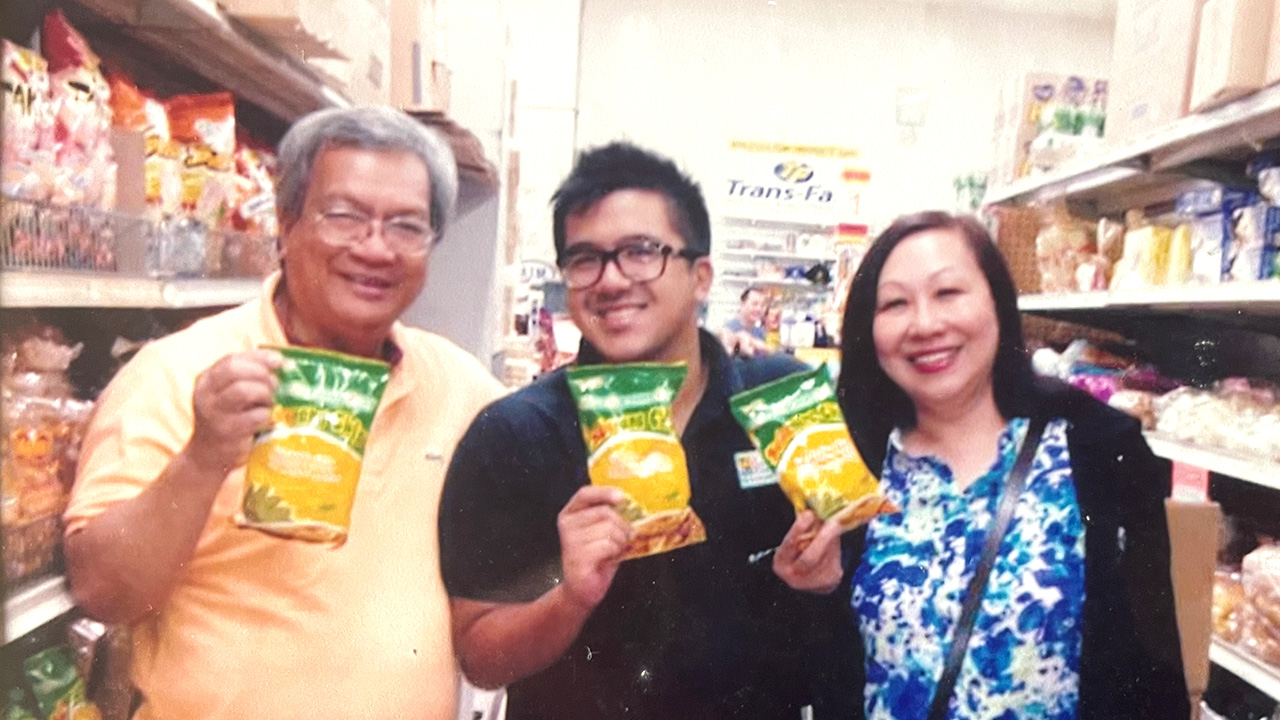
VILLA SOCORRO FARM’s first export sales in the USA.

Villa Socorro Farm has a corporate — and punny — bent as it looks at maximizing its banana chip biz

WHILE Marcial Aaron may have had a dream job (he was chief executive officer of Unilever’s Food Division), it turns out that his true dream could be found in his roots.

In the About page of his family’s Villa Socorro Farm, he said, “It all started as a dream: I grew up in a farming community. My grandparents and parents were farmers. Naturally, I wanted to become a farmer too!”

Mr. Aaron graduated with a degree in Chemical Engineering from De La Salle University and rose to the top post at the multinational company. Today, he and his family run Villa Socorro Farm, named after his wife, Socorro, “as an open love letter to her.”

Villa Socorro Farm has several products, ranging from banana chips to banana fiber, and the family has taken up the banana business quite seriously. For example, while Mr. Aaron is billed as Founding Father and Farmer on their website, his wife Socorro is called “Pusong Ina” as a joke on banana hearts — the banana-related puns are everywhere — but she’s also Vice-President for Integrated HR and Administration. Their children, Raymund and Diana, are called The Banana Chief (and Vice-President for Integrated Operations and Sales) and Señorita Banana (and Vice-President for Integrated Marketing), respectively. The younger Mr. Aaron even signed his e-mails to BusinessWorld with “Puno ng Puso (full of heart).”

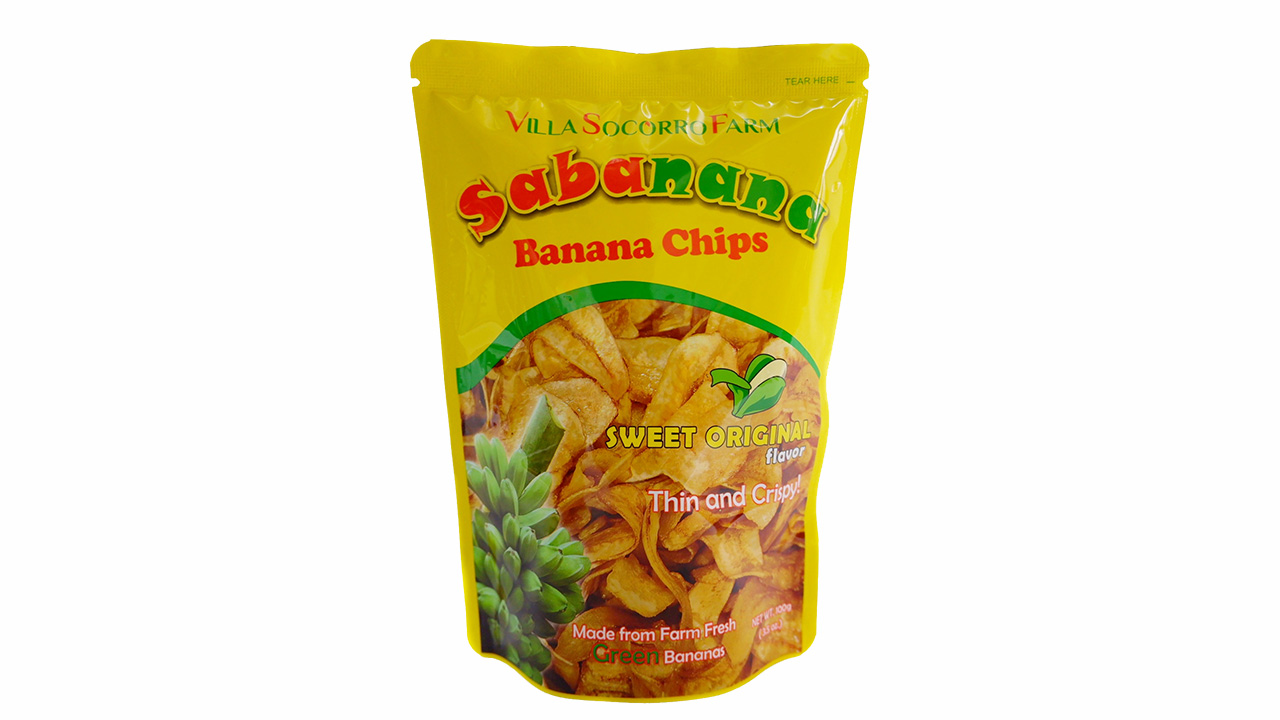
Right now, Villa Socorro’s banana chips, branded Sabanana Banana Chips, can be found not only in shelves around the Philippines, but also in 18 other countries (including in Korea, Singapore, Australia, Saudi Arabia, the US, France, Holland, and Norway, among others).

CORPORATE DISCIPLINE
While the farm was initially acquired in 1998, Sabanana was launched in 2006, after the senior Mr. Aaron retired from Unilever in 2004. The younger Mr. Aaron discussed how his father’s background aided in setting up the brand. “Bringing in the corporate discipline helped a lot especially during the early stages of setting up the business. Having the structured approach in the corporate world brought in an organized, process-oriented management of the business that’s often disregarded by start-up entrepreneurs, and more so businesses in the field of Philippine agriculture.”

While banana chips are best known as bus stop snacks made usually by backyard entrepreneurs, Mr. Aaron talked about what they did differently. The chips are made from the Philippine saba banana which are washed, peeled, sliced, cooked, and packed within 24 hours. “There were mostly only home-based brands like you mentioned and there was no top-of-mind brand for banana chips. We saw this as an opportunity to be that brand,” he said.

“We started by investing in the improvement of our packaging material that allowed us to export. We also just really put ourselves out there and tried out different channels for our products. We started by selling to canteens in offices and schools that had low competition. We then targeted pasalubong (souvenir) stores. We eventually got some recognition and got into chain supermarkets that led to visibility to potential exports partners.”

Mr. Aaron said that last year they sold half a million 100-gram packs. The chips come in different flavors: the original traditional sweet blend, Smoky Barbecue, Roasted Garlic, Simply Lite, and Chocnut.

LOCATION LOCATION LOCATION
Location is also key for the farm: located in Pagsanjan, Laguna, Mr. Aaron praises the produce of the region. “We believe the saba grown in our region are the best variety in the Philippines. They are smaller but packed with flavor,” he said. While banana is their primary crop, other plants are grown within the farm as well: “Our bananas are naturally grown and we also practice intercropping because in doing so, fruit-bearing trees like lanzones, rambutan, mangosteen would act as a wind-breaker for when we get hit by a strong typhoon whereas the bananas hold plenty of water to keep the soil moist during dry season.”

This approach also led them to create other products: for example, furniture is made from mahogany trees felled by storms in the property (initially planted by the senior Mr. Aaron to protect their crops). The farm also dabbles in fiber, using a machine awarded by the Department of Science and Technology (DoST) to process banana trunks into fiber, which the younger Mr. Aaron said would have been otherwise converted into biowaste.

“It’s not so much just about the ‘special’ qualities of the banana, but mainly the mindset and sustainability approach of Villa Socorro Farm. We see waste products of one process as a potential raw material for another and that keeps us searching for new uses these materials,” he said.

The farm also serves as a resort, and was even used as a location for the 2000 Kevin Costner-starrer Thirteen Days.

SOCIAL ENTERPRISE
Villa Socorro Farms is operated by the Aarons as a social enterprise. While the tag is easily attached to many businesses today, Mr. Aaron goes into detail into how exactly they help the farmers and the surrounding community. “We only grow around 2% of the bananas we use for the banana chips manufacturing facility. Most of the supply (comes) from over 220 partner-farmers we have within our area. We offer training programs in farming best practices and provide them with planting materials if necessary. We then buy back their harvests to provide them sustainable livelihood in farming,” he said. Mr. Aaron told us a story about one of their partner farmers, called Kuya Willy. Kuya Willy had once told him, “Daig ko pa nag-oopisina (I’m better off than some who work in an office).”

At the heart (pun intended) of the business is a family. “Even going further deeper into the core of what we do is the heart or iyung puso (his pun). We wanted to turn our values into value by creating this social enterprise. After all, ‘socorro’ in Spanish means ‘help,’ and we truly want to be of service to our community and country.”

Working on farms isn’t usually rewarding in the Philippines. It’s backbreaking work (there’s even a nursery rhyme about it), and the rewards are few. According to data from the Philippine Statistics Authority (PSA), the country’s nominal wage rate of agricultural workers in 2019 averaged P331.10 per day. “On the average, male farm workers were paid at P335 per day, higher than the average wage rate of female farm workers at P304.60 per day,” the PSA’s website said. Villa Socorro Farm’s base in Region IV’s Calabarzon area had the highest daily wage rate, pegged at P399.08, while Central Visayas had the lowest at P276.43.

The Aarons are trying to change the narrative of farming by how they operate.

“We’ve only looked at farming as simply being out in the sun planting all day,” he said. “In reality today, it goes further beyond that. When we look at it as an agribusiness, then it becomes as engaging, challenging and exciting as any other career path. It’s an industry that will never cease having a market. One of our basic needs is food, which is why it is important that this industry is not overlooked. At the end of the day, agriculture offers opportunities for bountiful harvests that can be financially rewarding, paired with positive impact to people and the planet, it can be such a fulfilling and lucrative career.

“We only hope to continue becoming a testament of its endless possibilities.”

Sabanana Banana Chips can be found at their online store (villasocorrofarm.com) and also at Roots Collective and Kultura. — Joseph L. Garcia

Aboitiz’s Bohol airport O&M plan eyed for Swiss challenge in Q1

DOTR PHOTO

By Ashley Erika O. Jose, Reporter

THE Department of Transportation (DoTr) said companies wishing to match the proposal of Aboitiz InfraCapital, Inc. — which now owns a 33% stake in Mactan Cebu International Airport — to operate, maintain, and expand the New Bohol-Panglao International Airport may have their chance this quarter.

“The Bohol [airport]… will be ready for the Swiss challenge by the first quarter,” Transportation Secretary Jaime J. Bautista told reporters on Wednesday.

Aboitiz InfraCapital, the infrastructure arm of the Aboitiz group, has also submitted proposals for the operations, maintenance, and development of Bicol International Airport in Southern Luzon and Laguindingan International Airport in Northern Mindanao.

“Negotiations for Bohol (airport) is ongoing,” Cosette V. Canilao, Aboitiz InfraCapital president and chief executive officer, said in a phone message to BusinessWorld.

DoTr Undersecretary Timothy John R. Batan previously mentioned plans to invite other parties to challenge the Aboitiz group’s proposal for Laguindingan International Airport in Misamis Oriental in the first quarter. The Swiss challenge allows other companies to submit alternative proposals to a project, with the original proponent having the right to match them.

“The Laguindingan process will set the tone. Once the negotiated terms for Laguindingan are approved, then we’ll have more confidence that the government is really committed to the PPP (public-private partnership) program,” Ms. Canilao said.

The Aboitiz group secured in 2018 the original proponent status for the New Bohol-Panglao International Airport’s operations and maintenance (O&M) under a 25-year concession period.

“The parameters, terms and conditions have already been approved by NEDA,” Mr. Bautista said. 

“After that, we will report to NEDA, then it will be ready for the Swiss challenge maybe within the first quarter also,” he added.

The airport upgrade is one of the four high-impact projects approved by NEDA in October last year.

Valued at P4.5 billion through a public-private partnership scheme, this project is expected to serve approximately 3.9 million passengers per year once completed, up from its current capacity of two million passengers.

Aboitiz InfraCapital is also a member of the MIAC consortium, one of the four groups that submitted bids for the P170.6-billion PPP project to upgrade the Ninoy Aquino International Airport. 

Get acquainted with malbec

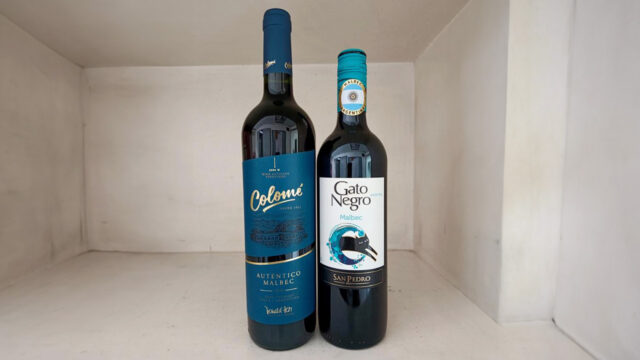
TWO ARGENTINE WINES: the complex high-altitude Colome Authentico Malbec from Salta, and the price-friendly Gato Negro entry-level fruity Malbec.

MALBEC is one of most underrated red wine varietals in the world.

It is absolutely one of my favorite mono-varietal wines of all time, same as I adore mono-varietal Nebbiolo from Barolo and mono-varietal Tempranillo from Ribera del Duero and Rioja. I am just surprised Malbec is not as popular a red wine as it should be. Let me express my opinion on this varietal below.

The Bordeaux Connection Malbec — known way back as either Auxerrois or Côt (which is still the varietal name used in the Loire region, in the Touraine AOC) — has been a regular fixture in the Bordeaux red blend, especially in the 19th century leading up the creation of the sacred Bordeaux Grand Cru Wine Classification of 1855. Unfortunately, the phylloxera epidemic from the 1850s to 1880s, and then the severe frost of 1956, practically wiped out this grape varietal in the region. Most, if not all the Grand Cru classified Medoc wines had malbec in their blend during the crucial classification stages, making malbec a true noble varietal.

Malbec was and is still one of five grape varietals allowed in a Bordeaux red blend, which include the omnipresent cabernet sauvignon and merlot, cabernet franc and petit verdot. The previously allowed 6th varietal in Bordeaux, carmenere, found its way to Chile, in a similar way to how malbec found its way to Argentina also in 1850s, with both South American countries literally saving these two historical varietal grapes from possible extinction. Right now, roughly 75% of all malbec vineyards are in Argentina.

HOW MALBEC REACHED ARGENTINA
Gifted agronomist Michel Aimé Pouget probably wasn’t expecting that his defection to South America following Napoleon III proclaiming himself Emperor of France in 1852 would turn the inevitable irrelevance of malbec into a huge resurgence.

In 1853, Argentinean President Domingo Faustino Sarmiento commissioned Pouget to lead the Mendoza agricultural college, Quinta Normal de Agricultura, where he initiated the planting of French malbec in Argentine vineyards. Pouget was right about his theory that the malbec varietal would be suitable to grow in the warmer climate Argentina offers. Since then, Argentina never faltered on its way to becoming the most important wine country when it comes to producing Malbec wines.

The beauty of Argentine malbec is that this varietal grows and adapts to multiple terroir and growing conditions from north to south of the country, even if the large wine region of Mendoza produces over 80% of the varietal. Mendoza itself has three major subregions, namely: Maipu, Lujan de Cuyo, and the Uco Valley.

Then there are malbecs you can fßind in Argentina’s southernmost wine region of Patagonia, and my favorite Malbec region of Salta, in the northwest part of the country, where the highest vineyards can be found over 3,000 meters above sea-level.

Sherwin A. Lao is the first Filipino wine writer to be a member of both the Bordeaux-based Federation Internationale des Journalists et Ecrivains du Vin et des Spiritueux (FIJEV) and the UK-based Circle of Wine Writers (CWW). For comments, inquiries, wine event coverage, wine consultancy and other wine related concerns, e-mail the author at wineprotege@gmail.com, or check his wine training website https://thewinetrainingcamp.wordpress.com/services

RENAISSANCE OF CAHORS AOC
Cahors AOC in southwestern France is where malbec is said to have originated. While its being used as a blended varietal in Bordeaux got vignerons interested, it was the immense commercial success that Argentina had with this varietal that got the Cahors AOC wine region back onto the wine map.

Many in Cahors still call their Malbec as Auxerrois or Côt Noir. The Cahors AOC requires a minimum of 70% of their wine to be made with malbec, and you can encounter several Cahors wines either using 90% or even 100% malbec. The other allowed red varietals (in small percentages) are tannat and merlot.

Interesting enough, tannat is another varietal from southwestern France (from Madiran AOC) that made its way to South America, this time to Uruguay, where it is considered their adopted national grape.

Cahors wines, especially those made with an overwhelming majority of malbec, are more rustic, herbaceous, and tannic, with fuller body and darker hues than their Argentine counterparts.

MALBEC’S VERSATILITY, PRICE-FRIENDLINESS AND FOOD-PAIRING
Malbec is one of the most versatile red wines ever, as you can have it medium-bodied and fruit-driven, or you can have it viscous, full-bodied, and complex. Malbec can also do well without oak-aging because it has inherent phenolics coming from its pulp, skin, seeds, and stems that other varietals need oak to possess.

Malbec’s natural alluring aromatics, plummy flavors, not-too-dry taste, and juicy palate, together with its gorgeous dark purple color, even in an entry-level Argentine wine, are already quite delectable.

The expensive Malbecs, given the more concentrated yields and extra oak-aging, have extra body and complexity for lingering luscious finishes.

Malbec prices are also quite reasonable as you can get an entry-level Argentine Malbec at less than P500/bottle. For more expensive Uco Valley or Salta region wines, prices can go up to a few thousand pesos, with icon wines like the Colome Altura Maxima Malbec (from the highest vineyard in Argentina) fetching P5,000/bottle.

Not surprisingly considering Argentina’s meat-heavy diet, Malbec pairs extremely well with all kinds of meat, notably with BBQ (Argentine asado). The flavor profile of Malbec extends to food with umami flavors like Japanese teriyaki dishes, Japanese unagi, Korean beef bulgogi, Chinese sweet and sour pork, and even our very own Filipino sweet-style spaghetti.

And of course, on their own, the unoaked Malbecs are already quite quaffable and enjoyable.

In conclusion, I hope we can add Malbec to our red varietal choices when we shop for wines. Move aside popular varietals Cabernet Sauvignon, Merlot, Pinot Noir, and Shiraz, and make room for Malbec. Oh, and there is also such a thing as Malbec Day created by the Interprofessional Wine Union of Cahors (UIVC) and Wines of Argentina that is celebrated annually on April 17.

Try a Malbec soon and let me know your thoughts.

Sherwin A. Lao s the first Filipino wine writer to be a member of both the Bordeaux-based Federation Internationale des Journalists et Ecrivains du Vin et des Spiritueux (FIJEV) and the UK-based Circle of Wine Writers (CWW). For comments, inquiries, wine event coverage, wine consultancy and other wine related concerns, e-mail the author at wineprotege@gmail.com, or check his wine training website https://thewinetrainingcamp.wordpress.com/services

ERC to take rate hike case to Supreme Court

JEROME CMG-UNSPLASH

By Sheldeen Joy Talavera, Reporter

THE Energy Regulatory Commission (ERC) will go to Supreme Court to challenge a Court of Appeals (CA) decision favoring San Miguel Corp.’s power arm and Manila Electric Co. (Meralco) in a rate hike plea, the commission’s chair said on Wednesday.

“We received [the copy of CA’s decision].We will bring the matter up to the Supreme Court,” ERC Chairperson Monalisa C. Dimalanta said in a Viber message to BusinessWorld.

“I think we have until end of the month to file the petition before the SC,” she added.

In its decision dated Dec. 28, the CA said that it “finds no merit in the arguments set forth in their respective motions for reconsideration.”

“Accordingly, there is no cogent reason to reverse the Court’s decision dated June 27, 2023,” it added.

The ruling of the ERC, promulgated on Sept. 29, 2022, denies the rate hike petition jointly filed by Meralco and San Miguel Global Power Holdings Corp. (SMC GP).

But in a resolution promulgated on June 27, 2023, the CA granted the motion for certiorari filed by San Miguel Energy Corp. (SMEC), now Sual Power, Inc., and South Premiere Power Corp. (SPPC) annulling and setting aside the ERC’s decision for “grave abuse of discretion amounting to lack or excess jurisdiction.”

The CA ruling issued in June 2023 was the latest development in the case involving both units of SMC GP — SPPC and SMEC — and Meralco.

In 2022, the parties jointly filed a rate hike petition with the ERC. However, the regulator denied the petition, stating it had no basis as the power supply agreement is a fixed-rate contract.

Meanwhile, credit research provider CreditSights has maintained its “Underperform” recommendation on SMC but acknowledged its perpetual bonds (perps) from April 2024 to May 2025 due to “relatively lower refinancing risks, backed by funding options.”

The fundraising options cited include revenues generated by the capacity added from its 600-megawatt (MW) Mariveles coal plant and the 300-megawatt-hour Masinloc battery energy storage system.

CreditSights also observed that SMC GP is expected to remain dependent on its parent conglomerate for funding support.

“While we believe SMC GP can roll over or refinance most of its bank loan debt given its strong backing by parent SMC that enjoys solid banking relationships, the situation is much trickier for the refinancing of its $ perps,” the Fitch unit said.–Sheldeen Joy Talavera

——-

Note: This story has been updated to include Meralco.

Alcohol-free Corona Cero to be official Paris beer as AB InBev signs deal

CORONA CERO

LONDON — Anheuser-Busch InBev will be an official sponsor for three Olympic Games starting with the Paris 2024 summer event this year, the brewer said on Friday, naming its alcohol-free Corona Cero as the official beer of the Games.

The maker of Budweiser, Corona, and Stella Artois will be a Worldwide Olympic Partner, the highest level of Olympic sponsorship, for this year’s Games as well as the 2026 Winter Olympics in Milan and the 2028 Olympics in Los Angeles.

AB InBev chief executive officer Michel Doukeris said: “We are proud to be the first beer sponsor for the Olympics at the Worldwide Olympic Partner level.”

The company declined to disclose the value of the deal.

As drinks companies globally try to adapt to consumers curbing their alcohol consumption, AB InBev said the spotlighting of Corona Cero at the Olympics was part of its efforts towards “responsible alcohol consumption and moderation worldwide.”

Speaking at a launch event in London, Mr. Doukeris said that alcohol-free beer is growing faster than the overall beer category, and is a means of expanding the reach of the drink. Corona Cero is AB InBev’s flagship zero-alcohol beer.

It’s not the first time an alcohol-free beer has sponsored a sporting event: Diageo promoted Guinness 0.0 at last year’s Six Nations rugby tournament.

But booze is still central to many events. At the 2022 soccer World Cup in Qatar, fans were disappointed by a last-minute ban on the sale of alcohol in stadiums, hurting Budweiser.

The beer of the LA Games, Michelob ULTRA, does contain alcohol but is a “light” beer with a 3.5% alcohol content, AB InBev said. Michelob ULTRA will also support the US national team at those Games, Mr. Doukeris said.

“For us it was a no-brainer when we saw the opportunity,” IOC President Thomas Bach said about the AB InBev deal.

Luxury giant LVMH is also a Paris Olympics sponsor, signing a deal last year expected to cost around €150 million that will see Moet Hennessy champagnes and spirits be provided as part of hospitality programs at the Games.

AB InBev joins global companies including AirBnb, Alibaba, Coca-Cola, P&G, Toyota, and Visa as top Olympic sponsors.

The top-tier Olympic sponsorship program has jumped in value in recent years, generating $2.3 billion in revenue for the International Olympic Committee over the 2017-2021 period including the Winter Olympics in Pyeongchang and delayed Summer Olympics in Tokyo. — Reuters

Adjusted VAT exemption for housing seen to boost property sales 

FREEPIK

By Luisa Maria Jacinta C. Jocson, Reporter

THE increase in the value-added tax (VAT) exemption threshold for housing will incentivize more consumers to purchase properties, according to analysts.

The Bureau of Internal Revenue (BIR) recently issued Revenue Regulations No. 1-2024, which increases — for VAT-exemption purposes — the selling price threshold of the sale of house and lot, and other residential dwellings to P3.6 million from P3.199 million previously.

“This adjustment was made by virtue of Section 109 of the National Internal Revenue Code which mandates that every three years the subject amount should be adjusted to its present value using the consumer price index as published by the Philippine Statistics Authority,” the BIR said.

BIR Commissioner Romeo D. Lumagui, Jr. in a statement said that the adjustment shows the “just and service-oriented taxation” by the government.

Colliers Philippines Associate Director for Research Joey Roi H. Bondoc said that this new regulation will help make economic and lower mid-income residential segments more affordable to Filipinos.

“This is particularly important for households that are receiving remittances from Filipinos working abroad that fuel the demand for these residential units,” he said in an e-mail.

He said that horizontal development hubs will likely benefit from the latest revenue regulations, specifically in Bulacan, Pampanga, Tarlac, Cavite, Laguna, and Batangas.

“It will be interesting to see how developers with substantial exposure in affordable and economic housing segments will respond to this given that in the previous years we also saw the increase in land values as well as prices of construction materials,” Mr. Bondoc added.

Rizal Commercial Banking Corp. Chief Economist Michael L. Ricafort said in a Viber message that the increased threshold would encourage more residential property sales.

“Definitely, this would encourage more residential property sales as partly incentivized by the tax exemption with the higher threshold.

“Increased sales and tax collection would somewhat offset the higher threshold for the tax exemption on residential property sales,” he added.

AREIT acquires Seda Lio resort hotel in El Nido

AREIT, Inc. has finalized the acquisition of Seda Lio resort hotel from Ayala Land, Inc. unit Econorth Resort Ventures, Inc. for P1.19 billion, the listed company announced on Wednesday.

In a stock exchange disclosure, AREIT said that Seda Lio is a 153-room resort hotel that caters primarily to leisure tourists, families, social and corporate events, and other visitors.

The company will earn a guaranteed building lease from the hotel’s operator, Econorth Resort Ventures, over the next 25 years starting this month.

AREIT President and Chief Executive Officer Carol T. Mills said the acquisition of Seda Lio puts the listed company’s assets under management at P117 billion from P87 billion.

“The acquisition of Seda Lio, alongside the planned asset infusions in 2024, will not only enlarge and expand AREIT’s footprint but also diversify its assets and reduce concentration risk,” Ms. Mills said.

According to AREIT, the acquisition is part of its growth plans for 2024, which includes the infusions from Ayala Land such as Ayala Triangle Gardens Tower 2, luxury mall Greenbelt wings 3 and 5, and Holiday Inn and Suites in Makati, and Seda Hotel at Ayala Center Cebu, worth P21.8 billion.

The infusions will be complemented by the acquisition of a 276-hectare industrial land in Zambales leased by Giga Ace 8, Inc. from Buendia Christiana Holdings Corp. (BCHC), which are both wholly owned subsidiaries of ACEN Corp, it added.

“Except for Seda Lio, the aforementioned assets will be acquired through a property-for-share swap with ALI and its subsidiaries, Greenhaven Property Ventures, Inc. and Cebu Insular Hotel Co., Inc., subscribing to 642,149,974, and BCHC to 199,109,438 AREIT primary common shares at an exchange price of P34 per share, as validated by a third-party fairness opinion,” AREIT said.

“The infusion will be for the approval of AREIT shareholders at their Special Stockholders Meeting on Feb. 12 and pertinent regulatory bodies thereafter,” it added.

On Wednesday, shares of AREIT fell by 15 centavos or 0.44% to P33.95 apiece while stocks of Ayala Land dropped by P1 or 3% to P32.30 each. — Revin Mikhael D. Ochave 

The French are drinking less Champagne after boom years

FRANCE’S Champagne producers shipped fewer bottles of bubbly last year, another sign of softness in the luxury market.

Foreign shipments from the French region dropped 8.2%, the Comité Champagne, which represents the producers, said Monday. Within France, shipments fell to the lowest level in almost four decades excluding 2020, which was skewed by pandemic lockdowns.

The French are by far the biggest consumers of their home-grown sparkling wine, accounting for more than 40% of shipments, but inflation has weighed on household budgets, according to the Comité Champagne.

Demand for Veuve Clicquot, Bollinger, Lanson and other labels soared when pandemic restrictions eased and has since been returning to normal — a trend seen across the luxury-goods industry. The consultancy Bain estimates the sector will probably grow by as much as 4% this year, down from 8% in 2023, underlining the challenges facing purveyors of high-end goods.

Total shipments fell to 299 million bottles last year. Growers made up for the lower volumes by selling more expensive labels, especially abroad, keeping revenue above the €6 billion ($6.6 billion) record reached in 2022, according to the Comité.

Speaking during a panel organized by the National Retail Federation on Sunday, Philippe Schaus, chief executive officer of LVMH’s wines and spirits unit, said there’s more balance between supply and demand for its Champagne brands after the “roaring” years of 2021 and 2022 when consumption was outstripping supply.

“2024 will be a year with probably more moderate price increases because we took some price,” hikes last year, Mr. Schaus said.

LVMH Moët Hennessy Louis Vuitton SE, the biggest maker of Champagne, owns labels such as Moët & Chandon and Dom Pérignon. The group’s wines and spirits unit, which also includes Hennessy Cognac, saw revenue tumble 7% on an organic basis in the first nine months of last year, the only division to suffer a drop over the period. — Bloomberg

PAGCOR to set up online casino towards second half

KAYSHA-UNSPLASH

THE Philippine Amusement and Gaming Corp. (PAGCOR) is set to launch its online casino this year, its chairman said.

“Maybe towards the second half of this year, casinofilipino.com will be set up,” PAGCOR Chairman and Chief Executive Officer Alejandro H. Tengco told reporters on Jan. 15.  

PAGCOR has no estimate yet on how much the online casino will contribute to its gross gaming revenues or GGR.

“No projections yet. But if you will look at our revenues generated from electronic gaming, I believe it will be also a substantial amount. A plus factor is the Casino Filipino brand,” Mr. Tengco said.  

“The worldwide trend is very clear. The trend is now there is a shift from traditional land-based casinos to online gaming,” he added.  

PAGCOR recently said the country’s GGR hit a record high of P285.27 billion in 2023, up by 33.1% from the P214.33 billion in 2022. The previous high was in 2019 when the country’s GGR reached P256.49 billion.

The country’s integrated resorts shared the biggest revenue at P207.48 billion, followed by the electronic games sector at P58.16 billion.  

“Our 2023 results exceeded even our most optimistic projections, and it proves beyond doubt that the Philippine gaming industry has fully recovered and is now poised for sustained growth in the medium- to long-term,” Mr. Tengco said.  

PAGCOR is seeking to hit P336.38 billion worth of GGR this year on the back of new integrated resorts.

“We are projecting that our licensed casinos from the Entertainment City, Metro Manila, Clark, Cebu, and the Fiesta Casinos in Rizal and Poro Point will contribute as much as P256.63 billion to our 2024 GGR,” Mr. Tengco said. — Revin Mikhael D. Ochave 

Chicken doesn’t need to be washed before cooking — here’s why

SOCIAL media isn’t exactly known for being a welcoming place to have a productive discussion or share your opinions. Even the most inoffensive posts can breed noxious comments sections. Take this seemingly harmful post on TikTok, in which a woman shares a step-by-step recipe for spatchcocking chicken.

While you might expect to find comments asking about the recipe or even sharing tips and advice, instead you find comment after comment of people expressing disbelief that the chef didn’t wash her chicken before cooking it.

But despite the number of comments certain the chef has done the wrong thing, in reality she’s made the right move. Washing chicken isn’t just unnecessary — it can actually increase your risk of foodborne illness.

WHY CHICKEN REALLY SHOULDN’T BE WASHED
Traces of feathers, slime, or dirt might have necessitated washing chicken half a century ago. But nowadays, poultry is pre-washed and ready to cook when you buy it.

Still, some people seem to think you should wash your chicken in order to remove the dangerous microorganisms raw meat contains. While it’s true chicken does contain harmful microorganisms, washing prior to cooking doesn’t remove them.

Chicken in particular naturally carries Salmonella and Campylobacter. These can cause very severe illness, with infections causing symptoms such as fever, nausea, vomiting, diarrhea and possibly even septicemia (blood infection).

Children, elderly people, pregnant women and those with other health conditions or poor immune systems are most at risk of illness from these bacteria. But even in healthy people, Salmonella and Campylobacter infections can lead to hospitalizations and death.

Washing chicken prior to cooking does not eliminate all the germs within a chicken. At most, it may only remove the bacteria on the surface. But this practice actually makes the overall infection risk from raw chicken significantly worse, as it may potentially cause the pathogens washed off the chicken skin to spread throughout your kitchen.

When you put raw chicken under the tap, the bacteria on the skin move into the water stream. This will then be splashed into your sink — and potentially your surrounding counters, cupboards, and dish rack. This water spray can travel up to 80cm — the length of the average adult arm. This makes cross-contamination pretty likely, especially if these water droplets have landed elsewhere in your kitchen. It may even contaminate other uncooked foods you later place in the same sink.

Even if you rinse the sink with water after washing the chicken, this may not be sufficient to remove all the pathogenic bacteria that have become attached.

It’s also worth noting that soaking poultry in a brine of water and vinegar or citrus juice does not make it more hygienic. Research has shown that Salmonella weren’t killed following soaking chicken in vinegar or citrus juice for more than five minutes. Other research shows that Campylobacter numbers may be reduced following a marinade in vinegar or lemon juice, but it takes 24 hours of soaking.

HANDLING RAW CHICKEN SAFELY
There are many simple steps you should follow when preparing raw poultry to keep safe from foodborne illnesses.

The containers or wrappers that raw poultry comes in are often contaminated with bacteria. Once you’ve opened the package and removed the chicken, place it in a clean plastic bag so the contents don’t drip on your kitchen floor or waste bin when you dispose of it.

Next, place your raw poultry on a clean cutting board so you can prepare it.

Since washing creates an unnecessary risk of cross-contamination, if there’s dirt or slime on the surface of the chicken — or if the chicken is wet — simply wipe it off with a paper towel. Immediately dispose the paper towel to avoid contamination.

If you accidentally drop any meat debris on the work surfaces during preparation, mop it up with a paper towel, dispose of it, then clean the surface with diluted bleach or an antibacterial spray. Dry the surface with a clean paper towel. Likewise, if any spice containers you’re using to season the chicken touch it before it’s cooked, be sure to wipe these down with an antibacterial spray.

When you’re finished preparing your chicken, immediately wash your hands with soap and warm water. You should wash your hands under warm water for at least 20 seconds as this will kill any bacteria on your hands.

Then wash your chopping board and utensils. It’s also a good idea to disinfect the surrounding work area with an antibacterial spray or diluted bleach, which you should then dry with a clean paper towel.

You cannot remove the bacteria from your chicken, or indeed any poultry or meat, by washing it. The only way to kill germs and make the food safe to eat is by cooking it.

Cooking poultry at the correct temperature and for the right amount of time is essential for preventing many foodborne illnesses. While the time and temperature will vary depending on how large your chicken is or the recipe you’re using, your chicken should reach an internal temperature of about 75°C. This is effective at killing bacterial pathogens, including Salmonella and Campylobacter.

Be sure to use a meat thermometer to check your chicken is safe to eat. Another test is to check the juices from the chicken. If they run clear and there’s no trace of blood, the chicken is probably cooked sufficiently.

If you’re served what looks like under-cooked chicken, or indeed any poultry, in a restaurant (you can see blood when you cut into the meat) send the food back to be cooked properly.

The bacteria found on raw poultry is natural even though it’s harmful for humans. But as long as you adequately cook your chicken, it’s still safe to eat.

Primrose Freestone is a senior lecturer in Clinical Microbiology, University of Leicester.

Discounting abuse

FREEPIK

I am very much looking forward to reaching the “discounted” age, which is 60 years old under Philippine law. Although, I still have some ways to go. Aging, obviously, is never easy. Other than health issues, there are also concerns over loss of income and productivity. But the Philippines, compared to other countries, is relatively generous to its “senior” population.

The 20% discount (and value-added tax exemption that goes with it) enjoyed by local senior citizens and persons with disabilities (PWDs) on their purchases of food and other necessities is a significant benefit. However, the same is also prone to abuse — much like any other exemption given exclusively to a select or predetermined group of people.

And given the nature and significance of this “exclusive” privilege — a 20% is a big deal — every so often controversies arise regarding its use. Take the case of the recent order by the National Commission of Senior Citizens (NCSC) and the National Council on Disability Affairs (NCDA) to investigate Starbucks Philippines for allegedly limiting the use of Senior Citizen and PWD Cards in their establishments.

The local franchisee of the global coffee chain was reported to have limited seniors and PWDs availing themselves of the 20% discount to a single drink and a single pastry in every visit. As such, a senior citizen or PWD ordering one drink and two pastries for himself or herself will have to pay in full (without price discount) for the additional pastry.

This may have been simply a case of misunderstanding between Starbucks Philippines and its customers, but the backlash was immediate for the global coffee chain. To prompt an official government investigation on store operations is never a good thing for business reputation. I can only wonder how Starbucks head office feels about the situation, considering that Philippines was among the first forays (in the late 1990s) of Starbucks outside the US.

According to the NCDA, the law does not impose any limitations or restrictions on the amount of food or drink that can be ordered by a person legally entitled to the 20% discount and VAT exemption. Provided, however, that only that person will be consuming the ordered items. Of course, this is in consideration of the fact that a person’s consumption varies — some eat or drink more than others. And when it comes to consumption, there are no specific standards.

Almost immediately, Starbucks Philippines was reported to have apologized for the misunderstanding and assured the public that discounts would be given as the law required. I am sure, however, that given a choice, many food establishments will prefer that volume limits be set by law. Again, the use of the discount privilege — now a matter of right under the law — is prone to abuse.

I recall an incident many years back, when the discount was first implemented. I was at a restaurant in Power Plant Mall in Makati City and sat beside a table already occupied by two elderly gentlemen. The pair ordered a lot of food, and when they finished, promptly paid their bill — presumably with senior citizen discount applied to the entire meal.

After paying the bill, and since they had plenty of leftovers, the senior pair then called in their service people waiting outside — one appeared to be a driver and another a valet. The two people came into the restaurant and helped themselves to the remaining food. Instead of just taking home the leftovers, people other than the senior pair were called in to finish the job, so to speak.

Offhand, one cannot impute ill-motive on the part of the seniors. Perhaps they thought it best to have their companions finish the leftovers instead of letting them go to waste — or risk the food getting spoiled by bagging them. On the other hand, one cannot help but wonder if the ploy was intended, in a deliberate attempt to abuse the discount privilege.

And I think this is where any investigation or inquiry should focus — on the rate of abuse, and how to prevent it. After all, those abusing the privilege are also evading taxes, in this case the 12% VAT on the purchase. And I reckon at this point, the abuse of the senior citizen and PWD discounts also leads to a substantial tax leakage.

In the end, the “loser” is the government. Under Bureau of Internal Revenue (BIR) Revenue Memorandum Circular-38-2012, in the case of promotional discounts higher the 20%, the senior citizen discount no longer applies. For instance, in the case of 50% off promotions, seniors can avail themselves of the bigger discount. And the purchase is still VAT exempt.

As for the 20% senior discount, merchants can recover in some way since also under the same memorandum circular, the 20% discount given by business establishments is deductible from their gross income during the same taxable year when the said discounts were given, and the input tax attributable to the VAT exempt sale is considered as cost or an expense account by business establishments.

The 20% senior citizen discount is treated as a “necessary and ordinary expense duly deductible from the gross income, provided that the seller does not opt for the Optional Standard Deduction during the taxable quarter/year,” according to the BIR. Simply put, the discount and input VAT are treated as “cost” of doing business that are tax deductible.

In this line, the loss of revenue is really to the government after establishments claim tax deductions arising from the discounts and VAT-exempt sales to senior citizens. And this is why I contend that the abuse of the privilege results in tax leakages, and thus the need to consider ways to address the abuse.

This needs to be reviewed and assessed by legislators with the help of subject matter experts. Will setting volume limits help? What standards should be used relative to average food and drink consumption for people aged 60 years and over, and those with disabilities? Should the discount law be made specific to what and how much people can buy at discounted prices?


Marvin Tort is a former managing editor of BusinessWorld, and a former chairman of the Philippine Press Council

matort@yahoo.com

Swifties’ enthusiasm for their idol’s tour boosts travel demand in Europe

TAYLOR SWIFT fans, commonly known as “Swifties,” are spurring massive air travel demand in Europe as they follow their idol’s Eras Tour between May and August, Spanish online travel booking company eDreams said on Tuesday.

Demand for flights to Stockholm around May 17-19, when the star is due to perform, jumped six-fold from the same period a year ago, eDreams said, while demand to fly to Warsaw, Edinburgh, Liverpool, and Paris in the days around Swift’s concerts jumped 339%, 176%, 133%, and 108%, respectively.

The Barcelona-based firm said transatlantic demand was rising the most, suggesting strong interest from American Swifties in the European performances.

Beside the top five cities, there have also been notable increases in travel to Zurich, Lyon, Milan, Amsterdam, Vienna, and Madrid, where Taylor will perform.

This unusual pattern reflects Taylor Swift’s influence on the music scene and her substantial economic impact, which had already been observed and measured in the United States. — Reuters

ADVERTISEMENT
ADVERTISEMENT