Home Blog Page 3718

Philippines seals five-year Vietnam rice supply deal

President Ferdinand R. Marcos, Jr. met Vietnamese Prime Minister Pham Minh Chinh during a courtesy call at the Grand Hall of the Government Headquarters in Hanoi, Vietnam on Jan. 30. -- KJ ROSALES/PPA POOL/ THE PHILIPPINE STAR

THE PHILIPPINES and Vietnam sealed several deals on Tuesday including one that will ensure steady supply of Vietnamese rice to its Southeast Asian neighbor, where prices of the food staple have spiraled in recent months.

At the same time, Manila expressed commitment to boost its trade with Hanoi by at least $3 billion.

Under a memorandum of understanding (MoU) signed during President Ferdinand R. Marcos, Jr.’s two-day state visit to Vietnam, Hanoi committed to supply 1.5 million to 2 million metric tons of white rice to the Philippines “at a competitive and affordable price” for five years, Malacañang said in a statement.

The deal was signed by Philippine Agriculture Secretary Francisco Tiu Laurel, Jr. and his Vietnamese counterpart.

“The MoU on Rice Trade Cooperation creates a framework for rice cooperation between the Philippines and Vietnam to ensure and establish sustainable food supply amidst the impact of climate change, pandemics, and other events external to both countries,” the Palace said.

The Philippines and Vietnam also signed a MoU on agriculture cooperation, which will intensify their ties “in the fields of agriculture, rural development, and other related fields” and facilitate over a dozen areas of cooperation in-cluding on high-value crops, livestock, and aquaculture, farm management and sustainability, smart agriculture and aquaculture technology, it added.

The deal would also facilitate training and exchange of agriculture experts.

Mr. Marcos and Vietnamese Prime Minister Pham Minh Chinh first discussed the rice deal during their bilateral meeting on the sidelines of the 43rd Association of Southeast Asian Nations (ASEAN) Summit in Jakarta, Indonesia in September last year.

“I appreciate Vietnam’s readiness to support the Philippines’ rice requirements. Especially coming from the pandemic, we recognize the importance of food security and sustainable global supply chains,” Mr. Marcos told Mr. Pham at their bilateral meeting on Tuesday.

He said the two countries should find more opportunities in their trade, especially under the Regional Comprehensive Economic Partnership (RCEP) which is touted as the world’s largest free-trade agreement.

“The Philippines is committed to enhancing and fortifying our economic, trade, and investment ties with Vietnam,” he said, noting that his country seeks to expand its bilateral trade with Vietnam, which stands at just about $7 billion today, to $10 billion “by exploring untapped resources.”

“And in time hopefully the balance between our imports and exports will move to a more equitable ratio,” he added.

Vietnam is the Philippines’ 11th largest trade partner, and the 5th largest trade partner among its Southeast Asian neighbors.

“We hope to capitalize on our countries’ ratification of the RCEP to maintain the upward trend in our trade,” Mr. Marcos said.

He said the Philippines is committed to forge a “close partnership” with Vietnam by streamlining trade and investment procedures and cultivating “a transparent and predictable business environment that promotes fair compe-tition and mutual growth and development.”

Mr. Marcos also said the country is “eager” to work with Vietnam on projects focused on mitigating land-based and marine pollution.

“Furthermore, I am excited about the prospects of pursuing low carbon growth and engaging in joint research initiatives,” he added.

Mr. Marcos sought the support of Vietnam in its bid to host the Board of the United Nations’ Lost and Damage Fund, which was adopted by world leaders during the COP28 last year.

“I’m hopeful that we can engage in the exploration of business opportunities, and exchange of technology, enhancement of capacity, and collaboration on projects related to biomass and waste-to-energy, geothermal energy, and the offshore wind industry, amongst other areas,” he added.

Mr. Marcos said his country also hopes that Vietnam will be an important partner in its shift to electric vehicles. — Kyle Aristophere T. Atienza

PHL broadband market expanding but needs more support — telcos

PHILSTAR FILE PHOTO

By Luisa Maria Jacinta C. JocsonReporter

THE Philippine broadband market is expanding beyond the perceived duopoly, but there is a need for increased support to enhance service efficiency and reduce costs, according to industry players.

Globe Telecom, Inc. Chief Sustainability and Corporate Communications Officer Maria Yolanda C. Crisanto responded to a recent World Bank study characterizing the market as an “effective duopoly with two large telcos,” saying that the ‘duopoly’ label “disregards certain players that have already made a dent in the market.”

“Looking at revenue data it cited, the study inaccurately compared Globe’s total 2022 revenues of P158 billion with a pure broadband competitor’s P34 billion. This fails to take into account that Globe offers a full suite of ser-vices including mobile, broadband, and a host of digital solutions from its non-telco business,” she said in an e-mail.

The World Bank study said that “Globe and PLDT Inc./Smart are vertically integrated.”

“They own international connectivity, backbone, middle- and last-mile networks and have the majority subscriber share. Over 500 providers acting as retailers rely on wholesale infrastructure, either from the duopoly or market challengers,” it noted.

The government should promote pro-competition policy reforms and encourage investments to help enhance broadband infrastructure and narrow the digital divide in the country, the study also said.

The study cited data showing that in 2022, PLDT’s revenues reached P205 billion, Globe recorded P175 billion, and Converge ICT Solutions, Inc. earned just P34 billion.

Ms. Crisanto noted that Globe’s broadband revenue alone in 2022 was P27.1 billion.

For its part, the PLDT group highlighted its commitment to enhancing services despite challenges.

“Amid macroeconomic challenges and heightened competition in the telco landscape in the Philippines, PLDT and its wireless arm Smart Communications, Inc. remain steadfast in their commitment to support the steady rise in network traffic and deliver leveled-up services to their customers nationwide,” the group said in a statement.

This is achieved through “continuously investing in enhancing and expanding the Group’s integrated fixed and wireless networks, enabling improved customer experience,” it added.

As of end-September, PLDT’s fiber infrastructure is at over 1.1 million kilometers and supports some 6.15 million fiber ports, covering 18,000 barangays nationwide. Meanwhile, Smart’s mobile network covers 97% of the country’s population with 3G, 4G/LTE and 5G services, it added.

In September, Globe also announced that it had built about 356 new 5G sites, which resulted in 5G outdoor coverage of 97.44% in the National Capital Region and 91% in parts of Visayas and Mindanao.

“Both firms are the market leaders in the broadband sector, but it does not mean that they can effectively control the market and regulatory environment in the sector,” Terry L. Ridon, a public investment analyst and convenor of InfraWatch PH, said in an e-mail.

“Converge has been implementing its own growth strategy despite the market leadership of both Globe and PLDT/Smart,” he added.

Meanwhile, Ms. Crisanto said that Globe supports the World Bank’s call for further support from the government to “address infrastructure challenges inhibiting the equitable delivery of connectivity across the country.”

“Telcos have been relentlessly investing in infrastructure, including capex-intensive submarine cables to link the islands across the archipelago and reach underserved areas. But with over 100 million people to connect, telcos cannot do it alone,” she said.

PLDT said it is also a primary challenge for Philippine telcos to keep products affordable and maintain a network across the archipelago.

“The PLDT group continues to optimize its network striving to make its operations more efficient, in order to keep leveling up the experience of customers while at the same time offering value-for-money fixed broadband and wireless products and services,” it added.

World Bank data showed that among Association of Southeast Asian Nations (ASEAN), the Philippines is the least favorable on policy environment for affordable broadband and is among the slowest in the world in promoting reforms to make it more affordable.

In 2022, household penetration for fixed broadband in the Philippines was just at 33% while the cost of fixed broadband was more than four times more expensive than Malaysia and Vietnam and more than double the ASEAN average.

Meanwhile, active subscribers for mobile broadband in 2022 were at 70 per 100 inhabitants, the lowest among large ASEAN economies.

PLDT said it is working with local governments to help deploy faster fiber connectivity to more cities and municipalities.

“Supporting the government’s bid to narrow the digital divide, the PLDT Group has thrown its full support behind the government’s overall digitalization thrust through continued support for its digitalization initiatives and par-ticipation in crafting various telco-related policies,” it said.

The group said it is also working with industry stakeholders to help streamline processes for setting up telecommunications and internet infrastructure and enhancing digital skills of Filipinos.

“PLDT has likewise continued to invest in international cable systems such as the Jupiter Cable System, which is the fastest international cable direct to the US and Japan, as well as in its network of Data Centers, furthering the country’s ambition to be a hyperscale destination in the region,” it added.

Meanwhile, Globe said it is hoping to see more policy changes from the government to help provide further support to telcos.

“Globe looks forward to more policy reforms to remove other barriers to connectivity, including legislation that will mandate the provision of telco space in developments, and revisions to the National Building Code to make telecommunications services a mandatory component in building plans and housing developments at no cost to telco providers,” Ms. Crisanto said.

She also cited the government’s National Broadband Plan, which aims to bring equitable broadband connectivity to the entire country.

“Globe is also pushing for the removal of lease charges on in-building solutions, for which building owners and developers charge telcos in the millions annually,” Ms. Crisanto said.

“Electricity and water providers are not charged for necessary equipment in developments and can easily plug into entrance conduits. Telecommunications equipment must be treated the same and considered in building plans and construction,” she added.

MORE MARKET PLAYERS NEEDED

There is still a need for the government to push for policies to attract more market players, analysts said.

“The observation that weak competition hampers broadband expansion is consistent with economic theory, as competition typically incentivizes efficiency, innovation, and investment,” Globalinks Securities and Stocks, Inc. Head of Sales Trading Toby Allan C. Arce said in a Viber message.

“In a duopoly, the lack of a robust competitive environment may lead to less pressure for companies to invest in improving services, lowering prices, or expanding coverage,” he added.

In a report released in March, Moody’s Investors Service said that PLDT and Globe will remain the leading telecom operators, with DITO Telecommunity Corp. playing “catch-up.”

As of end-2022, data from Moody’s showed that PLDT’s subscriber market share was at around 43% while Globe’s was at 57%.

“However, PLDT has consistently retained revenue market share of over 50% since the second quarter of 2019. While competition can chip away at market share, we expect PLDT to maintain its stronghold with over 50% reve-nue market share through 2024,” Moody’s added.

Ronald B. Gustilo, national campaigner for Digital Pinoys, said that it is imperative to open the market and push for further competition between the players.

This would “introduce innovation, broaden consumer choices, and potentially lead to lower prices, improved services and a more dynamic industry,” Mr. Gustilo said in a Viber message.

“This could be achieved through regulatory measures that reduce barriers to entry, promote fair competition, and incentivize new players to invest in broadband infrastructure,” he added.

Mr. Arce likewise said that there would need to be regulatory measures to help reduce barriers to the entry of new players, such as streamlining licensing processes.

“Updating policies to promote competition, encourage investment, and protect consumers’ interests is crucial. Governments can work towards creating a regulatory framework that ensures a level playing field and promotes healthy competition,” he said.

“Governments can provide incentives for broadband infrastructure investment. This could include tax breaks, subsidies, or other financial incentives to attract private sector investments,” he added.

Mr. Gustilo said that the regulatory framework must also prioritize providing reliable and quality internet to the public.

“Consumers rely heavily on broadband for various activities, including work, education, and entertainment. A robust regulatory approach is essential to ensure that service providers adhere to standards that guarantee reliable and high-quality internet connections,” he said.

“Regulators, however, should be quick to undo commercial arrangements which may tend to abuse market dominance, such as the exclusivity arrangement of telcos and property developers. This is an area which should clearly be subject to market forces to provide consumers the power of choice,” Mr. Ridon added.

Mr. Arce said there is a need for the government and private sector to collaborate and share the risks in expanding broadband structure; create measures to prevent unfair contracts and poor service quality; and prioritize environmentally friendly and future-proof infrastructure.

“Policies should be designed to be technology-neutral, allowing for flexibility in the choice of technologies used to deliver broadband services. This can encourage innovation and the adoption of the most efficient technologies,” Mr. Arce said.

“By fostering a more competitive and dynamic broadband market, the Philippines can enhance infrastructure development, provide better services to consumers, and contribute to narrowing the digital divide,” he added.

Hastings Holdings, Inc., a unit of PLDT Beneficial Trust Fund subsidiary MediaQuest Holdings, Inc., has a majority stake in BusinessWorld through the Philippine Star Group, which it controls


Reinventing businesses for a sustainable future

Image by jcomp on Freepik

By Mhicole A. Moral

As the world continues to grapple with the challenges of climate change, economic growth, and social responsibility, business leaders are increasingly focusing on sustainability and long-term success. In order to thrive in the future, many businesses are looking for ways to reinvent themselves and adapt to new realities.

According to the Ernst & Young’s (EY) latest “CEO Outlook Global Report,” 86% of chief executive officers (CEOs) believe that sustainability is a key driver of growth, and 85% believe that it is essential for long-term success. The report also highlights that CEOs are increasingly focusing on sustainability, with 74% of CEOs stating that they have made significant changes to their business strategies in the past year to address sustainability challenges.

CEOs in the Asia-Pacific region, in particular, are actively evaluating the potential of their respective countries and seeking opportunities for sustainable growth. According to the 27th PricewaterhouseCoopers’ (PwC) latest CEO Survey, 63% of CEOs in the Asia-Pacific region are not confident about their company’s long-term viability despite 97% of them having implemented steps towards business reinvention. Thus, they are looking for ways to address the profitability challenges of the present while simultaneously reinventing their business to ensure future viability.

Nonetheless, CEOs in the Philippines see that the country is on track to becoming one of the fastest-growing economies in 2024. PwC found that 57% of CEOs based in the country believe that the global economy will improve over the next 12 months, slightly higher than the average of 40% in the Asia-Pacific.

Similarly, SM Investments Corp. (SMIC) President and Chief Executive Officer Frederic C. DyBuncio expressed his optimism about the country’s economy, sharing similar views with most multilateral organizations that the Philippines is seen to be one of the fastest growing economies this year, driven by private consumption among other factors.

“The Philippine economy is off to a better start this year with recent indicators affirming the view of a stronger recovery in the near term. Considering an environment of disinflation, there is a rising expectation that interest rates will move south,” Mr. DyBuncio told BusinessWorld in an email.

The SMIC executive sees opportunities in logistics and renewable energy, which he considers as critical areas for sustainable economic activity.

“Our country’s archipelagic feature has been a challenge to moving goods from Manila to Visayas and Mindanao,” Mr. DyBuncio shared. “Logistics is a good sector to be involved with, and as SM, we ourselves are big users of logistics.”

SMIC intends to grow its investments in 2GO, an end-to-end logistics provider, and Airspeed, which is focused on cross-border logistics. The group intends to grow both of these businesses.

“Another area we are focusing on is renewable energy. There is a demand to be met, and we need to ensure our own businesses’ energy security by generating electricity onsite at a price point that’s practical for us,” Mr. DyBuncio continued, adding that with the Philippine Geothermal Production Company, the SM Group will be able to provide steam to power plants that will, in turn, go to the communities that need them.

Meanwhile, Emmanuel V. Rubio, president and CEO of Aboitiz Power Corp. (AboitizPower), recognized the need for energy security during the country’s transition to renewables. In response, it is striving to maintain the availability and optimal efficiency of their various power generation portfolio, while simultaneously adding more capacities due to the limited energy supply caused by El Niño-driven factors.

“Taking into consideration the need for energy security amidst the country’s ongoing transition to more renewables, AboitizPower sees opportunities in liquefied natural gas (LNG), as a transition fuel, and nuclear energy, as a more permanent baseload pillar of a cleaner energy system in the future. There is ongoing due diligence in assessing the feasibility of these technologies, especially as it relates to energy affordability for the end-user,” Mr. Rubio said.

However, there are also significant changes or developments in the political, economic, and regulatory landscape that could impact business operations in the next few years.

For instance, any shift that might arise from upcoming changes in political leadership in the United States (US) will reverberate globally, as the US is a major trading partner.

“Any shift in foreign and economic policy due to a change in the political leadership in the US will reverberate globally,” SMIC’s Mr. DyBuncio shared.

“The upcoming US elections would determine the US administration’s bilateral relations with the Philippines on energy diplomacy and trade policy, as well as its stance on wider energy and economic issues,” AboitizPower’s Mr. Rubio noted.

The AboitizPower CEO added that the ease of doing business, geopolitical events that affect supply and logistics of imported fuel and materials, and the availability and reliability of transmission networks could all impact business operations.

In response to these significant changes, both SMIC and AboitizPower emphasize the importance of monitoring various risks, including inflation, interest rates, and ESG considerations.

According to Mr. Rubio, AboitizPower takes into account the whole electricity supply chain, including transmission and distribution networks, as well as all public and private stakeholders, when assessing potential risks and challenges.

“In that regard, we proactively manage our exposures to these risks by integrating safety measures, digital innovation, and operation excellence in our operations. We also keep an eye on the supply and price of fuel, such as coal and oil, and construction materials,” Mr. Rubio added. “This holistic approach considers the availability of transmission lines and the ease of securing the necessary permits and documents, that are in the hands of our colleagues in grid operation and in government, respectively.

Image from Freepik

SMIC, for its part, has quantified its climate impact by using the Task Force on Climate-Related Financial Disclosures (TCFD) framework and participated in WWF’s Corporates for a Better Planet Initiative. The group assesses risks to reduce impact by shifting to renewable energy sources to power operations, among other actions.

“We believe in giving equal attention to climate adaptation efforts to ensure the long-term resiliency of our businesses and the communities that we serve and which support our business. We have ingrained resiliency in our culture — allocating significant resources to incorporate disaster resiliency and sustainability in our infrastructure designs, equipping our people and communities in disaster preparedness, and advocating for disaster resiliency among local governments and international communities,” Mr. DyBuncio explained.

Both CEOs shared the steps their companies have taken to support the country’s transition to a more sustainable economy.

SMIC is committed to embedding sustainability in its business ventures with BDO’s approach to energy transition finance and sustainable bonds, SM Green Finds’ advocacy for green and responsible product selection and supply chains, and SM Prime Holdings’ goal to reach net zero greenhouse gas (GHG) emissions by 2040.

AboitizPower, on the other hand, is guided by its purpose of “Transforming Energy for a Better World” and is actively integrating the UN Sustainable Development Goals (SDGs) into its business practices and community engagements. The company evaluates its performance based on the triple bottom line of people, planet, and profit, emphasizing the interconnectedness of social progress, environmental sustainability, and economic growth.

“We acknowledge the interconnectedness of these SDGs and how they serve as a shared blueprint to ensure all people have equal opportunities and lead a better life without compromising our planet. We try our best to integrate the SDGs into our business practices and community engagements because this enables us to bridge gaps and, ultimately, help build prosperity for all,” Mr. Rubio said.

Mr. Rubio also emphasizes the company’s plan to achieve a 50-50 thermal-renewable portfolio mix in the next ten years through new technologies and innovations in their power plants and distribution utilities to maintain high availability and efficiency.

“While the business of power generation and distribution is a profitable endeavor as it is, given the important role of electricity in economic growth and social development, AboitizPower also intends to shape the decentralization of energy in the Philippines to create smarter and more sustainable communities,” Mr. Rubio explained.

Meanwhile, SMIC continues to see itself as a company that is committed to growth, with the goal of providing the general public with a wide range of sustainable and diverse choices that are both convenient and accessible.

“We will continue to learn and innovate,” Mr. DyBuncio said. “There is still an abundance of ways to make our operations to make them more efficient and, at the same time, ecologically sound. We cultivate a culture of listening to our people and to those outside of our organization on how to improve our business models. And more importantly, we listen closely to what our customers need and want.”

Cebu Pacific expects to complete aircraft purchase by first half

CEBUPACIFICAIR.COM

BUDGET CARRIER Cebu Pacific, operated by Cebu Air, Inc., expects to complete its aircraft purchase by the first half of the year, its president said on Tuesday.

“I think what we had initially said was maybe by the first quarter, but then first half was our latest guidance,” Alexander G. Lao, Cebu Pacific president and chief commercial officer told reporters.

The budget carrier earlier said that it plans to order over 100 narrow-body aircraft from Boeing or Airbus, worth roughly $12 billion.

“The process is really going back and forth with the key suppliers. It’s not just Airbus and Boeing, but it’s also the engine manufacturers; because, clearly, we have to make an engine selection with those aircraft,” Mr. Lao said.

“We expect to hopefully come to a decision by the first half. Before the first half of the year ends. So, the process is ongoing [but] there is no hard deadline. It is not like we’re chasing,” he added.

Cebu Pacific currently operates a fleet of 73 Airbus and ATR aircraft, which it earlier said will double with its planned order of more aircraft in 2024.

In 2023, the company’s listed operator Cebu Air said it would lower its fleet growth rate for 2024 as engine maker Pratt & Whitney (P&W) inspects A320/321 NEO aircraft engines worldwide following suspected issues.

About 10 to 20 aircraft are currently parked for maintenance due to the P&W issue, Mr. Lao said.

“Consumers won’t necessarily feel it. We have 14 aircraft coming this year plus the 2 damp [leases]. We expect to grow our capacity by 8%. We have to do that on an opportunistic basis,” Mr. Lao said.

Last year, the budget carrier inked an agreement with Bulgaria Air, the national carrier of the Republic of Bulgaria, for two Airbus 320ceo aircraft, which service domestic routes such as Cebu and Davao starting January to May.

This move is in line with the company’s anticipation of increased passenger demand this year.

Mr. Lao however did not provide Cebu Pacific’s passenger forecast for the year other than describing it as: “we will certainly be above 2022 numbers by a lot. 2023 will be slightly below pre-COVID.”

The company recorded a passenger count of 14.85 million in 2022 from 3.41 million in 2021. In 2019, Cebu Pacific recorded a total of 22.5 million passengers. — Ashley Erika O. Jose

ERC sets hearings for new rates in SPUG-served areas

PHILSTAR FILE PHOTO

THE Energy Regulatory Commission (ERC) is set to conduct public hearings on the proposed new rates filed by the National Power Corp. (NPC) for the areas served by its Small Power Utilities Group (SPUG).

The commission will conduct hearings from March to October to seek approval for the proposed new subsidized approved generation rates (SAGRs) for consumers in off-grid areas, the ERC said in a statement on Monday.

The proposed new SAGR rate of P8.5982 per kilowatt-hour (kWh) for residential and P10.0488 per kWh for commercial/industrial will be implemented in Occidental and Oriental Mindoro, Marinduque, Palawan, Catanduanes, Masbate, Romblon, and Tablas, up from the currently effective P7.39 per kWh.

From the current P8.2582 per kWh, new rates of P9.7068 per kWh for residential and P11.0128 per kWh are also proposed to be imposed in Camotes, Siquijor, and Bantayan.

The provinces of Basilan, Sulu, and Tawi-Tawi, currently charged P7.0215 per kWh, are now proposed to pay P8.4465 per kWh for residential and P9.6106 per kWh for commercial/industrial.

Under Republic Act No. 9136 or the Electric Power Industry Reform Act of 2001 (EPIRA), the NPC is mandated to provide power generation and its associated power delivery systems in areas not connected to the transmission lines through SPUG.

ERC Chairperson Monalisa C. Dimalanta said that SAGR for the 14 first-wave areas was approved in 2005, while for the remaining small areas, it was approved in 2011.

“This was adjusted by ERC just for excise tax in 2021,” she said in a Viber message, referring to the hike in excise tax for fuel as prescribed in the Tax Reform for Acceleration and Inclusion Law.

The increase took effect in the first billing period of the year 2022.

“So effectively, the price based on costs collected from off-grid consumers has not been adjusted since 2005/2011, and the deficiency has been made up by the UCME (universal charge for missionary electrification) collected from on-grid consumers,” Ms. Dimalanta said.

EPIRA authorizes the collection of UCME to fund NPC’s operations, including those of its SPUG, which serves remote areas not connected to the grid.

Asked if this could lead to lower UCME charges, she said: “That’s how the rate design works — that is the likely result.”

In an order dated April 29, 2022, the ERC denied the petition filed by the NPC for the adjustment of SAGR, citing the “rise of fuel cost” as one of the reasons.

The ERC, however, directed the NPC to file a new petition for the necessary adjustments, highlighting that “the new petition must result from a proper study and assessment of the existing SAGR of the SPUG areas, taking into ac-count economic development.”

Meanwhile, the proposal of the NPC to have different SAGR for residential and commercial/industrial consumers is “essentially due to inherent differences between these types of customers.”

“Petitioner NPC proposes to adopt a different rate for residential and commercial/industrial customers due to the stark difference in the nature, usage, and consumption of power between these classes of customers,” the ERC said in an order on Jan. 18. — Sheldeen Joy Talavera

SM Offices’ comprehensive business ecosystems

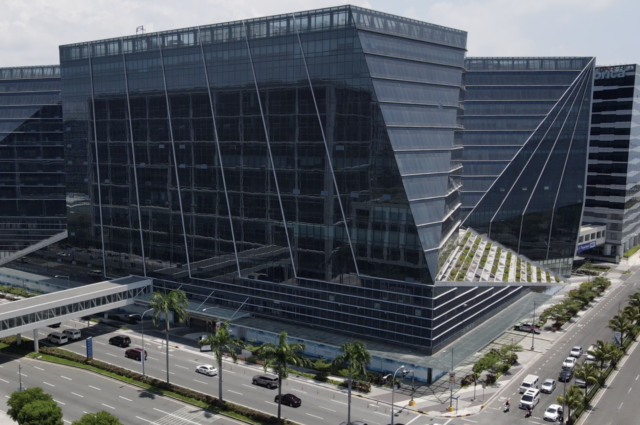
FourE-com Center: The award-winning architectural design of FourE-Com Center in the MOA Complex has a fifth-level sky garden for employees and guests to rejuvenate and enjoy the outdoors within a secured setting.

Revolutionizing the Landscape of Professional Spaces in the Philippines

In a post-COVID era where the boundaries between work and lifestyle are increasingly blurred, SM Offices emerges as a revolutionary force in the Philippine real estate sector. SM Offices goes beyond traditional office settings, offering environments that are not only conducive to business but also supportive of a balanced and engaging lifestyle. This innovative approach reflects a deeper understanding of the evolving needs of today’s workforce, marking SM Offices as a leader in creating spaces where productivity and personal well-being coexist harmoniously.

Experiential Workspaces for Modern Professionals


A shining example of how these principles are brought to life by SM Offices is the E-com Office Block in the Mall of Asia (MOA) Complex.  The E-com Office Block, which is defined by the series of avant-garde E-com Center office buildings, is more than just a dynamic center of workspaces. The scenic E-Com Center glass edifices and grand staircases amalgamate to create a picturesque backdrop that is perfect for commercial and pre-nuptial photo shoots, as well as hosting functions.

“Being located in an SM Office is practically like working from home – we are where you want us to be. Our network of sustainable workspaces is nationwide, so that we are conveniently closer to the homes of our tenant-partners’ employees. This keeps families closer together, while answering companies’ needs for hubs of growth, innovation, and workplace synergy,” highlighted Alexis Ortiga, SM Offices Business Unit Head.

Equipped with a myriad of facilities and amenities, SM Offices properties are designed to nurture a well-rounded lifestyle. This unique approach to office space design is driven by a desire to provide an environment where work and pleasure blend seamlessly, fostering a thriving professional community.

The OneE-com Center, for instance, houses full-size wooden basketball and volleyball courts, as well as badminton courts with Badminton World Federation-approved PVC flooring. These facilities provide an excellent avenue for tenant-engagement activities, sports fests, and team-building exercises.

Along with this, TwoE-com Center, LEED-Gold certified ThreeE-Com Center, and Pre-LEED Gold certified FourE-com Center, all have stirring sky gardens. These expansive fourth- and fifth-level green spaces feature curated landscaping, relaxation nooks, and retail offerings, to break the monotony from one’s work day and complete a holistic work environment. These areas also serve as ideal Manila Bay sunset settings for corporate gatherings and social events.

Adding to the allure of working in the E-com Office Block, the MOA Complex is the premier destination in the Bay Area in Pasay City. The 67-hectare estate boasts of a diverse mix of amenities and facilities, including the SM Mall of Asia, SMX Convention Center, world-class stages like the SM MOA Arena and SM Concert Grounds, and the SM By the Bay amusement park. The MOA Complex’s strategic central location at the one end of EDSA, combined with state-of-the-art facilities, also makes it the ideal venue for hosting significant corporate, cultural, and entertainment events.

Business Solutions Nationwide

Beyond the MOA Complex, SM Offices extends its reach to business districts and locations across the Philippines, including Bacolod, BGC, Cebu, Cagayan de Oro, Clark, Davao, Iloilo, Makati CBD, Ortigas CBD, and Quezon City – each with their unique set of business ecosystems. Ortiga noted, ” SM Offices is at the forefront of providing top-tier office solutions nationwide. Our expansion across major cities and regions reflects our commitment to bringing world-class workspaces conveniently closer to professionals all over the country.”

SM Offices remains dedicated to building properties that are not just about work, but about cultivating a community where business, leisure, and personal growth can co-exist. This commitment establishes SM Offices as a trailblazer in the industry, redefining how professional environments can inspire and facilitate a holistic lifestyle.


Spotlight is BusinessWorld’s sponsored section that allows advertisers to amplify their brand and connect with BusinessWorld’s audience by enabling them to publish their stories directly on the BusinessWorld website. For more information, send an email to online@bworldonline.com.

Join us on Viber at https://bit.ly/3hv6bLA to get more updates and subscribe to BusinessWorld’s titles and get exclusive content through www.bworld-x.com.

Golden ABC eyes up to 100 new stores this year

GOLDEN ABC, Inc. (GABC) said it plans to open 50 to 100 new stores this year, citing business opportunities amid geopolitical tensions.

“A lot of the expansion would be outside Metro Manila, and we will go where the opportunity brings us,” GABC Chairman and Chief Executive Officer Bernie Liu told reporters on Jan. 28.

“I don’t have the exact number, but we should be looking at maintaining 50 to 100 new stores hopefully for the whole group,” he added.

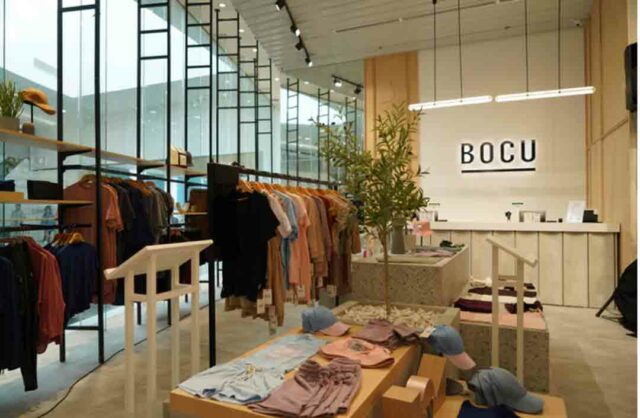
GABC is the home of fashion brands such as Penshoppe, OXGN, Memo, Regatta, ForMe, and BOCU. The company has over 1000 stores and over one million square feet of retail space.

Mr. Liu said that GABC is identifying opportunities while keeping a close watch on geopolitical tensions, including the increasing tensions between the Philippines and China.

“The tension in China, the election in the US, the war in the Middle East, all of that we’ll just have to monitor things closely,” he noted.

“But I am an optimist, and I believe that the Philippines is well situated to be able to take advantage of the opportunities,” he added.

There is a strong demand for GABC products, he said, adding that the recent Christmas period was a good season for retailers.

“It (demand) will continue. There will be challenges. Just like we’re getting out of the pandemic — the pandemic had a different set of challenges. Now we’re seeing a different level of economic challenges. But if we survived the pandemic, I don’t see any reason why we cannot face the current challenges we face today,” he added.

GABC, founded in 1986, is engaged in the business of creating and selling its own clothing, accessory, footwear, and personal care lines across various brands. — Revin Mikhael D. Ochave

An immense impetus to reinvent

Image from Freepik

For businesses planning for 2024, nothing could be of better help than the perspectives of chief executive officers (CEOs). Insights from top company officials not only serve as the barometer of the business climate but also give decision-makers a map for navigating the maze of trends in the world of enterprise. In the complicated modern landscape of global business, staying ahead requires a deep understanding of challenges and opportunities for companies this year.

For instance, for its latest Global CEO Survey, professional services company PricewaterhouseCoopers (PwC) surveyed more than 4,700 CEOs in 105 countries and territories from October to November last year to uncover what companies might do this year.

PwC’s findings indicate that more and more corporations are feeling immense pressure to reinvent and make meaningful changes to their companies’ business models. According to their survey, 45% of CEOs globally believe their company will not be viable in ten years if it stays on its current path.

This number grows to 54% for Philippine-based CEOs and even higher to 63% in the Asia Pacific region, despite 97% of CEOs having taken steps towards business reinvention.

The survey revealed that several factors will drive changes to the way companies create, deliver, and capture value in the near future. Some variables that may influence companies to reinvent their business models include technological advances, customer preferences, government regulations, and competitor actions.

Despite this intensification of CEO worries about corporate viability, the survey suggests that it does not reflect near-term economic concerns. Based on the annual report, 38% of CEOs anticipate global economic growth compared to last year’s 18%. However, slightly more company officials still believe that the growth will contract in the coming year with 45% expecting a decline; while another 18% expect the global economy to remain the same.

In the Philippines, meanwhile, 57% of CEOs believe the global economy will improve over the next 12 months, slightly higher than the Asia-Pacific average of 40%.

Additionally, companies in the region and globally are feeling less threatened by economic risks this year. Data from the survey indicates that only 24% of CEOs believe that their company will be exposed to inflation, 24% to macroeconomic volatility, 21% to cyber risks, and 18% to geopolitical conflicts.

Climate change concerns

The report of PwC also highlighted the importance of climate change in today’s business landscape. After all, it is estimated that 55% of global gross domestic product (GDP), or roughly US$58 trillion, is moderately or highly dependent on nature. This has led to CEOs investing in multiple climate-related actions like improving energy efficiency, innovating new climate-friendly products, and incorporating climate adaptation in their business plans.

However, some top officials also reported their companies’ lack of climate actions with 36% of CEOs admitting that they had no plans to invest in nature-based climate solutions, while 31% said that they had not included climate risks in their financial planning according to PwC.

Nevertheless, top officials have already accepted that climate-friendly investments tend to have significantly lower rates of return. Based on the survey, 40% of companies’ climate-friendly return on investments were reportedly at least 4.1% lower than the acceptable rate of return compared to their other endeavours.

Artificial intelligence

Aside from climate change, CEOs also expect generative artificial intelligence (AI) to significantly change how companies operate. Findings from the annual report suggest that nearly three out of five CEOs believe that generative AI will improve the quality of their products while about 50% of the top officials anticipate the technology to enhance their capacity to build trust with stakeholders.

In the next three years, generative AI is expected to have an even bigger impact than it currently has. According to the survey, seven out of 10 CEOs predict that AI will drive changes to their business model, increase competitiveness in different industries, and demand new skills from workers.

Nonetheless, CEOs also voiced their concerns regarding the use of artificial intelligence in their companies. Based on PwC’s poll, cybersecurity risk, the spread of misinformation and disinformation, legal liabilities, reputational risks, along with bias towards specific groups of customers or employees are some leading concerns regarding the use of generative AI in enterprises.

Barriers to reinvention

Moreover, barriers prohibiting reinvention were also included in the survey. Many of these obstacles are within the CEO’s realm of influence. For example, 55% of CEOs said that competing operation priorities were prohibiting change in business models, 52% stated a lack of skills in their company’s workforce, and 47% noted their company’s limited financial resources, all of which are considered by PwC to have “stronger CEO influence.”

In the meantime, lack of workforce skills (71%), lack of technological capabilities in one’s company (69%), and competing operational priorities were determined as top barriers to reinvention in the country.

Another barrier that looms large in the business economy is the inefficiency of how companies conduct administrative tasks such as emailing, meetings, and decision-making. Data from the annual report shows that 40% of CEOs deem these activities inept. PwC estimates the cost of these inefficiencies to be US$10 trillion on self-imposed tax on productivity.

Likewise, results from the survey suggest the importance for companies to reallocate their fund in the process of reinvention, which will then lead to higher profit margins. Data from PwC showed that companies with a higher percentage of financial and human reallocation also had higher associated levels of reinvention. These levels were derived from a factor analysis of the extent of impact the following actions had on how companies create, deliver, and capture value based on different criteria.

Finally, the CEO Survey noted that CEOs who are less confident in their company’s viability in the next ten years are also the ones who are slightly more conscious of key threats. Conversely, these same CEOs who are less confident are also the ones who are somewhat more likely to take reinvention actions such as making new strategic partnerships, shifting from global supply chain models to regional ones, or implementing novel pricing models.

Ultimately, the survey results for this year show that CEOs are showing a real sense of urgency and a bias toward action. While profit-raising ventures such as developing a new business model adept for the current times and using generative AI to increase efficiency will surely help their company in the present, slowly setting the pace in combatting climate change will eventually pay dividends in the future. — Jomarc Angelo M. Corpuz

SEC cautions public against Meta Advertising Co.

THE Securities and Exchange Commission (SEC) has cautioned the public against investing in Meta Advertising Co., saying the entity lacks the necessary license to solicit investments.

In an advisory posted on its website, the corporate regulator said that Meta Advertising Co./Meta Ads Ltd./Meta Ads is allegedly inviting the public to invest money via WhatsApp and Telegram platforms. The entity is reportedly engaged in the tasking and recharging scheme.

The SEC said that the entity is not registered as a corporation or partnership as per its initial verification.

Target investors will be required to like two videos, with a promise of receiving P50 for each like. Once these tasks are completed, they will be given another task, which is to join a group named META and like another video, with a promise of receiving P150.

As posted on the entity’s WhatsApp and Telegram groups, investors can choose from three options after completing each task in a so-called “mission program,” with a minimum of P5,000 up to P46,800. Investors could earn between 60% and 80%, resulting in P3,000 up to P37,440.

“It was further reported that Meta Ads Ltd./Meta Ads via WhatsApp and Telegram, and through the following platform and websites, is inviting the public to put and invest money and to watch ads for a promise of earning money, however upon completion of the tasks, there will be a sudden change of platform and the promised earnings can no longer be withdrawn,” the SEC said. — Revin Mikhael D. Ochave

Art gets eco-conscious

IMAHICA Art Gallery’s ‘Conscious Creations: A Sustainability Art Show’: Steph Naval of Arcadia talks about the circular economy - Brontë H. Lacsamana

AS IMAHICA Art Gallery mounts its first exhibition of the year, it spotlights efforts to combine artistic innovation and environmental consciousness.

The gallery’s latest exhibit, titled “Conscious Creations: A Sustainability Art Show,” explores how sustainable practices can be adopted for various forms of art. It runs until Feb. 11 at Imahica Art Gallery.

Fifteen artists are showcased in the exhibit: Dante Palmes, Arnel Garcia, Eden Ocampo, Ivy Marie Apa, Jurg Casserini, Maria Pureza-Escano, Melanie Libatique, Melissa Yeung-Yap, Michi Calica, Ram Mallari, Russell Balajadia, Sam Penaso, Valen Valero, JunkNot’s pioneering duo Willie Garcia and Maan Chua, and Hausmotors’ group of employees.

Their works range from repurposed sculptures and furniture to eco-conscious installations and paintings, fashioned from reused plastic, leftover wood, discarded toys, and scrap metal, among other materials.

“I had a lot of excess items at home, like toys, cellphone batteries, old pieces of wood,” Arnel Garcia, a sculptor and painter who hails from Pampanga, told BusinessWorld during the exhibit opening on Jan. 27.

Prominent objects used in his mixed-media art in the exhibit are shoes in The Praying Paws, toy guns in Lupang Sinilangan, and dental impression trays and puzzle pieces in Juxtaposition of Pulchritude Series #1.

“Those puzzle pieces were just laying around, no longer complete due to being scattered in a recent typhoon,” said Mr. Garcia. “Rather than throw them away, I glued them into my works.”

For him, molding these items in resin to complete his artworks is a much better use of them than letting them pollute the environment.

Melanie Libatique, another sculptor and painter, integrated old toys and other unused items in her mixed media works as well, including a metronome and a xylophone that viewers can play.

“None of us want to add any more garbage [to the surroundings], so we just add it to our art. My goal is to recycle and also let kids enjoy their time at the gallery. That’s why I put in toys, so they can relate to art, too,” Ms. Libatique told BusinessWorld.

The exhibit’s opening, co-presented by Business Network International (BNI) Iconic, also had keynote speakers kick off discussions on sustainability and mindful living to supplement the artists’ creative expressions.

CIRCULAR ECONOMY
Sustainability solutions platform Arcadia, represented by its executive director Steph Naval, opened the mixer by presenting how a circular economy benefits the world more than the current, linear status quo.

“By promoting the use of eco-friendly materials, reducing waste, and adopting recycling practices, we can minimize environmental harm,” Ms. Naval said.

While a linear economy carries resources in a one-way flow from production to disposal, a circular economy encourages keeping resources in use for as long as possible, she added.
Some examples of sustainability solutions necessary in a circular economy are the use of recycled steel, wood, and plastics, leaner construction and manufacturing, and the organization of community recycling programs.

Motorcycle spare parts distributor Philippine SGC Corp., through its subsidiary dealer HausMotors, has its own system of recycling motorcycle parts within their company — resulting in a few artworks shown at the exhibit.

“We are not artists at all, but we love to create opportunities for our employees,” said Louie Evans Sala, corporate services director of HausMotors.

Their contributions to the exhibit include mixed media works where motorcycle parts are arranged on wood to form the shape of a motorcycle, and headlights repurposed into lamps. “They’ve been repurposing parts for five years now, and all profit from the works goes to them,” Mr. Sala said.

Wilhelmina “Willie” Garcia, an interior designer and environmentalist, provided the exhibit with works from her own enterprise as well, called JunkNot.

In conjunction with a livelihood seminar commissioned by the Department of Natural Resources – Taal Volcano Protected Landscape (DENR-TVPL), Ms. Garcia and the Taal community have been creating roped plastics with which to produce furniture, homeware, fashion products, and commissioned works.

“JunkNot helps on a small scale to solve two problems at once: waste management and its environmental impact, and lack of livelihood in small communities,” she explained at the exhibit opening.

Her works on view at the exhibit, made with her friend Maan Chua, include a chair that is essentially a metal frame with 1.8 kilos of roped plastic waste woven into it, a bag spruced up by colorful yet beautifully integrated plastic, and a copper-free mirror with tetra board backing.

“By using these recycled materials, we hope to keep plastic out of landfills and incinerators,” Ms. Garcia said.

Cherry Fulgar, co-founder of Imahica Art Gallery, told BusinessWorld that the exhibit is only one of many activities they have lined up to merge the worlds of art and business for a good cause.

“With the help of BNI Iconic, we really wanted to use this platform to spotlight sustainability topics,” she said.

On Feb. 3, the gallery will host a business mixer with Joey Bondoc of Colliers Philippines as the keynote speaker, allowing guests to engage with the topic of smart technologies and their role in sustainability.

“Conscious Creations: A Sustainability Art Show” runs until Feb. 11 at Imahica Art Gallery, located in 2A Lee Gardens, Shaw Blvd. corner Lee St., Mandaluyong City. — Brontë H. Lacsamana

NCCA focuses on inclusivity for National Arts Month

THE NATIONAL Commission for Culture and the Arts (NCCA) celebrates ingenuity and inclusivity for this year’s National Arts Month (NAM).

With the theme “Ani ng Sining, Bayang Malikhain,” the 2024 iteration of the monthlong celebration aims “to outline the notion that the bountiful harvest of a Filipino creative nation is derived from collective human imagination, not just individual aspirations,” according to a press release.

NCCA executive director Oscar G. Casaysay noted that the many events and activities lined up from February to March prove how large the scope of Philippine arts has become.

“It proves once again the ability of the arts to pollinate across communities, thus offering a wide range of bounties,” Mr. Casaysay said in a speech at the NAM press conference held on Jan. 23 at the Metropolitan Theater in Manila.

“Art is essential. It’s a way of communicating… that allows us to share our history and culture in ways that can connect across languages and even allow people from other places to learn about us, to appreciate our unique characteristics as a country, as a community,” beauty queen and NCCA Arts ambassador Catriona Gray said.

“Let us extend a hand of invitation as we celebrate the arts this year,” she said in her speech.

The festivities will kick off with an opening ceremony on Feb. 23 at Rizal High School in Pasig city, where a diverse array of performances, workshops, and talks are meant to empower the young minds in attendance.

THE ACTIVITIES
An art fair in partnership with LUSONG Luzon Arts and Culture Network, Inc., ARTIST, Inc., and the provincial government of Laguna will be held on Feb. 29 from 2 to 4:30 p.m. at the Laguna Sports Complex. It will feature performances by ARTIST Inc.’s Tremolo Rondalla, Children’s Literature Performances (CLAP), Agarwood Rap Music, Letran Calamba’s Tining Chorale, classical guitarist Leandro Ong, contemporary dance by Corina Vallejos, spoken word poetry, and Luisiana’s Teatro de Luis y Ana.

The NCCA’s architecture and allied arts committee will host a seminar and workshop series called Saan Ka Lulugar 2024: Resiliency in the Built and Designed Environment which will explore resilience in planning, designing, and creating everything from dwellings to cities. It will be held in different locations around the country from Feb. 23 to March 21.

The NCCA committee on cinema will host the 16th Cinema Rehiyon, a festival that presents some of the finest works by filmmakers from the various regions of the Philippines. It is set to roll out from February to April, mainly in Iloilo, led by festival director Noel Galon de Leon. Its activities will include a film appreciation workshop designed by film critic, educator, and cinema committee vice-chairman Tito Valiente; the Margaha Film Festival in Sagay City, Negros Occidental; the NCCA Online Film Library available nationwide and worldwide from March to April; and the Iloilo Film Festival on Solarflix TV.

The dance committee’s Sayaw Pinoy festival, founded by its artistic director Dr. Shirley Halili-Cruz, will promote collaboration among schools, community leaders, local government units, dance directors, and artists through a TikTok dance challenge, a four-part online dance lecture series in February, touring performances from Feb. 23 to March 8 in various cities, and a culminating dance concert set in March at the Metropolitan Theater in Manila.

The 18th TANGHAL under the NCCA dramatic arts committee will have regional festivals in Laguna, Cebu, General Santos City, and Makati City showcasing works from their respective communities. A theater and storytelling workshop for children will also be held on Feb. 28 in Los Baños, Laguna; March 8 to 9 in San Fernando, La Union; March 11 to 13 in Ormoc City, Leyte; March 14 to 15 in Koronadal City, South Cotabato; March 15 to 18 in General Santos City, South Cotabato; March 16 to 17 in Makati City; March 18 to 20 in Cebu City; and March 21 in Dasmariñas, Cavite.

The National Committee on Literary Arts (NCLA) will conduct SURAT-TANGHAL in the various partner cities from Feb. 24 to March 16. Under this is SURATalakayan, which is a series of public forums, talks/lectures, workshops, literary discussions/conversations, town hall meetings, networking sessions, live readings, book launches, and small-scale book fairs.

Meanwhile, TANGHAL-AKDA refers to performances centered on regional texts interpreted by local writers, artists, theater groups, or dance troupes, which aim to make specific literary works more accessible to the public.

Musikapuluan, the project of the National Committee on Music (NCM), kicks off on Feb. 23 with a lecture-demo at Rizal National High School, Pasig City showcasing the kulintang, Cordillera music, and pop music. In Luzon, workshops will be delivered by National Music Competitions for Young Artists (NAMCYA) 2023 winners. Workshops will be held from March 13 to 14 in Ormoc City, Leyte. For Mindanao, there will be an event from March 8 to 9 in Koronadal City, South Cotabato.

The committee on visual arts will present the Bagong Biswal festival from Feb. 23 to March 22 across various cities in the country. Under the festival is Sining Sanayan, a series of art workshops on drawing, painting, sculpture, mixed-media, and mobile photography. Sining Sinag is a physical exhibit curated by the committee with Ormoc City highlighting talents from the Visayas region. Sining Biswal Scene will gather artists to discuss current practices and challenges in the visual arts industry, while Sineng Sining will be a presentation of video features or documentaries.

This year, the NCCA will host the Ani ng Dangal awarding ceremony which recognizes artists, cultural workers, and works that have earned international awards and accolades over the past year. The 25 endorsed awardees across Architecture, Cinema, Dance, Dramatic Arts, Literary Arts, Music, Visual Arts, Folk Arts, and Broadcast Arts will be acknowledged on Feb. 29 at Malacañang Palace.

For more information, visit the NCCA Facebook page (https://www.facebook.com/NCCAOfficial). — Brontë H. Lacsamana

Gov’t fully awards reissued three-year T-bonds

BW FILE PHOTO

THE GOVERNMENT made a full award of the reissued Treasury bonds (T-bonds) it offered on Tuesday at a higher average rate ahead of the fourth-quarter and full-year gross domestic product (GDP) growth report.

The Bureau of the Treasury (BTr) raised P30 billion as planned via the reissued three-year bonds it offered on Tuesday as total bids reached P62.434 billion, or more than twice the amount on the auction block.

The bonds, which have a remaining life of two years and 11 months, were awarded at an average rate of 6.007%, with accepted yields ranging from 5.95% to 6.05%.

The average rate of the reissued bonds rose by 10.7 basis points (bps) from the 5.9% quoted for the papers when they were first offered on Jan. 3. It was likewise 0.7 bp above the 6% coupon for the series.

The average yield was 6.9 bps above the 5.938% seen for the same bond series but 0.4 bp lower than the 6.011% quoted for the three-year bond at the secondary market before Tuesday’s auction, based on PHP Bloomberg Valu-ation Service Reference Rates data provided by the Treasury.

“The higher rates reflected local optimism ahead of the Philippine GDP report tomorrow,” a trader said in an e-mail on Tuesday.

Economic growth may have slowed in the fourth quarter of 2023, putting the full-year average below the government’s target, analysts said.

Philippine GDP likely expanded by 5.7% in the October-to-December period in 2023, based on a median forecast of 20 economists polled by BusinessWorld, slower than the revised 6% growth in the third quarter and the 7.1% expansion in the same period in 2022.

The same poll showed GDP growth may have averaged 5.5% in 2023, missing the Development Budget Coordination Committee’s 6-7% target.

If realized, the estimate for 2023 would be below the 7.6% expansion in 2022 and the slowest since the 9.5% contraction in 2020.

The Philippine Statistics Authority will release fourth-quarter and full-year 2023 GDP data on Wednesday.

T-bond rates rose in line with secondary market levels amid expectations of policy easing by the US Federal Reserve this year, Rizal Commercial Banking Corp. Chief Economist Michael L. Ricafort added in a Viber message.

The US central bank raised borrowing costs by 525 bps from March 2022 to July 2023, bringing the fed funds rate to 5.25-5.5%.

This week, the Federal Open Market Committee is holding its first policy review for this year. Markets widely expect policy makers to keep rates steady for the fourth straight meeting.

The Fed in December surprised the market with its dovish tilt, projecting 75 bps of interest rate cuts in 2024, sparking a blistering year-end risk rally, with traders pricing in easing as early as March, Reuters reported.

But since then, a slate of strong economic data, sticky inflation and pushback from central bankers have led markets to significantly dial back their expectations.

Markets now expect a 47% chance of a Fed rate cut in March, the CME FedWatch tool showed, down from 88% a month earlier. They currently anticipate 134 bps of cuts in the year, compared with 160 bps of easing a month ear-lier.

The BTr plans to raise P210 billion from the domestic market this month, or P60 billion via T-bills and P150 billion through T-bonds.

The government borrows from local and foreign sources to help fund its budget deficit, which is capped at 5.1% of gross domestic product this year or P1.39 trillion. — A.M.C. Sy with Reuters