Home Blog Page 364

Thai franchisors exploring PHL expansion, DTI says

CHA-THAI.COM

BRANDS are considering expanding their Philippine footprint through franchising, the Department of Trade and Industry (DTI) said.

In separate social media posts, the DTI said it met with representatives from Thai groups Tiptari Co. Ltd. and ZEN Corp. Group Public Co. Ltd. to discuss possible expansion.

The discussions with Tiptari centered around its ChaTraMue brand’s expansion plans in the Philippines, it said.

“The meeting underscored ChaTraMue’s rapid growth since its 2023 entry, plans to expand beyond Metro Manila, and its strategy to grow through franchising and product distribution,” it added.

ChaTraMue currently operates 14 Philippine outlets.

“The company also expressed interest in expanding its franchising network and identifying local partners for ready-to-drink beverages and ice cream products,” it added.

Meanwhile, ZEN Group, which operates Khiang Restaurant, discussed plans to expand its Thai and Japanese dining concepts in the Philippines, it said.

“Khiang currently operates two branches in Metro Manila, (while) additional outlets are scheduled to open in 2026,” it added. — Justine Irish D. Tabile

Philippines seeks World Bank funding for water, solid waste projects

REUTERS

THE PHILIPPINES is seeking funding from the World Bank for a water, sanitation, and solid waste management project, the bank said.

The Philippines Accelerated Water and Sanitation Project is targeted for approval by the bank’s board on March 30, according to a document uploaded to the bank’s website on Feb. 2.

The project cost is $268.84 million, with the departments of Public Works and Highways  and Interior and Local Government (DILG) serving as implementing agencies.

The project hopes “to increase access to safely managed water supply and sanitation services and improve the performance of water service providers in selected areas of the Philippines,” the World Bank said.

In a separate report, the Philippines is also aiming to obtain a $1.07-billion loan from the World Bank to improve waste management and reduce plastic pollution in the National Capital Region.

The Clean Metro Manila project is estimated to be approved by the board in November with the project cost estimated at $1.07 billion, the bank said in a Jan. 30 report.

Implementing agencies are the DILG, the Department of Environment and Natural Resources, and the Metropolitan Manila Development Authority.

“The first phase of Clean Philippines multiphase programmatic approach will cover Metro Manila, the National Capital Region (NCR), including all of its 17 LGUs (local government units),” it said.

The NCR encompasses 17 LGUs and 1,710 barangays, with 14 million inhabitants.

Solid waste volumes are expected to reach P23.6 million tons by 2025, particularly organic waste and plastics, the bank said, noting poor waste-disposal practices, declining waste-management capacity, and limited plastic-processing capacity.

“Barangays are responsible for solid waste collection but are constrained by the lack of funds and collection trucks,” the World Bank said. — Aubrey Rose A. Inosante

Market-vendor QR system present in over 900 LGUs at end of 2025

People buy food items at a market in Quezon City, Nov. 22, 2024. — PHILIPPINE STAR/MIGUEL DE GUZMAN

THE NUMBER of local government units (LGUs) that have integrated a central bank-backed quick response (QR) code program for public market vendors more than doubled last year, according to the Bangko Sentral ng Pilipinas (BSP).

BSP Deputy Governor Bernadette Romulo-Puyat said 922 LGUs had adopted the Paleng-QR Ph Plus in 2025, more than doubling the year-earlier total.

“From 408 local government units in 2024, we now have more than 900 LGUs that have adopted the program, covering markets, mall stores, and transport hubs nationwide,” she said at a briefing in Dumaguete City.

By 2026, the BSP aims to grow the number to 1,700 LGUs, Ms. Romulo-Puyat said, not counting barangays.

She also noted that the Department of Information and Communications Technology has been tapped to broaden the program’s reach.

Ms. Romulo-Puyat said Information and Communications Technology Secretary Henry Rhoel R. Aguda will assist the central bank by supplying internet connectivity to unconnected markets.

“Secretary Aguda told us to write down kung saan ’yung mga palengke na walang internet connectivity, at bibigyan niya ng Starlink (Secretary Aguda told us to list the markets without internet connectivity and he will give them Starlink),” she said.

The BSP, together with the Department of the Interior and Local Government, launched the Paleng-QR Ph in June 2022 as part of the National Strategy for Financial Inclusion.

In November 2022, it introduced Paleng-QR Ph Plus, which widened the program’s scope to include shopkeepers and tricycle operators and drivers.

The central bank said the initiative seeks to promote the “acceptance of digital payments…in all cities and municipalities.” — Katherine K. Chan

PHL fish catch declining 45,000 MT a year due to overfishing, lax regulation — report

PHILIPPINE STAR/WALTER BOLLOZOS

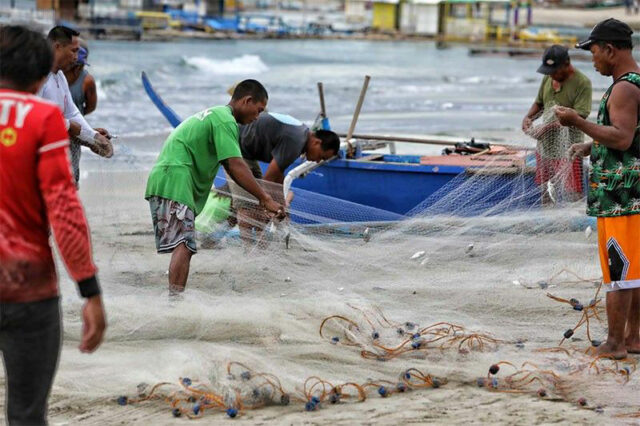
THE Philippine fish catch is declining by an average of 45,000 metric tons (MT) each year due to overfishing, illegal fishing, and weak enforcement of fisheries law, according to Oceana Philippines.

In a report, Oceana Philippines said capture fisheries production fell from 2.6 million MT in 2010 to about 1.9 million MT in 2023, representing an annual loss of 45,472 MT.

“Our fisheries are not just declining, they are in freefall. We’ve lost nearly 600,000 MT of potential catch in just over a decade. That’s enough fish to provide a healthy meal to every Filipino for a month,” Von Glenn S. Hernandez, vice-president of Oceana Philippines, said at the report’s launch on Monday.

The report found that 88% of assessed fish stocks are being harvested faster than they can recover, indicating severe exploitation across most commercially important species.

“Some evidence suggests localized stock recovery in areas such as the Davao Gulf and Zamboanga Peninsula. However, scientific data show many fish populations remain overfished even after years of seasonal closures,” the report said.

The continued depletion of fish stocks poses a serious threat to national food security, the report said. Fish account for 11.7% of the country’s total food requirement.

Illegal, unreported, and unregulated fishing also resulted in an estimated P5.4 billion in losses from 2022 to 2023, which the organization described as economic value “stolen from the sector.”

The group said unregulated fishing and declining fish stocks are exacerbating poverty in coastal communities. In 2023, an estimated 353,000 fisherfolk families were living below the poverty line, including about 93,000 families classified as food-poor or unable to afford basic food needs.

Oceana urged the government to take immediate action by strengthening enforcement of Republic Act (RA) No. 10654, or the amended Philippine Fisheries Code, to curb illegal fishing and ensure the long-term sustainability of the country’s fisheries.

Under the amended Fisheries Code, only municipal fisherfolk — those operating boats weighing less than 3.1 gross tons and employing non-destructive, passive fishing practices such as hook-and-line and gill nets — are allowed to fish within municipal waters. These waters extend up to 15 kilometers from the coastline, including offshore islands.

However, Oceana said only 51% of coastal local government units (LGUs) have complete municipal water delineation.

Data cited in the report also showed that more than 270,000 cases of “apparent intrusions” by commercial fishing vessels into municipal waters were recorded between January 2017 and January 2024.

While Fisheries Administrative Order No. 266 was issued in 2020 to require vessel monitoring measures (VMM) for commercial fishing vessels, Oceana said enforcement gaps have allowed unchecked operations and unverified catch reports to persist.

“The Bureau of Fisheries and Aquatic Resources (BFAR) has not fully utilized the system despite about 90% of commercial vessels (being equipped) with VMM devices as of 2024,” the report said.

Section 18 of the Fisheries Code allows commercial fishing within the 10.1- to 15-kilometer zone of municipal waters, subject to strict conditions, including certification from the National Mapping and Resource Information Authority and the conduct of public hearings.

However, Oceana noted that only one of the 174 coastal LGUs authorizing commercial fishing in municipal waters has complied with all required conditions.

The report also cited staffing and budget constraints at BFAR, noting a 28% drop in personnel from 2017 to 2023, with about 68% of current staff employed on a contractual basis. BFAR also receives only 6% to 15% of the Department of Agriculture’s (DA) budget.

“The challenge is so big relative to the resources available. These declines (in staff and resources) happened despite the expanded mandate of BFAR under RA 10654,” according to Alice Joan G. Ferrer, executive director of Too Big to Ignore Philippines and one of the report’s authors, said at the launch.

Oceana called on the government to strengthen enforcement in hotspot areas, expand BFAR’s workforce and budget, resolve legal impediments to vessel monitoring, and complete municipal water delineation, prioritizing regions with high intrusion rates.

“We will be sharing the report and our demands with the DA and BFAR. The fisheries crisis has been happening under the radar. Hopefully, they take notice and respond with urgency,” Mr. Hernandez told reporters. — Vonn Andrei E. Villamiel

TP opens second BPO office in Davao City

INFORMATION TECHNOLOGY and business process management (IT-BPM) company TP in the Philippines, formerly Teleperformance, said it opened a second site in Davao City, making it its 26th location in the Philippines.

TP Davao Uprise is also the company’s fourth site on Mindanao. It will be located at The Uprise at Felcris Centrale mall.

The company is making a “long-term commitment to regional growth, talent development, and inclusive job creation in the Philippines.”

“The launch of TP Davao Uprise reflects our confidence in Davao City as a strategic growth hub and in Mindanao as a critical pillar of the country’s IT-BPM industry,” Rahul Jolly, chief executive officer of TP, said in a statement on Monday.

“With scale-ready infrastructure, a deep talent pool, and strong public-private collaboration, Davao continues to enable us in TP to deliver world-class service to our clients,” he added.

Mindanao Development Authority Chairman Leo T. Magno said the IT-BPM industry is among the fastest-growing industries  in the region.

“Investments such as TP’s expansion in the Davao Region translate the national vision into concrete outcomes — generating quality, future-ready jobs for Mindanaoans,” he added.

“As TP continues to expand its footprint in Mindanao, it also creates a strong demonstration effect. It sends a clear message to other investors that Mindanao is open, capable, and ready for business,” he added.

According to the company, Davao City is the largest talent hub in Mindanao, being home to over 100,000 IT-BPM professionals. It is also known for low attrition rates.

“Davao continues to prove itself as a destination for resilient, highly capable, and customer-focused talent,” according to Jeffrey Johnson, chief people officer at TP.

“TP Davao Uprise expands our ability to provide meaningful employment, career mobility, and skills development while supporting clients that require specialized, domain-ready teams,” he added. — Justine Irish D. Tabile

PHL milk production rises 12.18% in 2025

REUTERS

MILK PRODUCTION grew 12.18% to 43.3 million liters in 2025, the National Dairy Authority (NDA) said.

In a statement on Monday, the NDA said the 2025 total represents a 48.8% rise over the 29.10 million liters reported in 2023.

The Philippine Statistics Authority reported that the value of dairy production in 2025 rose 27.7% to P1.67 billion.

NDA Administrator Marcus Antonius T. Andaya said productivity gains have been driven by dairy development programs focused on animal nutrition, herd expansion, and farm management.

“These gains were achieved without dairy animal imports in the past three years, highlighting improvements in productivity and herd performance at the farm level,” Mr. Andaya was quoted in the statement as saying.

The NDA said carabao milk output rose 24% in 2025, supported by initiatives of the Philippine Carabao Center and private farms. Production from dairy cattle increased 4%, while goat milk output increased 27%.

The NDA said the dairy animal herd expanded 5% to 161,868 head in 2025.

The NDA said the milk sufficiency rate was 2.2%, bringing it closer to the government’s 5% target by 2028.

The NDA also cited Republic Act No. 12308, or the Animal Industry Development and Competitiveness Act, as a key factor in strengthening the dairy industry through improved livestock development and regulation.

The NDA said it remains optimistic for 2026, with four stock farms set to operate this year in Bohol, Bukidnon, Cotabato, and Agusan del Sur, following the opening of the General Tinio, Nueva Ecija stock farm last year.

“With the operation of our stock farms and the plan to import 870 dairy cattle this year, we are confident that these initiatives will further contribute to increased milk production,” Mr. Andaya said. — Vonn Andrei E. Villamiel

Revisiting the TTRA/RFC rules in the digital era

Earlier this year, the Bureau of Internal Revenue (BIR) launched DARES, its five-point reform and legacy agenda. DARES stands for Digital and Data Transformation, Audit Reform and Accountability, Revenue Collection and Base Protection, Employee Empowerment and Welfare Promotion and Service Excellence and Stakeholder Engagement. During the launch, the Secretary of Finance emphasized the government’s intention to improve the ease of doing business. Relevant to this, the BIR issued Revenue Memorandum Order (RMO) 1-2026, the updated audit framework which aims to strengthen transparency, accountability, and due process, and institutionalize stronger system-based and control-driven audits.

I would like to particularly highlight the RMO’s mandatory use of the standardized audit checklist, which should serve as a uniform reference for identifying, requesting, receiving, and evaluating documents necessary for audit. As a tax practitioner, I have experienced taxpayers with pending applications for tax exemption under a treaty assessed for tax deficiency for the type of tax it was seeking an exemption from.

TAX TREATY RELIEF AND REQUESTS FOR CONFIRMATION
While the RMO demonstrates the BIR’s move towards more efficient tax administration, there is still room to improve one notable process relevant to tax assessment, the Tax Treaty Relief Application (TTRA)/Request for Confirmation (RFC). This process seeks to establish that certain income is exempt from tax and consequently from withholding or that certain incomes are subject to lower withholding rates as provided in a tax treaty. The usual challenge for taxpayers arises when the BIR audit includes findings related to an item that is the subject of a pending application for tax treaty relief or RFC with the BIR, in which the taxpayer is unable to provide a certificate of entitlement (CoE) to the treaty.

The BIR’s RMO No. 14-2021, RMC 77-2021 and RMC 20-2022 streamlined the requirements for taxpayers availing the benefits of the applicable treaty. Five years later, it appears that securing a ruling for TTRA or RFC is still challenging as taxpayers deal with two major points. First, the TTRA or RFC still takes years to process. Second, the strict documentary requirements provided under RMO 14-2021, RMC 77-2021 and RMC 20-2022, especially related to authentication and requests for alternative documents, lead to delays that expose the taxpayers to possible tax deficiency assessments.

TIMELINE FOR ISSUING RULINGS
If the BIR has not yet released the ruling or CoE, then the taxpayer received the electronic Letter of Authority (eLoA), the tendency is for the BIR to assess the taxpayer with final withholding income tax and/or final withholding Value-Added Tax (VAT) for certain incomes such as business profits, capital gains, interest, royalties, and dividends. This scenario often leads to confusion, especially among foreign investors who are used to doing business with our neighbors. The confusion stems from the fact that they have already submitted and completed the TTRA or RFC application, yet, when they are subjected to audit, they are required to submit the same set of documents. Moreover, there are instances where the lack of a ruling or CoE will be the basis for the examiners to insist that the taxpayer is liable for withholding tax since the BIR has not yet issued one.

While it is truly understandable that the average timeline for securing the CoE is due to the volume of applications for rulings, perhaps the BIR could revisit the possibility of going digital for TTRA and RFC applications. The BIR’s launch of its ORUS and VDS portals appears to point to the potential for efficiencies. The Securities and Exchange Commission (SEC) has been going big on online portals, such as online registration with SEC Zero and the e-amend portal, making the registration and amendment processes faster and more efficient. With these recent developments, exploring the possibility of submission of documents for TTRA and RFC applications through an online portal could minimize delays in reviewing documents and ultimately lead to faster acceptance and processing of TTRA or RFC applications.

REVISITING TTRA/RFC DOCUMENTARY REQUIREMENTS
Speaking of documentation, the BIR could also consider the possibility of keeping up with technology, especially in terms of requiring specific documentary requirements for TTRA/RFC applications. RMO 14-2021, RMO 77-2021 and RMC 20-2022 have strict documentary requirements, and in instances where the specific document is not available, taxpayers are left to rely on the interpretation of the BIR officers in terms of alternative documents.

To illustrate, one of the requirements in applying for RFC is to submit contracts signed by the authorized signatories of the contracting parties. In addition to the actual contract, which must be authenticated/apostilled if executed abroad, the BIR would require a board resolution or secretary’s certificate showing that the authorized signatory was authorized by the board. Rightfully so, authority to sign must be established. However, in this digital age, the contracts are usually signed electronically; hence, there are contracts wherein the actual signature of the signatory is not visible. Further, for some multinationals and groups of companies, contracts are system-generated, which no longer contain signatures of authorized signatories as these contracts are merely downloaded in their platform or website; thus, complying with the BIR’s documentary requirements becomes a challenge for applicants. There were also instances that, due to data privacy, required documents from non-residents could not be complied with. Moreover, due to digitalization, many services are now rendered through digital platforms hosted abroad, and requiring a certificate of completion from the non-residents now becomes onerous.

In these instances, where providing the applicants with alternative documents is susceptible to various interpretations, the applicant is left to rely on the discretion of the evaluator. This could sometimes contribute to delays as various examiners/evaluators provide different options as well. Hence, these factors, among others, could eventually contribute to the taxpayer’s exposure to a heightened tax audit risk despite the pending application for RFC or TTRA.

The digitalization of TTRA and RFC applications would enable the BIR to immediately review the documents submitted via the portal and in case of BIR audits, the BIR will be able to easily retrieve files for cross referencing purposes. Internally, the digitalization will help the BIR to have a repository of all applications, preserve the records, and allow smooth transition of files in case of personnel movement. Thus, enabling the BIR to focus more on its other collection efforts. Clearly, digitalization will simplify the process for both the government and the taxpayers.

The April 30 deadline for filing TTRA/RFCs for the transactions covered under a calendar year is approaching, and taxpayers are contemplating again if it is worthwhile filing the application now or just wait for the BIR audit, as they will be required to provide the same supporting documents anyway, given the lengthy and unpredictable processing time. Maybe it is time for the BIR to revisit its current TTRA/RFC regulations to align with the Bureau’s current effort for a more transparent, structured, and efficient tax assessment framework. Businesses are veering away from the traditional ways of executing contracts due to digitalization and effectively changing the tax landscape. Simplifying documentary requirements which are easy to comply with and appropriate to the evolving digital world of business would surely attract more investors and help our economy.

Let’s Talk Tax is a weekly newspaper column of P&A Grant Thornton that aims to keep the public informed of various developments in taxation. This article is not intended to be a substitute for competent professional advice.


Gemmalu Molleno-Placido is a senior manager from the Tax Advisory & Compliance practice area of P&A Grant Thornton, the Philippine member firm of Grant Thornton International Ltd.

pagrantthornton@ph.gt.com

Japan PM Takaichi’s party poised for landslide victory, poll shows

Sanae Takaichi, the newly elected leader of Japan’s ruling party, the Liberal Democratic Party (LDP), attends a press conference after the LDP presidential election in Tokyo on October 4, 2025. — YUICHI YAMAZAKI/POOL VIA REUTERS

TOKYO — Japanese Prime Minister Sanae Takaichi’s party is likely to score a landslide victory in next week’s lower house election, a survey by the Asahi newspaper showed, heightening the chance the country will continue to pursue big spending and tax cuts.

A strong showing in Sunday’s election would solidify Ms. Takaichi’s grip on her party and give her a mandate for her expansionary fiscal policy, which could heighten concerns about Japan’s finances and push bond yields higher.

Ms. Takaichi’s Liberal Democratic Party is likely to well exceed a majority of 233 seats out of 465 seats up for grabs in the lower house, according to Asahi’s poll released on Sunday. That would be an increase from 198 seats now.

Together with LDP’s coalition partner, the Japan Innovation Party or Ishin, the ruling alliance will likely reach 300 seats, the poll showed.

“A huge LDP win would further strengthen Takaichi’s grip on power. It won’t be surprising for markets to see a higher chance of Takaichi pursuing her flagship proactive fiscal policies including a consumption tax cut,” said Keisuke Tsuruta, senior bond strategist at Mitsubishi UFJ Morgan Stanley Securities.

Japanese government bond yields rose on Monday as investors priced in the chance Ms. Takaichi will secure an electoral mandate to push through her “proactive” fiscal policy focused on bigger spending and tax cuts.

The largest opposition party, the Centrist Reform Alliance, is struggling and could lose half its 167 seats, the Asahi said.

Ms. Takaichi’s ruling coalition currently holds a slim majority in the powerful lower house but has a minority in the upper house.

The premier dissolved parliament last month and called a snap election on February 8 seeking a mandate for her push to reflate the economy with expansionary fiscal policy.

Japan suffered a broad market rout last month after Ms. Takaichi pledged to suspend an 8% levy on food sales for two years, reviving investor concerns about fiscal discipline in a country with public debt more than twice the size of its economy.

Most other parties have also called for a suspension or a cut to the consumption tax to cushion the blow to households from rising living costs. — Reuters

IMF chief says global inflation to fall, trade integration is needed

A participant stands near a logo of the International Monetary Fund at the annual meeting in Nusa Dua, Bali, Indonesia, Oct. 12, 2018. — REUTERS/JOHANNES P. CHRISTO/FILE PHOTO

DUBAI — Global inflation is expected to fall to 3.8% this year and to 3.4% in 2027, helped by softer demand and lower energy prices, the International Monetary Fund (IMF) chief said on Monday.

Managing Director Kristalina Georgieva said in a speech in the Annual Arab Fiscal Forum in Dubai that global growth has held up “remarkably well” amid profound shifts in geopolitics, trade policy, technology, and demographics.

Ms. Georgieva also called for more trade integration as unilateral trade agreements are seen on the increase.

“In the world of trade fragmentation, more trade integration is absolutely paramount.”

“What we have seen this year is that trade did not go down the way we feared it would. In fact trade is growing slightly slower than global growth,” she added. — Reuters

UK wants closer EU defense ties with potential bid to join new SAFE fund

REUTERS

BEIJING — British Prime Minister Keir Starmer said his government will consider applying to join a second possible multibillion-euro European Union (EU) fund for defense projects as his ministers prepare for talks with EU counterparts this week.

The European Commission is considering launching a second edition of its Security Action for Europe (SAFE) loans scheme as Europe seeks to bolster its defenses due to growing fears of Russia and doubts about US security commitments to Europe under President Donald J. Trump.

A British plan to join the original €150-billion ($177-billion, $1 = 0.8440 euros) SAFE fund broke down in November after Mr. Starmer’s government refused to pay a financial contribution to join, representing a setback for a post-Brexit reset of relations.

Asked if Britain would seek to join a new version of SAFE, Mr. Starmer said Europe needed to do more to rearm.

“That should require us to look at schemes like SAFE and others to see whether there is a way in which we can work more closely together,” he told reporters on his way to China last week. The comments were scheduled for release on Sunday.

“Whether it’s SAFE or other initiatives, it makes good sense for Europe in the widest sense of the word — which is the EU plus other European countries — to work more closely together.”

EU Trade Commissioner Maros Sefcovic and other EU officials are due in London for talks this week.

Mr. Starmer has tried to work more closely with the EU and remove some post-Brexit trade barriers in contrast to the rancorous relations between previous Conservative governments and the EU as they negotiated Britain’s departure from the bloc, which was completed in 2020.

He has also taken a leading role in coordinating European support for Ukraine.

Under the SAFE scheme, the EU jointly borrowed money on financial markets to lend to countries in the bloc for defense projects.

Asked about recent criticism from Nigel Farage, whose Reform UK party is leading in the polls, who said the governing Labor government was moving too close to the EU, Mr. Starmer said the Brexit campaigner had repeatedly misled the public.

“I wouldn’t listen too much to what Nigel Farage has to say about this,” Mr. Starmer said. — Reuters

Russia does not want a global conflict, Medvedev says

UNSPLASH

MOSCOW — Dmitry Medvedev, a senior Kremlin security official, said in remarks released for publication on Monday that the world was getting very dangerous, but that Russia did not want a global conflict.

Russia’s 2022 invasion of Ukraine triggered the biggest confrontation between the West and Moscow since the depths of the Cold War, though US President Donald J. Trump’s envoys are trying to negotiate an end to the war with Russia and Ukraine.

Mr. Medvedev, who serves as deputy chairman of Russia’s Security Council, a kind of modern-day politburo of Russia’s most powerful officials, praised Mr. Trump and said it was encouraging that contacts had resumed with Washington.

But Mr. Medvedev, who has repeatedly hurled invective at Kyiv and Western powers while warning of the risks of an escalation of the war towards a nuclear “apocalypse,” said the West had repeatedly ignored Russian interests.

“The situation is very dangerous,” Mr. Medvedev told Reuters, TASS and the WarGonzo Russian war blogger in an interview at his residence outside Moscow.

“The pain threshold seems to be decreasing.”

“We are not interested in a global conflict. We’re not crazy,” said Mr. Medvedev, who served as Russian president from 2008 to 2012. “A global conflict cannot be ruled out.”

President Vladimir Putin remains the final voice on Russian policy, though Mr. Medvedev, now an arch-hawk, gives a sense of hardliners’ thinking within the Russian elite, according to foreign diplomats.

A cartoon hanging in the room where the interview took place showed Mr. Medvedev, a former lawyer who hails from Mr. Putin’s hometown of St. Petersburg, pointing a submachine gun at European leaders.

WORLD WAS SIMPLY ‘TOO MUCH’ IN JANUARY
Mr. Putin and Mr. Trump have both mentioned the risks of escalation over Ukraine, though European diplomats say that Moscow has skillfully played the escalation card to scare Ukraine’s allies from getting too heavily involved in the war.

“They say ‘No way — these Russians are making it all up’ — they are sowing horror stories and they will never do anything,” Mr. Medvedev said, adding that what the Kremlin calls the “Special Military Operation” in Ukraine showed Russia would stand up for its interests.

Ukraine and its European allies cast the war, the deadliest in Europe since World War II, as an imperial-style land grab, and say that if Russia wins in Ukraine then it will one day attack NATO. Russia dismisses such claims as nonsense.

Conflict first erupted in eastern Ukraine in 2014 after a pro-Russian president was toppled in Ukraine’s Maidan Revolution. Russia annexed Crimea and Moscow-backed separatists battled Kyiv’s armed forces in eastern Ukraine.

When asked about the flurry of global events of January in Venezuela, over Greenland and elsewhere, Mr. Medvedev said that it had all been simply “too much.”

On Venezuelan President Nicolas Maduro, a Russian ally, Mr. Medvedev said that if Mr. Trump had been “stolen” by a foreign power, then the United States would have clearly seen it as an act of war.

He also said Western claims of a Russian or Chinese threat to Greenland were false “horror stories” made up by Western leaders to justify their own behavior. — Reuters

UK Treasury offers up to £100,000 exit packages to cut hundreds of jobs, Financial Times reports

STOCK PHOTO | Image by Pierre Blaché from Pixabay

THE UK TREASURY is offering its officials up to £100,000 ($136,790, $1 = 0.7310 pounds) to leave voluntarily as part of plans to cut hundreds of jobs in the finance ministry, the Financial Times (FT) reported on Monday citing people familiar with the plan.

British Finance Minister Rachel Reeves wants to trim about 300 of her department’s roughly 2,100 staff by 2030, the report said, citing several people familiar with the plan, adding that the cuts form part of a wider drive to cut 16% of administrative costs across Whitehall.

Reuters could not immediately verify the report. The UK Treasury did not immediately respond to a Reuters request for comment.

According to the FT report, the Treasury could still require some officials to be made redundant if voluntary departures fall short across its offices in London, Darlington, Norwich and Edinburgh.

“The Treasury is the largest it has been on record, so during this period of stability it’s now right we reduce our size back to more normal levels through a voluntary exit scheme, in line with the whole of government,” the Treasury told the FT.Reuters