
House prices up 6.5% in Q4 2023
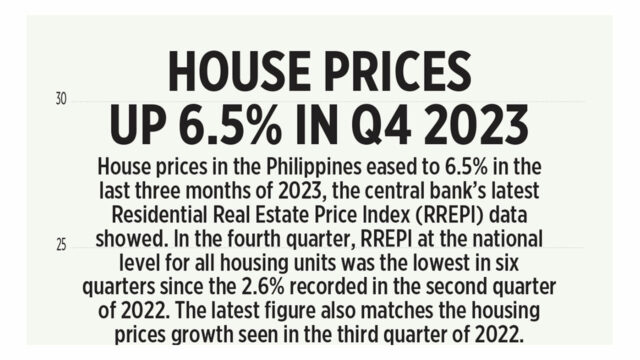
Housing prices nationwide rose at a much slower pace in the fourth quarter of 2023, data from the Bangko Sentral ng Pilipinas (BSP) showed. Read the full story.

Housing prices nationwide rose at a much slower pace in the fourth quarter of 2023, data from the Bangko Sentral ng Pilipinas (BSP) showed. Read the full story.

THE 10-YEAR collaboration between fast fashion brand Uniqlo and French designer Ines de La Fressange has run its course and will be marked with a final Spring/Summer collection which will be available on April 5. This range of LifeWear celebrates the effortless Parisian style of Ines de la Fressange, a symbol of French chic and a style icon for women around the world. The partnership began with the 2014 Spring/Summer collection, and over the last decade has delivered timeless French chic in a universal style. This collection is a return to French basics, suitable for the final chapter, and reflecting the designer’s penchant for styles that make the wearer feel comfortable. There are denim coveralls in light ounce denim with cotton for softness of the material, linen cotton skirts with a fluffy silhouette and classic cotton shirts are emblematic of the timeless items favored by the designer. Fast Retailing Group Senior Executive Officer Koji Yanai commented: “I am confident that our customers will enjoy our final collaboration line. Ines-san, thank you for the wonderful 10 years of our partnership.” The 2024 Spring/Summer Collection will be available at select stores in the Philippines and through uniqlo.com. There is also a special website: https://www.uniqlo.com/ph/en/contents/collaboration/ines/24ss/
THE BEAUTY event K-Beauty Hangout will take place on April 12 at Level 3, Atrium, SM Aura. This event promises a day filled with beauty exploration, education, and hands-on experiences, running from 10 a.m. to 6 p.m. Admission is free, and participants are invited to immerse themselves in the world of K-beauty through various booths and a lecture by a makeup artist from Jenny House, Korea. Jenny House, a trailblazing beauty salon with over two decades of experience, is renowned for its comprehensive services in hair, makeup, and cosmetics. The salon’s clients include some of Korea’s most famous celebrities, including Son Yejin from the 2019-hit K-drama, Crash Landing On You, and Park Shin-hye from this year’s hit K-drama, Doctor Slump. The event is presented by the Korean Cultural Center in the Philippines (KCC) and Korea Tourism Organization Manila Office (KTO-Manila), in collaboration with Jenny House, AMOREPACIFIC Philippines, and SM Aura. K-Beauty Hangout is organized to celebrate the Korea Beauty Festival 2024, held in Seoul from May 31 to June 30. The beauty festival will showcase the best of K-Beauty, featuring experiential booths tailored for foreign tourists, tourism product sales, and a diverse array of K-culture events. Visitors to Seoul can participate in different showrooms and celebrity-inspired make-up experiences in Gwanghamun, Gangnam, Myeongdong, and Seongsu. For interested participants, day tour tickets can be purchased online.
OLD NAVY is launching its Spring Family Matching Outfits collection, a way to showcase family togetherness with coordinated clothing. From vibrant florals to classic stripes, the collection offers an array of options to suit every taste and preference. Made from soft, high-quality fabrics, these outfits are perfect for lounging at home, running errands, or capturing family photos. With a range of sizes available for men, women, kids, and even babies, it is easy to find the perfect fit. The Spring Family Matching Outfits collection is now available at Old Navy Bonifacio High Street, Shangri-La, and the Glorietta Pop-up store and online at www.oldnavy.com.ph.

BASRA — Faced with a failing date palm business due to scarce resources, Iraqi farmer Ismail Ibrahim has planted “sidr,” or jujube, trees which require far less water during an irrigation crisis.
Iraq is part of the “Fertile Crescent,” arable land sweeping from the Mediterranean to the Gulf which has been farmed for thousands of years.
Today, the landscape has been devastated by upstream damming of the main two rivers, the Tigris and the Euphrates, lower rainfall trends and decades of armed conflict, leaving farmers such as Mr. Ibrahim facing the loss of their livelihoods.
As Mr. Ibrahim tended the soil, he explained that the medium-sized evergreen sidr trees native to the Middle East consume little water and are able to rely on salty groundwater.
The sidr bears fruit from its second year, while the palm takes at least five years, he added.
“I turned to sidr because I see its financial return is better than palm trees,” he said. “Even if you give it salty water, the fruit will be the same, and it may even be better.”
Palm trees are not as durable, he added. “If you give them salty water constantly, the taste will not be sweet, and it will not grow as much, and it may die, and it may not give you the same quality,” he said.
“Here we are on sandy land. Sidr here would be number one.”
Iraq has been trying to emerge from years of conflicts ranging from former President Saddam Hussein’s invasion of Kuwait in 1990 to the 2003 US-led invasion that toppled him to the violence wreaked by Islamic State militants who took over large swathes of the country, destroying its economy.
For farmers, the water shortage is the latest blow to their business.
After years of investment in his palm farm, Abbas Ali is coming to grips with the grim reality that his produce has fallen victim to the high percentage of salt in the water.
“The destruction of the palm tree, and the contamination of the soil in general, lead to most farmers to abandon palm cultivation due to the high percentage of salts,” he said.
“The high percentage of salts can continuously pollute the soil, it cannot be disposed of easily because if the salt tide comes, you cannot get rid of it in an instant.” — Reuters
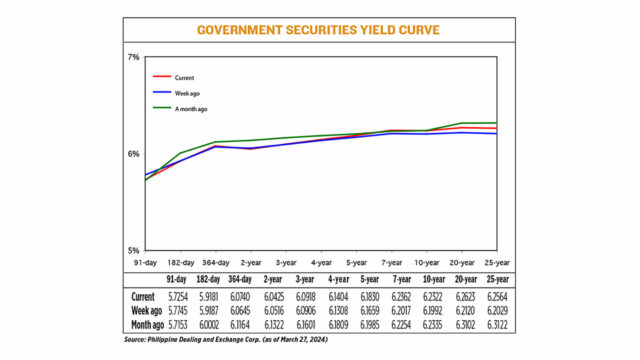
YIELDS on government securities (GS) inched up last week amid a shortened trading week and after the Bureau of the Treasury (BTr) announced its second-quarter borrowing program.
Debt yields, which move opposite to prices, rose by 1.36 basis points (bps) on average week on week, based on PHP Bloomberg Valuation Service Reference Rates data as of March 27 published on the Philippine Dealing System’s website.
Rates at the short end of the curve were mixed, with the 91- and 182-day Treasury bills (T-bills) going down by 4.91 bps and 0.06 bp week on week to 5.7254% and 5.9181%, respectively. Meanwhile, the 364-day T-bill rose by 0.95 bp to 6.0740%.
At the belly, the yield on the two-year Treasury bonds (T-bonds) fell by 0.91 bps to 6.0425%. Meanwhile, rates of the three-, four-, five-, and seven-year bonds went up by 0.12 bp (6.0918%), 0.96 bp (6.1404%), 1.71 bps (6.1830%), and 3.45 bps (6.2362%), respectively.
The long end of the curve also rose, with the 10-, 20- and 25-year debt papers going up by 3.30 bps (to 6.2322%), 5.03 bps (6.2623%), and 5.35 bps (6.2564%), respectively.
GS volume traded climbed to P17.29 billion on Wednesday from P10.12 billion on March 22.
The rise in the yield curve was primarily attributed to the release of the BTr’s borrowing plan for this quarter, ATRAM Trust Corp. Vice-President and Head of Fixed Income Strategies Lodevico M. Ulpo said in an e-mail.
“Local bond yields have trended higher week-to-date on the back of better selling interest seen over the last trading sessions, with market participants de-risking on the long end of the curve,” Mr. Ulpo said.
“Given the shortened trading week, market reaction to the duration-heavy borrowing schedule of the BTr was relatively muted, only increasing by 1 to 3 bps week-on-week,” he added.
The government is looking to borrow P585 billion from the domestic market in this quarter, the Treasury bureau said last week.
In a notice on its website, the BTr said it seeks to raise P195 billion from the issuance of T-bills and P390 billion from T-bonds in the April-to-June period. Based on its notice, the Treasury will offer more T-bonds with longer tenors in the second quarter.
The BTr announcement offset the initial decline in yields due to Bangko Sentral ng Pilipinas (BSP) policy signals, a trader said in a Viber message.
These signals led to “relatively weaker interest in the bond auction last Tuesday,” the trader said.
The trader added that the BSP will likely look at the March inflation figure to be released this week when they revisit their policy settings this month.
The government raised P30 billion as planned via the reissued seven-year bonds it offered on Tuesday as total bids reached P46.501 billion, above the amount on the auction block.
The bonds, which have a remaining life of six years and nine months, were awarded at an average rate of 6.237%, with accepted yields ranging from 6.15% to 6.274%.
BSP Governor and Monetary Board (MB) Chairman Eli M. Remolona, Jr. earlier said that while the MB closely monitors the Fed, its own policy decisions are not dependent on the US central bank.
He said the BSP will likely begin cutting “in the next few policy meetings.”
Meanwhile, MB member and Finance Secretary Ralph G. Recto said he expects the BSP to cut rates twice this year or by 50 bps, although policy easing is unlikely to begin at the April 8 meeting.
The BSP in February kept the policy rate steady at a near 17-year high of 6.5% for a third straight review. The Monetary Board raised borrowing costs by 450 bps from May 2022 to October 2023 to tame inflation.
The March inflation figure and the BSP’s policy meeting will be the primary catalysts for this week’s GS trading, analysts said.
“Rates are seen to move sideways to up as inflation for March is seen to rise close to 4% in line with the BSP’s risk-adjusted forecast of 3.9%,” Jonathan L. Ravelas, senior adviser at Reyes Tacandong & Co., said in a Viber message.
“For the month of April, the March inflation data release and the BSP Monetary Board meeting will be the primary catalysts to watch out for. Similar to the previous month, any upside surprise in inflation may be a non-event locally as elevated inflation going into the second quarter is largely expected by the market,” Mr. Ulpo said. — A.C. Abestano

WHEN THE Manila International Auto Show (MIAS) opens this Thursday, it will be, for the first time, in two venues: its traditional haunt, the World Trade Center (WTC) Metro Manila, and the SMX Convention Center Manila. Themed “Bridging the Future,” organizer Worldbex Services International said in a release that “MIAS continues to raise the bar in the industry, and promises to keep its track record of record-breaking visitor count. MIAS will be showcasing world-class automotive technology for the Filipino market.” Last year’s staging drew more than 149,000 visitors and featured more than 200 car displays.
The 2024 MIAS is co-presented by BPI Auto Loans and Shell, and is supported by the Automobile Association Philippines (AAP) and Petron. Participating passenger car and commercial vehicle brands include BAIC, BAW, Bestune, Changan, Chery, Chevrolet, DAF, Dongfeng, Foton, GAC, GWM, Hongqi, Hyundai, Hycan, JAC, Jetour, JMC, Lynk & Co, Kinglong, MG, Mitsubishi, Nissan, Omoda & Jaecoo, Peugeot, Seres, Subaru, Suzuki, and Weichai.
Significantly, with the two venues at its disposal, MIAS 2024 will feature a combined exhibition floor space of 41,000 square meters throughout the four-day exposition. A single ticket (priced at P150) enables access to both MIAS venues.
Free shuttle service will be provided throughout the day at designated pickup and drop-off points. This promises to make parking and visiting both WTC and SMX on the same day easy and convenient. “With dual venues, this year’s MIAS promises to offer better insights into the latest automobile technologies. Car buyers can make well-informed vehicle choices by experiencing the latest models the automotive market has to offer,” continued the release.
As in years past, many of the country’s top car brands are expected to publicly debut their latest vehicles, and “offer show-stopping” performances. Visitors will also get to check out the country’s finest show cars at the MIAS-Petron Custom Classic Car Competition. Participants vie for “Best of Show” by displaying their well-restored and highly customized vehicles.
MIAS also features the Test Drive Zone, where people looking to browse the latest vehicles can get behind the wheel. And from big trucks, off-road and camping rigs, to reliable commercial vans, MIAS 2024 offers off-road and outdoor driving adventure at the Truck Zone.
In addition, British precision driver Russ Swift, holder of three Guinness World Records — parallel parking in the tightest space, J-turn in the tightest space, and the fastest donuts — will again make an appearance for the Russ Swift Stunt Show, featuring Subarus.
Manila International Auto Show 2024 will be open from 10 a.m. to 9 p.m. at the two venues. Promo tickets may be sourced through https://manilaautoshow.com/.
MIAS 2023 is organized by Worldbex Services International and is for the benefit of the ABS-CBN Foundation, Inc.
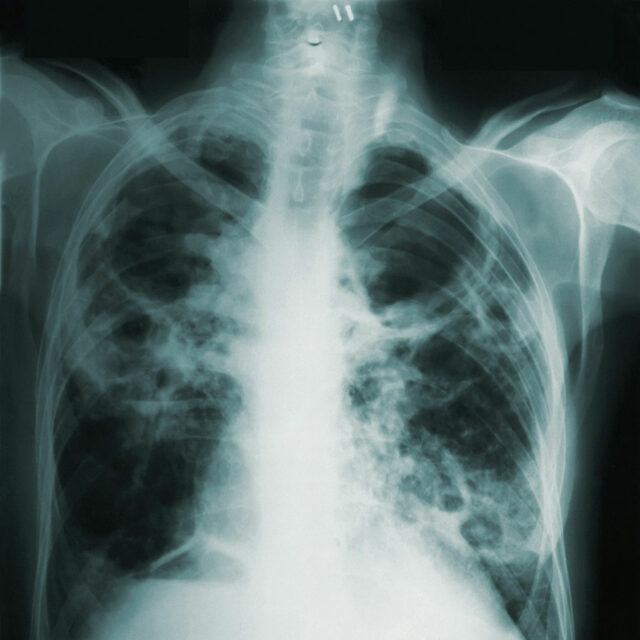
Every year, 10 million people fall ill with tuberculosis (TB). Despite being a preventable and curable disease, 1.5 million people die from TB each year — making it the world’s top infectious killer, according to the World Health Organization (WHO). The Philippines ranks fourth worldwide in tuberculosis (TB) incidence and is thus considered a high TB burden country. About 2 million Filipinos have TB, half of whom have the active disease. Sadly, nearly 85 Filipinos die every day from this disease.
TB is caused by Mycobacterium tuberculosis, a type of bacteria that usually attacks the lungs but can attack any part of the body such as the kidney, spine, and brain. Not everyone infected with the TB bacteria becomes sick. As a result, two TB-related conditions exist: latent TB infection (where the patient is infected with the TB bacteria but not ill) and active TB disease. If not treated properly, active TB disease can be fatal, according to the US Centers for Disease Control and Prevention (CDC).
Active TB disease in the lungs may cause symptoms such as a bad cough that lasts three weeks or longer, pain in the chest, and coughing up blood or sputum (phlegm from deep inside the lungs). Other symptoms of active TB disease are weakness or fatigue, weight loss, loss of appetite, chills, fever, and sweating at night. TB bacteria spread through the air from one person to another, the CDC stated. When a person with active TB disease coughs, speaks, or sings, the TB bacteria get airborne, and people nearby may breathe in these bacteria and thus become infected.
Active TB disease is curable with a standard six-month treatment course of four antibiotics, which usually include rifampicin and isoniazid. In patients with drug-resistant TB, the TB bacteria does not respond to the standard drugs. Treatment for drug-resistant TB is longer and more complex.
The TB treatment course is provided to the patient with information, supervision, and support by a health worker or trained volunteer. Without such support, treatment adherence can be difficult. If the treatment is not properly completed, the disease can become drug-resistant and can spread. For patients with latent TB infection, preventive treatment can be given to stop the onset of disease. This treatment uses the same drugs for a shorter time. Recent treatment options have shortened treatment duration to only one or three months, as compared to six months in the past, said the WHO.
March 24 of every year is World TB Day. This annual event commemorates the date in 1882 when Dr. Robert Koch announced his discovery of Mycobacterium tuberculosis. This year’s theme, “Yes! We can end TB!,” conveys a message of hope that getting back on track to turn the tide against the TB epidemic is possible through high-level leadership, increased investments, and faster uptake of new WHO recommendations. Efforts now shift to turning the commitments made by Heads of State at the UN High Level meeting in 2023 to accelerate progress to end TB into tangible actions. The most important of these commitments is ensuring that by 2027 at least 90% of those who develop tuberculosis are treated and at least 90% of those at risk of the disease are provided with preventive treatment.
Member States also agreed to roll out WHO-recommended rapid molecular tests. Over half of TB diagnoses are still made using microscope and clinical examination. Other targets include increasing global funding for TB to $22 billion by 2027, almost four times the $5.8 billion spent in 2022. A target of $5 billion by 2027 was assigned for research and innovation spending, which stood at $1 billion in 2022.
The National Tuberculosis Control Program (NTP) of the Department of Health (DoH) works closely with all stakeholders — National Government agencies, public and private sectors, nongovernmental organizations, professional societies, academe, patient groups, civil societies, and development partners — in the country’s fight against TB.
The NTP adopts a multistakeholder approach in addressing the complex TB problem. It collaborates with nongovernmental organizations, such as the Philippine Coalition Against TB (PhilCAT), a consortium of 60 groups, and the Philippine TB Society, Inc., among many others. Various developmental partners and their projects provide technical and financial support to the NTP, such as the WHO, United States Agency for International Development (USAID), the Global Fund Against AIDS, TB and Malaria, the Research Institute of TB/Japan Anti-TB Association, the Korean Foundation for International Health, the Korean International Cooperation Agency, and the KNCV Tuberculosis Foundation.
During the Asia Pacific Symposium on Tropical Diseases held in South Korea last February, the government of the Republic of Korea offered the DoH a grant of 30 innovation machines to support the NTP. The Korean Heart to Heart Foundation, Research Investment for Global Health Technology (RIGHT) Foundation, and Foundation for Innovative New Diagnostics (FIND) also expressed their intent to include the Philippines in the trial run of these new machines for diseases such as TB, dengue, and malaria.
The biopharmaceutical industry fully supports the NTP and is committed to working with all stakeholders to expand access to TB diagnosis, care, and treatment as well as to strengthen the country’s healthcare system. All sectors are needed to advance therapies and move health systems towards universal healthcare so that all individuals and communities receive the health services they need without suffering financial hardship.
Teodoro B. Padilla is the executive director of Pharmaceutical and Healthcare Association of the Philippines (PHAP). PHAP represents the biopharmaceutical medicines and vaccines industry in the country. Its members are in the forefront of research and development efforts for COVID-19 and other diseases that affect Filipinos.

FINES and penalties for late and non-filing of reportorial requirements will be increased starting April 1 as part of efforts to improve compliance, the Securities and Exchange Commission (SEC) said.
One-person corporations (OPCs) and domestic stock corporations with retained earnings of not more than P100,000 will now pay a basic penalty of P5,000 for the late filing of their general information sheet (GIS) or annual financial statements (AFS), with an additional P1,000 for every month of continuing violation, the SEC said in a memorandum.
The same penalty applies to domestic nonstock corporations with a fund balance or equity of not more than P100,000.
The non-filing of GIS and AFS by OPCs, domestic stock corporations, and nonstock corporations with retained earnings and fund balance of not more than P100,000 will entail a penalty of P10,000, with an additional P1,000 per month of continuing violation.
Foreign stock corporations with accumulated income/fund balance/members’ equity of less than P100,000 will now pay a P10,000 fine, and an additional P6,000 late penalty if their report is filed after 30 days, or an additional P12,000 penalty if filed after 60 days.
The base penalty for foreign non-stock corporations with less than P100,000 accumulated income/fund balance/members’ equity is at P5,000, with an additional P6,000 penalty if filed beyond 30 days, or an additional P12,000 penalty if filed beyond 60 days.
The non-filing of reports by both foreign stock and nonstock corporations with accumulated income/fund balance/members’ equity of less than P100,000 will entail a fine of P10,000, plus a penalty of P12,000.
The penalty for noncompliance with Memorandum Circular (MC) No. 28 has been increased to P20,000 from the previous rate of P10,000.
The submission of reportorial requirements is mandated under Republic Act No. 11232 or the Revised Corporation Code.
The filing of OPCs and stock or non-stock corporations is deemed late if a report is filed after the due date, but still within a year after the prescribed deadline for filing.
“If the report is filed more than one year from the prescribed period, the penalty shall be the base fine for non-filing, and the computation of the monthly penalty shall not exceed 12 months,” the SEC said.
“For stock and non-stock foreign corporations, late filing means a report was filed after 30 days from the anniversary date of the issuance of the SEC license for GIS or from the prescribed deadline for AFS,” it added.
If a filing is made after 60 days, the fines will be based on the base fine of for non-filing and the computation of the monthly penalty shall not exceed 12 months.
The filing of the MC 28 report will be deemed late if it is done beyond 30 calendar days from the issuance of the certificate of registration, license, or authority for all types of corporations. — Revin Mikhael D. Ochave
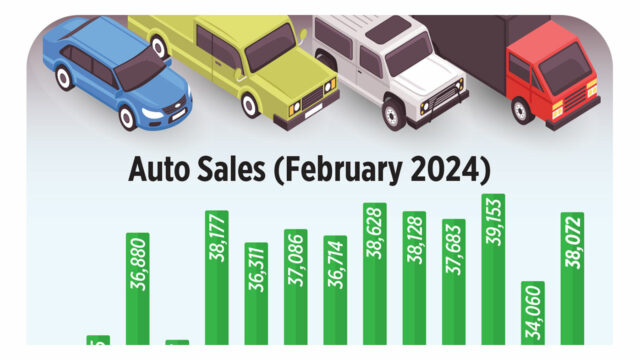
New vehicle sales jumped by an annual 23.2% in February, the fastest growth in seven months, according to a joint report by the Chamber of Automotive Manufacturers of the Philippines, Inc. (CAMPI) and the Truck Manufacturers Association (TMA). Read the full story.

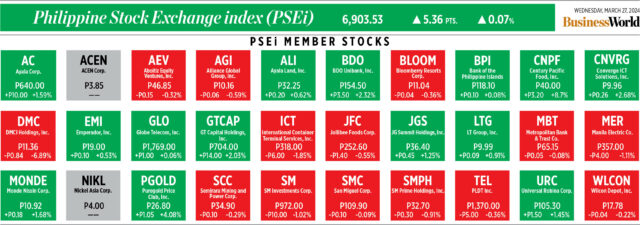
Here’s a quick glance at how PSEi stocks fared on Wednesday, March 27, 2024.


THE PESO could trade sideways against the dollar this week ahead of the release of March inflation data.
Last week, the local unit strengthened by three centavos against the dollar to close at P56.24 on Wednesday from its P56.27 finish on March 22.
For this week, Security Bank Corp. Chief Economist Robert Dan J. Roces said in a Viber message that the peso could remain at the P56-per-dollar level ahead of the release of March inflation data.
A BusinessWorld poll of 17 analysts yielded a median estimate of 3.8% for March headline inflation. If realized, this would be faster than the 3.4% print in February, but slower than 7.6% in the same month a year ago.
This would also mark the second straight month that inflation picked up on a monthly basis. Still, the consumer price index (CPI) would be within the Bangko Sentral ng Pilipinas’ (BSP) 2-4% target for a fourth straight month.
The Philippine Statistics Authority will release March inflation data on April 5, Friday.
The February US personal consumption expenditures (PCE) price index data could also affect peso-dollar trading this week, Mr. Roces said.
The PCE price index rose 0.3% last month, the US Commerce department’s Bureau of Economic Analysis said, Reuters reported. Data for January was revised higher to show the PCE price index climbing 0.4% instead of 0.3% as previously reported. Economists polled by Reuters had forecast the PCE price index gaining 0.4% on the month.
In the 12 months through February, PCE inflation advanced 2.5% after increasing 2.4% in January..
The market will also monitor signals from officials ahead of the BSP’s policy meeting on April 8, Rizal Commercial Banking Corp. Chief Economist Michael L. Ricafort said in a Viber message.
The BSP in February kept its benchmark rate steady at a near 17-year high of 6.5% for a third straight meeting after it raised borrowing costs by 450 basis points from May 2022 to October 2023 to bring down elevated inflation.
Mr. Roces expects the peso to move between P56 and P56.50 per dollar this week, while Mr. Ricafort sees it ranging from P55.90 to P56.50. — A.M.C. Sy with Reuters
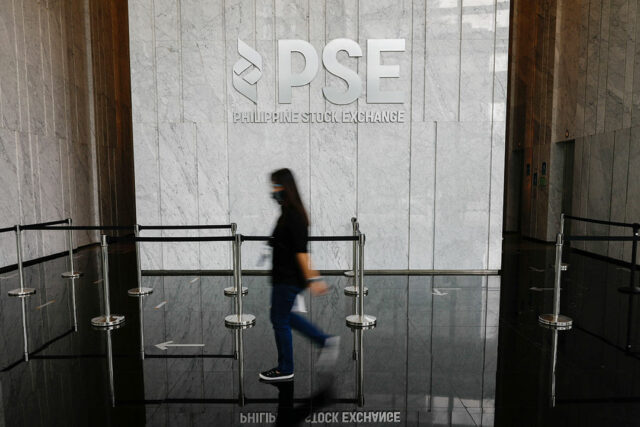
PHILIPPINE STOCKS may continue to move sideways this week as investors await the release of key economic data.
On Wednesday, the bellwether Philippine Stock Exchange index (PSEi) rose by 0.07% or 5.36 points to close at 6,903.53, while the broader all shares index improved by 0.24% or 8.96 points to end at 3,607.51.
Week on week, the PSEi climbed by 0.31% or 21.56 points from its 6,881.97 close on March 22.
“Sideways trades characterized the sessions of this shortened trading week, closing the first quarter on a quiet note,” online brokerage firm 2TradeAsia.com said in a market note last week.
For this week, the market will wait for the release of the March inflation report on Friday, Philstocks Financial, Inc. Senior Research Analyst Japhet Louis O. Tantiangco said in a Viber message.
“For the 1st week of April, investors are expected to look towards upcoming economic data for clues. Primarily, investors are expected to watch out for the Philippines’ March inflation data. An inflation print significantly faster than February’s 3.4% may further temper hopes of monetary easing by the Bangko Sentral ng Pilipinas (BSP), which in turn would negatively affect the local bourse,” he said.
“Investors may also take cues on the local economy’s health from the upcoming March S&P Global Philippines manufacturing purchasing managers’ index,” he added.
A BusinessWorld poll of 17 analysts yielded a median estimate of 3.8% for March headline inflation. If realized, this would be faster than the 3.4% print in February, but slower than 7.6% in the same month a year ago.
This would also mark the second straight month that inflation picked up on a monthly basis but would be within the BSP’s 2-4% annual target for a fourth straight month.
Investors are also expected to monitor the performance of US markets, Mr. Tantiangco said.
“The record performances from Wall Street, if they continue, are expected to have positive spillovers to the local market. Eyes may also be on the peso, which has been exhibiting weakness against the dollar recently. A continuation of this weakening may weigh on sentiment,” he said.
Mr. Tantiangco put the PSEi’s major support at 6,800 and resistance at 7,000.
Meanwhile, Rizal Commercial Banking Corp. Chief Economist Michael L. Ricafort placed the PSEi’s immediate minor support at 6,600-6,760.
“For the coming week, more market players return from the Holy Week holidays and would lead to more trading values and activities that would support the market,” Mr. Ricafort said in a Viber message.
For its part, 2TradeAsia.com put the PSEi’s immediate support at 6,800 and resistance at 7,000.
“The local bourse has been range-bound in the 6,800 to 7,000 zone. It is likely to stay here in the near term, pending strong impetus on the macro side,” the online brokerage said. — R.M.D. Ochave
By Justine Irish D. Tabile, Reporter
THE PHILIPPINES could ratify the free trade agreement (FTA) with South Korea by the middle of the year, with no issues expected to arise from the deal, according to the Department of Trade and Industry (DTI).
Trade Undersecretary and Board of Investments Managing Head Ceferino S. Rodolfo said the timeline takes into account the runup to the South Korean elections.
“The timeline (for the ratification) that we are looking at is by the middle of this year … Because South Korea is also preparing as they have an upcoming election,” Mr. Rodolfo told reporters last week.
South Korea will hold parliamentary elections on April 10 to select a new 300-member National Assembly, the country’s unicameral legislature.
The Philippines and South Korea signed the free trade deal in September after four years of negotiations.
Under the Philippine Constitution, international agreements and treaties require the concurrence of two-thirds of the Senate for ratification or to be effective.
Senate President Juan Miguel F. Zubiri has said that the FTA was likely receive ratification in January this year. However, the Senate has not yet sponsored a resolution to ratify the agreement.
Asked if there are possible snags, Mr. Rodolfo said both sides produced a focused deal acceptable to both sides.
“We don’t expect any issue because the FTA with South Korea is very targeted and focused. And we know what we want and we also know what they want,” Mr. Rodolfo said.
“And we are also preparing ahead of it. For example, we are already tweaking the incentive regime for plantations so that the companies can take advantage of it,” he added.
Under the FTA, the Philippines will be granted tariff elimination on 1,531 lines of agricultural goods, of which 1,417 lines will be removed upon entry into force (EIF) of the bilateral FTA. Among the Philippines’ top goals are the export of more bananas, processed pineapple and other fruits to South Korea.
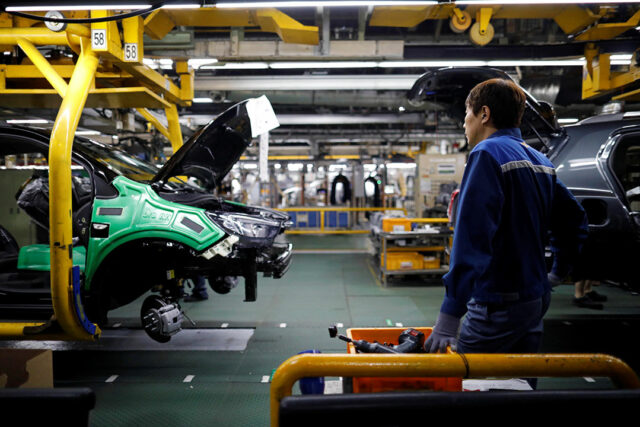
Meanwhile, the FTA also led to tariff elimination for 9,909 lines of industrial goods, of which 9,747 lines are set for tariff elimination upon EIF as South Korea seeks to expand its automakers’ footprint in the Philippines.
“The Embassy of the Republic of Korea in the Republic of the Philippines is very active in terms of development and technical cooperation,” Mr. Rodolfo said.
“This is not just on FTA, these cooperation activities that would allow us to take advantage of the FTA are already being undertaken ahead of the FTA,” he added.
The DTI entered a partnership with Korea Institute for Advancement of Technology to develop an origin management system and an artificial intelligence-enabled harmonized system (HS) classification tool that will enable exporters to determine the HS codes for their products.
The partnership will run until December 2025 and is known as the Origin Management System for the Promotion of FTAs in the Philippines project.
