Home Blog Page 3294

Italy’s white-collar mafia is making a business killing

STOCK PHOTO | Image by Igor Saveliev from Pixabay

 – Italy’s mafia rarely dirties its hands with blood these days.

Extortion rackets have gone out of fashion and murders are largely frowned upon by the godfathers. Just 17 people were killed by the mob in Italy in 2022, according to the latest official data, versus more than 700 in 1991.

Instead, mobsters have moved aggressively into the low-risk, low-key world of white-collar crime, senior Italian prosecutors told Reuters.

The shift to tax evasion and financial fraud is being fueled by billions of euros sloshing around Italy in post-COVID recovery funds that were designed to boost the economy but are proving a boon for fraudsters.

Prime Minister Giorgia Meloni’s government revealed last month it had uncovered 16 billion euros ($17 billion) of fraud tied to home improvement schemes.

Prosecutors are also looking into potentially massive abuse of a European Union stimulus package worth 200 billion.

Not all the fraud is being orchestrated by Italy’s powerful organized crime groups, prosecutors say, but they suspect that a lot is.

“It would have been foolish to think they wouldn’t take advantage of a huge influx of cash,” said Barbara Sargenti, an official in the National Anti-Mafia and Anti-Terrorism Prosecutor’s Office.

Sicily’s Cosa Nostra and the Camorra from the city of Naples are Italy’s best known mafia groups, but the ‘Ndrangheta based in the southern region of Calabria is the nation’s biggest organized crime group.

While maintaining a tight grip on the European cocaine trade, it has led the drive into finance over the past decade.

The European Public Prosecutor’s Office (EPPO) – which investigates crimes against the financial interests of the European Union – sounded the alarm in February, warning that the huge scale of financial wrongdoing across the 27-nation bloc suggested the involvement of organized crime groups.

Almost a third of the EPPO’s 1,927 active cases in 2023 were centered on Italy, where the estimated damage was put at 7.38 billion euros out of a total 19.3 billion in the whole bloc.

Interviews with seven prosecutors and police chiefs, coupled with an analysis of thousands of pages of court documents, revealed the breadth of mob involvement in Italy’s business world and the cost this is imposing on state coffers.

Prosecutors said the crimes often rely on the complicity of entrepreneurs, happy to find new ways to dodge taxes. Tax evasion is a chronic problem in Italy, costing state coffers some 83 billion euros in 2021, according to the most recent Treasury data.

“In Italy, there is no social stigma for those who issue false invoices or evade taxes,” said Alessandra Dolci, head of Milan’s anti-mafia prosecution team. “Social views on economic crimes are very different to those regarding drug trafficking.”


GOING BANKRUPT

While there is no official estimate of the scale of organized crime’s involvement in financial crimes in Italy, two of the prosecutors who spoke to Reuters estimated it was billions of euros each year – only a fraction of which had been uncovered.

For criminal gangs, given the large sums of money involved, the penalties are relatively light. If you are caught trying to sell as little as 50 grams of cocaine, you risk up to 20 years in jail. But if you issue bogus invoices to gain 500 million euros of fraudulent tax credits, you only face between 18-months and six years in prison.

“There is no comparison when it comes to assessing the risk/reward ratio,” said Ms. Dolci, the anti-mafia prosecutor.

They might not make for a Hollywood movie, but multiple recent cases highlight the links between tax scams and organized crime.

In February, police in the northern region of Emilia Romagna arrested 108 people believed to be close to the ‘Ndrangheta. They are suspected of issuing 4 million euros worth of fake invoices for non-existent services in shipbuilding, industrial machinery maintenance, cleaning and car rental.

The investigation is ongoing and a date has not yet been set for trial.

Colonel Filippo Ivan Bixio, provincial commander of the Tax Police, said such schemes allowed businessmen to reduce their taxable income and gain tax credits.

“It’s not a sporadic phenomenon. It’s structured,” he said.

Milan magistrate Pasquale Addesso has witnessed the metamorphosis of the mafia up close.

Since the city staged a trial in 2011 of some 120 defendants, accused of an array of traditional mafia crimes, Mr. Addesso says he has not come across a single case of extortion, which was once a mainstay of mob activity.

“The ‘Ndrangheta … is no longer involved in extortion rackets, but in insolvencies and bankruptcies,” he said. “(It) has entered the world of sub-contracting, responding to a demand for tax evasion from entrepreneurs.”

A trial that concluded last year centered on an investigation led by Mr. Addesso that uncovered some of the many scams used by mobsters — including creating apparently legitimate cooperatives that offer cut-priced outsourcing services to companies, only to bankrupt them after just two years.

The reason was simple. The government offers handsome tax breaks to newly formed companies. A company that has no intention of growing can use this help to offer highly competitive prices and then, by fraudulently declaring bankruptcy, can walk away from its debts and social welfare obligations.

“The ‘Ndrangheta operates throughout the temporary work supply sector, from transport to cleaning,” said Gaetano Paci, chief prosecutor in the northern city Reggio Emilia. “By not paying taxes and contributions, it can offer services at slashed prices.”

Court documents showed that international companies – including UPS Italia, German transport German transport giant DB Schenker and supermarket chain Lidl – outsourced some logistics to cooperatives created by the ‘Ndrangheta. The companies have been sentenced to pay fines.

A spokesperson for DB Schenker said the proceedings against the company were now closed and declined comment. Lidl declined to comment. UPS said it conducts business in accordance with all local laws and its compliance program specifically addressed prosecutors’ concerns.

Hinting at the cost to the state of such schemes, the internal revenue service revealed to parliament last July that bankrupt companies owed a total of 156 billion euros in unpaid taxes and pension payments. That’s roughly three times Italy’s annual corporate tax revenues, which last year were 51.75 billion euros.

A substantial chunk of the sum outstanding is due to suspected fraud, with possible mob ties, Mr. Addesso said. He complained, however, that there was a lack of staff with the skills to conduct complex financial investigations and prove when bankruptcies are fraudulent.

“If you want to combat the mafia, then you should focus more on insolvencies and bankruptcy laws rather than on extortion,” he said.


ASSET STRIPING

Taking over apparently successful firms and then gutting them can also be profitable.

In a case highlighted in Mr. Addesso’s Milan trial, he showed how two members of the ‘Ndrangheta invested in a Michelin starred restaurant in a city skyscraper in 2014, promising to help the owner cover overdue taxes and rent on the property.

They didn’t. Instead they ran up more debt and declared bankruptcy – not once, but twice – owing the state some 1.8 million euros in unpaid taxes.

Although those behind this fraud were convicted and imprisoned, investigators say many more offenders escape their clutches, partly because of laws that limit the time available to prosecute white collar crimes.

Statutes of limitations stand at 6 years for tax evasion, 8 years for non-payment of VAT, and 10 years for fraudulent bankruptcy. But complex investigations can take several years and, even if a conviction is obtained, there is often a lengthy appeals process, prosecutors say.

Highlighting the problem, the Council of Europe, a democracy and human rights watchdog, said that in 2022 just 0.9% of Italy’s prisoners were serving time for economic crimes – far lower than 7.1% in France and 9.8% in Germany.

And successive governments have failed to toughen rules around white-collar crime, preferring to focus instead on reforms that would claw back some of the money owed.

Fiscal decrees in February include the decriminalization of some tax offences, which the opposition has said legitimizes illegal behavior.

“There is no amnesty and no favors for the cunning,” Ms. Meloni told parliament, defending the law. “This reform merely puts honest people in a position to pay.” — Reuters

Israel begins evacuating part of Rafah ahead of the long-threatened assault

RAFAH, Gaza Strip — Israel called on civilians to evacuate parts of Rafah on Monday in what appeared to be preparation for a long-threatened assault on Hamas holdouts in the southern Gaza Strip city where more than a million war-displaced Palestinians have been sheltering.

Instructed by Arabic text messages, telephone calls, and flyers to move to what the Israeli military called an “expanded humanitarian zone” 20 km away, some Palestinian families lumbered out under chilly spring rain, witnesses said.

Israel’s military said it had begun encouraging residents of Rafah to evacuate in a “limited scope” operation. It gave no specific reasons, nor did it say if any offensive action might follow.

Seven months into its war against Hamas, Israel has been threatening to launch incursions in Rafah, which it says harbors thousands of Hamas fighters and potentially dozens of hostages. Victory is impossible without taking Rafah, it says.

The prospect of a high-casualty operation worries Western powers and neighboring Egypt, which is trying to mediate a new round of truce talks between Israel and Hamas under which the Palestinian Islamist group might free some hostages.

The Rafah plan has opened an unusually public rift between Israel and Washington. Speaking to his US counterpart, Israeli Defense Minister Yoav Gallant linked Monday’s operation to the deadlock in indirect diplomacy, which he blamed on Hamas.

“During their discussion, Mr. Gallant discussed the efforts undertaken to achieve the release of hostages and indicated that at this stage, Hamas refuses the frameworks at hand,” the Israeli Defense Ministry said in a statement.

“Gallant emphasized that military action is required, including in the area of Rafah, at the lack of an alternative,” it added

On Monday, the Israeli military called on Palestinians in eastern parts of Rafah to move to a nearby “humanitarian area,” saying it would “encourage … the gradual movement of civilians in the specified areas.”

An Israeli broadcaster, Army Radio, said evacuations were focused on a few peripheral districts of Rafah, from which evacuees would be directed to tent cities in nearby Khan Younis and Al Muwassi.

Many residents in Rafah said they had received telephone calls to evacuate their homes in the targeted area, in line with the army announcement.

In an overnight aerial attack on Rafah, Israeli planes hit 10 houses, killing 20 people and wounding several, medical officials said.

Three Israeli soldiers were killed on Sunday in a Hamas rocket attack near Rafah, at the Kerem Shalom crossing into Gaza, while Palestinian health officials said at least 19 people were killed by Israeli fire.

Sunday’s crossing attack came as hopes dimmed for ceasefire talks in Cairo, with Hamas reiterating its demand for an end to the war in exchange for the freeing of hostages, and Israeli Prime Minister Benjamin Netanyahu flatly ruling that out.

The war began after Hamas stunned Israel with a cross-border raid on Oct. 7 in which 1,200 people were killed and 252 hostages taken, according to Israeli tallies.

More than 34,600 Palestinians have been killed, 29 of them in the past 24 hours, and more than 77,000 have been wounded in Israel’s assault, according to Gaza’s health ministry.

On Sunday, a top UN official accused Israel of continuing to deny the United Nations humanitarian access in the Gaza Strip, where the UN food chief warned a “full-blown famine” has taken hold in the north of the enclave of 2.3 million people.

While not a formal declaration, World Food Program Executive Director Cindy McCain said, in an NBC News interview broadcast on Sunday, that based on the “horror” on the ground: “There is famine, full-blown famine, in the north, and it’s moving its way south.” — Reuters
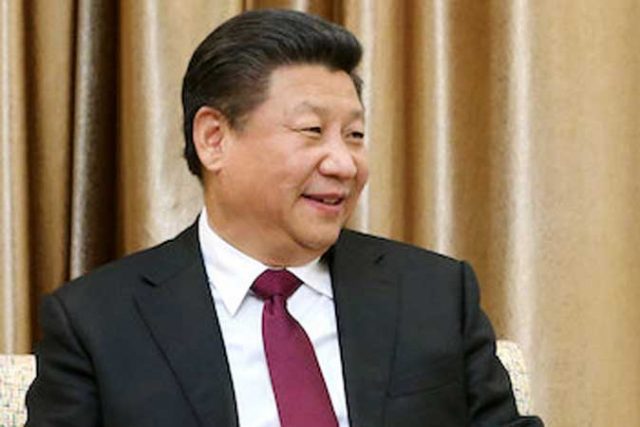
China’s Xi in Paris to meet Macron, with trade, Ukraine talks planned

Chinese President Xi Jinping. — WIKIPEDIA.ORG

 – Chinese President Xi Jinping awoke in Paris on Monday on his first visit to the region in five years, with trade and Russia’s war with Ukraine on the agenda in talks with France’s Emmanuel Macron and European Commission chief Ursula von der Leyen.

In a statement released on his arrival, Mr. Xi praised ties between the two nations, despite trade tensions over a European Union probe into Chinese electric vehicle exports, and Beijing’s investigation into mostly French-made imports of brandy.

Mr. Xi said ties between China and France were “a model for the international community of peaceful coexistence and win-win cooperation between countries with different social systems”.

Chinese state media sought to strike a conciliatory tone in various editorials on Monday.

“China-EU economic and trade cooperation is huge, and bumps and bruises are inevitable,” the People’s Daily, the Communist Party’s flagship paper, wrote. “China is willing to strengthen communication and coordination with the EU, promote cooperation and resolve differences through dialogue.”

The Global Times wrote that “China’s desire to expand cooperation with Europe and support Europe’s strategic autonomy remains unwavering.”

The EU’s 27 members – in particular France and Germany – are not unified in their attitude towards China. While Paris advocates a tougher line on the EV probe, Berlin wants to proceed with more caution, sources say.

German Chancellor Olaf Scholz will not join Macron and Xi in Paris due to prior commitments, sources said.

“In Europe, we are not unanimous on the subject because certain players still see China as essentially a market of opportunities,” Mr. Macron said in an interview with French newspaper La Tribune ahead of Mr. Xi’s two-day visit.

France hopes to nudge China into pressuring Moscow to halt operations in Ukraine, with little progress apart from Mr. Xi’s decision to call President Volodymyr Zelenskiy for the first time shortly after Macron visited Beijing last year.

The China Daily said in an editorial that Ukraine was a top agenda item for European leaders visiting China.

“China and Europe can work together to push for a cease-fire between Russia and Ukraine,” it said, adding that China could maintain normal economic and trade exchanges with both Ukraine and Russia.

France also hopes to push to open the Chinese market for its agricultural exports and resolve issues around the French cosmetic industry’s concerns about intellectual property rights, officials said. China, meanwhile, may announce an order for around 50 Airbus aircraft during Mr. Xi’s visit.

After Paris, Mr. Macron will take Mr. Xi to the Pyrenees, a mountainous region dear to the French president as the birthplace of his maternal grandmother, before Mr. Xi heads to Russia-friendly Serbia and Hungary. – Reuters

Philippines, US repel mock foreign invaders in annual military exercises

PHILIPPINE STAR/WALTER BOLLOZOS

 – US and Philippine armed forces fired missiles and artillery to thwart a simulated invasion in the Philippines’ northern waters facing Taiwan on Monday, in a show of military force and strengthening ties as regional tensions rise.

About 200 soldiers took turns defending the shores of the coastal city of Laoag in Ilocos province, launching Javelin missiles and firing howitzers and machine guns to repel an unnamed enemy trying to storm the beach.

US and Filipino military personnel sank five floating pontoons standing in for amphibious landing ships as part of their annual exercises called Balikatan, or “shoulder-to-shoulder”.

The annual drills, which involve about 16,000 Filipino and American troops and began last month, will run until May 10. They come at a time of escalating tensions between the Philippines and China in the South China Sea.

Last week, the Philippines accused China of using water cannons against their vessels around the disputed Scarborough Shoal, which damaged naval vessels and injured people onboard.

On Monday, Philippine President Ferdinand Marcos Jr said his country would not retaliate in kind, saying the Philippines did not want to raise tensions.

The exercises have irked China, which has warned of destabilization when countries outside the region “flex muscles and stoke confrontation”.

Several of the drills this year were set in islands and provinces facing Taiwan and the South China Sea. Laoag City is about 408 km (254 miles) from Taiwan’s southernmost point.


‘NOT FOR MESSAGING’

US Marines Lieutenant General Michael Cederholm, commander of joint task force Balikatan, told reporters on Monday the exercises were meant to improve how the forces operate alongside each other and were not directed against a specific adversary.

“We don’t do this for any third party. We don’t do this for messaging. We do this to create interoperability,” Cederholm said, without mentioning China.

The main exercises will culminate with a “maritime strike” on Wednesday, in which the combined forces of the Philippines and the United States will sink a decommissioned Philippine navy ship. The annual drills will officially end on Friday.

Other exercises have included simulations of retaking occupied islands and a multilateral sail with France and Australia in the South China Sea, inside the Philippines’ exclusive economic zone.

Security engagements between Manila and Washington have increased under Philippine President Ferdinand Marcos Jr., who has allowed Americans to access more Philippine bases under an enhanced defense cooperation agreement, including facilities close to Taiwan and facing the South China Sea.

The United States and Philippines also began joint patrols in the South China Sea last year.

U.S. officials, including President Joe Biden, have affirmed its “ironclad” commitment to defend the Philippines against any armed attack under their 1951 mutual defense treaty. – Reuters

Global health heavyweights team up for climate, disease funding

FREEPIK

 – Three of the biggest global health funders have joined forces for the first time in a $300 million partnership aimed at tackling the linked impacts of climate change, malnutrition, and infectious diseases and antimicrobial resistance.

The Novo Nordisk Foundation, Wellcome and the Bill & Melinda Gates Foundation announced the research partnership, focused particularly on finding affordable solutions for people in low and middle-income countries, in Denmark on Monday.

Each will put $100 million into the three-year initiative.

A key aim is to “break down barriers between often isolated areas of research”, said Mads Krogsgaard Thomsen, chief executive officer of the Novo Nordisk Foundation.

For example, COVID-19 showed that obesity can be a risk factor for the severity of some infectious diseases, while extreme weather events linked to climate change can cause food insecurity, leaving undernourished children even more vulnerable to killer diseases such as measles and cholera.

The partners said advances in nutritional science and understanding the gut microbiome opened the door to understanding more about “the impact over- and under-nutrition have on all aspects of health and development”.

The Novo Nordisk Foundation has a controlling interest in the drugmaker Novo Nordisk (NOVOb.CO), whose blockbuster weight-loss drug Wegovy has brought in billions for the foundation since its launch in 2021.

The partners said the initiative was important given faltering global attention to health post-pandemic. Wellcome’s chief executive, John-Arne Røttingen, also said it was about tackling “market failures” and signaling a global commitment to equitable access to medical advances.

The funding will also include support for researchers based in low- and middle-income countries, and the partners said they are on the lookout for private, philanthropic and public partners.

“The most effective solutions to pressing challenges often emerge from the very communities they affect,” said Catherine Kyobutungi, executive director of the African Population and Health Research Center, a leading scientific research institution. – Reuters

Philippines says won’t raise South China Sea tensions, won’t use water cannons

PHILIPPINE COAST GUARD/HANDOUT VIA REUTERS

 – Philippines President Ferdinand Marcos Jr said on Monday the country will not use water cannons or any offensive weapons in the South China Sea.

The last thing the Philippines wants to do is to raise tensions in the strategic waterway, Marcos told reporters.

“We will not follow the Chinese coast guard and Chinese vessels down that road,” Marcos said, adding that the mission of Philippine navy and coast guard was to lower tensions, and there no plans to install water cannons on vessels.

China’s embassy in Manila did not immediately respond to a request for comment.

Last week, Manila protested Beijing’s use of water cannons against Filipino vessels at a disputed shoal in the South China Sea, describing it as harassment and “dangerous maneuvers”, after a rise in tensions in recent months.

China claims sovereignty over much of the South China Sea, a conduit for more than $3 trillion of annual ship-borne commerce, including parts claimed by the Philippines, Vietnam, Indonesia, Malaysia and Brunei.

An international tribunal in 2016 said China’s expansive claim had no legal basis, a decision Beijing has rejected. – Reuters

The Filipino Design Studio: Proudly made in the Philippines

Back and bigger than ever! Returning this May 2 to 9 at Mega Fashion Hall, SM Megamall – Kultura Filipino Design Studio: Made in the Philippines edition.

The event is a welcoming, community-based space that fosters connections between like-minded brands dedicated to celebrating Filipino culture. The biggest Filipino Design Studio to date, we’re bringing together over 70 guest brands, house labels, and social enterprises. With a focus on all things Pinoy, from Barong Tagalog and modern Filipiniana, to resort wear, pearls and accessories, tropical home decor and wellness essentials; explore new, up-and-coming brands alongside familiar favorites.

As we continue to highlight products with a purpose, we’ve selected numerous brands based on their commitment to environmentally friendly practices and support for local artisan communities. Social enterprise Hibla PH offers a range of apparel made from authentic Philippine textiles, while also hosting workshops focused on activities like upcycling accessories and bracelet weaving. Another example is Ruyág Native Products Manufacturing, which employs Bicolano artisans who handcraft bags using natural materials to leave a lesser carbon footprint. Home decor and furniture brand Likha+Mundo scouts small, “mom-and-pop” craft businesses from around the nation, giving them a larger platform to share their creations.

This season’s line-up is also set to feature handmade jewelry by Virtucio Fashion Designs and Mjorian; Filipiniana-inspired pieces by Raquel’s Piña Cloth Products, C&C lifestyle, and Handwoven Beauty; home essentials by Woven, Dwellbeing, and WIX Cozy Homes.

Take a look at the full line-up. Discover and delight in local artistry at Kultura’s Filipino Design Studio from May 2 to 9 at Mega Fashion Hall, SM Megamall, EDSA corner Doña Julia Vargas Ave., Ortigas Center, Mandaluyong City.

Learn more about the event on @KulturaFilipino Facebook, Instagram, and TikTok.

Check out the full list of brands below:

GUEST BRANDS

Adela Puls – handcrafted bag brand embracing slow fashion

Amber & Anne  – colorful embroidered placemats and coasters for every occasion

And Again Clothing – fashionable apparel sustainably made from upcycled flour sacks, scraps, and surplus fabric

Binibini Marikit – everyday apparel inspired by Filipino heritage and folklore

Brave Story – lifestyle brand that embraces slow fashion, creating apparel from repurposed local textiles in limited quantities

C&C Lifestyle – unique, handmade apparel brand that partners with home-based weaving communities

D’ Bayong Art Gallery – vibrant pandan bayong bags, hand-painted by local artists

Dwellbeing – natural, small-batch personal care brand that advocates upcycling, empowering, and giving back

Ethnique – colorful, trendy beachwear and bags

Idyllic Summers – handmade apparel inspired by European and East Asian garments by weavers in Abra and Iloilo

HandwovenBeauty – traditional and modern Inabel Filipiniana brand partnering with over 100 local weavers

Hibla Philippines – social enterprise preserving heritage and empowering weaving communities through Filipiniana-inspired apparel

Likha+Mundo – home decor and furniture brand that supports small mom-and-pop craft businesses from around the region

Lily Jewelry – dainty jewelry inspired by travel, nature, artisans’ stories, and craftsmanship of various cultures

Macopa – trendy, one-of-a-kind apparel sustainably made from upcycled flour sacks

Masabel Iloco – distinctly-Ilocano apparel and accessories made with abel weave patterns

Mjorian – handmade, island-inspired jewelry featuring semi-precious stones and pearls

Raquel’s Piña Cloth Products – handwoven apparel made from piña by skilled Aklanon weavers

Ruyág Native Products Manufacturing – organic, eco-friendly bags handcrafted by Bicolano artisans

Virtucio Fashion Designs – handcrafted statement jewelry made with pearls, wood, resin and more

WIX Cozy Homes – homegrown, hand-poured candle brand promoting self-care through aromatherapy

Woven – handmade accessories and home items for the modern Filipino lifestyle, by local crafting communities

Ziya Style – statement outerwear and tropical-themed apparel

HOUSE BRANDS

A-M and Ayesha Gemstones – authentic freshwater pearl and gemstone jewelry

Agsam Fashion Fern – handwoven accessories by indigenous weavers using agsam, a fern plant native to Surigao del Sur

Anmari & Co. – handcrafted bags made from natural materials such as buntal, tikog, raffia, and rattan

Asnie – classic South Sea and genuine freshwater pearl jewelry

Asron – elegantly designed authentic freshwater pearl jewelry

Aurea Pearl – authentic premium quality South Sea pearl jewelry in classic designs

Auro Chocolate – award-winning, tree-to-bar chocolate featuring unique Filipino flavors

Barong Filipino – traditional and modern Barong Tagalog by a family-owned enterprise

Barong Lumban – traditional and modern Barongs, from corporate wear to coat Barongs

Berches Barong – laser-cut and embroidered modern Barongs

Berches Filipiniana – laser-cut and embroidered modern Filipiniana

Boho Manila – vibrant, bohemian-inspired statement jewelry handcrafted by Filipina mothers

CacaoMistry – instant cacao drink developed by a chemist-mom, including sugar-free and plant-based options

Cocoa Monster – Philippine-made cocoa products including tablea, dried fruit dipped in chocolate, and cocoa powder

Cocobody – variety of natural personal care products made with virgin coconut oil

Dermtropics – organic, sustainably-packaged personal care products made with virgin coconut oil

Destileria Barako – craft distillery best known for international award-winning ube cream liquor

Eva Marie Arts & Crafts – colorful handmade bags crafted from tikog reeds

First Botanicals – natural personal care products supporting local coconut and calamansi farmers

Flutter Statement Jewelry – larger-than-life, luxury statement jewelry

For Keeps Clean Beauty – body care essentials made with botanical ingredients and high-quality essential oils

Global Filipina – traditional and modern Filipiniana, from terno boleros to silk cocoon dresses and more

Gourmet Farms – organically-farmed coffee, tea, and healthy chip alternatives

Haspe Design Studio – home items and decor sustainably crafted from excess wood and locally-sourced materials

Hijo / La Obra – resort wear for men and women in classic, earth-toned colors

Intricado – vibrant, resort-ready clothing featuring tropical prints and unique silhouettes

Islas Filipinas – resort wear line for men and women featuring tops with handwoven accents and embroidered polo shirts

Jhaz Footwear – abaca footwear with unique designs made by a family-owned enterprise based in Laguna

Kaffea – coffee and chocolate drinks sweetened with low-glycemic coconut sugar

Kangkong King – the nation’s first ever flavored kangkong chips

Kara De Juan – ethically-made accessories upcycled from discarded carabao horn

Karne Liston Kawali – litson kawali chips, including classic and keto-friendly flavors

Khai Asia Pearls – genuine freshwater and South Sea pearl jewelry in modern designs

LJ Pearls – stylish South Sea and freshwater pearl accessories

Maison Grid Plus – Filipino-designed dinnerware and home accessories inspired by nature

Malagos Chocolate – premium, award-winning chocolates sourced from Davao

Mayumi – Filipiniana formal wear and handwoven tops

My Gems – semi-precious stone and pearl jewelry made for layering

Nuevo Ystilo – modern Filipiniana made using traditional techniques and natural dyes

Our Little Ideas – towels and blankets made by weaving communities in Bicol using traditional techniques on antique looms

Rurungan sa Tubod – Palawan-based nonprofit teaching underserved women piña and cotton weaving technology

SaBroso Tsokolate – artisanal chocolate products crafted using cacao beans sourced from Camiguin

Salbahe Chili – flavored peanuts, chili oil, and more spicy snacks

Simoy ng Haraya – small-batch personal care and home essentials such as candles, reed diffusers, and room sprays

Theo & Philo Artisan Chocolates – high-quality chocolate in distinctive Pinoy flavors, crafted from Davao cacao beans

Tygie – colorful modern Filipiniana including wrap blouses, organza skirts, and dresses

Yasira IL Magnifica – variety of authentic South Sea pearl jewelry sourced from Palawan

Yoga Love – mindfully-made personal care and wellness products that use naturally derived ingredients


Spotlight is BusinessWorld’s sponsored section that allows advertisers to amplify their brand and connect with BusinessWorld’s audience by publishing their stories on the BusinessWorld Web site. For more information, send an email to online@bworldonline.com.

Join us on Viber at https://bit.ly/3hv6bLA to get more updates and subscribe to BusinessWorld’s titles and get exclusive content through www.bworld-x.com.

Cebu Landmasters, Inc. to hold Annual Stockholders’ Meeting on June 4


Spotlight is BusinessWorld’s sponsored section that allows advertisers to amplify their brand and connect with BusinessWorld’s audience by publishing their stories on the BusinessWorld Web site. For more information, send an email to online@bworldonline.com.

Join us on Viber at https://bit.ly/3hv6bLA to get more updates and subscribe to BusinessWorld’s titles and get exclusive content through www.bworld-x.com.

Make it a Mother’s Day to remember at Seda Manila Bay

Seda Manila Bay Mother’s Day Buffet

This Mother’s Day, Seda Manila Bay calls upon families to celebrate the most special women in their lives with exclusive room and dining offerings that promise to make the occasion truly unforgettable.

Reward moms with a well-deserved escape from May 11-13 with the “Mother Glows Best” room package for P8,500 net, and enjoy a cozy overnight stay in lavish Deluxe Rooms with a breakfast buffet for two. Moms will also receive a complimentary massage at the hotel spa to rejuvenate their senses and a special token from our valued partners.

Seda Manila Bay Misto Restaurant

On May 12, Misto brings a burst of exciting flavors and festivity to the table with a hearty lunch buffet that resonates with the essence of motherhood. Indulge in a diverse and mouthwatering spread of international cuisine carefully crafted by Seda Manila Bay’s culinary team to delight every palate. Wonderful treats and activities from Bits Concepts, Donna Chang Philippines, and Flowerstore PH await moms and families adding a touch of joy to this memorable occasion.

Spend a truly extraordinary Mother’s Day at Seda Manila Bay to revel in the love and appreciation for the queen of our hearts.

For more information about the hotel, please visit www.manilabay.sedahotels.com, contact (02) 5304-8888 or follow Seda Manila Bay’s Facebook page at www.facebook.com/sedamanilabay.


Spotlight is BusinessWorld’s sponsored section that allows advertisers to amplify their brand and connect with BusinessWorld’s audience by publishing their stories on the BusinessWorld Web site. For more information, send an email to online@bworldonline.com.

Join us on Viber at https://bit.ly/3hv6bLA to get more updates and subscribe to BusinessWorld’s titles and get exclusive content through www.bworld-x.com.

Universal Robina Corp. to hold 2024 Annual Meeting of Stockholders on June 3


Spotlight is BusinessWorld’s sponsored section that allows advertisers to amplifyheir brand and connect with BusinessWorld’s audience by publishing their stories on the BusinessWorld Web site. For more information, send an email to online@bworldonline.com.

Join us on Viber at https://bit.ly/3hv6bLA to get more updates and subscribe to BusinessWorld’s titles and get exclusive content through www.bworld-x.com.

Economic growth likely faster in Q1

PHILIPPINE STAR/EDD GUMBAN

By Lourdes O. Pilar, Researcher

PHILIPPINE economic growth likely picked up in the first quarter from the prior three-month period amid strong private consumption and government spending, but elevated inflation and interest rates could have hampered expansion, analysts said.

A BusinessWorld poll of 20 economists and analysts conducted last week yielded a median gross domestic product (GDP) growth estimate of 5.9% for the first three months of 2024.

If realized, this would be faster than the preliminary 5.5% growth recorded in the previous quarter but slower than the 6.4% expansion logged in the first quarter of 2023.

Q1 2024 GDP growth forecast

However, the median estimate is a tad lower than the government’s 6-7% GDP growth target for the year.

The Philippine Statistics Authority (PSA) will release first-quarter GDP data on May 9, Thursday.

Public and private spending likely drove economic expansion in the first three months of the year, although high inflation, which has caused the central bank to remain hawkish, continues to be a drag on growth, analysts said.

HSBC economist for ASEAN (Association of Southeast Asian Nations) Aris D. Dacanay said that despite the tough global environment, the Philippines likely continued to outperform its peers in the region last quarter.

“Leading indicators show that consumption, the bulwark of Philippine GDP, remained robust. The economy continues to be in a labor boom, while the household saving rate is still lower than pre-pandemic levels to help make up for the higher cost of living,” Mr. Dacanay said in an e-mail.

“Government spending rose year on year. Learning from last year’s low utilization rate, agencies made it a priority to spend their budget more efficiently in 2024,” he added.

Exports also remained resilient, he said.

Data from the Bureau of the Treasury showed that government spending picked up by 10.72% to P1.206 trillion in the first quarter from P1.09 trillion in the same period in 2023.

Meanwhile, merchandise exports dropped by 15.6% to $10.33 billion in the first two months of 2024, while imports declined 3.9% to $19.94 billion.

This caused the trade deficit to widen to $9.61 billion in the period from the $8.5-billion gap a year prior.

Infrastructure spending may have provided a boost to economic growth in the period, Colegio de San Juan de Letran Graduate School Associate Professor Emmanuel J. Lopez added in an e-mail.

For the first two months of the year, infrastructure spending went up by 6.7% to P120.5 billion from P113 billion in the same period a year ago, data from the Budget department showed.

The government is targeting to sustain infrastructure spending of up to 5-6% of GDP annually. The Marcos administration has approved the implementation of its flagship infrastructure program comprised of 185 projects worth P9.14 trillion.

Meanwhile, Makoto Tsuchiya, assistant economist at Oxford Economics, said the contributions of exports and private spending to growth in the first quarter may have been minimal due to a challenging global environment.

“On the annual term, exports likely recovered from a contraction in the fourth quarter, largely supported by favorable base effects. Bumpy but stronger semiconductor exports also likely boosted the headline figure. Meanwhile, private consumption likely remained soft as consumers’ outlook turned bleak. Private investment also likely remained sluggish, hampered by soft external demand,” Mr. Tsuchiya said in an e-mail.

ELEVATED INFLATION, INTEREST RATES
“Household consumption edged higher as inflation further eased during the period. GDP growth was also supported by a recovery in exports, led by the semiconductor industry. On the supply side, all sectors recorded positive growth rates, with services primarily powering the economy,” China Bank Research said in an e-mail.

“However, the high interest rate environment continued to challenge private construction activities, while agricultural production was adversely affected by El Niño,” it added.

Philippine headline inflation averaged 3.3% in the first quarter, slower than the 8.3% average in the same period last year. This was likewise below the Bangko Sentral ng Pilipinas’ (BSP) 3.8% forecast and within its 2-4% target for the year.

The central bank last month left its policy rate unchanged at a near 17-year high of 6.5% for a fourth straight meeting and signaled a possible delay in rate cuts due to inflation risks.

BSP Governor Eli M. Remolona, Jr. earlier said upside risks to inflation have worsened, making them more hawkish than before. He added that rate cuts may begin in the fourth quarter of this year or in the first quarter of 2025, depending on how price risks pan out.

Michael Wan, MUFG senior currency analyst for Global Markets Research, likewise said in an e-mail that private consumption likely showed gradual improvement last quarter amid slower inflation, a resilient labor market, and a pickup in tourism spending.

“Nonetheless, growth remains capped by still high interest rates coupled with upside risks to inflation including on food prices. We are now forecasting the first BSP rate cut from first quarter of 2025, pushing it out from third quarter of 2024 previously, to help curb excessive volatility in the Philippine peso,” Mr. Wan said.

Ruben Carlo O. Asuncion, chief economist at Union Bank of the Philippines, Inc. said in an e-mail that the Philippine economy likely grew “below potential” amid “the drought’s effects on farm output and inflation, sustained net pessimism among households and businesses in the latest BSP surveys, while missing the strong fiscal spending stimulus, amid the familiar setting of high interest rates and credit tightness.”

For 2024, economic expansion is expected to remain strong but remain below the government’s target amid persistent headwinds, said Harumi Taguchi, principal economist at S&P Global Market Intelligence.

“Downside risks will remain from still-sluggish overseas demand amid soft demand from advanced economies and concerns of China’s economic prospects. Lagged effects from previous monetary policy tightening and tightened financial conditions will also continue to weigh on economic prospects,” Ms. Taguchi said in an e-mail.

“Looking ahead, we anticipate that the Philippine economy has a higher growth potential this year, supported by easing inflationary pressures, a recovery in fiscal spending and exports, and possible monetary easing in the latter part of the year,” China Bank Research added.

Meanwhile, Oxford Economics’ Mr. Tsuchiya expects Philippine GDP growth to average 5.2% this year, well below the government’s target.

“With heightened geopolitical conflicts in the European and Middle East causing pressure on some commodity prices and climate change effects such as El Niño disrupting agricultural yields, increased heat is pushing energy demand higher, causing higher prices, thus keeping inflation elevated… This will mean higher interest rates for a bit longer than anticipated. This could keep growth from reaching the government’s [full-year] target. However, increased infrastructure spending could mitigate the effects,” Jonathan L. Ravelas, senior adviser at professional service firm Reyes Tacandong & Co., added in a Viber message.

Further BSP rate hikes unlikely even if inflation exceeds target anew

BW FILE PHOTO

By Luisa Maria Jacinta C. Jocson, Reporter

FURTHER TIGHTENING by the Bangko Sentral ng Pilipinas (BSP) is unlikely unless inflation expectations take a turn for the worse, analysts said.

“More tightening is only likely if inflation expectations significantly worsen, potentially leading to a difficult decision between controlling inflation and economic growth,” Security Bank Corp. Chief Economist Robert Dan J. Roces said in a Viber message.

“Even more important is that our inflation problem is supply side, which technically means that there is only so much that monetary policy can do,” he added.

The Monetary Board last month kept its policy rate steady at a near 17-year high of 6.5% for a fourth straight meeting after it raised benchmark interest rates by a cumulative 450 basis points (bps) from May 2022 to October 2023 to help tame elevated inflation.

BSP Governor Eli M. Remolona, Jr. earlier said that their current policy rate is “already tight” and that they would only consider further rate hikes if inflation expectations are de-anchored.

Jonathan L. Ravelas, senior adviser at professional service firm Reyes Tacandong & Co., said further rate increases would “depend on how inflation unfolds in the coming months, along with climate concerns and geopolitical noise.”

Headline inflation averaged 3.3% in the first quarter, below the BSP’s 3.8% forecast and within its 2-4% target for the year.

A BusinessWorld poll of 16 analysts yielded a median estimate of 4.1% for April inflation, within the BSP’s 3.5-4.3% forecast for the month.

If realized, this would overshoot the central bank’s target range for the first time since the 4.1% print in November 2023.

The Philippine Statistics Authority will release April inflation data on May 7, Tuesday.

The BSP earlier said that inflation may temporarily go above their 2-4% target over the next two quarters due to base effects and the impact if the El Niño dry spell on the prices of key commodities like rice.

GlobalSource Partners said in a report that inflation may have quickened further in April amid high food prices due to the agricultural damage from the El Niño weather event.

“We therefore estimate that the April inflation could skew closer to 4%. The actual core inflation that we will be seeing next week will tell us the extent of monetary policy bite,” Diwa C. Guinigundo, country analyst for the Philippines of GlobalSource Partners, said.

“Given the unprecedented high temperatures, based on official government reports, huge agricultural damage is expected. Water shortage is serious in many parts of the country with rivers and other bodies of water drying up. For this reason, food items which comprise more than 35% of the consumer basket could drive the April inflation much higher.”

Agricultural damage due to El Niño is now valued at P5.9 billion, according to the latest bulletin by the Department of Agriculture.

Rice was the most affected commodity and accounted for 53.2% of the damage, equivalent to P3.14 billion. This was followed by corn, which recorded P1.76 billion in damage or 29.8% of total losses.

“Rice and corn alone account for over 10% of the basket. With delayed imports, it is difficult to sustain food security and stable prices. Moreover, power failure in a number of hydroelectric plants could restrain manufacturing and other business activities,” Mr. Guinigundo added.

China Bank Research said inflation may continue to surpass the BSP’s target band in the coming months.

“Looking ahead, unfavorable base effects and persistent price pressures may drive inflation above the BSP’s target from May to July, unless we see significant price reversals,” it said in an e-mail.

“Whether the economy can withstand another hike depends on the severity and persistence of the inflation increase. Again, the BSP will likely weigh the need to control inflation against the risk of slowing economic growth,” Mr. Roces said.

The government targets gross domestic product (GDP) growth of 6-7% this year.

The Philippine economy likely expanded by 5.9% in the first quarter, according to a BusinessWorld poll of 20 analysts last week.

If realized, this would be faster than the 5.5% growth recorded in the fourth quarter but slower than the 6.4% in the first quarter of 2023.

Finance Secretary Ralph G. Recto earlier said GDP likely expanded by 5.8-6.3% last quarter.

With inflation remaining elevated, analysts expect the BSP to extend its policy pause.

“With risks still leaning to the upside, the BSP will likely hold its policy rate at 6.5% at their May 16 meeting,” China Bank Research said.

ING Bank N.V. Manila Senior Economist Nicholas Antonio T. Mapa said the BSP will likely only cut rates once the US Federal Reserve begins its own easing cycle.

“We maintain our expectation that the BSP will be cutting rates as soon as the Fed, and with the Fed likely delaying and downscaling the size of easing, we expect BSP to do the same,” he said.

Mr. Remolona earlier said the central bank may reduce rates by the fourth quarter, though this could be delayed to the first quarter of 2025 if inflation risks persist.