Home Blog Page 3236

Diplomatic mission to China urged

REUTERS

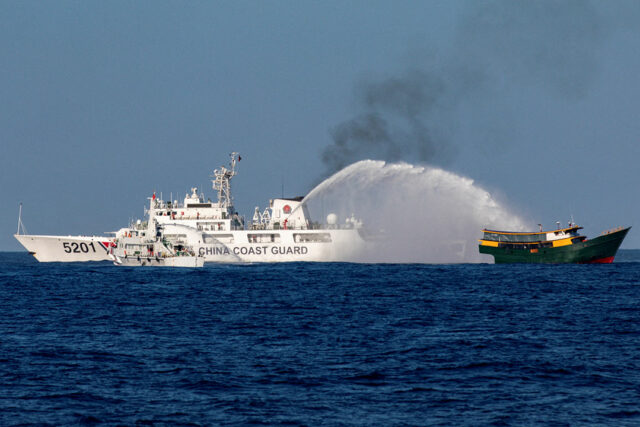
THE PHILIPPINES should consider sending a special envoy to China to discuss with ranking Chinese diplomats ways to ease tensions between the two nations over their sea dispute, a congressman said Sunday.

The diplomatic mission should also seek to stop the Chinese Coast Guard’s aggressive maneuvers against Filipino vessels in the waterway, Bukidnon Rep. Jonathan Keith T. Flores said in a statement.

“To defuse the diplomatic and military tensions with China, I suggest sending a special envoy to talk with ministers and officials of China’s Foreign [Ministry], the military and the coast guard,” he added. — Kenneth Christiane L. Basilio

No decision yet on light vehicles

PHILIPPINE STAR/ RUSSEL PALMA

THE METROPOLITAN Manila Development Authority (MMDA) said there’s no advice yet on when it would resume issuing tickets to light electric vehicles that pass through major roads in the National Capital Region (NCR) after the one-month grace period ordered by President Ferdinand R. Marcos, Jr. expired on Sunday, May 19.

The President on April 18 ordered the suspension of the MMDA rule that barred light electric vehicles from using major roads in the capital region, citing the need for information dissemination.

The MMDA enforced the crackdown starting April 15 but started issuing tickets and impounding vehicles on April 17.

Ira F. Cruz, a transport advocate and director of AltMobility PH, said the MMDA has wasted the one-month grace period. 

“Unfortunately, MMDA seems to have wasted the last month for failing to conduct additional conversations with stakeholders,” he said in a Viber message. “It’s very important for the MMDA to have an open mind on inputs from the public to ensure that they can craft a policy that addresses the basic mobility needs of Filipinos.” — Chloe Mari A. Hufana

Mapúa launches streaming platform for education

MAPUA.EDU.PH

by Patricia Mirasol, Producer

Mapúa University launched on May 15 Mapúa X, its streaming platform for education. 

The platform offers courses in subjects including technology, engineering, and creative arts, with video lectures, interactive simulations, and real-time feedback embedded in each. 

Mapúa X caters to both traditional students and lifelong learners, according to university president Dodjie S. Maestrecampo. 

“Workplaces are searching for agile, entrepreneurial professionals who can quickly adapt and pivot in a very competitive and dynamic economy,” he said in a May 16 press statement.  

“To meet that demand, we had to move beyond traditional learning methods and adopt new approaches that will better prepare students for these volatile work environments,” Mr. Maestrecampo said. 

The university partnered with Anthology, an education technology company, to build the platform. 

“Our collaboration with Anthology allows us to use a training and development manager approach built within a robust LMS [learning management system] platform,” Mr. Maestrecampo said. This enables students to remotely self-enroll in courses and earn credentials, he added. 

Accessibility features have been added to the platform, according to Ericson D. Dimaunahan, director of the university’s Center for Teaching and Learning – Digital. 

“Content can be converted into the desired file format,” he said at the May 15 event. “For example, our text formats can be converted to e-Braille [a formatted document that can be read on an electronic Braille machine] … We have transcription for video content too.” 

Academic learning is a given within a campus, “but also important is a student’s holistic wellbeing and growth,” said Samuel Tang, Anthology’s country manager for the Philippines. 

“What we want to focus on right now is the area of teaching and learning,” he said at the same event. “I think the concept of lifelong learning, and of providing continuing education in a bite-sized manner, where courses can be stacked, [is a part of that].” 

EDSA Busway proposal review nearly complete

PNA/JESS M. ESCAROS JR.

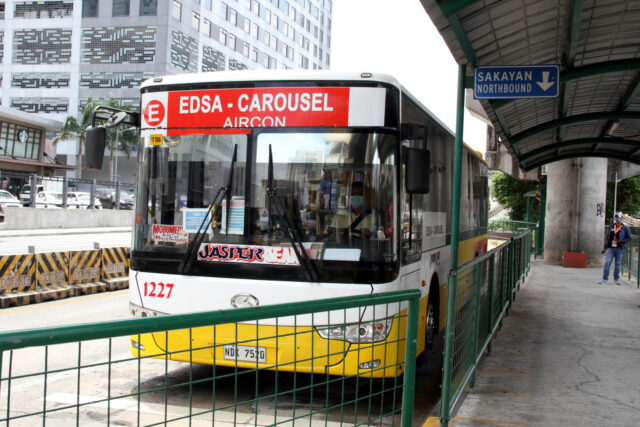
THE evaluation of the Megawide Construction Corp.’s unsolicited proposal for the EDSA busway system project is now nearing completion, the Public-Private Partnership (PPP) Center said.

“(The PPP Center) is actually on the tail end of the review process. We will be following up with them. The DoTr (Department of Transportation) needs to decide whether it will proceed to the next stage or return the proposal,” Jeffrey I. Manalo, deputy executive director at the PPP Center, told reporters over the weekend.

Mr. Manalo was speaking on the sidelines of a seminar hosted by the Economic Journalists Association of the Philippines and San Miguel Corp. on Saturday.

Mr. Manalo declined to give further details about the PPP Center’s review and what its recommendation might be.

Separately, Transportation Secretary Jaime J. Bautista has confirmed that the unsolicited proposal that the DoTr received was from listed Megawide Construction.

“The unsolicited proposal is being reviewed by the PPP Center. I understand the proponent still has pending documents they need to submit,” Mr. Bautista said on the sidelines of a forum last week.

The DoTr hopes to complete the feasibility study for the EDSA Busway system within the year. 

Earlier, the DoTr said the busway project is following a similar track as the privatization of the Ninoy Aquino International Airport (NAIA).

The NAIA PPP project is considered the fastest project to progress from submission to investment coordination committee approval to concession agreement signing.

The Transportation department said it expects to start the bidding for the EDSA PPP project in 2025.

The EDSA Busway Project involves the financing, design, construction, procurement of low-carbon buses, route planning, and operations and maintenance of the busway. — Ashley Erika O. Jose

ADB targets loan approvals for 4 PHL transport infra projects

BW FILE PHOTO

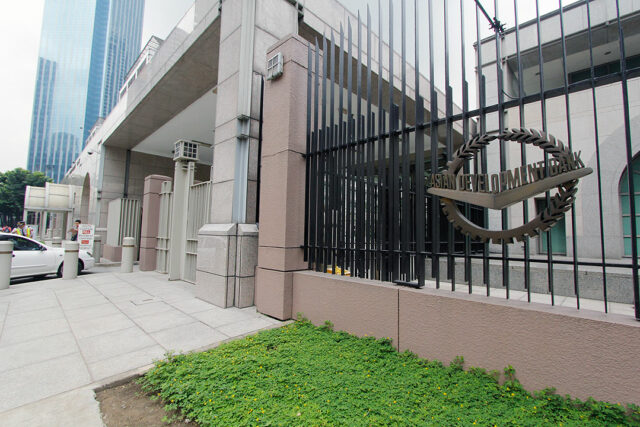
THE Asian Development Bank (ADB) is looking to approve four loans for major Philippine transport infrastructure projects until 2028.

“ADB’s support to the government’s Infrastructure Flagship Program (IFP) continues with new upcoming operations in the transport sector,” Hiroaki Yamaguchi, senior director for transport at ADB, said in an e-mail.

The bank has yet to finalize the approval dates and loan sizes for the projects, he said.

“These projects are prepared under the ADB financed Infrastructure Preparation and Innovation Facility (IPIF), which is supporting the preparation, pre-implementation, and early implementation of climate-resilient transport infrastructure projects in the Philippines,” Mr. Yamaguchi added.

The ADB plans to approve a proposed $1-billion loan by next year to fund the construction of the Metro Rail Transit Line 4 (MRT-4).

MRT-4 will have 10 stations along a 13.4 kilometer-longline from the Epifanio de los Santos Avenue (EDSA) Ortigas Ave. junction to Taytay, Rizal.

The project is expected to ease road congestion and reduce greenhouse gas emissions in the highly urbanized area.

The ADB also hopes to obtain loan approval for the 37-kilometer Laguna Lakeshore Road Network Project this year. Its proposed funding stands at $3.5 billion through its multitranche financing facility.

The proposed Laguna Lakeshore Road Network would link the City of Taguig to the City of Calamba, south of the capital region.

For 2027, the ADB hopes to co-finance with the Japan International Cooperation Agency a 65-kilometer highway linking Cagayan de Oro City to Malaybalay City, Bukidnon.

The proposed Central Mindanao High Standard Highway Project is expected to improve connectivity and economic growth between northern and central Mindanao.

The bank also plans to approve a loan for the Central Luzon Corridor Rail Network Extension by 2028.

The proposed rail line will extend the North–South Commuter Railway system to central Luzon to improve freight travel and connect seaports to the capital.

The railway aims to “establish a predominant freight railway network to improve multimodal logistics and connect seaports in Central Luzon with Metro Manila.”

The bank also said it is supporting the Departments of Transportation (DoTr) and Public Works and Highways (DPWH) in its feasibility studies and detailed engineering design for upcoming projects, Mr. Yamaguchi said.

These include road, railway, metro rail, public transport, maritime transport and shipping infrastructure under the IPIF’s third tranche.

To date, the ADB’s lending portfolio covers nine transport projects amounting to $11.48 billion.

These include a $500-million technical assistance loan for the DoTr and the DPWH, $380 million for the Improving Growth Corridors in Mindanao Road Sector Project, and $100 million in emergency assistance for Marawi City.

The bank previously approved a $2.75-billion loan for the Malolos-Clark Railway Project, $138 million for the EDSA Greenways Project, and $175 million to fund the Metro Manila Bridges Project.

The South Commuter Railway Project was granted a $4.3-billion loan, the Davao Public Transport Modernization Project $1.01 billion, and the Bataan-Cavite Interlink Bridge $2.11 billion.

As of May 21, the government had 185 IFPs worth P9.14 trillion in the pipeline, according to the National Economic and Development Authority. — Beatriz Marie D. Cruz

UK firm singles out finance, industrial sectors’ online infrastructure as top cyberattack targets

REUTERS

UK CYBERSECURITY firm NCC Group said that the finance and industrial sectors are among the top targets for cyberattacks in the Philippines, consistent with global patterns.

“This is not just about the Philippines. Finance is always going to be a fairly strong (targeted) sector because, ultimately, people want to get money, but sometimes they commit cybercrime for disruptive reasons,” NCC Group Chief Operating Officer Kevin Brown told BusinessWorld.

“A lot of the time, you want to get to where the cash is, so the finance sector will be continually targeted. But I think the industrial sector — the operational technology and critical national infrastructure — is one where, year on year, we see a continued rise,” he added.

He said that the industrial sector has a 30% share in terms of targeted attacks, which may stem from the lower investment in infrastructure within the sector.

“This one is on strengthening operational technology because it has been, perhaps, not as invested as much as information technology or your enterprise infrastructure,” he added.

“We certainly see a big push towards (protecting) critical national infrastructure in the industrial sectors,” he added.

Asked about where the attacks on the industrial sector are aimed, he said that the cybercriminals are trying to get access to the network or cause a disruption.

“We’ve seen many attacks across the globe that try to get into oil routes or try to affect water; a lot of these will be driven from a nation-state perspective,” he said.

“Sometimes, they’ll be trying to get into a sort of crucial, critical national infrastructure as an access point to get into a wider network,” he added.

He said that they noticed that the telecommunications sector has been targeted not always because sometimes it hosts a significant infrastructure for other businesses.

Asked for his recommendations for the Philippine government, he said that there is a need to relaunch the country’s cybersecurity strategy.

“I think refreshing and relaunching the cybersecurity strategy is the key one. And the next one is, how do you bring this to life, and how does it become real for everyone? I think that could be through education and awareness,” he said.

“I think bringing that awareness and, at the same time, starting to give some help, some education, and some tools to be able to better understand where everyone fits in the cyber ecosystem are among the things that you need to be doing as well,” he added. — Justine Irish D. Tabile

The evolving role of financial controllers

IN BRIEF:

• The traditional duties of financial controllers, which used to focus on historical financial reporting and regulatory compliance, now demand a broader range of skills and responsibilities.

• Modern controllers must excel in accounting and be capable of managing data, participating in strategic corporate conversations, and acting as reliable counselors.

The financial controller role has transformed dramatically, with emerging technologies and advanced data analytics, along with the growing importance of environmental, social, and governance (ESG) considerations, introducing a fresh perspective to company planning. The duties of financial controllers, which used to focus on historical financial reporting and regulatory compliance, now demand a broader range of skills and responsibilities.

Their responsibilities have broadened beyond basic bookkeeping — they are now expected to adopt a proactive and visionary mindset, taking on the role of strategic business overseers. Modern controllers must be well-versed in a variety of competencies; they must excel in accounting and be capable of managing data, participating in strategic corporate conversations, and acting as reliable counselors. Their role has progressed into one that focuses on directing and ensuring the achievement of value, positioning them at the core of financial strategy.

The increasing need for real-time and predictive financial reporting has been a major catalyst for this shift, with the role now including elements of financial planning and analysis (FP&A). Though controllers used to focus on internal transactional duties, technological advancements and evolving business expectations are pushing the role to become more extroverted.

INCORPORATING ESG INTO FISCAL PLANNING
As ESG factors gain prominence in corporate planning and risk evaluation, it is essential for controllers to weave them into the fabric of financial forecasting and disclosure practices. This integration should be in harmony with the company’s sustainability objectives and effectively communicated to all stakeholders.

Some organizations are now appointing ESG-specific controllers, positioning the controllership role at the vanguard of this pivotal strategic initiative. With the growing need for verified ESG reporting, controllers are well-placed to spearhead this domain within their companies. This marks a considerable shift from previous times when compliance with statutory or similar regulatory reporting might not have been at the forefront of many corporate controller agendas.

Familiarity with non-financial reporting standards, such as those set by the Global Reporting Initiative (GRI) and the Sustainability Accounting Standards Board (SASB), is becoming indispensable. These standards provide a blueprint for evaluating and disclosing sustainability efforts, tasks that now fall under the purview of financial controllers.

In a globally intertwined business environment, the challenge lies in ensuring adherence to a variety of regulations across various markets while keeping financial management practices consistent with both international benchmarks and local mandates. Controllers are expected to perform thorough due diligence and maintain a comprehensive international outlook to protect the company’s cross-border activities.

The controllership should embrace a “glocal” (globally local) operational framework, capitalizing on centralization to enhance value while also ensuring that compliance, resilience, and risk management are supported at the local level. This new model for controllers aims to strike a balance between shared services and business partnership roles, with compliance functions remaining centralized. To adapt effectively, controllers must integrate strategies that utilize technology and data to streamline and standardize processes, all while upholding a local presence that supports compliance and risk oversight.

In the era of digital finance, the sheer volume and velocity of financial data add unprecedented complexity to the task of ensuring precision in financial reporting. Controllers have the critical responsibility of guaranteeing that financial statements are free of material misstatements and reflect a true and just representation of the company’s financial status. The rapid evolution of technology and regulatory frameworks demand that financial controllers dedicate themselves to continuous learning, enabling them to anticipate trends and challenges by adapting their knowledge and practices to stay relevant and efficient.

EXPANDING THE FINANCIAL CONTROLLER ROLE
The expanding role of the financial controller now encompasses a more prominent role in strategic decision-making processes, including steering investment approaches, navigating risk, and pinpointing growth opportunities. They are emerging as pivotal figures in formulating business strategy, charged with navigating their companies through market volatility with a decisive grip on fiscal instruments.

Moreover, they must master sophisticated financial software platforms that not only simplify financial processes but also unlock the potential for detailed data analysis. Controllers must become fluent in the language of technology, providing a nuanced perspective on the financial well-being of the company, and facilitating predictive insights. They should approach their role with an open mind and curiosity, ready to embrace new tools, functionalities, and technologies. At the same time, they must exercise discernment in choosing technologies that are appropriate for their organization and specific circumstances.

Controllers must cultivate a dual expertise: a deep grasp of financial principles coupled with skills in data analytics. With these capabilities, they can translate intricate data into clear insights, formulate corporate strategies, spur innovation, and promote ethical leadership. By nurturing sustainable business operations and maintaining the integrity of financial disclosures, controllers establish themselves as vital consultants within their organizations, equipped to manage the intricacies of today’s business landscape.

From traditional bookkeepers, financial controllers can become “value articulators” — guardians of value delivery who evaluate the financial outcomes of investments. Today’s controllers transcend transactional duties, embracing data and technology with a forward-looking mindset crucial for steering sound decisions, ensuring regulatory adherence, and propelling the organization towards resilience and expansion.

PREPARING FOR THE FUTURE OF CONTROLLERSHIP
To navigate the evolving landscape of controllership and prepare for its future, financial controllers must proactively refine their expertise and adapt to new challenges. A commitment to continuous professional development is essential, with a focus on acquiring knowledge in data analytics and mastering advanced financial software platforms. Controllers should immerse themselves in the latest fintech innovations, selecting tools that align with their company’s specific needs. This discernment will ensure they remain competitive, leveraging automation and predictive analytics to drive business success.

Additionally, understanding and integrating ESG principles into financial strategies is becoming increasingly important. Controllers should become well-versed in non-financial reporting frameworks, enabling them to align financial strategies with sustainability goals and communicate these efforts effectively to stakeholders.

In our interconnected global economy, maintaining awareness of international regulations is paramount as well. Controllers must develop strategies that ensure compliance across various markets while harmonizing financial management practices, safeguarding company operations across borders. Cybersecurity vigilance is another critical area. Financial controllers must prioritize financial data security, implementing robust data governance measures and staying informed about the latest cybersecurity best practices to protect the company’s financial information and reputation.

Finally, controllers should actively engage in strategic business discussions and investment decisions. By doing so, they position themselves as chief value officers and vital business partners, contributing significantly to the company’s strategic direction and value creation. This strategic business involvement ensures that controllers are not just number crunchers — but key players in shaping the future of their organizations.

This article is for general information only and is not a substitute for professional advice where the facts and circumstances warrant. The views and opinions expressed above are those of the author and do not necessarily represent the views of SGV & Co.


Aaron C. Escartin is a Global Compliance and Reporting (GCR) tax partner of SGV & Co.

Usyk beats Fury to be new era’s undisputed heavyweight king

OLEKSANDR USYK — RIYADH SEASON FACEBOOK ACCOUNT

RIYADH — Oleksandr Usyk scored a razor-thin split decision over Tyson Fury to become undisputed heavyweight boxing world champion in a thrilling contest at the Kingdom Arena in Riyadh in the early hours of Sunday morning.

Dwarfed by his enormous opponent, Mr. Usyk had to weather a storm in the middle of the fight but he came roaring back, forcing Mr. Fury to take a standing count in the ninth round as he blazed his way to victory.

The 37-year-old Ukrainian is the first boxer to hold all four major heavyweight belts at the same time and the first undisputed champ since the end of Lennox Lewis’ reign in April 2000.

Mr. Usyk got the better of the opening rounds before Mr. Fury hit his stride in the fourth, engaging in some showmanship as he started to catch Mr. Usyk with vicious body shots, but the Ukrainian battled back with several stinging reminders of his power.

Mr. Usyk turned the tide in the eighth round and few would have been surprised had the referee stopped the fight in the ninth as the Ukrainian’s powerful punches to the head left Mr. Fury reeling.

The previously undefeated Briton managed to hang on until the bell but he struggled through the final three rounds of the fight as Mr. Usyk chased him down to edge him out on the judges’ scorecards.

“Thank you so much… It’s a big opportunity for me, for my family, for my country. … It’s a great time, it’s a great day,” a tearful Mr. Usyk said in a post-fight interview in the ring, adding that he would grant Fury an immediate rematch.

In the co-main event, Australia’s Jai Opetaia won a unanimous decision over Mairis Briedis of Latvia to win the vacant IBF cruiserweight title, and Ireland’s Anthony Cacace scored a technical knockout (TKO) win over Joe Cordina of Wales to retain his IBO super-featherweight title and claim the IBF belt. — Reuters

Thrilling win over OKC sends Mavs to Western finals

LUKA DONCIC — REUTERS

THE DALLAS Mavericks led for just one minute during the first 44-plus minutes of Saturday’s postseason game against the Oklahoma City (OKC) Thunder.

But down the stretch, the Mavericks were wiser and more resilient than the ultra-talented Thunder while overcoming a 17-point, third-quarter deficit.

“You get to the point where you have the opportunity to close out a team, you have to take full advantage of it,” Dallas guard Kyrie Irving said afterward.

The Mavericks did just that as P.J. Washington made two free throws with 2.5 seconds left and Dallas advanced to the Western Conference finals for the second time in the past three seasons with a 117-116 victory over the visiting Thunder.

Mr. Washington was fouled shooting a 3-pointer and missed the third free throw on purpose to prevent a Thunder squad out of timeouts from being able to set up for a final shot. Jalen Williams’ 64-footer as time expired was nowhere near the basket as top-seeded Oklahoma City was eliminated in Game 6 of a second-round playoff series.

The Mavericks will face either the Denver Nuggets or Minnesota Timberwolves in the conference finals.

Luka Doncic recorded 29 points, 10 rebounds and 10 assists for the fifth-seeded Mavericks. Mr. Irving and Derrick Jones, Jr. added 22 points apiece, Dereck Lively II had 12 points and 15 rebounds off the bench and Daniel Gafford had 10 points. “We said at halftime we weren’t going back to Oklahoma,” Mr. Doncic said of his team’s 16-point halftime deficit.

A short time later, Oklahoma City was headed home — not to play the Mavericks in the coveted Game 7 as hoped.

“Clearly our roster was good enough this year to win a lot of games and be the No. 1 seed in a really tough conference,” Thunder coach Mark Daigenault said. “It’s painful, obviously. We thought we had the chance to achieve something special.” — Field Level Media/Reuters

FEU, Perpetual lead groups in preseason cup

WITH new coaches, the revamped Far Eastern University (FEU) and University of Perpetual Help zoomed to the solo lead of their respective groups in the Filoil EcoOil 17th ECJ Preseason Cup at the Filoil EcoOil Centre in San Juan.

FEU scored an 80-76 comeback win over the University the East (1-1) for a 2-0 slate in the UAAP bracket as Perpetual stunned NCAA runner-up Mapua (1-1), 76-67, for a 3-0 record in the NCAA group.

Sean Chambers, albeit back in the United States for the meantime, has been behind the Tamaraws’ rise as seasoned mentor Olsen Racela is already working wonders for the Altas.

Super rookies Veejay Pre and Janrey Pasaol fired 22 and 13 points, respectively, for the Tamaraws, who are out to sharpen their horns in Filoil to plot for a Final Four return in the UAAP later this year.

Mark Gojo Cruz had 15 points to lead the Altas.

Meanwhile, former NCAA titlist Letran finally handed coach Allen Ricardo his first win in the seniors play after beating College of St. Benilde, 80-71.

Pao Javillonar (12), Kobe Monje (12) and Deo Cuajao (11) conspired for the Knights, who improved to 1-2, under back-to-back NCAA juniors champion coach Ricardo for the Squires.

In the other game, Lyceum (1-2) bested San Sebastian College-Recoletos (0-1), 94-89. — John Bryan Ulanday

LA victory keeps Obiena primed up for Olympics

EJ OBIENA — PHILIPPINE STAR/JUN MENDOZA

FILIPINO pole-vaulter EJ Obiena continued to gain confidence on his way to the Paris Olympics where he hopes to shoot for the gold medal after he ruled the Los Angeles Grand Prix in California yesterday.

The Asian champion and World No. 2 cleared 5.80 meters in snaring the mint and besting Norwegian Simen Guttormsen and American KC Lightfoot, who took the silver and bronze, respectively.

Mr. Guttormsen, Mr. Lightfoot and Tokyo silver medalist Chris Nilsen of the United States all ended up with 5.70m but the first two took the podium finish via count back the latter wound up fourth.

It wasn’t the distance Obiena wanted but it still got the job done.

He had two victories early in the year with the first coming in the Memorial Josip Gasparac in Croatia where he had 5.83m and the other in the ISTAF Indoor in Berlin, Germany where he did a 5.93m both last January.

Hoping to join Mr. Obiena in Paris was Lauren Hoffman, who gained headway in her Olympic bid after finishing fifth in the women’s 400m hurdles where she timed in 55.84 seconds.

Ms. Hoffman’s clocking barely grazed the national mark of 55.72 she set in the Drake Relays in Iowa last month that improved her current world rankings of No. 32, which is still within the range of the 40 Paris Games slots for her event.

There are two ways for her to qualify, the first via making the Olympic standard 54.85 or via the top 40 rankings in the 400m hurdles.

And it looked like Ms. Hoffman is going to take the latter route. — Joey Villar

SGA taps ex-Gilas, PBA prospect for Jones Cup

FORMER Gilas Pilipinas sniper Jordan Heading and PBA Draft prospect Caelan Tiongson have been tapped by the Strong Group Athletics (SGA) as its first signees for the upcoming 43rd William Jones Cup.

This will be Mr. Heading’s return to the SGA after a stint in the Dubai International Basketball Championship while Mr. Tiongson marks his comeback with a Philippine team since playing for the defunct Alab Pilipinas in the ASEAN Basketball League.

Mr. Tiongson is also expected to utilize this international stint to prepare for this year’s PBA Draft as one of the prized Fil-foreign prospects. Head coach Charles Tiu looks forward to having the ace backcourt duo as SGA marches on to Taiwan as the country’s representative for the regional invitational tourney slated on July 12 to 21.

“Jordan was an automatic choice for me once I found out he’d be available to play. We loved how he played for us in Dubai, and now he gets to go back to his original shooting guard spot to complement our point guards,” said Mr. Tiu, who will be joined by veteran tactician Rakjo Toroman in steering SGA.

“I’ve been in touch with Caelan for a while, helping him figure out his next moves before joining the PBA Draft. We figured this would be a great opportunity for him to remind people how good he is,” he added.

Mr. Heading is currently strutting his stuff for the West Adelaide Bearcats in Australia’s NBL1 Central with averages of 19.1 points, 4.1 assists and 3.4 rebounds while Mr. Tiongson came off a stint with the Taoyuan Leopards in Taiwan’s T1 League with norms of 13.5 points and 9.1 rebounds.

SGA, out to win the country’s seventh Jones Cup title, will announce the remaining players to complete its roster soon that is anticipated to feature a bevy of local standouts and top-caliber imports once again like when it played in Dubai.

The Philippine club had fielded NBA veterans Dwight Howard, Andre Roberson, UAAP MVP Kevin Quiambao, MPBL MVP Justine Baltazar, JD Cagulangan and ex-Gilas reinforcement Andray Blatche, en route to a runner-up finish behind champion Al Riyado of Lebanon. — John Bryan Ulanday

ADVERTISEMENT
ADVERTISEMENT