Home Blog Page 3216

Japan’s economy skids, clouding BOJ’s rate hike plans
REUTERS

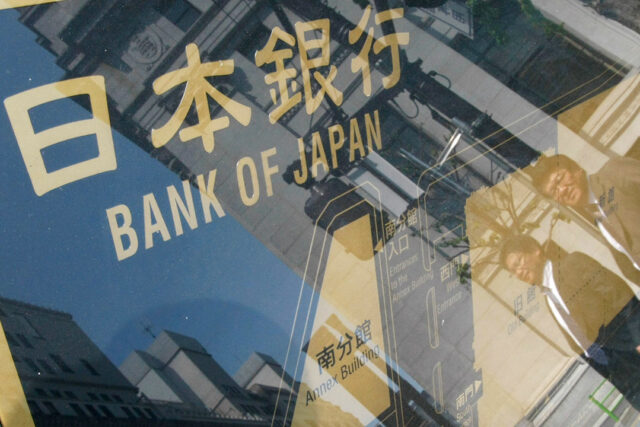
 – Japan’s economy fell faster than expected in the first quarter as the weak yen continued to batter consumers, throwing a fresh challenge to the central bank’s push to get interest rates further away from near zero.

Preliminary gross domestic product (GDP) data from the Cabinet Office on Thursday showed Japan’s economy shrank 2.0% annualized in January-March from the prior quarter, faster than the 1.5% drop seen in a Reuters poll of economists.

Downwardly revised data showed GDP barely grew in the fourth quarter of 2023, due to downgrades to capital expenditure estimates.

While preliminary capital spending data is often subject to heavy revisions in the final release, the across-the-board declines in all GDP components suggest Japan’s economy had no major growth engine in the first quarter.

That could create some hesitation for the Bank of Japan, which raised interest rates in March for the first time since 2007 and has since signaled its intention to continue tightening policy.

“It would be possible that the timing of rate hikes could be pushed back depending on how the GDP may rebound in the current quarter,” said Yoshimasa Maruyama, chief market economist at SMBC Nikko Securities.

He said while the economy would certainly rebound in the current quarter due to rising wages, uncertainty remains around consumption in the service sector.

The latest GDP reading translates into a quarterly contraction of 0.5%, versus a 0.4% decline expected by economists. Revised first quarter figures will be released on June 10.

The weak yen has created a two-speed economy in Japan, with the export and tourism sectors broadly benefiting from a more competitive exchange rate but households and small businesses squeezed by inflated costs of imported goods.

Toru Suehiro, chief economist at Daiwa Securities, said the yen’s weakness complicates the question of whether the BOJ should maintain its monetary stimulus or continue to unwind it.

“The adverse effects of a weaker yen are becoming a cause for concern so one can argue that interest rates should be raised,” Suehiro said.

“Although real wages are likely to turn slightly positive in the second half of this year, the level of real wages will not rise sharply as the yen continues to weaken.”


REAL WAGE PAIN

Japan’s large businesses delivered the biggest wage hikes in three decades this year, which the BOJ says provided the conditions needed to finally end decades of radical monetary stimulus.

However, thrifty households have since tightened their purse strings as price hikes outpaced wage gains, squeezing real incomes and diminishing their purchasing power.

Private consumption, which accounts for more than half of the Japanese economy, fell 0.7%, bigger than the forecast 0.2% drop. It was the fourth straight quarter of decline, the longest streak since 2009.

Economists are hopeful the first quarter weakness will prove temporary and expect the drag to growth from an earthquake in the Noto area this year and the suspension of operations at Toyota’s Daihatsu unit to dissipate.

Still, sharp yen declines persist as a threat to the recovery as do spikes in crude oil due to the Middle East crisis.

Capital spending, a key driver of private demand, fell 0.8% in the first quarter, versus an expected decline of 0.7%, despite hefty corporate earnings.

External demand, or exports minus imports, knocked 0.3 of a percentage point off first quarter GDP estimates.

For now, policymakers are counting on the bumper pay hikes and planned income tax cuts to spur flagging consumption and prevent a shift back to deflation.

“Rate hikes or cuts in bond purchases can ease the pain of yen weakening, which could pave the way for income gains to spill over to consumption,” said Maruyama. “If that doesn’t happen, raising rates would be difficult, particularly when consumption remains weak.” – Reuters


Meta restores Facebook posts by Malaysian media on PM Anwar’s meeting with Hamas

BYCGZR-FREEPIK AND RAWPIXEL.COM-FREEPIK

 – Meta Platforms has restored Facebook posts by Malaysian media covering Prime Minister Anwar Ibrahim’s meeting this week with a Hamas leader, saying they were removed in error.

The removal had drawn complaints from Malaysia’s government, a vocal supporter of the Palestinian cause and which has warned that firm action could be taken against Meta and other social media companies if they were blocking pro-Palestinian content on their platforms.

Anwar met Ismail Haniyeh of Hamas in Qatar on Monday. He later stressed that though he had good relations with the group’s political leaders, he had no involvement in its military apparatus.

Muslim-majority Malaysia had sent a letter asking Meta to explain the taking down of posts by two media organisations about the meeting, as well as the closure of a Facebook account last month belonging to a third outlet, the Malaysia Gazette, which covers Palestinian issues.

“Two posts were removed in error and have now been restored,” a Meta spokesperson said in an email to Reuters.

Communications Minister Fahmi Fadzil, who is also the government’s spokesperson, condemned the removal of the posts on Wednesday, accusing US organizations of not respecting the freedom of media outlets.

The Malaysia Gazette said on Wednesday that its appeal to Facebook to reactivate the account had been accepted and is now operational again.

Malaysia has long advocated a two-state solution to the conflict between Israel and the Palestinians.

Meta has said it does not deliberately suppress voices on its Facebook platform, adding there was “no truth” to the claim it was restricting content supporting the Palestinians.

Meta designates Hamas, the Palestinian Islamist movement that governs Gaza, as a “dangerous organization” and bans content praising the group. It also uses a mix of automated detection and human review to remove or label graphic visuals. – Reuters

After Cambodia crypto scam, Indians demand more jobs at home

A WORKER folds an Indian flag at a workshop in India, Aug. 11, 2005. — REUTERS

 – Starved and locked in a room under round-the-clock video surveillance, Dinabandhu Sahu spent sleepless nights wondering if he would ever again see his family back home in India after he was duped into a job scam in Cambodia.

Mr. Sahu jumped at the chance to earn $900 a month in Vietnam as a data entry operator with free meals and accommodation last June after working a string of short-lived jobs in similar fields which paid a fraction of the wage he was promised abroad.

“Even though my family members insisted I shouldn’t go, I felt relieved when I got this offer,” said Mr. Sahu, who hoped the new job would help him clear debts of 350,000 rupees ($4,190).

“I started imagining a great future,” Mr. Sahu, 41, told the Thomson Reuters Foundation at his home in Golanthara, a village in the eastern state of Odisha.

But after arriving in Vietnam, he and four other Indian recruits were smuggled into neighboring Cambodia where their passports were taken, and they were put to work on online cryptocurrency scams.

Mr. Sahu was one of the 250 Indians recently rescued and repatriated over several months by the government after they were lured into fraudulent employment in Cambodia.

Online job scams targeting desperate jobseekers have been on the rise in India, labour and cybersecurity experts say.

The trend highlights a tough labour market in India, where unemployment and a lack of skilled, permanent jobs – especially in rural areas – are leading concerns in the ongoing general election that ends on June 1.

As voters go to the polls, Mr. Sahu urged them to hold authorities to account and demand justice for victims of jobs scams – as well as better employment opportunities at home.

“Whoever comes to power must address this issue and ensure such tragedies don’t befall others,” he said. “The government must take strict action against the agents who are defrauding jobseekers.”


‘QUICK MONEY DREAM’

Despite growing at the fastest pace among major peers, India’s economy has failed to generate enough jobs for its large and expanding young population.

This creates fertile ground for trafficking rackets that often use social media to recruit and tap into jobseekers’ despair, cybersecurity and recruitment experts say.

“Youngsters feel there are better offers abroad. They get so tempted by the sum offered they don’t do any kind of cross-checking,” said Dhanya Menon, managing director of Avanzo Cyber Security Solutions in India.

“They chase the quick money dream.”

Jasmin Chande, co-founder of Mumbai-based recruitment firm Placement Expert, advised jobseekers to thoroughly research the company and check recruiters are legitimate.

Other red flags, he said, were requests for personal financial details, payment for training or equipment, and pressure to make quick decisions with little information.

“Candidates should be cautious of offers that seem too good to be true,” he said in emailed comments.


‘DAILY TORTURE’

Thousands of people, many with tech skills, have been lured by social media advertisements promising well-paid jobs in Cambodia, Laos and Myanmar, only to find themselves forced to defraud strangers worldwide via the internet.

Organized crime rings that fueled an “explosion” of human trafficking and cyber scam centers during the COVID-19 pandemic have expanded from Southeast Asia into a global network making up to $3 trillion a year, according to Interpol.

The United Nations said last year that more than 100,000 people had been trafficked into online scam centers in Cambodia.

Mr. Sahu was searching for jobs abroad when he was added to a WhatsApp group in which an agent told him about an IT firm vacancy in Vietnam.

He immediately sent him all his documents and paid 150,000 rupees ($1,800) to arrange the job, leaving behind his wife and daughter in July.

Days later, he was taken to Poipet, a city in western Cambodia, where he was forced to create a fake persona to contact thousands of people in the Philippines via social media to gain their trust and encourage them to invest in cryptocurrency.

His daily target was to bring in 100,000 rupees worth of investments.

“It was daily torture. They demanded I bring business and grew angry when I couldn’t,” said Mr. Sahu, wiping away tears as he recalled his time as a captive in a tiny room, given food once a day.

Mr. Sahu was rescued last September after his family informed a local politician about his condition.


STATUS ASPIRATION

Asked to comment on the Cambodia case, the Ministry of External Affairs (MEA) referred to previous statements. In has issued several warnings, including an April 4 advisory that urged Indians not to “fall into the trap of human traffickers”.

The Cambodian Embassy in New Delhi did not respond to requests for comment, and has not said publicly if arrests were made following the rescue of the Indian migrants.

While many commentators blame trafficking scams on India’s tough jobs market, better employment opportunities at home are unlikely to be enough to stop them, said labour economist K.R. Shyam Sundar.

“It is a popular belief that more job opportunities will fix this problem but that is not the case because this is all about status aspiration, and the amount of money being offered in a more powerful currency in a foreign country,” he said.

Mr. Sundara professor at the Management Development Institute near New Delhi, urged Indian states to establish an international affairs department to register migrant workers at the village level, and monitor those leaving for jobs abroad.

“We need visible and legal migration to curb abuse,” he said, also calling for authorities to name and shame bogus recruitment agencies to raise awareness.

Mr. Sahu, who now earns 13,000 rupees as a convenience store supervisor at a local petrol pump, said he was doing what he could to stop others from falling into similar traps – alerting friends over potential scams and helping state cyber police in a probe into how fraudulent recruiters operate.

“Nobody should have to go through the ordeal that I did,” he said.

Thailand frees endangered turtles with trackers to boost conservation hopes

STOCK PHOTO | Image by StockSnap from Pixabay

 – Off the shore of Thailand’s resort island of Phuket, marine conservationists have released 11 baby leatherback sea turtles into the Indian Ocean, hoping they can thrive in the wild and return in two decades to reproduce.

The release of the year-old turtles, each about the size of a rugby ball, follows an intense conservation effort to boost the leatherback’s survival chances after the discovery in 2018 that the endangered species had returned to lay eggs in southern Thailand.

The stronger turtles have successfully made their way into the ocean, while others perished after hatching, so a programme was launched to nurse the weak baby leatherbacks, according to Pinsak Suraswadi, Director-General of Thailand’s Department of Marine and Coastal Resources.

Thailand is one of five countries, including Sri Lanka and Canada, that have been able to nurse this species of baby turtle up to their first year. A typical leatherback will lay eggs after 20 to 25 years.

They were released in April by conservationists and have satellite tags to monitor their progress, part of an international initiative by the non-profit conservation organization Upwell Turtles.

“It’s necessary for us to study the travel routes of the baby turtles to understand where they are going so that we can implement measures to protect the leatherback turtle while they are hatching from their nests,” said Pinsak.

Despite having an evolutionary history of more than 150 million years and surviving the extinction of the dinosaurs, the species is now critically endangered in the Pacific region.

This type of turtle has an estimated population in the Pacific of fewer than 2,300 adult females, according to the World Wildlife Fund.

After their release, the turtles still face dangers from fishing gear, eating plastic waste, and exposure to toxins.

“I’m happy to know whether our effort in nurturing the leatherback sea turtles for a year proves fruitful or not,” said senior fishery biologist, Hirun Kanghae.

“If they survive it answers everything about the conservation and population restoration of the leatherback sea turtles in the best way possible,” he said. – Reuters

Philippines extends zero tariff policy on electric vehicles, parts until 2028

REUTERS

MANILA – The Philippines has extended its no-tariff policy on electric vehicles and parts through 2028 in a bid to wean the country away from fossil fuels and boost its EV market, a government economic committee said on Thursday.

The committee chaired by President Ferdinand R. Marcos Jr. also widened the scope of preferential tax rates to include hybrid electric vehicles, e-motorcycles and e-bicycles.

Mr. Marcos first approved in January 2023 cutting the most favoured nation tariff on EVs such as cars, vans and buses to 0%. Import duties previously ranged from 5% to 30%.

The Philippine leader, whose term ends in 2028, has made renewable energy and combating climate change a centerpiece of his policy agenda, promoting cleaner alternatives to fossil fuels in a country that is one of the most vulnerable to extreme weather events.

The Philippines aims for a 75% reduction in greenhouse gas emissions by 2030 under its Paris Agreement commitments.

“By encouraging consumers to adopt EVs, we are promoting a cleaner, more resilient, and more environmentally friendly transportation alternative,” said National Economic and Development Authority Secretary Arsenio M. Balisacan.

The rates will be reviewed annually to ensure its impact on the EV market in the country.

The Philippines’ automotive sector relies mostly on imported fuel. It also buys oil and coal abroad for its energy generation needs, making it vulnerable to price volatility. — Reuters

SOCResources to hold virtual Annual Stockholders’ Meeting on June 14


Spotlight is BusinessWorld’s sponsored section that allows advertisers to amplify their brand and connect with BusinessWorld’s audience by publishing their stories on the BusinessWorld Web site. For more information, send an email to online@bworldonline.com.

Join us on Viber at https://bit.ly/3hv6bLA to get more updates and subscribe to BusinessWorld’s titles and get exclusive content through www.bworld-x.com.

Remittance growth slows in March

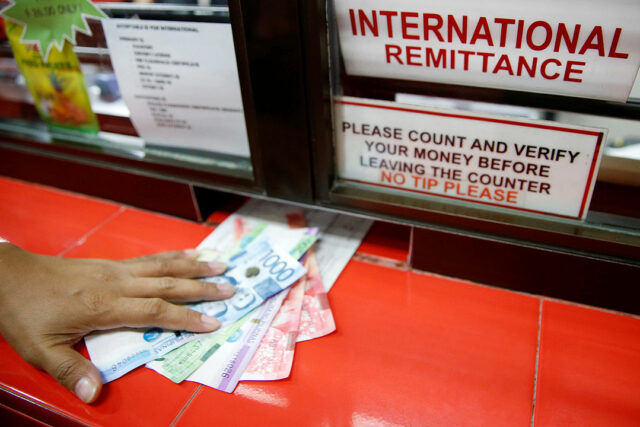
Money sent home by overseas Filipino workers rose by 2.5% in March. — REUTERS

By Luisa Maria Jacinta C. Jocson, Reporter

MONEY SENT HOME by overseas Filipino workers (OFWs) in March recorded its slowest pace of growth in nine months, data from the Bangko Sentral ng Pilipinas (BSP) showed.

Cash remittances — which fuels household spending — grew by 2.5% to $2.74 billion in March from $2.67 billion in the same month last year.

The growth in cash remittances eased from the 3% recorded in February. It was also the slowest pace of annual growth in nine months or since 2.1% in June 2023.

Overseas Filipinos’ Cash Remittances

Month on month, cash remittances coursed through banks rose by 3.5% from $2.65 billion in February.

“The increase in personal remittances in March 2024 was due to remittances from land-based workers with work contracts of one year or more and sea- and land-based workers with work contracts of less than one year,” the BSP said.

Remittances from land-based workers went up by 3% to $2.15 billion in March, while money sent by sea-based workers inched up by 0.9% to $588.787 million.

“The slight dip may be attributed to foreign exchange nuances with the peso much weaker in March 2024 versus March 2023,” ING Bank N.V. Manila Senior Economist Nicholas Antonio T. Mapa said in a Viber message.

“Slower inflation for first quarter 2024 versus the corresponding quarter last year could also be tagged as one reason for the slight underperformance,” he added.

In March, inflation accelerated to 3.7% from 3.4% in February. However, it was much slower than the 7.6% print a year earlier.   

Rizal Commercial Banking Corp. Chief Economist Michael L. Ricafort noted there was a seasonal increase in remittances due to the “holiday-related spending for the Holy Week in the latter part of March.”

Meanwhile, cash remittances rose by 2.7% to $8.22 billion in the first quarter from $8 billion in the same period a year ago.

“The growth in cash remittances from the United States (US), Saudi Arabia, the United Arab Emirates (UAE), and Singapore contributed mainly to the increase in remittances in Q1 2024,” the central bank said.

In the January-March period, the United States accounted for 41.2% of overall remittances. This was followed by Singapore (7.2%), Saudi Arabia (5.9%), Japan (5%), and the United Kingdom (4.4%).

Other sources of remittances were the UAE (4.3%), Canada (3.2%), Qatar (2.8%), Taiwan (2.8%) and Hong Kong (2.5%).

Meanwhile, personal remittances increased by 2.6% to $3.05 billion in March from $2.97 billion in the same month last year. In the first quarter, personal remittances jumped by 2.8% to $9.15 billion from $8.9 billion a year ago.

Mr. Ricafort said he expects modest growth in remittances in the next few months.

“For the coming months, single-digit growth in OFW remittances could still continue as OFW families still need to cope up with relatively higher prices/inflation locally that would require the sending of more remittances,” he said.

Mr. Mapa said that remittances remain a “stable and dependable source of foreign currency and peso purchasing power for the Philippine economy.”

The BSP expects cash remittances to grow by 3% this year.

Recto expects BSP to keep rates steady amid weak peso

PHILSTAR FILE PHOTO

LATEST INFLATION DATA and the recent peso performance will likely prompt the central bank to extend its policy pause, Finance Secretary Ralph G. Recto said.

“We’ll take a look at the data. So far, the way I see it, unless something changes between now and then, I think (it will be) more or less steady,” he told reporters late on Tuesday.

Mr. Recto is part of the seven-member Monetary Board, which is set to have its meeting today (May 16).

The BSP is widely expected to keep its benchmark rate at a 17-year high of 6.5%, according to 17 out of 19 analysts in a BusinessWorld poll last week.

From May 2022 to October 2023, the central bank raised interest rates by a total of 450 basis points (bps) to tame inflation. It last raised borrowing costs in an off-cycle rate hike in October.

“It all depends on inflation. We all go back to inflation. The expectations for inflation this year are lower than expected. But it will still be sticky. I think it will be a little higher next year also,” Mr. Recto said.

Inflation accelerated for a third straight month to 3.8% in April from 3.7% in March. It also marked the fifth straight month that inflation settled within the BSP’s 2-4% target range.

Inflation averaged 3.4% in the January-April period, below the central bank’s 3.8% full-year forecast.

Mr. Recto said that the peso’s recent performance will also be factored in the Monetary Board’s decision on Thursday.

“That’s part of it, why I think rates will stay the same,” he said.

The peso has been trading at the P57 level since mid-April.

The peso closed at P57.505 against the dollar on Wednesday, strengthening by 33.5 centavos from its P57.84 finish on Tuesday.

The Finance chief said that the Monetary Board may begin cutting rates by the fourth quarter of this year.

“Moving forward, I expect rates to go lower. Maybe not this Monetary Board (meeting), but it’s possible that within the end of the year, there could be a possible reduction in rates,” he said.

BSP Governor Eli M. Remolona, Jr. said that they could reduce rates if inflation settles firmly in the 3% area. — Luisa Maria Jacinta C. Jocson

Philippines falls to its worst good governance index ranking in 3 years

The Philippines fell four spots to 67th out of 100 countries in the Chandler Good Government Index. — PHILIPPINE STAR/MIGUEL DE GUZMAN

By Kyle Aristophere T. Atienza, Reporter

THE PHILIPPINES’ ranking in a global good governance index dropped four spots to 67th out of 100 countries — its worst showing in three years — as it scored lower in several indicators including leadership and foresight.

It also fared worse in financial stewardship at 0.53 from 0.54 previously, and in global influence and reputation at 0.36 from 0.38 previously, in Chandler Institute of Governance’s Chandler Good Government Index (CGGI). 

The Philippines’ score in helping people rise improved to 0.55 from 0.38, while it scored higher as an attractive marketplace to 0.56 from 0.53 last year, according to a report posted by the Chandler Institute on its website on Wednesday.

Philippines slips in 2024 Chandler Good Government IndexThe country’s scores for strong institutions and robust laws and policies were unchanged at 0.46 and 0.47.

In Southeast Asia, there was a broad sense of progress in helping people rise from 2021 to 2024, the report said.

In the helping people rise pillar, the Philippines was recognized for efforts in health along with Malaysia and for income distribution along with Vietnam. Other indicators include education, satisfaction with public services, and personal safety.

“In other words, Southeast Asian countries have made strong progress across a number of outcome-related indicators,” the report said.

“It is possible this sense of national momentum and progress enhances citizens’ satisfaction with their country’s public services and general governance.”

Singapore topped the index, followed by Denmark (2nd), Finland (3rd), Switzerland (4th), Norway (5th), Sweden (6th), Luxembourg (7th), Germany (8th), the Netherlands (9th), and Ireland (10th).

In the East and Southeast Asia region, the Philippines lagged behind Singapore, South Korea (20th), Japan (22nd), China (37th), Malaysia (39th), Indonesia (48th), Vietnam (50th) and Thailand (54th).

The Philippines was only ahead of Mongolia (77th) and Cambodia (90th).

The Philippines’ failure to improve significantly in the index against the backdrop of poor performance in leadership and foresight reflects the country’s ‘lukewarm’ government performance,” said Emy Ruth Gianan, who teaches economics at Polytechnic University of the Philippines.

“In a sense, it has been our operation for the past decades. We rely on incremental policy development, waiting for years before more progressive and inclusive laws are in place,” she said in a Facebook Messenger chat.

She cited the country’s poor accountability measures, with many Filipinos not demanding much from their local and national leaders.

“We also cannot participate in these kinds of discourse fully because we need to meet our basic needs first,” she said. “Both challenges reinforce each other, creating that room for a mid-performance in governance.”

Ms. Gianan said the Philippines, whose score in financial stewardship saw a major decline, has yet to implement “more effective tax systems that could fund much needed welfare improvement.”

“Our economic hubs, while improving, have yet to reach the level of competitiveness of our regional neighbors,” she added.

Leonardo A. Lanzona, an economics professor at Ateneo de Manila University, said the Philippines’ worsening performance in the good governance index is a manifestation of “institutional deterioration we have been feeling since the Duterte administration.”

“As both local and global conditions change, the government has not met the growing demands of people, except to offer a helping hand during periods of crisis,” he said via Messenger chat.

President Ferdinand R. Marcos, Jr. was elected in 2022 as the country was recovering from the impact of the COVID-19 pandemic, which pushed the Philippines in 2020 to its deepest recession in postwar history.

“There is a mistaken notion that everything should be initiated by the government, resulting in an almost full acceptance of its policies,” Mr. Lanzona said.

Just like its predecessor, the current administration, despite the abundance of technocrats, has been “unable to offer much direction and solutions to current problems and to improving institutional quality,” he said.

“In the process, corruption and poor governance continued to prevail. Thus, the Filipino has never been allowed to reach his or her full potential,” he added.

“Despite having the highest growth rate in Southeast Asia (due mainly to base effects), the Philippines continues to be a laggard in the region.”

Philippine gross domestic product expanded by 5.7% in the first quarter, slightly faster than the 5.5% in the fourth quarter of 2023 but below the government’s 6-7% target.

The Philippines’ first-quarter growth is about the same as Vietnam’s 5.6% and ahead of China’s 5.3%, Indonesia’s 5.1% and Malaysia’s 3.9%.

The Philippines aims to be an upper middle-income economy by 2027.

JICA eyes more railway, social development projects in PHL

PHILIPPINE STAR/EDD GUMBAN

By Beatriz Marie D. Cruz, Reporter

THE JAPAN International Cooperation Agency (JICA) is looking to fund more railway infrastructure and social development initiatives in the Philippines this year.

“For this year, actually we have many, many pipeline projects here, but it’s a little bit early for me to say the actual number because we need some more consultation with our Japanese parliament, taxpayers, and the Japanese government,” JICA Chief Representative in the Philippines Takema Sakamoto told BusinessWorld on the sidelines of an event late on Tuesday.

“Last year, size-wise, I signed roughly ¥300 billion (around P110 billion)… and I hope we can maintain the same size or level for that.”

Official development assistance (ODA) from foreign lenders helps the Philippine government fund major infrastructure and social development initiatives amid limited fiscal space.

This year, JICA will continue supporting the Philippines’ railway projects to encourage the public’s shift to mass transportation, Mr. Sakamoto said.

JICA will also continue funding the construction of roads and bridges in the country.

In March, the Philippine government and JICA signed two loan commitments totaling ¥250 billion to fund the ongoing construction of the Metro Manila Subway and a road project that involves building the longest tunnel in the country.

JICA also recently partnered with Japanese firms Sumitomo Corp. and Hankyu Corp. to support the operations and maintenance of Light Rail Transit Line 1.

For this year, the agency is looking to fund social development initiatives, particularly in health and water sanitation, Mr. Sakamoto said.

JICA is also planning to fund initiatives to promote peace in the Bangsamoro Autonomous Region in Muslim Mindanao (BARMM).

In particular, JICA will continue supporting BARMM’s infrastructure development, job creation, skills training, as well as governance and capacity development, Mr. Sakamoto said.

“The Bangsamoro peace process is not just for the Bangsamoro area’s development, but for the entire Philippines’ development,” he said. “A safer and secure situation in the [Bangsamoro] is a prerequisite for the invitation of more investments and so on.”

BARMM is currently preparing for its first-ever parliamentary elections next year.

Meanwhile, Mr. Sakamoto said challenges to project implementation in the Philippines include slow permitting process and delayed payments to project contractors.

“Commitment is already enough. [However], we need actual action on the ground to keep the promise, and not to change the rule in the middle,” Mr. Sakamoto said.

Government-issued orders like Executive Order (EO) No. 59 and Administrative Order (AO) No. 19 should address bottlenecks in planning for infrastructure projects and boost investor confidence in the country, he added.

President Ferdinand R. Marcos, Jr. recently issued EO 59 to fast-track the approval of key infrastructure project proposals, while an interagency committee was formed under AO 19 to streamline land acquisition for railway projects.

“As such, the government of the Philippines is doing their best to alleviate those hurdles or obstacles,” Mr. Sakamoto said. “I hope we can see a dramatic, speedier implementation on the ground this year.”   

Japan was the country’s second-largest source of ODA in 2022, accounting for 30.75% or $9.96 billion of the total, according to data from the National Economic and Development Authority.

Banking, power, property boost FDC Q1 income to P2.9B

FILINVEST Development Corp. (FDC) saw a 36% rise in its first-quarter (q1) attributable net income, reaching P2.9 billion from last year’s P2.2 billion, driven by gains in the banking, power, and property sectors.

First-quarter total revenue and other income improved by 28% to P26.4 billion, FDC said in a statement to the local bourse on Wednesday.

Costs and expenses surged by 25% to P21.6 billion, it added.

Banking and financial services took up 36% of the conglomerate’s first-quarter bottom line, followed by its power subsidiary at 29%.

The property business, composed of the real estate and hospitality segments, shared 21% of overall profit, while other businesses shared the remaining 14%.

“We are pleased with the strong financial results during the first quarter. We will push to maintain the momentum as we strive towards the fulfillment of our long-term goal of sustained growth in earnings,” FDC President and Chief Executive Officer Rhoda A. Huang said.

For the banking business, East West Banking Corp. recorded a 6% increase in net income contribution to P1.2 billion. Net interest income rose by 34% to P8.2 billion, led by the 19% expansion in lending activities led by credit cards, auto, personal, and salary loans.

Consumer lending was the bank’s core product as it took up 81% of the total loan book, pushing net interest margin to 8.1%.

On the power segment, FDC Utilities, Inc. saw a 65% jump in net income to P1 billion on higher-than-expected energy sales volume and increased operational plant efficiency.

All units of its 405-megawatt Misamis Oriental plant were fully contracted, facilitated by the energization of the Mindanao-Visayas interconnection project in the second half of 2023.

For the real estate business, Filinvest Land, Inc. and Filinvest Alabang, Inc. recorded 17% increase in income contribution to P704 million as residential sales jumped by 24% to P3.6 billion.

The surge in residential sales came from accelerated construction progress of the projects and the strong performance of medium-rise condominiums. Mall and rental revenues improved by 4% to P2 billion led by higher mall occupancy and foot traffic.

Meanwhile, hotel operations under Filinvest Hospitality Corp. (FHC) contributed P37 million to the conglomerate’s first quarter net income.

FDC said that earnings came from the recovery of domestic tourism supported the increase in occupancy and room rates across operating properties such as Crimson in Alabang, Boracay, and Mactan; Quest in Cebu, Clark, and Tagaytay; and Timberland Highlands in Rizal.

FHC has approximately 1,800 rooms across seven hotels in seven cities and five regions under the Crimson and Quest brands. It also has two 18-hole golf courses situated in Mimosa, Clark.

For 2024, FDC has earmarked P25 billion as its capital expenditure budget, of which 60% will go to real estate development.

Another 15% will be used to pursue renewable energy projects, 15% for the expansion of the hospitality business, and the balance for digitalization and other businesses.

On Wednesday, FDC stocks dropped by 0.17% or one centavo to P5.79 per share. — Revin Mikhael D. Ochave

MGen subsidiary to build LNG power plants in Singapore

PACIFICLIGHT Power Pte. Ltd. (PLP), a subsidiary of Meralco PowerGen Corp. (MGen), will build two liquefied natural gas (LNG) generating units in Singapore, aiming to supply 100 megawatts (MW) of electricity.

This comes after the company was awarded by the Energy Market Authority (EMA) the right to build, own, and operate power generation units to provide “fast start” generation capacity by the second quarter of 2025.

Fast start is a type of power-generating capacity that allows energy to be delivered immediately to the grid.

“PLP is pleased to be awarded the 25-year Fast Start contract for a 100-MW hydrogen-ready gas turbine that can be brought from standstill to full load within 18 minutes,” PLP Chief Executive Officer (CEO) Yu Tat Ming said in a media release on Wednesday.

“This award marks a significant milestone for our company, and we are committed to delivering the project on time and reliably supporting the energy system,” he added.

MGen President and CEO Jaime T. Azurin said that the development will contribute to MGen’s drive for “more sustainable power generation as it transitions to low-carbon power generation such as LNG in the Philippines.”

“MGen is proud of the development and recognition of PLP’s capability to provide cleaner power supply to residents of Singapore,” Mr. Azurin said.

EMA Chief Executive Ngiam Shih Chun said that the fast start generating units by PLP “will bolster the reliability and security of Singapore’s power system with the potential to switch to using hydrogen instead of natural gas in the future.”

PLP is an 800-MW LNG power plant, and owned by FPM Power Holdings Ltd., a regional company that combines the joint expertise of MGen and First Pacific Co. Ltd.

MGen is the power generation arm of Manila Electric Co. (Meralco).

Meralco’s controlling stakeholder, Beacon Electric Asset Holdings, Inc., is partly owned by PLDT Inc.

Hastings Holdings, Inc., a unit of PLDT Beneficial Trust Fund subsidiary MediaQuest Holdings, Inc., has an interest in BusinessWorld through the Philippine Star Group, which it controls. — Sheldeen Joy Talavera