Home Blog Page 32

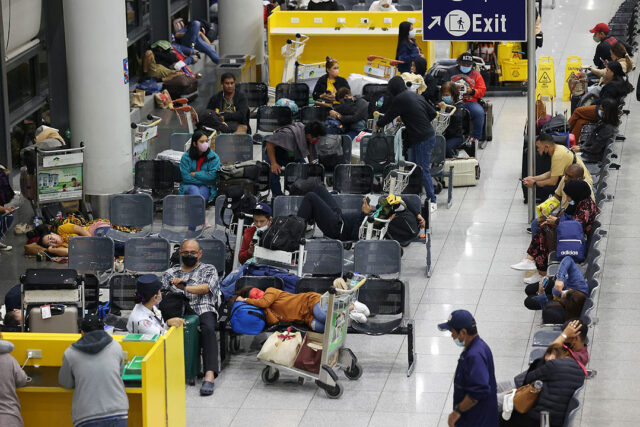
Airports, ports still expecting passenger surge during Easter as travel costs rise

PHILIPPINE STAR/ MIGUEL DE GUZMAN

PASSENGER TRAFFIC is still expected to rise during the Easter travel season, with both ports and airports anticipating heavier volumes, the Philippine Ports Authority (PPA) said.

The PPA is projecting port passenger throughput of 2.46 million between Palm Sunday and Easter Sunday, up 2.07% from a year earlier.

According to the port regulator, passenger traffic is expected to increase at Batangas Port, Iloilo River Wharf, Calapan Port, Jordan Port, and Bredco Port.

The New NAIA Infra Corp. (NNIC), operator of the Ninoy Aquino International Airport (NAIA), said it is expecting 1.35 million passengers to travel during the week, against 1.33 million over the same period last year.

“NNIC said passenger demand remains strong, although the increase is lower than earlier expected due to flight suspensions and operating restrictions affecting some Middle East services,” it said.

It said it deployed more personnel at check-in counters, immigration and security screening areas to help manage the expected passenger influx.

NNIC’s new terminal assignments took effect on March 29. Terminals 1 and 3 will serve international flights. Terminals 2, 4, and the proposed Terminal 5 are designated for domestic operations.

NNIC said traffic will peak during the week at 158,884 passengers, with passenger volume averaging 143,000 daily.

It said Terminal 3 is expected to handle 712,932 passengers during the period, followed by Terminal 2 with 346,342 and Terminal 1 with 293,990.

The Land Transportation Franchising and Regulatory Board (LTFRB) said it ordered all regional directors to conduct roadworthiness inspections at bus and other public utility vehicle terminals.

“This is a yearly exodus and we expect more people and motor vehicles again to be on the road on their way to the provinces for religious observances, vacations and other activities,” LTFRB Chairman Vigor D. Mendoza said in a statement.

Meanwhile, Metro Pacific Tollways Corp. (MPTC) said it is deploying additional personnel and providing round‑the‑clock basic mechanical services at all North Luzon Expressway (NLEX) and Subic‑Clark‑Tarlac Expressway (SCTEX) rest and refuel stations.

MPTC, the tollway arm of the Metro Pacific Investments Corp. (MPIC),  also said that roadworks, lane closures and maintenance activities are also suspended during the Holy Week.

MPTC, the country’s largest toll road developer and operator, manages major expressways including the NLEX, SCTEX, Manila-Cavite Expressway, Cavite-Laguna Expressway, Cebu-Cordova Link Expressway, and the NLEX Connector Road.

MPIC is one of three key Philippine units of Hong Kong-based First Pacific Co. Ltd., alongside Philex Mining Corp. and PLDT, Inc.

Hastings Holdings, Inc., a unit of PLDT Beneficial Trust Fund subsidiary MediaQuest Holdings, Inc., holds a majority stake in BusinessWorld through the Philippine Star Group, which it controls. — Ashley Erika O. Jose

GOCC subsidy bill falls 22.9% in 2025 as fiscal consolidation ramps up

President Ferdinand R. Marcos, Jr. led the inspection of the solar-powered irrigation project at Barangay Viejo, Minalabac, Camarines Sur, March 23, 2026.

By Justine Irish D. Tabile, Senior Reporter

SUBSIDIES provided to government-owned and -controlled corporations (GOCCs) fell 22.9% in 2025, the Bureau of the Treasury (BTr) said.

Budgetary support provided to state-run firms amounted to P106.92 billion in 2025, down from P138.763 billion a year earlier.

State-owned firms receive monthly subsidies from the national government to support their daily operations if their revenue is insufficient.

Social Watch Philippines Senior Budget Analyst Alce C. Quitalig said the lower subsidies released in 2025 reflect the government’s fiscal consolidation efforts.

“The current administration is clearly pursuing fiscal consolidation, reducing reliance on national government subsidies to GOCCs and signaling an expectation to the GOCCs to become more self-reliant in terms of generating their own revenue,” Mr. Quitalig said via Viber.

He said the subsidies released last year were the lowest since the P103 billion released in 2016.

Michael L. Ricafort, chief economist at Rizal Commercial Banking Corp. (RCBC), said the government in 2025 shifted its focus to profitable GOCCs to reduce the budget deficit and national government borrowings.

In 2025, the National Irrigation Administration (NIA) topped the subsidy list with P47.239 billion or 44.2% of the total.

This was followed by the National Food Authority (NFA), which received P14.404 billion, and the Power Sector Assets and Liabilities Management Corp., with P8 billion.

Other GOCCs on the subsidy list were the Philippine Crop Insurance Corp. (P5.85 billion), the Philippine Retirement Authority (P4.433 billion), the Philippine Food and Drug Administration (P3.765 billion), the Philippine Heart Center (P2.409 billion), and the Philippine Rubber Research Institute (P2.112 billion).

Government financial institutions (GFIs) received the fewest subsidies, with the Land Bank of the Philippines receiving P7 million for 2025.

Mr. Quitalig said the lower subsidies to GFIs could be a by-product of GOCC reclassification.

“The government reclassified certain GOCCs, shifting some from the category of GFIs to other GOCCs, and vice versa,” he said, citing the reclassification of the Philippine Crop Insurance Corp. from the GFI category to the other GOCC category in 2024.

“Indeed, Social Housing Finance Corp., Credit Information Corp., Philippine Deposit Insurance Corp., and National Home Mortgage Finance Corp. received no subsidies in 2025, highlighting uneven treatment across institutions,” he added, noting that the four agencies are GFIs.

The other agencies that received minimal subsidies were the Tourism Infrastructure and Enterprise Zone Authority, which received P22 million, and the Philippine Health Insurance Corp. (PhilHealth), which received P27 million.

According to Mr. Quitalig, subsidies for PhilHealth have been on the decline since 2023 from over P80 billion annually.

In 2023, subsidies to PhilHealth totaled P50.7 billion. This fell to P9.6 billion in 2024.

The other GOCCs that received less than P100 million in subsidies in 2025 were the Zamboanga City Special Economic Zone Authority (P47 million), the Philippine Center for Economic Development (P59 million), the Philippine Tax Academy (P60 million), and the Southern Philippines Development Authority (P84 million).

Mr. Quitalig said steep cuts were made in the housing and irrigation GOCCs, with the National Housing Authority (NHA) receiving P1.4 billion in 2025, down from P5 billion in 2024, the NIA receiving P47 billion against P71 billion previously, and the Pampansang Pabahay Para sa Pilipino Program, which received P758 million, down from P1.1 billion.

“These reductions raise a critical question: What does this shift mean for nonfinancial GOCCs tasked with essential services and for citizens who depend on them?” he said.

“These nonfinancial GOCCs with social functions face operational strain and tighter budgets, which may constrain their ability to deliver essential services,” he added.

At first glance, he said that the 2025 subsidy report shows a smoothed-out monthly distribution.

“Some subsidy releases remain uneven, notably for NIA, NHA, and PhilHealth,” he said.

“In contract, smaller allocations to Philippine National Railways, Light Rail Transit Authority, and NFA were released more regularly in 2025, suggesting improved predictability for transport and food security services,” he added.

RCBC’s Mr. Ricafort said he expects subsidies this year to increase in view of the assistance that the government will release for the most vulnerable members of society, such as transport, fisherfolk, agriculture, and the poor.

“Other subsidies such as on healthcare and other social services for the poorest of the poor could lead to higher subsidy bills, on top of non-monetary measures to prevent higher prices from passing through to the general public,” he added.

AI to disrupt workforces before benefits show — study

WANGXINA-FREEPIK

A NEW STUDY by the International Labour Organization (ILO) and the World Bank concluded that developing countries are likely to experience upheaval in the workforce before they reap economic benefits from generative artificial intelligence (AI).

In a study, “Disruption without dividend? How the digital divide and task differences split GenAI’s global impact,” the ILO said that differences in digital infrastructure and task composition shape how the risks and benefits of GenAI are distributed across countries.

“Exposure to GenAI is higher in advanced economies, particularly in clerical and professional occupations. Developing countries, while less exposed overall, face structural constraints that limit their ability to benefit from the technology,” the ILO said after a review of 135 countries.

The report highlighted the role of the digital divide, noting that many workers in vulnerable jobs are already online even in lower-income settings, which could accelerate job losses.

“These jobs often represent relatively higher-quality jobs in lower-income countries, including clerical and administrative positions that have historically offered a pathway to decent work, particularly for women and young workers. The concern is that AI-driven automation could close off these pathways,” the ILO said.

According to ILO, the study also noted that “many workers in roles with potential for productivity gains lack reliable internet access in lower-income settings, limiting their ability to benefit from GenAI.” 

“The paper shows that workers in lower-income economies tend to perform fewer non-routine analytical tasks, rely less on computers at work and have more routine or manual work, reducing the scope for productivity gains from GenAI implementation,” it added. — Erika Mae P. Sinaking

NCR retail price growth steadies in February

A vendor sits in a stall selling products in sachet packaging at a public market in Manila, Philippines, Aug. 1, 2019. — REUTERS

RETAIL price growth of general goods in Metro Manila steadied in February, the Philippine Statistics Authority (PSA) reported on Friday, noting price acceleration in crude materials, inedible except fuels and manufactured goods classified chiefly by materials.

Citing preliminary data, the PSA reported that the general retail price index (GRPI) in the National Capital Region (NCR) grew 2.1% year on year in February, unchanged from January.  A year earlier, price growth had been 1.2% growth.

The February reading is the strongest since the 2.5% posted in January 2024.

In the year to date, GRPI growth averaged 2.1%, up from 1.3% a year earlier.

Ateneo Center for Economic Research and Development Senior Research Fellow Ser Percival K. Peña-Reyes said the year-on-year growth in retail prices in the NCR was down to “selective price increases in certain commodity groups (beverages and tobacco, crude materials except fuels); steady price trends in many retail goods (manufactured goods, chemicals like oils and fats, machinery, miscellaneous manufactured articles, food); and a dampening effect from weaker or declining prices of mineral fuels and lubricants,” he said via Viber.

The PSA noted a pickup in the indices of crude materials, inedible except fuels (3% in February from 2.8% in January) and manufactured goods classified chiefly by materials (1.6% from 1.5%).

“The February acceleration was largely a cost-push effect due to rising prices of key raw materials (especially chemicals and oils), which meant increased costs for producers and higher prices for manufactured goods and related retail items,” Mr. Peña-Reyes said.

Year-on-year growth in the mineral fuels, lubricants, and related materials index was 1%, a turnaround from the 0.4% decline in the previous month.

Meanwhile, slower yearly growth was seen in the indices of food at 3.4% in February, down from 3.6% in January, and machinery and transport equipment at 0.5%, against 0.7% previously.

The indices of other commodity groups steadied in February from their respective levels in January.

The GRPI is based on 2012 constant prices.

Rizal Commercial Banking Corp. Chief Economist Michael L. Ricafort said price gauges could climb further in the coming months due to oil price hikes and the weaker peso.

“Both of which would lead to higher prices of imports, and overall inflation, with risk of second-round inflation effects or higher prices of other affected goods and services,” he said in a text message.

He also cautioned about rate hikes by the central bank to keep inflation within the 2%-4% target range.

Meanwhile, Mr. Peña-Reyes expects GRPI growth to remain stable in the short term.

“By mid-year onward, there could be a gradual upward bias, driven by fuel, food, and demand-side pressures. Overall, we can expect controlled, moderate growth, but not a surge,” he said.

The PSA uses the GRPI as a deflator in the National Accounts, particularly in the retail trade sector, and serves as a basis for forecasting. — Isa Jane D. Acabal

The SGV journey toward inclusive leadership and empowerment

IN BRIEF:

• SGV & Co. advances women leaders through a strong meritocratic culture, resulting in a leadership bench where women have actively helped shape the Firm’s direction.

• The firm’s efforts highlight that inclusiveness is vital for a thriving future, demonstrated through impactful initiatives empowering women and girls in historically underrepresented areas.

• Equally vital to the ongoing journey towards equity are the male allies and supporters whose shared goals and mutual respect strengthen and amplify these efforts.

In an industry where leadership development and career pathing have traditionally been narrow, SGV & Co. has built something more enduring and increasingly relevant. The firm has long treated meritocracy as an operating principle. The result is a leadership bench where women have advanced and actively help shape its direction.

On International Women’s Month, we celebrate the women honored as leaders and changemakers, exemplifying power that nurtures, uplifts, and transforms lives with grace and purpose. Their leadership guards legacies and guides future generations with courage and compassion, built on a foundation of meritocracy that SGV has always upheld.

WOMEN SETTING THE PACE
SGV’s record on women leadership was built over decades by individuals who navigated, and often remodeled, the structural barriers of their time.

Erlinda T. Villanueva’s appointment as SGV’s first female partner in 1961 signaled a shift that would resonate for decades. It demonstrated that advancement within the firm was anchored in performance, not precedent.

The rise of Gloria L. Tan-Climaco to become the firm’s first woman Chair and Managing Partner marked a defining moment. Her recognition as both a Young Lady Achiever in Public Accounting and an Outstanding CPA in Public Accounting from the Philippine Institute of Certified Public Accountants reflected a career grounded in technical excellence and credibility. Her subsequent role advising former President Gloria Macapagal Arroyo on strategic initiatives underscored the broader influence SGV leaders would wield.

SGV Senior Consultant Delia Domingo Albert followed a similarly expansive path. As former Secretary of Foreign Affairs and Philippine Ambassador, she brought institutional discipline to the global stage. Her tenure included serving as chair of the United Nations Security Council in 2004, where she championed the role of women in peace-building. Her career has since become a template for leadership that crosses sectors while consistently advocating gender equity.

These women leaders did more than succeed individually. They embodied the values of integrity and excellence that the firm’s founder, Washington SyCip, built the firm upon. Today, women make up the majority of SGV’s workforce and more than half of its partners and principals.

MERITOCRACY BY DESIGN
At SGV, meritocracy is part of the organizational infrastructure. From recruitment to promotion, the firm has relied on performance metrics, technical proficiency, and leadership potential as its primary filters. Advancement is neither automatic nor arbitrary.

This philosophy is reinforced through deliberate investment in mentorship and professional development. Programs ensure that high-potential employees, regardless of gender, gain access to sponsors, stretch assignments, and leadership exposure. Over time, this has produced a steady influx of women leaders who are not only qualified but also well-suited for the positions.

The result is an organizational culture that is both competitive and collaborative. Individuals are encouraged to excel and contribute to the firm’s collective strength. For women professionals steering through a historically male-dominated industry, this environment has been significantly influential.

IMPACTFUL INITIATIVES TO EMPOWER AND UPLIFT
The firm takes pride in the progress it has made in its ongoing journey toward equity. Its efforts serve to underscore that inclusiveness is essential to shaping a future where everyone can thrive. These efforts include a range of impactful initiatives designed to empower and uplift women and girls, particularly in areas where they have been historically underrepresented.

One such initiative is the EY STEM Program, which equips girls aged 13 to 18 with future-ready STEM skills through a free, gamified app. This innovative approach builds confidence and curiosity in science and technology, engaging 600 students during its launch at one high school. The program has inspired many young Filipinas to explore STEM fields and is set to expand its reach in 2026 through a new memorandum of agreement with the school’s LGU. This expansion aims to bring STEM opportunities to more public schools, empowering even more young women to pursue careers in science and technology.

Complementing this is the EY Women in Tech (WiT) program, which SGV participates in as a member firm of EY. This global initiative was established by EY in 2020 to empower girls and women to enter, remain, and lead in the technology sector. Serving as an umbrella network of over 40 regional and competency-based WiT communities across the EY network, the program connects members, shares best practices, and fosters a strong sense of community. Open to everyone regardless of gender, rank, or professional background, WiT encourages participation in both global and local events that promote learning, inclusiveness, and career growth within the technology space.

Further strengthening SGV’s commitment to gender equality is the Gender Equality Assessment, Results, and Strategies (GEARS) Program. Building on the firm’s distinction as the first professional services firm in the Philippines and Southeast Asia to receive the EDGE Assess-level certification, GEARS enables the firm to measure its progress and continuously enhance gender equality in the workplace. This program reflects the firm’s dedication to creating an equitable environment where all employees can thrive.

Together, these initiatives highlight the firm’s holistic approach to inclusiveness, ensuring that equity is not just an aspiration but a lived reality for women and girls across all levels and sectors.

A PRAGMATIC BLUEPRINT FOR LEADERS
The SGV model offers a pragmatic blueprint for business leaders. While essential, meritocracy is not sufficient on its own. Without conscious efforts to eliminate systemic barriers, organizations risk underutilizing significant portions of their talent pool.

Embedding inclusiveness into leadership training is a critical first step. Bias, often subtle and unintentional, can accumulate into structural disadvantage if unchecked. Equally important is cultivating mentorship and sponsorship networks. At SGV, these have been instrumental in bridging the gap between potential and opportunity, especially for younger professionals. Transparency plays a pivotal role as well. Setting clear diversity targets and holding leadership accountable ensures that progress is visible and sustained.

Finally, flexibility should be viewed as part of the policy, and not just a perk. In a global talent market, accommodating diverse needs can be a decisive differentiator.

COLLABORATION ACROSS ALL GENDERS
As SGV celebrates its 80th anniversary, it is important to see the bigger picture: SGV’s story is ultimately one of continuity. The firm’s early commitment to meritocracy laid the foundation for a leadership culture that could evolve without losing its identity.

Today, SGV is extending that legacy into a more complex and demanding era, shaping it in its own image. For the women leaders who have risen through the firm’s ranks, and for those who will follow, the message is clear: capability remains the currency of advancement. In a system that increasingly values inclusiveness, that currency now circulates more freely.

In celebrating International Women’s Month, it is important to recognize that true progress toward equity and empowerment is achieved through collaboration across all genders. Equally vital to this journey are the male allies and supporters whose shared goals and mutual respect strengthen and amplify these efforts. Together, women and men stand united, building a brighter, more inclusive future. This collective commitment ensures that the impact made today will inspire lasting positive change for generations to come.

This article is for general information only and is not a substitute for professional advice where the facts and circumstances warrant. The views and opinions expressed above are those of the author and do not necessarily represent the views of SGV & Co.


Rossana A. Fajardo is the chairman and country managing partner of SGV & Co.

Yemen’s Houthis enter Iran war with attacks on Israel, while US Marines arrive in region

AN IRANIAN MISSILE flies toward Israel, amid the US-Israel conflict with Iran, as seen from Jerusalem, March 11, 2026. — REUTERS/JAMAL AWAD TPX IMAGES OF THE DAY

CAIRO/DUBAI — The risk of an expanded Iran war grew as Yemen’s Iran-aligned Houthis on Saturday launched their first attacks on Israel since the start of the conflict, as additional US forces reached the Middle East.

Washington has dispatched thousands of marines to the Middle East in the month-old war. The first of two contingents arrived on Friday on an amphibious assault ship, the US military said on Saturday.

The Washington Post reported on Saturday that US officials said the Pentagon was preparing for weeks of ground operations in Iran, possibly involving raids by Special Operations and conventional infantry troops. Whether President Donald J. Trump would approve plans for deploying ground troops remained uncertain, the Post reported.

Reuters has reported the Pentagon was considering military operations that could include deploying ground troops in Iran.

LEBANESE JOURNALISTS, RESCUE WORKERS HIT
The war, launched on Feb. 28 with US and Israeli strikes on Iran, has spread across the Middle East, killing thousands and hitting the world economy with the biggest-ever disruption to global energy supplies.

Secretary of State Marco Rubio said on Friday the US could achieve its aims without ground troops but that it was deploying some to the region so Mr. Trump would have “maximum” flexibility to adjust strategy.

The Pentagon was also expected to deploy thousands of soldiers from the US Army’s 82nd Airborne Division.

Iranian President Masoud Pezeshkian spoke to Prime Minister Shehbaz Sharif of Pakistan, which hosts talks from Sunday with the Turkish and Saudi foreign ministers on ways to ease regional tensions.

Israel carried out a wave of attacks on Tehran on Saturday, targeting what Israel’s military said was Iranian government infrastructure.

It also hit targets in Lebanon, resuming its war against Iran-backed Hezbollah, killing three Lebanese journalists in a strike on a media vehicle, Lebanon’s Al Manar TV reported, as well as a Lebanese soldier. A follow‑up strike on the rescue workers sent to assist them also caused fatalities.

Israel’s military said it had targeted one of the journalists, accusing him of being part of a Hezbollah intelligence unit and saying he had reported on locations of Israeli soldiers.

Iran kept up attacks on Israel and several Gulf states after hitting an air base in Saudi Arabia on Friday and wounding 12 US military personnel, two of them seriously, in one of the most serious breaches of US air defenses so far.

Air defenses shot down a drone near the residence of the leader of the Iraqi Kurdish ruling party, Masoud Barzani, in Erbil, security sources told Reuters early on Sunday. Security sources said on Saturday that another drone attack had targeted the home of the president of Iraq’s Kurdistan region.

Israel, which regularly faced missile attacks from the Houthis before the war, confirmed a missile had been fired at it from Yemen. There were no reports of casualties or damage.

HOUTHI STRIKES MAY MEAN NEW THREAT TO SHIPPING
The attack pointed to a potential new threat to global shipping, already hit by the effective closure of the Strait of Hormuz, previously a conduit for about a fifth of global oil and liquefied natural gas supplies.

The group carried out a second strike on Israel, said Houthi military spokesperson Yahya Saree, vowing more strikes to come.

The Houthis have shown an ability to strike targets far beyond Yemen and disrupt shipping lanes around the Arabian Peninsula and the Red Sea, as they did in support of Hamas in the Gaza war.

With US midterm elections due in November, the increasingly unpopular war has weighed on Mr. Trump’s Republican Party. He has appeared eager to end it soon, while also threatening escalation.

Demonstrators took to city streets across the US on Saturday in anti-Trump rallies described by organizers as a call to action against the war on Iran.

Mr. Trump has threatened to hit Iranian power stations and other energy infrastructure if Iran does not open the Strait of Hormuz. But he extended a deadline he had imposed for this week, giving Iran another 10 days to respond.

Iranian threats to attack ships in the Strait have kept most oil tankers from attempting the waterway. Iran has agreed to let an additional 20 Pakistani-flagged vessels pass through the Strait, with two ships permitted to transit daily, said Pakistani Foreign Minister Ishaq Dar.

Israel has targeted Iran’s nuclear infrastructure. The head of Russia’s state nuclear corporation Rosatom, which has evacuated staff from the Bushehr nuclear power plant on the Gulf coast, said the attacks threatened nuclear safety.

Mr. Pezeshkian said Iran would “retaliate strongly if our infrastructure or economic centers are targeted.”

Iranian attacks were reported in multiple areas across the Gulf, including Kuwait, the United Arab Emirates and Oman.

An Iranian airstrike hit the Israeli village of Eshtaol, near Jerusalem. Seven people were hospitalized, Israel’s ambulance service said. Aluminium Bahrain said its facilities were targeted in an Iranian attack on Saturday, Bahrain’s state news agency reported.

In Iran, media said at least five people were killed in a US-Israeli attack on a residential unit in the northwestern city of Zanjan, and in Tehran, the Iran University of Science and Technology was struck. Reuters

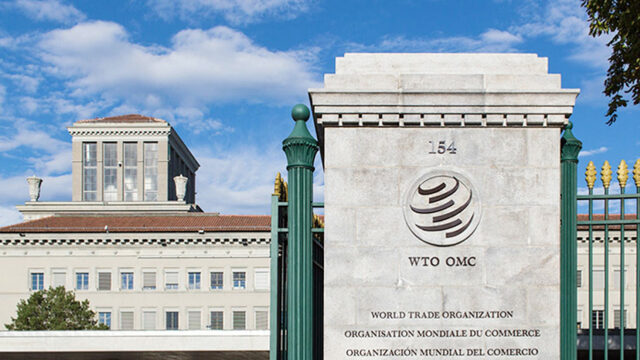
WTO talks stalled going into final day amid U.S.-India e-commerce deadlock

WORLD TRADE ORGANIZATION

YAOUNDE — Talks to reform the World Trade Organization (WTO) and extend a moratorium to not impose customs duties on electronic transmissions such as digital downloads entered their final day on Sunday with no breakthrough yet in sight, diplomats said.

Trade ministers are working at a WTO meeting in Cameroon to close the gap between the United States and India over extending the e-commerce moratorium due to expire this month, three diplomats told Reuters.

Extending the moratorium is seen as a test for the WTO’s relevance, following a year of tariff-fueled trade turmoil and major disruptions due to the Middle East conflict.

India indicated it would accept an extension of two years, three diplomats said. US Trade Representative Jamieson Greer, however, has said Washington was not interested in a temporary extension to the ban, only a permanent one.

Business leaders say an extension is critical to guarantee predictability, fearing duties could otherwise be introduced.

There are suggestions the US could accept a “pathway to permanence” with a 10-year extension, a Western diplomat said. A second said a five- to 10-year extension was being explored, while a third indicated it was unlikely all WTO members would agree to go beyond two years.

A new draft document seen by Reuters on Saturday evening proposes support for developing country members, as well as a review clause.

Extending the moratorium permanently would give the US confidence to remain “fully engaged” in the trade body, the US Ambassador to the WTO, Joseph Barloon, told Reuters ahead of the talks.

“If the moratorium does not get extended, the US will use it as an excuse to beat the WTO on the head,” a fourth senior diplomat said.

REFORMS
The debate comes amid efforts to rework WTO rules to render subsidy use more transparent, make decision taking easier and potentially rethink the so-called Most-Favored-Nation principle that ensures members extend all trade benefits equally to one another.

The US and the European Union argue China in particular has taken advantage of current rules to their detriment.

Meanwhile, decision making under the consensus-based system has often been stymied by individual countries’ objections.

A handful of countries are opposing a detailed work plan on reforms, while most members support it, two senior diplomats said.

“We are frustrated that we are spending a lot of time talking about process, when we want to get on with the real work, reforming the WTO,” a Western diplomat said.

Including into WTO rules an agreement reached by a subset of members aimed at boosting investment in developing countries also remains blocked by India, which said plurilateral accords risk eroding the body’s founding principles. — Reuters

Australia LNG disruptions continue after Narelle; thousands without power

STOCK PHOTO | Image by beasternchen from Pixabay

SYDNEY — Australia’s liquefied natural gas (LNG) production remained disrupted, and thousands were without power in the remote northwest on Sunday, more than a week after the Narelle storm system hit the country.

The impact of Narelle, downgraded from a tropical cyclone on Saturday, on LNG plants run by Chevron and Woodside has exacerbated a global LNG supply crunch caused by the month-old Iran war.

Australia became the world’s second-largest LNG exporter when Qatar halted production following damage from Iranian strikes.

Narelle made landfall as a severe tropical cyclone in Queensland state on March 20 and crossed the Northern Territory before hitting Western Australia. The storm made landfall at the Western Australian town of Exmouth on March 27, also impacting the town of Karratha.

Woodside Australia said on Sunday that Narelle was still interrupting production at the company’s Karratha gas plant, the onshore processing facility for the North West Shelf Project.

“We have commenced remobilizing our workforce to some of our offshore facilities and inspections will inform startup processes and timing,” a company spokesperson said in a statement, adding that “production at the North West Shelf Project will recommence once it is safe to do so.”

Production was unaffected at its Macedon and Pluto facilities, the spokesperson added.

Chevron did not immediately respond to a request for comment on Sunday. On Saturday, it said it was working to restore production at its Gorgon and Wheatstone gas facilities following production outages due to Narelle.

Gorgon is Australia’s largest LNG export facility, producing 15.6 million metric tons a year with three processing trains, while Wheatstone has two trains producing 8.9 million tons.

Power remained out late on Saturday in Exmouth, a town of 2,800 people some 1,100 kilometers (700 miles) north of West Australia’s state capital Perth, the Department of Fire and Emergency Services said.

State-owned Horizon Power said extra crews were on their way to Exmouth “to support local crews to restore power to affected properties as soon as it is safe to do so.”

Exmouth, a gateway to the UNESCO World Heritage-listed Ningaloo Reef, suffered significant damage in the cyclone but no one was injured, the Australian Broadcasting Corp. reported. Reuters

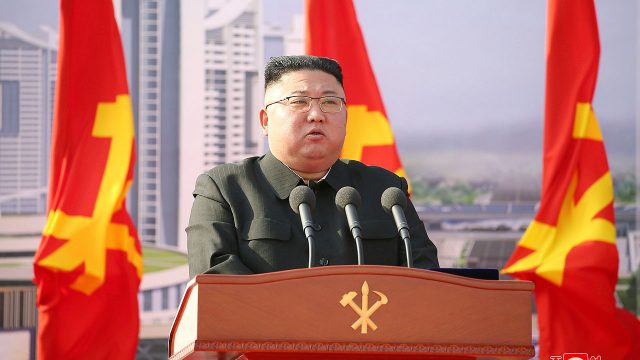
North Korea’s Kim inspects solid-fuel engine, new tank as Pyongyang steps up military development

KCNA VIA REUTERS

SEOUL — North Korean leader Kim Jong Un attended a ground test of a solid-fuel rocket engine made with carbon-fiber materials, as well as inspections of special operations forces training and a new main battle tank, state media KCNA said on Sunday.

KCNA said the new high-thrust solid‑fuel engine had a maximum thrust of 2,500 kilonewtons and that the ground test formed part of a new five-year defense development plan aimed at upgrading the country’s strategic strike capabilities.

Mr. Kim was quoted as saying the test was of major significance for modernizing North Korea’s strategic forces.

North Korea has in recent months stepped up a series of weapons demonstrations and military inspections, highlighting efforts to modernize both its conventional forces and its missile arsenal despite international sanctions.

In separate reports, KCNA said Mr. Kim also inspected a special operations forces training base, stressing the need for intense peacetime training to prepare for modern warfare, and outlined plans to reorganize the country’s special operations units.

Mr. Kim also attended tests of a new main battle tank, with KCNA quoting him as claiming its active protection system was capable of intercepting nearly all existing anti-tank weapons and that the tank was unmatched globally.

At a rare ruling party congress held in February, Mr. Kim unveiled a new five-year plan that reaffirmed continued development of nuclear weapons, while calling for a broad upgrade of the country’s military capabilities.

The country has focused in particular on solid-fuel missile technology, which analysts say allows for faster launch preparation and greater survivability compared with liquid-fuel systems.

Analysts and regional governments also pointed to new tank and combined-arms drills as part of Pyongyang’s effort to adapt its military doctrine to modern warfare, drawing lessons from recent conflicts and emphasizing integration across ground and missile forces.

South Korea and the United States say they are closely monitoring North Korea’s weapons development. Reuters

Manila, Beijing resume talks on South China Sea, energy security

BW FILE PHOTO

MANILA/HANOI — The Philippines and China have resumed high-level talks this week over the disputed South China Sea, exploring preliminary steps toward oil and gas cooperation while addressing energy and fertilizer supply issues amid the ongoing Middle East conflict, the Philippine foreign ministry said.

The 11th round of talks under a bilateral consultation mechanism established in 2017 was the first such meeting since January 2025.

Manila “firmly reiterated its principled positions,” raising concerns about incidents threatening Filipino personnel and fishermen, and underscoring the importance of diplomacy, communication, and adherence to international law, the ministry said in a statement on Saturday.

Both sides discussed initial exchanges on oil and gas cooperation and emphasized stable energy and fertilizer access.

The talks come after President Ferdinand R. Marcos Jr. declared a state of national energy emergency earlier this week, citing oil supply disruptions due to the Middle East conflict and announcing efforts to diversify fuel imports, including sourcing from China.

The talks also addressed renewable energy, agriculture, trade, and potential people-to-people initiatives, such as visa-free travel and direct air routes, the ministry said. The Philippines added both sides “continued to make progress” to shore up confidence at sea, including communication between their coast guards.

In a separate statement, Chinese Vice Foreign Minister Sun Weidong called for “concrete actions” from the Philippines to improve ties.

Further consultations between the countries’ foreign ministers are planned for later this year.

Beijing’s expansive claims over the South China Sea overlap with the exclusive economic zones of multiple Southeast Asian nations, including the Philippines.

Recent maritime confrontations have heightened tensions, with Manila accusing Beijing of “dangerous maneuvers” and deploying water cannon to interfere with its resupply missions in contested areas.

A 2016 international arbitral ruling invalidated China’s claims, but Beijing has refused to acknowledge the decision.

The meeting also marked the first broader discussion on bilateral relations since March 2023, aimed at fostering maritime cooperation and confidence-building, the Philippine ministry said. — Reuters

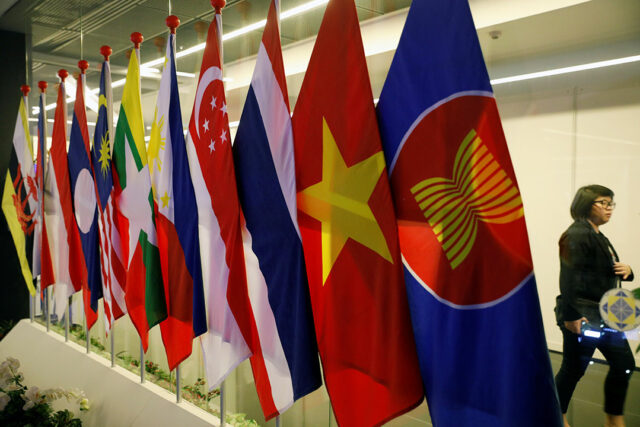
Philippines scales down ASEAN meetings, moves preparatory meetings online to cut costs

REUTERS

MANILA — All preparatory meetings for ASEAN, including ministerial sessions, will now be held virtually to cut costs, the Philippines’ executive secretary said on Friday.

A total of 650 preparatory meetings will be conducted online as the bloc scales down non-essential activities, Philippine Executive Secretary Ralph G. Recto said in a statement.

“This is not the time for grand ceremonies,” Mr. Recto said. — Reuters

St. Luke’s bags two prestigious Healthcare Asia Awards

STLUKES.COM.PH

St. Luke’s Medical Center (SLMC) recently received two major distinctions at the Healthcare Asia Awards 2026, recognizing its Quezon City facility and its top leadership. SLMC Quezon City was named Tertiary Hospital of the Year – Philippines, while Chief Executive Officer (CEO) Dr. Dennis P. Serrano was honored as CEO of the Year – Asia.

“These recognitions reflect the collective work of our people,” Mr. Serrano said in a statement released Friday.

“We remain focused on delivering care that our patients can trust, strengthening how we serve, and continuing to lead with responsibility.”

SLMC said the recognition reflects its sustained investment in accredited care programs, medical innovation, and patient-centered systems, which support efficient and coordinated healthcare delivery.

In the past year, BusinessWorld had the chance to cover SLMC’s several initiatives and milestones.

Among these is the opening of a 40-bed charity ward at its Quezon City facility, providing fully free or subsidized care for patients evaluated by the hospital’s social service team.

SLMC also completed over 2,500 robotic-assisted surgeries, reinforcing its leadership in minimally invasive procedures.

The hospital also celebrated the 300th minimally invasive Transcatheter Aortic Valve Replacement (TAVR) procedure for aortic stenosis, offering patients faster recovery and shorter hospital stays.

Moving ahead, SLMC earlier announced plans for a new hospital in Paraсaque, which will expand its reach beyond Quezon City and Global City by 2030. — Edg Adrian A. Eva