Home Blog Page 305

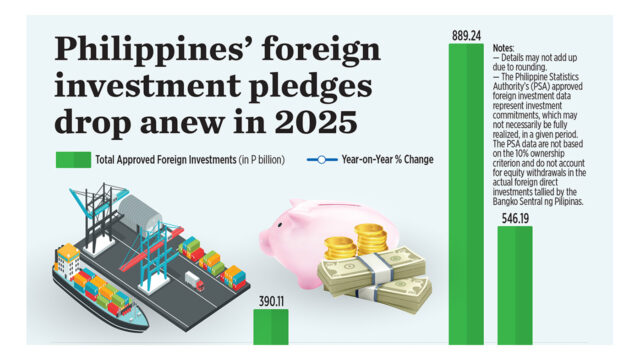
Philippines’ foreign investment pledges drop anew in 2025

APPROVED foreign investments in the Philippines plunged by 50.1% year on year to P272.38 billion in 2025, its sharpest fall in five years, the Philippine Statistics Authority (PSA) reported on Thursday. Read the full story.

Cebu Pacific partners with PwC for digital system upgrade

CEBU PACIFIC

CEBU PACIFIC has partnered with PricewaterhouseCoopers Consulting Services Philippines Co. Ltd. (PwC Consulting Philippines) to implement a SAP Cloud enterprise resource planning (ERP) platform, which will serve as the airline’s core finance and operations system and support its digital transformation initiatives.

“Through this partnership, we are enabling the airline’s finance and operational teams to work smarter, faster, and more collaboratively,” PwC Consulting Philippines Managing Principal Veronica Bartolome said in a media release on Thursday.

The platform will allow Cebu Pacific to access real-time data insights, generative artificial intelligence-driven automation, and predictive analytics.

It is expected to modernize the airline’s business processes across finance, risk and treasury, procurement, supply chain, flight operations, sales, asset and cash management, and regulatory compliance, PwC Consulting Philippines said.

PwC Consulting Philippines is an SAP Platinum and RISE with SAP-validated partner and will serve as Cebu Pacific’s implementing partner for the project.

Cebu Pacific plans to fully transition to SAP Cloud ERP Private solutions by the third quarter of 2027.

The digital transformation will cover the entire Cebu Pacific group, including the budget airline’s operator Cebu Air, Inc., which also operates CebGo, Inc.; 1Aviation Groundhandling Services Corp.; and Aviation Partnership (Philippines) Corp. (APlus), which handles aircraft maintenance and repair.

“With its industry focus, as well as global and local expertise, PwC Consulting Philippines leverages best practices in finance and logistics, including its user adoption strategy, thus providing expert advisory to the Cebu Pacific group during this digital transformation,” the company said.

SAP Cloud ERP Private will streamline end-to-end finance solutions, strengthen governance and risk management, and allow scalability to support growing business demands, Ms. Bartolome said.

“As Cebu Pacific sustains its growth, we need systems that can keep pace with the scale and complexity of our operations… This transformation strengthens how we manage resources and make decisions across the business, enabling a more consistent experience for our customers,” said Cebu Air Chief Financial Officer Mark Julius V. Cezar. — Ashley Erika O. Jose

The mid-market opportunity: A call for realism

For the better part of a decade, the Philippine capital market has circled the same debate: why don’t our mid-market companies list? We have analyzed the friction, blamed the costs, and lamented the lack of volume. But perhaps the more productive question today is different and slightly more uncomfortable: under what conditions can a mid-sized firm actually survive the public markets?

The answer is no longer theoretical. While structural challenges remain, the next two to three years offer a credible window for the right companies. But we must replace our optimism with a heavy dose of realism. The market does not need more “orphan stocks” — companies that ring the bell to great fanfare, only to flatline with zero volume because there was no compelling reason for institutions to stay.

To add value and relevance to the equity market beyond the familiar conglomerates, we need to stop looking for volume and start insisting on quality.

THE REALITY OF THE “MIDDLE GROUND”
We must be honest about the terrain. The market backdrop is unforgiving. For a company valued between P1.5 billion and P5 billion, the path is narrow. This size is often too small to trigger the automated buying of global emerging market funds, yet it is too large to be supported by retail investors alone. This is not a criticism; it is simply the math of our current liquidity.

However, the burden of liquidity does not rest solely on the issuer. We must acknowledge that domestic institutional investors operate under strict benchmarking frameworks, liquidity thresholds, and career-risk constraints that often limit their ability to take meaningful positions in smaller names, even when fundamentals are sound. Post-listing liquidity is therefore not just a failure of supply; it is a structural challenge of demand.

This reality clarifies our mission. The Philippine market does not need dozens of new listings to declare victory. It needs a small number of issuers brave enough to bridge this gap. We need companies that are so fundamentally sound that domestic institutions are compelled to look beyond the index and take a position.

FROM “CASHING OUT” TO “BUYING IN”
The most difficult shift is psychological. For too long, an IPO has been viewed as a graduation event or a monetization strategy. In our current high-interest environment, that mindset is obsolete.

Listing is not an exit; it is a capital markets integration strategy. It offers things private equity cannot: permanent capital that never matures and a currency for future growth. But this comes at a steep price. The overhead of being public — the compliance, the reporting, the relentless scrutiny — is a significant tax on a mid-sized P&L.

Companies must be willing to pay this “entry fee” today for the valuation premium they expect tomorrow. If the goal is simply to cash out, the private market is a far kinder venue.

THE PROFILE OF A SURVIVOR
So, who should actually list?

The ideal candidates are not necessarily the most exciting “story stocks.” In fact, in a market weary of speculation, “boring” is often better. We are looking for clarity, not complexity. Investors are looking beyond mini-conglomerates. They want “pure plays.” If an investor wants exposure to logistics, they want a logistics stock, not a holding company that owns a warehouse, a bank, and a farm.

This is not a game for everyone. The mid-market firms that will succeed are those that dominate a specific niche, whether that is consumer finance, logistics, specialized healthcare, or industrial services. They must generate the kind of predictable cash flow that allows investors to sleep at night. Only certain business models with visible cash flows and proven operating leverage are structurally compatible with public markets in the near term.

Furthermore, these companies must be professionalized before they ring the bell. The “dynasty” model of management, where a single founder makes every decision, is a red flag to institutional capital. The companies best positioned to list have already built the necessary infrastructure: a credible CFO and uncompromising independent oversight and controls.

THE HARD TRUTHS OF VALUATION AND CONTROL
Finally, we must address the two elephants in the room: price and control.

There is a tendency for founders to look at the trading multiples of the giants and expect the same. But valuation discipline beats valuation ambition. A mid-market firm cannot demand a conglomerate premium. Pricing for perfection effectively ensures a stagnant aftermarket. More fundamentally, mispricing is rarely just a tactical error; it often signals a deeper misalignment between founder expectations and the harsh realities of public ownership. It is a bitter pill to swallow, but a slightly lower IPO price that gives decent upside for investors is the only way to build a loyal shareholder base. You are not “leaving money on the table”; you are buying liquidity.

Equally important is the design of that liquidity. We have a habit of placing shares with “friendly hands” to protect the share price. But this is exactly what kills trading volume. If no one sells, no one can buy. Sustained trading activity is not created by issuers alone. It depends on a functioning post-listing ecosystem, including ongoing sell-side coverage, viable market-making incentives, and distribution that extends beyond the IPO window. Without these, even well-prepared issuers may struggle. However, issuers must still do their part by accepting the risk of having strangers on their cap table. You cannot build a dynamic market without a real free float.

CLOSING PERSPECTIVE
The Philippine capital market does not need a surge of listings. It needs a few credible mid-market companies willing to do it the hard way: pricing fairly, floating real shares, and prioritizing governance over control.

For the right companies, listing over the next few years is not simply about timing the market. It is about proving they belong in it. That is the real opportunity — not just to list, but to last!

The views expressed herein are the author’s own and do not necessarily reflect the opinion and position of FINEX.


Carlo Enrico B. Lazatin is the 2026 president of the Financial Executives Institute of the Philippines (FINEX) and the Philippine Finance Association (PFA). He is the president & CEO of DES Financing Corp., where he has led business transformation and finance innovation. He champions sustainable growth and public-private collaboration to strengthen the Philippines’ investment climate.

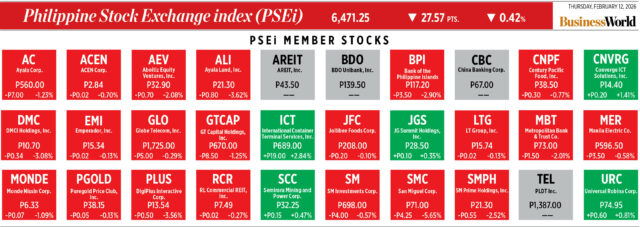
How PSEi member stocks performed — February 12, 2026

Here’s a quick glance at how PSEi stocks fared on Thursday, February 12, 2026.


Business groups push signature drive if anti-dynasty bill falters in Congress

PHILIPPINE STAR/KRIZ JOHN ROSALES

By Kenneth Christiane L. Basilio, Reporter

A COALITION of business and civil society groups is calling for a public signature drive if Congress fails to pass a strong law limiting political dynasties, saying such a measure is needed to curb corruption.

In a joint statement on Thursday, 31 groups including the Makati Business Club, Management Association of the Philippines and Philippine Chamber of Commerce and Industry urged lawmakers to enact “clear and enforceable” provisions in an anti-political dynasty bill. The groups said coverage should extend to fourth-degree relatives to prevent families from consolidating political power.

“The battle against political dynasties is a battle against corruption itself,” the coalition said. “For our nation to finally break free from the bondage of corruption, political dynasties should no longer thrive.”

President Ferdinand R. Marcos, Jr. has made curbing political dynasties a priority, and the issue has resurfaced in Congress after past efforts repeatedly stalled.

The Legislature remains dominated by political families, with eight of 10 lawmakers belonging to dynasties, according to the Philippine Center for Investigative Journalism.

Ziaur-Rahman Alonto Adiong, chairman of the House Committee on Suffrage and Electoral Reforms, said the body plans to pass a measure, pending nationwide consultations.

The main hurdle is the bill’s scope: whether it should cover second-degree relatives — grandparents, siblings and grandchildren — or extend to fourth-degree relations, including first cousins and great aunts and uncles.

“The debate really boils down to whether the anti-political dynasty provision would translate to a fourth-degree prohibition or only cover second-degree relatives,” Mr. Adiong told a news briefing.

‘COOLING-OFF’ PERIOD
The coalition recommended barring fourth-degree relatives from holding concurrent office, explicitly prohibiting substitution, rotation and position-switching among prohibited relatives to circumvent term limits.

They also suggested a “cooling-off” period, preventing officials who have completed their full terms from immediately seeking the same position after sitting out one electoral cycle.

House Deputy Minority Leader Antonio L. Tinio said political dynasties are the root of widespread corruption. “Their positions were used for corruption, and the fruit of corruption was used to gain a foothold in power,” he told BusinessWorld.

The 1987 Constitution bans political dynasties but requires an enabling law, which has never been enacted. Mr. Adiong said broader political reforms are needed, including revisions to campaign financing rules, stronger party systems and updates to the Omnibus Election Code.

The House committee has launched a nationwide campaign to gauge public sentiment. Its first round of consultations took place in Cavite, part of the vote-rich Calabarzon region.

Participants from youth and local government groups argued that dynasties could provide continuity in programs and projects.

“If leaders are from one family, there will be continuity in the programs and projects they carry out,” said student participant Rafaelli Altarez.

Mr. Adiong said consultations would continue in the Visayas and Mindanao regions next week to gather wider inputs.

Marcus Liam T. Saladino, a youth representative, voiced concerns about restricting political opportunities: “We don’t choose our parents,” he said the consultation in Filipino. “What if you also want to become a politician, but your parents are already one?”

The coalition said lawmakers must act quickly to ensure that any legislation effectively limits family dominance in politics.

Without enforceable rules, it warned, political dynasties would continue to consolidate power, undermining governance and accountability.

Executive Secretary Ralph G. Recto last month said proposals to regulate political dynasties in the Philippines should avoid being “extreme.”

He said the objective of an anti-political dynasty law should be incremental reform rather than sweeping prohibitions, expressing confidence that a version of the measure could be enacted before the filing of certificates of candidacy for the next national elections.

Election watchdogs and governance advocates have said the absence of an anti-dynasty law weakens political competition and reinforces inequality in access to public office, particularly at the local level.

The renewed push comes as the administration seeks to advance governance reforms ahead of the 2028 elections, with the filing of certificates of candidacy expected in late 2027.

The Palace has said Mr. Marcos supports regulating political dynasties after seeing how the system has been abused, a shift from earlier remarks made when he was still a presidential aspirant, when he said there was nothing inherently wrong with political dynasties.

Mr. Marcos comes from a political family in Ilocos Norte, while Mr. Recto is also a member of a prominent political clan. Both have acknowledged the sensitivity of regulating dynasties in a Congress dominated by such families.

Emerging tech pushed as key tools for budget transparency

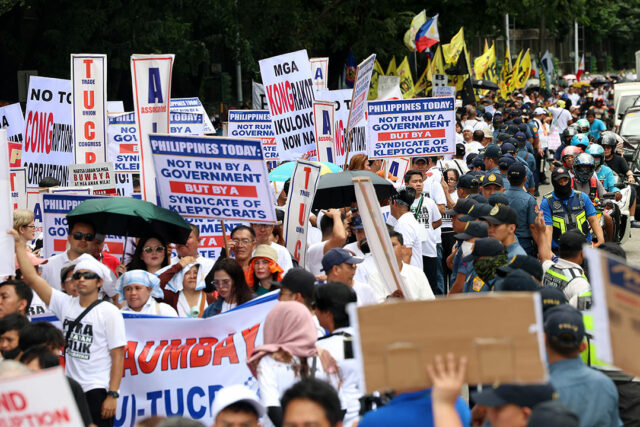
Thousands of participants walk along the northbound lane of EDSA towards the People Power Monument in Quezon City while shouting and holding various placards condemning the corruption in the government during the Trillion Peso March, Sept. 21, 2025. — PHILIPPINE STAR/MIGUEL DE GUZMAN

By Edg Adrian A. Eva, Reporter

EMERGING TECHNOLOGIES such as blockchain and artificial intelligence (AI) are being advanced as key tools to improve transparency in the national budget process, following controversy over anomalous flood control projects that congressional hearings say may have siphoned off billions of pesos from public coffers.

While digital systems promise better tracking of government spending and infrastructure implementation, experts and civil society groups caution that technology alone will not eliminate entrenched corruption.

Information and Communications Technology Secretary Henry Rhoel R. Aguda said blockchain could serve as a digital backbone for public finance by placing all components of the national expenditure program, and once enacted, the General Appropriations Act (GAA), on an immutable ledger.

“Everything has track changes,” he told BusinessWorld. “You cannot alter it. At the same time, if you want to make it transparent, it becomes easy to publish.”

By recording entries in a tamper-evident system, blockchain could make budget allocations and revisions easier to trace, reducing opportunities for unauthorized changes once documents are finalized.

Brian Daniel P. Llamanzares, a party-list representative and chairman of the Global AI Council, said AI could improve access to government data and reduce manual processing.

“It cuts down the amount of human intervention that’s necessary, and it expedites the delivery of transparency to our institutions,” he said on the sidelines of a BusinessWorld forum in November.

The push for digital oversight comes against the backdrop of large-scale losses attributed to corruption. The National Blockchain Whitepaper 2025 estimates that systemic corruption costs the Philippines more than P700 billion annually, citing watchdog groups and Commission on Audit (CoA) findings. These losses are linked largely to procurement fraud and project mismanagement.

That figure represents roughly 5% of gross domestic product, funds that could otherwise finance classrooms, hospitals and climate-resilient infrastructure.

‘MODERN TOOLS’
Over more than a decade, foregone resources may have reached P15 trillion to P31 trillion, according to estimates by the World Bank and Asian Development Bank. Such amounts could have supported expanded healthcare, free education and disaster mitigation projects.

Given the scale and complexity of the national budget, the Advanced Science and Technology Institute (ASTI) under the Department of Science and Technology (DoST) said digital tools are needed to monitor spending effectively.

“You really need to rely on modern tools and technology to keep track of what’s been happening along the way,” Elmer C. Peramo, ASTI senior science research specialist, said via Zoom.

He added that these systems must be integrated at the start of the budget cycle, rather than used only after irregularities are uncovered.

One proposal seeking to institutionalize digital transparency is the Citizen Access and Disclosure of Expenditures for National Accountability (CADENA) bill.

Filed by Senator Paolo Benigno “Bam” A. Aquino IV, Senate Bill No. 1506 was approved on third reading on Dec. 15. The measure was included in President Ferdinand R. Marcos, Jr.’s priority legislative agenda. The House of Representatives has passed a counterpart bill — House Bill No. 6761.

Mr. Aquino described the bill as a response to public outrage over the flood control controversy.

“If these investigations were not happening, I think this bill would have had no chance,” he said in a privilege speech in Filipino. “But because the public is now focused on changing the systems that allowed this kind of corruption, it has a chance to pass.”

The measure requires government agencies to disclose budget, procurement, contract and expenditure documents through a centralized public digital platform. The system will use a secure, tamper-evident framework, potentially including distributed ledger technology, to ensure uploaded records cannot be altered without trace.

Agencies that fail to comply may face administrative penalties for late or incomplete submissions, and criminal charges for hiding or falsifying information, in addition to prosecution under existing anti-graft laws.

Under the proposal, the Department of Budget and Management (DBM) will manage the platform, the Department of Information and Communications Technology (DICT) will provide the digital infrastructure, and the CoA will integrate audit functions.

Mr. Aguda expressed support for the bill, saying the DICT would fulfill any role assigned under the measure.

DoST-ASTI also supports the initiative but said it should remain “technology-neutral,” allowing flexibility in choosing systems that meet transparency goals.

Civil society groups welcomed the bill in principle but stressed that implementation would determine its impact.

“The real test is whether it results in timely, complete, standardized machine-readable releases that let citizens, media, and oversight groups compare versions and understand what changed, not just view documents,” Eunice Gayle Tanilon, a technical analyst at the People’s Budget Coalition, said in a Viber message.

She warned that previous transparency portals have sometimes become compliance exercises, with data that are technically public but difficult to analyze.

While blockchain can secure records, it cannot verify whether the data entered is accurate or complete. DOST-ASTI officials said AI could help flag anomalies, unusual spending patterns or inconsistencies.

“That’s the power of combining transparency with AI technology,” said March T. Tulali, ASTI science and research specialist I, said via Zoom. “These are the guardrails we can put in place if someone tries to input false data.”

Large language models (LLM) could also help the public query budget data more easily. Mr. Aquino said the CADENA platform would be interoperable with digital systems, including widely used LLMs.

DoST has developed its own model, iTanong, which Mr. Peramo said could be adopted across agencies and made accessible to citizens.

Beyond blockchain and AI, experts point to satellite imagery, drones and geotagging as tools for monitoring infrastructure projects.

Project DIME (Digital Imaging for Monitoring and Evaluation), launched in 2018 by DoST and DBM, used such technologies to track high-value projects. The program lapsed in 2021 after its agreement expired but was revived in 2023 in partnership with the Philippine Open Government Partnership.

The initiative drew renewed attention after hearings revealed that some flood control projects were reported as completed and paid despite limited or no physical progress.

By combining digital imaging with hazard mapping tools such as the University of the Philippines’ NOAH program, agencies aim to strengthen oversight of projects in remote or disaster-prone areas.

Despite optimism about digital reforms, stakeholders said technology cannot substitute for political will and institutional discipline.

“There are limitations, which is why it’s crucial to monitor the proper implementation of the bill to ensure it delivers results,” Ms. Tanilon said.

Mr. Peramo described full implementation as a “Herculean task,” noting that many agencies are at varying stages of digital readiness and might require capacity-building.

The People’s Budget Coalition added that in the Philippine context, even basic machine-readable datasets such as complete CSV (comma-separated values) files remain a challenge.

If agencies continue to rely on scanned PDFs or partial disclosures, they said, advanced tools like AI or blockchain will have limited impact.

“Technology only becomes a reform when it strengthens the full chain of transparency, participation, and accountability,” Ms. Tanilon said.

Ultimately, experts agree that digital systems can improve oversight, but sustained public engagement, clear rules, and consistent enforcement are crucial. Without these foundations, transparency efforts may lose momentum once public scrutiny fades, she added.


Senate to probe declining sugar industry

PHILIPPINE STAR/MIGUEL DE GUZMAN

A SENATE RESOLUTION calling for a review of the Philippines’ sugar industry has been filed amid concerns over falling competitiveness.

Senate Resolution No. 298, filed by Senator Ana Theresia N. Hontiveros-Baraquel, seeks a review of the country’s sugar development laws, citing persistent challenges for local producers.

Despite the Sugar Industry Development Act, domestic sugar prices remain high, millers struggle to keep up, and producers face competition from imported sweeteners, she said in a statement.

“The competitiveness of the local sugar industry has steadily declined due to low farm productivity, high production costs and inefficient milling operations,” Ms. Hontiveros said.

Under the law, the government allocates P500 million annually to support the sugar sector. Yet, the program has not fully addressed problems such as declining millers, low sugarcane yields and a growing influx of imports.

“The Sugar Industry Development Act was meant to boost the sugar industry’s competitiveness and raise farmers’ incomes, but more than a decade later, its implementation and use needs urgent review as these goals remain unmet,” she said.

The Department of Agriculture has said it is reviewing policies on the import, use and market impact of imported sweeteners.

Ms. Hontiveros noted that the Sugar Regulatory Administration’s rules, particularly on mandatory purchases and buffer stock warehousing, might favor large trader-millers and consolidate market control among a few players.

She called for better policies that would increase cane harvests, lower production costs, protect small farmers and agrarian reform beneficiaries and reduce sugar prices for consumers.

Despite a rise in production last year, the country still lags behind major sugar-producing nations like Brazil, Thailand and Colombia.

Local production hit 2.09 million metric tons during the 2025 crop year, up 8.9% from a year earlier, meeting only 87% of domestic demand.

“Our farmers are struggling with rising costs and low productivity, while consumers continue to suffer from high sugar prices,” the senator said. “The system is failing both farmers and consumers.”

The resolution seeks a review of policies, laws and regulations affecting the sugar sector to ensure a more competitive and equitable industry. — Adrian H. Halili

ICC expands evidence list in Duterte trial

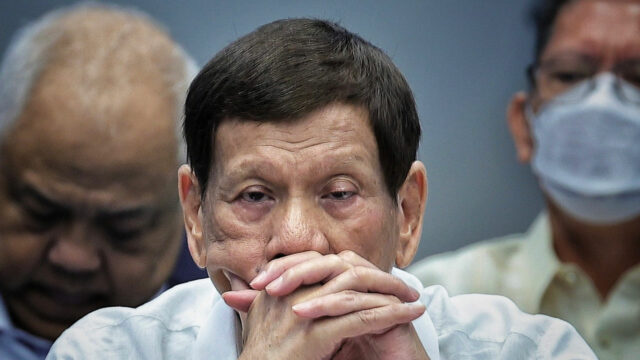
FORMER PRESIDENT Rodrigo R. Duterte — OFFICIAL FACEBOOK ACCOUNT OF THE SENATE OF THE PHILIPPINES

THE International Criminal Court (ICC) has allowed 80 more pieces of evidence in the case against former Philippine President Rodrigo R. Duterte, just 13 days before a key hearing to confirm charges of crimes against humanity.

The court’s decision on Feb. 10 lets Mr. Duterte’s defense add 78 items, while the prosecution can include two more. Both sides agreed not to block each other’s submissions, making the move smoother.

Mr. Duterte, 80, has been in ICC custody since March 2025. The Feb. 23 hearing will decide if there is enough evidence to proceed with a trial over alleged crimes during his war on drugs and his earlier time as mayor of Davao City.

Judges said the pieces of evidence are important for a fair process. Victims’ representatives also did not object to the additions. Both sides must submit their updated evidence lists by Feb. 13.

Nicholas Kaufman, Mr. Duterte’s lead lawyer, said the items are “essential” for the defense, noting that some evidence only became available after the prosecution released more than 1,200 documents from September 2025 to January 2026.

The court has already ruled that Mr. Duterte is fit to participate in the hearing, rejecting claims that he is cognitively unfit.

If the charges are confirmed, Mr. Duterte would become the first former head of state to face trial at the ICC for crimes committed in a domestic anti-drug campaign. — Erika Mae P. Sinaking

DFA monitoring Canada shooting

DEPARTMENT OF FOREIGN AFFAIRS FACEBOOK PAGE

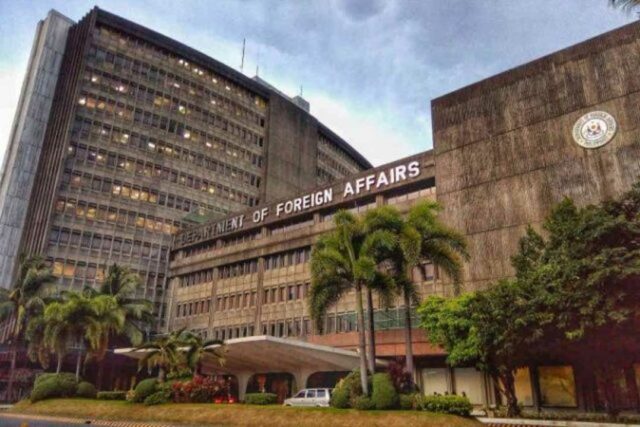
THE Department of Foreign Affairs (DFA) said that it is closely monitoring the aftermath of a tragic mass shooting in British Columbia, Canada.

In a statement, the agency said that it is still accounting for Filipinos that could have been affected by the incident in Tumbler Ridge Secondary School and a local residence in Tumbler Ridge in British Columbia.

“As of this time, there is no official confirmation regarding the identities or nationalities of the casualties,” the DFA said late on Wednesday, as the Philippine Consulate General in Vancouver continues to monitor the situation.

“The department will provide updates as more verified information becomes available,” it added.

Canadian authorities reported at least nine people were killed during the mass shooting incident at a secondary school, while 27 were wounded.

“The consulate is working proactively to account for all members of the Filipino community in the region and stands ready to provide immediate consular assistance to any affected kababayans and their families,” it said.

It also called on Filipinos in the area that require assistance or have information regarding affect citizen to contact the consulate. — Adrian H. Halili

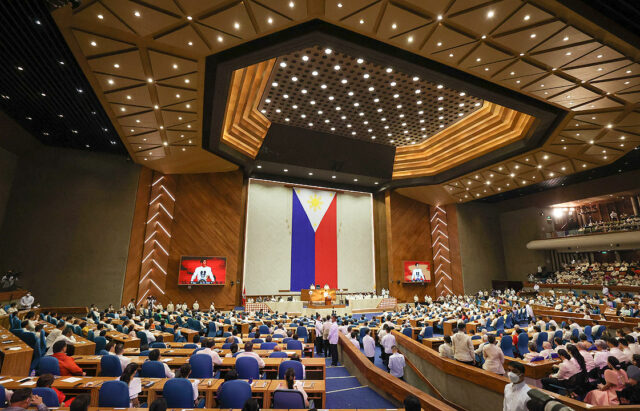
House vows to pass key bills

BW FILE PHOTO

THE House of Representatives leadership is committed to passing priority legislation despite impeachment duties that may divert attention from policymaking, a lawmaker said on Thursday.

In a statement, Deputy Speaker Francisco Paolo P. Ortega V said Majority Leader Ferdinand Alexander “Sandro” A. Marcos III is focused on steering the approval of the administration’s key measures, even as the House faces the prospect of evaluating the impeachment complaints against Vice-President Sara Duterte-Carpio.

“The impeachment process is a constitutional duty that we take seriously, but it is only one of many responsibilities of the House,” he said. “Amid a packed legislative agenda, House Majority Leader Marcos took the lead in securing the approval of vital measures.”

Ms. Duterte faces three impeachment complaints alleging the misuse of P612.5 million in confidential and intelligence funds allocated to her office and to the Education department when she was secretary.

The House earlier this week dismissed two impeachment complaints against President Ferdinand R. Marcos, Jr., ending a short-lived bid to remove him from office over corruption allegations tied to a multibillion-peso flood control scandal. — Kenneth Christiane L. Basilio

Fresh warrant issued vs Atong Ang

REUTERS

A REGIONAL trial court in Laguna has issued a fresh warrant of arrest for gaming tycoon Charlie Tiu Hay Sy Ang, also known as Atong Ang, marking the third such order in less than a month.

The criminal charges link him to kidnapping and serious illegal detention in connection with the disappearance of several cockfighting enthusiasts.

The directive, issued by Branch 29 of the Regional Trial Court in San Pablo City, was based on sufficient evidence to prosecute Mr. Ang and several high-ranking police officers, according to Judge Luvina P. Roque in an order dated Feb. 6.

“As the accused is charged with a capital offense, no bail is fixed by the court,” the order read.

While 21 of Mr. Ang’s co-accused, including police personnel, are already in custody, he remains at large. Previous arrest warrants were issued in January by courts in Sta. Cruz, Laguna, and Lipa City, Batangas.

Justice spokesperson Raphael Niccolo L. Martinez said the new warrant has not yet been furnished to the prosecution panel at the Department of Justice (DoJ).

Mr. Ang has denied the allegations. His lawyer earlier denounced the Laguna court’s warrant as premature and “legally questionable,” arguing it was based only on DoJ submissions and failed to consider evidence supporting his client.

Secretary of the Interior and Local Government Juanito Victor C. Remulla, Jr. on Thursday said that the reward for information leading to Mr. Ang’s arrest has doubled to P20 million from P10 million initially. — Erika Mae P. Sinaking

Ex-Senator Revilla cites inconsistencies, gaps in plunder case

PHILIPPINE STAR/MICHAEL VARCAS

FORMER SENATOR Ramon “Bong” B. Revilla, Jr. has asked the Department of Justice (DoJ) to dismiss plunder charges filed against him, citing inconsistencies and gaps in witness statements submitted in the case.

Mr. Revilla’s spokesperson, Francesca Lourdes M. Señga, told reporters on Thursday that the former senator submitted his counter-affidavit in response to the criminal complaint, which includes allegations of plunder, violations of the Anti-Graft and Corrupt Practices Act, direct bribery, receiving gifts by public officers, and corruption of public officials.

The complaint, filed by the National Bureau of Investigation (NBI), accuses Mr. Revilla—currently detained—of alleged involvement in the food control kickback scheme.

He was accompanied by Bureau of Jail Management and Penology security officers while attending the preliminary hearing on his plunder charges. “I don’t know how those accusing me are able to sleep at night,” he told reporters in Filipino.

Ms. Señga noted that the complaint before the DoJ largely mirrors charges Mr. Revilla faces before the Sandiganbayan, previously filed by the Ombudsman, with the addition of the plunder charge.

“Whatever is in the current filing is the same as before, except that the crime listed now is plunder,” she told reporters in Filipino.

She added that Mr. Revilla is a co-respondent alongside former Public Works officials Roberto R. Bernardo and Gerard P. Opulencia, and former Bulacan district engineer Henry C. Alcantara, and expressed surprise that the three manifested they would no longer file counter-affidavits as they have been admitted into the Witness Protection Program.

Ms. Señga said Mr. Bernardo’s account of the flood control case keeps changing, including the dates, amounts, and number of alleged payments to Mr. Revilla, and lacks any supporting evidence

According to her, the plunder complaint against Mr. Revilla has not yet been submitted for resolution, and he was given until Feb. 20 to review additional evidence from the NBI, including alleged flood control project contracts. — Erika Mae P. Sinaking

ADVERTISEMENT
ADVERTISEMENT