Home Blog Page 3008

On Philippine-American Friendship Day we celebrate a year of historic achievements

By MaryKay Carlson

On the Fourth of July – US Independence Day and Philippine-American Friendship Day – we look back on what the US-Philippine partnership has achieved over the past 12 months. We’ve reached incredible milestones together as friends, partners, and allies, setting a bold agenda to build a more secure and prosperous future for our peoples.

The Trilateral Leaders’ Summit among President Biden, President Marcos, and Japanese Prime Minister Kishida in Washington was a historic moment in a year of exceptional achievements. The leaders committed to advancing the security and prosperity of all three nations, the Indo-Pacific region, and the world through cooperation on economic growth, critical technologies, the digital economy, climate and clean energy, infrastructure, and peace and security. They announced the Luzon Economic Corridor under the Partnership for Global Infrastructure and Investment and the Indo-Pacific Economic Framework (IPEF) Investment Accelerator, which will support transformative public and private investments from Subic Bay to Batangas – home to 40% of the Philippines’ population and 50% of its economic activity. The three leaders also announced $8 million for Open Radio Access Network (RAN) field trials that will pave the way for more affordable and secure telecommunications.

As President Marcos has said, economic security is national security. Our commitment to bring greater private investment to the Philippines is multifaceted. In March, Secretary of Commerce Raimondo led the first-ever Presidential Trade and Investment Mission to the Philippines, where US firms announced more than $1 billion in investments in key sectors and new partnerships to help develop a future-ready Philippine workforce. We built on these engagements in May during the Indo-Pacific Business Forum in Manila, where the US Trade and Development Agency awarded a grant to a Filipino company to deliver affordable, high-quality internet connectivity to underserved communities in the Philippines.

We are accelerating investment in the Philippines with the introduction of new tools and resources. Later this year, the US Development Finance Corp. (DFC) plans to open a Manila office, its fifth location in the Indo-Pacific region. This new office underscores DFC’s growing focus on the Philippines in critical sectors such as renewable energy, agriculture, critical minerals, and infrastructure.

The Millennium Challenge Corp. returned to the Philippines this year and now has a team on the ground to co-develop a threshold program. This program identifies key constraints to economic growth and creates favorable conditions for new investments from the private sector and development partners.

The United States is committed to supporting the Philippines’ clean energy transition. Last November, at the Asia-Pacific Economic Cooperation Leaders’ Week in San Francisco, Secretaries Lotilla and Blinken signed a civil nuclear cooperation agreement, or “123 Agreement,” facilitating US-Philippine cooperation to responsibly develop a peaceful, sustainable nuclear energy program. The Philippines Department of Energy (DoE) and the Philippine-American Educational Foundation are creating scholarships and academic exchanges on nuclear power and clean energy, and the US Agency for International Development (USAID) is partnering with DoE to develop a comprehensive civil nuclear energy policy.

USAID partnered with the Philippine government to launch its first Green Energy Auction Program, in which private sector companies compete to offer the most affordable prices to supply renewable energy to the grid, driving billions of dollars in investments and increasing renewable energy capacity by 65% by 2026. The US Departments of State and Energy also launched the US-Philippine Energy Policy Dialogue to deepen cooperation in this field.

Our military alliance continues to flourish. We have improved our bilateral exercises and established new ways to work together to address 21st century security challenges, such as cyber defense. We have reinvigorated our maritime cooperation, conducting joint naval engagements alongside Australia, Canada, France, and Japan. The United States continues to expand funding to help modernize the Armed Forces of the Philippines.

Underpinning all these important endeavors are close and meaningful bonds of friendship and family ties that form not only the foundation upon which our relations are based, but a springboard for reaching new heights in the future.

On this day last year, I hailed the positive momentum in US-Philippine relations. Since then, that momentum has accelerated significantly. As Secretary Blinken described it during his most recent visit to Manila, the US-Philippine relationship is on hyperdrive and has never been stronger. Let’s see what we can accomplish in the next 12 months!

MaryKay Carlson is US Ambassador to the Philippines.

House eyes budget approval by Sept.

PHILSTAR FILE PHOTO

THE HOUSE of Representatives is looking to approve the proposed P6.352-trillion national budget for 2025 before Congress goes on a break in September, House Speaker and Leyte Rep. Ferdinand Martin G. Romualdez said on Wednesday.

“Aside from our commitment in approving the few remaining LEDAC (Legislative-Executive Development Advisory Council) priority measures agreed upon during the June 25 council hearing, the House will again work doubly hard to pass the proposed P6.352-trillion 2025 General Appropriations Bill before we go on break this end of September 2024,” Mr. Romualdez said in a statement.

The Development Budget Coordination Committee last week proposed a P6.352-trillion budget for 2025, a 10% increase from this year’s P5.768-trillion budget.

Budget Secretary Amenah F. Pangandaman last week said the proposed National Expenditure Program for 2025 will be submitted to the House on July 29, one week after Congress reopens on July 22.

“The National Expenditure Program will undergo rigorous scrutiny to ensure that every peso allocated is judiciously spent and aligned with our national priorities,” Party-list Rep. Elizaldy S. Co, who heads the House Appropriations Committee, said in a separate statement.

Mr. Romualdez said the House will conduct budget hearings but also deliberate on the LEDAC priority measures.

These include amendments to a law that privatized the power industry and a proposal to extend the lease period for foreign investors. Other pending measures include amendments to the agrarian reform law and bills seeking to modernize public budgeting and national defense.

Analysts said the higher allocation for next year’s budget could drive economic growth. Economic managers are targeting 6.5-7.5% gross domestic product growth in 2025.

“The growth of more than +10% in the 2025 national budget… would bode well for faster economic and GDP (gross domestic product) growth. The largest allocation for education, infrastructure, social services, among others, would help expedite economic growth and development,” Rizal Commercial Banking Corp. Chief Economist Michael L. Ricafort said in a Viber message.

The government should ensure that its budget is efficiently spent to reap the economic benefits, Leonardo A. Lanzona, an economics professor at the Ateneo de Manila University told BusinessWorld in a Facebook Messenger chat.

“The huge budget does not guarantee any improvement in the Philippine economy. A lot will depend on how efficiently it will be used and distributed,” he said.

Mr. Lanzona said economic managers should look at reducing the country’s “high debt-to-GDP ratio” to meet sustained economic growth.

The debt-to-GDP ratio stood at 60.2% as of the first quarter. This year, the government’s debt-to-GDP ratio target was set at 60.3%, slightly higher than the 60% threshold considered by multilateral lenders to be manageable for developing economies.

“Tax and fiscal reform measures would be realistically needed to bring down the country’s debt-to-GDP ratio to below the 60% international threshold, helping sustain the country’s relatively favorable credit ratings,” Mr. Ricafort said.

The government should intensify tax collections before considering new tax laws, he added.

“Priority would be to intensify tax collections from existing tax laws and encourage compliance with the payment of correct taxes,” Mr. Ricafort said. “Last option would be new and higher taxes, especially if inflation stabilizes in the coming months and years.” — Kenneth Christiane L. Basilio

PHL could reap P2.6T annually from AI — Balisacan

Artificial Intelligence words are seen in this illustration taken March 31, 2023. — REUTERS/DADO RUVIC/ILLUSTRATION/FILE PHOTO

THE PHILIPPINE ECONOMY could gain P2.6 trillion annually if domestic businesses adopt artificial intelligence (AI), the National Economic and Development Authority (NEDA) said.

“The technology is estimated to contribute $15.7 trillion to the global economy by 2030, with the Philippines potentially gaining P2.6 trillion annually if businesses adopt AI-powered solutions,” NEDA Secretary Arsenio M. Balisacan said during the launch of the National AI Strategy Roadmap 2.0 and Center for AI Research (CAIR) on Wednesday.

“Sectors such as retail, logistics, manufacturing, and financial services can revolutionize operations and enhance performance through the use of AI,” he added.

The AI roadmap and the CAIR were launched by the Department of Trade and Industry (DTI) and the Asian Development Bank on Wednesday. The center is tasked to “transform the Philippines into a premier destination for AI-driven innovation and investments.”

“This upgraded roadmap incorporates the latest technologies, recalibrates our strategic actions, and addresses emerging concerns such as ethics and governance,” Trade Secretary Alfredo E. Pascual said at the event.

The roadmap, which is targeted to be finalized next month, will focus on strategic imperatives such as building a networked environment, improving data access, transforming education and nurturing future AI talents, upskilling and reskilling the workforce, building an AI ecosystem “conscience,” pushing the boundaries of AI, and accelerating innovation.

In terms of immediate priorities, Mr. Pascual said that the DTI is targeting to increase the country’s gross expenditure on research and development, which is only 0.3% of the gross domestic product (GDP), to meet UNESCO’s recommended target of 1%.

“Another immediate priority is the upskilling and reskilling of our current workforce. Concurrently, increasing the number of AI and data science graduates is crucial and a compelling priority,” he said.

Mr. Balisacan said the roadmap would help ensure a fair transition to the adoption of AI by supporting displaced workers through upskilling, reskilling, and training.

“We should have done that earlier,” he told reporters on the sidelines of the launch. “Just like any disruptive innovation, if you prepare well, it should be a boon. [If] you don’t prepare well, it becomes a bane.”

In 2023, the Philippines ranked 65th out of 193 countries in the Government AI Readiness Index by Oxford Insights.

The NEDA chief said that integrating AI in education will equip Filipinos with the necessary skills to “capitalize on emerging technologies, giving the country a competitive advantage, attracting more investments, and fueling economic growth.”

“By integrating generative AI, the Philippines can take a leading role in creative industries, software development, and other high value-adding services, further boosting our economic potential.”

Mr. Balisacan also said that the proposed Open Access in Data Transmission Act or the Konektadong Pinoy Bill would help the Philippines maximize the benefits of AI. The House of Representatives approved the bill in 2022, while a counterpart bill is still pending before a Senate committee.

“By promoting access to affordable and better-quality internet services, this legislation will allow the country to harness the full benefits of AI,” he added.

Mr. Pascual said the DTI is also spearheading the formulation of a national AI governance framework in partnership with the Analytics Association of the Philippines. It is targeted for completion by the end of 2024.

“The ethical use of AI must be addressed. In public policy, the rapid diffusion of AI innovations calls for governance frameworks balancing AI innovation and responsible adoption,” Mr. Pascual said.

The National AI Governance Framework will establish the approved scope and limitations of what developers and stakeholders can do, he said.

UPPER MIDDLE-INCOME COUNTRY
Meanwhile, gross national income (GNI) per capita should grow by at least 6.7% this year to ensure the Philippines becomes an upper middle-income country by next year, Mr. Balisacan said.

“We are now $4,230 [in terms of GNI]. So, you only need 6.7% (GNI) growth,” he told reporters.

According to the World Bank’s latest income classification data, the Philippines remained a lower middle-income country with a GNI per capita of $4,230 in 2023.

To become an upper middle-income country, the Philippines needs to have an estimated GNI per capita of $4,516 to $14,005, according to the World Bank.

Despite this, Mr. Balisacan said that achieving upper middle-income status by late 2025 or early 2026 is still “within reach” as the government is projecting 6-7% economic growth this year.

The World Bank has classified the Philippines as a lower middle-income country since 1987. It earlier said the country would likely cross the upper middle-income threshold by 2026. — Beatriz Marie D. Cruz and Justine Irish D. Tabile

Monetary Board has two vacancies after departures

BANGKO SENTRAL NG PILIPINAS — BLOOMBERG

THE PHILIPPINE central bank’s rate-setting body has two vacancies after President Ferdinand R. Marcos, Jr. accepted the resignations of two board members.

The presidential office has informed Monetary Board members V. Bruce J. Tolentino and Anita Linda R. Aquino and the central bank last week that their resignations have been accepted effective June 30, the Bangko Sentral ng Pilipinas (BSP) said in an e-mail reply to a query.

The vacancies occur as the Southeast Asian nation is facing its highest borrowing cost in 17 years and a currency that’s near record low.

Mr. Tolentino and Ms. Aquino resigned as the central bank probed a report that several of their staffers were receiving salaries but were not reporting for work. Incoming officials will serve their unfinished terms which end July 2026.

The central bank’s charter requires all decisions of the Monetary Board to have the concurrence of at least four members. — Bloomberg

PHL fiber broadband adoption ‘extremely challenging’

ETHERNET cable wires are connected to an internet router modem in this illustration photo taken on April 17, 2024. — JAAP ARRIENS/NURPHOTO VIA REUTERS CONNECT

By Luisa Maria Jacinta C. Jocson, Reporter

THE WIDER ADOPTION of fiber broadband in the Philippines remains “extremely challenging,” but that may soon improve if the government successfully implements a project to roll out fiber-optic infrastructure in last-mile areas, Fitch Solutions’ unit BMI said.

In a report, BMI said the Philippine Digital Infrastructure Project (PDIP), which was recently approved by the National Economic and Development Authority (NEDA) Board, will “catalyze further foreign investment in the Philippines’ wider information and communications technology (ICT) ecosystem.”

“Adoption of fiber broadband at the household level remains extremely challenging in the Philippines, and the PDIP may only provide marginal upsides to our outlook,” it said.

BMI forecasts expect over 1.83 million FTTx (Fiber to the x) subscriptions in 2033, for a penetration rate of 1.4 every 100 people. This is higher than its 2024 FTTx forecast of 1.58 million subscribers with a penetration rate of 1.3 per 100 people.

“We believe that obstacles to consistent and widespread fiber uptake remain the prices of packages in last-mile areas, particularly stemming from the elevated costs of rollout that are further increased by the Philippines’ archipelagic configuration,” it said.

BMI said its forecasts reflect a consistent uptake for fiber broadband among households in metro and suburban areas.

“Execution and project management will be key for the success of the PDIP to boost stronger fiber uptake among Philippine-based households. By extensively co-financing last-mile area rollout, wholesale network providers and internet service providers (ISPs) may be encouraged to further decrease prices on fiber bundles though at the expense of average revenue per user (ARPU) figures,” it said.

BMI said fiber broadband providers that also own the infrastructure are tweaking their strategies to boost uptake.

“Consumer interest in fiber is evident and grounded in sizable mobile data traffic increases,” it said.

For example, it cited Globe Telecom, Inc.’s mobile data traffic which grew to 1,600 exabytes (EB) in the fourth quarter of 2023 from 836 EB in the first quarter of 2021.

“That said, consumers have shown that they are not immediately able to (consistently) buy in long-term contracts with prices around P1,500 ($25.5).”

BMI noted that there have been efforts to introduce low-cost fiber offerings, such as from Globe, PLDT Inc., and Converge ICT Solutions, Inc.

“Renewed government efforts to fiberize the Philippines’ last-mile areas will be beneficial for the players with a large risk-seeking stance. Regardless, wider digital transformation ambitions and the attractiveness of the Philippines’ ICT market are set to benefit from a stronger nationwide backbone and last-mile network density.”

Meanwhile, National Campaigner of digital advocacy group Digital Pinoys Ronald B. Gustilo said that the PDIP will help hasten the government’s efforts to provide internet connection to disadvantaged areas.

“We are hoping that this will also pave the way for the decrease in internet rates and the improvement of the quality of connectivity services,” he said in a Viber message.

Sam Jacoba, founding president of the National Association of Data Protection Officers of the Philippines, said that upgrading the country’s digital infrastructure is the “foundation for the country to remain competitive in the global digital economy.”

“It is crucial that the investments will strategically target areas or segments in the country that will bolster digital economic activities, while bridging the digital divide,” he said in a Viber message.

Mr. Jacoba said there must also be a focus on digital skills training and enablement. Digital content creation initiatives should also be targeted to growth areas such as artificial intelligence, he said.

“Hopefully, the digital economic impact of this loan-funded project will eventually pay for itself through the new digital businesses that it will create,” he added.

Mr. Gustilo also called for the strict implementation of Executive Order No. 32, which streamlines the processes for the construction of telecommunications and internet infrastructure. This would cut red tape and ensure the delivery of internet services to geographically isolated and disadvantaged areas, he added.

The World Bank earlier reported that household penetration for fixed broadband in the Philippines stood at 33% in 2022.

The cost of fixed broadband was more than four times more expensive than Malaysia and Vietnam and more than double the Southeast Asian average, it added.

Allied Care Experts (ACE) Medical Center-Legazpi, Inc. announces Annual Stockholders’ Meeting on Aug. 1 via Zoom


Spotlight is BusinessWorld’s sponsored section that allows advertisers to amplify their brand and connect with BusinessWorld’s audience by publishing their stories on the BusinessWorld Web site. For more information, send an email to online@bworldonline.com.

Join us on Viber at https://bit.ly/3hv6bLA to get more updates and subscribe to BusinessWorld’s titles and get exclusive content through www.bworld-x.com.

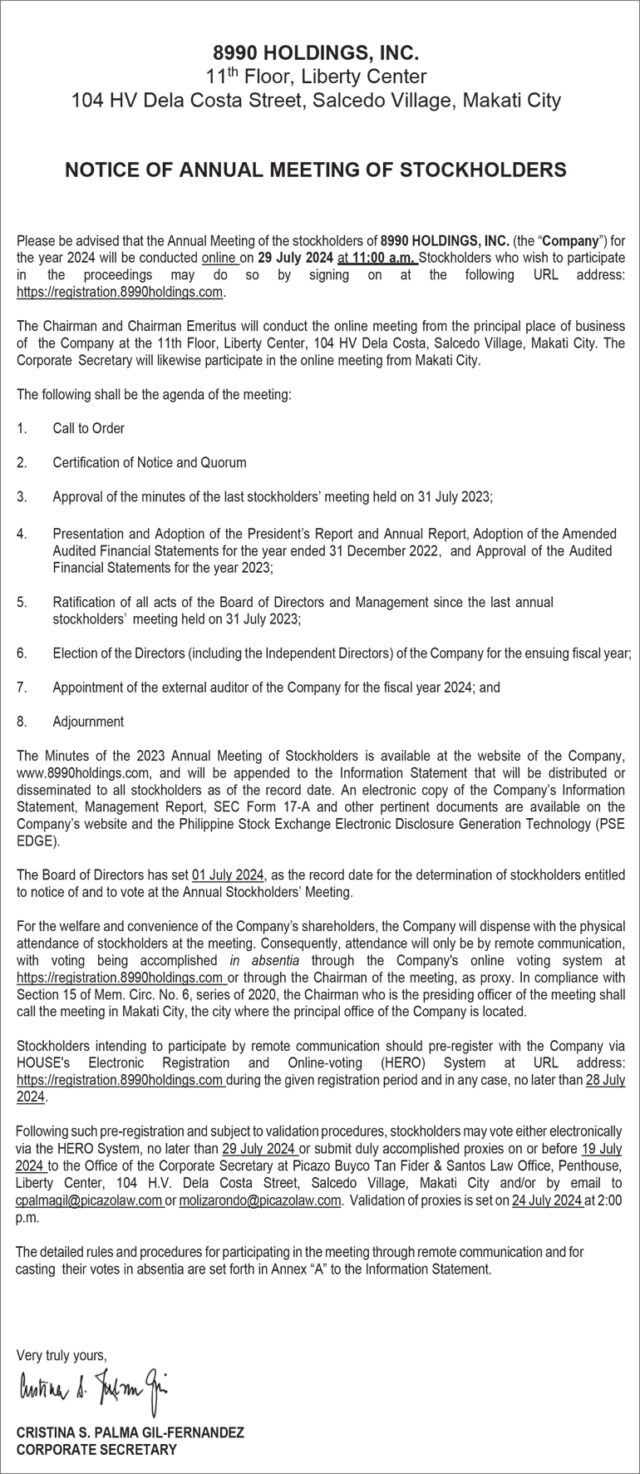
8990 Holdings, Inc. to conduct annual meeting of stockholders online on July 29


Spotlight is BusinessWorld’s sponsored section that allows advertisers to amplify their brand and connect with BusinessWorld’s audience by publishing their stories on the BusinessWorld Web site. For more information, send an email to online@bworldonline.com.

Join us on Viber at https://bit.ly/3hv6bLA to get more updates and subscribe to BusinessWorld’s titles and get exclusive content through www.bworld-x.com.

Cebu Pacific eyeing sale-leaseback deals for Airbus fleet

CEBU PACIFIC

BUDGET CARRIER Cebu Pacific, operated by Cebu Air, Inc. (CEB), is confident in securing financing for its P1.4-trillion Airbus aircraft order through a combination of equity injections and loans, its top official said on Wednesday.

“We’ll fund this from a combination of equity and loans; most of the lending for airplanes are generally done through sale and leaseback arrangements or through financing leases,”  Cebu Air Chairman Lance Y. Gokongwei told reporters on the sidelines of a launch event in Pasig City.

“Given Cebu Pacific’s strong track record, we’re the only privately owned carrier that did not default on its loans during the pandemic, we have a very strong credibility with the capital markets community. We’re sure that we can get financing from either the bank market or the sale and leaseback market,” he added.

The airline is buying up to 152 A321 new engine option (NEO) aircraft from European aircraft manufacturer Airbus, marking the largest aircraft order in the Philippines.

The agreement is expected to be finalized in the third quarter.

“The deliveries will be from 2028 forward. We’re still completing our previous deal, which will bring us all the way to 2027,” Mr. Gokongwei said.

The budget carrier chose Pratt & Whitney GTF engines to power the aircraft, despite previously reported issues with the engine manufacturer.

“Airbus and Pratt & Whitney came forward with what we feel was the best offer. We’re looking at the lowest unit cost to operate so that we can continue to provide affordable fares to the public.”

Mr. Gokongwei added that the aircraft order is “premised on continuing Philippine growth.”

“The main trigger we saw was President Ferdinand R. Marcos, Jr.’s really sincere efforts and strong efforts to really expand infrastructure, including privatization. We now see that Manila (Ninoy Aquino International Airport) has been privatized. Bulacan (airport) is a reality. That needs aircraft, and so we made this aircraft order,” he said.

The airline’s fleet currently consists of 73 Airbus and ATR aircraft.

On the budget carrier’s plans for new routes, Mr. Gokongwei said the airline is considering destinations within the operational range of the new aircraft.

Cebu Pacific currently operates flights to 35 domestic and 24 international destinations spanning Asia, Australia, and the Middle East.

“Anything that is within our flying radius, about five hours. Both domestic and international. We’ve been adding a lot of flights lately. It is a function also of which airports are going to be privatized and are going to be opened up right away,” he said.

“When we get the longer range Airbus 321s, which are available from early 2026, then we can go up to a seven, eight-hour range on a narrow body,” he added.

NEW AIRCRAFT DELIVERY
The company also announced on Wednesday that it had received its new Airbus A321NEO, progressing to almost half of the 17 aircraft delivery expected this year. 

“We look forward to carrying more passengers to their chosen destinations as we continue to expand not only our network, but also our fleet,” Cebu Pacific Chief Commercial Officer Alexander G. Lao said in a media release.

The brand-new aircraft arrived at the Ninoy Aquino International Airport on June 30 from Airbus’ facility in Germany, Cebu Pacific said. 

Airbus’ NEO aircraft is known for its enhanced fuel efficiency, representing the latest generation of Airbus planes designed to be highly compatible with sustainable aviation fuel (SAF).

Currently, all Airbus aircraft are certified to operate with up to a 50% SAF blend, aligning with Cebu Pacific’s goal of integrating green fuel across its network.  R.M.D. Ochave and A.E.O.J.

The charm of Chungcheong

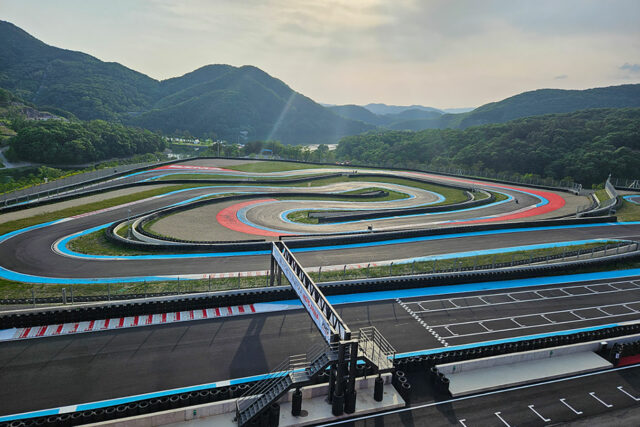
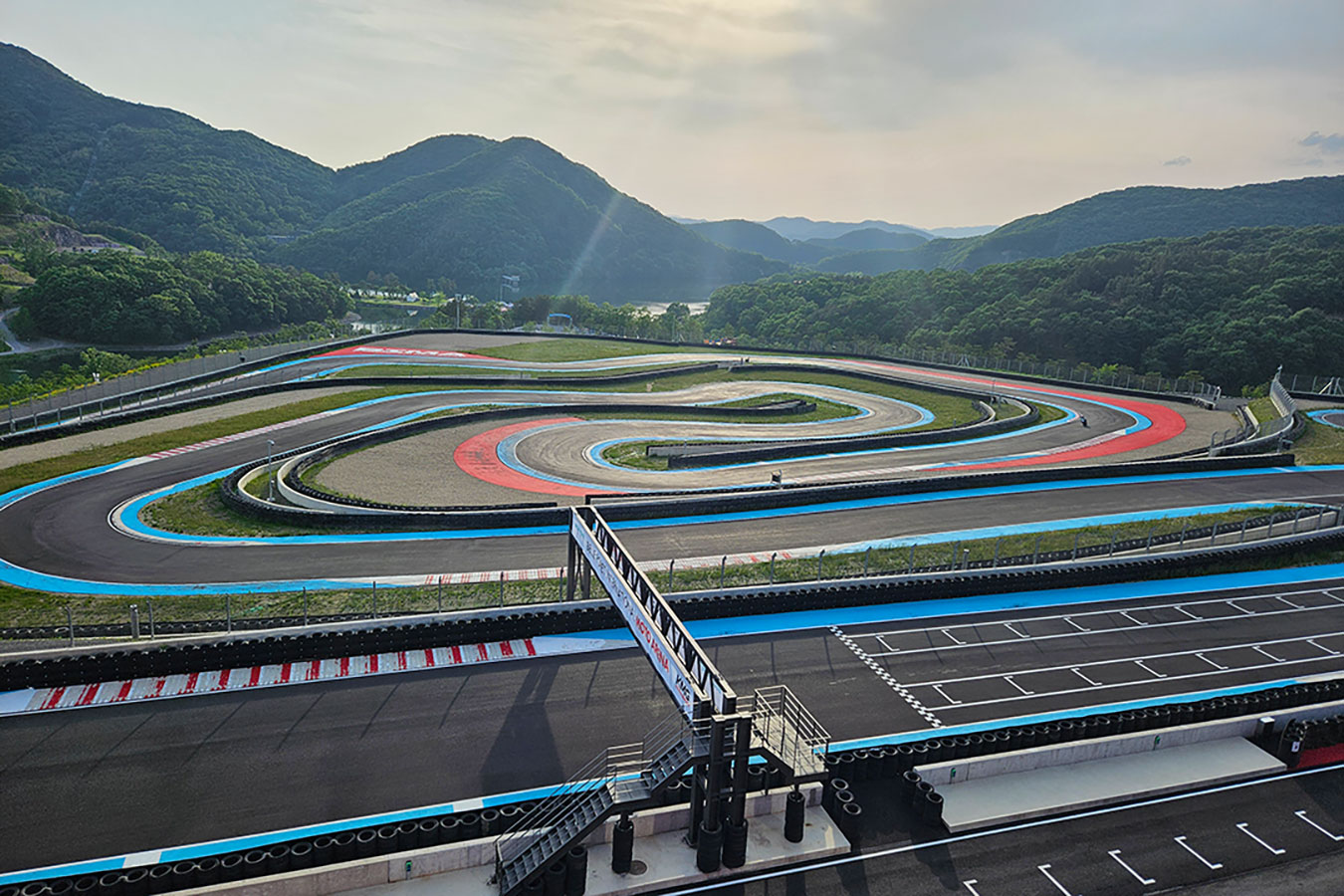
THE NEED FOR SPEED: Within the 15-minute time limit, the average go-kart driver could run five to six laps at the Belle Foret International Moto Arena circuit.

Text and photos by Chelsea Visto

CHUNGCHEONG is brimming with cultural heritage, marvelous landscapes, and bountiful agriculture, so it is unfortunate that it has remained under the foreign tourists’ radar — at least until now.

The province of Chungcheong, which is in southwestern Korea, is now easily accessible to visitors via a Korean budget airline offering direct flights from Manila to Chungcheong’s northern capital of Cheongju.

Carrier Aero-K added the Ninoy Aquino International Airport as a hub for Cheongju flights starting last May but has kept the direct flights from Clark in Pampanga where it has been flying from since November 2023. These gateways translate to more choices for K-culture enthusiasts to experience life in the Korean countryside.

Jeungpyeong County Governor Lee Jae Young could not be more ecstatic about this latest development.

“A lot of Filipinos visit Korea… and with the Cheongju International Airport (as an entry point), it is easier to come and enjoy the Korean culture,” he said, encouraging more Pinoys to opt for the less conventional regional destination.

For those putting together their next Korea escapade, here are six activities worth including in a Chungcheong tour bucket list.

1. GO KART RACING AT THE BELLE FORET INTERNATIONAL MOTO ARENA
Korea’s premier karting circuit awaits thrill-seeking tourists of North Chungcheong.

The Belle Foret International Moto Arena runs a 1.5-kilometer racetrack that simulates the Formula 1 (F1) circuit. Complete with shifter karts, gloves, and helmets, open-wheel racing in Jeungpyeong is definitely a must-try activity.

Beginners with no prior driving experience need not fret. The arena staff offer a comprehensive walkthrough of the circuit and a quick go-kart briefing before the driver-tourist takes the wheel. There are no speed limits on the course — only 15 minutes of excitement, especially for skilled drivers who can hit the gas up to 133 kilometers per hour.

Unlike F1 stadiums that are surrounded by rambunctious crowds, the relatively quiet Belle Foret circuit instead has a fascinating view of the Jeungpyeong mountains. My best memory was the adrenaline rush brought by the speeding go-kart as the chilly breeze tickled my skin.

One-seater karts can be rented for 38,000 Korean won (KRW) (P1,650), while twin-seaters are available for 48,000 KRW (P2,030).

The Moto Arena is only one of the several attractions at the Belle Foret Resort, which is an immense complex that also features an 18-hole golf course, a wilderness eco reserve, and a four-season sledding rink.

2. MAKE MAKGEOLLI AT JANG HEE DO
Traditional rice wine is a staple in Korean homes and restaurants. While typically enjoyed on rainy days with jeon (Korean pancakes), this mild booze blends well with any dish on any day.

Fermented rice wine makgeolli is one of the country’s oldest liquors, characterized by its distinct sparkling milky color and viscous, chalky texture. It has a low alcohol concentration and a slightly sweet aftertaste, unlike most Korean drinks in the market, including their signature soju.

Although this beverage is conveniently available in community stores and upscale supermarkets, many Korean families believe that homemade makgeolli still wins over its commercial counterpart. Homebrewing is a tradition in households, and the art of making makgeolli, in particular, dates back over 2,000 years.

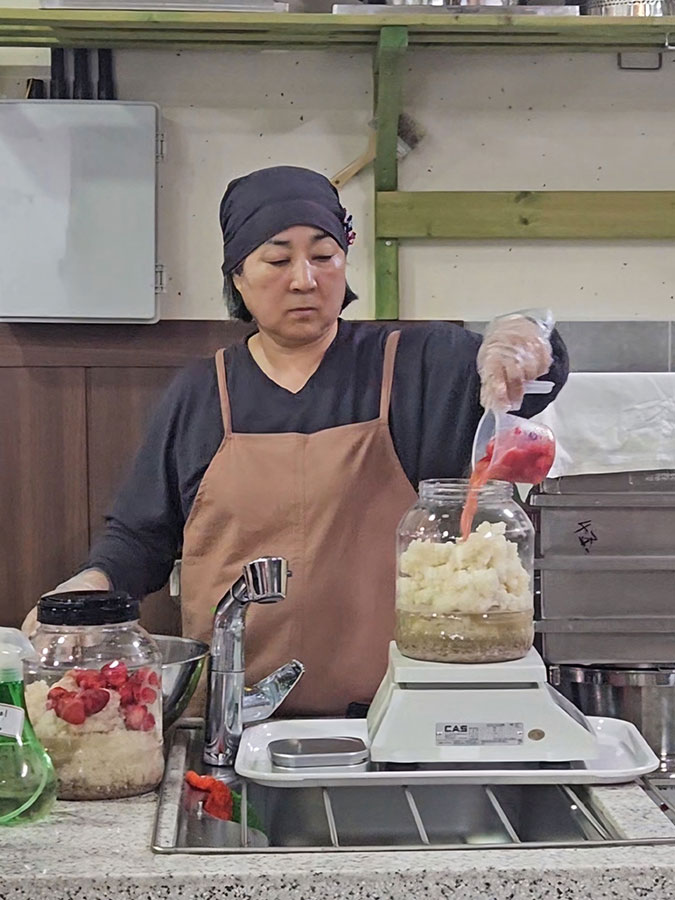
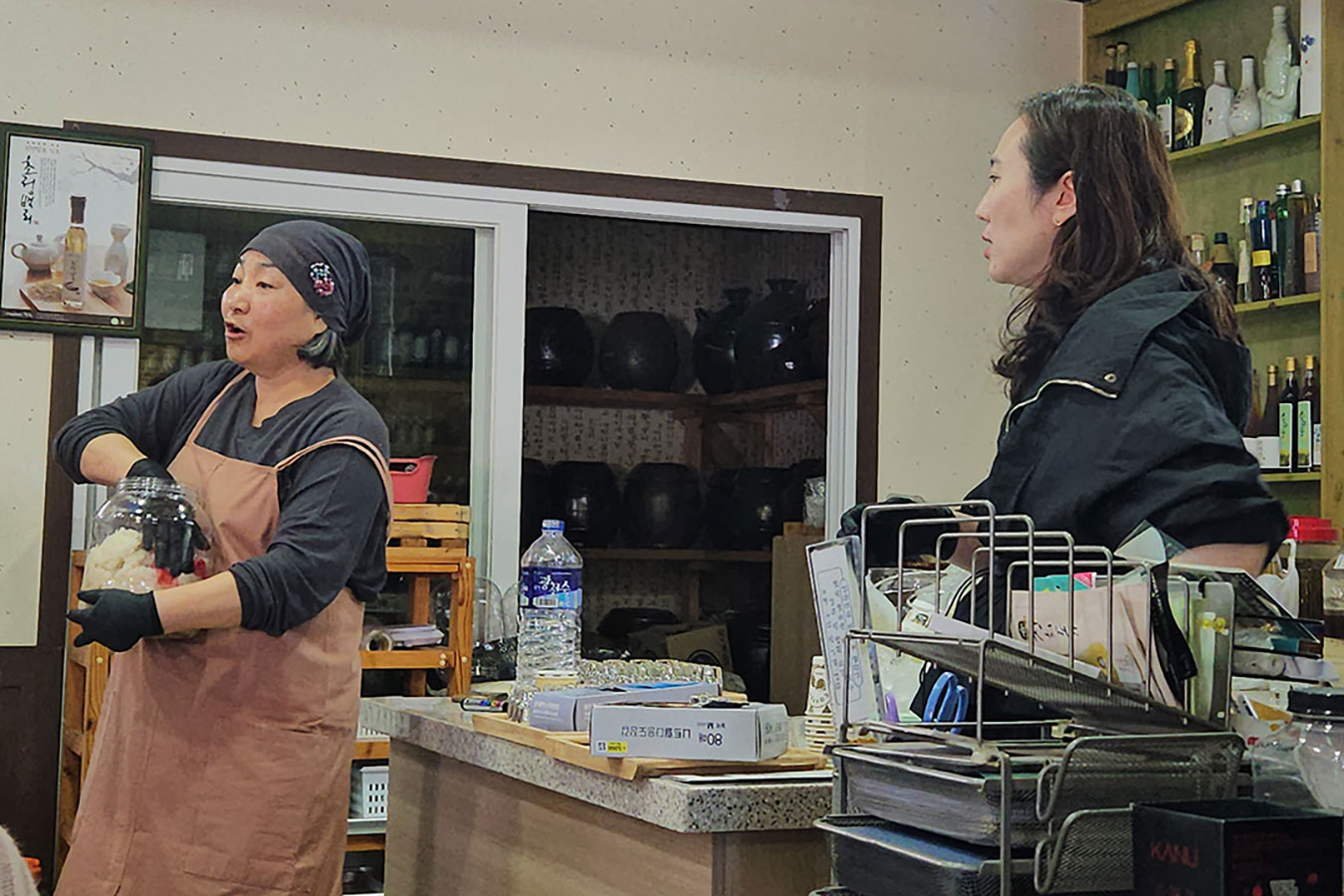
Dropping by Jang Hee Do definitely makes the Chungcheong trip memorable, especially for liquor connoisseurs. The small neighborhood brewery not only sells traditional rice wine but also conducts informal classes on making makgeolli.

Guests may take a one-hour workshop to learn the intricacies of makgeolli fermentation, with the participant assisted in making the rice wine with the mix of sugar, water, rice, yeast, and strawberries.

The quaint brewery refrigerates and ferments the makgeolli mixture for up to 10 days, after which it can be claimed for consumption.

“When consumed in moderation, makgeolli can aid blood circulation and (improve) digestion,” Jang Hee Do co-founder Kim Ju Hee told BusinessWorld.

Unfortunately for foreigners on short stays and departing before the 10-day window, they cannot claim their personally made makgeolli at the end of the workshop. The unfermented mixture is not allowed on the plane due to risks of corrosion. But ready-to-drink rice wine is available for sale at the brewery.

3. CELEBRATE KOREAN CATHOLIC HISTORY AT THE SOLMOE SHRINE AND YEOSAUL
In the Naepo area of North Chungcheong lies holy ground where early Catholicism thrived in Korea. Visited by Pope Francis in 2014, these sacred sites could be meaningful tour stops for devout Catholics.

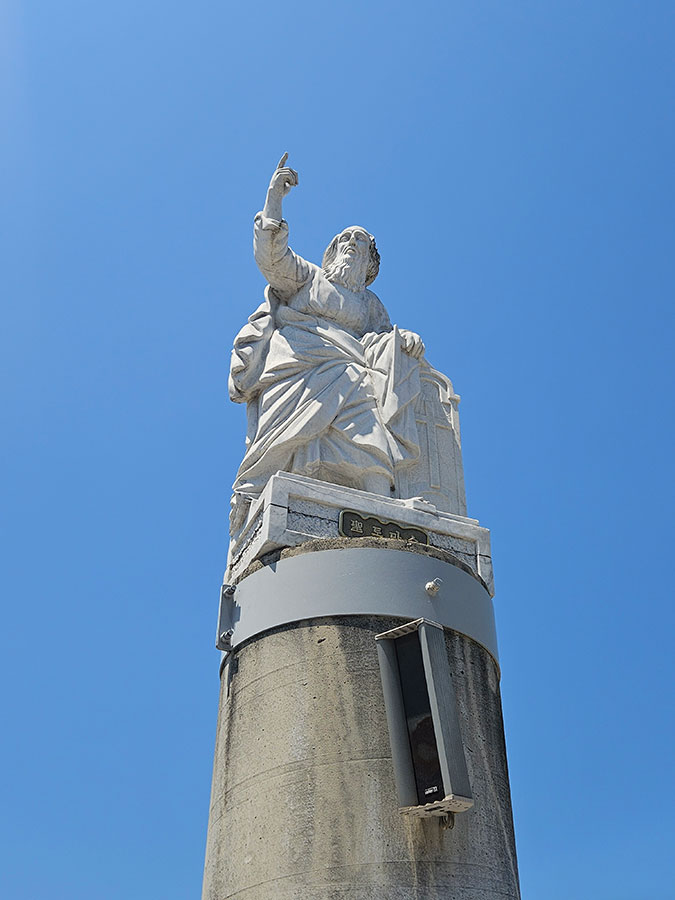
The Solmoe Shrine marks the birthplace of Korea’s first ordained priest and first canonized saint, Andrew Kim Daegeon, who staunchly advocated for religious freedom and inspired generations of Korean Catholic leaders. A statue, memorial hall, and even the house of St. Andrew can be found at the pilgrimage site.

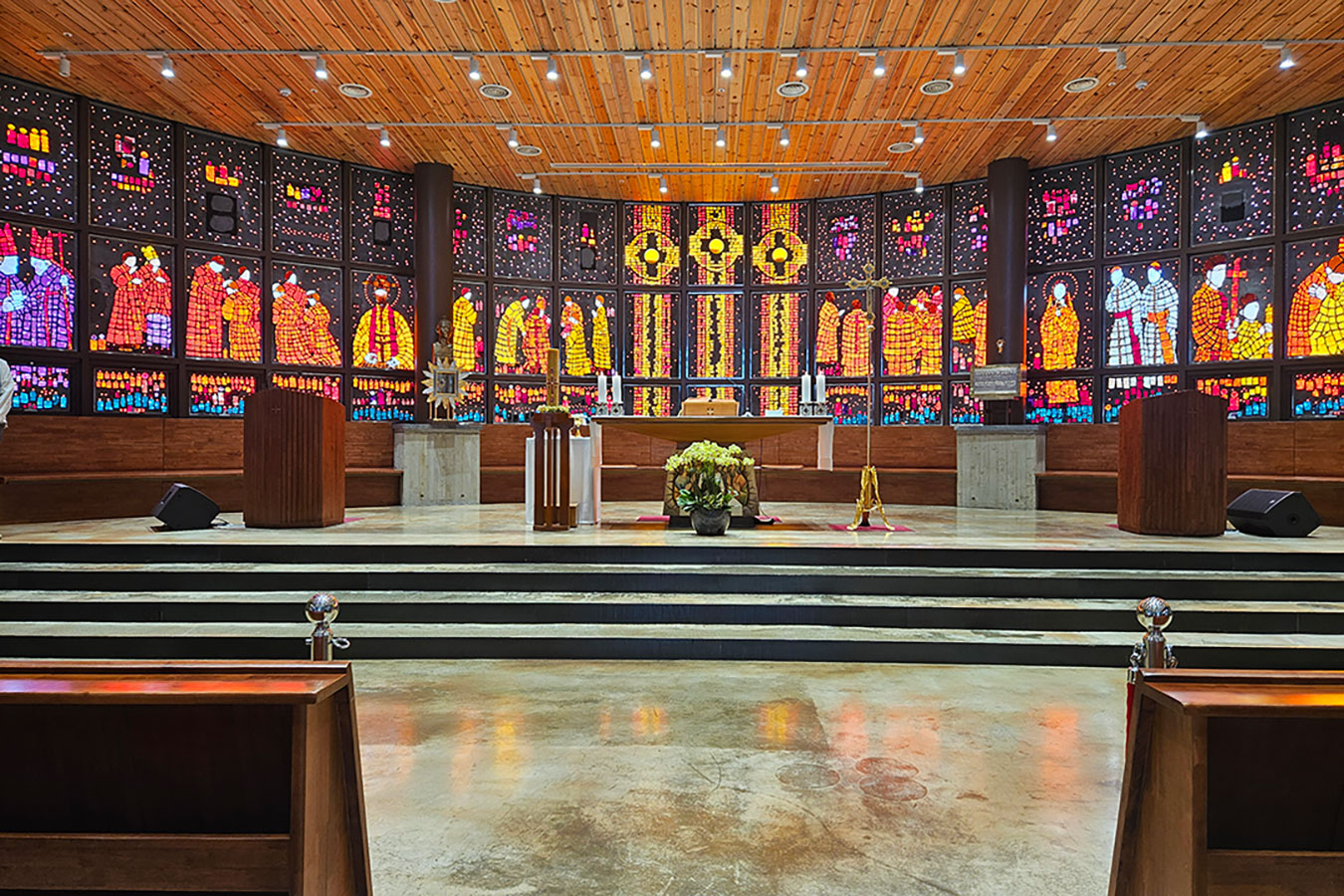
At the heart of Solmoe is a church with modern architecture and intricately designed stained glass windows typical. Masses are conducted in Korean, but foreign tourists are free to sit in and join the Eucharistic celebration.

Exquisite stone sculptures of Catholic figures and events are spread throughout the walking trails. Among them are tall effigies of the 12 disciples, and statues depicting the Stations of the Cross, which recount the final moments in Christ’s life.

The Korean word “solmoe” means “little hill with a pine forest.” True to its name, the shrine and its surrounding park boast of a considerable collection of these evergreens.

Yeosaul similarly celebrates the legacy of religious leaders who were instrumental in propagating Catholicism on the Korean peninsula. Only a short drive from Solmoe, this church has portraits of Korean martyrs and the early Catholic records of the country, which have been pristinely preserved.

4. FEEL AT HOME AT THE FORMER PRESIDENTIAL VILLA CHEONGNAMDAE
Built in 1983, Cheongnamdae served as the private villa of Korean presidents before it was opened to the public in 2003. The luxurious villa is set in a 1.8 square kilometers area which offers a variety of amenities and attractions apart from the president’s home — a golf range, a fishpond, a helipad, hiking trails, and a theater where some of the biggest Korean entertainers have performed.

The main feature of Cheongnamdae is the President Memorial Hall, which is a museum exhibiting personal items of the five Korean chief executives who stayed at the villa — ranging from toiletries to cassette players, sports equipment to books, to journals and other literature published during their presidencies.

For an admission fee of 2,000 KRW (P80) to 5,000 KRW (P210), visitors can catch a glimpse of the posh lifestyle of Korean leaders outside the Blue House, the traditional presidential residence at the heart of Seoul.

Due to stringent security, not much was known about the villa before it was opened to the public over two decades ago. Now, it has become an essential stop on field trip itineraries for Korean students. That it was the setting for Korean dramas like Becoming a Billionaire, Baker King Kim Tak-gu, and Age of Heroes also helped propel its popularity among the locals.

5. STRIKE POSES AT THE HAEMIEUPSEONG FORTRESS
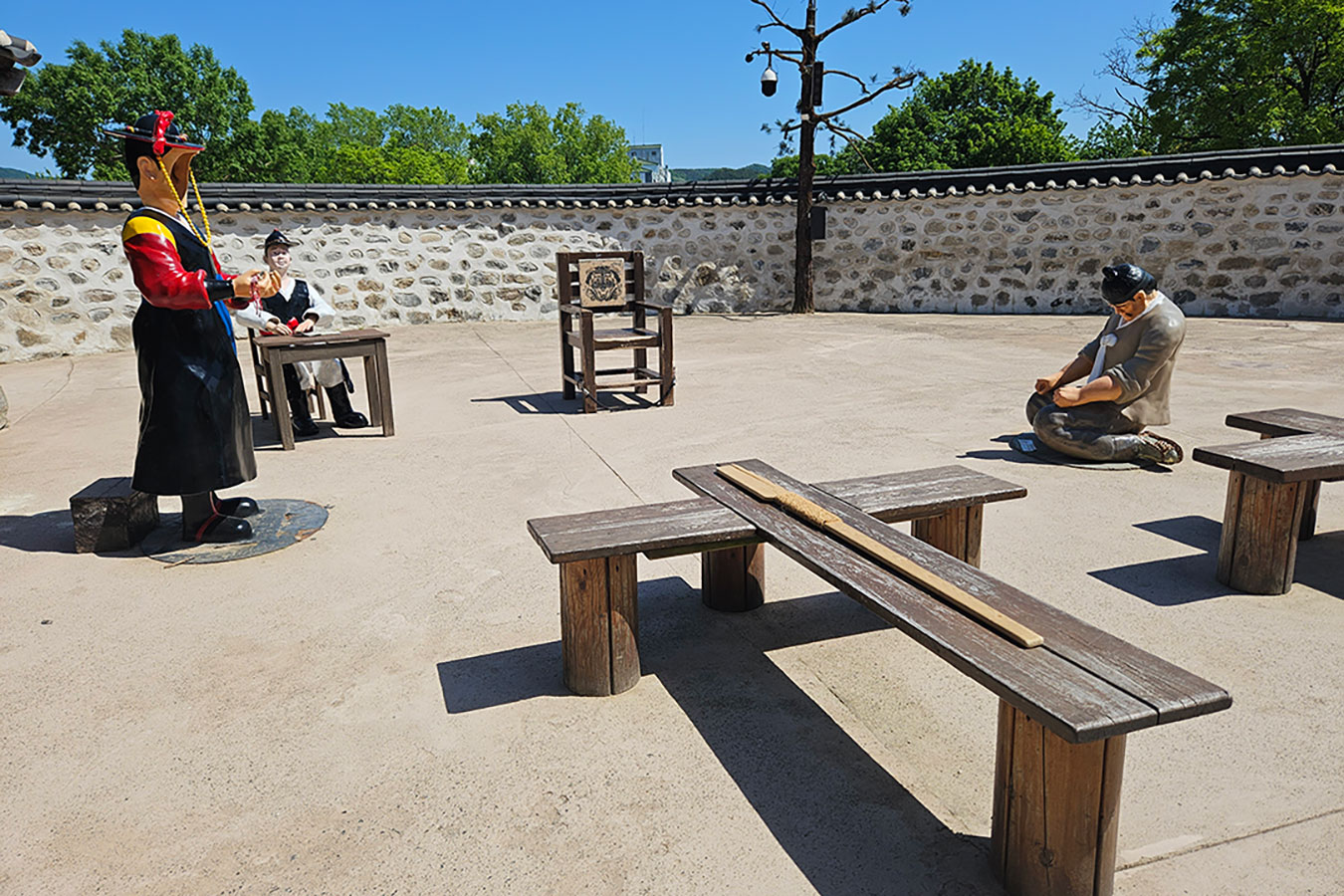
The 600-year-old Haemieupseong is among the best recognized historical sites in Korea. Its five-meter stone walls surround a castle, installation art depicting traditional Korean life, and a vast swathe of greenery, all of which are perfect backdrops for Instagram photos.

Built in the 1400s, the Fortress witnessed many significant events in the country’s history, including the Donghak Rebellion where peasants revolted against oppressive laws, and a massacre that wiped out thousands of Catholic faithful.

Prison cells and ancient artillery are on displayed as a reminder of the persecution that Catholics endured.

Despite its grim past, Haemieupseong now stands as one of the best places in North Chungcheong for leisurely activities. Locals who swing by the Fortress usually take a relaxing stroll along the walkways while some use it as picnic grounds. There are nearby cafés for a quick bite or a much-needed caffeine boost.

6. FEAST ON FLAVORFUL LOCAL TREATS
Chungcheong is also teeming with local goodies that can be had in between heritage sites.

Miikflo is one of the best dessert places in Yesan, a county in South Chungcheong. The small stall may be a challenge to locate among the crowded stores at Yesan Market, but its delectable delights are well worth the search.

The franchise mainly serves kaymak, a sweet and tangy dairy-based dessert. The mochi bundle has assorted flavors and, although best consumed frozen, it is an excellent post-meal treat even in cold weather.

Meanwhile, Hakcheon Bulgogi was a public bathhouse and used to be called “Hakcheontang” before it was renovated into a restaurant. It has maintained some of the original sauna architecture, hence the exposed pipes, faucets, and sinks which are part of its unique interior.

The restaurant’s specialty, as its name suggests, is beef bulgogi served on a cast iron grill, drizzled with flavorful spicy sauce.

Chungcheong is a fine example of a province that has substantially invested in infrastructure, site development, and sustained marketing campaigns through, among others, the Korea Tourism Organization and Airmark Travel. Its efforts have slowly borne fruit with travelers bitten by its charm, generously sharing its splendor by word of mouth.

DoubleDragon: Ongoing Madrid hotel project tops $10M in sales

LISTED property developer DoubleDragon Corp. (DD) on Wednesday said its ongoing hotel project in Madrid, Spain has achieved sales exceeding $10 million.

The majority of these sales were recorded in the second quarter, DD said in a disclosure to the stock exchange.

The company anticipates securing over $100 million (approximately P5.8 billion) in contracted unit sales over the next 12 months, driven by the momentum of its international projects.

Hotel101-Madrid, overseen by DD’s subsidiary Hotel101 Global Pte. Ltd., commenced construction in March and is set to become one of Madrid’s largest hotels, featuring 680 rooms on a 6,593 square meter property along Avenida Fuerzas Armadas, Valdebebas.

Ferrovial Construcción, one of Spain’s largest construction firms, is executing the project, with completion scheduled for the fourth quarter of 2025.

The property is surrounded by major landmark buildings and is about a three-minute walk to the Valdebebas Train Station, four-minute walk to IFEMA convention complex, five-minute walk to Real Madrid Sports Complex, and around seven minutes away from the new Madrid Barajas International Airport.

 Hotel101 is eyeing to have presence in 25 countries by 2026. These include the Philippines, Japan, Spain, USA, United Kingdom, United Arab Emirates, India, Thailand, Malaysia, Vietnam, Indonesia, Saudi Arabia, Singapore, Cambodia, Bangladesh, Mexico, South Korea, Australia, Canada, Switzerland, Turkey, Italy, Germany, France, and China.

On Wednesday, DD shares rose by 2.05% or 24 centavos, closing at P11.92 apiece. — Revin Mikhael D. Ochave

10 years of wholesome dining

The Wholesome Table’s Bianca Araneta-Elizalde on becoming a restaurateur

FORMER model, television host, and bearer of two famous last names Bianca Araneta-Elizalde has a pretty long resume, punctuated by the names that have shaped her life. Her father is Araneta scion Enrique, her mother Maritess comes from the famous Revilla line of beauties, most of whom married society; in turn she married Juan Elizalde, also from a formidable family. Ms. Araneta-Elizalde, still, made a new name for herself, and has had it for 10 years: restaurateur.

During an early dinner on June 26 at The Wholesome Table’s first branch in BGC, Ms. Araneta-Elizalde told BusinessWorld, “It was a pretty smooth transition. It didn’t happen overnight.” Before opening the restaurant in 2014, she had first become a wife and mother. “That’s what put everything on pause, so to speak. It’s a change. I actually feel like those days of mine — modelling and doing TV — feels like a completely different life.

“My kids don’t even know that I used to do that!,” she said, and told us a story about her children expressing surprise when people would stop her on the street to ask for a picture with her.

“I miss it sometimes. Definitely I miss the good old days, but I really like where I am now,” she said. In jest, she said. “Now it’s a lot of eating; back then, not a lot of eating.”

“This is where I get to exercise my creativity behind the camera. That was in front of the camera,” she said.

BETTER DINING THROUGH BETTER INGREDIENTS
For The Wholesome Table’s 10th anniversary, they’re bringing back a few classics such as their duck confit, duck curry, the vegan Buddha Bowl, Slow-cooked Pork Belly, and their Orzo salad. BusinessWorld had a taste, and we went back for the duck curry for seconds. The rest of the dishes, at first bite, may taste like something you’ve tasted before, but have a brilliant sheen to them once you swallow. “It is just like a regular restaurant, it’s just made with better ingredients,” she said.

By better, this means organic and responsible sourcing for the ingredients. So much so that the organic supply chain has so many gaps (suppliers not having something they need; and other such issues), that she has decided to open a farm, which will see operation in six months to a year. They have been working on it since before the pandemic, but that crash paused planning.

“We used to often lack a supply of certain vegetables because of the standards we imposed. I always wanted a farm that’s going to fuel the restaurant and it’s going to be even more than organic — it’s going to be biodynamic. Everybody will be eating produce and products from the farm, maybe even be able to buy from it.”

Before The Wholesome Table’s opening in 2014, organic eating and the like weren’t mainstream in the country, but now, at least a hint of more mindful and responsible dining has become a baseline for restaurants. “It wasn’t mainstream here, but it was pretty mainstream abroad. Whenever we would travel, it was so easy to find places like this,” said Ms. Araneta-Elizalde.

“I’m glad. This was one of my goals. I’m not saying I’m the only one who participated in making this happen, but definitely a lot of people became more familiar with this way of eating (through) The Wholesome Table.”

To mark their anniversary this month, there are several promos. Diners can get 10% off on delivery when they order from GrabFood from 2 to 6 p.m. for the whole month of July. Diners also get 10% off when dining in at their branches (in the C3 Building in BGC, Taguig and their Salcedo Village branch at De la Costa St. In Makati) from 2 to 6 p.m. from July 16 to July 31. And on July 11, they will get a free scoop of ice cream at the BGC branch. — Joseph L. Garcia

Uy’s Converge taps US firm for data center sustainability

CONVERGE ICT Solutions, Inc. announced on Wednesday a partnership with US-based Super Micro Computer, Inc. (Supermicro) to develop energy-efficient data centers aimed at reducing costs and environmental impact.

“Aside from being energy saving with its liquid cooling technology, Supermicro’s servers provide exceptional AI (artificial intelligence) computing capabilities and intensive deep learning tasks that will allow us to support and deploy many AI applications,” Converge Chief Executive Officer Dennis Anthony H. Uy said in a statement.

Converge announced in January its plan to allocate up to P5 billion over the next three years to build data centers that will host its planned digital platforms and store applications and information. The company intends to construct data centers in Pampanga, Laguna, and Caloocan.

The two companies recently signed a memorandum of understanding for the development of an AI-powered, “green” data center in the country, Converge said.

Headquartered in California, USA, Supermicro is an IT solutions provider specializing in data centers and designing energy-saving servers, storage systems, and software. The company employs “liquid-cooling” technology to potentially reduce data center facility power consumption by up to 40%.

“These high-performing servers can handle immense AI and Machine Learning workloads but with the more efficient liquid cooling solution provided by Super Micro, the heat by-product will be controlled, reducing power consumption. We want to maintain our data center’s energy efficiency, so this is geared towards that,” Mr. Uy said.

With its tie-up with Supermicro, all of its data centers will be developed in line with Supermicro’s design and process, Converge said.

At the stock exchange on Wednesday, shares in the company closed 16 centavos or 1.45% higher at P11.16 each. — A.E.O. Jose