Home Blog Page 29

China moves to block entrance to disputed South China Sea shoal, images show
PHILSTAR FILE PHOTO

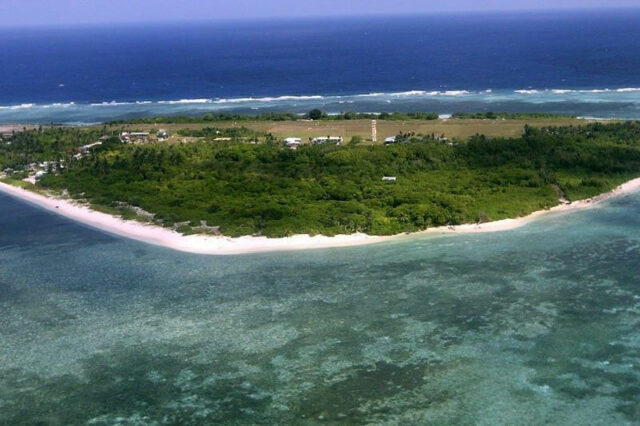
HONG KONG/MANILA — China is employing ships and a barrier to tighten control of the entrance to the Scarborough Shoal in the South China Sea amid roiling tension with the Philippines over the disputed feature, satellite imagery obtained by Reuters shows.

Scarborough is one of Asia’s most hotly disputed maritime sites, where some diplomats and analysts fear long-running frictions and confrontations could degenerate into armed conflict.

The presence of four fishing boats, a Chinese naval or coast guard ship and a new floating barrier comes as the Philippines sends its own coast guard and fisheries vessels to support its fishermen frequently driven away by larger Chinese patrols.

Photographs taken on April 10 and 11 show the fishing boats anchored along the entrance to the shoal, in addition to a floating barrier stretching across it in the April 11 image.

Satellite image provider Vantor, formerly Maxar Technologies, said a probable Chinese naval or coast guard patrol vessel can be glimpsed just outside the entrance on April 10.

China’s defense ministry did not immediately respond to Reuters’ requests for comment on the deployment to the entrance to the shoal or its timing.

TRADITIONALLY RICH FISHING GROUND
The traditionally rich fishing ground of the Scarborough Shoal lies entirely within the Philippines’ exclusive economic zone, but China also claims it as part of its territory.

Last year, China approved establishment of a national nature reserve there, alarming Philippine security officials, who called the move a “clear pretext for occupation”.

Commodore Jay Tarriela, a spokesperson for the Philippine coast guard, told Reuters on Wednesday the Chinese government had installed a 352-meter (1,150-ft) floating barrier at the entrance on April 10 and April 11.

“Six Chinese maritime militia vessels were observed within the shoal, while three others were spotted outside, seemingly obstructing the entrance to BDM,” he said.

He was referring to the shoal by its Philippine name of Bajo de Masinloc, while China calls it Huangyan Island.

While the Philippines coast guard has cut barriers in the past, Mr. Tarriela said the Chinese side appear to have removed the latest one since the weekend, but the Philippine Navy says its patrols continue.

“According to our assessment in the past, they consistently exhibit suspicion whenever they monitor a group of Filipino fishing boats,” Mr. Tarriela added.

Ten Chinese coast guard vessels were sighted at the shoal from April 5 to April 12, Philippine Navy spokesperson Roy Trinidad said on Tuesday.

SOVEREIGNTY HAS NEVER BEEN ESTABLISHED
Despite the competing claims, sovereignty has never been established and the shoal is effectively under Beijing’s control even if Philippine boats still try to operate there.

In January, the militaries of the Philippines and the United States sailed together at the shoal in the 11th such drill by the treaty allies.

Military engagements between them have soared under Philippine President Ferdinand R. Marcos Jr., who has pivoted closer to Washington in response to China’s growing presence in the busy waterway of the South China Sea.

Thousands of troops from both countries are set to begin large-scale exercises across the Philippine archipelago this month, including in Zambales, whose coast is about 120 nautical miles from the Scarborough Shoal.

Diplomats say the drills and broader tensions are being closely watched amid fears that China could take advantage of perceptions that the US is distracted by the Iran conflict and its effort to re-open the vital Straits of Hormuz waterway.

China has kept a deployment of coast guard and fishing trawlers at the shoal since seizing it in 2012 after a standoff with the Philippines.

Manila has said Chinese maritime militia operate some trawlers at the shoal and other disputed areas of the South China Sea, but Beijing has never acknowledged this.

A landmark 2016 ruling on various South China Sea issues by the Permanent Court of Arbitration backed Manila, but establishing sovereignty over Scarborough Shoal was outside its scope.

The court said Beijing’s blockade there violated international law as it was a traditional fishing ground for several countries, including China, the Philippines and Vietnam. — Reuters
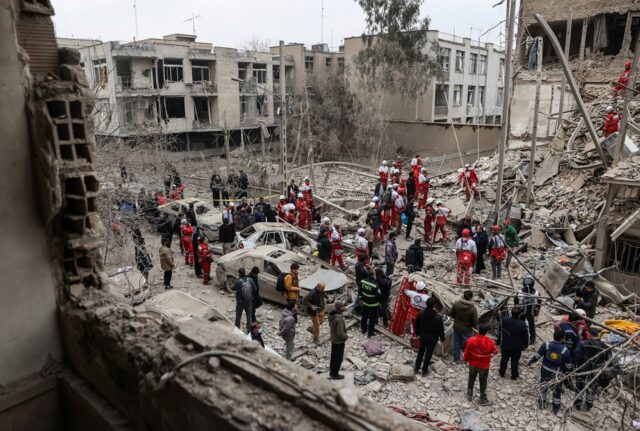
US shuts down Iran’s maritime trade despite optimism for more talks

Emergency personnel work at the site of a strike on a residential building, amid the US-Israeli conflict with Iran, in Tehran, Iran, Mar. 16, 2026.—via REUTERS/MAJID ASGARIPOU

DUBAI/WASHINGTON — The United States said on Wednesday its military had completely halted trade going in and out of Iran by sea, while President Donald Trump said talks with Tehran on ending the war could resume this week, sending oil prices down for a second day.

Mr. Trump said negotiations between US and Iranian officials could resume in Pakistan in the next two days and Vice President JD Vance, who led weekend talks that ended without a breakthrough, said he felt positive about where things stood.

“I think you’re going to be watching an amazing two days ahead,” Mr. Trump told ABC News reporter Jonathan Karl, adding he did not think it would be necessary to extend a two-week ceasefire that ends on April 21.

“It could end either way, but I think a deal is preferable because then they can rebuild,” Mr. Trump said, according to a post by Mr. Karl on X. “They really do have a different regime now. No matter what, we took out the radicals.”

Officials from Pakistan, Iran, and the Gulf also said negotiating teams from the US and Iran could return to Pakistan later this week, although one senior Iranian source said no date had been set.

Despite the optimistic note, more vessels were being turned back under the US blockade on Iranian ports, including a US-sanctioned and Chinese-owned tanker Rich Starry that was making its way back to the Strait of Hormuz on Wednesday after exiting the Persian Gulf.

Admiral Brad Cooper, the head of the US Central Command, said American forces had completely halted economic trade going in and out of Iran by sea, which he said fuels 90% of Iran’s economy.

“In less than 36 hours since the blockade was implemented, US forces have completely halted economic trade going into and out of Iran by sea,” Mr. Cooper said in a post on X.

Earlier the US military said it had intercepted eight Iran-linked oil tankers since the start of the blockade on Monday, according to the Wall Street Journal.

RETURN TO ISLAMABAD
Mr. Trump, speaking to the New York Post on Tuesday, said his negotiators are likely to be back, thanks largely to the “great job” Pakistan’s army chief, Field Marshal Asim Munir, was doing to moderate the talks.

Later on Tuesday, at an event in Georgia, US Vice President JD Vance said Mr. Trump wanted to make a “grand bargain” with Iran but there was a lot of mistrust between the two countries.

“You are not going to solve that problem overnight,” he said.

The signs of diplomatic engagement to end the conflict that began on February 28 helped calm oil markets, pressing benchmark prices below $100 for a second day on Wednesday. Asian stocks rose while the safe-haven dollar stabilized after falling for a seventh straight session overnight.

However, the market stands to lose access to further supply as the US does not plan to renew a 30-day waiver of sanctions on Iranian oil at sea that expires this week, according to two US officials, and quietly let a similar waiver on Russian oil run out on the weekend.

The war has prompted Iran to effectively shut the Strait of Hormuz, a crucial global waterway for crude and gas transport, and cut shipments from the Gulf to global buyers, particularly in Asia and Europe, leaving importers scrambling to secure alternate supplies.

About 5,000 people have died in the hostilities, including about 3,000 in Iran and 2,000 in Lebanon.

STICKING POINTS
Iran’s nuclear ambitions were a key sticking point at the weekend talks. The US had proposed a 20-year suspension of all nuclear activity by Iran, while Tehran had suggested a halt of three to five years, according to people familiar with the proposals.

Speaking in Seoul, the head of the International Atomic Energy Agency (IAEA), Rafael Grossi, said the length of any moratorium on Iranian uranium enrichment was a political decision and it was possible Tehran might accept a compromise as a confidence-building act.

The US has also pressed for any enriched nuclear material to be removed from Iran, while Tehran has demanded that international sanctions against it be removed.

One source involved in the negotiations in Pakistan said back-channel talks since the weekend had produced progress in closing that gap, bringing the two sides closer to a deal that could be put forward at a new round of talks.

However, in a major complication for peace prospects, Israel has continued to attack Lebanon as it targets Hezbollah, an Iran-backed militant group. Israel and the US say that campaign is not covered by the ceasefire, while Iran insists it is.

On Tuesday, the UK, Canada, Japan, and seven other countries condemned the killings of UN peacekeepers in Lebanon and called for “an urgent end to hostilities”.

The statement comes after the deaths of three Indonesian peacekeepers last month. The countries welcomed the ceasefire agreed between the US, Israel, and Iran. — Reuters

Trump doubles down in criticizing Pope Leo over Iran

POPE LEO XIV waves as he leaves the basilica of Saint Paul Outside the Walls in Rome, Italy, May 20, 2025. — REUTERS

WASHINGTON — US President Donald Trump, whose war and immigration policies have been condemned by Pope Leo, reiterated his criticism of the religious leader on Tuesday night.

In a post on Truth Social, Mr. Trump urged that “someone please tell Pope Leo” about the killings of protesters by Iran and that “for Iran to have a Nuclear Bomb is absolutely unacceptable.”

The US and Israel attacked Iran on February 28. Iran responded with its own strikes on Israel and Gulf states with US bases. US-Israeli strikes on Iran and Israeli attacks in Lebanon have killed thousands and displaced millions.

Iran does not have nuclear weapons while the US does. Israel is widely believed to be the only Middle Eastern country with nuclear weapons.

While Western countries have long believed that Iran wants a nuclear bomb – or at least the ability to make one very quickly – Tehran has always denied that, citing its membership of the Nuclear Non-Proliferation Treaty.

Mr. Trump’s comments come after Pope Leo warned earlier in the day of the risk of democracies sliding into “majoritarian tyranny”.

The first US pope, Leo wrote in a letter issued by the Vatican about the use of power in democratic societies, and said democracies remained healthy only when they were rooted in moral values.

The pope has criticized Mr. Trump’s decision to launch the war against Iran, saying God rejects the prayers of those who launch wars and have “hands full of blood.” The pope termed Mr. Trump’s threat this month to destroy the Iranian civilization as unacceptable and previously declined to join the US president’s so-called “Board of Peace” initiative for Gaza.

The religious leader has also urged a “deep reflection” on the way migrants are treated in the US while Mr. Trump has pursued a hardline immigration policy.

On Sunday, Mr. Trump called the pope “weak” and “terrible” on crime and foreign policy issues. — Reuters

UN watchdog says North Korea is boosting nuclear weapons capacity

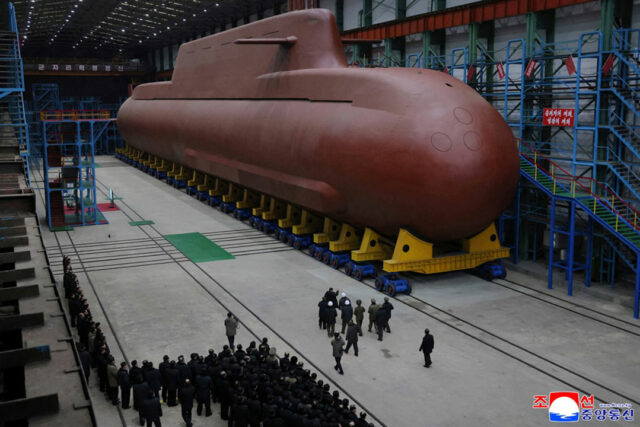
North Korean leader Kim Jong Un visits the construction site of an 8,700-ton nuclear-powered submarine capable of launching surface-to-air missiles in this picture released by North Korea's official Korean Central News Agency (KCNA) on December 25, 2025. — REUTERS

SEOUL — North Korea has made “very serious” advances in its abilities to turn out nuclear weapons, with the probable addition of a new uranium enrichment facility, as it stepped up activity at a key complex, International Atomic Energy Agency (IAEA) chief Rafael Grossi said on Wednesday.

Enriching uranium can provide an alternative, and experts say, a more effective, path to acquiring weapons-grade material in addition to reprocessing spent plutonium extracted from a nuclear reactor.

Speaking in Seoul, the head of the IAEA confirmed a rapid rise in activity at the five-megawatt reactor, the reprocessing unit, a light water reactor, and other facilities at the North’s Yongbyon nuclear complex.

NORTH’S NUCLEAR PROGRAM ESTIMATED AT FEW DOZEN WARHEADS
North Korea’s nuclear program was estimated at a few dozen warheads, he told a news conference, citing signs of activity such as the operation of a light water reactor and activation of other facilities besides Yongbyon.

“All of them point to a very serious increase in the capabilities of the DPRK in the area of nuclear weapons production,” Mr. Grossi said, using the initials of the North’s official name, the Democratic People’s Republic of Korea.

The watchdog had observed construction of a new facility similar to Yongbyon’s uranium enrichment halls, he said, adding that analysis of external features showed a significant expansion of enrichment capacity.

Mr. Grossi told a meeting of the agency’s governors this month that it was monitoring a new building at Yongbyon with similarities to an enrichment facility at Kangson, another key nuclear site near the capital, Pyongyang.

SATELLITE IMAGERY SUPPORTS IAEA ASSESSMENT
Satellite imagery from April supported the IAEA’s assessment, the US-based Center for Strategic and International Studies said on Monday.

It indicated completion of a suspected uranium enrichment plant, capable of producing weapons‑grade material, the center said in a report.

On Wednesday Mr. Grossi said the agency had not seen any evidence of Russian technology being used in North Korea’s nuclear weapons program.

References in a cooperation pact both countries signed last year appeared to be limited to civilian nuclear projects, though it was too early to draw firm conclusions, he added.

“Moving towards nuclear weapons would never give any country increased security,” Mr. Grossi said, but could instead trigger proliferation.

SOUTH KOREA’S NUCLEAR SUBMARINE PLAN
Turning to South Korea’s program to build nuclear-powered submarines, Mr. Grossi said he invited Seoul to work closely with the agency to avert proliferation risks, with formal talks to begin on the matter.

Naval reactors pose special challenges as nuclear fuel on submarines can go uninspected for long periods during missions.

“It is essential that this activity is not conducive to proliferation of nuclear weapons,” Mr. Grossi said, adding that the IAEA would seek an “ironclad guarantee” against any diversion of the material.

South Korea’s submarine ambitions advanced after President Lee Jae Myung and US President Donald Trump finalized joint steps on trade and security last November, in which Washington approved its ally’s plan to build the nuclear-powered vehicles. — Reuters

Hungary’s Magyar will talk to MOL leadership, focus on fuel supplies

Peter Magyar, leader of the opposition Tisza party, waves a Hungarian flag as he celebrates, after Hungarian Prime Minister Viktor Orban conceded defeat in the parliamentary election, in Budapest, Hungary, April 12, 2026. — REUTERS/LEONHARD FOEGER TPX IMAGES OF THE DAY

BUDAPEST — Hungary’s election-winner Peter Magyar said on Wednesday he would need to hold talks with the leadership of oil company MOL, adding that ensuring fuel security would be the top priority in the coming weeks.

Mr. Magyar’s center-right TISZA (Respect and Freedom) party won a landslide victory in Sunday’s election, ending nationalist Prime Minister Viktor Orban’s 16-year rule.

In early March, Mr. Orban imposed a cap on fuel prices as soaring oil prices, fueled by the war in Iran, drove global diesel and gasoline prices higher.

His government also banned the export of crude oil, diesel and 95-octane gasoline and said it would release 45 days worth of state fuel reserves, as Hungary contended with a halt in supplies through a key pipeline carrying Russian oil via Ukraine.

Data from the Hungarian Hydrocarbon Stockpiling Association showed that Hungary’s strategic oil and oil-product reserves fell to 44 days of net imports by the end of March, from 91 days at the end of February. In a statement on Tuesday, the association said replenishment was under way and reserves had since risen to 53 days of net imports.

European Union member states must maintain 90 days of net imports.

“With the strategic oil reserves, the acting government has a huge responsibility in what it does in the next 20-30 days,” Mr. Magyar said. “Everyone hopes that this Druzhba pipeline can restart by the end of April but even if it does it will take some time for strategic reserves to be replenished.”

“The most important is that security of supply must be ensured in the next few weeks under the outgoing government and then in the first days of the TISZA government.”

MOL said in a response to emailed Reuters questions on Tuesday that its crude oil supply was uninterrupted as oil was coming via the Adriatic pipeline even though supplies via the Druzhba pipeline were still suspended.

“Following agreements with Libya, Kazakhstan, Norway, and Saudi Arabia, we have also reached agreements on deliveries with companies in the United States. The Danube Refinery is operating at reduced capacity due to a fire that occurred at one of our units in October,” MOL said.

“Fuel supply in Hungary remains uninterrupted”. — Reuters

US destroyer interdicts two oil tankers attempting to leave Iran, official says

STOCK PHOTO | Image by Gerhard Traschütz from Pixabay

WASHINGTON — A US destroyer interdicted two oil tankers attempting to leave Iran on Tuesday, a day after US President Donald Trump’s blockade went into effect, and instructed them to turn around, a US official said, speaking on condition of anonymity.

The ships had left Chabahar port on the Gulf of Oman and were contacted by the warship via radio communication, the official said. It was unclear whether any further warnings were given.

The disclosure adds further detail to the start of Mr. Trump’s blockade, which aims to pressure Iran to end its effective closure of the Strait of Hormuz, a choke point for about 20% ⁠of the world’s oil.

Mr. Trump is hoping the blockade will force Iran to accept America’s terms for ending a war launched by the US and Israel on February 28, including opening up the Strait of Hormuz. Mr. Trump says that was also a condition of a week-old ceasefire with Iran due to expire next week.

Experts are cautious. Noam Raydan at The Washington Institute for Near East Policy said tracking data did show one tanker making a U-turn after the start of the blockade but cautioned that a lot of ships working with Iranian oil go dark.

“We just don’t know yet how effective it is. We are still in day two,” Mr. Raydan said.

The US official said the two tankers were among the six merchant vessels the US Central Command said in a statement earlier on Tuesday had followed orders to “turn around to re-enter an Iranian port on the Gulf of Oman.”

Central Command said no ships have made it past the blockade since it went into effect on Monday at 10 a.m. in Washington (1400 GMT).

MORE THAN 10,000 TROOPS

The blockade is a massive undertaking involving more than 10,000 U.S. forces, over a dozen warships and dozens of aircraft, the US military says.

The US military says it will support freedom of navigation for vessels transiting the Strait of Hormuz, as long as they are not going to or from Iran.

Mr. Trump announced the blockade following the breakdown of weekend talks to end ​the war. Oil prices jumped back above $100 a barrel before easing on Tuesday on hopes of further talks.

If Mr. Trump’s strategy succeeds, he would eliminate Iran’s greatest point of leverage in negotiations with the ​US and clear the strait again for global trade. But a blockade, experts say, is an act of war that requires an open-ended commitment of a significant number of ​warships.

It could also trigger fresh retaliation from Tehran and put tremendous strain on an already ​fragile ceasefire.

Iran’s threats to shipping have caused global oil prices to skyrocket about 50%. Roughly 5,000 people have died in the hostilities.

Thousands of US military strikes have severely weakened Iran’s military. But analysts say Tehran has emerged from the conflict as a vexing problem for Washington, with a more hard-line leadership and a buried stockpile of highly enriched ⁠uranium.

Mr. Raydan said to expect likely Iranian retaliation if the blockade succeeds and lasts for an extended period, noting Iranian threats to strike Gulf states that host US forces and Iran’s past attacks on ships.

“We’re in the testing period,” Mr. Raydan said. — Reuters

Philippines grants banks flexibility to extend loan payments amid energy crisis

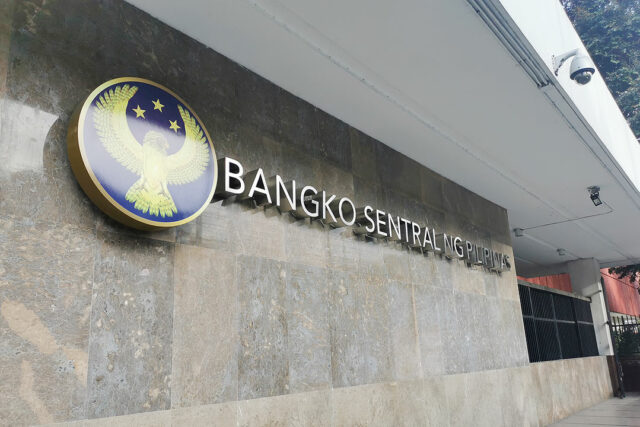
Bangko Sentral ng Pilipinas main office in Manila. — BW FILE PHOTO

MANILA – The Philippines will allow banks to give borrowers more time to settle their loans as part of a package of relief measures designed to support consumers and businesses hit by the energy crisis, its central bank said on Wednesday.

This includes grace periods of up to six months, and up to one year for agricultural loans, subject to bank assessments, according to a resolution approved last week by the Bangko Sentral ng Pilipinas (BSP).

Banks may also temporarily avoid classifying these loans as past due or non-performing.

“BSP-supervised financial institutions are expected to exercise prudent management in availing these measures and to ensure relief is only extended to borrowers whose repayment capacity has been materially affected by the energy emergency,” the BSP said in a statement.

The BSP also urged banks to temporarily suspend fees for online transactions, to ease costs for consumers and businesses.

On Monday, Philippine President Ferdinand Marcos Jr suspended excise taxes on kerosene and liquefied petroleum gas to help the public cope with soaring fuel prices driven by the conflict in the Middle East. — Reuters

US, Iran may resume talks this week despite port blockade

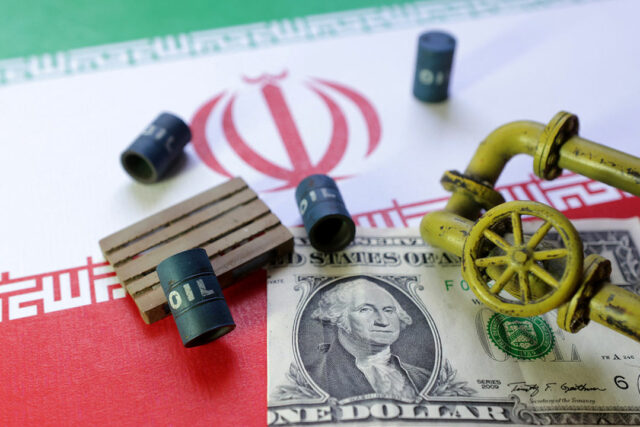
AN IRANIAN FLAG, a US dollar banknote and miniatures of oil pipes and barrels are seen in this illustration taken on June 23, 2025. — REUTERS/DADO RUVIC/ILLUSTRATION

ISLAMABAD/WASHINGTON/DUBAI — Talks to end the Iran war could resume in Pakistan over the next two days, US President Donald Trump said on Tuesday, after the collapse of weekend negotiations prompted Washington to impose a blockade on Iranian ports.

Officials from Pakistan, Iran, and the Gulf also said negotiating teams from the US and Iran could return to Pakistan later this week, although one senior Iranian source said no date had been set.

Mr. Trump was quoted by the New York Post as saying: “You should stay there, really, because something could be happening over the next two days, and we’re more inclined to go there.”

Later on Tuesday at an event in Georgia, US Vice President JD Vance said Mr. Trump wanted to make a “grand bargain” with Iran but there was a lot of mistrust between the two countries.

“You are not going to solve that problem overnight,” Mr. Vance said.

While the US blockade drew angry rhetoric from Iran, signs that diplomatic engagement might continue helped to calm oil markets, pushing benchmark prices below $100 per barrel.

Iran has effectively shut the Strait of Hormuz, a crucial global waterway for oil and gas transport, since the war began on February 28. Roughly 5,000 people have died in the hostilities.

Talks in Islamabad last weekend did not yield an agreement, raising doubts over the survival of a two-week ceasefire that still has a week to run.

Iran’s nuclear ambitions were a key sticking point. The US had proposed a 20-year suspension of all nuclear activity by Iran, while Tehran had suggested a halt of three to five years, according to people familiar with the proposals. The US has also pressed for any enriched nuclear material to be removed from Iran.

One source involved in the negotiations in Pakistan said backchannel talks since the weekend had produced progress in closing that gap, bringing the two sides closer to a deal that could be put forward at a new round of talks.

It was unclear what kind of nuclear deal could be quickly agreed by the US and Iran, given the complexity of the 2015 nuclear deal between Tehran and world powers that Mr. Trump withdrew from in 2018, and the likely need for monitoring and verification by the International Atomic Energy Agency.

Iran also wants international sanctions removed, which the US could not pledge by itself.

IMF CUTS GROWTH OUTLOOK
US Central Command said no ships made it past its blockade of Iranian ports in the first 24 hours it was in place, while six merchant vessels turned back.

Centcom said more than a dozen US warships were involved in the blockade, which only applies to ships going to or from Iran.

However, shipping data showed the blockade had made little difference to Strait of Hormuz traffic on Tuesday, with at least eight ships crossing the waterway.

The war has clouded the outlook for global energy security and the supply of goods that rely on petroleum.

The International Monetary Fund cut its growth outlook and said the global economy would teeter on the brink of recession if the conflict worsens and oil stays above $100 into 2027. The International Energy Agency meanwhile lowered its forecasts for global oil supply and demand growth.

The United States’ NATO allies including Britain and France said they would not be drawn into the conflict by taking part in the blockade, although they have offered to help safeguard the strait when an agreement is in place.

China, the main buyer of Iranian oil, said the US blockade was “dangerous and irresponsible” and would only aggravate tensions. US Treasury Secretary Scott Bessent criticized China for hoarding oil during the war.

Analysts say oil prices are likely to remain elevated for weeks after the strait is fully reopened, due to backlogs, damaged infrastructure, and elevated uncertainty.

ISRAEL-LEBANON TALKS CONCLUDE
Further complicating prospects for peace, Israel has continued to attack Lebanon as it targets Hezbollah, an Iran-backed militant group. Israel and the US say that campaign is not covered by the ceasefire, while Iran has insisted it is.

In Washington, US Secretary of State Marco Rubio hosted a meeting between envoys for Israel and Lebanon, which the State Department described as the first major high-level engagement between the two countries since 1993.

Lebanon sought a ceasefire to end Israeli strikes that have killed more than 2,000 people and forced 1.2 million from their homes, while Israel was pressing for Beirut to disarm Hezbollah.

The US State Department said afterward that the two sides agreed to continue their talks.

Israel’s ambassador to the US said he was hopeful the Lebanese government wanted to reduce Hezbollah’s influence, while Lebanon’s ambassador to the US said in a statement that the meeting was “constructive,” and the date and location of the next meeting would be announced in due course.

Lebanon’s government sought the negotiations despite objections from Hezbollah.

With the war unpopular at home where rising energy prices are causing political blowback, Mr. Trump paused the US-Israeli bombing campaign against Iran last week after threatening to destroy Iran’s “whole civilization” unless it reopened the Strait of Hormuz.

A Reuters/Ipsos poll conducted from April 10 to 12, after the ceasefire was announced, showed that 35% of Americans approve of US strikes against Iran, down from 37% a week earlier.

The ceasefire has largely held over its first week despite sharp rhetoric from both sides. — Reuters

World Bank could provide up to $100 billion in funds for countries hit by war, Banga says

REUTERS

WASHINGTON — The World Bank could mobilize $80 billion to $100 billion in funding over the next 15 months for countries hit hard by the war in the Middle East, eclipsing the $70 billion it provided during the COVID pandemic, the bank’s president, Ajay Banga, said on Tuesday.

That would include $20 billion to $25 billion in coming months through a crisis response window that allows countries to withdraw up to 10% of funds earlier than planned from previously approved programs, with another $30 billion to $40 billion that could come from repurposing existing programs in about six months, he said.

Mr. Banga’s comments, on the sidelines of the spring meetings of the International Monetary Fund and World Bank, reflect growing recognition of the huge impact the war is already having on global growth and inflation, with developing countries likely to be hit the hardest.

The IMF on Tuesday cut its global growth outlook due to war-driven energy price spikes, offering a range of scenarios that all include lower growth and higher inflation. Absent the conflict, the IMF said it would have upgraded its growth outlook by 0.1 percentage point to 3.4%.

If the war lasted longer and greater needs emerged, the bank would have to turn to its balance sheet and headroom to find additional funding to reach the $80 billion to $100 billion, Mr. Banga told an event hosted by the Bretton Woods Committee. That would come on top of the bank’s normal lending.

“I’m trying to create a toolkit that has a tiered response capacity, depending on how this continues, to at least be able to bring adequate firepower to do something about it,” he said.

Mr. Banga, who met with the head of the International Energy Agency and IMF chief Kristalina Georgieva on Monday, stressed that it would take time for the energy market to settle down, even if the war ended and there was no more structural damage to energy infrastructure.

The global economy can still recover rapidly from the shock of the Middle East war if the conflict ends in the next weeks, but the situation will be worse if it drags through the summer, Ms. Georgieva said in separate remarks to the same event.

Ms. Georgieva said the International Monetary Fund was in talks with countries hit hard by higher energy prices and supply chain disruptions to discuss their financial needs.

Both Mr. Banga and Ms. Georgieva urged countries to focus on narrowly targeted and temporary measures to ease the pain of higher energy prices, and to avoid broader energy subsidies that could wind up further stoking inflation. — Reuters

US Democrats will try, and try again, to rein in Trump’s Iran war powers

REUTERS

WASHINGTON — The US Senate will vote as soon as Wednesday on the latest Democratic-led effort to rein in President Donald Trump’s war powers, and party leaders promised on Tuesday to keep bringing up such resolutions as long as the Iran war continues.

“Forty-five days into this war, Congress has been sidelined because our Republican colleagues refuse to take a strong stand against this war and duck it completely because they’re afraid of Trump,” Democratic Leader Chuck Schumer of New York said in a Senate speech on Tuesday.

Mr. Trump said on Tuesday talks to end the Iran war could resume in Pakistan over the next two days, after the collapse of weekend negotiations prompted Washington to impose a blockade on Iranian ports. Failure to reach an agreement in those talks raised doubts over the survival of a two-week ceasefire that still has a week to run.

Congressional Democrats have tried and repeatedly failed ​in recent months to pass war powers resolutions to force Mr. Trump to stop military action and obtain lawmakers’ authorization before launching military operations, in both Venezuela and Iran.

Democrats are attempting to link their efforts to rein in Mr. Trump on Iran to affordability, as disruptions in shipments of oil and natural gas have caused a run-up in US gasoline prices and agricultural products such as fertilizers – on top of the long list of other high consumer prices.

Few issues resonate with US voters more deeply than price increases, and the latest inflationary upswing is unsettling Republican insiders worried about their party’s prospects less than seven months before November elections that will determine control of Congress.

10 MORE RESOLUTIONS IN THE WORKS
Mr. Schumer said 10 more war powers resolutions have been filed and Democrats intended to bring them up every week while the conflict in Iran, which began on February 28, continues.

Mr. Trump’s fellow Republicans, who hold slim majorities in both the Senate and House of Representatives, have blocked the resolutions that have come up to date and there has been no indication that any are shifting their position.

Republican lawmakers say they support Mr. Trump’s actions and do not expect the war to continue for much longer. “The military effort here has been extraordinarily successful,” Senate Republican leader John Thune of South Dakota told a news conference.

“I think the administration has a clear objective, a clear plan, and if they can execute on it that question (of whether Congress should authorize a prolonged conflict) won’t be a necessary one that we will be forced to answer,” Mr. Thune said.

Although the US Constitution says that Congress, not the president, can declare war, that restriction does not apply for short-term operations or if the country faces an immediate threat.

The White House says Mr. Trump’s actions are legal and within his rights as commander-in-chief to protect the US by ordering limited military operations.

Timing of the vote had not been announced by Tuesday evening, but Senate aides said they expected the next resolution – sponsored by Senator Tammy Duckworth of Illinois, a combat veteran – to come to the floor as soon as Wednesday.

House of Representatives aides said they expected a vote on a similar Iran war powers resolution in that chamber as soon as Thursday. — Reuters

IMF downgrades Philippine growth to 4.1%

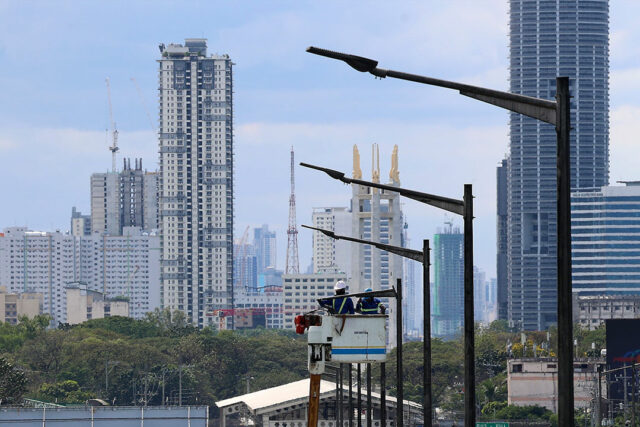
Workers check the solar-powered streetlights along Commonwealth Avenue in Quezon City, Feb. 6, 2026. — PHILIPPINE STAR/MIGUEL DE GUZMAN

By Bettina V. Roc, Associate Editor

THE International Monetary Fund (IMF) now expects Philippine economic growth this year to fall far below the government’s target as the oil shock from the Middle East war adds to the impact of a graft scandal that stalled public spending.

The IMF slashed its 2026 gross domestic product (GDP) growth forecast to 4.1% from 5.6% in January, its latest World Economic Outlook (WEO) released on Tuesday showed.

This is way lower than the government’s 5%-6% target and also slower than the 4.4% full-year expansion in 2025, which was a post-pandemic low due to a corruption scandal involving flood control projects.

“Growth in the Philippines is revised downward by 1.5 percentage points for 2026, relative to January, with the war shock compounding the negative base effects from a weaker-than-expected 2025 outturn related to a sharp decline in public investment and confidence,” the IMF said.

Meanwhile, the IMF kept its 2027 growth projection at 5.8%. This is within the government’s 5.5%-6.5% growth goal.

“Risks to growth are tilted to the downside while inflation risks are tilted to the upside, reflecting the risk of a prolonged war in the Middle East, further escalation of geopolitical tensions, and higher trade policy uncertainty,” the IMF said.

Domestic risks stem from the impact of the corruption scandal, extreme climate events, and “weaker-than-expected reform momentum,” it added.

The 2026 forecast for the Philippines matches its expected growth pace for ASEAN-5, which includes Indonesia, Malaysia, Singapore, and Thailand.

For the Southeast Asian economies with specific forecasts in the WEO, the Philippines’ GDP growth this year is expected to trail Vietnam’s 7.1%, Indonesia’s 5%, and Malaysia’s 4.7%. It is only expected to expand faster than Thailand (1.5%) and Singapore (3.5%) this year.

“In several South and Southeast Asian economies, disruptions in the Middle East are expected to reduce tourism and remittance inflows, thereby weakening domestic demand,” it said.

This comes as the IMF also cut its global growth projection for this year as it expects the Middle East conflict to threaten the outlook, with the highly volatile situation also leading it to outline several scenarios depending on how long the war lasts or if it expands further.

Under its reference forecast, which assumes that the war’s duration, intensity, and scope will be limited and mean that disruptions could recede by midyear, the IMF sees the global economy growing by 3.1% this year, down from 3.3% in January. It retained its 2027 forecast at 3.2%.

“The global outlook has abruptly darkened following the outbreak of war in the Middle East on Feb. 28, 2026. The closure of the Strait of Hormuz and serious damage to critical production facilities in a region central to global hydrocarbon supply could cause an energy crisis on an unprecedented scale,” IMF Economic Counsellor and the Director of Research Pierre-Olivier Gourinchas said in the report’s foreword.

“The war interrupted what had been a steady growth trajectory… The duration and scale of the conflict and the time it will take for energy production and transit to normalize after the end of hostilities will determine the ultimate size of the shock to the global economy.”

READY TO TIGHTEN
Meanwhile, the IMF expects Philippine headline inflation to average 4.3% this year and 3.2% in 2027. Both are faster than the 2.8% and 3% estimates it gave following the conclusion of its Article IV Consultation in December last year.

The Bangko Sentral ng Pilipinas (BSP) expects the consumer price index to average 5.1% this year, above its 2%-4% target and last year’s 1.7% outturn as it expects higher global oil prices due to the war to drive up domestic food, fuel, energy, and transport costs. For 2027, its forecast is 3.8%.

Philippine headline inflation already breached the central bank’s goal in March, coming in at 4.1%, which was the fastest pace in nearly two years or since the 4.4% in July 2024 — also the last time that the monthly print was above target. This was also higher than the BSP’s own 3.1%-3.9% forecast for the month.

In the three months to March, inflation averaged 2.8%.

“An accommodative monetary policy stance remains appropriate amid a widening negative output gap; but the BSP should be ready to tighten monetary policy if risks of de-anchoring inflation expectations arise,” the IMF said.

In an off-cycle meeting last month, the Monetary Board left benchmark interest rates unchanged, but said that they remain vigilant about potential price risks amid the war.

BSP Governor Eli M. Remolona, Jr. has said that monetary policy has limited effectiveness against the supply-driven spikes in prices, but added that they are ready to act as needed to keep inflation expectations anchored and temper the potential effects of the oil price shock.

The BSP last hiked benchmark rates in October 2023. Its policy rate now stands at 4.25% following 225 basis points worth of cuts since it began its now-paused easing cycle in August 2024.

The IMF said policymakers will need to find the balance between preserving growth and keeping inflation in check, while also ensuring that they have enough fiscal ammo to support those that will be hit by rising costs due to the energy shock.

“Central banks should be ready to act decisively in line with their mandates. Monetary policy should preserve price stability and be carefully attuned to spillovers from actual inflation to inflation expectations, especially in the medium- to long-term horizon,” the multilateral lender said.

“With the memories of the post-pandemic inflation surge still fresh, second-round effects could possibly be larger than they were in 2021-2022. At the same time, tightening prematurely could be destabilizing, if financial conditions tighten further… or consumer and business confidence declines. Reacting strongly to flexible commodity prices, when supply constraints are present only in the related sectors, brings down inflation fast but risks a recession later.”

Meanwhile, the IMF sees the Philippines’ current account deficit widening to -4.4% of GDP this year from -3.3% in 2025. For 2027, the gap is seen at -3.5% of economic output. Both are bigger than the -3.4% and -3.1% forecasts published in December.

DBCC opposes suspension of excise tax on gas, diesel

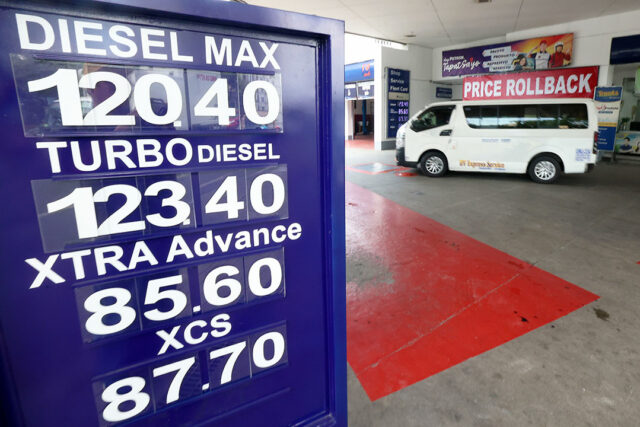
Motorists pass by a “price rollback” banner at a gasoline station along Katipunan Avenue in Quezon City, April 14, 2026. — PHILIPPINE STAR/MIGUEL DE GUZMAN

By Justine Irish D. Tabile, Senior Reporter and Chloe Mari A. Hufana, Reporter 

SUSPENDING EXCISE TAXES on diesel and gasoline would only provide limited relief compared to lifting levies on liquefied petroleum gas (LPG) and kerosene as the resulting decline in pump prices would be small, the Department of Finance said.

“The Development Budget Coordination Committee (DBCC) has determined that suspending excise taxes on diesel and gasoline would not likely provide meaningful relief, as any reduction in retail pump prices would be marginal and largely offset by prevailing market dynamics,” said Finance Secretary Frederick D. Go in a statement on Tuesday.

In contrast, suspending the excise taxes on kerosene and LPG would directly ease the burden on Filipino families and small businesses by helping them meet basic energy needs, he said.

On Monday, President Ferdinand R. Marcos, Jr. approved the suspension of excise taxes on LPG and kerosene while keeping levies on gasoline and diesel unchanged.

Republic Act No. 12316 grants the President the authority to suspend or reduce excise taxes on petroleum products. Excise tax is a tax imposed on the production, sale or consumption goods manufactured or produced in the Philippines and to imported goods.

“This relief is focused on the most vulnerable,” said Mr. Go, citing savings of around P36.96 per 11-kilogram cylinder for LPG and P5.56 per liter of kerosene due to the suspension.

The Philippine Statistics Authority’s 2023 Family Income and Expenditure Survey showed that 48% of total kerosene consumption is attributed to the bottom 30% of households, while 55.7% of LPG users come from the bottom 70%.

“This measured and targeted response is designed to deliver immediate relief, ensuring that support reaches those who need it most, while preserving fiscal space to sustain essential public services and respond to an unpredictable global environment,” Mr. Go said.

The Philippines is under a one-year national energy emergency, giving the government expanded powers to secure fuel supplies and shield the economy from rising oil prices amid the war in the Middle East.

FOREGONE REVENUES
The government is anticipating around P4.1 billion in foregone revenue over the next three months due to the suspension of excise taxes on LPG and kerosene, Finance Undersecretary Karlo Fermin S. Adriano told a news briefing at the presidential palace on Tuesday.

But the impact could be partly offset by about P13 billion in additional value-added tax (VAT) collections if crude oil prices average $100 per barrel over the three-month period, he said.

Mr. Adriano said the government would have incurred P43.6 billion in foregone revenues if the President had also approved the suspension of diesel and gasoline excise taxes.

He noted the excise tax on diesel is only around P6 per liter, which would have a “relatively small” impact on the current diesel price of around P100 per liter.

“If we eliminate [excise tax on] diesel, the ones who benefit the most are the ones who consume the most, which is the richest,” Mr. Adriano added in Filipino. “That’s why the DBCC’s recommendation is P10 [diesel discount for public utility jeepneys], which is targeted at those who are most affected by our current situation.”

Francisco Cid L. Terosa, an associate professor and former dean of the School of Economics of the University of Asia and the Pacific, said that food remains the largest household expense, making tax relief for LPG and kerosene more impactful.

“From an economic standpoint, suspending excise taxes on LPG and kerosene is more effective in easing consumer costs because both are directly used by individuals and households on a daily basis,” he said in a Viber message.

While suspending excise taxes on gasoline and diesel could lower transport costs, Mr. Terosa said it would directly benefit those who drive vehicles daily.

Jose Enrique “Sonny” A. Africa, executive director of the think tank IBON Foundation, however, argued that transport costs are embedded in the prices of goods and services.

“The Finance department’s ‘economists’ are being disingenuous. They argued that the excise taxes on diesel and gasoline weren’t removed because poor households don’t consume much of these — unlike LPG and kerosene,” he said in a Viber message.

“But they didn’t mention how most fuel is consumed by commercial users like trucking, inter-island shipping, and other transport services, so the fuel tax is passed on to the price of rice, vegetables, and fish; to jeepney and tricycle fares; and to other goods and services,” he added.

Mr. Africa said that diesel and gasoline account for 73% of petroleum product demand, while LPG and kerosene account for just 13%.

“Oil excise tax collections are some P400 billion annually — there’s a 100% chance that the transport sector or poor families won’t get P400 billion in fuel subsidies,” he added.

According to IBON Foundation’s estimates, the poorest family decile pays P442 monthly in oil excise taxes, while the richest decile pays P834 monthly.

“Measured as a share of income, the burden is two to four times greater for the poorest than the richest,” Mr. Africa said.

John Paolo R. Rivera, a senior research fellow at the Philippine Institute for Development Studies, said the estimated revenue loss from the excise tax suspension on LPG and kerosene is “relatively modest and manageable,” especially as it is offset by stronger VAT collections.

“However, the key consideration is duration. If elevated energy prices persist and such measures are extended, the cumulative revenue impact could become more significant,” he said via Viber.

“The move is defensible as a short-term relief measure, but it highlights the need to balance targeted support with fiscal sustainability.”

Noel M. Baga, co‑convenor of the Center for Energy Research and Policy, said the suspension of excise taxes on LPG and kerosene will provide relief to households and small businesses dependent on cooking fuel.

“The President must now impose price ceilings on diesel and gasoline under the Price Act,” Mr. Baga said in a Viber message.

“That is where the crisis is being felt most directly by most people. Excise tax adjustments reduce prices at the margins. Price ceilings address the core problem.”