Home Blog Page 2874

Asialink Finance plans IPO by 2028

ASIALINK Finance Corp. (Asialink) is gearing up to conduct an initial public offering (IPO) by 2028, its chief executive officer said on Wednesday.

In preparation for this milestone, the finance company is working to strengthen its financial standing, Asialink Chief Executive Officer Robert B. Jordan, Jr. said during a briefing.

“We aim to raise as much capital as possible to support our goals. By 2028, our projections suggest our capital should reach around P30 billion,” he said.

“There is still a lot in the country that we need to do, but we are constrained by the limited capital that we have,” he added.

The total capital of Asialink increased to P12 billion on Wednesday from P8 billion at the end of 2023, spurred by a P4 billion investment from equity firm Creador.

Mr. Jordan said that this investment deal opens up opportunities for Asialink to secure funding from multilateral lenders such as the Asian Development Bank and the International Finance Corporation.

He added that the deal will prompt the restructuring of the three companies under Asialink, with Asialink now owning 100% of Global Dominion Financing, Inc. and 60% of South Asialink Finance Corp.

The three companies will remain independent and will have separate operations, he noted.

“With a P4 billion infusion, we probably can grow to as much as a 3.5% debt-to-equity ratio, which means we can potentially leverage as much as P30 billion in additional credit facilities,” Mr. Jordan said.

“Right now, our existing creditors are limiting us to about 2.7%. We have an existing governance that says that we are limited up to 2.75% of our capital. So we’re trying to change that,” he added.

Asialink is also targeting to disburse a combined amount of upwards of P40 billion in loans this year to small- and medium-sized businesses. It aims to double its loans disbursed this year to P24 billion for Asialink from P12 billion in 2023.

Asialink aims to disburse over P40 billion in loans to small- and medium-sized businesses this year.

“For Global, we’re looking to disburse P13 billion. And for South Asialink, we’re looking to disburse about P8 billion,” Mr. Jordan said.

The company also aims to double its active customer base next year from the current 100,000. — Aaron Michael C. Sy

PXP narrows Q1 losses with higher crude oil sales

PXP Energy Corp. saw its attributable net loss for the first quarter (Q1) narrow to P2.61 million from P6.08 million last year, driven by higher crude oil sales, the upstream oil and gas company said on Wednesday.

The company’s combined revenues for the first quarter expanded by 47.2% to P26.3 million from P17.87 million, PXP said in a stock exchange disclosure.

PXP’s improved top line was brought about by higher output sold for the period despite lower average price at $79.95 per barrel from the previous $81.36 per barrel, the company said

In the three months to March, PXP recorded a 44.6% increase in output sold, totaling 196,826 barrels compared to 136,087 barrels sold in the same period last year.

The listed oil and gas company said cost and expenses for the first quarter went up by 30% to P27.1 million from P22.4 million previously.

For 2024, PXP and its subsidiary Forum Energy Ltd. plan to continue their oil and gas exploration projects in the country, specifically in service contracts (SC) 72, 75, and 40.

PXP holds a 50% interest in SC 75 located in northwest Palawan. Its subsidiary, Forum Energy, in which PXP holds a direct and indirect interest of 79.13%, has a 70% participating interest in SC 72, also in northwest Palawan, through its wholly owned subsidiary Forum (GSEC 101).

The SC 72 covers the Recto Bank, within its block is the Sampaguita gas discovery, which is estimated to contain about 2.6 trillion cubic feet of contingent gas resources.

“Exploration work in SC 40 will be pursued. Meanwhile, PXP will assess and study other oil and gas projects within the Philippines,” the company said.

SC 40, located in the North Cebu Block of the Visayan Basin is said to be among the most prospective petroleum producers next to Northwest Palawan Basin. — Ashley Erika O. Jose

Keeping your cool with halo-halo

By Waya Araos-Wijangco

IN THE sweltering metropolis, one of the best ways to cool down is to indulge in an icy traditional summer treat — the halo-halo.

Halo-halo (Filipino for “mixed”) is, well, a mix of crushed or shaved ice, local sweets, and milk. Sometimes it is made “special” with a scoop of ice cream. The variations are endless, and a halo-halo can be as simple or as complex as one wants.

Chef Waya Araos-Wijangco has taken it upon herself, in this summer’s extreme heat, to try as many kinds of halo-halo as she can for as long as the heat is on. Over the past couple of weeks, the executive chef and owner of GypsyBaguio by Chef Waya, tried X number and this is what she thought of the traditional summer coolers as per her Facebook posts.

*For those unfamiliar with the ingredients mentioned, here is a simple glossary: bilo-bilo (small glutinous rice balls), buco (immature coconut, can refer to both its meat and juice), camote (sweet potato), gulaman (jel-ly), kaong (sugar palm fruit), langka (jackfruit), leche flan (a flan), macapuno (coconut sport), monggo (mung beans), nata (coconut gel), pinipig (flattened immature glutinous rice grains), saba (a cooking banana), sago (tapioca-like balls made of sago palm flour), tocino del cielo (a Spanish dessert made of egg yolks, sugar, and water), ube (purple yam), ube halaya (a dessert made of purple yam, coconut milk, and butter).

** The posts were edited for length and clarity.

VICTORINO’S

Took shelter from the sweltering heat in the cool, comforting confines of Victorino’s and had the best halo-halo of the season. Made with two kinds of camote, saba, langka, bilo-bilo, chunky macapuno, leche flan, cheese, and topped with a ridiculously indulgent tocino del cielo. This halo-halo is perfection!

DIMPY’S

Dimpy’s became famous for their frozen brazo de mercedes (still good, by the way). They started in Dasmariñas Village in Makati and opened an outpost in BF Parañaque. I heard they had halo-halo so off I went to try. The Dimpy’s version wins in color-blocking. Very pretty presentation. It doesn’t have a lot of stuff in it but what they put in made sense together — gulaman, kaong, saba, langka, and a huge chunk of leche flan and their housemade ube gelato. My favorite part of it is their shaved ice. So finely shaved it contributed to the creaminess of the halo-halo.

LOTUSPOD

Halo-halo served in the shell of the buco used to be popular, but the rising cost of fresh coconut in the city rendered it difficult to execute in restaurants. So I was so happy to find it in the gem of a resort in Bay, Laguna called @Lotuspod. The sinkers are classic: red bean, saba, langka, nata de coco, kaong. It is topped with leche flan, ube ice cream and cornflakes. What makes it special is that while you are eating it, you are scraping the buco meat from the sides of the shell and including a piece of coconut in every bite. And because they harvest the coconuts right at the resort, you get it fresh and sweet and at the level of maturity you want. You can even request to have the buco water on the side! Nothing beats this combination after a dip in the pool!

COCONUT HOUSE BUCO HALO

I first came across the Coconut House Buco Halo in 2018. I remember that summer when we would order from their Quezon Circle branch almost three times a week. They closed the Quezon Circle in the pandemic and they are now available at Gyud Food, Diliman, QC. The ice they use is finely shaved buco water, so the halo-halo flavor does not get watered down as it melts. The sinkers are saba, buco, sago, and topped with leche flan, buco ice cream and coconut cream. It feels light and refreshing from the buco water and it has just enough fillings for chew but does not overwhelm. This one is the best one I had by far.

LITTLE QUIAPO

Midway into my halo-halo journey, I find that part of the joy of eating it is that it triggers memories of halo-halo from summers and vacations and places I have been to… Today’s halo-halo was a sentimental choice. As a student in UP Diliman we would head out to Little Quiapo (LQ), then on Matalino Street for palabok (a noodle dish) and halo-halo. When we were running for student council, LQ was a regular dinner option after a long day of dorm-to-dorm campaigning. The LQ halo-halo is classic, sinkers (finally found the right term!) include nata de coco, langka, banana, kamote, red monggo and buco. Toppers are leche flan, ube ice cream, and pinipig.

NATHANIEL’S

Was busy at work today and had no time to go out to eat. But I am committed to the halo-halo mission so I looked for a delivery option. Went with @nathanielsph located in BF Parañaque. Nathaniel’s is a Pampanga institution famous for their buko pandan (a dessert made with young coconut, pandan leaves, and sago pearls. — Ed.) and puto pao (a rice cake with meat filling. — Ed.) Their halo-halo arrived still frozen, with the milk and cornflakes topping thoughtfully packed separately. You could see that almost a third of the glass was generously filled with the “toppings.” It had all the classics, banana, langka, red and white beans, gulaman, nata, really good leche flan and ube ha-laya, and a big scoop of ube ice cream. The ice was not finely shaved [as Dimpy’s was] but I realized I also like ice with a pleasant crunch.

SABLAN

The Sablan, Benguet halo-halo is made with sweetened saba, gulaman, and, wait for it, marshmallows. For a while there I thought even the gummy bears would make it into the mix. Served with a wide smile and consumed with empathy and grace.

SMIC allots up to P115 billion for 2024 expansion plans

THE SY family’s SM Investments Corp. (SMIC) has allocated up to P115 billion for its capital expenditure (capex) budget this year to support the conglomerate’s expansion plans.

“Our spent capex in 2023 was about P80 billion. The projection this year for the group, that excludes the banks, it’s around P110 to P115 billion (in capex) more or less,” SMIC Senior Vice-President for Finance Franklin C. Gomez said dur-ing a briefing on Wednesday.

“The biggest driver of that is clearly SM Prime Holdings, Inc. They’ve been very public with their intention to spend around P100 billion this year. They will be the biggest component of our capex,” he added.

SMIC President and Chief Executive Officer Frederic C. DyBuncio said the conglomerate maintains a cautiously optimistic outlook for 2024.

“We will continue to invest in growth in the Philippines and we are committed to being a catalyst for responsible development. We have a young, dynamic, higher-earning population who will help support and drive economic activity,” he said.

“Our strategy is to continue to expand coverage nationwide to create new markets that improve access to these sector and provide more opportunities for underserved areas,” he added.

SM Prime is opening four new malls this year, one in Metro Manila and three in provincial areas.

SM Development Corp. is eyeing to roll out 8,000 to 10,000 residential units this year in the northern part of the Philippines and across Visayas and Mindanao.

The conglomerate’s minimart grocery format Alfamart is also eyeing to add at least 400 stores this year.

Meanwhile, SMIC’s banking unit, BDO Unibank, Inc., is aiming to expand coverage, with BDO and BDO Network Bank planning to increase branches by a combined 100 to 120 this year.

The conglomerate is also eyeing to expand its portfolio investments.

After its acquisition of the Philippine Geothermal Production Co., SMIC is set to explore new steam fields in Northern and Southern Luzon to double the company’s current steam production of 300 megawatts within the medium term.

On Wednesday, SMIC shares rose by 0.42% or P4 to P947 per share. — Revin Mikhael D. Ochave

Cooling down with hot Thai food

MASSAMUN NUEA (BRAISED BEEF IN MASSAMUN CURRY)

THERE’S NO going around it: it’s hot. We’re experiencing summer temperatures into the high thirties, and it feels like 40+, and it feels like punishment. Luckily, the Waldorf Astoria in Bangkok lent out its Thai chef, Akkawin “Pun” Pitrachart to its Hilton sister property in the Philippines, Conrad Manila to help cool down customers at its buffet, Brasserie on 3.

Eating hot food to cool down sounds like an oxymoron, but Southeast Asian knowledge will tell you otherwise. Almost every Asian country has a supremely spicy dish meant to be eaten to cool oneself down.

A study by Bain, Lesperace, and Jay* says: “Under conditions permitting full sweat evaporation, body heat storage is lower with warm water ingestion, likely because of disproportionate modulations in sweat output arising from warm-sensitive thermosensors in the esophagus/stomach. Local temperature changes of the rectum following fluid ingestion exacerbate the previously identified error of thermometric heat storage estimations.” In other words, the body retains less heat when ingesting something with more heat. The scientists in the study based that deduction on warm water’s effects on the body, but perhaps we can use the same logic with spicy food.

Mr. Pitrachart believes that as well. In his native Thailand, “The weather is so hot. People there eat the street food, and they sweat a lot. They drink water — it’s very refreshing,” he said. “We sweat a lot, and it makes us more cool, after we sweat.”

During a tasting on April 12 at Conrad Manila, we of course tried Thai classics like Pad Thai; but also new tastes (for us, at least) like Deep-fried seabass in sweet chili sauce, Braised beef in Massamun Curry, and Stir-fried Minced Pork with Chilis and Northern Peppers. We liked the wok-fried assorted vegetables, also spicy, and definitely cooling. We were struck by the Thai sausages and the roast beef (we did not know that they had a sausage and roasting culture in Thailand). The sausage was very complex, and the roast beef was simple and eager to please. Mr. Pitrachart said that the sausage had galangal, kaffir lime, and chilies, while the roast beef was roasted for six hours (not very simple), and marinated in fish sauce, soy sauce, and sugar (simple).

It’s easy to dismiss Thai cuisine as nothing more than tongue burners, but Mr. Pitrachart, a native, urged us to explore more flavors of Thailand. “We have a complexity of spiciness in Thailand,” he said, comparing Southern Thai cuisine (hotter) with Northern Thai (with which he is more familiar). “It makes you numb, a little bit,” he said about the north’s taste profile, akin to the Chinese mala taste, derived from Szechuan peppercorns. But more than spic-iness, the other prominent flavor in Thai food is saltiness, which he owes to fermented shrimp, which is powdered and mixed in curries and sauces, or else their own version of fish sauce. Comparing their brown liquid with ours, he said, “It’s different. The saltiness, and the flavor; the smell.”

Guests can enjoy Brasserie on 3’s Thai-inspired buffet at a rate of P2,337.50 net per person for lunch (11 a.m to 2:30 p.m) and P2,592.50 net per person for dinner (6 p.m to 10 p.m), available daily until April 30. For inquiries, call 8833-9999, e-mail conradmanila@conradhotels.com or visit https://eatdrinkhilton.com/brasserie-on-3-conrad-manila/.

*“Body heat storage during physical activity is lower with hot fluid ingestion under conditions that permit full evaporation,” A. R. Bain, N. C. Lesperance, O. Jay, 2012 — Joseph L. Garcia

ACEN allots P72 billion for capex this year

ACENRENEWABLES.COM

AYALA-LED ACEN Corp. said it is earmarking about P72 billion for its capital expenditure (capex) budget for the year.

This amount covers international operations and energy projects in the Philippines, ACEN President and Chief Executive Officer Eric T. Francia said during a briefing on Wednesday.

Currently, ACEN holds around 4,700 megawatts (MW) of attributable capacity across the Philippines, Vietnam, Indonesia, India, and Australia.

The majority of this year’s target spending, about P40 billion, is allocated for the company’s Philippine operations, which will be funded by both internally generated funds and debt, according to ACEN Chief Finance Officer Jon-athan P. Back.

The P40-billion capex for the year will mainly be allocated to existing projects, such as the expansion of solar and wind projects, Mr. Francia said.

“We ended last year with cash in our balance sheet of just under P40 billion. That’s going to go to fund a lot of these capex plus additional financing mostly from bilateral loans,” he said.

Last year, the company allocated a capex budget of between P50 billion and P70 billion for its clean energy projects.

The company’s 2024 capex is also part of its expected spending of $15 billion to achieve its goal of about 20 gigawatts (GW) of renewable energy capacity by the end of the decade.

For 2024, Mr. Francia said ACEN has six new projects across all its operations with a total capacity of 1.6 GW. These projects are expected to deliver full output by yearend.

“Today, ACEN has over 3.3 GW of capacity in operations and under commissioning, and about 1.5 GW of capacity under construction. We expect to continue our rapid expansion through 2024 as we work towards our aspiration to reach 20 GW of renewables capacity by 2030,” he said.

The company has also reaffirmed its commitment to transition the company’s power generation portfolio to 100% renewable energy by 2025.

At the local bourse on Wednesday, shares in the company closed five centavos or 1.48% higher at P3.42 apiece. — Ashley Erika O. Jose

Malaysia’s biggest coffee chain expands to Manila; targets 150 stores by year’s end

VENON TIAN, Chief Operations Officer of ZUS Coffee, looks like he doesn’t have time for joking around. After ZUS Coffee’s founding in 2019, they’ve managed to open 420 stores — while being interrupted by the lockdowns of 2020, mind you. At year’s end, he told BusinessWorld during the opening of another branch in SM Makati, they’re targeting to have a count of 700 stores in Malaysia. The Philippines, there are now 12 stores, this since the compa-ny’s arrival just five months ago. By the end of 2024, they plan to hit a total of 150 in the Philippines.

By his count, they have 420 stores in their native country, making them the biggest coffee chain there. Arguably the world’s biggest coffee chain, American-based Starbucks, has a smaller footprint, with their own website citing “more than 320 stores” (though Mr. Tian gave us a count of 380).

Their first expansion overseas is in the Philippines. Asked why, he said, “In terms of Southeast Asia itself, Thailand’s got very strong competitors; Indonesia’s got (ten) very strong in terms of fast coffee culture. Singapore — there’s just too many brands.”

“[Its a] nice country to go into,” he said about the Philippines. “You’re very familiar in terms of Starbucks, Tim Hortons (a Canadian chain), and all. Then why not introduce what we have?

“I think the Philippines is much more mature [as a coffee market],” he added.

ZUS, while having physical stores, is helped in its operations through an app. Customers have complete control over their coffee experience, from taste to temperature and order time. Reordering their favorite drink is as easy as a click, providing valuable insights for creating new flavors tailored to their preferences. ZUS Coffee specializes in locally inspired specialty coffees, including Filipino favorites like hot and iced Spanish Latte and Gula Melaka, along-side an array of Buttercreme Lattes, Frappes, and more.

It’s the strength of the app to which Mr. Tian credits their rapid expansion, despite opening right before the pandemic. “We have always been digital-ready, from Day 1,” he said. Recalling the lockdowns, “Instantly, overnight, everyone was ordering everything online.”

As for their beans, Mr. Tian says they source 100% Arabica from different countries such as Guatemala, Kenya, and Papua New Guinea, depending on the coffee bean season, to ensure the best quality. ZUS Coffee is committed to the practice of procuring only Direct Trade Beans. Any form of green bean procurement is done directly with the farmers of the beans and allows for quality, sustainability, and fairer prices that is then translated to the final cup that the customers pay for. Direct trade helps farmers develop to have a more sustainable future and growth. While it’s the moral choice, Mr. Tian said, “That helps us create good quality coffee.”

“You need to like your own product in order for people to like your product,” he said. Another sustainable measure they have taken is the use of rice straws. That stems from Mr. Tian’s own experiences as a diver who has seen the plastic pollution underwater.

“Ultimately, we’re running a business. It’s also making us to be able to sleep better,” he said about their sustainable choices. “In order to make myself sleep better, I want to make sure that whatever we use is actually sustaina-ble.”

The ZUS app is available on Google Play and the App Store. Ordering can also be done through GrabFood and foodpanda. — Joseph L. Garcia

Japan-based Taisei Corp. to acquire 25% stake in PetroGreen unit

JAPAN-BASED company Taisei Corp. is set to acquire a 25% stake in a subsidiary of PetroGreen Energy Corp., its parent company PetroEnergy Resources Corp. said on Wednesday.

“We are honored that Taisei has chosen the Philippines to make its first overseas equity investment in renewable energy. Following on the 2022 partnership we forged with Kyuden International Corp.,” PetroGreen Energy Chairperson Milagros V. Reyes said in a statement.

In 2022, Kyuden International completed the initial closing requirements for its acquisition of a 25% stake in PetroGreen Energy.

“Taisei’s entry not only validates PetroGreen Energy performance and integrity as an RE developer and partner but also testifies to the vastly improved energy investment climate in the country under the present ad-ministration,” Ms. Reyes said.

Taisei has signed an agreement with PetroGreen Energy to acquire a significant stake in Rizal Green Energy Corp. (RGEC), PetroEnergy said.

RGEC is a subsidiary of PetroGreen Energy, the renewable energy arm of listed PetroEnergy.

The two parties signed investment framework and shareholders agreements covering funding, construction, and operation for its four solar power facilities.

These renewable plants are the 41-megawatt direct current (MWdc) Limbauan project in Isabela, the 25-MWdc Bugallon project in Pangasinan, the 19.6-MWdc San Jose project in Nueva Ecija, and the 27-MWdc Dagohoy so-lar project in Bohol.

“We are very pleased to be able to contribute to renewable energy in the Philippines, which is experiencing remarkable development, and more importantly, to participate in this project as a business partner with Petro-Green,” said Taisei Executive Vice-President Jiro Taniyama.

Taisei started its operations in the Philippines in 1982 as a general contractor on official-development-assistance-funded infrastructure projects.

Its investment in the PetroGreen Energy unit is Taisei’s first equity investment in renewable energy outside Japan.

At the local bourse, shares in PetroEnergy gained 15 centavos or 3.46% to end at P4.48 apiece. — Ashley Erika O. Jose

Taylor Swift fans descend on London pub name-checked on album

The Black Dog Vauxhall (@theblackdogvauxhall) • Instagram photos and videos

LONDON — Taylor Swift fans are flocking to The Black Dog, a pub in southwest London, after it was name-checked on the US singer’s new album The Tortured Poet’s Department.

Lily Bottomley, the pub’s events and social media manager, said the buzz started online last week before the double album was released on Friday, with “The Black Dog” confirmed as the 17th track.

She had to call in staff to cope with demand, and the pub in the city’s Vauxhall district has capitalized on its new-found fame with a “Swift” burger and “(Taylor’s Version)” cocktails.

Ms. Bottomley could not be absolutely certain her Black Dog was the same one mentioned, but she said there had previously been a “certain blonde regular” at the pub.

Ms. Swift describes her 11th studio album on Instagram as: “An anthology of new works that reflect events, opinions and sentiments from a fleeting and fatalistic moment in time.”

Fans largely believe it is about her former British boyfriend Joe Alwyn. Ms. Swift has referenced other London locations in her songs that sparked interest in where the couple had spent time in the British capital.

They split in April 2023 after six years of dating.

“We’re a very cosy small neighborhood pub, so something like this happening is a dream,” Ms. Bottomley said. “We’re just so thankful to the fans because they’ve just been amazing.”

Katie, a web developer and “Swifty” visiting from Northern Ireland for her birthday, said she liked going to places mentioned in songs.

“I was in New York last year, and I also did a little Taylor Swift walking tour by myself of the places that she’s mentioned there.”

Emilia, a masters student from Vienna, said she could picture Ms. Swift going to the pub. “I appreciate her because she’s lyrically a genius,” she said.

Spotify said on Friday that The Tortured Poet’s Department broke the record for the platform’s most-streamed album in a single day this year, achieving the feat in less than 12 hours. — Reuters

Yields on central bank’s term deposits decline

BW FILE PHOTO

YIELDS on the central bank’s term deposits dropped on Wednesday amid the volatility in global oil prices due to the Middle East conflict.

The term deposit facility (TDF) of the Bangko Sentral ng Pilipinas (BSP) fetched bids amounting to P250.346 billion on Wednesday, well above the P190-billion offering as well as the P224.66 billion tenders for a P280-billion offer seen a week ago.

Broken down, tenders for the seven-day papers reached P122.965 billion, higher than the P90 billion auctioned off by the central bank and the P103.135 billion in bids for the P160-billion offering the previous week.

Banks asked for yields ranging from 6.5% to 6.54%, narrower than the 6.52% to 6.565% band seen a week earlier. This caused the average rate of the one-week deposits to decrease by 0.84 basis point (bp) to 6.53% from 6.5384% previously.

Meanwhile, bids for the 14-day term deposits amounted to P127.381 billion, beyond the P100-billion offering and the P121.525 billion in tenders for the P120 billion auctioned off on April 17.

Accepted rates for the tenor were from 6.55% to 6.5825%, narrowing from the 6.55% to 6.6% margin seen a week ago. With this, the average rate for the two-week deposits fell by 1.56 bps to 6.5668% from 6.5824% logged in the prior auction.

The central bank has not auctioned off 28-day term deposits for more than two years to give way to its weekly offerings of securities with the same tenor.

The term deposits and the 28-day bills are used by the BSP to mop up excess liquidity in the financial system and to better guide market rates.

Term deposit yields went down as global oil prices reached three-month lows amid easing geopolitical tensions in the Middle East, Rizal Commercial Banking Corp. Chief Economist Michael L. Ricafort said in a Viber message.

On Wednesday, oil prices were mostly flat, with US crude at $83.43 per barrel and Brent at $88.47 as investors kept an eye on tensions in the Middle East, Reuters reported.

US crude inventories fell 3.237 million barrels in the week ended April 19, according to market sources citing American Petroleum Institute figures. In contrast, six analysts polled by Reuters had expected a rise of 800,000 bar-rels.

Markets were rattled after Iran launched hundreds of drones and missiles against Israel earlier this month in retaliation for an alleged airstrike by Israel on the Iranian consulate in Syria.

Iran is the third-largest producer in the Organization of the Petroleum Exporting Countries. It produces about 3% of the world’s total output, equivalent to 3 million barrels of oil per day. — Luisa Maria Jacinta C. Jocson with Reuters

The Philippines should continue forging closer security ties with France

YUMMIE DINGDING/ PPA POOL

THE past few weeks have witnessed considerable developments in France’s strategic relations with Southeast Asian countries. On April 8, it was reported that Indonesia had ordered two Scorpene-class attack submarines from France’s Naval Group. Additionally, the deal will also include technology transfers to Indonesia. On April 19, the Indonesian Air Force and the French Air and Space Force agreed to enhance air defense cooperation in their coun-tries. Moreover, within the first two weeks of the month, the French Navy also conducted maritime exercises with the Thai Navy and the Vietnamese Coast Guard. Furthermore, France and Singapore are also set to elevate their ties to a comprehensive strategic partnership, indicating the desire of both countries to maximize the utility of their deepening relations.

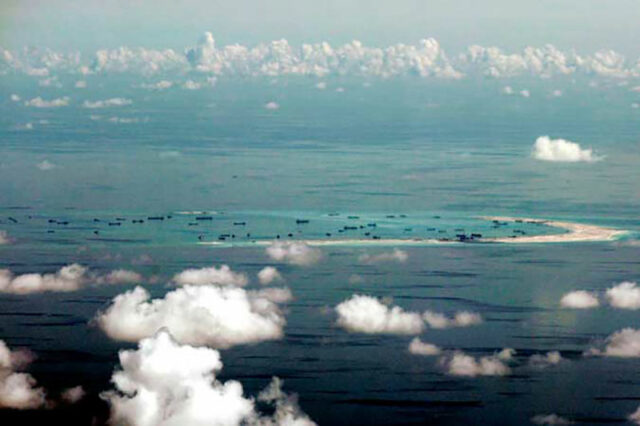
From April 22, the French Navy will also participate in the 39th Balikatan Exercise — an annual bilateral exercise between the Armed Forces of the Philippines and the United States military (the Australian Defense Force has also been taking part in the annual exercise since 2014). The Philippine, the US, and French navies will also conduct a multilateral maritime exercise in our exclusive economic zone (EEZ). This is an important steppingstone for the Philippines and France to enhance maritime security cooperation in the West Philippine Sea at a time when China seeks to pursue its expansionist ambitions at the expense of international law.

While France is often considered a European power, it is also an Indo-Pacific power as it has territories in the strategic Western Indian Ocean and Southern Pacific Regions, which are home to over 1.6 million French citizens. In addition, there are also 200,000 French nationals residing in various Indo-Pacific countries. Thus, to ensure the security of its people, 7,000 French personnel are permanently stationed throughout the Indo-Pacific region.

More importantly, as a naval power with the world’s second-largest EEZ, France prioritizes the security of the Indo-Pacific’s maritime domain based on international law. According to its Indo-Pacific strategy, Paris character-izes the region by its maritime dimensions. The strategy also highlighted the South China Sea as one of the most critical areas in the Indo-Pacific region, given China’s large-scale land reclamation and militarization at the ex-pense of international law. Accordingly, France strongly opposes any attempt to unilaterally change existing systems and challenge international law through force. Therefore, given the growing stakes in keeping the In-do-Pacific region secure and rules-based, French foreign policy has given significant attention to working with like-minded partners in Southeast Asia.

Under the administration of President Ferdinand Marcos, Jr., the security partnership between the Philippines and France has been gaining considerable momentum in just a short period. In June 2023, the French destroyer Lorraine and its crew arrived in Manila for a port call. During the press conference, the Commander of the French Armed Forces in the Asia-Pacific, Rear Admiral Geoffroy d’Andigné, emphasized France’s steadfast commitment to playing a larger role in keeping the Indo-Pacific region’s maritime domain free, open, and rules-based. In December 2023, French Minister for the Armed Forces Sebastien Lecornu met with Philippine Secretary of National Defense Gilberto C. Teodoro, Jr. to deepen and broaden the scope of the Philippines-France security partnership in the Indo-Pacific region through more military exercises — indicating a possibility for a Visiting Forces Agree-ment (VFA) between both sides.

More importantly, France has also shown consistency in its support for the 2016 Arbitral Ruling and the undeniable right of the Philippines to exercise its sovereignty and sovereign rights within its waters. When President Marcos Jr. and French President Emmanuel Macron had a telephone conversation in September 2023, both leaders discussed the Philippines’ challenges in the West Philippine Sea. In December 2023, former French Foreign Minister Catherine Colonna stated how Beijing’s expansive and assertive military activities in the South China Sea disrupted regional peace.

This statement also came against the backdrop of the Chinese Coast Guard’s harassment of Filipino fishing boats in the Philippine’s EEZ. The French Embassy in Manila, under Ambassador Marie Fontanel’s leadership, has consistently supported the Philippines’ position in the West Philippine Sea and underscored the importance of adhering to the United Nations Convention on the Law of the Sea (UNCLOS). More recently, the Group of Seven (G7) — composed of Canada, France, the United States, Germany, Italy, Japan, and the United Kingdom — rejected China’s “baseless and expansive” claims in the South China Sea, along with its provocations against Filipino vessels within Philippine EEZ.

France has also expressed its interest in playing an active role in building the Philippines’ defense and maritime security capabilities. It must be noted that France is a major defense and arms provider, and its distinguished status stems from its proactive export policies, government support, and technological advancements. Paris has also supported its partners’ self-reliance interests through joint production and technology transfers. Such capac-ity-building frameworks are vital for the Philippines at a time when Manila has emphasized the need to bolster its defense industry based on the 2023-2028 National Security Policy.

Closer ties with Paris will complement the Marcos Jr. Administration’s foreign policy focus on partner diversification. With notable material capabilities, France presents itself as an alternative option for countries seeking to expand their strategic options amidst the polarizing power dynamics. More importantly, Paris’ adherence to strategic autonomy, along with its robust ties with key partners of the Philippines, makes it a practical collaborator for Manila that seeks to leverage its network of partners in the Indo-Pacific region during great strategic uncertainty. Therefore, forging robust ties with France is in the best interest of the Philippines.


Don McLain Gill is a Philippines-based geopolitical analyst, author, and a lecturer at the Department of International Studies, De La Salle University.

AREIT upbeat despite office market challenges — CEO

AYALA-LED AREIT, Inc. said it remains optimistic about the country’s office market despite ongoing challenges.

“The office market is still challenged as vacancy remains high at 18 to 20%. But fortunately for AREIT, our occupancy was strong at 97% last year because of our diversified asset base, with office spaces alone having a 93% occupancy rate, which is better than the industry,” AREIT President and Chief Executive Officer (CEO) Carol T. Mills said during the company’s annual stockholders’ meeting on Tuesday.

“We expect to maintain this as we only have less than 10% of our leases expiring this year,” she added.

She said that AREIT’s occupancy rate could be maintained through the business expansion of companies, as well as the continuation of hybrid work.

“Hybrid work continues but with majority of the work being done on-site for most companies today, we have seen higher pedestrian counts in our buildings compared to last year, and we expect hybrid work to continue. Business expansion has also driven many companies to retain office space, especially in the more prime and more productive locations,” she noted.

“In any case, our diversified mix with malls, hotels, and industrial assets complementing offices will certainly help mitigate vacancy risks,” she added.

She also said that AREIT’s portfolio is equipped to mitigate the effects of high interest rates.

“We recognize that interest rates tend to move up and down in the short term. But we deliberately focus on the long-term value and fundamentals of prime commercial real estate.”

“By focusing on strong fundamentals of ALI’s commercial assets, and continuously growing AREIT’s portfolio, the impact of interest rate movements in the interim can be mitigated,” she added.

The Philippine central bank recently opted to keep its target reverse repurchase rate at 6.5% for a fourth consecutive meeting. Interest rates on the overnight deposit and lending facilities were also maintained at 6% and 7%.

Ms. Mills said the company is expecting approval from the Securities and Exchange Commission in the third quarter for a deed of exchange involving a transaction exchanging shares for P28.6 billion worth of assets.

The swap deal involves ALI and its subsidiaries Greenhaven Property Ventures, Inc. and Cebu Insular Hotel Co., Inc., as well as ACEN Corp. unit Buendia Christiana Holdings Corp. (BCHC).

The deed of exchange involves the issuance of 841.26 million primary common AREIT shares to ALI, Greenhaven, Cebu Insular, and BCHC at P34 per share in exchange for the ownership of Ayala Triangle Tower 2 office building, Greenbelt 3 and 5, Holiday Inn and Suites Makati, Seda Ayala Center Cebu, and a 276-hectare industrial land in Palauig, Zambales.

On Wednesday, AREIT shares rose by 0.15% or five centavos to P34 per share while ALI shares increased by 1.79% or 50 centavos to P28.45 apiece. — Revin Mikhael D. Ochave