Home Blog Page 28

Philippines says US access to bases limited by land issues

FILE PHOTO | PHILIPPINE STAR/WALTER BOLLOZOS

MANILA — Philippine Defense Secretary Gilberto C. Teodoro Jr. said on Tuesday there has only been ‘marginal’ use of Philippine bases accessible to the US military due to land issues.

Treaty allies the Philippines and the United States have a 12-year-old Enhanced Defense Cooperation Agreement (EDCA) that allows a rotational presence of American military in Philippine bases without establishing a permanent presence. In 2023, President Ferdinand R. Marcos Jr. expanded the number of bases that the US can use to nine, including areas that face Taiwan and the South China Sea.

Mr. Teodoro, however, said the development of these sites has been marred by delays, and noted that some of the bases do not have an air force presence.

“The use of the EDCA sites has been marginal because some of these, we still have to settle the land and tenurial issues,” Mr. Teodoro told broadcaster ABS-CBN in an interview.

“The delay has been difficult. We’re slow on project execution,” he added, without identifying specific bases where delays have occurred.

The disclosure comes on the heels of annual military exercises between the Philippine and US militaries. The April 20 to May 8 exercises, called “Balikatan” or “shoulder-to-shoulder”, will be the largest yet with other participants including New Zealand, Canada, Japan, France, and Australia. — Reuters

Fitch revises Philippines’ outlook to ‘negative’ as energy shock weighs on growth

A Philippine flag is seen at the Rizal Monument in Manila, June 11, 2024. — PHILIPPINE STAR/EDD GUMBAN

Credit ratings agency Fitch revised the Philippines’ outlook to “negative” from “stable” on Monday, citing risks to medium-term growth from disrupted public investment and the country’s high exposure to the global energy shock.

The Philippines is particularly vulnerable to the Middle East conflict due to its heavy reliance on imported energy and the risk of softer remittance inflows from the Gulf region, the agency said. While the government has rolled out targeted subsidies for vulnerable sectors, Fitch said consumers are absorbing the bulk of energy price increases.

Last week, President Ferdinand Marcos Jr suspended taxes on kerosene and liquefied petroleum gas to cushion consumers from rising fuel costs.

The country’s central bank has also allowed banks to grant borrowers more time to repay loans, as part of relief measures aimed at supporting consumers and businesses hit by the energy crisis. It even urged banks to temporarily suspend fees for online transactions.

Fitch forecast that economic growth would remain below recent levels as public capital spending recovers gradually and high energy prices weigh on consumption.

The Philippines had said in March its power system would operate under guidelines that prioritize renewable energy and conserve critical fuel inventories after it suspended electricity sales on the Wholesale Electricity Spot Market due to fuel supply risks and price volatility caused by the Iran war.

Fitch also flagged lingering domestic political risks from the rift between Mr. Marcos and Vice President Sara Duterte, but said the tensions were unlikely to undermine economic policymaking.

Earlier this month, S&P Global had also revised the Philippines’ outlook to “stable” from “positive”, citing heightened risks to the country’s external and fiscal metrics stemming from the war in the Middle East.

Fitch maintained the country’s long-term foreign-currency rating at “BBB”. — Reuters

BoP deficit widens to $2.6B in March

A truck is loaded with a container at the Manila International Container Terminal at the Port of Manila in Manila, Philippines, Aug. 11, 2025. REUTERS/Eloisa Lopez

By Justine Irish D. Tabile, Senior Reporter

THE Philippines’ balance of payments (BoP) deficit widened in March, driven by the elevated trade gap and heightened geopolitical uncertainty, Bangko Sentral ng Pilipinas (BSP) data showed on Monday.

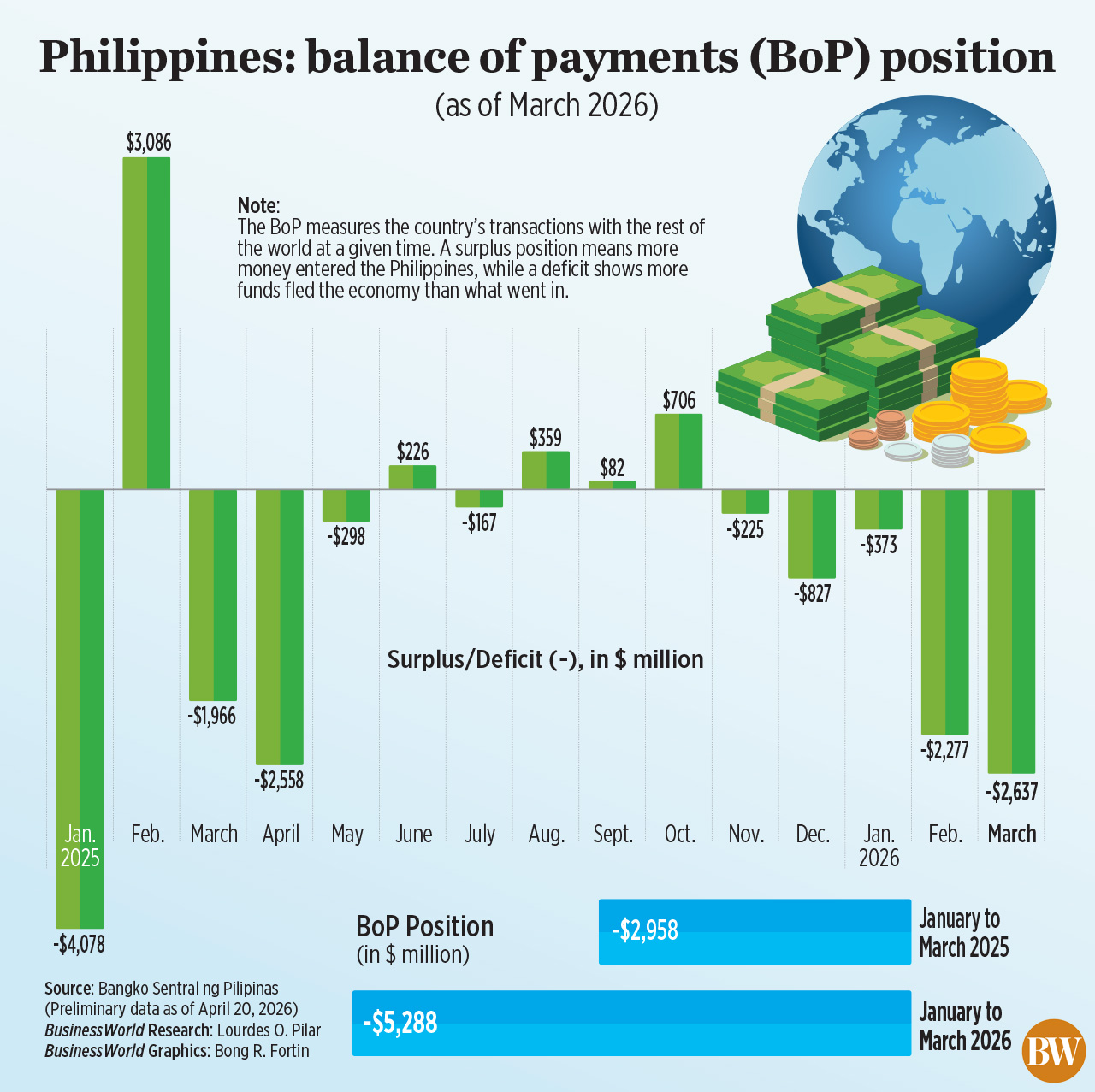
The country’s BoP position stood at a $2.637-billion deficit last month, ballooning from the $1.966-billion gap in the same month in 2025 and the $2.277-billion gap in February.

March marked the fifth straight month that the country’s BoP position was in a deficit. It was the largest BoP deficit in 14 months or since the $4.078-billion gap recorded in January 2025.

This brought the three-month BoP deficit to $5.288 billion from the $2.958-billion gap a year ago.

The BoP refers to the country’s economic transactions with other nations. A surplus indicates more funds entered the country, while a deficit shows that the country spent more than it received.

“The wider BoP deficit is largely a function of a still-elevated trade gap — imports holding up on strong domestic demand — now compounded by higher oil prices and tighter global liquidity,” said Robert Dan J. Roces, group economist at SM Investments Corp. (SMIC), in a Viber message.

“Elevated US rates are dampening portfolio inflows, while geopolitical risks are pushing up the import bill and risk premia,” he added.

Preliminary data from the Philippine Statistics Authority (PSA) showed that the trade-in-goods deficit widened to $3.68 billion in February from $2.99 billion a year earlier. The PSA is scheduled to release March trade data on May 30.

Ateneo Center for Economic Research and Development Director Ser Percival K. Peña-Reyes said the BoP deficit widened because the country is paying more for imports, especially oil, while export and investment inflows are not growing fast enough.

“Global factors are mutually reinforcing. Oil prices widen the trade deficit. US rates reduce capital inflows. Geopolitics amplify both. Global slowdown weakens exports,” he said in a Facebook Messenger chat.

“So, when these factors move in the same direction, they create a compounded effect, making the BoP deficit widen more sharply than any single factor would cause on its own,” he added.

Rising oil prices and dwindling fuel reserves pushed the government to announce a one-year state of national energy emergency and suspend excise taxes on kerosene and liquefied petroleum gas.

SMIC’s Mr. Roces said the BoP position is highly unlikely to return to a surplus this year.

“The more realistic path is a narrower but manageable deficit, with improvement hinging on lower oil prices, easing global rates, and steady inflows from remittances, business process outsourcing, and foreign direct investments,” he said.

“Importantly, a deficit at this stage is not a red flag — it reflects an economy investing and expanding, with import demand tied to growth and capacity-building and remains sustainable as long as core inflows and reserves stay intact,” he added.

Mr. Peña-Reyes said that it is possible to see the BoP position to swing to a surplus, but it is not the base case.

“Most official and market forecasts still point to a small BoP deficit in 2026, though with scope for improvement versus 2025 rather than a clean return to surplus,” he said.

“All told, the expected path is a narrowing deficit, not a full swing back into surplus,” he added.

For this year, the central bank expects the BoP position to end at a deficit of $7.8 billion or -1.5% of the country’s gross domestic product.

Last year, the BoP deficit stood at $5.661 billion, a reversal of the $609-million surplus recorded in 2024.

RESERVES
Meanwhile, the Philippines’ gross international reserves (GIR) declined to $106.6 billion as of end-March from $107.51 billion reported earlier by the central bank. It was also lower than the $113.26-billion GIR at the end of February.

“This level of reserves remains an adequate external liquidity buffer, equivalent to 7.0 months’ worth of imports of goods and payments of services and primary income,” the BSP said.

It also covers around 3.9 times the country’s short-term external debt based on residual maturity, it added.

GIR comprises foreign-denominated securities, foreign exchange, and other assets such as gold. It enables a country to finance imports and foreign debts, maintain the stability of its currency, and safeguard itself against global economic disruptions.

The BSP projects the Philippines’ dollar reserves to hit $111 billion by yearend.

Philippine banks still in ‘good shape’ despite oil crisis — Remolona

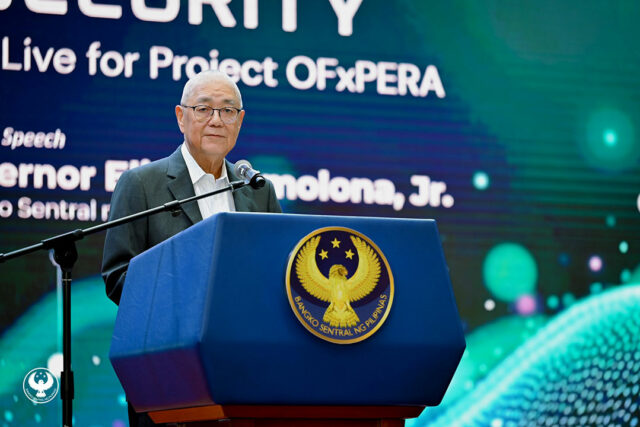
BANGKO SENTRAL ng Pilipinas Governor Eli M. Remolona, Jr. — BANGKO SENTRAL NG PILIPINAS

By Katherine K. Chan, Reporter

WASHINGTON, D.C. — Several Philippine banks have flagged concerns about their capital levels, but the broader financial system remains in “very good shape” despite shocks stemming from the Middle East conflict, the Bangko Sentral ng Pilipinas (BSP) said.

In an exclusive interview with BusinessWorld, BSP Governor Eli M. Remolona, Jr. said the sector’s stable position even before the war broke out gave it ample buffers against current energy shocks.

“I think in terms of the financial system, we’re fortunate that when this energy shock happened, we were also in a good position to weather that shock. So, the banks are in very good shape,” he said on the sidelines of the International Monetary Fund and World Bank’s 2026 Spring Meetings here last week.

Mr. Remolona said Philippine banks’ capital stands at about 16% relative to their assets, exceeding the 10% international standard.

“Some banks, a few banks, are worried about their capital, but it’s not systemic,” he added.

Domestic banks have also maintained a high level of liquidity, the central bank chief noted, with about 180%. This is likewise above the 100% global benchmark.

Meanwhile, Mr. Remolona said banks’ lending activity remains “pretty strong” even as growth returned to single digit, with nonperforming loan (NPL) ratios still “reasonable.”

“The NPLs, the default rates are reasonable. They haven’t spiked up so far. So, that’s reassuring,” he said.

Latest available BSP data showed that bank lending continued to expand by a single-digit rate for a third straight month. In February, domestic lenders disbursed P14.269 trillion worth of loans, up 9.5% year on year from P13.027 trillion.

On the other hand, the banking sector’s gross NPL ratio hit a six-month high in February after climbing to 3.33% from 3.31% in the prior month but eased from the 3.38% seen a year earlier. NPLs are loans unpaid for at least 90 days after the due date and are deemed risk assets since borrowers are unlikely to pay.

Asked if the central bank is concerned about slowing loan growth, Mr. Remolona said: “(I)t’s still pretty good. We do worry about it. Our job is to worry.”

“But the situation suggests that, at least on the banking side, it’s not that worrisome,” he added.

Last week, international credit rater Moody’s Ratings said in a report that the Philippine banking system stands “well capitalized, profitable, and competently managed” despite looming risks from the ongoing Middle East conflict.

It affirmed the “Baa2/P-2” long- and short-term issuer and deposit ratings of China Banking Corp., (Chinabank), Philippine National Bank (PNB) and Security Bank Corp., and maintained its “stable” ratings outlooks for Chinabank and PNB but revised Security Bank’s to “stable” from “negative.”

Following this, Mr. Remolona vowed that the BSP will ensure sound regulations and prudent management of its international reserves as it moves to maintain financial stability amid the energy crisis.

The central bank chief also noted in his interview with BusinessWorld that the country continues to maintain an ample level of gross international reserves (GIR).

As of end-March, the Philippines’ GIR fell by 5.08% to a seven-month low of $107.512 billion from $113.264 billion last month.

Still, it stood well above the three-month global standard in terms of imports with 7.1 months’ worth. It also covers around 3.9 times the country’s short-term external debt based on residual maturity.

“So, that’s pretty good. That’s more than ample,” Mr. Remolona said.

Energy department moves to limit oil price adjustments

PUMP PRICES are displayed at a gas station along Katipunan Avenue in Quezon City, April 14, 2026. — PHILIPPINE STAR/MIGUEL DE GUZMAN

THE GOVERNMENT has moved to limit fuel price adjustments as it aims to soften the impact of elevated costs on consumers who have questioned the pace of price rollbacks, Energy Secretary Sharon S. Garin said on Monday.

At a press briefing, Ms. Garin said oil retailers should adjust prices in line with the range provided by the Department of Energy (DoE) every week amid the state of national energy emergency.

She noted President Ferdinand R. Marcos, Jr.’s declaration of a state of national energy emergency under the Executive Order (EO) No. 110 triggered the government’s power to prescribe the price of fuel products.

“The DoE, with the issuance of the EO 110 by the President, has more control over the industry. But we are not taking over any industry, any business, or taking over any operations. What we are more focused on is the price,” Ms. Garin said.

“It’s a control on the (fuel price) adjustments more than the price itself,” she added.

Mr. Marcos earlier announced a rollback in pump prices for this week, noting that diesel prices will go down by P24.94 per liter, gasoline by P3.41 per liter and kerosene by P2.

Several fuel retailers such as Shell Pilipinas Corp., Seaoil and Flying V have already announced price adjustments in line with Mr. Marcos’ announcement.

Ms. Garin said consumers have been questioning why fuel retailers were slow to roll back prices, even as global prices have dropped.

“The people’s clamor was like, ‘Why are the increases faster than the rollback?’ So, we decided to closely monitor these adjustments,” she said.

Rino E. Abad, director of DoE Oil Industry Management Bureau, said that oil companies that do not follow the fuel price adjustments could face penalties of three months to one-year imprisonment and fines ranging from P50,000 to P300,000.

Brigitte Carmel C. Lim, Top Line Business Development Corp. senior vice-president and chief operating officer, said the company does not expect any immediate disruption to operations.

“We’ll continue to monitor developments and align with DoE guidance as implementation becomes clearer,” Ms. Lim told BusinessWorld.

Meanwhile, Ms. Garin said the country’s fuel inventory can sustain demand for approximately 52.02 days as of April 17, increasing from 50.31 days last week.

“Our stocks are steady because there is steady delivery of the fuel, all sorts of fuel… (There has) been a significant drop in the consumption of fuel in the whole country,” she said.

The average inventory for gasoline is 54.47 days, while diesel has an average inventory of 50.13 days. Kerosene has an average inventory of 129.93 days; 60.69 days for jet fuel; 78.87 days for fuel oil; and 40.2 days for liquefied petroleum gas (LPG).

To boost the oil buffer stock, the Philippine government, through the state-run Philippine National Oil Co., is expecting the arrival of 320,000 barrels of diesel on April 21, which will be offloaded at the Subic terminal, according to Energy Undersecretary Alesandro O. Sales.

Another shipment carrying 330,000 barrels will arrive on April 24, but the oil will be sent to Davao, he said.

Around 21,000 metric tons of LPG are set to arrive in the Philippines next month after the government initiated an order from the US that will pass through Singapore.

In separate advisories on Monday, Petron Corp. and Solane announced a decrease of P3.36 per kilogram in LPG prices following the President’s order to temporarily suspend excise tax.

Meanwhile, Ms. Garin said the DoE is studying the recommendation to lift the moratorium on building new coal plants amid the oil crisis.

In 2020, the DoE issued a moratorium on the development of new coal-fired power plants but some proponents can still apply for non-coverage. Last year, the department issued more exceptions, such as allowing the increase in capacity of coal-fired power plants amid a power crisis.

“We are studying the expansion of that exception, but we need to study it properly because the problem is diesel and diesel is not really a major factor in terms of power generation in the Philippines,” Ms. Garin said.

At present, coal accounts for around 60% of the country’s power generation mix. The Philippines is trying to lessen its dependence on oil amid an energy transition. — Sheldeen Joy Talavera

Vehicle sales fall in March as high oil prices dent demand

A man charges his electric vehicle at a mall in Manila. — PHILIPPINE STAR/RYAN BALDEMOR

By Beatriz Marie D. Cruz, Senior Reporter

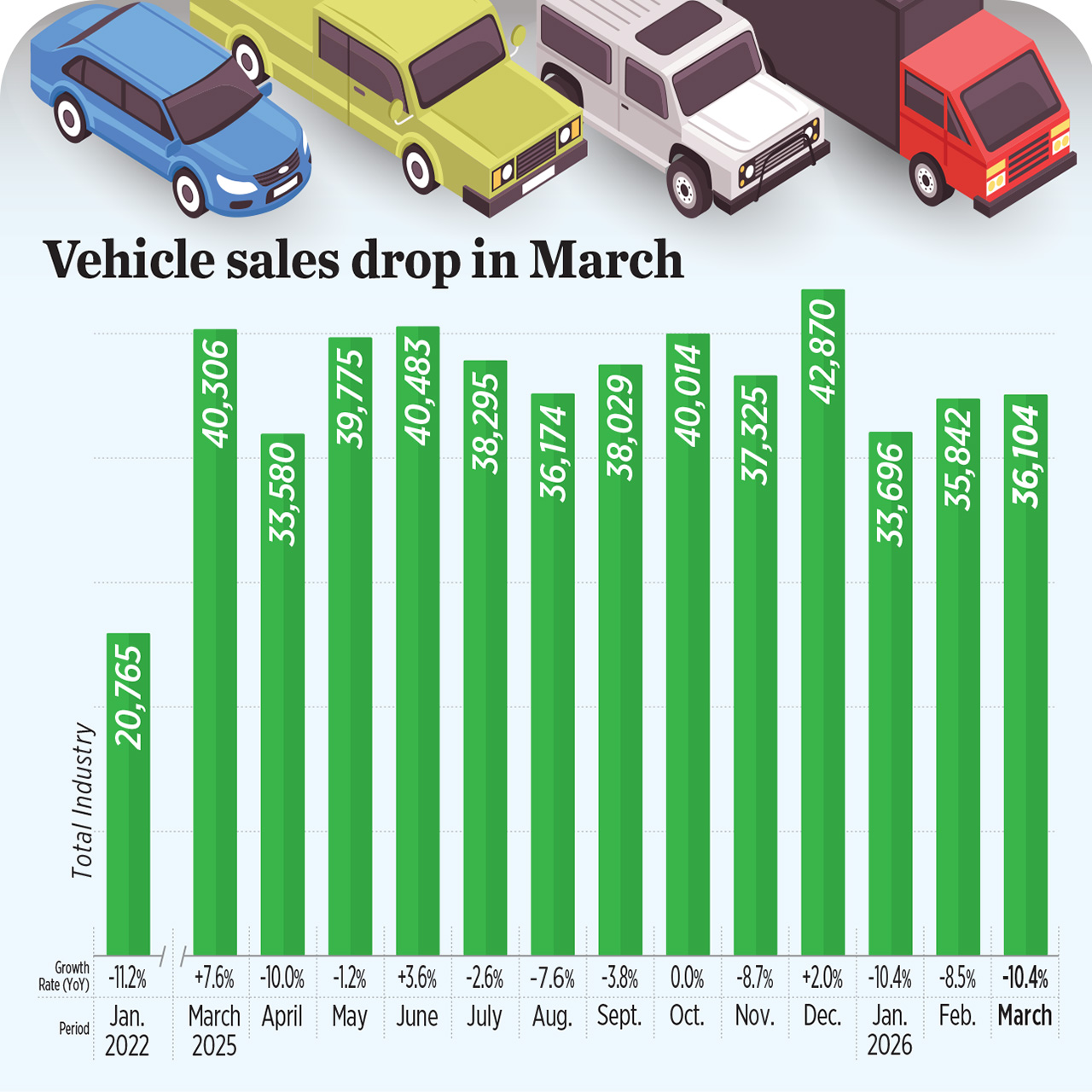
NEW VEHICLE SALES declined by 10.4% in March as soaring pump prices dented demand for passenger cars and commercial vehicles, according to a joint report by the Chamber of Automotive Manufacturers of the Philippines, Inc. (CAMPI) and the Truck Manufacturers Association (TMA).

However, electric vehicle (EVs) sales were a bright spot, more than tripling in March and signaled a shift toward more energy-efficient transport.

In a joint CAMPI-TMA sales report published on Monday, total industry sales fell to 36,104 units in March from 40,306 units sold in the same month a year ago.
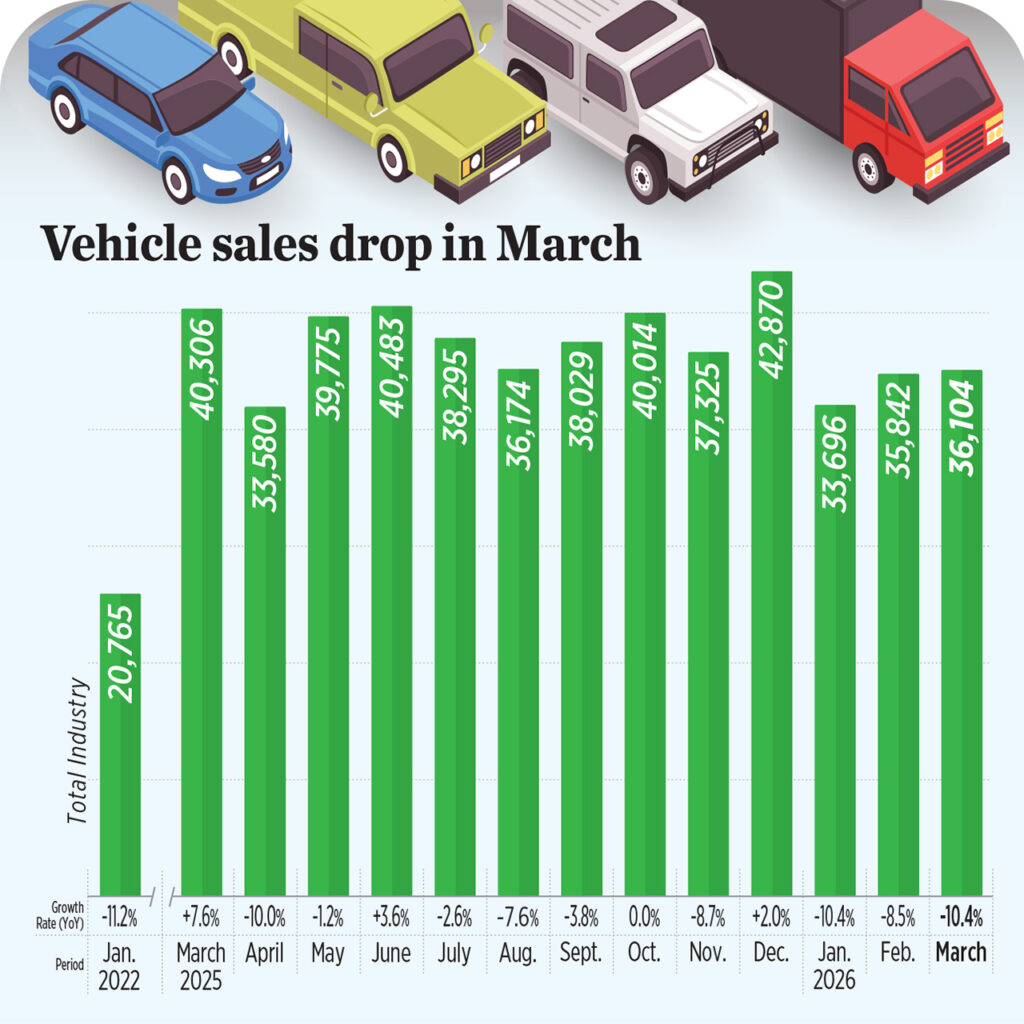
The 10.4% drop was the biggest since the 11.2% decline in vehicle sales recorded in January 2022.

Month on month, total car sales inched up by 0.7% from 35,842 units sold in February.

Including other industry data, CAMPI said total vehicle sales exceeded 39,000 units, higher than the February estimate of about 37,000 units.

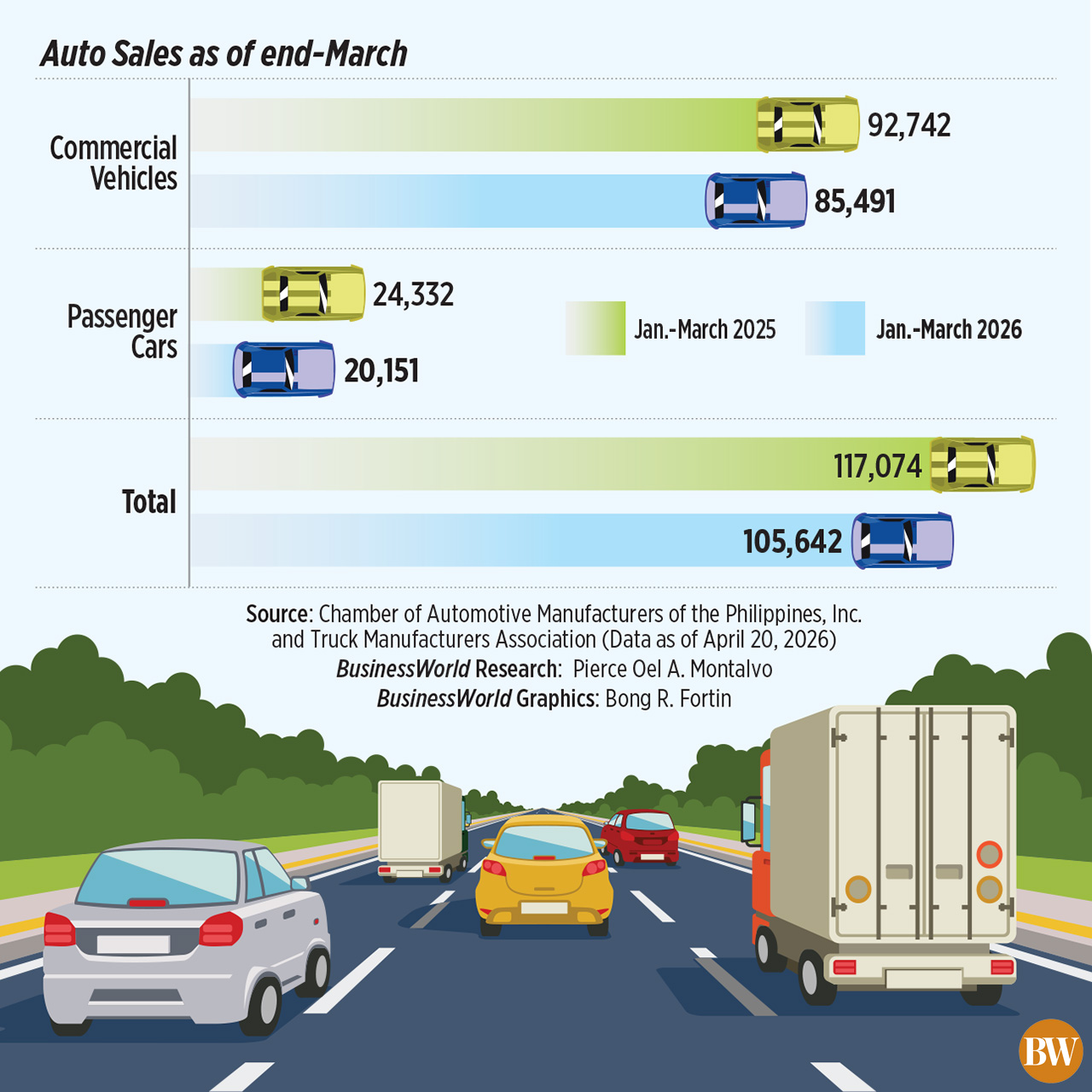
Passenger car sales, which accounted for 19.18% of industry sales, dropped 18% to 6,926 units in March from 8,449 units in the same month in 2025. Car sales fell by 1.72% from 7,047 in February.

Commercial vehicle sales, which made up 80.82% of the total, slid by 8.4% to 29,178 units in March from 31,857 units a year ago. Sales of commercial vehicles edged up by 1.3% from 28,795 units in February.

Under the commercial vehicle segment, light commercial vehicle sales dropped by 9.3% to 21,552 units in March from the 23,754 units sold last year, while sales of Asian utility vehicles also fell by 6.6% to 6,594 units from 7,057 units sold last year.

Sales of light- and medium-duty trucks in March rose by 3.4% and 4.4% to 647 units and 334 units, respectively. On the other hand, sales of heavy-duty trucks slumped by 49% to 51 units in March.

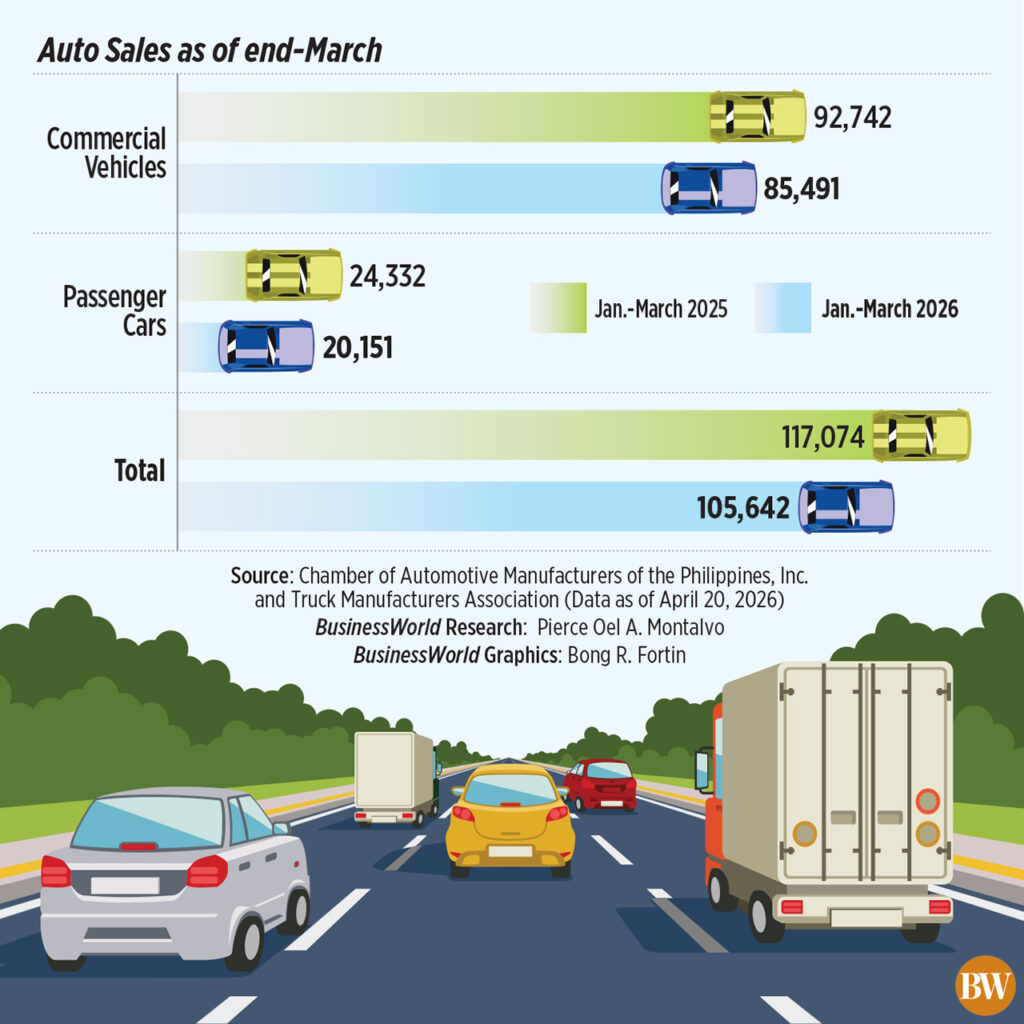
In the first three months of the year, total vehicle sales decreased by 9.8% to 105,642 units from 117,074 units a year ago.

During the January-to-March period, passenger car sales dropped by 17.2% to 20,151 units, while commercial vehicle sales declined by 7.8% to 85,491 units.

The decline in March vehicle sales could be linked to the oil price surge due to the Middle East conflict, which likely dampened consumer spending, Rizal Commercial Banking Corp. Chief Economist Michael L. Ricafort said.    

“Higher prices of fuel and other affected products have decreased consumers’ disposable income, leading to cost-cutting measures, including big-ticket items such as vehicles,” he said in a Viber message.

Pump prices in the Philippines have soared since the US and Israel attacks on Iran which have led to the closure of the Strait of Hormuz.

Jonathan L. Ravelas, a senior adviser at Reyes Tacandong & Co., said the drop in vehicle sales in March is mainly an affordability issue.

“High interest rates are still pushing up monthly payments, financing approvals remain tight, and households are delaying big-ticket purchases,” he said in a Viber message.

Car manufacturers are expected to roll out flexible payment terms for gas-powered vehicles to lift demand, Mr. Ravelas said.

Elevated oil prices are expected to drag vehicle sales in the coming months, Chinabank Capital Corp. Managing Director Juan Paolo E. Colet said.

“This will be a challenging year for overall vehicle sales as fuel prices are expected to remain elevated for the next several months and perhaps going into 2027,” he said in a Viber message.

EV DEMAND
In a statement, CAMPI President Jose Maria M. Atienza said more consumers are turning to EVs as an alternative to gas-powered cars amid high oil prices.

“(EV) adoption is mainly driven by users’ growing understanding and acceptance of electrified technologies. We expect this to grow further because of the country’s need for various energy efficient vehicles,” he said.

CAMPI and TMA data showed that total EV sales surged by 224.4% in March to 6,148 units from the 1,895 units sold in the same month last year.

EV sales, which include battery EV (BEV), plug-in hybrid EV (PHEV), and hybrid EV (HEV), also more than doubled from the 3,054 sold in February.

For the first three months, EV sales jumped by 36.2% to 11,800 units from 8,664 units sold a year ago.

HEVs accounted for the bulk of sales in March, which surged by 142.8% to 3,667 units. This brought HEV sales in the first three months to 8,261 units, up 9.9% year on year.

BEV sales jumped by 400.6% to 1,787 units in March, while PHEV sales skyrocketed by 2,378.6% to 694 units.

In the first three months of the year, sales of both BEVs and PHEVs surged by 122.9% and 924.6% to 2,289 units and 1,250 units, respectively.

Mr. Atienza noted that the rising oil prices will largely influence Filipinos’ shift to EV technologies in the coming months.

“This will not only accelerate the preference for electrified vehicles but may also highlight the practicality of energy efficient vehicles like smaller and lower displacement cars. The auto industry will evolve based on the market’s requirement,” he said.

Mr. Colet said EVs are expected to take up a larger share of total vehicle sales in the coming months, as consumers shift to energy-saving vehicles.

According to CAMPI-TMA data, Toyota Motor Philippines Corp., dominated the market with a 49.15% market share, even as sales declined by 6.5% to 51,922 units as of end-March.

This was followed by Mitsubishi Motors Philippines Corp., which saw sales fall by 11.9% to 20,600 units in the three-month period.

Suzuki Phils., Inc. ranked third even as sales dropped by 9% to 4,950 units as of end-March.

Nissan Philippines, Inc. ranked fourth despite the 31.1% fall to 4,634 units sold, while Honda Cars Philippines, Inc. placed fifth as sales declined by 5.2% to 3,968 units.


Yuchengco firm nears operations of P2.57-billion Aklan wind farm

NABAS WIND POWER PROJECT, AKLAN — PETROENERGY.COM.PH

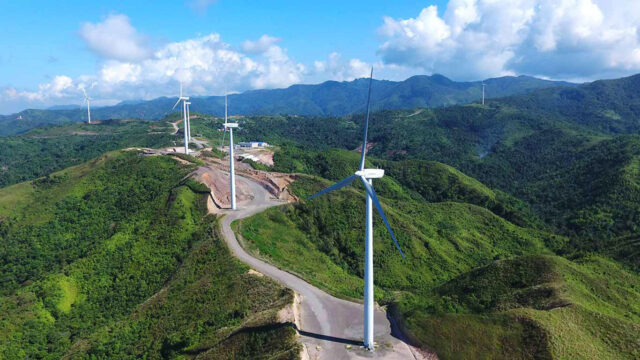
YUCHENGCO-LED PetroGreen Energy Corp. (PGEC) is preparing to start commercial operations of its 13.2-megawatt (MW) Nabas-2 wind power project in Aklan after securing approval to connect the facility to the Luzon grid.

The project, which involves an investment of about P2.57 billion based on earlier disclosures, is located south of the existing 36-MW Nabas-1 wind power facility, which has been transmitting power since 2015.

In a statement Monday, the company said it received the final certificate of approval to connect from the National Grid Corp. of the Philippines (NGCP) and is awaiting a certificate of compliance from the Energy Regulatory Commission.

“The facility’s impending commercial operation not only takes advantage of the DoE’s (Department of Energy) and NGCP’s ongoing reinforcement of the Boracay-Caticlan-Nabas transmission line where Nabas-2 is connected, but also ensures that tourism and business establishments in Boracay and Aklan get more clean power from our Nabas wind farm,” said Dave P. Gadiano, PGEC assistant vice-president for power markets.

PGEC also said it has started testing and commissioning its 25-MW solar farm in Pangasinan, which is expected to add capacity to the Luzon grid.

The solar project is part of the 111.6-MW portfolio developed and operated by Bugallon Green Energy Corp. under Rizal Green Energy Corp. (RGEC), a joint venture between PGEC and Japan’s Taisei Corp.

PGEC is the renewable energy arm of listed PetroEnergy Resources Corp., part of the Yuchengco Group, with Japan’s Kyuden International Corp. holding a 25% stake.

Once commissioning tests with the grid operator are completed, the project will operate under a fixed 20-year tariff as a qualified facility under the government’s green energy auction program.

Last month, BKS Green Energy Corp., a subsidiary of RGEC, activated its 40-MW solar power project in Isabela.

The P1.8-billion solar power plant uses 52,640 solar photovoltaic panels supplied by Chinese manufacturer Trina Solar. — Sheldeen Joy Talavera

Ayala Land pauses Laurean unit sales, citing global conditions

AYALALANDPREMIER.COM

AYALA LAND, Inc. (ALI) said it has paused sales of its Laurean Residences project, citing evolving global conditions, including the situation in the Middle East, which it said are affecting costs and delivery timelines.

“In light of the evolving global conditions, including the situation in the Middle East and its broader impact, we have made the prudent decision to strategically place sales of Laurean Residences on pause, as the current environment presents increasing pressures on costs and reduced predictability in delivery timelines, affecting our ability to execute with the level of certainty we commit to our customers,” the company said in a statement on Monday.

ALI said it has historically managed changing market conditions with a focus on long-term value and disciplined capital management, adding that the decision aligns with this approach.

The company added that it is taking a more selective approach to capital allocation by focusing on projects with clearer execution timelines while strengthening its portfolio, particularly its recurring income base.

“We are reaching out to buyers directly to discuss next steps and the range of options available to them, with the care and attention they expect from Ayala Land,” ALI said.

“We deeply value the trust our buyers place in Ayala Land, and we remain committed to delivering high-quality projects with the care and discipline that have always defined our company,” it also said.

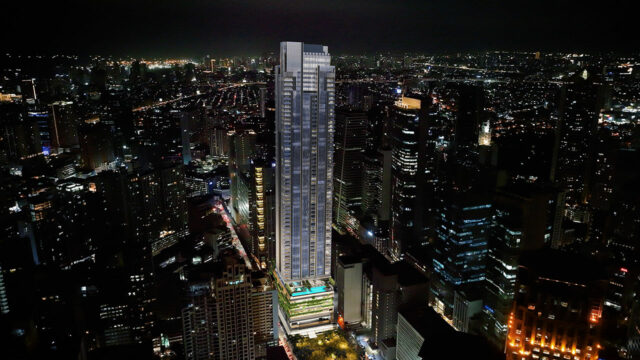
In February, Ayala Land Premier, the company’s luxury brand, began construction of Laurean Residences, a high-end residential tower in Makati.

The project will offer unit types ranging from suites to four-bedroom units and targets professionals and multi-generational households seeking long-term homes in central Makati. Since its launch last year, it has recorded about P10.4 billion in sales.

Laurean Residences is the flagship residential tower within Dela Rosa Gardens, a 1.3-hectare mixed-use development along Paseo de Roxas and Dela Rosa Street, near Ayala Triangle Gardens, Greenbelt and One Ayala.

At the local bourse on Monday, ALI shares fell by 1.4% to P16.96 each. — Alexandria Grace C. Magno

Megawide redeems P1.5-B preferred shares to cut funding costs

MEGAWIDE.COM

MEGAWIDE Construction Corp. has redeemed its maturing P1.5-billion preferred shares to improve its capital structure and reduce funding costs.

“We continue to improve our capital structure to bring down our cost of funding and generate cash savings. The redemption of Series 5 is a step in this direction as we plan to trim our preferred shares to a more comfortable level of around P4.0 billion in the medium term,” Megawide Chairman and Chief Executive Officer Edgar B. Saavedra said in a media release on Monday.

In a separate regulatory filing, Megawide said its board approved on March 12 the redemption of its Series 5 preferred shares on April 17, three years after their listing in 2021.

The company said it has taken advantage of strong investor interest by actively participating in the capital markets over the years, resulting in P8.2 billion worth of preferred shares.

“Despite the ongoing war in the Middle East, we expect a strong performance this year — especially in the real estate and social infrastructure development space anchored on the government’s socialized housing program under the expanded 4PH,” he said.

For 2025, the company’s order book reached P50 billion, up 50% from 2024, driven mainly by residential project contracts.

The company said the order book represents about three to four years’ worth of revenue and serves as an indicator of its construction segment’s performance.

Megawide said residential projects accounted for 35% of the total order book, followed by office and commercial projects at 28%, expanded Pambansang Pabahay Para sa Pilipino (4PH) projects at 23%, and infrastructure at 15%.

The company said its order book will translate into construction-related revenues in the next two to three years.

“But we continue to be vigilant and agile to ensure that our growth prospects remain intact while keeping an eye on opportunities that may arise amid the crisis,” Mr. Saavedra said.

At the local bourse on Monday, shares in the company fell by three centavos, or 1.02%, to close at P2.92 each. — Ashley Erika O. Jose

MWSS orders P327.96 rebate for Maynilad customers

PHILSTAR FILE PHOTO

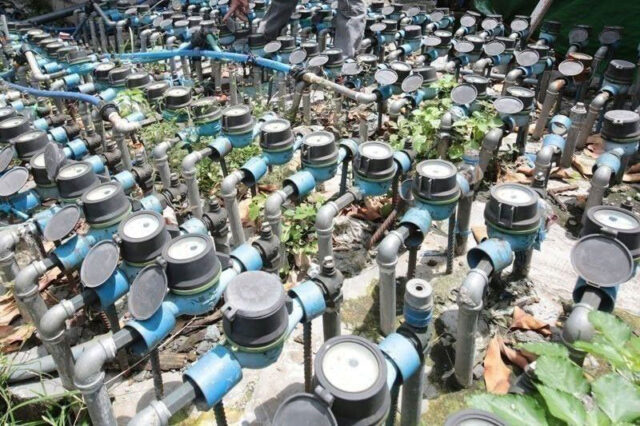
THE Metropolitan Waterworks and Sewerage System Regulatory Office (MWSS RO) said it has imposed a P54.28-million penalty on Maynilad Water Services, Inc. over service interruptions, with affected customers to receive bill rebates.

In a statement Monday, the regulator said the penalty was due to Maynilad’s failure to ensure uninterrupted water supply.

Citing its investigation, the MWSS RO said Maynilad breached its service obligation to ensure continuous water supply to 165,518 customers.

The affected customers are located in parts of Las Piñas, Muntinlupa City, Parañaque City, Imus City, and Bacoor City and are served by the Putatan and Poblacion water treatment plants.

The regulator said these customers will receive rebates of P327.96 in their water bills.

The MWSS RO also directed Maynilad to expedite the implementation of its proposed measures to address the service interruptions.

The regulator, in coordination with Maynilad, is scheduled to conduct a public information drive on April 30 to provide details on the scope and procedures of the rebate program.

In a statement, Maynilad said the service interruptions that affected parts of the southern portion of its concession area in March were linked to “the prolonged and challenging variability in raw water quality in Laguna Lake during the amihan season.”

This required sustained operational adjustments at its treatment facilities to ensure compliance with the Philippine National Standards for Drinking Water, resulting in reduced production levels during the period.

“We note that the challenges affecting raw water conditions persisted longer than initially anticipated. In response, Maynilad has been implementing additional operational and network measures to help stabilize supply and improve service reliability in the affected areas,” the company told BusinessWorld.

The company said it remains focused on “strengthening the resilience of our southern water supply system, particularly during periods when weather conditions affect raw water intake from Laguna Lake.”

Maynilad is the primary provider of water and wastewater services in the West Zone, which covers 11 cities in Metro Manila, three of which have partial coverage, as well as parts of Cavite province.

The company conducted an initial public offering (IPO) last year, raising P34.34 billion from the offering — the second-largest IPO in the bourse’s history.

In a separate statement, Maynilad said its IPO was recognized at the Alpha Southeast Asia 19th Annual Deal & Solutions Awards, receiving the “Best IPO for Retail Investors in Asia 2025” and the “Best Equity/IPO Deal of the Year in the Philippines 2025” citations.

“We are grateful for the recognition of our IPO, which reflects the confidence of both retail and institutional investors in Maynilad’s long-term growth strategy,” said Maynilad Chief Finance Officer Ricardo F. De Los Reyes. “The proceeds of the offering continue to support critical infrastructure projects that strengthen water security and service reliability for our customers.”

The Alpha Southeast Asia Deal & Solution Awards, organized by institutional investment magazine Alpha Southeast Asia, recognize excellence in capital markets transactions and financial solutions across the region.

Metro Pacific Investments Corp., Maynilad’s majority shareholder, is one of three Philippine subsidiaries of First Pacific Co. Ltd., alongside Philex Mining Corp. and PLDT Inc.

Hastings Holdings, Inc., a unit of PLDT Beneficial Trust Fund subsidiary MediaQuest Holdings, Inc., has an interest in BusinessWorld through the Philippine Star Group, which it controls. — Sheldeen Joy Talavera

Villar Land seeks dismissal of SEC complaint

Senators Mark and Camille Villar arrive at the Department of Justice in Manila on Monday to face complaints filed by the Securities and Exchange Commission against the Villar Land Holdings Corp. and related entities. — PHILIPPINE STAR/EDD GUMBAN

VILLAR LAND HOLDINGS Corp. and its directors filed a motion before the Department of Justice (DoJ) in response to a criminal complaint by the Securities and Exchange Commission (SEC) alleging market manipulation, insider trading and misleading disclosures.

The company and its directors, including Senators Mark A. Villar and Camille A. Villar-Genuino, submitted their filings during a preliminary investigation at the DoJ on Monday.

Robel C. Lomibao, legal counsel for Villar Land, said the respondents filed a “verified manifestation and motion” instead of a traditional counter-affidavit, a move allowed under the Justice Department’s National Prosecution Service rules.

Mr. Lomibao said the filing contains the respondents’ defenses, with the documents sworn before a notary public in Las Piñas.

The DoJ earlier issued subpoenas to former senators Manuel “Manny” B. Villar, Jr. and Cynthia A. Villar, as well as their children, including Manuel Paolo Villar, who did not attend Monday’s hearing.

Mr. Lomibao said the company and its directors maintain that they did not commit any wrongdoing and are cooperating with the investigation.

“We are here to clear the name of the company and clear the names of the directors and officers impleaded in this case,” he said.

“For Senator Mark Villar, we already submitted his counter-affidavit before the DoJ and he is fully cooperating with the investigation,” said Rhegine T. Peralta-Abrera, legal counsel for the senator.

“He denies any wrongdoing. All actions were made in good faith and to ensure transparency, there’s absolutely no evidence of fraud or intent,” Ms. Peralta said.

The complaint alleges that the firm, formerly Golden MV Holdings, Inc., reported an asset increase of P1.33 trillion in 2024 prior to an external audit. A subsequent audit valued the assets at P35.7 billion.

The SEC said the discrepancy may constitute violations of Sections 24.1(d) and 26.3 of the Securities Regulation Code on false statements and deceitful acts against investors.

Senior Deputy State Prosecutor Peter L. Ong said the request for dismissal is premature at this stage of the preliminary investigation.

“It’s premature, but we are always fair,” he said, adding that the panel is determining whether to dismiss the complaint or file charges in court.

Mr. Ong said the panel will treat the manifestation as a counter-affidavit and has scheduled the next hearing for May 13, when the SEC is expected to submit its reply.

He said the panel’s resolution will be subject to review by the Prosecutor General and the Secretary of Justice.

At the local bourse on Monday, Villar Land shares rose by 3.29% to close at P439 each. — Erika Mae P. Sinaking

AppleOne says Mahi Center offices near 60% occupancy

Mahi Center — APPLEONE GROUP INC.

By Edg Adrian A. Eva, Reporter

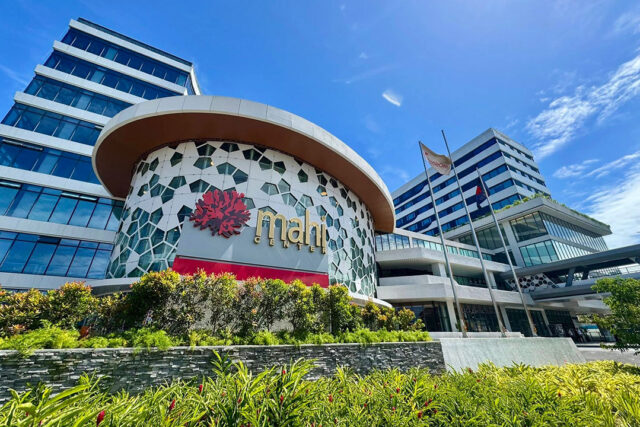
PROPERTY developer AppleOne Group Inc. said office spaces at its Mahi Center development in the Mactan Economic Zone in Lapu-Lapu City are about 60% occupied following the project’s launch.

Lei P. Bajarias, executive vice-president for finance and operations of AppleOne Group, said the office component covers about 7,200 square meters.

“It is our commitment to lease most of that space to IT-BPM (information technology and business process management) and BPO (business process outsourcing) companies,” he told reporters after the launch last week.

Mahi Center is a mixed-use development that includes a lifestyle mall, a five-floor office tower and the nine-floor Fairfield by Marriott Cebu Mactan.

The property has about 52,000 square meters of gross floor area, including 10,500 square meters allocated for the hotel component, Mr. Bajarias said.

He said the retail component covers more than 6,300 square meters.

The development is located within the Mactan Export Processing Zone, near the Mactan-Cebu International Airport.

“Mahi Center is designed to support the growing number of tenants and locators, and to contribute uniquely to the continued progress of Mactan,” said Ray Go Manigsaca, president and chief executive officer of AppleOne Group.

The Fairfield by Marriott Cebu Mactan has 196 rooms, along with three meeting rooms and one function room.

“With Lapu-Lapu City welcoming more travelers, more investors, more events, and more opportunities, those visitors deserve a hospitality experience that matches the ambition of the city,” Samantha H. Manigsaca, vice-president for hospitality of AppleOne Group, said during the launch.

The company said the property’s proximity to manufacturing firms and BPO companies supports business operations in the area.

Lapu-Lapu City Mayor Cynthia King-Chan said Mahi Center adds to the city’s property developments. “It strengthens our position not only as a tourism destination but also as a center for business, enterprise, and opportunity.”

She said the development may help generate jobs, support local businesses and stimulate economic activity.

Mr. Bajarias said AppleOne Group is also developing a JW Marriott Panglao Island Resort in Bohol and a mixed-use project in Cagayan de Oro City.

ADVERTISEMENT
ADVERTISEMENT