Home Blog Page 262

BPOs alarmed by aggressive LGU taxation despite exemptions under CREATE MORE

PHILSTAR FILE PHOTO

THE IT and Business Process Association of the Philippines (IBPAP) said local government units (LGUs) are insisting on collecting local taxes even though the industry enjoys exemptions under the CREATE MORE Act.

IBPAP said the information technology-business process outsourcing (IT-BPM) industry faces increased operating costs of 15% to 20% if the exemptions are ignored, likely affecting locator decisions.

In a statement on Monday, IBPAP said inconsistent tax policy and permitting requirements are having an impact on potential investment decisions.

“These concerns are escalated to global headquarters and influence location decisions,” IBPAP Chief Operating Officer Celeste B. Ilagan said.

The IBPAP said LGUs are disregarding  the exemptions granted by the Corporate Recovery and Tax Incentives for Enterprises to Maximize Opportunities for Reinvigorating the Economy (CREATE MORE) Act, and are also concerned by inconsistencies in tax assessments.

The IBPAP noted that the Bureau of Internal Revenue’s Memorandum Circular 05-2024, as implemented in some areas, subjects certain cross-border services to a 25% final withholding tax, plus a 12% value-added tax.

It also cited the need to amend Republic Act No. 10175 or the Cybercrime Prevention Act of 2012, particularly to allow IT-BPM firms to directly file cybercrime cases when fraud affects foreign clients.

“Currently, companies may bear financial liability but lack prosecutorial standing, limiting deterrence, and weakening client confidence,” the IBPAP said.

The group also cited the need to reskill IT-BPM workers, as the rapid adoption of artificial intelligence (AI) poses risks to companies offering entry-level and voice-based services.

“If there is no talent, there will be no locators. We need to embed digital capability across the workforce and accelerate industry-aligned training,” Frankie Antolin, IBPAP executive director for Talent Development and Attraction, said.

The group also warned that even modest job losses in provincial hubs could significantly impact those economies.

The IT-BPM industry supports over 250,000 workers in the Visayas and Mindanao.

IBPAP called on the need for the accelerated approval of enterprise-based training, nationwide AI literacy programs, and faster rollout of government reskilling programs.

It also sought targeted support for small and medium enterprises, as well as homegrown business process outsourcing (BPO) firms.

These concerns will be the focus of the IBPAP’s first annual membership meeting for the year scheduled for March 4.

The IBPAP 2026 targets are $42 billion in revenue and staffing levels of 1.97 million. — Beatriz Marie D. Cruz

UK seeking out ‘bankable’ projects within Luzon Economic Corridor

ICTSI.COM

THE UK is studying its potential role in helping develop the Luzon Economic Corridor, with a focus on identifying “bankable” projects, the Department of Finance said.

“The UK has expressed keen interest in supporting the development of the Luzon Economic Corridor,” Finance Undersecretary Joven Z. Balbosa said at the UK-Philippines Growth & Investment Partnerships relaunch event on Monday.

“Together with like-minded partners, we are strengthening coordination and strategic investments across the Subic-Clark-Manila-Batangas corridor,” he added.

He noted that the British embassy hosted the Luzon Economic Corridor mapping workshop in November.

The Philippines and the UK are currently finalizing a government-to-government agreement which will, in part, identify priority projects for potential financing through the Joint Economic and Trade Committee  Infrastructure Central Working Group. 

“This disciplined, structured approach, aligning policy dialogue with project pipelines, ensures that cooperation translates into concrete bankable investments,” he added.

The UK was the Philippines’ top source of foreign direct investment in 2024, accounting for $9.4 billion.

“This reflects strong investor confidence in our macro-stability, reform momentum, and long-term prospects,” he said.

“Capital is flowing into sectors that directly strengthen our competitiveness. Among these are our own renewable energy, infrastructure, and banking,” he added.

He noted the $600 million commitment of London-based Actis to develop Terra Solar, which is being positioned as the country’s largest single-site solar power project.

On Monday, the UK and the Philippines launched the Growth and Investment Partnership, or GIP+.

“At its heart, GIP+ is a practical toolkit helping improve regulations, shape better projects, and bring in private investment,” UK Minister of State for the Indo-Pacific Seema Malhotra said.

The toolkit is designed to bring together UK-based instruments and institutions to support the end-to-end delivery of bankable infrastructure projects in the Philippines.

She said that the Philippines and the UK have been close and reliable partners for eight decades.

“Today, we take our cooperation further, with the UK joining the Philippines, US, Japan, and others in developing the Luzon Economic Corridor, a major effort to connect key cities with better transport, energy, and economic infrastructure,” she added. — Justine Irish D. Tabile

Farm clustering deemed crucial in overhaul of high-value crops

PHILSTAR FILE PHOTO

By Vonn Andrei E. Villamiel

FARM CLUSTERING and consolidation will be needed to achieve economies of scale in high-value crops, which are being reorganized by the Department of Agriculture (DA), former officials said.

Former Agriculture Secretary William D. Dar said the  fragmentation of farms continues to limit productivity and competitiveness.

“We have a problem of small land holdings, hence there are no economies of scale. We need to enhance farmer clustering and boost productivity to have sufficient volume and quality products,” he told BusinessWorld via Viber.

“Those crops or value-added products for export must be scaled up in areas where we can optimize production. We can have mango districts, cacao districts, and others,” he added.

Former Agriculture Undersecretary Fermin D. Adriano said farm consolidation is also key to strengthening supply chains and supporting rural enterprises.

“The major obstacles to the development of micro, small and medium enterprises (MSMEs) are the inadequate supply and poor quality of raw materials. For these to be addressed, farm consolidation is needed to attain scale economies,” he told BusinessWorld via Viber.

The DA is currently promoting consolidation through its Farm and Fisheries Clustering and Consolidation (F2C2) Program, which organizes small-scale farmers and fisherfolk into clusters to help them improve bargaining power and expand market access.

Mr. Adriano added that greater investment in research and development is needed to improve crop varieties. He said the sector will benefit from upgraded processing and packaging, and stronger product marketing to boost competitiveness.

The DA has announced that it is reorganizing its high-value crops program by establishing three offices specializing in exportable items, coffee, and commodities for domestic consumption.

Agriculture Secretary Francisco P. Tiu Laurel, Jr. said the reorganization will help boost farm exports, while helping address consumer prices for high-value crops sold domestically.

He added that the reorganization will allow the DA to adopt a more targeted and commodity-specific approach.

“We concentrate heavily on rice, sugar, corn, and coconut. But high-value crops were too broad and all under one roof. What we did was create more focus on individual sets of commodities,” he said.

BIR sees improving economy boosting collections

BW FILE PHOTO

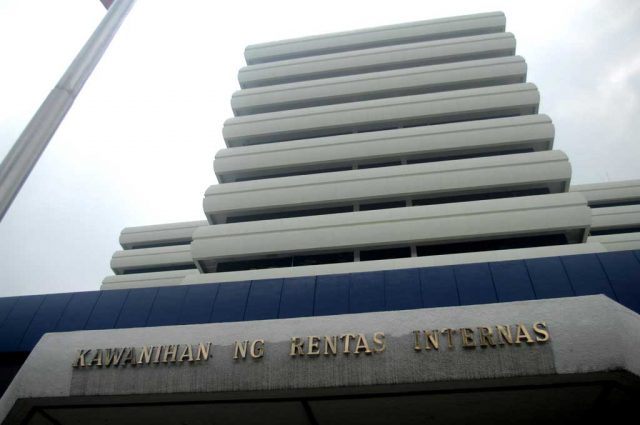
THE Bureau of Internal Revenue (BIR) said its January revenue performance of P358 billion makes it confident of its collection performance this year as the economy improves.

“Our preliminary figures so far for January, I think we collected more or less, subject to reconciliation,  around P358 billion,” BIR Commissioner Charlito Martin R. Mendoza told reporters on Monday.

The preliminary January total, if confirmed, would represent a 0.82% year-on-year improvement.

He added that the projected 5-6% gross domestic product (GDP) growth for this year “will translate into higher value-added, excise, and income tax.”

Last year, economic growth slowed to 4.4%, from 5.7% in 2024.

The 2025 reading was the weakest  in five years, or since GDP declined by 9.5% in 2020. Excluding pandemic years, it was the weakest since the 3.9% posted in 2011.

Mr. Mendoza said digitalization and real-time, near-time monitoring will help minimize revenue leakages.

“And then, hopefully this year, infrastructure projects will accelerate, and that will help increase revenue,” he said.

For 2026, he said the BIR has been set a collection target of P3.58 trillion. If realized, this would exceed the 2025 total by 15.3%.

On Monday, the BIR conducted a nationwide tax compliance verification drive in observance of Tax Awareness Month.

Mr. Mendoza said the CHAT (Counsel, Help, Assist Taxpayers) program is expected to help increase collections.

“If our taxpayers are compliant and if they are not registered, and we register them, then they will be part of the tax base,” he said.

“If they issue invoices, we will capture their sales. And that will translate to higher revenue for the government,” he added.

During a visit to 168 Mall in Binondo, Manila, he said that some establishments were non-compliant.

“We saw some that do not have the ‘Ask for receipt’ display, and I reminded them that every time someone buys, they need to issue a sales invoice, even if the customer did not request an invoice,” he said.

“We also saw some that had lumped journal entries when the entries should be reflected individually … We reminded them to input the entries right after the sale,” he added.

The Federation of Filipino Chinese Chamber of Commerce and Industry, Inc. (FFCCCII) welcomed the information campaign.

“It is a very friendly visit of our commissioner to encourage more payment of the right taxes. It will be beneficial for our country,” FFCCCII President Victor Y. Lim told reporters.

“I think most of us are complying with the payment of the right taxes,” he added.

He also encouraged FFCCCII members and other ethnic Chinese businessmen to pay the right taxes.

Meanwhile, he said that the reduced frequency of letters of authority (LoAs) issued to initiate tax audits has been beneficial to businessmen.

“Before there were two or three … it was very disturbing because of the several LoAs (each year), but right now there is only one LoA for the year,” he added. — Justine Irish D. Tabile

NGCP procuring 400 MW in ancillary services

JUDGEFLORO

THE National Grid Corp. of the Philippines (NGCP) said it will conduct an auction to procure over 400 megawatts (MW) of ancillary services (AS)to meet its reserve power requirements.

According to the terms of reference published on its website, the NGCP announced competitive bidding for certified AS providers for the Luzon, Visayas, and Mindanao grids.

Power supplied by AS providers kicks in after the NGCP’s long-term suppliers report shortfalls in their output. The grid requires a certain level of capacity to maintain system reliability and stability.

The auctions cover various types of AS, including regulating reserve, contingency reserve, dispatchable reserve, reactive support, and black start services.

The NGCP plans to procure 141 MW worth of AS for Luzon, 133 MW for the Visayas, and 47 MW for Mindanao.

For black start services, or the process of restoring an electrical power system after a complete blackout, the NGCP is seeking 150 MW of capacity.

According to the notice of invitation to bid, interested bidders may submit expressions of interest on Feb. 25, prior to the pre-bid conference on March 6.

The deadline to submit bids is March 23-25, with the opening of bids taking place the day following each submission date.

NGCP last auctioned AS deals in 2023. Contracts agreed in the wake of such procurement exercises are subject to Energy Regulatory Commission approval. — Sheldeen Joy Talavera

Transfer pricing consideration in BIR’s new audit selection process

The Bureau of Internal Revenue (BIR) entered 2026 with an important shift in identifying taxpayers that will undergo tax audits. Revenue Memorandum Order (RMO) No. 12026 outlines a system-assisted, risk-based selection framework that relies on analytics and selection criteria to determine entities most likely to present tax compliance risks. Notably, the framework integrates transfer pricing (TP) considerations into the selection process. This reflects the BIR’s continued focus on related-party transactions.

In our previous article “Actual TP Audit: What the BIR Flags and Key Takeaways,” we highlighted how the BIR examined and challenged the transfer pricing of the taxpayer’s related-party transactions. The inclusion of TP‑related indicators under RMO No. 1‑2026 suggests that this type of review will now become more routine and systematically applied in the BIR’s audit process.

This article examines the TP-related audit triggers outlined in RMO No. 1-2026. Understanding these considerations is crucial for taxpayers, as these will serve as early warning signs of potential BIR audit.

SIGNIFICANT INCREASE IN EXEMPT/ZERO-RATED SALES
One relevant trigger identified in RMO No. 12026 is a substantial increase in zero-rated or exempt sales or revenue. A significant increase in such sales may draw the attention of tax authorities because these transactions directly reduce the taxpayer’s effective tax burden and, in many cases, the government’s tax base. Zero‑rated sales allow recovery of input VAT, while exempt sales eliminate output VAT altogether. When these sales grow materially, particularly in cross‑border or related‑party transactions, tax authorities may perceive a heightened risk that the structure is being used to achieve tax efficiencies rather than reflecting ordinary commercial activity.

From a transfer pricing perspective, a sharp increase in exempt or zero‑rated sales often coincides with expanded inter-company transactions, such as the provision of services to foreign affiliates. This can raise concerns that profits are being shifted out of the jurisdiction through non‑arm’s length pricing, for example by limiting the local entity to routine, cost‑plus returns regardless of the value of functions performed. Tax authorities may therefore scrutinize whether the pricing of these transactions appropriately reflects the economic contributions, assets, and risks assumed by the taxpayer.

Another common red flag arises when growth in zero‑rated or exempt revenue is not accompanied by a corresponding improvement in profitability or is inconsistent with industry benchmarks. If revenue increases substantially, but margins remain low or decline, tax authorities may question whether the taxpayer is being adequately compensated under arm’s-length conditions. Such inconsistencies can suggest that transfer prices have been influenced by VAT or tax considerations rather than by market‑based outcomes.

Finally, significant increases in exempt or zero‑rated sales often trigger broader audits, particularly where VAT refund or credit claims are involved. These audits frequently expand beyond indirect taxes to include a review of inter-company agreements, functional characterization, and transfer pricing documentation. As a result, even commercially-driven increases in exempt or zero‑rated sales can become a transfer pricing red flag if they are not clearly supported by robust documentation, sound economic analysis, and alignment between contractual terms and actual operations.

INCOME TAX DUE OF LESS THAN 2% OF GROSS SALES
Another important selection factor concerns taxpayers that report very low effective income tax rates, specifically when the tax due is less than 2% of gross revenue.

An income tax due that is consistently below  2% of gross sales or revenue is commonly treated by the BIR as a preliminary risk indicator for audit selection, particularly in transfer pricing cases. While tax laws do not prescribe a minimum income tax ratio, this metric is frequently used by the BIR as a practical screening tool to identify entities whose reported profitability appears low relative to their scale of operations. From an enforcement standpoint, a low income tax-to-revenue ratio suggests a potential erosion of the domestic tax base, warranting closer examination.

From a transfer pricing perspective, this red flag is especially pronounced where the taxpayer is engaged in related-party transactions, such as inter-company services, royalties, or management fees. The BIR may question whether the Philippine entity is being compensated at arm’s length, particularly if it is characterized as a routine service provider earning only modest markups despite performing substantive functions or supporting core group operations. A tax outcome showing income tax due of less than 2% of gross revenue may indicate that profits are being shifted to related parties abroad through pricing mechanisms that do not reflect economic reality.

The risk is further heightened when the low income tax ratio is inconsistent with industry benchmarks or the taxpayer’s historical performance. In BIR transfer pricing audits, examiners often compare the taxpayer’s profit margins against those of comparable independent companies or against prior years before changes in inter-company arrangements. If similarly situated companies earn materially higher margins, or if profitability declined following a restructuring or expansion of related party transactions, the BIR may infer that transfer prices were adjusted in a manner that suppresses taxable income in the Philippines.

Ultimately, an income tax due of less than 2% of gross sales does not automatically mean noncompliance. However, in Philippine practice, it significantly increases the likelihood of a transfer pricing audit, particularly when combined with recurring losses, growing related party expenses, or limited economic substance. Taxpayers in this position are therefore expected to maintain robust transfer pricing documentation, clearly demonstrate their functional profile, and show that their pricing outcomes are consistent with arm’s-length principles. Absent such support, a low income tax ratio may be viewed by the BIR not as a commercial result, but as a signal of potential transfer pricing exposure.

SUBSTANTIAL REVENUE BUT REPORTING NET LOSSES
RMO No. 12026 also flags taxpayers that report significant revenue while consistently reporting net losses. Entities categorized as limited-risk service providers, distributors, or manufacturers typically earn positive returns under normal commercial conditions. While temporary losses may be reasonable due to market conditions, strategic shifts, or operational inefficiencies, the BIR transfer pricing guidelines provide that independent parties would not accept long-term losses without corresponding commercial justification.

Repeated or unexplained losses may indicate potential mispricing, such as under-remuneration for services rendered to affiliates, excessive deductions, or disproportionate allocations of global costs to the Philippine entity.

SUBSTANTIAL REVENUE FROM RELATED PARTIES
Entities whose revenue comes almost entirely from related parties are also expected to face heightened scrutiny under the new RMO. These are typically captive service centers or global business service hubs whose pricing structures are internally set by group policy rather than by market forces.

The BIR evaluates whether the functional profile of such entities aligns with their reported results, whether inter-company agreements accurately describe actual operations, and whether margins fall within arm’s length. RR No. 22013 places the burden of proof on the taxpayer to demonstrate arm’s-length outcomes. Inconsistencies between TP documentation, agreements, and tax filings often serve as clear red flags and can lead to substantial adjustments.

SHARED EXPENSES AND OTHER INTERRELATED CHARGES
Shared expenses and inter-company cross‑charges remain one of the BIR’s most scrutinized areas, particularly where taxpayers are unable to support the economic rationale or allocation basis of charges relating to regional management, IT services, marketing intangibles, brand fees, treasury functions, or global insurance arrangements. Revenue Audit Memorandum Order (RAMO) No. 12019 identified these areas as high-priority audit subjects.

The BIR evaluates whether these charges pass the benefit test and whether cost allocations reflect economic reality. Taxpayers unable to provide documentation such as cost pool breakdowns, allocation keys, or proof of benefit may face significant adjustments.

THE IMPORTANCE OF TP DOCUMENTATION
TP documentation remains the taxpayer’s strongest safeguard. Without contemporaneous TP documentation, the BIR may rely on internal comparables, industry-based profit indicators to determine tax base. A consistent TP policy, aligned across agreements, functional analyses, and financial statements, is essential in mitigating audit risk.

KEY TAKEAWAY
For business leaders, the BIR’s audit selection framework as outlined in RMO No. 12026 underscores the need to view transfer pricing as an enterprise-level risk rather than a purely technical compliance matter. Indicators such as substantial revenue coupled with net losses, income tax due that is disproportionately low relative to gross revenue, heavy reliance on related-party income, and the presence of shared expenses or inter-company charges are now central to the BIR’s data-driven risk assessment. While these factors do not automatically imply noncompliance, they require active oversight to ensure that pricing outcomes are aligned with the company’s functional profile and commercial reality. In this environment, business leaders are expected to proactively assess transfer pricing exposure, ensure consistency between financial results and transfer pricing policies, and strengthen documentation and internal controls to manage audit risk and support informed, defensible tax positions.

Let’s Talk TP is an offshoot of Let’s Talk Tax, a weekly newspaper column of P&A Grant Thornton that aims to keep the public informed of various developments in taxation. This article is not intended to be a substitute for competent professional advice.


Sharmaine Louise S. Jimenez is a manager from the Tax Advisory & Compliance division of P&A Grant Thornton, the Philippine member firm of Grant Thornton International Ltd.

pagrantthornton@ph.gt.com

PhilHealth should include urine test for detecting signs of kidney  disease – health advocate

Urine Albumin-to-Creatinine Ratio (UACR) screening at Mercury Drug Shangri-La Plaza in Mandaluyong. — ALMIRA S. MARTINEZ

Philippine Health Insurance Corporation (PhilHealth) is urged to include a laboratory test that detects early signs of kidney disease in its ongoing Yaman ng Kalusugan Program (YAKAP) to curb the catastrophic costs of the illness, an advocate said on Friday.

Reynaldo S. Abacan Jr., president of Dialysis PH Support Group Inc., said that although PhilHealth has made progress in expanding benefits for people living with chronic kidney disease (CKD), the agency could do more on the prevention side.

Mr. Abacan urged PhilHealth to include the Urine Albumin-to-Creatinine Ratio (UACR) procedure, a lab test that can detect early kidney damage, in its primary care program, YAKAP, as currently approved laboratory test.

“When kidney damage is detected through it, you can address it much earlier,” Mr. Abacan, who has been a dialysis patient for 15 years, told BusinessWorld in Filipino.

“This way, your future expenses will be reduced, and you can still protect yourself from the illness,” he added.

According to a 2025 study published in the Journal of Medical Economics, the economic toll of CKD in the Philippines is estimated at P593.73 billion, which comprises 41.18% of the country’s total healthcare spending in 2023.

Of the amount, P550.19 billion, or 44.4%, comes from household out-of-pocket expenses; P528.75 billion, or 42.6%, from government contributory financing schemes; and P161.35 billion, or 13%, from voluntary healthcare payment schemes, such as health maintenance organizations (HMOs).

“That’s why we support the inclusion of UACR in the YAKAP program. Yes, it will be costly at first, but in the long run, we can avoid around P100,000 in medical costs,” Mr. Abacan said.

UACR is a critical and highly effective test for detecting early signs of CKD, as it measures the amount of albumin—a protein normally found in the blood—in the urine, which can signal kidney damage even when symptoms are not yet present and estimated kidney function still appears normal, according to the US National Kidney Foundation.

As of this writing, the UACR procedure is not yet included in the selected laboratory tests under the YAKAP program, according to PhilHealth’s website.

BusinessWorld reached out to PhilHealth to ask if the inclusion of the procedure is in the pipeline, but the agency has yet to respond.

Apart from UACR, Mr. Abacan said that his organization, which has over 90,000 members, is also lobbying for the inclusion of other vital lab tests in the YAKAP program, including 2D Echo, ECG, and ultrasound, noting that these are costly for members to shoulder.

He added that the agency has been receptive to their lobbying efforts. — Edg Adrian A. Eva

AI-driven cyberattacks now breach systems in 72 minutes, study finds

FREEPIK

The window to stop a cyberattack has plummeted to just over an hour as attackers leverage artificial intelligence (AI), according to the 2026 Unit 42 Global Incident Response Report, noting that organizations must immediately align their operations with attacker speed.

The findings are based on a review of more than 750 incidents in 2025, which revealed that the time required for attackers to exfiltrate data dropped to 72 minutes, down from 285 minutes the year before.

This acceleration is driven by AI acting as a “force multiplier,” allowing threat actors to automate reconnaissance and exploit vulnerabilities within minutes of public disclosure.

By enhancing the efficiency of phishing and malware deployment, AI has effectively compressed the attack lifecycle and widened the gap between rapid-fire intrusions and manual defenses.

Of the incidents investigated by Unit 42, 90% were found to have identity weaknesses play a material role, as attackers increasingly bypass software exploits by “logging in” with stolen credentials or hijacked sessions.

This is primarily achieved through phishing and the exploitation of software vulnerabilities, which remain the most common entry points, each accounting for 22% of observed incidents, the report said.

Once inside, threat actors leverage these valid credentials to move faster and blend into normal business activity, often utilizing an organization’s own internal AI services to map systems and escalate their access.

This trend is fueled by a widespread governance gap where 99% of cloud identities, including human users and machine accounts, hold excessive permissions, providing quiet, high-leverage paths for lateral movement.

Also, the report found that software supply chain risk has shifted toward the misuse of trusted connectivity, with Software as a Service (SaaS) data relevance jumping to 23% in 2025.

Attackers also exploit interconnected Application Programming Interfaces (APIs) and poorly governed transitive libraries to achieve a “one-to-many” impact.

Meanwhile, nation-state actors from China, North Korea, and Iran have shifted their strategy toward long-term stealth by compromising deep infrastructure levels, such as virtualization and management layers, to maintain a permanent presence.

This refined tradecraft includes the use of highly deceptive “employment fraud,” where hackers create fake job portals and conduct fictitious interviews to trick unsuspecting employees into installing malware.

By prioritizing persistence over immediate disruption, these actors can remain hidden within a network for extended periods, turning legitimate corporate recruitment and information technology (IT) processes into direct paths for intelligence gathering.

To counter these threats, the report recommends that companies shift to Active Exposure Management by adopting integrated, automated containment, and treating identity as their primary security boundary.

Organizations are also advised to move beyond static scanning to actively govern third-party integrations and machine identities before they can be weaponized.

Unit 42 is the global threat intelligence and incident response arm of Palo Alto Networks, a leading cybersecurity firm that provides specialized expertise and tools to help organizations handle complex digital threats. — Edg Adrian A. Eva

Eala soars to new career-best No. 31 in the WTA rankings

ALEX EALA — DUBAIDUTYFREETENNISCHAMPIONSHIPS.COM

AND the legend of Alexandra “Alex” Eala reaches a new high.

The Filipina sensation moved closer to the world tennis titans, resetting her career-best to No. 31 in the Women’s Tennis Association (WTA) rankings following an impressive campaign in the WTA 1000 Dubai Duty Free Tennis Championships over the weekend.

Ms. Eala, 20, made it to the last 8 of the world’s second biggest event next only to the four majors and thus soared 16 rungs from No. 47 last week.

The lefty ace slid seven spots from No. 40 after a first-round exit in the Qatar Open, also a 1000-level tour, but she made up for it in style in the United Arab Emirates with win over higher-ranked opponents one after another.

Now closer to the Top 30 than ever, Ms. Eala also moved to No. 5 in Asia just behind newly-minted Australian Open champion Elena Rybakina of Kazakhstan (No. 3), Naomi Osaka of Japan (No. 16), Olympic gold medalist Zheng Qinwen (No. 24) and Wang Xinyu (No. 30) of China.

Ms. Eala ended her run with a 6-0, 6-2 defeat to her good pal and world No. 4 Coco Gauff of the United States but beat bevy of fancied foes none bigger than world No. 8 Jasmine Paolini of Italy, 6-1, 7-6 (7-5).

She also pulled the rug from under WTA No. 39 Hailey Baptiste of USA, 6-0, 0-1 after the latter’s retirement due to abdominal pain in the second set alongside WTA No. 32 Sorana Cirstea of Romania, 7-5, 6-4.

Her quarterfinal finish in Dubai revived her playoff streak in an explosive start to her 2026 season so far after the WTA 250 ASB Classic in Auckland, New Zealand (semifinals), WTA 125 Philippine Women’s Open (quarterfinals) and the WTA 500 Abu Dhabi Open, where she reached the singles quarterfinals and doubles semifinals with Indonesian partner Janice Tjen (WTA No. 36).

It’s a good stepping stone for Ms. Eala on her way to two more 1000-level tours in the Indian Wells Open in California on March 4-15 and the Miami Open on March 17-29 in a bid to crack the Top 30 as one of the fast-rising tennis stars.

That stature has been in full display this year with packed stadiums for every game of Ms. Eala, drawing praises from the WTA and the Australian Open as well as Ms. Gauff, Dubai champion Jessica Pegula of the United States and 22-time Grand slam champion Novak Djokovic of Serbia.

“Alex (Eala) is amazing. The way she’s been able to pack stadiums and the way her country supports her is something special. She handles it so maturely, with such grace,” said Ms. Pegula after beating Ukraine’s Elina Svitolina in the Dubai final, 6-2, 6-4 for her 10th title.

It was Ms. Pegula who beat Ms. Eala in Miami last year that served as the Filipina’s breakout tournament to enter Top 100, Top 50 and now Top 35. — John Bryan Ulanday

Blu Girls join WBSC World Cup Group Stage as wild card

BLU GIRLS during the 33rd SEA Games 2025 in Thailand. — FACEBOOK.COM/ASAPHIL

THE Philippine women’s softball team was given wild card entry to the WBSC World Cup Group Stage where it will have a chance to make next year’s finals set in Australia and the 2028 Los Angeles Olympics.

The Cebuana Lhuillier-backed Blu Girls received the spot after Uganda withdrew from the group of world No. 1 Japan, No. 3 Puerto Rico, Great Britain, Venezuela and Peru.

The Peruvians will host that stage slated July 14 to 18, which marks the start of the group phase and the qualification process not just to the World Cup finale but to the Olympics as well.

“This wild card is not simply an invitation — it is recognition of their talent, resilience, and the discipline they bring every time they compete,” said Amateur Softball Association of the Philippines chief Jean Henri Lhuillier.

“They have earned the right to test themselves against the world’s best and represent the Philippines with heart and excellence,” he added.

The other group stage venues are Prague in the Czech Republic and Oklahoma in the United States with the top two of each group advancing to the finale. — Joey Villar

MPTC revives a 14-stage Tour of Luzon 26: Heritage in Motion

MANNY V. PANGILINAN — BW FILE PHOTO

THE dream of a Filipino racing in the Tour de France lives on.

“The reason cycling is one of the most popular sporting events in the country is because it reaches mostly the poorest,” said Manny V. Pangilinan, who chairs the MVP Group of Companies during Monday’s MPTC Tour of Luzon (ToL) 26: Heritage in Motion launch at the Meralco main office in Pasig.

“I think it’s an excellent sport and my goal and dream is to have a Filipino biker compete in the Tour de France,” he added.

That someone could come from this batch of participants seeing action in the second year of the fabled race’s revival, a 14-stage event slated April 28 to May 13 that will unfurl in Calatagan, Batangas and conclude in Baguio.

Around 20 teams or 150 cyclists are expected to participate in the event that stakes a total cash pot of more than P12 million, P2 million of which goes to the overall team champion and another P1 million to the individual winner.

As promised, this year’s edition is bigger than the last one when it held an eight-stage race.

This one will cover a total distance of 1,900 kilometers from 60 cities and municipalities from 13 provinces with stops in Calatagan, Tagaytay, Palayan City in Nueva Ecija, Bayombong in Tuguegarao, Pagudpud, Paoay and Laoag in Ilocos Norte, Candon, Ilocos Sur, San Juan in La Union, Lingayen in Pangasinan before that final stop in Baguio mountains.

“We approach kilometer zero with renewed resolve,” said Arrey Perez, chief executive officer (CEO) of the organizing ToL 2026.

For Patrick C. Gregorio, who founded the Tour of Luzon’s revival before becoming Philippine Sports Commission chair late last year, it was a mortal sin not to stage a reprise.

“It’s not just a comeback story, it’s nation building on two wheels and that’s very important,” said Mr. Gregorio. “This is a promise we gave last year that we have to fulfill. So to all athletes, train well, province to shine and sponsors to make magic.”

“Let’s make the nation smile.”

Also present were Gilbert Santa Maria, president and CEO of the MPTC that took the cudgels of financing the summer biking spectacle, and technical director and head of commissaire Jun Lomibao. — Joey Villar

SMB selects 6’11 Marcus Lee for Commissioner’s Cup

MARCUS LEE — FACEBOOK.COM/CAIRNSTAIPANS

WITH 7-footers led by fancied Bol Bol of defending champion TNT in the field, San Miguel Beermen (SMB) opted for ceiling and length as well as it tapped 6-foot-11 Marcus Lee for the PBA Commissioner’s Cup.

The reigning Philippine Cup champions have high expectations from Mr. Lee, who is fresh from his stint with the Cairns Taipans in the NBL in Australia.

“He’s a glue guy who can elevate our game,” SMB Team Manager Gee Abanilla told The STAR of the 31-year-old American who also has championship experience with the Tasmania JackJumpers during their golden run in the 2023-24 NBL season.

“We expect him to provide us with a defensive presence, good motor, especially on running the floor and (chasing) 50-50 balls, professionalism on and off the court, rebounding and toughness on the court,” he added.

Mr. Lee, who has a 7’3 wingspan and 35.5” max vertical leap, is expected to form a deadly twin tower combo with June Mar Fajardo as the Beermen deal with the giants in the mid-season conference that features no height restrictions for imports.

Leading the way is former NBA player Mr. Bol, the 7-foot-3 behemoth with guard skills spearheading the Tropang 5G’s title-retention drive.

Seven-foot defensive whiz Kylor Kelley reinforces souped-up Converge while seven-footer Mubashar Ali powers up Terrafirma and 7-foot-6 Sam Deguara beefs up guest team Macau Black Bears.

They join the early birds, 6-foot-11 Daniel Ochefu of Blackwater, 6-foot-10 Cady Lallane of NLEX, 6-foot-10 James Dickey of Phoenix, 6-foot-9 Ismael Romero of Meralco, 6-foot-9 Jaylen Johnson of Rain or Shine, 6-foot-9 Terrell Brown-Soares of Magnolia and Ginebra’s Justin Brownlee, the shortest of the lot at 6-foot-6.

The Commissioner’s Cup fires off March 11. — Olmin Leyba

ADVERTISEMENT
ADVERTISEMENT