Home Blog Page 2530

Alternative energy sources top concern of business leaders in Mindanao

JEROME CMG-UNSPLASH

DAVAO CITY — Business leaders emphasized that finding alternative sources of energy is the top concern of the business sector in Mindanao following the Mindanao Development Authority’s (MinDA’s) forecast that the island will be facing a power shortage in the next five years.

General Santos City Chamber of Commerce and Industry President Miguel Rene Alcantara Dominguez told Businessworld that one of the topics presented by MinDA Assistant Secretary Romeo Montenegro in a forum last month was the growing concern that Mindanao be losing power by 2027 to 2028.

“MinDA foresees that we will most likely lose power by 2027 to 2028. Back to the experience we had in 2010,” Mr. Dominguez said.

According to Mr. Montenegro, the rate of the annual growth of demand for energy in Mindanao is around 5% to 7%, which is about 100 megawatts every year needed to be able to keep up with the growing demand due to the expansion of the property sector, agri-business, industries, and household expansions.

“Therefore, the reserve that we have today will start to go down unless new capacities come in to replace the ones that are being used already by the growing demand,” he said.

Joji Ilagan-Bian, chair of the Philippine Chamber of Commerce and Industry Committee on the Brunei Darussalam–Indonesia–Malaysia–Philippines East ASEAN Growth Area (BIMP-EAGA), said the business sector in Mindanao has informed President Ferdinand Marcos, Jr. in a resolution that the priority of the business sector in Mindanao is to look for alternative sources of power because it was said that after two or three years, we will have shortage of power.

Ms. Bian said a stable power supply consequently improves the economy and entices more investors to come in.

“If we are not able to work at the power problems these investments would not be in proportion to the source of power. We are looking at power investors, and private partnerships with the government and we are also looking at all sources of investment including outside of the country, foreign investors to look at it also for the Philippines. Power is what makes the economy roll and without that economy would be at a standstill,” she said.

Mr. Dominguez said among the options that were discussed to address the looming power shortage is the availability of the Agus-Pulangi Hydropower Complex, which is eyed to be rehabilitated in 2026.

“If Agus Pulangi is rehabilitated, we will most likely have an additional 300 to 350 megawatts,” he said.

Meanwhile, Mark Christian P. Marollano, supervising science research specialist at the Department of Energy, said that the department is continuously monitoring power projects to help meet the future power demand in the country particularly in Mindanao.

“Due to economic developments, demand will also continue to increase, that is why we have put up power plants in Mindanao,” he said in mixed English and Filipino. — Maya M. Padillo


Cop dies in South Cotabato road mishap

COTABATO CITY — A police patrolman, who is actively involved in the interfaith solidarity promotion projects of their unit, died instantly after his car collided head-on with a 10-wheeler truck in Barangay Glamang in Polomolok, South Cotabato on Wednesday afternoon.

Brig. Gen. James E. Gulmatico, director of the Police Regional Office-12 (PRO-12), told reporters on Thursday that the accident fatality, Patrolman Fahad A. Masula was under the Regional Mobile Force Battalion (RMFB) 12, a large rapid reaction unit of PRO-12.

Mr. Masula, who belonged to a Muslim clan in Koronadal City, helped push forward the police-community relations thrusts of the RMFB 12, according to his companions and superiors in the unit.

He was immediately buried by his relatives in keeping with Islamic tradition of burying the dead within 24 hours after death.

Mr. Masula’s car, a Toyota Vios hit the side of a 10-wheeler truck approaching from the opposite direction of the Koronadal-General Santos Highway in Barangay Glamang in Polomolok.

Witnesses had told barangay officials and police probers that Mr. Masula may have lost control of the wheel due to mechanical trouble, having seen his car wiggled first before hitting the frontal left side of the large green truck.

He was declared dead on arrival by doctors in a hospital where he was brought by emergency responders from the Polomolok local government unit for treatment.

Mr. Gulmatico said the driver of the truck that figured in the accident, Ronnie Anggot Torino, voluntarily yielded to policemen who responded to the incident and turned over to them his driver’s license. — John Felix M. Unson

Philippine shares down on dovish BSP comments

BW FILE PHOTO

LOCAL SHARES declined on Thursday due to profit taking and following dovish remarks from the Bangko Sentral ng Pilipinas (BSP) governor.

The Philippine Stock Exchange index (PSEi) dropped by 0.49% or 36.67 points to close at 7,400.33 on Thursday, while the broader all shares index lost 0.52% or 21.32 points to end at 4,076.24.

“Profit taking again weighed on the index, despite the BSP Monetary Board’s decision to cut rates by 25 basis points (bp) yesterday (Wednesday),” AP Securities, Inc. Research Head Alfred Benjamin R. Garcia said in a Viber message.

Stocks declined “because the tone of the BSP was tempered in terms of monetary policy actions moving forward. The BSP used the words ‘baby steps,’” AB Capital Securities, Inc. Vice-President Jovis L. Vistan said in a Viber message.

The Monetary Board on Wednesday cut benchmark interest rates by 25 bps, as expected by 16 of 19 analysts in a BusinessWorld poll, as price pressures remain manageable. This brought its policy rate to 6%.

The BSP in August kicked off its easing cycle with a 25-bp reduction, marking its first rate cut in nearly four years.

BSP Governor Eli M. Remolona, Jr. said at a briefing that they could cut benchmark rates by another 25 bps at their Dec. 19 meeting, noting that a one-time 50-bp reduction could be “too aggressive a cut,” except in a hard landing scenario.

Mr. Remolona added that they could slash rates by 100 bps in 2025, but said they prefer to take “baby steps” in their policy easing cycle.

“Last-minute profit taking brought the local market down this Thursday. Contributing to the market’s decline is the lingering weakness of the local currency,” Philstocks Financial, Inc. Senior Research Analyst Japhet Louis O. Tantiangco said in a Viber message. “Foreign investors, which were net sellers for the day, added to the market’s drop.”

On Thursday, the local unit ended at P57.80 per dollar, down by 10 centavos from its P57.70 close the previous day, according to Bankers Association of the Philippines data.

Net foreign selling reached P47.87 million on Thursday versus the P841.27 million in of net foreign buying recorded on Wednesday. 

Almost all sectoral indices closed lower. Holding firms declined by 1.17% or 73.85 points to 6,217.34; mining and oil dropped by 1.05% or 91.19 points to 8,578.30; industrials went down by 0.54% or 54.80 points to 10,047.79; property retreated by 0.51% or 15.25 points to 2,929,32; and services inched down by 0.25% or 5.69 points to 2,256.37.

Meanwhile, financials rose by 0.38% or 9.17 points to 2,410.91.

Value turnover decreased to P5.91 billion on Thursday with 938.004 million shares traded from the P6.95 billion with 831.76 million issues that changed hands on Wednesday.

Decliners outnumbered advancers, 102 to 92, while 64 names were unchanged. — Revin Mikhael D. Ochave

Peso weakens anew as markets await ECB move

BW FILE PHOTO

THE PESO declined against the dollar on Thursday on expectations of another rate cut by the European Central Bank (ECB).

The local unit closed at P57.80 per dollar on Thursday, down by 10 centavos from its P57.70 finish on Wednesday, Bankers Association of the Philippines data showed.

The peso opened Thursday’s session at P57.79 against the dollar. It climbed to as high as P57.60, while its weakest showing was at P57.86 versus the greenback.

Dollars exchanged went up to $1.47 billion on Thursday from $1.38 billion on Wednesday.

The peso weakened as the dollar was generally stronger as markets awaited a rate cut from the ECB, a trader said by phone.

The peso-dollar pair initially traded sideways as investors recalibrated their bets on the pace of the US Federal Reserve’s easing cycle ahead of the presidential election, the trader added.

The euro slid to a more than two-month low on Thursday ahead of an expected European Central Bank rate cut, while the dollar hit its highest in 11 weeks on the prospect that Donald J. Trump, whose policies the market considers more bullish, will win the US election, Reuters reported.

Weak economic data in the euro area and dovish comments from ECB officials have prompted traders to price in that the ECB will deliver a third rate cut since June, diminishing the euro’s appeal.

The ECB was expected to cut its deposit rates by a quarter-point overnight. Money markets almost fully price in three further reductions through March 2025 to tame the most protracted inflation in the euro zone in a generation.

The euro slipped 0.1% $1.085325, falling for the seventh straight session.

In the broader market, the dollar scaled an 11-week high against a basket of peers at 103.65.

The dollar has drawn support from a run of upbeat data on the US economy, which has in turn caused traders to reduce their expectations of Fed rate cuts, but also on the higher chances of a victory by Republican presidential candidate Mr. Trump at next month’s election.

Analysts expect the dollar to strengthen in the event of a Trump victory and for bonds to come under pressure.

Meanwhile, the local unit declined “after the markets digested the more gradual or measured monetary easing signals from local monetary authorities,” Rizal Commercial Banking Corp. Chief Economist Michael L. Ricafort added in a Viber message.

The Bangko Sentral ng Pilipinas (BSP) on Wednesday cut benchmark interest rates by 25 basis points (bps), as expected by 16 of 19 analysts in a BusinessWorld poll. This brought its policy rate to 6%.

The Monetary Board in August started its policy easing cycle with a 25-bp reduction, marking its first rate cut in nearly four years.

BSP Governor Eli M. Remolona, Jr. said at a briefing that they could cut benchmark rates by another 25 bps at their Dec. 19 meeting, noting that a 50-bp reduction could be “too aggressive a cut,” except in a hard landing scenario.

Mr. Remolona added that they could slash rates by 100 bps in 2025, but said they prefer to take “baby steps” in their policy easing cycle.

For Friday, the trader sees the peso moving between P57.60 and P57.90 per dollar, while Mr. Ricafort expects it to range from P57.70 to P57.90. — A.M.C. Sy with Reuters

DENR digital mining permit system to go national next year

FREEPIK

THE Department of Environment and Natural Resources (DENR) said it hopes to launch its digital application platform to all regions next year.

“We have rolled out our digital application process in three regions… pagka okay na lahat ’yan (when the trial is complete), we will roll out to all the regions,” DENR Undersecretary Carlos Primo C. David told reporters during a forum organized by the Chamber of Mines of the Philippines on Thursday.

He added that the platform promises to expedite the application process for mining permits.

Mr. David said the digitalized process will also cover Environmental Compliance Certificates  and other permits.

The DENR estimates that digitalization will cut down the approval process for mining permits by at least two or three years.

“(Our) first commitment is less than two years for any application. I know that is still quite long, but some miners would cite six to 11 years needed for approval,” Mr. David said.

The DENR said it will adopt parallel processing of mining permits by next year, instead of a serial process of approvals. This means that all requirements not needing pre-requisites will be processed simultaneously.

In a Senate budget hearing last week, the DENR said it is planning to issue at least 715 mining contracts, assuming the applications are fully compliant.

Mr. David said the DENR will propose a draft executive order (EO) to President Ferdinand R. Marcos, Jr. to clear up duplication in mining laws.

“There is also the issue of conflicting interpretations of the law on mining royalties, which needs to be addressed, through the EO,” he added.

Legislators are set to deliberate a measure that will boost the government’s share of mining industry profits through a simplified five-tier royalty tax system.

Senate Bill No. 2826, proposes a five-tier windfall profit system that charges 1-10%. It will require large-scale miners operating in mineral reservations to pay a royalty of 5% based on gross output.

Mining firms currently pay corporate income tax, excise tax, royalty, local business tax, real property tax, and fees to indigenous communities. — Adrian H. Halili

Wet season palay procurement budget set at P9 billion — NFA

PHILIPPINE STAR/KRIZ JOHN ROSALES

THE National Food Authority (NFA) said on Thursday that its procurement budget for unmilled rice for the remainder of the year has been set at P9 billion, which will go towards grain acquisition for wet season rice.

“The funding will help the government support rice farmers during the wet season, when palay prices typically decline due to increased harvests and limited drying facilities,” the NFA said in a statement.

Agriculture Secretary Francisco P. Tiu Laurel, Jr. said that the Department of Budget and Management (DBM) will release the funds in equal installments over the remaining months of the year.

The NFA has used up its P8 billion carry over funding for palay procurement from last year.

NFA acting Administrator Larry R. Lacson said the NFA plans to procure about 7.2 million 50-kilo bags of palay at P25 per kilo.

“This volume aligns with the NFA’s wet season palay procurement target of 6.4 million to 8.7 million bags,” Mr. Lacson added.

The NFA has adopted a new pricing scheme for palay, now offering between P23 and P25 per kilo from the previous P25-P27.

“Even at this adjusted price, farmers will continue to benefit from their hard work, especially given the improved price range we implemented earlier this year,” Mr. Laurel added.

In the first half, the NFA used P5.3 billion to purchase 175,000 metric tons (MT) of palay, equivalent to 3.5 million bags, from domestic farmers.

The NFA is targeting a palay inventory of 435,000 MT by the end of the year. It is required to maintain a rice reserve equivalent to about nine days’ demand. — Adrian H. Halili

PHL fossil fuel reserves valuation declines in 2023

BW FILE PHOTO

THE VALUE of the Philippines’ fossil fuel reserves declined sharply in 2023, the Philippine Statistics Authority (PSA) said on Thursday.

The PSA said the value of Class A coal, oil, natural gas, and condensate reserves declined 46.5% to P317.65 billion.

Natural resource classifications, such as “Class A,” typically refer to resources that are validated, akin to the category of “proven reserves” in petroleum economics.

The value of Class A coal reserves fell 48.7% to P271.57 billion.

Class A oil reserves were valued at P15.99 billion, down 16.2%.

The value of natural gas reserves dropped 67.9% to P7.28 billion.

Meanwhile, condensate reserves declined to P22.807 billion in 2023 from P22.810 billion a year earlier.

“The total resource rent of the four non-renewable energy resources contributed P46.59 billion or 0.2% to the gross domestic product of the Philippines in 2023,” the PSA said.

Resource rent is the surplus value accruing to the extractor or user of an asset, calculated after all costs and normal returns have been taken into account, according to the PSA.

Class A coal stocks were estimated at 411.71 million metric tons (MT) last year, up 17.8%. Coal extracted rose 21.5% to 19.56 million MT.

Reserves of Class A condensate increased 19.3% to 8 million barrels last year. Extracted reserves, on the other hand, dropped 29.6% to 1.90 million barrels.

Meanwhile, Class A oil reserves totaled 30.41 million barrels of oil (bbl oil) in 2023, down 1.6%. The extraction of oil decreased to 501.20 thousand bbl oil or 10.2%.

“Class A natural gas reserves decreased by 80.5% from 100.21 standard cubic feet of gas (scf) in 2022 to 19.55 billion scf in 2023,” the PSA said.

“The extraction of natural gas also declined by 28.1% from 112.17 billion scf in 2022 to 80.66 billion scf in 2023,” it added.

Citing the System of Environment-Economic Accounting 2012 Central Framework classification, the PSA defined Class A energy reserves as “commercially recoverable resources that are confirmed to be economically viable by a defined development project or operation.”

“The Energy Accounts of the Philippines aims to provide information on the volume and value of stocks and changes in stocks of coal, oil, natural gas, and condensate resources in the country,” the agency said. — Sheldeen Joy Talavera

NEDA Board approves water, sanitation projects

BW FILE PHOTO

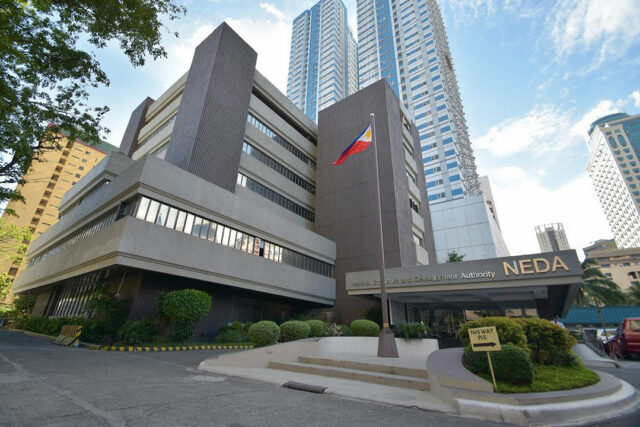
THE National Economic and Development Authority (NEDA) Board said it approved two projects that will boost water and sanitation service delivery.

In a statement on Thursday, NEDA said the Board approved the Unified Resource Allocation Framework for the Water Supply and Sanitation (WSS) sector, which will rationalize and target the allocation of available resources.

NEDA, following the Board meeting on Wednesday, said the project seeks to address the inequitable delivery of basic water and sanitation infrastructure “caused by inadequate funding, low technical capacities of service providers, and institutional challenges.”

The project will also “promote leveraging of market-based financing, as well as leveraging grants/subsidies from the National Government,” NEDA added.

The Board also approved the definition of terms used for the water and sanitation sector in the Philippines in a bid to address issues arising from the absence of a uniform set of data and classifications related to WSS agencies.

“The policy aims to align service level definitions with international standards to allow for a more comprehensive assessment and monitoring of the country’s progress in attaining targets related to water supply, sanitation, and hygiene such as the Sustainable Development Goals (SDGs).”

The Board also approved the extension of the implementation period and change in scope of the Development Objective Grant Agreement for Development Objective Improved Health for Underserved Filipinos project of the Department of Health (DoH) and funded by the United States Agency for International Development.

“Responding to the issues on logistics and pharmaceutical management, shortages of qualified health professionals in underserved areas, and inadequate public sector capacity in policy development, financing and private sector engagement, the project is now extended to Sept. 30, 2025, and will now encompass all 17 regions.”

The palace on Wednesday said the NEDA Board chaired by President Ferdinand R. Marcos, Jr. also approved the first phase of a P27.92-billion DoH project that seeks to boost local health systems.

The Board had also greenlit the Mindanao Transport Connectivity Improvement Project, which seeks to connect Regions 10, 11, and 12. The World Bank in December approved a $456-million loan for the project. — Kyle Aristophere T. Atienza

Freight, cross-border services taxes seen deterring investors

BW FILE PHOTO

THE imposition of taxes on freight and services rendered overseas could potentially push investors away from the Philippines, a global logistics company said.

At the German-Philippine Chamber of Commerce and Industry Forum on Tuesday, Michael Kurt Raeuber, chairman and group chief executive officer of Royal Cargo, said companies have concerns about the recent changes in tax rules.

“There’s one direction that would actually put a tax on freight. This is something China has tried unsuccessfully. They gave it up after a few months because the transactions on freight did not then happen anywhere in China but abroad,” he said.

“The other one is … based on the recent change in regulations (involving) the withholding 25% plus value-added tax (VAT) of 12% from the income of these people working for us abroad,” he added. 

He said that the Philippines should not impose taxes on freight, as the Philippine law clearly states that taxes should be collected on income and not costs.

“Freight except for shipping lines is a cost for everybody else. And if you impose a cost on freight plus VAT, then you have an increase in the cost of freight of about 35%,” he said.

“This is hurting the Philippine economy … because if you have a tax on freight here, what happens is that the freight discussions and contracts will not be made in the Philippines but abroad,” he added.

On the new VAT rules for cross-border services, he said income of the Filipinos and foreigners they hire overseas will be subject to 25% withholding tax plus VAT.

“Our company is not only active in the Philippines but in many locations. We have people working for us abroad, but we pay them here in the Philippines,” he said.

“Now these are people that we are sending abroad to represent us, and what will happen there in the future if we have to renew a contract or sign a new contract about people working for us abroad? Definitely the contract will not be in the Philippines but in other countries,” he added.

He said that the Joint Foreign Chambers (JFC) recently sent a letter to the Department of Finance seeking the review of Administrative Order (AO) No. 23-2024.

Issued in May, the AO implements a digital system for the pre-border technical verification and cross-border electronic invoicing of all imported commodities.

“We recognize and appreciate the initiative’s intent to enhance national security, protect consumer rights, and safeguard the environment by ensuring that imported goods meet safety and quality requirements,” the letter said. 

“However, we would like to emphasize the importance of aligning with international commitments and best practices, particularly under the World Customs Organization’s Revised Kyoto Convention, which advocates for simplified, predictable, and transparent customs procedures,” it added.

The JFC said that the AO is also non-compliant with the World Trade Organization’s Facilitation Agreement, which states that members shall not require pre-shipment inspections as it may inadvertently facilitate entry of unauthorized goods.

The group also said that the system will involve additional logistics costs and an additional timeline for the movement of goods.

“For multinational companies with regional operations, this will make the country less competitive as a manufacturing hub due to substantial logistics costs,” the letter read.

“Moreover, transportation and logistics expenses will be factored into the selling prices of goods, likely leading to higher domestic prices of commodities,” it added.

The letter was signed by the American Chamber of Commerce of the Philippines, Inc., Canadian Chamber of Commerce of the Philippines, Inc., European Chamber of Commerce of the Philippines, and Japanese Chamber of Commerce and Industry of the Philippines, Inc.

The other signatories also include the Korean Chamber of Commerce of the Philippines, Inc., Philippine Association of Multinational Companies Regional Headquarters, Inc. US-ASEAN Business Council, and EU-ASEAN Business Council. — Justine Irish D. Tabile

2024 budget fully released as of end-Sept. — DBM

BW FILE PHOTO

THE Department of Budget and Management (DBM) said it has released the entire 2024 national budget as of the end of September.

In its Status of Allotment Release report, the DBM said P5.83 trillion has been released, including the P5.768-trillion budget for this year, as well as an additional P65.17 billion in unprogrammed appropriations.

The release rate at the end of last month was ahead of the year-earlier pace of 97.2%.

Automatic Appropriation releases stood at P1.66 trillion, for a 94.6% release rate. These included a P871.38 billion National Tax Allotment for local governments, P592.04 billion in interest payments, and P70.51 billion for the Block Grant.

The budget release included P70.35 billion for the retirement and life insurance premiums of various National Government agencies and P36.48 billion for the Special Account in the General Fund.

Automatic appropriations in September also include P14.5 billion under the Tax Expenditures Fund or Customs Duties and Taxes, P7.18 million for Net Lending, and P480 million for the pension of former presidents or their widows.

Agencies are required to submit budget utilization reports quarterly to the DBM to ensure timely spending of government funds. 

This year’s budget was 9.5% higher than last year’s and equivalent to 21.7% of gross domestic product. — Beatriz Marie D. Cruz

Developing countries need to play bigger role in ESG rule-setting — UN

REUTERS

DEVELOPING COUNTRIES need to play a bigger role in the drafting of environment, social, and governance (ESG) rules, a United Nations (UN) official said.

On the sidelines of the 16th edition of the Investment Policy Forum on Wednesday, UN Special Rapporteur on the right to development Surya Deva said that ESG regulations such as those imposed by the European Union, although well-intentioned, might not be inclusive.

“The difficulty I see is in terms of the process, whether the countries, let us say in the Global South or in Asia, were consulted properly before these regulations were pushed forward by the European Union,” he told reporters.

“So going forward, my suggestion would be that we need more global rules, but those rules must be developed in a more participatory fashion rather than being imposed by the European Union or any particular developed economy,” he added.

In the case of the Philippines, he said that its government has the ability to adapt itself to the global ESG regulations.

“It can be proactive in terms of preparing ready in terms of the economy, how these regulations are going to impact the local businesses and others,” he said.

“But in addition to that, the Philippine government can also work with other governments in Asia so that they can leverage better in terms of negotiation,” he added.

Asked about the readiness of the Philippines, he said the country has the technical expertise.

“Your human capital is definitely very well advanced in terms of that. But then, the Philippines is part of a global ecosystem. So, we have to ensure that the global rules are also there to ensure that the government of the Philippines is able to promote that kind of sustainability,” he said.

“Because if not everyone is following the same rules in terms of sustainability, the markets may not be ready to be at that kind of model of sustainable development,” he added.

The UN official also said that although investments are critical for development, there is a need to put focus on biodiversity, climate change, and the environment, especially in countries like the Philippines where a lot of natural disasters happen.

“So the private sector and the governments also have a key role to play because they need to align their tax incentives and other regimes in a way that they are promoting the right kind of investment,” he said.

He said that a right investment should not result in the displacement of indigenous peoples and must follow labor laws.

“Human development is something we should be aiming for. So, when we are talking about inclusive and sustainable development, it should not leave anyone behind, and I think the government should proactively ensure that,” he added. — Justine Irish D. Tabile

Team Asia blanks Team Europe on second day of the Reyes Cup

CARLO BIADO — FACEBOOK.COM/MATCHROOMPOOL

FILIPINO ACE Carlo Biado smashed Mickey Krause, 5-3, on Wednesday night to cap Team Asia’s four-match sweep of Team Europe in Day Two to move on cusp of ruling the inaugural Reyes Cup at the Ninoy Aquino Stadium.

That Mr. Biado triumph powered the Asians from turning a slim, shaky 3-2 edge over the Europeans in Tuesday’s opener to a commanding 7-2 advantage in this three-day, race-to-11 event that is being done in honor of Filipino legend and Team Asia skipper Efren “Bata” Reyes.

And Mr. Biado, who has won almost everything after topping the world nine-ball and 10-ball championships, was at the center of it all as he summoned the magician-like wizardry of Mr. Reyes in the former’s disposal of the beleaguered Mr. Krause.

Mr. Biado also decimated Mr. Krause in the fifth rack of the team match — the first duel of the day — that resulted in a 5-3 Team Asia triumph where the host had to dig deep in rallying from 0-2 down.

It was all Team Asia from there as Taiwanese Ko Pin Yi, another world beater, downed Spanish conquistador Francisco Sanchez Ruiz, 5-3, and the duo of Duong Quoc Hoang and Aloysius Yapp destroyed David Alcaide and Eklent Kaci, 5-2.

And then Mr. Biado entered the fray to complete what had been a dominating performance for Team Asia.

Mr. Biado is expected to figure prominently again when Team Asia go for the jugular in the final day being played Friday night. — Joey Villar

ADVERTISEMENT
ADVERTISEMENT