Home Blog Page 2498

That Great Tightening…

JCOMP-FREEPIK

It’s an interesting chapter in the October 2024 World Economic Outlook (WEO) of the International Monetary Fund (IMF), and aptly titled: “The Great Tightening: Insights from the Recent Inflation Episode.” True, inflation was far from problematic during the COVID-19 pandemic because even if no one was producing, no one was buying either. The global economy was literally locked down. During the dark days of the health crisis, demand was focused on goods and as the economy recovered and business activities resumed, we saw the shift towards services. The sector required face-to-face engagement between business and its customers.

Looking back, the Fund is now armed with evidence to show that “the pass-through of sectoral price pressures to core inflation and the steepening of the inflation-slack relationship — that is, the Phillips curve — are essential in understanding the global surge in inflation.”

Yes, both the unprecedented support from both the fiscal and monetary authorities contained what the Fund called the economic fallout from COVID-19 — it was first a blessing, and then not long after, it turned into a curse. Based on the results in many advanced and emerging markets, domestic savings rose and as they are drawn down, domestic demand peaked. The result sent many economic authorities rejoicing across the globe because the precipitous decline in output was immediately mitigated and sharp recoveries were recorded in many economies, whether advanced or emerging.

In turn, and this is the sad part, the rise in domestic demand actually compounded the supply-demand imbalances. They were initially masked by the pandemic, but when the new normal set in, and monetary expansion bloated domestic demand, there was no way for prices to go but up, and inflation surged as capacity utilization remained low. With geopolitics motivating the outbreak of war, global food and energy prices had risen and inflation tripled by mid-2022.

That’s how the “Great Tightening” was set up with central banks around the world attempting to deal with the new situation that is largely unfamiliar. Almost all the monetary levers in the central banks’ playbook were tried and tested, but as the Fund correctly pointed out “the simultaneous use of multiple policy levers by many countries, including balance sheet policies, price-suppressing measures, and fiscal policy, required assessment of their joint effects in real time.”

It’s no different from taking different medicines with what doctors refer to as contraindications. If the contraindications are absolute, the effect could be life-threatening. Doctors for sure would advise that we avoid going through such a procedure or take that medication.

As reported by the Fund, the relationship between economic slack and inflation shifted out, steepening in the process. With prices spiking more than wages, inflation gained more momentum than expected when unemployment dropped. With central banks focusing on inflation control, disinflation was not accompanied by more job losses. This must be the reason why, in the Philippines, even the unprecedented 475-basis-point increase in the Bangko Sentral ng Pilipinas’ policy rate did not cause a significant dent in our economic growth. The trade-off between inflation and jobs was not significant.

“Counteracting the inflationary effects of demand in the presence of prevalent supply bottlenecks… presents a favorable sacrifice ratio.”

As if the Great Tightening is not complex enough, this was made even more difficult when central banks did not tighten at the same time. Of course, different economies have different circumstances, for they could be country-specific. But since capital flows could move depending on the kind of monetary policy one jurisdiction is pursuing, there could be some unwanted effects on currency movement which could ultimately lead to additional inflation pressures.

Just like the difficulty the US Fed had in figuring out whether the supply shocks before the Great Tightening were transitory or permanent, our own monetary authorities sat out the escalating food and energy prices as early as 2021, announcing they would not last and monetary policy did not have to respond immediately. As the Fund admitted, even its own forecasts, and presumably many central banks around the world, underestimated the fury of inflation. Its own monitoring showed positive forecast errors which even expanded in 2022.

Annual inflation peaked in 2022 at about 8% in the median advanced economy and emerging markets, extending to median low-income countries before it retreated in 2023.

In the Philippines, there was very little problem in 2020 and 2021 for inflation hit only 2.4% and 3.9% in 2021 even as in the latter year, inflation breached the 2-4% target in seven out of 12 months. It was only in 2022 that the Bangko Sentral realized that while inflation was driven by both supply and demand factors, inflation expectations were being dislodged because the general public was affected by the target-exceeding monthly inflation for most of both 2021 and 2022. Rational inattention exacerbated the market’s appreciation of how inflation was actually misbehaving: people tended to focus on a few items that were commonly bought like rice, onion, garlic, and even salt, all of which experienced sharp price increases. There was a clear case of supply mismanagement and yet, importation of these key commodities was not much of a choice because of high tariffs. Unfortunately, only baby steps were deployed to manage the unkind movement of inflation in the Philippines.

Starting July 2022, monetary policy became more responsive and timelier. It was decisive, with strong signals to the market by delivering a total of 475-basis-point increase in monetary policy and doing them outside the regular policy meeting of the Monetary Board a couple of times. It was correct to shorten the turnaround time for monetary policy.

Many central banks could have also missed out on the downstream effects of high commodity prices. Commodities are inputs to many business activities. In particular, when inflation in energy-dependent sectors increased due to high energy prices even before the Ukraine War, inflation started to rise as well in other energy-dependent sectors, thus broadening its impact on the general economy.

The Fund also made the point that the trade-off between slack and inflation could have been more manageable because of excess household savings, especially during the pandemic. This must have also reduced the sensitivity of households’ spending to interest rate movements, preserved private consumption and economic growth.

Which all leads us to the previous call of the markets for the monetary authorities to ease monetary policy as early as the first two quarters of 2024. The basis: that there was a “clear” trend towards disinflation during the first six months when all monthly inflation rates fell within the 2-4% target. But of course, July’s 4.4% was a big disappointment. The balance of risks then continued to tilt towards the upside.

We hope that the recent siren call for a more significant adjustment in the policy rate will be avoided by the Bangko Sentral considering that inflationary factors, not the least of which is the unpredictablity of geo-politics, may even shift the balance of risks to the upside. Why, the Bangko Sentral had already decided to increase its risk-adjusted inflation forecasts from 2.9% to 3.3% in 2025 and from 3.3% to 3.7% in 2026. They saw, as we see today, potential drivers of high inflation in terms of higher power rates and minimum wages in areas outside Metro Manila. Lower import tariffs are just a one-off incentive to lower inflation. There are sectoral implications of these potential drivers and these are rather unfamiliar territories for many central banks.

While the Philippine Statistics Authority reported that rice stocks were up by some 7% last Wednesday, it also reported yesterday that palay (unmilled rice) output fell 12% in the third quarter of 2024.

Farmers were reported to have cut down on their planting areas due to extreme weather conditions. With rice prices in the world market remaining relatively elevated, we don’t know how importation could mitigate this potential source of price instability.

It would then be prudent for the Bangko Sentral to eschew bringing down the policy rate beyond the usual 25 basis points each policy meeting. It is good to be more careful, watching how previous actions are affecting the transmission mechanism of monetary policy. The US Fed, however independent the Bangko Sentral seems to be of its maneuvering, is now rethinking its decision to ease. It deserves to be closely monitored because of their actions’ potential impact on the peso and inflation. At the beginning of the Bangko Sentral’s easing cycle, the market rejoiced over the decision to ease, and it was the right move. But today, the market seems less enthusiastic. The peso has started to weaken again, the equities market failed to lift with the Bangko Sentral rate cut. A number of sectoral issues, especially in power and food, could have more consequences on the general inflation picture. Central banks are still finding their bearings in terms of better and sharper economic models with appropriate sectoral links, as well as more granular, more sectoral, and high frequency data that would be most useful.

If the Great Moderation lasted for many years, will the Great Tightening return shortly with a vengeance?


Diwa C. Guinigundo is the former deputy governor for the Monetary and Economics Sector, the Bangko Sentral ng Pilipinas (BSP). He served the BSP for 41 years. In 2001-2003, he was alternate executive director at the International Monetary Fund in Washington, DC. He is the senior pastor of the Fullness of Christ International Ministries in Mandaluyong.


Razon’s MORE Power proposes 3-year plan to recover P115.41M

PHILSTAR FILE PHOTO

RAZON-LED MORE Electric and Power Corp. (MORE Power) is seeking to recover P115.41 million in under recoveries — financial shortfalls resulting from the difference between actual costs and recovered amounts — from 2021 to 2023, proposing to charge a portion of this amount to consumers over a 36-month period.

The company has submitted an application to the Energy Regulatory Commission seeking confirmation and approval of its calculations, as well as permission to either refund over recoveries or collect under recoveries from its customers.

“MORE Power made calculations of the over recoveries charged or under-recoveries incurred as against its customers, in the implementation of certain automatic cost adjustments and true-up mechanisms, covering the period 01 January 2021 to 31 Dec. 2023,” the company said.

Based on its calculations, the under recovery for generation, transmission, senior citizen charge and subsidy, and real property tax amounted to approximately P152.23 million. However, after accounting for over recoveries from system loss, lifeline charge and subsidy, and franchise tax, which total P36.82 million, the net under recovery was reduced to P115.41 million.

Under the proposed scheme, recoveries or refunds for generation, transmission, system loss, real property tax, and franchise tax charges will be distributed over a 36-month period.

Meanwhile, recoveries or refunds for the senior citizen charge and subsidy rate will be distributed over three months, and those for the lifeline charge and subsidy rate will be spread over 12 months.

Republic Act No. 9136, otherwise known as the Electric Power Industry Reform Act of 2001, allows distribution utilities to recover just and reasonable costs to enable them to operate viably.

Last week, the power distributor said it had energized its rehabilitated Molo Substation in Iloilo City, which has an estimated cost of P60.6 million.

The upgrade involved replacing outdated and unreliable equipment, including the control system, switchyard, and other important devices.

The Molo Substation’s upgrade also includes a reconfigured in-out system, which reduces the risk of outages, especially during peak demand, the company said. — Sheldeen Joy Talavera

Enjoying the sounds of Asia live

HYUKOH and Sunset Rollercoaster in their shared set as headliners of Day One of the ASIYA Music Festival.

By Brontë H. Lacsamana, Reporter

Concert Review
ASIYA Asian Music Festival and Conference
Oct. 12
World Trade Center, Pasay City

WITH THE boom of music streaming platforms leading to an ease of discovering songs and artists from all over the world, the Philippines recently saw a unique music festival that is the first of its kind in the country.

ASIYA, pronounced “I see ya” with an A, brought together musicians and festival organizers from around the region to perform as well as to discuss the shifting music landscape across Asia.

The likes of Filipino pop girl group BINI, South Korean indie rock band HYUKOH, and Taiwanese jazz synth-pop band Sunset Rollercoaster were headliners. The conference section of the festival held keynote talks and panel discussions from representatives of different music festivals such as Japan’s Fuji Rock and Summer Sonic, South Korea’s Busan Rock, Hong Kong’s Clockenflap, and Singapore-based traveling festival AXEAN.

Organized by Filipino events production company Karpos Multimedia, already known for helming the annual outdoor music and arts festival Wanderland, the live music portion was an interesting showcase of Asian artists.

The two-day event was held on Oct. 12 and 13, each day commencing with the conferences at 10 a.m. up to 2:30 p.m., then proceeding with the highly anticipated live music section from 3 p.m. all the way to midnight. Conference tickets and concert tickets were sold separately.

BusinessWorld attended the live music section of the first day of the festival, which began with Filipino multi-instrumentalist Gabba showing off his distinct guitar riffs and rhythmic drumming sensibilities in a full set. This was followed by Thai solo act Numcha, bringing an indie pop flavor to the show with her delicate yet catchy hits like “Keep Cold” and “Dirty Shoes.”

Filipino singer-songwriter Reese Lansangan continued the chill vibe with her folk-pop tunes. Now based in Japan, the performance at ASIYA was a special homecoming of sorts for the musician, who brought with her a solid full band.

Next up was Malaysian indie trio Babychair, performing for the first time in the Philippines, with easygoing hits like “Oh It’s You” warming up the cold indoor venue at the World Trade Center. Filipino funk pop band Flu turned it up a notch and kept the crowd dancing with their set, at one point calling Numcha back onstage for a song they did together this year, called “I’ll Be Mine.”

There was a notable jump in energy when Japanese pop singer Imase took the stage, his danceable tunes “Nagisa” and “Night Dancer” keeping the audience pumping. He also hyped up the crowd with his cheerful antics and occasional prepared Filipino notes — one of which praised the local creamy vegetable dish gising-gising as his favorite so far during this trip.

Filipino electronic band UDD continued the dance party atmosphere, with R&B singer ZOYA joining them as they performed their recent collaboration, “Kapoy.”

When South Korean indie soloist Colde came on, a lot of girls started screaming, his reputation as a Korean R&B powerhouse preceding him (though before this, he was known by a handful as half of the sadly now-disbanded hiphop duo Offonoff). Colde’s full set finished very strongly, alternating between soulful singing and energetic rap with hits like “Control Me,” “I Color You,” “WA-R-R,” “After Everything,” and “Star.” He ended with “Dance,” a little treat for the longtime Offonoff fans.

After that, the iconic Filipino rock band Urbandub brought in a warm embrace of local music, with popular tunes such as “First of Summer” and “Evidence” comprising their nostalgic set.

The day-one headliners, however, easily stole the night. Seoul-based rock outfit HYUKOH and Taipei-based synth-pop act Sunset Rollercoaster collaborated on a short album titled AAA earlier this year, a rare meeting of minds of two of the best indie artists in Asia today. It was HYUKOH’s first time to perform in the Philippines — long overdue since they are a pillar of the K-rock niche — while it was Sunset Rollercoaster’s second visit, after Wanderland last year.

Entering under the spotlight as a super-collective with about nine members onstage, they ensured that the soundscape was ready for them, with rumbling sounds pulled from their collaboration album welcoming them. All of them wore quirky animal-inspired headpieces and clothing, making them look endearingly caricaturish under the colorful stage lights.

They opened with a rock version of Claude Debussy’s “Clair de Lune,” which led into “Kite War,” an epic and rich symphony of synth keyboards and saxophone which opened their joint album. Towards the end, it satisfyingly exploded into a full-on rock track with the guitarists going crazy, and was even better than how it sounded on the record.

“Burgundy Red,” a Sunset Rollercoaster tune, followed to provide a calm before the storm that was their collaboration hit track “Young Man,” a high-energy crowd pleaser. The heaviest rock performances of the set were this writer’s favorite part, all HYUKOH songs: “Flat dog,” “Wanli,” and “New Born,” featuring guitar-led crescendoes that glowed red under stage lights. “Y” was another standout, again from the two bands’ joint album, the six-minute groovy jam session of the bunch highlighted by a beautiful saxophone solo bouncing off the bass.

To close, they pleased the crowd with a one-two punch — HYUKOH’s romantic ballad “LOVE YA!,” which lead singer Oh Hyuk dedicated to the crowd, and Sunset Rollercoaster’s “My Jinji,” a memorable viral hit that was most people’s introduction to the band, which lead singer Tseng Kuo-Heng dubbed the AAA version. Needless to say, the audience went wild for them.

While most Filipinos tend to think of K-pop and Japanese anime songs when asked about Asian music outside of the Philippines, the landscape is definitely growing with the democratization of music production and the advent of online music streaming. ASIYA’s conference section is proof of this, with topics like “Beyond the Pops of East Asia” and “New Favorites of Southeast Asia” among the panel discussions held during the two-day event.

It’s only right that this developing synergy is being cultivated by music festivals and event organizers, with the artists themselves doing collaborations of their own, like Filipino band Flu with Thai soloist Numcha, and South Korean band HYUKOH with Taiwanese band Sunset Rollercoaster. This era of music is exciting to behold.

CA backs employer in probationary dismissal case

PHILSTAR FILE PHOTO

THE COURT of Appeals (CA) affirmed the dismissal of a former probationary employee of Ravago Equipment and Rental, Inc., ruling the dismissal to be valid on performance grounds.

The tribunal’s Former Tenth Division, in a resolution released on Oct. 10, upheld its earlier ruling and that of the National Labor Relations Commission, saying that the probationary employee did not meet its standards.

“By the nature of probationary employment, an employee knows from the very start that he or she will be under close observation, and his or her performance of assigned duties and functions will be under continuous scrutiny by his/her superiors,” Justice Emily L. San Gaspar-Gito wrote.

“It is in apprising him or her of the standards against which his/her performance shall be continuously assessed where due process lies and not in the notice and hearing,” she added.

“Thus, petitioner’s claim that he was deprived of due process has no legal leg to stand on.”

The probationary employee was terminated for  sleeping while on duty, arguing with the client’s employees, and causing damage to property.

He had argued that his right to due process was violated when the company terminated his employment, but the appellate court in its Oct. 10 resolution reiterated that the employee was made aware of the standards he must meet before becoming a regular employee.

The tribunal cited an earlier ruling of the Supreme Court, which held that the usual two-notice rule for terminations does not govern.

“Here, petitioner was given a reasonable time before the effectivity date of his employment’s termination. It was petitioner who requested to be relieved from work earlier,” the resolution added.

It also rejected the employee’s monetary claims. — Chloe Mari A. Hufana

Chinabank sees double-digit growth in credit card loans

BW FILE PHOTO

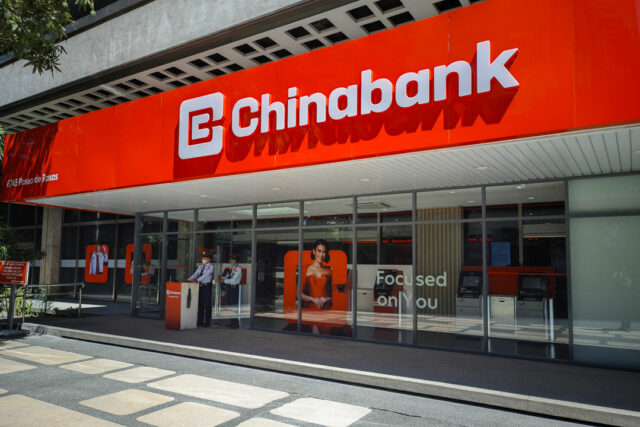
CHINA BANKING Corp. (Chinabank) expects its credit card loans to grow by double digits this year and next as the Philippine central bank’s policy easing cycle is seen to spur consumer spending.

“We don’t have the definite plans yet for 2024 and 2025, but it will definitely be double-digit [growth] for this year and next year, and maybe even in the next five years,” Chinabank Executive Vice-President and Consumer Banking Segment Head Aloysius C. Alday, Jr. told reporters on the sidelines of a credit card launch event on Thursday.

Chinabank’s consumer loans are expected to continue posting double-digit growth this year, supported by the Bangko Sentral ng Pilipinas’ (BSP) easing cycle, he said, adding that consumer loans currently make up about 25% of the bank’s total loan portfolio.

“It’s supposed to encourage more activity, particularly in the real estate segment. Now, it’s more affordable to have financing as well as it will propel economic activity, hopefully. So, in terms of consumer loans, it can be translated to more activities. And we can service more individuals needing financing because now it can be more affordable,” Mr. Alday said.

The BSP on Wednesday cut benchmark interest rates by 25 basis points (bps) amid manageable inflation, bringing its policy rate to 6%.

The Monetary Board has now lowered borrowing costs by a total of 50 bps since it began its easing cycle in August with a 25-bp cut.

BSP Governor Eli M. Remolona, Jr. signaled the possibility of another 25-bp cut at the Monetary Board’s last meeting for the year on Dec. 19, which would bring the policy rate to 5.75% by end-2024.

He added that a 50-bp reduction in December would be “too aggressive a cut” and would only be possible in a hard-landing scenario.

For 2025, Mr. Remolona said they could slash borrowing costs by 100 bps.

Chinabank has been diversifying its credit card product portfolio to tap different market segments and grow its presence in consumer banking. On Thursday, the bank launched its first ever Visa-powered credit card.

“The objective of Chinabank in introducing new cards is really to service more consumers.

We would like to further grow our presence in consumer banking because we’ve always been known to be a businessman or a corporate bank. So, we started with destinations, targeting travelers. This time around, we’re looking at targeting not entirely women, but those who are into pursuits — independent, corporate-thinking, working women,” Mr. Alday said.

Holders of the new Chinabank Velvet Signature card will receive rewards after reaching certain spending requirements, cashback, and discounts of up to 50% off on shopping, beauty, and wellness through exclusive deals. The new card is crafted from recycled plastic.

Mr. Alday added that the bank will continue to release card products in partnership with Visa.

The bank is also looking to target the younger generation, he added, and will launch a new app next month as part of this bid.

“For credit cards, the young market is still growing because this is a lending product. So, the tendency is to have credit history and also credit knowledge, the younger ones will probably have to learn how to handle credit first before they endeavor into credit cards. The majority [of clients] is still maybe Gen X. The millennials are soon to be part of it because they’re joining the workforce,” Mr. Alday said.

Chinabank booked an attributable net income of P5.53 billion in the second quarter, down by 4.75% year on year. This brought its first-half net income to P11.44 billion, up by 5.65% year on year.

The bank’s shares inched down by five centavos or 0.08% to end at P60.15 apiece on Thursday. — A.M.C. Sy

Saudi Arabia and Iran become unlikely bedfellows

FREEPIK

IN THE MIDDLE EAST, the adage “the enemy of my enemy is my friend” has ruled. Thus, Saudi Arabia and its allies quietly — and at times not so quietly — tended to side with Israel against Iran.

Until now.

Caught between what they perceive as two evils, Riyadh and other Arab nations in the Persian Gulf are now whispering neutrality with Iran. In part, the behind-the-scenes diplomatic maneuvering reflects their inability to influence the crisis, lacking leverage and influence over the Islamic republic and the Jewish state; in part, it reflects their fear they will become collateral damage.

The non-involvement stance is the most obvious result of a whirlwind of meetings between Persian and Arab diplomats over the last couple of weeks. But its roots go back several years. For global financial markets, it has an important implication: It makes the worst-case scenario of a series of attacks and counterattacks against the region’s oil facilities less likely.

I don’t think the oil market has fully appreciated the change in tone of Saudi-Iranian relations, including the re-establishment of diplomatic relations last year after Chinese mediation and ongoing regional diplomacy. For Beijing, the relationship between the two most influential Middle East nations matters: It buys more Saudi and Iranian crude than anyone else. And so, the Middle East of 2024 isn’t the same one from five years ago. Oil may be less at risk than many bulls hope.

The most significant of all those diplomatic meetings was a rare visit by Abbas Araghchi, the Iranian foreign minister, to Saudi Arabia last week. In Riyadh, he was received not just by his Saudi counterpart, as would be typically the case, but also by Crown Prince Mohammed bin Salman. Saudi state-owned media published a series of photographs from the meeting. Prince Mohammed was smiling; Araghchi looked at ease. The choreographed message was not-so-subtle: Perhaps we aren’t friends, but we don’t need to be enemies.

Earlier, Araghchi met on Oct. 3 with all the foreign ministers of the Gulf Cooperation Council (GCC), a Saudi-led umbrella group that includes the United Arab Emirates, Kuwait, Bahrain, Qatar, and Oman. Abdel Aziz Aluwaisheg, a senior GCC diplomat, said the meeting could mark “the start of a new phase of relations” between Iran and its Arab neighbors.

The shift is the latest sign of two trends. The first is the détente between Iran and Saudi Arabia that started in mid-2021 and consolidated in 2023. The second is the frustration in Riyadh with the White House and the right-wing government of Benjamin Netanyahu.

During the “maximum pressure” American campaign against Iran, between 2017 and 2021, Saudi Arabia sided with President Donald Trump — and, implicitly, with Israel. That changed in 2019 after pro-Iranian militias used a barrage of drones and missiles to attack the most important of all the Saudi oil installations: the processing plant of Abqaiq. The kingdom not only discovered it was vulnerable in a way it had never appreciated, it also felt let down by Trump, which refused to retaliate against Tehran.

Since then, Riyadh has reevaluated what’s in its national security interest. It doesn’t seek friendship with Tehran, but it’s no longer interested in supporting the US and Israel against Iran as it did before. For the kingdom, safeguarding its oil cash flow is paramount, so it is de-risking the billions of dollars it’s pouring into tourism projects as part of its Vision 2030 program. Luxury hotels in the Red Sea attract foreigners into the kingdom; bombs and conflict do not. It’s another part of what I call the “Saudi First” policy.

Tehran has, in some ways, met Riyadh halfway. The number of attacks from Iran-backed Houthis against Saudi Arabia has declined significantly in recent months. Notably, the Houthis of Yemen haven’t targeted any Saudi oil installations, a departure from the string of strikes in 2019, 2020, 2021, and 2022.

In the current crisis, Iran appears to want two things from the Saudis. The first is assurances that their territory won’t be used to facilitate an Israeli attack. The second is that Riyadh uses its influence in Washington to pressure Israel into cease-fire talks to end the conflicts in Gaza and Lebanon. If Israeli warplanes can’t overfly the kingdom (nor over the UAE, Kuwait, Qatar, Oman, and Bahrain), it would force them to take longer routes either via Syria and Iraq (neither of them have air defenses to stop the Israelis), flying over Turkey (very unlikely as Ankara would oppose), or flying a long arch over the Red Sea and the Indian Ocean.

In return, Saudi Arabia wants a promise it won’t be a target of opportunity in any Iranian retaliation against Israel. In Riyadh, royals seemed until very recently worried that if Tehran suffers a devastating Israeli blow, it could respond by striking the Saudi oil fields, either directly or using one of its regional proxies.

Both sides have not revealed if a deal is on the table, but reading between the lines it looks like both sides have, at the very least, an understanding. As such, I won’t expect that Riyadh will open its skies to the Israeli air force nor that Tehran will put its neighbor’s vast oil fields on the target list.

The Middle East often makes for unlikely bedfellows. Nothing puts aside differences like money. And for Saudi Arabia and Iran, money is oil.

BLOOMBERG OPINION

Alternergy consolidates land assets

ALTERNERGY.COM

ALTERNERGY Holdings Corp. is exploring the possibility of raising additional capital by turning its recently established land holding company into a real estate investment trust (REIT) structure.

In a statement on Thursday, the company said its board approved consolidating all its land holdings with the recent acquisition of Triple Play Land Corp. (3PLCo).

Alternergy plans to use 3PLCo to consolidate ownership of land used as project sites for the company’s various renewable energy projects.

“3PLCo eventually can be used as a platform by ALTER to transform it into a future REIT play to raise additional capital for the group,” Alternergy President Gerry P. Magbanua said.

He said that it will be “unique due to its diverse holdings of complementary renewable power assets.”

The company also recently announced that it has completed its acquisition of Alternergy Solar Holdings Corp. (ASHC), making it the 100% owner.

The company said that the move is “part of the ongoing restructuring of the company to organize its renewable energy technologies into separate intermediate holding companies.”

ASHC will handle Alternergy’s solar energy portfolio, similar to the already existing Alternergy Wind Holdings Corp. for wind and Alternergy Mini Hydro Holdings Corp. for hydro.

Alternergy aims to develop up to 500 megawatts of additional wind, solar, and run-of-river hydro projects.

At the local bourse on Thursday, shares in the company rose by 2.17% to close at P0.94 apiece. — Sheldeen Joy Talavera

Entertainment News (10/18/24)


SIX the Musical all set for final performances

THE hit production SIX the Musical is now on its final weekend of performances in Manila. Its shows on Saturday and Sunday are already sold out, but there are still tickets available for Oct. 18, 8 p.m., at The Theatre at Solaire. The West End and Broadway musical follows the wives of Henry VIII, who take to the mic to tell their tales, remixing 500 years of historical heartbreak into an 80-minute celebration of 21st century girl power. For tickets, visit TicketWorld.


Orange & Lemons, Linya-Linya collab for concert

THERE is a special collaboration between the iconic Filipino rock band Orange & Lemons and the spunky local clothing brand Linya-Linya, in time for the former’s upcoming show NOW AND THEN: Orange & Lemons 25th Anniversary Concert. The event will be held on Oct. 18, 8 p.m., at the Metrotent Convention Center, Pasig City. The popular brand designed two exclusive limited-edition shirts featuring the band’s greatest hits, and viral lyrics of ”Hanggang Kailan (Umuwi ka na baby).” Aside from the booth on the concert grounds, the shirts will be available via www.linyalinya.ph, priced at P849 each alongside other merch like mug coasters and sticker packs. Tickets for the concert are available at https://orangeandlemons.helixpay.ph/.


Yuchengco Museum offers free admission

IN LINE with Museums and Galleries Month, people can visit the Yuchengco Museum for free on Oct. 19. One of the exhibits on display is Beyond Paper: The Touch of Tes Pasola, which showcases the life and work of the multi-talented artist and product designer Tes Pasola. At the Rizal Gallery, visitors can go on a journey through the life and legacy of national hero Jose Rizal through his personal family letters and historical photographs.


Pets, collectibles, and more at Araneta City

IT IS a busy weekend at the Araneta City in QC, with everything from a pet bazaar to a fun run.  The 7th GNB Collectibles Fair will be held on Oct. 18 to 20, 10 a.m. to 9 p.m., at Ali Mall’s MacArthur Activity Area. Pet Mundo: Pet Fest Circus Halloween 2024 will be held on Oct. 19 and 20, 10 a.m. to 9 p.m., at the Quantum Skyview, Upper Ground B Floor, Gateway Mall 2. There will be a pet bazaar alongside fun activities and treats. Araneta City continues to promote Breast Cancer Awareness through a concert, the Pink Power Concert, empowering those currently facing the challenges of breast cancer. Performing are members of Araneta City’s partner foundation, the Kasuso Foundation. The concert will be held on Oct. 21, 1:30 p.m., at the Lower Ground Floor Activity Area at Farmers Plaza. Meanwhile, from Oct. 21 to 25, over at the Upper Ground Floor Activity Area, of the Gateway Mall 1, the Academy for Women Entrepreneurs (AWE) Bazaar will support women-led businesses. Meanwhile, every Sunday, Araneta City becomes an “open public space” with select streets open for pedestrians to roam around or do physical activities such as running/jogging, Zumba, cycling, and walking. The aRUNeta Run Club initiative aims to provide a safe outdoor space for citizens to do their recreational activities in the grounds of Araneta City. This happens every Sunday from 5-9 a.m.


Color It Red at Newport World Resorts

THE five-piece band Color It Red is bringing a splash of color to Bar 360 at the Garden Wing of Newport on Oct. 19, at 10:45 p.m. For a minimum cover charge of P1,500 (consumable), audiences can catch the Filipino indie band’s distinct 1990s underground rock sound live. The band was formed in 1989, led by vocalist Cooky Chua and fellow founding member, acoustic rhythm guitarist Barbi Cristi. Completing the band are bassist Bo Pip Paraguya, JV Torres on drums, Kwachi Vergara on lead guitar, and the newest member, violinist Jerome Nuñez.


Local film Mujigae earns PG rating

FILIPINO fans of K-drama star Kim Ji-soo will see him again on the big screen as he makes his Filipino comeback in the movie, Mujigae, which earned a PG (Parental Guidance) rating from the Movie and Television Review and Classification Board (MTRCB). He stars alongside Filipino actress Alexa Ilacad and child star Ryrie Sophia. Other films showing this weekend are science fiction adventures The Wild Robot and Alien Country, also rated PG.


Filipino Pro Wrestling brings in Jeff Cobb

THE championship title under Filipino Pro Wrestling (FPW) is in play this weekend as title holder Mike Madrigal faces off against world-renowned wrestler Jeff Cobb on Oct. 20 at Baked Studios, Makati. Tickets to FPW’s “ASTIG,” priced at P1,000, are available exclusively via Ticket2Me.


Kim Won Shik drops second single

KOREAN singer Kim Won Shik is back with another single, “Hello My Love.” The heartfelt ballad aims to capture the essence of unwavering love and commitment. It blends English and Korean lyrics, put together with a gentle melody. “Hello My Love” is out now on all digital music streaming platforms.

Kindness in management: virtue or curse?

Kindness, defined as consideration and empathy, is sometimes characterized as a management weakness. There is a perception that competitive environments, particularly in leadership and business, reward aggressive and assertive behavior. Does kindness really create vulnerabilities that make leadership less effective? Is the adage, “nice guys finish last” valid?

Bartleby, in a recent The Economist column, says it is “cool to be kind.” “A study by Soo Ling Lim of University College London and her co-authors looked at the performance of Master of Business Administration students at London Business School across 10 academic years, and found that agreeableness improves outcomes when levels of uncertainty about a task — and presumably, the need to work together harmoniously — are higher. This reflects the evolution of organizations where teams matter more, along with social skills that ease cooperation. It likewise is a testament to the volatility of present times. We must distinguish between kindness and passivity. Research shows that effective leaders balance kindness with assertiveness. A kind leader does not need to be passive. Instead, empathy is combined with a clear sense of direction and firmness when necessary. Adam Grant, an organizational psychologist, highlights in his book Give and Take that “givers” (those who prioritize others’ needs) often rise to the top of organizations because they build strong networks of support, trust, and reciprocity. These individuals succeed in the long term because of the goodwill they accumulate.

Data suggest that while more aggressive, self-serving leaders may achieve short-term success, they often face challenges in maintaining it. A 2020 study published in the Harvard Business Review found that leaders who exhibited more altruistic behaviors were more successful over the long term in maintaining high-performing teams. While aggressive leadership may yield quick results, it often leads to high turnover, burnout, and resentment, which can undermine long-term organizational stability and growth.

Boris Groysberg and Susan Seligson of Harvard Business School assert that “good leadership is an act of kindness.” Citing Psychology Today on kind bosses, “They have shown to increase morale, decrease absenteeism and retain employees longer.” Mayo Clinic urges the need to intentionally set a goal to be kinder to others. “Acts of Kindness activate the part of our brain that makes us feel pleasure and release a hormone called oxytocin that helps modulate social interaction and emotions,” it said. Overall, it translates to improved morale and performance.

Kind leaders build trust more easily. Employees are more likely to follow a leader they trust and believe has their best interests at heart. Trust enhances a manager’s ability to influence and motivate teams. This contrasts with authoritarian leadership, where fear may achieve short-term compliance but often erodes trust and long-term loyalty. Better relationships are also achieved with clients, stakeholders, and partners. These relationships, based on mutual respect and trust, often lead to better deals, more sustainable business practices, and enhanced collaboration. In the long term, this relational capital can prove more valuable than short-term gains achieved through cutthroat tactics.

Several case studies illustrate how “nice guys” often outperform their harsher counterparts. The value and reward of kindness can be seen in legendary leaders like King Solomon and Desmond Tutu. Satya Nadella, the CEO of Microsoft, is widely regarded as a kind and empathetic leader. His leadership style has been credited with transforming Microsoft’s culture, leading to substantial growth and innovation. Similarly, Jacinda Ardern, the former Prime Minister of New Zealand, demonstrated that kindness and empathy could be key pillars of effective leadership, particularly in times of crisis. General Motors CEO Mary Barra is known for her inclusive, employee-centric style. These leaders achieved significant success, disproving the notion that kindness is a liability in leadership.

According to research from Gallup, employees who feel their managers genuinely care about their well-being are more engaged and less likely to leave their jobs. A kind manager creates a sense of psychological safety, allowing employees to express themselves, take risks, and collaborate more effectively. These conditions enhance overall team performance in a positive work environment.

Kindness is a key component of emotional intelligence (EQ), which is increasingly seen as vital for leadership success. Leaders with high EQ are better able to manage their own emotions, understand the feelings of others, and navigate interpersonal dynamics effectively. Daniel Goleman, a leading psychologist in this field, suggests that kindness and emotional intelligence correlate strongly with successful leadership outcomes. Managers who demonstrate kindness are often better equipped to handle conflict resolution, inspire teams, and maintain morale.

Kindness also fosters an environment conducive to innovation. Employees feel empowered to share new ideas without fear of ridicule or harsh criticism. As a result, teams led by kind managers are often more innovative and creative, since they are encouraged to think outside the box and contribute freely.

Throughout my career, I’ve had my share of working with all kinds of bosses, the harsh autocratic ones as well as the leaders who have been able to balance kindness with assertiveness and a clear vision. It boils down to a measured middle ground, because too much of everything, even kindness, can backfire. As Bartleby asserts: “Kindness is not a management doctrine. But its absence is a management failure.”

The views expressed herein are the author’s own and do not necessarily reflect the opinion of his office as well as FINEX.


Benel Dela Paz Lagua was previously EVP and chief development officer at the Development Bank of the Philippines.  He is an active FINEX member and an advocate of risk-based lending for SMEs. Today, he is independent director in progressive banks and in some NGOs.

Ratan Tata: a compassionate industrialist who cared about employees and citizens as well as profit

TATA.COM

Ratan Tata, who has died at the age of 86, was a giant of global industry, whose interests included cars, steel, hotels, travel, and tea. But he was also hailed as a visionary whose work went far beyond the business world, through his company’s commitment to social causes.

As the head of Tata Group, an Indian business empire founded over 150 years ago, Tata became deeply intertwined with India’s corporate growth and societal development. And he was instrumental in expanding Tata’s global presence.

One of his most notable achievements was buying the British tea company Tetley for £271 million in 2000, making Tata one of the largest tea companies in the world.

It was a bold step towards transforming the Tata group from an Indian powerhouse into a global player. So too was the acquisition of Jaguar Land Rover in 2008.

Despite the motoring company’s financial struggles at the time, Tata saw potential in the British brand. He oversaw significant investment in technology and design, and his gamble paid off. New models gained global recognition and Tata Motors became a major force in motoring.

Yet another defining moment in Ratan Tata’s leadership was the $12 billion purchase of Corus Steel in 2007, one of the largest takeovers in Indian corporate history.

Although the deal presented challenges, including fluctuating steel prices and economic downturns, it underscored Ratan Tata’s strategic vision of expanding the company’s global footprint – and his ability to see beyond short-term gains and focus on long-term growth for the group.

Not all of his plans worked out of course. He was heavily involved in the creation of the Tata Nano in 2008, which was supposed to be a car that was an affordable and safer alternative to two-wheeled vehicles.

Billed as the “world’s cheapest car,” it cost just over $2,000. But the Nano probably deserved better marketing and less hype, and was discontinued in 2019. Yet it remains a symbol of the company’s innovative spirit – and Ratan Tata’s determination to improve the everyday lives of Indians.

PHILANTHROPY
That vision was also clear in the ethical business practices that mean much of the Tata group’s profits are used to support philanthropic work in education, healthcare and scientific research.

There are several Tata research centers in India, including the Tata Institute of Social Sciences. Tata Trusts have also contributed to the likes of Harvard Business School and the London School of Economics.

His dedication to philanthropy was also displayed in moments of crisis, particularly after the 2008 Mumbai attacks which targeted the Taj Mahal Palace Hotel, owned by the Tata Group. Ratan Tata later ensured that all affected employees and guests were provided with medical care and financial compensation.

And when COVID changed the world, Tata Steel announced that it would continue paying salaries and medical benefits to the families of Indian employees who died from the virus, until the deceased worker would have turned 60.

Ratan Tata’s compassionate response to crises, providing aid during natural disasters and supporting communities in need, further solidified his reputation as an industrialist who placed people’s wellbeing at the core of his business.

Ratan Tata’s legacy as a “people’s industrialist” is cemented by his deep sense of responsibility toward improving the lives of ordinary people. “I would like to be remembered as someone who made a difference; nothing more, nothing less,” he once said.

Many Indians will remember him as some thing more. His philanthropy and inclusive approach to business have made a lasting and positive impact on India. And his ethical leadership, long-term vision, and deep compassion for others has cemented his reputation as a man who worked not just for profits, but for the betterment of society as a whole.


Thankom Arun is a professor of Global Development and Accountability at the University of Essex.

Arthaland to inject P1.7B into subsidiary Pradhana Land

ARTHALAND.COM

LISTED property developer Arthaland Corp. is investing P1.7 billion in its subsidiary Pradhana Land, Inc. for a future project.

Arthaland will subscribe to 17 million preferred shares of Pradhana at P100 apiece, the property developer said in a regulatory filing on Thursday.

“This is the investment vehicle that will be used by the corporation for its future project, the details of which will be disclosed at the appropriate time,” Arthaland said.

“Preferred shares are voting and have such features as the Pradhana board of directors prescribe, but in no case shall such shares be cumulative or redeemable at the option of the holder,” it added.

Pradhana Land was incorporated in September 2019 with the primary purpose of engaging in the real estate development business.

Recently, Arthaland subscribed to 180,000 preferred shares of subsidiary Bhavya Properties, Inc. at P100 per share, equivalent to P18 million.

The additional equity will fund Bhavya’s working capital requirements while ensuring compliance with its financial covenants.

Bhavya is developing the Eluria luxury residential condominium project in Makati. It is a 31-storey luxury residential project with large and limited edition designed residences.

Eluria will feature a heated saltwater leisure and lap pool, an indoor children’s playroom, a function hall, a potager garden at the roof deck, and chauffeur shuttle services to select nearby destinations.

On Thursday, Arthaland shares were unchanged at 41 centavos per share. — Revin Mikhael D. Ochave

J-Hope, of South Korea’s BTS, finishes military service

WONJU, South Korea — K-pop star J-Hope, a member of the supergroup BTS, was discharged from South Korea’s military on Thursday after 18 months of duty, sparking enthusiasm among fans and investors for a potential reunion of the boy band next year.

J-Hope, 30, is the second member of the seven-member group to wrap up the mandatory national service that has put their music careers on hold, after oldest member Jin finished his service in June.

Wearing a uniform and a black beret, J-Hope smiled as he greeted Jin and around 100 cheering fans as well as reporters upon his release at a military base in Wonju, Gangwon province.

“Thanks to the fans, I was able to finish it (the service) safely, with good health,” he told those gathered.

“What I’ve felt for the past a year-and-a-half is that a lot of soldiers are working hard, dedicating themselves, and doing so much to protect the country,” he added, asking the public for their interest and love for those serving in the military.

Shares in HYBE, the label which houses BTS, rose 7% in early afternoon trade versus a flat wider market.

The final four members of the group began their service in December 2023, with the band expected to reunite in 2025 after all have completed their military duty.

“I’m really hoping to see them (all BTS members) again together,” said Constanza Godoy, 33-year-old Chilean fan who went to see J-Hope leave the military.

“I think that after this short time apart they will be more close, and they will bring more stories to their songs, to their lyrics.”

BTS ranks 41th among best-selling artists of all time according to chartmasters.org on a list headed by The Beatles.

Since their debut in 2013, they have sold more than 56 million physical albums and singles, and tallied six No. 1 albums on the Billboard 200, according to chartmasters.org and Billboard.

South Korea requires all able-bodied men between the ages of 18 and 28 to serve between 18 and 21 months in the military or social service, but it revised the law in 2020 to let globally recognized K-pop stars delay signing up until age 30. — Reuters