Home Blog Page 2450

On coal, gas, and energy security
For this column, I will cover three recent important local events in the energy sector, then look at global trends in the gas trade.

First, I went to the Power 102 forum on July 10 at the Seda Hotel BGC organized by Aboitiz Power Corp. (AP) and their partner Manila-based journalists. It drew a big audience — about 60 reporters and journalists from Metro Manila and provincial media, both print and broadcast, covering energy stories.

The opening remarks were given by Ronald “Suiee” Suarez, Vice-President for Corporate Communications of AP. Said the soft-spoken engineer: “AboitizPower started this power lecture series in 2023 with a goal to help energy journalists in their professional development by increasing their understanding of an important yet very complex industry. As a follow-up to last year’s Power 101 seminar on energy policies and pricing, Power 102 tackled the challenges of growing variable renewable energy capacity in the Philippines in the context of a dynamic regulatory and technological environment to secure a resilient and reliable grid. We hope that our media guests learned a lot from the various speakers, from Department of Energy (DoE) Secretary Raphael P.M. Lotilla and Undersecretary Rowena Guevarra, ERC (Energy Regulatory Commission) Chairperson Monalisa Dimalanta, and private energy companies, local and foreign, that came. We trust that we will see them again in future runs of this education series.”

Then there was the Manila Electric Co. (Meralco) press conference on July 15 regarding the July 2024 electricity rates. It was announced that there was a significant increase of P2.15/kilowatt hour (kWh) mainly due to a higher generation charge as power costs normalized following the artificially low rates of last month. The overall rate for a typical household went up from P9.45/kWh June 2024 to P11.60/kWh in July.

Meralco Vice-President and Head of Utility Economics Lawrence S. Fernandez correctly explained that “[distribution utilities] like Meralco pass-through the actual costs of generation. In the past couple of months, generation costs rose, reflecting the Yellow and Red Alerts we experienced and the tight supply situation. We hope this rise in generation charges provides an adequate price signal for additional generation capacity, including expediting permits and approvals for power plants and contracts.”

Aside from the substantial increase in the generation charge, two other things were notable in the July 2024 rates. One, the transmission charge by the National Grid Corp. of the Philippines (NGCP) went down by P0.155/kWh, and two, taxes (VAT, local franchise, etc.) have increased by P0.175/kWh.

That was a good move by the NGCP. They finished three big projects — inaugurated by President Ferdinand Marcos, Jr. — this year: the Mindanao Visayas Interconnection Project (MVIP) which was ceremonially energized on Jan. 26; the Cebu-Negros-Panay interconnection in Bacolod City, which was inaugurated on April 8; and the Mariveles Hermosa San Jose interconnection in Bataan which was inaugurated on July 12.

The third was the Energy department’s response to various newspaper reports on “PH dependency on coal-fired power surpasses China and Indonesia” which it made on July 10. I share the arguments of the DoE that “the power generation mix of the Philippines cannot be directly compared with large economies like China and Indonesia… China has an installed coal power plant capacity of 1,136.7 gigawatts (GW), Indonesia has 51.6 GW, while the Philippines has only 12.1 GW.”

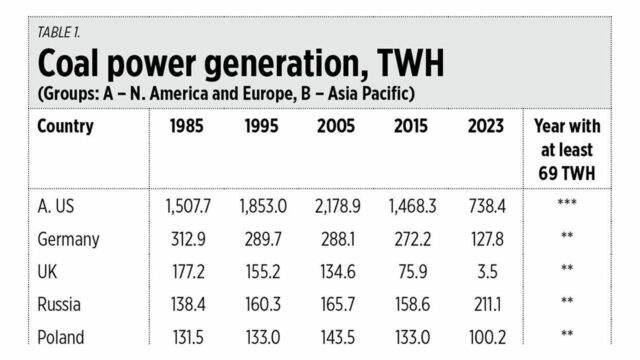
I put together a table showing the absolute coal power generation in terawatt-hours (TWh) of several countries, not the percent share of total generation. The Philippines’ coal generation of 69.5 TWh in 2023 was already attained by Vietnam in 2018, by Indonesia in 2011, by Taiwan in 1998, by South Korea in 1995, by Australia and Canada likely in the 1970s, by China, India, Japan, Russia, and the UK likely in the 1940s to 1960s, and by the US perhaps since the late 1800s (see Table 1).

Instead of people demonizing our coal plants, we should in fact expand our coal generation capacity especially in Iloilo, Cebu, and Mindanao via “brownfield” coal investment, the expansion within existing facilities which will no longer require new environmental clearance certificates (ECC), and which are not covered by the DoE’s coal plant moratorium order in 2020.

GLOBAL LNG EXPORTS UNDER TRUMP
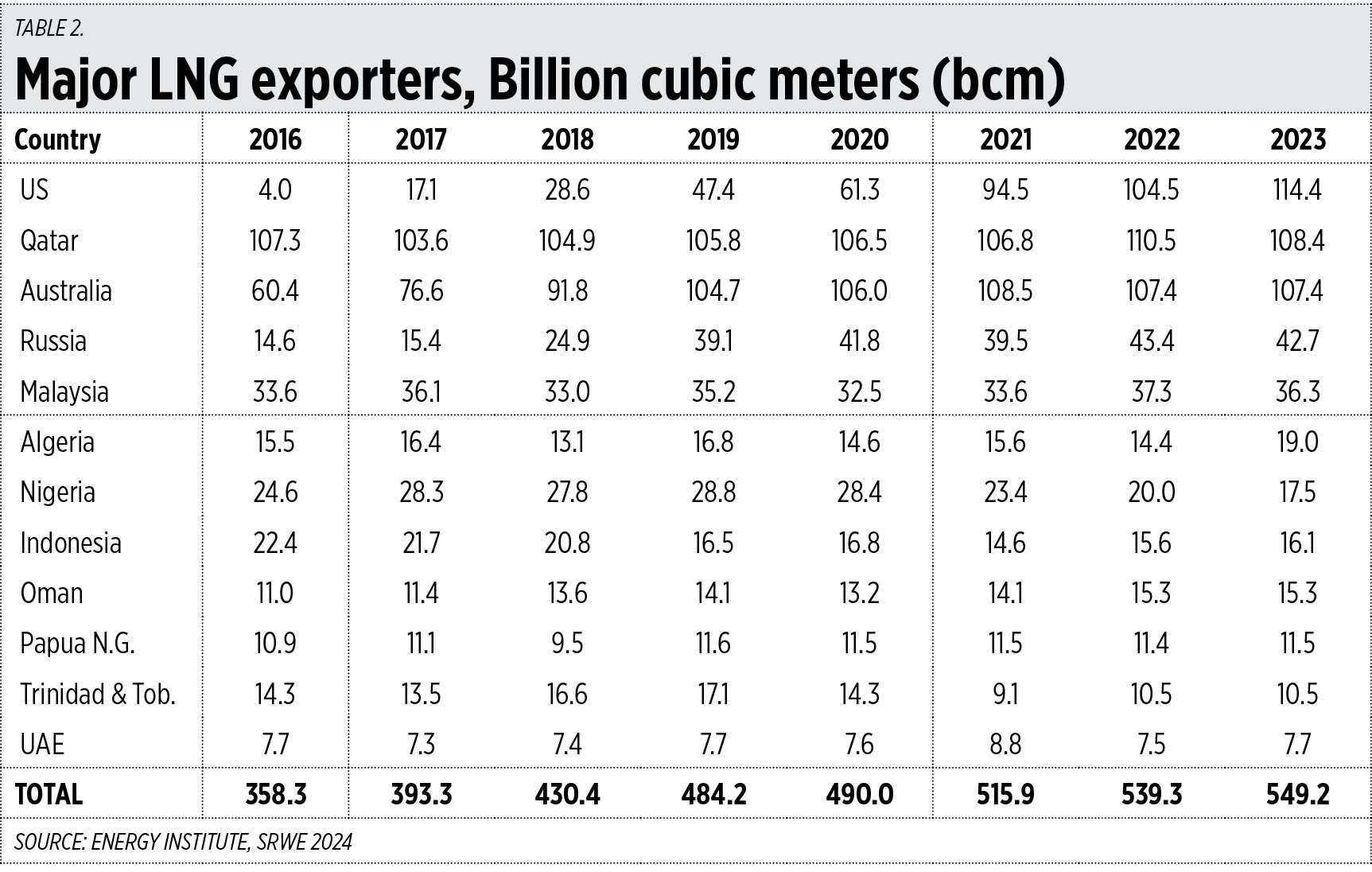
Related to global energy supply and prices as a result of US energy policies, I checked the expansion of global liquefied natural gas (LNG) exports. From 358 billion cubic meters (bcm) in 2016 as the baseline, it jumped to 393 bcm in 2017 which was former US President Donald Trump’s first year in office, up to 490 bcm in 2020, his last year in office.

Good thing that President Joe Biden sustained the momentum initiated by Trump — the US’ LNG exports continued rising to 114 bcm in 2023. Australia and Russia also expanded their LNG exports, but it was the US that made a big difference (see Table 2).
The Philippines can take advantage of this rising volume of LNG exports from more countries. Our existing gas plants which currently rely on Malampaya gas, and the new big gas plants that will soon start operating and will run on imported LNG will have more choice when it comes to LNG sources — from the US, Qatar, Australia, Malaysia, Indonesia, and even Brunei. Coal and gas expansion in the country should help augment our energy security and, by extension, our economic security and growth momentum.


Bienvenido S. Oplas, Jr. is the president of Bienvenido S. Oplas, Jr. Research Consultancy Services, and Minimal Government Thinkers. He is an international fellow of the Tholos Foundation.

minimalgovernment@gmail.com

BSP pushes wider use of PERA program as take-up remains slow

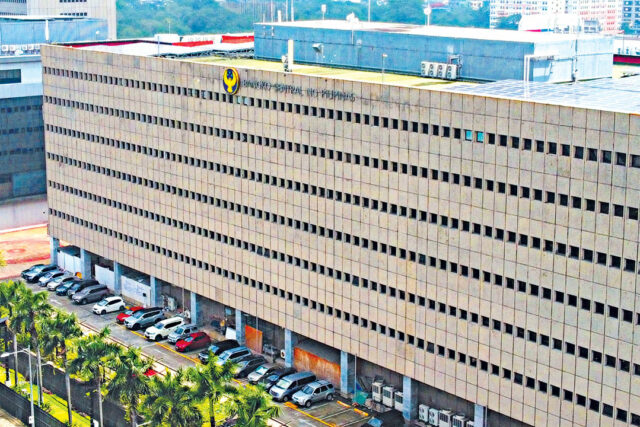
BW FILE PHOTO

WIDER USE of the Personal Equity and Retirement Account (PERA) can help increase government savings, which could be used for other investments that would support economic growth, the Bangko Sentral ng Pilipinas (BSP) said.

“On a macro level, PERA can play a crucial role in reducing what the government should spend to support and care for seniors,” BSP Deputy Governor Eduardo G. Bobier said in a speech on behalf of BSP Governor Eli M. Remolona, Jr. at as forum on Wednesday.

“Also on a macro level, the savings kept in PERA accounts can foster investment and capital market development, driving economic growth,” he added.

According to the BSP, only 16% of Filipino adults aged 18 to 59 years old actively contribute to a pension scheme.

“If we don’t change that, it will be a huge hardship for the elderly or a huge burden for their children and the state,” Mr. Bobier said. “On a micro level, PERA can bridge the huge gap between the current and ideal level of retirement savings among Filipinos.”

As of end-June 2023, PERA contributions jumped by 30% to P368 million, latest BSP data showed.

The number of PERA contributors also grew by 15.9% to 5,402 in the first half of 2023.

“Admittedly, take-up has been slow, with even just a small increase after we digitalized the PERA ecosystem in 2020, which made it easier to sign up,” Mr. Bobier said.

“Ease of use and convenience is something we entrust to our market players while the BSP, along with our partner agencies, aims to provide a conducive regulatory environment,” he added.

The BSP is also working at incorporating open finance in the PERA program, he said.

“Open finance would allow Filipinos to connect their bank accounts with fintechs and other financial service providers to make it easier for them to buy, collect, invest, save and even borrow. We are hopeful that as a pilot use case, PERA will be a big beneficiary from open finance.”

The PERA program was launched in 2016 and is a voluntary fund scheme meant to supplement retirement benefits from the Government Service Insurance System or the Social Security System, as well as private employers. — Luisa Maria Jacinta C. Jocson

Jack Black’s Tenacious D band cancels Australia tour after comments on Trump shooting

FACEBOOK.COM/TENACIOUS

SYDNEY — American comedy-rock duo Tenacious D, formed by actors Jack Black and Kyle Gass, suspended the rest of its Australian tour after comments made by Gass over the assassination attempt on former US President Donald Trump.

A video widely shared on social media from the concert in Sydney on Sunday showed Gass being presented with a birthday cake and Black urging him to make a wish. Gass then seemed to say “don’t miss Trump next time” before blowing out the candles.

Trump was shot in the ear during a campaign rally in Pennsylvania on Saturday, which the FBI is probing as an assassination attempt. The former president has since attended the Republican National Convention with a thick bandage over his right ear.

Gass on Tuesday apologized on Instagram for his “severe lack of judgment” and said the comments were inappropriate, dangerous and a terrible mistake. Black said he was “blindsided” by the comments and that he would never condone hate speech or encourage political violence in any form.

“After much reflection, I no longer feel it is appropriate to continue the Tenacious D tour, and all future creative plans are on hold,” Black said.

Black, who has starred in School of Rock, The Holiday, and Jumanji and was the leading voice role in the Kung Fu Panda animated movies, has been a vocal supporter of Joseph R. Biden and had attended a re-election fundraiser event for him in June.

Tenacious D was formed in 1994 by Gass and Black in Los Angeles where the duo performed their “mock rock” routines in local bars. Their show in Newcastle on Tuesday was cancelled and they were scheduled to perform in Brisbane, Melbourne, and Adelaide, and in New Zealand later this month, before the tour was canceled.

Gass’s comments drew strong rebuke from Australian politicians including Australia’s ambassador to the US Kevin Rudd, who said people joking about violence made him feel sick and that they must “grow up and find a decent job.”

Senator Ralph Babet of the United Australia party said the band should be deported immediately. — Reuters

SMIC plans casino-resort north of Manila, sources say

THE PHILIPPINES’ most valuable company, SM Investments Corp. (SMIC), is planning to invest at least $300 million in an integrated casino and resort north of Manila, two sources with knowledge of the matter said on Wednesday.

Premium Leisure, a unit of SM’s Belle Corp. unit, has applied for a license to build and operate a casino and resort in Clark, a former US military air base turned into a leisure and business hub, in Pampanga province, the sources said.

Shares in Belle sank minutes after the news of the expansion. They fell 7.26%, closing at a 10-week low and bucking the 0.31% gain in the broader stock market index, while SM’s share price ended 2.56% higher.

“Aside from the casino, there will be a convention center and a hotel,” one of the sources told Reuters.

Premium Leisure, which delisted from the stock exchange earlier this month, is the landlord of the $1 billion-plus City of Dreams casino-resort, operated by Nasdaq-listed Melco Resorts & Entertainment, in Manila’s much smaller version of the Las Vegas gaming strip.

Officials of SM, Belle, and Premium Leisure did not immediately respond to requests for comment.

SM, with a market value of $18.8 billion, has interests that range across shopping malls, banking, residential and office towers, retail, mining, and logistics.

SM’s expansion may boost the planned initial public offering (IPO) of another Clark casino operator, said Juan Paolo Colet, managing director at investment bank Chinabank Capital in Manila.

Hann Resorts, which operates a casino-resort with 147 gaming tables and 868 slot machines in Clark, is planning for IPO of up to P20 billion ($342.2 million) early next year, the chief of the gaming regulator said on Tuesday.

“Clark is emerging as a promising growth market for gaming and leisure. It could become the next major integrated resort hub,” Mr. Colet said.

The Philippine gambling sector, next only in size to Macau and Singapore in Asia, attracts high rollers from countries like China, Japan, and South Korea. It has enticed foreign and domestic firms to set up billion-dollar integrated casino-resorts, creating thousands of jobs. — Reuters

MCU sets up lab to assess, boost cyber resilience

MANILA Central University launched the ​Cybersecurity Posture Assessment Lab on July 10, 2024.

MANILA Central University (MCU) last week launched the country’s first Cybersecurity Posture Assessment Lab (CPAL) that assesses and enhances the cyber resilience of organizations amid rising online threats.

“I hope CPAL can be a key initiative that can contribute to bolstering the cybersecurity posture of organizations, strengthening the prevention and protection against cybersecurity attacks,” Private Sector Advisory Council Digital Infrastructure, Cybersecurity Matter Expert Larry S. Galang said at the launch on July 10.

The facility, located inside the university, can conduct a risk assessment of an organization and give recommendations to improve the mitigation of threats and vulnerabilities.

“Cybercriminals have a very fertile opportunity and ground for them to exploit and to gain financial advantage, considering the volume of data and money moving in the digital arena,” Department of Information and Communications Technology (DICT) Secretary Ivan John E. Uy said at the event.

He said the inauguration of CPAL is a “testament to the strong collaboration between the public and private sector,” which is crucial in enhancing the country’s digital landscape and fortifying its cyber defense.

Mr. Uy added that the vendor-neutral laboratory can give organizations the freedom to do their testing to avoid biased assessments from firms looking to sell their cybersecurity products, he said.

CPAL is endorsed by the DICT and also received regulatory support from bodies such as Bangko Sentral ng Pilipinas, the Insurance Commission, the Securities and Exchange Commission, and the National Privacy Commission.

It was established in collaboration with Nullforge, a cybersecurity assessment provider.

MCU Executive Vice-President Chynna Roxanne R. Gonzalez said the maintenance of the facility will be handled by external partners like Blackfire. Alongside the lab’s launch, MCU is also incorporating a cybersecurity program into its Bachelor of Science in Information Technology curriculum.

CPAL will also offer certification programs aligned with industry standards, providing continuous learning and development opportunities for professionals, she added. “We’re offering it already this coming August… In terms of the manpower, the certification is already open.” — Aubrey Rose A. Inosante

Over a cup of coffee

CLAY BANKS-UNSPLASH

WE BORROW for this piece the title of a long-ago column (and TV talk show) by Teodoro Valencia (1913-1987) who spearheaded the refurbishing of Rizal Park in the 1960s. This opinion leader also presided over regular coffee sessions at the lobby of a now demolished five-star hotel along Ayala Avenue. The regulars there even had coffee mugs with their names on them.

What is it about coffee that continues to hold its mystique as the beverage of choice for off-the-record conversations or intimate meetings? How did taking coffee evolve into a chat occasion for two (or more) so that an invitation for a cup has become a low-cost alternative to a date or an informal business conversation? It’s certainly cheaper than a steak lunch and quieter than a single malt whiskey bar visit.

People are willing to pay a high price to take coffee at a franchised chain in its various forms, hot or iced, various flavors not limited to milk, regular, or decaf, in small cups or big mugs. Caffeine consumption and the proliferation of coffee shops seem to have little to do with a healthy lifestyle. (Does it really cause hemifacial spasms?) These coffee places offer solid alternatives too like cakes, sandwiches, and breakfast offerings that don’t require utensils.

What brings people to coffee shops? (Clue: it’s not just the caffeine rush.) And why do they stay longer there than in restaurants where they don’t tarry after finishing the meal? In the interest of full disclosure, the findings in this piece are based merely on observations.

Why does a big group for lunch move to another place for coffee, maybe with a smaller cohort?

Those who take coffee after lunch may not do so in the same restaurant where they had their meals, even if coffee in all its forms is available there. In a lower voice, the host may convince the targeted counterparty to take coffee and dessert in another place, within walking distance from the lunch venue.

The intent of shedding other lunch mates becomes clear as another agenda (like shared services) is proposed with the designated coffee mate, hence the expression — do you want to have coffee after? Coffee is considered both a stimulant and a diuretic. This is why coffee places are near toilets or have one in the premises which are usually open to either gender, though not at the same time. Even the queue for the washroom is mixed.

Coffee is a beverage that is bitter which describes how the relationship later turns out, if such intimacy as dessert, perhaps sugar-free cheesecake, is not added to the mix. Coffee can become the code word for a tryst, hence the cryptic text message: do you want another cup?

What about solo coffee drinkers? It is possible that coffee couples are reduced to becoming solos with either a late cancellation (Sorry, I can’t make it as I just had a hip replacement.) or maybe a walkout after the first cup. (I didn’t like the way you stared at me, when you were stirring your decaffeinated cafe latte with the stick.)

Intentional solo coffee drinkers may camp out at a corner table working with their computers. This is sometimes lumped under a work-from-home protocol where the background wall must be white or blurred. The coffee place with its free WiFi serves as an office where these solo drinkers answer e-mails and join webinars. Their average stay in the shop is two hours and 13 minutes. They order the minimum amount needed for WiFi access, consisting of plain coffee (small) and a bagel or corned beef pandesal. The tiny uneaten portions serve as props to show they are paying customers savoring the music.

Some soloists merely sit back and lounge as if they’re on the sidewalks of the Champs Elysees. They pick tables outside observing the ebb and flow of life, meditating on materialism and how it erodes the soul, the safety of municipal bonds, and the fate of contested waterways. Some solo drinkers not busy with computers don sunglasses and take a nap.

Coffee then is ritualistic more than nutritional, though the brew is thought to have therapeutic properties to prevent cancer and stimulate alertness. Such attributes are required over conversations that induce sleep… but require one’s full concentration.


Tony Samson is chairman and CEO of TOUCH xda

ar.samson@yahoo.com

BDO ends bond offer early amid strong demand

BW FILE PHOTO

BDO UNIBANK, Inc. on Tuesday ended the public offer period for its third peso-denominated ASEAN Sustainability Bond issue, three days ahead of the original schedule, as it saw robust demand from the market.

“Originally set to run from July 8 to 19, 2024, the bank decided to close the offer period early, on July 16, 2024, following strong demand from both retail and institutional investors,” the Sy-led bank said in a disclosure to the stock exchange on Wednesday.

The bonds will still be issued, settled, and listed on July 24, BDO added.

The bank did not disclose the final amount raised from the sustainability bond offering.

BDO wanted to borrow at least P5 billion from the 1.5-year peso-denominated notes with an option to upsize.

The bonds carry a coupon rate of 6.325% per annum. They were offered for a minimum investment amount of P500,000 and in increments of P100,000 thereafter.

BDO earlier said it will use the issue’s proceeds to finance or refinance eligible assets under its Sustainable Finance Framework and diversify its funding sources.

The Securities Exchange Commission has confirmed that the issuance complies with requirements under the ASEAN Sustainability Bond Standards and the SEC ASEAN Sustainability Bond Circular.

ING Bank N.V. Manila Branch was tapped as the sole arranger for the issuance. ING Bank is also a selling agent along with BDO.

Meanwhile, BDO Capital & Investment Corp. was appointed the financial advisor for the transaction.

BDO’s last issued ASEAN Sustainability Bonds in January, where the bank raised P63.3 billion, above the P5-billion target. The 1.5-year notes carry a coupon of 6.025% per annum.

It also borrowed P52.7 billion from its first ASEAN Sustainability Bond issue in January 2022.

BDO’s net income grew by 12.12% year on year to P18.5 billion in the first quarter as its core businesses remained strong.

Its shares dropped by 40 centavos or 0.29% to close at P139.40 apiece on Wednesday. — A.M.C. Sy

Imprisoned Rust armorer seeks release after Alec Baldwin dismissal

ACTOR Alec Baldwin in a scene from Rust. — IMDB

TAOS, N.M. — Hannah Gutierrez, the armorer imprisoned for the 2021 Rust shooting, on Tuesday filed a motion for her conviction to be dismissed after charges against actor Alec Baldwin were dropped on prosecutors withholding evidence linked to the 2021 fatality. A lawyer for Ms. Gutierrez said the buried evidence of live rounds, and other information concealed from defense lawyers, were grounds for dismissal or a new trial.

Should Ms. Gutierrez be successful in her motion it would mark a complete unraveling of New Mexico’s criminal prosecution of the rookie weapons handler and Mr. Baldwin for the death of Rust cinematographer Halyna Hutchins. The motion followed the dismissal of charges against Mr. Baldwin during his trial on Friday as a judge ruled prosecutors deliberately hid the existence of live rounds handed into police that could reveal the source of the round that killed Hutchins.

The Ukrainian director of photography died when Baldwin’s gun fired a live round inadvertently loaded by Gutierrez as the actor set up a camera shot in a movie-set church southwest of Santa Fe, New Mexico.

In Ms. Gutierrez’s motion to dismiss, lawyer Jason Bowles said he contacted state prosecutor Kari Morrissey in January requesting that the FBI test the live rounds that were eventually handed into police on March 6, the day Ms. Gutierrez was convicted.

Bowles said Morrissey responded by saying she did not plan to retrieve the rounds or test them as they looked different to six live rounds found on the set of Rust.

Three of the rounds handed in by Troy Teske, a friend of Ms. Gutierrez’s stepfather Thell Reed, were similar to live rounds found on the Rust set.

Bowles listed other instances of prosecutors failing to disclose evidence to defense lawyers, including an interview with Rust props supplier Seth Kenney and a supplemental report on Mr. Baldwin’s gun by firearms expert Lucien Haag.

Judge Mary Marlowe Sommer must now schedule a hearing on Ms. Gutierrez’s motion to dismiss. — Reuters

Prime Infra switches on 64-MW solar plant in Cavite

RAZON-LED Prime Infrastructure Capital, Inc. (Prime Infra) and its wholly owned subsidiary Prime Solar Solutions Corp. have inaugurated their 64-megawatt (MW) solar power plant in Maragondon, Cavite.

“The completion of the Maragondon solar power plant is a significant milestone for Prime Infra’s portfolio,” Prime Infra President and Chief Executive Officer Guillaume Lucci said in a statement on Wednesday.

Mr. Lucci said that the power plant is “certainly a part of Prime Infra’s wider sustainable strategy.”

The company’s power plant in Cavite is one of two power plants under Prime Solar’s first project, supplying up to 128 MW of power.

The other is the 64-MW solar power plant in Tanauan, Batangas, which was inaugurated in May.

Mr. Lucci said that the total capacity is expected to power about 84,000 households and displace over 100,000 tons of coal per year.

Both the Maragandon and Tanauan solar power plants were constructed in April 2023. — Sheldeen Joy Talavera

FTC seeking details on Amazon deal with AI startup Adept — source

THE US Federal Trade Commission (FTC) has asked Amazon.-com to provide more details on its deal to hire top executives and researchers from artificial intelligence (AI) startup Adept, a person familiar with the matter told Reuters.

The request reflects the FTC’s growing concern about how AI deals have been put together and follows a broader review of partnerships between Big Tech and prominent AI startups.

The informal inquiry into Amazon, which has not previously been reported, centers on last month’s announcement that Adept Chief Executive David Luan and others were leaving to join Amazon, which would also license some of the startup’s technology.

Such inquiries do not necessarily result in an official investigation or enforcement action.

Amazon is trying to catch up with rivals Google and Microsoft, which partners with OpenAI, in developing its own large language models that can respond almost instantaneously to complicated prompts or queries.

Reuters previously reported on Amazon’s efforts to establish a new organization called the Artificial General Intelligence (AGI) team, focused on developing large language models. Luan is now running the “AGI Autonomy” team, consisting of many former Adept employees, and reporting to Rohit Prasad, head of the AGI team.

Founded in 2022, Adept made a splash by raising over $400 million from venture capital investors with the aim to train large language models to perform general tasks for enterprise clients. Once valued at over $1 billion, it released some open-source models but failed to launch successful commercial products. It’s unclear whether Amazon has compensated Adept investors, or the details of the licensing fees.

Amazon, Adept, and the FTC declined to comment.

The regulator is already investigating a similar move by Microsoft, which hired away much of another startup, Inflection AI’s leadership and employees and agreed to pay a roughly $650 million licensing fee. The FTC is looking into whether the deal was a play to skirt merger disclosure requirements, a source told Reuters last month.

This is not Amazon’s first AI startup bet. Amazon has invested $4 billion in AI startup Anthropic since September, taking a minority stake in the San Francisco company.

The FTC earlier this year launched a study of investments and partnerships in the AI space, demanding information on Microsoft’s relationship with OpenAI, and Anthropic’s tie-ups with Google and Amazon.

The extensive document request, made in January, seeks details on how AI company partnerships with Big Tech influence strategy, pricing decisions, access to products and services, and personnel decisions.

US antitrust enforcers also expressed concern about Big Tech companies wielding their existing advantages in AI to shut out smaller competitors. The FTC and Justice department have staked out responsibility for potential probes into Microsoft, OpenAI, and chipmaker Nvidia. — Reuters

How PSEi member stocks performed — July 17, 2024

Here’s a quick glance at how PSEi stocks fared on Wednesday, July 17, 2024.


Philippines lands 31st in AI responsibility index

The Philippines ranked 31st out of 138 countries after scoring 35.46 out of 100 in the inaugural Global Index on Responsible AI (GIRAI) by the Global Center on AI Governance. This was better than the Asia and Oceania average of 19.80. The country placed fourth highest in the East and Southeast Asian region. The index assessed countries based on performance towards responsible artificial intelligence (AI) — the design, development, deployment, and governance of AI in a way that protects human rights and upholds AI ethics.

Philippines lands 31<sup>st</sup> in AI responsibility index