Home Blog Page 243

SM Investments bags Platinum Award for sustainability reporting

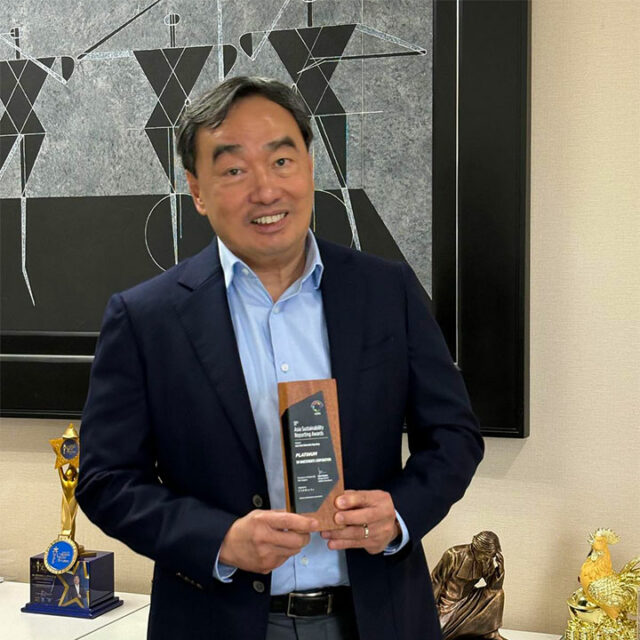
SM INVESTMENTS President and CEO Frederic C. DyBuncio at the 11th Asia Sustainability Reporting Awards in Singapore. — SMIC

SM INVESTMENTS CORP. (SMIC) has received the Platinum Award for Asia’s Best Materiality Reporting at the 11th Asia Sustainability Reporting Awards at the Grand Hyatt Singapore last month.

“We see sustainability as an ongoing journey of creating impact that endures,” SM Investments President and Chief Executive Officer (CEO) Frederic C. DyBuncio said in a statement on Wednesday. “This recognition strengthens our resolve to remain transparent and accountable as we work to deliver meaningful value to our customers, partners and communities across the country.”

The company’s Integrated Report 2024 was also a finalist for Asia’s Best Integrated Report in the large company category.

Rajesh Chhabara, founder of the Asia Sustainability Reporting Awards and head of CSRWorks, said the recognition highlights SM Investments’ commitment to transparency and long-term value creation.

“This award demonstrates SM Investments’ excellence in sustainability reporting while embracing transparency as a cornerstone of responsible business,” he said. “Their report reflects a deep understanding of how sustainability performance connects to long-term value creation and stakeholder trust.”

Organized by Singapore-based CSRWorks International, the awards drew entries from 17 countries and recognized the best sustainability reports in Asia across several categories.

In an interview with BusinessWorld in September, Mr. DyBuncio said the company continues to boost investments to make its businesses more resilient to climate risks, describing sustainability as a crucial part of future growth, not just an expense.

He said SM Prime Holdings, Inc., the group’s property arm, allocates about 10% of its capital spending for disaster-resistant and eco-friendly designs, while the group is also expanding renewable energy projects such as solar and geothermal initiatives.

SMIC shares were unchanged at P722 each on the Philippine Stock Exchange. — Alexandria Grace C. Magno

Monde Nissin posts 13% rise in Q3 profit despite higher edible oil costs

BW FILE PHOTO

MONDE NISSIN CORP. posted a 13.4% yearly increase in third-quarter net income to P2.3 billion, supported by foreign exchange gains and steady growth in its core branded food business despite continued pressure from its meat alternative segment and rising edible oil costs.

In a stock exchange filing on Thursday, the listed food and beverage manufacturer said the profit figure was partially offset by a noncash loss of P285 million from the fair value adjustment of its meat alternative guaranty asset.

Consolidated revenue rose 3.8% to P21.8 billion, while gross income slipped 2.4% to P7.24 billion. Core attributable net income increased 4.6% to P2.5 billion.

“The improvement was further supported by a foreign exchange gain, compared with a foreign exchange loss in the same period last year,” Monde Nissin said.

The Asia-Pacific branded food and beverage segment posted a 4% rise in net sales to P18.42 billion, driven by stronger biscuit sales and other product categories.

“Our Asia-Pacific branded food and beverage business delivered modest topline growth in the third quarter, supported by volume growth in biscuits and other categories,” Monde Nissin Chief Executive Officer Henry Soesanto said.

Meanwhile, meat alternative sales under Quorn Foods inched up 2.5% to P3.39 billion in the July-to-September period, while gross margin expanded by more than 500 basis points year on year due to lower input costs and efficiency gains.

“We are encouraged by the continued easing of year-on-year declines and the significant gross margin improvement this quarter,” Mr. Soesanto said.

For the nine months to September, Monde Nissin’s reported net income rose 9.6% to P6.7 billion, while consolidated revenue grew 3.5% to P63.3 billion. Gross profit slipped 1.5% to P21.04 billion, and core attributable net income fell 3.5% to P7.19 billion.

Net sales from the meat alternative business declined 1.2% to P9.98 billion.

“While higher edible oil costs continue to put pressure on our gross margins, we are beginning to see the benefits of our pricing adjustments and cost-saving initiatives, such as reformulation,” Mr. Soesanto said.

He added that the company expects gradual gross margin recovery in the coming quarters, although the full-year margin will remain lower than last year.

Monde Nissin shares fell 4.55% or 30 centavos to P6.30 each on the local bourse. — Beatriz Marie D. Cruz

A quiet Thai sibling

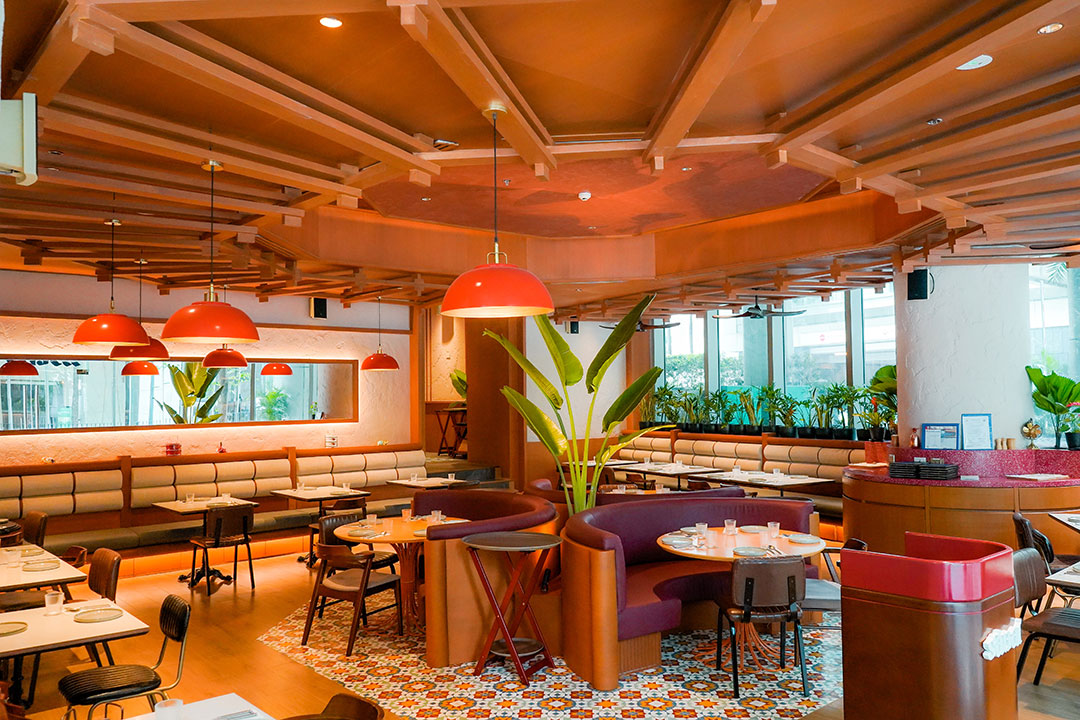
SABAI INTERIOR

WHERE UMA NOTA, Alex Offe and Michael J. Needham’s 2024 offering is grand and glamorous, Sabai, a new outlet from this partnership, is quiet and cozy.

BusinessWorld went to a tasting at Sabai on the Ground Floor of Shangri-La The Fort on Oct. 27. It’s right beside its glamorous older sister, which bids you to go down a staircase to partake of fun not to be seen in the light. At Sabai, launched at lunchtime, sunlight streamed into the windows and overall had a more casual vibe.

Mr. Offe, co-founder of Uma Nota in Paris and Hong Kong (since closed) brought gathered media guests around the three private rooms (two of which have karaoke sound systems). We made a stop around the kitchen, where he pointed out that six of their staff are Thai: the head chef, the sous-chef, and four chefs de partie. “If you ask me to cook Chinese food, I can probably do an okay job, but there are things you just can’t teach,” he said about the chefs. “Only a well-trained palate is able to make adaptations on a recipe, on the spot.”

Leading the kitchen is Head Chef Puwadol Assavadathkamjorn, a native of Southern Thailand. He brings experience from Michelin-starred Le Normandie by Alain Roux and Pru Restaurant, and Sühring in Bangkok, with two Michelin stars.

Sabai (meaning “relaxed” or “comfortable” in Thai; and a homonym for Filipino’s “together”) doesn’t have all the heated flourishes we’ve become accustomed to when it comes to Thai food. If anything, the meal served to us on the launch proved its name, tasting like something straight out of a Thai household.

The Pork Belly with Five Spices (braised pork in Chinese five-spice broth, slow cooked over two nights) tasted like the Philippines’ humba (similar, but with the addition of black beans or nuts, depending on where you are) and was strangely comforting. We could say the same about the Spicy Dry Fish Broth with bangus (milkfish) and mushrooms, infused with herbs like kaffir lime and Thai basil — it amounted to a familiar, clean-tasting sinigang (a soup of proteins in a sour broth) with a little bit more zing.

That’s not us being unappreciative; that’s us forming a bond with our Southeast Asian neighbors, but also proving the Thais right when they say “same same, but different.” There was a Crispy Fermented Pork, which tasted like a complex adobo (albeit the kind fried in its own fat), and the shrimp paste relish (our bagoong, but served with vegetables). This we paired with something uniquely theirs, that has no analog within our shores, the Crispy Catfish Salad, served looking like a cloud, and breaking apart in the mouth with an audible crunch.

Mr. Offe said that he spent months in Thailand to really get a taste of what that country has to offer. “The food is the same approach: trying to be as authentic and true as possible.” The spice levels have been adjusted to local palates, but otherwise, the chefs keep it as close as possible to the flavors back home. More importantly, a large part of the ingredients comes from Thailand. What couldn’t be brought here, or would be otherwise compromised during shipping, they’ve decided to plant here in local farms, with the seeds coming from Thailand.

As Mr. Offe’s second venture in the Philippines, he talks opening perhaps another restaurant next year. Asked how Uma Nota and Sabai fit together despite their radically different personalities, he said, “We’re trying to create a collection of memorable dining experiences. Different priorities, different ways to celebrate.”

Coming from more cosmopolitan cities like Paris and Hong Kong, he also discussed what he likes about Manila for him to keep opening restaurants here: “It’s a city that’s up and coming.”

This was a few days before Uma Nota’s bartender Benjamin Leal won the Exceptional Cocktails Award at the first Philippine Michelin Awards. Uma Nota itself was included in the list of Selected Restaurants for the country’s 2026 Michelin Guide. “It’s about time that Manila is recognized, and the Philippines is recognized for its energy and opportunities.” — Joseph L. Garcia

PLDT eyes higher Q3 revenue, boosted by Maya, home, enterprise units

PHILSTAR FILE PHOTO

PLDT INC. expects to report higher third-quarter revenue, driven by its digital bank Maya and its home and enterprise businesses, Chairman and Chief Executive Officer Manuel V. Pangilinan said on Wednesday.

“Our third quarter is slightly better than the previous two quarters,” he told reporters on the sidelines of an event. “Maya helps, although [it was] slightly affected by the linking from the gaming sites. Profits for the third quarter were up.”

The Pangilinan-led telecommunication company will release its third-quarter results next week.

In the first half, PLDT’s attributable net income fell 1.47% to P18.14 billion from a year earlier, as higher expenses outpaced revenue growth.

Despite this, its second-quarter attributable net income rose 6.05% to P9.11 billion, supported by steady performance in its core segments. Total revenues for January to June inched up 1.85% to P109.57 billion.

Mr. Pangilinan said the company is still searching for a replacement for Anastacio R. Martirez, who stepped down as Smart Communications, Inc. chief operating officer (COO) last month to pursue entrepreneurial ventures.

He said the next Smart COO could come from outside the company and might be from a younger generation.

“I wish [he] were a Gen Z, or a younger fellow or even a Millennial. The future belongs to them,” Mr. Pangilinan said.

Mr. Martirez, who had served as COO since September last year, cited plans to explore business opportunities after his resignation.

At the local bourse, PLDT shares rose 0.71% or P8 to close at P1,137 each.

Hastings Holdings, Inc., a unit of the PLDT Beneficial Trust Fund subsidiary MediaQuest Holdings, Inc., holds a majority stake in BusinessWorld through the Philippine Star Group. — Ashley Erika O. Jose

Abacus Global Technovisions, Inc. to hold its Annual Stockholders’ Meeting on Nov. 27 via Zoom


Spotlight is BusinessWorld’s sponsored section that allows advertisers to amplify their brand and connect with BusinessWorld’s audience by publishing their stories on the BusinessWorld Web site. For more information, send an email to online@bworldonline.com.

Join us on Viber at https://bit.ly/3hv6bLA to get more updates and subscribe to BusinessWorld’s titles and get exclusive content through www.bworld-x.com.

Matsusaka: This P23k/kilo beef literally melts in your mouth

A PREMIUM SELECTION of Ito Ranch Matsusaka Beef showcased during the launch.

“WAGYU” has been thrown about as a buzzword to connote a certain quality of beef, due to the popularity of Kobe beef and its sisters, which includes Matsusaka beef, cows for which are bred in the Matsusaka region. While one should know that there’s a grading system for wagyu (which basically just means “Japanese cattle”), one of its premier examples, the aforementioned Matsusaka, just arrived in the Philippines.

Lorenzo Vega, chief executive officer of Doubleday Enterprises, unveiled its partnership with Ito Ranch, Japan’s most awarded Matsusaka producer, during an event on Oct. 16 at the Shangri-La Plaza mall. The ranch, founded in 1953, has over 35 competition wins, including a historic three-year Grand Champion streak (2017-2019) at the prestigious Matsusaka Beef Carcass Competition. Ferran Adrià of El Bulli, one of the world’s best restaurants before closing in 2011, singled out the beef from Ito Ranch for its quality.

On Prime Cuts by Doubleday’s website, which will sell the beef, Ito Ranch’s Matsusaka A5 Japanese Wagyu Tenderloin can go up to P22,990 per kilogram. This is due to its intricate marbling and low melting point (12°C, which means it really does melt in your mouth).

There are several factors for the price, one of which is its rarity: “Matsusaka beef is quite controlled by distributors in Japan,” said Mr. Vega during the launch in a Q&A session. He notes that with other sellers in the Philippines claiming to have Matsusaka beef, they offer it in small quantities, which implies unofficial importation status. “Distributors in Japan, frankly, they keep to themselves, and to other first-world countries.”

He also talked about how to serve it: “However you want.”

While he said some people might prefer it as an entire steak, served thinly, torched above sushi, or swirled in a sukiyaki broth, he prefers his sliced and grilled thinly Teppanyaki-style. “Only salt and pepper, none of the other stuff.”

“Because it’s a very fatty cut of beef, I would say medium is very good,” he said about the beef’s ideal doneness. “The fat melts, and it becomes a very luxurious taste.”

Ito Ranch’s Overseas Sales Manager Kunio Kosaka, meanwhile, discussed what made their beef win so many awards. It stands on four pillars: pedigree (he compared breeding their cows to raising racehorses), a stress-free environment for the cows, a long fattening period (around 13 months longer than their competitors), and a feeding program that includes rice and beer: “Each farm’s family secret,” he told BusinessWorld.

Ito Ranch Matsusaka Beef will be available at partner restaurants including Teppanya and Sicilian Roast (of which Mr. Vega is a partner), with more establishments to be announced soon.

For more information, visit dprimecuts.com or contact Prime Cuts by Doubleday at sales@dprimecuts.com. — JL Garcia

Steaming ahead: Din Tai Fung Philippines celebrates 10 years, eyes store expansion

DIN TAI FUNG SM MEGAMALL

DIN TAI FUNG PHILIPPINES is marking a decade of operations in the country with further expansion outside of Metro Manila, as Filipino consumers continue to embrace its famous soupy dumplings called xiaolongbao.

Eliza Antonino, founder and managing partner of The Moment Group, said the company is opening new branches of Din Tai Fung in response to strong demand beyond Metro Manila.

“It’s about responding to demand, so we open where the market is… Din Tai Fung Cebu opened last July, and we aim to open our second one in Cebu next year. We’re looking forward to opening in even more new neighborhoods next year,” she said in an interview with BusinessWorld.

Din Tai Fung opened in SM City Cebu, its first branch in the Visayas and its ninth in the country. Its tenth branch, marking the brand’s 10th anniversary, is set to open at SM City Clark in Clark, Pampanga in the fourth quarter.

The Moment Group, which is known for homegrown brands Manam and 8Cuts, owns, manages and operates the Philippine franchise of Din Tai Fung.

The Moment Group Founder for Creative Development Abba Napa said Din Tai Fung has mostly opened stores within Metro Manila for the most part of the decade, so they were initially nervous about opening in Cebu.

“Being that Cebu was our first shop in the region; we were genuinely surprised and very happy to see the lines that formed on the first day. Seeing Filipinos from all over appreciate dining at Din Tai Fung gives us the confidence to explore other parts of the country that we never thought possible,” Ms. Napa said in the same interview.

Din Tai Fung first opened in the Philippines with a branch in SM Megamall in 2015.

Since then, it has built a loyal customer base by maintaining its Taiwanese authenticity rather than adapting recipes to local tastes.

“Everything is really true to both the Taiwanese culture and brand from which Din Tai Fung originated,” Ms. Antonino said. “Our own dishes, created by our local team, still draw inspiration from Taiwanese cuisine, including the crispy beef strips and the chocolate lava xiaolongbao.”

Ms. Napa proudly noted that the chocolate lava xiaolongbao was first developed at the first Philippine store in SM Megamall. The dessert dumpling is filled with molten chocolate in a mochi-like wrapper often paired with rock salt and cheese.

“Today, the chocolate lava xiaolongbao is not just in our Philippine shops, but all over the world. It’s a moment in our story that we continue to share, as it gives our team a sense of pride to be part of Din Tai Fung Philippines and Team Moment,” Ms. Napa added.”

The Moment Group co-founders recalled how they earned the trust of Din Tai Fung’s Taiwanese principals to bring the much-loved restaurant brand to the Philippines. Din Tai Fung, which was founded in Taiwan in 1958, is considered the world’s most recognized xiaolongbao brand.

Ms. Antonino said they first met Din Tai Fung founder Yang Bing-yi in Taipei in early 2013. Six months later, his team traveled to Manila to meet with groups that were interested in franchising Din Tai Fung.

“For their last dinner in Manila, we decided we would host them at our Filipino restaurant, Manam. After the dinner, Mr. Yang asked for a meeting with the three of us. He asked, ‘Are you really sure you want to do this?’ It was almost discouraging, but he also said that he was quite impressed with the restaurants that we had,” Ms. Antonino said.

She said that Mr. Yang told them he appreciated the service and hospitality extended to his team.

“In fact, he said, if Din Tai Fung Philippines would have the same service as Manam, he would be very happy. This was music to our ears. But there was still no indication of a yes,” Ms. Antonino said.

At that time, she felt that The Moment Group was at a disadvantage since they were the “smallest and youngest” group since they were only in business for three years.

Ms. Antonino said around four months later, they were invited to Din Tai Fung’s annual get-together, thinking this would be the moment they were waiting for.

“But at the end of the event, we just said our goodbyes. In the taxi to the airport, I got a phone call from Mr. Yang’s team: he wanted to see us for lunch… After dessert, we finally got what we’d been waiting for. ‘Go home and find a space,’ he said. ‘Let’s do this together,’” she said.

Ms. Antonino said she will never forget Mr. Yang’s parting words after that meeting: “Don’t make me regret giving it to you kids.”

Before securing the franchise, The Moment Group sent 15 staff members from the Philippines to undergo an immersive training program in Taipei for six months. This included learning how to make pork xiaolongbao.

While language barriers initially posed challenges, Ms. Antonino noted that the franchise has consistently met Din Tai Fung’s global standards for quality and service.

“What it really boils down to are the people that you work with. You need to have synergy. When you have that kind of synergy and work towards one common goal, it becomes a little bit easier,” she said.

“Making sure the guest is delighted during service is part of the job — an innate quality that needs to be embodied by every member of Team Moment. We always want to make sure that the guests have a good time.” — Cathy Rose A. Garcia and Alexandria Grace C. Magno

Companies must use AI solutions to help reduce data breach costs

REUTERS

By Beatriz Marie D. Cruz, Reporter

PHILIPPINE COMPANIES should use artificial intelligence (AI) solutions to strengthen their cybersecurity guardrails and lessen the cost of data breaches, according to IBM Verify Technology, a business unit of the International Business Machines Corp. (IBM).

Christopher Hockings, global outbound product manager at IBM Verify Technology, said companies must integrate AI in their cybersecurity frameworks as cybercriminals increasingly use these technologies to set up more sophisticated attacks.

“If attackers are using AI to move faster, we need to use AI to defend more quickly, too,” he told BusinessWorld in a virtual interview.

“For example, if AI can look at more vulnerabilities at scale more quickly, then we need ways to identify those vulnerabilities more quickly and to patch and remediate them prior to an attacker exploiting them.”

In the Association of Southeast Asian Nations region, the average cost of a data breach rose by 13.6% to $3.67 million from $3.23 million last year, IBM said in its 2025 Cost of a Data Breach report.

Globally, data breach costs averaged $4.44 million, but organizations that used AI and automation extensively across their security operations saved $1.9 million in breach costs, it said.

According to Mr. Hockings, the best use cases of AI in cybersecurity include streamlining repetitive tasks, summarizing information on threats, and optimizing humans’ response time.

With the right investments, AI can also speed up detection and response to cyberthreats, he added.

“We’re already seeing that security standards that have existed are being modified to support AI scenarios.”

To effectively use AI for cybersecurity, companies must ensure full visibility and control of their identity infrastructure, he said. They must also integrate measures on data governance and compliance in their AI models.

For companies using AI robots or agents, stringent data protection and lineage measures must be implemented against cyberattacks, Mr. Hockings said.

“It’s very important that your robots or agents are well-known in terms of the models they’re using and the data they’re accessing.”

He also emphasized the importance of having a “zero trust” mindset, or that a user, device, or network can’t be granted access by default.

Companies should also implement a “human-in-the-loop” system to supervise the accuracy, safety, and accountability of AI models.

Increasing demand for AI-driven cybersecurity solutions has pushed tech vendors to integrate their products to deliver customers a more holistic view of cyber protection, he said.

He noted IBM’s recent acquisition of Hashi Corp., a software company focused on non-human and machine identity management.

This comes as non-human identity systems, such as desktop, mobile, and IoT (internet of things) devices, pose more threats than traditional or human identity domains, he said.

“Together, they deliver end-to-end security for human and non-human identities,” Mr. Hockings said. “We’re the same company now, so active collaboration and development initiatives are underway to fulfill the ambition of the acquisition.”

The Philippines ranked 16th out of 250 countries on the most number data breaches in the third quarter with a total of 437,922 breached accounts in the period, according to cybersecurity provider Surfshark.

Among its peers in the East and Southeast Asian region, the Philippines was the second most breached country or territory.

LANDBANK net income climbs to P35.64 billion

LAND BANK of the Philippines’ (LANDBANK) net income surged by 41.79% in the first nine months of 2025 on the strength of its core businesses.

The state-run bank’s net profit climbed to P35.64 billion in the nine months ended September from P25.14 billion in the same period last year, its financial statement showed.

“LANDBANK’s strong performance as of the third quarter underscores our prudent management, operational efficiency, and continued investments in digital innovation. We remain steadfast in our mission to drive inclusive growth, empower the agriculture sector, and deliver innovative financial solutions for all Filipinos,” LANDBANK President and Chief Executive Officer Lynette V. Ortiz said in a statement on Wednesday.

The bank’s net interest income rose by 14.71% year on year to P81.41 billion in the period from P70.97 billion. This came as its interest income went up by 10.03% to P113.22 billion, while interest expenses inched down by 0.38% to P31.81 billion.

Its other operating income also edged up by 0.15% to P8.53 billion in the nine-month period from P8.51 billion a year prior on higher trading and foreign currency gains.

Meanwhile, LANDBANK’s operating expenses increased by 15.596% to P45.65 billion from P39.49 billion a year ago as it spent more on compensation and taxes and licenses, among others.

The bank’s loan loss provisions decreased by 46.17% year on year to P7.56 billion.

LANDBANK’s net loans stood at P1.22 trillion, up by 4.87% from P1.16 trillion the previous year.

Meanwhile, gross loans reached P1.7 trillion at end-September, it said.

Its outstanding loans for agriculture, fisheries, and rural development reached over P812 billion, accounting for over 47% of its total loan portfolio.

The bank has also extended P1.95 billion in loans under its flagship AGRISENSO Plus Lending Program as of September to over 12,300 borrowers, mostly small farmers and fishers, since the initiative was launched last year.

LANDBANK said 25,296 small farmers and fishers have been trained through the program’s capacity-building component.

On the funding side, total deposits went up by 1.45% year on year to a record high of P3.07 trillion at end-September from P3.02 trillion.

The bank’s assets climbed by 1.32% to P3.45 trillion at end-September from P3.41 trillion last year, backed by the growth of its loan and investment portfolios.

Meanwhile, total capital funds inched down by 0.78% to P269.31 billion from P271.43 billion.

LANDBANK added that it saw a 51% increase in the volume of digital transactions to 550.73 million as of September valued at P3.14 trillion. — Aaron Michael C. Sy

Top secrets to real estate success in the Philippines

ANTHONY “TONTON” LEUTERIO at The RJ Ledesma Podcast. — SCREENGRAB FROM THE RJ LEDESMA PODCAST

So you want to be in real estate. Countless entrepreneurs have ventured — and many have succeeded — as part-time or full-time brokers or even as real estate developers. Oftentimes, real estate can be lucrative; many of the country’s top billionaires have built their fortunes from real estate. It’s no wonder then that one of the most common questions I’m asked is, “How do I succeed in Philippine real estate?” or “What is the secret to being a real estate broker or salesperson?”

Recently, I had the good fortune of speaking with one of the people best suited to answer these questions on the RJ Ledesma Podcast: Anthony “Tonton” Leuterio — or Boss Ton as I like to call him — the founder of Filipino Homes, a leading real estate sales and marketing group here in the country. His real estate network is so successful, it has made him the top taxpayer in Cebu, where the company is based. And his success has also catapulted the company into markets across the region and the world.

I interviewed Boss Ton at the National Real Estate Convention of Filipino Homes, a free event for the company’s network of real estate brokers. To give you some idea of the scale of Filipino Homes, over 700 brokers and salespersons attended the event, with each broker responsible for at least P43 million in sales. At times, this number can be as high as P500 million in sales for one individual broker. Boss Ton shares that the individual sales record is around P700 million, a number he personally beat by achieving a billion pesos in sales on his own.

As my own family and my wife Vanessa are involved in the real estate industry, I found the lessons from my talk with Tonton Leuterio invaluable for entrepreneurs who want to get into the industry as brokers or even developers. At the very top of the real estate world, he has a unique perspective on how it’s all about collaboration, not competition, and how, at times, letting profit take a backseat can drive the entire industry forward.

FOCUS ON PEOPLE, FOCUS ON QUALITY
The most critical element of Filipino Homes is its people, its brokers. Filipino Homes is composed of 52 teams with a total of 123 franchises. Put another way, it has 700 brokers with multiple salespeople in each brokerage. Clearly, this is a business that runs on the ingenuity of its people.

“A lot of brokers and realty companies, they just keep on hiring,” Mr. Leuterio said, “which is wrong. You have to focus more on getting quality agents.”

To do this, he spends much of his time training brokers and creating systems that help develop the skills of these brokers through a Filipino Homes program called “Real Fire.”

“The ‘Fire’ is the first step of training,” Boss Ton explains. Through this online training program, aspiring brokers are taught the required skills, and only after passing an exam do they undergo certification.

The training doesn’t stop there. Brokers continuously train through seminars such as the National Real Estate Convention or the Asian Real Estate Summit in Bangkok.

“The beauty of [the Asian Real Estate Summit],” Boss Ton explained, “this creates more collaboration…. We bring the developers to do bonding [with them]. We also bring the agents so they can talk to each other, [share] best practices. And we develop a program for training during that event.”

CREATE VALUE
Opposite the real estate brokers and agents, on the other side of the real estate industry, are the real estate developers. Together, sales teams and developers work together to create value for buyers.

Mr. Leuterio says, “Most of the developers give good products. That’s not an issue. But the question is, will you give value to the agents who become loyal to them? So the developers now create a program where they can entice the agent.”

Through industry-building efforts such as these incentives, developers and agents create a partnership to better serve customers.

“I love these developers because they’re not greedy,” Tonton continues. “And they focus more on helping the country. Because our goal now is giving value to the agents in the Philippines. Creating a system.

“Value is not only one-sided. Value has to be both.”

COLLABORATION, CONSTANT LEARNING
For Tonton Leuterio, there is no competition with other brokers in the industry. He welcomes them to copy his business model and his operations.

“Any broker can join us, that’s not a problem and that’s our goal,” he said. “It’s not a competition. It’s a collaboration that we created.”

He continued, saying, “I’m not looking at my competition. I’m looking at myself. So the competition is within the company.”

Instead of competition, he encourages looking inward at how the company can improve. His focus instead of competition is learning.

One learning initiative that he makes his brokers go through is to take an online certificate course from Harvard. It was this very same course which he himself took during the pandemic.

“This program changed me,” he recounted. “Our company grew maybe 30, 40% after my Harvard course.”

This success has repeated itself with his brokers, in both small and large ways.

“So all of [the brokers] took the program and believe it or not now, I don’t have a headache. The company keeps on expanding, and in fact we are now growing all over the world,” he said with pride.

ADVICE FOR ENTREPRENEURS
At the end of the day, Tonton Leuterio believes that being a real estate broker is about people.

“To all the salespeople,” he says, “all you have to do is be a people-oriented business. It’s very important. If you’re with people, if people love you, then they’ll love your product. That’s the most important.”

This dedication to people takes a concrete form in the Filipino Homes brand. He explains, “We develop a brand that we’re a trusted company and we give value. And now when they see that, then they will love you.”

His second piece of advice for entrepreneurs is to never lose sight of their mission, their dream.

“You must keep on dreaming,” he said. “I saw so many big companies, they stopped growing because they stopped dreaming.”

Tonton Leuterio’s own dream and mission is a personal one:

“Beyond money, how many people can you help?” he asked. “How many families can you touch? Imagine, if a developer builds one house, you can feed 60 families. That is the after effect. And that’s the reason why real estate is so exciting because every house I sell, 60 families can be fed. How beautiful is that? No other industry can do that.”


RJ Ledesma (www.rjledesma.com) is a Hall of Fame Awardee for Best Male Host at the Aliw Awards, a multi-awarded serial entrepreneur, motivational speaker, and business mentor, podcaster, an Honorary Consul, and editor-in-chief of The Business Manual. Mr. Ledesma can be found on LinkedIn, Facebook and Instagram. The RJ Ledesma Podcast is available on Facebook, Spotify, Google and Apple Podcasts. Are there entrepreneurs you want Mr. Ledesma to interview? Let him know at ledesma.rj@gmail.com.


Wicked star Jonathan Bailey named ‘sexiest man alive’ by People magazine

PEOPLE.COM
PEOPLE.COM

LOS ANGELES — English actor Jonathan Bailey, who returns to movie theaters this month in the musical film Wicked: For Good, was named this year’s “sexiest man alive” by People magazine on Monday.

The 37-year-old Mr. Bailey said it was a “huge honor” to receive the pop culture accolade previously awarded to stars including Chris Hemsworth and George Clooney.

“Obviously, I’m incredibly flattered. And it’s completely absurd,” Mr. Bailey told People with a laugh. He joked that he had only shared the news with his dog, Benson.

The selection of Mr. Bailey, also known for his role as Lord Anthony in the steamy period drama Bridgerton, was announced on The Tonight Show Starring Jimmy Fallon.

Mr. Bailey played Prince Fiyero in last year’s blockbuster Wicked, a prequel to The Wizard of Oz and will reprise the role in the coming sequel Wicked: For Good. The actor also starred in the dinosaur flick Jurassic World: Rebirth this summer.

The Office actor John Krasinski was named “Sexiest Man Alive” in 2024.

Other actors and singers who have been given the title by People magazine’s editors include Blake Shelton, Adam Levine, Idris Elba, and Channing Tatum. — Reuters

Lazada sees surge in holiday shopping during 11.11 sale

LAZADA

By Justine Irish D. Tabile, Reporter

LAZADA PHILIPPINES expects online spending to surge in the next two months as more Filipinos turn to e-commerce for holiday shopping, bolstered by the platform’s biggest campaign of the year.

“A lot of our sellers get 30-40% of visits for the year just between November and December,” Lazada Philippines Chief Executive Officer Carlos Barrera told reporters on Wednesday. “We expect LazMall brands, especially the big ones, to grow faster than during the 9.9 sale.”

Filipinos spent almost 40% more per order during the September sale compared with last year, Lazada said. Top brands recorded double- to triple-digit growth, while sales of the top 20 LazMall sellers jumped by as much as 110 times, outpacing other Southeast Asian markets.

Mr. Barrera said the Nov. 10-13 sale would feature “the best possible promotions and deals” from global and local partners, driving even higher spending. Discounts include as much as 90% off LazFlash deals, P2,000 worth of vouchers and free shipping.

“It’s definitely the one day of the year when everybody buys the most,” he said. “We expect baskets to go up even more now because of additional promotions and rewards.”

Alvin Ching, Lazada Philippines head of seller operations, said worsening traffic in Metro Manila during the holidays could further boost online sales. “We don’t necessarily make people spend more, but we shift their spending online because it’s more convenient,” he said.

The 11.11 campaign will feature international brands such as Gmarket Korea, MIMANI, emonster aroma and Lazada-exclusive lines from Shiseido Group, Jo Malone, Nike and Veja.

Mr. Ching added that smaller merchants also benefit from the surge in browsing during mega campaigns. “It’s a level playing field as you get access to the entire Philippines as your market,” he said.

Lazada is also investing in artificial intelligence (AI) to enhance user experience and seller productivity. Its AI Lazzie chatbot will help shoppers navigate over 2.3 million products using a SmartStack feature that combines LazRewards and vouchers for the best deals.

“At Lazada, our story is about brand partnerships,” Mr. Ching said. “We are trusted by brands as a partner for success because we invest in them.”

Lazada said 80% of Filipino sellers view AI as a tool to raise efficiency by improving product photos, listings and real-time business insights.