Home Blog Page 242

DLSU extends unbeaten run for solo lead of women’s volleyball

DLSU LADY SPIKERS — UAAP/NEO GARCIA

Games on Wednesday
(Smart Araneta Coliseum)
9 a.m. – UE vs NU (Men)
11 a.m.– Ateneo vs FEU (Men)
1 p.m. – UE vs NU (Women)
3 p.m. – Ateneo vs FEU (Women)

DE LA Salle University (DLSU) kept mastery of Ateneo de Manila University (ADMU), 25-14, 21-25, 25-15, 25-17, and stretched its unbeaten run to four games for a solo lead in the UAAP Season 88 women’s volleyball on Sunday at the Smart Araneta Coliseum.

The DLSU Lady Spikers, still without ace player Shevana Laput due to illness, dropped a set for the first time this season but still took care of business in one hour and 44 minutes.

It’s the 17th straight win for the Lady Spikers over the ADMU Blue Eagles, last tasting a defeat against their archrivals in Season 79 (2017), to snatch solo leadership halfway through the two-round prelims.

Middle blocker Lilay del Castillo broke out with a career-best 18 points on seven hits, three aces and eight blocks — the most for any Lady Spiker since Celine Hernandez’ nine in 2007 — to step up big time for Ms. Laput, who missed the game for the second straight match.

Ms. Laput was sidelined in La Salle’s sweep of University of the Philippines (UP), which in turn pulled the rug from under the reigning champion National University (NU) on Saturday that gave way for the Lady Spikers’ rise to the top. UP and NU share the second spot at 3-1.

Ms. Castillo’s strong showing complemented Angel Canino and Amie Provido with 21 and 17 points, respectively, underscoring the depth of coach Ramil de Jesus’ charges even without Ms. Laput.

Eshana Nunag quarterbacked La Salle’s offense with 19 sets plus three blocks but the spikers from Taft are still far from being contented, especially after relaxing in the second for their first taste of set defeat.

Ateneo remained in the hunt for a breakthrough win, falling to 0-4 despite the efforts of Ana Hermosura and JLo Delos Santos with 18 and 15 points, respectively, entering another tough duel against Far Eastern University on Wednesday at the same venue. — John Bryan Ulanday

Lady Altas blast Lady Bombers in straight sets in NCAA Season 101 women’s volleyball tournament

UNIVERSITY OF PERPETUAL HELP LADY ALTAS — FACEBOOK.COM/NCAA.ORG.PH

Games on Tuesday
(San Andres Gym)
9 a.m. – CSB vs SSC-R (Men/Women)
2 p.m. – AU vs SAN BEDA (Women/Men)

UNIVERSITY of Perpetual Help System Dalta regained its winning form after it downed Jose Rizal University, 25-14, 25-22, 25-20, on Sunday in NCAA Season 101 women’s volleyball at the San Andres Gym.

Charisse Mae Enrico led the way with 15 points while Cyrille Joie Almeniana and Camille Bustamante scattered 13 hits apiece as the Lady Altas hiked their record to 9-2.

It eased the sting from the Las Piñas-based school’s 25-20, 25-16, 25-19 defeat to College of St. Benilde on Friday.

The Lady Bombers dropped to 2-9.

In the other match, San Beda University edged Emilio Aguinaldo College, 25-22, 25-13, 26-24, to likewise improve to 9-2.

The Lady Generals slumped to 0-11. — Joey Villar

‘Are you a dog or a cat?’ Welcome to the National Football League Scouting Combine in Indianapolis

OVER the next four days in Indianapolis, 319 elite prospects will sprint, jump, lift weights and field bizarre questions at the National Football League (NFL) Scouting Combine, a televised audition before league decision-makers and a media throng rivaled only by the Super Bowl.

It just may be the most unforgiving job interview in sports.

Before top draft-eligible college players even get a chance to showcase their talents to all 32 NFL clubs through a variety of drills, they are measured and weighed, the latter while wearing nothing more than a pair of shorts, and undergo a battery of medical exams as doctors and trainers seek to assess injury risk.

“The joke is that if you are not injured before you come to the combine you might well be after 15 doctors pull on your limbs,” famed US sports agent Leigh Steinberg, best known as the inspiration for Tom Cruise’s character in the film “Jerry Maguire,” told Reuters.

PIVOTAL STEP IN JOURNEY TO NFL
The combine is a pivotal step in the journey from amateur athlete to professional, providing NFL teams with one of the best opportunities to evaluate prospects prior to the April 23-25 NFL Draft in Pittsburgh where the first overall pick could sign a life-changing four-year contract in the $50-million range.

And so this week the players will try to boost their draft stock with strong results in a variety of tests, including the 40-yard dash that is the marquee event of the week as prospects sprint at top speed with their future careers and earnings hanging in the balance.

Among the other events are vertical leaps, broad jumps, 225-pound bench press and position-specific drills.

“The testables are relied on to assess players, even though they don’t always correlate with game performance,” said Steinberg, who estimates he has been to about 40 combines in his career.

“With all the money that’s spent on this astounding event, it doesn’t reliably predict on-field performance as much as people think.”

BRADY UNDERWHELMED IN 2000 COMBINE
One prime example of that resurfaces every February when a photo from the 2000 NFL Scouting Combine circulates online. It features an expressionless Tom Brady, looking nothing like the seven-time Super Bowl champion he would become, standing in nothing more than a loose pair of shorts beside an easel with his name on it.

“Did they stop taking these photos after mine?” Brady once joked on Instagram along with two laughing emojis.

Brady had an underwhelming combine and less than two months later was selected 199th overall by the New England Patriots in the sixth round, but despite starting his career as a backup he enjoyed a decorated 23-year career and is widely considered the greatest quarterback of all time.

BIZARRE QUESTIONS THE NORM
Players at this week’s combine will also have meetings with teams where bizarre questions are the norm and one wrong answer can potentially tank your draft stock.

“One time a player said one of the questions he was asked was: ‘Are you red or are you blue?’ Another one was: ‘Are you a dog or are you a cat?’” said Steinberg, who has represented the first overall NFL Draft pick eight times.

Despite all the attention on the field, some of the most important conversations at this week’s combine won’t happen on the field but rather in nearby bars, inside dark steakhouses and in passing whispers between scouts and agents.

“The action is taking place… in hotel bars and hotel lobbies, there’s a high degree of schmoozing going on,” said Steinberg, whose book The Comeback: A Playbook for Turning Life’s Setbacks into Victories is being released on March 24.

“And agents are trying to figure out from interacting with teams who is interested in a draftee, who has interest and to try to assess that.” — Reuters

Luka Dončić has happy birthday as Lakers crush Golden State Warriors

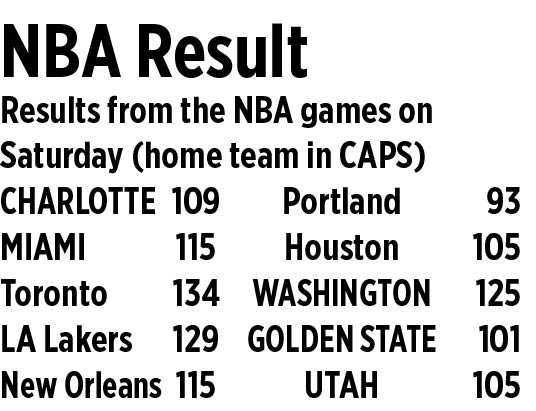
LUKA DONČIĆ celebrated his 27th birthday with 26 points, eight assists and six rebounds to lead the Los Angeles Lakers to a 129-101 rout of the Golden State Warriors on Saturday in San Francisco.

Los Angeles came into the Bay Area on a three-game losing skid but rebounded emphatically. The Lakers surrendered the game’s first two points, then went on to score the next 10 en route to a lead they never relinquished.

Dončić set the pace for the Los Angeles offense, shooting nine of 17 from the field, including four of nine from 3-point range. He knocked down consecutive triples to open the second half, then connected on another pair minutes later as part of a 16-9 surge.

Dončić scored 16 points in a third quarter that effectively snuffed any hope of a Golden State rally.

The Warriors showed signs of life in the second quarter when they trimmed what had been a 23-point deficit to 12 points on the strength of a 15-2 spurt. Gary Payton II scored six of his 12 points off the bench during the run.

Twelve was as close as Golden State came the rest of the night. The Los Angeles lead steadily ballooned throughout the second half behind five Lakers scoring at least 15 points.

LeBron James shot 4 of 6 from 3-point distance and 7 of 13 from the floor overall en route to 22 points. James also flirted with a triple-double, adding a game-high nine assists and seven rebounds.

Austin Reaves scored 18 points for Los Angeles and Luke Kennard came off the bench to connect on 4-of-7 3-point attempts on his way to 16 points. Jake LaRavia dropped in 15 points in reserve duty.

Golden State, meanwhile, had just one scorer with more than 12 points: Gui Santos, who finished with 14.

Moses Moody scored all 12 of his points on 4-of-10 3-point shooting. De’Anthony Melton added 10 points and Al Horford scored eight points off the bench. — Reuters

OKC-Denver clash

The Nuggets’ late-season slog with the Thunder was bound to be confrontational: The protagonists have already traded a seven-game Western Conference semifinal and multiple hard-fought matches over the last year. Yet nothing in their common history in recent memory quite prepared hoops habitués for the chippy overtime thriller over the weekend. When the battlesmoke cleared, the defending champions eked out a 127-121 victory that could very well have gone another way and ultimately held significance beyond the final outcome.

At one point in the set-to, the Nuggets led by as many as 16 points and looked poised to stave off a resurgent Thunder. Shai Gilgeous-Alexander, back from injury with 36 points, paced a comeback, while the visitors leaned on Jamal Murray’s 39-point outburst and Nikola Jokić’s triple-double (23 points, 17 rebounds, 14 assists). In any case, the game’s defining moment came not in the final bucket or in a late defensive stop, but in a confrontation borne of frustration and borderline tactics.

With just over eight minutes left in the fourth, Jokić was jogging upcourt when Luguentz Dort, known for his suffocating defense and borderline physicality, stuck out his right leg, sending the Nuggets’ three-time Most Valuable Player awardee to the floor. The bench cleared, emotions flared, and a midcourt scrum had referees reviewing the incident. Fittingly, the instigator was assessed a Flagrant 2 foul and ejected.

Jokić’s reaction (a chest bump followed by an animated confrontation) was as revealing as the act that provoked it. “It’s an unnecessary move and a necessary reaction,” he said afterward, framing his response as instinctive, protective of himself and, no doubt, reflective of the competitive stakes at play. “I think there’s not supposed to be those things on a basketball floor,” he added, highlighting the manner in which certain aggressive gambits, even in the National Basketball Association’s modern era of loose cannons, cross an unseen line.

The incident likewise crystallized a broader narrative. Despite a predilection to outscore or outmaneuver rather than do battle in and through the trenches, the Nuggets had to confront the physicality that defines the Thunder’s brand of basketball. Head coach David Adelman acknowledged Jokić’s frustration, noting that big men invariably feel the brunt of contact that goes uncalled away from the basket. And, he suggested, this is true even for those who command as much attention as a seven-foot superstar.

For the Thunder, the ejection of Dort, whose reputation as a rugged defender precedes him, was both punitive and indicative of the league’s ongoing struggle to balance extremely physical defense with player safety. As crew chief James Williams noted, the contact was “unnecessary and excessive with a high potential for injury.” Which was true, to be sure. That said, also true was the ruling’s seeming departure from the norm; such borderline-dirty plays typically slip through the cracks.

For the record, it was Gilgeous-Alexander’s return and the Thunder’s depth that sealed the win in overtime. If nothing else, the result reminded all and sundry on whose mantel the Larry O’Brien Trophy resides. For the Nuggets, meanwhile, the loss exposed a concerning trend since Jokić’s return from injury: They have been horrendous in clutch situations.

Still, the lingering image from Paycom Center wasn’t that of a buzzer-beater or a clutch defensive stand. It was that of Jokić, mouth open in anger, standing toe-to-toe with Dort. And in a league that markets precision and flair, it was a grim reminder that, all too often, the game boils down to primal reactions and territorial pride.


Anthony L. Cuaycong has been writing Courtside since BusinessWorld introduced a Sports section in 1994. He is a consultant on strategic planning, operations and human resources management, corporate communications, and business development.

More strikes aimed at Iran after US, Israeli assault kills supreme leader

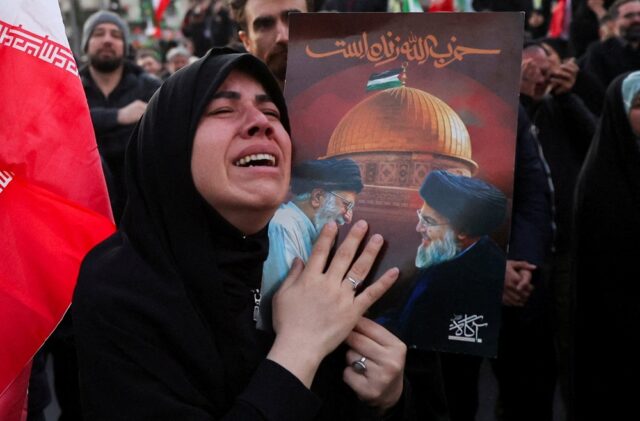
A WOMAN reacts as people gather at the Enghelab Square, after Iran’s Supreme Leader Ayatollah Ali Khamenei was killed in Israeli and US strikes on Saturday, in Tehran, Iran, March 1, 2026. — MAJID ASGARIPOUR/WANA (WEST ASIA NEWS AGENCY) VIA REUTERS

TEL AVIV/DUBAI — Israel said it launched another wave of strikes on Iran on Sunday, as Iranians grappled with uncertainty after the killing of their supreme leader in US and Israeli strikes that threaten to destabilize the wider Middle East.

Hours after both nations said an airstrike killed Ayatollah Ali Khamenei in the military campaign to overthrow the government of the Islamic Republic, its state media confirmed the 86-year-old leader’s death on Saturday.

Several loud blasts were heard for a second day on Sunday in the area of regional business hub Dubai and over Qatar’s capital of Doha, witnesses said, after Iran launched retaliatory strikes on the neighboring Gulf states in response to the strikes.

Iran, which has said it would target US bases if attacked, hit a range of other targets, keeping the major oil-producing Gulf on edge.

Air raid sirens sounded repeatedly across Israel early on Sunday, with a series of explosions heard in Tel Aviv as Israel’s sophisticated air defense system sought to intercept the latest Iranian offensive.

There was no immediate report of damage or injuries.

TRUMP SAYS STRIKES AIM TO END IRAN THREAT
US President Donald J. Trump said the air strikes aimed to end a decades-long threat from Iran and ensure it could not develop a nuclear weapon.

He sought to justify a risky gambit that seemed to contradict his professed opposition to American involvement in complex overseas conflicts.

“This is not only Justice for the people of Iran, but for all Great Americans, and those people from many Countries throughout the World, that have been killed or mutilated by Khamenei and his gang of bloodthirsty THUGS,” Mr. Trump wrote on Truth Social.

Mr. Trump and his close ally, Israeli Prime Minister Benjamin Netanyahu, told Iranians the attacks offered them a rare chance to topple their clerical leaders.

The leadership had already been under pressure from an economy hammered by sanctions, protesters who proved ready again to take to the streets despite fierce crackdowns and regional proxies severely weakened by Israeli attacks.

Israel and the United States timed the attacks to coincide with a meeting of Mr. Khamenei and his top aides, said two US sources and a US official familiar with the matter.

Mr. Khamenei was working in his office at the time of Saturday’s attack, state media said. It also killed his daughter, grandchild, daughter-in-law and son-in-law.

Experts said that while the deaths of Mr. Khamenei and other Iranian leaders would deal the country a major blow, it would not necessarily spell the end of Iran’s entrenched clerical rule or the Revolutionary Guards’ sway over the population.

Mr. Trump evoked the 1979 storming of the US embassy in Tehran, when Iranian student activists in coordination with radical clerics took 52 American hostage for 444 days, demanding the extradition of the deposed shah from the United States.

Israel’s military said it targeted Iran’s ballistic missile and air defense systems with strikes on Sunday morning.

Iran’s armed forces would soon retaliate again with their biggest offensive against US bases and Israel, the elite Islamic Revolutionary Guard Corps vowed in a statement on Sunday.

Iran responded to Saturday’s initial attacks by launching hundreds of missiles and drones targeting US troops and cities in Israel and Arab countries allied with Washington, prompting widespread cancellations of Middle East flights.

The Pentagon said there were no US deaths or injuries.

IRAN POUNDS KEY REGIONAL FACILITIES
Major Middle Eastern airports, including Dubai, the world’s busiest international travel hub, were shut on Saturday after Iran’s missile retaliation unleashed one of global aviation’s most severe disruptions in years.

Dubai’s landmark Burj Al Arab hotel and the airport, which handles more than 1,000 flights a day, were damaged in an overnight attack on sites across the Arab Gulf states that also hit airports in Abu Dhabi and Kuwait.

On Saturday, Tehran warned that it had closed the Strait of Hormuz, the narrow conduit for about a fifth of global oil consumption, raising expectations of a sharp jump in oil prices.

OPEC+ major oil producers are set to meet on Sunday and may consider a larger-than-planned output increase as several tanker owners, oil majors and trading houses suspended energy shipments through the Strait.

After Israel pounded Iran in a 12-day air war in June, joined by the United States, both warned they would strike again if Tehran persisted with nuclear and ballistic missile programs.

Hundreds of civilians were killed and injured in the US and Israeli strikes, Iran’s ambassador to the United Nations, Amir Saeid Iravani, told an emergency meeting of the United Nations Security Council on Saturday.

Mr. Iravani called Iran’s retaliatory attacks a matter of self defense, saying the bases of hostile forces were legitimate military targets.

Witnesses said some Iranians took to the streets in Tehran, the nearby city of Karaj and the central city of Isfahan to celebrate after reports of Mr. Khamenei’s death.

Videos posted on social media, which Reuters was unable to immediately verify, also showed celebrations elsewhere. — Reuters

US-Iran strikes unleash travel chaos as airlines cancel flights

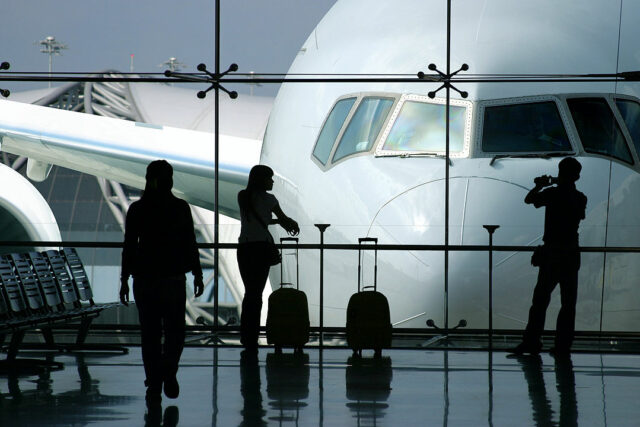
STOCK PHOTO | Image by L.Filipe C.Sousa from Unsplash

DUBAI — Major Middle Eastern airports, including Dubai, the world’s busiest international travel hub, were shut on Saturday after US and Israeli strikes on Iran and Iranian missile retaliation rippled through the region, unleashing one of the most severe disruptions to global aviation in years.

Dubai’s international airport, which handles more than 1,000 flights a day, sustained damage during an overnight Iranian retaliatory attack on sites across the Arab Gulf states, while Abu Dhabi and Kuwait’s international airports were also hit.

Major regional gateways including Dubai, Doha and Abu Dhabi were closed as countries across the Middle East shut their airspace following the strikes and Iran’s retaliation. Flight maps showed skies over Iran, Iraq, Kuwait, Israel and Bahrain virtually empty, while airlines across Europe and the Middle East announced sweeping cancellations.

Dubai and neighboring Doha sit at the crossroads of east‑west air travel, funneling long‑haul traffic between Europe and Asia through a tightly scheduled network of connecting flights. Any prolonged shutdown of its airports ripples far beyond the region, forcing airlines worldwide to reroute or cancel services.

“The scale of these hubs today is just so enormous. You will have hundreds of thousands of people being stuck in wrong parts of the world without any certainty as to when they can move,” said UK-based aviation analyst John Strickland.

“It hits at so many levels. There is the immediate issue of what happens today and the ricochet effect of how long this persists,” Mr. Strickland added, noting that major Gulf airlines, like Emirates and Qatar Airways, are also among the world’s biggest cargo operators.

Dubai Airports suspended all flights at Dubai International and at Al Maktoum International until further notice, urging passengers not to travel.

AIRSPACE COULD BE CLOSED FOR ‘SOME TIME’
The US and Israel launched their most ambitious attack on Iran in decades on Saturday, killing Iran’s Supreme Leader Ayatollah Ali Khamenei and prompting Iran to retaliate with missile and drone attacks, sharply raising the risk of a broader Middle East conflict.

“Passengers and airlines can expect airspace to be shut for quite some time,” said Eric Schouten, head of aviation security advisory Dyami.

Airlines canceled on Saturday about half of their flights to Qatar and Israel and about 28% of their flights to Kuwait, after the United States and Israel launched strikes on Iran, according to preliminary Cirium data. In total, about 24% of flights to the Middle East were canceled, the data showed.

The region has become more important for global aviation since the Russia-Ukraine war forced airlines to avoid both countries’ airspace.

Conflict zones add to operational risks, raising fears of accidental shootdowns and lengthening routes, which increases fuel costs.

PASSENGERS STRANDED ACROSS EUROPE
Students travelling from Paris to Dubai said their college trip was abandoned. “We still have some students that went there earlier, and they’re stuck in Dubai, and we don’t know when they’ll be able to come back,” said Benjamin Gnatek.

At Charles de Gaulle airport, Thai-bound traveler Roman Simon said his onward flight via Doha was canceled. “Now, we’re trying to find a solution to still make our trip to Thailand,” he told Reuters.

At Doha’s Hamad International Airport, gates were nearly empty as stranded passengers queued to make hotel arrangements, a Reuters witness said.

As countries in the region closed their airspace, aircraft were forced to divert around Larnaca, Jeddah, Cairo and Riyadh. Flightradar24 briefly went down due to surging demand.

The European Union’s aviation regulator EASA on Saturday recommended its airlines stay out of the airspace affected by the ongoing military intervention. — Reuters

Cardinal found with phone during secret conclave to elect Pope Leo, book says

Pope Leo XIV | Screenshot from Vatican Media Livestream

VATICAN CITY — The secret conclave that elected Pope Leo XIV head of the Catholic Church last May was interrupted when one of the 133 cardinals involved was found carrying a cellphone, a massive security breach, a book released on Sunday revealed.

As the clerics were preparing to take their first vote inside the Vatican’s Sistine Chapel, which was fitted with jamming equipment to prevent outside communications, security officials picked up the signal of an active mobile connection.

The cardinals stared at each other incredulously, then one of the older clerics discovered he had a phone in his pocket and handed it over, according to The Election of Pope Leo XIV, a new book by two long-time Vatican correspondents.

The book does not name the cardinal or suggest he had any motive for keeping his phone, saying the moment left him “disoriented and distressed.”

SECURITY BREACH WAS ‘BETTER THAN FICTION’
The scene was “unimaginable even for a film and never before seen in the history of modern conclaves,” wrote the authors, Gerard O’Connell and Elisabetta Piqué.

One such film, the 2024 hit Conclave, imagined a tangled web of intrigues during the fictional selection of a pontiff. Last year’s unprecedented discovery of a phone was in its own way more startling than anything portrayed in that movie, Mr. O’Connell told Reuters.

“Reality (was) better than fiction,” he said.

Clerics taking part in a conclave take a vow not to communicate with the outside world and surrender their phones and all other communication devices for the duration of the proceedings, which can last for days.

The Vatican press office did not respond to a request for comment about the new book, which offers behind-the-scenes details of one of the world’s most secretive elections.

ONLY TWO LEADING CANDIDATES FOR POPE
The cardinals met in a two-day conclave from May 7-8 under an intense global spotlight to elect a successor to Pope Francis, who died in April after 12 years leading the 1.4 billion member Church.

Much of the speculation at the time focused on the possibility that the cardinals would elect a new pontiff from Asia or Africa, given that the conclave was the most geographically diverse in history, with clerics from 70 countries taking part.

But no candidate from those regions garnered much support, according to the book, which discloses details of the cardinals’ votes for the first time based on information from interviews with participating clerics.

While it is strictly forbidden for cardinals to reveal details of the secret balloting at a conclave without permission from the future pope, it is common for journalists to slowly tease out information from clerics in the years afterward.

Two candidates immediately emerged as frontrunners inside the conclave, the book said.

One was Italian Cardinal Pietro Parolin, a long-time Vatican official identified by many outlets as a leading favorite. The other was US Cardinal Robert Prevost, a figure who was mostly unknown outside Church circles but would emerge as Pope Leo, the first pontiff from the US.

On the first vote in the conclave, held in the evening of May 7, Mr. Prevost already received between 20-30 votes, an unusually large number, according to the book.

Philippine Cardinal Luis Antonio Tagle, who was also seen as a favorite going into the election, only ever received fewer than 10 votes in the conclave.

On the fourth ballot in the afternoon of May 8, Mr. Prevost won with 108 votes. Mr. Tagle was sitting next to Mr. Prevost as the final vote was being tallied and offered the future pope a cough drop to soothe his throat, the book said. — Reuters

Iran crisis threatens worst disruption in gas markets since 2022

REUTERS

A widening Middle East conflict looks set to create the most significant disruption for gas markets since Russia’s invasion of Ukraine upended global trade four years ago.

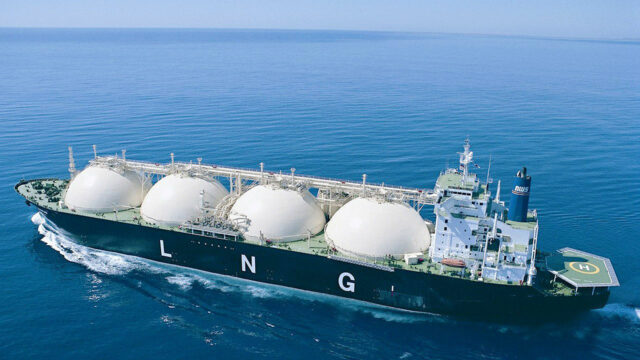
Iran’s neighbors, like Qatar, are some of the world’s most important suppliers, and the region is also a vital supply route, with 20% of liquefied natural gas exports traveling through the Strait of Hormuz, a crucial chokepoint for global energy.

LNG trade through the narrow waterway is now all but halted, according to ship-tracking data. Asian buyers — which take roughly a quarter of their LNG from Qatar, the world’s second-largest exporter — have been calling suppliers to check if alternative cargoes are available, according to traders. Egypt, meanwhile, is trying to bring forward shipments, after supplier Israel shuttered some fields.

“Any naval activity in the Straits of Homuz will be particularly bullish, as will any developments with Qatari LNG production,” said Tom Marzec-Manser, director of Europe LNG and gas at Wood Mackenzie.

Russia’s invasion of Ukraine in 2022 created unprecedented turmoil in the international gas trade, cutting Moscow off from its largest export market, fueling volatility and triggering a record spike in prices in Europe and elsewhere.

Asia is particularly vulnerable to similar ripple effects from the Middle East’s worsening crisis. More than four-fifths of Qatar’s LNG was delivered to Asian buyers last year, with China the biggest purchaser, taking almost a third of its imports from the country. India is the second-largest importer.

Shipments to Asia — and the Europe — must pass through the Strait of Hormuz. So far, at least eleven LNG tankers going to or from Qatar have paused voyages to avoid the waterway, according to ship-tracking data.

Smaller exporter UAE also sends its LNG exports through the Strait.

“There is no replacement,” Anne-Sophie Corbeau, a researcher at Columbia University’s Center on Global Energy Policy, said in a post on LinkedIn.  “Will prices spike more in Asia or in Europe? Europe is less exposed, but has low storage levels. It also depends on how much is diverted to Asia.”

Qatar exported 82.2 million tons of LNG in 2025. One of the production units at Qatar’s Ras Laffan complex was undergoing planned maintenance as of last week, according to the traders, which will contribute to lower flows. They asked not to be named as they are not authorized to speak to the media.

Nippon Yusen, a major Japanese LNG shipowner and manager, has instructed its affiliated ships to avoid the area around the Strait of Hormuz, according to a company spokesperson. Mitsui OSK Lines, another large Japanese LNG shipowner, has instructed vessels to wait in safe waters, while Kawasaki Kisen Kaisha confirmed it had ordered vessels in the Persian Gulf to stand by.

If the conflict drags on and shipping disruptions continue, risks will grow rapidly for LNG output, which requires steady exports to move fuel through the facility — or risk forcing output cuts.

Chinese importers are among those making last-minute calls this weekend to weigh up alternative supplies if Iranian efforts to curb shipping are sustained, traders said, though QatarEnergy has not delayed any shipments to its buyers. QatarEnergy did not immediately respond to a request for comment outside usual business hours.

Traders in India, Japan and elsewhere are also bracing for higher prices, reversing over a year of relatively subdued rates at a time of ample new supply. And it isn’t just spot prices — long-term LNG contracts are usually linked to crude benchmarks, so an increase in Brent oil will also make gas more expensive for Asian consumers.

Another potential pressure point will be Turkey, which imports pipeline gas from Iran. Like Egypt, the country may be forced to buy more LNG if key flows are curtailed as a result of the ongoing conflict, adding more upward pressure to prices for super-chilled seaborne gas shipments.

Iran exports gas to Turkey via a 9.6 billion cubic meters per year contract, even though actual volumes delivered have recently dipped below those quantities, according to Columbia’s CGEP. Supplies from Tehran made up less than 15% of the country’s gas imports in 2024, according to data from the Oxford Institute for Energy Studies. — Bloomberg

Iranian leader Khamenei killed in air strikes as US, Israel launch attacks

A woman reacts as people gather at the Enghelab Square, after Iran's Supreme Leader Ayatollah Ali Khamenei was killed in Israeli and US.strikes on Saturday, in Tehran, Iran, March 1, 2026. — REUTERS

WASHINGTON/JERUSALEM/DUBAI/DOHA — Iran’s Supreme Leader Ali Khamenei was killed on Saturday, state media confirmed, after the United States and Israel launched the most ambitious attack on Iranian targets in decades.

Iranian state media announced Mr. Khamenei’s death early on Sunday. A senior Israeli official told Reuters earlier that the Iranian leader’s body had been found after a strike and US President Donald Trump said the United States worked closely with Israel to target the man who led Iran since 1989.

Iran has called the strikes unprovoked and illegal and responded with missiles fired at Israel and at least seven other countries, including Gulf states that host US bases.

Mr. Trump, making the biggest foreign-policy gamble of his presidency after campaigning for reelection as a “peace president,” said the strikes were aimed at ending a decades-long threat from Iran and ensuring it could not develop a nuclear weapon.

Intelligence and tracking systems monitored Mr. Khamenei’s whereabouts, Mr. Trump wrote in a Truth Social post, adding that “there was not a thing he, or the other leaders that have been killed along with him, could do.”

Mr. Trump reiterated calls for Iranians to topple the government but warned: “The heavy and pinpoint bombing, however, will continue, uninterrupted throughout the week or, as long as necessary to achieve our objective of PEACE THROUGHOUT THE MIDDLE EAST AND, INDEED, THE WORLD!”

Israeli Prime Minister Benjamin Netanyahu said Mr. Khamenei’s compound had been destroyed.

Three sources familiar with the matter said Iranian Defense Minister Amir Nasirzadeh and Revolutionary Guards commander Mohammed Pakpour were among those killed in the attacks.

Israel’s military said it had confirmed that five other senior military commanders were also dead, including Ali Shamkhani, an adviser to Iran’s supreme leader. Iranian media had said Mr. Khamenei’s daughter, grandchild, son-in-law and daughter-in-law were also killed.

CELEBRATIONS, FEARS AMONG IRANIANS
Witnesses said some Iranians took to the streets in Tehran, the nearby city of Karaj and the central city of Isfahan to celebrate after the reports of Mr. Khamenei’s death. Videos posted on social media, which Reuters was unable to immediately verify, also showed celebrations in other locations.

The explosions during the strikes caused widespread panic across Iran. “We are scared, we are terrified. My children are shaking, we have nowhere to go, we will die here,” mother-of-two Minou, 32, said weeping as she spoke to Reuters by phone from the northern city of Tabriz.

Iran launched hundreds of missiles and drones in response to the attacks, but the Pentagon said there were no US deaths or injuries.

Iran warned that the Strait of Hormuz, the narrow passage through which around a fifth of global oil consumption passes, had been closed. Traders expected a sharp jump in oil prices. Airlines cancelled flights in the Middle East.

Israel’s military said some 200 fighter jets had completed the largest flying mission in its history, hitting 500 targets throughout Iran, including strategic defense systems already damaged in strikes last year.

A girls’ primary school in the southern Iranian town of Minab was hit, killing 85 people, according to a local prosecutor cited by state media. Reuters could not independently confirm the reports. Israel’s military did not immediately respond to a request for comment.

TRUMP CITES ‘IMMINENT THREATS’
In a video message on social media early on Saturday, Mr. Trump said the aim of the military campaign, which the US Department of Defense named Operation Epic Fury, was “eliminating imminent threats from the Iranian regime.”

The Iranian people should “take over” governance of their country, Mr. Trump said in the video. “It will be yours to take,” he said. “This will be probably your only chance for generations.”

Israeli military operations over the past two years had already killed some of Iran’s senior military officials and severely weakened several of Tehran’s once-feared proxy forces across the Middle East.

After Israel pounded Iran in a 12-day air war in June, joined by the United States, the US and Israel had warned they would strike again if Iran pressed ahead with its nuclear and ballistic missile programs.

Negotiations between US and Iranian officials took place as recently as Thursday, but senior US officials said on Saturday that Iran had not been willing to give up its ability to enrich uranium, which the Iranians argued they wanted for nuclear energy but US officials said would enable the country to build a nuclear bomb.

During a United Nations Security Council meeting on Saturday, envoys from Russia and China criticized the US and Israel for launching the strikes while Tehran was negotiating with Washington. Russia’s UN envoy Vasily Nebenzya said Iran had been “stabbed in the back” and disputed the US claim that preventing Iran from acquiring a nuclear weapon justified the attacks.

UN Secretary-General Antonio Guterres called for an immediate cessation of hostilities.

Mr. Trump also faced pushback at home from opposition Democrats, and a few of his fellow Republicans, who said a prolonged campaign against Iran would be illegal without congressional approval and that lawmakers should vote within days.

MISSILES FIRED AT ARAB GULF STATES
Oil markets have been closely watching the standoff. Jorge Leon, head of geopolitical analysis at Rystad Energy, predicted prices could shoot up by $10 to $20 per barrel when markets open on Monday, if there is no sign of de-escalation.

Iran, the third-largest producer in the Organization of the Petroleum Exporting Countries, pumps about 4% of global oil supplies, and a far larger share is shipped past its coast through the strait leading out of the Gulf.

In Israel, sirens and mobile-phone warnings sent Israelis rushing to air raid shelters as Iran launched a series of missile barrages that were mostly intercepted, though some missiles hit.

Emergency teams in Tel Aviv treated at least 20 people hurt by a missile that hit a residential building, Israel’s ambulance service said. Photos from the scene showed one side of the multi-storey building blown out and its roof caved in.

Iran fired missiles at Abu Dhabi, Dubai, and Doha, all key east-west aviation gateways.

Aviation sources had told Reuters that an overnight Iranian attack damaged an airport terminal in Dubai. One of the city’s plush hotel districts was also hit.

Loud explosions sounded in Abu Dhabi, capital of the United Arab Emirates, an oil producer and close US ally.

Nada AlGarhy, 30, said she and her husband had been at the Waldorf Astoria hotel on Dubai’s luxury Palm development for Iftar, the evening meal during the fasting month of Ramadan, when they heard a loud blast.

Bahrain said the service center of the US Fifth Fleet — the base for American naval forces in the region — had been subjected to a missile attack. Video footage showed a thick grey plume of smoke rising from near the island state’s coastline.

Qatar said it had downed all missiles targeting the country and that it had a right to respond. Kuwait confirmed a missile attack on a US military base there.

Tehran promised a stronger response to come, with a senior Iranian Revolutionary Guards commander, Ebrahim Jabbari, saying it had so far used only “scrap missiles” and would soon unveil previously unseen weapons. — Reuters

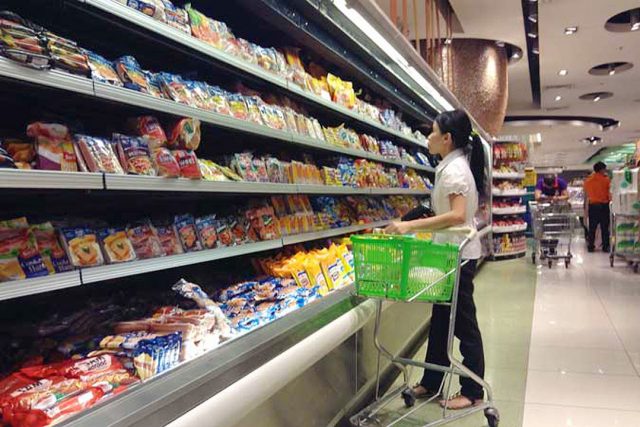
Robinsons Supermarket to revamp nine more branches in 2026, relaunches Robinsons Magnolia store

The relaunched Robinsons Magnolia Supermarket has a new modernized design highlighting the wellness section to promote healthy lifestyle choices. — KAELA B. GABRIEL

Robinsons Supermarket has revamped its third branch in Robinsons Magnolia in Quezon City, to be followed by nine more renovations nationwide this year.

Robinsons Retail Holdings, Inc. President and CEO Stanley C. Co said about P200 million has been allocated for the renovation of the supermarkets, which he has deemed an “investment” due to anticipated increase in foot traffic of the renovated grocery stores.

“We’re willing to spend because for us, we know that eventually, there will be a return,” Mr. Co said in an interview during the Robinsons Magnolia Supermarket relaunch on Feb. 27.

Mr. Co said the revamping of their selected supermarkets is an elevation of their branches from “middle” to “affordable premium” market, taking into consideration the shopping habits across different generations from Gen X to Gen Z.

“For the first two stores, we saw improved basket size and transaction count,” said Mr. Co.

In December, Robinsons Supermarket relaunched their branches in Robinsons Nuvali and Robinsons Galleria, the biggest branch according to Robinsons Supermarket Group General Manager Kerwin L. Legarde.

“We’ve experienced not only foot traffic but we saw an uplifted customer spending… We’re achieving our goals,” Mr. Legarde told BusinessWorld.

The revitalized supermarkets bear the same interiors with green tiles, gray walls for the meat and seafood section, and wooden accent.

Mr. Co added that the core of the renovated stores is the wellness section which features new products geared towards healthy living such as milk alternatives, keto-friendly, sugar-free, and gluten-free products, noting the importance of customer experience.

“We do face some headwinds, different headwinds per banner. But supermarkets and drugstores? It’s a staple. People will buy. It’s a question of what will [the] customers buy? Will they downgrade? If they downgrade, we have to be ready for them. We need to have what they’re looking for,” Mr. Co said.

Another branch in Bacolod is scheduled for completion in two weeks.

The Robinsons Supermarket currently has 157 branches nationwide, of which around 10% to 15% have been selected for renovation based on location according to Mr. Co. — Kaela Patricia B. Gabriel

February inflation likely between 2.3% and 3.1% – central bank

BW FILE PHOTO

INCREASED PRICES of rice, fish and fuel and higher electricity rates may have pushed up inflation in February, the Bangko Sentral ng Pilipinas (BSP) said on Friday.

Based on the central bank’s month-ahead forecast, the consumer price index likely accelerated to between 2.3% and 3.1% this month.

If realized, this would be faster than the 2% print in January and the 2.1% clip recorded in the same month last year

It would also mark the second straight month that inflation settled within the BSP’s 2%-4% target.

“Upward price pressures could stem from higher prices of rice and fish, elevated domestic petroleum prices, and increased electricity charges in Meralco (Manila Electric Co.)-serviced areas,” the BSP said.

“These pressures, however, may be partly offset by lower prices of vegetables, fruits, and meat, as well as peso appreciation.” — Katherine K. Chan