
How PSEi member stocks performed — July 30, 2024
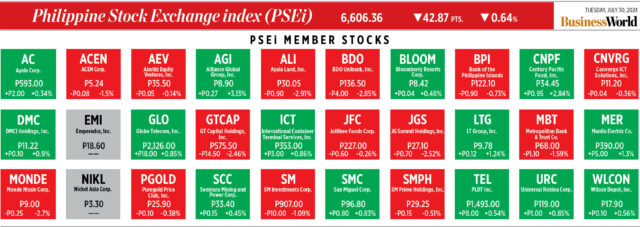
Here’s a quick glance at how PSEi stocks fared on Tuesday, July 30, 2024.


Here’s a quick glance at how PSEi stocks fared on Tuesday, July 30, 2024.
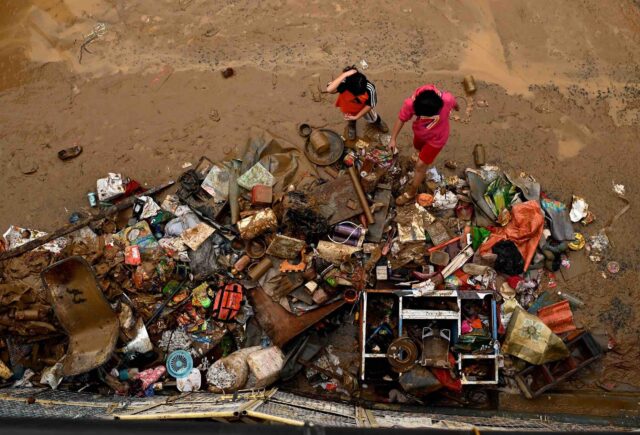
Banning single-use plastic will help control the trash during calamities, Greenpeace Climate Campaigner Jefferson M. Chua said in an interview on July 26.
“The first thing that needs to be done is to have policies in place for upstream solutions, so this means banning single-use plastics,” he said.
During and after typhoons, the waste management system gets overwhelmed by the significant increase in junk, Mr. Chua said.
“I think no one was spared of the increased amounts of waste there and also the health hazards.”
He added that the government addresses the garbage problem from a downstream perspective.
“Ibig sabihin kung sino nagtapon at kung saan tinarapon doon lang pinoproseso. Hindi tinitignan yung actual source ng pollution… which are the plastic producers [They only focus on people throwing the trash and where they throw it. They do not focus on the actual source of pollution, which are the plastic producers,”] he said.
Apart from prohibiting single-use plastics, many local government units (LGU) in partnership with sari-sari stores are now participating in a more sustainable delivery of products, Mr. Chua told BusinessWorld.
“It’s been proven to be effective not only in terms of reducing the plastic but also cost-effective.”
On the five-day clean-up drive held last July 24 to 28, 1,099 cubic meters or 90 truckloads of garbage were collected by the MMDA Environmental Management Division – Metro Parkways Clearing Group and the LGUs. – Almira Louise S. Martinez

THE National Economic and Development Authority (NEDA) said it is working with the Department of Agriculture (DA) on a new tariff adjustment system for rice, following the reduction of rice import tariffs to 15% from 35% until 2028.
“We are actually establishing that threshold, together with DA. We are trying to come up with almost like an automatic adjustment so that we can make the proper representation to the Cabinet, to the President,” NEDA Secretary Arsenio M. Balisacan said at a Senate economic affairs hearing on Tuesday.
On the sidelines of the hearing, he told BusinessWorld that NEDA is drafting the parameters for adjusting tariffs, adding that the process is still in the early stages at a technical team level.
Senator Cynthia A. Villar has called on the DA to more efficiently use the P30 billion in national rice development funds, and called for a halt to the procurement of hybrid seed, which she said is expensive and has failed to boost output.
She filed Senate Bill No. 2601, which seeks to extend the Rice Competitiveness Enhancement Fund to support farm mechanization and the supply of seed, fertilizer and farming know-how.
“What we are trying to do is come up with a set of guidelines, a set of rules that will allow us to say that a threshold has been breached, and then say we need to do something about it… and undertake the proper representation to the Cabinet.”
The RCEF, a component of the Rice Tariffication Law passed in 2019, is set to expire by the end of this year. The law deregulated rice imports, allowing private parties to import rice, originally charging them a 35% tariff on grain brought in from Southeast Asia. The tariff has been lowered to 15% regardless of source country.
The Federation of Free Farmers and Samahang Industriya ng Agrikultura have opposed the lowering of rice tariffs to 15%, saying that such a move threatens farmers’ livelihoods. — John Victor D. Ordoñez

THE House of Representatives on Tuesday ratified via voice vote the bicameral committee conference report of a measure seeking to levy a 12% value-added tax (VAT) on digital services provided by companies without a physical presence in the Philippines.
Digital services refer to those provided over the internet or other electronic networks using information technology. These include online search engines, online marketplaces, cloud services, online media and advertising, online platforms, and digital goods.
Examples of nonresident digital service providers include Netflix, Amazon, Shein, and Rakuten.
In a House ways and means committee meeting before the plenary, tax officials said they will implement a two-tier approach in collecting digital VAT from consumers once the measure is signed into law.
Representatives from the Bureau of Internal Revenue (BIR) during a panel hearing said they are planning a reverse charge mechanism for digital service transactions of businesses whose gross sales exceed P3 million VAT threshold, putting on them the responsibility of remitting digital VAT obligations to the BIR.
Meanwhile, foreign digital service companies would be responsible for remitting digital tax obligations to the government for transactions with businesses whose gross sales fall below the P3 million threshold, as well as transactions with consumers, they added.
“A VAT-registered consumer is usually a business entity that engages in the selling of goods and services whose gross sales exceed P3 million, so they should register with the BIR and they will have a VAT registration number (for tax obligation tracking),” BIR Assistant Commissioner Larry M. Barcelo told the panel.
“Non-VAT registered consumers are those whose sales income does not exceed P3 million,” he added.
The measure is expected to generate around P7.5 billion in revenue for 2025, according to Nueva Ecija Rep. Mikaela Angela B. Suansing. A document from the ways and means committee projects that the measure will generate P20.8 billion between 2025 and 2028.
“For a Business-to-Business transaction, (a nonresident digital service provider) will issue an invoice to a VAT-registered business subscriber in the Philippines,” according to a ways and means committee document outlining the reverse charge mechanism.
Foreign digital service providers are required to create a commercial invoice for every sale they carry out, BIR Assistant Chief Brianna Kay T. De Los Santos said at the same hearing. Invoices should contain the date of transaction, reference number, and calculation of the VAT in the transaction.
All digital service providers are also required to register for VAT collection if their sales for the past year exceed the P3 million threshold or if they expect sales to breach this level for the next year, Ms. De Los Santos added.
The Senate on Monday ratified the measure’s bicameral conference committee report. — Kenneth Christiane L. Basilio
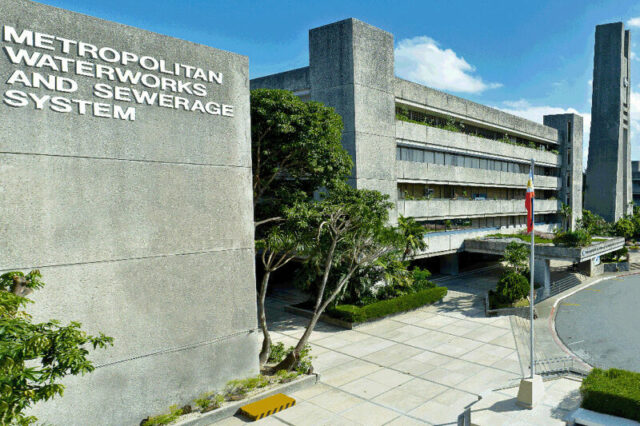
THE Metropolitan Waterworks and Sewerage System Regulatory Office (MWSS RO) is reviewing guidelines for carrying out foreign currency differential adjustments (FCDAs), which it charges water concessionaires in Metro Manila.
The FCDA is authorized by its amended revised concession agreements (RCA), chief regulator Patrick Lester N. Ty said, adding that the review is being conducted with the assistance of the Department of Finance (DoF). The final guidelines are subject to approval by the MWSS Board of Trustees.
Once the guidelines are approved, the concessionaires — Manila Water Co., Inc. and Maynilad Water Services, Inc. — will submit their FCDA proposals for review and recommendation by the MWSS RO and subsequently for board approval.
The FCDA will be adjusted and reviewed quarterly by the MWSS RO with the approval of the board.
“We will ensure that these guidelines are geared towards further protecting and safeguarding the welfare and interests of the public by ensuring that there are no over or under collections,” Mr. Ty said at a public consultation on Tuesday.
The FCDA is a tariff mechanism that accounts for foreign exchange losses or gains arising from the payment of concession fees and foreign-currency denominated borrowings contracted by the MWSS.
Among the key features of the FCDA guidelines is a provision barring concessionaires from “recover(ing) twice for the same amount of payment for the MWSS loans.”
“If the first FCDA results in an FCDA greater than 10% of the basic charge, the MWSS RO shall have the option to extend the recovery of the first FCDA for up to two years,” according to the MWSS RO.
The FCDA was temporarily halted when the MWSS and water concessionaires signed the amended RCA in May 2023, pending the creation of new guidelines.
“The FCDA is being implemented (as) part of the RCA, as amended… This could result in a rollback or an increase in water bills, so it will depend on how foreign currency moves,” Mr. Ty said.
Maynilad has said that the FCDA was reinstated under the amended RCA because “the government took into consideration the need to cushion the impact on concession fees and loans of foreign exchange movements.”
The amended RCA introduced a modified FCDA for concession loans obtained after June 29, 2022, but “only for extraordinary movements of the exchange rate.”
The FCDA, Mr. Ty said, is not likely to produce a clear-cut outcome because the peso has strengthened against the yen but weakened against the dollar.
“Since the water concessionaires pay for the foreign-denominated debt of MWSS via the concession fees, the FCDA would allow for the recoverability of forex gains or losses from paying those inherited loans,” according to Maynilad.
Asked to comment, Dittie L. Galang, head of Manila Water’s corporate communications said: “We will observe the process for now. As always, we will abide by the provisions of the RCA, as enforced by the MWSS-RO.”
Amendments to the RCA were signed on May 10, 2023 and took retroactive effect with a June 29, 2022 start date. These are intended to align some of the RCA provisions with the revised implementing rules and regulations of the Build-Operate-Transfer Law. — Sheldeen Joy Talavera

THE Department of Energy (DoE) said on Tuesday that it is considering offering liquefied natural gas (LNG) capacity to participants in the fourth round of the Green Energy Auction (GEA) this year.
“With the anticipated entry of renewable energy into the grid resulting from the GEA, the DoE is considering liquefied natural gas (capacity) for the upcoming GEA-4,” the DoE said in a statement.
The DoE sees LNG as a reliable source of energy for the transition to greener forms of power.
The DoE said it will conduct “a series of studies and simulations on the impacts (of adding LNG power), such as price, dispatch, contracts, energy and capacity.”
GEA-4 covers integrated renewable energy and energy storage systems (IRESS), which the DoE described as “a comprehensive energy solution that combines renewable energy technology with energy storage systems.”
Energy storage systems include batteries and flywheel or pump storage hydropower systems.
“By combining renewable energy and energy storage, IRESS enhances the stability and reliability of the energy system, enabling a more consistent and efficient supply of power,” the DoE said.
Energy Undersecretary Rowena Cristina L. Guevara said the DoE is currently collaborating with development partners in studying the design and economic viability of IRESS.
The DoE said it will release the indicative timeline of GEA-4 activities in the coming months, when it expects to issue a notice of auction.
The GEA program aims to promote renewable energy as one of the country’s primary sources of energy through competitive selection.
GEA was first conducted in 2022 and attracted 1,996.93 megawatts (MW) worth of bids for renewables, while GEA-2 was held in 2023 and awarded 3,440.756 MW.
In a separate statement, the DoE said that two companies have completed their offshore 3D seismic surveys — Israel’s Ratio Petroleum Ltd. in the east Palawan basin for Service Contract (SC) No. 76. and PNOC Exploration Corp. in the northwest Palawan basin for SC 57.
The surveys covered 1,619 square kilometers in SC 76 and 1,519 square kilometers in SC 57.
The seismic data collected will facilitate “a better understanding of the geological characteristics of the east Palawan and northwest Palawan basins, aiding in the assessment of the basin’s oil and gas potential.”
“The completion of these surveys marks a significant milestone in the nation’s petroleum exploration efforts, underscoring the DoE’s commitment to pursuing high-impact activities to support inclusive economic growth and societal advancement,” Energy Secretary Raphael P.M. Lotilla said. — Sheldeen Joy Talavera

THE Philippine Economic Zone Authority (PEZA) said more Indian drugmakers establishing operations in economic zones hold the potential for addressing the shortage of essential drugs and medical devices.
In a statement, PEZA Director General Tereso O. Panga said that the Philippines’ increasing population and increased demand for medicine and healthcare services are “compelling reasons to localize production of drugs and medical devices.”
“It makes sense for Indian and multinational corporations (that manufacture drugs) to set up facilities in the Philippines by way of import substitution industrialization,” Mr. Panga added.
PEZA has said that it would sign a memorandum of agreement with the Food and Drug Administration (FDA) on the development of pharma-focused ecozones.
It is set to develop the Victoria Industrial Park in Victoria, Tarlac as a pharmaceutical zone, which will also host an FDA laboratory.
Earlier, President Ferdinand R. Marcos, Jr. proposed the creation of pharmaceutical ecozones to encourage more local production of essential drugs with the aim of making them more affordable.
Mr. Panga said that five Indian pharmaceutical companies have expressed interest in the fiscal incentives available for operations like pharma packaging, small molecules formulation, logistics, and healthcare services within PEZA zones.
“Many of these pharma companies are already engaged in importing and distributing APIs (active pharmaceutical ingredients) and patented biosimilars, biologics, and other generic ethical as well as over-the-counter medicines,” he added.
PEZA said it also conducted one-on-one business meetings with 27 Indian technology companies and nine pharma companies, with the aim of attracting more locators within its ecozones. — Adrian H. Halili

THE Bureau of Customs (BoC) said it will investigate reports of seized vaping products finding their way onto the market.
In a statement, Customs Commissioner Bienvenido Y. Rubio said he has directed its Deputy Commissioner Juvymax R. Uy of the bureau’s Intelligence Group to “initiate a comprehensive fact-finding investigation following reports of alleged recycling and resale of seized vape products.”
Around P500 million worth of seized vape products are currently being investigated, the BoC said.
The vape products were recently confiscated and reportedly placed under a safekeeping order, it added.
“The Commissioner’s directive aims to verify the validity of these allegations and to identify any BoC personnel involved, along with their individual and collective roles in the matter. The investigation will also assess any potential administrative and criminal liabilities associated with these claims,” it said.
The investigators are to submit weekly status reports and a full report within 30 days, the bureau added.
The government loses at least P5 billion in revenue annually from the smuggling and illegal selling of vape products.
Meanwhile, Mr. Rubio noted that P11 billion worth of counterfeit goods seized last week in Binondo, Manila have been “secured.”
“These goods will undergo the appropriate seizure and forfeiture procedures in accordance with the Customs Modernization and Tariff Act,” the BoC said.
The BoC is confident it will collect P30 billion more than its P939.69-billion target for the year. In the six months to June, the bureau has collected P456.04 billion, surpassing its target for the period by 3.03%. — Beatriz Marie D. Cruz
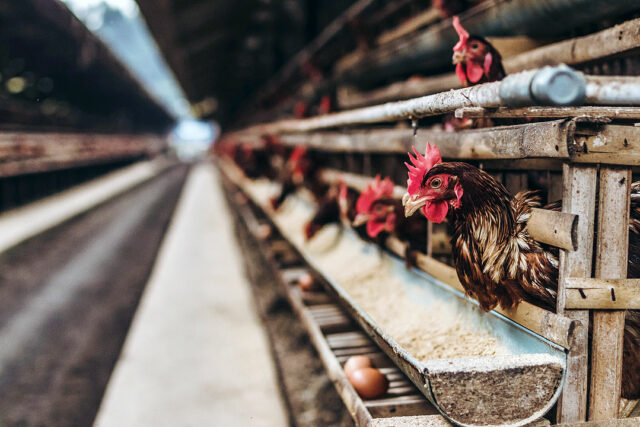
THE Bureau of Animal Industry (BAI) said on Tuesday that it has received no official reports of a supposed Tarlac outbreak of type H5N1 Highly Pathogenic Avian Influenza (HPAI), or bird flu.
“We would like to clarify that the BAI has not received any official report of such an outbreak from the local authorities of Tarlac,” it said in a statement.
It added that there are currently no confirmed laboratory results indicating the presence of bird flu in the province.
The BAI said that its Animal Diagnosis and Reference Laboratory is the sole recognized authority that determines positive cases of bird flu.
According to the BAI, two municipalities in the neighboring province of Pampanga have active cases of avian influenza as of July 19.
Overall, some 50 municipalities in eight provinces remain affected by bird flu.
The last officially confirmed case in Tarlac province was recorded in December, according to the BAI.
“Should there be any confirmed case of bird flu, the BAI will promptly inform the public and take all necessary measures to contain and address the situation,” it added.
In March, the Department of Agriculture (DA) said three bird flu vaccines are currently undergoing field testing with the Food and Drug Administration.
Last year, the DA released guidelines on the commercial use of the avian flu vaccine once approval is granted.
Priority would be given to commercial farms growing layer chicken, layer chicken breeders, broiler chicken breeders, free-range breeders, grandparent broiler breeders, as well as smallhold layer/native chicken, duck, game fowl, turkey, and goose farms. — Adrian H. Halili
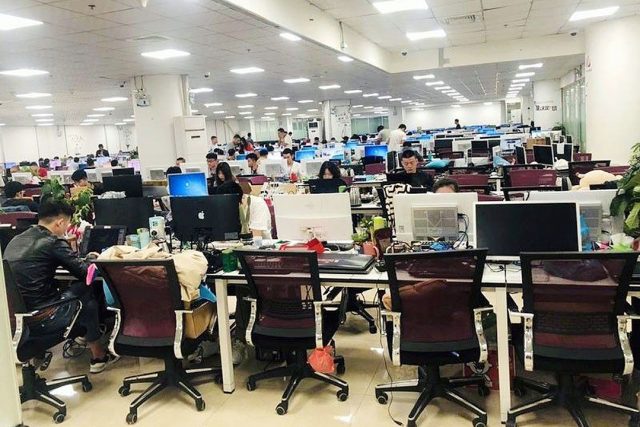
A BILL seeking to repeal a law taxing Philippine Offshore Gaming Operators (POGOs) has been filed in the Senate, after President Ferdinand R. Marcos, Jr. ordered the industry shut down last week.
Senate Bill No. 2752, filed by Senator Emmanuel Joel J. Villanueva on Monday, calls for the cancellation of POGO licenses issued by the Philippine Amusement and Gaming Corp. (PAGCOR) and those within ecozones.
The bill imposes a fine of P100 million and jail time of as much as 20 years for POGO firms that fail to cease their operations within 30 days of the law’s effectivity.
Congress in the last Presidential term passed Republic Act 11590 or the Act Taxing POGOs as a mechanism for legalizing the industry, amid concerns about their social costs.
The bill gives the Bureau of Internal Revenue the authority to continue collecting unpaid taxes from POGOs after the tax law is repealed.
In his third address to Congress, Mr. Marcos ordered PAGCOR to shut down the POGO industry by the end of the year. He also ordered the Department of Labor and Employment to find new jobs for Filipinos working in the industry.
“The evidence of crimes and social ills from POGO operations immensely overwhelms the benefits the Filipinos get from the taxes they pay,” Mr. Villanueva said in a statement. — John Victor D. Ordoñez

THE Department of Agriculture (DA) said on Tuesday that it will begin the controlled rollout of the African Swine Fever (ASF) vaccine by the third quarter.
“The controlled rollout… prioritizes eligible commercial farms, semi-commercial enterprises and clustered backyard farms,” Agriculture Secretary Francisco P. Tiu Laurel, Jr. said in a briefing.
He added that vaccine use will initially be concentrated in red zones or those areas with active ASF cases and pink zones, or areas adjacent to zones with infections.
The DA’s Integrated National Swine Production Initiatives for Recovery and Expansion program aims to increase the population of hogs in ASF-hit areas, with activities like the construction of multiplier facilities and the use of artificial insemination.
The Food and Drug Administration (FDA) said it granted a Certificate of Product Registration for the AVAC ASF Live Vaccine from Vietnam after controlled trials.
“This is valid for two years, subject to strict monitoring and annual evaluations,” FDA Director General Samuel A. Zacate said.
Constance J. Palabrica, assistant secretary for Poultry and Swine, said that the efficacy rate of the AVAC vaccine was more than 80%, within parameters set by the FDA.
Mr. Palabrica added that the DA will continue to prioritize biosecurity measures to check the spread of ASF.
The controlled use of vaccines will be handled by the Bureau of Animal Industry (BAI) and will be made available on a voluntary bass to hog farmers.
Mr. Laurel added that “after this rollout, the BAI will evaluate the vaccine’s efficacy before endorsing it to the FDA for final approval and registration.”
He said that the DA needs about 600,000 doses of the vaccine for the hog farmers initially targeted.
“At the moment existing stock in the Philippines is only 150,000 doses,” Mr. Laurel added, with procurement of the initial batch of doses expected by August or September.
He said that the initial roll out of the vaccines will be financed by the DA, which has set aside P350 million for the exercise.
“If the vaccine is really effective, definitely it would have a big effect on our production, because people will invest again,” he added.
Hog production declined 4.3% year on year to 419,370 metric tons in the first quarter, according to the Philippine Statistics Authority.
As of July 26, 45 municipalities in 18 provinces have active cases of ASF, according to the BAI. ASF was first detected in the Philippines in 2019. — Adrian H. Halili
THE Energy Regulatory Commission (ERC) said on Tuesday that it lifted the suspension of reserve market settlement transactions, which have been frozen since March.
“The lifting of the suspension paves the way for the resumption of full operations of trading of reserves in the WESM (Wholesale Electricity Spot Market) for contracted and merchant plants, thereby improving grid security,” the ERC said in a statement.
The reserve market allows the system operator to procure power from the WESM to meet the reserve requirements of the power system.
In a notice of resolution dated July 26, the ERC rules that the grounds for suspension are no longer present.
The Philippine Electricity Market Corp. and Independent Electricity Market Operator of the Philippines (IEMOP) had complied with the ERC’s directives following the regulator’s evaluation of their application for amending the market’s price determination methodology (PDM).
The PDM helps determine pricing and settlement on the WESM — the trading floor for electricity.
The ERC suspended billing and settlement on the reserve market in March after significant price increases in reserve power costs for the month compared to February.
In May, the regulator ordered the settlement of 30% of the amounts due on reserve market transactions for the March billing month to allow power generators to partially recover their costs.
The full commercial operation of the reserve market commenced in January.
The ERC has ordered the IEMOP to recalculate the resulting reserve trading amounts for the billing periods of February and March 2024, and adjust the value for the remaining 70% for the March billing month.
The ERC directed the system operator, the National Grid Corp. of the Philippines, to harmonize the timeline of its submission of non-compliances to the IEMOP.
An official order will be issued by the ERC to provide further details on the lifting of the suspension, it said. — Sheldeen Joy Talavera
