
Analysts’ July inflation rate estimates
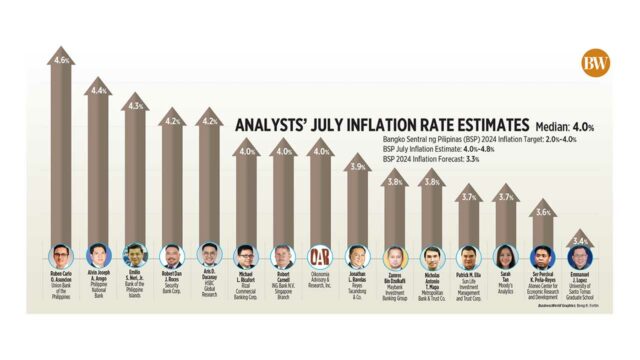
HEADLINE INFLATION likely accelerated in July but remained within the central bank’s 2-4% target range, analysts said. Read the full story.

HEADLINE INFLATION likely accelerated in July but remained within the central bank’s 2-4% target range, analysts said. Read the full story.

ABOUT 5,000 jobseekers attended a job fair for positions in Japan at a mall in Ortigas on Thursday, the Department of Migrant Workers (DMW) said.
Undersecretary Patricia Yvonne M. Caunan told reporters that the response to the fair was “overwhelming.”
Ms. Caunan added that in November, a Europe-focused job fair is due to take place, which is expected to be bigger than the Japan fair.
Pamela C. Agner, a documentation officer of Alpha Tomo International Manpower Services, Inc. told BusinessWorld the job fair helps recruiters narrow their search while ensuring a scam-free experience for jobseekers.
Alpha Tomo had 13 positions open at the fair in trades like welding, painting, excavation, poultry farming, and care work.
Ms. Agner added that hires will undergo a 90-day language program to help them acclimate to Japan.
Ten potential employers participated in the job fair, the DMW said.
According to the DMW, about 300,000 documented OFWs (overseas Filipino workers) work in Japan.
Jobs in Japan pay the equivalent of about P60,000 a month, it added.
“We are not pushing our fellow countrymen to leave the country. It is difficult to leave the country where family is. But you also cannot stop them if they have dreams,” Ms. Caunan told reporters.
“The DMW is here to handle them from the very beginning. From their jobs application up until they go there,” she added.
The job fair was organized in conjunction with Philippine-Japan friendship week, which started on Monday. — Chloe Mari A. Hufana
DOMESTIC CLAIMS of non-bank financial firms rose year on year in the first quarter, data from the Bangko Sentral ng Pilipinas (BSP) showed.
Preliminary data from the BSP’s Other Financial Corporations Survey (OFCS) showed domestic claims of nonbanks jumped by 12.9% to P9.31 trillion in the January-March period from P8.24 trillion a year prior.
This also increased by 2.8% from P9.05 trillion in the previous quarter.
The OFCS is an analytical survey of the assets and liabilities of the OFC sector. It uses standardized report forms as required by the International Monetary Fund.
These include individual financial statements from nonbank financial companies, which include insurance firms, holding companies, government financial institutions, investment companies, and other financial intermediaries, as well as consolidated financial statements from trust institutions.
The central bank said the year-on-year growth in domestic claims was “driven by the rise in the sector’s claims on the private sector, the central government, and the depository corporations.”
“In particular, the increase in the other financial corporations’ claims was due to the expansion in claims on the private sector,” it said.
OFCs’ claims on the private sector rose by 9.9% to P4.61 trillion in the first quarter from P4.19 trillion in the same period a year ago. Quarter on quarter, it went up by 2.6% from P4.49 trillion.
“Moreover, the sector’s claims on the central government grew on account of higher holdings of government-issued debt securities. The sector’s claims on the depository corporations also rose as its deposits with banks increased,” the BSP said.
In the first three months, net claims on the central government jumped by 18.5% to P2.35 trillion from P1.98 trillion in the previous year. It was also up by 3.5% from P2.27 trillion a quarter ago.
Claims on depository corporations climbed by 13.9% to P2.34 trillion from P2.05 trillion a year ago. It was also higher by 2.6% from the P2.28 trillion recorded in the fourth quarter of 2023.
BSP data showed that claims on other sectors accounted for the bulk of domestic claims in the first quarter.
This rose by 9.9% to P4.62 trillion from P4.21 trillion a year earlier and was up by 2.5% from P4.51 trillion a quarter ago.
Other sectors include the state and local government, public nonfinancial firms, and the private sector.
Meanwhile, net foreign assets of OFCs surged by 33.3% year on year to P409.028 billion from P306.785 billion. This likewise grew by 5.2% from P388.656 billion in the previous quarter.
Claims of OFCs on nonresidents rose to P584.655 billion, higher by 22.5% and 3% a year ago and in the quarter earlier, respectively. — Luisa Maria Jacinta C. Jocson

CEMENT PRODUCER Holcim Philippines, Inc. has named Nicolas George as its new president and chief executive officer (CEO) effective Aug. 1.
Mr. George replaces outgoing president and CEO Horia Adrian, who will become the head of decarbonization for the Holcim Group in the Asia, Middle East, and Africa region, Holcim Philippines said in an e-mailed statement on Thursday.
Mr. Adrian served as president and CEO of Holcim Philippines for over three years, having been appointed in March 2021.
“I’m excited to lead the Philippine business and further raise its business performance and positive impact. The Philippines is an important market for Holcim, and I am thrilled to work with our people, customers, and other partners to further raise results and deliver great value to all stakeholders,” Mr. George said.
Prior to his appointment, Mr. George was the CEO of Holcim Group’s operations in Algeria, where he focused on expanding the mortar and aggregates businesses, initiating the decarbonization roadmap, and improving industrial performance.
Mr. George joined Holcim in 2007 as a strategy manager in China and has also served as the CEO of Holcim operations in Myanmar and Uganda.
He holds a degree in Industry Management, Innovation, and Performance from the Institut National Agronomique Paris-Grignon.
Holcim Philippines operates cement manufacturing facilities in La Union, Bulacan, Batangas, Misamis Oriental, and Davao, as well as aggregates and dry mix businesses and technical support facilities for building solutions. — Revin Mikhael D. Ochave

The world’s best golfers make playing look so effortless, it’s hard to imagine what’s going on inside their minds. But modern neuroscience allows us to do exactly that. My team’s new study shows how different parts of an expert golfer’s brains are activated when they putt their ball into the hole.
Putting is a crucial part of golf. Using their putter when the ball is on (or just off) the green, golfers gently roll their ball towards the hole. Good putting distinguishes the most successful players in any tournament, as it can make up 40-50% of the total number of strokes on each round (on average, around 1.8 putts per hole). Winning a tournament can often come down to holing a final, dramatic putt.
Our team focused on what makes golfers good at putting, particularly the mental processes required to do it consistently well. Putting’s structured routine makes it easy to study and analyze. Before each putt, golfers enter a preparation phase where they stand still with the putter just behind the ball (a position called the “address”). This period can provide insights into the mental and physical processes involved in preparing to putt.
To explore these mental processes, we measured brain activity using electroencephalography (EEG), which measures electrical activity in the brain. This offers an accurate way to measure the timing of brainwaves as they happen, making it ideal for sports research.
Scientists categorize brainwaves based on their frequency ranges (measured in Hertz), which are associated with different functions. The brainwaves researchers mainly explore in putting are the theta band (4-7 Hz: associated with concentration and error detection in motor tasks), the alpha band (8-12 Hz: attention and arousal control), and the beta band (12-30 Hz: associated with motor preparation).
In our study, published in the Journal of Frontiers in Psychology, myself and colleagues tried to see if there were differences in brain activity between successful (when the ball goes into the hole) and unsuccessful putts.
SUCCESSFUL PUTTS SHOW DISTINCT BRAIN PATTERNS
We recruited 28 expert-but-amateur golfers (20 of whom were men) with an average age of 24.2 years to participate in a testing session. These participants each made 140 putts while wearing an EEG head system to record their brain activity.
We used two methods to analyze their brain activity. The first was “time-frequency analysis,” which examines how signal frequencies change over time. This allowed us to measure what was happening in the brain in the final three seconds before the player made contact with the ball for each putt.
The second was “movement-related cortical potentials,” which helps us understand how the brain plans, prepares and executes movements. In our case, the movement was the golfer beginning their the putting action.
Our study reveals that successful golf putts show distinct patterns of brain activity.
From the time-frequency analysis, we found successful putts were associated with changes in beta and theta brainwaves in the final three seconds before putting. Successful putts showed a more pronounced decrease in beta activity during preparation than unsuccessful ones. This suggests these golfers had better preparation when they went on to putt the ball into the hole.
Based on this finding, we would advise players to commit to their stroke and have a clear plan in mind, so they can experience the earlier onset of beta suppression. Crucially, they should not alter their plans just before putting the ball.
If they are not sure of what strategy to use — in other words, what direction they should aim the ball and how hard to hit it — we would recommend stepping away, then re-starting the process of hitting the putt with a clearer plan.
COMMIT TO YOUR STROKE
In our study, successful putts also tended to show lower theta activity in the frontal region of the brain, especially just before contact between putter and ball. The higher theta activity during unsuccessful putts may indicate hesitation or the need to adjust the motor plan before execution.
Our findings emphasize the importance of committing to your stroke when putting. It’s common coaching advice, but now we have data to back up why it’s so crucial.
Our analysis of the movement-related cortical potentials also found differences in brain activity. Successful putts were associated with more efficient processing and less energy expenditure, compared with unsuccessful ones. So, successful putts cost the players less brainpower.
Many golfers report knowing what it “feels like” to putt well. It’s hard to replicate this feeling consistently, though. If you want to putt better, practice your skills so you can dependably perform the motor action and handle the pressure of competition.
This finding supports the “neural efficiency” theory in sports research, which says that experts have less neural activity when they complete a task related to their profession.
Across different sports, from archery to tennis, researchers have found experts are simply more efficient in their mental processing, which allows them to activate different parts of their brains when they play. In other words, practicing a sport doesn’t just change your body — it can literally alter your mind.
THE CONVERSATION VIA REUTERS CONNECT
Laura Carey is a lecturer in Health and Life Sciences at the University of the West of Scotland. She works for Perception Sport. To complete the study published in Frontiers, financial support was received for the research, authorship, and publication of this article.

MILAN — The second part of the Western series Horizon: An American Saga by Kevin Costner will have its world premiere on Sept. 7, the closing day of the Venice Film Festival, organizers said on Wednesday, after the first part premiered in Cannes in May.
The film, to be shown in the out-of-competition section at the Italian festival, will be preceded by the screening of the first part of the saga, Chapter One.
The Oscar-winning filmmaker is the star, director and producer of the multi-part movie, which covers a 15-year period before and after the 1861-1865 Civil War, when white settlers moved westwards, taking land from Native Americans.
Mr. Costner has completed the first two parts and intends to shoot two more, although he said at the Cannes Film Festival in France he was not sure how to finance them.
The 2024 edition of the Venice Film Festival will run from Aug. 28 to Sept. 7 with many stars expected to attend after many stayed away last year due to the 2023 Hollywood actors’ strike. — Reuters
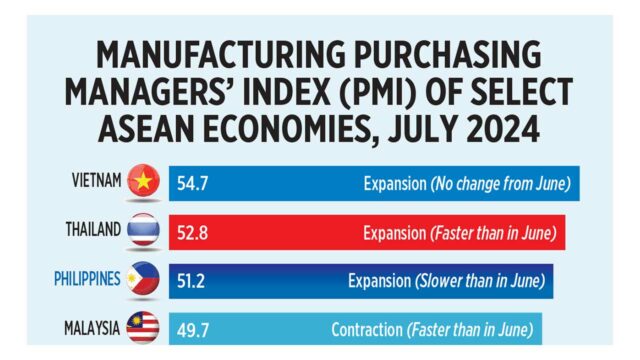
MANUFACTURING GROWTH slowed slightly in July amid weaker expansion in production and orders, S&P Global said on Thursday. Read the full story.


Many human resource (HR) managers on social media demonstrate their ignorance by focusing only on recruitment, training, and compensation. They ignore labor-management relations, which is a key part of productivity. Why is this happening? — Blue Light.
“Labor-management relations” implies a bilateral partnership between management and union representatives concerning working conditions and other concerns.
This is one of the reasons why some HR people may be ignoring labor-management relations, due to the belief that it applies only to unionized establishments. If there is no union, why bother managing labor-management relations?
With or without a union, all HR managers must do their best to improve their relationships with all types of workers. More than four decades ago, my job was to manage “employee relations,” even if we were unionized. That’s because I was also in charge of collaborating with other employees who were non-union members.
They include workers who don’t want to join unions for some reason, those who want to join unions but held jobs that were excluded from the bargaining unit, supervisors with the right to organize a separate union, and department managers, who cannot unionize.
BEST PRACTICES
In 1996, the unionization rate was pegged at 16.9%, according to the Bureau of Labor and Employment Statistics. In 2022, the “union density rate, which indicates the proportion of total paid employees” was 6.5%, representing a 0.5 percentage point rise from the 6.0% recorded in June 2020, per the latest report of the Philippine Statistics Authority.
The decline of unionism in past decades may suggest that the workers were benefitting from the proactive position taken by HR practitioners, who provided their people with innovative programs to address their basic concerns on working conditions, compensation, and other common labor issues. Some of them are as follows:
Productivity gainsharing. Some non-unionized companies that do not offer competitive pay to attract and retain staff try to make up for it by giving 8-12 months’ bonuses for its non-management workers and junior officers, subject to above-average individual work performance.
Positive discipline. Companies that are sensitive to employee morale can make workers that commit offenses opt for paid “reflection leave” (deducted from leave credits) instead of suspension without pay. This applies only to minor offenses like tardiness and can be withheld anytime, depending on the worker’s circumstances.
Excellence awards. These promote a culture of meritocracy. Rather than giving a premium to the workers’ length of service, employees with excellent performance get handsome annual merit increases of as much as 10%.
Service awards. Instead of the reasonable 10-year award, some companies have become so benevolent that they also recognize workers who complete five years of continuous employment. However, the awards have tiers: those with at least 20 years of service have been known to be awarded with all-expenses paid overseas trips and high-end watches, among other incentives.
Boss-subordinate conflict. The HR department strictly monitors how line leaders resolve their issues with workers. It’s typical to allow an automatic appeal to the next management level if an issue is not resolved within a certain period. In the case of elevated appeals, the decisions taken by higher-ups is final.
Engagement and empowerment. Many employers encourage their workers to participate in management problem-solving and decision-making. It is anchored on the rationale that workers on the ground fully understand many operational issues which they can solve through self-directed work teams, Kaizen teams, and even the Labor-Management Cooperation scheme mandated by the Labor Code.
PROACTIVE COMMUNICATION
The above list is incomplete. However, you can glean the letter and spirit of these best practices by answering some basic questions, like: Do employees feel ignored? Do they know about the company’s health and plans? Are they consulted on matters that affect their job security? Is management fair to all workers?
Keeping people in the dark makes them feel unimportant.
When proactive communication is not practiced, the rabble-rousers, the malcontents, and the agitators will have a field day, filling in the information gaps. This is the kind of situation that drives workers to unions.
The “stop and listen” technique is not enough. Management must do more to actively “seek out the issues and listen.
Bring Rey Elbo’s “Superior Subordinate Supervision” program to your management team. Contact him on Facebook, LinkedIn, X or e-mail elbonomics@gmail.com or via https://reyelbo.com

MASTERCARD and Rizal Commercial Banking Corp. (RCBC) have teamed up to launch a send-to-card money transfer service in the Philippines.
Mastercard Send is part of the Mastercard Move portfolio of money transfer solutions, which will allow RCBC to provide its cardholders a new channel for international payments, the two companies said in a statement on Thursday.
It will allow overseas Filipino workers (OFWs) from over 100 countries worldwide to transfer funds from a licensed originating institution to any RCBC Debit Mastercard cardholder.
“The introduction of Mastercard Send to the Philippines comes at an opportune time, as remittances are expected to increase by 5% this year,” RCBC Global Transaction Banking Group Head and First Senior Vice-President Martin Roberto G. Tirol said.
“As we consistently explore ways to transform banking for our cardholders, this cross-border send to card service offers easy, seamless, and efficient transactions to Filipinos all over the world,” he added.
Mastercard Philippines Country Head Simon A. Calasanz said the service will help facilitate “straightforward and hassle-free” remittances.
“As remittances continue to fuel consumption and boost the country’s economic resilience, Mastercard Send stands out as a cutting-edge payment solution. It enables fast, secure, and efficient fund transfers, taking place almost instantly from over 100 countries to families here in the Philippines,” Mr. Calasanz added.
Money sent home by OFWs rose by 3.6% to $2.58 billion in May from $2.49 billion in the same month a year ago, latest data from the Bangko Sentral ng Pilipinas showed. This was the fastest growth in five months or since the 3.8% expansion since December 2023.
Month on month, remittances inched up by 0.8% from $2.56 billion in April. — AMCS
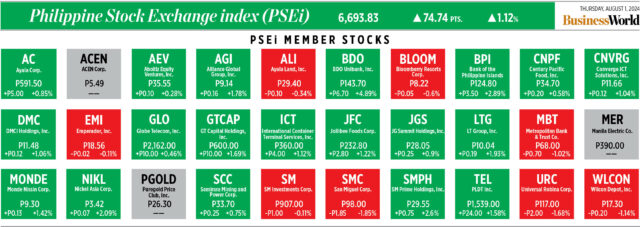
Here’s a quick glance at how PSEi stocks fared on Thusday, August 1, 2024.


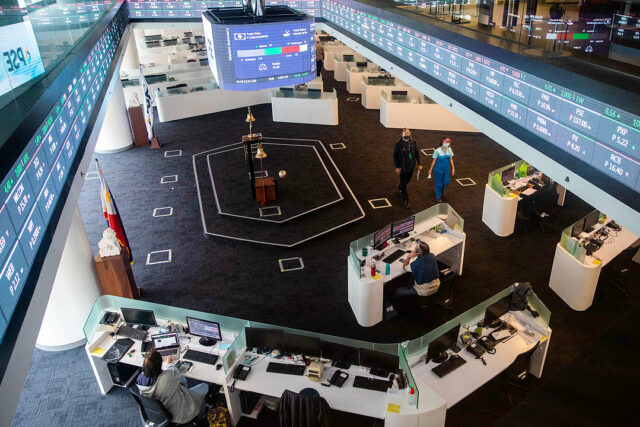
PHILIPPINE STOCKS rose further on Thursday after the US Federal Reserve hinted at a September rate cut.
The Philippine Stock Exchange index (PSEi) went up by 1.12% or 74.74 points to end at 6,693.83 on Thursday, while the broader all shares index climbed by 0.87% or 31.47 points to finish at 3,629.18.
“The local market rose as investors took positive cues from Wall Street overnight as the Fed signaled that a rate cut in September could be possible. A rate cut by the Fed is seen to somehow give more room for the Bangko Sentral ng Pilipinas to ease its own policy,” Philstocks Financial, Inc. Research and Engagement Officer Mikhail Philippe Q. Plopenio said in a Viber message.
“Philippine shares started the month with bargain hunting following the sentiment of Fed meeting. Gains were influenced by Fed Chair Jerome H. Powell signaling the possibility of an interest rate cut at the next meeting if data continues to show easing inflation,” Regina Capital Development Corp. Head of Sales Luis A. Limlingan said in a Viber message.
Mr. Powell said on Wednesday interest rates could be cut as soon as September if the US economy follows its expected path, putting the central bank near the end of a more than two-year battle against inflation but square in the middle of the nation’s presidential election campaign, Reuters reported.
The Fed ended its latest two-day policy meeting with a decision to hold its benchmark interest rate steady in the 5.25%-5.5% range that was set a year ago, but its statement softened the description of inflation and said the risks to employment were now on a par with those of rising prices — neutral language that opens the door for rates to fall after more than two years of tightening credit.
Mr. Powell pushed the message even further forward in his post-meeting press conference, noting that price pressures were now easing broadly in the economy — what he called “quality” disinflation — and that if coming data evolves as anticipated, support for cutting rates will grow.
Investors saw Mr. Powell’s comments as clearly setting the stage for a reduction in borrowing costs at the Fed’s Sept. 17-18 meeting.
All sectoral indices ended higher on Thursday. Financials gained by 2.75% or 54.75 points to end at 2,045.02; mining and oil increased by 1.7% or 141.70 points to 8,463.79; property went up by 1.34% or 34.68 points to 2,608.93; services climbed by 1.23% or 24.91 points to 2,042.16; holding firms rose by 0.31% or 18.06 points to 5,794.83; and industrials added 0.06% or 5.66 points to close at 9,274.82.
Value turnover fell to P4.39 billion on Thursday with 449.8 million shares changing hands from the P5.62 billion with 421.19 million issues traded on Wednesday.
Advancers beat decliners, 104 versus 75, while 50 issues ended unchanged.
Net foreign selling rose to P42.78 million on Thursday from P19.79 million on Wednesday. — R.M.D. Ochave with Reuters

THE PESO inched higher against the dollar on Thursday after US Federal Reserve Chair Jerome H. Powell opened the door for an interest rate cut at their September meeting.
The local unit closed at P58.333 per dollar on Thursday, strengthening by 3.2 centavos from its P58.365 finish on Wednesday, Bankers Association of the Philippines data showed.
The peso opened Thursday’s session stronger at P58.32 against the dollar. Its intraday best was at P58.26, while its weakest showing was at P58.385 versus the greenback.
Dollars exchanged went down to $1.17 billion on Thursday from $1.295 billion on Wednesday.
The peso rose after the Fed kept interest rates steady at its policy meeting but signaled a potential rate cut by next month, a trader said by phone.
Increased market expectations of two rate cuts by the Fed this year also supported the peso, Rizal Commercial Banking Corp. Chief Economist Michael L. Ricafort said in a Viber message.
Mr. Powell said on Wednesday interest rates could be cut as soon as September if the US economy follows its expected path, putting the central bank near the end of a more than two-year battle against inflation but square in the middle of the nation’s presidential election campaign, Reuters reported.
The Fed ended its latest two-day policy meeting with a decision to hold its benchmark interest rate steady in the 5.25%-5.5% range that was set a year ago, but its statement softened the description of inflation and said the risks to employment were now on a par with those of rising prices — neutral language that opens the door for rates to fall after more than two years of tightening credit.
Mr. Powell pushed the message even further forward in his post-meeting press conference, noting that price pressures were now easing broadly in the economy —what he called “quality” disinflation — and that if coming data evolve as anticipated, support for cutting rates will grow.
“If we were to see inflation moving down… more or less in line with expectations, growth remains reasonably strong, and the labor market remains consistent with current conditions, then I think a rate cut could be on the table at the September meeting,” he said.
Investors saw Mr. Powell’s comments as clearly setting the stage for a reduction in borrowing costs at the Fed’s Sept. 17-18 meeting.
Interest rate futures, stocks and Treasury bonds all rallied hard on Mr. Powell’s remarks, so much so that the probability of a first cut in September being as large as half a percentage point jumped to about 13% from about 5% before he began speaking, according to CME Group’s FedWatch tool. Mr. Powell, however, said a 50-basis-point cut was not something under active consideration.
For Friday, the trader sees the peso moving between P58.10 and P58.50 per dollar, while Mr. Ricafort sees the peso ranging from P58.20 to P58.40. — AMCS with Reuters
